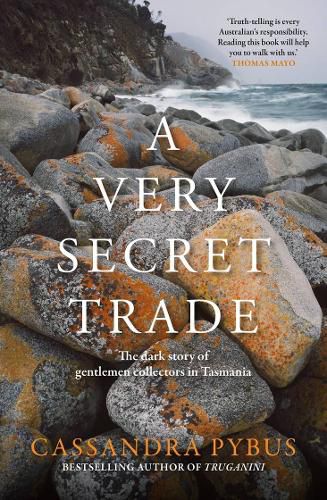
‘A Very Secret Trade’ by Cassandra Pybus

2024, 336 p.

If too many Australians thought that The Voice was too hard, then Truth Telling is going to be even harder. Cassandra Pybus’ book A Very Secret Trade: The Dark Story of Gentlemen Collectors in Tasmania confronts the clandestine trade in Tasmanian indigenous remains head-on: something we’ve all long known about but somehow tucked away back of mind. In a way, we’ve been softened up for the truths in this book by Marc Fennell’s podcast and TV series ‘Things the British Stole’. But in this book, the blame is not easily sheeted off to ‘the British’. Certainly, the governors and many of the civil servants in Van Diemen’s Land in the 1840s and ’50s were sojourners, returning back ‘home’ to England once they had attained their long-sought pensions. But collecting institutions like museums and universities were founded here as permanent institutions, and they need to own their histories of acquisition, obfuscation and refusal.

It was Zoe Laidlaw’s early book Colonial Connections 1815-45: patronage, the information revolution and colonial government (2005) that first opened my eyes to the connection between patronage, colonial careers and collecting. It underpinned the webs of influence that stretched from wealthy gentlemen collectors back in Britain, who could pull their parliamentary and civil service strings, across the ocean to civil servants in the colonies on a couple of hundred pounds a year. Once here, those local civil servants could pull on their own (rather more threadbare) strings to source animal and human remains which could be forwarded back ‘home’ to keep the connection strong. The gentlemen patrons back ‘home’ competed amongst themselves over the size of their personal collections and the prestige of the institutions with which they associated themselves, so there was always a market for curiosities, and especially those curiosities which were perceived to be on the road to extinction.

I hadn’t realized, though, that once the local functionary was in the colonies, he (and it was almost always ‘he’) deliberately petitioned and importuned for postings that made it possible to source such objects for his patrons. Pybus introduces us to doctors and surgeons (many of them), constables, merchants, Superintendents and magistrates, surveyors and artists, clergymen and librarians who were part of this network. Most disturbingly, some of them – especially those charged with the ‘care’ of this ‘dying’ race- deliberately maneuvered their positions so that they were untrammeled in finding, digging up and shipping human remains. And so many remains, often innocuously labeled as ‘specimens’ flowed across the ocean into private and institutional collections.

As a historian, Pybus has to work with silences and euphemisms. Clearly all these people realized the sensitivities of the indigenous people over the treatment of their people after their death, and so no-one actually wrote definitively about what they were doing. Many of the disinterments took place in isolated places or under the veil of darkness, and permission was neither given nor sought. Thus, the documentary record from the Tasmanian end is largely silent but at the receiving end, accession files, private correspondence and wills reveal the flood of ‘objects’ that made their way across to British and European patrons and institutions. They were being shipped overseas at scale, under the anodyne label of ‘specimens’.

Both through her own personal connection, and in keeping with her earlier book Truganini (my review here), Pybus focusses particularly on the islands north and east of Tasmania and the nearby mainland coastal areas, and the remaining people of the different nations on Van Diemen’s Land who were shipped between Wybalenna (Flinders Island) and Oyster Cove. They are so few that they can be named, and she does so in her Appendix 2. I’ve read quite a bit about George Augustus Robinson, the ‘Protector’ but I was unaware of his upwards change of fortunes once he returned ‘home’, where a lucrative marriage gave him all the property and status that he ever yearned for. He barely needed the dozen or so skulls that he carried in his luggage home, sourced from the First People who died under his ‘care’ at Wybalenna.

Lady Jane Franklin, too, is cast in a different light by her cultivation of collectors in her circle of friends, particularly young and handsome ones. Her expeditions across rugged terrain take on a new meaning when you realize the collecting intentions of the gentlemen accompanying her. The sheer number of surgeons and doctors in Pybus’ Appendix 1 of ‘The Worshipful Society of Body-Snatchers’ is chilling.

Pybus closes her book with Truganini, the so-called “last Tasmanian Aborigine” who, in floods of tears, had begged a minister whom she trusted that when she died, her body be burnt and the ashes thrown into the deepest part of the D’Entrecasteaux Channel. It took a hundred years for her wishes to be complied with. Copies and casts of her articulated skeleton were on display until 1969, and may even still be on display somewhere in the world as part of the inter-museum trade in objects. The push-back to the idea of repatriation and burial from the Tasmanian Museum and Art Gallery is instructive, as they garnered support from various professors of Anthropology and Anatomy, all of whom agreed that it would be a crime against humanity to comply with her wishes, even though Truganini’s remains had barely been properly studied at all in the 100 years of institutional custodianship.

This is a very personal book for Pybus too. It is beautifully written, and her use of ‘I’ is measured but always warranted. She grew up overlooking the D’Entrecasteux Channel, and although oblivious to it as a child, gradually came to understand her forebears’ connection with Oyster Cove. She had always thought of them as altruistic, but as she came to realize the web of patronage and obligation that touched her family too, she began to question this. I’m reminded of David Marr’s stance on ancestral guilt (see here) but I think that Pybus – who shares their name in a way that David Marr does not with the ancestors he writes about- cannot distance herself so easily. Her love of Tasmania, and especially the eastern coast bursts through her beautiful descriptions, and her own sense of country gives her an added feeling of indebtedness and complicity in the dispossession of the First People who were there before her. She had resisted for many years the ‘thorny’ word “genocide” but admits that “after years of research into the hidden corners of the history of my beautiful island home, I find the fact of it inescapable.” (p. 256) The rapid commodification of the remains of indigenous people, the ransacking of burial grounds, and the trade to collectors and museums world-wide with the added marketing-edge of “last of” and “extinct” certainly makes the word hard to avoid.

My rating: 9/10

Sourced from: Yarra Plenty Regional Library
I hear with my little ear: Podcasts 1-7 July 2024

Dan Snow’s History Hit In The Opium Wars Episode 2 Dr Jeremiah Jenne, a professor of Late Imperial and Modern China, and Dan follow up on the other opium wars that followed the Treaty of Nanking. In 1856 the Chinese seized ‘The Arrow’, a ship under a British flag (although this is disputed) which led on to the Second Opium War. This time the French joined in, and once again the British won, leading to the Treaty of Aigun which forced China to legalize opium and open up to missionaries and foreign traders. This was at an anxious time for Britain: the Indian mutiny was under way, America was heading towards Civil War and Russia was circling. The emperor refused to sign the treaty, so in 1860 the British and French returned, this time looting the Imperial Summer Palace and punishing the emperor. This was in effect the end of the 19th century opium trade, which was finally ended in 1907. The wars might have been over, but they formed the bedrock of Communist Party historical narrative right up to today, pointing to a century of humiliation which only now has been overcome.

The Rest is History Luther: The World Torn Apart (Part V) Luther had lit the fire, and now it was out of control. The Peasant Wars took on Luther’s strategy of appealing to the Bible, and more zealous preachers than Luther banned music, the mass, etc. The one man who could have quashed it all, Charles V, was distracted by political events elsewhere, as the culture wars turned into massacres. Luther, leaving behind his monk’s vows, married a former nun and tried to distance himself from the violence. He owed everything to the Elector of Saxony, and he could not be part of this bloodshed, even if he had wanted to. The Reformation that he had invoked spawned atheism, secularism and individualism. What if he had never lived: would there still have been a Reformation? Tom thinks that, in this case, Luther himself did make a difference.

You’re Dead to Me (BBC) Emma of Normanby. Never heard of her, but she was actually the wife of two kings (Aethelred and Cnut – better known as Aethelred the Unready and King Canute) and mother to two more, Harthacnut and Edward the Confessor. She was of Scandinavian origin, and on her second marriage to Cnut she had to negotiate a lot of jostling for the crown between half-brothers. In the end, she got two of her sons to share the throne, although she always claimed that she was ruling too. An encomium written to bolster her position likened her to Augustus, and drew on Roman and Greek history to legitimize her influence. In the end, her son Edward the Confessor turned against her, accused her of treason and stripped her of her land, although he later relented and gave it back again. But from here on, she was sidelined by her son. Features Professor Elizabeth Tyler and comedian Jen Brister (haven’t heard of either of them)

I hear with my little ear: Podcasts 24-30 June 2024

Dan Snow’s History Hit has a two-part series on the Opium Wars, which remain an important part of the narrative of China’s current history because they exemplify a “century of humiliation” that current policies and actions are designed to compensate for. In Part one The British Empire, China and Opium Dan and Dr Jeremiah Jenne, a professor of Late Imperial and Modern China, delve into the history of the Opium trade in the British Empire, how it brought crisis to China and started a war that still impacts China’s relationship with the west today. As a major trading country with products that Europe wanted, China had maintained an aloofness and power in the trading relationship. But the Industrial Revolution and the Napoleonic Wars had led to the development of technology that eclipsed that of China, and in Europe there had been a change in attitudes towards trade itself in the 1830s and 1840s, now seeing trade as a matter of opening markets, rather than just gaining access to goods. By 1800 10-12 million Chinese people were addicted to opium, even though it was illegal. Opium smugglers wanted silver, rather than tea. The emperor sought different opinions about how to deal with the opium problem, and heard opinions that very much echo the current debate over vapes:- should they legalize, tax, or punish the trade? Viceroy of Huguang Lin Zexu was charged with enforces penalties against traders, forcing them to hand over their opium which he then publicly burned. Eliot, the British agent, ordered limited retaliation but mission creep ensued, eventuating in the Treaty of Nanking which opened up treaty ports and put Hong Kong in British hands.

The Rest is History. Luther: Showdown with the Emperor (Part 4) Martin Luther was summoned to the imperial free city of Worms by the Holy Roman Emperor, Charles V, to defend his radical beliefs. He arrived with crowds of followers. Charles V issued an edict condemning him as a heretic, but part of the arrangement for him travelling to Worms was that he was guaranteed safe passage there and back. Luther’s protector Ferdinand was starting to distance himself a bit from Luther, but he nonetheless arranged for Luther to ‘disappear’ into a castle while things calmed down. Meanwhile, Luther himself realized that he could no longer impose himself on the Reformation, and that things were moving beyond him. He began to backtrack on some of his pronouncements.

History Extra British General Elections: Everything You Wanted to Know The British elections were under way when I listened to this. The 1920s saw the emergency of the two-party system, although one of them- the Liberal party- was gone by 1931. The secret ballot changed the nature of elections (and they didn’t even mention Australia here!) and the suffrage was gradually extended (again, yeah for Australia even though they ignored the Australian example). Gladstone was the first of the mass, personality-based prime ministers, followed by Lloyd George and Churchill, although you could really only saw that Wilson’s leadership was a decisive factor in the result. The 1950s and 1960s saw the growth of opinion polls and focus groups. Britain has first-past-the-post voting.

Six Degrees of Separation: From ‘The Museum of Modern Love’ to…

When I first saw the starting book for the August Six Degrees of Separation at Booksaremyfavouriteandbest’s page, I thought “At last! A starting book that I have actually read!” The idea of this meme is that Kate suggests a starting book, then you let your ideas bounce to six other books related (however tangentially) to the starting book.

But then, when I went back to check, I haven’t read The Museum of Modern Love at all. I got mixed up between that and my nearby art gallery, Heide, which is a Museum of Modern Art.

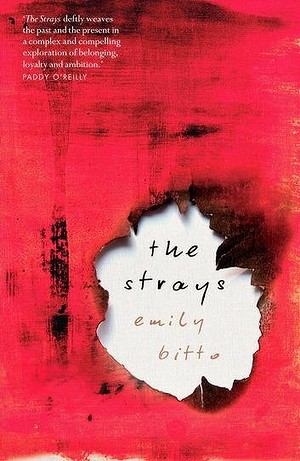
So my confusion gives me my starting book: The Strays by Emily Bitto (my review here), a fictional book which took its inspiration from John and Sunday’s life at Heide, which attracted modernist artists including Albert Tucker, Max Harris, Sidney Nolan, Barrett Reid, John Percival, the Boyds and Joy Hester to live communally in their farmhouse.

Although I read it long before I started this blog, I enjoyed Dear Sun, which was a collection of letters between Joy Hester and her friend and wealthy patron Sunday Reed from 1944 until Hester’s death in 1960. No fiction here: this is real life.

Speaking of artists, female artists Stella Bowen and Grace Cossington Smith feature in Drusilla Modjeska’s book Stravinsky’s Lunch, which I also read before I started my blog.

Artists need someone to sit for them, and Alex Miller explores this in his small book The Sitters. I wrote about it in my review “ostensibly it is a slight story about an elderly painter and a younger female sitter [but] the ghosts of his childhood are sitting, too. There are multiple sitters, not just one, and he is painting them present from their absence.” (My review is here)

Or how about a book where the narrator is not the artist, but the work itself? That’s what Angela O’Keeffe rather bravely attempts in her book Night Blue, about Jackson Pollock’s painting ‘Blue Poles’ although I’m not sure that she actually succeeded. (My review here)

The painting in Cairo by Chris Womersley might not be one of the characters, but it certainly plays a role in the plot. Picasso’s ‘Weeping Woman’, one of the jewels of the National Gallery of Victoria’s collection, was stolen in real life in 1986, and it turns up in Womersley’s book which I just loved (as you can see in my review here).

Well, with three of these books set within 15 km of my home in Melbourne, I don’t seem to have moved very far this time!

I hear with my little ear: Podcasts 16-23 June 2024

Dan Snow’s History Hit The Early Years of the British Empire Being brought up Australian, I tend to think of the British Empire as all that red on the maps of the world. But in its earliest days of empire, Britain (or rather, England) lagged behind the Spanish and Portuguese first of all, then the Dutch, then finally Britain at the rear. The episode features David Veevers, the author of The Great Defiance: How the World Took on the British Empire. At first, the British empire was the province of privateers, although there were connections with the crown as well. He emphasizes the fightback of the indigenous people, who kept the early colonists clinging to the coastline, unable to penetrate further and he reminds us that the East India Company was actually defeated. By the end of the 18th century, Britain had become better armed and was a stronger entity after the Act of Union. The accumulation of land was slow at first, but then continued apace.

The Rest is History: Luther: The Battle against Satan (Part 3) After questioning the idea that Luther nailed his 95 theses to the door of the cathedral, Tom and Dominic take up the story three years later, when he burns the Papal Bull in Wittenburg, precipitating a crisis. The Roman Church was asserting its authority, and Luther was defying the fundamental teaching of the church i.e. that sinners can pay for release from Purgatory. Moreover, the Ottomans were threatening Vienna at the same time. Printing had been around for 100 years, but Luther was a master of self-promotion and good at public events like book burning etc, which took place in the midst of parades of student floats and a carnivalesque atmosphere. The 95 theses were printed in German and Latin. The Holy Roman Empire was weak, with the aging Holy Roman Emperor expected to die soon, and the position of Luther’s protector Frederick of Saxony was very powerful because he would be electing the successor. Luther denied reason, philosophy and canon law- all the intellectual areas that the Church had branched into- and insisted that we go back to the Bible. Luther himself (did you know that his real name was Luder?) had his own ‘born again’ moment, and with all the bombast of the born-again, declared that others were not Christians because they had not done the personal work of believing. In October 1518 Luther was summoned to meet the Inquisitor Cardinal Thomas Cajetan in Augsberg. Ever the publicity hound, Luther walked there drawing crowds as he went. He and Cajetan had three meetings, but in the end Luther was released from his vows. Then followed a saturation-bombing of pamphlets written by Luther and on 3 January 1521 Luther was excommunicated by the new Holy Roman Emperor Charles V.

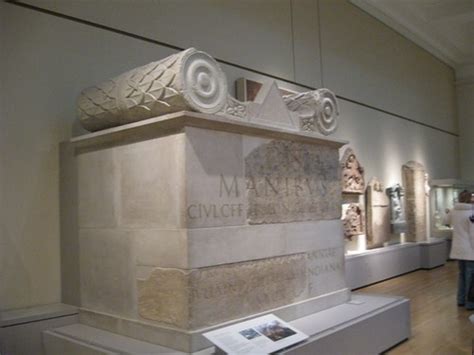
Mary Beard’s Being Roman (BBC) Episode 7: The Whistleblower takes us to Britain in 61CE and the repression of Boudicca’s revolt. Procurator (i.e. finance officer) Gaius Julius Classicianus is appalled by the harsh repression meted out by the local Governor. So he dobs on him, and advises the rebels to wait until a new Governor is sent out, and they might get bigger terms. Classicianus has a huge tomb in the British Museum

https://www.flickr.com/photos/antxoa/3459625349/

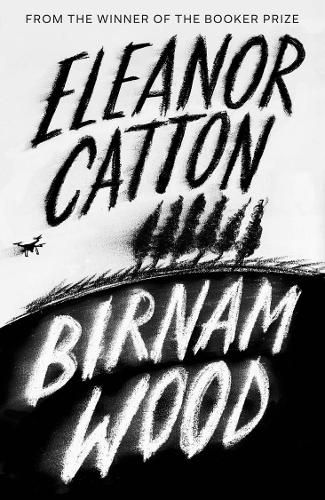
‘Birnam Wood’ by Eleanor Catton

2023, 423 p.

Silly me. Here I was assuming that this book, with a title referencing Macbeth, would be an updated telling of the Macbeth story – but any connections with Macbeth are rather tangential. You may remember that in Shakespeare’s Macbeth, he took comfort in his security as King from the prediction that “Macbeth shall never vanquished be until / Great Birnam Wood to high Dunsinane Hill / Shall come against him”. Assuring himself that trees could not move, he later realized the true meaning of the prediction when his enemy and his army advanced on Macbeth’s castle under the protection of the tree branches they carried, thus appearing to be a forest moving up the hill.

‘Birnham Wood’ was the name that a gardening co-operative adopted for themselves as they engaged in organic ‘guerilla gardening’ on unattended plots and spaces, living on the food grown as they squatted on disused sites, using water if it was available, carting their own if it was not. There’s elements of humour in Catton’s book, and this is one of them: in a world of terrorists and rogue militias, guerrilla gardening seems rather incongruous. [Having said that, the son of one of my distant relatives is a hard-core forager and dumpster-diver, and his parents have found it very difficult to cope with his subversion of all of their expectations for his career and future in his outright rejection of the capitalist economy.]

Acting as a collective, there are nonetheless power differentials between the members of Birnam Wood. The group was founded by 29 year old Mira Bunting who is approached by Robert Lemoine, a shadowy multi-millionaire attracted to New Zealand as part of the wave of ultra-rich Westerners looking for a bolt-hole in the event of nuclear war. His true intent is the surreptitious mining of rare-earth minerals in a remote national park, carried out under the cover of his pest-eradication drone company. He offers the Birnam Wood collective the opportunity to farm on his property and funding, and takes on the ‘conquest’ of Mira as a personal challenge. At the meeting of the collective to decide whether to accept Lemoine’s offer, Mira is confronted by Tony, with whom she had had a drunken sexual encounter before Tony left for overseas, four years earlier. He has now returned to the collective and rejects Lemoine’s offer as blood money. When his objection is voted down, he leaves, suspicious – correctly as it turns out- that there is more to Lemoine’s proposal to the group. The group meeting to decide the matter evoked brilliantly the interminable earnest university meetings I remember, overlaid with a 21st century patina of political correctness. In the meeting, Mira was backed up by her best friend Shelley, who was actually thinking of leaving the collective.

The book is quintessentially New Zealand, with its ‘pure’ image, green and fertile national parks, and propensity for earthquakes and landslips that has rendered the wider Christchurch area largely inaccessible after the main highway is cut. There is something slightly ‘woolly jumper’ about the collective which includes sincere and rather unworldly workers, inspired by ideas of conservation, ecology and rejection of capitalism.

Against this bucolic background, Robert Lemoine stands out as a 21st century James Bond villian/ Egon Musk type caricature. His sheer evilness is made more believable by his control over the electronic communications channels of mobile phone and internet and his surveillance of the members of the collective, which keeps him one step ahead of Mira, Shelley and Tony as they each think that they are acting autonomously, competing to come out on top in dealing with Lemoine.

The satire drops away and the book ramps up in the second half to become a page-turning, cat-and-mouse thriller, something I would have thought impossible in a story about an idealistic group of guerilla gardeners (of all things!). It’s to Catton’s credit that she’s able to carry this off at all. I won’t give away the ending, except to say that the ending probably had more to do with Macbeth than anything else in the book.

I read this book with the Ivanhoe Reading Circle as their June selection. Many of the members were disappointed with the ending: I was perhaps less critical, seeing any other possible ending as a cop-out, and spying a few loose ends that Catton may left dangling that could presage a different outcome.

Most of all with this book, I was so impressed with Catton’s ability to switch so skillfully into a completely different genre to that of the historical fiction The Luminaries, the only other Catton book that I have read. So many writers ‘stick to their lane’ after having a book as successful as The Luminaries was, but Catton has upended these expectations completely. It is a book that surprised with its completely modern setting and its morphing from a somewhat prickly social satire into a page-turning thriller. Eleanor Catton is completely in charge of her narrative, and has the flexibility of a very skilled writer with decades of writing ahead of her!

My rating: 8.5/10

Read because: Ivanhoe Reading Circle selection.

I hear with my little ear: Podcasts 8-15 June 2024

All in the Mind (ABC) How to Help a Conspiracy Theorist: An Ex-Believer and an Expert Weigh In. This episode has three participants: Jane, a mother who has lost her son to conspiracy theories; Professor Karen Douglas, a researcher who studies them; and Brent Lee from the Some Dare Call It Conspiracy podcast. Jane is walking on eggshells with her son, and Professor Douglas had some suggestions about meeting him on neutral ground and curtailing the conversation. Brent Lee was the most interesting, especially when he described how his beliefs were shaken. He had believed Pizzagate etc. as being a satanic child sacrifice conspiracy, but when Sandy Hook happened, he just couldn’t believe that the parents were crisis actors, and it didn’t fit in with his child sacrifice scenario. He described his conspiracy beliefs as being like Jenga blocks, where you could reject one or two elements, but eventually the whole thing came tumbling down. All three spoke about the importance of maintaining contact, no matter how difficult it is.

Some Dare Call It Conspiracy. After hearing All in the Mind, I hopped across here. As a historian myself, I was attracted to History is Written by the Whiners: Neil Oliver Dismantled What? Handsome young Scots historian Neil Oliver, striding across the heather, the wind in his hair. Oh dear. He seems to have gone “off”. I’m not even game to watch any of his YouTube videos lest the Algorithm Gods decide that I’m actually interested in what he’s saying. That said, I wasn’t particularly enamoured of the snide comments by the presenters of this podcast, Brent Lee and Neil Sanders. The name-calling and snarkiness seemed unnecessary.

New York Times Podcast I listened to this so long ago that it is now completely overtaken by events! Inside Trump’s Search for a Running Mate Trump takes up so much oxygen that we haven’t really heard about who is going to have as Vice President. Michael Bender, a political correspondent for The Times, explains that this time round, Trump demands absolute loyalty (which he feels he didn’t get from Mike Pence), doesn’t want anyone who is going to cause him any problems, and definitely doesn’t want anyone who is going to overshadow him. As far as Bender is concerned, the front runners are: 1. J. D. Vance (author of Hillbilly Elegy), who criticized Trump in 2016 but was his supporter by 2020 when he became a Senator. He’s a good media performer, but there’s a risk that he will be too good and overshadow Trump. 2. Marco Rubio. Even though Rubio was very critical of him during his first term, he has since become an important behind-the-scenes worker and a good attack dog. 3. Doug Burgum from North Dakota, another rich white man, who made his money through Microsoft. He’s in his mid-60s and a rather mediocre media performer, and very anti-abortion and conservative. Wait and I see, I guess.

History Extra: Breastfeeding in the Middle Ages features historian Hannah Skoda. She points out that in the Middle Ages, breastfeeding was more about loving relationships within the wider family, rather than between mother and child. Colostrum was seen as poisonous, and breast feeding only began three days after birth and tended to last for two years. It was done casually, and there was no routine. If milk was insufficient, there was pap (a mixture of grain and water), a wet nurse or milk sharing between close acquaintances. Wet nurses were often slave women – remember that there was slavery in Europe. Florence stands out as an example where at the Foundling Hospital, women fed the abandoned children – although there is some evidence that they were actually the mothers themselves who couldn’t afford to keep their children (a practice that the hospital frowned upon). It was believed that breast-feeding worked as a contraceptive, which was a problem for wealthy women and especially their husbands, who relied on her reproductive fecundity.

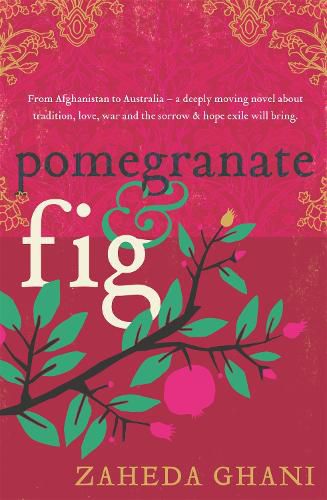
‘Pomegranate and Fig’ by Zaheda Ghani

2022, 288 p.

Much of our awareness of Afghanistan comes from twenty-first century events: the detonation of the Bamiyan Buddhas in 2001, the invasion of Afghanistan by U.S. troops after 9/11 and the protests against the presence of Australian troops in such a misguided, downright wrong war, and then the chaotic recapture of Kabul by the Taliban in August 2021. This book takes us even further back to life before the Soviet invasion in 1979 and the rise of the Mujahadeen – a life which, for middle- and upper-class Afghanis could be cultured, intellectual and free from want.

The book focuses on brother and sister Henna and Hamid, and the man who will become Henna’s husband, Rahim. Henna and Hamid are the youngest of four children, and the two older sisters have married and moved away. Henna and Hamid are both well-educated, with Henna planning on becoming a teacher, while Hamid’s interests are more theological and philosophical. However, being the youngest daughter of a wealthy family, the prospect of marriage is drawing closer and becoming more inevitable. Lawyer Ramid and his family come to her parents seeking marriage, which she knows will close doors to her options in the future, but her quiet resistance at first turns into acquiescence. Hamid knows that he is losing his closest friend, but he acquiesces as well. Family and tradition hold a firm grip on their futures.

The book is divided into three parts: Herat, War and Exile. ‘Herat’ is the ‘before’ time, as Henna and Rahim marry and have their first child in a steady, middle-class milieu underpinned by family loyalties and devotion to Islam. ‘War’ brings the assassination of the President, the stirring of the mujahadeen resistance and the invasion of the Soviets. Although the family is not overtly political, Rahim knows, as a prosecutor, that he has to be careful with his words and circumspect in his loyalties. He is arrested and beaten for a slight involvement with the mujahadeen, and it is only through the influence of his contacts that he is released. None of them know it (although we, as readers 40 years lager do), but worse is to come than the Soviet invasion and the appropriation of their property. They flee the country before all of this happens.

This leads to the third part, Exile, where Hamid flees to Iran where he works at a menial job in a kitchen, and Rahim and Henna leave for India where they gradually move from place to place until they seek asylum in Australia. We now in Australia are so conscious of ‘grounds for seeking asylum’, and Ghani is largely silent about the bureaucratic process that made it possible for them to come here. Hamid tries to go to India, too, but he is rejected at the airport and returns to Iran. Once here, Rahim and Henna decide to start their own small tailoring business in the garage. Rahim cannot find work as a lawyer, but they are both grateful for a safe country.

The story is told in short alternating chapters, which I always find a bit of a cop-out. Having said that, I have recently read two books with inordinately long chapters and I found those oppressive, and these short chapters were a relief. It is told in the present tense throughout. Although the book’s sympathies lie mainly with Henna, I think, it also rounded out the characters of the men in her life. Her brother genuinely loved her, and although it was an arranged – or at least, mediated- marriage, Rahim and Henna came to love each other two through their mutual dependence in a world that seemed to have lost all its certainties: home, profession, family. Many books about Middle Eastern Islamic women portray the men in their lives as tyrants, but neither of these men were, although viewed from a distance they may have appeared to be.

No translator is mentioned, so I think that this book must have been written in English. It is simply written, with a poetic lilt. It conveys well a sense of yearning for a disappeared past, and a stoic acceptance of negotiating a new life from a maelstrom of war and political instability. I wonder if I would have such endurance.

My rating: 7/10

Read because: CAE bookgroup selection. Unfortunately I missed the discussion because I had been in contact with COVID and feared giving it to my older Bookgroup friends.

I hear with my little ear: Podcasts 1-7 June 2024

In Our Time (BBC) Julian the Apostate ruled between 361-363 (so only a short reign) after being proclaimed Caesar by his troops in Gaul. He was born in Constantinople and raised as a Christian after his uncle Constantine had converted to Christianity and introduced a policy of toleration of Christianity across the empire. Julian himself was attracted to Platonic philosophy and neo-Platinism which combined religious, philosophical and mythological strands and a leaning towards Greco-Roman polytheism. He was a bit of philosopher king himself, writing satires about the other Caesars, and writing a lot about himself. To bolster his legitimacy (he did, after all, challenge his cousin for the position of Emperor), he launched a series of battles in Persia, which backfired. His big mistake was not to have a succession plan when he died in battle. The three historians James Corke-Webster from Kings College London, Lea Niccolai from Cambridge and Shaun Tougher from Cardiff University note that, ironically, he united the squabbling Christians in opposition to him. It wasn’t so much that he persecuted Christians, as that he revoked the privileges that Constantine had given them. Paganism had continued throughout Constantine’s reign too, so it’s not black-and-white. Very much ripe for what-if history. (I’d forgotten that Julian was a theme in Julian Barnes’ Elizabeth Finch– my review here).

Three Million (BBC) The final episode 5.Ghosts looks at the legacy of the Bengal famine which, compared with the D-Day Landing celebrations, is decidedly low-key. Retired teacher Sailen Sarkar has been travelling throughout Bengal, interviewing the now very-old survivors, who mainly wondered why they hadn’t been asked about it before. As one of the historians who contributed to this series points out, what with the loss of Indian lives fighting for the Commonwealth, Partition and natural disasters, there was a series of mass death events in India. It was the Black Lives Matter protests in England that prompted a re-evaluation of colonial administration on the part of the British Empire, and there is now mention of the famine in a military museum in London. Doesn’t seem quite enough somehow.

Emperors of Rome Caillan Davenport features in this episode on CXI The Equestrian Order. The equites belonged to a class of Roman citizen dating back to the kingdom of Rome. The numbers of Senators was capped, so the equestrian order kept expanding. It was a conditional status- every five years at the census you had to prove that you still met the property requirement, and you could be removed for lapses in civic and moral virtue. The Equestrians portrayed themselves as being less corrupt than the Senators. The reign of Augustus was a turning point, when he gave the Equestrians a role in the civic celebrations. The number of Equestrians expanded from 5,000 to 20,000 under Augustus, and gradually a career structure emerged. Equestrians were permitted to wear a special ring, a tunic with a narrow stripe and could sit in the first 14 rows of the theatre. There was no specified meeting place for the Equestrians (unlike the Senators, who had the Senate) and so they expressed their feelings at the theatre. By the late 3rd century the role of Emperor had become open to those who were promoted through the army, and then under Constantius the number of senators was increased, thus decreasing the status of the Equestrians.

History Extra Death By Nostalgia: The curious history of a dangerous emotion This episode features Agnes Arnold-Forster, the author of Nostalgia: A History of a Dangerous Emotion. She defines nostalgia as a bitter/sweet, wistful feeling about the past. At the end of the 17th century it was seen as a medical disease, related to place, and a form of pathological homesickness. People could die of nostalgia as they starved themselves to death, and mercenary soldiers, university students and domestic servants were particularly prone to it. In the early twentieth century psychoanalysts became interested, and it shifted from a medical to a psychological problem. Nostalgia is often characterized as being working-class, backward looking (e.g. Brexit, Trump) but the Left can be nostalgic too, especially the Soviet bloc countries and people who yearn after the NHS. However, now nostalgia can be seen as a form of therapy, to make people feel better.

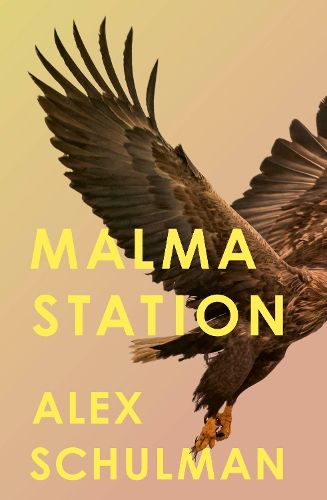
‘Malma Station’ by Alex Schulman

2024, 263 p.

Translated from the Swedish by Rachel Willson-Broyles

Spoiler alert

I can’t really talk about this book without revealing what I learned about it by the end of it, and I suspect that the confusion the reader is experiences is completely intentional on the part of the author. Told as a narrative in three alternating parts, named for their protagonists Harriet, Oskar and Yana, I found myself having to flip back to clearly distinguish the stories of the three characters because events and references kept recurring. I was starting to think that perhaps the problem was me, but having worked out what was going on by the end, I’m reassured that I understood more of it than I thought I did while reading.

There are three journeys, all heading towards Malma Station. (Any such place? I had heard of Malmo, but not Malma). It is a small station, surrounded by forest, with a lake. Our three travellers Harriet, Oskar and Yana are actually all related, but the journeys they are taking are all decades apart. Harriet, a young girl, is travelling with her father to bury her pet rabbit by the lakeside. Her mother and sister live in Malma, but Harriet has not seen them in a long time after the family fractured and the children were divided between the parents. Oskar is Harriet’s husband, decades later, and he is returning to Malma with Harriet who wants to revisit her earlier trip to Malma with her father. Oskar is frustrated by Harriet’s evasions, flightiness and infidelity, and their marriage is in tatters. Yana (whose name we later learn is an acronym for ‘You Are Not Alone’) is the daughter of Harriet and Oskar, and like her mother she too is the child of a broken relationship and she, too, lost her mother. She is travelling with a photo album that she has inherited after her father’s death, and she too is undertaking a pilgrimage to recover lost times. There is a sense of foreboding which pervades the novel as the train makes its way to Malma, but this dread is not always justified. In fact, I found the ending rather an anti-climax, albeit a disturbing one.

The circularity of the book is intentional. Mistakes and misjudgments are repeated across the generations, as children hear adult conversations that they shouldn’t, and are shuffled around like chess pieces. The book is steeped in unhappiness and families are opaque, with an edge of danger.

My library has decided that this book is a ‘saga’ on the label on the side. Even though it’s about three generations, it is not a ‘saga’ in the usual sense of the word. It’s far more intense than that, as these three generations do not so much move on and keep revolving around a hard knot of hurt and betrayal.

My rating: 7/10

Sourced from: Yarra Plenty Regional Library
Read because: I think I must have read a review of it somewhere, although I can’t find where.