Category Archives: Upper Canadian history

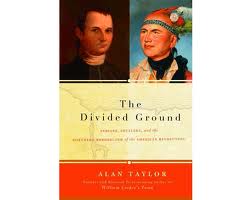
‘The Divided Ground’ by Alan Taylor

2006,  395 p. & 128 p notes

I’m not quite sure how it happened, but one way or another I managed to get through 12 years of schooling and three years of undergraduate university education without doing any American history.  We were supposed to do it in Form II but somehow Henry VIII seemed to stretch on forever, and we only got to those funny men in hats and Thanksgiving before the year ended. By Form V obviously the attraction of Henry had won out because I selected 19th Century British over American history.  At university in the mid-1970s we were all protesting US imperialists and the Vietnam War, so I wasn’t going to do any of that culturally imperialist history (why, no, I’d do British history instead…no cultural imperialism there!!)  I’ve  kept a record of my reading over the last ten years or so, and I’ve only read eight books about American history in that time, from popular history to rather more erudite works.  Among them there’s been more of a focus on colonial and early 19th century America with a smattering of “people’s histories”.  Hence, I continue to feel on pretty shaky ground as far as my knowledge of American history goes.

So to Divided Ground. I came to read this book through a suggestion from Andrew Smith’s blog, who cautioned that in order to understand Upper Canada, I needed to look to America as well.  Point taken.

The title mirrors Richard White’s The Middle Ground which dealt with the Algonquian people of Great Lakes and Ohio Valley in the century before the American revolution. But this book speaks instead of divided ground: divided between the land to the north still controlled by the British empire and the land south of the American states.  There was an east/west boundary as well, separating the settled states on the eastern seaboard from the Indian territory further inland.  These were the borders of land hungry settlers, patriots and politicians. Then there was a borderland as well, at least in Indian consciousness, where the Indian tribes would live as an autonomous people, between the British and Americans.  But this borderland would not survive the determination of speculators and politicians, and it was overlaid by a third type of boundary: the boundary of private property as landholdings were carved out and subdivided, turnpikes created, taverns built and forests cleared.

Taylor tethers this story in two men, Joseph Brant and Samuel Kirkland, who met at a boarding school run by Rev Eleazar Wheelock in Connecticut in 1761. Brant’s sister Molly was the Indian mistress of Sir William Johnson, the most famous and powerful colonist on the American frontier.  His patronage extended to her brother Joseph of the Mohawk tribe. Samuel Kirkland, on the other hand, was the son of an impoverished white Minister, taken on as a charity student who, as a missionary later on, became highly influential with the Oneida.  These two men appear throughout the narrative as they rise to prominence in  different Indian tribes that take different pathways.  Brant moves his tribe into Upper Canada and diffidently sides with the British while the tribe that associates with Kirkland sides with the Americans.  But neither man, nor their tribe, could ultimately withstand the appropriation and double-dealing that ran through the dealings of settlers and Indians and the broader agendas of politicians and policy makers.  There is a great deal of detail in this book- some reviews have suggested rather too much detail- but I found that having these two men as anchors helped keep a clear narrative thread throughout the book.  It’s a technique that I like, and I’m wondering if I could do something similar in my own writing.

It is often pointed out that in the settlement of Australia, treaties were not even offered to the Aborigines, beyond Batman’s rapidly over-turned attempt in Port Phillip.  I do not in any way deny the brute power and arrogance that the wholesale appropriation of Australian land displays, but having read this book I’m not sure that these treaties denote a very much higher moral ground.  Untrammelled power is at least transparent in its intentions.  The dripping hypocrisy of declarations to Indian “brothers” mouthed in honeyed language and proffering false generosity is ruthless, too.

Now that you mention it…

I was reading a fairly old book of collected essays on Upper Canada the other night.  It was the 1975 edition of Historical Essays on Upper Canada edited by J. K. Johnson.  There has been a second collection of essays  released in 1989, again edited by J. K. Johnson but  joined by Bruce Wilson this time.

It interested me that in the introduction to the 1975 book, Johnson noted that one of the themes of the essays was a preoccupation with economic affairs.  He wrote:

It is probably no accident that the preoccupation of historians of Upper Canada has often been with economic affairs- with the study of growth, of the metropolitan dominance of Toronto, of agriculture, of business firms, of lumbering or public works. It is true that Upper Canadian society showed a propensity to produce or adopt contentious public figures who have attracted the attention of historians, but the great majority of Upper Canadians were from the very beginning engaged in the more mundane business of developing the resources which the province had to offer- engaged in other words in the business of making a living, and wherever possible, in making a profit, a fact of Upper Canadian life which has been rightly stressed in historical writing.  If historians of Upper Canada can be said to have created an overall view of any kind it is of a society generally concerned with its own (mainly economic) betterment but in some dispute about the best ways of achieving that goal  (p. ix)

Now actually that he mentions it, I had noticed that much of the history I’ve read of Upper Canada has a strong economic history focus.   I don’t really think that Australian history has the same emphasis.  There’s Shann’s old Economic History of Australia written in 1948, and the Butlins whom I’ve written about here who also write economic histories.  Blainey’s work, especially The Tyranny of Distance makes an argument with strong economic strands, but it doesn’t have the tables and figures that mark so much of the Upper Canadian material I have read (which is, to be fair, often chapters and articles).  Nonetheless  I’d be hard pressed to think of a recent general book about Australian history that has a really strong economic focus.

Johnson’s justification for the emphasis on economic history among Ontarian historians would hold just as true for Port Phillip which was likewise established by people wanting to make money.  But again, I don’t think that this is the case. A.G.L. Shaw’s  A History of the Port Phillip District is a narrative history that includes a strong economic analysis, but it is just one strand among several.  Likewise the three volume Priestley/Broome/Dingle series published for Victoria’s 150th anniversary- the economic story is there, running steadily underneath, but not the main focus.

I can really only think of one academic on staff whom I would characterize as an “economic historian” and only one of my fellow postgraduates has written an overtly economic thesis.  Several of my colleagues are writing environmental histories, but they are of a different hue.

I’m aware that historical specialisations wax and wane, and that some institutions attract particular schools of historians.  But I’m wondering if there’s some cultural influence at play here too- a variation of the ‘tall poppy syndrome’ perhaps?

‘A Gentlewoman in Upper Canada: The Journals, Letters and Art of Anna Langton’

Barbara Williams (ed.) A Gentlewoman in Upper Canada: The Journals, Letters and Art of Anne Langton, Toronto, University of Toronto Press, 2008

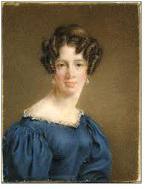
Was Anne Langton a proto-blogger? At first glance you’d have to say no: mid 30s (huh!), spinster, she traveled with her parents and aunt to live with her brother on a property in Upper Canada in the mid 1830s.  She began writing a journal to send to the brother who remained in England as the rest of the family sailed away.  She knew that she couldn’t keep up her writing on a long term basis, so she divided the year into quarters, then wrote a daily diary for the first month of each quarter; then the next year the second month of each quarter; the next year the third etc.   In this way, she eventually covered the whole year although it ended up taking her four years.

But she certainly had the blogger’s sensibility of consciously framing everyday events as a potential blog-post:

Did you ever a write a journal with the intention of sending it to anyone?  I think it would be difficult to do with simplicity.  One is tempted to act sometimes with the page in view that has to be written, and a day’s proceedings would be often diverted from their ordinary course by the recollection that they were to be recorded.  It is different in stirring scenes where events are leading you; but in the employments of everyday life, especially when information has to be collected, inferences drawn, and an average estimate to be formed from the narration, journalizing does become difficult.  (Oct 1838)

Anne Langton was born in 1804 into an aristocratic, mercantile family and spent her early years at the family home, Blythe Hall, parts of which dated back to the 12th century.  Between the age of eleven to sixteen she traveled with her family, including her maiden Aunt Alice, on an elongated Grand Tour.  The desire to escape the shame attached to the decline in their family fortunes led to their extended absence, but eventually the family business in Liverpool foundered and they had to sell Blythe Hall.  Anne’s future took a definite turn for the worse: no coming out, and greatly reduced marriage prospects.  Her brother John, unable to make money by tutoring students, emigrated to Upper Canada and in 1837 his parents, Aunt Alice and Anne joined him, leaving behind another brother William, his wife and three small daughters.  John prepared a house for them, close by his own more humble cottage, although it was not completely finished by the time they arrived and it took over a year to paper the walls so that the logs were no longer visible.

The family was just the type of emigrant that Upper Canada wanted: English,  economically self-sufficient, and genteel.  They brought with them their furniture and possessions, and joined an elite circle of friends and settlers.  They engaged in regattas, ploughing matches, church activities and ‘bees’ to help their friends erect buildings but social distinctions were always maintained.  For example, the gentry would dine and dance in the house, while the rest would hold their own celebration in the barn.  The ladies of the house undertook charitable activities, and acted as healers and midwives among the sick and needy of the parish.

The life of the 30-plus spinster living with her family was a very constrained one.  She desperately wanted to see Niagara Falls but her mother would not allow her to; she was berated for walking alone in the woods, and her mother was very nervous about her boating on the river, their main form of communication during the winter months.  She was a talented artist, but mainly painted landscapes or just occasionally portraits of family and friends- never as a form of income.  She established a small school, and started the circulating library.

She has a quick, discerning eye and a Lizzy Bennett-like humour.  She does not seem to have any close female friends or, indeed, love interests, and the journal is silent about her brother’s marriage.  This must surely have caused her some qualms: she had reconciled herself to- even welcomed- the idea of them growing old together, acting as housekeeper in their shared home.

The diary entries are interspersed with letters written not only by her, but also her mother and occasionally the men of the family.  She finally achieved her goal of covering the whole year.  The entries become sparser after a few years, which is perhaps to be expected, but I found myself missing her as she moved off into middle age and relative silence.  The book has a generous, well-written introduction and its conclusion allows you to say your farewells to her.  The introduction in particular is interspersed with Anne’s sketches and portraits.  This is not the first published version of her journals: there were two preceding versions, and Williams has recovered some of the text that had been omitted from the previous publications.

What happened then?  Her mother and aunt died of a form of malaria, and after her mother’s death she returned to England, undecided whether to work as a governess in a friend’s school or not.  As it was, her brother John and his wife Lydia back in Upper Canada asked her to return to help with the children, which she gladly did.  The family moved to Peterboro where John pursued a political career.  She spent her life as a maiden aunt; she traveled with her many nieces and nephews accompanying them on trips, and died at the ripe old age of 88.

‘Roughing it in the Bush’ by Susannah Moodie

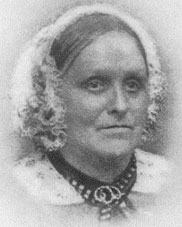
When I first started thinking about expanding my thesis to include Upper Canada and British Guiana, I thought that I’d read a bit of Canadian literature to ease myself into it.  I asked around a bit and several people suggested Susanna Moodie and her sister Catharine Parr Traill.  To be honest, I hadn’t heard of either of them.
It’s strange jumping into another country’s history with as little background as I have.  I find myself wondering about parallel books in Australian history and literature- do they exist? have I read them? did I like them?  I expect that Roughing it in the Bush would be categorized as biography/autobiography/emigrant literature.  Emigrant literature was very important to Upper Canada which was consciously trying to attract as many British migrants as possible to bolster the British identity of the colony, which was challenged by the French/Canadians of Lower Canada to the right and the Americans from the south.  Was there such a thing in Australia, I wonder?  I can think of edited books of diaries and letters, but these are not necessarily crafted as literature (hmmm.)  Flipping through Project Gutenberg Australia, there are all those travel books like A Lady’s Visit to the Gold Diggings of Australia (never read it) or My Experiences in Australia: Being Recollections of a Visit to the Australian Colonies in 1856-7 (never read this one either) or this sounds good Cooee: Tales of Australian Life by Australian Ladies (and no, I haven’t read that either).   But I’m not really sure whether these qualify as emigrant literature- written specifically for people back home who are considering emigrating, as distinct from merely visiting, to Australia.

For this is what Roughing it in the Bush declares itself to be, right from the outset.  And a rather gloomy prognostication it is, too

In most instances, emigration is a matter of necessity, not of choice; and this is more especially true of the emigration of persons of respectable connections, or of any station or position in the world. Few educated persons, accustomed to the refinements and luxuries of European society, ever willingly relinquish those advantages, and place themselves beyond the protective influence of the wise and revered institutions of their native land, without the pressure of some urgent cause.

Emigration may, indeed, generally be regarded as an act of severe duty, performed at the expense of personal enjoyment, and accompanied by the sacrifice of those local attachments which stamp the scenes amid which our childhood grew, in imperishable characters, upon the heart. Nor is it until adversity has pressed sorely upon the proud and wounded spirit of the well-educated sons and daughters of old but impoverished families, that they gird up the loins of the mind, and arm themselves with fortitude to meet and dare the heart-breaking conflict.

The ordinary motives for the emigration of such persons may be summed up in a few brief words;–the emigrant’s hope of bettering his condition, and of escaping from the vulgar sarcasms too often hurled at the less-wealthy by the purse-proud, common-place people of the world. But there is a higher motive still, which has its origin in that love of independence which springs up spontaneously in the breasts of the highsouled children of a glorious land. They cannot labour in a menial capacity in the country where they were born and educated to command. They can trace no difference between themselves and the more fortunate individuals of a race whose blood warms their veins, and whose name they bear. The want of wealth alone places an impassable barrier between them and the more favoured offspring of the same parent stock; and they go forth to make for themselves a new name and to find another country, to forget the past and to live in the future, to exult in the prospect of their children being free and the land of their adoption great.

Susanna Moodie emigrated to Upper Canada with her husband John in 1832.  In the depression that followed the Napoleonic Wars, and as part of joint Colonial Office/local government encouragement of British immigration,  half-pay military officers were lured to Upper Canada on the promise of land grants.  This she saw as particularly unconscionable

A large majority of the higher class were officers of the army and navy, with their families–a class perfectly unfitted by their previous habits and education for contending with the stern realities of emigrant life. The hand that has long held the sword, and been accustomed to receive implicit obedience from those under its control, is seldom adapted to wield the spade and guide the plough, or try its strength against the stubborn trees of the forest. Nor will such persons submit cheerfully to the saucy familiarity of servants, who, republicans in spirit, think themselves as good as their employers. Too many of these brave and honourable men were easy dupes to the designing land-speculators. Not having counted the cost, but only looked upon the bright side of the picture held up to their admiring gaze, they fell easily into the snares of their artful seducers.

Certainly she and John were inexperienced, but it surprised me that at first they came into contact with several people who had emigrated to New South Wales for a couple of years, returned to England, then come across to Upper Canada.  I am aware of serial migration as a more recent phenomenon (I’m thinking here of Jim Hammerton’s work) but I hadn’t been particularly conscious of it for the 1820s and 1830s.   They were heavily reliant on their servants and in a small cabin they were forced into closer intimacy than they may have wanted.  I’d heard that Upper Canada had been denigrated as a place where gentlemen had to share their table with their servants, and that was certainly the case here.  Just as in Australia, there were complaints that servants were scarce, ‘uppity’ and too ready to seize their own opportunities in a new land.

The early part of the book involved travelling up the river to their destination- there’s that river-consciousness again– and their horror of the cholera that raged in the settlements they passed.  Cholera?!  I obviously labour under a misapprehension about Canadian weather- there’s heat and bushfires here, as well as snow.  I hadn’t been conscious of this same concern about health in early Australia.

Their first block of land certainly didn’t seem to be in what I think of as ‘bush’: they were deluged by their neighbours, mostly Yankees, who were boorish, acquisitive and relentless borrowers.  It was with some relief that they shifted further into the bush, even though there they had to battle with bushfires (a quite exciting chapter!) and isolation.  Her difficulties were compounded by her husband’s absence when political dislocations during the 1837 Rebellion caused half-pay officers to be enlisted for military duty, leaving her to cope with the farm alone with her servants.  There is a degree of familiarity and ease with the surrounding Indians which contrasts strongly with the wariness and repugnance of Australian settlers to the Aborigines whose lands they had appropriated.

Chapters in the book are topped and tailed with poetry- rather awful stuff- and halfway through the book her husband jumps in with his perspective.  The final chapter was odd, too- it was written by her husband, by now a public servant in Belleville,  full of facts and figures about Canadian progress and some interesting (for me) political analysis.  But frankly, I enjoyed her chapters much more.  Her descriptions of landscape are deft, and she conveyed well the heat and the cold, the loneliness and the sense of community at logging bees and their social interaction with their ‘equals’ (as distinct from those Yankees).

I can’t really think of an Australian parallel book to this.  I haven’t read Louisa Ann Meredith’s books My Home in Tasmania, during a residence of nine years or Over the Straits: A Visit to Victoria, which sound similar to this, but these were written in diary form as a stylistic choice.  The book that it reminded me most of, albeit in a different time and read many, many, many decades ago, is Mrs Aeneas Gunn’s We of the Never Never. Both Moodie and Gunn wrote in the first person, with dialogue, description and an emphasis on relationships.

Australian readers- can you think of other early, autobiographical novelistic books that might be similar?

E-reader update

This is the first book that I have read on my E-reader, and this is exactly the sort of text that I bought it for- an old book now in the public domain, which would nestle in the ‘special collections’ library of anywhere I could borrow it from here in Australia.   The reason I purchased an I-River Story was to have a keyboard for notes, and that function worked well enough, although it was clunkier to shift between memo and book than I anticipated.  I found it good for reading in bed- none of that grappling with the left hand page when reading lying on your side, and I certainly felt more relaxed reading it in this format than gingerly turning pages in an old volume.

Bringing ’em in

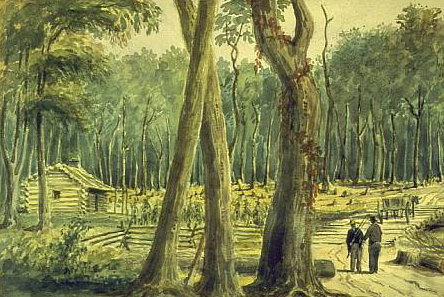
Pioneer homestead, Chatham Upper Canada 1828. P.J. Bainbrigge

Those of you following my academic progress (such as it is) will know that I’ve been turning my attention to Upper Canada, where Judge Willis presided on the Kings Bench in 1827-28.  It’s with an element of trepidation that I post anything about Upper Canada here at all on a blog ostensibly oriented towards Port Phillip in Australia, aware as I am of my lack of knowledge in the field.  Be that as it may, I find myself reading through bi-focal glasses now: alert to resonances in one colony that I’ve detected in the other, and conscious of parallel movements across the empire.

I’ve just finished reading an article by J.K. Johnson called ‘Land Policy and the Upper Canadian Elite Reconsidered: The Canadian Emigration Association, 1840-1841’ in an edited collection of essays in honour of the Canadian historian J. M.S. Careless. [Surely an unfortunate surname for any historian.  Careless himself reassured students in his survey of Canadian history course that they should not be concerned at having a lecturer called Careless, for a former head of the Department had been a Professor Wrong. (p. 21)]

Although this article falls beyond my 1827/8 pre-Rebellion interest in Upper Canada, I was drawn to read it because I was conscious of the emigration schemes operating within Port Phillip during the 1840s and was interested to compare them.  The ultimately-unsuccessful  Canadian Emigration Society was established in 1840 with a 2-pronged approach.  Prominent landowners in Britain (and particularly Scottish landlords)  would be encouraged to promote and support emigration to Upper Canada while, at the other end,  Upper Canadian landholders would offer free grants of 50 acres to incoming settlers.   There was a general feeling in Upper Canada that immigration per se was good for the colony, and the steep drop in incoming migrants after the 1837 Rebellion was viewed with alarm.  But, just as importantly, a number of well-connected Upper Canadians had amassed large landholdings as a speculative venture and their own land would increase in value if settlers could be attracted to the area.

There was a strong emphasis on land clearing.  I’m also reading Susanna Moodie’s Roughing it in the Bush, and I’m very much aware of the presence of the forest- it seems almost disloyal as an Australian to refer to it as ‘bush’.  The imperative to clear land was built into the Canadian Emigration Association Scheme:

“To such emigrants with families as shall come out under the auspices or with the special recommendation of the societies at home, it is proposed to give fifty acres each, upon condition of actual settlement and clearing a space of ten acres of the front of their locations, erecting a dwelling house etc for themselves, and clearing one-half of that portion of road lying in front of the lot of which their grant forms a part.  The use and possession of this land will be secured to them immediately, and after three years’ actual residence, and the performance of the conditions above specified, a deed in fee simple, without charge, will be given to them”

In an article in Historical Essays on Upper Canada: New Perspectives called ‘Forest into Farmland: Upper Canadian Clearing Rates 1822-1839′ Peter A. Russell notes that the rate of clearing forest was seen as a crucial index of a man’s  economic success and social advancement.  He noted that at first settlers needed to clear to provide immediate shelter for themselves and their families, while often working for wages on a more advanced settler’s tract. After a couple of years, the land had to be cleared again because of secondary regrowth.   Darrell A. Norris’ chapter in the same volume ‘Migration, Pioneer Settlement and the Life Course: The First Families of an Ontario Township’ noted that often families lived temporarily in more settled towns before shifting to the bush once they had sufficient working-age children to make a go of it.

I find myself comparing this with Port Phillip emigration at much the same time. There were bounty migrant schemes, but the emphasis there was on attracting labourers, both agricultural and industrial, and domestic servants.  There was a general reluctance for newcomers to shift into the country where there was much more of an emphasis on pastoral activity than farming, and it was mainly ex-convicts and single men who took on the role of sheep-hand, for which labour was most scarce.

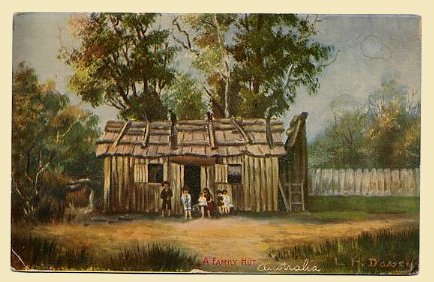
Postcard Family Hut Australia (1909)

Certainly ‘improvements’ were expected of selectors under the 1869 Selection Act- a house, boundary fences, clearing and cultivating at least 32 acres. (Some interesting, later images here)   Of course, the type of land dictated the emphasis given to clearing. Sparsely timbered plains posed no problem, but especially in Gippsland, the bush took on a daunting scale more similar to that in Canada.  But once it had been ring-barked and burnt,  the battle seemed won.  As one Gippsland selector W. M. Elliot, rejoiced at the end of his life

not a vestige remains of the vast forest that once so stubbornly resisted our labours.  Hill and vale covered in verdure as far as the eye can see! (cited in Dingle p. 67)

In the end, the Canadian Emigration Association was eclipsed by other developments.  The main proponent, Dr Thomas Rolph, became attracted by other (likewise unsuccessful) large-scale land development schemes whereby huge tracts of land would be purchased in England and sold to settlers, and by the early 1840s emigration had picked up of its own accord.  In Port Phillip, the bounty scheme almost bankrupted the government in a time of depression and by the early 1850s the gold rush made such schemes redundant.

References:

J. K. Johnson ‘Land Policy and the Upper Canadian Elite Reconsidered: The Canadian Emigration Association, 1840-1841’ in David Keane & Colin Read (eds) Old Ontario: Essays in Honour of J. M. S. Careless, Toronto and Oxford, Dundurn Press, 1990.  pp. 217-233

Peter A. Russell ‘Forest into Farmland: Upper Canadian Clearing Rates 1822-1839’ in (Ed.) J. K. Johnson and Bruce G. Wilson Historical Essays on Upper Canada: New Perspectives I ,Ottawa Canada, Carleton University Press, 1989. pp.131-149

Darrell A. Norris ‘Migration, Pioneer Settlement and the Life Course: The First Families of an Ontario Township.’ (Ed.) J. K. Johnson and Bruce G. Wilson Historical Essays on Upper Canada: New Perspectives I ,Ottawa Canada, Carleton University Press, 1989. Pp. 175-201

Tony Dingle Settling, NSW Australia, Fairfax Syme and Weldon, 1984

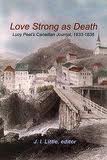
J. I Little (ed) ‘Love as Strong as Death: Lucy Peel’s Journal in Lower Canada’

Lucy Peel was the wife of a naval officer on extended half-pay leave and in 1833 she and her young husband  Edmund arrived in Sherbrooke, Lower Canada, “attracted to a romantic and utopian dream of creating their own genteel Eden in the wilderness, but they were pragmatic enough to regard a permanent return to England as a possibility” (Little 1999 p.58).  And indeed, this is what happened- some three years later they returned, despondent that their plans had not come to fruition:

Edmund is, after four years hard labour, convinced that nothing is to be done by Farming in Canada; the land here produces too little to pay the labour requisite to cultivate it.

Lucy’s diary  has been published as Love strong as death: Lucy Peel’s Lower Canadian Journal 1833-1836, edited by J. I. Little (2001).    It was written as a “letter diary”, where she recorded the letters that she sent as monthly instalments to her mother and occasionally to her sisters and in-laws.  Her husband Edmund also contributed a few letters as well.  The letters survived as transcriptions in three bound volumes titled “Letters from Canada” and the transcriptions, written (and possibly culled?)  in two different hands, were donated to a university archive by a great-great-grandson. As such, it should be seen as a series of letters rather than a journal as such, and subject to the qualifications about letters discussed and commented on previously by Hels and Yvonne.

I have not been able to locate a copy of Little’s book here in Australia, but Googlebooks has a generous excerpt that includes the introduction and the Canadian Historical Association’s journal has a downloadable version of Little’s article “Gender and Gentility on the Lower Canadian Frontier: Lucy Peel’s journal 1833-36.”

Little cautions us:

While it is necessary to remember that journals such as Lucy Peel’s reflect the experiences and views of a small, privileged sector of society, their authors were nevertheless sharp observers of their social and natural surroundings and they provide valuable insights into the ideology and behaviour of the families who dominated the Canadian colonial socially and politically in the pre-Rebellion era. (2001 p. 2)

My interest is in Upper Canada, and at this stage I am not sure how much the mindset in terms of social expectations within the English community differs between Upper and Lower Canada.  Of course, the French presence in Lower Canada was a major distinguishing feature between the two provinces.  Little notes that English gentry preferred Lower Canada to the more sparsely populated Upper Canada, which was afflicted with cholera and malaria. (In my total ignorance of Upper Canadian climate at this stage, the reference to malaria surprises me.)   Peel, at least in the excerpts and article, does not make much comment on the French at all, but she does describe the English community and expresses some fairly virulent anti-Americanism, and I would expect that similar sentiments would apply in Upper Canada as well.

The excerpts reveal a lively, perceptive letter writer, and their marriage seems to be a loving one.  Little uses Vickery’s book The Gentleman’s Daughter as a thematic touchstone for describing Peel’s writings and identity as a gentlewoman on the frontier : love and duty; fortitude and resignation, prudent economy, elegance, civility and vulgarity, and propriety.

Both she and her husband Edmund are engaging and surprisingly modern writers, and I was touched by Edmund’s description of his wife’s experience of childbirth.  I suspect that many men stumbling out of the labour ward today might say the same thing, perhaps less eloquently (although possibly with fewer commas!) :

I was present all the time to support Lucy and I was much distressed to witness her agonies.  I thought it the proper place for a husband at such a moment, considering it nothing more than false delicacy which would make a man absent himself at a time when his presence and support are most required, it is a fearful thing to see a woman in her pain, I could not have believed it possible they had suffered so much, at times I felt quite distracted, as soon as the child was born I staggered into an adjoining room and cried like a child until I saw Lucy smiling and free from pain, her face last seen was distorted with pain, the impression made on me will not be forgotten (19 Dec 1833 entry by Edmund, cited in Little 1999)

Move over, Lucy- I think I’m a bit in love with him myself!

Sources:

J. I. Little Love “Strong as Death”: Lucy Peel’s Lower Canadian Journal , Ontario, Wilfrid Laurier Press, 2001. Googleview excerpt

J. I. Little  ‘Gender and Gentility on the Lower Canadian Frontier: Lucy Peel’s Journal 1833-1836.’ Journal of the Canadian Historical Association Vol 10 (new series), 1999

Writing home

Read a good article last night:

David A. Gerber “Acts of Deceiving and Withholding in Immigrant Letters: Personal Identity and Self-Presentation in Personal Correspondence.”  Journal of Social History, Vol 39, No. 2 (2005) pp 315-330. I accessed it through my university library, but I see that it’s available through SLV as well.

With the current trend to write the “I” into history ( something that I am ambivalent about and will no doubt explore one day in another post)  you’ll often read about the emotional rush that researchers feel when holding a letter.  The precariousness and contingency of its journey into your hands, the physicality and smell of the paper and the knowledge that your subject had picked up a pen, smoothed out that very sheet, re-read it on finishing-  it all gives the act of reading the letter an edge of sanctity that is lost when reading it on microfilm, or digitally.

In this article, the author has obviously moved beyond that initial response- as must we all eventually. Instead of attending to the content of the letter, he looks instead at the immigrant letter as a strategy in maintaining interpersonal relationships across distance.  We know for ourselves that what we project and present in letters is not necessarily the case, and he focusses on what is not made explicit, what is hidden and held back.  Perhaps that’s part of the uneasiness about an online communicative presence now- that the interconnectedness of different online genres means that our different personae are no longer quarantined from each other. We may intend to remain silent, but instead earlier conversations are overheard.

Gerber’s research involves immigrant letters written between Canadian and American migrants and their families in Britain.  They were separated by a sea-journey of approximately 7-10 days which could stretch out to as long as 4-6 weeks: whatever the range it was certainly of a different magnitude to the voyage to Australia.  He describes his immigrants as “venturesome conservatives”, pessimistic about Britain’s future after the Napoleonic Wars and hostile to modernity and again I find myself wondering whether this also applied to Australia.

In these letters there is a psychological need to continue the relationship they are seeking to maintain in some way.  It’s often a collaborative exercise, even though in the archives we often only read one side of the communication.  Of course there is the issue of incompleteness and representativeness: letters may not have been collected or saved; they may be in private hands; they may have been culled; and the illiterate or those with completed families may not appear at all.

He explores the reasons – using examples from his letters- of outright lies and misrepresentations, but also untruths and silences.  Letter-writers might not want to cause worry to those at home; perhaps they had been discouraged from emigrating and have the need to save face.  On the other hand, perhaps it suited their purposes to exaggerate their situation.  Either way, there was the danger of being found out.  As Gerber points out “Gossip became transnational” as letters were shared between family and acquaintances in both settings.  Even silence is itself a type of communication.  It was a way of changing the tenor of the relationship.  For example, a child could take her time in replying to a parent and there is nothing at all that the parent could do about it.

Often the reason that we come to a body of correspondence is because we need the content that we hope they contain, or because the writer or recipient is important to our research in some way.  We become swept up in the details they offer, and the relationships that we try to reconstruct from them.  This article reminded me of the relationships that underpin the artefact itself, as a genre, that lie at the bottom of the act of writing and reading at a distance.


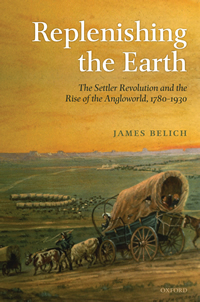
‘Replenishing the Earth’ by James Belich

Replenishing the Earth: The Settler Revolution and the Rise of the Anglo-World 1783-1939, Oxford University Press.

2009, 579 p.

Melbourne, formerly Port Phillip, is mentioned right from the opening words of this book.

Let us begin with two problems in urban history, exemplified by two pairs of cities:  Chicago and Melbourne and London and New York. (p.1)

Why did Chicago and Melbourne undergo such explosive growth, and why in 1890 were London and New York the only two mega-cities in the world?  And why are these four cities English-speaking? Given that there were other empires and cultures- the Portuguese, French, Dutch, Chinese, Russian- that could have rivalled or even exceeded the British empire, why didn’t they?

Replenishing the Earth is a big book that asks big questions and gives big answers.  Big ideas demand mental dexterity of readers, and Belich asks us to do some geographical somersaults as well.  He speaks not of  the “British Empire” as such, but of the Anglo-world, composed of two parallel, twinned structures (I wish I could show you the diagram- see Note 1 below)

To visualize this two-pair Anglo-world, imagine a malleable map like those used to illustrate pre-historical continental drift.  Place your thumbs above Florida, and your forefingers firmly in the Great Lakes.  Prise the United States apart along the line of the Appalachians, splitting it into Atlantic East, roughly the original thirteen colonies, and the vast American West.  The East, in our period, was an emigrant society as well as an immigrant society.  It was one of the world’s greatest sources of long-range migration and investment.  It was the American ‘old-land’, a metropolis equivalent to Britain.  Now gather up Australia, New Zealand, and with some hesitation, South Africa and place them in the Central Atlantic.  With Canada, the Dominions make up a water-linked ‘British West’. This West and old Britain combined to comprise ‘Greater Britain’, the white, un-coerced part of the British Empire, the British flank of the Anglo-world.  Here we have two metropolises or ‘oldlands’, the British Isles and the US East, and two Wests or constellations of ‘newlands’, land-joined in the American case and sea-joined in the British. p. 70

These two parallel ‘oldlands’  (i.e. Britain and Eastern America)  spawned what he calls a ‘settler revolution’ as people, technology and communications flooded into the ‘newlands’ (i.e what became the Dominions and Western America).  This might be thought of simply as good old-fashioned colonization but he separates out four phases that have their own rhythm:

  1. incremental colonization- the slow development of small settlements along trade routes and waterways, looking seaward with their interiors viewed as wild back-country
  2. explosive colonization.  This occurred from 1815 onwards with the mass transfer of technology, money, information, skills and people.  The settlers demanded oldland support, often on their own terms, and the whole scenario usually ended with a bang
  3. re-colonization.  Once things went pear-shaped, settlers cast about for an export that fed into oldland demand that would rescue their local economy- sheep, tallow, timber etc.  In this regard, “[t]he Anglo-world was built like a coral reef on layer after layer of fiscal corpses” (p. 206)  But this was not necessarily exploitative, but a matter of mutual dependency. By integrating themselves into the oldland economy, they saw themselves as part of ‘Greater Britain’ or ‘Greater America’, and “virtually metropolitan co-owners rather than subjects…” p. 180
  4. decolonization. This works only for the British scenario, but it marked the emergence of real as distinct from nominal Dominion independence.

His book focusses mainly on explosive colonization and re-colonization and he argues that the boom-bust waves run as an undercurrent through the histories of the newlands and their relationship with the oldlands.   He suggests that being aware of these rhythms is akin to being attuned to the seasons when describing agriculture- something that I had sensed myself in my own work with Judge Willis in Port Phillip during a time of financial bust, reflected in my several postings on this blog on the Twelve Apostles.

This book invites those who study settler pasts to add another colour to their palette. A booming settler society was very different from the same society in busts, or under re-colonization.  The mood was different, the atmosphere was different, the popular culture was different.  Social structure, crime levels, labour relationships, and gender relations in an explosive colonial society all differ significantly from those in a re-colonial one. (p. 548)

This book draws heavily on economic history: you only have to look at the secondary sources he has used to see that.   This is not the type of history with which I am particularly comfortable, but he adds to the ‘rational choice’ explanation of human economic activity another less measurable influence.   Immigrants, or their immediate forebears, had often shifted internally within Europe in preceding decades, and they were not moving as strangers into another people’s society, but were instead part of the cloning process whereby Anglophone language, institutions, credit and finance systems, plays, books, newspapers, fashions were transplanted into newland territories.  There were always the ‘boosters’ in these newland communities who spruiked the climate, the riches for the taking and the opportunities for settlers- and even the terminology that came to be used for the newcomers is important here-  but the mass transfer of people happened because of what happened in people’s heads when they weighed the possibilities of migration.  This, too, is an approach to history that I feel comfortable with.

His book focusses on the Anglo-phone world, but he makes -rather unclearly-  a distinction between Anglo-phone and Anglo-prone.  Quite apart from the linguistic punnery here, he is at pains to point out that many of the features he identifies are not exclusive to English-speaking peoples, but that they were more likely to display them than, say, French or Spanish societies. His book also encompasses Brazil, Argentina, Siberia, Algeria and Manchuria as alternative scenarios.

There are big ideas in this book, and I can’t do justice to them.  In fact, in a blogpost of this length I can’t even give Belich’s answer  to the questions he posed in his opening sentence above.  I am in awe of the breadth of reading that the author has undertaken and the sheer size of the explanation he offers.  I could not write this sort of history- I admire those who can- but I don’t know if I would necessarily want to, even if I could.  I found myself sitting up a little straighter once people and voices were brought into the spotlight, and I think that reflects my own historical leanings.

Note

You can see the map if you go to the Googlebooks page and search for “The Two-Pair ‘Anglo-World'”. This will take you to Page 70, from which you can go back one page to p.69 where the map is shown.

Other reviews of this book:

The Independent 3 July 2009

The Times Higher Education 27 August 2009

Andrew Smith’s blog (which is where I read of the book, then made the connection with the Keynote speaker at the recent AHA conference- that’s Australian Historical Association, by the way)

‘The Lion, the Eagle and Upper Canada’ by Jane Errington

The Lion, the Eagle and Upper Canada: A Developing Colonial Ideology

1987, 192 p & notes.

This book, developed from the author’s Ph D thesis of a similar title, won the Corey Prize for 1988.  So far I can still count the number of books I have read on Upper Canada on my fingers, but even I was aware while reading it that I was tiptoeing across what we would characterize in Australia as a “history war”.  Has Canada had its own history wars? I suspect, from this article, that it has.  No doubt I shall soon become more familiar with all this.

In her introduction Errington identifies the characterization of Canadian history that she is arguing against- i.e. that hardy British-American settlers fled the destructive influence of American democracy and republicanism and established a new, counter-revolutionary British society in Northern America that “rejected all things American while embracing 18th century British conservative values and traditions” (p. 4).

Instead, she argues, there were ongoing personal and intellectual links between settlers who had crossed to Canada, and the families and friends they left behind in America.  The major communications links with England passed through America; people crossed the border both ways, and there was a strong interest in federalist politics particularly as it played out in the nearby American state of New York.  She argues that rather than a horizontal line drawn between Canada and America, there was a cross-border sympathy between the Canadian reformers and their ideological brethren, the American federalists.  The settlers who crossed into Canada were not British themselves: they had been born in America and the vast majority of them never set foot in England.  She argues that Upper Canadian society was shaped by the dual influences of Great Britain and America, and that the political  controversies of the 1820s and 1830s had at their heart differing perceptions of the British constitution and parliamentary traditions- whether the principles, or the image,  of the British constitution should apply there.  There are resonances here with the same issue for Australian judges and governors at the same time:  the relevance of what we would now sneer as “one size fits all” law and policy.

Errington flags right from the beginning that she is taking a view from the top, restricting her analysis to the articulate elite:

This study is an attempt to understand what some Upper Canadians, those few individuals who were recognized as leaders of their communities, actually believed about themselves and about others, particularly the United States and Great Britain, and how their views of themselves intersected and depended upon their views of others and changed over time. (p.10)

She draws heavily on newspaper articles and the personal correspondence of a number of key individuals, particularly Richard Cartwright, John Strachan and  Stephen Miles whose perspectives appear throughout the book.  Perhaps it is because this area is new to me, but I found myself wishing that she had fleshed out these characters a little more, given that they were to be the chorus of voices heard throughout- perhaps in the way that Inga Clendinnen did in Dancing with Strangers, so that each time you encountered them again, it was like meeting an old friend.

I gather from some of the reviews I have read of this book, that it was felt that, by concentrating on the views of the elite,  she overlooked other arguments in making her own.  That didn’t worry me at all- it is the views of the elite that I need for my own purposes.   She does address the issue of her close focus in the introduction, but perhaps it was a methodological choice that she needed to prosecute more insistently.

I’ve already spoken of my interest in the way she integrated quotations into her analysis,  and I certainly felt as if I was reading a viewpoint, formed and promulgated over time by living, inconsistent, evolving people rather than a political stance delivered ready-made.  I like the way that she emphasizes the evolving and contingent nature of political ideas, the effect of generational change on political protest, and the way that British and trans-colonial ideas, events and politics played out at a local level.