Category Archives: Uncategorized

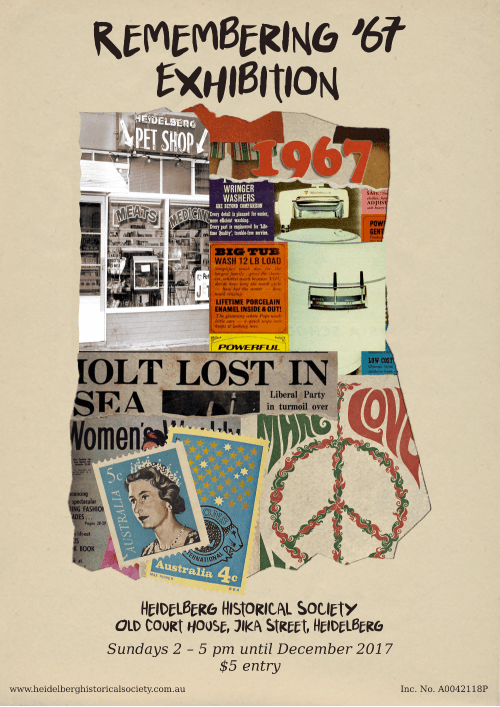
Exhibition: ‘Remembering ’67’

For the first few months of this year, much of my time was spent working with the team that has put together the ‘Remembering ’67’ exhibition at the Heidelberg Historical Society. This year is our 50th anniversary, and we celebrated as a society last weekend at the Centre, Ivanhoe with Graeme Davison as speaker at a really enjoyable luncheon.

But our celebrations don’t end there! We’re celebrating the WHOLE YEAR of 1967, as experienced in the City of Heidelberg.  Our exhibition would be of special interest to people who were in Heidelberg at the time, but it’s broader than that, encompassing housing, schooling, shops, entertainment, and childhood.

We’re open every Sunday between 2.00 and 5.00 p.m. (and your Resident Judge will even be there on the 2nd Sunday of each month: I’m there this coming Sunday too!) It’s at the Heidelberg Historical Society Museum, Jika Street Heidelberg until December

A4_poster_new

An online exhibition – Another Night

There’s an interesting curated story on the Victorian Collections website called ‘Another Night’. Inspired by Geoffrey Blainey’s Black Kettle and Full Moon, this narrative links different objects on the Victorian Collections website related to lighting and night-time.

Victorian Collections is a repository for digital images from different museums and historical societies in Victoria. It includes both paper-based images and photographs of catalogued physical objects.

The curator, Kitty Owens, has put together a selection of postcards and photographs and images of candles and lamps.  There’s a fascinating photograph of the inside of the Richardson’s house at Harmony Vale in the Dandenongs around 1895. It’s a fairly humble house, with the family gathered around the fireplace and the light spilling in from the window.  It’s very different to the image of Villa Fortuna, an opulent mansion stuffed with furniture and objets d’art, lit by (curiously mis-matched) chandeliers. There’s photos and an artefact from a ‘switching-on’ ceremony when the electricity came through. I’m not aware of local NBN-switching on ceremonies- perhaps we’re all too jaded.

Well worth a look!

https://victoriancollections.net.au/stories/another-night

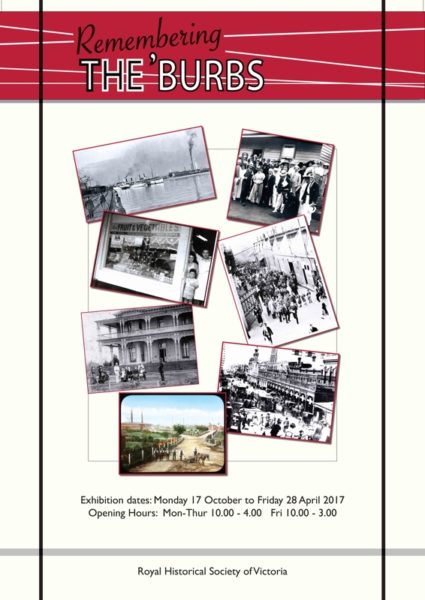
Exhibition: ‘Remembering the ‘Burbs 1850-1960’

I know that I always write about exhibitions just as they’re closing the door and turning off the lights, but with this one, there’s still a month to go see it. It’s at the Royal Historical Society in a’Beckett Street (close to Flagstaff Gardens) and it’s called ‘Remembering the ‘Burbs 1950-1960’

2016-remember-the-burbs-425x600

It’s a tie-in with the book that RHSV released just prior to Christmas ‘Remembering Melbourne’, which draws on images from RHSV’s own collection and the collections of twenty suburban historical societies to capture ‘Lost Melbourne’.  As their website says,

Remembering the ‘Burbs showcases the images supplied by these historical societies.
The images of suburban housing, work, industry, commerce, community service and
recreation – collectively trace the development of Melbourne’s suburbs between 1850 and 1960 as its population expanded from the city’s confines.

The exhibition has a snapshot of each of these twenty suburbs. Walking around, you can do a historic perambulation of suburban Melbourne, all in the same room!

Well worth a look if you’re in Melbourne in April.  It closes on the 28th April – see! plenty of time!

‘1787: The Lost Chapters of Australia’s Beginnings’ by Nick Brodie

brodie1787

2016, 304 p.

When you see Nick Brodie’s book on a bookstore shelf along with other Australian titles, with its dominant ‘1787’ emblazoned on the front, you tend to do a bit of double-take. Did someone make a mistake? Wasn’t it 1788?  There has been a constant and increasing uneasiness with 26 January being celebrated as Australia Day (something I’ve written about several times in this blog) but in this book Brodie bumps all this debate to one side, exhorting us that “‘If we broaden our gaze, our story will get bigger”. 

There are some history books where, having read them, you know there has been a shift in your awareness.  You return to ideas and concepts that you had never questioned before, and see them anew.  I’m thinking, for example, of Bill Gammage’s The Biggest Estate in the World and to a lesser extent Bruce Pascoe’s Dark Emu; I’m thinking of Greg Dening’s Mr Bligh’s Bad Language,  Zoe Laidlaw’s Colonial Connections or the first of Henry Reynold’s work that you might read. Tom Griffith’s book Hunters and Collectors changed my mind about museums, and as a more distant example,  I suppose that Geoffrey Blainey’s The Tyranny of Distance would have had a similar effect at the time of publication.  To this list, now I’d have to add Nick Brodie’s  1787.  He eschews the idea of our continent sitting isolated at the bottom of the globe and instead knits Australia into  Eurasia and a trading network frontier that connected the northern and southern hemispheres. Although the book is called ‘1787’ (a curious choice given his challenge to what he calls  “the arbitrariness of epochs”) it spans the seventeenth and eighteenth centuries, and expands its view to the  current peripheries of Australasia, including New Zealand (have I offended?), Tasmania, New Guinea and the Torres Strait.

He does seem rather fixated on the emphasis on 1788, or rather, he keeps asserting that ‘we’ are. Certainly the Australian history I was taught did include the Dutch and the Macassans and  I suspect that his somewhat conspiratorial view of the ‘lost’ness  these ‘hidden documents’ is a little overblown.

However, what Brodie does in this book is create a narrative from the writings of Spanish, Dutch, Portuguese and French mariners and contextualize those encounters into a broader Eurasian trade and Enlightenment-culture picture. He starts his book with the narrative of Don Diego de Prado y Tovar, an officer under the command of Pedro Fernandes de Quiros, who travelled the Pacific during 1606 and encountered the fringes of New Guinea. He highlights that  Islamic, European and Chinese powers converged in the islands to the north of Australia, and spends quite a bit of time on Tasman’s expedition for the VOC (Dutch East India Company). He shows that Dampier led not one, but two voyages to New Holland, and while respectful (as one must be) of Cook’s seamanship, he writes a detailed narrative of Cook’s largely unsuccessful attempts at interaction with the indigenous inhabitants . He is very aware of the constructed nature of the documents he works from.   He looks carefully at Cook’s corrections and amendments between the drafts and published copies of his journals, and considers them against Banks’ writings as well.  He cites directly from primary texts; he slows down for particular episodes; he makes pithy and stop-you-in-your-tracks observations.

I had not realized that Cook went to Van Diemen’s Land, and for me the really new part of this book came in the section ‘Forward Operating Bases’ which places Van Diemen’s Land and New Zealand as the bases of repeated encounters. The usual post-1788 narrative is that both VDL and New Zealand were settled from Sydney, but his enumeration of repeated visits by English and French expeditions that deliberately sailed for Adventure Bay( 1773 and 1777) and Frederick Henry Bay (1772) in Van Diemen’s Land and Ship Cove in New Zealand (1770, 1773 -several times-1774, 1777) challenges that view.  Ships in an expedition became separated from each other; they returned to shelter in the hope that the other ship would do likewise; they deliberately let loose farm animals in the hope that they would breed and form a land-based food supply, and they tried to encourage agriculture.

None of these journeys are accidental drop-ins: instead they are a manifestation of both the trade and knowledge networks that criss-crossed the globe.  Nor were the indigenous people they encountered always completely ignorant either: knowledge spread within Australasia as well.

Brodie has an engaging, easy tone and he sustained the energy of his writing throughout.  I do wish that there had been a map beyond the  16th and 17th century reproductions he includes within the colour plates in the middle of the book.  It’s written for a general readership, with no footnotes.

There is much to admire here, but as I found when reading his earlier book Kin, there is a brashness and self-promotion in his approach that does not sit well with me. He doesn’t need to engage in the sniping at unnamed historians who have ‘duped’ their readers and colleagues by fixing only on 1788, and I find his condescension towards other historians, their readers, and anyone who has ever studied Australian history, unpleasant. ‘Dupe’ can be a noun as well as a verb, and no-one likes to be told that they have been stupidly misled.   It is a stance spelled out in the ‘not-a-prologue’ (his chapter heading, not mine),  repeated over again in opening each chapter and reiterated in the ‘not-an-epilogue’. His insistence on his contrarian, “me against the historians” argument becomes wearing after a while.  I had thought, with Kin, that it was a reflection of his young age and impatience.  Perhaps it still is.  Despite his sneering at ‘historians’, he is an academically trained and recognized historian himself, and he’s too good to engage in such blatant self-promotion.  He’s a prolific worker (with already another book in the wings), stunningly telegenetic, and good at publicity.  It amazes me that he hasn’t been snapped up for television work.

That said, this is one of those books that makes you see things differently.  By shifting the frame to Van Diemens Land and New Zealand, he shifts Australian history subtly on its axis, and he does, it’s true, reframe the whole Captain Cook/ 1788 story. That’s quite an achievement.

‘Bush Studies’ by Barbara Baynton

baynton

1999, 140 P

A funny thing happened on the way to reading this book. I’ve been aware of it for some time, and always thought that I’d read it sometime but I never actually did anything about doing so. Then, last December, it turned up as our read for CAE bookgroup, even though no-one had selected it. When the secretary for the group rang to complain, she was told that another book that we had selected would be sent if it returned on time.  We’d have two books to read over Christmas, but that was no problem. When the second box of books arrived she opened it, only to find another book we hadn’t selected (Reading in Bed reviewed here). And so, here I was finally reading Bush Studies, even though I didn’t really mean to.

The version that I read started with an introduction by Elizabeth Webby. I often don’t read the introduction until I’ve finished a book, figuring that I need to read the book first before I want to engage with someone else’s opinion about it.  However, in this case I did read the intro, and I’m glad that I did so, as Webby’s introduction was followed by a memoir of Barbara Baynton written by her grandson in 1965.  In Webby’s introduction she follows Sally Krimmer and Alan Lawson in virtually debunking the whole of the family story that Baynton had put about and that her grandson had swallowed.The effect of this debunking was to put me on my guard as a reader, and alert me to the fact that this was one slippery woman.

Bush Studies is a compilation of short stories, and as I have said many times, I struggle to review a volume of short stories, aware as I am that what I am reading has been consciously curated from a selection of material that was written as stand-alone stories.  The first story, A Dreamer, was about a daughter returning home to her mother in a storm.  It was all very dramatic and Wuthering-Heights-y, and rather predictable.

The second story, Squeaker’s Mate is probably her best known story and one of the strongest in the collection.  The woman, unnamed until the end of the story, has been the mainstay of a timber-cutting partnership, hardworking and stoic and quite frankly taken advantage of by her feckless partner, Squeaker. When she is injured, it doesn’t take him long to find a substitute. There’s no freedom in this bush: it’s grey and harsh, just like Squeaker’s Mate’s prospects.

In Scrammy ‘And  an old shepherd is left to mind the selection. He talks to the dog to quell his fear that Scrammy ‘Hand- a bushman thief- would rob him. I found myself reading this book as a historian, mindful of John Hirst’s work on ex-convicts and their place amongst small selector society.  She’s writing from experience here, and it’s historically pitch-perfect.

The story I admired most was Billy Skywonkie, where a Chinese girl travels out to a selector. Racism is an unsettling undercurrent that runs through the story, and there’s no heroic bushman here. The story thrums with menace.

I have no idea how to read Bush Church at all. Is it a comic piece?

The final story The Chosen Vessel reminded me, as it does most readers, of Lawson’s The Drover’s Wife in the isolation and stoic vulnerability that being left behind in the bush engenders.  It’s not a snake she’s frightened by, but a man – not unlike the old convict in Scrammy Hand, but she has more to fear that mere robbery. I’m not sure about the Virgin Mary twist at the end though, and the story was chilling enough without it.

No wonder Barbara Baynton has been placed in the constellation of late nineteenth-century ‘bush’ writers but it’s a different bush that she’s writing about in her stories. There’s no ‘legend’ here. There’s isolation, racism and menace in this bush, and it brutalizes men who brutalize women in turn.

Sue at Whispering Gums has written several separate posts on Bush Studies, where she writes far more thoughtfully than I have done, as I’m writing some two months after I read the book. Both Squeaker’s Mate and Billy Skywonkie have stayed with me, which speaks to their strength I think, because short stories tend to wash over me a bit. and I must say that I’m glad that I’ve finally read Bush Studies (even though I didn’t mean to!)

Source: CAE bookgroup

aww2017-badge

I’ve posted this review to the Australian Women Writers Challenge.


Movie: I, Daniel Blake

At a time when our government is sending out computer-generated demands for repayments of debts that may or may not be owed by Newstart clients, every member of Parliament should be made to sit down and watch this film. “Just get online and fix up your details” flows so easily from the lips of a politician,  but as we see with older worker Daniel Blake, it’s not so easy. Mr Bumble the Beadle from Oliver Twist might be a figure from the past, but the oily, formulaic weasel-speak of the employment centre staff is just as patronizing.

My rating: 4.5/5 stars

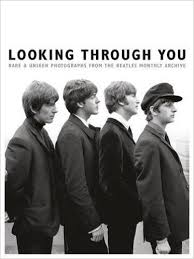
‘Looking Through You: Rare and Unseen Photographs from the Beatles Book Archive’ by Leslie Bryce

lookingthroughyou

192 p. 2016

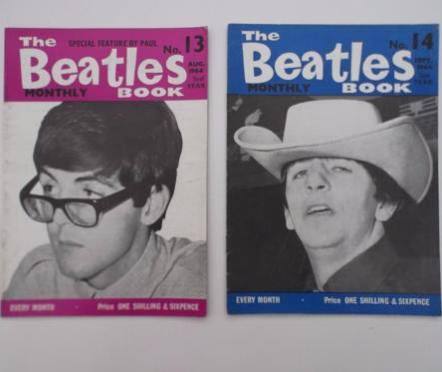
As part of my nostalgic after-glow from seeing Eight Days a Week, I snapped up this book at my library when I saw it on the New Non Fiction shelves.  It features beautifully clear photographs that were taken by photographer Leslie Bryce who, along with published Sean O’Mahony, issued a small monthly booklet called ‘The Beatles Monthly Magazine’ during the Beatles phenomenon of the 1960s.

beatlesmonthlybook

Now fetching about $30 each on E-Bay, they originally cost 1/6d (15 cents for those readers who are P.D. [pre-decimal]) and there were 77 editions issued between 1963 and 1969. It was resuscitated in 1976 and finally ceased publication in 2003.

They were a bit of a hack-job, replicating the format of other similar fan magazines, and filled with pictures and articles that purported to be interviews.  It contained a letters page with the occasional ghost-written Beatles reply,  a Beatles  News page and the lyrics of the month’s Beatles Song. However, they were given unprecedented access to the Beatles backstage and in the recording studio, and were part of the team.  Pages 4 and 5 of the magazine were devoted to the National Fan Club newsletter, with its fictitious secretary Anne Collingham, a made-up name to cover the rotating team of staff who answered the fan mail that arrived at the Offical Beatles Fan Club  organized through the Beatles’ press officer.  The Beatles Book was distributed to over a million people world wide, and Official Beatles Fan Club membership reached a peak of 80,000 world wide.

At first,The Beatles Book contained biographical articles to introduce ‘the boys’ to their fans, but increasingly it became a way of keeping the world at bay.  The Beatles of 1963 and 1964 welcomed the photographic publicity, but by late 1966/early 1967 the torrent of photographs had slowed to a trickle.  The final photographs in the book are mainly taken at recording sessions – Sgt Peppers, Revolver etc- where the tension between them  is palpable.

Ah, but those younger photos are so clear and exuberant!  Did they brush their hair specially each time the camera came out, I wonder?- it’s certainly shiny clean hair, and suit and tie were their ‘brand’.  The earliest photographs in the book were taken in 1963 when the Beatles played at summer seaside locations (Margate and Bournemouth) before heading to London in December 1963- then Paris, New York, Washington, Florida, Europe- no Australia here.

The photographs have interesting little captions and snippets of fascinating facts. Did you know, for instance, that the last note in the gobbledegook at the end of Sgt Peppers can only be heard by dogs? [I don’t have a dog to try it out on anymore].

Anyway- beautiful photos that I certainly hadn’t seen before and an interesting flip-through if you’re in the mood for some innocent nostalgia.

Sourced from: Yarra Plenty Regional Library

My rating: 7/10 (difficult to rate, really)

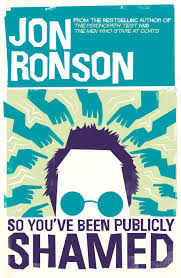
‘So You’ve Been Publicly Shamed’ by Jon Ronson

ronson

2015,  269 P.

One of the problems with a media-savvy author who travels the world promoting his book is that by the time you get round to reading it, you feel as if you’ve already done so.

This was the case for me with this book, which I had heard about through multiple interviews on different Radio National programs. The author, who had his own taste of being the victim of cyber-stalking, becomes fascinated by the phenomenon of shaming over the Internet as a modern manifestation of an older form of punishment and social control.  In particular, he tells the stories of Jonah Lehrer who fabricated quotes in an article on Bob Dylan, and Justine Sacco whose flippant sarcasm in a tweet about being white and the likelihood of catching AIDS went viral. Both were deluged with internet outrage and it’s no exaggeration to say that their lives were destroyed.

Ronson examines the use of shaming in formal legal settings. He discusses Judge Ted Poe who orders deliberately shaming punishments for the offenders who appeared in his court, and he fact-checks the Stanford Prison Experiment which has been offered up  as ‘evidence’ that we are all capable  of evil actions once a social-media crowd phenomenon gets started. He meets people who have started internet fire-storms, and attends a shame eradication workshop established by an enterprising psychotherapist. Finally, in a hopeful sign that there can be redemption, he meets representatives of a company which specializes in white-washing Google search results for people who have been subjected to public shaming.

Of course, through his book Ronson shames these people again by publicizing their plights anew and I found his smug voyeurism rather off-putting. Nonetheless, many of his points resonated.  I found myself thinking of Monica Lewinsky’s powerful TED talk The Price of Shame and Waleed Aly’s recent Andrew Olle lecture where he noted the rush to emote rather than to think.

The book was an easy enough read. I just felt that I’d already heard it all before.

Source: Yarra Plenty Regional Library

My rating: 7/10

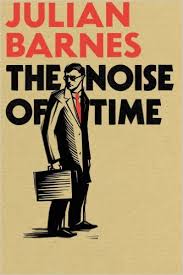
‘The Noise of Time’ by Julian Barnes

barnes_noise

2016, 180p.

I must confess that it took me some time to work out that the subject of this small novella is Dimitri Shostavkovich. In the first part of the book, Shostakovich is an unnamed ‘he’, waiting by the lift outside his apartment, a small suitcase at his knee, expecting to be arrested. “All he knew was that this was the worst time.” (p. 7) His composition, Lady Macbth of Mtsensk had been denounced by Pravda, and critics who had previously praised it quickly distanced themselves from it.

They always came for you in the middle of the night. And so, rather than be dragged from the apartment in his pyjamas, or forced to dress in front of some contemptuously impassive NKVD man, he would go to bed fully clothed, lying on top of the blankets, a small case already packed on the floor beside him. He barely slept, and lay there imagining the worst things a man could imagine.  His restlessness in turn prevented Nita from sleeping.  Each would lie there, pretending; also, pretending not to hear and small the other’s terror. (p. 15)

We meet him again on a plane, returning home from a trip from America twelve years later. In front of the world’s media, he has been humiliated as a Soviet stooge. “All he knew was that this was the worst time.  One fear drives out another, as one nail drives out another.” (p. 61).

And then we meet him again, another twelve years on, in 1960, when he is being pressured to join the Communist party,  repeatedly, strongly and with the threat of violence. The violence is always suspended – for now.

All he knew was that this was the worst time of all.  The worst time was not the same as the most dangerous time.  Because the most dangerous time was not the time when you were in most danger.  This was something he hadn’t understood before. (p. 115)

We often read books of courage and resistance, but less often of extorted compliance. As the Shostakovich character reflects, anti-communist sympathizers wanted martyrs, thus themselves becoming like Power (always written with a capital letter and never specified) in that whatever he gave, more was always demanded.

Under the pressure of Power, the self cracks and splits.  The public coward lives with the private hero. Or vice versa. Or, more usually, the public coward lives with the private coward. But that was too simple: the idea of a man split into two by a dividing axe. Better: a man crushed into a hundred pieces of rubble, vainly trying to remember how they- he- had once fitted together. (p. 155)

I often tend to think that cowardice is an easier option than bravery: when I hear of acts of heroism, I often wonder if I would have it in myself to act in the same way. But if this is a book about ‘cowardice’, it’s a cowardice that has no upside. Instead it deadens and leaches the joy from life:

… But it was not easy being a coward.  Being a hero was much easier than being a coward.  To be a hero, you only had to be brave for a moment- when you took out the gun, threw the bomb, pressed the detonator, did away with the tyrant, and with yourself as well. But to be a coward was to embark on a career that lasted a lifetime.  You couldn’t ever relax. You had to anticipate the next occasion when you would have to make excuses for yourself, dither, cringe, reacquaint yourself with the taste of rubber boots and the state of your own fallen, abject character.  Being a coward required pertinacity, persistence, a refusal to change- which made it, in a way, a kind of courage. He smiled to himself and lit another cigarette. The pleasures of irony had not yet deserted him. (p 158)

This book is written in this quiet manner, in the third person, in a somewhat stilted language that only barely masks rage and frustration. The sentences are brief, as are the paragraphs, and the three sections of the book are broken up into asterisked sections.  For a book about a composer, there was little music: instead there were words, muttered and issued through clenched teeth.

After I belatedly realized that “he” was an actual figure, Shostakovich, I wondered if, in this information-rich world I should go off and google him before I proceeded. I didn’t, but I do wonder if I might have got more from the book if I had done so.  Sheila Fitzpatrick, the Australian historian of Russia, wrote an excellent and highly informed review of the book in the LRB where she demonstrates that she, at least, understood the allusions and references to other Russian composers and historical characters that flew right past me.

Instead, because of my ignorance of the real-life historical figure and his biography, I almost had to read the book as an allegory and the use of ‘he’ and capital-P ‘Power’ and the interiority of the narrative lent itself to such a reading.  Its three parts had a strong chronological structure within which flashbacks shuttled back and forth, and the recurrence of a new demand or challenge every twelve years racheted up the tension.  As such, then,  its brevity was a real strength. I don’t really now if I would have wanted it to go on for much longer.

Source: Yarra Plenty Regional Library

My rating: 8.5/10


‘Only Daughter’ by Anna Snoekstra

snoekstra

2016, 250 p

The hugely successful Gone Girl with its taut and if somewhat implausible double narrative has spawned quite a few imitators, and this is one of them.  In 2003 Rebecca Winter disappeared, prompting a huge but ultimately fruitless police investigation. Eleven years later, a young woman on the verge of being arrested, blurts out that she is the missing Bec. We (and she)  know that she is not.  Her family and friends welcome her back, but she is soon uneasy about them as she pieces together what might have happened to the real Rebecca Winter.

The book is ostensibly set in Canberra, with reference to Canberra landmarks, but is peppered with Americanisms, most particularly ‘Mom’ which jarred every time, and a house that sounds far more like a double-storey American weatherboard house than a Canberra one.   Beyond the double narrative, there’s a back-story to the Bec-imposter as well, which is probably one storyline too many.  The book has a rather adolescent voice, using alternating past and present tense and third and first person in the two time periods, and relies heavily on dialogue. It tended to get rather flabby in the middle, and I was finding the banality of description and dialogue rather wearing.  However, the ending came as a surprise, not only in the ‘whodunnitness’ but also in the rapid change of pace in the last twenty pages or so. It doesn’t surprise me at all that it has been optioned by American producers for a film release.

The book was published by Harlequin, not one of my usual publishers. The book itself finished 3/4 of the way through with the remainder of the pages is made up of teasers from some of their other publications. It felt a bit like commercial television and did a disservice to Only Daughter by firmly reinforcing its place within the romantic/ domestic thriller genre.

aww2016

I’ve posted this review on the Australian Women Writers Challenge website