Category Archives: Things I’ve seen recently

Ballarat bound #1: The Art Gallery of Ballarat

So what if the Aussie dollar is dropping?? I’m still on the road:  Geelong a couple of weeks ago; Ballarat this weekend! Who needs to go further than 100 kms from home?? Wot larks!

I’d been disappointed to miss the Anne Frank travelling exhibition that closed recently at the Jewish Museum and when I found that it had headed off to the  Ballarat Gold Museum, I thought I’d follow it.  Then there’s the new Museum of Australian Democracy at Eureka (MADE) which opened just last month, and a scientific drawing exhibition from Museum Victoria on show at the Ballarat Art Gallery.  So, all in all- a good reason to go!

IMG_0258

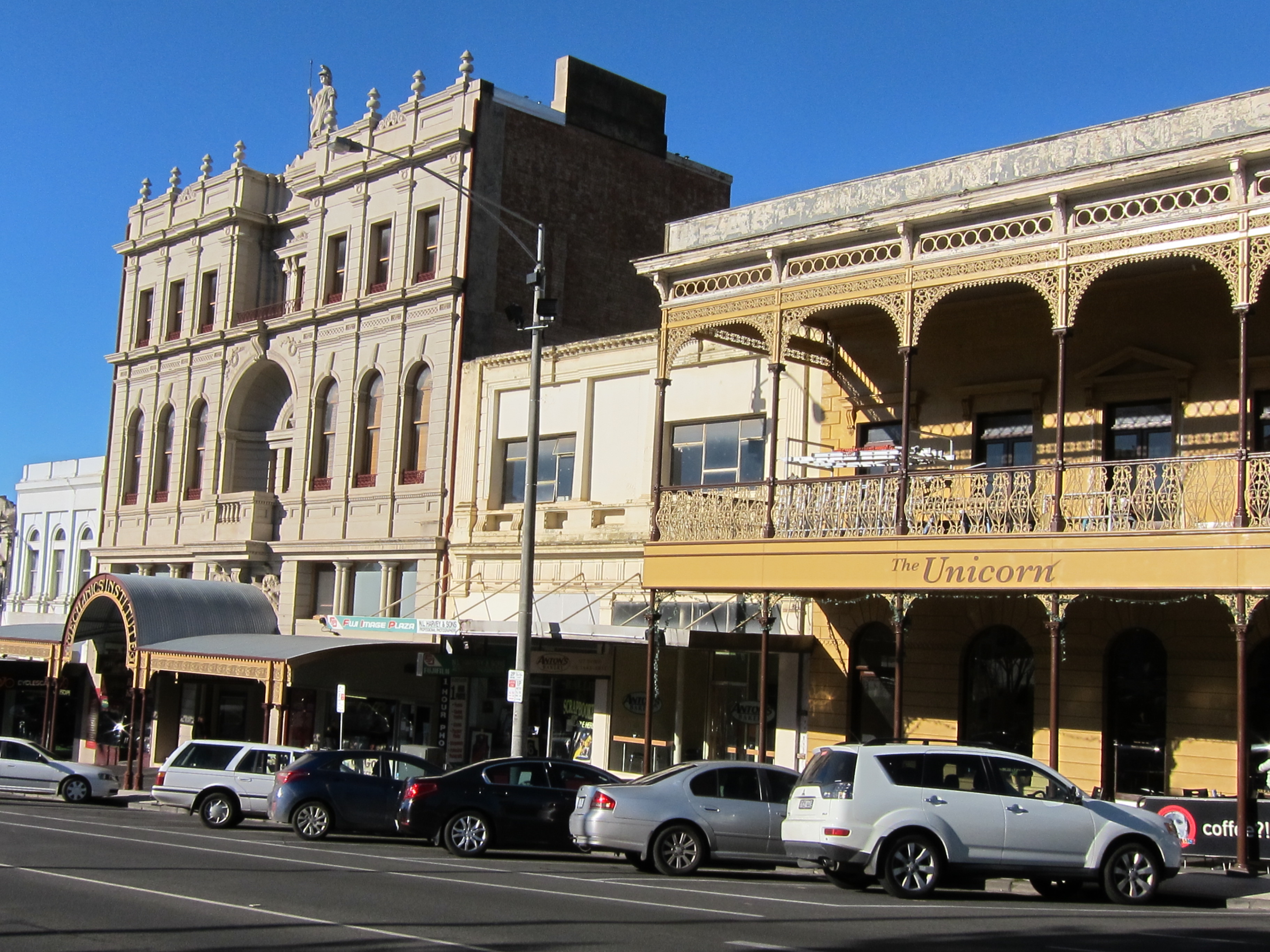
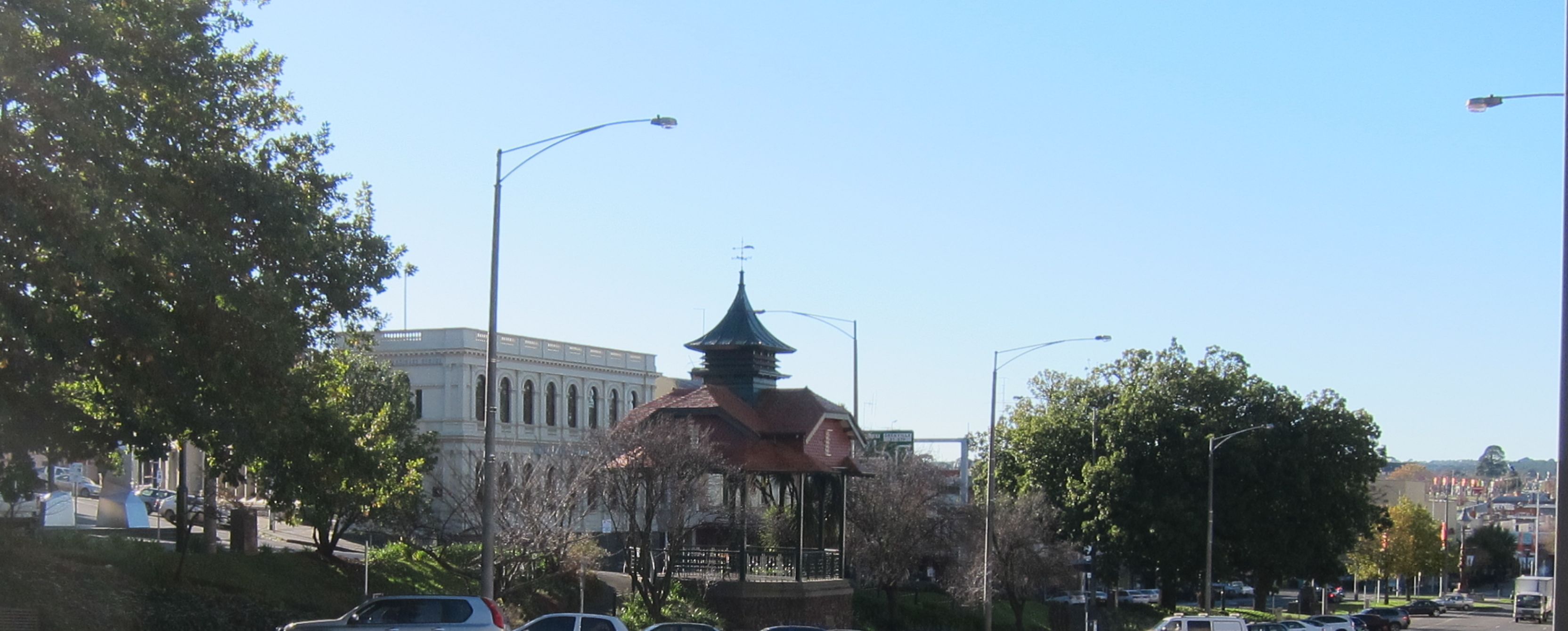
For those of you not familiar with Ballarat, it’s a large provincial gold-rush town about 100 km north-west of Melbourne.  Enormous wealth poured into both Ballarat and the similarly-sized Bendigo  in the early 1850s and is expressed in its grand architecture and densely-woven civic culture.

IMG_0255

First stop- the  Art Gallery of Ballarat, the oldest and largest regional art gallery in Australia (yet another manifestation of the wealth brought by gold, no doubt).  There were two temporary exhibitions that we were interested in, both as it happens  touring exhibitions from Melbourne-based institutions.

The first was The Art of Science: Scientific illustrations from Museum Victoria, featuring 300 years of scientific drawings from nature.  Birds and wildlife dominated the first room, with pictures by John Gould and his illustrators, various French and British naturalists who had come to Australia in the late 18th century and several plates from Audubon’s Birds of America.   I’m often fascinated by the very first scientific drawings of -for example, Australian fauna- that are really grappling with trying to depict something that has not been seen before and yet don’t quite capture it properly.  Possibly it’s lack of skill, or perhaps it’s because the painter is reaching after comparisons and analogies that don’t work.

There was a chronological and conceptual narrative  in the way that the works were displayed in this exhibition.  The illustrations in the first room tried to replicate reality as accurately as possible, then the exhibition moved on to scientific depictions of the unseen through the  reconstructions of fossils and then finally magnification as a form of hyper-seeing.

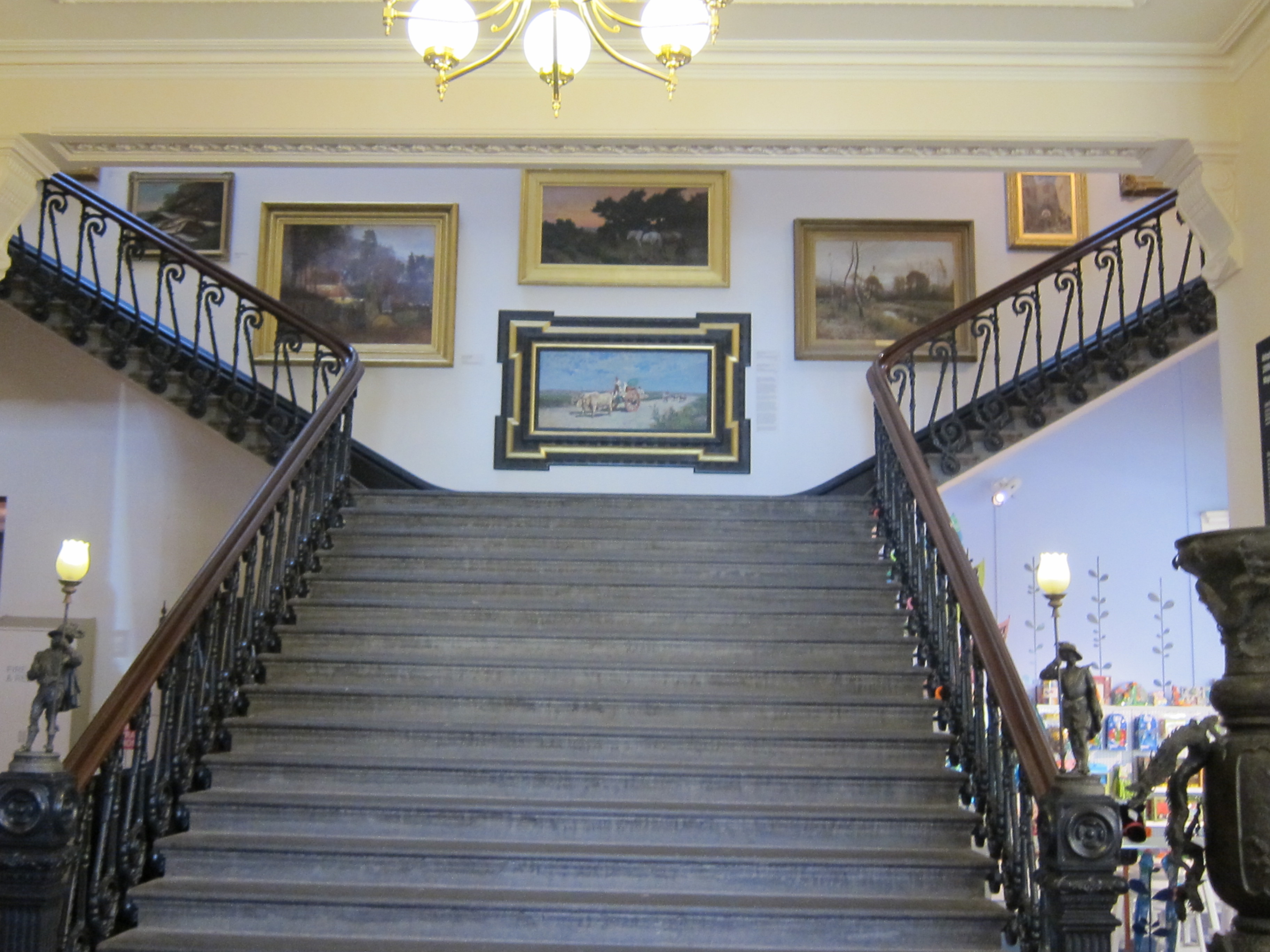
Stairway leading up to galleries, Art Gallery of Ballarat

Stairway leading up to galleries, Art Gallery of Ballarat

All of which formed an interesting juxtaposition with the exhibition in the adjoining rooms Living Traditions: The Art of Belief  from the NGV which showed man’s attempts to draw or respond through art to something definitely unseen (and in my opinion, not real at all).

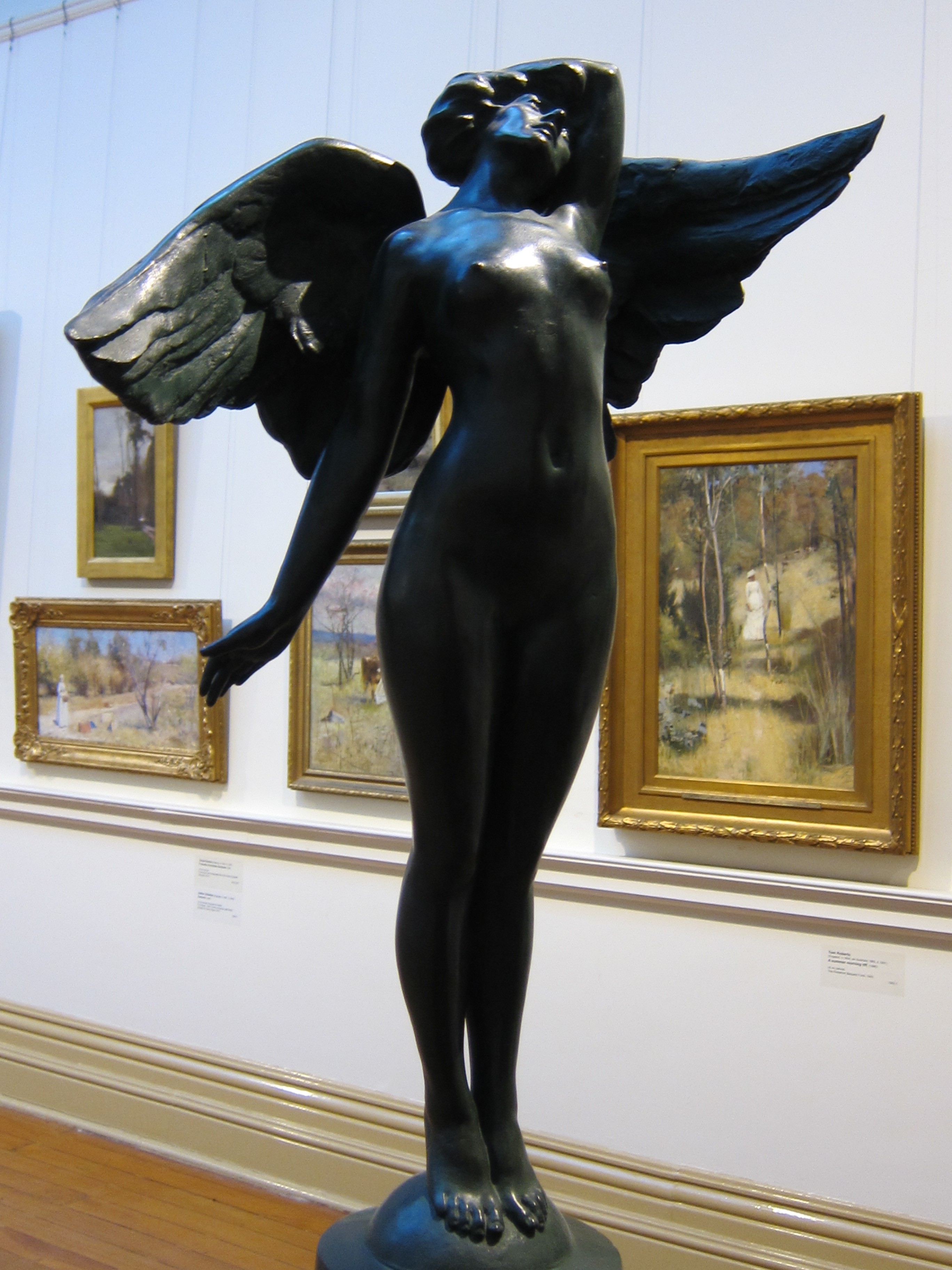
Then upstairs briefly to look for Mr Judge’s Grand-dad’s contribution to the Gallery.  Most major  galleries in Australia have a Web Gilbert somewhere tucked away.  Here’s Ballarat’s:

'Psyche' by C. Web Gilbert, Art Gallery of Ballarat

‘Psyche’ by C. Web Gilbert, Art Gallery of Ballarat

A pie for lunch (what else?) then next stop- The Museum of Democracy at Eureka.

Happy 200th birthday Redmond Barry!

Oooffggh! I’m all “Barry”-ed out after celebrating Redmond Barry’s birthday on Friday 7th June (well, 200 years on) by visiting the exhibitions and attending a symposium to celebrate one of Melbourne’s worthies.
IMG_4847

First stop, the exhibition at the Supreme Court.  This display is a chronological account of Barry’s life and is mounted along the length of a long corridor in the Supreme Court building, with further historical artefacts along adjoining corridors.  I entered from William Street, where you need to go through airport style security, but once in you can wander around the corridors quite freely. The display is clear, well-laid out, and probably gave the best overview of his life of the exhibitions I saw.

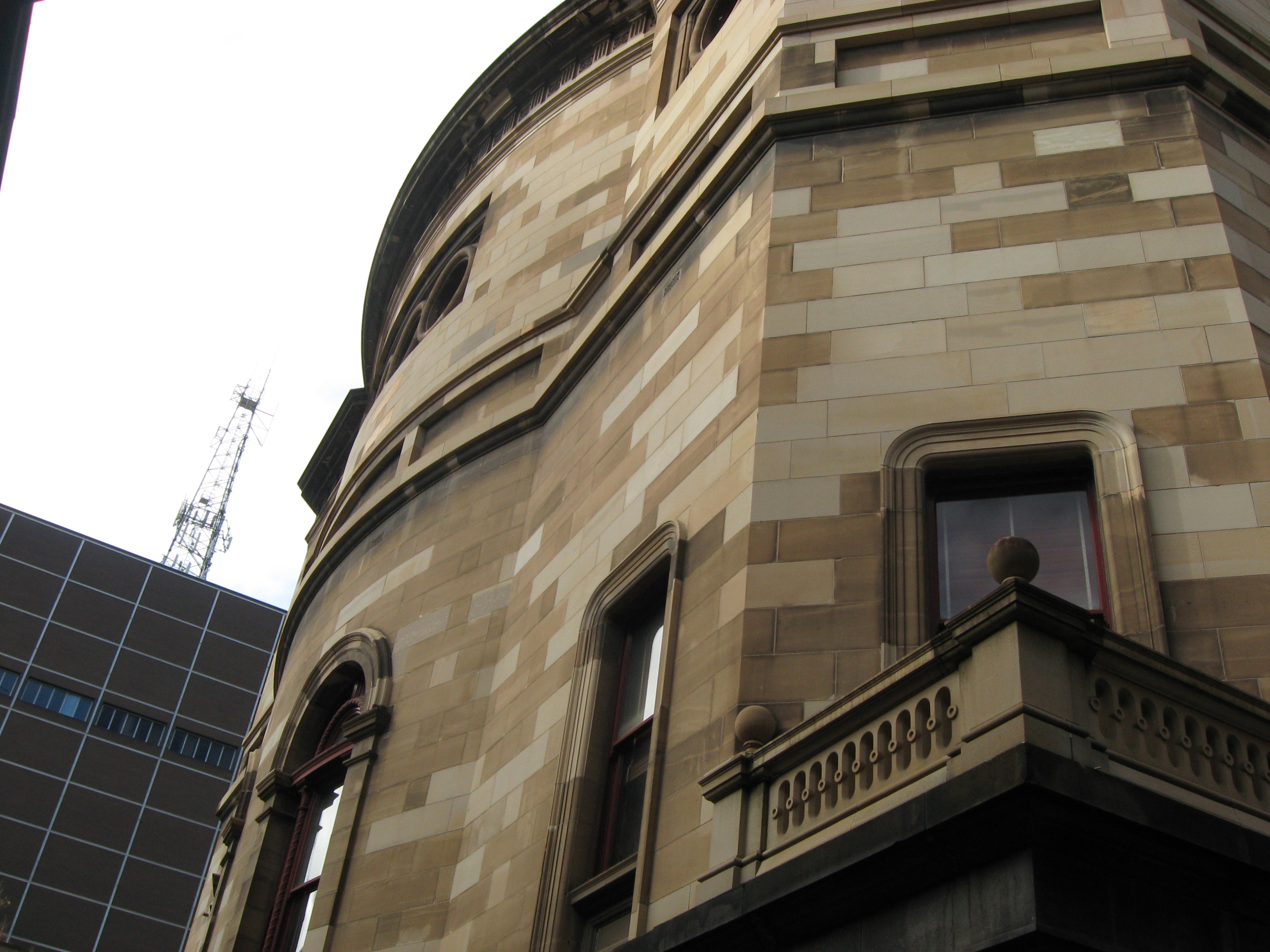
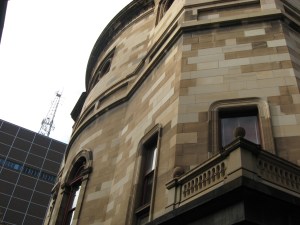
I’d never been inside the Supreme Court building and I’d always assumed that the dome visible from the street covered the courtrooms inside.  I was wrong: the domed building is actually the Supreme Court library and what a beautiful building it is.  You can go in (despite the gold lettered sign on the door that says that you can’t) and it’s spectacular.  Their website has information and a brief history of the library.

Redmond Barry was instrumental in establishing the library which was, and still is, funded by the fees that lawyers pay to be admitted to practice in the Supreme Court.  The library he established was situated in the old, since-demolished Supreme Court building on the present site of the old City Court (now owned by RMIT)- (the court that Judge Willis was so proud of but never sat in because it opened just after he left the colony).  So, too, although Redmond Barry was deeply involved in the design of this library, he didn’t get to see it, because he died before it opened.

Next stop the State Library to see their ‘Free, Secular and Democratic’ exhibition, which is on display until 2 February 2014.  The library was initially established as the Melbourne Public Library, and unlike many other libraries of the time, there was no vetting process and “every person of respectable appearance is admitted, even though he be coatless…if only his hands are clean”.  Redmond Barry was the driving force in establishing this library too, which at the time consisted of the Queen’s Reading Room at the Swanston Street frontage, designed in the style of the libraries that Redmond Barry had frequented in Ireland and England before coming to Australia.  The display has a heavy emphasis on the architecture of the “The Institution” which eventually came to include the library, the museum, the National Gallery of Victoria. The exhibition explores the idea of ‘display’ more broadly, with a section on Exhibitions as well- a real cultural phenomena of industrialised nations, empire, patriotism and competition.  There’s a good slideshow on the SLV site.

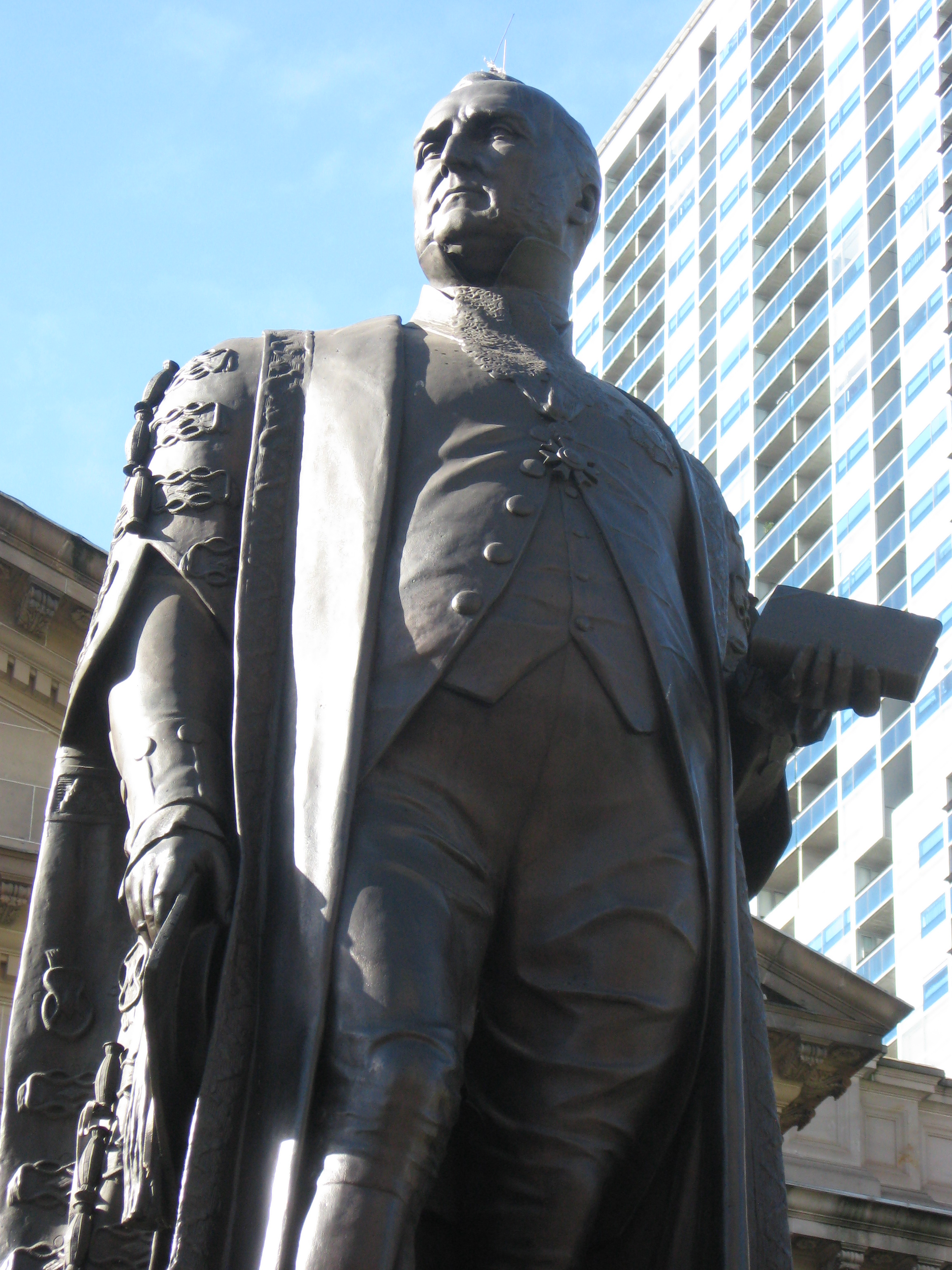
I bid farewell and ‘Happy Birthday’ to the man himself out in forecourt and caught a tram up Swanston St to Melbourne University for the symposium in the Baillieu libarary
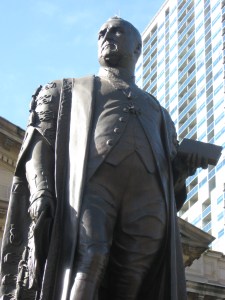
IMG_4850

There were four speakers at the symposium, each exploring a different facet of Redmond Barry.  Stuart McIntyre,  Ernest Scott Professor of History, University of Melbourne started with an exploration of Redmond Barry as the inaugural university chancellor.  He portrayed him as a hands-on administrator, with a strong ceremonial presence.  He made the study of the classics compulsory for all student, which was rather old-fashioned at the time, but as the basis of a broader curriculum in the professions like law and medicine.  He battled with the professors and with the university senate, and insisted  that the professors not comment on religion, and later politics, for fear of sectarianism.

John Waugh Honorary Senior Fellow, Melbourne Law School spoke of Redmond Barry’s contribution to legal education. In England  (and in many other places throughout the empire)  at the time, a  legal education was part of being a gentleman, but it was not professional training as we know it.  Lawyers would undertake an apprenticeship with other lawyers and undertake self study. Barry derided the practical, technical nature of this system, although he was later to exhort law students to simplicity and logic in their arguments- something rather at odds with his own love of rhetoric.  In 1857, in his dual role as chancellor and sitting first puisne judge, he ensured that law students from the University of Melbourne were exempt from sitting the examinations of the Board of Examiners. In 1872 university education was made compulsory for barristers, thus in effect delegating entry to the profession to the universities: a very unusual practice that was found only in South Australia.

The Chief Justice, Marilyn Warren spoke about Barry as a Judge.  She noted that Barry’s reputation as a harsh, conservative judge is dominated by the Ned Kelly trial.  She described him as a detached, black letter lawyer, who was a judge of his times.  She suggested that in the Ned Kelly trial, he saw Kelly as symptomatic of an ignorant, ungovernable youth culture that needed to be stamped out.  In other cases, e.g. the Eureka case, he was more liberal. She noted that contrary to popular belief, he was only ever first puisne judge and never Chief Justice. He had good reason to believe that he would be appointed to replace William a’Beckett when he retired, but he was overlooked.  She suggested that this was because he aggravated people; the government could not be quite sure of how he would act in the position, and because his long-term liaison with Mrs Barrow was a matter of scandal.

Finally, Sue Reynolds, Senior Lecturer in IT and Logistics at RMIT spoke of Redmond Barry’s contribution to the four main libraries that he has been associated with: the Supreme Court library, what is now the State Library of Victoria, the Parliamentary Library, and the library at the University of Melbourne.  She has written a book about the early years of the Supreme Court  library called  Books for the Profession.  Barry was a prominent member of the board for each of these four libraries, and very much involved in the sourcing and  purchasing of books and production of catalogues. Being so involved in each of them, he was able to guide the development of their collections to reflect the unique purpose of each one and its relationship with the others.

And so, talks presented and cakes eaten, it was time to head home. On the way out of the Baillieu library, I stopped to look at their display which was drawn from their own archives and which reflected Barry’s wide range of interests.

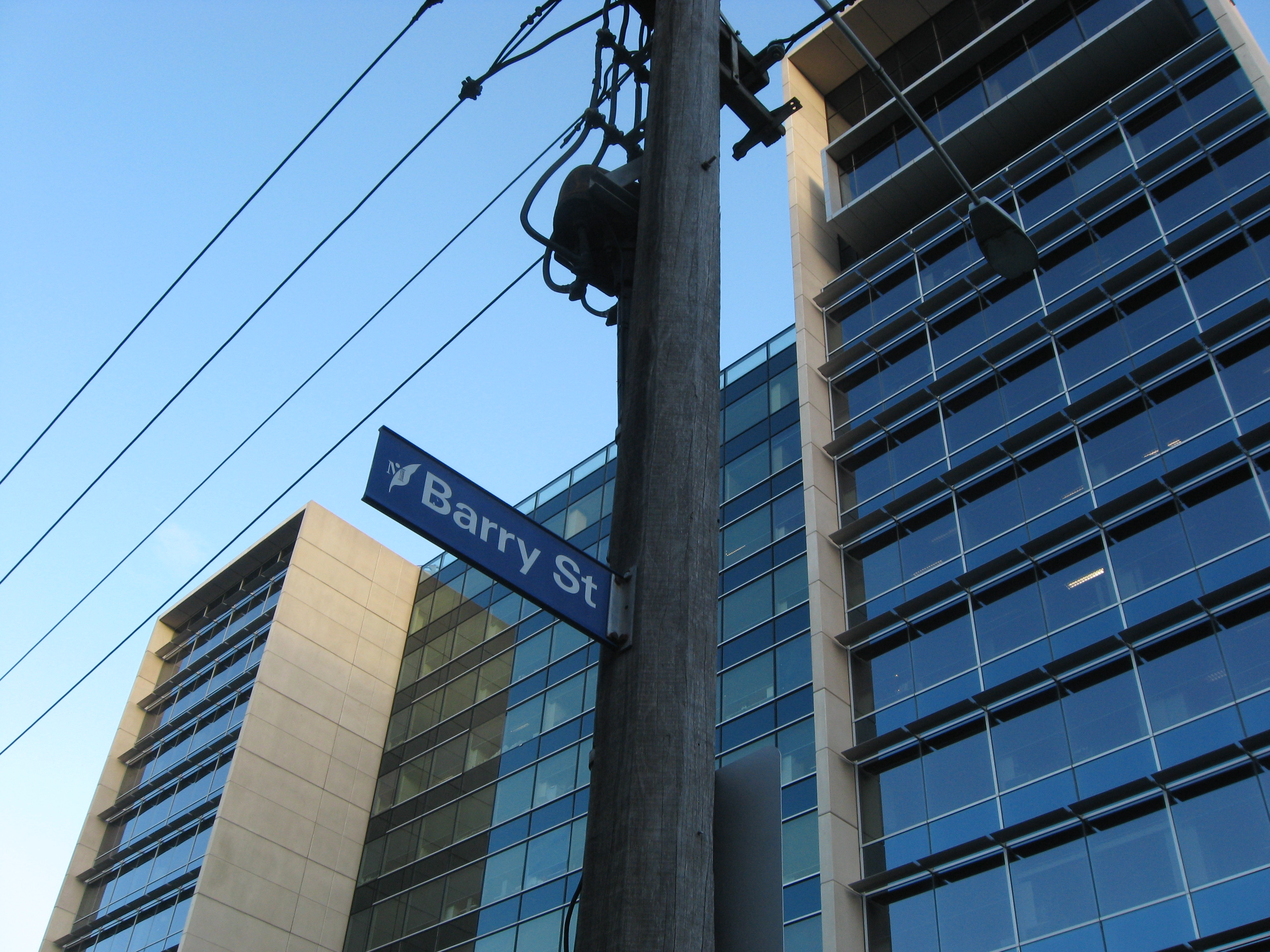
Time for one more- the small display in the Law School library situated- how appropriately, on the corners of Barry and Pelham Streets in Carlton.
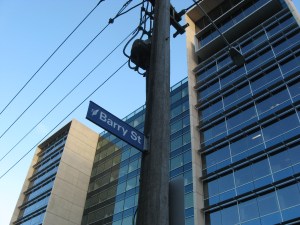
IMG_4863

Ye Gods! What is this excessively palatial university building???  (Not from the outside- go inside to the foyer.) I’d seen the beautiful Supreme Court library that day, and I’ve been into Queen’s  Hall at SLV and they too are lavish buildings in their pompous, 19th century way, but this one just seemed too slick, too “look at us-we’re world class”, too corporate- especially compared with the often overcrowded and primitive accommodation given to other faculties.  Needless to say, when I arrived home and saw the three ‘begging’ letters from the University of Melbourne addressed to the three Melbourne Uni alumni who reside at this house, they went straight into the bin.

I wonder what Redmond Barry would make of the building?  I really don’t know. Anyway, happy birthday Sir Redmond.

‘Love Song Circus’ by Katie Noonan – a ‘post-view’

Others preview: I post-view.  We went last week to see Katie Noonan’s show ‘Love Song Circus’ at the Famous Spiegeltent.

Ah- the Spiegeltent! Such an exotic idea better left in the realms of the imagination, I reckon.  Fortunately it was a balmy night as we lined up outside, instead of a 43 degree scorcher or -more likely- one of the grey windy greasy-chip-smell, leaf-whipped days outside the Arts Centre during a Melbourne cool change.  Then you’re ushered in to be shoe-horned into ricketty fold-up wooden seats in long rows around the stage. Determined (dare I say inconsiderate?) souls, intent on buying a glass of wine, push their way along the row.  There’s no point standing to let them pass as the seats are fixed anyway, so on they tumble, their alcoholic  prize held above their heads, spilling into the laps of their fellow-audience members,  with an apology here and a grumble there.  Surely the hard fought-for wine could scarcely be savoured when you can hardly move your arms enough to bring glass to lip.  It’s an “intimate” setting, to be sure.

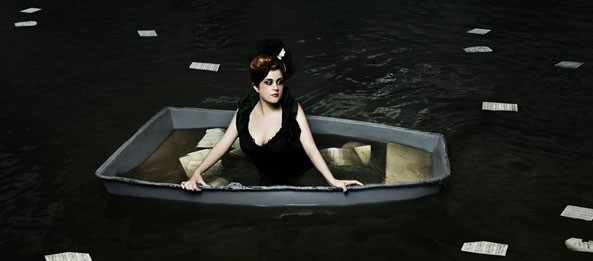
noonan

Katie Noonan has a beautiful, crystalline voice, and she’s an intelligent and amazingly versatile performer.   This show, which she wrote herself, was prompted by an exhibition at the National Museum called Love Tokens.  These were coins that were smoothed and engraved as a memento for the convict’s family and loved ones, and they record the name of the convict and his/her loved one, the length of sentence and a popular rhyme or sentence.  The National Library holds 314 tokens, dating from 1762 to 1856- the largest collection in the world.   There’s a wonderful website devoted to the exhibition- well, well, well worth looking at.

These love tokens, so simple and yet so heavy in the stories they carry, have spawned many artistic responses, including this one.  As Katie Noonan writes in the program:

This symbol of love captured my imagination immediately- it is a profound glimpse into the minds of the first convicts to come to this land.  As a woman and mother I felt deeply compelled to explore these stories… Unfortunately the records I did find left me with the feeling that the things of women weren’t considered worth preserving.  Their stories have been silenced for a long time.  I decided to research the lives of particular women, try to really get into their hearts and minds and write songs from their points of view…

Some of the songs evoked the Irish origins of many convict women; many were about loss of children through death, separation through the act of  transportation itself, and then the orphanage arrangements in places like the Cascades Female Factory in Hobart.  It is sad, plaintive material and it came almost as a relief to move onto the feisty resistance of Ellen Scott, the leader of a flash mob at Cascades, and Mary Reibey who is on the $20.00 note.

Noonan’s performance is interwoven with a circus performance by three female performers.  While the performance reinforced the awareness of women’s bodies, both in the types of crimes for which they were charged and the punishments to which they were sentenced, I found it rather distracting.  I was wanting it to mirror the lyrics more than it did.  Perhaps dance would have been a better medium for the narrative?

The songs themselves were beautifully rendered.  We had been handed the programme with the lyrics while waiting, but I really wanted to follow along the words as she sang.  Alas, it was too dark to do so, and in such a lyric-heavy performance, I wished that I could do it more justice as a listener.

Her website has the lyrics to several of the songs.  Have a look- you’ll see how beautiful they are.

Postscript I have since purchased her CD and have been playing it over and over.  I wish that I’d had the CD before I saw her, so that I could have enjoyed recognizing familiar music, rather than coming to it for the first time.  If she brings this performance back (which I strongly suspect she will), I suggest buying the CD first.

Twilight Sounds at Sills Bend 2013

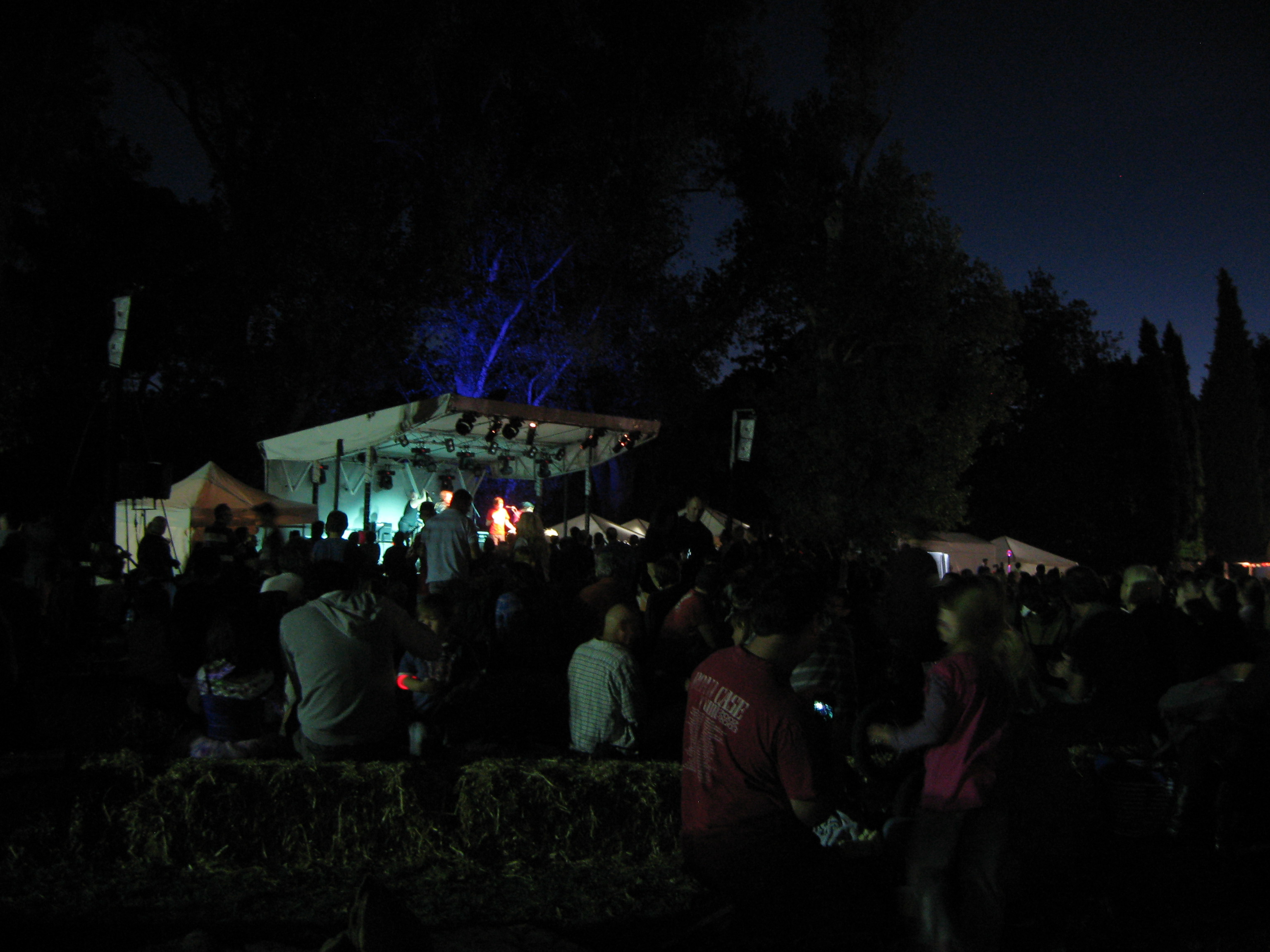
It’s March, so it’s Banyule Festival time again and down to Sills Bend we went last night for Twilight Sounds, just like we did in 2011 and 2010.  I’m nothing if not a creature of habit.    This year it was Mental As Anything.

IMG_4708

I suspect that the person or committee that chooses the acts for Twilight Sounds has a baby-boomer streak, because they tend to be acts from at least twenty years ago who are still performing -or perhaps it reflects the budget provision for the event?  Certainly the age of the audience is much younger than that, with lots of young families with kids in strollers, as well as the baby-boomers you’d expect to be attracted and still spry enough to negotiate the crowd with their fold-up chairs and picnic sets (that’s us).

They were good and the crowd responded accordingly.  When I think back, there’s no way that I would have known or listened to the music that was popular when my parents were young.  But with the ubiquity of broadcast sound in public places, radio stations that have a 30-year music list, remixes and re-recordings, and exposure to music in films that now have an extended life in DVDs after their cinema and television life is over,  it’s quite likely that songs from 25 years ago are part of the aural wallpaper of people not even born when they were released.

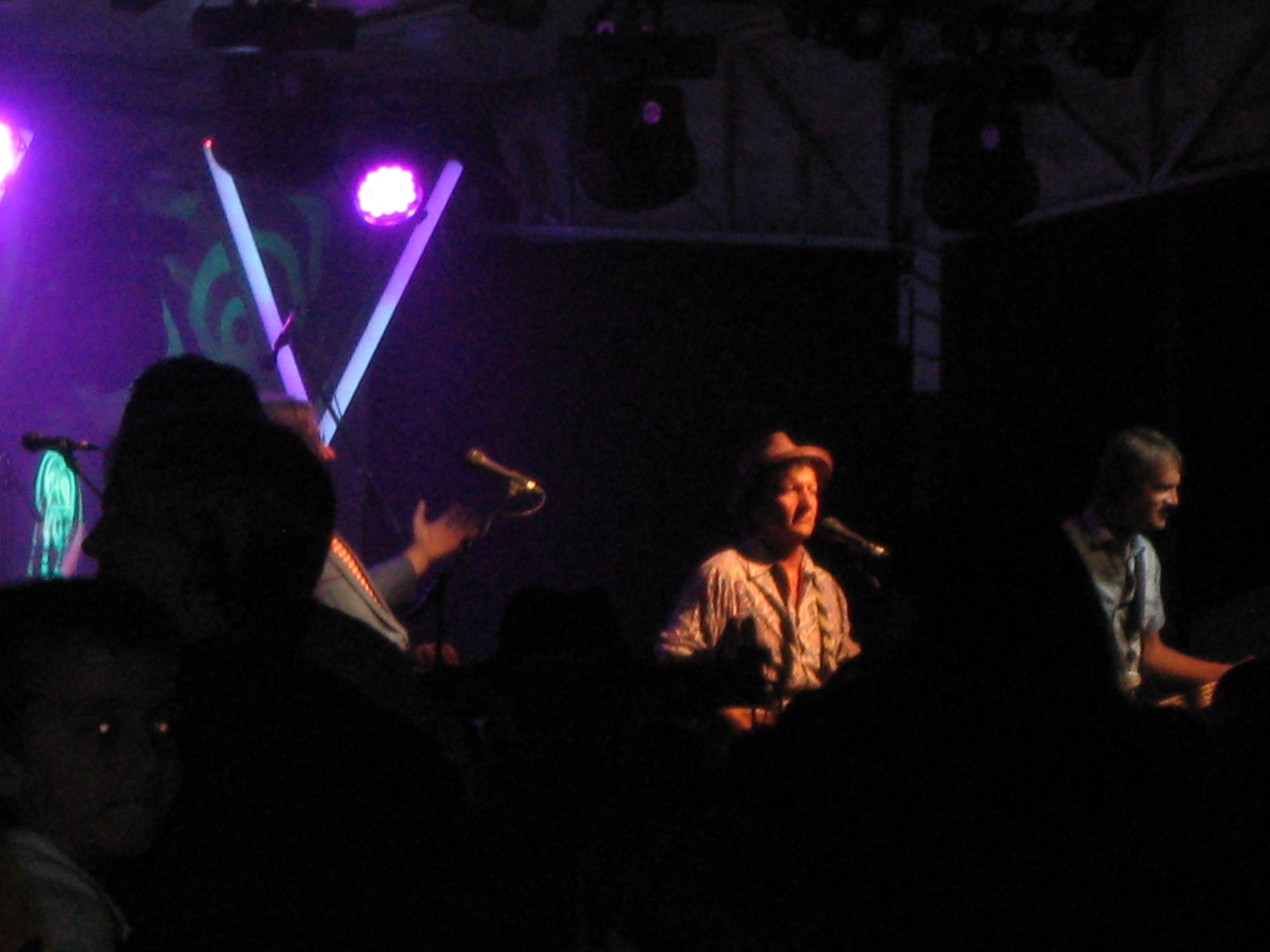
IMG_4711

In fact, I’d forgotten just how many hits the Mentals had.  They just kept them coming, one after the other.  The crowd was a-jigging, too- in fact, I had just as much fun watching them as what was going on onstage.  And if the voices were a little strained, the music itself was essentially unchanged and you were able to mentally singalong with the original soundtrack in your head anyway.

But, in case you want to here one of the originals- here it is, courtesy of Countdown. Strange track (as many Countdown clips are) – no one actually seems to be singing!  I could never work out what the song was about at the time- in fact, I thought it was somewhat racist!!

Love and death: The Springthorpe Memorial at Boroondara (Kew) Cemetery

On a beautiful 24-degree summer afternoon, where more perversely pleasant to visit than a cemetery?  So off we went to Boroondara Cemetery in High Street Kew, primarily to see the Springthorpe Memorial which I’d seen many times in photographs but never actually visited.

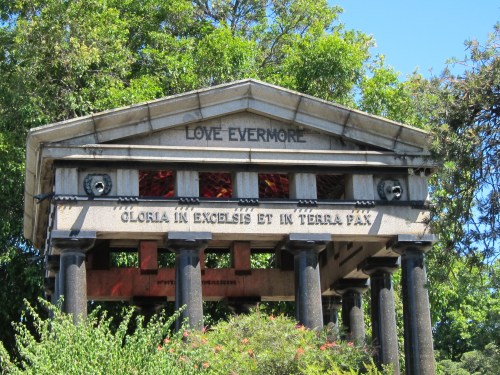
Boroondara Cemetery was established in 1858 as a garden cemetery and, with imagination, you can just sense the Victorian conceptions of death and mourning that underpinned its design.  The original plan, since abandoned, was for curved paths and winding roads, but it nevertheless maintains its rather forbidding red brick perimeter wall, caretaker’s lodge with slate roof and a clocktower, and rotunda.  Its most famous monument is the Springthorpe Memorial, completed in 1907 after ten years’ construction and described in 1933 in The Age as “one of the most beautiful and most costly in the commonwealth”.

It was erected by Dr. John Springthorpe to commemorate his wife Annie, who died in childbirth with her fourth child, Guy, who survived to become a well known Melbourne psychiatrist, following in his father’s footsteps.  Dr. John Springthorpe had arrived in Australia as an infant and had a successful career with positions at the Beechworth Lunatic Asylum, the Alfred and the Melbourne Hospitals. He enlisted during World War I with the Australian Army Medical Corps, and on his return to Australia after the war, worked on post-war repatriation and psychiatric care (hence his commemoration in the name of ‘Springthorpe’ housing estate on the site of the old Mont Park/Bundoora Repatriation hospital). The breadth of his professional involvements is wide: training and registration of dentists, nurses, masseurs, ambulance work, maternal and child welfare. He was very much the clubbable man, and a supporter and collector of the nascent Australian artist scene of the turn of the twentieth century.  It’s ironic, then, that a man who had such a rich life should be best known for a memorial that he created to commemorate death.

As a thirty-one year old, he had married the 20-year- old Annie Inglis on Australia Day 1887 and they moved into a house at 83 Collins Street east- the fashionable, doctors’ end of town.  She was a first cousin to the a Beckett family, and hence the Boyd family who are so interwoven into Melbourne cultural life.  Ten years later she died, giving birth to her fourth child.  Disconsolate with grief, Dr Springthorpe sent his children away to live with relatives, and poured his sorrow into his diaries, transforming his house into a shrine to Annie with photographs and paintings to commemorate their married life, and leaving the house just as it was- even to the blood stain where his wife hemorrhaged to death.  In the days immediately following her death, he turned to the artistic circle of Melbourne and commissioned the sculptor Bertram Mackennel to design

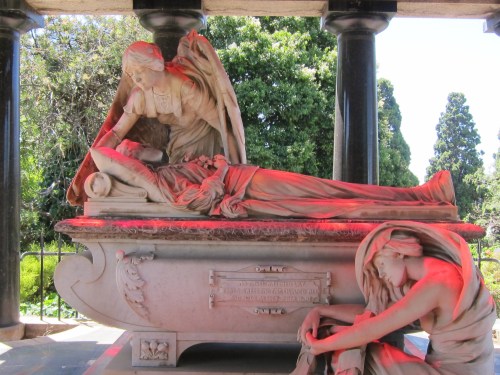
a piece of sculpture, all in white marble, a sarcophagus, richly traced, with certain inscriptions on the sides; on the top, a sculptured figure, as much like Annie as she lay in the drawing room as possible

And here it is

IMG_0163

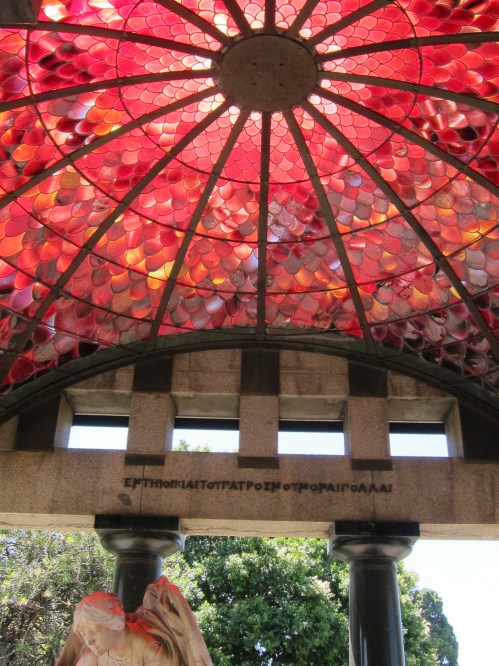
The memorial took nearly ten years to complete.  The roof, made of red glass that bathes the marble in a rosy glow, was designed by Harold Desbrowe Annear.

IMG_0164

The memorial was originally surrounded by gardens designed by William Guilfoyle, the designer of the Botanic Gardens.  Later work on the garden saw the installation of two works by Charles Web Gilbert- my husband’s grandfather (and to be honest, our main reason for seeking out the Springthorpe Memorial in the first place).  One of these was of a brolga defending her chicks against a snake rearing up to strike, and the other of a monk.  Neither of these sculptures have survived, and it is unsure whether they were ever positioned where they were intended.  However, this picture from 1929 seems to show some sort of bird with outstretched wings, and interestingly, the marble figures seem to be enclosed in a glass case.  The gardens were subsumed into the rest of the cemetery when, after Springthorpe’s death, it was found that the transactions for the land had not been completed.

[Later insertion: please see the comments below regarding the further design of the gardens surrounding the memorial by Luffman/Loughman]

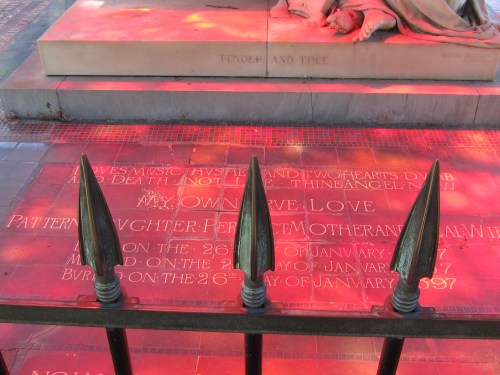
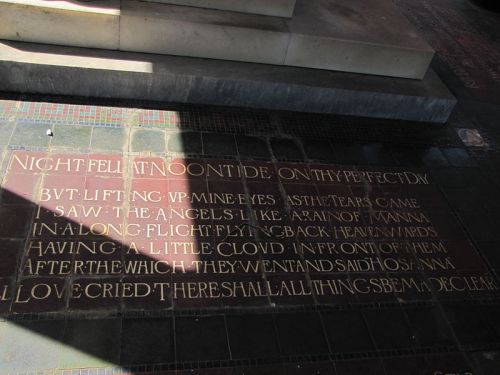
The whole memorial is heavily freighted with symbolic references, including quotations and adaptations from the Bible, the Greek classics, Walt Whitman, Wordsworth, Dante, Browning, Riley, and Dante Gabriel Rossetti.  There’s something just a little bit creepy about the idealization of his wife- especially given that she is not named anywhere on the memorial:

My own true love
Pattern daughter perfect mother and ideal wife
Born on the 26th day of January 1867
Married on the 26th day of January 1887
Buried on the 26th day of January 1897
IMG_0165
It is a memorial deeply engraved by text:
springthorpe_inscription
I found myself thinking of the pre-Raphaelites and their heavy emphasis on beauty and death.  To our eyes today, there’s something rather unhealthy about it all.  Maybe people even then were discomfited by such fervent obsession as well: apparently Mackennell himself warned Springthorpe that the etching of deeply symbolic and overwrought text on every possible surface might be over the top.  The Bulletin concurred:

Turning for a last look, the tremendous monument loads the emotions, insistent, almost blatant, one thinks dully of the dead woman, ten feet below, on whose brow it must press so heavily. Only its artistic beauty, only Mackennal’s consummate genius, could have saved it from descending to the level of a gorgeous advertisement.

The monument cost a huge amount, although it is uncertain what the final cost amounted to with figures ranging  from £4,500 to £8,000-£10,000 bandied about:  in today’s currency, somewhere between $700,000 and $1.3M.
IMG_0178
There’s a fascinating article by Pat Jalland exploring the Springthorpe Memorial as a masculine expression of grief. She wrote Australian Ways of Death. A Social and Cultural History 1840-1918  and you can access her article from The Age here.    And Anne Sanders from the National Portrait Gallery delivered a wonderful presentation on Springthorpe himself and the video and transcript are well worth a look.

For the benefit of Pablo Fanque

I called in today to the Royal Historical Society of Victoria, where they are showing an exhibition called “Melbourne Theatres in Transition: 1840 to 1940s An Idiosyncratic View”. This small exhibition at the RHSV has pictures, programs and clippings relating to Melbourne’s theatre industry from the earliest days of the Port Phillip settlement up to the war years.

In his book London, Peter Ackroyd described the palimpsest effect of multiple reincarnations of the particular urban functions found in cities.  Markets, eating places, theatres, charities often tend to be located in particular places, and are constantly renewed as older buildings and enterprises are replaced by newer ones, offering much the same wares. This is largely true of Melbourne’s theatre district.  Theatres particularly in Bourke Street and Exhibition Street were built, knocked down, burnt out, then replaced again.

My attention was attracted to a small scrap book that had press clippings about theatre in Melbourne.  One unattributed clipping looked back fifty years and described the entertainment at Cremorne Gardens in Richmond to celebrate the first anniversary of the Eight Hour Day.  Among the acts described was ‘Pablo Fanque’.

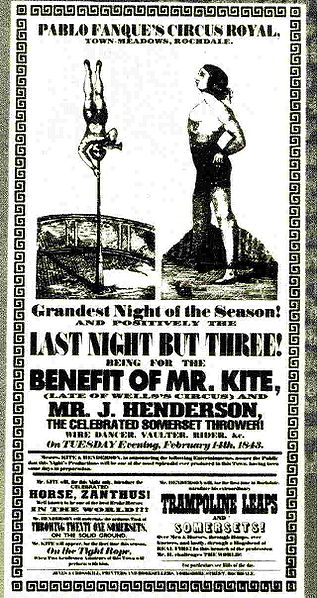
And all of a sudden, the Beatles’ song  ‘For the Benefit of Mr Kite’ began drifting through my head

For the benefit of Mr Kite

There will be a show tonight- on trampoline

On trampoline/

The Hendersons will all be there

Late of Pablo Fanque’s fair- what a scene

The original circus poster from which the inspiration for the song was drawn.

Pablo Fanque was the first black circus proprietor  in Britain.  He was born in England in 1796 and operated his circus for over thirty years. His own acts included rope dancing and equestrian feats. He toured England , Scotland and Ireland. But did he come to Australia?

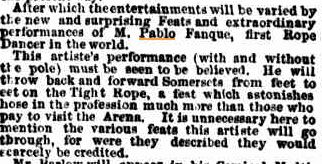
He was certainly advertised as being here….

Advertisement ‘The Argus’ 8 January 1855

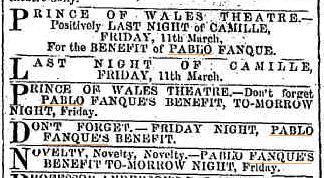
But, alas, it was not THE Pablo Fanque. Instead it was his nephew Billy Banham, who took his uncle’s name and toured Australia and New Zealand in the 1850s and 1860s.  This is the Pablo Fanque who appeared at the Cremorne Gardens (interesting article about the gardens here) and this is the Pablo Fanque for whom a benefit was held in March 1859.

Sydney Morning Herald 10 March 1859

Somehow I think that they really, really, wanted you to attend.

The Melbourne Theatres in Transition exhibition is on at the RHSV, corner a’Beckett and William St until 31 August.  Open 10.00-4.00 Monday to Friday, gold coin donation.