
Category Archives: Podcasts 2024

I hear with my little ear: Podcasts 16-23 June 2024

Dan Snow’s History Hit The Early Years of the British Empire Being brought up Australian, I tend to think of the British Empire as all that red on the maps of the world. But in its earliest days of empire, Britain (or rather, England) lagged behind the Spanish and Portuguese first of all, then the Dutch, then finally Britain at the rear. The episode features David Veevers, the author of The Great Defiance: How the World Took on the British Empire. At first, the British empire was the province of privateers, although there were connections with the crown as well. He emphasizes the fightback of the indigenous people, who kept the early colonists clinging to the coastline, unable to penetrate further and he reminds us that the East India Company was actually defeated. By the end of the 18th century, Britain had become better armed and was a stronger entity after the Act of Union. The accumulation of land was slow at first, but then continued apace.

The Rest is History: Luther: The Battle against Satan (Part 3) After questioning the idea that Luther nailed his 95 theses to the door of the cathedral, Tom and Dominic take up the story three years later, when he burns the Papal Bull in Wittenburg, precipitating a crisis. The Roman Church was asserting its authority, and Luther was defying the fundamental teaching of the church i.e. that sinners can pay for release from Purgatory. Moreover, the Ottomans were threatening Vienna at the same time. Printing had been around for 100 years, but Luther was a master of self-promotion and good at public events like book burning etc, which took place in the midst of parades of student floats and a carnivalesque atmosphere. The 95 theses were printed in German and Latin. The Holy Roman Empire was weak, with the aging Holy Roman Emperor expected to die soon, and the position of Luther’s protector Frederick of Saxony was very powerful because he would be electing the successor. Luther denied reason, philosophy and canon law- all the intellectual areas that the Church had branched into- and insisted that we go back to the Bible. Luther himself (did you know that his real name was Luder?) had his own ‘born again’ moment, and with all the bombast of the born-again, declared that others were not Christians because they had not done the personal work of believing. In October 1518 Luther was summoned to meet the Inquisitor Cardinal Thomas Cajetan in Augsberg. Ever the publicity hound, Luther walked there drawing crowds as he went. He and Cajetan had three meetings, but in the end Luther was released from his vows. Then followed a saturation-bombing of pamphlets written by Luther and on 3 January 1521 Luther was excommunicated by the new Holy Roman Emperor Charles V.

Mary Beard’s Being Roman (BBC) Episode 7: The Whistleblower takes us to Britain in 61CE and the repression of Boudicca’s revolt. Procurator (i.e. finance officer) Gaius Julius Classicianus is appalled by the harsh repression meted out by the local Governor. So he dobs on him, and advises the rebels to wait until a new Governor is sent out, and they might get bigger terms. Classicianus has a huge tomb in the British Museum
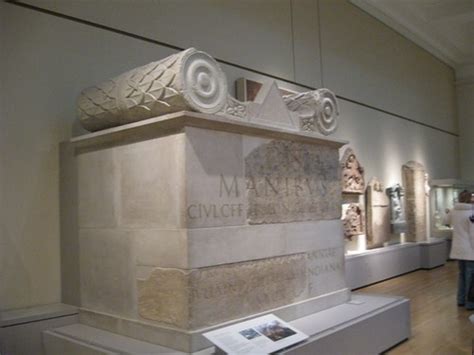
https://www.flickr.com/photos/antxoa/3459625349/

I hear with my little ear: Podcasts 8-15 June 2024

All in the Mind (ABC) How to Help a Conspiracy Theorist: An Ex-Believer and an Expert Weigh In. This episode has three participants: Jane, a mother who has lost her son to conspiracy theories; Professor Karen Douglas, a researcher who studies them; and Brent Lee from the Some Dare Call It Conspiracy podcast. Jane is walking on eggshells with her son, and Professor Douglas had some suggestions about meeting him on neutral ground and curtailing the conversation. Brent Lee was the most interesting, especially when he described how his beliefs were shaken. He had believed Pizzagate etc. as being a satanic child sacrifice conspiracy, but when Sandy Hook happened, he just couldn’t believe that the parents were crisis actors, and it didn’t fit in with his child sacrifice scenario. He described his conspiracy beliefs as being like Jenga blocks, where you could reject one or two elements, but eventually the whole thing came tumbling down. All three spoke about the importance of maintaining contact, no matter how difficult it is.

Some Dare Call It Conspiracy. After hearing All in the Mind, I hopped across here. As a historian myself, I was attracted to History is Written by the Whiners: Neil Oliver Dismantled What? Handsome young Scots historian Neil Oliver, striding across the heather, the wind in his hair. Oh dear. He seems to have gone “off”. I’m not even game to watch any of his YouTube videos lest the Algorithm Gods decide that I’m actually interested in what he’s saying. That said, I wasn’t particularly enamoured of the snide comments by the presenters of this podcast, Brent Lee and Neil Sanders. The name-calling and snarkiness seemed unnecessary.

New York Times Podcast I listened to this so long ago that it is now completely overtaken by events! Inside Trump’s Search for a Running Mate Trump takes up so much oxygen that we haven’t really heard about who is going to have as Vice President. Michael Bender, a political correspondent for The Times, explains that this time round, Trump demands absolute loyalty (which he feels he didn’t get from Mike Pence), doesn’t want anyone who is going to cause him any problems, and definitely doesn’t want anyone who is going to overshadow him. As far as Bender is concerned, the front runners are: 1. J. D. Vance (author of Hillbilly Elegy), who criticized Trump in 2016 but was his supporter by 2020 when he became a Senator. He’s a good media performer, but there’s a risk that he will be too good and overshadow Trump. 2. Marco Rubio. Even though Rubio was very critical of him during his first term, he has since become an important behind-the-scenes worker and a good attack dog. 3. Doug Burgum from North Dakota, another rich white man, who made his money through Microsoft. He’s in his mid-60s and a rather mediocre media performer, and very anti-abortion and conservative. Wait and I see, I guess.

History Extra: Breastfeeding in the Middle Ages features historian Hannah Skoda. She points out that in the Middle Ages, breastfeeding was more about loving relationships within the wider family, rather than between mother and child. Colostrum was seen as poisonous, and breast feeding only began three days after birth and tended to last for two years. It was done casually, and there was no routine. If milk was insufficient, there was pap (a mixture of grain and water), a wet nurse or milk sharing between close acquaintances. Wet nurses were often slave women – remember that there was slavery in Europe. Florence stands out as an example where at the Foundling Hospital, women fed the abandoned children – although there is some evidence that they were actually the mothers themselves who couldn’t afford to keep their children (a practice that the hospital frowned upon). It was believed that breast-feeding worked as a contraceptive, which was a problem for wealthy women and especially their husbands, who relied on her reproductive fecundity.

I hear with my little ear: Podcasts 1-7 June 2024

In Our Time (BBC) Julian the Apostate ruled between 361-363 (so only a short reign) after being proclaimed Caesar by his troops in Gaul. He was born in Constantinople and raised as a Christian after his uncle Constantine had converted to Christianity and introduced a policy of toleration of Christianity across the empire. Julian himself was attracted to Platonic philosophy and neo-Platinism which combined religious, philosophical and mythological strands and a leaning towards Greco-Roman polytheism. He was a bit of philosopher king himself, writing satires about the other Caesars, and writing a lot about himself. To bolster his legitimacy (he did, after all, challenge his cousin for the position of Emperor), he launched a series of battles in Persia, which backfired. His big mistake was not to have a succession plan when he died in battle. The three historians James Corke-Webster from Kings College London, Lea Niccolai from Cambridge and Shaun Tougher from Cardiff University note that, ironically, he united the squabbling Christians in opposition to him. It wasn’t so much that he persecuted Christians, as that he revoked the privileges that Constantine had given them. Paganism had continued throughout Constantine’s reign too, so it’s not black-and-white. Very much ripe for what-if history. (I’d forgotten that Julian was a theme in Julian Barnes’ Elizabeth Finch– my review here).

Three Million (BBC) The final episode 5.Ghosts looks at the legacy of the Bengal famine which, compared with the D-Day Landing celebrations, is decidedly low-key. Retired teacher Sailen Sarkar has been travelling throughout Bengal, interviewing the now very-old survivors, who mainly wondered why they hadn’t been asked about it before. As one of the historians who contributed to this series points out, what with the loss of Indian lives fighting for the Commonwealth, Partition and natural disasters, there was a series of mass death events in India. It was the Black Lives Matter protests in England that prompted a re-evaluation of colonial administration on the part of the British Empire, and there is now mention of the famine in a military museum in London. Doesn’t seem quite enough somehow.

Emperors of Rome Caillan Davenport features in this episode on CXI The Equestrian Order. The equites belonged to a class of Roman citizen dating back to the kingdom of Rome. The numbers of Senators was capped, so the equestrian order kept expanding. It was a conditional status- every five years at the census you had to prove that you still met the property requirement, and you could be removed for lapses in civic and moral virtue. The Equestrians portrayed themselves as being less corrupt than the Senators. The reign of Augustus was a turning point, when he gave the Equestrians a role in the civic celebrations. The number of Equestrians expanded from 5,000 to 20,000 under Augustus, and gradually a career structure emerged. Equestrians were permitted to wear a special ring, a tunic with a narrow stripe and could sit in the first 14 rows of the theatre. There was no specified meeting place for the Equestrians (unlike the Senators, who had the Senate) and so they expressed their feelings at the theatre. By the late 3rd century the role of Emperor had become open to those who were promoted through the army, and then under Constantius the number of senators was increased, thus decreasing the status of the Equestrians.

History Extra Death By Nostalgia: The curious history of a dangerous emotion This episode features Agnes Arnold-Forster, the author of Nostalgia: A History of a Dangerous Emotion. She defines nostalgia as a bitter/sweet, wistful feeling about the past. At the end of the 17th century it was seen as a medical disease, related to place, and a form of pathological homesickness. People could die of nostalgia as they starved themselves to death, and mercenary soldiers, university students and domestic servants were particularly prone to it. In the early twentieth century psychoanalysts became interested, and it shifted from a medical to a psychological problem. Nostalgia is often characterized as being working-class, backward looking (e.g. Brexit, Trump) but the Left can be nostalgic too, especially the Soviet bloc countries and people who yearn after the NHS. However, now nostalgia can be seen as a form of therapy, to make people feel better.

I hear with my little ear: Podcasts 24-31 May 2024

Good grief- I am so behind in blogging this listening! However, I mainly do it for my own purposes, in keeping track of what I listened to and when, so I guess it doesn’t matter.

The Rest is History Episode 434 Luther: The Revolution Begins (Part 2) According to legend, one of the reasons that Luther became a monk was because of a thunderstorm. It must have been quite a storm, but perhaps another reason was to get away from his father’s ambitions that he become a lawyer. His father was not pleased, standing up to question during Luther’s induction as a monk “Was it the Devil that sent the thunderstorm?” In becoming an Augustinian monk, Luther was buying into the spiritual economy of the time i.e. getting a fast track to God. He studied theology at Wittenburg University, a university under the patronage of Frederick, the Elector of Saxony, one of the electors of the Holy Roman Emperor. Frederick wanted celebrity academics at his university, and Luther became a professor of the Bible. He ordered that a bible be printed for him without the glosses and footnotes, and began writing up theses rejecting Aristotelian philosophy and medieval theology that had dominated thinking, arguing that we should rely on The Bible Alone. Then a friar called Johann Tetzel rolled into Saxony, claiming to sell indulgences, which would allow sinful locals to shorten their stay in purgatory. This spurred Luther to have his 95 theses document printed (not nailed up onto the door) and the fight was on.

Rear Vision (ABC) Rear Vision recently had a 2 part series about the two-state solution which our Government, along with other Western governments, has been calling for more loudly since the invasion of Gaza in response to October 7. The first part The Middle East Conflict and the Two-state solution is a replay of a 2009 episode. Modern calls for a two-state solution began in 1917 where Balfour made a promise of ‘from the river to the sea’ to both Zionists and the Arabs. The Balfour Declaration was put directly into the British Mandate which gave civil and religious rights to “the others” – who just happened to be 90% of the population. There was an Arab uprising in 1936-9, leading to the Peel Commission, which recommended a two-state solution which was rejected by the Arabs – and then WW2 intervened. In 1947 Palestine was handed over to the UN, which gave more than 50% of the land to the Jews. The Declaration of Israel in 1948 led immediately to war, which eventuated with Jewish occupation of 78% of the land. The PLO was formed in 1964, and further wars in 1967 and 1973 saw the Israeli capture of the West Bank and Gaza Strip. Another uprising in the 1980s led to the realization that uprising did not mean sovereignty, and the Palestinians moved towards a two-state solution The 1993 Oslo Accord did not mention two states, and further uprisings between 2000 and 2005 marked the continuing distrust between the Palestinians and Israelis.

The second part The Two-State Solution: A Way Forward or More of the Same takes us up to 2024. Illegal settlements began in Palestinian territory in the early 1970s, as Israeli politics oscillated between Labor and Likud. Camp David came closest to a two-state solution, but all the politicians involved were lame-duck incumbents. A split opened up between the PLO and Hamas. Originally the presence of 100,000 illegal settlers was seen as the point of no return for a 2-state solution. There are now 750,000 settlers in the occupied territories and none of the big players are pushing for two states anymore: not the Republicans in US, not Hamas and not Likud. In 2005 Israel withdrew from Gaza, but it never gave up control of border crossings or property rights.

Things Fell Apart (BBC) Season 2 Episode 8: Mikki’s Hero’s Journey focuses on Mikki Willis, an independent filmmaker who has been involved, to a lesser or major extent, in all the preceding episodes of this series. His brother had died of AIDS, and Mikki blamed AZT which was, at the time, a harsh but ultimately effective treatment. He was strongly influenced by Joseph Campbell’s The Hero’s Journal, not as a piece of analysis, but as a prescription for action. He set up his documentary company after 9/11 and at first became famous through a YouTube video praising his son for choosing a Little Mermaid doll with a credit note at the toy shop (he has since taken this video down). He interviewed Judy Mikovits as part of his Plandemic documentary, he was at the Capitol during the riots, and he particularly blames Dr Anthony Fauci (who had also been involved in AZT all those years ago.

In the finale How Things Fell Apart Bonus Episode, Jon Ronson chats with fellow podcaster Adam Buxton about the making of the podcast, and how to sensitively interview people whose views of reality clash completely with your own.

I hear with my little ear: Podcasts 16-23 May 2024

Emperors of Rome. Episode CX Anthology of Interest A triumvirate! Here Matt, Rhiannon and Caillan Davenport each have three minutes to talk about a topic of their own choice, three times over. So they discuss:

  • The unfortunate demise of Cinna the poet
  • Cicero’s reluctance to send panthers to those in need
  • The sensitive subject of baldness
  • PTSD bought on by the Carthaginian War
  • Women donning a toga
  • Claudius’ edicts and defending ‘stupidity’
  • The last of the Ptolemys
  • The hazard of regifting the world’s largest apple

I Was a Teenage Fundamentalist Episode 3: It’s the End of the World as We Know It Going back to the beginning with this podcast, Brian and Troy talk about the importance of ‘end-times’ talk in attracting them to fundamentalist pentacostalism. One of them (I’m not really clear who is who when I’m listening to this) was already primed for apocalyptic thinking because of dabbling in woo-woo thinking; the other one was already ensconced in the Assembly of God, where it was a mainstay. First there was the fear of nuclear holocaust, then when the Berlin Wall fell, it was fear of economic domination through the cashless society and the mark of The Beast as a computer chip or bar-code, and now it’s the prospect of a Muslim-Christian war. However, as they point out, the early Christians thought that they were living in the end-times too, and God didn’t turn up then either.

Being Roman (BBC) Episode 6: Love in the Borderlands Mary starts off this episode in Newcastle UK, close to Hadrian’s Wall, with a tombstone erected to Regina by her ex-owner and then husband Barates from Palmyra in Syria. Regina was a local Newcastle girl, and obviously there was slave-owning in Roman Britain although it is so late in the empire that she must have been sold into slavery rather than taken captive, as occurred earlier. When the Victorians uncovered the tombstone, they framed it as a love story where the local girl captured the heart of the foreigner, but we wonder just how much freedom Regina had. Mary finishes with a good reflection on the way that we read artefacts according to our own view of the world, but that this is not necessarily a fault- instead it’s a way of keeping questions alive in history.

The Daily The Possible Collapse of the U.S. Home Insurance System. Recorded on 15/5/24. I remember reading T. C. Boyle’s A Friend of the Earth years ago, where American society was drifting into neglect because no-one could afford insurance. I’m very much aware of how insurance is driving so much in society today: where you can build, what management policies a company has to cover their arse, the way that someone always has to be held liable. In this episode, they discuss the succession of weather ‘events’ (such dead language) that are making home insurance unsustainable when companies need to pay out more than they receive. Companies are starting to refuse to cover houses in certain areas, which has implications for future buyers who cannot get a mortgage on an uninsurable home, leading to a drop in home values. ‘The Government’ could step in (unlikely in America) but that just means that people would continue to build homes in areas prone to repeated disasters. At least after Black Saturday our government banned people building in certain areas. Interesting.

Three Million BBC Episode 4: The Tapes As part of the research for this project, a box of old cassette tapes was uncovered, recorded by Australian researcher Lance Brennan decades ago. Brennan interviewed colonial civil servants who were based in Bengal themselves, but answering to Whitehall and its demands. Britain’s attention was focussed on WW2 and they resisted declaring famine because it would divert resources from the war. Emergency food relief was provided, but ‘test work’ was required in exchange. Then, the British Govt said that it couldn’t spare the ships, and besides, other people were starving too. Even historian Max Hasting, a great fan of Churchill, admits that Churchill was racist, even by the standards of his time.

I hear with my little ear: Podcasts 1-7 May 2024

History Extra An Obscenity Trial That Shocked Victorian Britain tells the story of Annie Besant and her friend and partner-in-crime Charles Bradlaugh who published a book Fruits of Philosophy by American writer Charles Knowlton about conception and contraception. Annie Besant had married a minister at the age of 18, but the marriage was unhappy and she left him. Her husband retained custody of one of her two children. She became a needleworker and went to Bethnal Green where she met Charles Bradlaugh, a dissenting minister. He was 40 and she was 26. In 1876 he encouraged her to speak publicly about contraception (something that women rarely did) to the National Secular Society. When the bookseller of Fruits of Philosophy was arrested and fined, she wanted to be arrested for publishing it as well, as a test case. She represented herself in a highly publicized case. The jury found the book obscene, but Besant and Bradlaugh were found not guilty. Meanwhile, her former husband sued for custody of her other child. She was involved with the Fabians, Home Rule and she championed the cause of the Match Girls. She went to India and became involved in Theosophy, which led her to renounce her books, smashing the plates so that they couldn’t be republished. Given that US politicians are invoking the Comstock Act of 1873 to prevent the sale of abortion drugs today, it’s a throw-back to the days when selling and publishing information about contraception was illegal.

Lives Less Ordinary (BBC) My Grandmother Walked the Rabbit Proof Fence Australians are familiar with the story of the young indigenous girls who walked the Rabbit Proof fence after being stolen from their families, but I’m not sure how widely their story spread internationally. So it’s important that the BBC has picked up this story. What I didn’t realize is that -shamefully- the story spread across three generations, right up to recent events. Doris Pilkington, who wrote the book (which I reviewed here) has now died, and the story is being taken up by Maria Pilkington, her daughter, who herself had to resist attempts to have her own child taken from her. A sobering corrective to the idea that all this was long ago and long past.

The Rest is History. Episode 432 Titanic: The Survivors (Part 6). And so I finally come to the end of this 6-part series- surely the longest that Tom and Dominic have done so far. They talk about the aftermath of the sinking and the rescue by the Cunard ship ‘Carpathian’. They point out that gender was more important than class: 74% of women and 52.3% of children survived, but only 20% of men survived. They suggest that the death rate was so high in second class because of the values of deference and not wanting to make a fuss. At first the London newspapers said that few had died. The port cities of Southampton and Liverpool were particularly affected because so many of the crew came from those cities. People wanted someone to blame, and Ismay was the man, as was reflected in James Cameron’s film, but as a later inquiry headed by Lord Mersey found, the Titanic adhered to what was “standard practice” at the time. But very soon the sinking was cast in a proud, jingoistic, heroic mode. Many suffered from survivors’ guilt. The first film was made just four weeks after the sinking, starring an actress who had actually been on the boat. The 1955 book A Night to Remember by Walter Lord was written from interviews, but Lord didn’t actually take notes. Then of course there is the James Cameron film, which has immortalized the sinking for a new generation. The sinking took place two years before WWI, and has come to represent a cliched metaphor of gathering disaster. The Bishop of Winchester blamed greed and capitalism, and Winston Churchill used it as an excuse to have a slap at lady teachers (of all people). A good series.

Being Roman (BBC) Episode 5 Battling Bureaucrats tells the story of Apolinarius of Panopolis who is an obsequious, pedantic middle-ranking bureaucrat in Egypt, who is freaking out because Emperor Diocletian is going to visit, and nothing is ready. He wrote 12 letters over two weeks in which he threatened, cajoled and upbraided traders and other bureaucrats, but he was essentially impotent as everyone was covering their own arse. One of the demands he was making was for marble columns from Aswan and he did manage to get those. They were used in constructing baths, but they ended up in a church where they stand today.

I hear with my little ear: Podcasts 16-23 April 2024

I Was a Teenage Fundamentalist Episode 97 What about Progressive Christianity? I must say, that when I was an evangelical Christian about 40 years ago, I didn’t ever have a problem with Christianity and Progressivism. I think that it says more about modern evangelical Christianity than it does about me, that there could even be a tension between the two. In this episode, Brian and Troy talk with Rev. Tim Costello, someone I generally admire for his work on refugees and gambling. In the introduction Brian and Troy give a trigger warning for how much Christianity is going to follow: I bet that Tim Costello hadn’t been introduced with a trigger warning before! I do find his frequent declarations that “I believe in Jesus” rather strident, given the general progressiveness of the rest of the podcasts- what does that mean? Resurrection? Salvation? etc.

Three Million Episode 2: The Cigarette Tin When the Japanese invaded Calcutta (I didn’t know they did!), people fled their lands and crowded into the cities. Because the British government was requisitioning supplies, the price of rice rocketed. Amartya Sen, one of the interviewees, who lived a comfortable middle class childhood, speaks of his mother allowing him to give half a cigarette tin of rice to people in his immediate neighbourhood who asked for it. The British Government refused to free up ships as a mere ‘goodwill gesture’ and merchants were buying up rice and stockpiling it. It was a class-based famine.

The Rest is History Episode 431: Titanic: Nightmare at Midnight (Part 5) The two hours and 40 minutes that it took the Titanic to sink makes it seem like a performance to us. Survivors mention the crunch (like running over gravel) as it hit the iceberg, then silence. People were paralyzed by deference, inertia and compliance. CQD (‘All stations help’), the emergency code, was sent out (SOS had been introduced 4 years earlier but was not in widespread use). All the crew knew that there was a lifeboat deficiency of about 1000 (it would have been almost 2000 if the Titanic was at full capacity). There was a fear of panic but also reluctance to face the 11-storey drop down to the water. The code was ‘women and children first’ but what did that mean? No men until all the women were off? Or let women and children fill up the lifeboat, then men could go on? The instructions were interpreted differently on one side of the ship to the other, so your survival depended on which side you went to. The gates blocking Third Class were opened after 45 minutes but there was a 3rd class reluctance to leave their baggage (their sole possessions) and it was very, very cold. Sir Cosmo Duff-Gordon and his wife survived in Lifeboat 1 which had only 12 occupants out of a capacity of 40 and were treated with obloquy for the rest of their lives. Isodor Strauss and his wife Ida, two of the few Jewish passengers and co-owners of Macy’s department store, chose to stay because, as a man, Isodor was refused a place on the lifeboat. J. Bruce Ismay, the chairman and managing director of White Star Line also survived when he got onto a spare lifeboat. Most of those who died did so because of the cold, rather than drowning. The survivors recalled hearing the clamour of voices, then a roar as the Titanic sank.

Very Short Introductions Podcast Abolitionism Abolitionism? Is that an American thing? This podcast, of very poor acoustic quality, is presented by Richard Newman, who has written on American Abolitionism, and is very US-centric. He sounds almost surprised by the fact that there was a continuous wave of activism through from the 1770s to the late 19th century on both sides of the Atlantic, and that it worked globally and tactically through petitions and courtcases. He notes the diversity among abolitionists, who worked as politicians, ministers, photographers, writers, men and women, black and white. He notes that African Americans were particularly important in the formation of the first Pennyslvania Abolition Society in 1775, and in Britain. He emphasizes the importance of the slave revolt in Saint-Domingue (Haiti) in 1793 which led to the end of French slavery, and attracted the attention of the whole world.

History Hit Episode 1424 Pontius Pilate features Helen Bond. She discusses the portrayal of Pilate in the canonical bibles, the apocryphal books of the Bible, and through secular writing at the time. In 6CE Judea came under direct Roman rule, and the first governors appointed were prefects, as was Pilate. The early Christian writers, who had the problem of squaring the Messiah with a crucified criminal, portrayed the Jewish leaders as responsible. Mark (the earliest of the gospels) speaks of the trade-off with Barabbas – is that plausible? Matthew depicts Pilate washing his hands, and Herod Antipas, another high-status man involved in his trial. John goes off on an esoteric frolic of his own. The Romans were mainly based at Caesaria Maritima, on the coast, and they were not a big presence in Jerusalem, where they knew they were not welcome. The Apocryphal gospels have The Acts of Pilate (or Gospel of Nicodemus) but they are generally viewed as being spurious. Among the non-biblical sources, Philo of Alexandria is contemptuous of Pilate, while Josephus is writing after the Jewish-Roman War and is looking for insensitivities amongst the prefects to explain the war. He notes times when Pilate backed down over Jewish demands, and generally sees him as mediocre. In the Coptic Ethiopic tradition, Pilate is a saint because he converted to Christianity. There are other stories about Pilate’s supposed suicide, and the idea that he was buried in a lake in Lucerne because evil spirits followed him. What we do know is that Pilate was in Judea for about 10 years (a relatively long posting) and that he really existed.

I hear with my little ear: Podcasts 8-15 April 2024

The History Listen Section 71: The Hindmarsh Island Bridge Affair (Part 1) is part of a series where they look at important High Court decisions in Australia’s history. I was listening to this while driving the car, and I became so enraged that I nearly drove off the road. What a lack of respect, bad faith, and arrogance was shown by conservative politicians as this matter became a harbinger of the culture wars that have paralyzed our politics since. And it has given me a new respect for Robert Tickner. I’ve been looking for Margaret Simons’ book The Meeting of the Waters, but I can’t find it anywhere. I’m looking forward to hearing Part II.

Three Million (BBC) This five-part series by the BBC looks at the Bengal famine. Episode 1 War contextualizes the Bengal famine within World War II. India (which at this time had not been divided into India and Pakistan) was still the jewel of the British Empire and to be defended at all costs. Fear of Japanese invasion prompted a policy of ‘denial’ whereby the British government took over increased control of food, transport etc in Bengal. They confiscated not only food for the Imperial troops, but also confiscated the boats, for fear that if the Japanese invaded, they would use them. In this way, the British Government provoked artificial scarcity. The British Government kept a tight grip on India, and they had as many men policing Bengali society as they did actually fighting the Japanese. On 16 October 1942 a cyclone destroyed the crops. Governor-General and Viceroy in India, Victor Hope the 2nd Marquess of Linlithgow raised the alarm in Whitehall but was ignored. By 1943 the dead bodies were mounting up in Calcutta.

The Rest is History Titanic: The Iceberg Strikes Episode 4 First and second class were not full because of cancellations, and even third class was not full. It contained British and Irish immigrants, and a group Scandinavian migrants who would end up in Fargo, and in Willa Cather novels. There were few Jews, because White Star discouraged them. There were also Croats on board because there had been Ottoman pogroms against Maronite Christians. Even third class, with its 2- and 4-berth cabins was far better than other ships. The ship was equipped with a Marconi radio which was a novel feature at the time, and they were very busy as people amused themselves sending messages. As a result, the over-worked radio officers did receive messages from other ships warning them of ice, but the messages were received piecemeal. It was established procedure not to reduce speed in ice fields. There was a flat sea, so there were no troughs in the wave from which an iceberg could be glimpsed. It was also a very clear night, and the iceberg was black. When they did hit the iceberg, they though that they had just scraped it.

Emperors of Rome. Yes, I’m still listening to this podcast because there are many episodes that I had missed. Chapter CVIII A Lesson in Latin II. If I weren’t already trying to explode my brain learning both Spanish and Khmer at the same time, I’d think about learning Latin. In this episode, Dr Rhiannon Evans talks about Latin and answers questions that had been sent in about the language. She notes that there were other Italian languages but Latin became the most dominant when the Romans began conquering the country. Latin absorbed influences from Greek, which was already a written language, and other vocabulary too including Italian, Carthaginian and Etruscan words. Because it wasn’t written down, we’re not sure what the Latin spoken in the streets was like, and we don’t know how literate people were. We can look at graffiti, which displays a fairly phonetic approach, and also poetry which gives a hint of how things were pronounced in maintaining rhyme and rhythm.

Global Roaming (ABC). In this episode A Palestinian State. Now? Hamish Macdonald and Geraldine Doogue sit down with Tirana Hassan, the recently appointed Australian head of Human Rights Watch. The title of the episode is rather misleading, because she doesn’t just talk about Palestine, but human rights law more generally. She is very cut-and-dried about human rights law, and I feel rather naively dismissive of political considerations. While it is good to see such moral clarity, it is rather unrealistic in today’s messy world.

I hear with my little ear: Podcasts 1-7 April 2024

History Hit Ataturk: Fall of the Ottoman Empire As Australians, we mainly know Ataturk through the Gallipoli Campaign and the words that he is supposed to have said in burying the Australian war dead. But this episode concentrates instead of the fall of both the Ottoman and Habsburg empires at the end of WWI: falls that presaged very different outcomes as Vienna wasn’t occupied, but Turkey was. Ataturk was part of an educated cohort and he was militarily successful and politically active. At first he promoted Muslim Unity but this was largely a generational battle over the incompetence of the generals which led to the loss of Edirne and Thessalonika. Ataturk (or rather Mustafa Kemal) was a dictator, who looked to the Mufti of Istanbul, declaring 1919 as the start of Turkish history. In 1922 Parliament dissolved itself (and along with it the Ottoman dynasty) and in 1923 Turkey declared itself a republic and turned its back on other Muslim, especially the Kurds. They toppled the Greeks (leading Prince Phillip to leave Greece and come to England) and they undertook a ‘population exchange’ (which might more easily be seen as ‘ethnic cleansing’) Further reforms to the language and the script were part of the desire for Turkey to look like Spain, leading to a backlash in the Islamic world. He died in 1938. Current president Erdogan has undertaken several of his projects e.g. reconverting the Sofia Hagia from mosque to museum. I found this episode fascinating. There was so much more to Ataturk than I could have imagined.

Soul Search (ABC) In the spirit of Easter, I listened to Soul Search on Imagining Jesus on screen and in literature. Apparently the Pope had a recent meeting with film maker Martin Scorsese, who made ‘The Last Temptation of Christ’ in 1988. The Pope spoke about imagination and Christ, and Scorsese seems to be on board, as are Terrence Mallick and Mel Gibson (groan). Features Dr Adrian Rosenfeldt , Lecturer and Head Tutor in Humanities and Social Sciences at La Trobe University.

The Rest is History Continuing on with Titanic Ep 429 Titanic: Countdown to Disaster Part 3, Dominic and Tom look at the passengers who were in First and Second class. First class was not full- apparently Gilded Age Edwardians liked just not turning up, because they could. Even though the top First-Class cabin had been decked out specifically for J. Pierpoint Morgan, he cancelled his trip which has triggered all sorts of conspiracy theories that he was behind the sinking to get rid of his business rivals. In First Class there were many 3rd generation Jewish Americans, or as someone once waspishly commented “Steerage Twice Removed”. First Class had the first swimming pool, and it was appointed to a level commensurate with the Waldorf Astoria. There was a barrier between First Class and steerage, as shown in the Titanic movie, but this was demanded by US immigration for fear of disease. Second Class is often overlooked. It was a smaller group, comprising clergy, doctors etc. and a group of Cornish miners. It might have been Second Class on the Titanic, but on any other ship it would have been considered First Class.

Things Fell Apart Episode 6 A Hierarchy of Trauma. This podcast seems to be channelling my old-lady curmudgeonliness. Here Jon Ronson explores how ‘deplatforming’, which has been common on college campuses for some time, spread into newsrooms so that we all now need to avoid causing “emotional harm”. He looks at the identification of PTSD in the 1970s amongst Vietnam vets and the way that the language of trauma has broadened and now dominated personal interaction.

History Hit Lawrence of Arabia The older I get, the more I realize that I have snippets of random knowledge that I couldn’t put into a coherent narrative if I tried. The episode about Lawrence of Arabia is a case in point- all I know about is the film and that he died on a country lane. T. E. Lawrence was born in Wales in 1888 and his parents were not married: in fact, his mother had been a governess and his father ran away with her, and they adopted new names and identities. He studied history at Oxford, and in 1909 went on a walking tour of the Levant, looking at medieval castle- his particular interest. It was on this tour that he developed a dislike of the Ottoman Turkish authorities. In these pre-war years, the British used archaeologists as intelligence gatherers for any future British Empire activity in the area. When WWI broke out, it was not clear which side the Ottoman Empire would go on, or whether it would stay neutral, but they aligned themselves with the Germans and Austro-Hungarian Empire (how ironic). In 1916 there was an Arab uprising led by Sharif Hussein which seized Medina and Mecca, two crucially important cities in Islam. Lawrence advised the British to back the revolt and Faisal, one of Sharif’s sons, as the leader. Lawrence joined Faisal conducting raids on the Istanbul to Medina railway. He encouraged the Arabs to attack the port of Aquaba, which they took. Lawrence rode to the Suez Canal and from there to Cairo to pitch to General Allenby a plan for the Arab forces to act as a guerilla army. He received Allenby’s permission and British gold to pay them. It was only after the Bolshevik Revolution in 1917 that he learned of the Sykes-Picot agreement which divided the Middle East up between the British and French, with no provision made for the Arabs. He was captured briefly by the Turkish forces, who raped and abused him, but let him go free. In 1918, British attention swung towards the Western Front, but then Allenby resumed battle in the Middle East. The Ottomans were defeated, and retreated. Lawrence oversaw a slaughter of 4000 Ottoman soldiers in revenge for a massacre the Turks had conducted at Tafas. He reached Damascus, the big prize, on 1 October 1918 and established a provincial government with Faisal at its head, but then learned that it was to be under French administration. Faisal did manage to establish a brief Arab Kingdom (and even met with Zionists, which could have led to a whole other history), but it was shortlived. In 1920 France invaded Syria, and there were revolts throughout the Middle East. In the meantime, Lawrence was becoming a household name, largely through the publicity efforts of American journalist Lowell Thomas- something that appalled Lawrence. He joined the RAF for a time, but by 1935 was living incognito in Dorset, where he had his motorbike accident. He died on 19 March 1935, aged 46.

I hear with my little ear: Podcasts 24-31 March 2024

Being Roman In the episode What We Lost in the Fire, Mary Beard tells of the physician, polymath and writer Galen’s loss of his papers and equipment in the Great Fire of Rome, when his lockup at the Spice Warehouse went up in flames. His first medical-type job was looking after the gladiators in Pergamon, which was a source of on-the-spot dissection and much learning about injuries, fat and muscle. He moved to Rome where he undertook public dissections and made a name for himself as physician to emperors. His autobiography ‘On Not Grieving’ was re-discovered in 2005, and despite the title, it shows that he really did grieve the loss of his writing for the rest of his life. Nonetheless, 10% of all the classical Greek writing that we have today was written by Galen.

The Rest is History Titanic: Kings of the World Part 2 Of course, the Titanic was made of stuff that sinks, part of a suite of liners called Olympic, Brittanic and then the rather hubristic Titanic. It was designed by Thomas Andrews, Pirie’s nephew. White Star was famous for luxury and safety, as distinct from Cunard, which concentrated on speed. It catered for enormous wealth, with the best quality berths costing 400,000 pounds at the peak of the season. (Did I hear that right?) But it also accommodated second and third class passengers in good conditions and it had the best safety features of any ship built until then. It had a double hull with 15 bulkheads, and although the number of lifeboats was insufficient, with a capacity of 1/3 of the passengers, it was compliant with standards at the time. After the standard 12 hours of sea trial, it left Belfast for Southhampton, which was the new port for London although it was still overwhelmingly manned by Liverpool shipworkers. However, in an ominous sign, the Captain had been involved in two accidents in the six months prior to the sinking of the Titanic.

Global Story BBC Curse of the World’s Fastest Growing Economy I don’t often hear news from Guyana, the location for part of my PhD’s topic John Walpole Willis’ colonial career. And I don’t often hear from Steven Sachur except as part of his rather verbally aggressive Hard Talk interview quiz on BBC. He has just returned from Guyana with its population of about 800,000 people where oil and gas were discovered 200 km off the coast in 2015. Exxon-Mobil are doing the drilling, and although some is going to government, it is still very profitable for the company. But is it a blessing or a curse? It has led to an increased security threat for the small nation, especially from its neighbour Venezuela which has mounted a large claim on Essequibo. Guyana is especially vulnerable to climate change, with heavy reliance on its sea walls and Dutch-built canals (from Judge Willis’ time). An off-shore spill would be disastrous for eco-tourism. Sackur spoke of his bruising (for him) interview with Guyana’s President Mohamed Irfaan Ali who made a strong argument for it being Guyana’s turn to reap benefits from its resources.

I Survived Las Vegas Shooting, then was convinced it was staged In 2017, Stuart McCormick survived the deadliest mass shooting by a single gunman in US history, while visiting Las Vegas. He was there, he saw it, and yet he came to believe that it was orchestrated by the US government. How could that be? The BBC’s disinformation correspondent, Marianna Spring, suggests that there is a conspiracy theory blueprint, that she saw at work in Stuart’s case. First, conspiracy theories build on a grain of truth, with legitimate fear and worry leading to anxiety. Second, conspiracy theories have their own vocabulary which is recognized by adherents. Third, people then start to wonder what else is staged? Fourth, people holding conspiracy theories become isolated, largely because of the shame and stigma that surrounds them. She notes that Finland includes a study of social media conspiracies in its curriculum, in the hope of fortifying students against them.

Emperors of Rome podcast Episode CVI The Third Servile War After escaping from gladiator school, Spartacus and his fellow escapees fled to Mt Vesuvius, which hadn’t erupted at this time, heading for Gaul and the Alps. Whatever Spartacus was, he wasn’t a freedom fighter, but on the other hand, his followers had increased from 70 to 70,000 men. It was decided to send in two consuls with two legions, and Spartacus defeated them both, taking 300 Roman soldiers and sacrificing them, striking further terror into the Romans.

Episode CVII The Legacy of Spartacus There was no mucking around now: the Senate sent in Crassus, who had had success during the civil war. He was a tough leader, who punished the whole army (not just a legion) with decimation after a defeat- a harsh and ultimately self-sabotaging action. Spartacus was now heading south with 120,000 fighters but got trapped in the toe of Italy. There was no final confrontation: he just kept fighting and his body was never found. It was a big victory for Crassus but he couldn’t claim a ‘triumph’ because he defeated an internal enemy. The film depiction of Spartacus being crucified is untrue (they never found his body), but there were 6000 crucifixions among his other troops. Spartacus has become a symbol of resistance for other generations, especially through the Spartacus movie, filmed during the 1960s in the midst of the civil rights campaign.