Category Archives: Podcasts 2023

I hear with my little ear: Podcasts 9-16 March 2023

Emperors of Rome Episode XLVIII – Trajan: Optimus Princeps is the last episode about Trajan, known as the greatest emperor since Augustus (to be honest, the others weren’t much chop). He behaved the way that the elites expected him to, he built lots of infrastructure to keep the masses happy and coming to power at the age of 42, he had neither the recklessness of youth or the sluggishness of old age. The only slight criticism of him is that he was “devoted to boys and wine” but neither of these affected his judgement so that was okay. In 113CE he embarked on war with Parthia, after an earlier foray to fix up Armenia, in order to re-establish Roman authority. At this point, the empire was stretched to its greatest expanse, and things started to unravel a bit. He died unsuspiciously after an 18 year reign. Episode XLIX – Suetonius has been referred to often during these podcasts. He was possibly born in Algeria of an equestrian family and was active during Emperor Hadrian’s time. He was mentored by Pliny and became a librarian and archivist which gave him access to the sources to write his most famous book ‘The Twelve Caesars’. He may have travelled with Hadrian, and it is thought that he may have fallen out with him at some stage. Nonetheless, he is pretty reliable as distinct from….Episode L – Historia Augusta which is a series of biographies, starting with Hadrian and going through to the late 3rd century CE with a gap in the middle. It wasn’t called The Historia Augusta at the time- that name was given to it later. It’s best to think of it as a fun text that gets more and more bizarre, with spurious supporting documents- a bit like a mockumentary. But we have to use it in the absence of other sources.

Lives Less Ordinary (BBC) I Didn’t Know I was Part of an Experiment tells the story of Helene Thiesen, who was born in Nuuk, in Greenland, in 1944. Greenland was a colony of Denmark.At the age of seven, after her father’s death, two men came to see her mother, offering an opportunity to find out “which child is the brightest”. Her mother refused twice, but in the end, she reluctantly relented. Helene was promptly sent 3500 km away to Denmark where she was placed with a foster family. She was sent back to Nuuk after a few years, but not to her mother: instead she was sent to a children’s home. When she finally reunited with her mother, she no longer spoke the same language, and her mother remarried and moved away. Helene was 50 when she found out that she was part of an experiment into changing the environment for children from Greenland and its effects on the child- a bit of a nature/nurture experiment. She still hasn’t forgiven her mother.
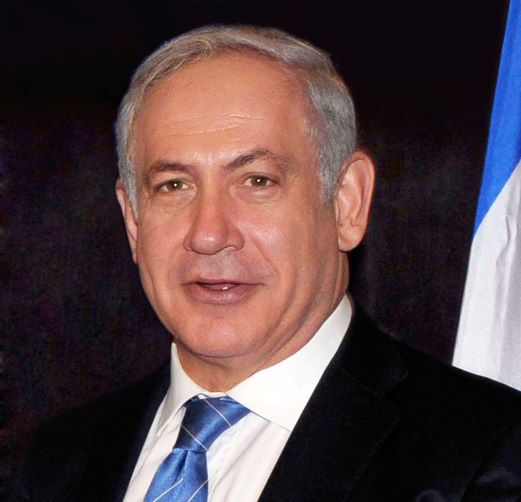
Take Me To Your Leader (ABC) Benjamin Netanyahu As we see the footage of huge crowds protesting on the streets after Netanyahu’s ‘reforms’ of the courts, this episode is even more relevant than on 22 February 2023 when it was released. ‘Bibi’ has served a total of 15 years as Prime Minister and his most recent stint is his third comeback, after acting as PM in 1996 (with a narrow victory over Shimon Perez) for just three years; 2009 when he came back for 12 years; and now since December 2022 in an coalition with hard-right colleagues. A ‘prophet of doom’ type politician, in the past he tended to campaign as hard right but become more centrist once he achieved power, but now he needs the cover of the hard right to avoid his own legal entanglements. He is a divisive character, and Israeli politics has splintered into for- and against- Netanyahu politicians. He fears a nuclear armed Iran as a threat, and so he has cosied up to Putin and former President Trump. Guests include Ayala Panievsky, Gates Cambridge scholar, former journalist Haaretz newspaper and research associate at ‘Molad’, The Centre for the Renewal of Israeli Democracy; Mitchell Barak, former aide to Benjamin Netanyahu (who said that he was a horrible boss) and political analyst  Dave Sharma, Australia’s former Ambassador to Israel (who is not Jewish- I assumed he was).

Rear Vision (ABC) The War in Ukraine- the military story. This is Part I of a two-part series, released as part of the first anniversary of the invasion of Ukraine. I’d heard much of it before. Russia expected a weak response, as occurred when they invaded Crimea, but by the end of March the Russian troops were withdrawn from Kyiv. There are three elements of military strategy: Physical (i.e. troops and weapons), Intellectual and Moral. It is in effect a war of opposing political systems, and both sides are using propaganda. One difference between this war and the invasion of Crimea is the use of open source intelligence, especially aviation, and the use of autonomous systems like drones and robots.
I hear with my little ear: Podcasts 1-8 March 2023

New Books Network This came up on my New Books related to Latin America, but it’s a pretty tenuous connection. Instead, in Beyond Belief: How Pentecostalism is Taking Over the World, Australian journalist talks about her recent book of the same name, aimed at a general rather than academic readership. She defines ‘pentecostalism’ in terms of the influence of the Holy Spirit, going back to William J. Seymour in 1905, who instituted the Azusa Street Revival in about 1905. She then moves to the 1950s and Norman Vincent Peale, and then to the Jesus People of the 1960s New Age movement. A fourth wave, possibly, is now with the spread of Pentecostalism into Latin America, Korea, Brazil and Nigeria. There is no central authority, and the pentecostal churches tend to reflect the society in which they are embedded e.g. the Catholic influence in Latin America, Shamaanism in Korea. There is still an element of the prosperity gospel at play, but it’s more an emphasis on health and wealth, both of which tend to improve when people get their lives together. Pentecostals have always been good at leveraging the media. After radio in the 1950s, in the 1960s and 1970s it was cassette tapes that people could listen to in their cars. Hillsong has always used music as part of its business model. She explores the link between right-wing populism and Pentecostalism, and notes that both use entertainment and stagecraft and draw on the feeling of being ‘besieged by wokeness’.

Rough Translation This is a two-part program about smuggling pills for a medical abortion into Ukraine. Part I Under the Counter, a young German doctor, Vicki, reads of the shortage of abortion pills (mifepristone followed by misoprostol) in Ukraine. She and her boyfriend Ari find a supplier based in Africa who can source the pills from India, and then he offers a huge quantity- far more than ever anticipated. The only problem is that they have to travel through Poland, where abortion is illegal. Part II The Handoff follows this unlikely group of smugglers into Ukraine, where they learn that there are complications in both pregnancy and abortion during war time. I really enjoyed these two podcasts.

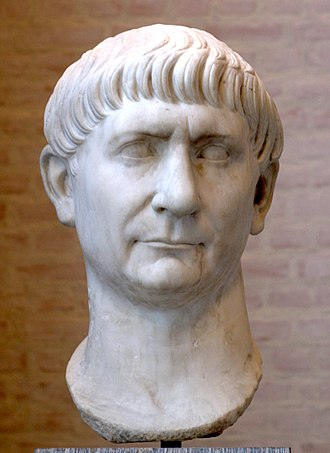
Emperor Trajan: Wikimedia

Emperors of Rome Interlude: Valerius Flaccus. I’d never heard of this Roman poet, from the Flavian period, who wrote an 8-book epic The Argonautica that retold the well known (at that time) story of Jason and the Golden Fleece. He drew fairly heavily on Apollonius of Rhodes ‘ more famous epic, but he was also strongly influenced by Virgil as well. The episode features Dr. Peter Davis. And now, back to the Emperors with Episode XLV In Trajan We Trust . Trajan was born in 53 CE in Italica in Spain. His father had been Consul, had fought in the Jewish Wars and had been governor of Syria. We don’t really know much about him before he became Emperor, because there’s a Big Black Hole of Biography. He started his military career in Syria with his father, then moved to the Rhine. He became guardian of his cousin’s children, one of whom was Hadrian- spoiler alert! He was a good choice for Emperor, because he was a successful military leader. Pliny is almost nauseating in his praise of Trajan, but he was generally regarded as virile and active. His accession to become Emperor was largely violence free (except for the murder of some potential enemies), and he promised to work well with the Senate. Episode XLVI Trajan vs Dacia sees Trajan heading off to Dacia (present day Romania), at a time when the Roman Empire was at its largest extent. Dacia was a client kingdom, headed by the Dacian king Decebalus. Trajan had a victory in the First Dacian War 101-102 CE, then headed back in 105CE when Decabalus started sabre-rattling again. Trajan built a huge bridge across the Danube as a statement of strength, and leveled the capital. The defeat of Dacia brought huge wealth into Rome, and Trajan partied with a 120-day triumph.

File on 4.(BBC) Three Friends Emily, Nadia and Christie met each other when they were admitted as 18 year olds to the Tees Esk and Wear Valley Mental Health Trust with severe mental problems. They all died within 8 months of each other, in a medical environment that did not keep them safe. Their families are left blaming themselves, and the hospital.

Lectures in History (C-Span) Gays and Lesbians in Colonial America. This lecture in a university seminar class is given by Santa Clara University professor Nancy Unger. She starts off by challenging the denial of homosexuality by many African-Americans (particularly religious African-American groups) and Africans who claim that homosexuality was “un-African”. Instead, she argues, there was an African tradition of boy-wives. She argues that in early 17th century American colonies, there was a recognition of same-sex relationships among slaves. At this early stage, there was no emphasis on reproduction as there was later, and so same-sex relationships were tolerated. As time went on, the official view was that homosexuality was unacceptable, and amongst colonists it was a capital offence. But there were only two men executed, partially because the law required two witnesses and also because there was a labour shortage at the time. She then goes on to look at case studies of gay and trans-sexual court cases. One was of Nicholas Sension in 1677, who despite his high status and marriage, had a 30 year history of homosexuality. The court case was reluctantly brought because the community was concerned that he was bringing them into disrepute. Steven Broughton was a church leader, who was voted back into his leadership position by 2/3 of the congregation when he was reported. Thomas/Thomasina Hall was declared to be both a man and a woman because of their ambiguous genitalia.

Take Me To Your Leader (ABC) Vladimir Putin I’ve heard few podcasts and seen a few documentaries since the Ukraine invasion about Vladimir Putin, but this one was particularly interesting because Hamish Macdonald talks with former (?) ABC journalist Monica Attard, who has a rather different perspective on Ukraine than we usually get. All of the guests agreed that Putin was likely to continue as President up to his death.

I hear with my little ear: Podcasts 16-23 February 2023

The Explanation (BBC) There has been much about Turkiye and Syria in the news since the recent earthquakes and so I decided to go back and review what has happened in Syria in recent years. How Syria’s Peaceful Uprising Became a Civil War takes us back to July 2000. Lina Sinjab, a BBC Middle East correspondent, explains how the conflict in her native country began. Bashar al-Assad had inherited the presidency from his father and Syria became, in effect, a dictatorship without a dictator. In 2011 the Arab Spring emerged across the Middle East, evoking a military crackdown in Syria despite the peaceful nature of the demonstrations. Russia and Iran backed the government, while the Americans backed the Kurds and Islamic groups. This U.S. support changed in 2013 when ISIS became involved, prompting the US and a coalition of Arab states to fight against ISIS. Assad used chemical weapons against his people, something that Barak Obama had seen as a ‘red line’ but no action was taken. By this time, Russia’s support for the regime was overt. A huge refugee flow ensued, cutting Syria’s population from 21 million to 6 million. Then the podcast finished with a very abrupt ending.

The Daily (NYT) A Crisis Within a Crisis in effect picks up where the previous podcast left off and asks why, after the earthquake, it has been so hard to get aid to Syria. It returns briefly to the Arab Spring, and the clampdown by the al-Assad government, and the fleeing of doctors from the country once hospitals began being targetted. Western sanctions were imposed against the as-Assad government, although the United Nations continued operating within Government-held areas with Al-Assad’s permission after agreeing to recognize the sovereignty of his government. In 2014 a UN resolution enabled the UN to send aid into areas that were not under the control of the Al-Assad govt. As a result, aid groups established bases containing workers and supplies on the border of Turkiye and Syria as a staging ground to move into Syria. This is the area that was impacted by the earthquake. It took four days for the first supplies to arrive from Turkiye to Syria, and even then it was a shipment that had been put together before the earthquake, so it contained none of the emergency supplies or help that was required. Since then Al-Assad has agreed to open two more crossing points. The Syrian government is asking for sanctions to be lifted, but the UK and US are unlikely to send direct aid. The earthquake has come at a time when the US had already begun easing sanctions, and the Syrian government had begun re-engaging.

Archive on Four (BBC) What Has Media Training Done to Government? Featuring a wealth of mainly-British political interviewers, this episode looks at the rise of ‘media training’, often conducted by former interviewers themselves. As the episode points out, media training comes from a place of fear- fear by the interviewer that they won’t get anything; fear from the interviewee that they will says something they didn’t mean to say. It is now an industry in its own right, where the journalists become celebrities themselves, making the whole field more competitive. It is marketing-oriented, and it weaponizes the unintentional.

Emperors of Rome Episode XL What is an Emperor? goes back to look at the way that the concept of ’emperor’ had changed from the time of Julius Caesar through to the death of Domitian. In that 150 years, the republic was almost back to a monarchy in all but name. Caesar was not an Emperor officially, because he was not a Princeps. He saw himself within a Republican mould, taking on the title of ‘dictator’ -itself a Republican term- and just extending his term again..and again.. and again. Augustus was the first emperor because he could veto anything, getting his powers from the Senate. The influence of the army became increasingly important, as did the power of the imperial household. Deification after death gradually became normalized. So why didn’t the Senate reassert its power? Probably because the conjunction of the interests of the military and the emperor had become normalized. Episode XLI Nerva. Nerva was one of the last Italian emperors, coming to power after Domitian was assassinated. We don’t know much about his early life but he came from a high-born consular family and was close to the imperial family- for example, his grandfather went into voluntary exile with Tiberius, although he distanced himself later. Nerva is seen as the first of the ‘five good emperors’. The senate put him forward as emperor, so there was no return to the Republic, but he never had the support of the army. The army insisted that he nominate a successor, so he named and adopted Trajan from the military ranks. He was only there for 16 months before dying of natural causes. Episode XLII is a bit different- it’s called A Lesson in Latin followed by Interlude Latin Pronunciation (Actually, I’d quite like to learn Latin). Rhiannon and Matt start by going through some common Latin phrases that are still in use today. But how do we know what Latin sounded like? Mainly from grammarians, especially Quintillian, who declared that if people spelled correctly, the pronunciation would be correct. (A bit like Spanish, really)

Kerning Cultures Viva Brother Nagi. Nagi was a Yemeni immigrant to America, where he worked in agriculture- as many Yemini immigrants do. He was born in Yemen, where he was politically active and moved to America as a 20-year-old in 1967, part of a wave of immigrants from Yemen who arrived after the 1965 Immigration Act removed quotas. There had been industrial action in the agricultural section since the 1970s, and in 1973 strikes broke out again when the Teamsters Union contracted a sweetheart deal with the growers. Nagy became a picket captain in the grape strike led by Cesar Chavez. He was beaten to death by a county sheriff outside a restaurant in Lamont California. A huge funeral march was held, and a boycott of grapes and fruits took off amongst consumers. Two years later in 1975 the law was finally changed to allow farm workers to assemble, have union representation and bargain.

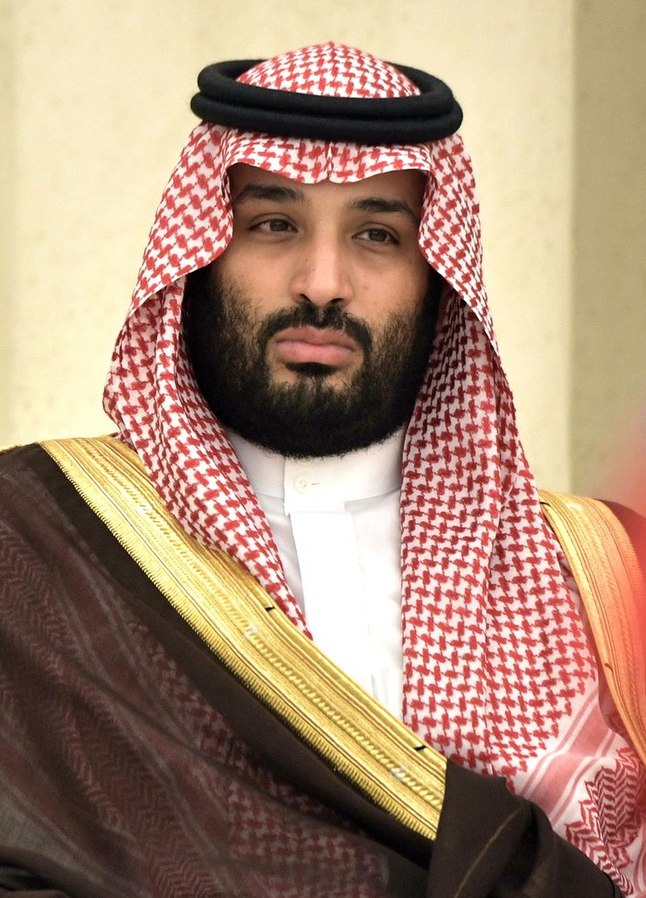
Take Me To Your Leader (ABC) In this episode Hamish Macdonald looks at Mohammed bin Salman. Along with journalists Graeme Wood and Karen House, he interviews ‘Sultan’, a gay Saudi journalist, who sought and received refuge in Australia after a journalist he was ‘minding’ went rogue. MBS is the grandson of King Abdulaziz, and probably the most ‘Saudi’ amongst possible heirs as he did not have the Oxford University/Rich British life that many of his other relatives had. Young people see him as a progressive modern, but not Western, leader. In November 2017, now Crown Prince, as part of an anti-corruption purge, he ‘held’ 400 members of the elite in the Ritz Carlton Hotel and forced to repay their debts. He has developed Vision 2030 which envisions a modern, cutting edge city housing 9 million people on a 170 km. block of land. He had a close relationship with Trump, but not Biden, and he takes Putin’s calls but not Biden’s.

I hear with my little ear: Podcasts 1-7 February 2022

Conversations (ABC) – Lost at Sea: Losing faith as a Navy Chaplain was broadcast on 26 April 2022. It is an interview with Collin Acton, who also featured in an article in the Saturday Paper (19 November 2022 – but it’s behind a paywall). After a fairly tempestuous relationship with his father, he joined the Navy as a 16 year old as an engineer and underwent your typical evangelical Christian-type conversion experience. He undertook divinity training (no mean feat for someone who had left school so early) and took up a position as an Anglican chaplain in the Navy. Gradually his faith withered, but that had serious implications for a ‘professional Christian’ a as chaplain is. He most enjoyed talking with people, and the fellowship of his church, but he found more and more defence personnel were traumatized by Afghanistan and the boat turn-backs. Much like the position of chaplains in schools and in an increasingly atheistic society, he is raising questions about whether the chaplaincy role can only be played by Christians.

Field_enclosures_at_Huntingdon_Warren_-geograph.org.uk-_4193119]]

History Extra: Wild places and Wild people: a short history of commons. The episode featured Professor Angus Winchester, the author of Common Land in Britain: A History from the Middle Ages to the Present Day. I’d only really thought about ‘the tragedy of the commons’ and the Enclosure Act during the industrial revolution, but ‘the commons’ had been contested for much longer. The Statute of Merton in 1236 that said that all the land belonged to the manor, although cottagers had rights to wood and pasture, as long as they only took what was proportionate to what they owned, and did not sell them commercially. The commons were traditionally used for recreation, musters and protests. Even with enclosure, those who had a common right were granted a portion of the newly-enclosed land. The ones who were really hung out to dry were the landless peasants. In the 1860s, there was a shift to preserve the commons for recreational access. Interesting- it challenged a lot of my preconceptions.

Emperors of Rome. Episode XXXIV Titus and the Siege of Jerusalem. Titus was born in 39CE in Rome, and his father was Vespasian. This meant that Titus grew up in contact with the imperial family, and indeed, being the same age, he studied with Brittanicus. He had a military upbringing, and served with Vespasian in Jerusalem, and when Vespasian was acclaimed as Emperor, Titus stayed behind in Jerusalem to ‘clean up’ the military action there. He undertook a 7 month siege of Jerusalem, a fortified city with huge symbolic importance for the Jews. After finally breaking the siege, he set the Temple on fire (thus attracting eternal opprobrium in Jewish histories), killing and capturing people for slavery. Then he went back to Rome. Episode XXXV A Pleasant Surprise from the Emperor Titus sees Titus take power. At first it looked as if he was going to be a bit of a playboy (like Nero) and his affair with the Judean Queen Berenice didn’t go down well. But when his father died and he took over, there was a sudden change. Although he only ruled for two years, he was generous in his building program, and took the kudos for opening the Flavian Ampitheatre (now known as the Colosseum) which his father had commenced, and for the rebuilding after the volcanoes in Pompeii and Herculanium and yet another fire in Rome in 80CE. He died of fever, and was promptly deified. Apparently his last words were “I have only one sin on my conscience” – then he died, leading to all sorts of speculation about what the sin was. Episode XXXVI The Debut of Domitian. Domitian was Titus’ brother, and he didn’t share any of his brother’s illustrious upbringing. He was a bit of a loner, and the change in the family fortunes didn’t come until he was 18. He did act as the representative of the Flavian family when Vespasian was coming back to win the civil war, and while Titus was still in Jerusalem, but he threw his weight around and wasn’t popular. In fact, Matt Smith likens Domitian to Uncle Fester and Titus to Gomez in the Addams Family. Anyway, when Titus died – and it genuinely seems that Domitian didn’t have anything to do with it- Titus took over.

Travels Through Time. I didn’t like this one much. Louis XIV, The Sun King features historian Philip Mansell who may have written a lot, and may know a lot but was far too digressive for this format. He chooses the year 1700 and all three episodes take place at Versailles. The first is on 17 November 1700, when Louis’ grandson is chosen as Philip V of Spain, thus uniting the Spanish and French, even though this means that France will become embroiled in the War of Spanish Succession, when the Hapsburgs challenged Philip’s claim. The second episode is a military review during 1700, of which there were many, where Louis would inspect his personal bodyguard. Mansell emphasizes that the French crown had both military and divine aspects. The final episode is also in 1700 when a procession of freed white French slaves takes place before Louis, who has purchased or swapped them from the Muslim Algerians. This was a largely performative act, as much of Louis’ other functions were, demonstrating his generosity – although the Protestants and people in neighbouring countries wouldn’t agree.

Take Me To Your Leader (ABC) I really enjoy Hamish Macdonald’s work, and I actually prefer him to Patricia Karvelas on RN Breakfast when he steps in. In this eight-part series, he looks at current world leaders who have been influential in the past and who are likely to be around for a while longer (that’s a brave call!) In Episode 01 Xi Jinping, he talks with three people who know/have known him in various guises: Sarah Lande from Iowa, who has known him since he visited her home in 1985 as a low-level party member on a fact-finding trip to America; Dr Feng Chongyi, Professor in China Studies at UTS who fell foul of the regime when he went on a research trip to interview Chinese figures who were interested in liberal and democratic ideas; and Sue-Lin Wong, Southeast Asia correspondent at The Economist. After Xi Jinping’s father fell from grace with the party, Xi was sent to the countryside as part of the Cultural Revolution. He worked his way back into the party, becoming Vice-President and Secretary to the Secretariat of the Party- a very influential position. (I tell myself this as I seem to be the Eternal Secretary of different organizations I’m involved with). In regard to the question of Taiwan in the future, both Dr Feng Chongyi and Sue-Lin Wong point out that China transformed Hong Kong without a single military action, largely through infiltration of civil and government organisations.

I hear with my little ear: Podcasts 25-31 January 2023

Background Briefing. Is is just my inattention, or is there less news about the protests in Iran recently? Under the Eye of Iran Part I explores the surveillance of Iranian people here in Australia. There are interviews with young women now resident in Australia, one who was happy to give her name, another who did not want to be named for fear of repercussions on her family back in Iran. It was chilling to hear of this young Iranian girl, out on a night on the tear with friends whose “F*** you” to a man who told her to behave more discreetly led to her sitting in court, facing charges that could have led to her execution. Also has an interview with Kylie Moore-Gilbert, who has spoken out since her release from prison. [Update- just in the last week (i.e. mid February) there is news of the protests beginning again]

Wikimedia

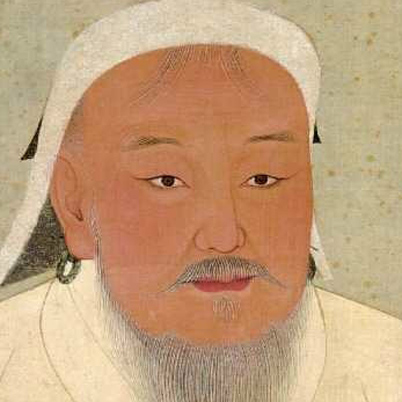
History Hit/Gone Medieval I’ve been reading Simon Sebag Montefiore’s gigantic The World which has made me aware of how much I don’t know, about anything, really. I listened to Mongol Empire where Matt Lewis talks to Dr. Nicholas Morton, author of The Mongol Storm: Making and Breaking Empires in the Medieval Near East. The Mongols emerged out of a confederation of nomadic tribes, led by Genghis Khan, and they rode wave after wave, integrating conquered societies into their empire. There were differing responses to conquered communities: if they submitted early, they were treated more humanely. In 1220s they invaded Armenia and Georgia, in 1230 the Near East and in 1260 Syria, but they were stopped by the Mamluks. In 1241 they defeated Hungary and Poland in a fleeting raid, but they did not return as planned because they broke down in a Civil war in the 1260s. The legacy of the Mongol Empire was the increase in scientific knowledge and the growth of trade.

Full Story There was plenty in the news about the death of George Pell, and I was interested to hear David Marr’s take on it. David Marr on the Life and Legacy of George Pell doesn’t hold back at all (as you might expect) declaring right up front that “George Pell was a danger to children”. The conservative Catholic Church of George Pell was a shame machine, generating over 4000 complaints between 1980 and 2015. Pell moved easily in political circles, and was able to leverage funding and the founding of the Catholic university system. The Ellis Defence that was put forward under his leadership relied on old rules. He did apologize on behalf of the Catholic Church, but not for his own personal role. Marr suggests that, with Pell’s death, it is going to be difficult to maintain scrutiny of the Church.

You’re Dead to Me. I would hate to be the historian on this show. Ivan the Terrible features Prof Peter Frankopan from the University of Oxford and Russian-born comedian Olga Koch. Ivan used violence as a form of political control, although he wasn’t alone in that- violence was ubiquitous throughout Europe. Much of his time was spent in a power struggle with the Boyars, and he ended up dividing Russia into two.

Axios I’ve never really got into Twitter, but Elon Musk did, and he bought the company. Although that wasn’t clear during this series, which was recorded while Musk was negotiating to buy it, and then withdrawing, and then buying it again. How It Happened: Elon Musk vs. Twitter discusses Musks’ moves throughout different industries and his tolerance for risk, best exemplified by his expansion into autonomous self-driving Teslas- an experiment that uses us. The most recent episode, which dropped in January this year after a three-month hiatus, examines his first few months as CEO of Twitter, and the challenges facing his other companies.

History Hit To mark The International Holocaust Remembrance Day on 27th January, Anne Frank’s Life After Her Arrest takes up her story after leaving the Secret Annexe and up to her death. Dan Snow is joined by Bas von Benda-Beckmann, historian and co-author of After the Annex: Anne Frank, Auschwitz and Beyond, to reconstruct Anne’s life after her arrest. We don’t really know whether the family was betrayed or not: Otto Frank believed that they were, but it is possible that the police discovered them as part of a search into forged food stamps. They were sent to Westerbork prison camp in the Netherlands, where the girls worked recycling batteries. This prison allowed families to stay together, and although there were rumours about the death camps, there was an effort not to panic the prisoners. They were sent on the last train from Westerbork to Auschwitz, arriving on 6 September 1944. Up until May 1944 only 20% of the passengers survived the selection process for the gas chambers, but the demand for slave labour meant that by this time, 65% went to work as slave labour. Much of this labour was senseless. In November 1944 Anne, Margot and Peter’s mother were sent to Bergen Belsen, while Anne’s mother died at Auschwitz. At Belsen, the system was breaking down and there was no food, although parts of the camp were better than others because ‘high value’ Jewish prisoners were kept there for prisoner swaps. Mrs Van Pels was sent on to another labour camp. It is now thought that Ann died in early February 1945, not March as previously thought.

The Philosophers Zone (ABC) Conspiracy Theories, anti-Semitism and fun is a repeat of a program originally broadcast in May 2022. In it, Charles Blattberg, Professor of Political Philosophy, University of Montreal discusses his essay ‘Anti-semitism and the aesthetic’ where he argues that conspiracy theories have an aesthetic dimension. He identifies four manifestations of this aesthetic: savouring details; playing for fun; putting on shows and fantasizing. There’s lots of labels and definitions here (in a very philosophical way) but he notes that conspiracy theorists tend to underestimate incompetence, and that it is not possible to reason with a conspiracy theorist – you can only mock them. Very theoretical, but interesting. There’s a link to Blattberg’s lengthy essay on the ABC site.

I hear with my little ear: Podcasts 17-24 January 2022

Sirens are Coming (ABC) This seven part series (plus a bonus episode) is written and presented by Matthew Condon, who wrote a trilogy about organized crime in Brisbane, comprising Three Crooked Kings (2013), Jacks and Jokers (2014) and All Fall Down (2015). I’ve been meaning to read these books for a while, even though I am not a great fan of true crime, because by now they almost have the status of being history (after all, they always say that journalism is the first draft of history….)

In many ways, this podcast goes over the same territory as his trilogy, but he takes a slightly different perspective. Yes, he’s talking about crooked cops and politicians but he considers them through and from the perspective of four very brave women who worked in the sex industry over a period of about 40 years. Episode 1 The Great Survivor takes us back to Brisbane in 1958 when three bent coppers- Glen Hallahan, Terry Lewis and Tony Murphy- form ‘The Rat Pack’ which extorted sex workers for protection money – a pastime they dubbed ‘the joke’. Two of their early recruits were Dorothy Edith Knight, who fell in love with Glen Hallahan, and Shirley Brifman, who did their dirty work in Queensland’s first-ever Royal Commission into police misconduct. Episode 2 From Kickbacks to Paybacks is set in the 1970s when an enquiry is called into the goings-on at the National Hotel, a favourite watering hole for the Rat Pack.. At the enquiry, Shirley Brifman lied to protect the police while Dorothy Knight was the first person in Queensland to wear a wire in a sting operation to take down her former lover, Hallahan. Episode 3 The FallOut sees Brifman dead, supposedly of a drug overdose, after appearing on This Day Tonight and admitting that she had lied to the National Hotel Enquiry. Meanwhile, Dorothy Knight was holed up in a safe house, reaping the consequences of snitching . Episode 4 Old Dogs, New Tricks moves into the mid 70s as the sex industry expands to the Gold Coast as well, and Simone Vogel moves up from Sydney and establishes herself as a power. When she wanted out, she disappeared too. By this stage, one of the Rat Pack, Terry Lewis, had been appointed Queensland Police Commissioner. The cold case has never been solved. Episode 5 Change is Coming takes us to the 1980s, as heroin hits the streets. ‘The joke’ has now transformed itself into the “new joke”. Lewis is still Commissioner, and although Murphy had retired, he still was heavily involved in extortion. A new madam emerges, Katherine James. By this time, Four Corners screened ‘The Moonlight State’ in May 1987, leading to the appointment of the Fitzgerald Enquiry. Episode 6 The Greatest Show in Town Katherine James (a pseudonym) was fundamental to the Fitzgerald Enquiry and corrupt police and politicians fell like dominoes. In the Bonus episode – Katherine want to talk she speaks publicly for the first time. Meanwhile, although the joke is at an end, police have a new form of intimidation – entrapment, described in a Episode 7 Bonus episode. Queensland lags behind the other states in its legislation regarding sex workers, and you find yourself wondering if the Rat Pack really is in the past….

Emperors of Rome Episode XXXI Enter Vespasian. Vespasian was from equestrian ranks and his father was known as an honest tax collector (which was obviously big deal). He was born in Rome in the Sabine hills in 9CE. He went with Claudius to Britannia and was rewarded with a province in Africa. But he wasn’t particularly ambitious and ended up returning to Rome broke (which shows that he wasn’t ripping people off enough) and set up a business trading in mules. In 66CE he was sent to Judea by Nero, partially to neutralize him as a competitor, and also because there were religious issues there over monotheism and taxes. He is written about by Josephus, a Romanized Jew, who depicts him as ruthless. He declared loyalty to Otho, but once Vitellius defeated him, he made his move. Episode XXXII Vespasian as Prophesised discusses the various prophesies about him e.g. a tree, a dog dropping a human hand at his feet, his supposed healing powers, and eagles seen in the sky fighting. He entered a traumatized Rome which had undergone a series of civil wars. He recognized the authority of the Senate, was generous with the senators and the people, and began rebuilding temples. He started the Flavian amphitheatre (now Colosseum) and the Temple of Peace. He finished off Claudius’ temple, to reinforce his links with Claudius. Episode XXIII Emperor Vespasian, Becoming a God reviews his 10 year rule. He was popular, approachable and modest, with high morals. He didn’t claim the title of Father of the Country (PP), and although he did raise taxes, he spent them on culture, the arts and education. He died naturally at 69 years of age, joking on his deathbed “O dear, I’m becoming a God”. He was probably one of the 5 best emperors; he ended the civil wars; he commenced the Colosseum and started a dynasty. Not bad.

London Review of Books Dorothy Thompson was known as the ‘First Lady of American Journalism’ and also as The Woman Who Interviewed Hitler. She tried to get an interview with him for seven years, and when she finally succeeded, she had to submit her three questions in advance. She wrote him off as useless, and hinted that he was homosexual, which didn’t please the Nazis one little bit so they promptly expelled her after the Night of the Long Knives.. She was born in 1893, was university educated and worked as a freelance journalist. She was involved in the suffragette movement, and was married to the writer Sinclair Lewis. It’s hard to pigeon-hole her opinions. She saw FDR as a proto-dictator but anti-isolationist, and she was a fierce advocate for American involvement in WWII (but not necessarily boots on the ground). She wrote an essay ‘Who is a Nazi?’ where she argued that Nazism attracted people holding particular social and economic views (suggesting that ‘the Jews’ might have been Nazi under different circumstances). In fact, she was quite anti-Semitic, despite wanting America to be involved in the war. She often promulgated ideas too early, before people were ready too accept them e.g. that there should be no harsh reparations against the Germans. In the podcast, Deborah Friedell argues that it is impossible to overstate her significance as a journalist early on, but that she increasingly became viewed as a crank.

Strong Songs. Queen’s Bohemian Rhapsody I’m not always familiar with the songs that Kirk Hamilton deconstructs, but everyone (even me) knows Bohemian Rhapsody – and how much he has to work with here! This is a replay of an earlier episode, but it’s really good. He is full of admiration for Freddie Mercury’s vocal skills and the judicious but lavish use of Brian May’s guitar. Really good. And who can resist watching the Live Aid concert.

I hear with my little ear: Podcasts 1-8 January 2023

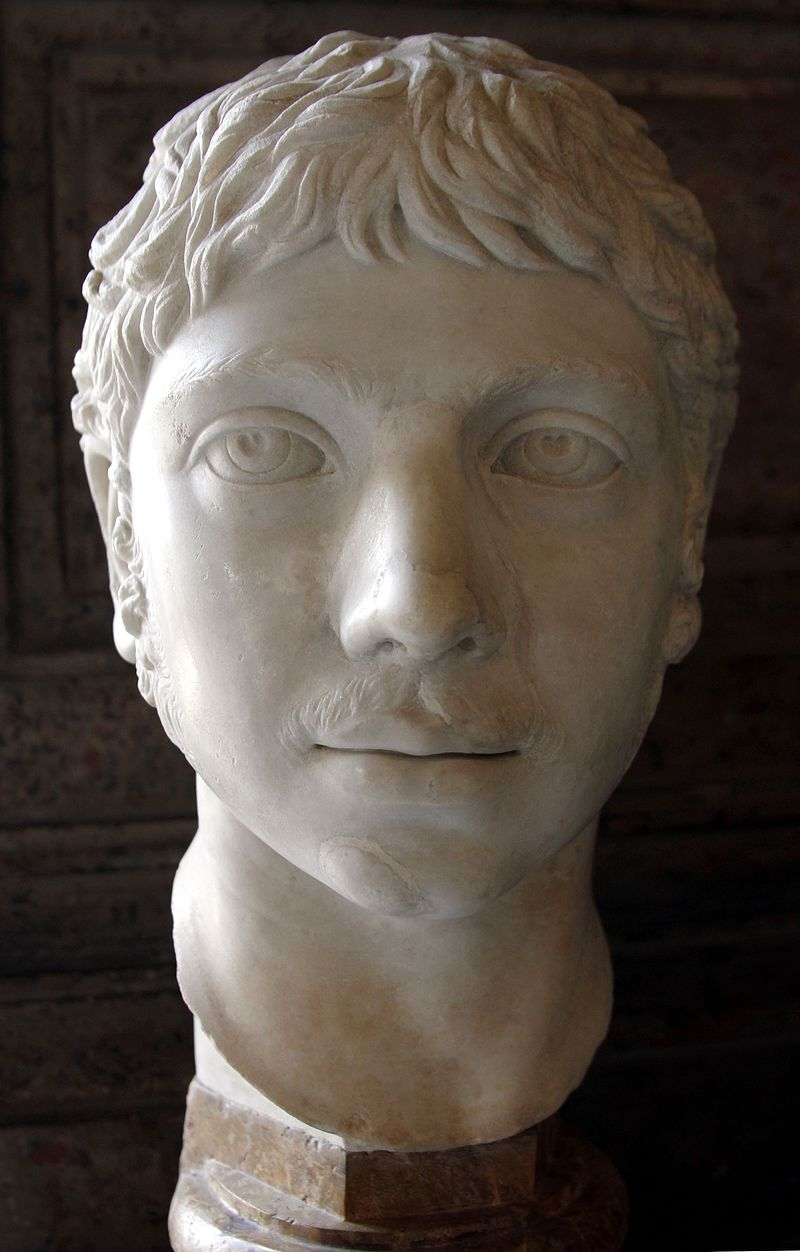
Bust of Elagabalus Wikimedia By © José Luiz Bernardes Ribeiro, CC BY-SA 4.0, https://commons.wikimedia.org/w/index.php?curid=53962341

Travels Through Time 218 The Mad Emperor with Harry Sidebottom. Well, there have been plenty of mad leaders over history, but Heliogabalus was right up there with them. In this episode, the producers trample on tradition as well by allowing Harry Sidebottom, historical fiction author whose most recent (non-fiction) book is The Mad Emperor to choose three separate years instead of just one. His first date is 1 May 218 CE when Heliogabalus’ grandmother sneaks him out of Emesa (modern day Homs) in Syria to start the revolt that will elevate him to the position of Emperor of Rome. He is only 14 years of age, and the empire is at the height of its power, but the wheels were starting to fall off when his predecessor Caracella was murdered by Macrinus. Heliogabalus was probably his cousin, but he portrayed himself as Caracella’s illegitimate son. The second date is Midsummer’s Day 220 when Heliogabalus holds a huge parade in Rome to demonstrate his new religion. The Romans enjoyed parades, but the PR with this one was all wrong. It was interpreted as a triumph over a defeated people as the procession headed off to the new temple that he had constructed to his god, Elagabalus. He seemed to delight in trashing convention: he married 5 times, including to a Vestal Virgin; he married men and delighted in taking the ‘lower’ position; he alienated everyone. The third scene is in March 222 when Heliogabalus is murdered on the orders of his grandmother after a controversial four-year reign. His grandmother promptly replaced him with another more tractable grandson, Alexander Severus. Sidebottom doesn’t completely see him as mad; instead he sees him as in the grip of a religious fervour.

The London Review of Books Is Alan Bennett still alive? He must be, because here he narrates his diary for 2022 On Failing to Impress the Queen. He’s been publishing his diary every year in the London Review of Books since 1983. He’ll be 89 this year, and he sounds every bit of it in this rather quotidian but elegiac reading that seems to feature a lot of funerals.

Kerning Cultures Exodus was originally published in Guernica magazine and is written and read by Zahra Hankir. After the disastrous explosion in Lebanon, the author returns to a city that she had left years before, as the economy crumbled around her. She tells the story of other people who tried to immigrate as well, part of the multiple waves of immigration from the 1890s onwards, after the Civil Wars and again with the war with Israel. The economic collapse in 2019 caused another wave, with the explosion just another symptom of economic and social collapse. How awful to watch your country just fall apart through incompetence and corruption, with no political solution in sight.

In Our Time (BBC). It’s only because I’m reading Simon Sebag Montefiore’s The World that I became familiar with Hatshepsut, the second historically confirmed female Pharaoh (the first was Sobekneferu). The episode Hatshepsut features Elizabeth Frood
(Associate Professor of Egyptology at the University of Oxford- and a New Zealander), Kate Spence (Lecturer in Egyptian Archaeology at the University of Cambridge) and Campbell Price (Curator of Egypt and Sudan at The Manchester Museum). It was common enough for women to rule as regents, but as Principal Wife of a Pharaoh and regent for her step-son, she declared herself full King and ruled for at least 15 years in her own right. As time went on, she was depicted as a male complete with false beard and male dress. Her step-son finally took over, and after reigning for about 20 years embarked on a project of erasing her likeness and reputation as Pharaoh, perhaps as a way of clearing the succession rather than as revenge (20 years really is a dish served cold).

You’re Dead to Me (BBC) also had an episode devoted to Hatshepsut featuring again Campbell Price from the Manchester Museum and comedian Kemah Bob- my God, what a grating voice! I don’t know how a serious historian could bear to go onto this program, but needs must, I suppose.

Emperors of Rome. Having dispatched Nero, the Emperors of Rome podcast has a little interlude here where they catch up on some biographical information about people mentioned in passing – namely Cicero, Livia, Seneca and Ovid. Episode XXV Livia looks at Augustus’ wife Livia, so memorably played by Sian Phillips in I Claudius. Livia was of impeccable patrician background, so she experienced the fall of the Republic. She and her first husband backed the wrong side in the Civil War, but she was granted amnesty. In 39BCE Octavian divorced his wife and married Livia while she was pregnant with a child from the first marriage, her husband having been ‘persuaded’ to divorce her. It seems that it was both a love match and a strategic power play on both their parts. They didn’t have any children together, which could have been grounds for divorce, but instead he adopted her children. She was very publicly visible, but there were rumours that she was responsible for a number of murders- a matter that Dr Rhiannon Evans doesn’t buy into. Certainly, her son Tiberius had mother issues. Episode XXVI Seneca the Younger is another stand-alone episode. Seneca the Younger is best known (notorious?) as the the tutor and advisor of Nero, but he was a respected stoic philosopher, a writer of tragedies, and one of the richest men in the Roman empire. He was born c. 4 BCE into a Spanish Equestrian family and his father Seneca the Elder (naturally) was a rhetorician. He didn’t get on with a number of Emperors: Caligula hated him but spared him his life because he was expected to die soon: Seneca had the last laugh here because he outlived Caligula and lived to relative old age. He also clashed with Messelina, Claudius’ wife and he was sent into exile at Corsica on rather spurious ‘adultery’ charges. He was recalled to Rome as Nero’s tutor- a rather bad advertisement for his teaching and philosophy. He was very popular as a writer during the Renaissance, and it is thought that his tragedies influenced Shakespeare’s writing. He decided to retire, but was forced to commit suicide after the Pisonian Conspiracy against Nero, even though he was probably innocent. He did so by bleeding out, but it was a difficult way to die and he advised his wife (who was also required to commit suicide) not to do it- in the end she didn’t have to suicide anyway. He was out of favour as a writer, but there has been a recent rehabilitation of his reputation. Episode XXVII Ovid started me off on a little podcast spree on Ovid. Ovid was born in 43 BCE (i.e. a year before Julius Caesar was assassinated) into a wealthy, but politically negligible, family. His wealth meant that he didn’t need patronage. He began writing while he was young, and achieved almost immediate popularity. His book ‘The Art of Love’ was seen as a subtle attack on Augustus’ marriage legislation, although there was a long time between publication and being forced into exile in Romania on the Black Sea on account of his writing. But exiled he was- and he died in exile, separated from his family. He is best known today for his work The Metamorphoses.