Category Archives: Podcasts 2023

I hear with my little ear: Podcasts 8-15 June 2023

The Documentary (BBC) Ukraine: The Men Who Don’t Want to Fight I can remember reading and hearing reports of Russian men who were leaving Russia because they didn’t want to fight, but I wasn’t aware so much of reports of Ukrainian men doing the same. I’ve always had sympathy for men who didn’t want to fight in foreign wars in other people’s countries, but is it different if men are being asked to fight for their own country? I think that it is, although I’d be hard pressed to answer why. This episode looks at the more-than 6,000 Ukrainian men of military age who have been granted protection in Romania since the beginning of the war. Some did not want to fight for a variety of reasons; others had been on the frontline and walked away (‘deserted’?) Some had an easy escape; others died in the attempt. A different perspective on an old problem.

Emperors of Rome Episode LXXIX – Epicureanism Here’s something different. Matt Smith is nowhere in sight, and it’s Dr Rhiannon Evans who interviews Dr Sonya Wurster about Epicurianism, a Greek philosophy based on the idea that the greatest good is to seek modest pleasures- quite different from the high-status, elite idea that Epicurianism suggests today. It had four principles: 1. Don’t fear the gods 2. Don’t fear death 3. What is good is easy to get 4. What is bad is only of short duration. Many writers were hostile to Epicurianism because it was so laid-back that it didn’t fit into the Roman ideal of the politically involved citizen. Interestingly, many of the papyri that were discovered at Herculaneum (buried by Mt Vesuvius in 79CE in the same eruption that destroyed Pompeii) were works by Epicurian philosophers – in fact,in March 2023 a contest was launched to decipher the scrolls using AI. Throughout this series, Dr Rhiannon Evans and others have been referring to Dio Cassius (or Cassius Dio, take your pick) and in Episode LXXX – Dio Cassius he finally get his moment in the sun. He wrote about 80 books, of which we only have about 1/3 in their original form, but there are fragments and epitomes (i.e. summaries) of many of the others. He actually witnessed some of the things that he wrote about, which is always a bit tricky for a historian- at what point does the history become biography or journalism? This isn’t a problem that Livy fell into, as we learn in Episode LXXXI – Livy featuring Professor Emeritus Ron Ridley from Melbourne Uni who sounds like the quintessential classics scholar, enlivened by arcane debates about the past, and deeply embedded in all things ancient. Livy spent his whole life writing an exhaustive history of Rome – all 142 books, of which we have the first quarter. However, Livy was careful to stop before he got too close to the time when he was writing. They have been hugely influential on all the other histories that were written after him.

History Extra Having listened to the podcast about Ukrainian men avoiding fighting, I thought that I’d listen to Fight Like a Man? Masculinity in WW2 There was little relation between the two. This episode features Luke Turner, the author of Men at War: Loving, Lusting, Fighting, Remembering 1939-1945. As you might guess from the title, this book and podcast takes a gender/masculinities lens to look at WW2 and homosexuality, cross-dressing and gender-crossing during a time of such disruption, and when so many men lived in close proximity. It didn’t feel particularly new to me.
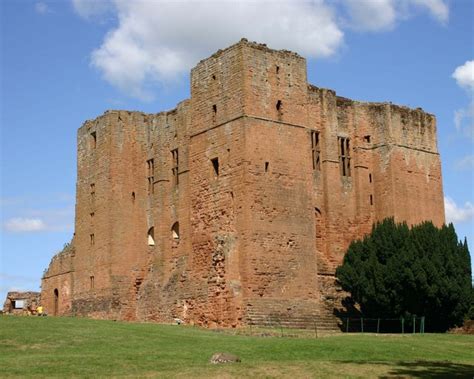
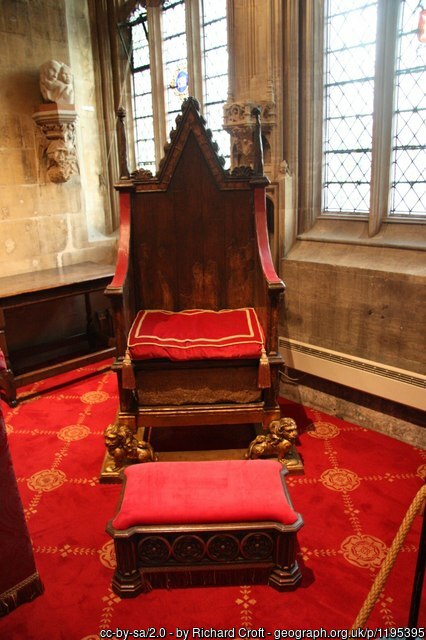
Kenilworth Castle geograph.org.uk

History Hit Part 3. Story of England: Tudor Feuds, Explorers and Fanatics takes us to (nearly) everyone’s favourite English period, the Tudors. Dan Snow starts off at Kenilworth Castle where he speaks Dr Joanne Paul who tells the intricate story of the powerful Queen Elizabeth I and her mutual infatuation with Sir Robert Dudley, to whom she gifted the castle. She points out that although Henry launched the Reformation as a way of getting round the problem of a lack of an heir, he remained Catholic in his practices e.g. he heard a Latin mass, and he had the Catholic last rites. Sir Robert Dudley spent a fortune on a 19-day visit by Elizabeth to his castle -1000 pounds a day on an income of 5000 pounds a year, and sent the family broke in the process. He then goes on to speak with Angus Konstam who explains about the Elizabethan Sea Dog (Drake, Raleigh, Hawkins), privateers who were both traders and explorers, and who laid the basis of England’s maritime power. He ends up at Boscobel House, where Charles II hid in the oak tree. Listening to Charles I’s bullying of the Parliament has a new relevance, now that we can see so many ‘strong men’ in erstwhile democracies, trying to subvert the power of the people.

Now and Then In There’s Something in the Water historians Heather Cox Richardson and Joanne Freeman look at the provision and privatisation of water in the development of American cities, focussing particularly on New York and Los Angeles. Coming in the wake of recent announcements about controls on the extraction of water from the Colorado River, it all seems rather reminiscent of our own struggles over the Murray River, with the conjunction of competing state interests, capitalism, exploitation and denial of the commons.

I hear with my little ear: Podcasts 1-7 June 2023

History Listen (ABC) Those Bloody Vegos- a short history of vegetarianism. Even though I flirted with vegetarianism in my early 20s, I have been known to utter “bloody vegos” once or twice. I suspect that some of the vegetarians of my acquaintance would be disconcerted to learn of the connection of vegetarianism with some rather out-there religious beliefs in the late 19th/early 20th century. This episode is Australian-focused, which was good to hear.

The Ancients. During May, The Ancients are having a series of podcasts on Babylon. This first one is about Nebuchadnezzar -I can barely even say it let alone spell it. He ruled between 605-562 BCE, forty-two years at the height of the Babylonian Empire when it reached from the Mediterranean to the Persian Gulf. He was himself the son of a king, so he had an easy accession to the throne. There was a power vacuum after the decline of the Assyrian empire, and both Babylon and Egypt vied to fill it. The Egyptians were propping up the King of Judea as a way of extending their power, but in 587 BCE Nebuchadnezzar beseiged Jerusalem and installed a client king. Ten years later, he captured Jerusalem and destroyed the first Temple. We get much of our information about him from the Jewish Old Testament, where he was seen as a historical figure, but also as a vehicle of God’s punishment. The Babylonian Empire was as large as the Assyrian empire had been, but in a slightly different place. Babylon was a religious centre and a trade route, with a lot of monumental building. During the 20th century, German archaeologists were very active in excavating sites. It’s not really known exactly where the Hanging Gardens of Babylon were (all large cities had gardens), and they were perhaps more ‘terraced’ than ‘hanging’. After reaching its peak under Nebuchadnezzar, the Babylonian empire didn’t last. After his death, his son was assassinated after 2 years, then his son-in-law met the same fate after four years. The last king of Babylon was unrelated to Nebuchadnezzar and in 539BCE the empire collapsed almost overnight in the face of the expansion of the Persian Empire.

Emperors of Rome Episode LXXVI – It’s Good to be the King. All the sources available to us portray Commodus as a Very Bad Emperor, worse than Caligula, Nero and Domitian. He wanted to rename Rome after himself, as well as ALL the months of the year. He portrayed himself as Hercules, and replaced Nero’s head on Nero’s column with his own, and had it placed beside what is now the Colosseum. Indulging himself as a gladiator was completely inappropriate- a bit like the Queen going on Big Brother. Episode LXXVII – Such was the End of Commodus At the end of his reign, he embarked on a killing spree amongst the Senate and the elites, while on all sides there were uprisings against the Roman Empire in Brittanica, Germania and in Dacia. There were omens of his demise: fires in Rome, and his own smearing himself with blood. He was planning on killing two of the consuls and becoming consul himself dressed up as a gladiator, so it was no surprise that he was assassinated on New Years Eve in 192 CE. His own concubine organized the hit, first with poison (that he vomited up because he was drunk) and then strangling, which was a particularly ignoble way to die. And that was the end of Commodus and the Antonine dynasty. Episode LXXVIII – Borders of the Roman Empire features Dr Paul Burton from ANU who notes that all of the British Imperialists of the 19th century would have imbibed ideals of empire from their shared classical education, bringing it right up to our days. During the republic, wars were mainly conducted against Carthage (North Africa) and the Hellenistic leftovers of Alexander the Great’s empire. The Roman army might be highly interventionist, but it would then withdraw- it wasn’t interested in annexing territory. New territory came as the spoils of victory and in fact, some Kings of neighbouring allies bequeathed their territory to the Romans. At first governors were sent to an area for one year only, but their period of office was gradually extended, which may have contributed to the fall of the Republic as governors (like Julius Caesar) embedded their power in provincial support. When Augustus promised an end to the civil wars, there was a change in mindset about the provinces: no longer were they cash-cows, but instead they were the site of building projects where local big men contributed the funding. This led to an expansion of the provincial elite to inclusion in the Senate, and even as emperors. Citizenship was highly valued (St Paul proclaimed his Roman citizenship to avoid being flogged) and it was used as leverage for loyalty. In 212CE Caracalla extended citizenship to everyone in the empire.

Latin American History Podcast The Conquest of Peru Part 8 Pizarro was able to enter Cusco without resistance, where Manco accepted Pizarro’s authority, and indeed all the power lay with the Spaniards. Manco then joined Almagro and Hernando de Soto in pursuit of Quizquiz. Finally turning to colonization instead of conquest, Pizarro established Lima as a port city. News of Peru’s riches spread, attracting the attention of both immigrants and other conquistadors already present in South America including Pedro de Alvarado, the most bloody of the conquistadors. Eventually de Alvarado was paid off, and he sailed away, leaving the north of Peru in the hands of the Spanish colonialists.

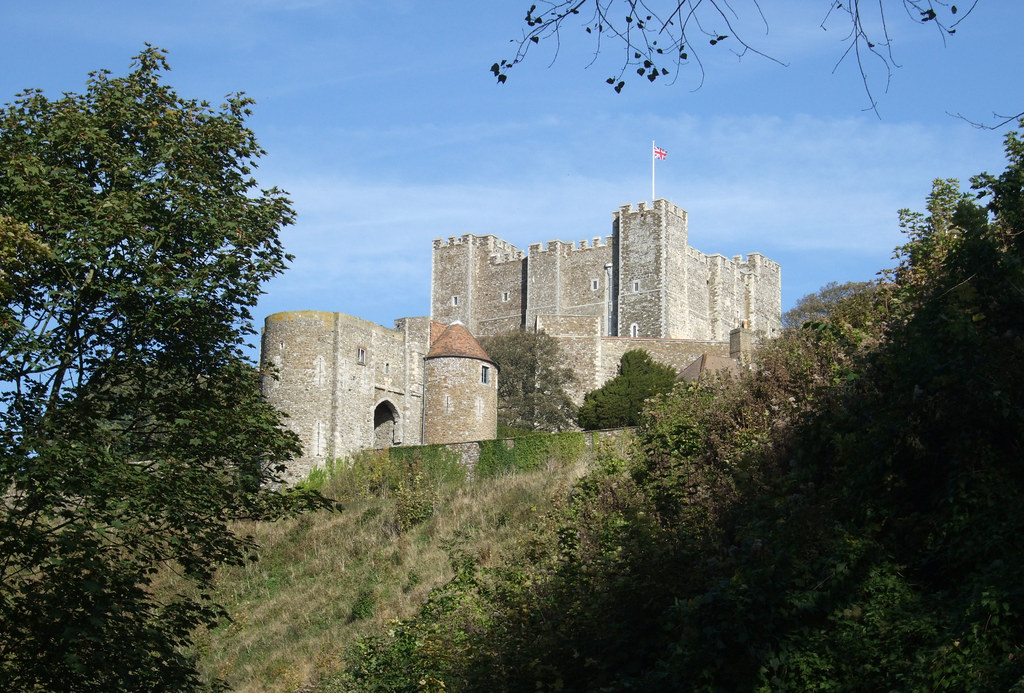
Dover Castle. Image Jim Linwood https://www.flickr.com/photos/brighton/5105158828/

Dan Snow’s History Hit Continuing on his road-trip of British history in Episode 2 of Story of England: Medieval Invaders, Snow takes us to Pevensey where William the Conqueror and his Norman Invaders landed in 1066. The Duke of Normandy was a cousin of Edward the Confessor, who had just died, and he was taking his chances when this vacancy on the throne occurred. There are actually three Medieval periods: 1. Early Medieval (which used to be called the Dark Ages) between 400-1066CE; The Central period between 1066-1300, and Late Medieval from 1300-1500. The Early period was marked by increased regionalization of the Anglo-Saxon period, which settled into a few big kingdoms. Although we don’t know if King Arthur actually existed, it is true that Ambrosius Aurelianus certainly did, and aspects of his reign were probably incorporated into the Arthurian legend. The Vikings, who arrived in the 860s gobbled up the kingdoms, although Alfred the Great made a strong stand. Dan Snow then travels to Dover Castle, which was built after the Norman invasion, on a site previously occupied during the Iron Age, and by the Romans who left a lighthouse which still stands today. All this came to a halt in 1348 when the plague arrived, killing off 25 million Europeans during 1347-1352, and leading to a labour shortage, increased labour mobility, and a change in land use.

Democracy Sausage. I usually listen to this every week, but I don’t note it because it’s usually too topical and dates too quickly. But Mark Kenny’s The Queen is Dead with Stan Grant is excellent, and well worth a listen. It was a meet-the-author type event about Grant’s new book, but they also spoke about his contribution to the panel discussion prior to the coronation that culminated in him quitting as host of Q&A.

The Rest is History. With all the pearl-clutching about the faint embers of republicanism in Australia, it’s interesting to consider that in 1649 England declared a republic! It only lasted about ten years when, unable to get themselves out of what they had done, parliamentarians turned again to Charles II to fill the king-shaped hole. Featuring Anna Keay whose book The Restless Republic I’ve ordered from the library (these podcasts are not good for my already daunting TBR pile), this episode The Republic of Britain: Life Under Cromwell goes beyond the Cromwell/Parliament activities to look at the way that people either went along with it or changed their mind. I did a subject on this -ahem- fifty years ago, and had forgotten much of it, but what a fascinating time, with radical political experiments turbocharged by radical religiosity.

I hear with my little ear: Podcasts 24-31 May 2023

The Documentary (BBC) Beirut: Life in the Unliveable City I love my home city, Melbourne, and I just can’t imagine what it would be like to watch it collapse economically, politically and socially around me. I think of Caracas in Venezuela, Argentina in the grip of inflation, and Beirut in Lebanon. Lina Mounzer is a writer and translator living in Beirut, and here she talks with friends, family and neighbours about what it is like to live there. She lives on the 12th floor of a high-rise, and even though they pay to have a generator, they only receive 12 hours of electricity a day, on an intermittent basis. She overlooks the port and the grain silos that block her view saved her flat when other silos exploded three years ago. In explaining the political situation, she goes back to 1991 and the end of the Civil War when an amnesty froze everything, but also granted immunity to those who had committed atrocities. In 2019 there was a financial collapse, leading to massive 97% devaluation of the currency, followed by the port explosion in 2020. Now 80% of the people live in poverty, with 25% in extreme poverty. Since November 2022 there has been no president. She has seen the rise of ‘generator mafia’, a sector of the economy that owns generators and which now is bigger than the official electricity system in its heyday, so it is unlikely that the electricity situation will improve in the future.

History Hit Dan Snow has started a five-part series on the history of England. In this first episode Story of England: Stone Age to Roman Days, he starts with the footprints on the mudflats at Happisburgh, Norfolk which were made about 900,000 years ago on what was at that time the banks of the Thames. We don’t know what species of humans made the prints, because there have been at least four species of humans in England. There were at least eleven waves of migration to England, and climate plays an integral role. In warm periods there were rhinos; in cold periods there were polar bears. During the Ice Age in 25,000 BCE, human life in England ceased completely, but humans returned again in about 15,000 CE. He then moves on to Stonehenge, which was commenced c. 8000-7000 BCE, with the biggest stones erected in c2500 BCE. The largest stones were collected from about 20 miles away, but the smaller ones, called ‘bluestones’ (though not bluestone as we know it) come from Wales. The stones reflect a solar alignment, and there are acoustic properties to the bluestones. No-one every lived there: it was a ceremonial site. He then moves to Old Sarum. Julius Caesar had brought the Romans over in 54-55 BCE but it wasn’t until 43 CE that Claudius mounted a ‘proper’ conquest. Sarum was already a fort, and the Romans built a temple on it and expanded it further. It became an Anglo-Saxon centre, and when William the Conqueror invaded in 1066, he headed straight for it. This was a really well-produced episode, interesting, and giving enough context that an Antipodean could follow it easily.

Revisionist History. The Mystery of Mastery with Adam Gopnik. This was a taped interview where Gopnik (who I’ve only encountered in the New Yorker) is talking about his new book The Mystery of Mastery. Rather than talk about the book itself, they ramble on about mutual acquaintances and men that Gopnik had encountered who exhibited mastery- magicians, cooks etc. So far the only woman they discuss is one of their mothers rolling out pastry (although Gopnik’s mother is a professor, he says) and I decided I’d had enough of this dickfest.

Emperors of Rome Episode LXXIII – From a Kingdom of Gold Marcus Aurelius died at the age of 59, still with the army fighting yet another phase of the Marcomannic Wars. He probably died of plague, which was still circulating around, although some sources suggest that he received ‘help’ from doctors. He was deified and buried in Hadrian’s mausoleum. His reputation is somewhat tainted by Commodus who followed him, but it is quite clear that Marcus always wanted him as a successor. The ‘five good emperors’ were all adopted, but by pushing his (unsuitable) biological son, he broke the pattern. Marcus Aurelius was really important: he satisfied the senators and he didn’t alienate anyone. He was unfortunate to face two wars and the plague, and he probably would have been an excellent civic emperor, rather than a military one. Episode LXXIV – Iron and Rust In his book, The Decline and Fall of the Roman Empire, Gibbons starts off with Commodus, and anyone who has seen Gladiator will agree. The Roman Empire did begin to lose power at this time, which was perceived as being caused by Commodus’ own immorality. Well, this is what Cassius Dio says, who was an eyewitness and participant- so who knows how objective and reliable he is. Some of his most egregious actions were only picking up on similar actions in the past, but in Commodus’ case, he was actively trashing the Roman Empire. He quickly contracted truces in the Marcomannic Wars which kicked the problem further down the road, and then turned up in Rome for his triumph, along with his boyfriend. He had inherited a good, happy Senate but started executing them, and reverted to treason trials and confiscations as a way of replenishing the coffers. There was an assassination attempt led by his sister Lucilla, so he purged the Senate and the upper classes and put his own men in. Episode LXXV – Flying Too Close to the Sun looks at men who stepped forward to fill the administrative and leadership vacancy while Commodus was off indulging in “orgiastic abandonment” as Cassius Dio puts it. Sextus Tigidius Perenni was the Praetorian Prefect. He lasted a couple of years but was brought undone when 1500 javelin men arrived from Britain, dissatisfied with the Roman government, and Commodus took their side. He was replaced by Cleander, who had facilitated the arrival of the British contingent so that he could get rid of Perenni. He enriched himself (and Commodus) by selling off public office, leading the situation where there were 24 consuls each year- 25 if you count Commodus. But there was a grain shortage and a crowd protest at the races against Cleander and Commodus meant that Commodus had Cleander executed and threw his head to the crowd.

The Rest is History. My grandfather was a Freemason. He died before I was born, but his lodge briefcase was in the garage. Even though my father was not at all interested in Freemasonry, he became very angry when we dressed up in the apron and regalia to parade around the backyard. I’ve visited our local Masonic temple, but I really do not understand it one little bit. So I was interested in this episode The Freemasons: History’s Greatest Conspiracy Theory features John Dickie, whose book The Craft I have reserved at the library. He refutes the lore that Freemasonry started with King Solomon, identifying instead the court of James VI of Scotland (later James I of England) who introduced the stonemasons to the concept of the ‘memory palace’ as a way of remembering the material for entry to the craft. Then in 1717 four lodges formed the Grand Lodge, severing the connection to real-life stonemasonry, and created the 1723 Rule Book. It was associated with Whiggery, and fear of the French Revolution; its ideas influenced the American Revolution, and it did the hard work of the British Empire in providing a web of support for men sent to the colonies, and forming a meeting ground of sorts with the local elite, especially in India. Franco hated them, and they were involved in the Vatican Banker scandal of the 1970s in Italy. I’m looking forward to the book.

I hear with my little ear: Podcasts 16-23 May 2023

Conversations. Love and Loss, in Watsonia. I live very close to Watsonia (next suburb) which is probably why I loved this episode so much. A rather unprepossessing suburb, Watsonia might have bloody great electricity pylons running through it, but it seems to have spawned comedians (any connection?) like Denise Scott and, as in this podcast, Damian Callinan. His parents married during the war, and they moved to Watsonia where they had five children and became the pillars of the local Catholic church. This podcast made me think of my parents and their neighbours and friends, and their steady rhythm of life- all quite ordinary stuff until a tragedy in their old age brought its own challenges. I just loved this.

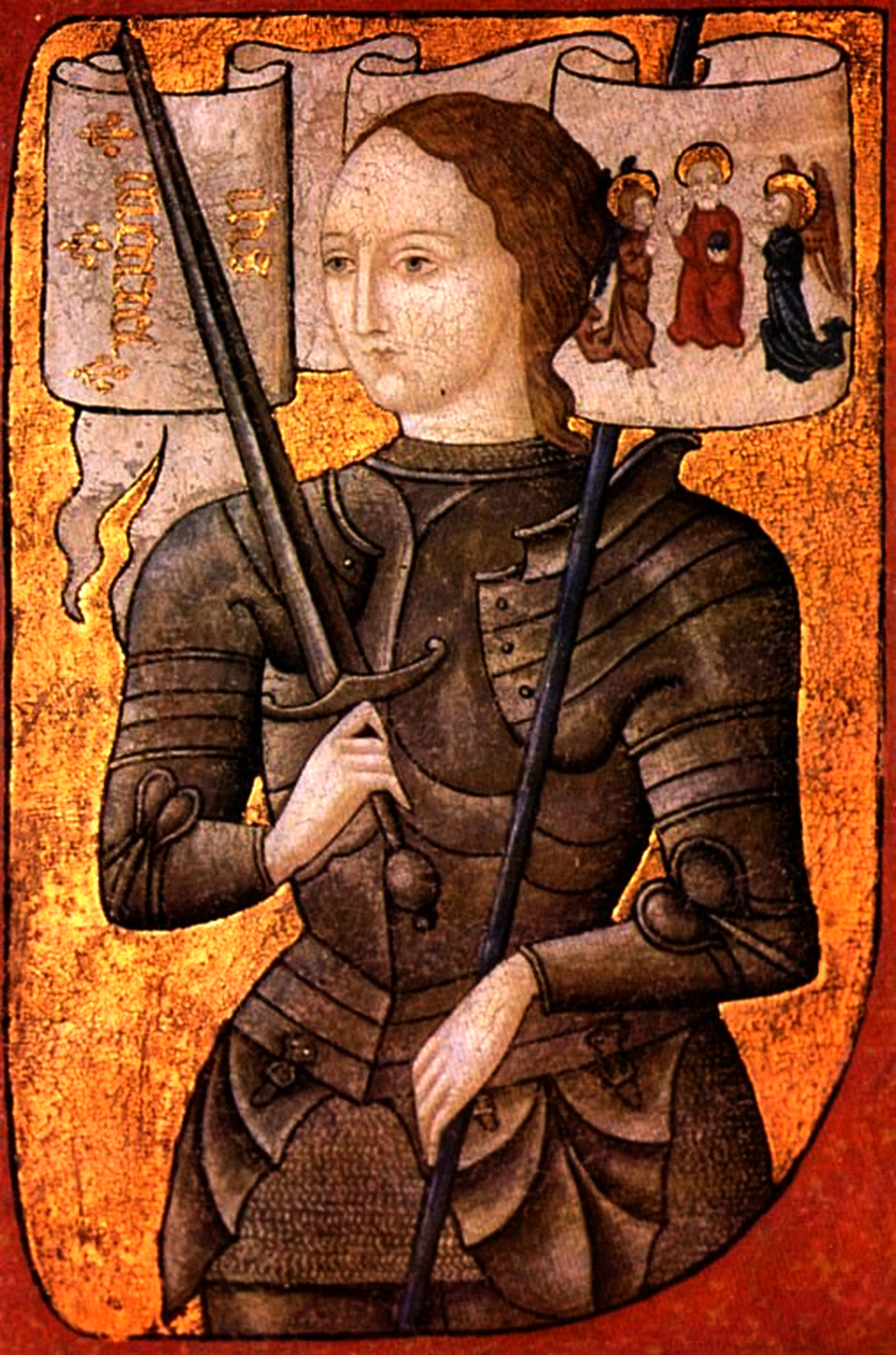
History This Week May 30 is the 592nd anniversary of the death of Joan of Arc, who features in this episode A Teenage Girl Saves France. As a 17 year old, she claimed to have had a vision that Charles of Orleans would become King, joining the Armagnac faction against the Duke of Burgundy, who also claimed the crown. This is just what he wanted to hear, so he sent her to help lift the siege of Orleans, and to other battles. Her loyalty to Charles was misplaced, because when she was captured by the Burgundians, she was ransomed to the English and Charles didn’t lift a finger to help her. She was charged with heresy and wearing men’s clothes (which seemed to be the thing that really annoyed people) and burned at the stake. Featuring Nancy Goldstone, author of The Maid and the Queen: The Secret History of Joan of Arc and Charity Urbanski, associate history professor at the University of Washington, this episode contextualizes Joan of Arc politically and underscores what an incredible story it is.

Emperors of Rome Episode LXX – The Marcomannic Wars ran from 166-7 CE through to 180CE- in effect, the whole of Marcus Aurelius’ reign. The wars were triggered when a loose confederation of Germanic people began moving south from beyond the Danube and Rhine to pursue market opportunities when they perceived the Romans to be weakened in the midst of long term malaise. The Roaman troops who had been guarding against ‘the barbarians’ were withdrawn to fight the Parthian wars, and in their absence, the Marcomanni crossed the Danube and the Vandals invaded Dacia. Marcus Aurelius and Lucius Verus both headed to the Danube, but Verus died suddenly. The Barbarians invaded Greece and the Marcomanni defeated 20,000 Romans on the Danube and moved towards Italy. In 172CE Marcus crossed the Danube (from the other direction) to take the fight to them, where he was aided by miracles of rain and lightning reflecting the return to supernatural thinking. Meanwhile, the Syrians were mounting their own challenge to Marcus Aurelius’ authority. Episode LXXI – Meditations features Dr Sonya Wurster (Honorary Fellow in the School of Historical and Philosophical Studies, University of Melbourne) talking about Marcus Aurelius’ writings that we know as the Meditations. They are written exercises in Stoicism, often starting off with a quote. The virtues he champions – courage, wisdom, self-control, justice- were all very Roman values. As emperor, Marcus was interested in the role of providence, the nature of a leader and control of emotion. It’s possible that because he was an emperor, he knew that they might be published (so perhaps they are not completely private writings) but they serve to humanize him as an emperor. Episode LXXII – On Behalf of the State In 175CE while Marcus Aurelius was away at the wars, a revolution started in Syria when it was rumoured that Marcus was about to die. The Syrian governor Avidius Cassius, a war hero, declared himself emperor, perhaps with the assistance of Marcus’ wife Faustina- although this is not certain. Avidius was killed by his own troops before Marcus could confront him, but Marcus did not take revenge on his family and associates which he was entitled to do- although his son Commodus did it for him after Marcus’ death- but he did change the rules so that you couldn’t become governor of a province in which you were born. Faustina died, and he began bringing his son Commodus into the administration, in training to become the next emperor.

History of the Inca Episodio 6: Los Wari (in Spanish) or here in English. The Wari were located in the Ayacucho region of modern day Peru. They introduced terraced farming, which because of the warming effects of the sun on the stones separating the terraces, meant that they could farm at higher altitudes. They had several administrative centres throughout the Andes, including Pikillacta in the Lucre Basin. They also had colonies, but there is an ongoing scholarly debate over whether they were an ’empire’ preceding the Inca, or whether it was more ‘soft power’ in cultural terms. After a severe drought, their society collapsed completely by 1200 CE.

Rumble Strip is a podcast series presented by Erica Heilman about life in Vermont, U.S. In What Class Are You, she drives around and asks people she knows ‘what class are you?’ Interestingly, most of them said ‘working class’ and what comes through is the anger that many of them hold, an anger that is feeding the Trump Phenomenon (even though there is little crossover between their lives and Trump’s). It is all so ordinary, with such ramifications for the rest of the world.

I hear with my little ear: Podcasts 8-15 May 2023

Emperors of Rome. Actually, I have already listened to a lot of these episode back in December 2021 but that’s a lifetime ago and repetition does me no harm at my age. Episode LXVII – Heir and a Spare looks at Hadrian’s succession plan, with his choice of Marcus Aurelius and Lucius Verus as his adopted sons and heirs. Why two? Given that people around the emperor tended to die, perhaps he was being cautious; or maybe he intended them to rule as joint emperors- who knows. They were not actual brothers. Marcus Aurelius was vaguely related to Hadrian through the female line, and there was a Spanish connection. In fact Marcus’ grandfather, who brought him up, was a good friend of Hadrian. Marcus was close to Hadrian even before he was adopted, and he was the ancient version of a geeky student, and a bit ascetic (which Hadrian wasn’t too keen on). One way or another, he was marked out from the start. Lucius Verus was the son of Lucius Aelius Caesar, whom Hadrian had picked out to be his successor, but he inconveniently died. So Hadrian went for his son instead. He was ten years Marcus’ junior, so perhaps Hadrian thought that if Marcus died, Lucius would the next one in line. Hadrian thought that both boys were too young at this stage to be his direct heirs, so he appointed Antoninus Pius instead, on condition that he adopt the boys too, and appoint them his heirs. He no doubt thought than Antoninus would only last a few years until the boys were old enough, but then he hung on for 23 years, giving the boys a very long apprenticeship. A bit like Prince Charles. Actually, there’s another parallel with the British Royal Family too, because even though the boys were technically equal, as the older and more responsible, Marcus Aurelius was given more responsibility from the start and had more authority than his rather Playboy Brother. (Charles and Andrew? William and Harry?) Once they finally became co-emperors in CE 161, they immediately gave the soldiers a bonus equivalent to 3 years pay to keep them on-side. The arrangement worked better than might be expected, because neither wanted to pull rank on the other. Episode LXVIII – Never Underestimate the Parthians takes us right back into a war. When Marcus and Lucius inherited, the Roman Empire had been at peace for 40 years, but at the end of Antoninus’ rule, there was already trouble brewing with the Parthians. Almost immediately they flexed their muscles by invading Armenia to overthrow the client king that the Romans had installed there. The Governor of Cappadocia, Severianus got dud advice from a self-proclaimed prophet and was badly beaten by the Parthians. Lucius Verus was sent to take control of the situation, but he took the scenic route and didn’t get there for a year and then he hung around Syria with “low people” and sent Statius Priscus to the frontline instead. Priscus had an early victory and captured the Armenian capital and a new King was installed. Meanwhile, the Parthians turned their attention to Mesopotamia instead, where they were again defeated, and the Romans invaded Parthia, where Lucius was blamed for the sacking of Seleucia (although he wasn’t there) after its Greek-oriented inhabitants had welcomed the arrival of the Romans. No sooner were the Parthians taken care of than the Marcomanni started niggling up in Germania. Episode LXIX – Galen and the Antonine Plague features Dr Leanne McNamara (Classics, La Trobe University). While Lucius’ troops were sacking Parthia, it was said that they made the mistake of opening a casket in a temple to Apollo, releasing an illness that would follow the troops all the way back to Rome and beyond. There had been plagues and epidemics previously, but this was longer-lasting and with a wider reach than any other plaque before. It was transmitted by personal contact and airborne particles. There are different hypotheses for what it was – perhaps hemorrhagic smallpox? bubonic plague? measles?- but it had scabs, a rash and a cough. It is thought that about 10% of those who contracted it died. We know as much as we do about it because of the writings of Galen, a doctor who treated the emperors, who penned over 400 books in his life, of which about 20,000 pages remain.

Now and Then. During the lockdown, I listened religiously to Heather Cox Richardson, but I’ve got out of the way of it since she stopped her ‘history only’ videos/podcasts. But, having read glowing reports of Joe Biden at the White House Correspondents Dinner, I thought I’d listen to Not a Joke: Humour as Politics. Heather Cox Richardson actually attended it this year, along with 2600 other people. What a strange form of democracy: that people would mock politicians to their face. Even though Australians don’t take politics particularly seriously (or at least, we didn’t in the past), there’s nothing quite like it here, although the Federal Parliamentary Press Gallery Midwinter Ball is perhaps close. The White House Correspondents Dinner started in 1921. In terms of comedians, Heather and her colleague Joanne Freeman discuss Seba Smith (1792-1868) and his iconic Jack Downing character, Alice Duer Miller’s (1874 – 1942) poetic suffragist satire (both of which published their satire in newspapers rather than perform it on stage) and African-American Dick Gregory’s (1932-2017) truth-telling on issues of race and class which fits in more to the political stand-up comedian we’re familiar with today.

Nightlife (ABC) and The Religious and Ethics Report (ABC) I’ve just finished reading Elle Hardy’s book Beyond Belief How Pentecostal Christianity Is Taking Over the World and so I thought that I’d seek out a few interviews with her. The Nightlife episode The Rise and Rise of Pentacostalism was conducted by a presenter who obviously has little knowledge about religion generally. The Religious and Ethics Report episode Pentecostal Christianity and the Hillsong Empire, presented by Andrew West, had more teeth to it, which you might expect given the focus of the program. She was rather deferential here, acknowledging the effect of Pentecostal religion in helping people to get their lives together, and emphasizing that it is not a cult.

The Underworld Podcast also featured Elle Hardy, but she didn’t present such a glowing view here (again, reflecting the focus of this program, too). In the Episode A Brazilian Murder, Narco Evangelists and Holy Warfare: The Gangsters of the Global Pentecostal Movement, she starts off with the case of Flordelis dos Santos de Souza, politician, gospel singer and church leader, who was jailed along with several of her 55 (yes you read right) adopted children for being complicit in the murder of her husband Anderson do Carmo de Souza. She then goes on to talk about ‘Narco Evangelists’ in the favelas, and the relationship between Pentecostal religion and hard-line anti-drug policing exemplified by Rodrigo Duterte in the Phillipines.

Wikimedia

The Long Read (The Guardian) Sudan’s Outsider: how a paramilitary leader fell out with the army and plunged the country into war looks at Gen Mohamed Hamdan Dagalo (known as Hemedti), the leader of the RSF which is currently in conflict with Sudan’s army, led by Gen Abdel Fattah al-Burhan. The presenter, Nesrine Malik, was in Sudan in February this year, where the country was jittery after the shooting of a protester by an army officer. She returned to England, but by mid-March both al-Burhan and Hemedti were taking the high moral ground over this shooting, and the RSF moved first to take over the airport. She asks: How did Hemedti capture Sudan politics seemingly overnight? He was an outsider, from the western Darfur region, where he enriched himself with goldmines seized during the Civil War in Dafur sufficiently to purchase 70,000 mercenaries who he has sent to other African countries (e.g. to Yemen to support Saudi-Arabia) ad to Libya. In 2013 the RSF was institutionalized by the military dictator president Omar al-Bashir as a tool to crush dissent by rebels and protesters, giving Hemedti, as commander of the Janjaweed, a basis of power. Initially he worked alongside the army and in 2021 was involved, alongside al-Burhan, in an unsuccessful coup against Bashir’s civilian replacement. Both generals had agreed to work together on a framework agreement where they would relinquish power to a civilian government. But neither trusts the other, and so conflict has broken out between the army and the RSF. The looting sounds horrendous. The article from which this podcast is drawn is here.

I hear with my little ear: Podcasts 1-7 May 2023

Emperors of Rome. After a bit of a hiatus, Dr Rhiannon Evans and Matt Smith return to the Emperors, picking up with Episode LXV – Antoninus Pius. It just goes to show that there is no reward for having a prosperous, peaceful reign because Rhiannon and Matt could only scratch one episode for Antoninus Pius, even though he ruled for twenty three years and was known as fourth of the Five Good Emperors. We know little about him, because most of the sources peter out at this point. His family was from trans-Alpine Gaul, but he was actually born in Italy. His father and grandfather had both been consuls under Domitian, but did well under Trajan and Hadrian as well. His daughter ended up marrying Marcus Aurelius, who succeeded him. Despite being a bit cranky at the end, Hadrian had planned his succession well, and Antoninus moved smoothly into the role of emperor and promptly set about getting Hadrian deified, which he deserved but some of those on the receiving end of Hadrian’s crankiness didn’t see it like that. Antoninus, known as ‘Pius’ meaning “dutiful” (rather than “religious” as we might think today) was a diplomat rather than a warrior, and a good money manager. He rebuilt the Colosseum and the Circus Maximus, both of which were looking a bit tatty. The Senate wanted to rename September and October after him and his wife Faustina, but he refused. He died in his mid-seventies in his sleep. Episode LXVI – Fronto. This episode presents Dr Caillan Davenport, who is going to take over from Dr Rhiannon Evans fairly soon. He tells us about Fronto, a senator and some-time consul and orator who became Marcus Aurelius´ tutor and later friend/advisor when Marcus was already 18 years old. He wrote over 200 letters to Marcus Aurelius, of which we have about half.

Travels Through Time. 1924 Knowing What We Know features Simon Winchester, and I think that our presenter was rather overwhelmed by the prospect of interviewing him about his new book Knowing What We Know, the transmission of knowledge from Ancient Wisdom to Modern Magic because she herself wrote a book about how ancient knowledge was transmitted. I wasn’t surprised to learn that Winchester is a journalist rather than a historian, because his books are marked by their broad scope and attraction to the ‘good story’. Anyway, after a long discussion, he identified 25 October 1924, when the Zinoviev Letter was published in the British press, setting Ramsay MacDonald and the Labour Party up for election disaster; the creation of IBM – International Business Machines and the passing of Asian Exclusion Act through Congress, enshrining anti-immigration policy and racism into law. Actually, I wonder if he read the instructions for this program because he seemed to wander all over the place.

History Extra. On the eve of the coronation, I enjoyed this episode featuring Tracy Borman on What Makes a Good Coronation? She starts off by pointing out that the coronation of King Charles III has its roots in Anglo-Saxon times with the crowning of King Edgar in 973. Her tips are:

  1. Have plenty of bling. Unfortunately most of the bits and bobs date only from Charles II because nearly all of them were melted down during the Civil War
  2. Make sure the ceremony is rooted in history, because the whole point is to emphasize that it’s business as usual.
  3. Make sure it’s televised (which of course could only apply to Charles and his mother’s coronations). Queen Elizabeth’s coronation had 90 different contingency plans for unforeseen events
  4. Be in tune with the times. Victoria had a very thrifty coronation to distance herself from the financial profligacy of William IV and George IV. George’s coronation had cost the equivalent of $14 million
  5. Watch the guest list. George IV had to lock his estranged wife Queen Caroline out of Westminster Cathedral when she turned up uninvited.
  6. Think carefully about a joint coronation. Henry VIII had had a very successful joint coronation with his first wife Catherine of Aragon, but his coronation with Anne Boleyn attracted a lot of criticism, no matter how much money was spent
  7. In fact, joint coronations were relative rare
  8. Beware wardrobe malfunctions. George II’s coronation took place on a very hot day and he was enraged when his cap kept slipping over his eyes. Better than Richard II, whose crown blew off in a gust of wind. It snowed on Henry V’s coronation, which was interpreted as an evil portent.
  9. Choosing the time. George VI stuck to the original date chosen for Edward’s coronation (before he abdicated). William the Conqueror went for Christmas Day in 1066 but it was a bit of a fiasco when the troops misinterpreted the cheers for a riot.
  10. Make sure you crown the right king. Edward VI was crowned in Ireland in 1487 but it was an imposter. Henry VII got his revenge by making the imposter a kitchen boy
  11. Don’t be too young. Mary Queen of Scots was crowned when she was 9 months old, and not unsurprisingly she cried when she was disrobed as part of the multiple wardrobe changes
  12. The most successful coronation was that of Elizabeth I. She prepared it very carefully, and took care to include references to her mother (the formerly unpopular Anne Boleyn).
  13. The most memorable was probably Queen Elizabeth II’s because television took the ceremony all over the world.

El Hilo (Spanish) Brasil: violencia en las escuelas, odio en las redes (Brazil: violence in schools, hatred across the social networks) was a program about the recent spate of killings in Brazilian schools. There has always been violence in Brazilian schools, but not at this level. ‘Our’ (honorary) Jacinda even gets a mention for not ever uttering the Christchurch killer’s name. BBC World picked up on the story (article in English)

The Guardian Long Read Historians generally aren’t awarded celebrity status but Timothy Snyder is an exception. Putin, Trump, Ukraine: how Timothy Snyder became the leading interpreter of our dark times looks at his rise to prominence, even though he is often derided as a Cassandra. He, on the other hand, says that good history means taking bad ideas seriously. Actually, I read and reviewed his 2018 book The Road to Unfreedom and certainly he was very prescient. He has a series of lectures on You Tube about Ukrainian history which I must watch some time.

I hear with my little ear: Podcasts 24-30 April 2023

The Documentary (BBC World Service) Caught in Sudan’s Conflict. It all seems so pointless and unnecessary: an armed struggle by two factions within the same army. As if Sudan hasn’t been through enough already: violence, protest, dictatorship, political instability and upheaval. Sudan borders seven other countries apparently, and ripples are likely to spread to these neighbouring countries. In this episode three women from Khartoum – Dallia, Sara and Enass – share their personal situations and concerns, followed by interviews with a very young doctor. Incessant bombing and sniper fire, electrical failure, lack of food and water, unstable internet- and overwhelmingly fatigue from the stress and 24 hr bombing- what a nightmare.

Emperors of Rome Podcast Episode LXIV – Q and A III. This Q&A session dealt with:

  • What did the Romans know about China and India? (Answer: They knew a bit through trade. They knew that Alexander the Great got to north-west India, but not the subcontinent, and they knew vaguely about the Chinese through the fabled land of Scythia. The Chinese reported that a Roman envoy had visited them)
  • At what point does someone who is conquered become a slave? (Answer: if the commander of a battle wanted to, he could take everyone into slavery- or he could kill them, or he could leave them alone. Up to him)
  • Where did the colours come from for Roman garments? (Answer: the red came from plants. It was expensive, and so only rich people would wear it – pictures depicting the Roman Empire during the Renaissance were not accurate. Purple, which came from fish, was even more expensive.)
  • What did Romans celebrate? (Answer: Saturnalia, triumphs, the emperor’s birthday (when he would give presents to the people) and their own birthdays)
  • What did Romans eat? (Answer: pretty rank and disgusting things. They covered everything with garum, a fermented fish sauce. They liked disguising one food as another. For the poor people, they mainly ate grains. In fact, nearly everyone in the Ancient World was malnourished).
  • Do we know where Julius Caesar was stabbed? (Answer: no, it’s an internet thing)
  • Who is our favourite Emperor? (Dr. Rhiannon likes Hadrian. So do I)
  • How did the ancient texts get to us today? (Answer: most of them are copies of copies because paper decays unless it’s in the desert, or buried under lava)
  • How do we prepare and do our research for the podcast? (Answer: it’s not scripted but Matt does have some talking points)
  • How did the emperors see themselves compared with other emperors (Answer: they had to walk a narrow line between being a ‘king’ – because the Romans were allergic to kings- and a god – but only once they were dead. The image of an emperor, and their own concept of themselves, changed over time).

Latin American History Podcast The Conquest of Peru Part 7. Now that they had killed off Atahualpa after sitting looking at each other for 9 months, they had lost their main bargaining chip. The Spanish troops were playing cat and mouse with Quizquiz, who had been one of Atahualpa’s generals. Pizzarro had arrived during a civil war between Atahualpa and his brother Huáscar, and now that Atahualpa was dead, he had to decide which side he would throw his support behind as a way of saving his own skin. In the end he went for the south, wanting to base himself in the city of Cusco.

Source: Wikimedia.

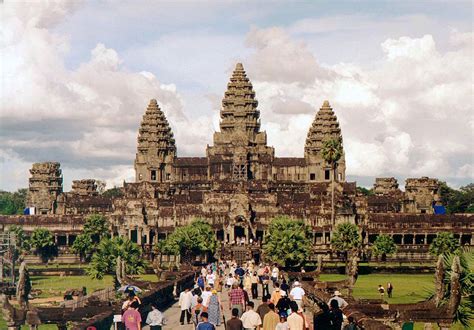
In Our TimeReligion. NOT that I am reconciled to the idea of one of my children taking his family to Bloody Cambodia…. but. Angkor Wat was built for Suryavarman II in the 12th Century in modern-day Cambodia. The Sanskrit culture at that time stretched from Afghanistan through to Bali, in a form of colonialism without the military bit. At the time, Angkor Wat was the largest urban location in the world, with 700,000 to 900,000 people. The temple itself is four times the size of Vatican City and almost the same size as Old London at the time. It is a sculpture in its own right, constructed without mortar. It was built as a Hindu temple to Vishu, but in the 16th century the royal family became Buddhist. Unlike European cathedrals, it was built in an amazing 32 years, and the carvings were made in situ, so there was no scope for mistakes. When the French colonized, they put out the belief that the temple had been ‘lost’, but in fact, it had never been abandoned. Melvyn Bragg, who has been hosting this program for decades, sounds very old and quavery.

Hoy Hablamos. This podcast in Spanish, presented by a Spaniard (as distinct from a Latin American) goes pretty damned fast. I bought a year’s subscription, which gives you access to a transcript and some vocabulary exercises, and with the transcript I can just follow it. Fortunately, the episodes only last about 10 minutes which is my limit at such intensity, so I listen first time by myself, a second time with the transcript, then a third time without the transcript once I know what it’s about. Anyway, during February this year he did a four part series a bout the Guerra Civil Espanola (i.e. the Spanish Civil War), with one episode a week, and it’s really good. It had never occurred to me (forgive me if this is self-evident to everyone else in the world) but Franco the right-wing dictator was actually the rebel leader. I’ve listened to three episodes: Episode 1515 Antecedents and Causes; followed a week later by the Episode 1519 Parties (Bandas), then Episode 1524 Developments. The last episode is Episode 1528 Consequences. But be warned: it’s all in Spanish, and it’s fast.

Take Me to Your Leader (ABC). I’ve finally finished listening to this series, with the final Episode 8: Narendra Modi. I must confess to being rather wary of Narendra Modi and the BJP party, and I don’t particularly feel reassured after this program. It features Nilanjan Mukhopadhyay, Journalist and Author of ‘Narendra Modi: The Man, The Times‘.Dr. Bharat Barai and Dr Panna Barai, longtime friends of Modi;  Professor Ian Hall, Griffith University. Author of ‘Modi and the Reinvention of Indian Foreign Policy’.Lance Price, Author of ‘The Modi Effect‘. Modi faced international criticism over the Gujurat Riots in 2002, and several of the guests (except his friends) felt that he could be characterized as anti-Muslim, even though the Indian Supreme Court acquitted him of complicity. As with many of the leaders that Hamish Macdonald has examined in this series, there is consensus that he’s not going anywhere in a hurry.

Rear Vision (ABC) Heading up to the Voice Referendum, this is a two-parter. The first episode looks at the 1967 Referendum- a vote to count Aboriginal and Torres Strait Islander People as part of the Australian population. As the presenters point out, there had been Aboriginal activism from the 1930s onwards, but by the 1950s, pressure was building for constitutional change. Holt agreed in 1967. There were two parts to the Aboriginal question. The first was that they be counted in the census which they did not previously, presumably because censuses were used to allocate electoral boundaries and there was little prospect, when the constitution was framed, that Aboriginal people would vote. In fact, Aboriginal people did have the vote by now, but many of them did not realize it. The second was that the race powers of the Constitution, which had been written to support the White Australia Policy by legislating against Indian, Chinese and Islander worker populations, be extended to Aboriginal people so that special legislation could be implemented for them. [It’s interesting to hear ‘No’ voters saying that the Voice will be divisive because it gives ‘special’ treatment, and yet the 1967 Referendum, which had bipartisan support at the time, did exactly this quite consciously]. There was another referendum held on the same day with a question about the composition and size of Parliament, and this was far more politically contentious, and when it did not get up, newspaper headlines said that the referendum had failed. The 91% yes vote for the Aboriginal questions was more or less taken for granted. In reality, little changed immediately following the Referendum, but the clause about race-specific legislation laid the groundwork for later legislation, not all of which was positive for Indigenous people.

Part II Giving a Voice to Indigenous Australians- why has it always failed? goes through the history of different consultative committees, highlighting why the Yes proponents want it enshrined in the constitution, and not just by legislation. After 1967 an advisory committee was established with three white men. Whitlam established the elected National Aboriginal Consultative Committee, but when Fraser got in, he abolished it and established the National Aboriginal Conference. This was probably more an exercise in political fence-marking, because both bodies were elected, with about 35-40 delegates, and Fraser made only modest changes. Both were largely ignored. Hawke abolished the National Aboriginal Conference in 1985, probably because it was critical of the Hawke government’s backdown on land rights, and established ATSIC instead in 1987 after two years consultation. It was formed of 63 regional councils (later reduced to 35), and it had a board of 17 members and a chair. It had two roles: 1. to advise the government (not just the Minister) and 2. to oversee expenditure of money. When Howard got in, ATSIC, its regional councils and aboriginal organizations were heavily audited, and the accusations and ongoing criminal proceedings against the ATSIC Chair Geoff Clarke gave Howard licence to abolish ATSIC, supported by Mark Latham. Nothing replaced it. I really enjoyed both these episodes. I thought that I was relatively well-informed, but I really learned a lot.

I hear with my little ear: Podcasts 8-15 April 2023

A History of the Inca. Why the sudden interest in the Inca? you might ask. Just before Covid, I was planning to go to Peru with my son and daughter-in-law and little granddaughter. If the ‘vid didn’t kill off the plan, the high altitude with a young child did, and we didn’t end up going (my refunded deposit bought a new washing machine instead). But now I’m reading an Isabel Allende book (in English) Inez of my Soul, and I thought that I’d go back to the Inca podcasts again. Anyway, Episodio 3: Los Moche (in Spanish) or Episode 3 The Moche deals with the Moche society, one of the four that preceded the Incas until about 700-800 CE. I had no idea they existed. Here’s a short travel video about them (in English)– check out The Lord of Sipan- a discovery as jaw-dropping as the discovery of Tutankhamen .

Emperors of Rome Podcast Episode LIX – Martial. And there I was, thinking that I would be listening to a podcast about armies. But no, Martial was a poet, writing during the time of Domitian, Nerva and Trajan. He was famous for his epigrams, short poems that were often satirical or obscene, and the ‘sting’ often came in the last line. Matt Smith, the co-host, likens Martial to a stand-up comedian, which is probably not a bad parallel. Episode LXI – Gladiator (2000) looks at the Russell Crowe film, which I have never seen, so that made it a bit hard to follow what they were talking about. Of course, it’s a fictional film and Maximus is a fictional character, but Dr Rhiannon Evans was at pains to point out that Commodus didn’t kill Marcus Aurelius (which is the whole premise on which the film is based) – in fact, he wasn’t even there. Nor did Marcus Aurelius intend reverting to a republic, and it didn’t. Interlude – The Bronze Head of Augustus talks about the bronze head of Augustus which featured in the exhibition A History of the World in 100 Objects from the British Museum, which was on show at the National Museum of Australia in 2016- in fact, I went to it! You can see the sculpture at https://www.britishmuseum.org/collection/object/G_1911-0901-1 It’s a bit confronting, because the statue still has its inlaid eyeballs, instead of the blank holes in most statues. It was part of the publicity machine of circulating the emperor’s image throughout the empire (a bit like the Queen). It was found in the ancient city of Meroë, in what is now Sudan, buried under the steps of a temple, probably placed there as a victory trophy when the local people defeated Roman troops- they literally walked all over his head. This episode features Dr Lily Withycombe, a curator from the National Museum of Australia.

Witness History (BBC) Richard Dimbleby Describes Belsen . BBC journalist Richard Dimbleby was one of the first journalists to report on Bergen-Belsen. He filed this radio report soon after visiting Belsen, and at first the BBC mandarins were reluctant to release it because his report had not been verified by other witnesses. After they equivocated for four days, he made it clear that unless they aired it, he would never do another report for them again, and so it was broadcast. I don’t know if it’s included in this podcast, but the version I listened to (on Stitcher) had an interview with his son Jonathan, talking about his father’s interview, and then they played Richard Dimbleby’s report in full. It was not an extermination camp, instead it was a ‘holding’ came for prisoners of war, and the emphasis was on the starvation and disease amongst the 40,000 people who were imprisoned there. It’s pretty grueling listening.

The Guardian Long Read The Ciskei Experiment: A libertarian fantasy in Apartheid South Africa looks at the concept of a ‘zone’, much loved by libertarians and economic rationalists where you don’t have to worry about nasty annoying things like democracy or unions. It was promoted as a South African Switzerland, but in reality it was a cluster of sweatshops, especially in the textile industry, where South Africans were no longer citizens of South Africa, but instead of the ‘Bantustan’ Ciskei, nominally an independent country. For all the talk of ‘small government’, it was heavily reliant on the government to subsidize the industries that set up there. Rather soberingly, the episode points out that there are more ‘economic zones’ now than there were in the 1980s, and that they keep being championed as the powerhouse of economic growth.

Radio Ambulante Me autodeclara Negra is a podcast in Spanish, but if you click on the link it will take you to the Radio Ambulante website where you can find a transcript in English. During Dilma Rouseff’s presidency of Brazil, she established a system where universities would set aside quotas for black and indigenous applicants. Lindinês de Jesus Sousa applied unsuccessfully, and it was only when she looked closer that she found that many of these quotas were occupied by white students pretending to be black. As a result of her challenging the process, a board was set up to test applicants using physical characteristics- hair, skin, lips etc. It seemed to be purely appearance-based, without the ‘community acceptance’ criteria that applies in Australia, where I suspect a scheme based on physical distinctions would be much more problematic. Interesting and rather confronting.

Latin American History Podcast The Conquest of Peru Part 6. This episode started off with cheering and tooting horns to celebrate Argentina’s victory in the World Cup – not quite what I was expecting! So there are Atahualpa and Pizarro sitting there in in Cajamarca looking at each other after the Spanish troops defeated the Inca and Atahualpa had been taken captive. Atahualpa was still worried about his half-brother Huáscar, who he had defeated in the Civil War. He might pop up again, thus rendering Atahualpa irrelevant. So he suggested that he would pay a huge ransom in gold, to be brought in over the next seven months, and he suggested that they all go to Cusco, which was a Huáscar stronghold, to collect it. Pizarro wouldn’t come at that, so Inca and Spaniard troops went off to Cusco, which they looted from Huáscar’s supporters. The Spanish had no appreciation of the religious significance of the gold they plundered, or of its workmanship, and they just melted it down. Meanwhile, rumours were circulating that another of Atahualpa’s half-brothers was gathering an army (he had 50 half-brothers and the rumour never specified which one) so Pizarro had Atahualpa tried for treason, and executed. Atahualpa converted to Christianity to avoid being burned to death, and he was strangled instead. Meanwhile Almagro turned up, and Pizarro found himself just as threatened by his own Spanish compatriots as the Inca. Even though they were given instructions to colonize, they knew that once they reported that they had colonized an area, that would be counted as the geographical extent of their territory, and that other Spaniards would come and take the ‘unexplored’ land. So it was in their interests to keep conquering, to take as much land as they could.

I hear with my little ear: Podcasts 1-8 April 2023

Emperors of Rome. Interlude – The Singing Colossus of Memnon. Just a little short 10 minute podcast this time about Hadrian’s visit to the Singing Colossum of Memnon, near Luxor in Egypt. Actually, there were two statues there, standing guard over Amenhotep’s memorial temple. The biggest one had a crack in it, probably caused by an earthquake, and it made a noise in the middle of the night or as the sun rose, which was said to be the statue ‘singing’. Memnon was a hero during the Trojan War, which is probably why Hadrian wanted to see it. As was custom of the day, he left his signature and Julia Balbilla, a Roman noble woman and poet who was travelling with Hadrian as part of the court, wrote a . Whilst in Thebes, touring Egypt as part of the imperial court of Hadrian, wrote three epigrams which were inscribed on the leg of one of the statues. Episode LVII – Little Soul, Little Wanderer, Little Charmer It’s probably good advice not to end up a Grumpy Old Man, because that’s how you will be remembered. Hadrian was suffering from degenerative heart disease, and took a long time to die, just as was foretold in a curse uttered against him by an erstwhile successor whom he later put to death that he would “long for death but be unable to die”. He was a testy old bugger in the last few years. He chose his former brother-in-law and his son as possible successors, then executed them; then he chose a young, sickly man who also predeceased him, and then finally chose the future Emperor Antoninus Pius, along with Lucius Ceionius Commodus (not the later Emperor Commodus- he’s a way off yet) and Marcus Annius Verus as a three-way bet. Episode LVIII – Tacitus looks at one of the most important historians of the Julio-Claudian and Flavian dynasties. We don’t know much about Tacitus himself e.g. when he was born, when he died, even his real name. The little that we do know about him came from his biography of his father-in-law Agricola, which probably only came down to us because of the connection with Britain. Tacitus himself was a consul and a senator. He wrote 5 works covering 14CE and 96CE but the most famous ones were his Histories and Annals, which drew on Senate records and oral testimonies, even though we’re missing about half of them. He was dramatic, engaging and a bit sententious. He was on the side of the Senate, and the emperors who respected the Senate.

You’re Dead To Me (BBC) The Colombian Exchange is a modern day term (invented in the 1970s) to describe the interchange of animals, food, plants, people and culture between the New World and Europe. Featuring Dr Caroline Dodds Pennock, author of On Savage Shores: How Indigenous Americans Discovered Europe and comedian Desiree Burch. In relation to animals, the Spanish introduced cattle, sheep, goats and pigs (i.e. big domestic animals) and nearly wiped out llamas. Flowing back to Europe were birds in particular and cochineal from insects (which was used for the colour red). The plants mainly went from South America to Europe, including Brazil wood and rubber tobacco (the act of smoking was described as ‘drinking smoke’), tomatoes, beans, squash, potatoes, pineapple. Instead the Europeans gave them cauliflower, wheat, rice, olives. There was an interchange of diplomats e.g. In 1544 Mayan lords visited Phillip II, bringing gifts of chocolate and feathers and taking back crosses and religious items (they wuz robbed). Pennock reminds us, too, that tens of thousands of South Americans ended up in Europe as slaves and servants.

Take Me To Your Leader (ABC) Rishi Sunak It didn’t surprise me at all that Liz Truss defeated Rishi Sunak in the first ballot after Boris Johnson. I always expected that Tory voters would prefer a woman over a man of colour when push came to shove, but that ended up being a disaster. The prominence of women and people of colour in the Conservative party never ceases to amaze me, particularly considering the dearth of both in the Labour Party, but this is the result of David Cameron’s concerted efforts to increase the representation of both. He is described as ‘Asian’ in the United Kingdom, which has a different meaning than in Australia, but both his parents actually came from Africa. He had an elite education, and his wife is very, very rich. As one of the commentators pointed out, in Britain it is now not a matter of race, but of class. He promised to calm things down, which he has, but he is quite hard-line (e.g. over Brexit) without engaging in culture wars. However, neither Johnson or Truss have gone away, so perhaps this still has some way to run. The guests were Baroness Kishwer Falkner of Margravine, British politician and member of House of Lords; Sir Craig Oliver, former British news editor and former Director of Politics and Communications for British prime minister David Cameron and George Brandis, former High Commissioner to the UK and former Australian Attorney General.

The Latin American History Podcast The Conquest of Peru Part 5 The Spanish sent their first envoy to Atahualpa, who kept him waiting. Both sides thought that they had each other’s measure, and so the vastly-outnumbered Spanish agreed to meet with Atahualpa in Cajamarca, a large square surrounded by mountains. After Pizarro read the Requerimiento, a legal document (“requirement”) drawn up in 1513, to be read before initiation of the conquest of Amerindians offering them Christianity, Atahualpa asked to see the Bible that was being brandished around. Not having ever seen a book before (let alone a Bible), he dropped it on the ground and Pizarro ordered his hidden army to attack. Six thousand Inca were killed, with no reported Spaniard deaths, and Atalhualpa was captured, thus replicating Cortez’ ‘success’ with Montezuma.

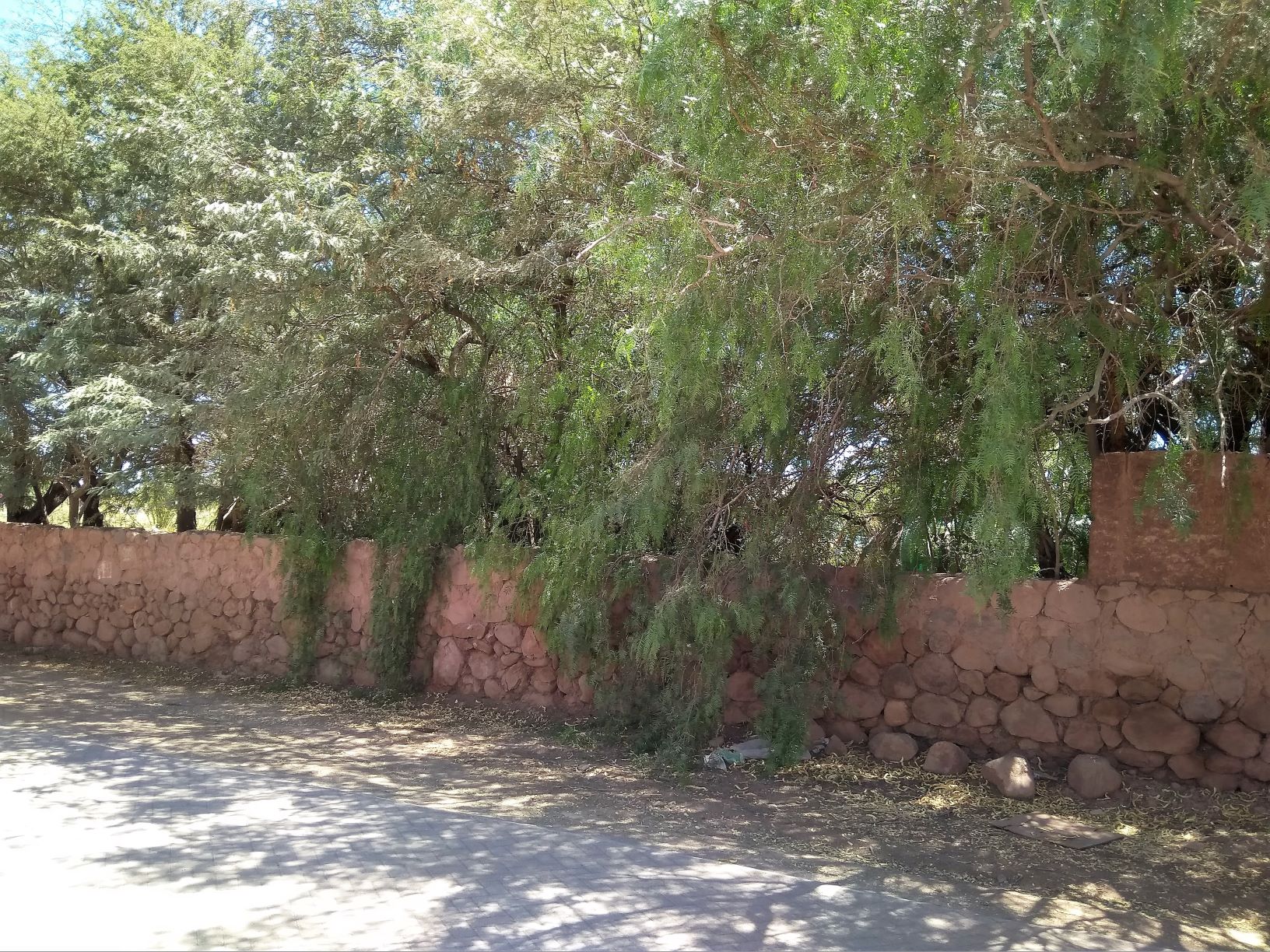
A History of the Inca I saved this to my podcast feed ages ago and haven’t really listened to it. I was excited when I found it, because it has episodes in English and in Spanish. The English version was done first, and then the presenter Nick Machinski decided to translate them into Spanish, read very clearly by Alicia Yantas. I’m about Intermediate B1 in Spanish, and I was able to understand her quite easily. Episode 1 is just a five-minute introduction, then Episodio 2 Bienvenidos a los Andes in Spanish (or Episode 2 Welcome to the Andes in English) talks about the terrain and the climate, especially the influence of El Nino and La Nina, and the development of ayllus as a way of spreading the risk of drought or flood amongst loosely linked communes. Actually I saw an ayllu (below) when I was in the Atacama desert, and I didn’t realize what it was.

I hear with my little ear: Podcasts 25-31 March 2023

Kerning Cultures A Past Life I’m quite attracted to the idea of a past life (or lives) but I don’t really believe it. However, adherents to the Druze faith certainly do believe in reincarnation. Possibly this is because you can’t convert to the Druze faith: you need to be born into it, and rebirth keeps the numbers stable. This is the story of Heba, who lived in both America and Lebanon, who as a child called herself ‘Amad’ and spoke of ‘Amin’, her husband. People from her parents’ village back in Lebanon told her family that Amad had died, and that they had known her. As an adult, Heba went back to Lebanon to locate this family, but found herself enmeshed in a family that she did not know or remember.

The ‘Brown Building’, site of the Triangle Shirtwaist Fire

History This Week Fire in the Triangle Shirtwaist Factory. Saturday 25 March 1911 was the date of this appalling fire, which led to the deaths of 146 garment workers within 15 minutes – 123 women and girls and 23 men in a 10 storey building opposite Washington Square in New York. This episode features David Von Drehle, author of Triangle: The Fire That Changed America who points out that the Triangle Shirtwaist factory was actually one of the most well-lit and modern of the garment factories which replaced the sweatshops in tenement buildings. The fire broke out on a Saturday afternoon as the employees were about to pick up their pay and leave for the weekend. (Even though the vast majority of workers were Jewish, they had to work on Saturdays). The shirtwaist factory occupied the 8,9 and 10th floors, and was conducted by Max Blanck and Isaac Harris, former garment workers themselves. But by now they were entrepreneurs, suspicious of their workers and vehemently anti-union. When fire broke out, the fire brigade found that their ladders only reached to the 6th floor. The lift operators were in many ways the heroes here, running the lifts up and down to the burning floors for as long as they could (after making sure that all the management staff were evacuated from the top floor, that is). The water did not work and escape doors were locked to prevent theft, but both owners escaped punishment. However, the fire prompted changes to working conditions …eventually, once Tammany Hall politicians began distancing themselves from the factory owners. I was amazed that the building was still standing when we visited New York back in 2011, and it has plaques on the wall commemorating the tragedy. So strange to think of so much death occurring right opposite Washington Square Park.

History Extra George VI’s Nazi Dilemma During WWII, George VI (i.e. Elizabeth’s father) faced a dilemma on two fronts. The first was his brother, the disaffected former Edward now Duke of Windsor. The second was his advisors, including Chamberlain and his foreign secretary Halifax, who both urged appeasement – and indeed, George himself leaned towards appeasement at first. This episode features Alexander Larman, the author of The Windsors at War: The Nazi Threat to the Crown The Duke of Windsor, he says, was cunning but not clever and he worried more about communism than fascism. Although not a Nazi himself, he did have Nazi sympathies. He harboured fantasies that perhaps he might be invited back as King, and he thought that he might be able to act as a puppet leader for Hitler, whom he admired till the end. He did do intelligence work for Britain early in the war, but then gave intelligence to the Nazis e.g. the layout of Buckingham Palace so that there could be targeted bombing. There was still residual warmth for the former king, so it was decided to send him to the Bahamas as Governor rather than have him tried for treason in England (for which there would be grounds). In effect, George VI found his mettle during the war and became good friends with Churchill.

The Ancients Beast Hunts. Our image of lions in the Colosseum underplays the industrial scale of importation of animals for spectacles that were held throughout the Roman Empire. The killing was on a massive scale: 9000 beasts were killed in the 100 days festival of the opening of the Colosseum. The logistics of locating and shipping animals from the provinces required organization, and provinces could be taxed in animals rather than money. The animals were often used for meat afterwards. But so were condemned non-Roman criminals who were fed to the animals, the ultimate form of death-shaming. Emperors used displays of animals to show their power, although Pompey’s plan to ride into his triumph on elephants was brought undone when they didn’t fit through the gate!

Rear Vision (ABC) War in Ukraine: The Political Story. I learned more from this episode than I did from the earlier one (The Military Story). The central and eastern nations in NATO had been warning about Russia for some time, but were largely disregarded by the ‘older’ NATO nations of Germany and France. Finland and Sweden are now looking to join NATO, thus bringing NATO right to the Russian border (one of the reasons that Putin put forward for moving into Ukraine). Finland has always had a large army, and Sweden (which previously prided itself on its neutrality) was already building up its armed forces after allowing them to run down. The Baltic States, Finland and Sweden are now more aligned than they were. Central Asia, which has had a strong relationship with Russia in the past, are wary, and are looking more to southern Asia as an alternative. Turkey is useful to Russia because of its presence in NATO, and Iran is providing weapons. The non-Western countries e.g. South America, Africa are cynical about the West’s response, and largely keeping out of it.

Emperors of Rome. Episode LIV – There and Back Again (An Emperor’s Tale) After a short time in Rome (having taken the long way home), Hadrian sets off again on a four year tour. First he went west to Gaul, Brittania (where he left the 3-metre thick Hadrian’s Wall) and España; then he went east to Syria and Turkey, then he went to Greece which is where he really wanted to be (because he loved all things Greek) and stayed there for two years. This four-year peregrination was more about diplomacy than anything else- he did lots of building along the way as part of marking Rome’s dominance across the provinces. Wherever he went, he left troops in a peace-keeping role. It was while he was in Greece that he met his beautiful boy Antinous. Episode LV – What Hadrian Loves Best. Three things. 1. Impressive buildings. Even though it was hard to find space in Rome after all these centuries, he did, and he built the big 10-column temple to Venus and Roma. He rebuilt the Pantheon for the 3rd time. But although he liked leaving buildings with his name on them in the provinces, he was careful not to do so in Rome which would have seemed crass. 2. His wife Vibia Sibina. Well maybe he didn’t love her that much. Nonetheless, she was an Augusta and their marriage was a way of strengthening the Romano-Spanish contingent in Rome. 3. Antinous. He really did love Antinous. Lots of Roman men had boy lovers, but Hadrian seems to have been particularly besotted by him. Nonetheless, it’s debatable whether Hadrian was ‘homosexual’ in our sense of the word today. There is debate over Antinous’ death: was it an accident? suicide? even murder? What is not debatable is that Hadrian was heartbroken when he died. Episode LVI – May His Bones Rot Although he had no intention of expanding the Empire, Hadrian was intent on consolidating what he still held. There had been discontent bubbling away in Judea for some time, and the stubbornly monotheistic Jews were an intractable problem in a polytheistic culture like Rome. Hadrian had plans to rebuild Jerusalem, which was still in ruins after the first Roman-Jewish war of 66-73CE, as a distinctively Roman colony, and he outlawed circumcision. An anti-Roman insurrection broke out, led by the Messianic Simon bar Kokhba, and led to a three year guerilla war of attrition. According to Cassius Dio, Roman war operations in Judea left some 580,000 Jews dead and 50 fortified towns and 985 villages razed. Hadrian erased the province’s name from the Roman map, renaming it Syria Palaestina, and had Jerusalem rebuilt in the Greek style after re-naming it Aelia Capitolina.