Category Archives: Podcasts 2023

Podcasts 8- 15 October 2023

Back again after a little podcast-less sojourn in Cambodia. With that chaotic traffic, there was no way that I was going to walk around the streets with earbuds in! Now I’m back to walking the safe footpaths of Macleod and the tranquil surroundings of Rosanna Parklands and so I can listen to podcasts again.

History Extra The Huxleys: How one family shaped our view of nature. I wasn’t sure listening to this whether it was “our” (i.e. Australia’s) Alison Bashford being interviewed about her book An Intimate History of Evolution: The Story of the Huxley Family (Penguin, 2023)– but it is. You might straight away think of Aldous Huxley, but this interview focuses on Thomas Huxley, known as ‘Darwin’s Bulldog and his grandson, Julian Huxley who like David Attenborough, was important in bringing natural history into the popular media. She says in this podcast that she essentially came to think of grandfather and grandson as one man, who spanned the nineteenth and twentieth centuries.

The Rest is History Episode 351 Amsterdam: Miracles, Money and Mud. In this episode Tom and Dominic head off to Amsterdam, sponsored (as they tell you a hundred times)by Wise credit card. Talk about selling your soul- their spruiking really detracted from the podcast! However, it was fitting that it should be an episode about Amsterdam, which profoundly shaped capitalist history. They follow Dan Snow’s technique of wandering around Amsterdam, stopping at various places, to explain the connection of the place with their narrative of the city’s development. They started off in Dam Square to talk about the construction of dykes and dams in 1250-1275 to mitigate flooding after disastrous floods one hundred years earlier. Their second site was the rather twee Amsterdam Dungeon which was the site of an earlier chapel commemorate the 1345 Mirakel van Amsterdam, where a dying man received communion but vomitted up the host, and unsure what to do with it, they tried to burn it, but it wouldn’t burn. The chapel was a site of Catholic pilgrimage, at a time when the city fathers turned a blind eye to the Calvinist refugees who flooded in during the Reformation. With “The Alteration Act” in 1578 Amsterdam decided to become Protestant- just like that. The next site was the The Begijnhof, a women’s refuge, run by Catholic nuns, who hid their catholicism in plain sight. The fifth site was the headquarters of the United East India Company, built in 1606. Amsterdam decided to follow Portugal’s example i.e. in ships, shipbuilding and money. But unlike the Portuguese, they sold shares in the company itself, not in the expedition- and the Amsterdam citizens were inveterate gamblers on anything- like tulips!

History Hit Achilles featuring Professor Alastair Blanshard from the University of Queensland (doesn’t sound very Australian!). You know, I’ve never read The Iliad of Homer. It starts with a reading by Lucy Davidson, which tells the story of Achilles’ refusal to fight. This episode looks at Achilles’ relationship with Patroclus and asks whether they were gay, or is just that we lack a term for their relationship. It’s fairly explicit in placesAnd how did it inspire one of the greatest military generals in history: Alexander of Macedon? I’ve been inspired too- and I’ve started listening to The Iliad.

New York Times. There’s no end of podcasts recently about Hamas and the Gaza Strip, but I was interested in Israel’s Plan to Destroy Hamas which features Steven Erlanger, the chief diplomatic correspondent in Europe for The New York Times. He’s not particularly optimistic about the outcome.

New Books Network Latin American The House on G Street. In this episode the interviewer’s voice is very scratchy, but fortunately the interviewee is not- which is just as well. She is interviewing historian Lisandro Pérez, who has recently released his memoir The House on G Street which integrates his family history with a broader history of Cuba, which he left as a child in 1960. He was not able to return until 1979, and he was fascinated by the places that he remembered from a nostalgia-hazed childhood. He says that he didn’t want to write a family history but it certainly sounded that way in this interview, which is full of ‘my great-grandfather’ etc. as he tries to keep all sides of his family tree under narrative control. I usually like it when historians write family history, because they have the span to identity the exceptional from the mundane, but I don’t know if he represented the book very well in this interview.

I hear with my little ear: Podcasts 1-7 September 2023

The Daily (NYT) A Plane Crash, 10 Dead People and a Question: Was this Putin’s revenge? For two months, Yevgeny Prigozhin, the boss of the Wagner militia, seemed to have gotten away with his short-lived mutiny even though he shot down Russian planes and killed Russian soldiers. So why kill him now – if indeed that’s what has happened? In this episode Anton Troianovski, the Moscow bureau chief for The Times, suggests that Putin might now be more confident about seeing off Ukraine’s counter-offensive, and having already crushed the liberal opposition in Russia, he’s now looking to crush the ultra-nationalist opposition (of whom Prigozhin was one). Probably the perception that Putin could arrange this assassination is probably more important than whether he did or not.

Reflecting History. Episode 11: The Social War- When Conversation Fails is part of my back-track to look at the Social War of 91BCE. There were two issues at the time: first, the Allies’ (i.e. the other Italian city-states) demands for citizenship and second, the land displacement which saw small farmers kicked off their land. Marius had introduced reforms that allowed Allies into the army, with the result that loyalty accrued to successful generals who could seize enough land from defeated regions in order to rewards his soldiers later. However, in 95BCE the Senate passed a law expelling non-citizens from Rome, which further fueled the Allies’ discontent. As Tribune of the Plebs, Marcus Livius Drusus was a populare, but in reality he was a stooge for the Senate who disallowed any of the laws he introduced, prompting the Social War. Was the war justified? There was no hard and fast battlelines: they were fighting men of the same religion, the same race, the same language: it was just the matter of citizenship. The first year of the war went badly for the Romans, and Marius brought the dead bodies back to Rome, which prompted the people and the Senate to change their minds about the war. Legislation was introduced to bring the war to a close, by allowing anyone living in Italy could now vote and apply for citizenship. It was not so much that the Italian allies were defeated, because they got what they wanted. Sulla went to mop up the remaining rebels.

History Extra To mark the centenary of the 1923 Tokyo earthquake, this episode Tokyo’s devastating 1923 Earthquake features Dr Christopher Harding. He explains that some commentators saw it as a reality check on the 50 years of modernization that preceded it: conservatives interpreted it as a divine reprimand. It was an unfolding disaster: the shake itself, followed by a fire, massive homelessness and a resultant food and water shortage. The quake elicited anti-Korean feeling, and more than 6000 Koreans were killed in the resulting riots. There were big plans to rebuild Tokyo, but property rights and quibbles got in the way. People looked back to pre-earthquake times as a happier society, and militarization increased after it.

The Ancients (History Hit) Homo Floresiensis: Early Human ‘Hobbit’ It wasn’t exactly a JFK moment for me personally, but amongst many paleoanthropologists, they can remember where they were when they heard about the discovery of a new species of human on Flores Island in the Indonesia archipelago. Dr Adam Brumm from Griffith University worked under Dr Michael Morwood, who discovered the remains of a small female dating from 38,000 to 13,000 years ago in a cave which had been excavated to a depth of four metres under a volcanic layer in 2006. This unleashed a bitter debate amongst paleoanthropologists over whether it was a new species, or just a disabled, small girl. Brumm says that now most accept the remains as those of a separate human species, although no other remains of that type have been found. She had a very small brain, long arms and feet, and hands for climbing. They have found remains of much older hominid-like people (?) and million-year old evidence of stone tools, but they don’t know who or what these older people were. Fragments of a jaw and six teeth suggest Homo Erectus but this is not certain. It is thought that modern humans arrived there 47,000 years ago.

Full Story (The Guardian) Why top execs are leaving the mining company with a ‘green vision’. What on earth is going on at Fortescue Metal? The CEO Fiona Hick left after six months; CFO Christine Morris left after three months, both from the mining division. The CFO of the Energy business, Guy Debelle, left after 17 months. I’m not sure that the podcast answers the question. Certainly Forrest, as executive chairman, has a vision for the green division to rival and overtake in size the mineral division of Fortescue Metal, and he has been forthright that business is responsible for climate change and needs to be held to account. The company is playing hardball with the Yindjibarndi people in a Native Title case in the Pilbara, and it’s not clear yet what the breakup of Forrest’s marriage will mean for the company.

I hear with my little ear: Podcasts 24-31 August 2023

Reflecting History Who presents this program? I have no idea. Anyway, in looking at his Fall of the Roman Republic series, he mentioned that he did some episodes on The Social War earlier on in his podcast, so I thought I’d go back and find them. Episode 10: The Social War: The Beginning of the End takes us back to 140 BCE and the end of the Punic Wars. There were three main issues festering away. First the question of citizenship. Rome’s practice up until then was to conquer, wait two or three generations, and then grant a form of citizenship. The second issue was land displacement. Generals wanted to be able to give land to their soldiers as a reward, but the liberalization of land tenure meant that aristocrats could buy up land and slaves, transforming small-scale agriculture into a large cash crop enterprise. Thirdly, the Senate had been corrupted by the inflow of wealth through expansion. Politics divided into the optimates and the populares. Tiberius Gracchus was criticized by the Senate for the peace terms he contracted to bring the Numantine War to an end in Spain, and when he became Tribune of the Plebs, he was determined to get his revenge. He proposed land reform, which was blocked by the Senate, leading to gridlock. In the end, it was passed, but it didn’t apply to the Italian city-states allies. But the Senate arranged for Tiberius to be killed. After a while, his brother Gaius Gracchus stepped into his place – probably the worst guy for the job because he wanted revenge and would not compromise. He proposed a “Latin rite” whereby all the benefits of citizenship except the vote would be extended to the Allies. This was sensible, but the Senate refused it, first because it was Gracchus who suggested it, and second because they feared being swamped. The Senate and Consuls decided to purge all the Graccan supporters, and Gaius committed suicide. The Gracchus brothers might be gone, but the problems were still there.

If You’re Listening (ABC) Why is Russia Meddling in West Africa? This is only a 15 minute podcast, so it doesn’t go into much detail. Niger had a coup a couple of years ago, and it has happened again as Gen Omar Tchiani took power before he could be fired by the president President Bazoum. Niger has huge reserves of uranium, and this attracted French companies. There has been unrest across the Sahal (i.e. the shoreline of the Sahara). In Mali, the French invaded to repel Islamic extremists, but this led to huge waves of refugees which France didn’t want to end up in France, so the French stayed there and called for NATO assistance. Waves of jihadist uprisings began in Mali which were put down by the military generals who had seized power, with “white men” soldiers arriving by helicopters- Wagner mercenaries which were called in by the military government, paid for by gold. In 5 months there were military coups in Guinea, Sudan and Burkina Faso, and they now all have deals with Wagner or the Russian government . Niger was the last to have a democratic government, but recently it had a coup too, not orchestrated by Russia or Wagner, but where people waved Russian flags and attacked the . Eleven surrounding pro-Western countries threatened to invade if the president wasn’t reinstated. Mali and Burkina Faso have declared that they will fight to defend the coup leaders. This podcast is also presented as a video, found here (actually it’s worth watching the video version for the old footage)

Rear Vision (ABC) Rear Vision had a segment on Niger as well. Niger and the Legacy of Colonization looked at French colonialism more generally. Under de Gaulle, France embarked upon a relationship of ‘cooperation’ with its former colonies including Niger, Mali and Burkina Faso whereby technological, medical provision and defence would be provided by France, in return for military bases and access to mineral resources. Needless to say, this arrangement worked more in France’s favour than Niger’s. Also, currency was tied to the French franc, which provided a form of economic stability but also led to economic dependence on France, and the flow of wealth outwards. In the 1990s, there was a movement towards democracy, and the erstwhile President Bazoum’s party has been in power since 2011, with increasing levels of corruption and economic instability. Niger’s economic woes were exacerbated by COVID, and intensified by the increasing population, the youngest and fastest growing in the world. Islamic extremism in Mali saw French and US troops stationed there, and the Sahal has become a hotbed of Islamic terrorism. There have been five coups in former French colonies in recent years. ECOWAS (The Economic Community of West African States) at first threatened intervention, but is now having second thoughts and looking to dialogue instead. The former French colonies are looking for alternative support through Russia and China.

New Books Network Australian and New Zealand Studies Tanya Evans talks about her new book in an episode of the same name: Family history, historical consciousness and citizenship: a new social history. Evans, who is now at Macquarie University, started her academic life in the UK where she studied non-conventional families (e.g. unmarried mothers in the 18th and then in the 20th centuries). As part of this work, she became aware of the importance of family histories, and when she wrote her book on the NSW Benevolent Society (Fractured Families – see my review here), she collaborated with family historians. Family history started off as being about ‘pedigree’ but changed during the 1970s, especially in settler colonies. She argues that family history transforms people in the present e.g. in their attitudes towards refugees, sexism and classism that they seen in their own family, and that family historians see themselves as professionals, with qualifications and peer review. In the past, people were embarrassed about convicts and illegitimacy in their families – a situation that has certainly changed, but this does not extend to mental illness, which is still seen as a source of shame. She speaks about the sniffyness amongst academic historians towards family historians (guilty as charged) and then launches into a rather lame argument about the economic value of family history. She suggests that family history is often derided as being for ‘mature women’, but then talks about generativity, the feeling of wanting to leave a legacy, that Erikson’s (1959) psychosocial stages of development identified between the ages between 40 and 65.

Sydney Writers Festival. If this festival is anything to go by, then we sure need an infusion of new blood in talking about politics. Same old people talking to each other. In This is Their Life, Laura Tingle interviews Paddy Manning, Niki Savva and Margaret Simons, all of whom have written recent political biographies.

Now and Then. The recent publication of Donald Trump’s mugshot arose from the charges he is facing in Georgia, and as Heather Cox Richardson and Joanne Freeman explain in Pardons: Politics and Power, this Georgia case is the one that might actually land him in jail. Georgia is one of only 6 states in the US that has an independent pardons board, which only swings into action when someone has been jailed for 5 years. They then go through different times when pardons were offered e.g. George Washington with the Whisky Rebellion, and post Civil War when Democrat Vice-President Jackson offered pardons to Confederate soldiers. Georgia instituted its board when E. D. Rivers, a New Deal democrat during the 1930s sold off pardons to prisoners and friends of his black chauffeur. It was so corrupt that even Georgia set up a pardons board. Pardons are an expression of power, which was the central question of the constitution.

99% Invisible Melanie Speaks. In the days before the internet, it was harder to access ‘self-help’ about beyond a book, cassettes and then later video. This was particularly true of voice-training. For trans women in the 1990s salvation came through a videotape where ‘Melanie’ gave advice on how to achieve a more feminine voice. While doing so she was aware that it was anti-feminist, but she encouraged her listening to “become the stereotype” of a woman. The trans presenter of the program and her cismale producer decided to try and track down ‘Melanie’, but they later agreed among themselves not proceed, given that ‘Melanie’, despite being a prolific writer, had adopted a separate, private identity. The episode finishes with an interview with Roman Mars, where they discuss voices and the way that we all adapt our voices over time. I wish the presenter would stop saying “like” every second sentence. It’s bad enough hearing it on the train: surely a podcast should be free of it.

I hear with my little ear: Podcasts 16-23 August 2023

If You’re Listening (ABC). Because I am learning Spanish, I take quite an interest in Latin American affairs and events. I just can’t imagine what it would be like to live in a society with 100% inflation. In The decision that saved Australia from Argentina’s 100% inflation nightmare Matt Bevan starts by looking at life in Argentina, where the monthly food bill has increased from $4000-$5000 per month five years ago to $35,000 per month today. Yet restaurants are full, because there is no point saving for anything because the value of the money will decrease so quickly- better to spend it while you have it. In 1951 Australia and Argentina were almost twin economies, and both were facing inflation on account of America’s expenditure on the Korean War. The war caused scarcity of wool, meat etc. – both of which were export staples for both countries- brought large and unexpected wealth to both countries, and both were facing inflation. In Australia, Country Party treasurer Arthur Fadden greatly increased income tax, which people screamed about, but which eventually reduced inflation. In Argentina, on the other hand, the Perons were in power, and they spent the windfall on popular policies like food subsidies, printing money to meet any shortfall. Ever since they were removed in a military coup, the Argentine economy has been like a rollercoaster, with the one constant being a high rate of inflation. The stimulus measures under COVID have triggered another disastrous bout of inflation, leading to the current situation.

Reflecting History Episode 59: The Fall of the Roman Republic Part V-The New Normal The slave rebellion led by Spartacus in 73BCE was put down by the warlords Pompey and Crassus, making Pompey the most powerful man in Rome by 71BCE. He was successful militarily, and like Putin with Prigozhin and the Wagner group today, Pompey resisted disbanding his private army but eventually did so. Crassus was very wealthy, and as for Julius Caesar, he was amiable and saw himself as heir to the populare tradition. Meanwhile, the Senate had its own personalities. Cato was old fashioned, while Cicero was a smart-arse. The Cataline conspiracy in 63BCE was an attempted coup d’etat to overthrow the consuls Marcus Tullius Cicero and Gaius Antonius Hybrida. Cato wanted to execute the conspirators, but Caesar said no, showing that the battlelines that would crystallize during the Civil War were already apparent. Meanwhile, Pompey was trying to get land reforms through, so that his veterans could be rewarded after battle, all leading to a political gridlock. Caesar was in Spain, inciting uprisings so that he could have victories that he could celebrate with a triumph back in Rome. He wanted to stand as Consul again, but that involved him physically being in Rome. In the end, Caesar Pompey and Crassus decided to form what came later to be known as the First Triumvirate as a way of getting things done now that everything had come to a standstill. It wasn’t actually a three-way form of governing: more, it was them just agreeing not to get in each other’s way while they did what they did best (make money, fight, get legislative reform etc). They were not actively looking for the end of the republic, but they did draw on popular anti-establishment feeling. Caesar got his Consulship and he read Pompey’s land reform bill sentence by sentence to the Senate, getting their assent in the particulars, and then arguing that if they agreed with each sentence, then the Senate had to agree with the whole. He then took the bill to the people, thereby by-passing the Senate. One of Caesar’s big mistakes was to not reign in Publius Clodius Pulcher, who managed to gain entry to the female-only Bona Dea religious rites, disguised as a woman, apparently with the intention of seducing Caesar’s wife Pompeia, but was discovered in the course of the evening. Pulcher then renounced his noble status so that he could stand as Tribune of the plebs- all very irregular. In the chaos that followed, Pompey became Dictator in Caesar’s absence. By this time Crassus was dead, and so was the Triumvirate. Caesar wanted yet another Consulship (again, very irregular) and by now Pompey was representing the system. We’re heading for war.

The Documentary (BBC) Heart and Soul: German, soldier, Jew. After what happened during the Holocaust, would Jewish Germans want to join the army? Yes, today there are 300 practising Jewish military personnel, and since 2021 they have had their own chaplain, the first chief rabbi in 90 years. The first Jew to join the post-war army was Michael Fürst who enlisted in 1966. He was criticized by his Jewish friends in the United States for doing so, but his family supported him. He saw himself as German first, then a Jew. However, at this time there were still World War II soldiers in the ranks, and they were very resistant to giving up the ‘hooked cross’ (i.e. swastika) iconography in their uniforms etc. The first Jewish woman enlisted in 2006. She had converted to Judaism as a teenager, and went to a Jewish school. Conscription was still in force in Germany until 2011, but Jews were exempt. Now in the German army, soldiers need no longer follow orders without question: instead they need to follow their own conscience.

Let’s Talk About Sects. Ep. 38 The Brisbane Christian Fellowship sounds so benign, but it’s not. It was the subject of a Four Corners investigation and a book by Morag Schwartz Apostles of Fear: A Church Cult Exposed. All the usual components are here: the powerful leader who creates his own family dynasty of leadership; the shunning; the threats. And all in plain view in Brisbane and Melbourne.

The Daily (NYT). Australians are familiar with bushfire, and watching the footage from Hawaii and Canada looks like a re-run of Black Saturday. But I hadn’t quite registered the horror of wildfire (I’ll go with their term as I’m talking about Hawaii) during a hurricane. How a Paradise Became a Death Trap is gripping listening, as Ydriss Nouara, a resident of Lahaina and the pool and grounds manager of a Hilton property, tells his story. The idea of having to swim amongst the huge waves whipped up by the hurricane in order to escape the fire, and of winds that literally flayed your body is just horrific.

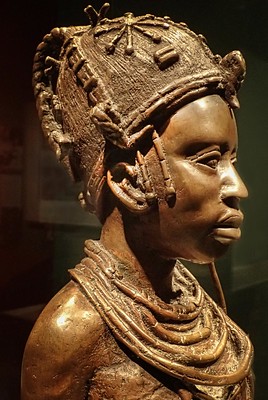
History Hour (BBC) This program compiles episodes of ‘Witness History’ into one longer podcast. Judy Garland’s Legacy and the Benin Bronzes is a bit of a hodge-podge, as you might imagine by the title. There’s a segment on the theft from the Judy Garland Museum of one of four pairs of Dorothy’s slippers from the Wizard of Oz, and then an interview with Rosalyn Wilder who was responsible for getting the ailing and broke Judy Garland on stage during her appearances at the Top of the Town. There’s an interview with Retired police officer Tim Awoyemi, whose chance encounter led to the return of two of the looted Benin Bronzes, ancient artworks which were among thousands stolen from Benin City by the British Army in 1897. Finally, there’s an interview with Matt Berger who discovered the Australopithecus sediba fossil in South Africa as a 9-year old boy, fossicking with his father in 2008. It’s rather sweet to hear his interviews at the time, and then his reflection back on the discovery now.

I hear with my little ear: Podcasts 8-15 August 2023

Faithful Politics. I prepared a session on religious (especially Pentecostal) nationalism for my Unitarian fellowship, and it has taken me to Christian podcasts that I wouldn’t normally (ever) listen to. Seven Mountains Mandate with Katherine Stewart features Katherine Stewart, an investigative reporter who has published The Power Worshippers: Inside the Dangerous Rise of Religious Nationalism. Fortunately, only the political host Will Wright (former atheist, liberal progressive) was on this episode, because the republican conservative Pastor Josh Burtram was absent. She sees Christian nationalism as a combination of ideology and a political phenomenon that exploits religion as a quest for power. Seven Mountains dominionism is the conviction that hyperconservative Christians should rightfully dominate the main peaks of modern civilization in the United States and, ultimately, the world. It is very much a leadership driven movement, utilizing pastor networks- those same pastors that we saw circling Trump and laying hands on him. She mentions groups like the Family Values Research Centre and the New Apostolic Reformation.

The Philosopher’s Zone Gaslighting was chosen as the Merriam-Webster Word of the Year for 2022. This episode, featuring Paul-Mikhail Catapang Podosky, Lecturer in Philosopher, Macquarie University Sydney, looks at the phenomenon of gaslighting philosophically, pointing out that it is a form of testimonial and epistemic injustice. It is generally inter-personal, between people of differing power relations although he explores whether it can be structural as well- has Trump ‘gaslit’ a nation or is that he has given licence for people to gaslight others at an inter-personal level? But am I gaslighting if I think that the bar for ‘moral gaslighting’ seems very low?

The Explanation (BBC) Unspun World: What’s it like reporting on the war from inside Russia? Not just Russia- the venerable BBC reporter John Simpson speaks with foreign correspondents from Russia, Myanmar where no-one seems to be taking any notice of the civil war, Croatia where tensions are rising again and China about Covid. It seems that the fingers of the Wagner group are all over quite a few of these hotspots.

You’re Dead to Me Al Andalus features Prof Amira Bennison and comedian Fatiha El-Ghorri discussing Al Andalus between 711 and 1492. The Muslims moved in after defeating the Visigoths. Abd al-Rahman escaped to the Iberian peninsula, fleeing the Abbasids, who had overthrown his family in Damascus. He conquered Córdoba, where he proclaimed himself emir in 756, and made it an important centre of culture and learning. One of Cordoba’s most important people was Ziryab, a polymath, musician and ‘influencer’ who led changes in hair, clothing and meal etiquette by introducing the idea of courses. In 929 Abd al Rahman III declared himself Caliph. In the late 900s, there were rebellions and civil war and the Christians began moving down. In 1086 the Almoravid ruler of Morocco, Yusuf ibn Tashfin, was invited by the Muslim princes in Iberia to defend them against Alfonso VI, King of Castile and León, and he managed to hold the line for another 100 years or so. In the ‘nuance window’ section of the podcast, where the historian is given 2 minutes to be serious, Prof Amira Bennison questions the idea that the ‘Golden Age’ was marked by conviviencia, the peaceful co-existence of Muslim, Jewish and Christians within Al Andalus. She argues that this is a 20th century idea, created by General Franco’s opponents. She also highlights the continual movement of people across the strait of Gibraltar over time- it wasn’t necessarily an ‘invasion’.

Reflecting History Episode 58: The Fall of the Roman Republic Part IV-You Win or You Die. By now, violence was normalized, opening the way for Gaius Marius- the outside, new man, who once he had become consul, changed the regulations so that landless men could join the army. He had multiple terms as consul, pretending to still be on the side of the populares in terms of land reform but betraying them at the last minute. Violence and overpopulation were still problems, and there was the increasing anger of the Italian allies which led to the Social War – rather ironically, a war between Rome and its allies to unite themselves (instead of a war over independence). Marius and Sulla turned the tide, but then Rome decided to give the Allies what they wanted anyway- Roman citizenship. Sulla was able to take advantage of the war against King Mithradates to assert himself over Marius. When his troops triumphed over those of Marius, he put himself back in charge and went off to fight the war, without realizing the enormity of what he had done by spilling Roman blood on Roman land. Sulla took power and ruled as dictator, although he would have said that he was returning the republic to what it was before Marius corrupted it. He killed his enemies, proscribed them to that others would kill them, and confiscated their property. But he also introduced reforms like making equestrians part of the Senate, ensuring that tribunes could no longer by consuls, putting time limits on tenure. But when he retired in 79BC, he hadn’t really solved anything.

History This Week History’s Undelivered Speeches features speech-writer Jeff Nussbaum, author of Undelivered: The Never-Heard Speeches That Would Have Rewritten History. As speechwriter for Vice-Presidents Biden and Gore, and Senate leader Tom Daschle, he understands the role of the speechwriter, and the fact that politicians sometimes write their own speeches without any assistance. He looks at Richard Nixon’s resignation speech, which Nixon’s own speech writer Ray Price wrote on his own initiative, hoping that Nixon would use it instead of the non-resignation speech that Price also wrote. Interestingly, the two speeches (resignation and non-resignation) used the same arguments to different ends. He then discusses General Eisenhower’s alternative D-day speech in the event that the US troops were overrun and stranded. In writing it, Eisenhower edited out the passive voice, taking responsibility instead for the decisions he made. Apparently General Grant said “‘I’ am a verb”- which is an interesting thought. Finally, he looks at Hillary Clinton’s victory and concession speeches after being defeated by Trump. If she had won, she would have cited her mother’s life and the changes that had been wrought in that time; when she lost, she apologized.

I hear with my little ear: Podcasts 1-7 August 2023

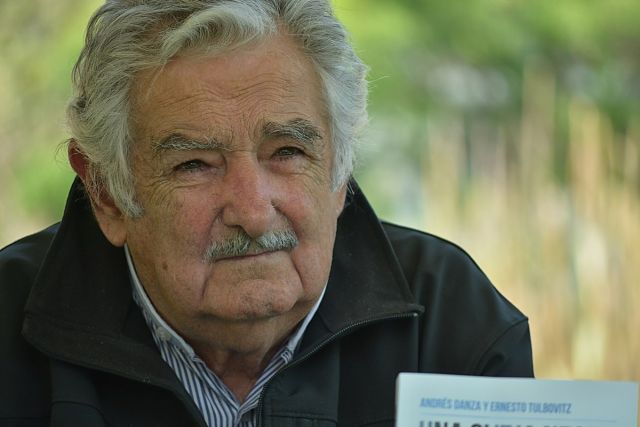
Jose Mujica 2016 es.wikipedia.org

Witness History (BBC) José Mujica Have you heard of this guy? He was the President of Uruguay between 2010 and 2015 when he was known as “the world’s humblest head of state”. I admire him so much. He had been a guerrilla with the Tupamaros (a Marxist-Leninist urban guerilla group) and he was tortured and imprisoned for 14 years during the military dictatorship in the 1970s and 1980s. As President, he was an outspoken critic of capitalism, and certainly of the left. He is now retired, and lives in very humble circumstances outside Montevideo. You can see a video about him here.

Reflecting History I really am enjoying this series. I still don’t know who the presenter is, and he relies heavily on the work of other popular historians (in this case, Edward J Watts, whose book Mortal Republic I have purchased; Mike Duncan’s The Story Before the Storm whose podcast I listened to, and whose book I am currently reading; and Tom Holland whose Rubicon I am on the lookout for.) In Episode 57: The Fall of the Roman Republic Part III-The Gracchan Revolution starts by highlighting the tension between amibition and equality which was built into the Roman republic. It focusses on Tiberius and Gaius Gracchus. They were born of an aristocratic family, but came to head populist political movements that ended in assassination for both of them. Tiberius came first. When the Senate rejected his peace terms contracted in the Numantine War on the Iberian peninsula, he looked to the people who supported the end of the war- i.e. the ordinary people who would have to fight in them. To maintain their support, he introduced land reforms to break up the big estates that were causing an influx of landless peasants into the cities. Although historians argue over how committed he really was to this land reform, he shut down the government in order to get it passed, using the Tribuneship in a way that it had never been used before. The law passed after an influx of funds from the foreign King Attalus III of Pergamum, but it’s questionable whether the legislation was worth breaking so many norms in order to be passed. He was murdered in a riot instigated by his political enemies. The legislation was picked up by his brother Gaius a few years later, but again the Senate resisted, outbidding Gauis in the legislation without ever intending to introduce it. Gauis was voted out, and killed by decapitation.

History Hit The Creation of the NHS marks the 75th anniversary of the introduction of the NHS in Britain. The first calls for a national health service came in 1909, and were later picked up by the Fabians in 1920s and 30s. By the 1930s there was a web of local government, insurance, private and philanthropic health services. During and after WWII, there was a sense that soldiers and their families deserved better, especially when the limitations of urban health provision were made more visible when city children were evacuated to the country. In 1944, the Conservative Party also proposed a health system, but it fell to Nye Bevan, the outspoken Welsh Labor Party member, to introduce it as Minister for Health and Housing. It involved nationalizing the existing system, rather than building a new system, as there were no new hospitals built until the 1960s. It was based on the principles that it should be free and centralized from Whitehall, and in spite of resistance from doctors and Enoch Powell’s plan to rationalize it in 1961, it has continued. The degree of public love varies from time to time- for example, in the 1980s it really was under threat until people got behind it, and today everyone acknowledges that it is a stressed system.

History Extra Big Questions of the Crimean War: aftermath and legacy. This is the third and final episode in this series featuring Professor Andrew Lambert. The Crimean War (which the Allies won) affected different countries in different ways. Russia realized that it had to undergo great change, leading to the abolition of serfdom, industrialization, the rebuilding of coastal defences – and 20 years later they were back at war again in the Russo-Turkish War. France was full of Second Empire bluster, with Louis-Napoleon embarking on rebuilding Paris and looking to control the whole of Europe. Britain was content to bask in its naval superiority, and indulged in a display of technological mastery afterwards, while the Ottomans kept quiet, with the pressure of nationalism building in the Balkans, which would erupt in WWI. It’s hard to know how many people died in the conflict, especially because the French figures are dodgy. There were a number of firsts: the British used the first factory made standardized rifles, which could be fixed easily. The first submarine was used (although it didn’t do anything), and water mines were deployed. The fighting style was hybrid: in spite of the rifles, they still used tight formations and hand-to-hand fighting. It was hard for the British and French to fight together after the relatively recent Napoleonic Wars. Photography was used as the basis for engraving; telegraph communication was possible but too expensive to use for journalism. What the telegraph did do was make it possible for governments to give orders, far from the battle front, undercutting the generals. Florence Nightingale was the press’s middle-class hero- in fact, she wasn’t very middle class because she was very posh with good connections. She was more into management than nursing (although she did have a good sense of sanitation), and she wasn’t the only woman- the Russian and French also had women on the front. It was Army doctors who solved the problem of disease: her main success was publicity. The “Crimean War” as distinct from ‘The Russian War’ as it was known, was a late Victorian construct, and we need to think of it as a navy war, not a terrestrial one. Parallels with today? Yes. The Russians have under-estimated the Ukrainian army, just as they did the Turkish army in the Crimean War and Britain strangled the Russian economy through controlling its exports in both wars. Putin is a great admirer of Tsar Nicholas, and we need to remember that Russia is a creation of the Mongols, which is still evidence in a huge cultural division between Russia and other European nations.

If You’re Listening (ABC). Oh, good! Matt Bevan is back with his ‘If You’re Listening’ series. Instead of devoting all episodes to one theme, he’s taking a weekly approach with a different topic each week. This is also available as a video on I-View, but I prefer to listen while I’m doing other things. This must be the world of the new ABC. How “General Armageddon” and a bromance almost brought down Vladimir Putin looks at the friendship between Yevgeny Prigozhin, the head of the Wagner Group, and General Sergei Surovikin, overall commander of Russia’s “special military operation” in Ukraine. The two men were friends, but when Prigozhin launched his whatever-it-was against Putin, it was Surovikin who was tapped on the shoulder to bring him aback into line. Surovikin hasn’t been seen for a while- he’s ‘resting’. And from today’s news of Prigozhin’s death in an air accident, it’s even more doubtful whether we’ll see Surovikin again.

I hear with my little ear: Podcasts 24-31 July 2023

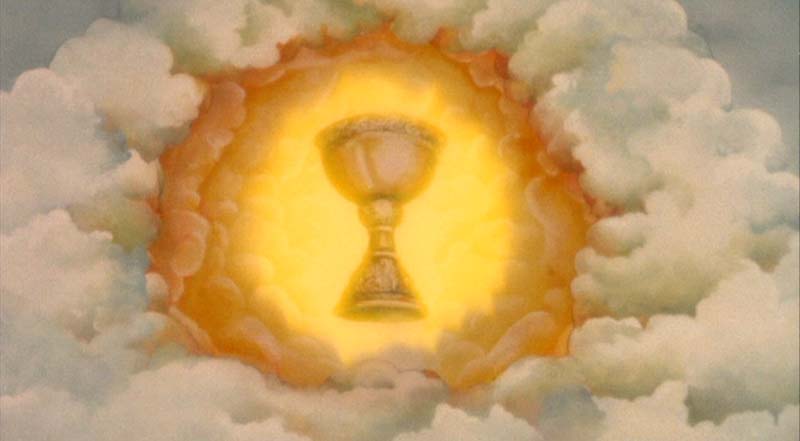
The Rest is History I’m really enjoying this series, featuring historians Tom Holland and Dominic Sandbrook. Until I listened to Episode 346 (really!) The Mystery of the Holy Grail the only thing that I knew about it was the Monty Python version. Holland and Sandbrook are obviously familiar with the Monty Python film too. Tom Holland said that he became angrier at this film than at ‘Life of Brian’, although after several viewings, he realized that the film was actually based on deep knowledge (Terry Jones has written books and presented television documentaries on medieval and ancient history.) They point out the links between the legend of the Holy Grail and T. S. Eliot’s The Wasteland (can I confess that I’ve never read it?), and make several references to Jessie Weston’s 1920 book From Ritual to Romance which argued for its pagan and fertility elements. A ‘grail’ is actually a serving platter, but after 1180 it was transformed into something holy in Chrétien de Troyes’ Perceval where Percival meets the Fisher King and a girl who comes in holding a (a,not the) grail. Robert de Boron introduced a connection with Joseph of Arimathea who owned the grail which had either been the cup used at the Last Supper or alternatively, the cup in which was collected Jesus’ blood when he was hanging on the cross. In other versions, the grail is a stone. In the 19th and 20th centuries, the grail has been seen as a mystery- either through Jung who saw it as the key to all the mythologies, the author Dan Brown and The Da Vinci Code, and through Jessie Westron’s work. Tom Holland thinks that de Troyes dreamed the whole thing up, and that the story of the grail reflects 13th century Latin Christendom at its peak. When the Reformation rejected transubstantiation (i.e that the communion wine actually becomes blood), it’s as if we have the hardware of the holy grail, but not the software to know what it means. I found this all fascinating.

History Extra Big Questions of the Crimean War: into the Valley of Death This is Episode 2 of the History Extra series on the Crimean War, or as it was known at the time in Britain ‘The War with Russia’. The war actually began on the Danube in Romania, and spread to Anatolia, the Caucasus, Georgia, the extreme far-east of Russia and the Baltic. Britain and France had learned from Napoleon, and this was a maritime war, with the British never extending beyond one day’s march from the coastline. It was conducted at a time of technological change e.g. steamships rather than sail; rifles rather than muskets. The British horse-breeding program had led to horses capable of mounting the Charge of the Light Brigade. The advantage the Russians had was the willingness to endure huge loses- it is estimated that there were 800,000 Russian casualties. There is a roll-call of battles (i) across the Danube where the Turks attacked the Russians and won; (ii) the Battle of Sinope, a naval battle that the Russians won, and which brought the British and French into the war, immobilizing the Russian fleet. (iii) Orland Island in the Baltic- not widely reported because there were few British casualties (iv) Alma, in the Crimean peninsula, won by the Allies who should have followed up on their victory, but didn’t (v) Balaclava- and the Charge of the Light Brigade which was a stuff-up but wasn’t the defeat that Tennyson depicted. Rather than only 120 coming back, there were 120 who didn’t come back (vi) Inkerman – the Soldiers Battle (vii) Siege of Sebastopol- not technically a siege as such- but it was like the Western Front that was to follow some 60 years later. (viii) Malakoff- considered to be the last battle, but it wasn’t really. So why did it end? It ended, as wars usually do, by negotiations because Russia was bankrupted by British pressure in stopping exports.

Sydney Writers Festival Barry Cassidy & Friends State of the Nation The usual suspects: Amy Remeikis, Niki Savva and Laura Tingle discussing the Voice, the state of the Liberal Party, Scott Morrison etc. You probably know what they’re going to say anyway.

Reflecting History The Emperors of Rome podcast has taken a backward step to look at the fall of the Roman Republic. I’ve been meaning to read Mike Duncan’s book The Storm Before the Storm for ages, so this seemed a good place to stop and draw breath and look at why the Roman republic, which had been successful for centuries, chose one-man rule through an emperor. I found these podcast series which is less event-driven than both ‘Emperors of Rome’ and ‘The History of Rome’ podcasts and, as the name suggests, more reflective. I have no idea who is presenting it, though. Matt someone. He has a four-part series on the Fall of the Roman Republic, and this seemed a good time to listen to it. Episode 55: The Fall of the Roman Republic Part I-Features of the Republic looks at the strengths of the Roman Republic. First there was the ability of the Roman Republic to channel the ambitions of families into the military, maintaining control of the incentives that made personal honour through service a valuable currency. Then there was the Republic’s ability to compromise and evolve. Because the Romans feared one-man rule, there were 2 consuls, the Assembly (include the Tribunes) and the Senate. It was a balanced system, with specific responsibilities for each component. But this was going to change. Episode 56: The Fall of the Roman Republic Part II-The Long Defeat sees the three Punic Wars establishing Rome as the dominant force in the Mediterranean, but also beginning the process of decay in the Roman Republic. Rome was beaten at first, and especially once Hannibal took the fight to Rome’s home territory, the Italian city-states started backing off. But in 205BCE Scipio triumphed over Carthage, which was burnt to the ground in the Third Punic War. Once the wars ended, Rome now controlled huge amounts of territory in Spain, Greece and Africa, but it could not retreat or stand down. It didn’t want to rule directly, and preferred to work through client kings, but eventually it had to. The expansion of territory brought great wealth, forcing small farmers off the land, and contributing to the growth of a wealthy elite that could buy up slaves (goodbye small farmers!) and leverage their wealth into investments and syndicates. The gap between rich and poor kept expanding, making Rome ripe for a populist leader.

Now and Then With all the hype about Barbie, Heather Cox Richardson and Joanne Freeman look back at the history of dolls in Barbie, GI Joe and the Gang: Dolls Are Us. They start with Laura Ingalls Wilder’s corn cob doll Susan, and move on to Raggedy Ann, a happy servant girl doll produced in the 1930s as part of a book/song/doll marketing production. During the 1940s research was undertaken which demonstrated the link between marketed toys and how children identify themselves, which in turn fed into the intellectual and political climate that produced Brown v the Board of Education and desegregation. Barbie was invented in 1959 based on a European spoof doll – the sort of hyper-sexualized doll you might give a man in a Kris Kringle at an office party- and right from the start there was a tension between her form as a male fantasy and a feminist “girls can do anything” ethos. Barbie’s depiction in a range of professions followed societal trends, rather than drove them: it was decided to have a Doctor Barbie only when there was a certain number of female doctors in the medical system. Ken was released two years later. In 1964 G. I. Joe hit the market as an ‘action figure’ (not a doll), based on Ernie Pyle, the WWII war correspondent. Released during the early years of the Vietnam War, he was already a nostalgic figure. Over the years he morphed into a Special Ops, adventurer, Kung Fu figure- a more individualistic figure of masculinity. Interesting.

I hear with my little ear: Podcasts 16-23 July 2023

Emperors of Rome Episode XCII – The Beginning of the End of the Republic. The Romans themselves claimed to have 400 years of republicanism, up until 133 BCE although this date was nominated after the fact. So what happened in 133 BCE? 1. Attalus of Permagon left his empire to Rome. It was the leftovers of Alexander the Great’s empire, and based on modern day Turkey. At the time, the Romans had Spain, Greece and a bit of Africa, so this bequest gave acdess to Asia and its wealth. This only exacerbated the disparity in wealth which was already appearing in Roman society. 2. Tiberius Gracchus became tribune, and attempted land reform to address the problem of the landless poor flooding into Rome. However, his reforms were vetoed, so Tiberius removed the tribune who opposed it – a very unconstitutional act. The Senate had him murdered, which opened up the possibility of murdering your opponents. The following year the Italian allies (i.e. not Roman citizens as such) were building up to the Social War in the next century. Ten years after Tiberius Gracchus’ assassination his brother Gauis Gracchus tried to introduce the same package of reforms, and attempted to extend Roman citizenship rights to the whole of Italy. Guess what? He got assassinated too, and as with his brother, there were no repercussions. Episode XCIII – Powerful Personalities. As the senate clawed more power from the people, it was inevitable that a few would rise above others, and take over command and influence with an army. Marius, Sulla, and the civil war that followed would just be another log on the funeral pyre of the Roman republic. Marius seemed to come from no-where, a ‘new man’. Some say that he brought on the fall of the empire- he was on the side of the populares, and brought changes to the army. He was married to Julius Caesar’s aunt, and became consul in 104 BCE, elected against the wishes of the Senate, with the support of his troops -i.e. Rome’s first warlord. He opened up the army to men without property, making it possible to have a career within a professional army. He became consul 5 times in a row, which was not consistent with the constitution, and accrued more power than anyone else ever had before. By the end of the 90s BCE, Sulla was on the rise. He was from a very elite family. Sulla was seen as the Senate’s friend but after conflict between Marius and Sulla, Sulla brought his army to Rome, leading to civil war. There was a spate of murders as Sulla became dictator and increased the size of the Senate. Then all of a sudden, in 79 BCE Sulla suddenly resigned.

History Workshop Rethinking Place in British Labour History This program involved projects by three oral historians from the University of Glasgow, looking at ex-industrial workers in ‘traditional working class’ communities- those same ‘red wall’ seats that went from Labor to the Conservatives and have been characterized pro-Leave during Brexit, and who were characterized as being ‘red wall’ . This episode promised to challenge common assumptions about class and region, about schisms and solidarities. But the reality is that I could barely understand a word of these Glaswegian academics, and once they went to telephone interviews, that was even worse. It’s no longer COVID- surely podcasts can do better than interviews over telephone- or at least improve the bloody quality! I gave up.

History Extra Big Questions of the Crimean War: the buildup. So here we are in 2023, back fighting in the Crimea. The Crimean War took place between 1853 to 1856 when an alliance led by Britain and France challenged Russian expansion in the wake of the decline of the Ottoman Empire. Why? Britain wanted to stop Russian expansion towards the Mediterranean, and feared that the collapse of the Ottoman Empire would cause war in Central Europe, while Louis Napoleon, as new Emperor wanted to increase France’s presence. It started in Palestine between Catholic and Russian Orthodox monks of all things, over the symbols in the Church of the Holy Sepulchre and the Russian demands that the Ottomans protect the Orthodox interests. The war took a long time to get going, similar to the Cold War in that it was an ideological rather than a border war. The tipping point was the Russian occupation of Romania. There was a bit of a sliding doors moment, when Britain could have -but didn’t- send its navy to the Baltic, which might have averted the war. The episode features Professor Andrew Lambert.

Travels Through Time. Well, this one is a bit different. This time Peter Moore talks about his new book Life, Liberty and the Pursuit of Happiness in the form of a walking tour. His book is, in effect, a British history of the American Revolution, and his walking tour takes us to

Location One: The Old Cheshire Cheese (William Strahan)

Location Two: 17 Gough Square (Dr Johnson’s House)

Location Three: Near John Wilkes’s Statue on Fetter Lane

Printer William Strahan was Benjamin Franklin’s contact in London, and he sent him 18,000 pounds worth of books and pamphlets over the years, but they fell out over the American Revolution. Dr Johnson was fiercely opposed to the American patriots, but ironically, it was his term the ‘pursuit of happiness’ (particularly in Rasselas) that was taken up by the revolutions – even though Johnson saw happiness as important, but not guaranteed. Englishman John Wilkes was the Donald Trump of his times, followed obsessively by the Americans, and prosecuted for seditions against the Prime Minister Lord Bute in his North Briton journal. In the end, it was Thomas Paine who took Wilkes’ ideas to America.

Democracy Sausage I listen to this nearly every week, but I don’t very often note it because by the time I write this blogpost, the events are long past. But this episode A non-aligned movement features Dr Andrew Leigh, one of the few factionally-unaligned people in the Labor party, talking about the perils of a duopoly among factions. He isn’t so much arguing against factions, noting that they allow broader discussion within a party, but he does deplore the way that non-alignment is punished by withholding of cabinet positions etc.

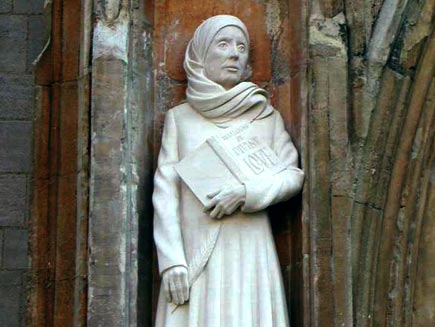
Soul Search (ABC) Julian of Norwich. Ooops. I thought that Julian of Norwich was a man, but not so. In 1373, aged thirty and very ill, she experienced visions which she later wrote down in ‘Revelations of Divine Love’ the first book in English written by a woman. She became an anchoress at St Julian’s church at Norwich, which was at the time the second largest city in England. It was a global city, although the plague killed half of its population of 12,000 people (indeed Julian herself was a plague survivor). It was the time of the Peasant’s Revolt, two Popes, and the Bishop of Norwich was a military bishop. It was a time of anxiety about heresy, and from her cell Julian would have been able to hear people being burned at the stake. Being an anchoress was recognized as a life choice. In an anchoress’ cell, there were three windows: a hatch for food and removal of waste; a squint so that she could see the church, and a third window at street level with a curtain, where people could converse with her. The program features Professor Daniel Anlezark, McCaughey Professor of Early English Literature and Language at the University of Sydney; Dr Janina Ramirez Research Fellow in History of Art at Harris Manchester College, University of Oxford and author of Julia of Norwich, a very brief history, and presenter of the documentary BBC The Search for the Lost Manuscript Julian of Norwich (on You Tube) and The Reverend Dr Sally Douglas, lecturer in biblical studies at Pilgrim Theological college in Melbourne, and author of Jesus Sophia: Returning to Woman Wisdom in the Bible, Practice, and Prayer.

I hear with my little ear: Podcasts 8-15 July 2022

The Real Story (BBC) We have been watching the riots in France at the moment, sparked by the point-blank shooting of a teenager at a traffic stop and the initial lying by police, with a mixture of horror and fascination. Fascination that the concept of the ‘mob’ which has been so historically important in French history still has power; and horror at the thought that such destruction of public infrastructure- especially schools- is occurring without apparent deterrence. Understanding the unrest in France features Rim-Sarah Alouane, a French legal scholar and commentator at the University Toulouse-Capitole in France; Professor Philippe Marlière, Professor of French and European Politics at University College London and Laetitia Strauch-Bonart, French writer and Editor at the right-leaning French news magazine L’Express. They are joined by Natalia Pouzyreff, an MP from President Emmanuel Macron’s Renaissance party and Inès Seddiki, founder of GHETT’UP, an organisation which works with young people in France’s suburbs. The right/left split is just as obvious in French politics as it is elsewhere in the world, with Strauch-Bonart repeating the ‘pull yourself up by your bootstraps’ ideology of the right and Seddiki repeating the ‘it’s the system’ ideology of the left. There is a lot of discussion about ‘Frenchness’ and racism, and there are certainly no answers here.

Background Briefing (ABC). As far as I am concerned, if a private hospital or school takes public money, then they cannot insist on their ethos or rights of conscience to refuse public services. Full stop. I am so angry that The little-known religious code ruling many major public hospitals sees women refused legal terminations or reproductive surgery at the public hospital that covers their catchment. This episode includes an interview with Fiona Patten, who tried hard to get this changed. What a loss to politics her failure to get a seat was (I’m showing my political allegiances here).

History Extra How Did Medieval People Tell the Time? We tend to assume that medieval people couldn’t tell the time, but in fact mechanical and natural-based clocks co-existed. There were different concepts of time: linear time; religious time (the Middle Ages everyone thought that the world was about to end) and the ages/stages of man view of time. Features Gillian Adler and Paul Strohm the authors of Alle Thyng Hath Tyme: Time and Medieval Life (Reaktion, 2023).

Emperors of Rome Podcast Dr Rhiannon Evans is back! Here she pedals backwards to the 2nd century CD to present a mini-series on the Fall of the Roman Republic. Episode XCI – The Roman Constitution The Romans themselves dated their history back to 509BCE after throwing out the kings the previous year. The Athenians were doing much the same thing at the same time, but Athenian democracy was more direct and more radical. Before then, the legal system relied on precedent, and the Senate had authority but not power. There were two consuls, with a one year time limit, who could veto each other and could lead armies. Sulla put age limits of consulship, and as a result lost favour with particular families. There was not a lot of Government activity, beyond the corn dole and there wasn’t a great deal of government building. Only very wealthy, elite men were involved in government so it was an oligarchy- not monarchy, and not democracy. Voting was by college, assigned by property holdings, and it was weighted towards the oligarchy. It changed over time, with the rise and then diminution of the importance of the plebs. After the Succession of the Plebs in 495 BC, the Tribune of the Plebs had veto power, but it also skewed to vested interests over time. The role of dictator was temporary only (6 months). However, this system was beginning to face problems which would eventually lead to the fall of the Roman republic : armies became loyal to their own particular general, and land was bought up by the rich, leading to a large population of the landless poor.

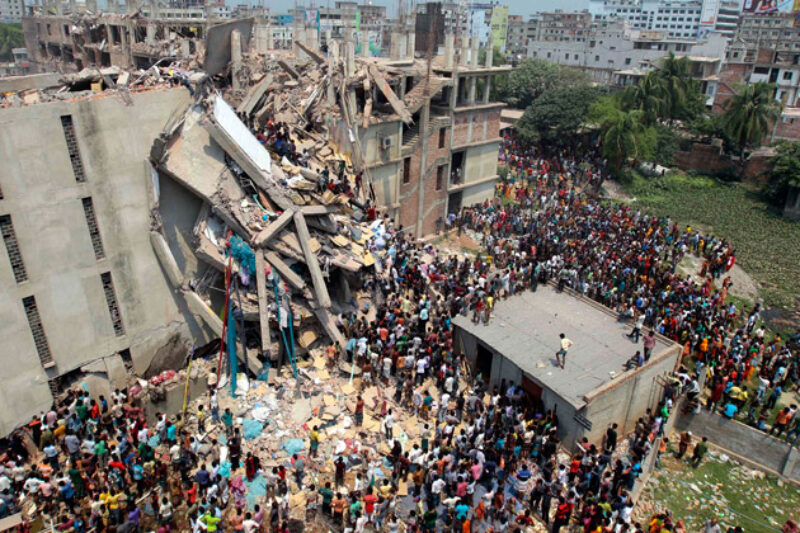
The Documentary (BBC) Bangladesh’s Clothing Conundrum Most of us only really became cognizant of the growth of Bangladesh’s clothing industry with the collapse of Rana Plaza in 2013 when 1100 of its 5000 workers died (5000 in one building!) Since then Bangladesh has tried to reinvent its image: it has brought in safer working conditions and is positioning itself as a sustainable green textile producer (e.g. changes in dyeing processes; water conservation). This has led to an increase in costs (estimated at about 15% i.e. 13 cents for a $3.00 t-shirt), but this isn’t really being handed on: instead it is at the expense of the 3.6 million workers directly employed in the clothing industry, 1/4 of whom are on the lowest wages.

I hear with my little ear: Podcasts 1-7 July 2023

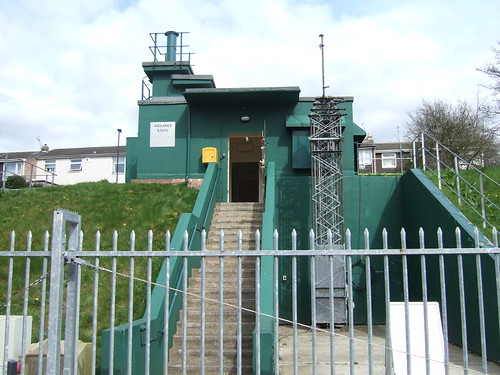
Dan Snow’s History Hit The final episode of his Story of England series 5. Story of England: Modern Warfare opens not in England at all, but with the first day of the Somme, the bloodiest day in British military history. He reminds us of the tunnels under Dover Castle, excavated by Henry II and rebuilt after the Napoleonic Wars. The tunnels were the centre of operations for Dunkirk, which assembled with just 2 days notice, and post-war it was planned that the tunnels become the seat of government in the event of a nuclear attack. Wars are no longer a matter of mass mobilization (although Ukraine and Russia are putting the lie to that statement) but instead an issue of nuclear anxiety. A whole network of 1500 nuclear bunkers was built throughout England to house 3 government members each but it was closed down in 1991 with the end of the Cold War. The York Cold War Bunker was heritage listed by English Heritage, and is now open to the public. A rather depressing way to end what was a really good series.

History This Week The Tupperware Queen Who doesn’t have a piece of Tupperware in their cupboard? This podcast tells the story of Brownie Wise, a single mother from Michigan, who rose from selling Stanley cleaning products to one of the Vice Presidents of Tupperware. She was the woman who devised the idea of a party to sell the Wonderbowl, instead of stocking it on supermarket shelves, but her success fostered jealousy within the organization. When she held a frankly rather tacky Tupperware convention on her private island in Florida, a storm brought her undone and she has been expunged from the Tupperware corporate memory. Features Alison Clarke, design history professor at University of Applied Arts – Vienna and author of Tupperware: The Promise of Plastic in 1950s America; and Bob Kealing, author of Life of the Party: The Remarkable Story of How Brownie Wise Built, and Lost, a Tupperware Party Empire.

Strong Songs. I admit it, I am a sucker for Reaction Videos, and since seeing the documentary on John Farnham ‘Finding the Voice’, I’ve been drawn to Reaction Videos on both ‘The Voice’ and his version of ‘Help’. (You can see some of them here The Vocalyst on ‘Help‘ and That Singer Reactions on ‘You’re the Voice’) This episode of Strong Songs is different from other ones because Kirk Hamilton is actually live with Annabel Crabbe and Leigh Sales in a Chat 10 Looks 3 episode recorded at the Enmore Theatre on 17 June 2023. He starts off giving an analysis of ‘You’re the Voice’ in his usual style, looking at the construction and performance of the song, but then it just becomes a Chat10 etc. love fest.

Emperors of Rome Episode LXXXVIII – Severan Stories II continues with Dr Caillan Davenport presenting three scenes from Septimius Severus’ life. Act I – If you build it they will come looks at Septimius’ building projects. There had been a big fire at the end of Commodus’ reign, which cleared the way for lots of building, but he also restored the Pantheon and put his name on it (something that Hadrian had not done) and he built the first triumphal arch since Augustus. Act II – The superfluous senators of Septimius Severus looks at how he got rid of inconvenient people. Act III – I beg of no man looks at the rise of Bulla Felix, a Robin-Hood like character who terrorized Italy. By this time, Septimius was in his sixties, and he wanted to go out on a high. Episode LXXXIX – A Man the World Could Not Hold sees him heading over to Britain in early 208 CE but why? To toughen up his son? To pacify all of Britain? Envoys were sent from Britain to sue for peace, but he wasn’t interested in peace. Instead he wanted to pacify the Barbarians, who were depicted as marsh dwellers, naked, eating magic beans. He left his younger son Getta behind in Rome, and in 209 Septimius and his older son Antoninus went on campaign and defeated the Caledonians. There was tension between father and son, and when he died at York in 211 CE, there was a suggestion that perhaps Antoninus had hurried his death along. Septimius was known as a hard taskmaster, a strategic military innovator and the most successful of the Severin emperors. Episode XC – Herodes Atticus features Dr Estelle Strazdins, (Research Fellow, Australian Archaeological Institute at Athens). Herodes was an Athenian orator who, at a time of Roman interest in 4th and 5th century BCE Greece, was tutor to Marcus Aurelius and Verus and was famous as an orator in his own right. Matt Smith rather disrespectfully describes oratory as a form of rap battle or improv, but we can’t really know as we don’t have any of his speeches. Quite apart from his oratory, he was a philanthropist who gave a lot of buildings to Athens (most famously, the Odeon) but he lost a lot of support when he stiffed Athenians of a payment of one mina per head that had been part of a bequest. He ended up being brought before Marcus Aurelius, and rather unwisely stormed out of the court hearing. Luckily for him, Marcus asked the people of Athens to forgive him, which they did and they all lived happily ever after.

Rear Vision (ABC) I’m embarrassed to admit that I always get mixed up between the real country of Moldova, and the spoof Molvania by Santo Cilauro, Tom Gleisner, Rob Sitch. But Moldova is for real, and is likely to become more important given the conflict between Ukraine and Russia. Moldova and Transnistria—the uncomfortable bedfellows on Ukraine’s border explains why. Moldova is bordered by Romania to the west, and Ukraine to the north, east, and south. It had aligned itself with Romania, but was taken by USSR in World War II. With the collapse of the Soviet Union, it held its first elections in 1990 and became independent in 1991. Since then, there has been internal tension between Russian-oriented political parties, Nationalists and pro-European parties. Meanwhile, there’s also Transnistria, a self-proclaimed independent region, a part of Moldova that lies along its border with Ukraine. Russian troops are being hosted there. When the war between Russia and Ukraine broke out, there was a fear that Russia would create a land bridge through Ukraine to the pro-Russian Transnistria, but that hasn’t happened (yet).