Category Archives: Podcasts 2022

I hear with my little ear: Podcasts 1 April-8 April

Axios – How it Happened More Ukraine. Putins Invasion III: How It Could End. In part three, Axios World editor Dave Lawler examines a difficult reality — that the only clear path to peace in Ukraine is a deal between Russian President Vladimir Putin and Ukrainian President Volodymyr Zelensky, but the red lines drawn by the Russian and Ukrainian leaders do not intersect. This episode features interviews with Zelensky’s chief of staff, a member of Parliament in his party, two close observers of Putin and the Kremlin, and a former U.S. ambassador to Ukraine with decades of diplomatic experience in the region. The interviewees point out that Zelensky is very ideological, a good listener, but that you can’t pressure him. They point out that legally, Ukraine’s borders can only be altered via referendum (and the Ukranian people are not likely to vote for that). Putin cannot win, but Zelensky will not accept Putin’s terms. Putin’s best hope is to exhaust Ukraine and the interest of the west. Something, they all agree, will have to change.

History of Rome Podcast Episode 121 Phase Three Complete sees the mop-up before Diocletian comes on the scene. Mike Duncan starts off this episode, reflecting that people who were born during the Severin epoch had only know the chaos of the 3rd century when emperors came and went in regular succession. They didn’t realize that they were just about to turn the corner. We don’t really know much about Carus and his two sons Carinus and Numerian. Carus was about 60 years old, and he had been a Praetorian Prefect. Realizing that he couldn’t spread himself across the empire, he sent his son Carinus to Rome and he headed to Persia to fight the Sassanids with his other son, Numerian. It was a good time to attack Persia because the Persians had just committed most of their troops to invading Afghanistan. Carus died: struck by lightning, they said, as a punishment for straying too far outside of the empire. His son Numerian, spooked perhaps by this theory, withdrew back to the borders, even though they were beating the Persians. His sons had a brief reign until Diocles came on the scene. Apparently he was a real back-room operator. There had been a prophesy that Diocles would only become emperor when he killed a boar, and this came true when he executed the Praetorian Prefect Aper for murdering Carus’ son Numerian. ‘Aper’ means ‘wild boar’, although historians dispute this story as being ridiculous. But hey- lots of things here are ridiculous. Diocles changed his name to the more regal-sounding Diocletian and began bad-mouthing Carinus. He was about to battle Carinus, but Carinus (conveniently) died. Episode 122 Jupiter and Hercules As a back-room political operator, Diocletian had actually thought about the empire, instead of having it thrust upon him. He decided that there would be no Senatorial purges, but he also decided that he would side-line the Senate altogether. He decided that there had to be two Emperors, so he appointed Maximian to rule over the West as co-emperor with Diocletian who would rule the East. Maximian was a soldier, and so not a political threat to Diocletian. However General Carausius, who had been appointed in charge of operations against pirates on the Saxon coast, went rogue, proclaimed himself Augustus and set himself up in Britain. Diocletian came across to the West to bolster Maximian’s troops. To boost their authority, Maximian also took up the title of Augustus, and then Diocletian appealed to the heavens for legitimacy (much as Augustus had done), thus laying the foundation for Divine Right for the next 1500 years. He claimed that he had been appointed by Jupiter himself, and Diocletian assumed the title Iovius, and Maximian assumed the title Herculius.

The History Hour (BBC) usually has a couple of stories on different topics but in this episode Ukranian History Special, they concentrate on events in Ukraine’s history. It is really good. It starts with the explosion at the Chernobyl nuclear plant in April 1986 and the tardiness of the government response. It moves on to the Budapest agreement where the international community – including both Russia and the USA – offered security “assurances” to Ukraine in return for giving up its share of the Soviet nuclear arsenal. Then there is a survivor’s account of Ukraine’s great famine in the 1930s, the Holodomor, when several million people died (although she was very young- about 3. I’m not too sure about the fidelity of the memories of a three year old). It moves to the mass killing of Ukrainian Jews by Nazi Germany during World War Two- noting the irony that Putin has used ‘anti-Nazi’ as a justification for invasion. Finally, in an abrupt change of pace, the episode finishes with how Artek, on the shores of the Black Sea in Crimea, became the Soviet Union’s most popular holiday camp. Really worth listening to.
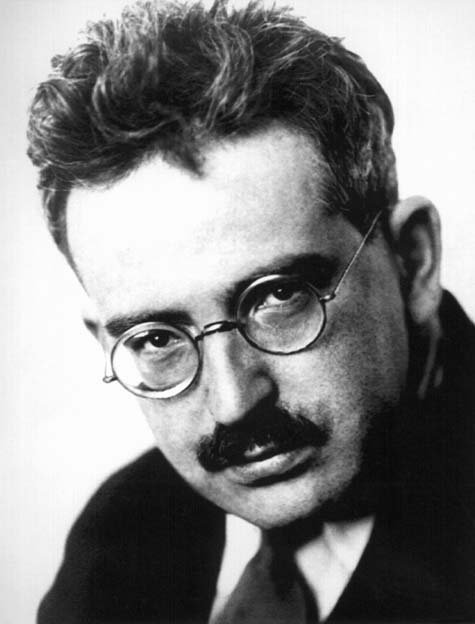
In Our Time (BBC). I thought that In Our Time must have finished, because I couldn’t find it on Stitcher but then I discovered that you can access it through BBC Sounds. Old Melvyn Bragg is sounding older and more slurred. I’ve never read any Walter Benjamin (and in fact, for half the podcast I had him mixed up with Isaiah Berlin). He was an academic, but he styled himself as a critic of what was then the modern media. Born in Germany, from the late 1920s he led a mobile life living in Russia, Italy and France. He was not interested in writing about the past as it was, but seeing it in terms of the questions of the present. Notably, in his Arcades Project, he looked into the past of Paris to understand the modern age and, in The Work of Art in the Age of Mechanical Reproduction, examined how the new media of film and photography enabled art to be politicised, and politics to become a form of art. As a German Jew, he was fearful of the rise of Hitler and was interned in Paris and although, because of his eminence he had an entry visa to America, but he could not get an exit visit. Although in very poor health, he decided to walk from France to Spain but, in very poor health and realizing he wouldn’t make it, he committed suicide on the way. Most of his work was published posthumously and taken up by the 1960s counter culture. The Work of Art in the Age of Mechanical Reproduction greatly influenced John Berger’s Ways of Seeing, and is even more apposite given the rise of digital cameras everywhere in galleries and museums and NFTs.

History of Ideas- Talking Politics. I started listening to this ages ago and just stumbled over it again on my ‘Favourites’ list. David Runciman, a professor of politics at Cambridge (and not, as I thought, the Archbishop of Canterbury) goes through the major political works starting with Hobbes. I listened to Hobbes and Wollstonecraft but then skipped a few because I was interested in Marx and Engels on Revolution. This was the best description of Marx and Engels’ ideas that I’ve heard. He points out that where Hobbes saw revolution as the problem, Marx and Engels saw it as the solution. The ideas of revolution in The Communist Manifesto were not taken up at all in 1848 (although they wrote it in a hurry because they hoped that they would be), and their ideas in their death throes during WWI when it turned out that the workers of the world did not unite but instead fought each other. However the Russian Revolution in 1917 vindicated them, and the fortunes of the book have waxed and waned ever since. They point out that the state will always be in crisis, and that in replacing the people who run the state, there will inevitably be violence. Revolution has to be international, and that has not happened (and in current events, is not likely to do so). Runciman considers that the most successful revolutions were in East Germany and Eastern Europe in 1989 and the 90s. He points out that both 1848 and the Arab Spring were short term failures, but they did have an impact on democracy later (I think that the Arab Spring has yet to show results). He questions whether class today is as important as Marx and Engels thought, suggesting that education level (albeit related to class) and age (youth) are more important on voting patterns.

Things Fell Apart (BBC) This is a terrific series about the culture wars, and things that make you scream at the television. One Thousand Dolls is about the beginning of the culture wars over abortion in America. Until the 1970s, anti-abortion was a Roman Catholic thing, but Frank Schaeffer, the son of an influential Christian art historian, talked his father into adding an anti-abortion segment into his art history films. Although poorly received, he decided to make a highly emotive Christian film against abortion, and it came to influence many anti-abortions including James Kopp, who murdered Barnett Slepian, an American physician from Amherst, New York who performed abortions. He has since distanced himself from the anti-abortion movement. Really interesting.

I hear with my little ear: Podcasts 25-31 March 2022

History of Rome Episode 118 The Palmyrene Wars brings Zenobia onto centre stage. How have I gone my whole life without hearing about Zenobia?

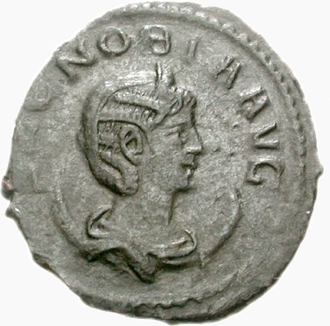
Zenobia on a coin. Source: Wikimedia

She was the widow of Odaenathus of Palmyra and after his assassination she stepped right in. She took Egypt, Syria and part of Anatolia, each time paying lip service to the Roman emperor but really ruling in her own right. At first she minted coins with the emperor on one side and her image (the only images we have of her) on the other but she soon gave up the pretence and minted coins with herself and her son depicted. Aurelian finally decided that he needed to deal with her. Aurelian’s reputation as a hard man preceded him, and most of the Eastern cities recently annexed by Zenobia just capitulated, fearing what was to come. But to everyone’s surprise, because of a dream in which the 1st century philosopher Apollonius begged him not to shed the blood of the innocent, Aurelian did not go round sacking cities. This was a master stroke because it meant that cities did not fear surrendering to him. He regained Syria and Egypt and went on to Palmyra, where Zenobia and her son had fled, seeking assistance. Aurelian’s troops captured her there, but he wanted her for a triumph back in Rome. In Episode 119- Restitutor Orbis, Zenobia might have been captured, but the leading men of Palmyra regretted capitulating so meekly and so they fomented rebellion, forcing Aurelian to return for a second time to quash the insurgency. He was pissed off this time, and while not killing everyone (Apollonius’ advice still stood firm) he levelled the city and shifted the trade route, which is why Palmyra is in ruins today. Aurelian then turned his attention to the Gallic Empire, which he regained after some sort of arrangement with the ‘Gallic Emperor’ Tetricus. Always conscious of the need to keep the soldiers paid, Aurelian increased the number of mints issuing coins, but kept central control. Now that he had both Palmyra and the Gallic Empire under his belt, he finally had his triumph back in Rome, where he was proclaimed Restitutor Orbis (Restorer of the World). Not just the world: he restored Sol Invictus as God too (shades of Elagabalus) hoping to institute one faith across the empire. This was to make it easier when Constantine had the same strategy. Despite his triumph in bringing the empire back together again during his largely successful five-year reign, Aurelian was assassinated by his generals, who immediately regretted it. Episode 120- Interregnum sees neither the army nor the Senate wanting to nominate a successor to Aurelian. After all, emperors seemed to have a short shelf-life and there was a good chance that their sponsors would end up assassinated too. After Aurelian’s death, an old Senator named Marcus Cluadius Tacitus briefly reigned before the throne fell to Probus, who ruled from 276-282. Barbarian invasions continued but he was happy to accept the surrender of German tribes as long as they disarmed and dispersed – a policy that was followed until the Huns came on the scene. There was relative peace during his reign, but this led to unemployment among the soldiers, and so they assassinated him too. He was followed by Carus who reigned from 282 to 283, followed by his sons Carinus and Numerian. Carinus seemed to have been a lecherous tyrant, and Numerian suffered a smelly death. Finally Diocletian took over, and he was to overhaul the Empire completely.

Soul Search There’s an interesting episode in Gods: from Ancient Greece to the Antipodes The first part of the program ties in with the current exhibition Ancient Greeks: Athletes, Warriors and Heroes, an exhibition at the National Museum of Australia. There is a discussion about the role of fate and destiny in the Greek world, where the gods were ever-present and capricious, and the cultural reach of Greek mythology. It’s following by a discussion of Rev. Charles Strong’s Australian Church, which it just happens I spoke about at our Unitarian Fellowship last week.

Ben Franklin’s World I saw a reference recently to Caitlyn Fitz’s book Our Sister Republics: The United States in an Age of American Revolutions (1775-1825) which looks at the relationship between the newly-independent US and the different countries in Latin America which achieved independence from Spain and Portugal. She is interviewed in a rather muddily-recorded Episode 90 Caitlyn Fitz Age of American Revolutions : surely the sound could be better than this! She points out that Spain and Portugal arrived in Latin America a century before British Settlement in North America, and the Spanish and Portuguese empires lasted longer in a continent that was ten times larger than the Continental States that constituted the United States at that time. When Napoleon was engaged in the Peninsula War, a vacuum in power opened up amongst the Spanish colonies, and made space for revolution. After North Americans emerged after the 1820s war, they looked around and decided that they were quite supportive of the revolutions in Latin America, although this didn’t extend to financial support. Even amongst slave-owning states, there was support for gradual abolition, even though there had been horror at the Haiti revolution. When asked to speculate on what would have happened if the French Revolution hadn’t happened, Fitz suggests that the independence movements probably wouldn’t have arisen, but would have instead been channelled into constitutional reform.

History This Week I recently finished reading Anna Sebba’s book Ethel Rosenberg: A Cold War Tragedy so I was interested to listen to this episode Ethel Rosenberg’s Day in Court. If you’re not likely to read the book, then listen to this instead. It has interviews with Sebba and Ethel Rosenberg’s son Robert Meeropol, who says that despite losing his parents, he is glad that he was not his uncle David Greenglass’ son.

I hear with my little ear: Podcasts 17-24 March 2021

Emperors of Rome. At this stage, the ‘Emperors of Rome’ podcast and the ‘History of Rome’ podcast part ways. Episode CLXIX – Gallus sees Trebonianus Gallus appointed by his troops in June 251 after Decius and his son Herennius Etruscus died during a battle with the Goths. Decius’ son remaining son Hostilianus died of the Cyprian Plague, which was ravaging the Empire. (Kyle Harper has written about this plague in The Fate of Rome: Climate, Disease and the End of an Empire, which sounds quite interesting). During Gallus’ two year reign, there were uprisings East and West. Aemilian, the governor of Moesia Superior and Pannonia, defeated the Goths and was declared emperor by his troops. Somehow or other Gallus ended up dead, but Aemiliain lasted only 88 days before he was murdered by his own forces. Valerian became emperor and ruled for 15 years, ending a phase of short-lived emperors.

History of Rome. 116- Here Come the Illyrians sees the start of a string of Illyrian emperors. Some people mark this as the end of the ‘real’ Roman Empire, but Mike Duncan asserts that they saved the empire. Claudius Gothicus had no aristocratic links at all. He had been Gallienus’ trusted general. Maybe he wasn’t actually involved in the assassination of Gallienus, but he probably would have known about it. Nonetheless he exiled or executed the ringleaders to ‘prove’ his clean hands. He was worried about the East and the rise of Zenobia, but he had to deal with the Goths first. He oversaw a change in policy of treatment of defeated enemies, which allowed the Goths to settle on land, as long as they provided men for the army. Claudius also defeated uprisings in Germany, and then turned to the Vandals. An emperor’s work is never done. The future Emperor Aurelian was 2nd in charge when Claudius died of the plague in 270 AD. In Episode 117- Aurelian’s Walls, Mike Duncan raises the question: when you say that someone is ‘the greatest’ do you mean that they were the greatest at their peak, or do you look at their whole career? Duncan reckons that Aurelian was ‘peak emperor’ between 270 and 275, when he consolidated power in Italy, then went off to battle the Vandals. He employed the tactic of withdrawing all resources into a village, and then defending that village. When he defeated tribes, he insisted on a quota of soldiers, which eventuated in the Germanization of the Legions.

Despite his victory on the field, when he returned in triumph to Rome, he was faced with riots because people were unnerved by earlier defeats under Aurelian’s leadership; bread prices were high, and there was corruption over the mint. The old tactic of garrisoning the frontiers employed by Augustus and Hadrian no longer worked, because the invasions were bigger and it was the emperor (rather than a general) who was rushing around at the head of the army. Cities were vulnerable and needed their own walls, so Aurelian ordered a big wall around Rome (as the old 4th BCE wall was no longer sufficient. It was constructed rapidly, using existing buildings where possible, and using civilian rather than military labour. Nonetheless, the walls took 5 years to complete.

The Daily (New York Times) Ukraine Puts Putin’s Playbook to the Test (March 24, 2022) features NY Times journalist Carlotta Gall, who covered the Chechen conflict 30 years ago. She believes that there are real similarities between the two, so much so that when she hears Ukranian citizens vowing to remain, she wants to warn them just how dire it will become in the face of Russia’s ruthlessness. However, factors in Ukraine’s favour are: first, that it is much bigger than Chechnya with a population of 40 million as opposed to 1 million; second that it is already an independent country; third that it has Western recognition and finally that there is an adjoining country that fighters can withdraw to when the going gets too tough. But she reckons that if Putin follows the same strategy, it will get tough.

Australia If You’re Listening (ABC) Even though I’m a big Matt Bevan fan, I didn’t really particularly fancy this season about Australia’s politics of climate change. But when the first episode was inserted into the Coronacast podcast, I started listening (which just goes to show how hijacking an episode of a program can work). Episode 1 The legacy of our first decisions on climate change points out that warming of the environment through burning coal was first publicized in 1912. The tenor for Australia’s approach was set by none other than Labor minister Roz Kelly, who promised that Australia would not move faster than any other developed country – and we haven’t. The program looks at a big conference held in 1987 where, for the first time, scientists discussed climate change, then moves onto Kyoto and the significance of the ‘Australian clause’ over land-clearing. Interestingly, Roz Kelly defends Robert Hill, the Lib/NP Minister for the Environment who led Australia’s delegation to Kyoto- lauded by John Howard as a great result for Australia. Humpf.

I hear with my little ear: Podcasts 9-16 March 2022

The Daily (New York Times) I’m doing a fair bit of listening about Ukraine at the moment. In Four Paths Forward in Ukraine (March 17) David Sanger, White House and national security correspondent for The New York Times, explores four scenarios: 1. The diplomatic path- Ukraine agrees to Russian demands to give up any claim on Crimea; accepts independence of Donetsk and Luhansk; declarse its neutrality; and promises never to join NATO. Russia would demand that all sanctions be lifted. Scenario 2: A long war of attrition, with Russia ‘winning’ but an ongoing Ukranian insurgency (which Sanger thinks is likely). Third scenario: China helps Russia. Sanger thinks that China will just sit back and watch how things play out for now. They might assist, but from behind the scenes. Scenario 4: Putin decides to expand the conflict beyond Ukraine.

Axios – How it Happened. This series on Ukraine just has two episodes so far. Episode 1 Putin’s Invasion Part I: How We Got Here features Axios’ world editor Dave Lawler talking about how Putin came to power and how he has wielded that power. The podcast also features “our Aussie” Jonathan Swan, speaking about his exclusive Axios on HBO interview with Ukrainian President Volodymyr Zelensky. Trump, Zelensky- is there anyone he hasn’t interviewed? Episode 2 Putin’s Invasion Part II: The Consequences discusses President Biden’s decades of political experience with Russia and the sanctions the U.S. and Europe have brought against the country. It also explains why it’s so hard for the West to cut ties with Russia when it comes to energy, and why the Biden administration chose to do so even if it would send gas prices soaring.

History of Rome Podcast. Episode 113- Three Empires. Although the Roman Empire now split into three, Mike Duncan argues that all three empires remained culturally Roman, and that’s what’s important. Following the capture of Valerian in 260 AD, the western provinces broke away to form a separate Empire and the east became controlled by the city of Palmyra where Odaenathus was the last stop on the Silk Road. He defeated the Sassanids, and so he was mollycoddled a bit by the Romans who, deep down, thought he was a bit of a barbarian. Meanwhile Postumus was up on the Danube. At this time, local troops threw their support behind their own commander as Emperor, and when he had a stunning victory, Postumus was acclaimed emperor of Gaul, Germania, Britannia and Hispania in what was known as the Gallic Empire. Meanwhile Gallienus concentrated on the centre of the empire. He hit on the idea of the mobile cavalry as a way of reinforcing his authority, and it was a good psychological connection with the provinces to have the cavalry come by occasionally. In Episode 114 The Nadir of our Fortunes, Mike Duncan reminds us of the mess that the Empire was in, with the Sassanids in the East, the Goths on the Danube, the Alamanni in Italy and the Franks in the West. He then backtracks to Odaenathus over in the East, who was seen as a bit of a saviour when Macrinus and his son were killed, and he took over. Over in the west, Postumus was chosen by his own troops, and he happily embraced Aureolus, Gallienus’ top general, when he defected to Postumus. Gallienus had concentrated his efforts on Rome, but the senators hated him because he turned to military men instead of Senators- so he ended up with a bad rap from the historical sources. He founded four mints near the big military deployments so that the soldiers could be paid on time, but this just caused inflation and debasement of the currency. In the end Gallienus defeated Aureolus in battle, but then he was shot (probably assassinated). Episode 115 Phase Two Complete sees the almost simultaneous deaths of Gallienus, Odenathus and Postumus in the Late 260s. The Goths were coming south and Odenathus was assassinated by his nephew -(why? Personal reasons? or was his wife Zenobia behind it?) Zenobia stepped right in to the role of emperor of the east, assuming that she had the right as Odeanthus’ widow. The Goths sailed down and sacked Athens. When Gallienus left Rome to fight the Goths, his trusted general Aureolus mounted a revolt. Gallienus was assassinated in a conspiracy of his top officers. The troops rallied around Claudius, who demanded the head of Aureolus.

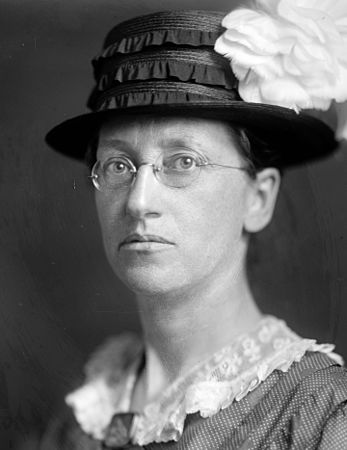
Emily Greene Balch. I prepared a presentation for my Unitarian fellowship on the Women’s International League for Peace and Freedom (WILPF), and the connection with the Australian Church’s Sisterhood of International Peace. Emily Greene Balch was raised a Unitarian in America (although she later joined the Quakers) and, along with Jane Addams, was a founding member of WILPF. This podcast, from the Internet Archive, is of Kristen E. Gwinn talking about Balch at First Church of Jamaica Plains (which Balch and her family attended). A pretty formidable woman. She was one of the pacifists who was really challenged by the rise of Fascism, and ended up siding with ‘freedom’ over ‘peace’.

Now and Then I’ve been listening to American historian Heather Cox Richardson for quite a while, and she has started a podcast with fellow historian Joanne Freeman called ‘Now and Then’. As you might expect from two American historians, it is VERY American focussed, but in the episode Avatars of Democracy, they express their admiration for Ukrainian President Volodymyr Zelensky. They then look at three other historical leaders who fought for democracy: the French-born Revolutionary War hero Lafayette, the Latin American liberator Simón Bolívar, and South African political prisoner and president Nelson Mandela.

I hear with my little ear: Podcasts 1-8 March 2022

The Coming Storm (BBC) I enjoyed this so much that I binge-listened to the final four episodes. Episode 5 Blowback starts with the US attempts to shore up Boris Yeltsin through the use of rock music (what a weird idea that was). Decades later, British spy Christopher Steele, who was hired to dig up dirt on Donald Trump, claimed that the Russians held ‘pee tapes’ that they would use as blackmail. Half of America believed that the Trump campaign colluded with the Russians to defeat Hillary Clinton; the other half believed that the investigations into Russian collusion are a hoax, as a way of unseating a democratically elected president. Q-Anon and General Michael Flynn, took up this second narrative. Episode 6 The Usual Suspects goes to a pro-Trump rally after the 2020 election where Michael Flynn whips up the crowd, urging people to join school boards etc. to refute the big lie and take over the country from the bottom up. (Actually, Heather Cox Richardson said that the Republicans have been using this approach from Phyllis Schlafly onwards). Episode 7 Welcome to the Future takes us back to the first scenes of the series, where he was contemplating the 16th century panic about witches. On attending a Rock the Red event in mid-2021 he wonders if the ‘satanic panic’ of the QAnon conspiracy is a parable for the takeover by a minority elite, or is it an epochal shift? He believes that QAnon is being weaponized, and it is a beginning of something new. Episode 8 Epilogue was an afterthought: the series was supposed to finish at Episode 7 but he returns to ‘The Sovereign Individual’, the book written by James Dale Davidson and Lord William Rees-Mogg (father of the MP), a book that responds to our desire to link everything together. It is a favourite of the tech billionaires of Silicon Valley, who think a new version of the web, based on cryptocurrency and blockchain, will bring about the next step in the societal shift driven by the internet. Take, for example, Peter Thiele, the founder of Paypal who is buying up New Zealand, and who has vowed to be back in the game for the 2022 mid-term elections. What does this mean for democracy?

The History Listen (ABC) To celebrate International Women’s Day, Steely Women celebrates the decades-long fight for women to be employed by BHP, and then to receive equal pay. It was Australia’s longest anti-discrimination case.

Deeply Human Accents starts off with an attempt at an Australianism – the increasing rapid repetition of ‘Rise Up Lights’ to end up with ‘Razor Blades’. (Personally, I don’t think it does, really). Apparently the language patterns of the future are already in evidence amongst 15, 16 and 17 year olds (what a depressing thought) with the shifting of vowels. The program then goes on to look at a case in the America courts where the Afro-American accused may have said “You know I committed that crime” or maybe “You know I ain committed that crime.” How much hangs on an “ain”.

I hear with my little ear: Podcasts 24-28 February

I always forget that February is a short month!

The Daily (New York Times). The episode ‘A Knife to the Throat: Putin’s Logic for Invading Ukraine’ is really excellent. A specialist who speaks Russian goes through Putin’s speech on 23 February where he explained his rationale for ‘de-communizing’ Ukraine as a way of assuring Russia’s security. There’s a transcript if you don’t have time to listen to the whole thing. Really good. Check it out.

History of Rome podcast Episode 111- Phase One Complete. After the Battle of Abrittus, with two dead emperors (Decius and his son) killed in battle, Trebonianus Gallus knew that the last thing Rome needed was another civil war, so he agreed to share power with Decius’s youngest son Hostilianus. It was a rotten time to become Emperor, with the Persians fomenting war in the East again, and with about twenty years of plague (what a discouraging thought). The plague probably carried off Hostilianus because he disappears from the historical record, and the plague and its effect on agriculture destroyed the economy. The Moesian troops became dissatisfied with Gallus, and proclaimed Aemilianus emperor instead, who lasted less than a month on the throne before being ousted by Valerian. Episode 112 Captured Alive continues this messy 3rd century. In the 18 years since Antonius Severus was killed, there had been 11 emperors. Valerian brought 15 years of relative stability, but only in the central areas of Rome, Greece and the Balkan – not out in the provinces. Valerian went to Syria, while his son Gallienus (who he had promptly made caesar) went north. In this way, the defence of the empire was divided again – although this was probably the only way it survived. There was peace while the emperor was present, but as soon as he left, skirmishes would commence again. Valerian left Syria to go to the Rhine where the Franks, a Germanic tribe, were uprising and on the way back he was captured by Shapur the king of Persia. There are lots of stories about his captivity: some that he lived quite peacefully, others that the king used him as a footstool or flayed him alive. We don’t know. Either way, the Emperor was captured and everything was in turmoil.

The Real Story (BBC) The title of this podcast Why is China Supporting Russia on NATO? may have been overtaken somewhat by events, because I’m not completely sure that China is supporting recent events in Ukraine. Nonetheless, this interesting podcast goes through the history of Russia/China relations since the 1950s, when the two Communist countries saw each other as brothers. However, it was a very personal relationship between leaders, and Mao Tse-tung was only prepared to defer to Stalin, and not his successors. In 1970 Richard Nixon executed a triangulation move of the US and China against the Soviet Union, which changed the balance. In 2001 a new Sino-Russia pact was signed, and then in February of this year we saw a new Putin/Xi statement issued during the 2022 Winter Olympics. It was suggested that the pact was not person-to-person, but an agreement to strategic military co-operation as pushback against the United States, and as a way of freeing up troops on their shared borders so that they could be deployed elsewhere. It was pointed out that Russia sees itself as European. China has extensive economic ties with Europe, but Russia would be able to fall back on China for exports. However, it was an agreement, not a pact, and they would be able to stand aside militarily from each other’s conflict, with no commitment to become involved (which perhaps we might be seeing in the Ukraine) The panel comprised Sergey Radchenko – (Professor at the School of Advanced International Studies at Johns Hopkins University and author of Two Suns in the Heavens: The Sino-Soviet Struggle for Supremacy, 1962-1967) Bonny Lin –( A senior fellow for Asian security and director of The China Power Project at the Center for Strategic and International Studies (CSIS) and Robert Daly – A former US diplomat in Beijing, now director of the Kissinger Institute on China and the United States at the Wilson Center in Washington DC.

I hear with my little ear: Podcasts 15-23 February 2022

History of Rome Podcast 109- The New Millennium tells us that we really don’t know how much Phil the Arab (is that too familiar? Probably) had to do with Gordian III’s death. The Senate wanted Gordian deified and they did so over Philip’s objections – sign of a guilty conscience? Philip and his brother Gaius divided the Empire into East and West in order to govern it. Mike Duncan pauses at this stage to discuss the Goths. It is unclear whether they came from Sweden and pushed into Ukraine, or whether they were native to Ukraine. Either way, by 238 AD they were on Rome’s doorstep with persistent border raids, especially in Dacia. Philip oversaw the ‘secular’ games in 248 CE to celebrate Rome’s 1000th birthday which, despite the name, were highly religious. Meanwhile there was a rebellion in Moesia (near Kosovo) but the wise old senator Decius predicted that it wouldn’t last. Nonetheless, Philip sent Decius north to take charge of the troops. Another big mistake. There is a view, contested between historians, that Philip was the first Christian emperor, but this was probably only in comparison to Decius who outright persecuted them. He probably wasn’t. Ep.110 A Gothic Horror sees Decius (invited/compelled) by the troops to lead them back to Rome to confront Philip, whom the troops felt had been too reluctant to confront the Goths. Once Decius became emperor, he decided that Rome had lost its way because the gods had abandoned it on account of lax morality. He decreed that everyone had to sacrifice to the gods within 30 days- something that the Christians had a real problem with. After Decius was gone (it didn’t take long), the Christians had a real problem: what should they do with those Christians who complied? The second thing he decreed was that the role of Censor should be revitalized to improve the virtue of Rome. He offered it to Valerian, but he declined it – a wise move because it was too dangerous and impossible anyway. Then the Goths invaded, and both Phil and his son were killed.

The Coming Storm (BBC) I’m really enjoying this podcast. Episode 3 The Basement looks at the development of 4-chan and 8-chan, which stemmed from a site for video game fans. A severely disabled boy, Frederick Brennan, gets drawn into a toxic world of mainly young men and launches 8chan. It is on 4chan that ‘Pizzagate’ was spawned: a story about Hillary Clinton’s campaign manager, paedophilia and a pizza restaurant. Episode 4 Q Drops looks at ‘Q’, a supposed insider, who tells a story in which Trump is engaged in an epic battle against a cabal of satanic paedophiles who have hijacked the American Republic. Frederick Brennan moved to the Phillipines where 8chan was taken over by Jim Watkins because it was getting too big and expensive for him. There’s a suggestion that Jim Watkins might be Q, or might know who he is. This is all crazy stuff.

Emperors of Rome Episode CLXV – Phillip asks ‘who would want to rule Rome?’ Why did the younger brother become emperor and not his older brother Gauis? Perhaps it was because Philip had a son, and could start a dynasty, which he commenced by appointing his 9 or 10 year old son Caesar. But really, to be emperor was on a hiding to nothing. He contracted a peace treaty with Armenia by paying money comprising 3% of the income of the empire paid as a tribute to Persia, not that the Romans called it a ‘tribute’. Then he contracted a peace treaty on the Danube. I can imagine that the troops didn’t think much of all these peace treaties. Dr Caillan Davenport calls the 1000 year celebrations the ‘cyculum’ games, based on the idea that they would only be seen once in a man’s life time (assuming that he lived to about 110). Dr Davenport discusses the claims that Philip was the first Christian emperor, pointing out that the claims are not found in the usual sources. Instead the stories seem to be ‘floating anecdotes’ which appear in a variety of sources, decontextualized from time and location- and thus, pretty suspect. Episode CLXVI – The Edict of Sacrifice (Decius I) goes into more detail about Decius’ instructions that all Romans (women, slaves, babies included- everyone except Jews) should make a sacrifice. Decius, an older man, had been claimed as emperor by the troops he was sent to command, and his troops fought with Philip’s troops at Verona and Philip and his son were killed. Decius himself came from current-day Serbia, and he carefully crafted his image for what he hoped would be a new Decian dynasty. For example, he added ‘Trajan’ to his name, trying to evoke “the good old days” and made much of his Danubian roots. Within the first two or three months of his reign, he issued the Edict of Sacrifice, a very public act of compulsory sacrifice, and a huge bureaucratic undertaking, with cards attesting that the sacrifice had been made. Those who refused could be imprisoned, beheaded or burnt. The Bishop of Rome was the first to be executed. In Episode CLXVII – The Gothic Invasion (Decius II) Dr Caillan Davenport suggests that the Goths may have originally come to Ukraine from Poland (or there are some suggestions of Scandinavia).’Goth’ means simply “The People” and in the mid 3rd century, they were still one people, not yet divided into Visigoths and Ostrogoths. They were led by King Kniva, who although initially defeated by Decius who was leading his troops, then pushed forward to take Phillippolis (in current Bulgaria). Dr Davenport then goes on at some length about a letter under Decius’ name but probably not his pen, to the governor of Phillippolis, telling him to wait until Decius himself arrived before embarking on battle with the Goths – Davenport has written an article about it, so he does go on a bit. Episode CLXVIII – The Battle of Abritus (Decius III) sees Decius and his son being killed at the Battle of Abritus. The Christian sources exulted in his death, seeing Decius only as a persecutor. The Battle of Abritus was a bad defeat, on a par with the Battle of Teuteoburg Forest, and it sent shockwaves through Rome. Decius had had a vision for the empire, but he had only a short reign, perhaps best seen as unfulfilled potential.

London Review of Books Podcast. I’ve just finished reading Anne Sebba’s book Ethel Rosenberg: A Cold War Tragedy. In this podcast, Ethel and Julius, Deborah Friedell discusses the book, giving a good summary of its contents (so much so that you barely need to read the book). The article on the LRB website is good too.

I hear with my little ear: Podcasts 8-14 February 2022

The History of Rome Podcast Good grief. Things are going from bad to worse. Now we have six emperors in one year 238 CE! Episode 107: The Year of Six Emperors sees the start of 50 years where the loyalty of the army turned on a dime, and the empire was buffetted by war, disease, famine. They had dominated for 400 years- perhaps this is going to be the end? But no. One of the first things that Maximus Thrax (Emperor 1) did was double the pay of the army to keep them onside, but that then meant that they had to fill the coffers. So Maximus led the army into Germany for plunder, and killed all the Severan supporters. Except the regional and elderly governor of Africa, Gordian, who for some reason was not touched. He went on to lead an uprising and had his much younger son declared co-emperor with him (Emperors 2 and 3). The Senate recognized the Gordians, but then they were defeated at a battle in Carthage. Gordian I committed suicide when his son Gordian II died in battle. So the Senate, realizing that Maximus would kill all of them if he got back to Rome, chose Emperors 4 and 5, two elderly senators Pupienus (an army guy) and Balbinus (a poet and administrator). The people were not happy and demanded that Gordian III, the grandson of Gordian I, be appointed Emperor as well, making 6 emperors. Episode 108 Gordian’s Knot saw Maximus marching into northern Italy, on the way back to Rome. The countryside was deserted, but the city of Aquileia defied him. There was a siege, but in this case it was the besiegers who were hungry. Maximus became even more tyrannical, and the ranks turned against him and the officers killed him and his son. This started off a cycle where the army would become arrogant and murderous, then would become contrite, then start sacking and murdering again. Meanwhile, back in Rome there was conflict between Pupienus and Balbinus, so they divided up the Imperial Residence between them (like Antonius and Getta had done). Then there was a disastrous fire (a familiar trope). The Praetorian Guard, judging them both useless, assassinated them after 4 months, and acclaimed Gordian III as their emperor. In 241, at his mother’s urging, Gordian married Tranquilina which brought her father Timesitheus to the position of Prefect of Rome and de-facto leader. He was acclaimed by all. But the Sasanians began stirring again, and Timesitheus died of illness while on campaign in Syria. Gordian filled the Prefecture with Phillip the Arab, who with his brother Gaius, filled the power vacuum. Big mistake.

By © José Luiz Bernardes Ribeiro,
Public Domain,
https://commons.wikimedia.org/w/index.php?curid=62550709

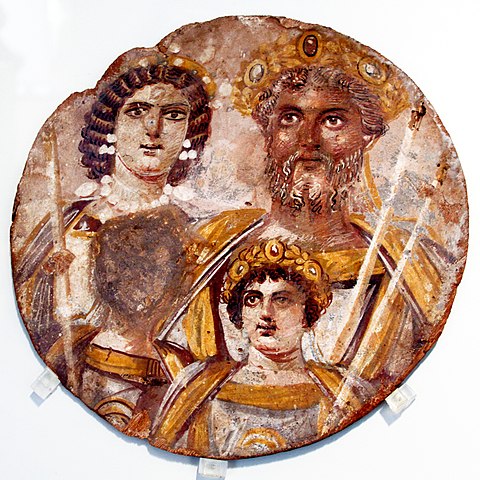
Emperors of Rome Just before I leave the Severans completely, I thought that I would backtrack and finish off the series of podcasts about Roman women. Episode CLXI – Syrian Matriarchy finishes off by looking at “The Julias”. The Severan dynasty was founded in 193CE by Septimius Severus, but in many ways it was his wife Julia Domna and her sister Julia Maesa who would guide the family. The family came from Syria, probably from the Roman/Arabic royal family. When Septimius Severus took the purple, he elevated Syrians and Libyans into Roman politics. Julia Domna was the mother of Caracella and Getta (who died in his mother’s arms when his brother killed him). The image on the left shows Julia Domna and her husband Septimus Severus and their two sons Caracella and Getta (and it’s Getta whose face is erased, no doubt at Caracella’s order ). Julia Maesa was Julia Domna’s sister, and she had two daughters Julia Soaemias and Julia Mamaea. Julia Maesa called claimed the title of ‘Grandmother of the Emperor’, on account of her grandsons Elagabalus and Severus Alexander. She was clearly running the family, and she was able to insist that Elagabalus ‘adopt’ his cousin Severus Alexander, and she was ruthless in killing off her own son Elagabalus when he went rogue. Julia Mamaea was the mother of Severus Alexander, and once he became emperor, Julia Maesa went into the background, leaving Julia Mamaea to be designated “mother of the whole human race”. The Julian women are important in that the Severan empire generally saw ‘foreigners’ becoming part of the Empire, forcing the Italian Romans to look at the East differently. Their influence was as mothers (and grandmothers) rather than as wives – a much more powerful position because although you can divorce a wife, it’s harder to get rid of a mother.

And so, back to the chronology of the Emperors, catching up with Maximus. Episode CXLVI – The Sun is Getting Real Low (Maximinus). Wow – the next 50 years were really unstable, with 26 emperors in the next 50 years. Some were just fleeting, others had more substantial (but still short) reigns. The empire was split into two with the Gallic empire acting independently. Maximus has had a rough time from historians, who characterize him as a barbarian. He doubled the army’s pay again, meaning that army pay had increased sixfold in about 40 years. He had to squeeze the people for money, which is what the enemy would have done to them, and which led to unrest. Episode CXLVII – The Vagaries of Chance goes with the ultimate short-term emperors, Gordian I and Gordian II. The impetus for the uprising that appointed them was over-harsh tax collection to pay for Maximus’ wages bill. The Senate, who didn’t like Maximus, were waiting for a catalyst to act and so when the Gordians came along, they endorsed them. But by the time that Maximum marched on Rome, Gordians I and II were already dead, having ruled for between 20 and 22 days- the short imperial reign ever. Episode CXLVIII – The Always Unpredictable Outcome of War looks at Gordian III. He was very young and was appointed a Caesar, a lower position than Pupienus and Balbinus. When the Praetorians killed Pupienus and Balbinus they didn’t just kill them: they tortured them. We need to remember that the Year of Five Emperors was still in living memory, and Rome survived that, and it expected to get through this too. But why and how? Dr Caillan Davenport suggests that it was because there was still a provinical attachment to the idea of Rome, beyond any individual emperor. Episode CLXIV – Gordian III sees Gordian III reign for six years, despite his youth, although he was brought down more by external forces than internal ones. Dr Caillan Davenport sees him as a pawn of his father-in-law Timesitheus, who more or less forced Gordian to marry his daughter to cement his position. We don’t know whether Gordian III died in battle, or as part of the mutiny led by Phillip. Gordian III was left with a fairly good reputation, even though the army he led was defeated in battle. But it was his successor Phillip to had to sign a humiliating peace treaty, not him.

The Coming Storm (BBC) I started listening to this in the middle of the night, and have caught up with it during the day. I’ve heard plenty about the rise of QAnon and the right wing in America, but this is different in that it is a British journalist, Gabriel Gatehouse, who finds links back to Britain in what is increasingly becoming an international movement. Episode 1 The Dead Body starts off with the QAnon shaman, whom Gatehouse interviewed when he was in America for the election. He dismissed him as a nutter, and was horrified to see him in the White House on 6 January. Gatehouse then goes back to the suicide of the Clinton aide, Vince Foster, which is a foundation myth of the QAnon movement. Episode 2 Sex, Lies and a videotape looks at the Arkansas Project, an Arkansas- led attempt to inject lurid stories about the Clinton into the mainstream media (aided by the Daily Telegraph in Britain). This conspiracy theory has Hilary Clinton as the main target, and was weaponized by Jerry Falwell who injected Satan into the whole story.

Rear Vision (ABC) Well, if we weren’t aware of passports and borders, we sure are now after two years of border closure because of COVID. Passports, borders and identity examines the history of the Australian passport. Wealthy people had travelled with ‘papers’ , but these became more important during WWI when ordinary soldiers were travelling overseas. Australian passports weren’t issued until 1948, and since the 1970s, they have been used as a form of identity check. Australian governments used the Immigration Restriction Act of 1901 to keep out people of non-European ethnic background, and they could refuse to issue a passport, as they did with Wilfred Burchett. Visas and ‘permission to enter’ have become increasingly complex, as we saw with Novak Djokovic.

I hear with my little ear: Podcasts 1-7 February 2021

History of Rome Podcast Episode 105 The Last Princeps sees an even younger Emperor – only 13- but Severus Alexander was the exception that proved the rule that a very young Emperor was usually a disaster. But it was the calm before the storm. His mother appointed a council of senators to advise him. He reigned for 13 years, the longest reign since Antoninus Pius. He re-established the Roman gods (although continued loyalty to El-Gabal probably influenced the Christian’s choice of December 25 as Christmas). But the Praetorians and his mother Julia Mamaea vied to influence him, and he could never stand up to his mother and grandmother. Episode 106 Barbarian at the Gate sees Severus Alexander having to cope with the rise of the Sassanids in the East under Ardashir I who played hard-ball. Severus Alexander had had to withdraw troops from the Danube regions to go over to Syria, and the Danubian legions were furious when Germanic tribes invaded, slaughtering their wives and children. From amongst the trooops came Maximinus Thrax, from Thrace, known as the first ‘Barbarian’ Emperor. He was declared emperor by his troops and he ordered the troops to kill all the Severans, including Severus Alexander and his family. He was only 26 years old, and for the next 50 years there would be a new emperor every two years, leaving the Empire almost at the point of extinction.

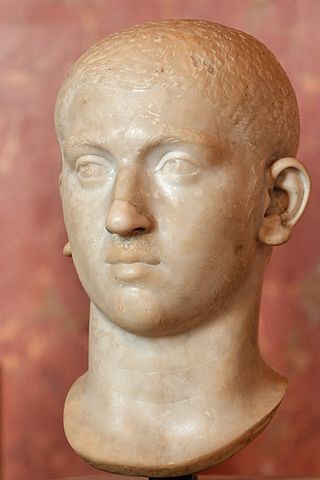
By © Marie-Lan Nguyen / Wikimedia Commons, CC BY 2.5,
https://commons.wikimedia.org/w/index.php?curid=3890780

Emperors of Rome Episode CXXXVII – Mother Knows Best (Severus Alexander I) sees the army, the people and his own grandmother swing their support behind his cousin, Severus Alexander. They brought Severus Alexander up very carefully, keeping him on a short leash so that he didn’t go rogue like Elagabalus did. He was about 14 when he became emperor, and he was advised by a group of senators (including the historian Cassius Dio himself). Episode CXXXVIII – Rise of the Sasanian Empire (Severus Alexander II) The Historia Augusta claims that Severus Alexander wanted to add Christ to his oratory of gods, and to build a temple to Christ but this is not historical. The Sasanians were an empire that rose out of the ashes of the Parthians in Iran, and they would be a leading regional power for the next 400 years. They called themselves The King of Kings, but we don’t really know a lot about them except that they caught the Roman army unawares. The troops demanded that Severus Alexander be there in person – no more shunting off the task of leading the troops to a general- now the emperor was expected to be there in person. Episode CXXXIX – A Fish in a Net (Severus Alexander III) Poor old Severus really is at the mercy of his historians. Herodian sees him as a namby-pamby, who cried as he left Rome as he went off to fight with 80-90,000 troops, and his mother. The army was itching for a fight, but Severus Alexander wasn’t. He divided his army into three: one segment in Armenia, another on the Tigris/Euphrates, and the third in Palmyria in Mesopotamia. He led this last group, and the Romans had to retreat after a humiliating retreat in winter, with many deaths on the march home. The Sasanians then went home, because they were a surge-force rather than a standing army. Rather dubiously, Severus Alexander held a triumph when he went home (it was certainly no victory). Episode CXL – A Ridiculous Waste of Time (Severus Alexander IV) No sooner had the eastern threat abated than the German tribes invaded to the north. It’s hard to know whether this invasion was a result of population pressure, or whether it was opportunistic. Severus Alexander didn’t want to fight here either, and offered to buy off the German troops- something that the troops couldn’t stomach. So they revolted and chose one of their own – a military man with the support of the troops. Severus Alexander and his mother were killed in his tent. Dr Caillan Davenport says that it’s hard to evaluate him, because he seems completed controlled by others. He was not bloodthirsty, he was deferential to the Senate and he built things. But he was not a successful leader in wartime, and he marked the end of the Severan dynasty which had lasted from 193-235 C.E.

History Extra Podcast It’s funny how you can read or learn about something at one stage in your life and it evinces lukewarm interest, then decades later you are fascinated by it. Perhaps the rise of the extreme-right across the world today that made Vichy France: Everything You Wanted to Know so fascinating. This is a question and answer session with Professor Shannon Fogg who wrote The Politics of Everyday Life in Vichy France: Foreigners , Undesirables , and Strangers in 2009. Good basic questions like Where was Vichy? Why Vichy? Did the arrangements with the Nazis also apply to the colonies? What was everyday life like? At the end, she talks about the way that Marshall Petain has been embraced by the right.

I hear with my little ear: Podcasts 24 -31 January 2022

History of Rome podcasts. Episode 104 Here Comes the Sun was music to my ears, when Mike Duncan started off by praising the role of grandmothers and mothers amongst the Roman emperors (although I must admit it was not always to the good). The Julias had been part of the now-dead Caracella’s court and they had networks to call on to bring Caracella’s cousin Antoninus out into open opposition with Macrinus. Antoninus was part of the Severan family, and since childhood he had acted as a priest to the sun God El-Gabal – hence his nickname Elagabalus, although during his reign he was known as Marcus Aurelius Antoninus. But it’s easier to call him Elagabalus, given how many Antoninus’s and Aurelius’s there were. Rumours abounded that he was actually Caracella’s illegitimate son instead of cousin, and thus he had the support of the troops. Macrinus tried to win the troops over, but his envoys kept getting converted to Elagabalus’ side. There are differing accounts among the sources, but either way Macrinus ended up dead. Elagabalus’ mother Julia Maesa, who had been plotting away in exile, was very influential because Elagabalus was only 14. She insisted that she be allowed to attend the Senate (first woman to do so). However, he was pretty scandalous, married four times including to a Vestal Virgin, was probably transgender and even his Nanna turned against him, and decided to promote her other grandson, Severus Alexander instead. The two cousins were made co-Consuls but in the end the Praetorian Guard turned against Elagabalus and assassinated him. The lesson? Don’t mess with Nanna.

Emperors of Rome Really, with Elagabalus championing the role of the Sun God in Rome, no podcaster could resist calling the episode ‘Here Comes the Sun’ and the Emperors of Rome podcast couldn’t either, with Episode CXXIII – Here Comes the Sun (Elagabalus I) Most of this episode is involved with the death of Macrinis, who fled when he realized that the tide was turning against him. He got quite some distance, but was killed nonetheless. Historians have generally been fairly hostile towards Macrinis. Cassius Dio admits that he had his strengths, but says that he deserved his fate because he was ‘only’ an equestrian. Episode CXXIV – The Lowest Depths of Foulness (Elagabalus II) Elagabalus took the scenic route back to Rome, taking more than a year. He sent the people of Rome his portrait though, so they would recognize him when he arrived. He was only 14 and wanted to consolidate his position in the East, and needed to appoint his own people to important positions. Once he arrived in Rome, he started executing senators. Of course, Nero and Caracella had done the same thing but he took it to a whole new level. Worse still, he insisted on keeping his role as a priest of the Sun God Ela-Gabel, and built a big temple to Ela Gabel called the Elagabalium and elevated Ela-Gabel over Jupiter. Episode CXXV – Call Me Not a Lord, for I Am a Lady (Elagabalus III). Good heavens, this was rather explicit in a giggly sort of way. Cassius Dio had provided a lot of detail about Elagabalus’ sexual perversions. He justified marrying a Vestal Virgin (actually, he married her twice) by saying that he was bringing together Ela-Gabel and the Roman goddess Vesta to make little god children. In the end, he had no children at all despite four or five marriages. He wanted to castrate himself, and had a desire for a ‘hole’ to be put into his body (a vagina?) Dr Caillan Davenport says that in teaching about Elagabalus to students of much the same age, he sees him as a troubled young man, rather than good or bad. No wonder his grandmother was worried about him.

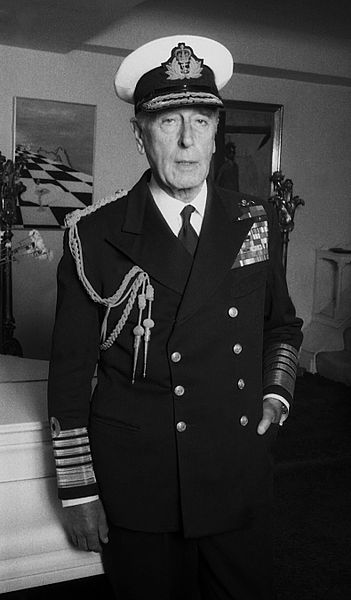
Lord Louis Mountbatten. Source: Wikimedia

History Extra: I’m just about the last person on earth to watch The Crown. I’m up to the third series, with the Mountbatten plot. Did this really happen?? I went in search of a podcast to find out, but the closest that I could come up with was The Mountbattens: Success and Scandal. In this podcast, author Andrew Lownie discusses his book The Mountbattens: Their Lives & Loves, which looks at the relationship between Louis and Edwina Mountbatten. He gives Mountbatten a bare pass on India, saying that it was an impossible situation. The podcast didn’t really mention the Mountbatten plot, being more concerned with who was bonking whom. Although, he does mention that when some recent files concerned with Mountbatten and young boys became accessible, they mysteriously ‘disappeared’. As we have seen with the Palace Letters here in Australia, the Crown is quite active in protecting its archives.