Category Archives: Podcasts 2022

I hear with my little ear: Podcasts 1-8 July 2022

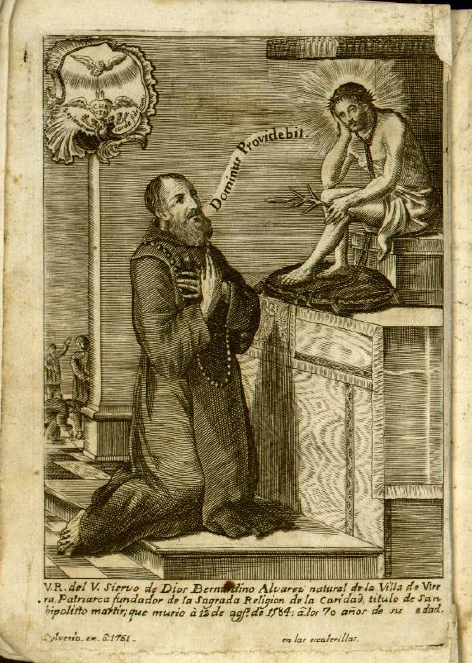
Bernardino Alvarez, founder of the Hospital de San Hipólito. Source: Juan Díaz de Arce, Libro de la vida del próximo evangelico, el venerable padre Bernardino Alvarez (Mexico: 1762).

New Books in Latin American Studies. Bedlam in the New World. Most of the books in this podcast are academic texts published in the US, and not likely to be readily available in Australia – and if they are, they are usually prohibitively expensive. So this podcast is a good way of becoming familiar with the books without reading them. Christina Ramos was originally a historian of science and medicine and it sounds as if she was rather railroaded into Latin American history. Bedlam in the New World: A Mexican Madhouse in the Age of Enlightenment tells the story of Mexico City’s oldest public institution for the insane, the Hospital de San Hipólito, founded in 1567 by the Catholic Church. It finally closed in 1910 when a secular asylum was opened. Other historians and theorists have spoken about the medicalization of madness, and the use of the asylum as a form of social control, but her book looks at the relationship between religion and the asylum. Over such a long period of time, the Church moved from an idea of madness as a form of bewitchment or possession to a view of it as illness, and this played out through the activities of the Inquisition which wanted to probe into issues of intent and veracity – concepts not usually considered in asylums. Hospital records can be bald and bureaucratic, but the Inquisition’s rich records capture the voices of people who appeared before it. She speaks of the Spanish Enlightenment, which I confess I had never thought of before and closes her book at the point where the medical model took over from the spiritual model in the early 20th century.

Rear Vision (ABC) Zero COVID in China: the social, economic and political cost looks at the continuing policy of lockdown that China is following, after the rest of the world has decided to ‘live with COVID’. At the moment it seems that China’s government is just as ideological by not wanting to give up on its success in quashing COVID during 2020, as Western governments are in their determination to shut their eyes and chant ‘COVID-normal’. The inactivated vaccines produced by the Chinese government are less effective than MRNA, especially against Delta and Omicron, and there has been no herd immunity developed. They started with vaccinating front-line workers rather than the elderly, so there is a very large group of vulnerable citizens. Despite the disruption to the economy internally and supply chains globally, there is no sign of a change in policy, with the Chinese government cancelling the 2023 Asian Cup which was going to be held there.

History of Rome. Episode 156 Jockeying for Position. The three forces of Maximus, Theodosius and Valentinian were fairly evenly balanced. They could each hold their own, but were not strong enough to overthrow the others. This state of balance meant that most of their actions were PR stunts backed by diplomacy. Once Bishop Ambrose arose in Milan, both Maximus and Theodosius knew how powerful he was, and both positioned themselves as defenders of the Nicene Creed- in fact Theodosius became a bit fanatical about it all, but at this stage he just went after Arians, rather than pagans generally. Maximus wanted to show his chops too, so he ordered executions for heresy (which Ambrose opposed) and ordered the closure of Arian churches in Milan. Valentinian and his mother Justina were Arians, which was a bit awkward as they were based in Milan, with the strongly anti-Arian Ambrose. There was a stand-off between Ambrose and Valentinian and his mother over the occupation of a church, and in the end Valentinian and his mother Justina fled Milan.

Episode 157 Only the Penitent Man Shall Pass sees Valentinian (and Mum) and Theodosius joining forces in a war against Maximus. Maximus’ troops eventually handed him over and he was beheaded. Now Theodosius had to face Ambrose and reached out to him, but Ambrose was stubborn. There was an anti-Semitic uprising by monks that Ambrose supported. Theodosius humbly went to the Senate to shore up his authority but his position was undercut by the Massacre of Thessalonica (Greece) where imperial troops violently put down unrest over the arrest of a chariot racer over an alleged homosexual rape. When the general was killed, Theodosius ordered the slaughter of the crowd at the next chariot race. He regretted his decision, and tried to countermand it, but it was too late- although all of the details about this massacre are murky. Ambrose took the high moral ground and announced that he could no longer associate with Theodosius until the emperor made a personal apology. In the end, Theodosius grovelled and prayed – so Ambrose won. This is seen by some as a watershed moment that emphasized the Church’s power over the soul. Once forgiven, Theodosius turned his attention to stamping out paganism – and this may (or not) have been responsible for the destruction of the Library of Alexandria (no-one really knows who destroyed it).

Episode 158 An Imperial Suicide When Theodosius finally left Milan to go back to the east, he appointed General Arbogast to mind the shop, even though Valentinian was by now twenty years old. When Arbogast began making his own appointments of minister, Valentinian became depressed over his lack of power and committed suicide. Even though this was convenient for Arbogast, he probably wasn’t behind it, because as a Frank, he couldn’t have become emperor anyway. When no news came about who should be Valentinian’s successor, Arbogast named Eugenius, who had noble links. Eugenius set about reinstating pagan practice and restored the pagan Temple of Venus and Roma and the Altar of Victory, after continued petitions from the Roman Senate. It was, in effect, the last gasp of the pagan empire, even though both Arbogast and Eugenius were themselves Christians.

The Wheeler Centre. Well, it’s a video rather than a podcast, but I’ve just re-read Ruth Park’s The Harp in the South for my upcoming book group, and I found this talk by Alice Pung at the Wheeler Centre in January 2015. Actually, it was a bit too gushing for me, and I had hoped for something more critical. Pung drew on her own working-class origins to talk about Park’s treatment of class in the novel, although as the child of Vietnamese refugees, her working-class experience was very different from that of the Darcy family.

The Daily (NYT) In the wake of the terrible news on the overturning of Roe v Wade in the U.S. Supreme Court, An Abortion Rights Champion of the 1970s on Life Before and After Roe is fascinating. Fifty years ago Nancy Stearns was a NY lawyer who was preparing to mount a case in the New York court system challenging the ban on abortion in effect at that time, arguing that the impact of an unwanted pregnancy led to inequality in terms of liberty and the equal protection of the law, both of which are protected under the Constitution. However, just as the case was about to reach the court, New York legalized abortion, rendering the case moot. Roe v Wade made its argument for abortion reform on the grounds of privacy, not the Constitution (which I remember Ruth Bader Ginsberg also thought was a weakness), and as we have seen, an originalist can reject ‘privacy’ as a right because it is not protected by the Constitution. Nancy Stearn’s argument was never tested. Nonetheless, she thinks that even her arguments would be overthrown under the current Supreme Court, and she urges people to keep fighting even though she doesn’t think that she will live long enough to see safe abortions re-established in the United States.

Lives Less Ordinary (BBC) You probably think you don’t know Abi Morgan, but if you are an ABC viewer, you probably do. She is the screenwriter of The Iron Lady, Shame, and The Split, but in this episode My husband thought I was an imposter, she felt as if she were in her own nightmarish television series. When her husband Jacob, who suffers from MS, was rapidly taken off a drug-trial, he became so gravely ill that he was placed in a medically-induced coma. When he awoke, he suffered from Capgras Syndrome, where the sufferer becomes convinced that someone close to them has been replaced by an impostor. In this case, Jacob believed that his wife was an imposter -only his wife- and they have had to rebuild their relationship to accommodate this belief.

I hear with my little ear: Podcasts 24-30 June 2022

History of Rome Podcast. Episode 153 Adrianople takes up with the Goths angry and their armies on the loose. Valens left a skeleton force of troops in the East after a shaky truce with Sharpoor, which allowed him to free up troops to head back west. He went to Constantinople where he received a frosty reception, and decided not to wait for Gratian to quell the Allemani but rode out by himself. The battle of Adrianople started prematurely, but the Romans were in front until an extra contingent of Goth cavalry arrived, and the Romans were defeated. Valens was killed in battle. Duncan refutes the idea that it was the horses that swayed the battle, noting that the Romans had been using the cavalry for 100 years. But certainly, it was the worst crisis that the Empire faced since the Battle of Cannae in 216 BCE (wow- that’s going back 500 years!) and it left a 19 year old and a 7 year old as emperors. Episode 154 The Gothic War. So who are you going to call in this parlous situation? Why- a successful general, that’s who. The only problems was that Theodosius Snr, who had previously been the go-to general had been executed in Africa, probably as part of the post-Valentinian political realignment. Fortunately he had a 32 year old son, also called Theodosius, who was brought back as military commander to restore order. In 379 CE Theodosius was made Augustus of the Eastern Empire. The Gothic War was at a stalemate. The fortified cities held, but the Roman army was stretched by a general manpower shortage across the Empire, exacerbated by the big landowners who kept their best workers from the reach of the army. By continuing the Gothic War, the Roman Army was on a hiding to nothing. So when Athanaric, the King of the Goths, came to Theodosius and asked asylum from the Huns, Theodosius seized the olive branch. The Goths and Romans contracted a peace treaty which allowed the Goths to live in large groups under their own internal leadership- a big change to the old policy of scattering and Romanizing the enemy. Episode 155 The New Bishop of Rome takes us back to Brittania, where Magnus Maximus, a Roman general, led a revolt against Gratian, who had never been a soldiers’ soldier. Gratian ended up being executed by Maximus’ troops after his own troops deserted him. Maximus’ way was smoothed by Ambrose, the former Consular-Prefect, who was now the Bishop of Milan, even though he had never been a priest and was more-or-less coerced into the position. Ambrose negotiated an arrangement with Theodosius I and Valentinian II whereby Maximus was recognized as Augustus in the West.

Things Fell Apart (BBC). This final episode, made in March 2022, features an interview between Jon Ronson and Louis Theroux, two documentary makers who have a similar approach to similar themes. It’s a bit of a re-hash of the whole series, and you’d probably be better off listening to the series itself rather than this rather cozy summing up.

Sydney Writers Festival. A few weeks back I posted a review to Hanya Yanagihara’s weighty tome To Paradise. I enjoyed this podcast from 22 June 2022 where she talks about the book, and her previous equally weighty tome A Little Life. And how good that the question time was dominated by women, reflecting the demographics of a writer’s festival audience.

These were the giant footprints at Ain Dara Temple in Syria, a temple which is thought to be very close in design to- if not the same as- King Solomon’s Temple in the Bible. Photographer Klaus Wagensonner, Flickr https://flic.kr/p/5QdrMQ Appallingly, this temple was destroyed by Turkish airstrikes in January 2018

The Ancients (History Hit) I really enjoyed the episode The Image of God, featuring Professor Francesca Stavrakopoulou, whose latest book ‘God: an Anatomy’ has been shortlisted for the Wolfson prize. She points out that the Old Testament is actually an anthology of writings from the 8th Century BCE through to the 2nd Century CE. The God we find in these writings is an anthropomorphic god, with footprints, hands and a body real enough that Moses had to go into a cave where God covered him with his hand so that Moses would only see the back of him. He was a mobile god, who could slip away from temples when they were destroyed, and his image gradually changed from a good looking, red-coloured god to an old man with a beard. I found this fascinating: I think I’ll look for the book.

I hear with my little ear: Podcasts 16-23 June 2022

History of Rome Podcast Episode 150 The Perils of Mismanagement. After the shock of the British uprising, Valentinian wanted to reaffirm Roman power. He started with the Allamani, near Heidelberg. He tried to get another tribe, the Burgundians to fight the Allamani but that didn’t work, so he sent Theodosius Snr. (again) to sort it out. Then there was Africa where Romanus, the Roman appointee was busy extorting taxes and threatening the citizens that he would set the Moors on them. In 372 a Berber Numidian prince named Firmus led an uprising, and Theodosius again was sent to sort this mess out. Even though Firmus was justified in leading a rebellion against the venal Romanus, he suicided after being betrayed. As part of his plan to reaffirm Roman power, Valentinian ordered that Roman military bases be established in Quadi lands on the upper Danube. They were not happy, so Marcellianus was sent to calm things down, but instead he killed their King. The Quadi were so enraged that they chased the Romans back over the Danube. Valentinian launched a punitive expedition in response, but eventually there was a peace treaty contracted with the Goths.

Episode 151 Bursting a Blood Vessel. Over in the east, the Goths had allied themselves with Procopius (Julian’s cousin) in Constantinople. Valens wanted to teach them a lesson, so that if he needed to leave Constantinople, he needed not fear an uprising in his absence. Meanwhile, Sharpoor was causing trouble in Armenia again, so the Romans appointed Prince Pap (what a name!). Unfortunately he was a bit of a dud so Valens arrested him, which brought Sharpoor back into Armenia. Meanwhile, Valentinian died of a stroke while was berating the Quadi ambassador. He had ruled over a transitional period, and although sort of successful in suppressing uprisings, there would never again be a powerful emperor.

Episode 152 The Storm before the Storm When Valentinian died, the troops anointed his 4 year old second son Valentinian as emperor. The older son, Gratian, who was 16, did not fight it, as he was no soldier. That meant that there were now three emperors: Valens, Gratian and Valentinian II. Meanwhile, there was a huge influx of Goths into the empire, who were fleeing the Huns who had come down from the Central Eurasian Steppe on their horses, with their powerful composite bows. The massing Goths on the border were treated badly by the Romans who rounded them up into refugee camps, where they were forced to sell their children into slavery, their leaders were arrested and the people were starved.

Things Fell Apart This is the final episode and ironically, Jon Ronson himself becomes part of the culture wars that he has been describing when parents starting protesting against his book ‘So You’ve Been Publicly Shamed’. Episode 8 A Mock Slave Auction looks at a social media racial pile-on at a majority-white secondary school in Michigan which prompted the school to pass a policy that they were going to address the issue. This became hugely contentious, and the resultant public meetings dragged up many of the things that Ronson has discussed: child pornography, gender identity, abortion and now the question of structural racism and unconscious bias. He interviews Robin DiAngelo, the author of ‘White Fragility: Why It Is So Hard for White People to Talk About Racism’. Wow- she is very confronting.

The Comb (BBC) I usually hear this advertised in the middle of the night while I’m listening to BBC World when I can’t sleep. Escaping the City looks at the phenomenon of admittedly middle-class, educated Kenyans moving out of Nairobi after lockdown. I was interested to hear the interviewee, Mugambi, talking about the changes in Nairobi during the 1980s and 1990s which saw it become ‘Nai-robbery’ and the resultant construction of glass-topped security walls and frisking on entry to any public building. This is the Nairobi that I knew when I visited my son over there, and it was interesting to hear that it hadn’t always been like that.

Soul Search (ABC) A friend told me about this interview with Joan Chittister on renewing community in a changing world. She is a Benedictine sister, and a feminist. She talks about her life, her spirituality and community, and her views on feminism.

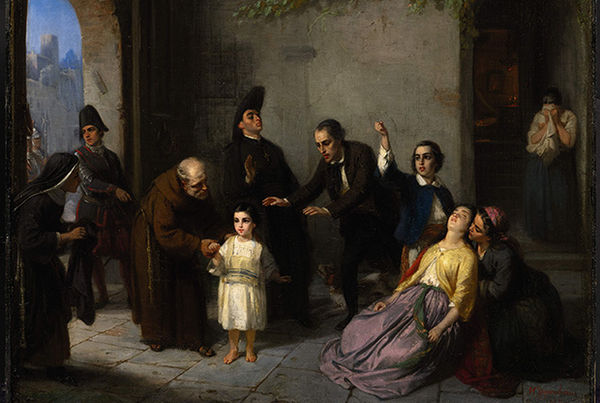
The highly inaccurate depiction of the ‘rescue’ (abduction) of Edgardo Mortara by Moritz Daniel Oppenheim, 1862 Source: Wikimedia

History This Week The Church Kidnaps Edgardo Mortara tells the story of a six year old Jewish boy, Edgardo Mortara, who is kidnapped by the papal police in 1858, on the grounds that he has been secretly baptised and thus must be removed from the corrupting influence of his parents. His parents fight back, challenging the claim and attracting international attention. It doesn’t look good for Pope Pius IX, who is fighting for his own authority in the heaving political scene of the Risorgimento, the political movement that led to the creation of the Kingdom of Italy. Even though the Pope’s power as a secular ruler was eroded, at a personal level, you’d have to say that the church won, as Edgardo ended up a Christian priest.

I hear with my little ear: Podcasts 8-15 June 2022

History of Rome Podcast Episode 147 Capitulation. So Julian was dead, with the Sassanids heading for victory, and with no successor named. The officers turned first to Praetorian Prefect Salutius, but he declined because he said that he was too old. Then they went for Jovian, the 39 year old and largely unknown Captain of the Imperial Bodyguard. He was openly Christian, but this hadn’t hurt his career as Julian the Apostate didn’t particularly care what your religion was, as long as you did your job. Jovian accepted capitulation to the Sassanids in order to keep his army intact, but the troops opposed this surrender and he lost all authority amongst them. He annulled the anti-Christian legislation and brought back the anti-Pagan legislation. But after 8 months, he suddenly died. Was it an accident? Who knows. But Mike Duncan thinks that it was a blessing because it brought Valentinian and his brother Valens to the role of Emperor. When Jovian up and died, they were the right men at the right time.

Episode 148 The Cousin´s Cousin. For the first time in ages, we had two emperors who didn´t hate each other. Valentinian and Valens embedded the idea of the East-West division, with Valentinian taking the western provinces and Valens the east. Valentinian generally treated the Gauls and Allamanni with contempt, and when Julian´s cousin Procopius, the last of the Constantinian dynasty, seized Constantinople, Valentinian left it to Valens to deal with. But Sharpoor was on the rise again in the east, so Valens headed off to Syria until he received news of Procopius´seizure of power, then returned to Constantinople to fight him, and won. Meanwhile Valentinian was engaged with the Allamanni and was in a good position to finish them off, but had to leave off battle because the Saxons were on the rise in Britain.

Carol Raddato, Flickr, Creative Commons

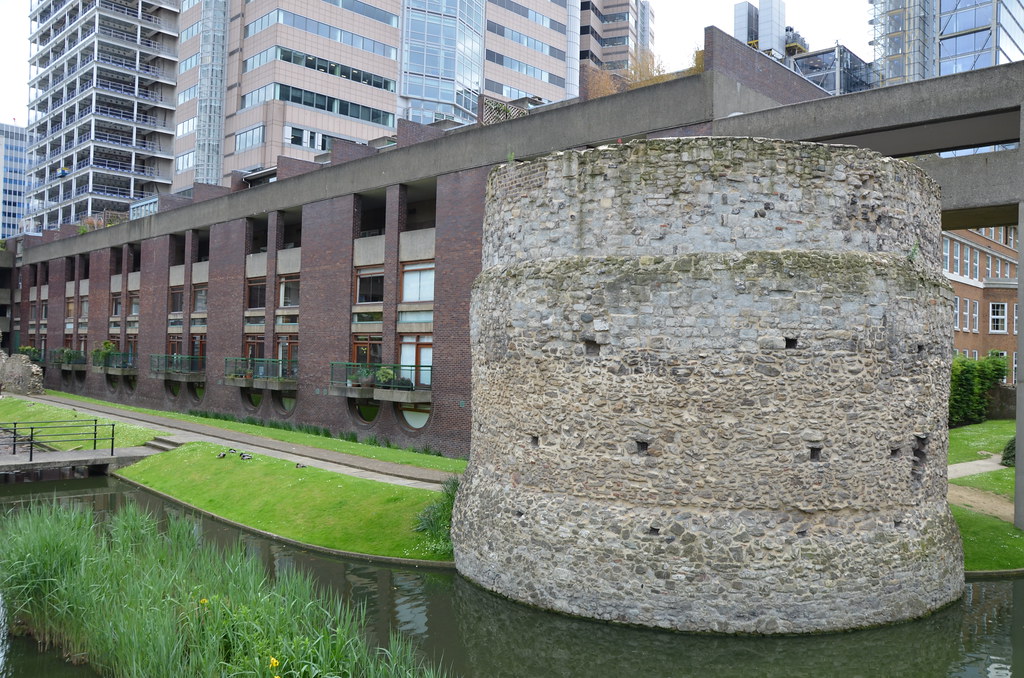
Episode 149 The Great Conspiracy takes us to the co-ordinated uprising in Britain where, on account of the neglect and stagnation that had set in, the Picts, Hiberian tribes from Ireland, the Franks on the coast and loose, unorganized Saxon tribes from Jutland all joined together against the Romans. The Romans were quickly overcome. There was no real political agenda: it was just plundering. Valentinian didn’t head over to Britain in person because defeats were politically dicey so he sent off Theodosius Snr instead (the father of the future emperor) who was a supporter of the Nicene Creed. He quickly cleared Londinium and announced an amnesty for Roman soldiers who had gone AWOL (as many had done) in order to boost the numbers of Roman troops. Valentinian was sick, so he elevated his son Gratian to full Augustus in order to secure the succession.

How It Happened (Axios) Putin’s Invasion Part V: The Fight for the Donbas picks up on Putin’s redirection of troops to the Donbas, which Putin claims is taking place on Russian soil. Many Ukrainians speak Russian, and one of the interviewees (news producer Kateryna Malofieiva) talks about how life changed once the Russians annexed the region in 2014- the currency changed; the food brands changed. There has been a complete breakdown in her family between pro-Russian and pro-Ukranian relatives. Ukraine wants to return to the 1991 borders (i.e. get back the Donbas region and Crimea) and is relying on its 44,000 battle-hardened troops who have been fighting on the Russian border since 2014. One of those is Ukrainian Cpl. Andrii Shadrin, born in the Crimea and who had never even heard Ukrainian spoken (only Russian). He joined one of the units that Putin would say was ‘Nazi’, and his parents too believe that he has been brainwashed. He thinks the same about them.

The Little Red Podcast is hosted by Graeme Smith, China studies academic at the Australian National University’s Coral Bell School of Asia Pacific Affairs and Louisa Lim, former China correspondent for the BBC and NPR, now with the Centre for Advancing Journalism at Melbourne University. Shanghaied: Living with COVID Zero was really interesting. We were all appalled by scenes of Wuhan citizens being bolted into their homes, and two years later it is happening again as Shanghai is locked down again in pursuit of COVID Zero- something that the rest of the world seems to have given up on. Shanghai residents had reassured themselves that they were so economically important that they couldn’t be shut down, but they were wrong. Two months later, upper and middle-class Shanghai residents are now aware of the power of censorship and arbitrary decision-making as their building-specific group chats were closed down on the internet, and they were being told things that they could clearly see were not true. Food handouts from the government depended on where you lived, and those factories that did remain open in effect became labour camps. Now they are ramping up their testing, with compulsory tests every couple of days, but so many low-paid workers have left Shanghai for their villages, that there are insufficient people to do the testing at such low pay.

I hear with my little ear: Podcasts 1-7 June 2022

History of Rome Podcast. Episode 144 The Road to Constantinople Even though he had not been brought up in the military, Julian had good success against the Germans and Franks- so much so that he was acclaimed as Augusta by his troops. But, at this stage, he declined the offer, saying that Constantius was the only Augusta. Instead of stripping the Gauls of everything in order to pay for his victory, he had the idea of cutting taxes on them, but actually collecting them, instead of allowing them to accrue debt and then write it off in a fit of debt-forgiveness. Meanwhile, over in the east, Sharpoor and the Sassanids became active again in Syria, so Constantius ordered Julian to send his troops east. But his troops didn’t want to go and Julian wasn’t prepared to force them, and this time when they urged Julian to be Augusta, he accepted, thus setting himself up for war against Constantius. Constantius was becoming increasingly paranoid after his wife (who had always championed Julian) died. Constantius was en route to engage in battle with Julian, when he died, leaving Julian as sole emperor. Once Julian arrived in Constantinople in

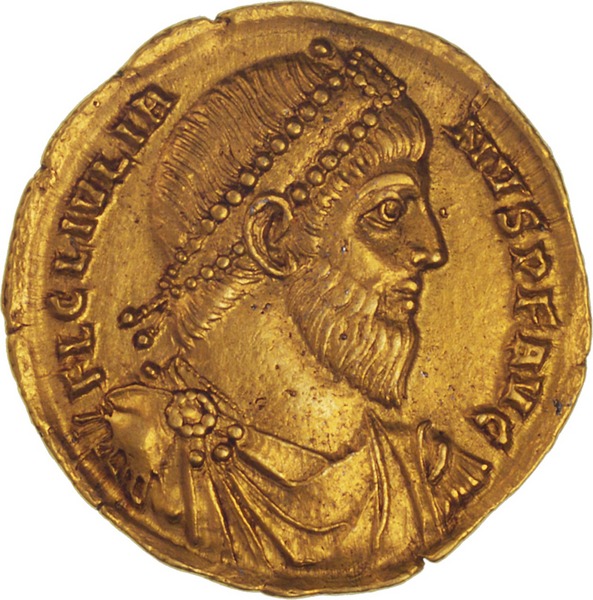
Episode 145 Julian the Apostate, he cleared the imperial court of his enemies, after appointing an ostensibly ‘independent’ commission. He looked back to the 100s C.E. and the Antonine dynasty as a model, cutting the bloat in the court and administration, and abandoning all that talk of “Living God” stuff. He kept control of defence and taxation but devolved power back to the local magistrates. He had always been a pagan behind the scenes, having rejected the Christianity of his upbringing, but now he embarked on re-paganizing the Empire. Despite his name, he didn’t make Christianity illegal. However, he opened up the civil service to pagans, and sacked the Christians, and announced that all religions were now seen as equal, which set the Christians against each other as now all sorts of heresies could arise. He didn’t actually ban Christian schools, but he banned the use of classical texts by Christian teachers, and Roman families who wanted their sons to get ahead withdrew them from Christian educators so that they could receive a proper education. Julian looked at the community and social support aspects of Christianity and tried to emulate it by uniting pagans into one Paganism- but that was never going to work. In Episode 146 The Spear of Destiny Constantius was dead, but Julian was determined to go to war against Sharpoor and the Sassanids. At first he was quite successful, but then he failed. The Sassanids engaged in a scorched earth policy, which led to starvation amongst Julian’s troops. However, he continued to lead, and it was while leading that he was speared (no-one knows by whom) because he rushed out without wearing his armour. He probably didn’t think that he was going to die, but after lingering a couple of days, he did- without appointing a successor. He was 31 years old, and had ruled for about 18 months. He dreamed big, and died young. Superficially, he was like Elagabalus in that he tried to reform religion, but he was more important than that. It’s one of the big ‘What Ifs’ of history- if he had ruled for longer, would Christianity ever re-established itself? Would the whole of European history changed?

The Real Story (BBC) China vs. the West in the East is interesting because it takes a European/BBC approach to the ‘Far East’ , which is of course Australia’s closest area of influence. It features Jonathan Pryke – Director of the Pacific Islands Program at the Lowy Institute, an Australian think tank; Dr George Carter – A Samoan Research Fellow in Geopolitics and Regionalism at the Department of Pacific Affairs at the Australian National University (ANU) and Judith Cefkin – Former US Ambassador to Fiji, Tonga, Tuvalu, Nauru and Kiribati. All speakers were keen to emphasize the multiplicity of languages, cultures and states within the Pacific, and the inappropriateness of China wanting to deal with them as a block. Dr Carter pointed out that there is no Pacific immigration at all into China, and that these family ties are important in relationships with Australia and New Zealand.

Things Fell Apart (BBC) Episode 7 A Secret Room behind a Fake Wall tells the story of Isaac Kappy, a film producer from Albuquerque whose career fell apart and ended up in Hollywood. Always attracted to conspiracy theories, he became engrossed in Pizzagate, and then went onto Alex Jones Infowars to claim a widespread Hollywood pedophilia network. He died by falling from a bridge, obviously troubled and probably by suicide, but his cause was taken up by QAnon and lawyer Lin Wood, one of Donald Trump’s ‘outside’ lawyers.

History Extra Podcast There have been fairly muted celebrations of the Queen’s 70th Jubilee here in Australia but I did listen to Britain’s transformation during the Queen’s Lifetime, featuring historian Dominic Sandbrook. Starting off with the Queen’s birth in 1926, he and interviewer Rhiannon Davies give us a picture of British life and politics decade by decade of the Queen’s life. There were no Roaring Twenties in Britain, where the ’20s were largely an extension of the pain of WWI. Perhaps that’s why the Depression did not figure as much in people’s consciousness as it did in US, although there were very different experiences in the North and South. WWII in the 40s was a seismic event, and Princesses Elizabeth and Margaret became patriotic icons. The 50’s -especially the second half- were marked by consumerism, brighter clothes, youth culture and full employment. Televisions and washing machines in particular changed society. The 60’s for families in the suburbs were not particularly ‘swinging’, and were more an extension of the 50s. Large-scale immigration from the Caribbean and India/Pakistan began in this decade, and it was unpopular from the start. The 1970s were marked by strikes, discontent and IRA bombings, co-existing with increasing affluence. The arrival of Thatcher during the 1980s accelerated changes which were already under way, but de-industrialization and austerity deepened social divisions. The 90s brought New Labor, and in many ways Thatcher had fought many of the battles for them. With the death of Diana, the Queen seemed to be a bit of a relic, but Brexit and the Queens neutrality about it, was good for the Royal Family. She was embraced again with her COVID speech, and I think that Paddington Bear endeared her to us further.

99% Invisible. Divining Provenance examines the looting of Syrian artefacts since the start of the Syrian War. Syria, of course, is replete with archaelogical sites, which have been looted for decades. But with the arrival of ISIS (many of whom were not Syrian), this looting and trafficking became a major source of funding. Over the last ten years, ordinary people have been doing it too. The UN introduced Provenance law in 1970, which made trade of anything uncovered since 1970 illegal, but different countries apply the law differently. Although buyers will turn themselves inside out proving authenticity (because who wants to buy a fake) but provenance is another matter, especially when goods are presented in a job lot. Facebook, where much of the selling takes place, claims to have a take-down policy, but it in effect leaves the whole question of provenance (or not) to the seller.

I hear with my little ear: Podcasts 17-24 May 2022

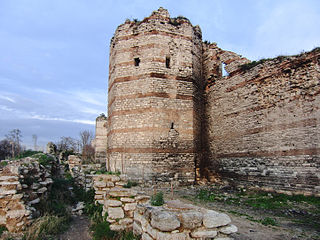
Theodosian Walls of Constantinople Source: Wikimedia

History of Rome Podcast Episode 138 The New Rome looks at the transformation of Byzantium from a small town with a population in the tens of thousands into the New Rome (‘Constantinople’ was a nickname, and it was only adopted formally later on). Many emperors had based themselves in places other than Rome, and Byzantium had the advantages of water on three sides (and thus difficult to besiege) and no religious baggage of other pagan gods. Just as in the early establishment of Rome, Constantine needed to augment its population, so he welcomed both the poor and the greedy as immigrants. It took six years to build. Quite apart from his building activities, though, Constantine embedded his power by killing off his own son Crispus. It’s not clear why, but his stepmother Fausta seems to have been involved. Then, Constantine executed his wife Fausta by locking her in a steam room. Realizing that killing your wife and son was not a good look, he sent his mother Helena on a tour of the East to identify important Christian sites. This was a very popular pilgrimage. In terms of policy and ideology, Constantine’s reign was an extension of Diocletian’s policies in terms of Divine Right of the emperor, the separation of the military and civil arms of government. Unlike Diocletian, he welcomed the role of the Senate but increased its size from 300 to 2000, thus diluting its power. He introduced a new solid gold coin which maintained its value for centuries, although there was runaway inflation with silver coins. He introduced a new and unpopular tax, payable four years in advance and embarked on an empire-wide building program involving both churches (e.g. The Old St Peters Basilica) and secular buildings. Episode 139 Wash Away Your Sins looks at Constantine’s military activity and succession plans. He continued the policy of Germanization of the empire and the army, and the failure of the Germans to integrate was to be one of the causes of the downfall of the empire. At this stage, his legions were successful against the rebellious tribes of the Rhine and the Danube. After killing off Crispus, he seasoned his remaining three sons by putting them in charge of the army. For some reason, he decided to pick a war with the Sassanids on the pretext of protecting Christians under their rule. But he died in Nicomedia, just after embarking on this battle, and got baptized just before he died. You might have thought that he would have been baptized earlier, but this could be because he wanted to be able to sin until the last minute, or more charitably, because he wanted to be pure as the driven snow when he actually died. His succession plans were messy: he left it to his three sons and two nephews. In assessing Constantine, he was certainly a transformational emperor and one of the most important historical figures in Western history. But he had his darker side too: the assassinations, the messy succession plans etc., so it’s a mixed record. Episode 140: My Three Sons. Well, three sons and two nephews isn’t going to end well. Constantius II started things off with the Massacre of the Princes at his father’s funeral, killing off most of his cousins and uncles from his aunt Theodora’s line over two days. Then the three boys (all named very similarly) Constantius, Constantine II and Constans began fighting among themselves, and getting involved on different sides of the doctrinal battles going on in the Christian church,. In the end Constantine II died in an ambush, leaving just two, Constantius in charge of the East and Constans in charge of the West.

Australia If You’re Listening. Episode 7 The Countdown on Coal Fired Power was a cracker. It starts off with the South Australian tornado in 2016 that saw electricity pylons scattered like pick-up-sticks and which was instantly blamed on renewable energy. In fact, whenever there is a power blackout, politicians in Australia and around the world tend to blame renewables. The reality is that it is the old coal-powered stations that are falling over, with near misses and disasters like the Callied Turbine failure outside of Biloela in Queensland, and the Hazelwood fires that blanketed the La Trobe Valley in smoke in 2014. This was a really good episode.

Conversations (ABC) In A History of War, Richard Fidler (who is such a good interviewer) spoke with historian Gwynne Dyer, who has recently released The Shortest History of War. I was going to give this book a miss because I thought that it would be all about military strategy, but good historian as Dyer is, he takes a much broader approach, integrating history, technology, sociology and psychology. Interesting.

Australian Book Review Frank Bongiorno on enlarging our diminished sense of political leadership looks at the elevation of the political operative and the breakdown of the party system. He points to the Australian of the Year award as an alternative form of political leadership, where in recent years the winners have been ahead of paid politicians. This was recorded prior to the election, and Frank Bongiorno is always worth listening to.

I hear with my little ear: Podcasts 9-16 May 2022

History of Rome Podcast Episode 135 Brothers in Name Only sees Constantine and Licinius dividing up the Empire following the death of Maximinus Daia in 313. It was similar to Octavian and Anthony, way back in Episode 47. Licinius was engaged in a contest with those ever-troublesome Sassanids over Armenia, and Constantine was involved with the Christian church which faced its own questions over what to do with the bishops who had collaborated with the Roman authorities during the Persecution. Bishop Donatus from Africa believed that they should not be admitted back into the church because they were ‘traditors‘. The Donatists (as they came to be called) were often over-ruled by those in the church who took a more forgiving line, so they repeatedly appealed to Constantine to intervene on their behalf. However Constantine emphasized unity over doctrine, as we will see at the Council of Arles. Meanwhile Licinius’ wife (who just happened to be Constantine’s sister) gave birth to a son, so the question of succession arose again. Constantine championed his own son Crispus. Eventually Constantine and Licinius met in battle. Constantine won, and restored the Tetrarchy by appointing two junior emperors- VERY junior, because two of them were babies. Episode 136 Let This Be Our Final Battle sees Constantine’s wife Faustus giving birth to more sons, while Constantine was becoming increasingly overt in his Christianity. Licinius and Constantine met in battle again in 324 CE and this time Constantine triumphed and for the first time in 40 years, Rome was ruled by just the one emperor. Licinius had ruled for 16 turbulent years, and he died in suspicious circumstances in exile. Constantine’s son Crispus came to a bad end in 326CE too, executed on his father’s orders (did he have an affair with his step-mother? Or was it the Wicked Stepmother’s Revenge -again?). Episode 137 The Christian Emperor sees Constantine stepping into his Christianity. He banned pagan worship, and returned property to Christians who had had it confiscated (but this time he didn’t recompense the people who had bought the confiscated goods- he only offered to pardon them). All Constantine wanted was a united church

Australia If You’re Listening Episode 6: Can We Keep Digging for Energy? (ABC) punctures the idea that CCS is going to solve our problems. The irony is that CCS and nuclear power will only ever be feasible if there is a price on carbon- which of course the Liberal/National government has made such a toxic topic. Gas, meanwhile, has been and will continue to be only a small part of our energy mix. However, back-tracking away from an available power source is something that humans have never done before.

In Our Time Early Christian martyrdom. (BBC) With Candida Moss (Edward Cadbury Professor of Theology at the University of Birmingham), Kate Cooper (Professor of History at Royal Holloway, University of London) and James Corke-Webster (Senior Lecturer in Classics, History and Liberal Arts at King’s College London). This episode fits in quite well with my History of Rome podcasts. By 300 CE, about 10% of Romans were Christians when The Great Persecution started with Emperor Diocletian in 303 AD and lasted around eight years. Much of this persecution sprang from an idea that Roman society had to get back to a good relationship with its own Roman gods. It is probably more correct to speak of “Christianities” (plural), and until about 90 CE, as far as the Romans were concerned, Christians were indistinguishable from Jews. Particular attention is paid to Ignatius and Polycarpus, two bishops, and the female Perpetua of Carthage.”Dying for a good cause” was an important idea in Roman society (after all, lots of Roman worthies committed suicide to avoid disgrace), and the idea of a “good death”, especially for a Christian slave, involved just a few hours of pain for the promise of eternal life.

The History Listen (ABC) Buried Treasure: the story of Lake Pedder. Fifty years ago, despite protests, Lake Pedder was flooded to provide hydro-electric power as part of Eric “Electric” Reece’s grand hydro-electric plan. This episode features Rima Truchanas, whose own life is deeply tied to Lake Pedder, after her parents Melva and the photographer Olegas Truchanas joined the campaign to stop it being flooded. Olegas’ photographs were shown at slide shows around Australia, as a way of increasing awareness of this amazing sand-fringed glacial lake. But flooded it was, and six years later there were plans to build another dam on the Franklin River – and this time the protests were heeded. Amazingly, there are now suggestions that Lake Pedder could be rehabilitated as part of the UN Decade of Ecosystem Restoration. I don’t really think that it will happen, given the emphasis on hydro-electricity today.

Things Fell Apart (BBC Radio 4) Episode 5: A Scottish Jewish Joke takes us back to the very early days of the internet in 1988 when a software designer, Brad Templeton, uploaded onto a message board a joke in poor taste. The joke was chosen randomly from jokes that were sent to him, and as it turned out, it appeared on the anniversary of Kristalnacht. An MIT academic complained about the joke and tried to get him sacked and banned from Usenet. Stanford University, through which he was able to gain access to the internet, banned the page, explaining that they wanted to value people over caricatures, even if that was at the expense of free speech. John McArthur, a professor of Artificial Intelligence started a petition, arguing that we find the limits of free speech by running into the walls. And this is the Internet as we know it today.

Stuff They Don’t Want You to Know The ‘State’ of Hawaii: Union or Occupation On Foreign Correspondent the other night, they had a program ‘Keep Hawaii Hawaiian’ about the struggle of native Hawaiians for land, language and culture (that sounds familiar). This program gives a really good analysis of the 1893 coup d’etat against Queen Liliʻuokalani by predominantly white landowners in Hawaii, overseen by the U.S.S. Boston which just happened to be moored nearby. The coup was opposed by President Grover Cleveland but a joint sitting of Congress approved it. As recently as 2018 it is still being questioned at UN level. Very interesting- I wonder how many American school kids know about it?

I hear with my little ear: Podcasts 25-30 April 2022

History of Rome Podcast. Episode 129 Abdication. Well, Diocletian had done all that he wanted to do and now all he had to do was work out a transition plan, so that there would be a stable tetrarchy in place to cover the whole of the Roman Empire. Really, although it was called a tetrarchy, it was really two Caesars (junior emperors) and two Augusti, one of whom took the lead- in this case, Diocletian. In Diocletian’s plan, each Augustus would rule for twenty years, then abdicate, the two junior emperors would move up to be Augusti and two new junior emperors would take their place. Simple, eh? Problem was, if he was going to keep the 2X2 structure, he would have to persuade Maximian to retire at the same time, which he managed to do. Galerius and Constantius stepped up, but who was to take their place as junior emperors? Episode 130 Lost in Transition Everyone expected that Constantine and Maxentius, as sons of reigning emperors would be placed in the vacancies, but Diocletian wanted to break the idea of hereditary emperors. So he looked elsewhere. Instead of the hereditary sons, Severus and Maximinus Daza were declared junior emperors. Then Maxentius (the son of Maximian) revolted; Maximian arranged for Severus to be killed; Galerius had to slink out of Italy, and Constantine was lurking up in the north. This is all very confusing- all these Maxes – the names are too similar. Anyway, it’s a stuff-up. Episode 131 The New Game in Town. When Severus was killed, Galerius arranged for his friend Licinius to be appointed and catapulted him up to be Augustus without serving the requisite time as Caesar. Old Man Maximian argued with his son Maxentius, and ended up seeking refuge with his son-in-law Constantine. It was such a mess that they even asked Diocletian to come back, but he said that he was happy tending his cabbages. But then Maximian mounted a come-back against Constantine, who defeated him and was very angry, exhorting him to ‘do the right thing’ and kill himself- which he did. Even though Maxentius and his father weren’t talking, Maxentius vowed to avenge his father’s honour. Then Galerius got sick and smelly and died. This is just getting silly now.

Rear Vision (ABC) The Greens- politics and the environment. I was really impressed by Adam Bandt’s address to the Press Club, and I’m uneasy about the talking-out-of-both-sides-of-your-mouth about the fossil-fuel industry from the ALP. This is the history of the Greens, starting from its roots in the Nuclear Disarmament Party. It put up two candidates for the Senate: Peter Garrett (who was expected to win) and Jo Valentine (who wasn’t). But it didn’t turn out that way, and when Valentine won she distanced herself from the NDP who wanted to tell her how to vote. In the 1970s, Greens parties arose across the world, especially in Europe, and there was an international network of Greens parties. Up until now, the Greens were state-based parties but in 1992 the Federal Green party was formed, after it had sorted out some thorny constitutional problems. It adopted consensus decision making (which was found to be very unwieldy) , the right of a conscience vote for MPs and proscription (i.e. members couldn’t belong to another party). The state parties continued, each with a different flavour. In NSW there were links with the BLF and the socialist parties and an emphasis on environmentalism and conservation; in Tasmania it was about wilderness, damming the Franklin and opposing the Wesley Vale pulp mill, and WA kept its anti-nuclear movement links. Milne rejected Rudd’s climate policy because it locked-in failure: a big judgment call that has embittered many ever since. When the Greens supported Gillard’s minority government, they provided stable support in Senate which contributed to the heavy slate of legislation that the government actually passed.

Australia If You’re Listening (ABC) Episode 4: the decade when climate change became a culture war. This episode picks up on Judith Brett’s contention in The Coal Curse that the mining industry and its lobbyists cut their teeth on the indigenous land rights issue. Hugh Morgan, former CEO of Western Mining Corporation seeded right-wing think tanks like the IPA which, after de-fanging land rights legislation then turned their attention to casting doubt on climate change. When Al Gore came out so strongly for climate change in An Inconvenient Truth, the link was made between Democratic/Labor/Progressive politics and calls for action- and the converse Liberal/Republican/Conservative calls for skepticism.

Things Fell Apart. A Miracle. Tammy Faye Bakker was a wildly successful tele-evangelist, who along with her husband Jim ran the Praise the Lord Ministry. In 1985 she conducted an interview on her ‘Tammy’s House Party’ program with Steve Peters, a man gravely ill with AIDS. Although Tammy Faye’s questions were clumsy and bordering on offensive, for many evangelical Christians it was the first time that they had been exposed to the human face of AIDS. In a twist of fate, after the fall of the PTL empire, Tammy Faye became a gay icon.

War on Truth (BBC). My Son is the Snake Island Hero has an interview with Tetyana, the mother of the Russian soldier who told the Russian warship Moskva to go fuck itself (an interesting visual image). At first she was told that all the Ukrainian soldiers had died, but the Russians accused Ukraine of misinformation as they were, indeed, alive and part of a prisoner swap. Then the Moskva itself sank – Russian say because of fire; Ukrainians say because of attack. The Snake Island soldiers are now depicted on a stamp.

The Explanation (BBC) Understanding the rise of Boko Haram. The journalist Mayeni Jones explains that Nigeria is geographically and politically divided into two parts. The South is wealthy, Christian and humid: the North is poor, arid and Muslim. From 1960s with the granting of independence through to 1999 Nigeria was led by a military dictatorship, but the corruption continued under democratic government. In July 2009 Boko Haram burst onto the scene. Led by Muhummed Yusuf, ‘Boko Haram’, literally means ‘Western Education is forbidden. He was arrested and killed by the police, which just made him a martyr. He was replaced by Abubakr Shekau in 2010, and Boko Haram executed a car bombing inside the UN compound. The first school kidnapping was almost by chance. They were actually looking for a brick making machine, and the girls were there and they took them. In 2021 Abubakr Shekau blew himself up when surrounded by West African Islamic State fighters. Whether it is Al-Qaeda IS or any other terrorist group, there is a huge disaffected young population in Nigeria to draw upon, and the structural problems remain.

Revolutions Podcast Having listened to Mike Duncan talking about the History of Rome (see above), it felt strange to tune back into his Revolutions Podcast, where he’s up to episode 95 of the Russian Revolution. I have no intention of listening to the rest of them (although I did start, years ago), but Episode 95: Russian Empire, Soviet Empire is interesting in light of the Ukraine situation today. He looks at the year 1921, when Russia saw its western regions peeling off into independent (although still heavily influenced) countries like Lithuania, Finland, Ukraine etc. The trade treaty that Russia signed with Great Britain in 1921 conferred de-facto recognition, although US held out until 1933 before recognizing the Soviet Union. Meanwhile Trotsky suggested that because it was clear that the revolution wasn’t going to spread throughout Europe, the Soviet Union turn to Eur-Asia and foment revolution as an attack on colonialism. He goes through the -stans, and Russian involvement, and interestingly spends quite some time on Georgia, where the Mensheviks had been very strong. (I watched a Foreign Correspondent program last night about how, since the Ukrainian invasion, many Russian dissidents have gone to Georgia where the people have no great love for Russia, although their government in ambivalent). As Duncan says, 1921 is almost a potted summary of the whole revolution (and it saves you listening to the 94 preceding episodes)

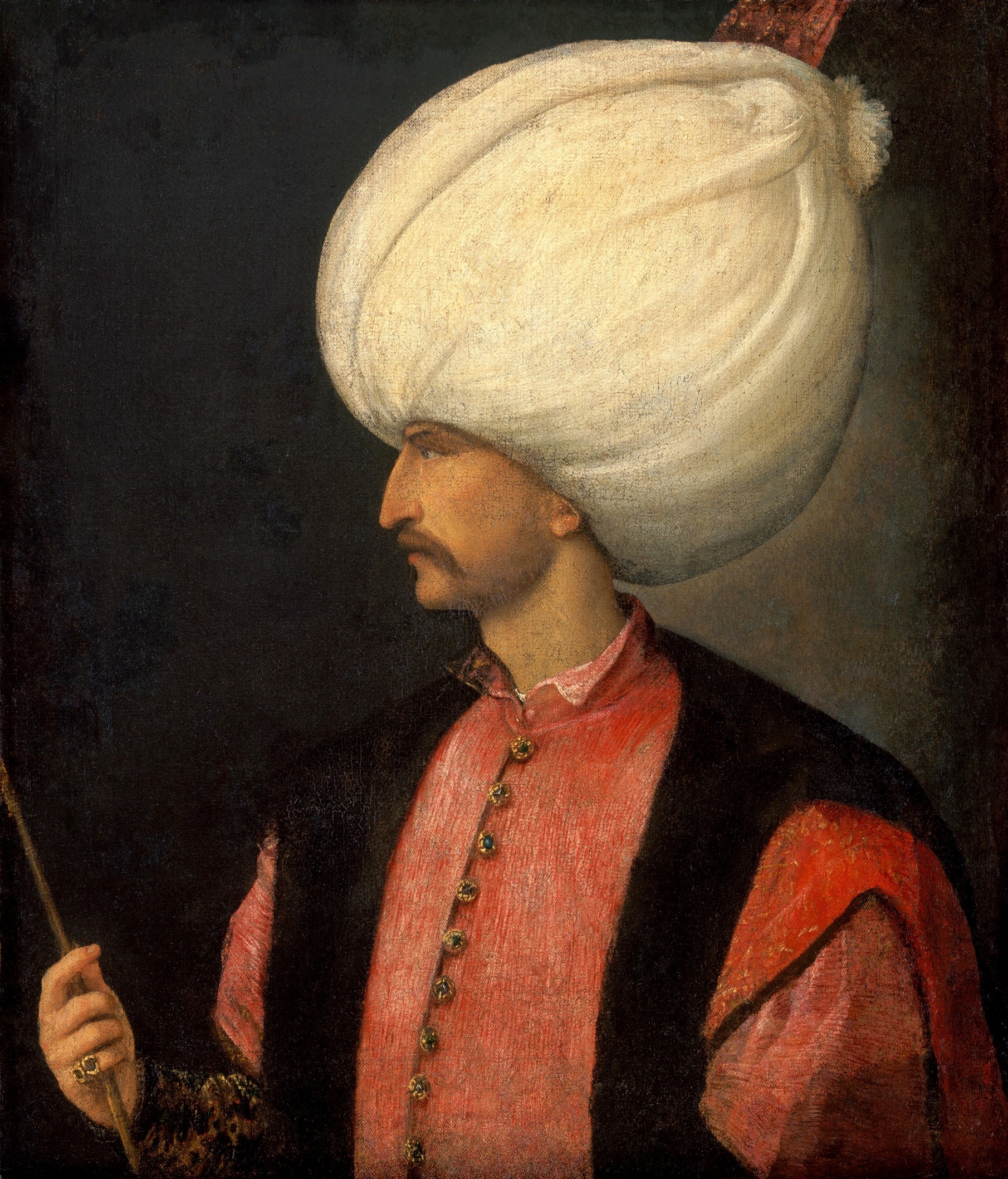
Emperor Suleiman the Magnificent

Start the Week (BBC) An interesting episode in The Age of the Strongman Leader, featuring Gideon Rachman, author of The Age of the Strongman: How the Cult of the Leader Threatens Democracy Around the World, Judy Dempsey who has written a lot on Angela Merkel, and Christopher de Bellaigue, author of The Lion House: The Coming of a King about Suleiman the Magnificent. This last title might seem a bit out of place, but this discussion talks about the phenomenon of the ‘strongman’ across history. One of them (Rachman?- the two male voices were similar) identified four qualities of the strongman 1. Cult of personality 2. Nostalgic nationalism, looking backwards 3. Contempt for the rule of law (although at first, they might have championed the rule of law to obtain power, but then subverted it) 4. Gender- mainly men. Merkel doesn’t fit this pattern, but other powerful women in politics are often the wives or daughters of strongmen. The modern strongmen they discuss use the democratic system, but then subvert it by encouraging polarization. The use of history by these strongmen is selective- for example, in December 2021 Putin’s courts put an end to the Memorial Project which documented the atrocities of the Stalin era. They also spoke about the strongmens’ need for large rallies – and no doubt May 9 will be such an occasion for Putin this year.

I hear with my little ear: Podcasts 17-24 April 2022

History of Rome Podcast Episode 126 All the Kings Men deals with Diocletian’s reorganization of the government, something which had not occurred for a long time because of the increasing militarization of society. With the Tetrarchy, it meant that there could be four times more oversight of government activity. The empire now comprised over 100 provinces, and Diocletian was insistent that the governors do more in their own patch, especially in relation to the administration of justice. He introduced the idea of twelve dioceses, each headed by a vicar, in order to implement empire-wide change. He made Italy and Egypt equal to the other provinces in terms of taxation and expenditure, although he did carve out a special place for the city of Rome. Administrators were drawn exclusively from the equestrian class. The Praetorian Prefect was top of the bureaucratic structure, and acted as a type of vice-governor. There was a corresponding change in the status of emperor. He was no longer the First Citizen: there was now The Ruler and The Ruled.

Episode 127 Commanding the Empire. Rome’s economy was in disarray when Diocletian came to power and he initiated major overhauls to get the system running again. He had four main reforms. First, he attempted to stabilize the economy by issuing new standardized coins of copper, silver and gold, but he didn’t recall enough of the old, debased coinage so this didn’t work. Second, he re-organized the tax structure based on the old army method of requisition. He drew up Tables of Equivalency for a ‘unit of tax’, so tax payments could be made in kind, based on what the tax payer had access to. Third, he calcified the professions by insisting on compulsory, hereditary guilds, so that from generation to generation, people had to stay in the same trade. He also stopped migration- and yes, we’re getting into pre-feudal ideas here. Finally, he issued an Edict on Prices where he catalogued everything that could possibly be sold, and set a maximum price for it. Punishment by death awaited those who overcharged, but it ended up being unenforcable. So old Diocletian really is moving the empire onto a more rational, pre-feudal basis and he was one of the most transformative of the emperors. But- there’s always a ‘but….

And here it comes in Episode 128 The Great Persecution.For the first 15 years of Diocletian’s rule, he had instituted great changes across the empire- some resisted, others accepted. But when he wanted an oracle to read his future, he was told that the gods couldn’t get through. Some said that it was because Christians had made the sign of the cross in the imperial palace. So he decided to deal with the increasing Christian movement by insisting that everyone make a sacrifice to Jupiter, and did the same in the army. This was just the start. At this point, Mike Duncan stops and backtracks to give a potted history of Christianity- and he does a pretty good job of doing so, given the eagle eyes of his Christian commenters on his webpage. The early church in the 1st Century CE had to sort out what to do about the Gentiles who wanted to join- whether to go ‘big tent’ or ‘little tent’. ‘Big tent’ won. In 2C CE the original disciples and apostles had all passed away, and the church had become decentralized with bishops who often disagreed with each other. After the fall of Jerusalem in 70 CE, the Christians did not join in the Jewish Wars of 130 CE and although the Romans had deferred to the antiquity of Judaism, this did not extend to the newly-formed Christians. The Christian Church endured the same chaos as everyone else in the tumultuous 3rd Century CE. Emperor Trajan had persecuted Christians in the 2nd Century and Decius did so in too in the 3rd Century. Within the Christian church itself, there was a split between those who acquiesced to Roman pressure and those who resisted. Between the years 260 and 300, the stigma of being Christian became muted, and Christianity began to spread across social groups to about 10% of the population (usually in urban centres, which made it seem even more prominent). By this time it was the largest monotheistic religion in the Empire, and it was accumulating wealth and building dedicated churches. It was becoming a threat to the status quo. In 302-3 the persecution began again. Galerius may have been the driving force (or that might just be anti-Galerius propaganda). In 303 Diocletian let the hardliners off the leash and they razed churches, burned scriptures and tortured and killed Christians who refused to recant. In the summer of 303, bishops and deacons were arrested, and the jails were emptied of regular prisoners to make room for them. However, Roman soldiers themselves often turned a blind eye, and Constantinus wanted nothing to do with it. Citizens were resisting too, because they saw Christians as harmless, taxpaying citizens. The persecution was dropped by 311 when Galerius realized the advantages in doing so, especially with the rise of Constantine the Great. All in all, a bad and bloody policy.

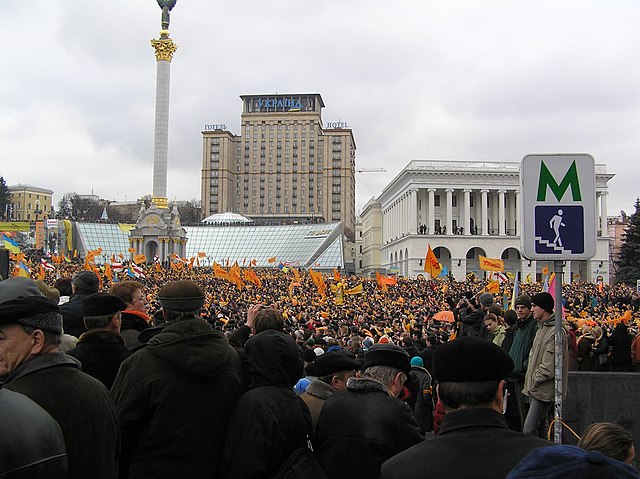
The Documentary (BBC) Understanding the long history between Russia and Ukraine is actually part of the BBC’s ‘The Explanation’ series. Here Claire Graham talks to former BBC foreign correspondent Kevin Connolly about what has historically bound Russia and Ukraine together, and what has pulled them apart. He points out that the Russ empire stretched from the Baltic to the Black Sea, and this is more or less the sphere of interest that Putin is exerting pressure over. He goes back to the Orange Revolution in 2004 with the rather confusing election between Viktor Yushchenko and Viktor Yanukovych (it’s sounding like a Fast Forward ‘In Moscow Tonight’ episode) – and, I’d forgotten about this- the opposition leader Yushchenko suffering dioxin poisoning. He reminds us of the mistaken shooting down of the Malaysian Airlines flight over Ukraine, and the conflict in the Donbass region where the Ukrainian forces took the offensive, both of which highlighted Putin’s impunit,. Putin denied military involvement in Ukraine until Feb 2022… and then we all know what happened next.

The Real Story (BBC) France’s Place in the World was recorded on 12 February, before Putin invaded Ukraine. It features Jacques Rupnik( Research Professor at CERI, Science Po, in Paris); Dominique Moïsi (French political scientist and a special advisor at l’Institut Montaigne, a think tank in Paris) and Catherine Nicholson – (European Affairs Editor for France 24). At this stage, Macron was in Russia, engaged in shuttle diplomacy between Russia and Ukraine. The commentators discussed this diplomatic move (which they all agreed was ‘bold’) by Macron , the youngest French president, who memorably declared that ‘Europe is brain dead’. They pointed out that Macron is operating in a vacuum after the resignation of Merkel and Brexit. They suggest that perhaps Macron is thinking of the Finlandization of Ukraine (although even Finland is rethinking its position at the moment). They discuss France’s anger over AUKUS- disappointment with U.S. but real anger at UK and Australia (we get a mention!)

Then, just before the French elections this weekend, I listed to The Appeal of the French far-right, featuring Nonna Mayer – (A CNRS Research Director Emerita at the Centre for European Studies and Comparative Politics, Sciences Po), Jean-Yves Camus – (Senior Fellow at the Centre for Analysis of the Radical Right (CARR) and Christine Ockrent – (Journalist and broadcaster). When asked when they first became aware of the French far-right, two answered that became interested in 2002 when Marine Le Pen’s father Jean-Marie Le Pen reached the second round of voting; the other identified 1984 when Jean-Marie Le Pen became one of the first MPs to the European Parliament. Marine Le Pen started off as a moderate, and expelled many of the old fascists attached to her father’s National Front. They suggest that the core of her program hasn’t changed, but she has turned arguments about laicite (i.e. secularity), women’s rights, gay rights, Jewish rights, against the left by arguing that by restricting Muslim immigration will defend these rights. She wants to change the constitution by referendum (which is illegal). The yellow vests, they suggest, emerged from a real anger about purchase power and the need to be heard. Le Pen is not necessarily pro-Russian, but does believe that ‘traditional values’ apply there, although her beliefs are more closely aligned with Hungary and Poland. (Not a reassuring thought). One of the commentators commented on the gender aspect of this presidential run-off-something I hadn’t thought much about.

Archive on 4 (BBC) I’ve been very much aware of the strong visuals coming from the war in Ukraine. Not only is President Zelensky very much aware of packaging himself and his message individually for each country that he is addressing, but we have so much video footage as well. But wariness over disinformation is now so deep-seated that I find myself wondering whether I am looking at fakes or not, and the steady stream of Russian denials of things that are patently obvious makes things even more unsettling. War on Truth looks at the disinformation being purveyed through Russian television, and speaks to bloggers and influencers, mainly from the Ukrainian side, and the pile-on that has followed videos and postings showing life in Ukraine today. It unpacks the story of the pregnant woman filmed after the bombing of the maternity hospital, and the way that both sides are packaging ‘content’ to be picked up and broadcast further.

Nothing on TV Truth be told, there hasn’t been much action on the ‘Nothing on TV’ podcast either, with the episode Tin-kettling recorded in June 2019 (although at least history podcasts don’t date). Once she started looking into it, Robyn Annear found many, many references to tin-kettling. Tin-kettling in Europe sprang from the tradition of charivari, which was a way of expressing moral disapproval of things like wife-beating or marrying too soon after the death of a spouse. In Australia, it seems to have been a more raucous, alcohol-fuelled event, often linked with weddings although the protagonists often ended up in court. It seemed to have been particularly prevalent in areas where Cornish miners had settled, and the ‘tin kettle’ and saucepan were soon replaced with kerosene tins filled with rocks. By the twentieth century, it seems to have been tamed somewhat into some good natured fun.

Australia If You’re Listening. (ABC) In Episode 3 How Long Will the World Want our Coal? Matt Bevan turns to look at India, and its demand for coal and the involvement of the big mining companies here in meeting that demand. In particular it looks at the Galilee Basin, and Adani and the arguments that the fossil-fuel lobby mounts in trying to protect its product and extort more assistance from state and commonwealth governments.

I hear with my little ear: Podcasts 9-16 April 2022

History of Rome Podcast Episode 123 The Tetrarachy We had two emperors before (Diocletian and Maximian) and now it was about to become four with the addition of Constantius and Galerius in 293AD. Mike Duncan makes the rather large claim that the years of the Tetrarachy were amongst the most important in Rome’s history, laying down the ground rules for late antiquity. It does, however, cause a narrative problem for Duncan as a podcaster, because now there are 4 centres of power. The self-elected ’emperor’ Carausius was still sitting over in Britain, but before Diocletian and Maximian could confront him, they needed to make sure that the Germanic tribes had been pacified first. However, Maximian failed to retake Britain in 289 AD. So who were these other new emperors: Constantius and Galerius? Constantius had married Maximian’s daughter, and we really don’t know much about Galerius. However, in 293 AD they were named as part of the Tetrarachy (although they didn’t call it that then) as junior partners. Constantius was given oversight of Gaul and Britain; Maximian had Spain, Africa and Italy; Galerius had responsibility for the Danube, and Diocletian concentrated on the Far East. However, these were not demarcated political units: Diocletian always emphasized unity.

Episode 124 The Tetrarachs at War sees Constantius embarking on the job of retaking Britain. It was a hard task, because Carausius was a very able ruler, and well supported. But not supported well enough, because he was assassinated by Allectus. During Maximian’s earlier attempt to take Britain, they landed in one place but this time Constantius landed his fleets in two places. Allectus didn’t have the popular support that Carausius had enjoyed, and the people were more frightened of the Franks than the Romans, so they were willingly reabsorbed back into the empire. Meanwhile, over on the Danube, Galerius was battling with the Sassanids, who were restive again and invaded Armenia and threatened Syria. The Romans were defeated at first. Diocletian had to leave the east to go to Egypt to quash a rebellion there, and Galerius had another go at the Sassanids in Armenia, and this time he had the last word.

Diocletian wrought many changes, but always with the aim of saving the old order, not introducing a new one. Episode 125 The Best Defence is a Good Defence starts off with a summary of the changes in the Roman military over time. From the citizen army, they had gone to the Maniple structure of fighting. Professional standing armies were introduced, but they mainly ended up fighting other Romans. Augustus introduced garrisons to protected what they had captured and Hadrian and Antoninus Pius built walls. From the 3rd century AD onwards, the numerical strength of invading forces outnumbered that of the Roman legions. So Diocletian introduced 4 changes: 1. He devised a ring of small militarized provinces around the empire 2. He separated the civilian and military career paths. No longer could you have a soldier emperor. Instead, there was a general and there was a governor- two men. 3. He divided the army into legions and static frontier militia. 4. instituted webs of defence across the empire (i.e. ‘defence in depth’) which would slow an opponent’s army down, causing it to lose memomentum although this argument, exemplified by Edward Luttwak’s work, is somewhat disputed and not well supported by archaeological evidence.

Rules Based Audio. This podcast is put out from the Lowy Institute. In Ukraine and the Future of the Rules Based Order, the presenter Ben Scott discusses the war in Ukraine and international law with Professor Fleur Johns and Dr Eve Massingham. They talk about the laws of war, economic sanctions, cyber operations, neutrality, international humanitarian law, and war crimes. Certainly it’s all more complex than it might appear at first. International law is just one tool that can be deployed in this situation, and even though it may not be particularly useful at the moment, it will bring accountability once hostilities have stopped, and will (hopefully) be useful in controlling behaviour in the future (e.g. Ukraine asking for guarantees of security). Cyber war is a new complication (i.e. it is not legal to give information to direct an attack), and sanctions using electronic banking is another new horizon. It was surprising to learn what is legal under international war, and what is not.

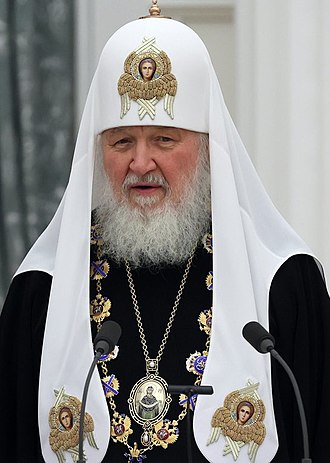
Patriarch Kirill (Wikimedia)

God Forbid (ABC) The March 20 episode Ukraine and Russia: religion and the politics of war is well worth listening to (and I did- three times, because I was listening to it in bed and I kept falling asleep!) With its own panel of speakers and drawing on interviews on other ABC radio programs, it looks at the Orthodox Church, Putin’s war against Ukraine, Patriarch Kirill of Moscow’s support of Putin and the resultant dissent amongst Orthodox clerics. Christianity came to the East in 988 and after the 2014 ‘Revolution of Dignity’ which expelled the pro-Russian president, in 2018 the Archbishop of Constantinople (the Orthodox church still calls it that), Bartholemew I, recognized a distinct, self-governing Orthodox Church in Ukraine. A study of people who identify as Orthodox in Ukraine in 2020 found that 34% identified with the Orthodox Church in Ukraine; 14% with the Moscow Patriarch and 28% as neither. Recently 300 Orthodox Clerics in Belurus, Spain and inside Russia signed a letter condemning Kirill’s tacit support for the invasion, and refusing to mention his name or commemorate the Moscow Patriarchy in their services. The speakers point out that both Russia and Ukraine are multi-cultural countries- Russia, for example has 35 official languages- with sizeable Muslim populations. Ukraine also has a large Jewish minority (and indeed Kyev and Odessa were important Jewish centres historically) and the Ukraine Greek Catholic Church is also prominent. While there are anti-Semitic groups in Ukraine, they also operate throughout Europe and perhaps to a lesser extent in Ukraine than elsewhere. Well worth listening to- even three times!

Things Fell Apart (BBC) Episode 2: Dirty Books goes back to 1974 when a church minister’s wife in West Virginia challenged the board of education when they sent textbooks to support a new curriculum to her school. She read through all the books, and was offended by many things in them and encouraged other parents to join her in refusing them. But she may well have misinterpreted some of the things that offended her so much. Fast forward thirty years, and textbooks are still being challenged- this time for Critical Race Theory (in maths books, no less).

Emperors of Rome It’s Good Friday, so I thought that I would listen to the episode on Crucifixion. Episode CLXXXI Crucifixion, as you might expect, came with a content warning. Crucifixion was a much wider term than we might imagine, because people could be nailed to a stake, tree, plank etc and the ultimate cause of death was asphyxiation when it became too difficult to heave yourself up to breathe. It was a form of death only for slaves and enemies of Rome, not Roman citizens. Owners could crucify their slaves privately, or it could be a state punishment. As well as the gospels, which give a lot of detail, there are other sources as well: Seneca, Cicero, Josephus in written form, archaelogical evidence (e.g. an ankle bone in a Judea that had a nail through it), and graffiti. Crucifixion was formally abolished in 337 CE by Constantine, who felt that no ordinary mortal should die the same way as Jesus had done (not because it was a painful, cruel and slow death).

Australia If You’re Listening (ABC). Episode 2: How we became addicted to coal. I don’t know why I have been so slow to listen to each episode of this podcasts – perhaps because I thought I already knew all about it- but it really is excellent. The historian in me really liked this episode, which focusses on Newcastle, which was Australia’s first coal region. It deals with the coming and going of ‘the’ BHP (how quaint) (1915-1997) and Newcastle’s development into a coal port, even though the local coal was eventually exhausted. The program gives a really good description of the stagnation of the Australian economy as Australia, ‘the lucky country’, drifted into a heavily protected domestic economy that was only saved by the export of raw products like coal, especially to China. Historians featured include John Maynard from the University of Newcastle, and Judith Brett, author of the Quarterly Essay The Coal Curse (which I’m sure I have unopened on my bookshelf somewhere- might be time to open it.)

Travels Through Time In this episode The Last Emperor of Mexico, historian William Shawcross discusses Maximilian I of Mexico, who was appointed as Emperor of Mexico by Napoleon III as part of a French invasion of Mexico. After the Mexican War of Independence between 1810 and 1821 and Spain’s final relinquishment in 1836, there were still a lot of royalists in Mexico. After being wupped by the United States in the Mexican-American war in 1848, these royalists approached Archduke Maximilian of Austria, a stereotypical second son to become emperor of Mexico. In 1863, he consented to do so at the request of Napoleon III. William Shawcross chooses 1867 as his year of interest, starting on 13 February 1867 as Maximilian rides out with his Mexican troops (and not his far more experienced, European troops) to confront the guerrilla fighters led by General Benito Juarez. On May 15 1867, Querétaro. Maximilian is cornered in a shell-shattered former convent, beseiged by the Mexican guerillas, getting ready to break out. By 19 June 1867, it was all over, with Maximilian under arrest in another convent in Querétaro another convent, and -spoiler alert- executed by firing squad.