Category Archives: Podcasts 2022

I hear with my little ear: Podcasts 25-30 September 2022

Now and Then During the first lockdown, Heather Cox Richardson was one of my mainstays. I really enjoyed her American history podcast series, but they became increasingly specialized for her American audience, and more directed towards current events. She started a new series Now and Then with fellow historian Joanne Freeman, where they talk about current events and popular culture, and link them with historical events. In the episode Nostalgia and Political Power they discuss the role of nostalgia in American political history, from Puritan Jeremiads, to the 1913 Gettysburg and Fort Wagner reunions, to the emergence in the 1970s of a cultural obsession with the 1950s. All of these ostensibly ‘nostalgic’ events were very much framed in the politics of the moment.

Flightless Bird. After the first episode on Religion, I wasn’t sure if I was going to persist with this series, but I decided to lighten up and listen to the episode on Toilets. I must admit that I can’t remember this, but the water in American toilets is much higher than in other places in the world, largely because the system works by suction, and because of delicacy over ‘skid marks’. Germans prefer to be able to inspect their productions, so they use a little shelf in the toilet. America is remarkable for its lack of public toilets, running level with Botswana. The presenters then wade (verbally, thankfully) into the issue of male and female toilets. Not surprisingly, the (male) toilet architect they spoke to wants gender-free toilets, something that I ever hear few women agitating for.

Sydney Writers Festival. Having sat through the Queen’s funeral, and its unapologetic linking of Church and State in a highly ritualized and very polished performance of state power, it seemed an appropriate time to listen to the 2022 Sydney Writers Festival presentation on Church & State. Hosted by Tom Tilley, whose recent book looked at his escape from Pentecostalism, he was joined by interfaith minister Stephanie Dowrick and Elle Hardy, the author of Beyond Belief:How Pentecostalism is Taking Over the World. Dowrick was rather uncontrollable as a participant, and rather amusingly was intent on packing up and finishing up, after rambling on for the first part of the panel. She is in no doubt of the dangers of the pointy end of any religion.

The History Listen (ABC) One of the pleasures of my lockdown years has been playing the ukulele: such a happy, silly little instrument that cannot take itself seriously. In Play Your Way to Happiness, my favourite podcast historian Robyn Annear looks at the Hawaiian Steel Guitar which, like the ukulele, promised quick results and instant popularity! The Hawaiian Steel Guitar has a darker history. Invented in the 1880s in Hawaii, after American annexation music was the only way in which the indigenous Hawaiian language could be spoken and passed on. It spread across the world, coming to Australia in 1911, spurred by the highly entrepreneurial advertising and activity of Hawaiian Clubs, established throughout Australia (and the world).

History Extra. The Napoleon of Fleet Street is about Lord Northcliffe, the press baron who came from an impoverished background to dominate the British media of the early 20th century. Capitalizing on the literacy engendered by the 1870s education acts, he introduced snappy headlines and short paragraphs that revolutionized newspapers. He had very definite views on the way that England waged its First World War and meddled in politics. Sound familiar? Yes, because Keith Murdoch (Rupert’s father) was one of Northcliffe’s proteges. Features Andrew Roberts, who recently released The Chief: The Life of Lord Northcliffe, Britain’s Greatest Press Baron

Emperors of Rome. I’m missing my dose of Rome, so I’ve turned back to the very first episode of Emperors of Rome, produced by my alma mater La Trobe University. The series starts off with Julius Caesar. Episode 1 The Early Years of Caesar goes through the little that we know about his childhood. Unfortunately the first chapters of the two biographies of Caesar are missing, so it’s not much. But he was born into an elite family and given an elite education. Episode 2 Caesar the Politician sees him move into a political role, forming the First Triumvirate with Crassus (who was bankrolling him) and Pompey (to whom JC married his daughter, making Caesar Pompey’s father-in-law). Then he became Consul for his statutory year, then moved to Gaul as Pro-Consul. Gaul at that time consisted of Provence, a little bit of northern Italy and a small bit of Croatia. Episode 3 Caesar and Gaul looks at Caesar’s more expansive view of Gaul, which encompassed all of France, the Netherlands and Belgium, and eventually people took on this view as well. Vercingetorix tried, but failed, to unite the Gauls against Caesar, so he just marched on through and then turned to Britain as well. As far as Britain was concerned, the conquest of the sea in getting there was more important than the actual conquest itself. Episode 4 Caesar’s Triumph was really interesting, pointing out that a Triumph was actually a religious ritual to thank Jupiter for the victory, and difficult to achieve because it was the one moment when an emperor displayed both civil and religious power at the same time. Caesar extended his triumphs out over time, as a form of propaganda over his tussle with Pompey.

I hear with my little ear: Podcasts 17-24 September

London Review of Books. Are you over the wall-to-wall Queen’s funeral? I am. It was a good corrective to listen to Grief Totalitarianism, where James Butler and Florence Sutcliffe-Braithwaite pick up on Glen Newey’s phrase “Grief Totalitarianism” which describes the way that everything is put on hold during a period of mourning. The machinery of state that we have seen in brilliant colour over the last two weeks is asserting that “this is the way things have been and the way they are going to stay”. These two commentators (one of historian) discuss the state of Britain in a week when Britain lost both its Prime Minister and monarch, looking back to Thatcher’s Britain and forward to the prospect of Truss replicating it (or not). Interesting.

History This Week Saladin takes back the Holy City goes back to 1187CE when Saladin, the Sultan of Egypt has a decision to make. Will he invade Jerusalem, where the Crusader’s lader Balian of Ibelin, is threatening to blow up the joint (and thus go down in history as the Muslim leader who caused the destruction of the Dome of the Rock, one of Islam’s holiest sites) or will he let the Crusaders surrender and leave (even though the Crusaders didn’t show Muslims such mercy when they took possession of Jerusalem in 1099CE. What do you reckon happened? A good podcast that doesn’t presuppose any great knowledge of these events (which is good, because I don’t have much)

History Extra Dangerous Ideas and Scandalous Lives: Germany’s first Romantics focuses on the university town of Jena in the late 18th/early 19th century which attracted philosophers, scientists and writers. I must admit that I hadn’t heard of many of them except Novalis (and that was only because of Penelope Fitzgerald’s The Blue Flower) but they are very famous in German intellectual life, Andrea Wulf, author of Magnificent Rebels: The First Romantics and the Invention of the Self, assures us. Lots of tangled relationships and intellectual jealous ending up in tears, as you might expect. I would have enjoyed this more if I’d heard of any of them before.

A witch window. Source Wikimedia

99% Invisible continues on with its 500th episode (over episodes 501 and 502) with Vernacular Volume 2. This time they look at Witch Windows in Vermont, a window placed on the diagonal in an upper floor room (supposedly because witches can’t fly on the diagonal); concrete wheat silos in Minneapolis and ‘lanais’ (pronounced la-naze) in Florida, which actually originated in Hawaii. They just look like a big porch to me’

Democracy Sausage. I’ve just finished reading Joelle Gergis’ Humanity’s Moment. Here she talks about the book, and why she wrote it. The podcast is okay, but you’d be better off reading the book.

Flightless Bird (Armchair Expert). This podcast got a mention in last Saturday’s Age. Flightless Bird is a series presented by a New Zealand journalist who got stuck in America during the COVID lockdown and decided that he wanted to explore America through an outsider’s eyes. He is accompanied in his quest by Dax Shepard and Monica Padman (two Americans). They are young, foul-mouthed, chatty and not particularly well-educated. He starts off by launching into Religion– what is it with Americans and religion? He talks with Mike McHargue – a Baptist who became an atheist who then became a Christian again, drawing on studies of neurology and left and right brain thinking (interestingly, Karen Armstrong, who is much more well-educated, draws on similar studies). They talk about the concept of a State Church in UK and other European countries (and obviously non-conformism doesn’t come onto their radar, and they don’t seem particularly aware of the lack of an established church in Australian and NZ history). Don’t know if I’ll persist with this one.

I hear with my little ear: Podcasts 1-8 September 2022

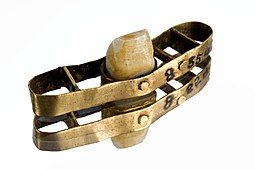
The Ancients (History Hit) So you thought that after finishing the History of Rome podcast, that would be it for the Romans? NO WAY as my little two-and-a-half-year-old grandson would say: I didn’t listen to over 70 hours of podcasts just for it to go in one ear and out the other! So, when I saw Prosthetics in Antiquity, that sounded interesting. Dr Jane Draycott from University of Glasgow explains that there was no actual word for ‘prosthesis’ in antiquity, although they did have wigs, artificial legs and feet, false teeth etc. Unlike today, when prostheses are made to look as natural as possible, in Ancient Greece and Rome it was felt that for a prosthesis to be lifelike was a form of deception and disguise. Instead, prostheses were personalized and, in the case of wealthy wearers, were a form of display. Many examples have been found in tombs, although wooden prostheses were less likely to survive than metal ones. There are also many references in literature to prostheses, although they were mentioned in passing, rather than described fully. Fascinating.

Emperors of Rome. I haven’t listened to this in a while- and Dr. Rhiannon Evans is back! Episode CXCVI – Fulvia looks at this aristocratic woman who lived in the late Roman Republic. Born into an important Plebian political dynasty, she was politically active in her own right too and married three times, most importantly to Marc Antony. She was directly involved in raising troops to fight for Antony in the Perusine War against Octavian (the future Emperor Augustus) in 41-40 BCE. Anthony didn’t appreciate her involvement, though, and he had her exiled. Cicero didn’t have a good word to say about her, and this has influenced the way historians have viewed her.

New Books NetworkNew Books in Latin American Studies. In this interview, Kate Phillips, the author of Bought and Sold: Scotland, Jamaica and Slavery claims that the Scots role in West Indian slavery is little known. This might be true of the man-in-the-street in Scotland, but it is not true of historians (and I note that Phillips is a retired social development specialist from Glasgow University, rather than a historian). Even here in Melbourne we have the city of Moreland changing its name because of its association with ‘Moreland’, a plantation owned by the family of Farquahar McCrae, who made no secret of their Scottishness. Apart from this questionable claim, however, Phillips has delved into the archives to draw a rich picture of plantation life for both Scots owners and overseers, and their enslaved workers. She points out that the field slave was more likely to be a young woman than a man, because men were generally trained to work as carpenters, bricklayers, mill workers etc. Ironically, after the Apprenticeship system broke down in the 1840s (and Scots slave-owners had applied for compensation for the loss of their ‘property’) formerly enslaved workers squatted on their old plantation lands, when their Scots ‘owners’ just went ‘home’ without selling the plantation. Now that Jamaica is becoming a tourist population, the descendants in Scotland are reaping the profits from these ‘abandoned’ properties.

History Workshop Podcast. Transnational Suffragettes starts off disastrously with about 2 minutes of the presenters all talking simultaneously over each other. However, the problem is soon resolved and a discussion follows, chaired by Australian historian now at Cambridge, Rosa Campbell, with James Keating a historian of nineteenth- and twentieth-century Australia and New Zealand and author of  Distant Sisters: Australasian Women and the International Struggle for the Vote, 1880–1914 and Sumita Mukherjee a historian of nineteenth and twentieth century transnationalism, mobility and migration in South Asia, Britain and the British Empire, with a particular focus on gender, and author of Indian Suffragettes: Female Identities and Transnational Networks. They discuss the transnational women’s movement at the start of the 20th century, where the hierarchy was: 1. White Women, 2. Indian and Japanese Women, 3. Black Women and 4. First Nations Women. Although included in international conferences, women from ‘The South’ were not able to get their concerns reflected in the agendas of these larger meetings, although they were able to develop networks. In Australia in particular, the women’s suffrage movement was still very much a state-based (as distinct from national) concern, which did not lend itself easily to international events. Nonetheless, in Aust and NZ, representatives disseminated international news through scrapbooks, newspaper articles, magic lantern shows and circulation of letters. He particularly mentions the Womens Christian Temperance Union, an international body which took an increased interest in Maori women when they achieved the vote alongside white women in NZ. Meanwhile, Indian suffragettes looked back past British colonialism to the Vedic tradition.

The History Listen (ABC) is running a 3-part series called ‘The Loveday Trilogy’ which looks at individuals who ended up in Loveday internment camp in South Australia during WW2. This episode, Francesco Fantin, is actually the second episode, but you don’t need to have listened to the first one. Fantin was born in Italy in 1901 to a working class family. Largely self-educated, he became an anarchist and socialist. When Mussolini came to power in 1922, Australia became a favoured destination for anti-fascists, and he emigrated to Australia and headed for the Queensland cane fields. There he became labour organizer, and he led a strike action to demand the burning of canefields to kill off rats and snakes, a health-and-safety act opposed by the sugar planters. But when he was arrested and interned in 1942, he found himself in a camp where the fascists outnumbered the anti-fascists, and his life was in just as much peril as it might have been in Italy.

The Documentary (BBC) Now that Boris has gone, The Documentary looks at Global Britain after Boris Johnson, in a rather too flattering episode, I feel. Given Johnson’s penchant for Shakespeare, it is presented as a play with 5 acts: 1. Brexit 2. Johnson meets Biden 3. Exit from Afghanistan 4. COP 26 and 5. Ukraine. Almost makes you forget what a twat he is.

History Hit. In A Short History of Humans, Dan Snow interviews economist Oded Galor, the founder of Unified Growth Theory and author of the recently released The Journey of Humanity: The Origins of Wealth and Inequality. He argues that for 99.9% of man’s history, there was no substantial change in the rate of man’s progress, as any technological advance led to an increase in population, which largely cancelled out an advances. However, during the last two hundred years, rapid technological change has led to increased complexity requiring more universal education, for which parents needed to reduce their family size. He sees the Industrial Revolution itself as a red herring, emphasizing acceleration of change, rather than innovation, and he largely discounts cultural and biographical factors in world history. However, he softens this later on in the interview when discussing why Western Europe became the centre of accelerating change. In counter-point to the example of China, he points to Western Europe’s cultural fluidity which led to competitive nationalism, and factors like geography, culture and institutions which affected the “take off” point from stagnation to growth. He suggests that these factors can be “designed into” development programs, leading generally to progressive policy in terms of education, human rights etc. He is very ‘economic’-y, seeing growth as an unqualified good, and in this interview, silent on the effect of climate change.

I hear with my little ear: Podcasts 25-31 August 2022

History of Rome. I’ve done it! I finished!! Episode 177 The Burning Ships sees the last attempt to tackle the Vandals in North Africa. Between 465 and 467 there was no emperor at all in the Western Empire after Severus died. Leo over in the East was too busy dealing with the Huns to pay much attention, and General Ricimer who was the real power behind the Western throne was happy for it to stay vacant. Once he turned his mind to it, Leo wanted Anthemius (who was a bit of a rival, and better off out of the way) while Genseric the Hun (over in North Africa) wanted Olybrius, probably as a way of using family connections to embed himself into the imperial family. Genseric recommenced pirate raids on Sicily and Italy, as a way of throwing his weight around. In response, Leo named Anthemius and sent him off to wage a big war of both the Western and Eastern empires against Genseric on three fronts. At first the Romans were victorious but then Genseric sent empty ships in amongst the Roman fleet and set them on fire. The Romans lost 600 ships in the resulting tumult. In 469CE Anthemius tried to retake Gaul, where the Goths were expanding their territory under King Euric. The Romano-British leader Riothamus was encouraged to invade from the Brittany Coast as part of the attack on the Goths- he may have been the legendary King Arthur (or not). Ricimer and Anthemius were on the brink of civil war, but they had a 12 month truce to fight the Goths unsuccessfully. When Civil War threatened again, Leo sent Olybrius to mediate between Athemius and Ricimer but, secretly, Leo was backing Anthemius and the letter exists to prove it.

Episode 178 Not with a Bang But a Whimper takes up when Leo’s secret letter was discovered. Finding that Leo was on Anthemius’ side, Ricimer and Olybrius killed Anthemius and Olybrius took his place. This made the Italian nobles and Genseric happy. But then Ricimer died, followed soon after by Olybrius. They were succeeded by Ricimer’s nephew Gundobad, King of the Burgundians, who killed Anthemius. Gundobad elevated Glycerius to the position of Western Roman Emperor, but he was not recognized by Emperor Leo in the East, who supported Julius Nepos as replacement instead. By now the Visigoths (Western Goths) and Ostrogoths (i.e. Eastern Goths) were getting restless. Then in 474 Emperor Leo, Julius Nepos’ backer, died and was succeeded by Leo II who was only six years old, with his father Zeno as the real power behind the throne. But then Leo II died too (was he murdered?) but Zeno was happy for Nepos to continue in his position. Glycerius surrendered in the face of overwhelming power and was made a Bishop (a favourite go-away measure). In 475CE came the rise of Orestes, a former Hun, who arranged a revolt against Nepos. Orestes’ son 14 year old son Romulus Augustulus was elevated but of course, he was a puppet too. There was a soldier uprising against Orestes, led by Odoacer. Orestes ended up dead with Romulus Augustulus deposed. And at that point it all got too hard and the Western Empire just faded away. So, in effect, we have gone full circle from Romulus (of Romulus and Remus fame) and ending with Romulus Augustulus.

Episode 179 The End! I got there! Or more to the point, Mike Duncan got there after recording an episode every Sunday for five years, generating 74 hours of content, after nearly faltering at Episode 33 (where he dealt with Marius and Sulla). The whole way through the series, he joked about ‘256 reasons why the Roman Empire fell’ but here he actually does give his summary of the reasons, under 6 (not 256) headings:

  1. Political factors. The Empire ended up a brittle farce, with poor emperors and a corrupt bureaucracy
  2. Economic factors. Inflation destroyed the middle class, and the poor began to see the State as a predator.
  3. Military factors. The Legions were in effect dead. Romans avoided military duty which means that the army was dependent on Germanic mercenaries
  4. Social factors (Mike Duncan’s personal favourite). Failure to integrate Germanic people, and the prejudice of the Italian aristocracy
  5. Religious factors. Duncan doesn’t accept Gibbons’ argument that Christianity led to the fall of the empire, but certainly there was increasing religious intolerance.
  6. Environmental factors. Between 250 and 550 CE there were fluctuations in the climate, with more famines and plagues.

So why didn’t the Eastern empire fall as well, instead surviving as the Byzantine Empire for the next 1000 years? Partially it was geography, with the Western Empire having to grapple with long Rhine and Danube frontiers. The East, on the other hand, dealt with the Sassanids who were at least a stable force. Second, the Eastern empire was wealthier because of its ties with India and China in the East. Third, there was the imperial apparatus itself. The East middle-class thrived, and imperial service was still seen as prestigious.

And there it ends. I can’t believe I’ve done it.

The Real Story. Salman Rushdie and the fatwa. I want to do something on this at our next Unitarian service in September, so I listened to this podcast carefully. Rushdie was born in ‘Bombay’ (which is the way he always refers to it) in 1947 and sent to England for his education. While a student at Cambridge University he first came across the story of the Satanic Verses, a set of verses disputed and later rejected by Islamic scholars. In his book The Satanic Verses he questions the sacred and divine, but he also gives the prophet and two of his wives pejorative names. However, he asks – how could one fictional book threaten Islam? The Prophet in Islam is a man, not a god. The fatwa was announced by a Shia cleric, and in itself is not consistent with Islam, where the only death sentence is for apostasy (i.e. a believer later rejecting the faith). One of the speakers in this program claims that the West has been naive about the proselytizing nature of Islam. In the UK, there was opposition to the book from the start, and the political response was interesting. The Labor Party announced that the book should not be reprinted: Margaret Thatcher, on the other hand, defended him. The speakers end by suggesting that the fatwa has become internalized amongst writers.

The Latin American History Podcast started a series on the conquest of Peru, but the last episode was in August 2021. I even wrote to the presenter (wondering if he was still even alive!) and yes, he is- but he is travelling in South America. So, Episode 3 The Conquest of Peru switched its focus from the Spaniards to the Inca, and here he called upon Nicholas Machinski from the A History of the Inca podcast. Unfortunately, the sound quality of Nicholas’ comments was really poor and hard to hear. Nonetheless, he clearly knows a great deal about Inca history. It was interesting to listen to this after just finishing the History of Rome podcast. In the 1520s, when the Spaniards arrived, the Inca were undergoing their own succession crisis after the death of the Emperor which culminated in a civil war between the claimants. The Inca Empire was at its largest at this time, stretching from parts of Colombia in the north, down to parts of Chile and from the Pacific Ocean to the Andes. As part of its expansion, if the leaders of conquered tribes pledged loyalty to the Inca ruler, they would be left in peace by the Inca authorities, but if they resisted they were forcibly shifted from their ancestral homes to another location. Nonetheless, there was a strong rebellious force underlying this Inca hegemony, and some groups were happy to join the Spaniards against the Inca. Smallpox was already present before the Spanish arrived. The Inca Army was huge (up to 100,000) and mobile because of its road network, but at the time of invasion it was poorly led and undisciplined. There was only one invading European force, so the Inca couldn’t play off European sides against each other as the Iroquois had done in North America with the English and French invaders.

Fifteen Minute History. Despite its name, this podcast from the University of Texas at Austin never quite manages to fit into fifteen minutes- twenty yes, but fifteen no. The Servant Girl Annihilator is a pretty old episode from 2018 where then-Ph D candidate Lauren Henly talks about a series of murders of several young women that occurred between Christmas 1884 and May 1885 in Austin Texas. They didn’t have the vocabulary to talk about a ‘serial murderer’ then, and it took a while for the concept of the same person committing a series of murders to catch on. At first, it was only Afro-American women who were killed, but then two white women were murdered as well. There was speculation that perhaps these were early murders committed by Jack the Ripper, who then migrated to England to continue his spree there (a largely discounted theory). Others have posited that the murderer was a young Afro American man called Nathan Elgin, exposed in a PBS special called “Solved” on account of a missing toe which matched a footprint with a missing toe. In her research, she does not describe the murders herself (instead using reports at the time) and concentrates on the victims and the vibrant African American community in which they lived.

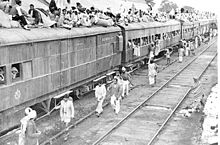
Wikimedia: A refugee special train at Ambala Station

History Hour (BBC) Seventy-Five Years since India’s Partition is a compilation of stories from an earlier series produced by the BBC to mark the seventieth anniversary. I’ve started listening to this earlier series too, called Partition Voices but I’m finding it a bit repetitive and you’re just as well off with the History Hour episode. The History Hour episode also discusses the death of Nehru and the Indian poet Rabindranath Tagore, became the first non-European to win a Nobel Prize for Literature. The stories about Partition are horrifying, on all sides, and although the migrants who fled to England didn’t particularly want to talk about it at the time (largely through shame), their children are more intent on finding out what happened. The attitudes of the British are appalling too, with one radio announcer declaring that both sides needed a “good hard smack on the nose” to stop the pre-Partition violence. Yes, that would do it.

Partition Voices (BBC) Actually, I take that back. I persevered with Partition Voices, and found it well worthwhile. However, I listened to it in the wrong order because that’s how it came out on BBC Sounds. The right order is: Division, Aftermath and Legacy. It’s quite sickening to hear the cossetted and oblivious views of English colonials living in India at the time in Episode 1; the violence is appalling in Episode 2 where both sides engage in ethnic cleansing; and Episode 3 shows the effect on later generations, a phenomenon noted with Holocaust survivor families, but not so much with ‘East Asians’ who, in British society, are lumped together despite this bloodied history.

I hear with my little ear: Podcasts 17-24 August 2022

History of Rome Podcast. I’m getting so close to the end that I can almost taste it! Episode 174 The Sack of Rome Part II We left off with the ascension of Petronius Maximus as emperor in 455AD. He ruled for 77 days only, and his main effect was to provoke the Vandals to sack Rome. As a way of cementing his legitimacy, he forced Eudoxia to marry him (after murdering her husband Valentinian) and wanted to marry his son off to Eudoxia’s daughter who was already betrothed to the son of the Vandal king Genseric. Genseric was not amused. On hearing that the Vandals were heading towards Rome, Petronius Maximus advised the resident of Rome to “run away!”, which they did, murdering him on the way. The Vandals sacked Rome for the second time over a period of two weeks, and although the name ‘Vandal’ has gone down in history for thoughtless destruction, perhaps it wasn’t as bad as it sounds- there is no archaeological evidence for wanton obliteration. Genseric went back to North Africa, taking Eudoxia with him. Meanwhile, the Gallo-Roman Avitus, who had been sent by Petronius Maximus to Theodoric II to get the support of the Goths, learned about Maximus’ death, and Theodoric suggested that Avitus become emperor. Theodoric might have thought that this was a good idea, but Emperor Marcian in the East wasn’t sure; Genseric started raiding again and the Italians were resentful about the ascent of the “Gallo-Roman” emperor. So Ricamer and Majorian deposed Avitus, but didn’t kill him immediately, making him Bishop of Piacenza instead, perhaps because they didn’t want Marcian to get angry, or to keep Gothic support.But then Marcian died anyway, and Avitus was killed soon after.

Episode 175 Trying to Take it All Back sees Majorian marching around trying to reassert Imperial authority over the provinces while Ricimer remained in Italy. Ricimer knew that he couldn’t become emperor in his own right because of his Germanic background so Majorian was proclaimed emperor with Ricimer behind the scenes. They wanted to “make the empire great again” and they reinstituted the navy and Majorian invaded Gaul and defeated the Goths. The Gallic nobles acquiesced when they found out that their tax debts would be waived. Majorian then turned his eyes to Spain, as a step in his broader plan of invading North Africa. But Genseric, knowing that they were coming, destroyed his own province Mauritania in a scorched-earth policy that would make an invasion difficult and infiltrated the ship-building port to destroy Majorian’s navy. The North African invasion was shelved. Ricamer and Majorian had a falling out, and Majorian was murdered on Ricimer’s orders.

Episode 176 The Quote Unquote Emperor. Well, the murder of Majorian didn’t go down well with a number of generals (especially Aegidius in Gaul and Marsellinus in Dalmatia) or the Vandal King Genseric in North Africa. Ricamer sent off old Agrippinis to his native Gaul, where he offered the Goths the region of Narbonne, which they jumped at because they had been wanting a Mediterranean port for ages. The rebel general Aegidius and Agrippinis met in battle, and Aegidius won. Meanwhile, the Vandals were still skirmishing and Genseric was starting to make Attilla-the-Hun type demands on the fortune of the Theodosian women that Genseric had taken back to North Africa with him, claiming that because he was protecting them, the fortune should go to him. After the murder of Majorian, Ricamer wanted someone pliable, so he appointed Emperor Severus, who was very weak and ended up dying anyway (possibly at Ricamer’s hand too). Ricamer took his sweet time in appointing a replacement.

Lives Less Ordinary (BBC) The Family That Went to War with a Dictatorship tells the story of Moshood Abiola, also known as MKO, a wealthy businessman who stood as presidential candidate in 1993, in the brief hiatus between military dictatorships in Nigeria. He was arrested and imprisoned for his efforts. His daughter Hafsat Abiola Costello and her mother agitated for his release, but both women paid a price, in different ways. This reminded me a bit of Gillian Slovo’s Every Secret Thing (my review here) in that politics can extol a high price from the family- and it certainly happened here.

New Books Network. Australian and New Zealand books don’t often feature in the New Books Network, so when Alastair Paton’s Of Marsupials and Men was featured, I decided to listen. I must admit that I hadn’t heard of this book, which is marketed as “the fascinating and often hilarious history of the men and women who dedicated their lives to understanding Australia’s native animals.” The author is a journalist rather than historian, and it sounds a rather breezy read, full of anecdotes. It seems to cover early attempts to draw animals, the acclimatization movement, collecting and sale of ‘exotic’ animals, and chapters on platypuses, sharks and snakes (not all of which are marsupials, the last time I looked). It sounds a pretty light read.

A narrow boat on one of Birmingham’s canals when we visited in July 2011

Archive on 4 (BBC). With the holding of the now-completed Commonwealth Games, Brum Britain looks at Birmingham, whose citizens hate being called the “second city”. It touches on the history of Birmingham, especially during the Industrial Revolution, but focuses mainly on the contribution of performers and comedians from Birmingham, including Ozzy Osbourne, Tony Hancock, Lenny Henry, and Julie Walters. Also thrown into the mix are Tolkien and Heavy Metal (Black Sabbath, Judas Priest, Led Zeppelin) to Duran Duran, UB40, and Peaky Blinders.

File on 4. Dementia: The Final Indignity. There’s no dignity in dementia, and it is exacerbated by the haste with which dementia patients are bundled into adult nappies and incontinence pants, often to make life easier for the carers who do not have the time or availability to take a frail older person to the toilet. This is particularly true when an older person is admitted to hospital. But the person behind the wish to go to the toilet is ignored, and the last shreds of dignity are often discarded. Very depressing.

I hear with my little ear: Podcasts 9-16 August 2022

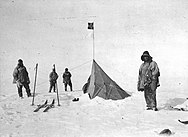
Robert F Scott. Wikimedia

The History Listen. Perhaps some things should only be on video, not audio. Like this podcast, Inexpressible Island, which has beautiful descriptions of Antarctica, but I wish I could actually see what they’re describing. I only know Raymond Priestly from the Uni of Melbourne building that bears his name, but he was one of the Northern Party that was part of Robert Falcon Scott’s ill-fated Terra Nova Expedition (1910–1913). Scott and his team perished, of course, but the Northern Party had a pretty rough time too, unable to be relieved because pack ice prevented ships reaching them, and spending literally months in a dark ice cave. They had to walk for five weeks to arrive back at their ship.

History of Rome. Episode 171 The Gathering Storm. The Huns were not so much about sacking the empire, but as extorting indemnity payments. Why would you wreck a functioning economic structure??- you’re better off leaving it there and just threatening them. Theodosius II agreed to pay the go-away money. Meanwhile, in the West, Aetius was determined to hold on to Gaul, Hispania and Italy. He defeated Theodoric the Goth, then the Frank king Clodio. Over in the east,Theodosius II died after falling from a horse, and his sister Pulcheria stepped into the vacuum (just as she had when he was a kid). This time she was forced to find a husband, so she chose Marcian, who was so nondescript that he wouldn’t cramp her style. In fact, she crowned him.

Episode 172 Showdown. Valentinian III’s older sister Honoria was supposed to be married off to Herculanus who was dull and predicatable. She was neither of these things, and she appealed to Attila the Hun to come and rescue her – well, that’s the story, anyway- it may well have been a pretext. Either way Attila invaded Gaul, and when Clodio died, Aetius and Attila backed different sons in the Frankish succession. Attila seemed to be playing mindgames with all sides, and sowing discontent amongst the different sides so that they wouldn’t unite against him. In 451 he crossed the Rhine and marched as far as Orleans until the people locked them out. Theodoric the Goth finally agreed that the Goths would join Aetius and perhaps 150,00 Roman/Goths and Huns faced off at the Battle of the Catalaunian Plains. The Huns had to retreat, and the Goths went home to choose a new King. After licking their wounds, the Huns invaded again in 452 this time, heading for the Po Valley. They razed Aquileia (a major town) completely and Emperor Valentinian fled from Ravenna back to Rome.

Episode 173 The Broken Bow. Attila headed for Milan and sacked it. Valentinian sent envoys, including Bishop Leo of Rome to seek peace and amazingly enough, Attila agreed to withdraw! Why? Well, the Huns didn’t really want land and they had to take all their plundered gold home, their supply lines were stretched, and Attila’s troops were suffering from disease. He was getting ready to invade the East when he died. Then there were a succession of deaths: Valentinian killed Aetius himself (even though he was the most successful general Rome had), perhaps as an act of pre-emptive self defence, then Valentinian was assassinated. Between 450 and 455 those indomitable women Galla Placidia and Aelia Pulcheria died too. Petronius Maximus, who had plotted Aetius’ death became Emperor. By now, it is the end of imperial dynasties in the West- now it’s just a series of “Last Emperors”. And at this point, Mike Duncan announces that he’s going to finish at 475 AD because it’s a good spot to finish AND because his wife is having a baby! (Who is, by now 10 years old, given that I’m listening to this 10 years too late!)

The Philosopher’s Zone (ABC) I don’t very often listen to this program but I was interested in this episode Simone de Beauvoir: becoming a woman that unpacks Simone de Beauvoir’s statement in The Second Sex that “One is not born, but rather becomes, a woman” – a statement that has acquired new meaning in recent years in transgender debates. The episode features Toril Moi, James B. Duke Professor of Literature and Romance Studies and Professor of English, Philosophy and Theatre Studies at Duke University. She points out that de Beauvoir personally never felt that she had been discriminated against, and it was only when she went back to the archives that she realized the historical discrimination against ‘the second sex’. The sex/gender distinction was a product of 1960s anglophone countries, and not even thought of in 1949 when she wrote The Second Sex. However, she thinks that de Beauvoir would be comfortable with the thought that all roles are evolving all the time.

History Hit Now that I’m drawing close to the end of my History of Rome series, I’m happy to backtrack on Roman history, and this episode of The Ancients: The Origins of Rome goes way, way back to Romulus and Remus.Professor Guy Bradley from Cardiff University points out that all of the sources that we have on early Rome were written seven centuries after the events in 8BCE, and so the distinction between mythology and history was muddied. Romulus and Remus were supposed to have been born in Alba Longa, but no evidence of the city prior to Rome exists, although there is pre-1000 BCE evidence of settlement in Rome itself, including walls and remains of the 8BCE Temple of Vesta. It is almost impossible to separate out Roman archaeological artefacts from those of surrounding cultures, and there are logistic difficulties in digging under Roman ruins to find anything from earlier settlement.

I hear with my little ear: Podcasts 1-8 August 2022

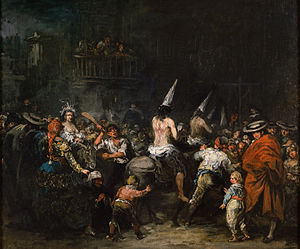
Source: Condenados por la Inquisición, de Eugenio Lucas (siglo XIX, Museo del Prado). Wikimedia

History This Week Convert or Leave goes back to July 31, 1492 when the Alhambra decree came into effect, requiring all Spanish Jews to either convert to Catholicism or leave Spain. The process actually started 100 years earlier when a program of ‘conversion’ began, whereby Jews were singled out for specific tax treatment unless they converted to Christianity. In a way, it was a victim of its own success, as huge numbers did convert, but they often continued to follow family practices that, while Jewish in origin, were not recognized as such- as far as they were concerned, it wasn’t religious: it was just the way they did things in their family. People were suspicious over whether they really had converted, and the tax base shrank because there were fewer Jews. The Inquisition had been around for a long time, but in the 1470s Ferdinand and Isabella put it under the control of the crown – literally, the ‘Spanish’ inquisition, rather than the papal one. In 1491 Torquemada went to Ferdinand and Isabella and suggested expulsion of the remaining Jews to solve the problem. The Alhambra decree was framed as a way of protecting the conversos (i.e. converted Jews) from the bad influence of continuing Jews- huh! The program finished off by talking about immigration and the way that fear is engendered whenever you have a large group of people who continue to congregate together, and doubts are cast on the authenticity of their new status.

Adelaide Writers Festival. The Ivanhoe Reading Circle read Gideon Haigh’s The Brilliant Boy this month. I read it only a few months ago, and I didn’t have time to re-read it. So I listened to Gideon Haigh instead, talking at the Adelaide Writers Festival. I was a bit disappointed, though, that so much time was spent chatting about cricket and Shane Warne. Still, a good way of reminding myself about the book without re-reading it.

Afternoon Light (Menzies Research Centre) I can hardly believe that I went to this website for this second podcast by Gideon Haigh The Brilliant Boy: Remembering the Achievements of Dr H. V. Evatt. True to its name, the Menzies Research Centre is a Liberal/Conservative centre, whose self-proclaimed mission is to “uphold and promote Sir Robert’s legacy and vision for Australia as a country of freedom, opportunity, enterprise, and individual dignity.” Menzies and Evatt were contemporaries in many ways: both of fairly humble origins, both scholarship boys, both lawyers, both politicians. But for many years, Evatt was Menzies’ punching-bag in Parliament, never becoming Prime Minister (as he expected he would do) let alone PM for a total of 19 years as Menzies did. Here Gideon Haigh is interviewed by Georgina Downer in an intelligent but rather gloating interview.

History of Rome Episode 168 The Rise of Aetius This is all getting terribly confusing, but let’s just take stock. In 425 the six-year old Valentinian III became the Western Emperor, a position he shared with the Eastern Emperor, his cousin Theodosius II. This looked united, but it wasn’t really- instead it was a series of different rival power centres. The Eastern empire based in Constantinople seemed more stable, but it still had the Sassanids to the East and the Huns to the north. The Western Empire was a mess, with the Franks in North East Gaul, the Goths in South West Gaul, the Vandals in Hispania, and Bonifatius acting like an independent warlord in North Africa. Valentinian and Theodosius were emperors, but the real power lay in the hands of two women, Valentinian’s mother Placidia in the west, and Theodosius’ sister Pulcheria in the east. Meanwhile, Aetius controlled tens of thousands of troops, and his loyalty was suspect. Aetius was a Roman general, who had an an ‘interesting’ start to his military career. Born in 391, between 405 and 408 he was kept as hostage at the court of Alaric I, king of the Visigoths, then after that was sent to the court of Uldin, king of the Huns. He seemed to swap sides a bit, and seemed to be rather devious in seeding false rumours to Valentinian’s mother and regent Galla Placidia, at the expense of another Roman general Bonifatius, who was based in North Africa, and a rival power with access to Galla Placidia’s ear. Bonifatius was busy dealing with the Vandals in North Africa (they used to say that he invited them in, but there’s doubt about that now) and the Vandals laid siege to Hippo, during which St Augustine, who was living there, died. Then Aetius and Bonfatius ended up fighting each other: Aetius was beaten and ran away to the Huns where he plotted his revenge with Rua, the King of the Huns. Bonifacius died of his injuries, and Aetius returned to Ravenna with his Hun army and took over all of Bonifacius’ lands, and married his widow (!). So now he was the most powerful soldier in the Western Empire – and one of the most important men in Roman history, at the last phase of its history.

Episode 169 Huns and Vandals and Goths, Oh My. For a number of years now the Huns had been a destabilizing force, but they pretty much stayed where they were. However, in the mid 420s under the new leadership of Attila and his brother Bleda, the Huns began issuing threats to invade Constantinople unless they received go-away money. It wasn’t just the Romans who were subject to this extortion: they threatened the Sassanids as well. In 431 Theodosius II sent his troops to North Africa to pacify the Vandals (which was really Valentinian’s problem) and then used them to kill the Burgundians. While they were off fighting, Theodosian issued the Theodosian Code, which codified all the laws since 331 AD (i.e. since Christian times), and this was to later form the basis of the Justinian Code. Meanwhile, the Goth king Theodoric wanted a Mediterranean port, and so he embarked on war again. In 439 the Vandals invaded Africa again and took over Carthage. Genseric (a Vandal) was accepted by the North Africans because the Romans had pretty much neglected North Africa anyway. The Vandals formed a navy and conquered the Mediterranean, and meanwhile the Huns were arising again.

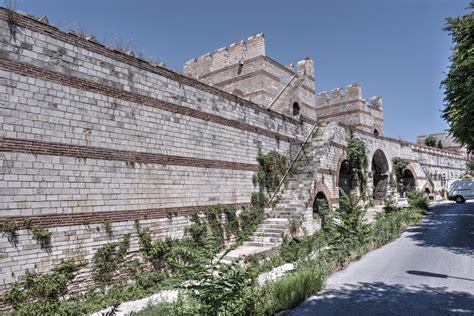
Episode 179 Attila Cometh. Up until now, most of the pressure had been on the Western Empire, but now the Eastern Empire faced the rise of Attila the Hun. Theodosius had sent most of his troops off to Africa, and the Sassanids (briefly) and Huns took advantage of their absence. In 441 the Huns invaded as a way of extorting more money from the empire. Led by Attila and Bleda, their troops were good at besieging cities, and walls were now barrier. But the brothers fought, and Bleda ended up dead (at Attila’s hand??) and so, counting on Hun disunity, the Romans refused to pay the go-away money. In 447 Attila decided to march on Constantinople, where the Theodosian Walls had been damaged by an earthquake. The walls were rebuilt in an amazing two months, and they held and Constaninople avoided being invaded- but all the other Roman troops were just blown away. Meanwhile, Aetius was forced to recognize the Vandals in North Africa. Genseric continued to provide food for the empire (which was the main reason that the Romans wanted North Africa) but did not pay taxes. There were rebel bands everywhere, and Aetius did well to hold it all together as much as he did.

The Documentary (BBC) My Granny the Slave. British journalist Claire Hynes travelled to Antigua to learn more about an Antiguan foremother, who is thought to be one of the first women to flee a slave plantation in the Caribbean island of Antigua. Claire grew up learning a 200 year-old story passed down through generations about her enslaved ancestor known as Missy Williams. As a young woman Missy risked her life to escape the physical and sexual brutality of plantation life, hiding out in a cave. Although she had been told that her family “The Williams” were important, she found that only the white Williams’ were documented, and that there were virtually no records of enslaved Africans. She learned more about the hard life on a sugar plantation, and the use of violence to prevent escape. She reflects at the end on the importance of the search for identity not for the people who have always lived in Barbados, but more for those who emigrated to Britain and have lost all connection

Tides of History and Al Franken Podcast With all this History of Rome listening, I’m finding myself increasingly interested in Alaric the Goth, and especially a recent biography written by Douglas Boin. I’ve found that the ‘New Books Network’ podcasts have been a good way of getting the flavour of a book without actually having to read it, so I thought I might be able to do the same with Boin’s Alaric the Goth: An Outsider’s History of the Fall of Rome. Not so- and it made me realize how carefully the New Books Network podcasts trace out the argument of the book for someone who hasn’t read it while at the same time engaging with the debate. I listened to Tides of History, which had a good discussion about the problems of writing with a thin and one-side historiography but assumed too much familiarity with the book. But even worse was the interview on The Al Franken podcast, where the host spent far too long making partisan links to today’s politics (the connections are there, to be sure, but let’s take the history on its own terms) and really didn’t seem to know much. Really, I don’t know how Boin could be bothered.

The Daily (NYT) It was possible to take some comfort from the recent rejection in Kansas of a referendum that would have added a constitutional prohibition to seeking abortion in Kansas. In How to Interpret the Kansas Referendum on Abortion, the presenters point out that Kansas, where abortions can still be carried out, is surrounded by states where it will now be illegal. Some of their interviewees opposed abortion personally, but did not feel that they could impose that on others. If only more people felt that way.

I hear with my little ear: Podcasts 25-31 July 2022

History of Rome Episode 165 Reviving the Roman Name Ataulf continued with Alaric’s desire for his Goths to cement their place in the Empire, and didn’t really want to invade Ravenna. Neither did Constantius really want to push the issue either, so there was a bit of a stalemate. In a bit of inter-Goth warfare, Sarus and Ataulf fought, and Sarus was killed, and then Ataulf argued with Jovinus (who had become a puppet emperor supported by Gundahar and the Burgundians- sounds like a musical group- after the death of Constantine III). The Goths and the German tribes did not join together: instead the Goths and the Romans got together. The Goths hoped to be creating a new dynasty within the Empire. But Constantius and Honorious joined forces against the Goths, hoping to starve them into submission. The Goths went to Hispania and Ataulf was murdered in his bath, without leaving a clearcut replacement. Sigeric, Sarus’ brother quickly seized power but he was assassinated too. Wallia took over, at a time when morale among the Goth ranks was very low, and he accepted vassal status within the Empire. Britain was looking out for itself, and Rome never went back. Politically and militarily, Brittania was lost to the Empire for ever.

Theodosian Walls in Constantinople (Istanbul)www.turkisharcheonews.net

In Episode 166 As Long As She’s Nice to Look At There was a fear that the Empire would lose Hispania again to the Alani and the Vandals, so the Goths were offered Aquitaine in exchange for fighting the Alani and other rebels. This gave the Goths a stable source of food. Wallia died and was replaced by Theodoric. Valentinian III was born to Constantius III and his now-wife Galla Placidia. What a life she had- daughter of Theodosius I, captured by Alaric, married off to Ataulf, then forced by her brother Honorius into a marriage with Constantius III. Valentinian III was thus the heir presumptive to the Western empire, which strengthened Constantius’ position, and he was quickly elevated to Augustus. But this was opposed by the eastern Emperor Theodosius II. That’s right! there was an Eastern Empire too- we’d forgotten about them. Over in the east, the truce with the Sassanids meant that Constantinople was safe. Theodosius II was still young, and largely under the influence of the powerful Prefect Athemius (who built the Theodosian Walls). His sister Pulcheria assumed the role of Augusta and along with her sisters, immediately took a vow of virginity. Once he turned 20, Theodosius demanded that if he was to marry at all, she had to be beautiful. Aelia Eudocia obviously fitted the bill, because he married her. Meanwhile, over in the Western Empire, Honorius and Constantius were furious at Theodosius’ rejection of Constantius’ III dynastic plans and they were preparing for war, when Constantius III died.

Episode 167 Exploiting the Opportunity takes us back to the Eastern Empire where where war was briefly reignited with the Sassanids over religion. Pulcheria was anti-Pagan, while the King of the Sassanids was anti-Christian. But just in time, Honorius died, which put Valentinian III in the box seat, even though he hadn’t received any of the usual titles- very poor succession planning. The nobles placed Joannes as emperor instead, but this was opposed by the North Africans, who chose Flavius Aetius instead, who led a large force of Huns. God, this is confusing.

Democracy Sausage. I usually listen to both The Party Room (ABC) and Mark Kenny’s podcast Democracy Sausage, but I don’t very often record them here in this blog because the content is pretty ephemeral. But this episode Back in the Bubble has historian Frank Bongiorno (the newly minted president of the AHA and one of my favourite ‘young’ historians) and he’s always worth listening to.

Revisionist History For some time, Canada has had a system where additional to (and this is important) Canada’s refugee intake, they have allowed private sponsorship of refugees. (Australia has a program too, but it is not additional to our refugee intake and has been fairly heavily criticized). In this episode, I Was a Stranger and You Welcomed Me, Malcolm Gladwell looks close to home, where he asks his family about their involvement in bringing three Vietnamese refugees to Canada in the aftermath of the Vietnam War. Most of the support group were involved in local churches, and churches remain an important component of the Canadian private sponsorship scheme. Apart from this, the program considers ‘kindness’, and its opposite in the meanness and active hostility of the US (and I would argue, Australian) refugee systems.

The Real Story (BBC). Bolsonaro v Lula: The race to lead Brazil Elections are coming up for Brazil, and there’s a good chance that it will be between Jair Bolsonaro and Luiz Inácio Lula da Silva. Bolsonaro has fashioned himself on Trump, and is already positioning himself to claim electoral fraud. Bolsonaro had a lot of support from evangelical Christians (70%) but he can’t count on this for the next election. It sounds as if he has dismantled many of the civic bodies in Brazilian society. Meanwhile, Lula couldn’t stand last election because he was convicted of fraud- a judgement that was later overturned. I know who I’m barracking for.

I hear with my little ear: Podcasts 17-24 July 2022

History of Rome. I can’t believe it- I’m nearly at the end! Episode 162 Opening the Floodgates sees Flavius Claudius Constantinus, a Roman general who rose to power in Brittania, declaring himself Constantine III (even though he was no relation to the other Constantines), overthrowing Gratian and taking all his troops to Gaul (bad mistake) where the Barbarians were running amok. Although we talk about ‘The Barbarians’, they were not a single group, and Constantine was able to pick off some of the Barbarian leaders. Stilicho was ordered by Honorius to go after Constantine, which also diverted attention away from the Barbarian threat. Alaric, the Goth general, and his troops had been dispensed with after the death of Arbogast, although he was able to demand and receive compensation. Meanwhile, Arcadius in Constantinople died, leaving a vacancy because his son Theodosis II was too young. There were rumours that Stilicho was angling to get control of Constantinople, and Honorius believed those rumours. There was a revolt and Stilico, the Vandal, was executed – one of the last few competent leaders.

Meanwhile in Episode 163 Theodosius’ Walls we return to the eastern part of the empire. The Eastern provinces were more stable than the western ones and the truce with the Sassanids held. Arcadius and his wife Eudoxia reigned, but as a weak emperor, he was strongly influenced by the Bishop of Constantinople, John Chrysostom. John was very devout, very ascetic and very critical of Eudoxia. Eudoxia tried to get John banished, but mob unrest and an untimely earthquake meant that he was brought back. She succeeded the next time she tried to get him banished, but then she died of a pregnancy-related illness. Into the power vacuum stepped the Praetorian Prefect Anthemius. His legacy lives on in the Theodosian Walls that he constructed, comprising three layers of stone wall, each taller than the next, to repel invaders from Constantinople. Enough of the East- let’s go back to the messy West. With Stilicho dead, Olympius stepped in to the vacancy and ordered the murder of the Goths, who fled to Alaric and boosted the numbers in his army. Alaric invaded Italy (the Romans were too scared to confront them) and went straight to Rome, more as a bargaining chip to ensure his recognition within the Empire, rather than with a view to sacking Rome (at this stage). When Honorius and Olympius refused, Alaric invaded Rome again, so Honorius decided to recognize the usurper Constantine III to bolster his forces. Alaric lessened his demands but was refused again, so he went back a third time. He chose Priscus Attalus to be ’emperor’ (something not really within his power to do) and this time he really did sack Rome.

Episode 164- The Sack of Rome. So Constantine III found himself recognized as an emperor at last, but there was rebellion in Spain and Britain went its own way once Constantine left, taking all his troops with him. There was a battle between Constantine and Honorius, which Honorius won. Alaric was forced to depose his hand-picked Attalus, who was getting too big for his boots- but he’ll be back. And so we come to the sack of Rome, which was last sacked 800 years ago. It wasn’t a complete scorched-earth type sack: Alaric was a Christian, just like Honorius was, and he declared churches and the people sheltering in them off-limits for any wanton sacking. The people of Rome were plunged into despair, and many became refugees, leaving only 20,000 people in Rome by the Middle Ages. Alaric went to North Africa for grain supplies (that his ‘friend’ Attalus had been holding out on) but a storm caused him to turn back. In 410 Alaric died and his brother Ataulf took over. Meanwhile Constantius III (a general under Honorius) was appointed in 411 to take down Constantine III (really, this is getting too confusing for words). Constantine III found himself beseiged by Constantius, and he surrendered when promised that he could live. Tricked you!- they killed him anyway. This left Constantius III but new usurpers were popping up in a game of whack-a-mole, and the Goths were heading for Ravenna.

Rear Vision (ABC) Papua New Guinea’s Elections. It has been disturbing to the see the violence in PNG during their recent elections. But what a challenge- the elections take place over three weeks, there are literally hundreds of different languages, and electors vote for the ‘big man’ in their village, or people who are linked to them by locality or family. The political system is based on the Westminster system, but the elections have been becoming increasingly corrupted. There are no parties as such, united by policy priorities, but instead they have shifting coalitions of interests.

Rough Translation (NPR) Miles to Go Before I’m Me looks at female long-haul truck drivers in America. Jess Graham started truck driving with her 10 year old daughter, in order to escape an abusive domestic relationship. Eventually she kept driving, without her daughter, but found that it was a lonely job, and the tolerance and friendship towards her that her young daughter had attracted, had dissipated. Meanwhile Brandie Diamond, another long-haul driver, found the mobility made it possible for her to transition – although being ‘outed’ by another truck driver expedited her decision to live as a transsexual.

History Extra Fifteen minutes of fame: Marie Tharp. You’ve never heard of her either? Born in 1920, she was an American-born geologist and ocean cartographer, and she was the person who proposed the theories of continental drift and plate tectonics, radical ideas at the time. She was working in a male-dominated profession where her name was mysteriously omitted from jointly-written research papers. she was not allowed to go on research ships, and so she had to work on-shore analysing data collected by her colleague Bruce Heezen with whom she had a love/hate relationship professionally. She has received more recognition posthumously than she received while she was alive.

Wikimedia

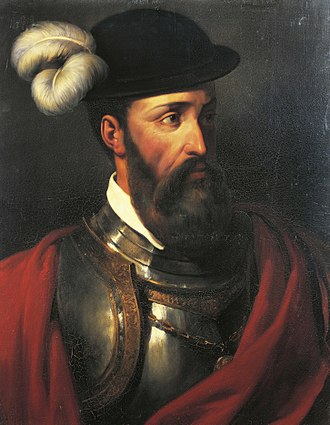
The Latin American Podcast. I haven’t listened to this podcast in ages, and when I returned to it, I found that it has been discontinued since 2021. I wonder what happened? Anyway, the The Conquest of Peru Part I starts off by pointing out that Spanish colonization depended on individuals who proposed expeditions in order to enrich themselves and then gathered the funding. They were often from the Army and had served on other expeditions before heading off on their own. This episode introduces Diego de Almagro, Hernando de Luque and of course Francisco Pizarro – who is the best known of the three. Episode 2 Westwards goes through the two previous expeditions from Panama. The first retraced the footsteps of Pascual de Andagoya who had had to abandon his expedition from Panama after falling into a river and becoming seriously ill. This expedition sailed down the coast of Colombia, but had to be abandoned because they ran out of supplies. His second expedition also went south, where Pizarro met a tribe that had been conquered by the Incas. His expedition was thwarted by the new Governor of Panama so Pizzaro went back to the King, who gave him six months to raise the manpower he needed. He had to inveigle his two brothers into the group of 180 who sailed off, not strictly within his charter. Almagro and de Luque, who were waiting back in Panama, distrusted Pizzaro, suspecting him for having presented himself as the leader and downplaying their role. (Which he probably did)

I hear with my little ear: Podcasts 9-16 July 2022

History of Rome Episode 159 The Divine Winds. Arbogast, Theodosius and Eugenius finally confronted each other at the Battle of the Frigidus River in 394 CE. Arbogast and Eugenius’ troops wore pagan symbols (perhaps- all of the information for this is pretty dicey) but it was not a religious war- it was about power. Arbogast had taken control of the terrain, and Theodosius’ troops were restive because the Goths who made up their ranks felt that they had been used as cannon fodder. It all looked as if Theodosius was doomed until the Bora winds blew up, making it hard for Arbogast and Eugenius’ troops to fight because it was blowing directly into their faces. Eugenius was captured and executed, and Arbogast did the right thing and committed suicide, which left Theodosius the last emperor standing. He was staunchly anti-pagan, so the Altar of Victory disappeared at this time, never to reappear. However, in mid 395 Theodosius died, leaving his 16 year old son Arcadius and 11 year old son Honorius in charge. They were too young to rule in their own right, so they were being manipulated by advisors- Stilicho and Rufinis the Pretorian Prefect. How to judge Theodosius? Well, he wasn’t truly great, and as an anti-pagan, he allowed Bishop Ambrose a degree of autonomy which was to set up relations between church and state for centuries. His decision to deal with the Goths through diplomacy saved the Empire, but it had serious consequences.

Episode 160 East Vs West Rufinis was assassinated by local enemies, and Arcadius’ wife Eudoxia was becoming more powerful than her weak husband. Now the empire was divided three ways: East, West and Constantinople. Taking advantage of the power vacuum, there was a Visigoth uprising in 395, led by Alaric. Meanwhile a Berber General in North Africa, Gildo, was a supporter of Theodosius and he began withholding grain shipments. Stilicho, who was by now Honorius’ father-in-law used Gildo’s brother Mascezel to fight against him (the two brothers were enemies) Gildo committed suicide and the eunuch Eutropius, another court official, had himself declared consul. Arcadius just disappears from the scene. Really, I’m losing track of all this. Suffice to say Arcadius and Honorius are too weak as emperors, and the officials are taking advantage of it.

Episode 161 The Swamps of Ravenna. In 402 Alaric, leader of the Goths goes on the offensive and crosses the Alps unchallenged because the Western troops were engaged elsewhere. He mounted a siege of Milan, not because he thought he would succeed, but to spook Honorius. This worked, and Stilicho moved the seat of the western court from Milan to Ravenna where it was surrounded by swamps. And then the Huns and Allamani were on the move again – the Barbarians are at the gate!!

File on 4 (BBC) Ukraine: War Stories was released on 15 March 2022 and so it captures the early weeks of the war on Ukraine. The BBC has arranged for ‘ordinary people’ to record audio diaries on their phones as their cities are bombed and families torn apart. So we hear model and dancer Mari Margun in Chernihiv who starts off confidently, but becomes increasingly shattered as the bombs fall; we hear a young woman just about to give birth, crowded into the basement of a maternity hospital; we hear of a young beautician learning to fire an AK47- the only weapon she has ever held; we hear a doctor reluctant to leave the children’s hospital until all the children are taken care of, and we hear the fear of families being separated with some desperate to leave, others too frightened to leave.

New Books Network. I subscribe to several feeds on the New Books Network, and I noticed on the Australian and New Zealand section that Marilyn Lake had recorded an interview on Nov 16 2021 about her not-so-new book Progressive New World: How Settler Colonialism and Transpacific Exchange Shaped American Reform. I was rather startled that it appeared on the ‘New Books in Native American Studies’ section, with an American interviewer who seemed rather unprepared to discuss anything other than the American connections in the book. It’s one of those books that I know I should read, but probably won’t- and at $61.00 it has always been prohibitively expensive. (It is available as an e-book at SLV). This interview sums up the book pretty well, I think. She starts the interview talking about progressivism, which was embraced by both Australia and U.S. who saw themselves as ‘new’ countries (dispossession of 60,000 year old custodianship in Australia notwithstanding) with a strong political subjectivity of seeing themselves as white, pioneering men (largely) on the frontier. Exclusion was built into progressivism, and in Australia’s case it was baked into a form of state socialism and maternalism. Her book examines progressivism through particular individuals like Charles Pearson and Alfred Deakin, and the challenge that rose in both US and Australia in the early 20th century when indigenous people challenged progressivism to recognize cultural difference and the importance of the past, using the language of Woodrow Wilson’s ‘self-determination’.

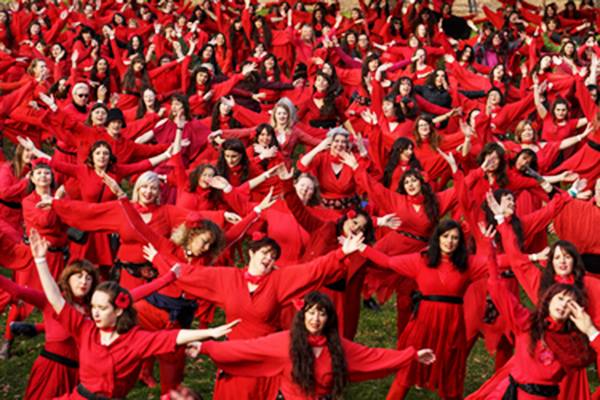
Strong Songs. When I realized it was July, I wondered if there was going to be a Most Wuthering Heights Day Ever in Melbourne this year because I was interested in doing it (lack of fitness, complete inability to dance and sore knees permitting). Short answer- not on 31 July, when it seems to be held elsewhere. This started me thinking about what a complex song Wuthering Heights is, but I lack the music theory to explain why. So I turned to Kirk Hamilton’s recent episode on Wuthering Heights, which he actually recorded some time ago but has repeated because of the recent success of ‘Running Up That Hill’. It’s a very American-centric recording (he had barely heard of Kate Bush) and he had never read Wuthering Heights. Nonetheless, he gives a good breakdown of the instrumentation and musical shifts in the song, using terminology far beyond me. Actually, I’ve never been able to understand the words in Kate Bush’s song when she sang it, and when I looked at them more carefully, it’s hard to believe that it was written by an 18 year old:

Out on the wily, windy moors /We’d roll and fall in green
You had a temper like my jealousy /Too hot, too greedy

How could you leave me /When I needed to possess you?
I hated you, I loved you, too

Bad dreams in the night /They told me I was going to lose the fight
Leave behind my Wuthering, Wuthering,Wuthering Heights

Heathcliff, it’s me, I’m Cathy /I’ve come home, I’m so cold/ Let me in your window

Ooh, it gets dark, it gets lonely/ On the other side from you
I pine a lot, I find the lot/ Falls through without you

I’m coming back love, cruel Heathcliff
My one dream, my only master

Too long I roam in the night/ I’m coming back to his side to put it right
I’m coming home to Wuthering, Wuthering Wuthering Heights

Ooh, let me have it/ Let me grab your soul away
You know it’s me, Cathy

Heathcliff, it’s me, I’m Cathy/ I’ve come home, I’m so cold /Let me in your window