Category Archives: Melbourne history

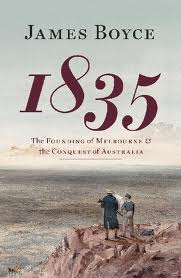
‘1835’ by James Boyce

James Boyce, 1835: The Founding of Melbourne and the Conquest of Australia, Black Inc, Melbourne, 2011.  212 p & notes

At last! I thought when I finally got my hands on this book.  In fact, three ‘at lasts!’  I’m almost sure (nothing is really sure these middle-aged days!) that I read about this book at the beginning of 2010 when publishers were spruiking the books that were about to appear during the year.  I waited throughout 2010 but no sign of it.  And now- here it is.  And ‘at last!’ I thought because in the closing chapters of excellent previous book, Van Diemen’s Land, James Boyce clearly signalled that, just like Tasmanian settlers themselves, his own  thoughts about Van Diemen’s Land crossed the strait as well.  And ‘at last!’ again  I thought because in reading about the early history of the Port Phillip District – for example in A.G.L. Shaw’s A History of the Port Phillip District – you find yourself wondering if Port Phillip will ever get itself off the ground.  Navigators just kept sailing past it, missing the bay completely; Collins picked up sticks and decamped for Hobart after a short time, and the aborted and rather half-hearted  attempts to establish a settlement on Westernport Bay sputtered away fitfully.  Like a car with a flat battery, the Port Phillip settlement just didn’t seem to be able to turn over and take off for decades.

Boyce describes the arrival of squatters coming across from Launceston in 1835 as “a brazen act” that “would shape the history of Australia as much as would the arrival of the First Fleet in 1788” (p xi). It’s a big claim:

…the policy turmoil which followed the establishment of a squatters’ camp in 1835 had an significance far beyond the baptism of a great city.  In this place, at this time, ‘Australia’ was born. (p. xiii)

As might be expected from the title, Boyce starts his book in the year 1835, which he approaches from a range of perspectives: by locating us in the deep time of the Yarra River, and then  amongst the smaller black/white encounters along Bass Strait in the decades prior to 1835 through the unregulated and largely undocumented whaling, sealing and wattle-bark industries.  After this largely geographical perspective he then moves on to explore the political mindset of the three groups of players during 1835: – the financiers, pastoralists and adventurers in nearby Van Diemen’s Land who formed themselves into the Port Phillip Association ; the governors in Sydney under official British instructions to limit settlement to the area adjacent to Sydney ; and the Colonial Office and lobbyists representing opposing evangelical and pastoral interests in London.

It’s important to remember that there was no inevitability about the Port Phillip district being considered as part of New South Wales.  In terms of distance, it was far closer to Van Diemen’s Land than it was to Sydney- it still surprises me when driving down near Lakes Entrance that you’re just as likely to find local Tasmanian stations as Victorian ones on the car radio.  Governor Arthur, whom Boyce suggests was influential in the whole Port Phillip Association endeavour, certainly was in no hurry to let Sydney know what was going on across the strait.

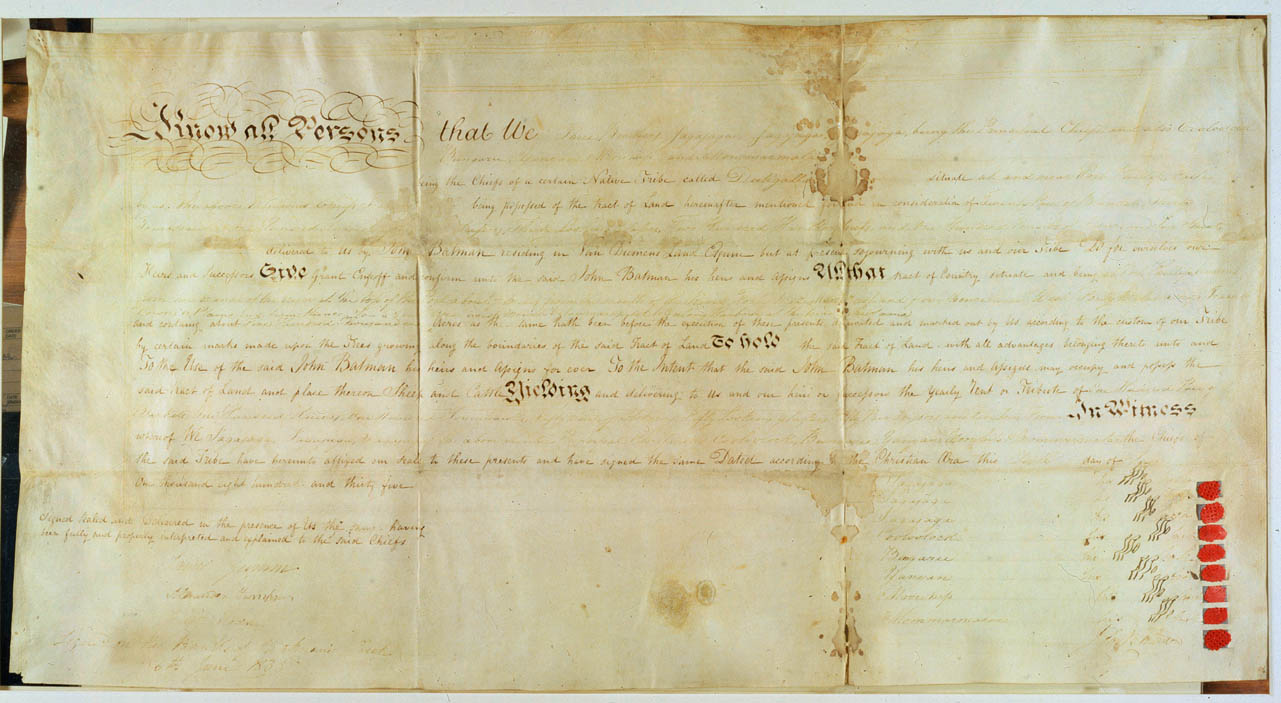
Indeed, as Boyce suggests,  this policy double-speak pervaded the whole endeavour.  Batman’s so-called ‘treaty’, was as Bain Attwood also suggests in his recent book Possession, a legal fiction, but Boyce claims that it was not meaningless, either to the Port Phillip Association, or to the Kulin leaders who putatively ‘signed’ it. Adopting the slow-motion, close reading that Inga Clendinnen used to such good effect in Dancing with Strangers,  Boyce traces the pedigree of the treaty in colonial thinking generally and in the actions of both black and white protagonists in that first year.  There was an intricate dance of go-slow and evasion between all the political actors involved, in Port Phillip, Hobart, Sydney and London, that exploited all the silences and ambiguities of correspondence at a distance.   Had the Colonial Office, or its representatives in Sydney really wanted to suppress the Port Phillip settlement in line with the espoused policy of closer settlement,  they could have used policy to do so. It could have punished squatters for illegal possession by banning them from future land purchases; it could have with-held convict labour from them and it could have equipped Aboriginal Protectors with the authority to award or strip leases depending on the treatment of the Aboriginal tribes already there.  There was, he claims, a choice involved, and the governments here in NSW and the British Govt through the Colonial Office,  chose to do none of these things.

Boyce takes up a second theme that he foreshadowed in his chapter in Van Diemen’s Land entitled ‘Victoria’s Van Diemonian Foundation’.   There was, he claims, a deliberate policy both in the Colonial Office and in Sydney to dilute the influence of the small, bush-savvy Tasmanian ex-convicts who flooded across the strait as shepherds and labourers.  By blaming ex-convict shepherds  as the main threat to Aboriginal tribes, Sydney and the Colonial Office and the behind-the-scene evangelists, championed the more ‘respectable’ large, NSW-based pastoralists as the means of civilizing and incorporating Aboriginal people into the settlement endeavour.  The pastoralists, already a powerful lobby group, were only too pleased to reap the benefits of this portrayal.    Boyce’s argument is not couched in the Marxist terms and language of Martin Sullivan’s earlier Men and Women of Port Phillip, but there is a strong class dynamic at play nonetheless.  In this regard, Boyce’s argument needs to spill out of the 1835 chronological straitjacket he has confined himself within.  For example, although Boyce does not mention it, in succeeding years the decision to hold the first land auctions in Sydney rather than in Melbourne itself played to the interests of Sydney pastoralists and speculators, and the early constitutional arrangements for elections to the Legislative Assembly favoured Sydney-based candidates for Port Phillip seats.  This process of expunging the VDL-based nature of Port Phillip society was set in play in 1835 and intensified in the years following.  But because his book focuses on the first year of settlement in Melbourne,  his account gives more prominence to VDL than the longer-term perspective suggests.

Boyce closes his book by asserting that the land rush and dispossession that so quickly followed the settlement of Port Phillip was not inevitable, even though it was portrayed that way by Governors and the Colonial Office at the time and is still portrayed that waytoday.  His final chapter engages in an exploration of ‘what-if’.  I’m always wary of ‘what-if’ (even though I enjoy it!)- I see it as a guilty pleasure but ultimately a sterile pursuit because the reality is that it didn’t happen.

I’m likewise  a bit uncomfortable about his closing observations that extend his observations about government decision-making, or the lack thereof, during the settlement of Port Phillip  into a discussion of climate change policy today.  His argument has been strong and  persuasive throughout the rest of the book but I don’t know if it can stretch this far into the realm of present-day politics.  Although ‘doing nothing’ or failure to act (are they the same thing?) might be the end result, I’m not sure that it always springs from the same impetus. It might be a deliberate delaying tactic; it may be quite self-conscious; it may be because some actions are literally unthinkable and certainly unvoiceable because other imperatives are more important, or it may reflect a failure of imagination.  I’m not convinced that failure to act on climate change and failure to act to suppress illegal possession are the same thing.  It’s a debate worth having, I suppose, and perhaps that was his purpose in introducing the question at all.

This book is well-written, clear, engaging and forceful in its claims and well worth reading.   As a Melburnian, it nudges you into a different place to look at your city’s history, and that’s a bracing and exciting thing to do.
A day trip to Westgarthtown

The sun was a-shining, the magnolias a-blooming, the wattles a-bursting and the magpies a-caroling-  so a good day for The Sunday Drive.  It’s the second Sunday in the month and Ziebell’s Farmhouse is open  at Westgarthtown.  Westgarthtown is not, as one might assume, in Westgarth.  Instead, it’s out at Thomastown and now surrounded by 1970s brick veneer homes.

We decided to head out along Plenty Rd, stop off for lunch at a cafe we both knew of vaguely in Mernda, then go across through Wollert to Epping and back to Thomastown.  After all, Sunday drives are supposed to be a circuit, aren’t they?

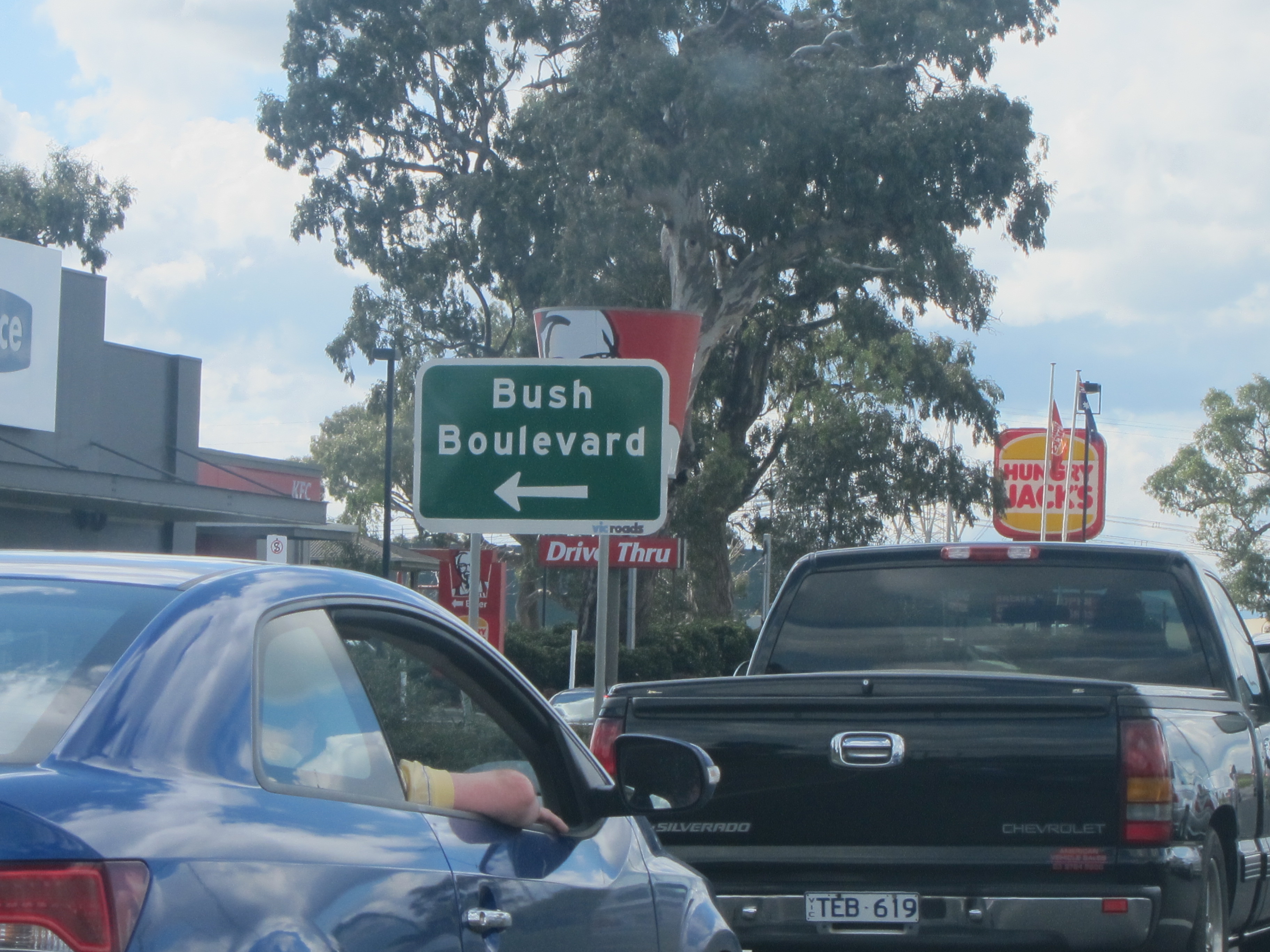
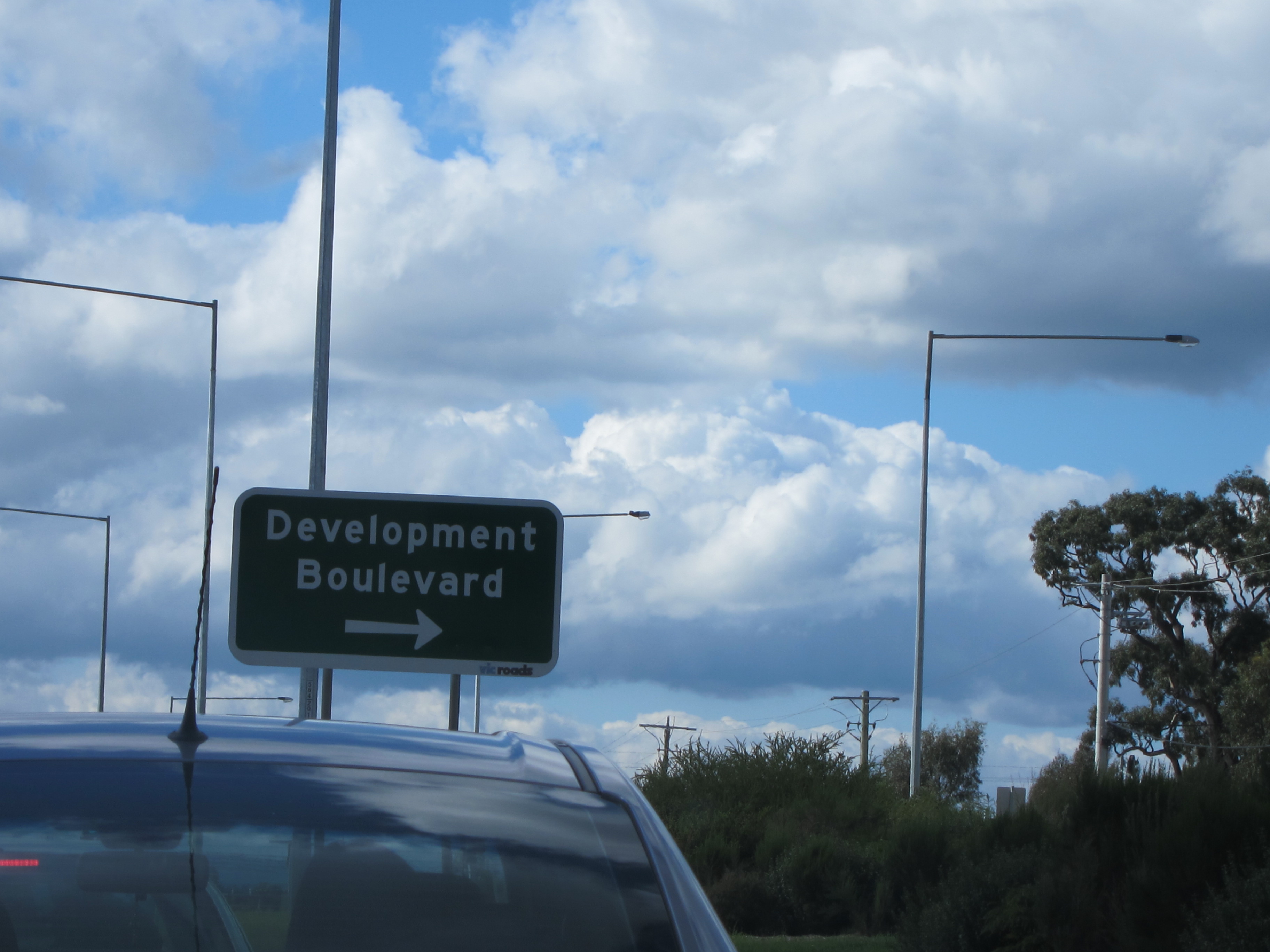
My wordy, I haven’t been this far out along Plenty Road for a long time.  I was once told that there wouldn’t ever be any development on the east side of Plenty Road because there was a MMBW covenant on it.  Obviously not.  There was little discernible difference between “Bush Boulevard” (huh! with its takeaway food stores) on the left and “Development Boulevard” on the right.

We often receive glossy pamphlets in our letter box advertising new land developments out at Berry Lane,  Eden Gardens, Eucalypt etc.  They all sound so bucolic until you see them clawing their way into what had been farmland.

We headed back towards the city (which was actually visible on the horizon), passing drystone walls and strange farmhouse gardens composed entirely of prickly-pear.  The paddocks gave away again, this time to the triple-fronted brick veneers so proudly bought by ‘New Australian’ migrants as they moved out into suburbia in Lalor and Thomastown in the 1960s and 70s.  Down a couple of side streets and there we were- Westgarthtown.

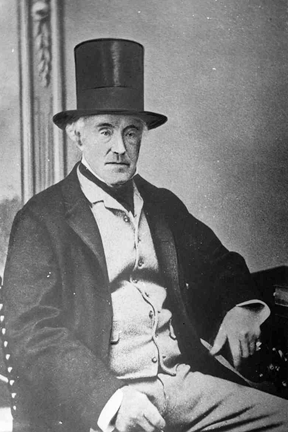
Westgarthtown is named after William Westgarth, who arrived in Port Phillip from Scotland in 1840.  He was here during Judge Willis’ time and an active member of civic society with involvement in the Mechanics Institute, the Benevolent Society, and later the Victorian branch of the Australasian League for the Abolition of Transportation and the Melbourne Chamber of Commerce. He helped found the first gas company and was an enthusiastic promoter of the railways.  He was a member of the NSW Legislative Council and a supporter of manhood suffrage, the abolition of property qualifications, state education and the abolition of state aid to religion.

He was instrumental  in the establishment of Westgarthtown.  I’ve read of other men in Upper Canada, too, who involved themselves in emigration schemes targetting particular geographical regions in the ‘old world’. These men personally sponsored from their own pocket, or sought bounties from the government for the transportation and establishment costs of whole villages into new settlements in the colonies.  It is particularly significant that German settlers, like the Italians up near Daylesford, excelled at agricultural farming in its own right as distinct from pastoral farming- something that the Wakefield scheme tried without much success to encourage amongst British immigrants.  Westgarth explains his own involvement:

When I made my first Home trip, in 1847, I resolved to open, if I possibly could, German emigration to Port Phillip. Quite a number had already been settled, some from the earliest years, in South Australia, where their industry, frugality, sobriety, and general good conduct had made them excellent colonists. This favourable testimony was confirmed to me by correspondence on the subject with my late much-lamented friend, Alexander L. Elder, one of South Australia’s earliest, most esteemed, and most successful colonists. My first step on arrival was to write to the “Commissioners of Emigration,” an officiate since dispensed with, pointing out this South Australian success, and suggesting that a certain charge upon the Colonial Land Fund, authorized in special cases of emigrants–an aid of 18 pounds a head, I think–might be made applicable to German vinedressers emigrating to Port Phillip. In due course, I received a most cordial reply from the secretary, Mr. (afterwards Sir) Stephen Walcot, to the effect that Lord Grey, then Colonial Secretary, highly approved of the project, and that the aid asked for would be forthcoming for properly qualified German vinedressers. ..

But the grand prize for these Germans was the acquisition of land. Accordingly Captain Stanley Carr (then on a visit with the German Prince of Schleswig-Holstein) and myself took up, in trust for such Germans as desired it, and had the means of payment, one of the square miles of surveyed land, as yet unapplied for, about twelve miles north of Melbourne, which was divided amongst them in lots as agreed upon. And there they are to this day, a thriving community. When, in company with Neuhauss, my wife and I visited them in 1857, just before finally quitting the colony, we found considerable progress in the form of a scattered village, with a little Lutheran church, and some show of gardening and cultivation. They seemed delighted to stick to their German speaking, and would not even try to speak English. One amusing feature in the scramble as to allotments was that each tried, in most cases, to get trees, stones, and rocks in preference to clear ground, as if so much additional wealth. The trees might have had value for firewood, but in the other items they had probably more than they bargained for. We secured the land for them at a pound an acre, and the fact of their being so largely settled upon it raised its value at once considerably. All the land thereabout has now risen to many times this first cost. Many more Germans have since, as I understand, settled upon other land.   William Westgarth ‘Personal Recollections of Early Melbourne and Victoria’

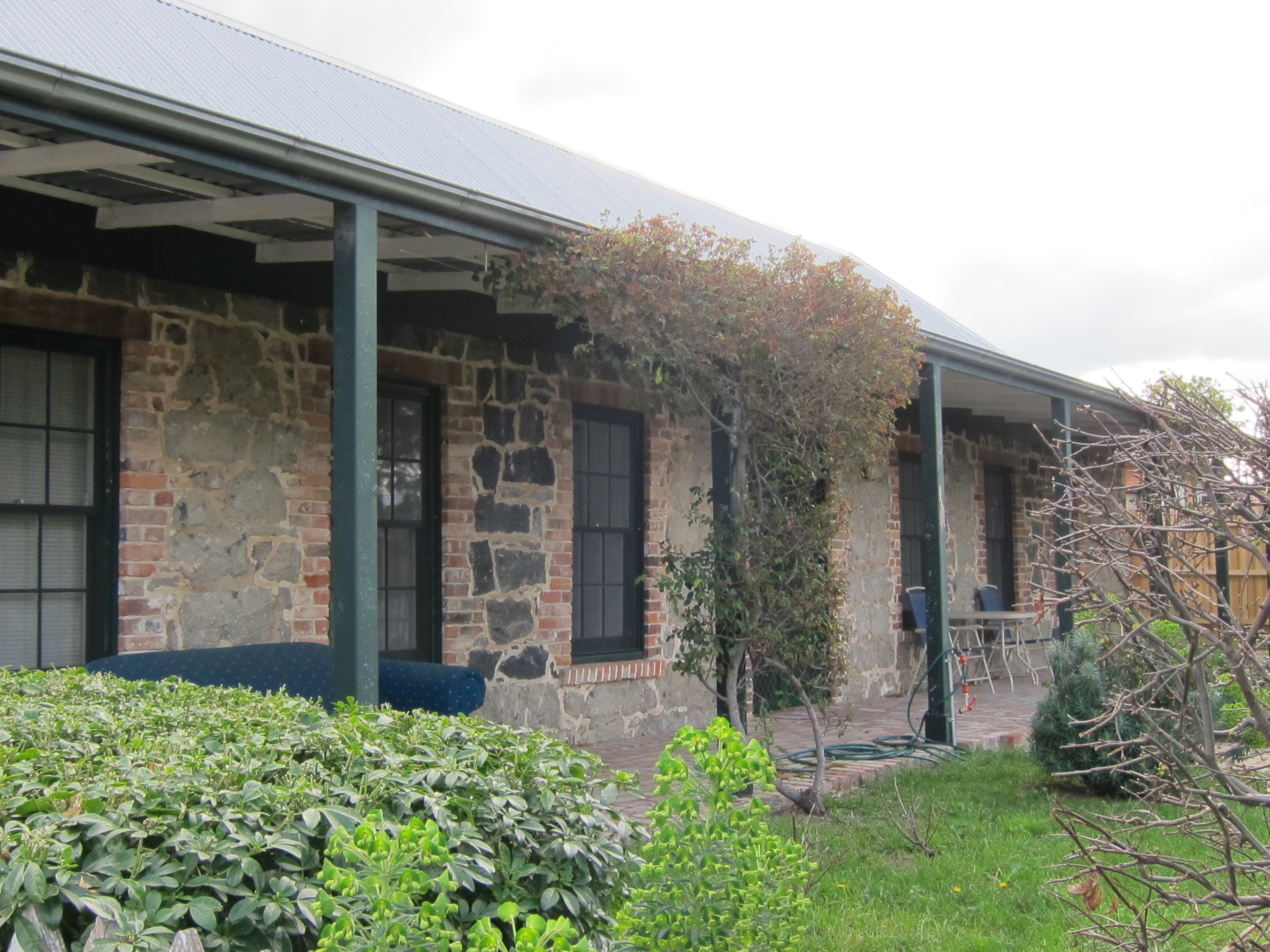
The houses are still there, even though the Germans are not.  There is a large, open square in the midst of suburbia, with Ziebell’s farmhouse in one corner of it.  It is a low-slung, rough bluestone farmhouse, with a barn, wash-house and smokehouse.  The last surviving member of the Ziebell family moved from it in the 1970s into a new house built beside it (now used as a caretaker’s cottage) and for the first time she had electricity and running water- yes- the 1970s.

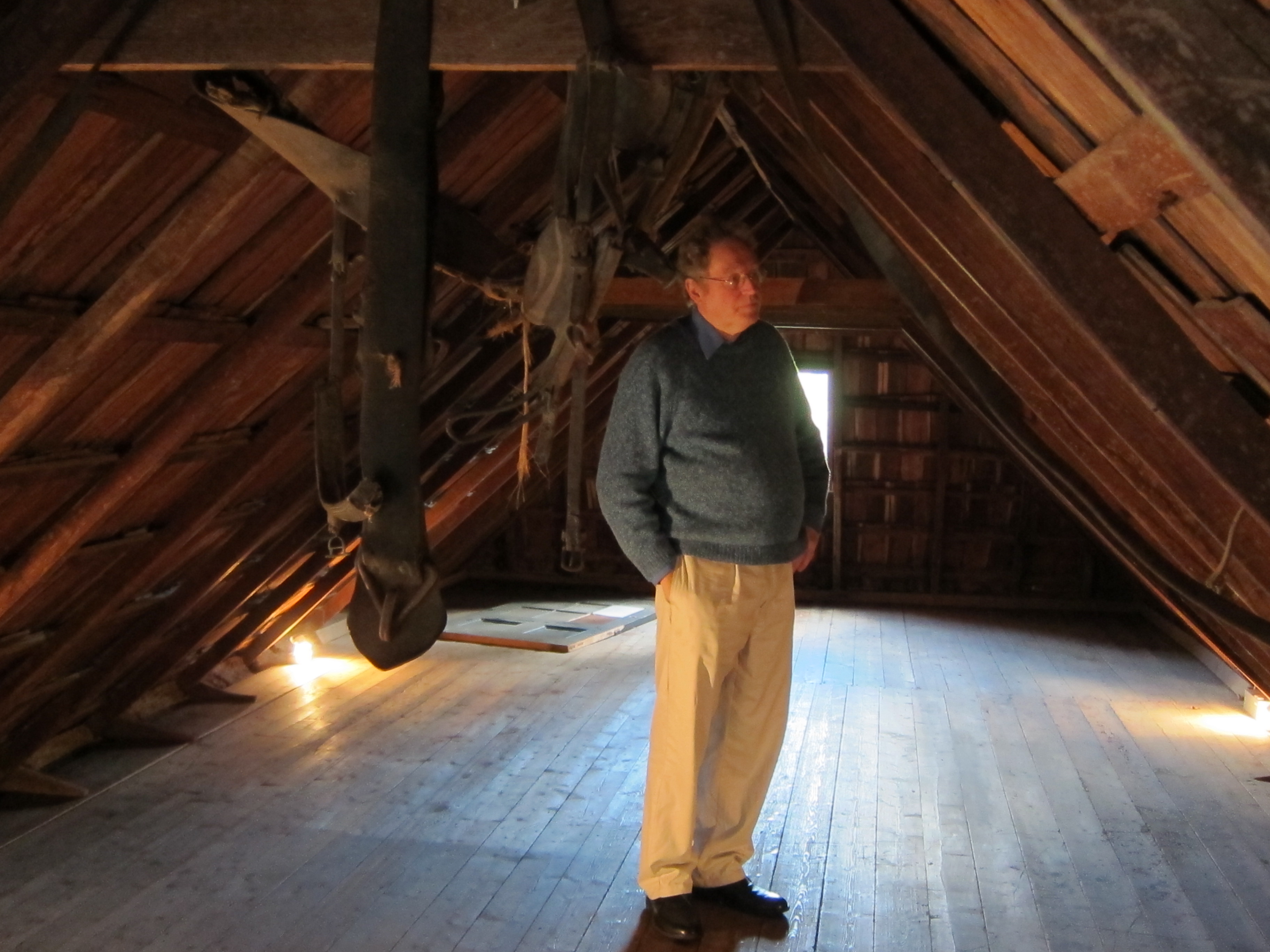
The parents slept downstairs, beside the large pantry and kitchen, while their eight children slept in the attic upstairs.

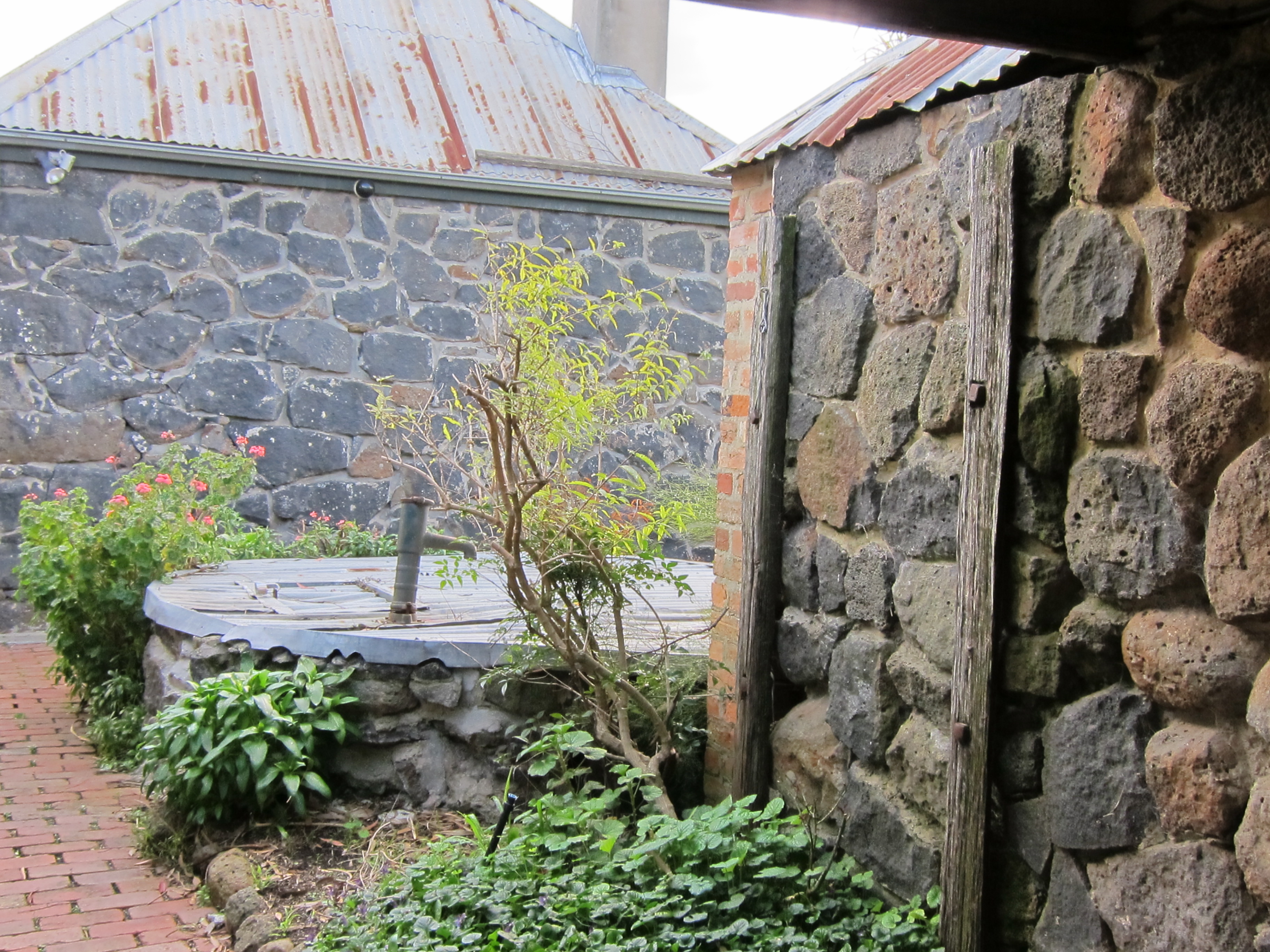
The wash-house was separate from the main house, with a well outside it for drawing water, and a fireplace inside the wash-house for heating the water.

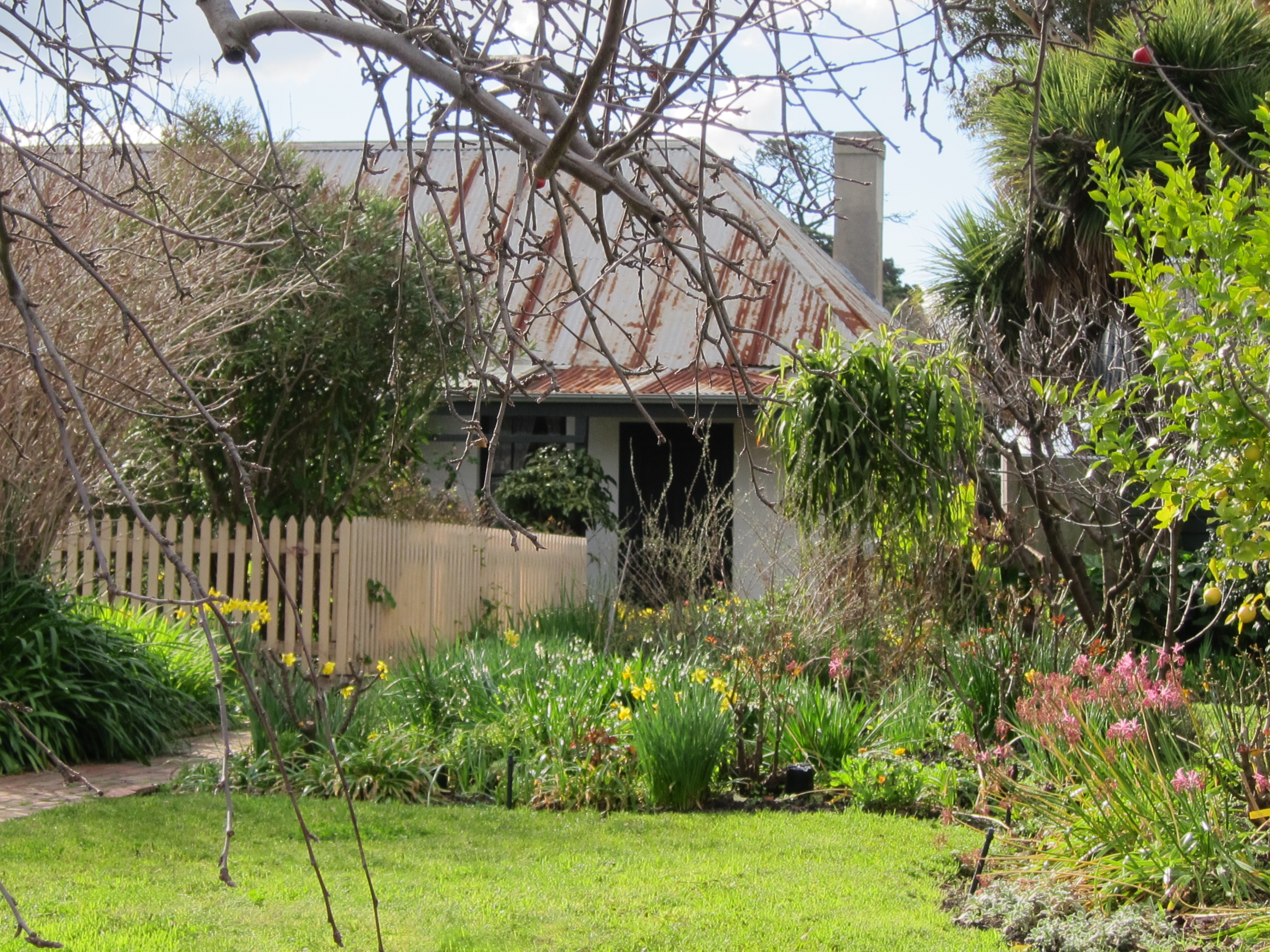
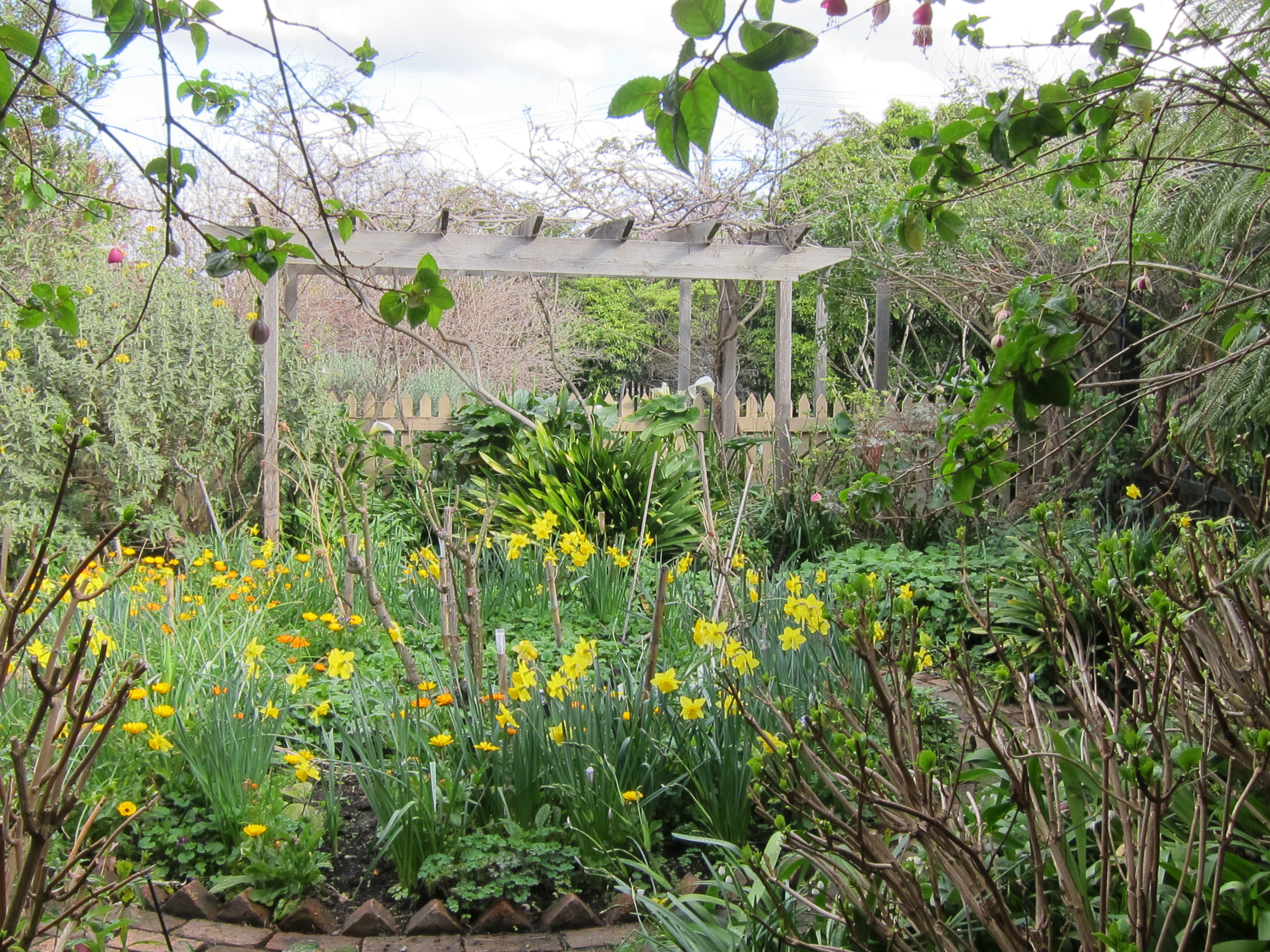
The house itself is only open on the second Sunday of each month between 1.00 and 4.00 pm. (entry $3.00) but you can see the garden at any time and a beautiful garden it is, tended with care and pride.  It’s a credit to its keepers (whomever they may be).

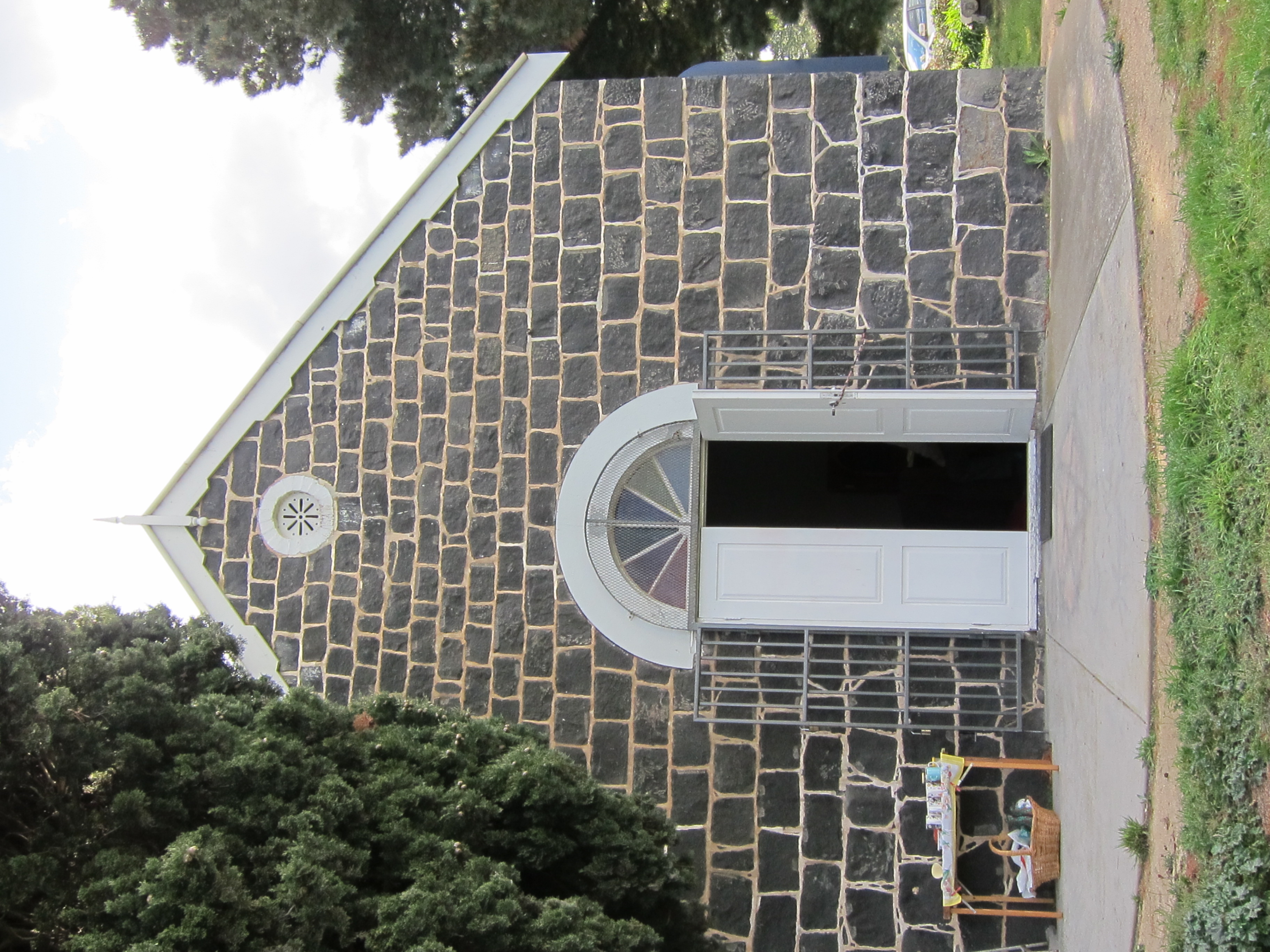
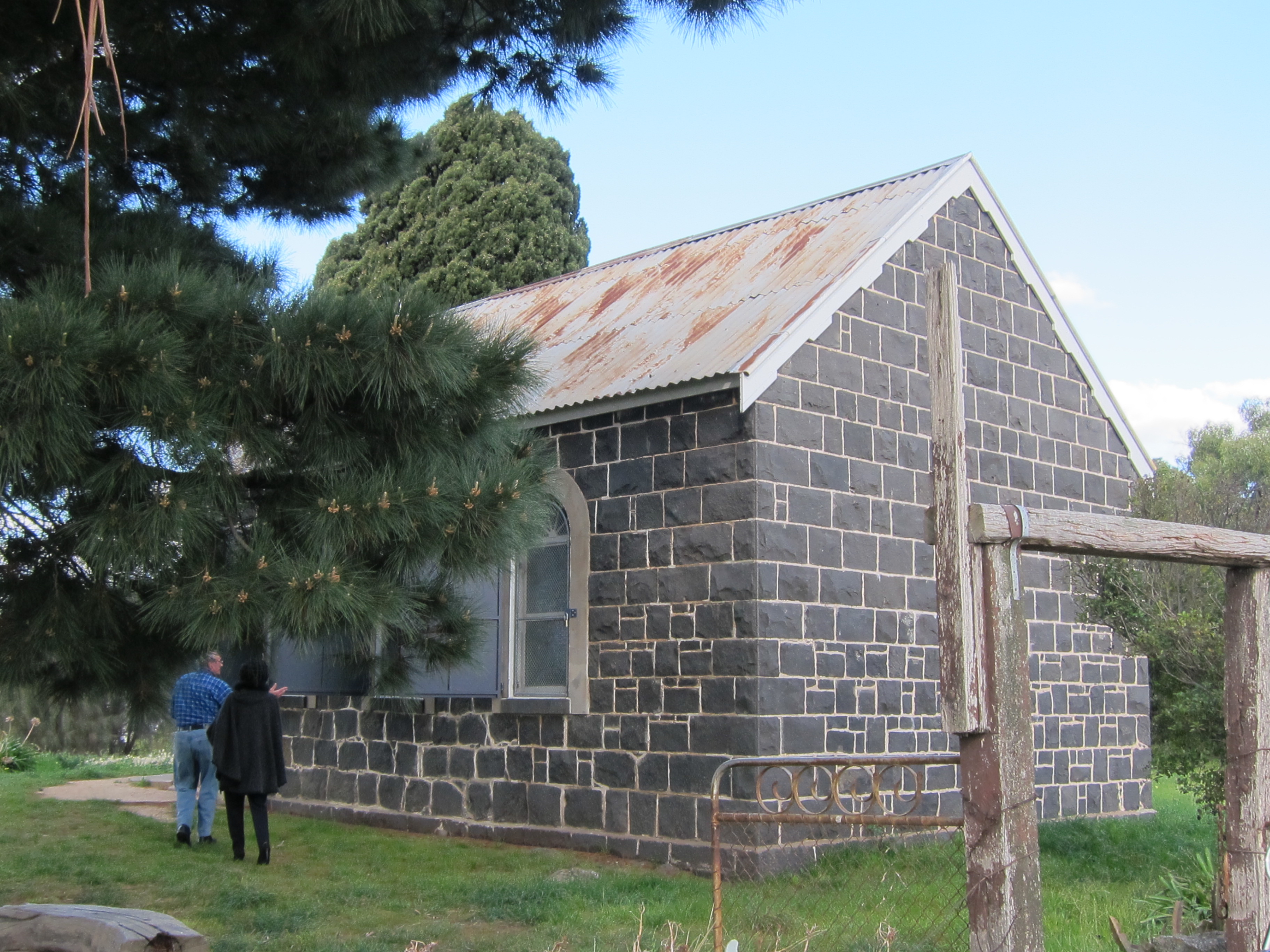
The back of the farm opens onto a large expanse of grass and diagonally across is the Lutheran Church, the oldest operating Lutheran church in Australia, and still in use on alternate Sunday afternoons.  I love seeing a church still fulfilling its original purpose, and the doors and windows were open (they are often shuttered and locked for fear of vandalism), a young man was preaching and a small congregation was inside. A card table was set up for their afternoon tea outside.

We didn’t go in- but if we had, the interior would have looked like this:

There had been a bluestone schoolhouse built nearby, but it was demolished in the 1950s.

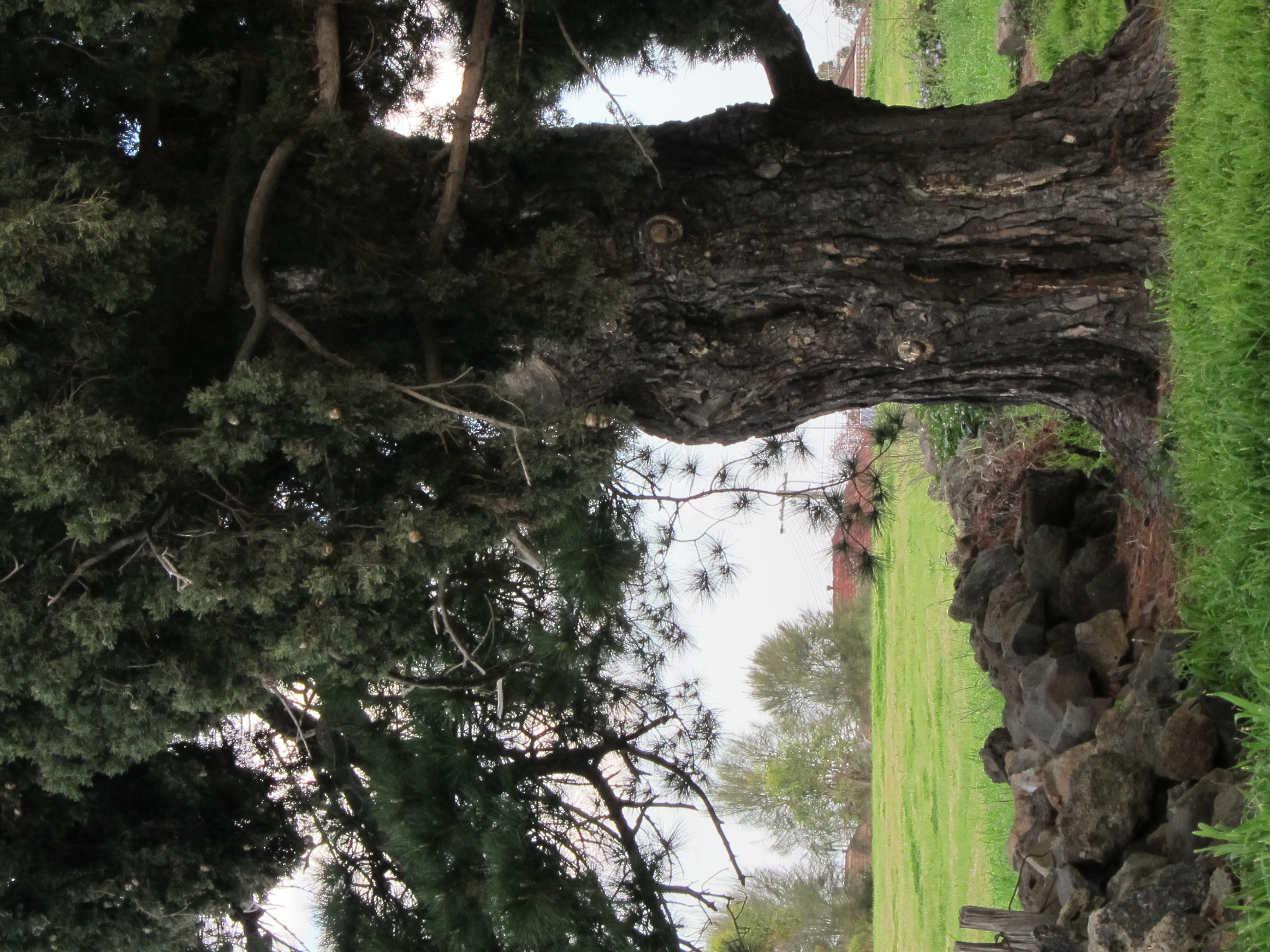
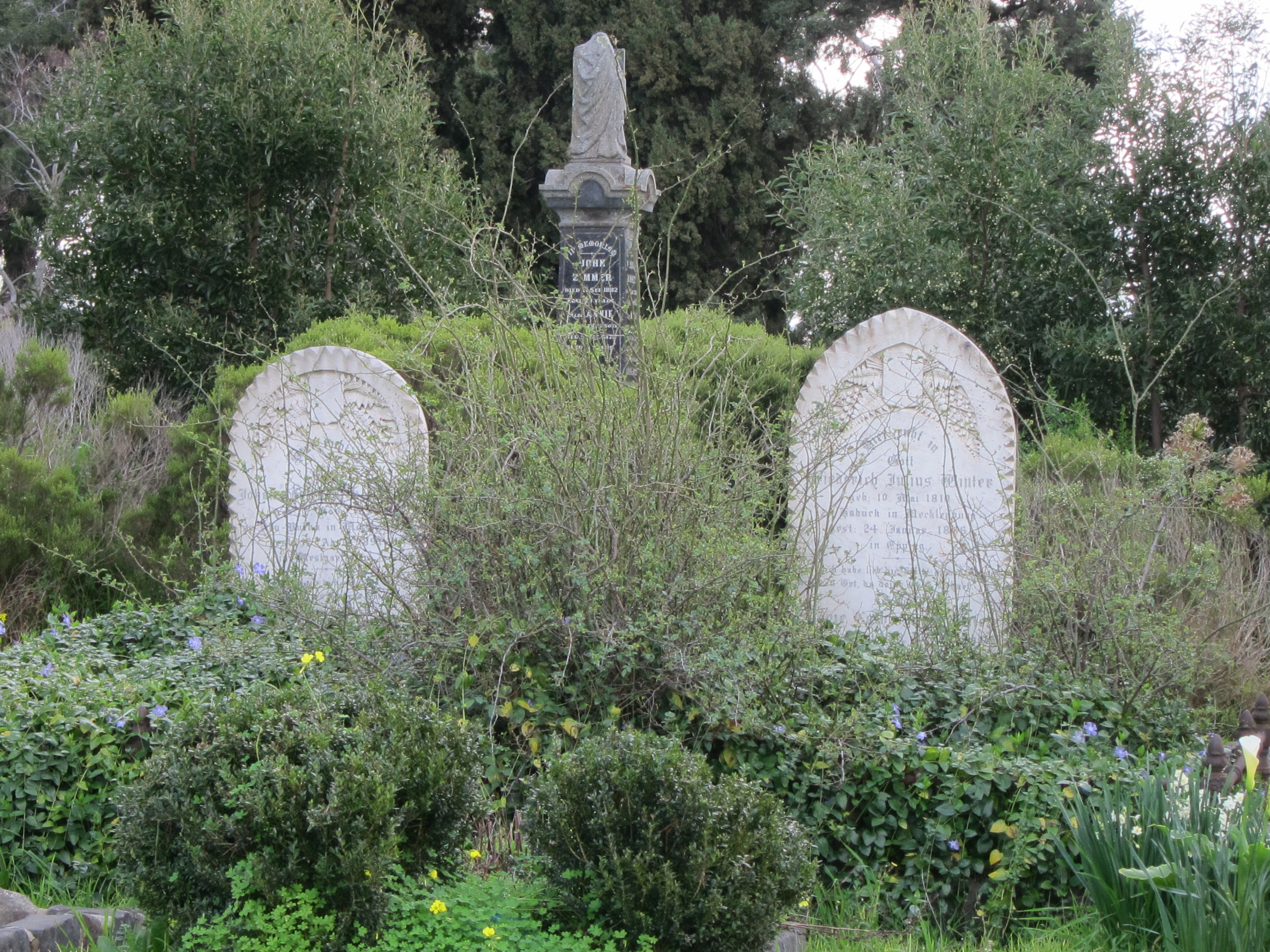
Back across the field to the other corner, and here was the cemetery.  You really had a sense of the centrality of church, school, God and death to these settlers’ lives.  The cemetery is marked out by drystone walls and dark, gnarled conifers.

Many of the inscriptions on the gravestones are in German.  The cemetery is still in use- in fact there was a very recent grave over in one corner that was too muddy to reach- but only direct descendants of the German settlers can be buried there.

It’s wonderful that this little section of Westgarthtown has been preserved intact, but there are other, privately owned old settler houses in the surrounding streets as well.

Maltzahn’s Farmhouse

The Westgarthtown website has more information and there’s more here as well.

Bishopscourt

It was Melbourne Open House on Sunday, and on such a magnificent winter day, I just had to call into one of the locations while I was in the area.  We had come across Toronto’s Open House while we were there, and London’s too for that matter, but I think that Open House days are meant for the residents of a city rather than visitors.  Some of the sites are open year round so there was no great appeal there (unless you went to parts of the building not normally accessible), but I was more drawn to places that are not normally open to the public.  I was walking past Bishopscourt and had always been intrigued by it- so Bishopscourt it was!

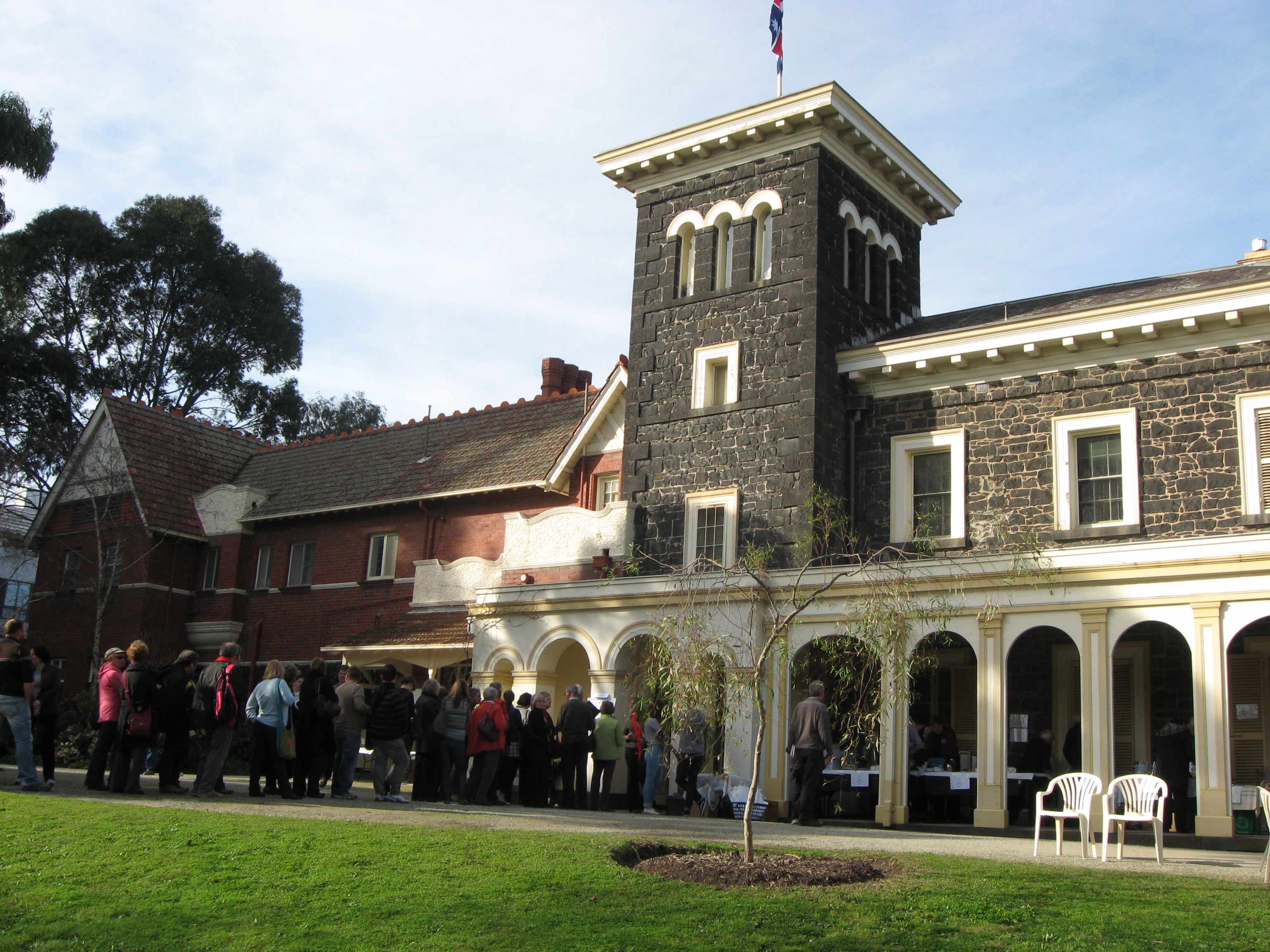
Bishopscourt is located in Clarendon Street, opposite the Fitzroy Gardens.  It has been the family home of the Anglican Bishop and later Archbishop of Melbourne since it was built in 1853.

If it looks a bit of a hodge-podge, that’s because it is.  The first Bishop of Melbourne, Bishop Perry, selected the location so that he could walk into Melbourne itself, while being close to the site that was originally considered for the Cathedral between Hotham and George Streets in East Melbourne .  It was later decided to construct the Cathedral in its present location on the corner of Swanston and Flinders Streets. Construction of  Bishopscourt began in 1851 but because of the shortage of building labourers in these goldrush years, the house was not completed until 1853.  Sixty years later it was decided that a grander house was required. One of the bluestone wings was demolished in 1903 and replaced with the rather discordant red-brick wing, resulting in its rather schizophrenic  appearance.

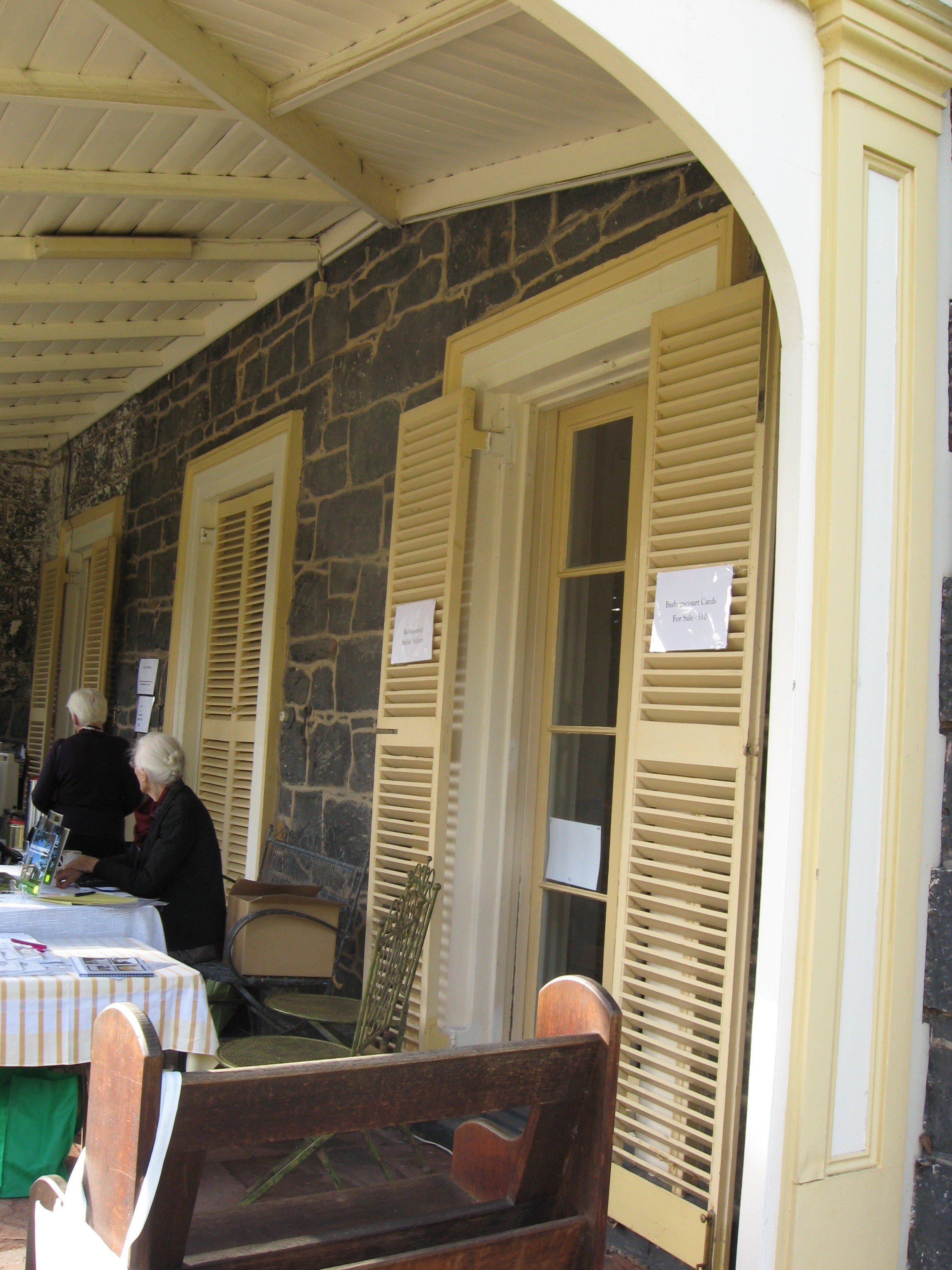
Although constructed in wealthier gold-rush days,  the design of the bluestone section evokes an earlier, more Georgian influence with its French windows and shutters, wide doors and simple architecture.

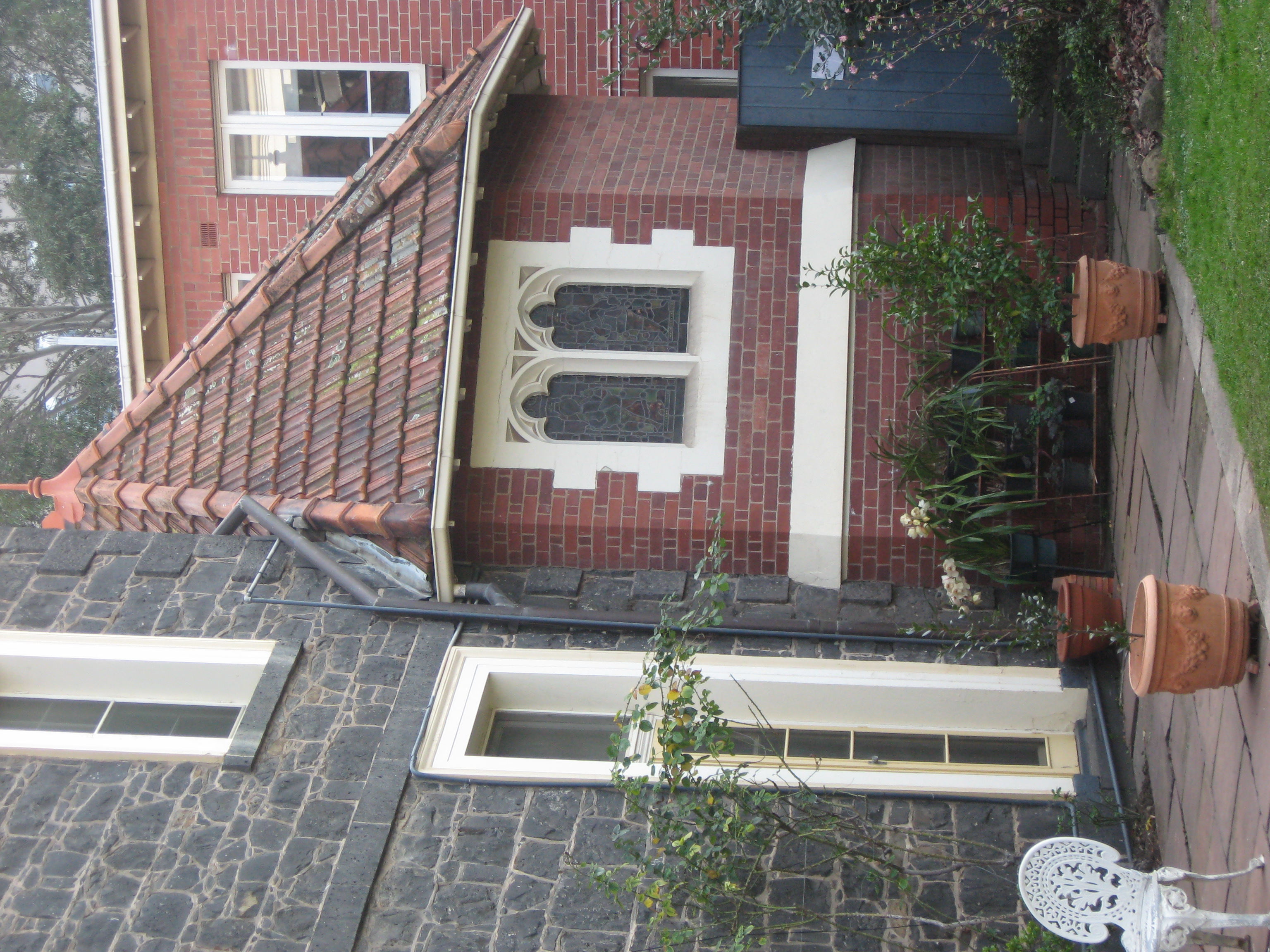
The bluestone is rather roughly laid on the front and side of the house, and it has been suggested that perhaps it was intended that the facade be stuccoed at a later time.  The new red-brick section included a large dining room and a private chapel which was a warm, intimate space that might hold perhaps twenty people.  I wish they had let us take photographs, because the chapel was very special place, with many of the furnishings and decorations donated by previous occupants.

The chapel from the outside

Tours ran approximately every half hour and you were ushered from one room to another, where someone who had previously lived at Bishopscourt spoke about their memories of the room as part of their family home.  The Archbishop of Melbourne was there in the drawing room, decked out in his purpleness, and the daughters and daughter-in-law of the former Archbishop Frank Woods spoke in the morning room, dining room and chapel.  Unfortunately we were restricted to the ground floor- I was intrigued by the staircase which was carved with silhouettes of bishops’ mitres- but I suppose that some privacy was in order as the house continues to be used as a family home: the only pre-gold rush estate still to be used for its original purpose.

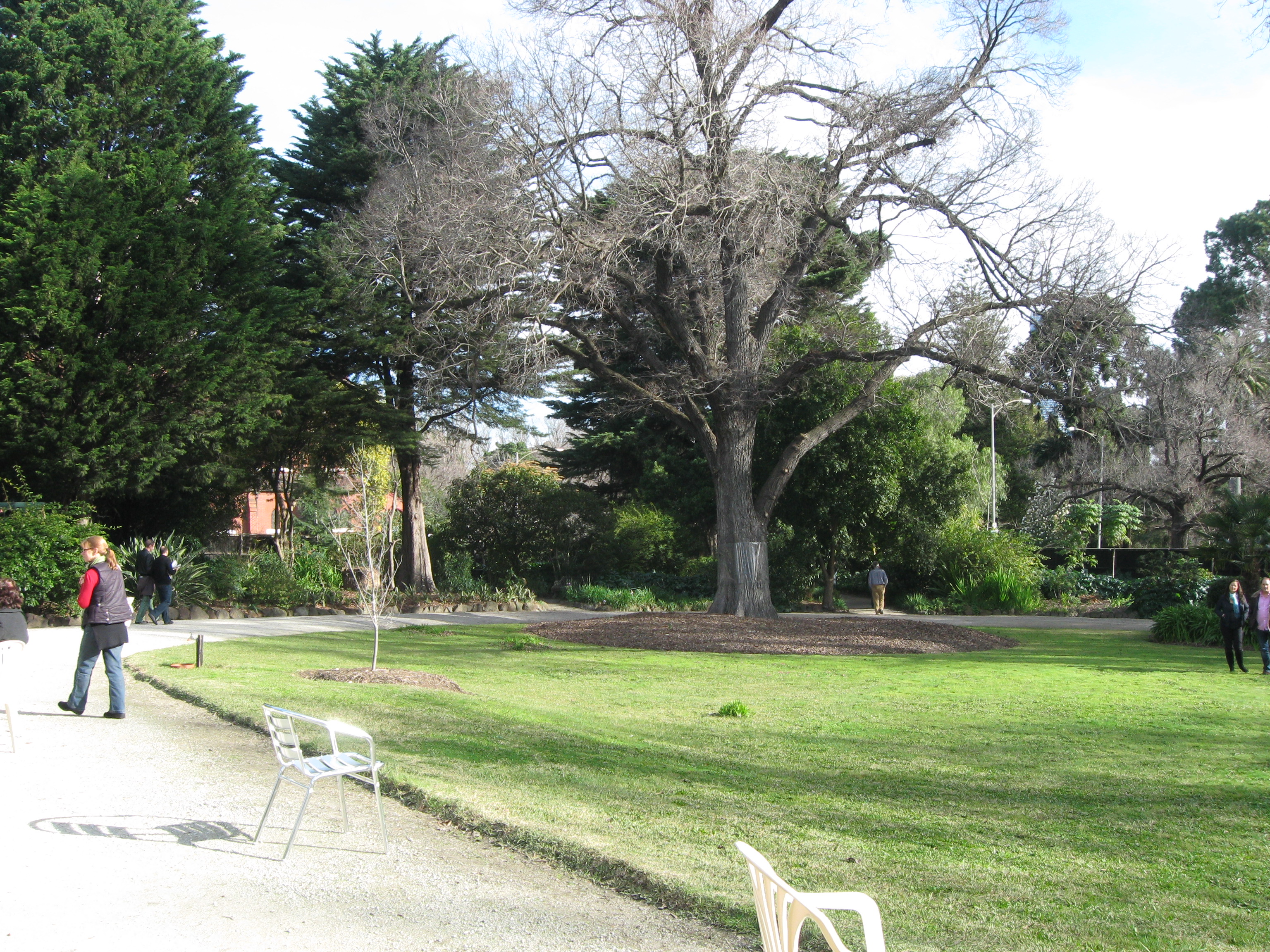
The gardens have been rescued from disrepair by a dedicated band of volunteers and they were in beautiful condition.

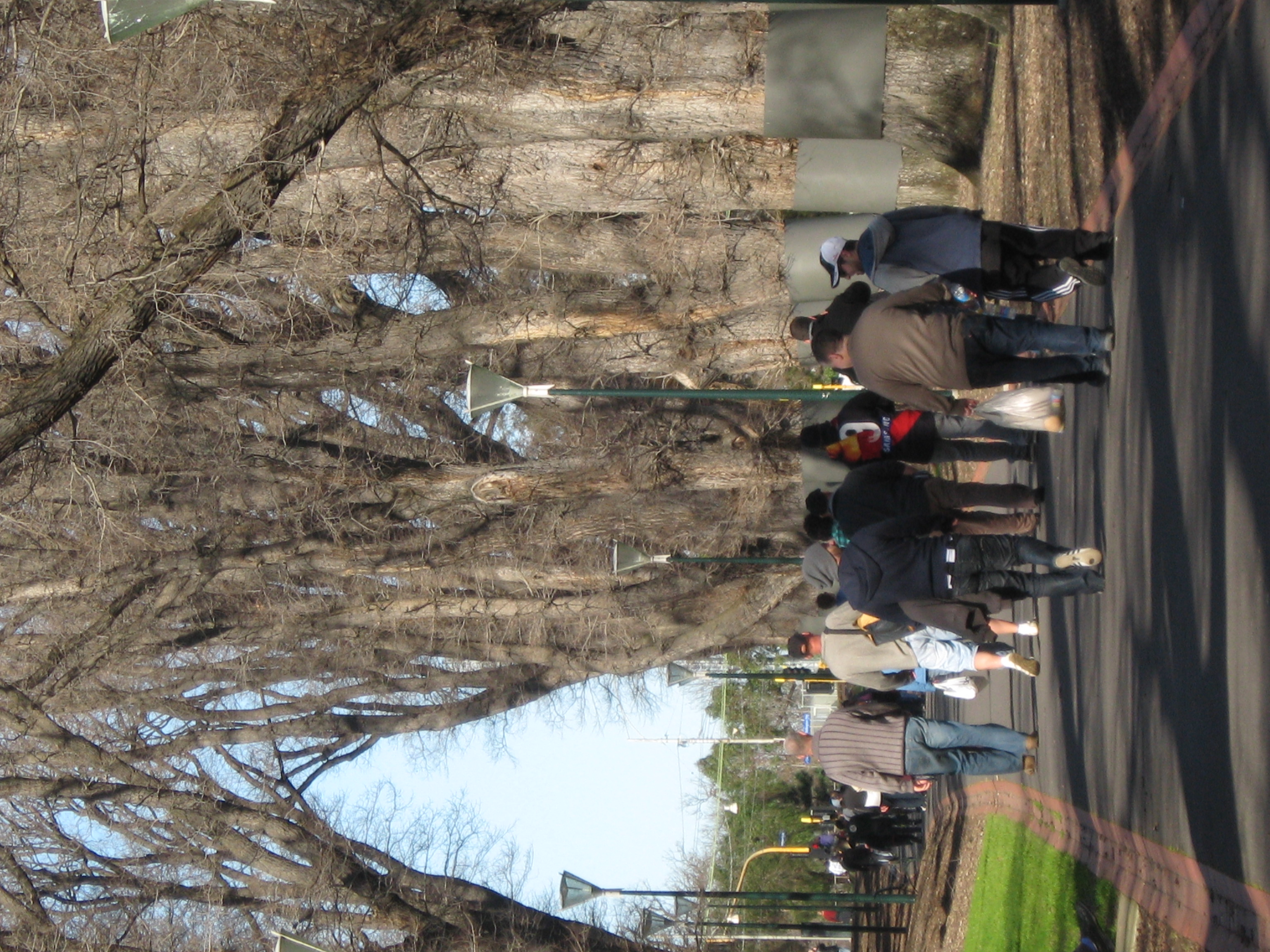
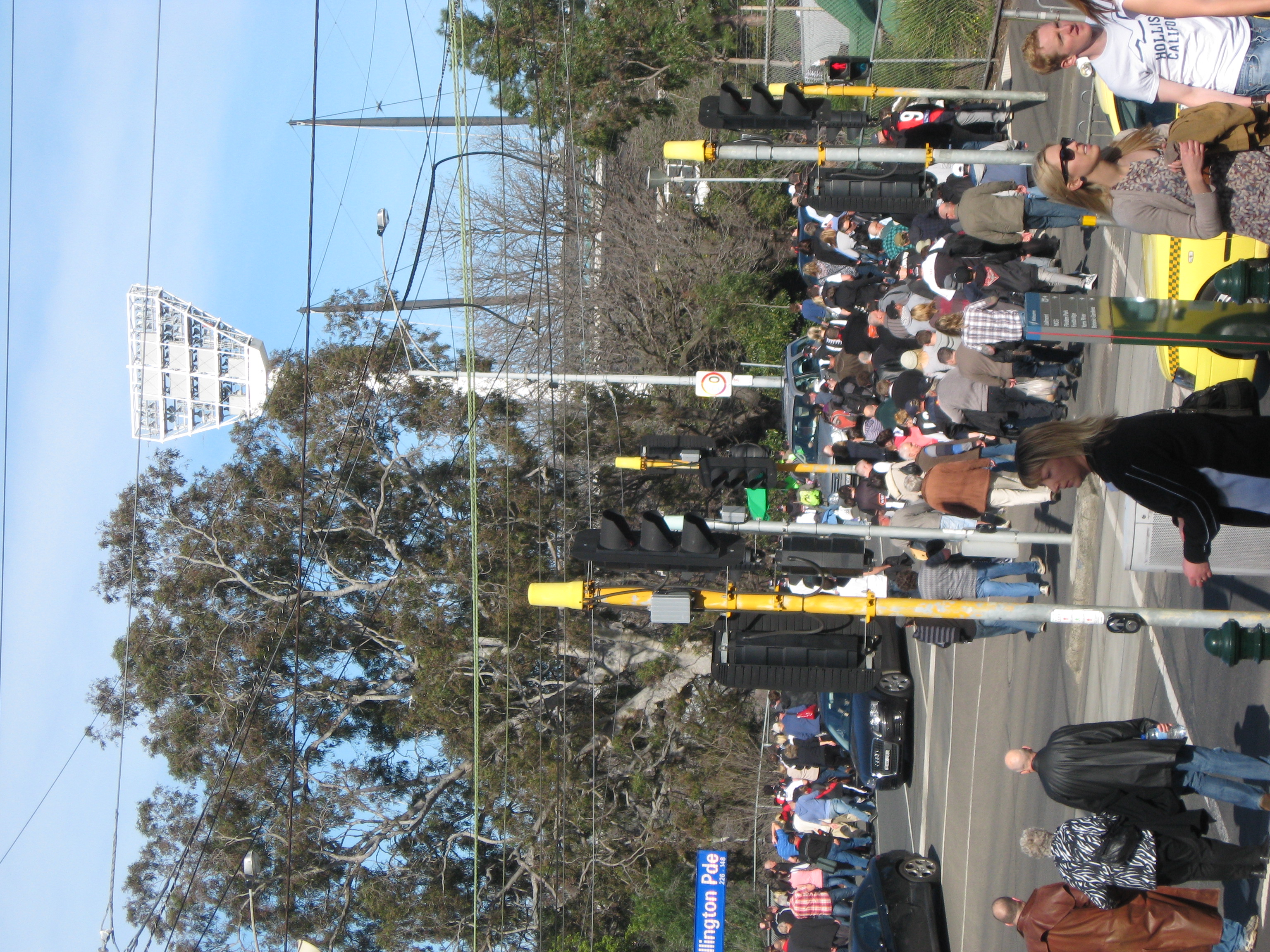
As I left, there was a religious pilgrimage of a different type through the Fitzroy Gardens as the crowds headed towards the MCG for the Collingwood/Essendon match.

The processional to the 'G

Ah- the footy and the MCG on a sunny winter afternoon- hot pies (unfortunately), seagulls, the Footy Record and Jolimont railway station. Who could want for more?

By the way, I wasn’t the only one checking out Melbourne Open House.  Andrew at High Riser had a very busy day and more success photographing than I did.

Opening of the Supreme Court in Melbourne 12 April

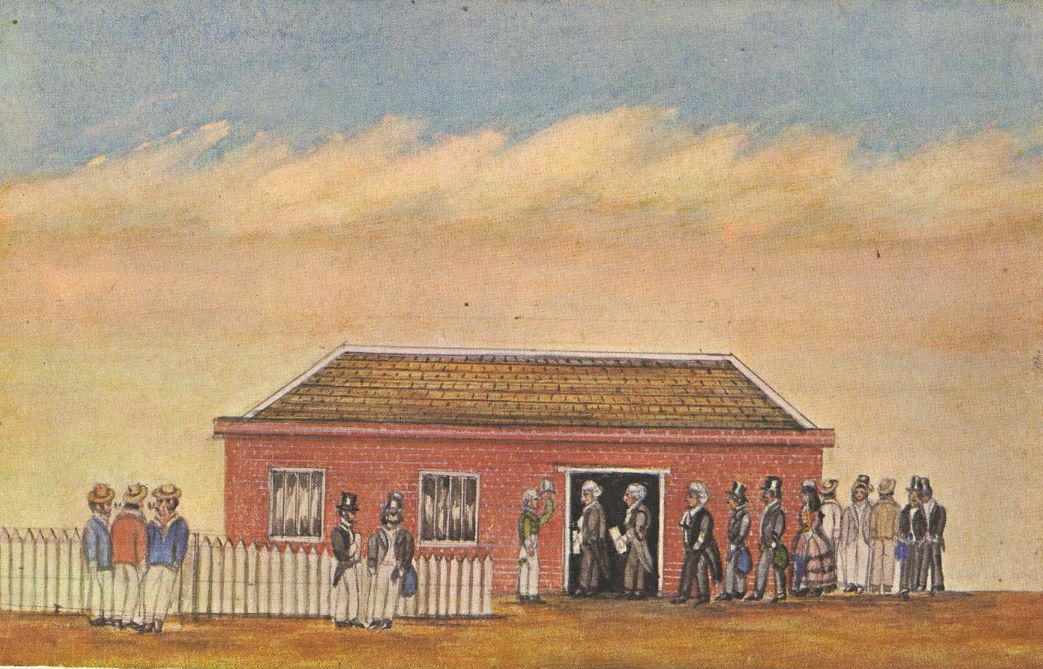
I see that the The Honorable Marilyn Warren AC, Chief Justice of Victoria  is to speak at the RHSV on the 28th April about the opening of the Supreme Court in Melbourne 170 years ago this month.  Look at the header on this blog- this is Liardet’s rendering of the occasion, many years later.  Here’s the uncropped picture:

By all accounts, the first Supreme Court occupied a rather unprepossessing temporary building that was blazing hot in summer and cold in winter.  Here’s what Garryowen (Edmund Finn) had to say about it:

At the south-west corner of King and Bourke Streets there was, in early days, erected a plain-looking, store-like, brick-walled, shingle-covered building, and therein the small business of the Crown Lands Department (controlled by Commissioners) was disposed of.  The entrance at one end faced Bourke Street, and nothing could be less pretentious, less comfortable, or uglier.  In the beginning of 1841, when it was known that a branch of the Supreme Court was to be established in the district, the ruling powers were at their wits’ end as to how, and where, an apartment could be procured for the temporary accommodation of the Resident Judge and his judicial following.  After a good deal of casting about, it was finally resolved to convert this place into a legal “make-shift” and the Crown Lands Commissioners, with their troopers and bailiffs, were hurried off to a wattle-and-daub shed, a rearward appurtenance of the Superintendent’s establishment on Batman’s Hill.  So the barn underwent a partial process of fitting up; and the single-roomed cottage referred to in a previous chapter as a Clerk of Works’ Office behind, was transformed into “Chambers”.  p. 179 This “rookery” then became the Supreme Court, and here it was that the willful and wayward Judge Willis “ruled the roost”. (p. 179)

It certainly had none of the grandeur and visual power of the later, purpose-designed courthouse erected where the Old City Court building now stands in Russell Street.  Instead, it was rather gently derided by the Port Phillip inhabitants:

THE COURT HOUSE:- Some steps should be taken to render this place tenantable.  In winter, parties compelled to attend undergo the operation of freezing, which is materially aided by the chilling draught of air which circulates freely in the building, obtaining ingress and egress through the roof, windows and door.  In the summer, the N.W. Sirocco will scorch the auditory, while the gentlemen of the press will require neither pounce (1) nor blotting paper to absorb the moisture of their hieroglyphics.  Lath and plaster might go a great way to remove this cause of complaint; while the expense would be trifling, the convenience would be great, and prevent many of “the ills which flesh is heir to”. During the present cold weather a machine has been erected on the platform of the Bench, out of sight, bearing a strong resemblance to the tin establishment of an itinerant vendor of roasted potatoes; but whatever heat emanates therefrom must be appropriated to the peculiar cherishment of His Honor’s legs- “Reform it altogether.” Port Phillip Herald, 22 June 1841

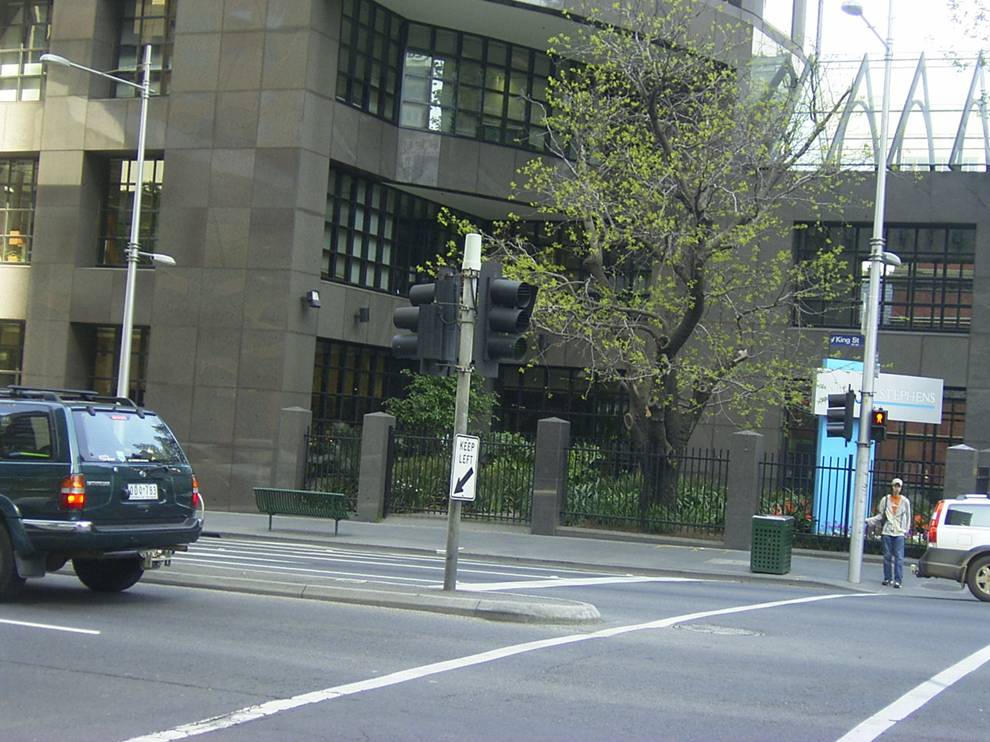
You’re hard pressed to find any hint of that first, small Supreme Court building now.

South -west corner King and Bourke Streets, Melbourne, site of the first Supreme Court

Here’s the Port Phillip Gazette report of the occasion of the opening of the court:

SUPREME COURT-

The first sitting of this tribunal took place   at the temporary Court House in King street on Monday the 12th instant. As might have been expected on such a momentous occasion, there was a large attendance of the inhabitants drawn together by the importance and the novelty of the scene. After the reading of the Act for the   prevention of ” vice and immorality” the proclamation of the authority of the Court, and the commission of His Honor Judge Willis, and  after he had submitted to the ceremony of  being sworn in, in a full and clear voice the learned judge delivered himself of the following   opening address, which for the legal acumen displayed in its production, and the good feeling manifested in its tone and delivery cannot be too highly spoken of.-

And then he launched into his opening address which you can read through Trove (Sydney Herald, 26th April 1841). Knowing as we do that Judge Willis was to dismissed just over two years later on pretty much the grounds he identifies here,  the speech is steeped in irony for us as readers.  No doubt people at the time heard it differently.

All very stirring, uplifting stuff.  But even at this earliest stage of Willis’ time in Melbourne, the Port Phillip Herald raised a sceptical eyebrow and reserved its judgment about the speeches  for the time being:

The Port Phillip Bar.- Upon the induction of the bar on Monday last, the supply of wig and gown was most promising-white neck- cloths were at a premium-and there was that cheerful diversity of nose and whisker surrounding the table, for which the English bar is so eminently celebrated. Touching the Demosthenian or Ciceronian orations delivered on the   occasion, we say nothing, but pause until time shall have mellowed down those fiery exhibitions usually accompanying maiden efforts.

Notes:

[1] Pounce, apparently, was a powder used to prevent ink from spreading and blot up excess ink.

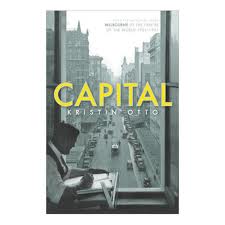
‘Capital’ by Kristin Otto

364 p.  2009

I’m not really sure how to review this- as a reader or as an historian- and I’m not even certain that it’s possible to have a clearcut distinction between the two.  This is Kristin Otto’s second book after releasing Yarra: A Diverting History of Melbourne’s Murky River (and how odd- the small biographical sentence in Capital calls the first book Yarra: A Meandering History of Melbourne’s Murky River. I wonder if the name has changed? I suspect that this is an error.  If so, not a good start given that the same publisher released both books!)

The two books have much in common: both published by Text Publishing,  generous use of black and white photographs, no footnotes, a diverse bibliography and a rather chatty tone that ties together many small details into a clearly identified theme.  It is popular history, aimed largely at a local audience.  The research for this book was funded through a Redmond Barry Fellowship that encourages its recipients to use the collections of the State Library of Victoria and the University of Melbourne (institutions that both have links to Redmond Barry).  She has certainly mined these collections well, and the book is a mass of small details stitched together into a broader fabric.

The book opens with a dictionary definition of ‘capital’ which includes its political, economic and evaluative dimensions- capital city; capital wealth, and excellence.  We could also include human capital here and this, in effect, sums up the spirit of the book.

Otto takes as her focus the years 1901-1927, when the new Federal Parliament sat in Melbourne prior to shifting to the newly-constructed Canberra as national capital.  It takes a basically chronological approach, starting from the Federation Celebrations in 1901 and moving in two or three year steps through to 1927.  Superimposed onto this chronological skeleton is a theme for each time slice: celebrations 1901-3; amusements 1904- 1907, social laboratory 1908-10  etc.  It’s worth looking at the table of contents here.   This double-themed approach groans a bit under its own weight here because concepts like “amusements” or “social laboratory” or “style” were not restricted solely to the three-year period she has pegged them to alone.

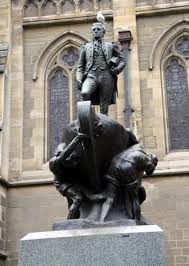
Then she explores these themes through a number of pivotal and fairly well known Melbourne characters including Alfred Deakin, Nellie Melba, John Monash, Tom Roberts, Macpherson Robertson,  Helena Rubenstein, Vance and Netty Palmer,   Janet Lady Clarke and Charles Web Gilbert.  This last name may not be immediately familiar, but it is to me as he is my husband’s grandfather. You may know him by this statue

One of the emphases in this book is on the interconnectedness of people within Melbourne at this time and the author can barely suppress her glee at finding connections and coincidences which she notes in quirky little footnotes.  Although it was obviously a pleasurable hunt for her,  it is no real surprise to me that if you choose to focus on an elite in a community then almost by definition there will be connections between them.  Her linchpin characters are fairly well-mined biographical subjects, although Web Gilbert and Annie Bon, a patron of the Coranderrk Aboriginal settlement in Healesville, less so.   She did attempt to draw in some less noted personalities- Albert Mullett, an Aboriginal man living on Coranderrk, Harold Clapp the Commissioner of Railways- but largely the narrative draws on a strong “aha!” factor amongst a largely Melbourne readership which would recognize familiar names and buildings even today.

The book is generously sprinkled with black and white photographs and was shortlisted by the Galley Club of Australia under the ‘Webfed- Mono/duotonebook/4c, limp bound, no price limit’ category (who would have known that there are so many categories of books?).   Among the images in the book there is a double-page reproduction of both the Tom Roberts and the Charles Nuttall depictions of the opening of Parliament which she discusses exhaustively in the first chapter, but I found myself craving an identification key to the people she describes.  Otherwise the photographs are well chosen, well placed and fascinating.

The book, both in narrative voice and conceptualization,  is similar to that adopted by Robyn Annear in her books Bearbrass and A City Lost and Found and I am sure that it would attract a similar readership.  Otto provides her sources at the end of the book, and they are exhaustive and largely of a biographical or local history bent.  I mourned the absence of footnotes- there were several times when I wondered where she’d gleaned her information- but footnotes are an acquired taste I suspect and I’m sure that many other readers would not notice their absence at all.

I enjoyed the book and the strong recognition factor that it evoked in me, but I do wonder if the complexity of its structure,  with its chronological slices, themes, then biographical linchpins was rather too heavy for it.  And at the risk of being labelled a grumpy old woman, I do find myself wondering if “young people these days” would have the same recognition response to, say, C.J. Dennis or AM band radio stations and the many small details that make up this book.  Who knows- perhaps a book like this is a way of alerting them, but I suspect instead that its readership will be drawn more from people already familiar with them.  The blurb at the front suggests that

For anyone who knows Melbourne, ‘Capital’ will be a fascinating conversation with an old friend.  For others it will be a compelling introduction to a new one.

I suspect that the former will outnumber the latter.


Melbourne Day? 30 August

Poor Melbourne.  She’s been thrashing about for years, looking for a day to celebrate herself.  At the moment the good burghers of the town have settled on Melbourne Day on 30 August, the day that the landing party of the Enterprize went onshore.  The cynics amongst us might see the nomination of 30 August as another step in the Batman/Fawkner controversy over the founding of Melbourne that I’ve alluded to previously here and here.   And just look at all the things you can do today on the Melbourne Day website

Being a daughter of the land of the long weekend, a day’s not worth celebrating unless it’s a day off, and I can’t see that happening in a hurry.

But this yearning for a Big Day is not just a rush of blood to the collective heads of the City of Melbourne Public Relations Committee. Tom Griffiths in Hunters and Collectors goes through some of the other attempts to have a Melbourne Big Day- attempts that were as unsuccessful as I strongly suspect Melbourne Day will be.

There was, of course, Foundation Day or ANA day on 26th January but -damn it- school holidays were longer then and the little tackers were still on holiday. Besides, it’s always been a bit Sydney-centric, and there’s the problem of all those convicts…

Separation Day on 1 July, to celebrate the separation of Victoria from New South Wales in 1851 was Victoria’s first day of commemoration, but it faded away quickly.  It was inaugurated only a couple of days before the discovery of gold.  With the influx of newcomers with the gold rush, it meant little and soon fizzled out.   The recent ringbarking of the Separation Tree in the Botanic Gardens provoked regret but not outrage, and I suspect that Separation’s not about to capture the public imagination anymore.

In 1911 the Victorian  Education Department declared 19th April to be “Discovery Day” because on that day Lieutenant Hicks sighted Victoria from Cook’s Endeavour (and sailed right on past….).  But then Anzac Day was inconsiderate enough to happen on 25 April so that was the end of a perfectly good date because the children and their teachers had quite enough to do with Simpson and Last Posts etc.

What about November 19 then?  It became “Pioneers Day” to commemorate the day that Edward Henty landed at Portland and became, so it was said, Victoria’s first permanent settler, complete with ploughs and sheep.  I don’t know when this day fell off the calendar.

We tend to have days for good causes, but particularly around the turn of the twentieth century,  “nature” days were all the go.  There was Arbor Day, (picked up from the United States) now known as National Tree Day, and held at different times around Australia.  I remember this one- being given a little tree in a tube to plant in the rock-hard, clayey school garden.  I also remember planting trees down by the Yarra River- the plantations are still there- but I’m not sure if that was for Arbor Day or not.  It may have just been a tree-planting scheme.

Then there was Bird Day, which was first held in Victoria in 1909 by the Gould League.  It was their centenary in 2009-  look here at their gallery of memorabilia.  I was a proud member of the Gould League with their tasteful little badge (I wonder if I still have it somewhere?); I loved the smell of their glossy magazines, and I had their sketch book with the magpie on the front. I entered a picture of an ibis (execrable creatures) for one of their competitions.   To be honest, there’s a twitcher in me that threatens to escape sometimes.

Wattle Day? 1st September apparently. It’s their centenary this year. They’ve got some fun suggestions for celebrating it.  Or not.  I remember someone bringing wattle to my fourth grade teacher -do children still take flowers to class? I suspect not.  Poor old Mrs Kenny was allergic to it, and was away from school for a fortnight.   Would bursting into “bwah-ha-ha” lower the tone of my blog?

Why not? I’m feeling so festive on our putative 175th Anniversary… Happy Melbourne Day to you too.

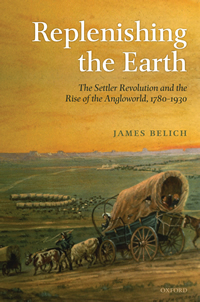
‘Replenishing the Earth’ by James Belich

Replenishing the Earth: The Settler Revolution and the Rise of the Anglo-World 1783-1939, Oxford University Press.

2009, 579 p.

Melbourne, formerly Port Phillip, is mentioned right from the opening words of this book.

Let us begin with two problems in urban history, exemplified by two pairs of cities:  Chicago and Melbourne and London and New York. (p.1)

Why did Chicago and Melbourne undergo such explosive growth, and why in 1890 were London and New York the only two mega-cities in the world?  And why are these four cities English-speaking? Given that there were other empires and cultures- the Portuguese, French, Dutch, Chinese, Russian- that could have rivalled or even exceeded the British empire, why didn’t they?

Replenishing the Earth is a big book that asks big questions and gives big answers.  Big ideas demand mental dexterity of readers, and Belich asks us to do some geographical somersaults as well.  He speaks not of  the “British Empire” as such, but of the Anglo-world, composed of two parallel, twinned structures (I wish I could show you the diagram- see Note 1 below)

To visualize this two-pair Anglo-world, imagine a malleable map like those used to illustrate pre-historical continental drift.  Place your thumbs above Florida, and your forefingers firmly in the Great Lakes.  Prise the United States apart along the line of the Appalachians, splitting it into Atlantic East, roughly the original thirteen colonies, and the vast American West.  The East, in our period, was an emigrant society as well as an immigrant society.  It was one of the world’s greatest sources of long-range migration and investment.  It was the American ‘old-land’, a metropolis equivalent to Britain.  Now gather up Australia, New Zealand, and with some hesitation, South Africa and place them in the Central Atlantic.  With Canada, the Dominions make up a water-linked ‘British West’. This West and old Britain combined to comprise ‘Greater Britain’, the white, un-coerced part of the British Empire, the British flank of the Anglo-world.  Here we have two metropolises or ‘oldlands’, the British Isles and the US East, and two Wests or constellations of ‘newlands’, land-joined in the American case and sea-joined in the British. p. 70

These two parallel ‘oldlands’  (i.e. Britain and Eastern America)  spawned what he calls a ‘settler revolution’ as people, technology and communications flooded into the ‘newlands’ (i.e what became the Dominions and Western America).  This might be thought of simply as good old-fashioned colonization but he separates out four phases that have their own rhythm:

  1. incremental colonization- the slow development of small settlements along trade routes and waterways, looking seaward with their interiors viewed as wild back-country
  2. explosive colonization.  This occurred from 1815 onwards with the mass transfer of technology, money, information, skills and people.  The settlers demanded oldland support, often on their own terms, and the whole scenario usually ended with a bang
  3. re-colonization.  Once things went pear-shaped, settlers cast about for an export that fed into oldland demand that would rescue their local economy- sheep, tallow, timber etc.  In this regard, “[t]he Anglo-world was built like a coral reef on layer after layer of fiscal corpses” (p. 206)  But this was not necessarily exploitative, but a matter of mutual dependency. By integrating themselves into the oldland economy, they saw themselves as part of ‘Greater Britain’ or ‘Greater America’, and “virtually metropolitan co-owners rather than subjects…” p. 180
  4. decolonization. This works only for the British scenario, but it marked the emergence of real as distinct from nominal Dominion independence.

His book focusses mainly on explosive colonization and re-colonization and he argues that the boom-bust waves run as an undercurrent through the histories of the newlands and their relationship with the oldlands.   He suggests that being aware of these rhythms is akin to being attuned to the seasons when describing agriculture- something that I had sensed myself in my own work with Judge Willis in Port Phillip during a time of financial bust, reflected in my several postings on this blog on the Twelve Apostles.

This book invites those who study settler pasts to add another colour to their palette. A booming settler society was very different from the same society in busts, or under re-colonization.  The mood was different, the atmosphere was different, the popular culture was different.  Social structure, crime levels, labour relationships, and gender relations in an explosive colonial society all differ significantly from those in a re-colonial one. (p. 548)

This book draws heavily on economic history: you only have to look at the secondary sources he has used to see that.   This is not the type of history with which I am particularly comfortable, but he adds to the ‘rational choice’ explanation of human economic activity another less measurable influence.   Immigrants, or their immediate forebears, had often shifted internally within Europe in preceding decades, and they were not moving as strangers into another people’s society, but were instead part of the cloning process whereby Anglophone language, institutions, credit and finance systems, plays, books, newspapers, fashions were transplanted into newland territories.  There were always the ‘boosters’ in these newland communities who spruiked the climate, the riches for the taking and the opportunities for settlers- and even the terminology that came to be used for the newcomers is important here-  but the mass transfer of people happened because of what happened in people’s heads when they weighed the possibilities of migration.  This, too, is an approach to history that I feel comfortable with.

His book focusses on the Anglo-phone world, but he makes -rather unclearly-  a distinction between Anglo-phone and Anglo-prone.  Quite apart from the linguistic punnery here, he is at pains to point out that many of the features he identifies are not exclusive to English-speaking peoples, but that they were more likely to display them than, say, French or Spanish societies. His book also encompasses Brazil, Argentina, Siberia, Algeria and Manchuria as alternative scenarios.

There are big ideas in this book, and I can’t do justice to them.  In fact, in a blogpost of this length I can’t even give Belich’s answer  to the questions he posed in his opening sentence above.  I am in awe of the breadth of reading that the author has undertaken and the sheer size of the explanation he offers.  I could not write this sort of history- I admire those who can- but I don’t know if I would necessarily want to, even if I could.  I found myself sitting up a little straighter once people and voices were brought into the spotlight, and I think that reflects my own historical leanings.

Note

You can see the map if you go to the Googlebooks page and search for “The Two-Pair ‘Anglo-World'”. This will take you to Page 70, from which you can go back one page to p.69 where the map is shown.

Other reviews of this book:

The Independent 3 July 2009

The Times Higher Education 27 August 2009

Andrew Smith’s blog (which is where I read of the book, then made the connection with the Keynote speaker at the recent AHA conference- that’s Australian Historical Association, by the way)

‘Memoirs recorded at Geelong by Foster Fyans’ ed. Phillip L Brown

“What is the use of a book, ” thought Alice “without pictures and conversations?”  I’m with you, Alice.  I  certainly wasn’t expecting conversations in Foster Fyan’s memoirs, and I very much appreciated the maps and illustrations.

Foster Fyans is well known in Geelong as the first police magistrate there (1837-40), then he became Crown Land Commissioner in the district.  The area just out of Geelong known as Fyansford is named after him, and there’s a Fyans Street in Geelong itself.  After visiting Geelong a fortnight ago for the Robert Dowling exhibition I seem to be rather Geelong-conscious at the moment, and I’ve been reading Fyans’ memoirs for a paper that I’ll be giving much later in the year.

As his entry in the Australian Dictionary of Biography suggests, there is not much known about his early life beyond that he was Irish and brought up by an uncle.  In these memoirs he springs from the page as a fully-formed army man, in charge of taking bringing a band of recruits to Portsmouth.  From the start he portrays army life full of masculine humour, eating and drinking, marching and high-jinks- almost a dead ringer for Lydia Bennett’s Mr Wickham and his mates.   His description of the Peninsular War likewise emphasizes life amongst his fellow soldiers, with more distress ascribed to the illness that swept through the camps rather than actual combat.  Then off to India for several years where again, life revolved around hunting and carousing and little mention of actual soldiering.  After a short time in Cape Colony (more parties and shooting), he arrived in Sydney where he spent a short, restless, lonely time before reporting to his regiment and joining his fellow soldiers at Parramatta.  Although he attended Government House, the jocular hail-fellow tone falters here, as the realities of convict settlement and official responsibilities become more apparent to him.  He is sent to the high-security  Norfolk Island where he eventually becomes Acting Commandant, and from there as commandant to Moreton Bay (now Brisbane) which was also a penal settlement at the time.  While  in Moreton Bay he oversaw the rescue of  Eliza Fraser.   His response to the convicts probably reflects the contradictions thrown up by the system- an uneasy wariness of violence that runs just below the surface co-existing with close day-to-day proximity with men not so different from oneself.

From there he was sent as Police Magistrate to Geelong, which is about fifty miles from Melbourne and rich pastoral land.  His memoirs become even quieter at this stage.  He spends quite a bit of time describing an expedition to the port settlement of  Portland, the first recognized land journey between the two settlements.  With only two mounted police and the surveyor Mr Smythe and no maps, they set off in what seemed to be atrocious weather, greeted each morning by the “flying jackass” (kookaburra), the “chanticleer of Australia”.   By 1840 he had been appointed Commissioner of Crown Lands, responsible for maintaining order among the squatters and investigating clashes between the settlers and the displaced aboriginal groups.  Here is a sad litany of violence,  where he mainly sides with the settlers in sympathy for what they perceive as needless stock loss. Like the settlers he is critical of the Aboriginal Protectors and the nearby mission station that he feels only attracts more aborigines to the area and imbues them with a misplaced sense of inviolability.

What started out as a military romp has become a nomadic police-like existence, accompanied mainly by his aboriginal “boy” Bon Jon (the purpose for my reading these memoirs).  It has become much quieter and more isolated.  Perhaps it’s the memoirist running out of puff too, because the memoirs stop abruptly in the bush in 1842.

The editor has written an introduction, where he describes the provenance of the manuscript and the various branches of the Fyans family tree, then gives a brief summary of the content of the memoirs.  I always enjoy hearing about how a manuscript comes to be published. The original, scrawled across five hundred foolscap pages had been typed up by Fyans’ great grand-son and it was donated by his descendants to the State Library of Victoria in 1962.   Although Fyans himself did not divide it into chapters, he did create sections by inserting a page with rough headings for the pages that follow. The  editor has created chapter headings and provided notes  at the end of each chapter.  These rather dour and punctilious annotations to the entries, which are painstaking in their detail, remind the reader of the fallibilities of memory and chronology, and the infelicities that arise when a raconteur is  telling a good story.

I think that it’s almost certain that anyone working exhaustively on an archive of memoirs, diaries or letters comes to build some sort of a relationship (albeit completely one-sided) with the author.  The editor, P. L. Brown (who also wrote the ADB entry) seems rather disenchanted by the many inconsistencies and errors he found

Fyan’s reminiscences had to be checked in order to assess their worth as historical material. This checking disclosed considerable and frequent divergence between actual and remembered events, and made it clear that the text, unless fully annotated, must be more entertaining than instructive. Hence the presentation of archives, both British and Australian, from the latter of which Fyans emerges as an energetic, conscientious public servant, rather let down by his rambling old self, who nevertheless conveys the authentic atmosphere of his historical period, and told few stories which lacked a germ of truth (p. xv)

The memoirs themselves ended abruptly, and the notes themselves end with the transcription of assorted letters and returns, and further details about wills and inheritances.  I found myself wishing that P.L. Brown had returned at this point to round out the picture somewhat and to help me, as reader, to bid farewell to Fyans.  After all, he’d been a rollicking companion for the first 100 pages or so, and despite infelicities and distortions in his retelling, he sure had a story to tell- Spain, India, Cape Colony and Australia- as did many of those peripatetic colonial civil servants.

Weston Bate at the RHSV

Weston Bate gave a presentation at the Royal Historical Society of Victoria a couple of weeks back.  It was called “How I Became a Local Historian” and you can listen to it here.

He studied history at Melbourne University during Max Crawford’s time, and although he had done well in essays, did not perform as well in his honours exam as he had hoped.  He jumped at the chance of writing a history of Brighton, commissioned by the Brighton mayor, largely because of the sense of place that he himself had developed growing up in suburban Melbourne.

He started off with the rate books, utilizing the “birds eye” view of the RAAF pilot he had been during WWII, mapping out the streets, the type of building constructed and the people who lived there.  He tramped the streets of Brighton too, getting a feel for the place.  He took a slice approach with the newspapers, reading at ten year intervals (and ruing, with hindsight, that he didn’t align his reading with the censuses).  Brighton as a suburb was a rich field-  it threw up Dendy’s special survey and the involvement of J. B. Were; the development of the resort town; market gardening; the influence of Tommy Bent; the nature and contribution of the ‘middle suburb’.  It was a local history, but it illustrated big themes.

He speaks of the academy’s condescension towards local history, and the sidelining of the Royal Historical Society of Victoria by the University of Melbourne for some time, reciprocated by the local historians’ disdain of “academic” historians for their lack of interest in primary sources.

A good, well-constructed talk- and I do love being able to catch up on things I have missed through podcasts!

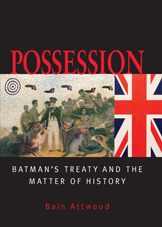
‘Possession: Batman’s Treaty and the Matter of History’ by Bain Attwood

2009, 323 p & notes

We will never really know how much of the [Port Phillip] Association’s narrative was true because of the paucity of contemporary sources.  Indeed, all we have are the few accounts created by these colonisers.  In respect of the famous treaty-making, we cannot even be sure it took place.  Arguably, it might simply be an imaginary event that never happened.  In the end, it probably doesn’t matter very much whether it occurred or not. (I assume that some parts of the treaty-making did take place.) What is more important historically are the stories that have been told about it. (p. 47)

As you might gather from this quote, this book is not just about Batman’s treaty.  In fact, looking at the book lying on my desk here with  “Possession” in large silver letters on the spine, I’m not really sure that the book is about possession at all.  The treaty itself could be a construction, and whatever ‘truth’ there is about it has been overlaid by boosterism, intentional forgetting and spin.

The treaty document itself was drawn up in Van Diemen’s Land before Batman arrived in Port Phillip; the ‘signatures’ have a suspicious similarity, and Batman did not, as he claimed, walk the boundaries of the land ‘traded’.  The motivations for the treaty and its subsequent quashing by the NSW goverment,  as Attwood explores, are best explained in terms of the time in which it was put forward – 1835- in the wake of the Black Wars in Tasmania, under the influence of the humanitarian lobbyists in London, and in light of the invention through the NSW courts during the 1830s and 1840s of a spurious ‘authorized’ history of British sovereignty in New South Wales, some 50 years after the event.

The creation and rejection of the treaty takes up only the first 100 pages of the book.  It then meanders into an exploration of the artistic depiction of the treaty over time and the change in emphasis on Batman’s treaty to Batman’s purported (and spurious) sailing up the river and declaration “This will be the place for a village!”.  I found the artwork fascinating.  Some time ago I had pooh-poohed the grand, commemorative American artwork tradition but here it is, alive and well in Melbourne- see here – it’s just not displayed in our art galleries any more.

The book moves into a discussion of history-writing in Victoria, with a string of antiquarian historians burnishing the Batman legend and feeding the Victorian (in both senses of the word) obsession with memorials and commemorations.  There was the Batman memorial over his putative grave; a memorial stone embedded in the footpath, Batman Park, Batman Avenue.  Then gradually the cracks in the image started appearing with questions over Batman’s parentage and sobriety and the championing of Fawkner’s settler history as an alternative story, pushed along by the tourism industry and latter-day Melbourne boosters and P.R. agents.  Gradually the memorials were shifted to quieter, less prominent locations, parks were renamed, and explanatory plaques were attached to statues qualifying some of the more gushing tributes to Batman and his activities. Just to add another layer to this already contorted history, it was Aboriginal people in Victoria who maintained the memory of Batman as the white man who dealt fairly with them, at a time when white history had consigned his treaty to the status of a curiosity.  The turn to politics becomes more weighty when Attwood takes on Henry Reynolds’ book The Law of the Land , which Attwood argues was a juridical history, intended to present sovereignty as a legal problem for 20th century political  purposes and one that, oddly, disregarded the Batman treaty entirely in the original edition of Reynolds’ book.

This is a richly illustrated book with coloured reproductions of the grand celebratory paintings, photographs of top-hatted men at yet another Batman memorial unveiling, reproductions of the string of illustrated histories that were published over the years and recent colour photographs of the now-discredited old memorials  and their newly-minted replacements.  It’s a book that takes us far beyond the treaty.