Category Archives: Judge Willis

It’s Council Election time

Ah democracy!  This weekend has been local election time in Victoria and my enthusiasm for compulsory voting EVEN extends to council elections, shabby and petty little events though they are.  Many councils opted for postal-vote only, but my council had ‘proper’ elections, complete with flyers, Victorian Electoral Commission staff, the little cardboard booths and the stubby pencils.  Although I could have probably survived without this exercise in local democracy, in general I’m very pleased that we have government-funded, compulsory elections.  I look at the queues of people at American elections, and the skewing of issues on all sides to “get out the vote” and I’m glad that there’s no question about it here: you just have to vote.  It only takes ten minutes out of your life because it’s funded on the knowledge that everybody will attend.
condell

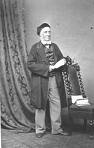
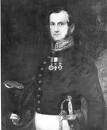
Henry Condell, first mayor of Melbourne

The first council elections in the Port Phillip district were held in Melbourne on 1st December 1842. This was a time when the “anxiety” about Judge Willis was reaching a peak, before subsiding briefly to re-emerge the following year.  They were not the very first elections held in the district: there had been elections for the Market Commission in 1841, but few voted for it.

In Britain, the Municipal Reform Act of 1835 provided the first English municipal elections, and the Colonial Office was keen to extend this rudimentary form of ‘representative democracy’ to the colonies as well.  Given the influx of migration into Port Phillip after 1839, many people would have experienced  this new phenomenon of municipal elections ‘at home’, and certainly the English influence on the election process is very noticeable.

Even before the Government announced the final arrangements for the Melbourne Town Corporation election, there was jockeying between factions about how it would be managed.  There was one private meeting that sought to ensure that the ‘right’ sort of people were elected, drawing I suspect, on the British tradition of sorting it all out between gentlemen and avoiding an unseemly election at all costs.  In defiance of this concept of ‘hole and corner meetings’, a public meeting was held in opposition to proclaim the openness of the election to all qualified comers.

The bill for the Melbourne elections was passed in August 1842, providing for four wards.  Candidates had to possess real estate worth 1000 pounds or live in a residence with an annual rental value of 50 pounds. In order to vote, electors had to occupy property with an annual rental of at least 25 pounds.

On 12 September ‘collectors’ were dispatched to inspect properties to see if the rental value was worth 25 pounds.  As rental properties worth less than 25 pounds were exempt from taxation, the occupants were not qualified to vote.  Such a regulation also ensured that tenants had an incentive for downplaying their rental to avoid taxation.   After the Burgess List had been published, its valuations were challenged by a Committee, which heard appeals.

Prior to the election, all candidates were furnished with ‘queries’ – not unlike the questions posed today in more recent times by lobby groups today before an election.  However, these queries were not so much about policies, but more about establishing the integrity of the candidate.  The questions also reflect an intention, at least, to avoid the secrecy, patronage and jobbery of Old Corruption back in England.  Not all candidates answered the questions.  The questions were (roughly paraphrased)

1. Do you have the time and energy to devote to the position?

2. Will you vacate your position if requisitioned by 2/3 of the burgesses?

3. Will you vote for open-door proceedings? (one of the first actions of the newly elected council)

4. Will you select the mayor and aldermen from among the elected council? (because under the Act, outsiders could be appointed )

5. Will you stay in your seat unless faced with uncontrollable circumstances or requisitioned by 2/3 of the burgesses?

6. Will you oppose the election of any candidate to an office in the gift of countil unless their moral character will bear strict scrutiny ?

7. Have you pledged yourself or put yoursdelf under any obligation?

The election itself was treated as a ‘festival’, but not a public holiday as such.  A hotel in each ward was designated as an ‘alderman court’, and it opened at 9.00 a.m. Electors would take their ballot paper to the polling room in the hotel, check their name against the Burgess list, then their registered vote was read aloud to the gathered throng- thus reinforcing the ‘pledge’ that would often be given before the election to vote for a particular candidate.  Electors had more than one vote to bestow- for example, in the Lonsdale Ward each elector had three choices and could, if desired, spread the vote among three individual candidates, or ‘plump’ all three votes for the one candidate of their choice.  The tally was announced hourly and ‘treats’ were laid on.  At 4.00 p.m. the final total was declared, speeches delivered, bands playing and celebrations and commiserations all round.

And where does our Judge Willis fit into all this?  The newly elected town council trooped before him for a public reception followed by cold corned-beef sandwiches where he was noted for wearing a hat of remarkable construction (the mind boggles).  Garryowen has a good description:

“Judge Willis was fidgetting impatiently on the Bench, commanding the crier to keep order; and the Court, now thronged, to be cleared, commands impossible to be enforced, for the crier was irrepressible with excitement, the spectators were in no humour to be trifled with, and this was one of those occasions on which Willis condescendingly left his bouncing unnoticed.  The Judge as he appeared robed on the Judgement-seat cut a rather grotesque figure.  His coiffure was constructed upon an admixture of two or three orders of hat-architecture, a tripartition of the billy-cock, the shovel, and cocked-hat.  It was not unlike the “black cap” in which Judges pass capital sentences, but it was winged, padded, enlarged and ornamented in such a manner as to be unrecognisable. “

Judge Willis’ own contribution to this newly-minted representative democracy was rather equivocal. He declared that the elections were constitutionally invalid because they had not received the Royal assent, even though he was sure that it would be received in due course and even though the Colonial Office had strongly encouraged the holding of municipal elections.  As a result, the new Town Corporation was unable to levy rates for some time.  Furthermore, the candidates split quickly along class, sectarian and ‘party’ lines to the extent that cases were launched in Judge Willis’ court when disagreements amongst councillors reached such a pitch that they refused to sit together in the same room!

doyle

All in all, happy times.  Welcome to the Lord Mayorship, Robert Doyle (but don’t even THINK about reintroducing cars to Swanston Street!)

References:

David Scoullar’s uncompleted Ph D thesis in SLV

Bernard Barrett The Civic Frontier: the origin of local communities and local Government in Victoria

M. M. H. Thompson The Seeds of Democracy

Garryowen
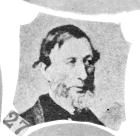
Port Phillip Apostle No. 5 John Moffat Chisholm

chisholm

Ah, now THIS Port Phillip Apostle seems well connected with some of the other ones.  As you’ll remember, I’m trying to work out the connections between this group of 12 men who agreed to become liable “jointly and severally” for the debts of one of their number, W. F. A. Rucker.  I’ve been surprised so far by how most  of them had traceable connections with  only one or two of the other men, which seemed strange given that they were throwing their lot altogether.  But, unlike the others, our John Moffat Chisholm seems to have links with several of them.

He was born in Edinburgh, Scotland (no date) and arrived in Melbourne in 1838 and set up business quickly as a merchant.  He married a Miss Osbourne in 1838, and purchased ‘Maryvale’ at Moonee Ponds in 1841.

His business was located in Collins Street, but in 1839 was burnt down. Garryowen hints at ‘mysterious gossip’ over the origin of the fire.   He was well insured, and rebuilt on the same frontage.  He joined with the other drapers in February 1841 to announce their agreement to their shop-assistants’ demands to close by 8.00p.m. except on Saturday nights.  He also made an appearance as employer when he took his servant to the Police Court, presided over by the police magistrate St John, over forfeited wages, and as was common at the time he handed the proceeds over to the hospital building fund.  The Master and Servants legislation of the time, which initially was used mainly against employees when times were good, worked more to the advantage of employees once the depression started to bite.   In April 1841 he sold his business to C. Williamson, then moved his office a month later to Hind and Co.  In January 1842 he bought land at a forced sale in Bourke Street at the very cheap price of 4 guineas per foot.   He fell victim to the “swindler” Barrett   who was execrated by many for skipping off to New Zealand rather than face his creditors.

He also had a property somewhere along the Plenty River where the Plenty Valley bushrangers moved freely, terrorizing the settlers in April 1842, but the exact location has not been determined.

He attended Debating Society meetings, where he signed a letter of support for George Arden when he was facing Judge Willis over libel charges.

He posted bail for H.N. Carrington when he, too,was confined to ‘the rules’ on Willis’ orders but when he found that Carrington was intending to break bail to travel to Sydney, he and his fellow guarantor Peers surrendered their bail, no doubt anxious that they were going to have to pay the penalty.  So here’s a connection with one of the Twelve Apostles- Carrington.

He was on the Committee of Management of the Mechanics Institute, and here we see a further strand of connections with other Twelve Apostles.  William Highett, who was fundamental to Rucker’s arrangement with the bank, was the Treasurer of this organisation, and Alexander McKillop and P.W. Welsh were fellow committee men and, more significantly, fellow Twelve Apostles.

He appeared in court, along with Fawkner and Purves as part of the court cases that fell out of the arrangement with Rucker in February 1843.  The other Apostles seem to have submitted quietly to their fates.

The Kenyon Index has entries showing that there were reports in the Port Phillip Gazette of his insolvency in May 1843, November 1844 and July 1845.  I have another date of 14 March 1843 for his insolvency- so who knows.  He was no stranger to the court- he’d appeared as defendant in six cases between 1841 and 1843 (i.e. in Judge Willis’ time).  He wasn’t alone in that though- when you read through the court lists, nearly every public person appeared in court one way or another.  Quite apart from the financial turmoil of these years, there was also the aspect of the court being the protector of reputation, as Kirsten McKenzie points out:

If personal status was protected and attacked in diverse ways, the law carried the most weight as a weapon against scandal.  For those who could afford it- and were undeterred by the publicity it inevitably involved- it was the final line of defence…  Kirsten McKenzie ‘Scandal in the Colonies’ p. 70

(Actually, I find myself wondering whether EVERYBODY, even today, has a court appearance of one sort of another in their life?  I haven’t yet….  Perhaps the establishment of bureaucracies to do the tasks of fining and penalizing as mere administrative acts have reduced the need to appear in court?)

So what happened to John Moffat Chisholm for the rest of his life, I wonder?  He was obviously in Melbourne in 1872 to have his photograph taken by T. F. Chuck, and he died in Melbourne in 1874.

So, I’m really none the wiser.  He seemed to have social connections with Carrington, McKillop and Welsh.  He resisted the fallout from the Rucker arrangement, but had to declare himself insolvent in any event.  He must have recovered financially enough by 1845 to recommence business, and he breathed his last in Melbourne.

References

  • Kirsten McKenzie Scandal in the Colonies
  • Edmund Finn The Chronicles of Early Melbourne  1835-52:  historical, anecdotal and personal by ‘Garryowen’

Port Phillip Apostle No 3: John Pascoe Fawkner

fawkner

Now what on earth is John Pascoe Fawkner doing here?  He was probably Judge Willis’ most vocal supporter and yet here he is embroiled with some of  Judge Willis’ most vocal opponents in the guise of H. N. Carrington and J. B. Were.   The most plausible explanation that I can think of is that, given his propensity to be right in the thick of all things Melbourne, he became involved because other people were.  Perhaps there’s a proprietorial  element of protecting the civic reputation of  “his” Port Phillip?  Who knows??- but then again, there are many things that puzzle me about John Pascoe Fawkner- most of all,  the nature of the connection between Judge Willis and John Pascoe Fawkner,  a man who seemed to exemplify the things that Willis most strenuously derided.

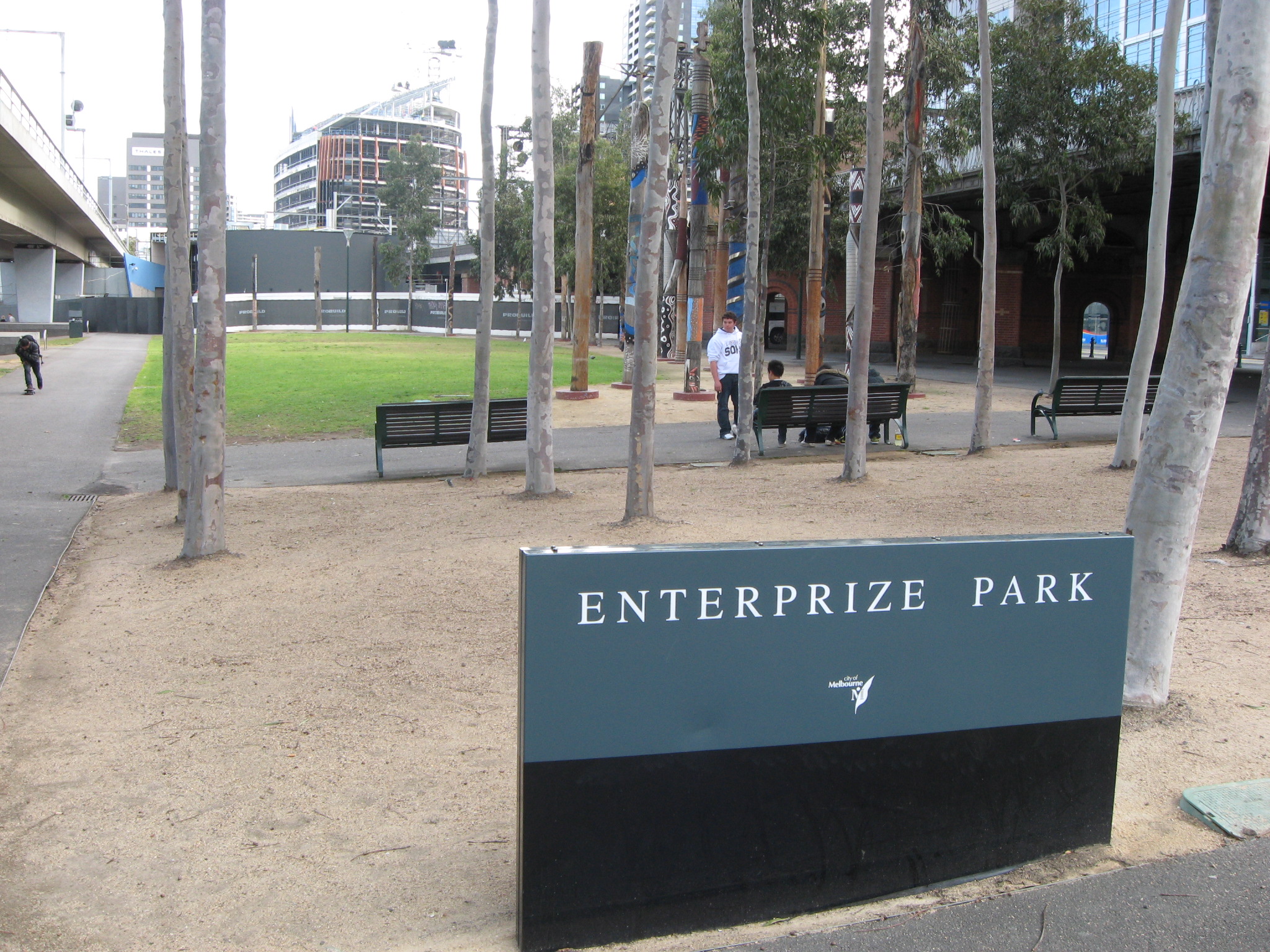
The two Johnnies- John Fawkner and John Batman have contested the title of “Founder of Melbourne” for about the past 100 years, and I notice that this year Capt Lancey nudged his way into contention as well.  Bain Attwood has written a fantastic paper describing the creation of the “founding of Melbourne” narrative that saw Batman championed as the founding father by James Bonwick, only to have this status questioned in recent years and more prominence given to Fawkner instead.  Attwood points particularly to the gradual disappearance of statues and commemorations to Batman and the increased visibility of Fawkner in the narrative, exemplified the recent creation of Enterprize Park (named for Fawkner’s ship The Enterprize)  opposite the Immigration Museum beside the river.

joe-william-street-012

Fawkner fits well into Ville’s “ex-convict and emanicipist” category of entrepreneurs, with their attendant desire for legitimacy, esteem and recognition.  He was the child of a convict and along with his free mother and sister, accompanied his father when he was transported for receiving stolen goods.   They were among the group of convicts and free settlers sent with Lieutenant Collins to establish a settlement at Sorrento until the struggling community was abandoned for Hobart Town instead.   John Pascoe Fawkner had his own brush with the law in 1814 when he was sentenced to 500 lashes and three years government labour for aiding and abetting the escape of seven convicts.  He returned to Hobart in 1816 where he opened a bakery, but shifted to Launceston a few years later after further problems over selling shortweight loaves and using illegal weights.  In Launceston he began anew as a builder and sawyer, then after some problems on character grounds in gaining a licence, opened a hotel and started the Launceston Advertiser newspaper.

Hearing positive reports of the coastal areas of Port Phillip, just across Bass Strait, he engaged a boat and launched an expedition of the area.  Well, that was the intention at least.  When the captain, John Lancey learned that he had violated a restraining order imposed on him because of debt, the ship turned back and deposited John Pascoe Fawkner back onto Van Diemen’s Land territory and sailed off without him.

Fawkner finally set foot on Port Phillip some two months later in October 1835, where he established a hotel, newspaper and bookselling and stationery shop.

patriotoffice_melbclub2

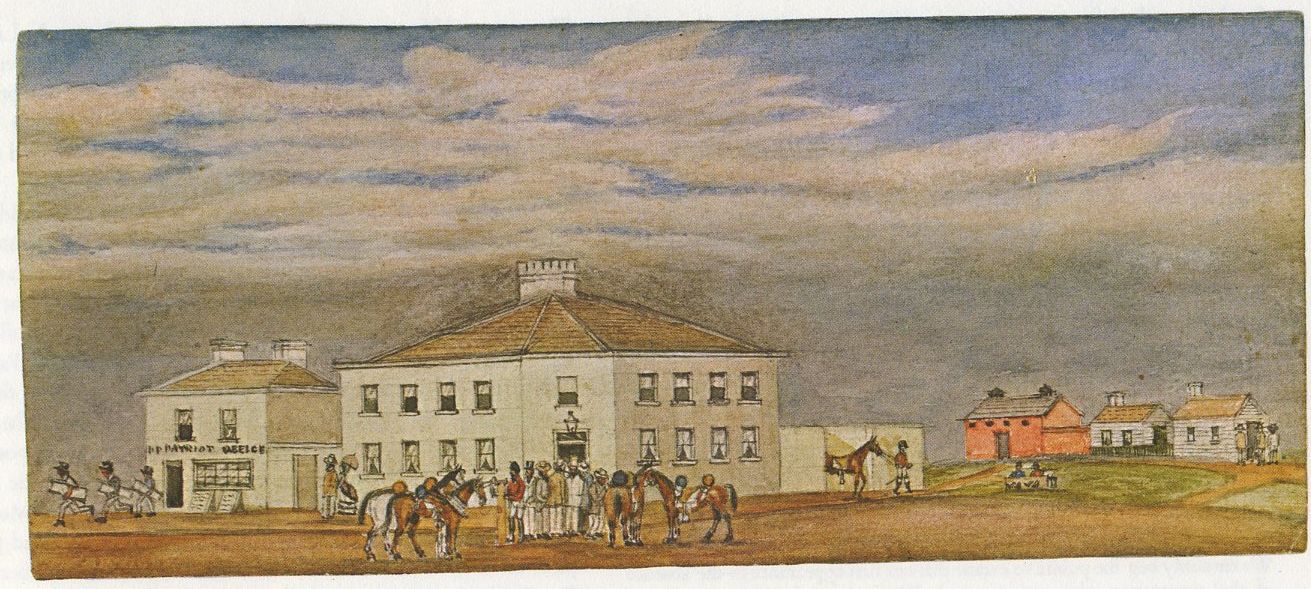
Patriot office and Fawkner’s hotel  in Collins Street, later leased to the Melbourne Club

At the first government land auctions he purchased 92 pounds worth of land.  At the 1839 land sale he purchased 780 acres along the Sydney Road for 1950 pounds.  Within a fortnight he advertised that the land was available for tenant farms with seed provided, or a total of 85 acres for sale at 10 pounds an acre.  He confided to the Reverend Waterfield that he had gathered 20,000 pounds in four years.  He became a squatter in 1844, taking up a licence for 12,800 acres near Mt Macedon.

He obviously wasn’t always flush with cash, because in 1841 he approached Montgomery, the Crown Solicitor,  as guarantor for a loan to assist his friends Kerr and Holmes to purchase the newspaper and stationery businesses from him.  The money made available to him came from the funds of Judge Willis himself, who had placed his money in Montgomery’s hands for investment.  While this investment was, indeed, through a third party, and although Fawkner no longer owned (but did continue to contribute to) The Port Phillip Patriot, the paper’s unfailing and strident support for Judge Willis is notable.

His financial success came undone in the financial depression of the 1840s,  largely through acting as guarantor for so many bad loans.  He was particularly damaged by his involvement in Rucker’s scheme as one of the Twelve Apostles.   He fought the action strenuously in the courts, but finally declared insolvency in March 1845 listing liabilities of 8,898 pounds and assets of 3184 pounds and claiming to have been stripped of 12,000 pounds and ten houses. He vented his hostility to Rucker and Highett the bank manager through his letters to the Port Phillip Patriot.  Mr Rucker, he wrote,

although he has placed several gentlemen in most perilous circumstances, can yet ride into town and sport his figure as of the first water…

Mr Highett, the ex-manager of the bank

had helped to melt many a piece of worthless paper under the sunny side of the bank screw, so upon a crusade he goes, and by dint of cajoling he did succeed in effecting an arrangement whereby ten or eleven persons bound themselves to pay Mr F. A. Rucker’s debts.

But John Pascoe Fawkner was not to be kept down for long.  He retained his Pascoe Vale properties through a settlement on his wife, and his interest in the Patriot was signed over to his father.  He discharged his insolvency quickly and used his wife’s property settlement as a qualification to stand for a vacancy on the Town Council in 1845, a position he had had to relinquish when declared bankrupt.  He went on to serve for many years on the Legislative Council and died “the grand old man of contemporary Victoria” in 1869.

There were many reasons why Judge Willis might despise him: the ex-convict origins of his fatherand his wife and his own crime in facilitating the escape of convicts; his “fortuitous” financial arrangements during his insolvency which exemplifed the sort of trickery Judge Willis was determined to strike down; his involvement in the hotel trade,  and the rabid nature of his rhetoric in the Patriot.  He was viewed as a radical for many of his ideas:  his plans for a Tradesman’s bank and  schemes for a co-operative land society.  But yet, even though Judge Willis would protest it vigorously,  the two men have qualities in common.  They were both ambitious men.  Willis might have applauded Fawkner’s aspirations to improve himself:

One comfort I have which the falsely proud can never achieve, viz, I have not sunk below, but on the contrary, have raised myself above the rank in which at finding myself of years of discretion I was placed in, and I glory that I have thus passed them.

Both Willis and Fawkner took pleasure in “hunting high game”.  And both Fawkner and Willis seemed to exhibit a similar hot temper and vindictiveness that, at a stretch, might explain why such an otherwise mis-matched couple of men often acted as each other’s supporter.

References:

Bain Attwood ‘Treating the Past: narratives of possession and dispossession in a settler country’  http://law.uvic.ca/demcon/documents/Attwood.pdf

Hugh Anderson Out of the Shadow: the Career of John Pascoe Fawkner

C.P. Billot  The Life and Times of John Pascoe Fawkner.

Simon Ville ‘Business development in colonial Australia’ Australian Economic History Review, vol 38, no 1 March 1998

Port Phillip Apostle No. 9 Abraham Abrahams

Now, here’s a  name that distinguishes itself from the other Twelve Apostles’ names by virtue of his strong Jewish associations.  Abraham Abrahams was a merchant, along with Rucker, Were and Welsh, so it is perhaps to be expected that he might have been caught up in the financial syndicate that Rucker formed to rescue himself from insolvency and disgrace.  But given that there were several Jewish merchants in Melbourne at the time (Michael Cashmore, and the Hart brothers spring to mind), it is strange that Abrahams is acting alone here.

So what do I know of Abraham Abrahams?  He was born at Sheerness, Kent in 1813. [update: maybe not- see comments below!]  He arrived in Sydney with his wife and seven children in 1839 at the age of 26 (fast work there!) and was in Melbourne by 1841.  He was described as a “merchant” of Lonsdale Street in 1841 when he donated the land for the first Jewish cemetery on what Garryowen described in 1888 as “a stony rise at the Merri Creek between the now Northcote and Merri Creek bridges”.  The land was found to be unsuitable for burial- the poor sexton dispatched to dig the first grave “found himself working on what nature designed for a quarry and made little or no progress downward” (Finn p. 695).   The grave was only half-dug when the burial party arrived to bury 19 year old Miss Davis, the young daughter of a Melbourne innkeeper, and in any event it was not her final resting place, as the body was exhumed and sent to Hobart.   Realizing that all subsequent funerals would face the same problem, the  Jewish community applied for land adjoining the general cemetery, and after a delay, their application was granted.

In September of 1841, Abraham Abrahams was admitted to the Chamber of Commerce.  Paul de Serville mentions that a “Mr Abraham” served as one of the stewards of the alternative public ball set up in opposition to the more exclusive private Turf Day ball in May 1841.  The battle of the balls exemplified the attempt of “good society” to define its boundaries by limiting attendance to the ball to those deemed suitable.   In defiance, a public ball was championed by the Gazette and Patriot newspapers who jeered the pretensions of the Turf Club stewards.  The “public” ball was held at the end of May 1841, but was apparently not a success.  The more “respectable” stewards eschewed any involvement with it, and on the night, rain kept many guests away (including perhaps those who were looking for an excuse to extricate themselves). Mr Abraham, however, remained as a steward but I am not absolutely sure that this is Abraham Abrahams.

On 7 March 1842 he was appointed Trustee to the estate of the Langhorne Bros, even though at the time his debts amounted to 3792 pounds while his assets were 3655 pounds.  By January 1843 he was listed as insolvent and shifted to Sydney.

Abraham Abrahams served on both general and special juries, alongside other Twelve Apostles. He publicly supported Judge Willis in March 1842, but did not sign the petition circulated in November 1842, and was resident in Sydney by the time that Judge Willis was dismissed in 1843.  Generally, Jewish citizens in Port Phillip publicly supported Judge Willis throughout.

So why and how did he get involved in the Twelve Apostles arrangement?  Hard to say.  As a merchant and through his involvement with the Chamber of Commerce, he would have come into contact with several of them socially.   If he was the Mr Abraham who served as a steward at the Public Ball, then this suggests some element of social visibility, and his jury duty and philanthropic gesture with the land donation indicates a level of civic involvement.  Ah, but who can tell.

Update: see the comments below

[This information below is not correct- see comments. It’s a different Abraham Abrahams!]

Anyway, all ended well. At some stage he moved to Adelaide where he founded the Executor, Trustee and Agency Co. of South Australia which he managed until 1891.  He was one of the original members of the Society of Arts in South Australia, a Governor of the Public Library, the Art Gallery and the Museum there.  He was described as “One of the most distinctive figures in Adelaide, a man most courteous in speech and courteous in manner”.

References:

  • Paul de Serville Port Phillip Gentlemen and Good Society
  • Edmund Finn, The Chronicles of Early Melbourne 1835-51: historical, anecdotal and personal by ‘Garryowen”
  • John S. Levi  These are the Names: Jewish Lives in Australia 1788-1850

‘An Architect of Freedom: John Hubert Plunkett in NSW 1832-69’ by John N. Molony

plunkett

1973, 280p.

The author, John N. Molony signals in his introduction that this biography has its limitations.  John Hubert Plunkett, Solicitor General, Attorney General, politician, and education board member left virtually no personal papers.  As a result,

If he is to be found today it must be through public sources such as the newspapers, the parliamentary reports, the official communications between Sydney and Downing Street and the legal opinions he gave during his twenty-five years as Solicitor and Attorney-General.  It is chiefly on such sources that I have perforce relied in the writing of this book (p xiii) ….It has been my loss as much as it will be to any reader that Plunkett rarely comes alive in the narrative.  No attempt has been made, no attempt can be made to see him in his home, to dwell on his own innermost thoughts and hopes, because Plunkett did not leave any record of these things.  Some scholar of the future may perchance discover Plunkett the man; some scholar, irritated by the gaps in this work, may till this field again and reap a richer harvest…” p xiv

We have been forewarned: this book will focus on actions and decisions at a top-down level, rather than at the level of man and motivation.  However, I think Molony sells himself a bit short here because the book does give an interesting insight into the Catholicism of a man who sensed that he had been enabled, rather than disadvantaged by his faith at a particular moment of English political history.  The Catholic Emancipation Bill provided space for his patrons to further his career, and he was conscious that opportunities were open to him that had not been available for earlier generations of Catholic lawyers.  He therefore had a strong loyalty to ‘the system’ and British law and worked within it as lawyer, then politician.

The book also highlights the theme of personal consistency in the midst societal change.   Two hefty winds of change swept through his world: after the initial co-operation of the different churches in the establishment phase,  their doctrines and personalities became more rigid from the 1860s onward, and sectarian hostilities became more strident.  Secondly, the change to representative and then responsible government  meant that his world view and ways of negotiating with politicians rather than officials, needed to change.  Such fundamental challenges to his world view did not come easily to him, and I closed the book with a sense that the wealth of experience he brought to his political roles was more hindrance than benefit in a changed world.

I was interested in reading this book because firstly, I’m interested in reading biographies about Judge Willis’ contemporaries in NSW at the time (although Plunkett was absent during Judge Willis’ dismissal and, indeed, was spot-on in his predictions of what the outcome of the Privy Council appeal would be).  Secondly, I’m not really sure what an attorney general DID in the  colonial constitutional system of the time. Certainly, Judge Willis clashed with acting Attorney General Therry in NSW, and with the Attorney General in Upper Canada earlier.   Was there something about the Attorney General role that acted as a flashpoint?  Or was it the individuals filling that role?

I don’t know if I’m much further advanced in my understanding of colonial Attornies-General, but I am clearer about the fact that they acted as legal advisors for the Crown- in this case, for Governor Gipps, and if the Governor was acting to discipline or dismiss Willis, then he was presumably acting on the Attorney-General’s advice.  Hence, some tension could be expected!  I was also surprised to read that the Attorney General could act as a Grand Jury in his own right (i.e. he could launch proceedings in his own right).  For example, Plunkett acted as a Grand Jury against cattle-stealers and against a conspiracy of six men “all of substance” who conspired to parcel out land at advantageous prices to themselves.  I wonder if perhaps Judge Willis would have relished having such powers, particularly in relation to the corruption and sharp-dealing that he felt himself surrounded by.  Methinks I need to look at constitutional development a little more closely, although I must admit that my toes curl up at the thought of it.

Reading this book has also made me think about the scope for the “scholar of the future” that Molony envisages “till[ing] the field again and reap[ing] a richer harvest”.  How would/will I do anything different?

And they’re off and racing….

Garryowen lists the germs of an Australian township: first there’s  a waterhole, then a forge, then a store and grog-shop. Then there’s a Wesleyan Church, a Temperance Society, and finally a race club or a cricket club. (Finn, p. 711)

Melbourne developed that way too.  The Wesleyans and Temperance Society had already arrived by the time the first races were held by the Melbourne Race Club on what is now the site of Southern Cross railway station in 1838.  Postboy won the first race- now that’s a bit of trivia we might all need one day.  But wait- there was more!  The races had finished, people were feeling mellow, and then someone suggested a bout of the olde English sport of “grinning”- where men would stick their head through a horse collar, then spend the next five or ten  minutes pulling the ugliest faces they could.  A hat was passed around, and a prize stake of 40 shillings was soon collected.  The winner was Thomas Curnew, fifty years of age, and a carpenter by trade.

The “phizical” pantomime then commenced, and for ten minutes there was a display of physiognomical posturing, difficult to be accounted for by any deductions of anatomization.  The bones, muscles, sinews, and tissues of Curnew’s head seemed as if composed of whalebone and India-rubber.  At one time his tongue looked as if jumping out of his mouth, his lips and palate would be drawn in as if to be swallowed, whilst the chin and forehead approached as if to meet.  His antics evoked thunders of acclamation, in the midst of which he regained terra firma, secured the proceeds of the hat-shaking, and betook himself to the Fawknerian [grog] booth, where the stakes were speedily melted down through the agency of a “fire-water”.  And so wound up the first public race day in Victoria. (p. Garryowen, p713)

Now, that’s what the Melbourne Cup Carnival needs to do- revisit its ‘carnivale’ origins and bring back the “gurning” contests. In fact, there’s a World Gurning Championship too.  I don’t think her Maj is amused, though.

By 1840 the races had shifted to Flemington, named after Bob Fleming, the local butcher.  The carnival stretched over three days, reported in mind-numbing detail by the Port Phillip Herald, and years later by Garryowen as well.

It’s interesting how, for us today, horse racing has been ‘eventi-ised’ in recent years with corporate sponsorship and Government tourism funding etc.  It’s no longer about the races as such.  It seems that the drone of the race-call drifting over the back fence from a neighbour pottering around in his shed is one of the lost sounds of the 1960s.  Even twenty years ago, the news on the television would devote a good five minutes to footage of the races- a time slot gobbled up now, no doubt, by the finance report.

But much is still made of the egalitarian nature of the Melbourne Cup carnival today.  Right from its inception, the races have brought the gentlemen of Port Phillip society to the track to see their own horses run,  cheered on by the working men out for a good time.

Now, you ask yourself, can we possibly insert our Judge Willis into a day at the races?  Yes, we can.  March 1842 was the second race carnival held at Flemington.  It was hot, and in anticipation of crowd unruliness, ticket-of-leave men were called up and sworn in as special constables for the day. (Yes, ticket-of-leave men as constables).  As there was no lockup, those who were somewhat drunk and disorderly were chained up to a log and left in the sun to repent of their overindulgence.  Yet another unfortunate reveller had been apprehended and was being dragged off to the log when two gentlemen rode up, the Honorable James Erskine Murray the barrister, and Oliver Gourlay, “a fast, devil-may-carish merchant of the period”.   They remonstrated over the rough treatment of the man to the constable- “Shame! Shame! Don’t ill-use the man!”-  when Dr Martin the J.P. rode up with another justice of the peace, William Verner, to help control the crowd.  They called out to Murray and Gourlay not to interfere; Murray retorted that he was only giving the prisoner advice.  Three prisoners took advantage of the resulting contretemps to unshackle themselves from the log and disappear into the crowd. The whole thing ended up in the Police Court the next morning.  Gourlay was charged with assaulting a police constable in the execution of his duty, and the constable admitted that he would have charged Murray too, except that he was a gentleman. Gourlay was released on bail.

What does all this have to do with Judge Willis (who was not at the races himself)?  As Resident Judge, and responsible for oversight of both the bar and the magistrates, he wrote to Erskine Murray demanding an explanation for his behaviour.  He then forwarded Murray’s explanation to Verner and Martin for their side of the story.   He was not, perhaps, completely impartial here- both Verner and Martin were Heidelberg neighbours, and were to be strong supporters throughout Judge Willis’ time in Melbourne.  Murray, on the other hand, had clashed with Judge Willis in the courtroom on several occasions.

Murray applied to have Gourlay’s case heard quickly, so that he could clear his own honour.  Willis refused and postponed the case, claiming that the furore needed to die down first.  As it happened, Gourlay made good use of his time on bail.  Bushrangers were terrorizing the eastern and northern outskirts of the town and a number of gentlemen banded together to capture them.  Gourlay was shot in the melee and returned to Melbourne covered in glory.  Charges against the hero were dropped.

So, knowing that there probably won’t be a grinning (gurning) competition, or gentleman justices remonstrating with ticket-of-leave constables as they drag the tipsy off to be chained to a log, what is my pick for the races? Well, I like the young ‘girly’ on Moatize and it’s always a pleasure to see Bart Cummings and his eyebrows.  I can’t be bothered going to the TAB though, so I’ll satisfy myself with entering the sweep down at the street barbeque in half an hour’s time.  But if Moatize DOES win, you heard it here first.

Port Phillip Apostle No.10 J.B. Were

Is the name J. B. Were familiar to you?  It should be. Goldman Sachs JBWere is a large, multinational financial company, and prior to metamorphising into this splendid many-named creation, J B Were was a well-known Melbourne stockbroking firm.  In fact, come to think of it, my cousin worked there.

Although Garryowen places J. B. Were as No. 10 on his list of Twelve Apostles, I’ll start off with him because I have borrowed a book about him and he, of all of the twelve that Garryowen listed, most clearly evokes the term “entrepreneur” for me. The book, called “The House of Were 1839-1954” is an in-house publication.  It has a rather curious note on the title page:

This publication has not been registered as a book and is not available for sale because it has been issued by J. B. Were & Son for the interest and information of its clients, public companies, financial and other institutions with whom the prestige and business interests of the firm are identified.

Recipients of a copy of the publication are requested to regard the contents as for their information alone.  It is desired that no reference should be made to the publication in the Press.

What an odd statement. Well, they don’t say anything about blogs or the internet…..

Jonathan Binns Were was born in Somerset on 25 April 1809, the third of four sons to a landed gentry family.   The House of Were states that according to Burke’s Dictionary of Landed Gentry, the original family name was Giffard and the Weare-Giffard family is documented back to 1411 during the reign of Henry IV.  His father inherited from his father and grandfather three estates in Somerset: Landcox, Osmonds and Penslade.

De Serville, however, is rather equivocal about his social status.  Were is not found in De Serville’s Appendix 1 Gentlemen by Birth (“Gentlemen colonists from titled, landed or armigerous families”), but instead in Appendix III Colonists Claiming Gentle Birth (“A list of colonists whose claims to gentle birth have not been fully established. Those who were members of good society are also listed in Appendix II”).  Under the entry for Were, De Serville writes:

Were, Jonathan Binns. Merchant.  Son of Nicholas Were and his wife Frances Binns.  It is difficult to know whether to place him in Appendix I or III. His family were landowners in Devon and Somerset (especially his great-grandfather). However, after appearing in Burke’s Commoners, the family was dropped from the first and subsequent editions of Burke’s Landed Gentry.  It is hard to escape the conclusion that they were an ascendant family who gained the capricious attention of the Burkes and then lost it.  Were was prominent in the commercial and public life of the colony, where he died in 1885.

After finishing school Were received business training in the house of Collins and Co in the port city of Plymouth. Collins and Co. were involved in trade with the colonies where, no doubt, Were would have heard from colleagues and  clients about the commercial opportunities abroad.  Such contacts would place him in Ville’s third category – i.e. colonial merchants with experience in Britain or the colonies.

His father and older brother broke the entail on the Were estate and Jonathan received 9000 pounds from the sale of the family properties.  With this he purchased goods that netted him 70,000 pounds on resale in Australia.  (The ADB cites lower figures for this). Nonetheless, Entrepreneurial Lesson from J.B. Were #1: use your capital to buy cheap, sell dear.  Or perhaps there should be a lesson before that: have capital.

In fact, when he arrived in Melbourne on the William Medcalfe, most of the cargo in the hold belonged to him, including a demountable house, and a consignment of port wine that he picked up at Oporto en route. He, his Quaker wife, 4 year old daughter and baby son, his brother-in-law and two servants arrived in Melbourne on 15th November 1839 after a journey of 113 days.  Garryowen lists the other first and intermediate class passengers on the ship, including Mrs C. Liardet and five children in the intermediate berths, the wife of Liardet who painted the picture on my blog header.  There were also 230 assisted immigrants on board – I’m not sure whether they were ‘his’ bounty migrants or not, but he was certainly an immigration agent later on.

Entrepreneurial lesson #2 from J. B. Were: get cracking! Six weeks after arrival, Were assembled his house on the south-west corner of Collins and Spring Street (where No. 1 Spring Street is now?) which he purchased for 3 pounds 10 shillings an acre and named the property “Harmony Lodge”.  At about the same time he commenced trading as a general merchant advertising tents for sale on 1 January 1840- a highly sought after product.  By February, he had established himself as a general merchant, shipping and commission agent and advertised 200 rams due to arrive from the Murrumbidgee.  In March he formed Were Bros. and Co with his brother-in-law Robert Stevenson Dunsford (who had journeyed out with them) and his younger brother George Were (who must have made his own way to Melbourne separately).   Forming networks with family members like this, as Ville pointed out, was advantageous in a low-trust environment. By April 1840 he was advertising to buy wool from pastoralists, make advances against it, then ship it to London.  He was involved in the exchange business early- discounting bills for customers and arranging drafts on London, Sydney, Hobart and Launceston businesses.  He became involved in importing prefabricated houses (including a teak house!) and refurbished sailing sailing ships.

Entrepreneurial lesson #3 from J. B. Were: network! He was one of the directors of the Melbourne Auction Company, a successful venture which was ultimately thwarted by legislative red-tape.  He was also a director of the Melbourne Bridge Company which, although it had plans for a splendid iron suspension bridge, settled for a humble wooden bridge across the Yarra because of uncertainty about government plans to build Princes Bridge.  He was Chairman of the Temporary Exchange, a gathering of merchants who met daily at 12.00 noon in the rooms of the Melbourne Auction Company. He was a director of the Union Bank in 1841, a Lloyds Insurance Agent in 1842 and an agent for Alliance Fire and Life Assurance Company in 1843.  He joined the Shipping and Steam Packet Association in 1842 and was one of the five members of the the Steam Navigation Board which licensed and supervised steam ships.

He developed political and cultural networks as well. By May 1840 he was appointed one of the committee of three to draft a Separation memorial, praying for separation from NSW. He was involved in the planning for the Melbourne Hospital, he was on the Botanic Garden’s committee, and involved in the British and Foreign Bible Societies and the Philosophical Society (later the Royal Society).

Entrepreneurial lesson #4 from J. B. Were: position, position, position. Henry Dendy arrived in Port Phillip with a signed and sealed certificate from London allowing him to select 5120 acres at a fixed price of one pound per acre (a definite bargain given that land was selling at 5 to 40 pounds an acre at auction!).  Not unsurprisingly, he found that La Trobe and locally-based settlers resented this method of land sale, and difficulties were placed in his way when he tried to buy land at Williamstown and near Heidelberg.  Dendy approached J. B. Were, who advised him to use his land voucher in what is now Brighton.  It is not known when it happened, but by April 1845 Were was in possession of half the original survey.  He built there “Moorabbin House” with stone walls three feet thick, with huge hidden doors across the front that could be pulled across to provide a barricade should the house be attacked- I assume by aborigines? bushrangers? The house was demolished in 1924.

He later built other houses in Brighton again, Toorak and East St. Kilda.

Entrepreneurial lesson #5 from J. B. Were: be careful helping out your friends. The whole circumstance by which he became one of the “twelve Apostles” was by joining with ten other colleagues to come to the financial aid of William Rucker (Port Phillip Apostle No. 1) when he ran into difficulties as part of the general financial upheaval of the early 1840s.  It seems that he, in particular, sustained huge financial loss from this agreement and even ten years later, there was an instability in his affairs that led to further financial problems in 1854-6.

And what about Were’s relationship with Judge Willis? Garryowen claims that, after initially cordial relations, the two men fell out over Judge Willis’ pursuit of William Lonsdale (another story for another blogpost) and Willis’ emnity turned on Were. The most colourful display of this animosity occurred when Were was sitting as a magistrate alongside Willis on the bench when his name arose during the evidence being tendered to the court.  Willis ordered Were into the witness box where, startled and unprepared as he was, he was rather unforthcoming.  Willis charged him with contempt of court, and when Were asked for a copy of the Judge’s notes, Willis sentenced him to jail, and with every squeak of protest from Were, upped the sentence a month at a time.   Were actually served only one night in jail before being confined to the Rules, and the verdict was overturned once Judge Willis was replaced soon after.  Certainly, J. B. Were appears regularly on the petitions urging Justice Willis’ dismissal.

References

  • The House of Were 1839-1954: The History of J. B. Were & Son and its founder Jonathan Binns Were, 1954
  • Finn, Edmund The Chronicles of Early Melbourne 1835 to 1852: historical, anecdotal and personal by ‘Garryowen’ Melbourne, Fergusson and Mitchell, 1888
  • de Serville, Paul Port Phillip Gentlemen and Good Society in Melbourne before the Gold Rushes Melbourne, Oxford University Press, 1980
  • Ville, Simon ‘Business development in Colonial Australia’ Australian Economic History Review Vol 38 No 1, 1998 , pp. 16-41

Making a motza in Port Phillip

Let’s be quite clear about this: people came to Port Phillip to make money as individuals.  It wasn’t a penal colony like Van Diemens Land or Sydney. It wasn’t a philosophical-cum-evangelical political experiment like South Australia.  It was not a privately-run settlement scheme like Western Australia.  It was conceived in the pubs of Launceston, and talked over and gesticulated to by the pastoral overlanders of Sydney, by men out to make a motza and the government could just get stuffed.  And even more importantly, in the early years people came to Port Phillip from another Australian colony, rather than coming out straight from Europe.

As part of thinking about financial security in 1840s Port Phillip, I recently read Simon Ville’s article ‘Business development in colonial Australia’ .  He points out that New South Wales (of which Port Phillip was part) had strong entrepreneurial capacity:

1. There were the ex-convicts and emancipists who had been either pardoned or their sentences had expired, who, swept by fate onto the other side of the world were denied conventional routes to achievement, but had scope to forge their own, too.  Certainly some had only a poor education, and they often lacked institutional and infrastructure suport.  But some also had a strong desire for legitimacy, esteem and recognition.

2. There were the government officials, who had had access to higher educational levels, but were not motivated by the need for social elevation.  Because of their position in a penal colony, they had access to a means of overseas payment and free labour.  Particularly in the first decades, there was scope to indulge their entrepreneurial proclivities.  This was less true of Port Phillip than Sydney, but is nonetheless worth bearing mind when Judge Willis started castigating government officers for “speculation”.

3.There were colonial merchants living locally.  They were usually from Britain; sometimes from India, and they brought with them their accumulated experience of previous success, capital, information and credit links of their overseas partners and agents.

I suspect that there’s a fourth group too. Jim McAloon speaks of settler capitalists, of lower middle class origins who brought with them the values of the British middle class: thrift, deferred gratification, self reliance and steady capital accumulation.  Although his research is based on the South island of New Zealand, he cites Paul de Serville’s work in Port Phillip  on the colonial elite which distinguishes one fifth of them as  gentlemen by ‘birth’ as distinct from gentlemen by education and profession and a large group of unclassifiable middle-class gentlemen.

Industries and opportunities draw on innovation for success (Ye Gods! I sound like a management textbook!). Innovation doesn’t just mean invention of the completely new- it also involves the modification of imported technology to local circumstances.  Often entrepreneurial decisions of this kind are made under conditions of great uncertainty and highly imperfect information- and you can’t get much more uncertain and imperfect than settlement in a new colony on a new continent in a different hemisphere.

Ville points out that vertical integration is common at the start of an industry’s life, and a signal of a low-trust environment, but that as an economy matures, vertical integration is replaced by specialization .  Vertical integration is a form of management control where all aspects of a product or process are under the control of a common owner.  For example, the Sydney merchant Robert Campbell was involved in whaling, shipbuilding, shipping, banking and farming.  Early NSW certainly qualifies as a low-trust environment: the convict origins of the colony were reinforced by mutual suspicion between convicts, officers and immigrant merchants.  Networks, bound by social, religious and kinship ties provided a high-trust organizational form based on common interests and propinquity.  Often individual entrepreneurs operated several distinct partnerships with different business associates. Certainly in Port Phillip, we can see that entrepreneurs were involved in diverse activities- e.g. general mercantile, shipping and commission agencies, wool purchase and consignment. Their ubiquity and prominence makes them particularly important when we consider who backed whom in the local politics of the district, and especially in relation to Judge Willis’ dismissal.

Edmund Finn (‘Garryowen’) speaks of the Twelve Apostles who were dominant in financial circles in Port Phillip in these early days. They are:

  1. William Frederick Augustus Rucker, Merchant
  2. Thomas Herbert Power, Auctioneer
  3. John Pascoe Fawkner, Landholder
  4. Alexander McKillop, Settler
  5. John Moffat Chisholm, Landowner
  6. John Hunter Patterson, Landowner
  7. James Purves, Landowner
  8. John Maude Woolley, Settler
  9. Abraham Abrahams, Merchant
  10. Jonathan Binns Were, Merchant
  11. Horatio Nelson Carrington, Solicitor
  12. Patricius William Welsh, Merchant.

I can tell you now without going any further, that this group of men, like nearly every constellation in Port Phillip was split right down the middle in relation to Judge Willis.  Fawkner was his staunchest ally, Carrington his most ardent enemy, and the rest are distributed between them (with perhaps, at first glance, more opposed to him than for him).

My task is to look at these 12 men.  Do they fit into Ville’s three categories at all? How does de Serville classify them?  What was their entrepreneurial story in Port Phillip? How did the 1840s financial meltdown affect them?  And what position, if any, did they take in relation to Judge Willis?

References

  • Ville, Simon P. ‘Business Developmentin colonial Australia’ Australian Economic History Review vol 38 no. 1 March 1998 pp.16-41
  • McAloon, Jim ‘Gentlemanly Capitalism and Settler Capitalists: Imperialism, Dependent Development and Colonial Wealth in the South Island of New Zealand’ Australian Economic History Review, Vol 42, No. 2, July 2002
  • de Serville, Paul  Port Phillip Gentlemen and Good Society in Melbourne before the Gold Rushes, Melbourne, Oxford University Press, 1980
  • Finn, Edmind, The chronicles of early Melbourne, 1835-1852: historical, anecdotal and personal (by “Garryowen”, Melbourne, Fergusson and Mitchell, 1888 p. 707


Alas poor debtor!

As part of my avowed intention to explore the experience of financial anxiety during the 1840s, my eye was attracted to this little morsel in the Port Phillip Herald of 10 May 1842:

SHARP PRACTICE. A rather novel mode of obtaining the payment of a debt from an insolvent, has just come under our notice.  A gentleman of our acquaintance, whose change of fortune from affluence to indigence occasioned him so much excitement as to materially effect his intellect, and to leave him at times in a state of perfect imbecility, was a few days since arrested by the Deputy Sheriff at the suit of a Sydney creditor.  Having found the necessary bail he was allowed to occupy a tenement within the Rules. He had not been many days in confinement before his spirits were so materially afflicted as to bring on the malady before alluded to, and under which, we regret to state, he still labours.  In this fit of nature he proceeded to the wharf, but in less than half an hour returned to his prison, thus stepping out of the limits laid down for his safe incarceration.  Having been seen outside the Rules, a party acting as agent for the Sydney creditor, forthwith instructed his solicitor to write to his bail, informing them that as the debtor had exceeded his limits he should hold them liable for the account of the debt and costs, which are very considerable.  Now, for the honor of the Province, we hope such a case will never be brought before a court of justice, for sharper practice we never, in the whole career of our colonial experience, heard of…. An application is about being made to the Judge to release the unfortunate man from confinement upon the score of insanity, and if his Honor has the power, who can doubt his will to extend such an act of mercy?

Well, I’m now mid-way through June 1842, and I haven’t seen any public applications of mercy to the Judge, but perhaps such things did not occur in open court.  I, at least, do wonder about his will to extend such an act of mercy.  Perhaps he’d decide that this was another case of dishonesty and dissembling that he had to “sift to the bottom”: but, then again, perhaps not.  It was exactly this unpredictability that made his courtroom even more anxious than it had to be.  Which Judge Willis would be sitting today?- merciful Willis? or avenger Willis?

A number of things to remark on here:

1. The Port Phillip Herald is being particularly kind in their reportage of this case.  Certainly, they have not held back at all when insolvents have absconded, or indulged in their own “sharp practice” to avoid their debts.  Perhaps the key lies in that this is a “gentleman of our acquaintance” rather than a speculator, embezzler or rascal, as they could have just have easily designated him.

2. This is one of the first references I have found to insanity caused by insolvency.  There are certainly references to insanity and suicide:indeed, the very next issue of the Port Phillip Herald referred to the putrid bodies washing up against the wharf at the end of Elizabeth Street. (I wonder if it was, in fact, this gentleman? I haven’t seen any further mention of him.) There are many coronial inquests into women, in particular, throwing themselves into the Yarra. I wonder what stories lie there.

3. Although there was a strong belief in “British justice”, legislation particularly prior to the 1850s varied between colonies and was not necessarily the same as in England.  This was true of the Insolvency Act in New South Wales, which differed from the English insolvency laws in many fundamental respects.  The legislation was drafted by Justice Burton in 1841and allowed all debtors to take advantage of bankruptcy provisions.  Instead of imprisonment, as under the English act, debtors’ assets were distributed to their creditors, allowing them to resume business quickly.  Unlike the English law, the legislation did not emphasize morality- possibly because it was drafted at a time when many otherwise ‘moral’ people were facing insolvency. Imprisonment for debt was abolished in NSW in 1843 (i.e. after this vignette), predating similar changes to the English law by 26 years.  Justice Willis, however, was critical of Burton’s legislation (perhaps because it was Burton’s legislation and not his own???) and preferred the English approach.

4.  The ‘rules’ were instituted by Justice Willis almost as soon as he arrived in Port Phillip, initially in response to the severe overcrowding in the very small jail.  Rather than being sentenced to jail, minor offenders, bail applicants and insolvents, could be ‘confined to the rules’, which took up quite a large area of the built-up area of central Melbourne.

Bear in mind that at this time, the major development was located mainly along the Collins Street and Elizabeth Street area, rather than eastward along Swanston Street which, although probably regarded as the main thoroughfare through Melbourne today, was almost bushland in the early 1840s.  Confinement to the rules was often not a particular hardship: many people who were declared insolvent actually lived in the area, although it appears that our belaboured gentleman didn’t as he had to rent a ‘tenement’ specially.

5. Finally, we have to trust to our own empathy and imagination to flesh out this little vignette.  We can imagine him standing on the river bank, watching the river swollen with winter rains, weighing up his options, torn between loyalties and honour, then turning away and walking along the unpaved streets back into the rules again.

An economic downturn 1840s style

What strange times we live in.  Each night, the news bulletin starts off with the financial report, extending over about ten minutes, then briefly the “other” news, then a return to the usual financial report, sport and weather.  Each morning I unwrap the paper and marvel at the increasing size of the headlines reporting on the latest falls on the Australian Stock Exchange, or Wall Street, or the FTSE,  or the Hang Seng.  How do I even know about such entities?  I think it’s probably indicative of the recent financial bubble that we’ve all been caught up in over the past 10 years,  that even before this crisis, every news bulletin has  the financial report as a staple item each night- I really don’t particularly remember it having such prominence, say, twenty years ago.  Ah, but we’re all investors now-unwittingly and sometimes unwillingly through our compulsory superannuation, and cajoled to “unlock the equity in your home” by drawing back on our mortgages to spend on the sharemarket.

And of course, it’s all on such a global scale.  There’s no shutdown period at all on a sharemarket somewhere- Australia wakes up and looks at what America has done overnight, responds by a rise or a fall on the ASX, the day moves on, that night the UK market responds, the US market responds to that, and it all goes around again.  There’s no sigh of relief of “thank God that’s finished”- although at least the weekend allows a global breather, until the whole merry-go-round starts again on Monday.

Our whole system is predicated on credit in a way that is largely unconscious and invisible to us.  With just-in-time manufacturing, there are no storehouses any more of goods waiting to be sold- instead the credit system balloons forward to buy in a consignment as it is needed right now, retracts when it’s sold only to balloon out again to replenish the shelves next week.  We’re bombarded with “buy now, no deposit!!” advertising; we’re asked as a matter of course for every transaction with a swipe card “will that be on credit?”

And so, conscious of all this, I’ve been thinking about the recession (depression?) in the early 1840s in Port Phillip, and the way it impinged on the worldview of people there at the time.  I surmise that, like me, their understanding at the time was incomplete:no doubt more so, given the four-month delay in any information from Britain compared to our instantaneous communications now, and the dependent state of a colonial economy within the Empire as a whole. What they understood of the financial situation was filtered through the newspapers, gossip, and lived economy of their own experience.

Contemplation of this- and I’m doing quite a bit of reading on this which I shall, dear reader, share with you- is not completely irrelevant to my Judge Willis thesis work.  As sole Resident Judge, he heard all of the civil cases that came to the Supreme Court; he oversaw (but was not directly involved in) the Insolvency Court, and his own propensity to “sift to the bottom of things” characterized his approach to the bankruptcy cases that crossed his bench.  I feel sure that the general ‘anxiety’ and ‘excitement’ of Port Phillip reflected both the economic and political currents of the day, and directly fed into his dismissal.

So how did the Port Phillip communications of the day portray the financial crisis?  Newspapers had always carried a column showing the price of goods on the local market -wheat,  bread, spirits, sperm candles, parsnips etc. (The parsnips have particularly taken my attention because at my local supermarket they have been $5.95 per kilo for the last few months.  For bloody parsnips!!!!! Fine words may butter no parsnips, but obviously $5.95 a kilo will!)  The shipping reports were often followed by correspondence from the wool agents in London, reporting on the wool sales- generally chiding the Australian suppliers for lack of quality, and sighing at the dearth of buyers.

Much of a four-page Port Phillip newspaper of the 1840s was devoted to Court reports, and as the judicial system expanded in Port Phillip, so did the scope for court reporting- the Supreme Court, the Insolvency Court, the Police Bench, Quarter Sessions, the Court of Requests.  The tales of drunkenness and violence that ran through these courts were increasingly supplemented by stories of insolvency, defections from debt, unemployed immigrants, forced sales etc. as we move from 1841 into 1842.

And increasingly as we move from late 1841 into 1842 there are also  the required advertisements of bankruptcy posted in the newspaper, notifying of the first, second or third creditors’ meeting of one bankrupt after another.  By April 1842 (which is where I’m up to at the moment), the Port Phillip Herald regularly published a table of insolvent debtors, their assets and liabilities, and the dates of their scheduled meetings with creditors.  Real estate advertisements spruiked  “we’re at the bottom of the market- so buy now!!” . Occasionally there would be a high-profile insolvency case that demonized a particular individual, surely read  and gossiped about with a sense of schadenfreude by the subscribers to the newspaper.

And all of this occurred within the bullishness and heightened expectations of people who thought they were coming to “Australia Felix” to make their fortunes!