Category Archives: Historians

Uplifting Quotes for the Uninspired Historian #10

It is hard to think away out of our heads a history which has long lain in a remote past but which once lay in the future.

F.W. Maitland ‘Memoranda de Parliamento (1893) in Selected Essays (Cambridge University Press, 1936) p. 66

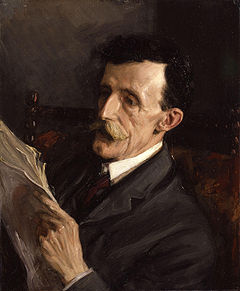
F. W. Maitland– now where have I heard that name before? I’m only too well aware of how limited my knowledge is of ‘older’ historians, but the name seemed familiar. I have been reading about Sir Peregrine Maitland in Upper Canada and I thought that perhaps I had the two mixed up.  But then I realized that a picture of F. W. Maitland was on the cover of the conference program at the legal history conference I attended at Cambridge a few weeks ago- in fact, he was the Downing Professor of the Laws of England at Cambridge between 1888-1906.  That surprised me: the quote above seems somehow more reflective and almost postmodern than I would have expected from a 19th century legal historian.

F.W. Maitland was a philosopher at heart, who went into the law for largely pragmatic reasons  and came to history rather late in his prolific, but rather short, academic career.  At the age of 25, and as part of his quest to earn a Trinity Fellowship  he wrote and self-published a treatise called ‘A Historical Sketch of Liberty and Equality as Ideals of English Political Philosophy from the Time of Hobbes to the Time of Coleridge’.   Much of his academic work elaborated on this foundation, whereby he unearthed, transcribed and commented on the broad sweep of English law, right back to Roman and Anglo-Saxon law.  From this he developed a sweeping vision of social relations and modernity both in Britain and the Anglo-world, and on the Continent.   While solidly a records-based historian, grappling with legal, highly technical documents, his works revolve around the larger philosophy of ideas exemplified by de Tocqueville, Adam Smith, Montesquieu and Marx. Although a prolific writer- over 5000 pages- much of his work was conducted in spite of ill-health through tuberculosis, and he died in 1906 at the age of fifty-six.

On the 4th January 2011  a memorial to him was placed in Poet’s Corner at Westminster Abbey, the only professional historian to be honoured in this way.   Quite apart from his interest in history and law,  and his clear, evocative writing, his approach to history itself speaks to me.  He was deeply conscious of the dangers of anachronism:

The history of law must be a history of ideas. It must represent, not merely what men have done and said, but what men have thought in bygone ages. The task of reconstructing ancient ideas is hazardous and can only be accomplished little by little.  If we are in a hurry to get to the beginning we shall miss the path. [… ]Against many kinds of anachronism we now guard ourselves. We are careful of costume, of armour and architecture, of words and forms of speech. But it is far easier to be careful of these things than to prevent the intrusion of untimely ideas. […]  ‘The most efficient
method of protecting ourselves against such errors is that of reading our history backwards as well as forwards, of making sure of our middle ages before we talk about the “archaic”, of accustoming our eyes to the twilight before we go out into the night.[…] Above all, by slow degrees the thoughts of our forefathers, their common thoughts about common things, will have become thinkable once more. F. W. Maitland, Domesday Book,  p. 356, p. 520

He knew the importance of starting in the right place to find the essence of the structure.

Too often we allow ourselves to suppose that, could we get back to the beginning, we should find that all was intelligible and should then be able to watch the process whereby simple ideas were smothered under subtleties and technicalities. But it is not so. Simplicity is the outcome of technical subtlety; it is the goal, not the starting point. As we go backwards the familiar outlines become blurred; the ideas become fluid, and instead of the simple we find the indefinite. F.W. Maitland, Domesday Book p. 9

References:

Alan Macfarlane (a renowned social anthropologist in his own right) F. W. Maitland and the Making of the Modern World. It’s downloadable as a PDF here and it displayed brilliantly on my e-reader- being able to read long PDFs in a book-like form without having to print off- now this is what an e-reader does really well.

A You-Tube video Alan Macfarlane lecturing on F.W. Maitland in 2001 in the Department of Social Anthropology, Cambridge University.  There’s no bells and whistles here- it’s just a straight out, softly-spoken, chalk and talk lecture that assumes familiarity with Maine, Montesquieu etc (an unfounded assumption in my case!) but it convey’s Macfarlane’s deep admiration of Maitland and the significance of Maitland’s work.

‘New Voices’ at Eltham

On Saturday I went up to the “New Voices” Writers’ Festival up at St Margaret’s Church in Eltham.  Apparently it’s been running for a number of years but to be honest, I hadn’t heard of it before- or perhaps I just didn’t notice.

I was attracted by the first two sessions in particular that focused on the memoir as a genre: Rodney Hall- twice Miles Franklin winner- speaking about his memoir Popeye never told you, followed by cultural historian David Walker conversing with the biographer and historian Jim Davidson about Walker’s own memoir/reflection Not Dark Yet: A Personal History.

Although distrustful of autobiography as a genre, Hall was spurred to write Popeye never told you mainly for his siblings.  The book covers his childhood in wartime Britain from the ages of 5 to 9, and he intentionally adopted the voice of a child with short sentences, and a child’s eye perspective of size, relationships and causality.  Hence, he chose episodes  for their impact on him rather than their historic or narrative significance, and drawing on the rather linear and black-and white reasoning of a child, he limited his conjunctions to words like “and” “but” “so” etc. It’s a brave, and perhaps rather contrived narrative stroke, and one that could fail disastrously.  However, this review suggests that Hall succeeded well.

The second speaker of the day, David Walker, also moved out of his accustomed genre in writing Not Dark Yet: a Personal History.

After a long career in academe, Walker’s eyesight deteriorated suddenly in 2004 as a result of macular degeneration.  With the term “A personal history” as the rider to his title, this book is not just a memoir (or perhaps an ‘auto-ethnography’ as Walker himself has described it) but also a reflection on family history, history more generally,  memory and storytelling.    When he was  (rather chummily) discussing the book with fellow-historian Jim Davidson, it brought to my mind Inga Clendinnen’s Tiger’s Eye, one of the most personally influential books I have ever read.  In fact, it’s not going too far to say that you would not be reading this blog, at least in the guise it is,  had I not read Tiger’s Eye. Historians, I think, approach memoir and autobiography with a particular wariness and cannot completely divorce their professional academic skills from the shaping of their own life-story, so I’m interested to read this book. Certainly Tom Griffiths’ review (another historian I deeply admire) suggests that it will be well worthwhile.

I’m not really a writers’ festival sort of person, which may surprise you, given that I love reading so much.  I do, however, enjoy hearing non-fiction writers talking about grappling with a body of evidence in some form (lived experience, research, primary sources) and shaping it into an argument and narrative.  There’s an independence of the material beyond the author, and a  responsibility on the author’s part for some degree of fidelity.

However,   I’m less drawn to hearing fiction writers speak about their craft.   For me, it’s a bit like reading an artist’s or art critic’s statements about a work in a gallery: a self-consciousness and layering of meaning that seems sometimes contrived and retrospective.  Listening to fiction authors talking about their work- a creation of their own making-  is a discussion that really requires you to have read the book in question, in a way that is not necessarily true for a non-fiction book, and so after a rather good lunch, I left early in the afternoon.

As well as drawing on sponsorship from publishers  and the local council, the day was conducted under the auspices of the Eltham Bookshop. I was saddened to read in the local paper that after 14 years this bookshop, like so many others, is really struggling.  Its proprietor, Meera Govil, is a generous contributor to the cultural and literary life of Eltham and surrounding districts, and the leafy north would be the poorer for her shop’s demise.  I shift a little uncomfortably in my chair as I write this: I rarely purchase books but instead borrow them from libraries or buy them second hand.  I’ve bought from Amazon and Book Depository, and I am drawn by 10% loyalty schemes for the few books that I do buy.  Although I’m still chafing at the e-reader experience, I know that I’ll succumb increasingly if the digital versions are priced attractively enough.  At one stage I promised myself that I would buy one book a month, but that resolution has gone out the window.  I look in despair at the deluge of new books that keep on tumbling into the market, and I am saddened to hear of such small print runs and the out-of-print status of so many precious works. Perhaps print-on-demand might be one form of salvation, but it’s  such a bland and stripped down product in its present form.  It’s all beyond me.

‘Teaching Scholarship’ by Caroline Walker Bynum

The Facebook page of the Australian Historical Association had a link recently to ‘Art of History’, a column in the American Historical Association’s Perspectives on History publication.  The column contains essays by established American historians writing on the art and craft of historical writing.  Such copious advice is probably best taken in small doses, so I’ve been enjoying reading slowly, one article at a time.  The first link is to an article from 2009 called ‘Teaching Scholarship’, and a thought-provoking little article it is, not just for a clapped-out and inactive educational designer (as I am) but for historians more generally.

Caroline Walker Bynum, a professor of European medieval history,  starts by pondering what ‘scholarship’ is and comes up with a checklist for what it means for a historian in particular,:

Hard work in archives and libraries without taking shortcuts through the research of others; integrity of citation from primary sources and secondary authorities; thorough grounding in earlier work (and not just that of the 1990s or later); situating of specific conclusions in complex historical contexts; genuine discoveries and original questions, not just a rehash of current theories; and always, always the struggle to ensure that the issues raised are appropriate to the material at hand, that it is not pulled out of shape by contemporary concerns or anxieties…

These values, she suggests, are not part of the baggage that the young undergraduate, or even graduate, brings to history.  The American education system (and I suspect that much of this is true of the Australian system as well) encourages students to “do research” by cutting and pasting primary sources, predominantly from the internet.  By pushing students to move beyond this approach, she claims that college instructors have (albeit unintentionally) encouraged what she calls

a sort of hypercriticality that may undercut—even while it in some ways enhances—what they need in order to be scholars. We have taught them to be critical of where they find material; we have taught them to expect bias and to study authors for it; we have taught them to ask questions of their material, not just “accumulate facts.” All to the good. But in the process we have perhaps led them to think that when they have “critiqued” someone else’s position, they have found one of their own; that the work of the historian is to find the flaws in how others put things; that the task is finished when they have contextualized—as part of a “school” or a “trend,” a political commitment or an “identity position”—someone else’s conclusions. And such contextualizing or “critiquing” often means demolishing. We reward the cheekily worded rejoinder, the clever diagnosis of bias in their supposed elders and betters. It is hard to teach any other way when one needs to engender skepticism about the vast wash of material available out there in cyberspace.

But, she argues, beyond these so-called “critical skills”, there are those values of scholarship that she started her article with, and they often run counter to the quick demolition-job of hypercriticality

We value patience and the ability to postpone gratification until we get something right. We value the silences in our sources more than the speed with which we obtain results; and we are willing to slow down, to read again, to listen to what is not being said, in order that we may spot unlikely possibilities. We assume we are in continuity with the work of other scholars and that the best work is not necessarily the most recent. An archivist in France in 1900, for example, or an archaeologist in Mongolia in the 1950s may have gone further than a recent theorist who knows the basic material less well. We understand that the purpose of a footnote is not so much to disagree with someone else’s argument or call attention to our own interdisciplinary reading as to express gratitude to those earlier scholars without whose work we could not make progress ourselves.

She talks about techniques she uses to encourage this mind-set in her students. One involves getting students to review a review as a genre, to appreciate its demands and to break the reliance on oneupmanship and paraphrase.  A second activity involves getting students to critique a lengthy footnote by following up every source that it references, and to assess- positively or negatively- the relevance and strength that such sources bestow on the argument.   It is only at this point, after students have been alerted to the demands of reviewing and imbued (hopefully) with some sense of  humility, that she asks them to write a book review.

All of this touches on some of the insecurities I feel myself in writing reviews on this blog.  I sometimes come into contact with the authors of books that I’ve reviewed, and while I expect that they’re largely oblivious to the fact that I’ve written about them, I wonder if I’d be quite as confident making my comments to their face.  Sometimes I wonder at my own presumption in commenting on someone else’s achievement in something that I could only dream of: at other times, I wonder at my own presumption in even thinking that what I’m doing even matters at all!

Uplifting Quotes for the Uninspired Historian #8

Ged Martin, in Past Futures:  The Impossible Necessity of History, Toronto, Toronto University of Press, 2004

The original  lectures from which this book derives were delivered as part of the  1996 Joanne Goodman Lecture series, conducted annually at the University of Western Ontario. However, the closing chapter of the book  reflects on September 11, which indicates that this written version is far more recent.

One of the themes that runs throughout the book is the nature of decision making in history and the historian’s task in reconstructing it at a distance:

...historians must not simply embrace with gratitude whatever survives from the past. Rather, the whole process of historical reconstruction is one of dialogue, between our questions and their answers.   Sometimes that dialogue requires some sharp interrogation on our part, since there is often a mismatch between our concerns and their evidence…

A related problem, especially for those studying the activities of government, is that while historians ask questions about ‘why?’, most official records were designed to apply answers about ‘how?’. (p.22)

In fact, ‘why?’ is not the right question:

Unlike computers, people do not face an infinity of choices , but are usually obliged to select from a finite range of available options.  The real task for historians is to locate that moment in time and account for the range of options on offer- in short, to ask ‘why when?’ and ‘why what?’.   (p. 85)

Every decision is a double decision, requiring us to ask first, ‘why when?’ and only then ‘why what?’. The operative second part is the action of saying ‘yes’ or ‘no’ to the available options.  The historical core is to be found in that crucial first part, the decision to take a decision.  We should begin by seeking to understand not simply why a decision was taken but when it was taken.  This helps us to appreciate why, at that time, some options but not others were available to those making the decision. (p. 93)

Far too often, historical analysis begins by pressing the pause button on a videotape of the past.  The historian traps the characters to be studied in the awkward attitudes of the moment, and proceeds to explain how they had come to relate to one another in that frozen past present.  We need rather to ask which of the characters captured on the screen contemplated some form of future, in the hope of recovering how they shaped their actions in the moment of their past present to meet those futures.  Were their perceived futures short-term or long-term in scope, optimistic or pessimistic in character.  Were they adjusting to the collapse of previous assumptions about the road ahead or coping with the sudden arrival of a destiny that had previously been perceived as only a distant possibility….

Such an approach means that historians must place less emphasis on explaining static moments in the past, an exercise that is in any case impossible, and more upon locating those events in a longer sweep of time.  In other words, we must approach the study of history by seeing past, present and future as a single continuum.  Only thus can we enter into the world view of the people we study, to recapture how they reached their yes/no decisions in response to the propositions that confronted them at that ephemeral instant when they too stood on the moving frontier between their own past and a future that they could rarely foresee but never ignore. (p. 147)

Margaret and Maggie

Some time ago, in reviewing Peter Cochrane’s book Colonial Ambition, I made an offhand reference to Margaret Kiddle’s book Men of Yesterday and had obviously intended writing a more considered post about Kiddle’s book at some later date.  Now that I come to write about it, I find myself flicking through my reading journals that predate this blog (which has largely usurped their function) and I am surprised and regretful that I didn’t write an entry about it.  It was a book that deeply affected me at the time and the only explanation I can think of for its omission is that I must have considered it ‘work’ reading as distinct from ‘leisure’ reading.  I’m increasingly finding that there is no boundary between the two- I don’t know whether that’s a good thing or not!

Men of Yesterday is framed by the poignancy of the circumstances by which it posthumously reached publication.  Its author, Margaret Kiddle was a tutor at the University of Melbourne, but described and downplayed herself as “not an academic”.  She died of renal failure, after years of illness and a decade of dialysis, at the age of 44 with her manuscript finished but unrevised.  She left for her literary executors (including Max Crawford and John Le Nauze)  a list of what she saw as essential revisions and this note:

I guess this is just another ‘Melba farewell’ but if not-

Max, as you will be going to Wisconsin, I suggest that if he will, John takes over the revision.

John- I should be very grateful if you would do it for me.

Acknowledgements: The file correspondence and comments on notes will help you- don’t forget to thank yourselves!…This book has been finished in dramatic circumstances- for publicity purposes cash in on them as much as you like- it may earn some money!  (cited in MacKellar, see below)

But this was no ‘Melba farewell’– it was the real thing, and the book needs no cashing in.   Margaret Kiddle was proud of her pioneer ancestors, and the book is almost an act of love to the experiences of her forebears.  It is a very human book and it has attracted its share of critique. As the pointedly-titled thesis What Kiddle forgot reminds us,  aboriginal dispossession and women’s roles were kept in the  background,  and it has attracted (perhaps unfairly)  a reputation  as  a book of its time and historiography.

I’ve been reunited with Margaret Kiddle through a beautifully written opening chapter in a book by Maggie MacKellar called Strangers in a Foreign Land.  It has been generously- indeed rather TOO generously??- downloaded into Google Books and the opening chapter, at least, is a cracker.  MacKellar describes her  rediscovery of Kiddle’s work as part of her own project on the Niel Black diaries and the book that follows is an edited and interwoven transcription of Niel Black’s diaries.   In her introductory chapter she reprises early Port Phillip and Western District history, interweaving it with Major Mitchell’s acclamation of Australia Felix as the culmination of his journey that started just several kilometres from her own home.  She explains, as all historians experience and many (too many?) describe, the rush of emotions in dealing with primary documents, with her consciousness of what she is reading heightened by the elemental summer smell of bushfire that seeps into the cloistered space of the State Library reading room.  Despite my own as yet unresolved feelings about historians’ use of themselves in the history they are telling,  I have no such qualms about  edited diaries and letters.  It is in the historian’s interaction and shaping of the primary documents that the engagement with larger historical questions emerges:  it is obtuse to pretend that the historian is not there reading, absorbing, making connections and talking back to the material.

Just from the extracts available online, this looks a beautifully presented book.  Time, and an awareness that I am becoming distracted,  prevent me from reading further, but the opening chapter is a delight in itself.

References

Kiddle, Margaret Men of Yesterday: A social history of the Western District 1834-1890 Melbourne, Melbourne University Press, 1961

MacKellar, Maggie Strangers in a Foreign Land: The Journals of Niel Black and Other Voices from the Western District,  Carlton Vic., Melbourne University Publishing, 2008

Vale Rhys Isaac

I heard yesterday that Rhys Isaac has died and I feel diminished, even though I could not in any way claim to ‘know’ him and even less could I say that he knew me.

Rhys was Emeritus Professor with the History program at La Trobe University, and even when I was an undergraduate student there in the 1970s, I remember seeing his name on the door.  He holds the distinction of being the only Australian historian to win a Pulitzer Prize for his book The Transformation of Virginia  1740-1790. The excitement that greeted the announcement of his prize is part of La Trobe History folklore-  many of the academics who were part of the faculty are still there and speak of the clamour of the press and the feeling of  shared pride as news of the prize filtered through.

Rhys was part of what has been known as the ‘Melbourne School’ of historians- rather a misnomer as many of them were based at La Trobe.  Rhys, along with Inga Clendinnen, Greg Dening, Donna Merwick, Ron Adams write  deeply textured, lyrical histories,  strongly influenced by the ‘anthropological turn’ of the 1970s.  Their works are things of beauty.

He, along with the other ‘Melbourne school’ historians have been generous in their encouragement of other historians and postgraduates.  Rhys often attended our postgrad seminars on Thursday nights; this is the sphere in which I came into contact with him and that’s how I’ll best remember him.  A small,  twinkly, elfin man he would wait until all the other questions had been exhausted before he’d raise his voice with a chortly laugh and you’d turn to him, knowing that his question would take the discussion somewhere else.  “Where IS he going with this?”  you’d think, and suddenly a whole new perspective would open up as he’d draw things from the paper that we’d just heard, weave them together then suddenly your mind would explode into question upon question.  You were aware of his rapier-sharp intelligence- he’d unsheathe it at times- but when he was dealing with postgrads in particular you felt as if you’d been helped to clamber up a step in your understanding, and the world looked bigger from there.

Rhys was a word-master.  He had an unusual accent, influenced by his lengthy stays in America and his South African background, and there was a certainty and deftness in his language.   On special occasions he wrote special pieces- unfortunately often as obituaries- which captured and honoured the essence of a person or event.   I only wish I could find the words, and a fuller knowledge of the man to do the same for him.  I need not fear, though.   I have enough faith in the influence he had on cohort after cohort of colleagues, graduates and writers to know that someone else  will.

Thank you Rhys.

Weston Bate at the RHSV

Weston Bate gave a presentation at the Royal Historical Society of Victoria a couple of weeks back.  It was called “How I Became a Local Historian” and you can listen to it here.

He studied history at Melbourne University during Max Crawford’s time, and although he had done well in essays, did not perform as well in his honours exam as he had hoped.  He jumped at the chance of writing a history of Brighton, commissioned by the Brighton mayor, largely because of the sense of place that he himself had developed growing up in suburban Melbourne.

He started off with the rate books, utilizing the “birds eye” view of the RAAF pilot he had been during WWII, mapping out the streets, the type of building constructed and the people who lived there.  He tramped the streets of Brighton too, getting a feel for the place.  He took a slice approach with the newspapers, reading at ten year intervals (and ruing, with hindsight, that he didn’t align his reading with the censuses).  Brighton as a suburb was a rich field-  it threw up Dendy’s special survey and the involvement of J. B. Were; the development of the resort town; market gardening; the influence of Tommy Bent; the nature and contribution of the ‘middle suburb’.  It was a local history, but it illustrated big themes.

He speaks of the academy’s condescension towards local history, and the sidelining of the Royal Historical Society of Victoria by the University of Melbourne for some time, reciprocated by the local historians’ disdain of “academic” historians for their lack of interest in primary sources.

A good, well-constructed talk- and I do love being able to catch up on things I have missed through podcasts!

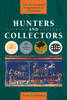
‘Hunters and Collectors’ by Tom Griffiths

1996, 282 p

I finished reading this book, sitting up in bed.  I clapped it shut and burst out “Bloody brilliant!”. Now I love my history books as much as anyone, but I don’t always react with such enthusiasm.  The book came with high credentials- the string of medals across its front cover indicated that it was going to be pretty special ( winner of the NSW Premiers Literary Award 1996, the National Book Council’s Club Banjo Shortlist 1996, the winner of the Premier’s Literary award- not sure which state- 1996, and the Eureka Science Book Prize 1996.)  I wasn’t disappointed one little bit.

The book’s full title is “Hunters and Collectors: The Antiquarian Imagination in Australia”.  Griffiths describes the antiquarian imagination as  “a historical sensibility particularly attuned to the material evidence of the past and possessing a powerful sense of place”. (p1).  His book explores the tensions between two groups of people in relation to history: Aboriginal and non-Aboriginal Australians, and amateurs and professionals.

He explores these tensions by focussing on a handful of 19th and early 20th century Victorian (as in the state of Victoria) antiquarians and collectors.  For example – R. E. Johns collected a huge number of Aboriginal skulls and his drawing-room collection ended up at the Beechworth museum.  Alfred Kenyon was a collector of stone artefacts and involved in societies like the Anthropological Society, the Prehistoric Club, and was heavily involved in Port Phillip history. For the family historians among you, you’ll know that  the  Kenyon index in at the State Library is a well-thumbed card index of the pastoral pioneers of the district.  Then there were the nature writers of the early 20th century like Donald McDonald  who wrote nostalgia-based nature columns like “Village and Farm” or “Nature Notes and Queries” for the Argus, or Charles Barrett who wrote for New Idea and the Victorian Naturalist.

We might feel uneasy about gentlemen amassing aboriginal skulls and artefacts for their drawing-room collections, but Griffiths points out that as well as the acquisitive aspect of their activities, there was a political and intellectual strand as well.  Although they were not academics – indeed many were hostile and suspicious towards academia as a whole- they did correspond with other collectors internationally and were particularly  interested in the classifying aspect of anthropology.  For the collectors based in Victoria, there was a tension between their interest in “real” Aborigines, preferably far distant in central Australia, and their eagerness to distance themselves from urban and what they would see as “half-caste” Aboriginal political activism in the present.   For example, Barrett and Kenyon’s book Blackfellows of Australia, written in or around 1936 in available online here.  It’s well worth a look, and sobering to consider that it’s being written at about the time of the Aborigines Advancement League, William Cooper and  the  Day of Mourning.

Then there’s the issue of amateur and professional historians, and the tension between memory and history.  This was of real interest to me, because as I may have mentioned, I am fairly heavily involved with my local historical society.  It was established in 1967, just in advance of the flood of historical societies that commenced between 1970 and 1990.  Local historical societies are grounded in a powerful sense of place and at first tend to revolve around key people and a “keep it under the bed” mentality.   This section of the book was particularly pertinent to me, as Kenyon lived in Heidelberg with his daughter, and I’ve caught several references to him in our collections.   There has always been, as Griffiths points out, an uneasy relationship between universities and local historians, and I confess to feeling that tension from time to time, overlaid as it now is by friendships and local loyalties.  And as Griffiths also points out, universities too have increasingly been repackaging their course offerings into  “public history” as a more saleable income stream in the face of decreasing funding.

I hadn’t particularly considered before the proliferation of history and nature societies and mentalities that still lingered in the 1960s education system that I grew up in.  For example, many of the antiquarians he writes of were involved in the different commemorative days that school children were involved in (Wattle Day, Arbor Day etc) and groups like the Gould League of Bird Lovers.  In particular, there was a link with the School Paper that all Victorian school children received regularly as a supplement to their School Reader.  There’s copies of the April 1911 School Paper devoted to Australian History on the SLV site here– again, well worth looking at-  for its emphases in telling Australian History.

Griffiths brings the antiquarian imagination right up to the present day with his description of “history towns” like Maldon in Victoria, and planning and demolition battles over what bureaucrats vs. locals might regard as significant buildings.  He writes of the modern wilderness movement and the contradictions of attempting to maintain a “pristine” environment which is nothing of the sort.

He closes his book with a personal reflection of his own role as a collector for the Museum of Victoria, and how it intersected with the activities of the earlier antiquarian collectors he describes in this book.  In this epilogue you can detect the influence of the historian Greg Dening in particular, whom he names almost first up in his acknowledgements.  The epilogue really is masterful: it returns our gaze to the men and their intentions on which the book is based, and reminds us how they have been interwoven into our own history-making today.   And, in case you haven’t picked it up, this really is a bloody brilliant book.

Tony Judt

You may have caught Big Ideas on ABC Radio National on the weekend.  If not, head over and listen to the podcast.

It’s Tony Judt delivering the 2009  Remarque lecture “What is Living and What is Dead in Social Democracy?” and there’s an edited transcript here. The lecture was given in the context of the American debate about health care. He explores the frozen language of social democracy that is mired in debates of 70 years earlier and has been co-opted by politicians across the board now, leaving nothing new to say.  But, he says, social democrats need to lay claim to past successes that are being dismantled and challenged and to assert anew that a public sector, collective identity and common purposes  are things that are worth fighting for.

If you do listen to the podcast, you’ll hear that the delivery is stilted and strained- not easy listening.  Tony Judt was diagnosed with motor neurone disease in 2008 and this lecture was delivered from a wheelchair, assisted by a breathing machine.  That’s courage.

He wrote a brilliant piece called “Night” for the NYRB. Read it, and be grateful and humbled.

Kathleen Fitzpatrick and Jessie Webb

In Macintyre and Thomas’ book The Discovery of Australian History 1890-1939, two chapters are devoted to Kathleen Fitzpatrick and Jessie Webb– both from the University of Melbourne.  As the editors point out, there were no women appointed to chairs of history between the years 1890-1939 or indeed, until much later. I’ve just been flicking through the ADB to see if there were others they could have included and women historians are certainly thin on the ground, despite the fact that women made up a large proportion of history honours students.

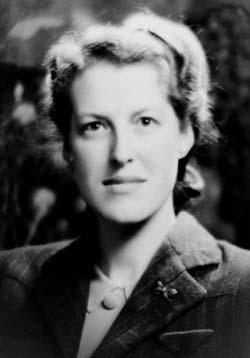
I recently heard a pod-cast about Jessie Webb, (picture here)  presented by Ron Ridley at the Royal Historical Society of Victoria in May 2009.  You can download his talk here (lots of other good podcasts here too). Ridley wrote the book Jessie Webb: A Memoir in 1994.  Such a long career, with so much experience in teaching history- senior lecturer, acting professor-  but as was common at the time, not really in the running for a chair in her own right.

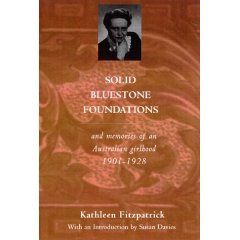
As for Kathleen Fitzpatrick, (picture here)  I read her book Solid Bluestone Foundations about eight years ago, before I returned to university.  I wish I had time to re-read it: at the time I enjoyed it mainly as a memoir of 1920s upper/upper middle class, privileged Melbourne.   The granddaughter of the J.P. Buxton real-estate founder, and the daughter of a Catholic/Protestant marriage, she always felt under-educated (despite attending Melbourne’s best girls’ school at the time) and certainly Oxford sneered at her colonial degree.

I haven’t read her work on Sir John Franklin (as it happens, I’m reading a book about Lady Jane Franklin at the moment just for fun), and she didn’t ever publish her work on Charles La Trobe which I certainly would have read, had it been.   Susan Davies, who wrote the chapter on her in The Discovery of Australian History, suggests that perhaps she abandoned her La Trobe biography because Alan Gross had entered the field with a competing biography, although she may well have decided not to continue before this.

In fact, she seems to have doubted her own ability throughout her career, in a way that does not seem apparent in the other male biographies in Macintyre and Thomas’ book.   Here she is, writing to Max Crawford in 1951, after the reviews of her book on Franklin began to appear in the Australian and English journals and newspapers.

Thank you for the kind words from the Bulletin of Historical Literature on Franklin, which bring balm to a bruised soul.  The bruising was caused by a review in the Times Literary Supplement of March the 9th.  Why doesn’t one, at one’s advanced age, and in view of not being inexperienced in the art of being slapped, why doesn’t one cease to mind? I minded so much as to stay awake all night and then to get violently sick.  Not that I was denounced.  It was just another summary, plus a few derogatory remarks, calculated to make the whole performance seem dull beyond words, and slightly ridiculous.  Not one kind word, even for my hard work, which indeed was only a cause for reproach, ‘overloaded with the minutiae of petty affairs’ or words to that effect.  Of course I know and tell myself all the answers, such as that a writer should be concerned with his work and not with his reputation etc…  (Davies in Macintyre and Thomas p. 163)

So very human and symptomatic, I suspect, of a male-dominated intellectual environment where women’s achievements were easily overlooked.

References:

Susan Davies ‘Kathleen Fitzpatrick: Sculptor with Words’ in S. Macintyre and J. Thomas The Discovery of Australian History 1890-1939,  Carlton South, Victoria, Melbourne University Press 1995.

Susan Janson ‘Jessie Webb and the Predicament of the Female Historian’ in S. Macintyre and J. Thomas The Discovery of Australian History 1890-1939,  Carlton South, Victoria, Melbourne University Press 1995.

Also:

Jayne’s review of Solid Bluestone Foundations here.