Category Archives: Heidelberg

A day at Sills Bend

sillsbendjan2009-002

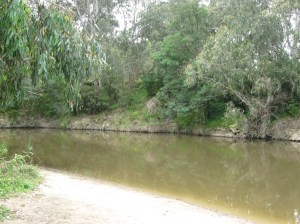
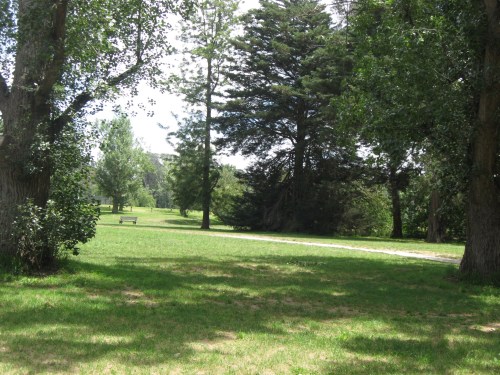
One of my favourite places to take a deck chair, picnic, glass of wine and good book on a warm afternoon is down to Sills Bend, beside the Yarra River in Heidelberg.  I’m a Heidelberg gal at heart, and down at Sills Bend I feel particularly close to the early settlers, including the Resident Judge Willis, whose rented property was on the ridge overlooking these river flats. As Alexander Sutherland was to describe it in 1888,

Heidelberg was scarcely a suburb; it was rather a favourite district for those who desire to have ample domains around their dwelling.  Until 1850 it was regarded as the distinctly aristocratic locality; the beauty of the river scenery, the quiet romantic aspect of the place, gave it an early reputation among the Melbourne men of means as the site for country residence – Alexander Sutherland Victoria and Its Metropolis 1888

The land that is now Heidelberg was offered for sale at the first land sales, conducted in Sydney. The fact that the sales were held in Sydney, meant that unless locals or their agents were prepared to travel up to Sydney, then most of the sales were to Sydney investors.  Thomas Walker, the Scottish investor, purchased several of  the available lots.  However, as is usual in land boom conditions, the estates changed hands several times in a short period of time.  And why wouldn’t they- prime land, water access through the Yarra, Darebin and Plenty rivers, and all within ten miles of the centre of Melbourne.

The river flats, with a good source of water were turned over to tenant farmers like Peter Fanning (1827-1905), who farmed the next bend of the river (Fanning’s Bend) , or subdivided from the larger estates and sold as small holdings to farmers like Mark Sill (1818-1885) who planted an orchard.  Several of the pear trees are still alive.

sillsbendjan2009-006sillsbendjan2009-007

The gold rush had little effect on Heidelberg beyond stimulating market gardens and agriculture to supply the increased population moving to the diggings at Queenstown (St Andrews) and Warrandyte. However, during the 1860s there was a succession of ‘droughts and flooding rains’ that made sustainable farming very difficult.  As the agent for the Banyule Estate, James Graham wrote on 12 January 1865

I am quite concerned about the low rents from Banyule area the tenants are doing no good. What with this very dry season and rust and caterpillars, the crops are very poor indeed.  Fanning is both losing money and rent altogether and he has been at me several times to let him off the lease. He had worked hard poor fellow but I see and I know that he is losing money.  His wife is in very bad health, which helps to make matters worse.

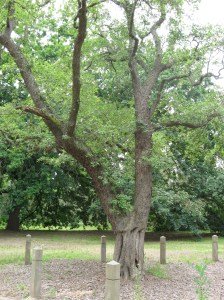
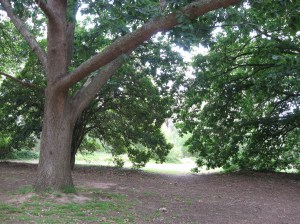
The dominance of English-style estates around the Heidelberg areas means that there are quite a few stands of oak and hawthorn trees.  The oak trees down at Sills Bend are spectacular, with branches that reach right down to the ground.  There’s a little beach (very little) down on the Yarra bank
sillsbendjan2009-008

sillsbendjan2009-013

The small size of Heidelberg militated against the provision of infrastructure like water and rail, which in turn hampered growth.  It was really only with the Depression of the 1890s that the large estates began to be broken up.  Land subdivision progressed in a piecemeal fashion right up until the 1960s.

So, Melburnians, when you read of the “missing link” between the Western Ring Road and the Eastern Freeway, look very carefully at what is proposed when they start talking about the Bulleen option.  You might want to join me on the barricades.

References:

Don Garden, Heidelberg: The Land and Its People

Plaque at Sills Bend
The Yarra in flood August 1842

img135-correction3

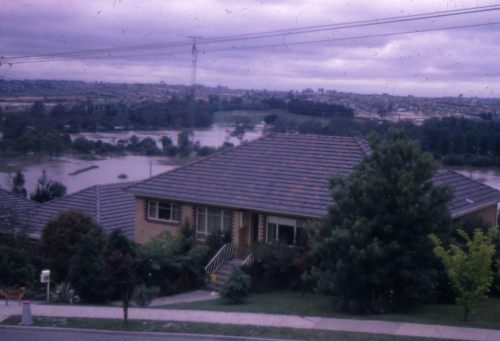
View from Dalvey Street Heidelberg showing Yarra in flood

It’s been a long, long time since I’ve seen the Yarra in flood.   As a child, we lived in a house on top of the hill overlooking Warringal Park in Heidelberg.  Justice John Walpole Willis- the first resident Supreme Court judge-  would have walked around our very site because that is where he lived (and hence my first spark of interest in him).  We could always see when the Yarra flooded from our front garden, as you can see from the photo above, taken probably in the late 60s-early 70s.   I can remember the school buses having to slosh through the floodwaters to get to my now-demolished school, Banyule High School.

The Yarra has always been a focal point for the village of Melbourne.  It was the availability of fresh water above “the falls” at the bottom of William Street that determined the location of the settlement.  It’s been a major transport route to Port Phillip Bay; it’s been an industrial sewer; it’s still used recreationally (although I wouldn’t swim in it), and it’s now the site for the casino, exhibition centre, restaurants etc.

Until it was so heavily dammed and flood mitigation works completed, the Yarra used to flood quite regularly.   Although the worst flood was in 1891, the last great flood was in 1934. My father, who lived in Hawthorn, recalls the houses beside the river being flooded up to their roofline, and seeing the four legs of a dead horse being bashed by the floodwaters against the top of  the Wallan Road bridge which only just escaped inundation.

The first recorded flood of the Yarra River was in 1839, but Judge Willis would have also seen the flood in August 1842.  Here’s what the Port Phillip Herald of 2 August 1842 had to say:

During last week, owing to the very heavy rains of Monday and Tuesday, the Yarra has risen to a height altogether unknown to the oldest resident, and overflowed its banks, inundated the wharf, and substituted one sheet of water on the other side of the river for the green grassy fields, which [indistinct] that locality have hitherto opened up to view and even the new road from the Beach to the bridge, which, it was supposed, from its elevation, to be free from inundation, was flooded in many places.

Mind you, “the oldest resident” would only have been in Port Phillip for seven years anyway, so this is no great claim.  In an interesting twist on public memory, the Port Phillip Herald of 6th September 1842 reported that the aborigines of the town designated this particular flood as only a ‘picaninny’ with worse to come, and indicated that a flood about twenty years ago had flooded the area occupied by the Market Square.  The elevated, but flooded road was being built by the labour of unemployed workers as part of the limited public works program.

On Sunday crowds of the inhabitants were to be seen promenading on the new wharf looking with intense interest to the breakwater overflowing in rushing torrents, in humble imitation of the falls of Niagara.

Very humble imitation , I’d say.  The “falls” were not particularly high-  more a ridge that separated the fresh water from the salt.   The governor, George Gipps, even harked back to his engineering background in the military by drawing up plans to build a larger breakwater across the falls.  But Niagara?  “Tell ’em they’re dreamin'” (Source: The Castle)

The damage to the brickmakers has been very great, all of them having been compelled to seek other habitations at a moment’s notice, their houses being now flooded three feet deep.

The brickfields were on the south side of the Yarra.  The location was derided by the more respectable inhabitants of Port Phillip as being the source of vice and degradation.  You sometimes see “the brickfields” given as the address for people facing the Police or Supreme court.

All the beautiful gardens on the banks, including Messrs. Orr, Curr, Welsh, the Hon Mr Murray, and Major St John &c &c are also completely under water, as well as those at Heidelberg.  Captain Cole’s wharf, which has been raised several feet by the earth cut out from the dock, presents the extraordinary appearance of a “dissolute island”, being completely surrounded with water.

The floodwaters at Heidelberg meant that Judge Willis could not make it into town from Heidelberg to attend court.  And somehow, I don’t think I’ll ever see the Yarra in flood again.

Update

It would seem that the Aborigines were right when they predicted even higher flooding.  The Port Phillip Herald of October 28 1842 reports:

The prediction of the blacks that the flood of August was but a picanniny one compared with that yet to come, by which the water would reach the custom house was nearly realized, the water reaching within a few feet of that building, and we hear that it rose to the amazing height of fifty feet at Heidelberg.