Category Archives: CAE Bookgroup 2024

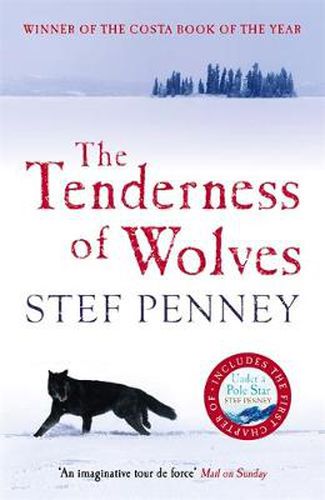
‘The Tenderness of Wolves’ by Stef Penney

2007, 496 p.

I’ve read Big House mysteries; I’ve read Outback Solitary Aussie Bloke mysteries; I’ve read London-based mysteries. But I don’t think that I’ve ever read an Upper Canada mystery before, especially one set in 1867 which is relatively familiar territory for me because my Judge Willis (the real Resident Judge of this blog) served there in the late 1820s. It is rather strange -and rather amazing, given how vividly she writes- that the author Stef Penney has never visited Canada. The snow and isolation and colonial machinations that she describes in this book all spring from her desk research alone.

Set in the last days of the fur trade, Mrs Ross, a local resident, discovers a brutal murder in the small hut occupied by Laurent Jammet, a French trapper. Suspicion falls on her adopted 17 year-old son, Francis, who was friends with the trapper, and his disappearance from the village only heightens speculation that he is the killer. Donald Moody, an accountant with the Hudson Bay Company, is sent out to investigate the murder, along with Mackinley, the sarcastic and bullying Company Factor from Fort Edgar. They are accompanied by Jacob, Moody’s self-appointed native American protector. They arrest half-Indian William Parker, who was apprehended searching Jammet’s hut after the murder. After Parker is ‘roughed up’ by Mackinley and Scott, the wealthy storekeeper in whose shed Parker is confined, Parker and Mrs Ross go off in search of Francis. There is someone else who is eager to search Jammet’s hut as well: Thomas Sturrock, who believes that a bone tablet which may be of archeological significance is in Jammet’s possession. He has been to the small settlement of Dove River before, having been there years earlier in search of the twon local Seton girls, who disappeared in the forest, never to be found.

And so, we have various people all heading off into the frozen wastes: Francis in search of the man he thinks is the murderer; followed by Mrs Ross and William Parker who are in search of Francis; and then Mackinley and the love-sick Moody who are in search of William Parker. The only nearby settlement is a Lutheran Norwegian community in Himmelvanger, and they take in all of these groups as they stumble in from the snow and icy marshland. Attention then turns to the nearby Hanover House, the company Trading Post, administered by James Stewart. As in the best Mystery Novel tradition, there are many red-herrings and subplots.

The book starts with Mrs Ross’ first person account, and it alternates with other present-tense chapters told by an omnipotent writer, who knows all the characters’ thoughts and backstories. There are rather a lot of characters, and because the book is written in very short chapters without chapter numbers, I found myself getting a bit lost with all the Mr. This and Mr. Thats.

I’m rather mystified by the title, though. There are certainly wolves in this story, surrounding the various groups as they trudge through the snow, and the colonists are all frightened of them. They keep their distance though, and the closest they come is when they sniff around one of the tents at night, breathing over the sleepers and leaving paw-prints. The wolves are certainly less violent than the trappers.

Most impressive of all, though, is Penney’s depiction of the bitter cold and isolation. The landscape, along with the short chapters, makes it a very filmic novel and I wasn’t surprised to find out that she is, in fact, a screenwriter. The book won a Costa Book of the Year in 2007

My rating: 8/10

Sourced from: Council of Adult Education

Read because: CAE selection
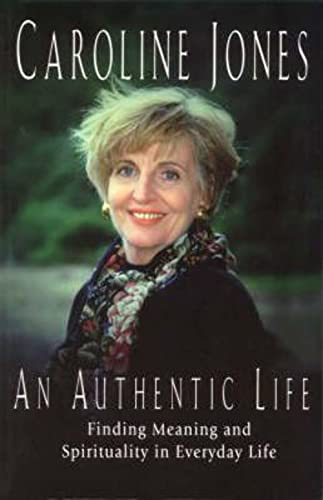
‘An Authentic Life: Finding Meaning and Spirituality in Everyday Life’ by Caroline Jones

1998, 307 pages

Could there possibly be a worse way to read this book than as a selection for a book group? I doubt it. It has to be read by a certain date; you have an implicit obligation to at least attempt it as a ‘good’ bookgroup member; it’s a book that someone else has chosen in their time, and not yours.

And in my case, it’s by Caroline Jones to whom I developed a deep antipathy after reading her book Through a Glass Darkly (you can see my snarky review here). I can hear her rounded vowels and caramel tones in my head, see her slightly tilted head, and so bloody earnest. She annoys me so much.

It’s odd, because under different circumstances (and that’s the crucial thing) I would probably quite enjoy this book. I am drawn to a spiritual life; my identity as a Unitarian Universalist is important to me; in fact, I spend Sunday mornings a couple of times a month exploring exactly the things that she does in this book.

But that’s on my terms: I can ‘think myself’ into a spiritual mindset before even embarking on thinking about things of the spirit; it’s a commitment that I have made with myself, by myself. It’s not a reading assignment I have to have completed by a certain date, like homework. All of this book feels like hard work. It was because I knew that 300 pages with Caroline was going to be so tedious that I actually started reading the book a fortnight before our bookgroup meeting, instead of my usual practice of starting three nights before the meeting and finishing the book at some ungodly hour on the Thursday morning before the meeting on Thursday afternoon. I knew that one chapter at a time of this book would be as much as I could handle, and I was right. I feel as if I have been harangued and bible-bashed for 300 pages.

So, wrong book, wrong author, wrong mode of reading it.

My rating: 4/10

Read because: CAE bookgroup choice.

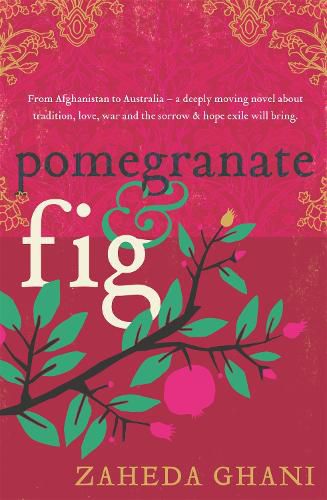
‘Pomegranate and Fig’ by Zaheda Ghani

2022, 288 p.

Much of our awareness of Afghanistan comes from twenty-first century events: the detonation of the Bamiyan Buddhas in 2001, the invasion of Afghanistan by U.S. troops after 9/11 and the protests against the presence of Australian troops in such a misguided, downright wrong war, and then the chaotic recapture of Kabul by the Taliban in August 2021. This book takes us even further back to life before the Soviet invasion in 1979 and the rise of the Mujahadeen – a life which, for middle- and upper-class Afghanis could be cultured, intellectual and free from want.

The book focuses on brother and sister Henna and Hamid, and the man who will become Henna’s husband, Rahim. Henna and Hamid are the youngest of four children, and the two older sisters have married and moved away. Henna and Hamid are both well-educated, with Henna planning on becoming a teacher, while Hamid’s interests are more theological and philosophical. However, being the youngest daughter of a wealthy family, the prospect of marriage is drawing closer and becoming more inevitable. Lawyer Ramid and his family come to her parents seeking marriage, which she knows will close doors to her options in the future, but her quiet resistance at first turns into acquiescence. Hamid knows that he is losing his closest friend, but he acquiesces as well. Family and tradition hold a firm grip on their futures.

The book is divided into three parts: Herat, War and Exile. ‘Herat’ is the ‘before’ time, as Henna and Rahim marry and have their first child in a steady, middle-class milieu underpinned by family loyalties and devotion to Islam. ‘War’ brings the assassination of the President, the stirring of the mujahadeen resistance and the invasion of the Soviets. Although the family is not overtly political, Rahim knows, as a prosecutor, that he has to be careful with his words and circumspect in his loyalties. He is arrested and beaten for a slight involvement with the mujahadeen, and it is only through the influence of his contacts that he is released. None of them know it (although we, as readers 40 years lager do), but worse is to come than the Soviet invasion and the appropriation of their property. They flee the country before all of this happens.

This leads to the third part, Exile, where Hamid flees to Iran where he works at a menial job in a kitchen, and Rahim and Henna leave for India where they gradually move from place to place until they seek asylum in Australia. We now in Australia are so conscious of ‘grounds for seeking asylum’, and Ghani is largely silent about the bureaucratic process that made it possible for them to come here. Hamid tries to go to India, too, but he is rejected at the airport and returns to Iran. Once here, Rahim and Henna decide to start their own small tailoring business in the garage. Rahim cannot find work as a lawyer, but they are both grateful for a safe country.

The story is told in short alternating chapters, which I always find a bit of a cop-out. Having said that, I have recently read two books with inordinately long chapters and I found those oppressive, and these short chapters were a relief. It is told in the present tense throughout. Although the book’s sympathies lie mainly with Henna, I think, it also rounded out the characters of the men in her life. Her brother genuinely loved her, and although it was an arranged – or at least, mediated- marriage, Rahim and Henna came to love each other two through their mutual dependence in a world that seemed to have lost all its certainties: home, profession, family. Many books about Middle Eastern Islamic women portray the men in their lives as tyrants, but neither of these men were, although viewed from a distance they may have appeared to be.

No translator is mentioned, so I think that this book must have been written in English. It is simply written, with a poetic lilt. It conveys well a sense of yearning for a disappeared past, and a stoic acceptance of negotiating a new life from a maelstrom of war and political instability. I wonder if I would have such endurance.

My rating: 7/10

Read because: CAE bookgroup selection. Unfortunately I missed the discussion because I had been in contact with COVID and feared giving it to my older Bookgroup friends.

‘The Bloody Chamber’ by Angela Carter

1979, 126 p.

Sometimes I have heard about a book long before I have read it. This was the case with Angela Carter’s The Bloody Chamber. I didn’t know much about it, but I knew that it was a feminist take on traditional fairy stories, much admired by some pretty intense and impenetrable feminist writers. I assumed that I would find Carter’s writing as dense as I do these commentators but I was pleasantly surprised: Carter’s stories were easy to read, although the subject matter was disturbing. Although, fairy stories are pretty disturbing too, when you think about it.

The book contains a number of short stories. The first, The Bloody Chamber is the longest by far, set in a recognizably present time and unlike the other stories, has no supernatural or shape-shifting elements. Based on the story of Bluebeard, a young girl marries a wealthy older man who has had several other wives. Left alone in the their large old house, and warned not to enter a particular room, she of course enters the room where she finds pornographic and torture instruments and the body of one of her predecessors. I found this off-putting: I always find it difficult to watch screen depictions of torture, and this story was no exception. But it was saved by MUM riding to the rescue- good old mum!

The other stories also riffed off fairy stories- not a straight retelling necessarily, but certainly picking up on themes in the original. Several of them were based on Beauty and the Beast, or Little Red Riding Hood, and there are three stories about wolves or werewolves. There are enough resonances in the language and structure for you to relax into reading a fairy story, until she subverts your expectations by going in a different direction. Most of the stories are set in an undetermined, gothic European setting without specific reference to time and place. Some are very short, consisting of only one or two pages.

There is no sex in it as such, although there is plenty of disrobing and exposure, and it was also interwoven with coercion and threatened violence. I must confess to finding it disturbingly erotic as well. It is beautifully written, with very skilled control of pacing and a light touch in combining familiarity with disequilibrium.

My rating: 8/10

Sourced from: CAE reading group.