Category Archives: CAE Bookgroup 2023

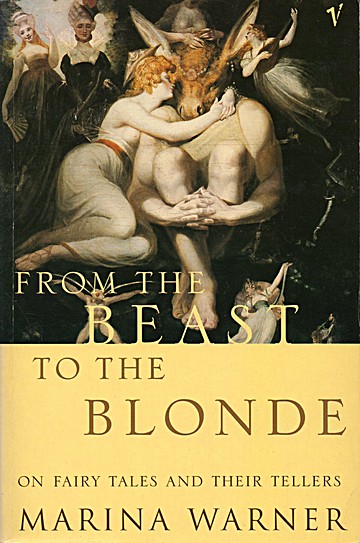
‘From the Beast to the Blonde’ by Marina Warner

1994, 458 p.

I was rather startled to see that my CAE bookgroup had chosen Marina Warner’s book for our December 2023 read. We’re a rather cosy bookgroup, once condescendingly designated ‘middlebrow’ readers, more drawn to fiction than non-fiction, and I was familiar with Warner’s rather erudite contributions to the London and New York Review of Books magazines. From the Beast to the Blonde is a hefty tome, both physically, and intellectually. I raised an eyebrow at the notewriter’s opening paragraph in the CAE notes that accompanied the book:

Perhaps the book should be approached by reading the lucid and interesting introduction and conclusion, which summarize all the themes developed at length in the main text, then glancing through the text’s handsome and liberal illustrations, which will give a visual impression of the contents.

CAE notes p. 1

Once I felt that I had ‘permission’ to skip bits, I actually ended up reading most of the book, even though I only started reading it about four days before the meeting, as is my usual practice. It was very dense, with long sentences and a forbidding vocabulary (autochthonous? peripeteia?). It was very digressive, as if Warner couldn’t allow a possible association to go unremarked. Most of her material was focussed on European fairy stories. Some Islamic stories do get a look in, but few Asian or indigenous stories are mentioned. In fact, I’m not sure that she ever really defined what a fairy story is, and the distinction between a folk tale and a fairy story.

The book is divided into two parts: The Teller and the Tale. In the first part of the book, she highlights that most fairy stories originated in women’s talk, especially in women-only places like child-bed, washing, kitchens etc, even though they were generally published under men’s names (e.g. Charles Perrault, the Brothers Grimm, Andrew Lang). Wrested into the male realm, they often display a disparagement of the original women tellers, drawing on the imagery of the old crone, or a bird to declare them “Mother Goose’s” tales or a grandmother’s stories.

In the second part of the book she moves on to specific stories, particularly Cinderella and the rather disturbing Donkeyskin fairytale (where a young girl has to disguise herself in a donkey skin to avoid her father’s incestuous designs on her) among others. She discusses the Disneyfication of fairy stories, especially ‘The Little Mermaid’, and the cultural stereotypes of blondness and step-mothers that are conveyed through them. But this division between the two sections is not clear cut. For example, although name-checking Marie-Jeanne L’Heritier, Henrirette-Julie de Murat, and Marie-Catherine d’Aulnoy as women writers of fairy stories prior to their absorption into the male-author canon in Part One, it is only in Part Two that she actually gives biographical details about the women and their part in late seventeenth and early eighteenth century French circles. She reveals her indebtedness to Angela Carter, whose adult fairy stories have extended and subverted the genre.

To her credit, she does give a good plot summary of the various stories and their variations, as few readers would be familiar with them, and she does the English reader the courtesy of translating French quotations from them. But it is still a very dense, difficult text. In the conclusion, she embarks on a discussion about a historical as distinct from psychoanalytic reading of fairy stories, arguing that they need to be read within their historical context in both their authorship and allusions, rather than as representatives of archetypes (at least, I think that’s what she was arguing).

The proliferation of anti-fairy stories, even more so in the decades after this was written, have picked up on the feminist emphasis on this book which no longer seems particularly radical or new. They certainly do not call on the same intellectual fortitude and commitment that this book requires of its reader. And it did remind me to one day introduce the original versions of the stories to my grandchildren (yes, it will probably only be my granddaughters) from my own mother’s ‘The Children’s Treasure House”, which will test their attention spans with its dark themes and its black and white art-deco line drawings. Just like my attention span was tested with this book. I recognize its contribution and I admire its breadth and erudition, but it was hard work.

My rating: 7/10

Sourced from: CAE for my CAE Book Group (AKA ‘The Ladies Who Say Ooooh’)
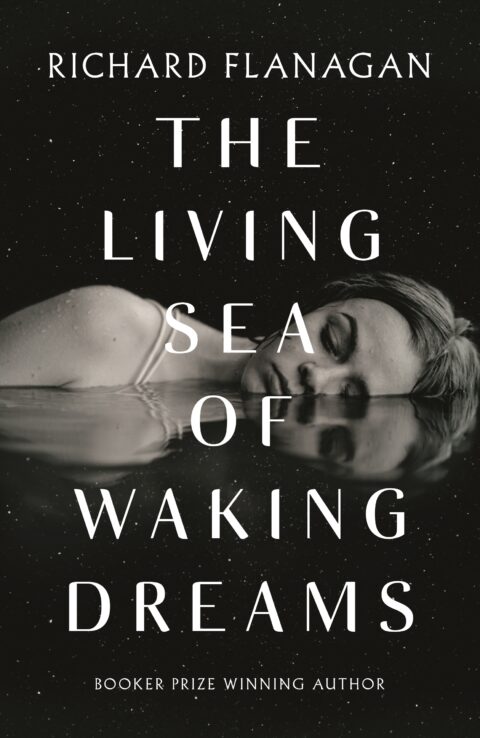
‘The Living Sea of Waking Dreams’ by Richard Flanagan

2020, 304 p.

I’m old enough now to have sat beside two dying parents- and who knows if life holds further deathbed vigils for me- and one of the things that struck me even in the midst of it was what a strange time it was. Outside that room, life teemed on oblivious; inside that room, each breath was watched and counted. This strangeness pervades Richard Flanagan’s The Living Sea of Waking Dreams, starting right from the opening pages. It’s summer, and the city is shrouded in smoke, just as we remembered January 2020 to be (although I had forgotten that smoke when we were then catapaulted into COVID lockdowns by March that year). Anna looks down at her hand, and notices that her ring-finger is missing, blurred out, gone. Her mother is in hospital after a “bad turn” following the dreaded “fall”, having five years earlier been diagnosed and treated for hydrocephalus, and then diagnosed with low-grade non-Hodgkin lymphoma. Now she has had a cerebral hemorrhage, which will be followed by liver problems, and the family is asked what their mother’s wishes were.

Not that the siblings – Anna, Tommy and Terzo- are going to respect them, even when their mother Francie, painstakingly spells out ‘GOMELET’ on an alphabet board. “Let me go?” asks Anna, feigning astonishment, “But where are you going to go to?” Because, led by the forceful Terzo, the family has decided that their mother Francie must live, irrespective of cost, irrespective of doctors’ opinions. Strings are pulled, favours are called in, and Francie, becoming increasingly less human by the day, is kept alive by machines, because we can.

Meanwhile, those disappearances… first Anna’s finger, then her knee, then her breast, then parts of her face. No-one else seems to notice. Then her son, the unresponsive gamer locking himself in his bedroom and stealing from his mother, starts disappearing as well.

And at a broader level, there are disappearances too.

The ladybirds gone soldier beetles blue bottles gone earwigs you never saw now gone beautifully coloured Christmas beetles whose gaudy metallic shells they collected as kids gone flying ant swarms gone frog call in spring cicada drone in summer gone gone.

Gradually we learn the history of this family, and come to understand the dynamics between the adult children, starkly drawn in all its steely aggression and wilful blindness. This is a painfully honest book at the human level, and a grimly pessimistic book at the broader environmental level. It juxtaposes the desire to hold on at all costs to some lives and the blithe dispensing of others, power and powerlessness. It is a little heavy handed with the politics – I felt rather bashed over the head by it- but I was won over by his skill in interweaving his up-close personal story with a broader world-level story. Some readers will bridle against the magic realism, but for me it just highlighted the paradox of his argument. In many ways, this book touched on nearly all his previous books – the magic realism of Gould’s Book of Fish, the love for wilderness of Death of a River Guide and the horror of genocide and disappearance in Wanting. He is such an assured, deft writer.

Excellent.

My rating: 9/10

Sourced from: CAE bookgroups for my Ladies Who Say Oooh bookgroup. It was my choice.

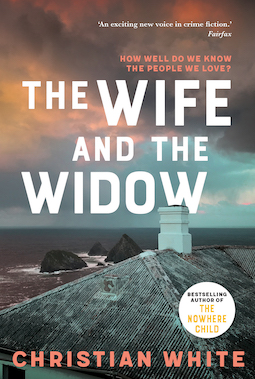
‘The Wife and the Widow’ by Christian White

2020, 384 p.

Spoiler alert

This book won the Ned Kelly Award for Crime Fiction 2020 but given that crime fiction is not one of my preferred genres, it escaped my notice completely. Anticipating by the front cover a Shetland-esque novel, I was surprised to find that it was set in Australia, on a fictional island off the Victorian coast. The island is home to Abby, the “wife” of the title who lives there all year, as the population swells and dwindles with the holiday seasons. Her husband Ray is a handyman, and they live with their two children in an old house that Ray rarely uses his handyman skills to improve. She has a job in the small local supermarket which doesn’t provide enough income during the off-season, and she has embarked on the rather odd hobby of taxidermy in her garage, fed by the supply of roadkill.

The “widow” of the title is Kate, who is perplexed to find that her doctor husband has concocted an elaborate hoax to convince her that he has attended an international conference. Instead, his body is found at their holiday house on the island. Kate and her father-in-law, with whom she has a strained relationship- travel to the island to try to make sense of his death.

The narrative switches between the two women, both of whom find themselves having to re-evaluate what they thought was the truth about their husbands. I can’t say anymore- there is a really clever twist that had me stopping mid-paragraph, then flicking back to see if I had misread. I very rarely re-read books, but I am tempted to read this one to see how he did it. The writing of place is so evocative that you can easily picture the island in your mind, and his rendering of the emotions of the two women is deft and confident. But the twist is the absolute highlight and alone makes the book well worth reading.

My rating: 9/10

Sourced from: CAE bookgroups.

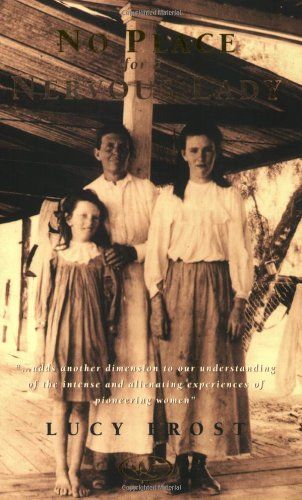
‘No Place for a Nervous Lady’ by Lucy Frost

2002 (1984), 230 p.

If you were to rely on the ‘Australian Bush canon’ penned by male writers (Lawson, Furphy, Paterson) etc. you’d think that there were no women in the Australian bush at all. That’s not true of course, but until Barbara Baynton wrote her Bush Studies, they were largely invisible in the ‘bush legend’ genre. Historian Lucy Frost, whose books mainly deal with lost and abandoned women and children in 19th century Australia, presents the letters and diaries of a selection of women who emigrated to Australia between the 1840s and 1880s. The women she features are not well-known, but in many ways they are the stuff of legend.

The way that she has arranged these women within her chapters is interesting. The first chapter starts with letters written home after the sea-voyage from Britain to Australia. She starts with a long letter written by Anna Cook to her mother in 1883 which brims with Anna’s own enthusiasm and positivity. Blessed with a constitution immune to sea-sickness, Anna depicts shipboard life as a small village, with plenty of food, and a conscientious captain and doctor. This is very different from the journey described by Ellen Moger who travelled to Australia in 1840, losing three of her four children on a trip that claimed the lives of thirty passengers and, one suspects, her own sanity as well. No doubt striking dread into the recipient, Moger starts her letter “I have very melancholy accounts to give” and it certainly is a sad epistle that follows. Frost has reversed the chronological order of these two letters, perhaps reluctant to start with such a pessimistic account, but in doing so loses any sense of improvement in ship conditions over the forty-three years that separate them.

Her second chapter deals with just one woman, Louisa Clifton, who travelled as a 25 year old with her parents and multiple siblings to Australind, near Bunbury. She had chosen her mother over her suitor and was disappointed in love, but one senses – but cannot know because the letters cease- that she will find love again. I was sorry that Frost did not give more history of the Australind settlement, which was established on Wakefieldian principles but was plagued by indecision over where it should be established, and failed within a few years.

The third chapter, which was my favourite, featured Annie Baxter (later Annie Baxter Daubin) whose diary commenced in 1834 as a 17-year-old bride, joining her 20-year-old husband Lieut Andrew Baxter for Van Diemen’s Land. They left VDL for ‘Yesabba’, a pastoral run in the Macleay River valley in NSW. Frost concentrates on the period 1843-4, when their marriage has soured, partially because of husband’s affair with a ‘lubra’, and then because he discovered in the pages of Annie’s diary her passion for Commissioner of Crown Lands, Robert Massie. Because he destroyed pages of the diary, we do not know exactly the nature of their relationship, but she certainly rebuffed his attempts to re-establish marital relations, fearful that she would fall pregnant. Her journal is gossipy and lively, emphasizing the importance of the social life, limited though it might be, amongst other settler families in the district. I’m rather excited to find that I already have Lucy Frost’s A Face in the Glass: The Journal and Life of Annie Baxter Dawbin sitting unread on my bookshelves.

Penelope Selby wrote a series of letters to her extended family back in England between 1840 and 1851. Her strong Protestant faith sustained her through a series of stillbirths, with her final child living only a few hours, which was perhaps even more heartbreaking. She formed a strong friendship with her neighbour Mrs Dawson, whose demise she seemed to predict regularly every letter, but ironically it was Mrs Selby who was to die suddenly after a fall from a horse.

These single-subject chapters are followed by a chapter drawing on the correspondence of four women who came to Australia to work as governesses under the auspices of the Female Middle-Class Emigration Society. These are mostly dissatisfied letters, with only Louisa Geoghegan expressing any enthusiasm for this new life. The snippy letter from the Society’s patron in Australia, Mrs a’Beckett, makes it quite clear that she is not going to meet these women at the wharf, or help them to find a position, and the high costs of the boarding house funded by the Society provided little assistance to women if they could not find a position immediately.

Ann Williams (1882) and Lucy Jones (1883) both wrote diaries of their travel from one part of Australia to another- and what an ordeal inter- and intra-state travel was for women, expected to wash and cook as their drays took them through rough country, with young children to care for. Sarah Davenport also wrote in her memoirs of her travel across bush, with her feckless cabinet-maker husband who seemed incapable of doing the two things she really wanted: to gain a paying job, and to bring back her daughter who was separated from them.

We read this book for my CAE bookgroup, and I was interested to see what the others thought of it. I am drawn to primary sources (especially by those written by women) in small colonial societies, but this repository of letters, diaries and memoirs do not form a shaped narrative and resist a tidy ending. Letters and diaries just stopped; once their pen stopped writing, Frost can only turn to biographical details of locations, births, deaths and marriages. We all enjoyed it, with an admiration for the matter-of-factness with which they dealt with circumstances over which they had little control, and the sheer courage needed to embark on a journey to the other side of the globe, with so few certainties.

My rating: 8/10

Sourced from: CAE bookgroups.

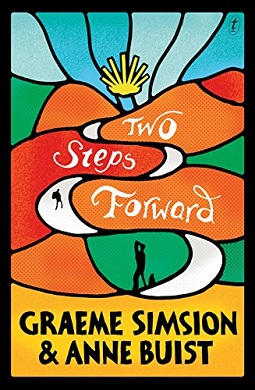
‘Two Steps Forward’ by Graeme Simsion and Anne Buist

2018, 368 p.

Because I’m learning Spanish, I have met several people who have ‘done’ the Camino de Santiago and have taken up Spanish before embarking on the journey. They seem to have undertaken it for various reasons: some because they are already seasoned walkers, others as a bucket list challenge, and only one or two for religious reasons. (I must confess that it holds no appeal for me whatsoever.)

In Two Steps Forward, the two main characters Zoe and Martin had different reasons for undertaking the walk. Zoe was from America and imbued with New Age flakiness, while British-born Martin was an engineer, keen to road-test a walking trailer that he had invented. Zoe’s husband had died only a matter of weeks previously, and faced with unexpected shock that the family company was bankrupt, she abruptly left everything to visit an old school friend in France and undertake the France-Spain leg of the Camino. Martin had undergone a bitter divorce, leaving his daughter Sarah torn between her loyalties with both parents. Martin and Zoe keep running into each other on the Camino, neither particularly liking the other, and as you might expect, romance buds between them. But they each have ‘issues’ which they need to resolve before they can establish a relationship, a fact that becomes clearer as they travel together. Its ending leaves scope for a second volume, which I see appeared as Two Steps Onward in 2021.

The book is written by husband-and-wife team Graeme Simsion (of The Rosie Project fame) and Anne Buist, who writes erotic fiction as well as crime novels, including Medea’s Curse (which I reviewed here). It is told in alternating first- person narrative chapters, Martin’s chapter written by Simsion, Zoe’s by Buist. The clash of American/British, heart/head viewpoints is rather stereotypical, and I’m not sure that the narrative voices between the alternating chapters differed enough to know instantly ‘whose’ chapter you were reading.

I often reflect that my response to a book is largely framed by the book that I read immediately preceding, and in this case Two Steps Forward suffered badly from being compared with Marguerite Yourcenar’s Memoirs of Hadrian. Simsion and Buist’s book is a light-weight little thing, with flat writing and ultimately rather trivial. Frankly, I wouldn’t bother.

My rating: 6/10

Read because: CAE bookgroup choice.

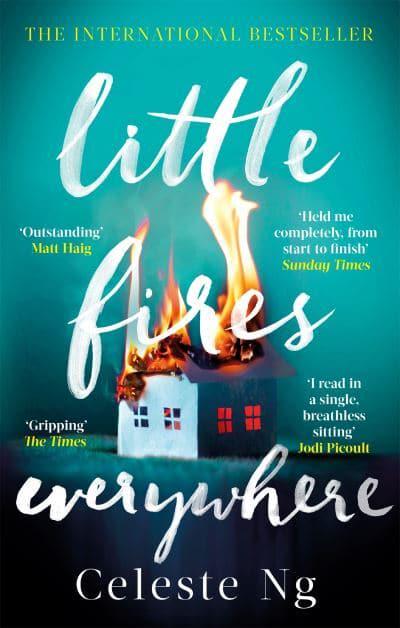
‘Little Fires Everywhere’ by Celeste Ng

2017, 352p.

This book was received to great acclaim. It was a New York Times bestseller, Amazon’s best fiction book of 2017 and according to the author’s webpage, it was named a best book of the year by over 25 publications. For me, it didn’t live up to the hype. It was an enjoyable enough read – in fact, I stayed up past midnight to finish it – but to me it felt like a spiky Jodi Picoult, crammed full of moral dilemmas and bookgroup discussions and rather heavy-handed and judgmental.

The book is set in Shaker Heights, a liberal, planned neighbourhood with strict controls over house colours, gardens etc. In fact, the author lived in this real-life neighbourhood, and her cynicism about the hypocrisy underlying this seemingly-idyllic middle-class enclave permeates the book. Even though there is this rather snide, unsubtle critique of liberalism and its intersection with class and race, the real theme is motherhood, explored through issues of abortion, adoption, surrogacy and teenage pregnancy. The story focuses on three families: Bill and Elena Richardson and their four children Lexie, Trip, Moody and Izzy; their tenants in a nearby duplex Mia Warren and her daughter Pearl; and Mark and Linda McCulloch who, after many years spent trying to have a baby, have finally adopted an abandoned Chinese-American baby.

The book opens with the Richardson’s house catching fire, a clear-cut case of arson with “little fires” lit everywhere. The family is quite sure that the fires were lit by the youngest daughter Izzy, who is missing after a family argument. It’s certainly not a who-dun-it, because the perpetrator has been identified by the end of the first page, but more a why-dun-it.

Elena Richardson as a mother is rigid and judgmental, masked by a self-serving public charity that keeps strict account of services rendered and owed. Despite an American “mom” persona, she has never warmed to her youngest daughter Izzy whom she finds difficult. She works part-time as a local journalist, which gives her rather far-fetched access to information which she uses gratuitously and oblivious to the damage she is doing. Although she would dispute it, she is quite unaware of the lives of her children, who are drawn to a very different type of mothering displayed by their tenant, Mia Warren.

Mia is an artist, who has lived in many places with her daughter Pearl. They live simply, with few possessions, and when they shift into the Richardson’s rental property, inherited from Elena’s mother, Mia agrees to work as a housekeeper for the Richardsons, as well as taking shifts in a local Chinese restaurant. She is different, and Izzy and later Lexie, are drawn to her quietly subversive, attentive mothering. The book moves away from the Richardsons in giving Mia’s back-story, which explains her nomadic lifestyle and her relationship with Pearl.

Finally, the whole of Shaker Heights is happy when Mark and Linda McCulloch adopt Mirabelle, their Chinese-American baby, until the baby’s mother emerges, demanding the return of May Ling Chow. The dispute inevitably finds its way to the courts, where the questions of ‘best interests of the child’ and connection with culture are raised. Linda McCulloch does herself no favours with her ethno-centric, blinkered views of “culture”.

There are lots of hot-button topics here, especially for women (fathers are very much side-lined in this book). So many, in fact, that I felt as if they were being stuffed in for discussion value with an eye to the female, liberal, book-group target market which the author courts and yet despises. The book is written well enough, although it felt like three different books as the author moved her attention from one family to the other. Her use of the “little fires” metaphor was rather heavy handed: it starts with a fire, the baby is abandoned at a fire-station, Mia talks about a cleansing burn as a way of clearing the past. Heavy handed, too, was her critique of the hypocrisy of Elena Richardson and Linda McCulloch, which made them almost caricatures of entitlement and heedlessness.

It was certainly a page-turner, and as intended, it sparked a good bookgroup discussion. But ‘book of the year’ it ain’t, for me anyway.

My rating: 6.5/10

Sourced from: CAE bookgroups

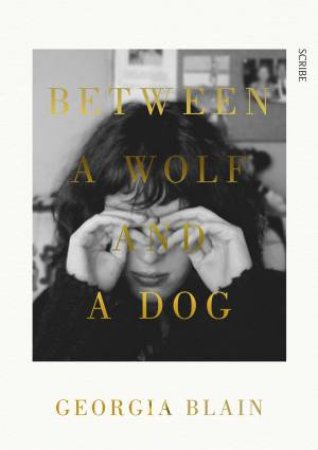
´Between a Wolf and a Dog´ by Georgia Blain

2016, 320 p.

SPOILER ALERT

I have often thought that one´s response to a particular book is often shaped by the books you have read immediately prior. Sometimes a brilliant book casts everything else into the shadows and dulls your appreciation for whatever comes after, but sometimes it works the other way too. Immediately before reading this book, I read a dialogue-heavy political novel and I’m still reading a very long survey history non-fiction book. There’s no ‘singing’ prose in either of them. But right from the first page of Georgia Blain’s book I just relaxed into her precise and confident prose, knowing that I was reading a writer who can really write.

Much of the action in the book takes place over one day – a dank, wet Sydney day with the rain pouring down almost without stopping. We learn in the early pages that 70-year old Hilary is very ill, but she is keeping this knowledge from her two adult daughters, April and Ester. The two sisters have been estranged for three years, after April and Ester’s husband Lawrence had a brief fling. There had always been an underlying tension between the two siblings. Ever since childhood, April has had a scant regard for possessions, and freely takes what she desires. However, ‘taking’ Ester’s husband is a far cry from the ‘borrowed’ clothes and pilfered jewellery from their childhood. Ester and Lawrence’s marriage breaks down, and the two parents are negotiating the shared care of their children.

The phrase ‘Between a Wolf and a Dog’ refers to that twilight time when the shape of things is blurred, and it is no longer clear whether an animal is a wolf – a threat- or a dog -potentially friendly. Likewise, all the characters in the novel are at a pivot of change. Ester, a counselor, has met a man who might be a possibility; Lawrence’s career reputation is about to come crashing down; April and Ester are both wearying under this long estrangement, and Hilary is facing big, life-and-death decisions.

The narrative focus swaps from one character to the other, while the book itself is divided into sections ‘Now’ and ‘Three Years Ago’. I didn’t find all parts equally compelling. Following Ester through her counselling consultations as she negotiates around other people’s pain seemed superfluous, and could easily have been omitted. April and Lawrence’s separate irresponsibility and obliviousness to consequences was repellent, but Blain captured their own self-absorption and recklessness well. One character who remained shadowy was Hilary’s husband and the girls’ father Maurie, a successful artist whose reputation continues to grow after his death from heart attack. His widow Hilary is curling into her own ball of pain, and the closing scenes were poignant as she meets separately with her daughters who are blithely unaware of what is about to come.

The most beautiful writing in this book is in her descriptions of that drumming, streaming rain which lowers like an oppressive cloud over the family. Particularly the two opening scenes, where Lawrence and Ester wake up in their separate houses to the sound of the rain on the roof brought me right into the room with them.

Georgie Blain’s own experience of the same cancer that Hilary faced is a tragedy of irony, but it would be wrong to read this book solely in terms of the author’s own illness. The characters were so real to me that I found myself wondering what happened next, even while reminding myself that it is fiction. That doesn’t mean that it doesn’t hold its own truth.. It is a beautifully written, domestic novel, carefully constructed and balanced.

My rating: 8.5

Sourced from: CAE as our February 2023 bookgroup read.