Category Archives: Book reviews

‘The Christmas Tree’ by Jennifer Johnston

johnston

1981,  168 p.

Kimbofo at Reading Matters gave this book five stars, and I felt like reading something Christmas-themed.  It was a good choice: not too long, tinged with sadness,  seasonal enough without being mawkish.

I’m coming to have a great respect for the novella as a genre.  Its extra length encourages you to climb into the characters’ skins in a way that the short story doesn’t; the art of providing back-story and present action is even more demanding, and its brevity allows an intimate, close-up look at a particular circumstance without the need to tether it to a wider narrative sweep.

In this book  Constance, suffering from leukemia diagnosed soon after she has given birth to her daughter as an intentional single mother, returns home to her parents’ house to die.  Both her parents have already died, and her judgemental sister veers between officiousness, support, and pre-occupation with her own life and children.  It is a couple of days before Christmas and ill, and left alone for much of the day, Constance decides that she would like a Christmas tree.  Her sister is pushing hard for Constance to go to hospital to die: Constance refuses, but does accept the offer of  ‘a girl’ to come from the nearby orphanage to look after her.  Very quickly, I came to appreciate Constance’s clear-sighted and rather sardonic humour, and the young exuberance of Brigid, the young girl relishing the relative freedom despite the demanding task she has been asked to take on.  Her doctor and ex-boyfriend, Bill, is just the sort of doctor you would want in such a situation and his friendship goes beyond just the professional relationship.  The Christmas tree itself is small and covered only with blue lights that glow steadily on the otherwise bare tree.

There are three narrative threads, and Constance’s own delirium provides a useful narrative tool to weave them together.  We are living and breathing the slow process of dying in present time, she remembers meeting Jacob the father of her child, and she thinks back  and tries to make sense of her strained relationship with her parents.

This all sounds rather gruelling, and to a certain extent it is.  The book reminded me in many ways of Helen Garner’s The Spare Room, which was likewise short, intense and painful.  By the end of its 167 pages, you exhale with relief that it’s over, not necessarily in a negative sense, but because it’s time.

‘The Danish Girl’ by David Ebershoff

ebershoff

1999, 310 p.

I’d been meaning to read this for some time, but was spurred into action to read it before Nicole Kidman gives it the kiss of death when it is filmed next year (see Update below).  I hadn’t realized that it was based on a true story until reading the author’s notes at the end of the book, which made me re-think some of my initial skepticism about the details of the ending.

The book is set in various European cities in the 1920s and 30s, and explores the marriage of two artists, Einar Wegerer and his American wife Greta Waud.  It was at Greta’s suggestion that Einar first cross-dressed within their marriage, and his increasing excursions as ‘Lily Elba’ culminated in the world’s first sex-change surgery.

There are a series of triangles in this book: Greta and her relationship with her husband Einar/Lili;  the relationship between Einar/Lili and his childhood friend Hans, who himself took up with Greta; the relationship between Einar/Lily and his wife’s twin brother Carlisle.   There’s another triangle too- Greta has to work through her grief from the death of her first husband Teddy and her loss of her husband Einar as he transformed into Lily.  The complexity of their marriage raises questions about love, acceding to and anticipating a loved one’s wishes, sexuality, gender, loss,  identity and friendship.

The book has a quiet, restrained tone, and falls to its ending with a sad inevitability.   I wonder how it will come over on the screen- the ending is very cinematic.  I hope that Kidman is more in “The Hours” mode rather than “Australia” mode, but I think she’ll need more than a prosthetic nose.

Update: When I wrote this post several years ago, there was talk of Nicole Kidman playing, no doubt, the Lily role that is played by Eddie Redmayne in the film that has just been released.

‘Men and Women of Port Phillip’ by Martin Sullivan

Reading this book evoked memories of undergraduate history out at La Trobe in the mid-70s:  sitting around the Agora drinking bad coffee from yellow and orange plastic handled mugs; peering through the smoky fug in tutorials held in the tutor’s own room; posters of  Splitz Enz playing on campus;  the sweet waft of marijuana; the opening up of the world in those halcyon Whitlamesque days.

When I see that Martin Sullivan submitted his  Ph D. thesis “Class and Society in the Port Phillip District” to Monash University in 1978, then I realize where all these 30 year old reminiscences are coming from.  The thesis, and this book that no doubt sprang from it in 1985, are all imbued with the language and frameworks of Marxist historiography that look rather – well-  strident, earnest and  somewhat dated today.   In fact, I was a little surprised by the late-ish publication date of this book (1985) because it had the fingerprints of the 1970s all over it.

Which is not to say that it’s not a useful book- on the contrary.  I’m finding myself frustrated that it is so difficult to ‘hear’ the people of Port Phillip who were not middle-class and socially and visible on the one hand, or thrown up from the stews of criminality into the courts on the other hand.  Surely there’s another group of people here.  I think of the school children who marched in the public parade for the laying of the foundation stone to the Supreme Court- who were their parents who no doubt craned their necks to see their children as they marched past?  Who were the people who mobbed around the first public hangings up on the hill above Lonsdale Street? It appears that it was a heterogenous group- who were they?

Sullivan has used much the same sources I have: court reports, newspapers, government dispatches, Garryowen and other contemporary writers.    His focus is different to mine, and he has struggled with it. He wants to draw out  his working-class men and women of Port Phillip from the vignettes of the middle class, public actors that I’m finding myself working with, but they are such shadowy figures that they are easily overshadowed and  don’t ever emerge fully.  So they remain fuzzy, largely unnamed (except for those who turn up in the courts) and largely undifferentiated from the group.

He argues that a capitalist, market-based system was not necessarily found in Port Phillip from its inception, but that it quickly developed once propertyless, wage-earning immigrants and former convicts came to the colony.  Classes emerged fairly quickly, whereby capitalists and wage earners lived out their lives in different ways according to their relationship to the means of production.   However, although the capitalists tried to control the law and the state, they never had complete control over them, or indeed over the labouring population which was, from the start, ungovernable and obstinate.   In this regard- and I don’t know how Martin Sullivan would feel about this- the book leans towards John Hirst’s view of the subversion of authority right from the inception of the colony.   He points out that after 1844 there was a more concerted and political program of protest, rather than the undirected dissatisfaction of  individual men and women previously. It also confirms the feeling that I have that there was a general heightening of the political climate around the mid 1840s, even before the Gold Rush.

This book felt a bit unbalanced in its structure. There is barely an introduction as such, as the book launches straight into an examination of the course of events that led to its settlement by the Port Phillip Association, and its relationship to a market economy.  This is followed by a 73 page chapter about the formation of a labour market, then a shorter 40 page chapter about convicts in Port Phillip which could have easily been a second chapter.  Chapter 4 is another long one- 86 pages, followed by a 26 page chapter on the stuctures of dominance, then a rather thin two page conclusion.  I felt as if the book was lumpy, and that it didn’t draw me along with a clear argument.  I don’t need each chapter to be a homogenized length, but the book felt as if it lacked unity.

Nonetheless, by consciously looking beyond the more easily-accessed public, middle-class realm, he has set himself an ambitious target: I know because I’m puddling around in the same sources as he did.   Those more sweeping “people’s history”-type books have the advantage of a larger timespan to draw and extrapolate from.  It’s much harder to start at the origins of a settlement, as he does, and know that you end up ten years later with a system that has been almost- not quite, but almost- undetectable in its emergence.   We’re only looking at a small society, for a small slice of time- why is it so hard to see it happening?

‘Family and Social Network’ by Elizabeth Bott

bott

Elizabeth Bott Spillius

The historian I admire most, Inga Clendinnen,  once said that

“history requires no special training other than curiosity, sharp wits and scrupulous attention to detail- plus a determination to honour the mysteriousness of the people you are studying”

I like that.  I particularly draw comfort from the worthiness of curiosity, and claim ‘curiosity immunity’ when I am being particularly observant (i.e. nosy) about other people around me.  And I think that ‘Family and Social Network’ by Elizabeth Bott satisfied my [prurient? scholarly?] curiosity about family interactions and networks with the wider community.

The book itself was written in the 1950s and has now taken on a historical edge that it certainly didn’t at the time.  It describes a team-based study undertaken by an anthropologist and psychologist and a team of researchers who aimed to interview twenty ‘ordinary’ families with young children.

It was refreshingly honest about the methodological problems they faced: making contact with their 20 families;  reconciling the different disciplinary perspectives of the two lead researchers;  resolving issues about researcher role and the formality and comparability of the research process.   You don’t often read an admission that methodology that

The anthropological method basically consists of messing about with a lot of variables and bits of information in a condition of acute uncertainty, in the hope that eventually one will see relationships one had not thought of before (p309)

Only one of the case studies was written up in great detail, but it was a fascinating one of a working class family with very strong family roots in a particular street in London.  The wife did not work, and saw her mother on a daily basis, and was thoroughly enmeshed in her kin relationships in a way that her husband was not.  The husband and wife had completely different networks, with no joint friendships or social activities.  This was contrasted with a middle class, more mobile family with weaker kin ties and shared friendship patterns.

In the acknowledgments Bott quoted Dr John Bowlby as remarking “It has the merit of being obvious once one has thought of it.  One wonders why one hadn’t…”, and this is very much true of this book too.  For  instance, she observes (and I find myself thinking I knew that… without actually knowing it) that there are ‘connecting’ people in families who bring together other more separated family members; that if there are two or three generations of mothers living in the same place in the same time, a matrilinear stress is more common; that friendships (especially friendships of men) are ‘trimmed” when a couple marries so that they can be joint friendships; that intense identity-forming friends tend to be absent after marriage so that they do not threaten conjugal loyalty and new friendships tend to be join and diminished in identity.  All the stuff of a million soap operas and novels.

At the end of the 2nd edition of the book is a lengthy chapter called ‘Reconsiderations’ where she returns, decades later, to the original study.  She talks about how her categories and opinions have been challenged, changed or firmed, and the relationship of later research to her original work.

At one level, the book seems far removed from Port Phillip in the 1840s but it’s stimulated my awareness of the effects of migration on kin and friendship networks, and how this might be described.

‘Dancing in the Dark’ by Caryl Phillips

dancingdark

2005, 214 p

W. C. Field described Bert Williams, the real-life subject of this novel, as “the funniest man I ever saw, and the saddest man I ever knew”, and this paradox is just one of many in this book.  Bert Williams was a light-skinned West Indian but adopted as his stage persona a black-faced “coon” character.  He consciously adopted this stage identity as he applied his cork makeup, and scrupulously removed both after the performance: something that his fellow negro performers could not do.  Despite the increasing discomfort of his colleagues with his depiction of a shuffling, feebleminded “coon” , he responded to the acclaim of white audiences by continuing to play the character, eventually as the only “blackface” amongst Ziegfield’s Follies.  And yet, his act raised the profile of Negro performers, heading Booker T. Washington to note that “He has done more for our race than I have.  He has smiled his way into people’s hearts, I have been obliged to fight my way”.  And yet, this “smile” is so ambiguous and shallow: white audiences boycotted his attempts to move beyond the “nigger” stereotype, and he was trapped into continuing to play the character in order to maintain his popularity.

This book is told from multiple points of view, particularly from the middle of the book onwards.  I’m not sure if this narrative style was as prominent at the start, but I certainly noticed it as the book went on, and it seemed to mirror the increasing disintegration of his inner personality, marriage and stage success as it was perceived more and more by others.  The narrative is interspersed with film scripts, newspaper reports etc (that I assume are fictional, but I wouldn’t know) in a sort of papier-mache, constructed effect that emphasizes the emptiness of the man underneath.

The tone of the book is fairly simple and direct.  It raises big issues, though, about race, identity, performance and popular acclaim through the story of one man.

‘American Journeys’ by Don Watson

images

2008,  326 p.

I haven’t been to America.  And I don’t normally read travel books.

That said, Don Watson’s American Journeys strikes me as a rather unusual specimen of the genre.  It starts off conventionally enough, with a map of America with snail trails all over it, zigzagging right across the country.  It’s only when you embark on the book that you realise that these are indeed, journeyS plural, undertaken just for the pleasure of seeing what’s there, and that the experience of travel- i.e. moving from point A to point B- is just as important as the final destination.

This feeling of disembodiment- moving across- the continent is reinforced further by the blandness of the table of contents- just Chapter 1, Chapter 2 etc.  It’s really quite hard to locate favourite sections again in this book- it all just flows past.

Nonetheless, there are some truly memorable chapters- the New Orleans chapter in particular is damned good reportage- and indeed, as I flip through the book, I find good segments throughout that I had enjoyed but passed on over without them really making a strong impression on me. Is this shallowness intentional?

But there’s also a repetition about the book.  Again, I can’t work out if this is a weakness, or whether it’s a commentary on the nature of America itself.  Fast food strips, the shambolic nature of privatized public transport with Amtrak, the narrow fundamentalism, the puffed-up boasting, the distance…all these themes crop up again and again, right across his journey.  But then I think about how few concepts one really takes from a book when the last page is turned, (maybe four at best??) and if leaving with a multi-stranded memory of a book is a sign of success, then this book succeeds admirably.

Most of all, this book gave me a more nuanced understanding of American freedom, although I probably still don’t ‘get’ it.  In the past, I have bristled at the smugness and selfishness of George W. Bush’s ‘fridom’ that was so disrespectful of that of other nations.   Don Watson explains it much better than I could paraphrase, so I’ll let him do it:

Freedom is such an old chestnut of American rhetoric that it does not impress outsiders as perhaps it should.  The more the president speaks of it, the less meaning it registers.  When he says ‘Our enemies hate us for our freedoms’ we cringe, even though we know that, down the years, Americans have died in tens of thousands for the cause. In any case, we think, it’s less for the freedoms that they hate you, and more for the influence you exercise. ‘Our enemies hate us for our power, our hegemony’ would be a truer statement, and little would be lost by stating it in these terms.

And yet, when one travels in America, the chestnut sheds at least some of its shell. You come to see that, to Americans, freedom means something that we incurable collectivists do not quite understand; and that they know freedom in ways that we do not.  Freedom is the country’s sacred state.  Freedom is what must be protected.  All over, they will tell you what is wrong with America, but freedom is the one thing they think right.  And whatever the insults to my social democratic senses,  that is what I find irresistable about the place- the almost guilty, adolescent feeling that in this place a person can do what he wants…

If I am American, I am as free as a person can be.  If I am free, I can do- or dream of doing- all the things that it is in my nature to do or to dream; no other place on earth need interest me.  So long as I am guaranteed this freedom, I will forgive the things my country does that are not in my nature or my dreams.  I will be ‘spared the care of thinking about them’.  That is, of course, unless my country or some other place threatens freedom.  (. 325)

The blurb on the back of my book quotes Watson saying “Love and loathing come and go in about the same proportion”, and he conveys this ambivalence so well.

‘Grotesque’ by Natsuo Kirino

grotesque

2008, 467 p.

The blurbs on the back of this book led me to think that I would be reading a crime novel,or a thriller but I don’t really think that it was either of these things.

The book is strung together by an unnamed narrator, who nurses a long-held hatred of her sister, Yuriko who was acclaimed for her beauty.  After a separation during adolescence, the younger sister returned to Japan and attended the same exclusive high-achieving high school as the narrator.  The story is then taken up by the sister, Yuriko who instead tells us that the narrator is a needy, manipulative woman, undercutting the authority of the narrator’s telling completely.  The two sisters’ stories are interspersed with the ‘journals’ of  school friend Kazue, and the male Chinese refugee accused of murdering both Yuriko and Kazue. They are only loosely termed ‘journals’ as they include direct speech and act mostly as  a vehicle for the author to present yet other perspectives.

So who done it? Stuffed if I know.  All these voices are deceptive and manipulative.

The book is rather sordid- both Yuriko and Kazue work as prostitutes and the lives of all these people are grubby and joyless.  There is much talk of beauty- Yuriko’s purported beauty; the beauty of bonsai; the beauty of intelligent youth that the school prides itself on nurturing- but it’s a putrid, cloying, trashy beauty.

Perhaps I’m too old, or too Western for this book.

‘An Architect of Freedom: John Hubert Plunkett in NSW 1832-69’ by John N. Molony

plunkett

1973, 280p.

The author, John N. Molony signals in his introduction that this biography has its limitations.  John Hubert Plunkett, Solicitor General, Attorney General, politician, and education board member left virtually no personal papers.  As a result,

If he is to be found today it must be through public sources such as the newspapers, the parliamentary reports, the official communications between Sydney and Downing Street and the legal opinions he gave during his twenty-five years as Solicitor and Attorney-General.  It is chiefly on such sources that I have perforce relied in the writing of this book (p xiii) ….It has been my loss as much as it will be to any reader that Plunkett rarely comes alive in the narrative.  No attempt has been made, no attempt can be made to see him in his home, to dwell on his own innermost thoughts and hopes, because Plunkett did not leave any record of these things.  Some scholar of the future may perchance discover Plunkett the man; some scholar, irritated by the gaps in this work, may till this field again and reap a richer harvest…” p xiv

We have been forewarned: this book will focus on actions and decisions at a top-down level, rather than at the level of man and motivation.  However, I think Molony sells himself a bit short here because the book does give an interesting insight into the Catholicism of a man who sensed that he had been enabled, rather than disadvantaged by his faith at a particular moment of English political history.  The Catholic Emancipation Bill provided space for his patrons to further his career, and he was conscious that opportunities were open to him that had not been available for earlier generations of Catholic lawyers.  He therefore had a strong loyalty to ‘the system’ and British law and worked within it as lawyer, then politician.

The book also highlights the theme of personal consistency in the midst societal change.   Two hefty winds of change swept through his world: after the initial co-operation of the different churches in the establishment phase,  their doctrines and personalities became more rigid from the 1860s onward, and sectarian hostilities became more strident.  Secondly, the change to representative and then responsible government  meant that his world view and ways of negotiating with politicians rather than officials, needed to change.  Such fundamental challenges to his world view did not come easily to him, and I closed the book with a sense that the wealth of experience he brought to his political roles was more hindrance than benefit in a changed world.

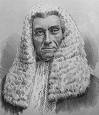
I was interested in reading this book because firstly, I’m interested in reading biographies about Judge Willis’ contemporaries in NSW at the time (although Plunkett was absent during Judge Willis’ dismissal and, indeed, was spot-on in his predictions of what the outcome of the Privy Council appeal would be).  Secondly, I’m not really sure what an attorney general DID in the  colonial constitutional system of the time. Certainly, Judge Willis clashed with acting Attorney General Therry in NSW, and with the Attorney General in Upper Canada earlier.   Was there something about the Attorney General role that acted as a flashpoint?  Or was it the individuals filling that role?

I don’t know if I’m much further advanced in my understanding of colonial Attornies-General, but I am clearer about the fact that they acted as legal advisors for the Crown- in this case, for Governor Gipps, and if the Governor was acting to discipline or dismiss Willis, then he was presumably acting on the Attorney-General’s advice.  Hence, some tension could be expected!  I was also surprised to read that the Attorney General could act as a Grand Jury in his own right (i.e. he could launch proceedings in his own right).  For example, Plunkett acted as a Grand Jury against cattle-stealers and against a conspiracy of six men “all of substance” who conspired to parcel out land at advantageous prices to themselves.  I wonder if perhaps Judge Willis would have relished having such powers, particularly in relation to the corruption and sharp-dealing that he felt himself surrounded by.  Methinks I need to look at constitutional development a little more closely, although I must admit that my toes curl up at the thought of it.

Reading this book has also made me think about the scope for the “scholar of the future” that Molony envisages “till[ing] the field again and reap[ing] a richer harvest”.  How would/will I do anything different?

‘Catfish and Mandala’ by Andrew X. Pham

catfish

2001, 341p.

At first I thought that this was going to be yet another of those three-tiered family sagas much beloved by young Asian female writers (think Amy Tan et al) but this is far more about places, identity and memory than duty and relationships.  The author is a young American-Vietnamese engineer, who takes off on his pushbike to revisit childhood places that he has not seen since he and his family arrived in America as boat people.  There’s evocative descriptions of landscapes, places revisited, food eaten, the state of his bowels and the people he meets, but it’s more than this too.

He is not Vietnamese, but Viet-kieu (foreign Vietnamese), resented for making his escape and yet implored for financial assistance and sponsorship by so many people he meets.  Although his intention is to immerse himself in his childhood places and experiences, he is channelled into the more lucrative Western-tourist stream of travel and  accommodation products.  He knows that he is no longer ‘truly’ Vietnamese but he carries with him a deep consciousness that he is not American either: bullied in childhood and stereotyped in adulthood in an America which is itself conflicted over Vietnam, the Vietnamese and their own involvement in the Vietnam War.  He, too,  is deeply ambivalent over the people he meets in Vietnam.  He despises their greed, recoils from their living conditions, feels more at home amongst backpackers and is acutely conscious of the fate that has given him such a different life from what he could have had.

The book is told in three interwoven storylines: that of his parents before their escape; the boat trip to American, then their life in America first sponsored by a Baptist church in Louisana, then moving to California to a larger Vietnamese community.  It is his dead sister Chi who ties the three narratives together, and indeed her alienation and suicide is an unwitting metaphor for the journey in this poignant and insightful book.

‘The Children’s Bach’ by Helen Garner

1984, 96p.

Don Anderson, in reviewing Helen Garner’s book The Children’s Bach wrote:

There are four perfect short novel in the English language.  They are, in chronological order, Ford Maddox Ford’s The Good Soldier,  Scott Fitzgerald’s The Great Gatsby,  Hemingway’s The Sun Also Rises and Helen Garner’s The Children’s Bach.

Boy- where do you go after that???!!

I think that brevity is an intrinsic feature of this book.  Like a small Bach piece, it is short and self contained, simple and yet complex.  It takes a slice of life in 1980s Melbourne, and in this regard, Garner’s keen observations almost provide an ethnographic (and now historical!) artefact.  Athena and Dexter are 1980s people who feel like people you’ve known and  their house and lifestyle is so well-depicted that you feel you could recognize it if you walked in the door.  As a northern suburbs gal myself, I can recognize many landmarks and events that she mentions almost in passing.  In fact, I reckon you could plot a pilgrimage walk of the book!

The relationship between Athena and Dexter lies at the heart of the novel.  They have two children- an autistic son, Billy, and a bright articulate son called Arthur.  The summary on the back of my edition, and the recent rendering of the novel into an opera both make more of Billy’s autism than I was aware of in the book, where Billy is a stolid presence, but not particularly the focal point of the family dynamics.  It’s not just the strain of Billy that drags at Athena, drawing her to abandon it all: it’s also her husband’s exuberance and obliviousness to her own personhood and the dream of being someone else in another more exciting world than hers.

I’ve read this book three times now, which is easy to do as it’s so short and it tumbles over you like a conversation overheard.  It’s a book to grow up with. As I’ve grown older, I see different things in it, as if I’m revisiting my own young-motherhood at much this same time.  I sense that in Garner’s most recent book, The Spare Room, she’s also revisiting the sort of characters in The Children’s Bach, grown older.

This is not the stuff of crashing drama: it’s lived-in life, with fallible and flawed human people, mess, and making do.  Taking liberties with the final sentence, life as depicted in The Children’s Bach is the steady rocking beat of love and family in the left hand, and the flying arpeggios of “what if’s” and “maybes” in the right.