Category Archives: Book reviews

‘A Fraction of the Whole’ by Steve Toltz

toltz

2008, 709 p.

Am I getting old?  I think I must be.  The younger people in my life, whose reading tastes I trust, really enjoyed this book.   So, obviously, did many other reviewers and long-listers for literary prizes.  But I don’t know- I just found it rather wearing.

It’s a long book- over 700 pages, which is a hefty commitment in anyone’s language . The book has large, implausible plot swings, and stories nest within other stories, each as sprawling as the one that preceded it.  It’s loud, it’s exuberant, it’s confident, it’s young.  The voice  is that of an educated, self-conscious, ironic young male, and while I found it mildly amusing, I couldn’t say that I laughed out loud.

I just felt as if it had been done before.  It’s not the first book to have stories within stories, nor will it be the last.  It didn’t have the sustained, carefully constructed tone of Barth’s The Sotweed Factor or the intricacy and humour of Sterne’s  The Life of Tristam Shandy.  I can see the similarities with both Dickens and John Irving mentioned in the blurbs on the back cover, in terms of larger-than-life characters and riotous plots.  All of these books are long and convoluted- no doubt one of the pleasures and perils of the genre.

I’m glad that it was short-listed for the Booker and long-listed for the Miles Franklin, but I don’t think that it deserves to win either award.  It’s a swaggering, raucous book, and I wonder how (if?) he’ll follow it with a second novel.  Good on him.  But I think I’ll turn the volume down, pull up my knee-rug and read something a little more polished and restrained.

‘Quest for Authority in Eastern Australia 1835-51’ by Michael Roe

In his long epilogue to War and Peace, Tolstoy mused about the role of ideas in history.  He didn’t think much of  it: according to him,  it was “altogether impossible to agree that intellectual activity has controlled the actions of mankind”.  Michael Roe’s Authority in Eastern Australia 1835-51 , however, is just such a history of ideas.

In particular, Roe poses the question: as the penal nature of the Australian colonies subsided, what new form of power was to take its place?  Was it to be the charisma of an individual or a small group of men?  Virtuosity on the part of government? Or the dominance of a set of ideas? He plumps for the final one: the set of ideas he dubs ‘moral enlightenment’ which, he argues, provided an alternative vision of society to the one  presaged by the dominance of conservative forces in the early 1800s.  The  Church of England and the transplanted (albeit rather second-rate) landed gentry had been dealt with generously in the carve-up of land and authority in the penal years, and they could have shaped Australia into an antipodean replica of a paternalistic, authoritarian, static society.  But they did not succeed, and this book explores that failure.

Roe argues that the conservative forces of the Episcopal Church and the landed gentry were challenged by four main factors.  First was the squatting movement which eschewed the landed gentry’s emphasis on property ownership and paternalist responsibility for a more pragmatic use of the land without emotional attachment and without actually paying for it. The squatters vociferously resisted any form of authority which attempted to constrain them, and once attaining political power in the 1850s, became a staunchly conservative force in protecting their gains.   Second was the phenomenon of radical politics, part of the mental freight of free immigrants especially in the 1840s.  They brought with them a strong antipathy to taxation without representation, and by the late 1840s a distinct working-class political movement had emerged, eclipsing the earlier linking of  native-born ‘Australianism’ and the emancipist cause.  The third and fourth factors are different manifestations of religious expression: the Roman Catholic Church and Protestantism.   The Catholic Church, although not necessarily ‘liberal’ in its politics drew on a strong Irish tradition of resisting Anglican supremacy, and identified more with “have not” policies that championing the small man.  Protestantism, on the other hand, was more fractured than Catholicism, but shared its insistence on equal standing before the law.  It also injected an element of self-will and challenge to hierarchical authority.

These factors did not cause, but did support the intellectual and emotional attractiveness of the philosophy he calls (after the poet Charles Harpur) “moral enlightenment”.  This grew out of eighteenth-century thought, combining  Romantic, Protestant and liberal attitudes.  It drew on the utilitarian tenets of individualism,  rationality and progress, suffused with the Romantic ideals of a simple and optimist view of humanity and perfectability.

In Australian society it was manifested through the emphasis on generalized learning (Mechanics Institutes, debating societies etc),  a popular but not deep interest in science and technology, belief in progress, temperance,  voluntaryism and self-help.  To be sure, it was a transplanted derivative philosophy, common across the European and especially English-speaking world.  But it lent itself easily to the concept of a new start in a new country, where the absence of tradition was a boon rather than a handicap.

I was nudged into reading this book which I’d had on my to-be-read list for some time, by a friend’s negative response to it.  Where were the people? she asked- and certainly, there is a dizzying array of small-time largely forgotten colonial political activists, named but then passed over without a coherent narrative being drawn out of their individual contributions.  This name-dropping tendency seemed less obvious in the final part of the book, perhaps because his research on transcendentalism and temperance was deeper and more original, and there was less need to tip his hat to the men and times of  colonial politics that he assumed would be familiar to his readers.

I was looking for an exposition of Conservative colonial politics and the challenge to it in 1840s NSW society- and in that, I am satisfied.  I was hoping for a template into which  I could fit Judge Willis’ own political stance and in that I was frustrated.  That, however, reflects the man.  I also found myself wanting to go one step further back- “But where did moral enlightenment come from?”. It was, as Roe, admits a transplanted species, and I find myself wondering if this contest of ideas was played out across many colonial societies of the 19th century, or whether it was a particularly Australian challenge.

References:

Michael Roe Quest for Authority in Eastern Australia 1835-1851, Melbourne, Melbourne University Press, 1965.

War and Peace, Hedgehogs and Foxes

warpeace

So, do people ever read another novel after they’ve read War and Peace?  They must, I suppose, although having just finished it, I find myself wondering how anything else could come close to it.

This is not the first time I’ve approached the “big baggy monster” but it’s the first time I’ve completed it.  It really is not a difficult book, once you overcome the fear of losing track of the names and their variations.  And for someone who only vaguely remembers seeing Anthony Hopkins in the BBC version many, many years ago, it surprised me in many ways.

The first surprise, but one that I was prepared for, was Tolstoy’s  sheer virtuosity in assembling such a range of all-too-human characters: blustering and self-centred old patriarchs, twitty young gentlemen, loving mothers and daughters,  earnest searchers after truth, militarized young soldiers.  He  doesn’t just assemble them: he peels them bare, exposing selfishness, pride, confusion and insecurity.  He goes to the heart of the myriad petty concerns that make up our consciousness- our pride in hospitality in throwing a function just like everyone else’s;  the act of falling in love with your baby; the flush of hero-worship,  the cold stripping-down of betrayal.   If we ever needed to be reminded, this is what it is to be human.

The second surprise for me was the striding onto this stage of real historical figures.  I knew that the book was “about” Napoleon, but I didn’t expect to see him there- or Tsar Alexander, or Kutuzov.

And a third, related surprise was how much this book was about the writing of history.  Throughout the novel, again and again, Tolstoy struggles against the concept of the “great man” and causality in history- indeed this is how the book finishes, which I found unsettling.  It’s as if, after lowering his microscope down to examine the individual, he leans back in his chair and scans the heavens with a telescope.  What’s he saying here? I don’t know if even he knows:  that events don’t lie with great individuals; there is no great plan or immutable set of laws ; there is no causality.  There is just the innate goodness of simple man, with all the rest stripped away.

So, it was with interest that I picked up Isaiah Berlin’s 80-page  essay The Fox and the Hedgehog (PDF full-text).  He takes up a fragment of text from the Greek poet Archilochus: ” the fox knows many things but the hedgehog knows one big thing”.  With some trepidation (and ignoring the dire necessity for a full stop), Berlin divides the big thinkers into hedgehogs  and foxes:

…there exists a great chasm between those,  on one side, who relate everything to a single central vision, one system less or more coherent or articulate, in terms of what they understand, think and feel- a single, universal, organizing principle in terms of which alone all they they are and say has significance- and, on the other side, those who pursue many ends, often unrelated and even contradictory, connected, if at all, only in some de facto way, for some psychological or physiological cause, related by no moral or aesthetic principle; these last lead lives, perform acts, and entertain ideas that are centrifugal rather than centripetal, their thought is scattered or diffused, moving on many levels, seizing upon the essence of a vast variety of experiences and objects for what they are in themselves, without, consciously or unconsciously, seeking to fit them into, or exclude them from, any one unchanging, all-embracing, sometimes self-contradictory and incomplete, at times fanatical, unitary inner vision.  The first kind of intellectual and artistic personality belongs to the hedgehogs, the second to the foxes: and without insisting on a rigid classification, we many, without too much fear of contradiction, say that, in this sense, Dante belongs to the first category, Shakespeare to the second; Plato, Lucretius, Pascal, Hegel, Dostoevsky, Nietzsche, Ibsen, Proust are all, in varying degrees, hedgehogs; Herodotus, Aristotle, Montaigne, Erasmus, Moliere, Goethe, Pushkin, Balzac, Joyce are all foxes.  (p. 2)

But what about Tolstoy?  Berlin hesistates.  He suggests that Tolstoy was by nature a fox, but believed in being a hedgehog, and that the long sections where Tolstoy grapples with issues of the writing of history are where his own inner conflict between what he was and what he believed emerges.   Based on evidence of Tolstoy’s own reading during the writing of War and Peace, he draws a counterintuitive link between the reactionary, aristocratic and arch-conservative views of  Joseph de Maistre and Tolstoy’s own scepticism of intellectualism and empiricism.  Both de Maistre and Tolstoy lash out at the intellectual and political props that fail to explain how things are as they are. But while Maistre turns back to the Catholic Church and the monarchy to provide certainty, Tolstoy turns to the “immemorial wisdom” of peasants and the simple folk, who alone have the knowledge of how to live.

Although unable to express it with the same elegance as Berlin, I found myself thinking much the same thing about Tolstoy on history. He tells us that the ‘great man’ is a nationalist myth;  that our selecting one from a multiplicity of so-called causes is only confirmed by later events; that power lies not in the ‘strong’ individual but the collective acquiescence of the mass;  that the closer we are to events the more determined they seem and yet we cling vainly to the chimera of ‘free will’. He slashes at these fallacies, and then, when they all lie lopped at his feet, he steps away from them into an almost-mystical embrace of the simple peasant and the truly good life.

And how does this fit in with the intimate, rawly psychological drama of Pierre, Natasha, Prince Andrei, Princess Marie that Tolstoy lays out before us?  How does the fug of domesticity fit in with the grand sweep of Napoleon, Moscow, Bordolino?  This,  Berlin writes,

is the great illusion which Tolstoy sets himself to expose: that individuals can, by the use of their own resources, understand and control the course of events.  Those who believe this turn out to be dreadfully mistaken.  And side by side with these public faces- these hollow men, half self-deluded, half aware of being fraudulent, talking, writing, desperately and aimlessly in order to keep up appearances and avoid facing the bleak truths- side by side with all this elaborate machinery for concealing the spectacle of human impotence and irrelevance and blindness lies the real world, the stream of life which men understand, the attending to the ordinary details of daily existence.  When Tolstoy contrasts this real life- the actual, everyday, ‘live’ experience of individauls- with the panoramic view conjured up by historians, it is clear to him which is real, and which is a coherent, sometimes elegantly contrived, but always fictitious construction. (p.19)

But, Berlin argues, Tolstoy was unable to reconcile the two, either through logic or through emotion and will, and this was his own intellectual and existential tragedy.  By nature a sharp eyed fox, he looked for a harmonious universe but found only disorder.

Tolstoy was the least superficial of men: he could not swim with the tide without being drawn irresistably beneath the surface to investigate the darker depths below… Tolstoy’s sense of reality was until the end too devastating to be compatible with any moral ideal which he was able to construct out of the fragments into which his intellect shivered the world, and he dedicated all of his vast strength of mind and will to the lifelong denial of this fact. (p.81)

‘The Judicial Bench in England 1727-1875’ by Daniel Duman

coleridge

This book is a prosopographical study of the 208 men who ascended to the judicial bench in England  between 1727-1875.  “Prosopographical??” I hear you ask.   My Concise Oxford dictionary defines prosopography as

Description of person’s appearance, personality, social and family connections and career; study of such descriptions.

This is the second prosopographical work I have read, and I really quite enjoy it.  (I just want to show off that I can use such a word- I have no idea how to pronounce it, so I’ll just have to write it. )  The first was a book about the Colonial Office and the governors sent to the various colonies (Cell, 1970). Prosopography is not  so much descriptions of individuals, as a compilation of multiple biographies to develop a broad sketch of a particular career group.   The methodology uses biographies, memoirs, diaries, letters and personal papers to compile statistics about particular life events- birth place, birth order, schooling, occupation, place of residence, income, marital status etc.   From this emerges a picture of the “typical” judge or colonial governor which, although of course a generalization, helps to highlight the exceptional and anomolous.

Duman categorizes his judges into five separate time-spans of about 25-30 years which reflect social and professional changes occuring in Britain at the time.  He argues that, instead of being a ladder to success for men of lowly means, the law was always the preserve of upper middle-class and middle class men.  Landed gentry were not particularly attracted to it as a profession because, unlike the army or church, patronage was of limited use if you were incompetent.  There were more certain ways of maintaining one’s status without entering into the lottery of the law.  Likewise,  lowly families would not have been able to financially support their sons over the decade of insecure and poorly paid idleness, waiting until the briefs started to come in.

Although in the second half of the 19th century the law became more accessible to the sons of merchants and proprietors,  the ‘great public schools’ remained the educational nurseries, and Oxford and Cambridge (and later Dublin) remained the main universities attended.   The men on the bench may not have been so enmeshed in the landed gentry as they had been in the past, but they were just as much imbued with a belief in the sanctity of private property.

There is barely a mention of the colonial judiciary in this book: instead, these judges are the ones who succeeded ‘at home’.  Nonetheless, for colonial judges, the experience of the colonies and the nascent law administrations they encountered was laid over the formative, common experience of the bar back in Britain.

I find this broad-brush depiction of a designated profession in this book quite fascinating.  The statistics and generalizations are interspersed with particular case studies,  fleshed out with letters and diary entries.  The intent is to develop a profile of a class as a whole, which could be a reductionist, disembodying act, but the re-introduction of individuals back into this meta-biography returns it to the realm of the personal again.

References

John W Cell, British Colonial Administration in the Mid-Nineteenth Century: The Policy Making Process, 1970

Daniel Duman The Judicial Bench in England 1725-1875: The Reshaping of a Professional Elite, 1982.

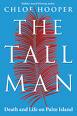
‘The Tall Man’ by Chloe Hooper

hooper

2008, 269 p

Chloe Hooper is obviously strongly drawn to this story.  It started as an essay “The Tall Man”  in The Monthly ; she returned to it in November 2006 with another essay “Who Let the Dogs Out?”. She revisited it more recently through a book review of Thea Astley’s ‘Multiple Effects of Rainshadow’ in  Sept 2008, and  again in a tangentially related story “Boxing for Palm Island” in the February 2009 edition of The Monthly.

Her book and related essays use the motif of the mythical figure of  The Tall Man to frame the story of the death in custody of Mulrunji, who died in police custody on Palm Island in 2004.  His death sparked inquests,  a riot, a court case and a re-opened inquest over a five year period. The story is not finished: nor do I think it ever will be.

Palm Island has had  a troubled history. It has been an Aboriginal mission station and viewed by its inhabitants as a penal settlement; it was used as a naval base during WW 2;  and a nearby island was set aside for sexually transmitted disease, then as a leper colony.   An early white administrator Robert Curry went berserk there in the 1930s, shooting his children after the death of his wife, a tragedy compounded by the arrest of the young aboriginal boy deputized by the white staff to kill Currey in order to protect the other inhabitants.  Fortunately, after six months remand, the young man was found not guilty.

As was Chris Hurley, the police officer accused of the death in custody of Mulrunji in 2004.  Drunk and abusive, Mulrunji was  arrested for causing a public nuisance.  An hour later he was dead in his police cell.  Death was found at autopsy to be caused by “an intra-abdominal haemorrhage caused by a ruptured liver and portal vein”.

This was the first trial of a police officer for a death in custody. Hooper spoke with Mulrunji’s family, sat with them at the trial and shared an umbrella with them in a tropical downpour.  She makes no secret of where her sympathies lie.   On the other hand, though, she is clear-sighted about the violence, drunkenness, poverty and hopelessness of life on Palm Island.  She could not get access to Chris Hurley, and in an attempt to understand him better, she travelled to where he had been posted earlier-  the ironically-named Doomadgee, and Burketown.

The inhabitants of Burketown, and the Queensland and Northern Territory police who closed ranks around Chris Hurley are dismissive of  ‘southerners’ with their caffe lattes and liberal ideas.  They’re right in one thing: people ‘down south’ don’t understand.  It churns up all the ambivalence that ‘southerners’ feel about John Howard’s intervention (continued by the ALP); our discomfort with the group of aborigines drinking under a shady tree on a naturestrip in a country town, or even here in St Kilda, Melbourne; our  conflicted feelings about David Gulpilil.  The world she describes here evokes Kurtz in Heart of Darkness, Maycombe County  in To Kill a Mockingbird.  Somehow it’s easier to slot it into a literary genre, rather than own it as part of your own country.

This is a gritty and challenging book.  It evokes Helen Garner’s work, where the author is right there in the story: questioning, weighing, judging.   As with Garner, as a reader you are always aware that the author is framing the narrative for you, and directing you to “look here”, “listen to this”.   Like Garner, Hooper declares her loyalties and feels angry and bemused.  I suspect that she will keep writing it, on and on, because the story itself goes on and on and on.

‘Crime in the Port Phillip District 1835-51’ by Paul R Mullaly

You can get all excited about the latest, contentious, revisionist contribution to those ‘big’ historical questions (those questions that somehow fail to capture the public interest!).  My wordy, I know I do!  But there’s something quite humbling about the labour-of-love, extended type of research that provides the building block foundations for this other more controversial, more debated but somehow more ephemeral work.  I’m thinking about the edited series of documents, the painstaking deciphering of a diaries, the compilation of administrivia into a logical process after it has been distributed across multiple bureaucracies.  There’s a danger, of course, that it can descend into mere list-making, and the hunt become more seductive than the actual capture.  But thank you to those historians who share the nuts and bolts of their research with others.

In relation to my own research, I’m thinking of A.G.L. Shaw’s Gipps-La Trobe Correspondence with its wide-ranging footnotes that make me realize I’m following a well-trodden path.  I’m thinking of Ian D Clark’s persistence in deciphering George Augustus Robinson’s diaries- ye gods: that handwriting! I’m thinking of Paul de Serville’s typography of Port Phillip ‘gentlemen’ before and after the gold rushes. And now, too, I’m thinking of Judge Paul R Mullaly’s book Crime in the Port Phillip District 1835-51.

This is a big book- 763 pages- so big in fact that the subject and names index has to be downloaded from the publisher’s website separately-  a costly compromise when dealing with such an exhaustive work.  The author, a judge and Q. C. with a long history of involvement in the Supreme Court of Victoria, undertook this huge endeavour in his retirement, drawing on material at the Public Records Office of Victoria, newspapers, and both Redmond Barry’s and Judge Willis’ own case books.  Here is where his experience comes into its own.  For the non-lawyer, many of these documents are fragmentary and utilitarian, and all too often opaque.  But  Mullaly can cast his legal eye over them, piece them together into a narrative and contextualize them into a standardized legal process.

The book is divided into three themes, although the table of contents doesn’t reflect this.  He starts with a snapshot of Port Phillip itself and its legal system, with an emphasis particularly on the status of Aborigines under colonial law.  He then moves to a step-by-step description of the legal process, from arrest through to sentence, highlighting along the way where practices differ from those today. Finally- and this is the largest section of the book- he analyses different types of offences e.g. those against the person, against property, against justice, miscellaneous and sectarian offences,  with a selection of chronologically-presented vignettes of particular cases.  The regularity of his structure was helpful.  I was concentrating on judgments between 1841-3, and the chronological presentation made it easy to locate the material I wanted.

There is not an argument as such in this book,  beyond his long-held belief expressed in his introduction that “the elite in society tended to be far too ignorant of the realities of much criminal activity and were much too judgmental in attributing a high degree of moral culpability to many offenders” (p. vii).  This is, instead,  a descriptive work, focussing on the administration of the criminal law, which he hoped would “help the present community understand many aspects of our present culture and give many citizens an insight into the community in which their ancestors lived.” (p.viii).  Perhaps because of its descriptive intent, the ending of the book felt a little abrupt.  I found myself wishing that he’d made an overall assessment of crime at that particular time- was it any more or less violent then? did the nature of crime change? was society well served by its criminal justice system?  I really enjoyed the parts where he tried to explain some anomaly that he had detected, or fill in the gaps that had been left in the documentary record.

There’s just so much that can be done with the material he has assembled here.  I’ve been frustrated by the elusiveness of women in my study of Port Phillip but here they are- not just as victims but also as witnesses, neighbours, people just going about their lives.  There’s a fascinating study of childhood glimpsed in these cases; there’s a geography of the streets and pasttimes.   There’s another economy here- not that of the Blue Books or Select Committees into Monetary Confusion, but the economy of buying and selling and just getting by.

This book provides well-dug, solid foundations. Thank you.


‘Lawless Harvests’ by Alex Castles

hobart-jail

2003, 209 p.

As a primary school child in the 1960s, there were certain stationery items that your parents had to buy for you each year.  They always had to buy two HB pencils and a red-lead pencil that would kill you if you sucked the end of it (surely not?).  There was the 12-pack of Cumberland pencils that always looked insipid and cheap against the 24-pack Derwent pencils that the luckier kids had, with that brilliant aqua and lush bright green that even now gives me pleasure.   There was the pack of Greyhound Dry Pastels that went unopened all year until they crumbled to dust in your desk.  And then there was the plastic stencil map of Australia, with the states marked out with a thin line except for Victoria, where the boundary with NSW seemed to inexplicably dribble out into a series of dots on the right hand side.

It must have been a source of much chagrin for school children on the Apple Isle (Tasmania) to realize that their own state was left off the map.  No doubt having the little island dangling below Victoria added a level of complexity and expense to the manufacturing task that was not worth the effort.  And so, if you remembered Tasmania at all, you had to hand-draw it, down below Victoria somewhere.

Yet when looking at Port Phillip in the 1840s, one is struck by the dominance of Van Diemens Land on the new settlement.  George Town at the mouth of the Tamar River was much closer to Port Phillip than Sydney, 600 miles away.  Trade was frequent between Hobart, George Town and Port Phillip, and it was largely the scarcity of  available land after a heavy bout of land-grant activity in the late 1820s/early 1830s that drew men’s eyes northwards across Bass Strait.  Just as men and stock meandered down from the settled districts of New South Wales, so too did ship after ship from Van Diemens Land disgorge sheep that moved into farms throughout the Port Phillip district.

New South Wales dominates our awareness of early colonial Australia, but Van Diemens Land runs alongside it as a parallel but separate colonial entity.  Although the NSW Governor was officially Governor-in-Chief,  from 1825 onwards he played no active role in the administration of Van Diemens Land. The Van Diemens Land Lieutenant-Governor styled himself “His Excellency” (suggesting that there was no immediate superior) rather than the “His Honor” title that he had used up until this date, and the Tasmanian Supreme Court, officially proclaimed on 31 March 1824 was a separate entity in its own right rather than an arm of the Supreme Court of New South Wales as Judge Willis’ Port Phillip court was.

Alex Castle’s book, published posthumously in 2003 tells the story of the Van Diemens Land legal system.   The book had its genesis in a plan by the Law Society of Tasmania in 1985 to commission a history of the legal profession in Tasmania.  Professor Alex Castles from Adelaide University offered to write it, with a view to publication during the Law Society’s centenary year in 1988.  But only 3 chapters were written at that stage, and focus shifted to the 28th Australian Legal Convention to be held in September 1993.  By May of that year, twelve chapters had been completed and the final chapter was in draft form.  However it was never editted sufficiently for publication and the manuscript remained unpublished in a filing cabinet.  In 2003, after the death of Professor Alex Castles, the Law Society remembered the part-completed manuscript, and engaged its librarian to retrieve the text, and Dr Stefan Petrow to edit it, write an introduction and epilogue and compile a bibliography, as the text itself does not have footnotes.

In his introduction, Stefan Petrow discusses this book in relation to Castles’ other work, particularly his pioneering textbook 1971  ‘Introduction to Legal History’.  In this textbook, Castles concentrated on the English influences on the Australian legal System but Petrow detects  a movement in Castles’ work in later years that acknowledged local variation, particularly in frontier legal environments.  I wonder if Castles had written the introduction himself,  how he would have addressed himself to this question.

This book traces through the earliest legal steps in Van Diemens Land, which are hard to recover because the papers were burnt on the evening of  Lieutenant Governor Collins’ death- possibly to obscure legal decisions made during his time of office.   Collins’ successor Davey was completely out of his depth, and it was William Sorell, the next Lieutenant- Governor who reordered local affairs.  But the main focus of the book is on Lieutenant George Arthur and his devolution of power to himself, with the acquiescence of his fellow-Tory Supreme Court judge Pedder.   Castles credits Sir John Franklin (yes,  the villain of Richard Flanagan’s Wanting) with introducing the legal changes resisted for so many years by Arthur.  He traces through the amoval of the puisne judge Algernon Montagu and the attempted amoval of Pedder by Franklin’s successor Denison over the taxation-like nature of the Dog Act-  the same process of amoval (but for different reasons) which finished off Judge Willis’ career.

One thing that I very much appreciated in this book was the way that each chapter started anew with a little vignette or anecdote that piqued the reader’s interest anew.  He finished each chapter a similar way too, often returning to the episode with which he opened the chapter.  In between things got a little turgid, with a very ‘top-down’ perspective running throughout, but the openings and closings of each chapter remedied this.  I’m not sure that Castles himself would have finished the book with the what-happened-next epilogue that Petrow wrote-  the book suffers from the lack of a strong, argumentative final chapter.  However, it would have been beyond the ethical and editorial demands on Petrow to have written anything beyond what he has done.

‘Human Smoke’ by Nicholson Baker

nicholson

2008, 474 p + 53 p notes

I hadn’t heard anything about this book, or its author for that matter, until I heard an interview with Nicholson Baker on Radio National’s Book Show.  It was quite clear that he was speaking as a novelist rather than an historian, and yet he said a couple of things in the interview that resonated with my own research and narrative problems that I’m grappling with.

I wish the interview were still available or a transcript saved, but neither of these is available. From the brief notes I took during the interview, he said something like the following:

1. Find the hero in your story.  This is something that I’ve been struggling with.   I don’t consider the subject of my story- Judge Willis- to be a hero: in fact,  I don’t think I like him much at all.  So who is my hero?  Whose voice and worldview  do I trust?  Of the colourful cast of players on the Port Phillip stage in 1841-3, I’d go for  Superintendent La Trobe, I think, in spite of (or is it because of ? ) his insecurity, his anxiety, his concern not to be hasty or judgemental.

Or is the endeavour to find a hero anti-historical in itself?  In our search for a ‘hero’, are we only responding to those from the past who display elements of a 21 century sensibility that we recognize as kindred spirits.  What about the men of their time who are thoroughly imbued with attitudes of deference or unruffability that we find unacceptable today?  Or are we looking for a common humanity beyond this?   Inga Clendinnen, in her Dancing with Strangers introduces the writers of the First Fleet journals she is basing her work on, and shares with us her own emotional responses to her informants’ writing:

Jane Austen exclaimed that her naval-officer brothers ‘write so even, so clear, both in style and penmanship, so much to the point, and give so much intelligence, that it is enough to kill one’. In her novels she allowed herself to become positively girlish in her effusions of admiration for naval men like Fanny’s brother William or Anne Elliot’s Captain Wentworth, and quite lost her characteristic irony when she considered the nobility of their profession.

I confess that as I read John Hunter’s journal I felt something of the same flutter.  I liked what he said and I liked his silences too.  (p 37)

and in relation to Watkin Tench:

He is one of the handful of writers who are an unshadowed pleasure to meet on the page.  Through that familiar miracle of literacy where pothooks transform into personality, it is not so much his information as his presence which delights us.  His parents are said to have run a dancing academy, and it is tempting to think that their son’s grace on the page has something to do with a melodious, light-footed upbringing.  He has the kind of charm which reaches easily across centuries.  If he lacks Montaigne’s intellectual sophistication and unwavering moral clarity, he shares with him the even rarer quality of sunny self irony. (p. 57)

I think that a historian does adopt a stance towards her informants.  It’s not that you suspend criticism or disbelief, but there are some informants who have you rolling your eyes and inwardly groaning “Here we go again“; or conversely who make you sit up and think “Now what makes you say that?”

2. Sometimes what’s written in the papers is more true than what you’ll find in “secret” archives. Leaving aside the whole issue of “truth”, I’ve been thinking about the issue of temporal change and temporal persistence for some time.  And I’ve also been reading newspapers very, very closely, watching how a controversy builds, subsides, lingers, re-emergences- a sort of time-lapse examination that is elided when taking a purely thematic approach.  In my own research into Judge Willis, there were issues that  niggled month after month; there were personality clashes that played out in different contexts over time.  There were false rumours, there was bombast and exaggeration- and as Nicholson Baker pointed out, the actors themselves were reading (and contributing) to this media construction of events each morning too.

So what has Nicholson Baker done in this book?

I was interested to note that the book was catalogued with a 940 Dewey number in the university library, and lists its subjects heading on the edition notice page as” 1. World War, 1939-45- Causes  2. Jews- Persecutions- Europe-History.”  Yet the book starts abruptly in August 1892 and ends on New Years Eve 1941.  It is a series of snippets, many taken from the  New York Times,or diaries or memoirs arranged chronologically, each one a page or less in length,  separate and disembodied from the preceding one and  surrounded by much white space on the page.  There are no chapters, no commentary, no debate, no authorial interjection.  There is a long series of  sources at the end of the book.  And that’s all.

And yet the author is very much there.  His selection of the closing days of 1941 (immediately post-Pearl Harbour) reflects his American worldview, and there is a degree of artifice in treating newspaper articles written in real-time with memoirs written after the event.  He has found his heroes: Gandhi, pacifists, Stefan Zwieg, Victor Klemperer.   He’s found his villains too, and you can almost hear his sharpening his knife. He selects his events without a stated rationale, but with solid intent:  the anti-semitism and blood-lust of Churchill, Britain’s food blockade of Europe,  the testing of chemical weapons in the Middle East,  America’s refusal to take Jewish refugees, the insistent voices of pacifists throughout the war, the commercial entanglement of America in the war through supply of technology, planes and arms,  America’s goading of Japan to enter the war.  Even though he presents these as snippets,  there is an argument here: an argument that debunks especially Churchill but also Roosevelt; that blurs the line between the “good guys” and the “bad guys”;  that has a whiff of moral superiority in relation to the pacifists.  You are very much aware that it is written with a  post-9/11, post-Iraq sensibility.

Inga Clendinnen also had this to say in Dancing with Strangers:

It is a commonplace rediscovered every decade or so that individuals see what they see from their own particular perspective, and that perspectives change through time.  These disenchanted days we know that there are no I-am-a-camera  observers, and we also know that even cameras lie.  This recognition has not stopped would-be historians from piecing together snippets derived from a range of narratives, perspectives and sensibilities in chronological order, and  calling the resulting ribbon patchwork ‘objective history’. (p. 12)

Nicholson Baker has done exactly this- pieced together snippets derived from a range of narratives- and has reworked them into an almost formulaic vignette, often ending with the date “It was 15 March 2009”.  There’s a flatness of tone, a disembodiment that is unnerving and yet oddly compelling too.

Many historians and academics hated this book.   John Lukacs (who has written several books on Churchill) didn’t hold back : “This book is bad”.  Louis Menand (who wrote The Metaphysical Club) writes:

Baker is trying to eliminate the historian’s interpretive gloss in the interests of respecting the rawness of the primary experience. He seems to think that the facts speak for themselves. But facts never speak for themselves. We speak for them. The historian’s gloss matters (not to mention all the facts that are left out): it provides the reader with intellectual traction, an ability to weigh the claims being put forward to justify the selection of facts. Baker’s presentation may seem empirical—these things happened, you can look them up, no varnish has been applied—but the effect is entirely emotional, because there is no nesting argument, no narrative, to give events a context. It’s a tabloid technique: a six-word quotation or a single image is all you need to understand any issue. The pretense of no manipulation is completely manipulative.

A. C. Grayling was less critical, largely because he agrees with Baker’s intention and argument, rather than his methods.  Dominic Sandbrook likewise, approved the endeavour  but excoriated the methodology

In the end, then, its unorthodox style cannot compensate for the basic mendaciousness, even fraudulence, of this extraordinarily self-righteous book. In my student days, I was taught that a historian should aim to represent the past as fairly and honestly as possible. Of course opinions matter; there is nothing duller than a history book without an argument. But by presenting us with such skewed and partial material, Baker gives us a book that cheapens the serious moral arguments he tries to make. Whatever its merits as a work of literature, as a work of history it is virtually worthless.

So, among such exalted and vociferous opinion, what do I think?  I’m not a WWII historian, so I cannot dispute the facts as, say, Lukacs does.  This book has a broad sweep- not unlike a searchlight scanning the skies- lighting up India, Iraq, even Bob Menzies has his moment in the spotlight.   It represents a slow unfurling of events, rather than a shaped and honed argument.  I found it more compelling than I would have expected- we do, after all, know how it all ended.

But I am wary of something that purports to be “just the facts” and there is a dishonesty about the deliberate absence of the author- he’s there alright, it’s just that he’s pretending not to be.


Letters from Victorian Pioneers (or “It wasn’t me Guv’nor, it was him”)

victorian_pioneers

When Lieutenant-Governor La Trobe sailed home  for England on 6 May 1854, he carried with him a series of letters which he hoped to use when writing a history of the Port Phillip district in his retirement.  He had officially approached a number of the early pastoral pioneers and asked them a number of questions, and as you might expect, they answered his survey letter fairly promptly.  I’m not sure what the official letter said-  one of his respondents referred to a section that asked  “If preceded, accompanied or immediately followed, by whom and when, and the general state of the district around and in advance of me at that period.”  He obviously also specifically asked about encounters they had had with aborigines in their area, and their opinion of the future facing the aboriginal tribes.

He had big plans for these letters.  He intended his book to start with Captain Cook’s discovery of the Gippsland coast, then move to the early futile attempts at settlement.  It would then go on to record the effective colonization of the region by pastoralists, ending with the discovery of gold in 1851.  Part II would deal with the geology, botanty and zoology of the land; the aborigines and the human aspects of the spread of settlement.  He would then pass on to separation and the consequences of gold discovery, where he would rebut the criticisms that had been levelled against him for his administration of the gold fields.  He would then finish with ‘My Australian Home, a walk around my garden’.  (Gross, p. 131)

It was not to be.  He was increasingly afflicted with blindness, and realizing that he would never write this book, he returned the letters to Victoria in 1872 , where they were preserved in the public library.  Times had moved on: people were ‘moving forward’ then too, and not all that interested in the preceding generation. It was not until 1898 that the 58  letters were published by the Trustees of the Library under the name ‘Letters from Victorian Pioneers’.

Because they were responding to an official request with guiding questions, there is a sameness about the responses of his correspondents.  But there’s also quite a bit of similarity in their experiences as well, which is what I expected.  In fact, my impetus for reading this book was the suggestion in Robert Redfield’s book that people living in a small community often held a common biography.  Even though Redfield specifically states that his approach does not hold for frontier communities (which of course Port Phillip was), I was interested to see if the early pastoral settlers of Port Phillip could be said to have a common life story.

And yes, they could.  All his respondents were male, and many of them were young when they settled in Port Phillip- usually in their early to mid 20s.  Many of them came over from Van Diemens Land  from where they had initially emigrated (none admits to convict origins).  Many of them had brothers with them.  And they held in common sheep and cattle– hundreds and hundreds of them, trotting along, being slaughtered by marauding natives (and  what a dispiriting and expensive loss of life that must have been), moving from run to run.  Some time ago I read Roger McDonald’s book  The Ballad of Desmond Kale, and was frustrated by the sheep-sheep-sheep  emphasis of it, but sheep-fever is amply demonstrated here too.  It’s not as exotic and alluring as gold, but the sheep-rush  obviously drove the early settlers of Port Phillip.

They all mention the 1840s depression- although one canny Scotsman seems to have escaped it because he had savings still in Van Diemens Land.  There are names of landholders that spring up again and again- obviously big stockholders held land in several districts.  Many of them moved from station to station.

Some of them were quite observant about the changes wrought on the land after settlement.  Several mentioned that it was very dry when the area was first opened up, and that the rainfall had  improved in the last few years of the 1840s, drawing later settlers to land that had seemed uninviting when the first settlers passed it initially.  One or two mentioned changes in the grasslands, and some were quite nostalgic for the beauty of the unsettled areas.

Most fascinating of all was the range of responses to the question about aborigines.   Most of them knew of “other people” who had gone on shooting reprisals- as perhaps might be expected when the Lieutenant-Governor asked you such a question.  Several of them mentioned the Whyte brothers by name as being particularly responsible for aboriginal deaths, one respondent attributing 51 deaths to them compared with the official count of 30 aboriginal deaths.  A couple of respondents mentioned that they had shot aborigines in reprisal-  just one or two, mind you, and always because the aborigines started it first.   Another settler was named as responsible for several deaths, but he protested (too much?) his innocence. George Faithful of Wangaratta, however, reported quite openly his actions after suffering several attacks from surrounding natives:

At last, it so happened that I was the means of putting an end to this warfare.  Riding with two of my stockmen one day quietly along the banks of the river, we passed between the anabranch of the river itself by a narrow neck of land, and, after proceeding half a mile, we were all at once met by some hundreds of painted warriors with the most dreadful yells I had ever heard.  Had they sprung from the regions below we could have hardly been more taken by surprise.  Our horses bounded and neighed with fear- old brutes, which in other respects required an immense deal of persuasion in the way of spurs to make them go along.  Our first impulse was to retreat, but we found the narrow way blocked up by natives two and three deep, and we were at once saluted with a shower of spears.  My horse bounded and fell into an immense hole.  A spear just then passed over the pummel of my saddle.  This was the signal for a general onset.  The natives rushed on us like furies, with shouts and savage yells; it was no time for delay.  I ordered my men to take deliberate aim, and to fire only with certainty of destruction to the individual aimed at.  Unfortunately, the first shot from one of my men’s carbines did not take effect; in a moment we were surrounded on all sides by the savages boldly coming up to us.  It was my time now to endeavour to repel them.  I fired my double-barrel right and left, and two of the most forward fell; this stopped the impetuosity of their career.  I had time to reload, and the war thus continued from about ten o’clock in the morning until four in the afternoon.  We were slow to fire, and I trust and believe that many of the bravest of the savage warriors bit the dust.  (p. 220)

Several of the respondents noted that they had taken young aboriginal girls and boys to live with them, but that once they reached adulthood, their tribes came and took them away.   One settler commented that  he gave a baby back to its mother after he had taken it because the servant wasn’t prepared to look after it, and  seemed rather put out that she refused to give it to him a second time.  Several reported infanticide, especially where there was a white father and a black mother.  There were several allegations of cannibalism, although interestingly one settler reported that the aborigines thought that the whites were cannibals!

Where aboriginal deaths had occured, several claimed, it was because the blacks had become over-familiar.   White men didn’t take lubras, they claimed- the black men offered their wives to them freely.

Even amongst those who were most positive about the aborigines working for them on their stations, or their quickness and willingness to forgive, there was overall a deep sense that influenza, smallpox, VD or alcohol would decimate their numbers.  They all reported that there weren’t as many aborigines on their stations as there had been years earlier- strange that.

References

‘Letters from Victorian Pioneers: being a series of papers on the early occupation of the colony, the aborigines etc addressed by Victorian pioneers to His Excellency Charles Joseph La Trobe Esq. Lieutenant-Governor of the Colony of Victoria’. Edited with an introduction and notes by C. E. Sayers from the original edition edited for the Trustees of the Public Library by Thomas Francis Bride L.L.D during his period of office as Librarian of the Public Library of Victoria. (Phew!), 1969.

Alan Gross ‘Charles Joseph La Trobe, Superintendent of the Port Phillip District 1839-1851 Lieutenant-Governor of Victoria 1851-1854’. Melbourne, Melbourne University Press, 1956.

‘The Boat’ by Nam Le

theboat

2008,  313 p.

I guess when you’ve won a swag of awards and you’re working as fiction editor with the Harvard Review, then you’re no slouch.  And Nam Le is not.

This stories in this collection have been published before, in a range of different publications- Overland;  The Best Australian Stories; The Best American Nonrequired Reading 2007;  Harvard Review etc etc.  He’s had support from many places- The Iowa Writers’ Workshop; James Michener and the Copernicus Society of America (!) etc. etc.   He’s pretty much a product of the writing-as-career environment with its courses, its fellowships and  its prizes, I guess.

But boy, can he write!  I am not particularly fond of the short story as a genre- by the time I’ve relaxed enough to trust (or distrust) my narrator, the story comes to an abrupt end and I’m left dissatisfied.   But he so effortlessly  draws you into accepting the world view of the narrator than within a page or two I was hooked, with nearly every story in this book.  Not all, mind you, but enough to know that I’ve been in the hands of a master.

Normally I would say that if I’m aware of technique, then I haven’t been completely engaged.  But with him, even though I was thoroughly engrossed in the story itself, I’d find myself thinking “Gee he did that well”.  His dialogue always rang true; his descriptions captured a moment in time exactly; he handled time shifts effortlessly.

Even though I know that these stories were written at different times and published in different places, the first story acts as a background to them as a whole.   “..I don’t mind your work, Nam ” a fellow writing-student tells him, ” Because you could just write about Vietnamese boat people all the time.  Like in your third story…You could totally exploit the Vietnamese thing.  But instead, you choose to write about lesbian vampires and Colombian assassins, and Hiroshima orphans- and New York painters with haemmorrhoids.”

And so, he’s off: I didn’t find any lesbian vampires, but the rest are all there.  The first story sets up the idea of “ethnic story” (and I thought of Amy Tan here) and it’s as if he has decided to consciously smash that straitjacket.  The first and final stories are the “Vietnamese boat people” stories he has consciously avoided, but in between he channels Tim Winton’s surf and adolescent boys in the story  ‘Halflead Bay’ and perhaps even Kazuo Ishiguro in ‘A Pale View of Hills’  in  the story ‘Hiroshima’.   But this is not mere ventriloquism or homage:  each of these stories is his alone.  It’s as if he’s breaking out and saying- “there is no ethnic story- just story” and then he explores, plays with and moulds his story within yet another time, setting and context.

Is he as good as everyone says he is? You betcha.