Category Archives: Book reviews

‘The Clothes on their Backs’ by Linda Grant

grant

2008, 293 p.

As a general rule, I dislike books that focus on descriptions of food, appearance- and now I have to add to this list- clothes.  I might enjoy Simon and Maggie on The Cook and the Chef, and I generally read Maggie Alderson’s columns in The Age, but I dislike my narratives being shaped by  obsessions about things that lend themselves to florid, overwrought writing on the one hand or triviality on the other.

Which leads me to The Clothes on their Backs.   The author has recently released a non-fiction book about clothes, and I think that perhaps it is an interest best explored through a non-fiction rather than fictional lens  (as, for example, in Queen of Fashion).  Certainly in this book, you could detect that she wanted to explore the theme of clothing and its meaning further, but somehow it didn’t seem strong enough in its own right.

The story itself is set in the 1970s, based on a young widow, driven back to live with her emigrant Hungarian parents after her husband dies on their honeymoon.  Her parents had come to England immediately prior to World War II, thus avoiding Hitler and the Cold War, and had burrowed into the safety of a small, enclosed flat where they brought up their only daughter with the silences and evasions borne of trauma.  As a young child she caught a glimpse of a previously-unknown uncle who turned up on the doorstep, only to be turned away by her parents and not spoken of again.  Later she discovers that he had been reviled and jailed as a slum landlord.   Deeply depressed after her husband’s death, she returns to the parental home, where she happens to meet her uncle after his release from prison, and concealing her identity from him (or so she thinks), agrees to write his life story.

So, you might say, what does this have to do with clothes?  Not much, and this is probably the weakness of the book.  You sense that she wants to (puns ahead) weave the thread of clothing and what it denotes throughout her story, but it doesn’t work.  I don’t know if this is because the story of her stultifying, enclosed upbringing as the child of refugee parents and the opposite persona of her uncle is so strong; or whether ‘clothing’ as a construct is not strong enough to carry it.

There are parts of this book that I really liked.  The 1970s hasn’t really been mined as a timeframe in 21st century fiction (perhaps it was too embarrassing), although perhaps I’m just not thinking hard enough of examples.   I liked her use of time, where she slipped back and forwards between her uncle’s backstory, the 1970s, and then current day.

But there were parts that were handled rather clumsily- her husband’s death had elements of farce as well as pathos, and her 25th birthday party, while it did have a surreal, dream-like edge, fell flat.

I wonder if I would have been so harsh on this book had it not been short-listed for the Booker Prize last year: probably not.  Nor would I have read it either, I suspect.  I have expectations that books short-listed for the Booker are the pick of the crop, and that more deeply-flawed books would have been dropped between the long and the short list.  None of this in the author’s control- the selection in the first place; the quality of the surrounding books; the criteria by which the prize is awarded; the expectations that a reading public has of a ‘Booker shortlist’ book.  I feel as if this book is a child that  has been dragged out into a strong spotlight ,  scrunching up her eyes and shielding them from the light of publicity and expectation.  It’s not the child’s fault: it’s the pushy parent on the sidelines, willing her to be something more than she is.

“Reading Mr Robinson” by Anna Johnston and Mitchell Rolls (eds.)

“Reading Mr Robinson: Companion Essays to Friendly Mission”, Anna Johnston and Mitchell Rolls (eds.)

reading_robinson_cover

2008, 188p. + notes.

N. J. B. Plomley’s Friendly Mission was published in 1966, with a reprint in 1971.  It’s a big book, close on 1000 pages and it has been out of print for over thirty years.  It has been recently re-released, and this companion book of essays has been published to accompany the new edition.

Friendly Mission is a transcription of the journals of the Aboriginal Protector George Augustus Robinson, with a lengthy introduction by Plomley.  Plomley’s work made the Van Diemen’s Land journals of George Augustus Robinson available and accessible- because  Robinson’s handwriting was truly wretched- for the first time to a wider audience.  This book of essays celebrates Plomley’s work and they testify to the importance of Friendly Mission as a contested and influential text that over 40 years ago encapsulated many of the debates still pertinent today about Aboriginal and Australian settler history.

There are three themes that run through the essays.  The first is consideration of Friendly Mission in is own right, as a text.   It is obviously a book that has deeply impressed the people who have read it, or chosen not to do so.  Lyndall Ryan speaks in her essay of  purchasing the book in its blue covers from the top shelf in a bookshop and reading it transfixed on public transport on the way home, and the encouragement she received from Manning Clark and Rhys Jones to explore it further.  A counterpoint to this enthusiasm is the response of three Palawa (Tasmanian Aboriginal ) contributors who write short reflections on their response to the book.  Some choose not to read it at all: others feel negated and angered by the perceived inevitability of ‘extinction’ and the self-aggrandisement and nonchalance of Robinson in the face of such tragedy.

N.J. B. or Norman James Brian Plomley- although known as Brian-  was a scientist and curator who wrote widely on a variety of natural history, medical, dentistry and museum studies issues.  His long introduction to Robinson’s diaries reflects the historiography of his times: he did not even consider the use of oral histories with living Tasmanian Aborigines- if, indeed he even considered them that at all- and his views on hybridity and purity of bloodline reflect attitudes towards aboriginality and identity that are not accepted today.  Rebe Taylor’s essay points out that there are oral history sources available, through the Westlake Papers collected by the geologist  Ernest Westlake (1855-1922) which among other things included interviews with the descendents of  the Bass Strait sealers and their Aboriginal women from 1908-10.   Plomley himself edited a collection of these interviews in 1991.

A second strand of these essays deals with the diarist George Augustus Robinson himself, the Great Conciliator with the Van Diemen’s Land tribes, and then Chief Protector in the Port Phillip Protectorate during the 1840s.   Alan Lester’s essay ‘George Augustus Robinson and Imperial Networks’ highlights Robinson’s religious and humanitarian motivation, and places him within the context of evangelical approaches being implemented by British and American missionaries across the Cape Colony, the West Indies, and American and Canadian frontiers.  Elizabeth Elbourne’s contribution ‘Between Van Diemen’s Land the the Cape Colony’ compares these two colonies, particularly in relation to the coercion of women and children, and links these to the small, but influential anti-Slavery lobby in the Colonial Office and the Aborigines Protection Society which itself was distancing itself from Robinson’s approach by the early 1840s.

Henry Reynolds in ‘George Augustus Robinson in Van Diemen’s Land: Race, Status and Religion’ embraces Robinson as a conscientious missionary, outraged by the injustices he witnessed.  The name-giving ceremonies, Reynolds claims, were an attempt to replace the derogatory names conferred by hostile settlers with more others with more dignity.  Robinson’s Christian belief in the brotherhood and equality of all men contrasted with the polygenetic views that were coming into currency whereby different branches of humanity were distinguished and ranked – with the British ascendant of course.  This is not to say that Robinson was unaffected by the early Victorian emphasis on status and respectability: his career was an perpetual struggle to maintain and boost his own standing both in the colonies and with the Colonial Office, and the seating arrangements in the church services he organized reflected an acute consciousness of gradations of status.

Cassandra Pybus’ essay ‘A Self Made Man’ is less complimentary, portraying Robinson as a vain-glorious, manipulative man who carefully massaged his own image.  She introduces as a counter-point Gilbert Robertson, the capital-strapped chief constable at Richmond in Tasmania, who claimed to have been the originator of the concept of a “Protector” and who put himself forward as an applicant.  As she says, it is an unedifying spectacle to see

these two colonial misfits scapping over the paltry financial benefit and dubious social advantage to be got in taking credit for the almost complete destruction of a whole people (p. 109)

The final theme involves the use of the Robinson diaries through Plomley’s publication by other historians over time.  Ian McFarlane in ‘N J B Plomley’s Contribution to North-West Tasmanian Regional History’  places Robinson’s account of the Cape Grim massacre against Curr’s rather self-serving account found in the Van Diemen’s Land Company papers, and finds that Robinson’s estimate of 40 deaths (rather than Curr’s admission to 3) is likely to be correct.   Patrick Brantlinger’s paper ‘King Billy’s Bones: Colonial Knowledge Production in Nineteenth-Century Tasmania’  compares Robinson’s account with James Bonwick’s history The Last of the Tasmanians written in 1870 and  overlaid by later-Victorian ideas of racial superiority, craniotomy and scientific measurement.  John Connor in ‘Recording the Human Face of War: Robinson and Frontier Conflict’ uses Robinson’s observations on warrior behaviour and weaponry to conceptualise Aboriginal resistance as ‘war’.   Rebe Taylor’s paper ‘Reliable Mr Robinson and the Controversial Dr Jones’ examines the archaeologist Rhys Jones’ development of the regression theory that Aborigines lost the ability to fish and light fires- a suggestion repeated more recently by Jared Diamond and Keith Windschuttle- a shadowy, rejected commentator whose influence (and notoriety) pervades the book.

I’m wary of celebratory and clear-cut history with simple “goodies” and “baddies”.  I’m glad that the Robinson diaries are ambiguous and contradictory, and that he himself is a flawed man who, even at the time, did not fit comfortably into his society. And I’m pleased too, that the discussion continues about what we as historians and Australians do with such a tragic, conflicted story.  Plomley’s Friendly Mission and the diaries it makes available are an ur-text that is mined again and again by authors- Richard Flanagan in Wanting, Robert Drewe in The Savage Crow, Mudrooroo in Doctor Wooreddy’s Prescription for Enduring the Ending of the World, Matthew Kneale in English Passengers; Nicholas Shakespeare In Tasmania; Cassandra Pybus in Community  of Thieves, among others.  It’s like a scab that we need to keep picking; an itch that we need to scratch; a wound that has not yet healed.

‘A Short History of Tractors in Ukranian’ by Marina Lewycka

lewycka

2006, 324 p.

One of the things that surprised and startled me when we travelled to Britain two years ago was the vehemence of dissatisfaction over Eastern European immigration to Britain.  I’m not denying that Australians too have a strong streak of intolerance to immigration, but I don’t think that it’s voiced quite so loudly.  For a variety of historical and geopolitical reasons,  Australian prejudice is closely related to colour, marked most obviously by the White Australia policy that was one of the early legislative acts of the new Australian commonwealth.  The initial post-war migration schemes extended the traditional British migration to Baltic refugees, and although there was feeling against “The Balts”, it was soon directed more towards darker, “peasant”  Southern European refugees, then Vietnamese, then Middle Eastern and African immigrants.  So, certainly I’m not coming from any moral high ground here.  But nonetheless,  I found the English strength of feeling against migrants who were “white” and  visually indistinguishable quite unsettling.

And so, I felt a bit disconcerted opening up this book and finding much of this anti-East European feeling in black and white (groan- very bad pun)  on the page.  But I soon saw that Nadia (Nadezhda) , the narrator, shared some of my liberal anxiety about such vehement rejection of Valentina, the young Ukranian woman angling for marriage with her much-old Ukranian widower father.  But Valentina really was appalling- manipulative, greedy, single-minded and cruel towards Nadia’s  father who soon reveals his sexual and financial inadequacies once the marriage has been performed.

In opposing the marriage, and then helping to rescue her father from it, Nadia enlists the support of her sister Vera who is ten years older and of a more Conservative bent.  Nadia finds herself, despite her liberal politics and sociology degree- transformed into Mrs-Flog-em-and-Send-em-Home, and even though she is not close to her sister (Mrs Divorce Expert) the two sisters work in tandem to work the divorce and immigration system to extricate their father from his self-inflicted predicament.  Through this enforced contact they broach the gulf that has always existed between the older Vera, the War Baby, born in the Ukraine and a survivor of the politics and purges of wartime Eastern Europe, and the younger Nadia, the Peace Baby who has been shielded from the knowledge of her family’s experience.   Nadia has idealized this unspoken history, and comes to realize that her family too were economic refugees; that her father’s wartime activities were not honorable; that her parents’ marriage was based on resignation and determination and that sheer survival involves compromises and evasions.

The blurbs on my copy led me to expect a funny book – “Extremely funny” blurbs The Times; “Mad and hilarious” announces the Daily Telegraph, and the book was awarded the Bollinger Everyman Prize for Comic Fiction, I see.  I didn’t really laugh at this book out loud- in fact I felt a twinge of guilt about the mockery of the dreadful Valentina and the undercurrent of racism.   I kept expecting that there would be a dramatic turning point in the novel- that the sisters would learn something about Valentina that would cause them to abandon their resistance to her; that some dreadful truth about her father would emerge that would cause me to lose sympathy for him.  But the book just tootled along in its own way, and the ending was really quite uplifting with a victory for resiliance and independence.

‘The Second Coming’ by Walker Percy

percy

1980,360 p.

I hadn’t heard of Walker Percy before.  This book was on the schedule of one of the online bookgroups that I follow rather desultorily, especially since I’m allegedly working on my thesis.  It’s a very fast-paced online group, and by the time I’d finished the book, the conversation had moved on so I’ve been reading their archived discussion.

I was surprised when I borrowed it from the university library that there was a whole shelf of his works and commentaries.  And as often happens, lo and behold, a few days later I heard him mentioned in relation to Southern American writers and placed in the same company as William Faulkner and Carson McCullers.

The book was written in 1980, when Walker Percy was 64 years old.  It reprises a character from an earlier book The Last Gentleman, and with its emphasis on golf, retirement and old men’s lusts, it feels like an old-man’s book.  The book itself is rather dated, with some very 1960s and 70s new-age existential and para-medical wankiness.   It reads at times like a parody of the South: the grasping evangelical preacher; the nubile young girl; the sleazy, overweight Southern retirees.  In its happy and rather implausible ending, the old guy gets the young, sexually voracious girl, all his old mates get to indulge their passions and lifelong interests, and the grasping relatives and preachers get their come-uppance- or at least fade into insignificance.

What really engaged me and saved the book, was the voice of Allie, a young girl who had recently absconded from a mental hospital, where she had been medicated and ECTd into passivity.  We first meet her through a note that she had written to herself in a moment of lucidity, where she maps out instructions to herself for escaping from the hospital after learning that her parents had plans for her future, and her recently-inherited fortune, that would see her shuffled off into oblivion while her money was used for their purposes.  She is an open, confused, strangely resilient character, and the clang associations of her psychosis takes her conversation and point-of-view into florid and yet beautiful imagery.

This is a beautifully written book, if you can get beyond the mindnumbing boredom of the golf-speak and self-satisfied ‘old man’ talk. The excursions into philosophical and religious debate are rather tedious, and it is so dated that it is almost a historical artefact of the late 20th century in its concerns and viewpoint.  But it’s expanded my view of “Southern” literature, and I’m pleased to have my limited horizons on this genre widened just a little.

‘My Father’s Moon’ by Elizabeth Jolley

I have to admit to not being a fan of Elizabeth Jolley.  I know that she’s highly thought of:  a good reading friend whose reading judgement I trust  (and who is probably reading this post!) very much likes her. So why do I find her so off-putting?

I’ve really tried: I’ve read several of her books but find myself being repelled by the mustiness and acidity of her female characters.  They’re like a prickly heavy British overcoat: they’re like Hetty Wainthrop and Hyacinth Bucket; like a whiskery old Aunt.  Even in the books set in present time (given that she stopped writing about ten years ago), there’s a dissonance about these characters, as if they are out of time.   Her novels are often set in Australia, but there seems to be an innate Britishness about them.

I’ve seen her described as “disturbing” and perhaps this is what I’m alluding to, but I’m never really quite sure whether Jolley’s writing is deliberately subversive and edgy.  I think her dialogue is often wooden- or does that reflect the awkwardness of the characters she’s describing?  I think that her books seem to jerk around without a strong narrative thread- or is she being very clever and post-modern?  Is it bad writing?  Or good writing?  I really don’t know.

That said, I’ve enjoyed My Father’s Moon more than the other works I’ve read.  It is set in London during WW II, and for me this gives the book a unity and integrity that I can’t find in her other books.  The characters act, and feel, like 1940s characters in 1940s times.  The book is written in a number of first-person, self-contained chapters but there’s not a clear narrative arc in the way they are placed:  events happen and the reader works on making the causal and chronological links, because Jolley doesn’t.   Again- is this clever writing, or lazy?

I often sense steel in Jolley’s writing, but there’s a vulnerability in the writing in My Father’s Moon.   There’s an unresolved yearning to touch and be touched by other female friendships, and a sense of distance and apartness.  Perhaps these same qualities are there in her other books as well, because there’s a strong autobiographical element repeated in many of her works.  But I think I find it less repellent in a younger woman, coming of age in a time further back,  in a British world of London streets and air raids and prickly woollen overcoats.

‘An Algonquin Maiden’ by G. Mercer Adam and A. Ethelwyn Wetherald

algonquin

1887,  240 p.

If I am to trace my Resident Judge, John Walpole Willis across the full length of his career, rather than just focussing on Port Phillip, then I am destined to turn northward and head towards Upper Canada.  My ignorance of Canadian history knows no bounds- where on earth to start?   Perhaps Canadian literature might give me a gentle entree to a whole area that is largely unfamiliar to me.

I was attracted to the title of this book: “An Algonquin Maiden: A Romance of the Early Days of Upper Canada”.   I borrowed it on interlibrary loan from the CARM centre (my very own Cemetery of Dead Books), but had I been a little more diligent I could have found it in a million manifestations as an e-book on the Internet.

As soon as I started reading it, I realized that it was set exactly in the time and politics of Judge Willis’ time in Upper Canada:  dancing through the pages came references to Wm. Lyon Mackenzie,  Sir Peregrine Maitland, Captain Matthews and the Family Compact- people and concepts that I know will become very important to me should my quest for Willis take me along this path.  Although the book is firmly written within the romance genre replete with many heaving breasts and impassioned glances, the authors close one of the chapters with an odd little note:

Those who have followed, it may be with interest, this veracious piece of history, and are curious to learn the fate of the honorable member for Middlesex, will find the story graphically told in Mr Dent’s “Canadian Rebellion” Vol I, chap 6

and they then proceed to add a lengthy paragraph from Dent’s history (which, actually, I have dipped into).

So who are these authors?  Graham Mercer Adam was a Scottish-born writer, publisher and author. He was involved mainly in the publication of periodical literature, but also wrote a number of historical works including The Canadian North-West: Its Histories and Troubles (which is advertised at the back of my 1973 facsimile edition of the book),  An Outline History of Canadian Literature, and An Abridged History of Canada. His collaboration in writing this book  with A. Ethelwyn Wetherald, a Quaker poet,  seems to have been a one-off.   The Dictionary of Literary Biography notes the critical reception of Wetherald’s contemporaries to the  “embarrassing qualities” of An Algonquin Maiden, and perhaps this is why she specifically requested that the book not be mentioned in John W. Garvin’s introduction to her collection Lyrics and Sonnets published in 1931.   Adam, however, noted that the jointly-authored book was issued not only in Montreal but also in New York and London.   If its ubiquity on the internet is any guide, then it’s the main legacy of both their work.

It’s a rather florid romance set in York, with two beautiful young women pursued by two handsome young men.  One of the couples is thwarted by the Tory father’s opposition to young radical Allan Dunlop’s politics; the other couple is blocked by pride and the young man’s attraction to Wanda, an Indian “maiden”.

I was interested by the depiction of the “Algonquin Maiden” which portrayed her as far more innocent and alluring than Australian literature depicts aboriginal women.  In this regard, the book reminded me of Katharine Susannah Pritchard’s Coonardoo, which is off the top of my head the most striking and controversial depiction of love (as distinct from lust) between a white man and indigenous woman in Australian literature.   Certainly An Algonquin Maiden reflected the distaste and repugnance for the “squaw” shown by white family and friends when the young man declares his love for her, but I’m hard pressed to think of an Australian book, other than Pritchard’s  that even acknowledges an Aboriginal woman as anything other than “a bit on the side”.   Can you?

There’s really quite a bit about landscape and the emotional response to it, an emergence sense of “Canadian-ness” and the  social and political intricacies of Upper Canadian settlement.  I kept expecting Judge John Walpole Willis to fling himself through the door at any minute- and there, one and a half pages before the end of the book- THERE HE IS!! (Well, sort of…). In a letter to his love,  the aspiring young politician wins the girl in the end and writes to her:

I have no news to give you of social matters in York, save of Lady Mary Willis’s Fancy Ball, which is to come off at the close of the year…

and then a fleeting mention of the happy marriage ceremony:

The wedding breakfast, it was also a matter of current talk, was to be at the homestead of a distinguished member of the local judiciary…

So, our Judge is lurking here in this book, just out of sight. Just move out a little further, onto centre stage, will you Your Honor?

Mr Robinson reports

I’ve been reading the Port Phillip journals of George Augustus Robinson.  Note that these are the Port Phillip ones, not those that he wrote in Van Diemen’s Land which were edited by N.J.B.  Plomley.  Actually,  Plomley’s work has had a bit of renaissance lately, with the republishing of his Friendly Mission and the release of Reading Robinson,  a set of essays by various authors which extends Robinson’s work into a broader imperial context.   I have this book of essays on hold, and shall report anon.

Robinson himself seems to be undergoing a reconsideration.  Until recently, his main biography has been Black Robinson by Vivienne Rae-Ellis, a vehement portrayal that depicts him as an incompetent and dishonourable liar and cheat.   Rae-Ellis’ book had a troubled publication history and  received much critical comment on its publication (Pybus, 2003).   Keith Windschuttle in his Fabrication of Aboriginal History interprets this as an attack on Rae-Ellis for her negative depiction of Robinson, who has been treated more benignly by Henry Reynolds, Lyndall Ryan and other historians that he himself attacked for their depiction of Aboriginal history.  Perhaps it’s a matter of “the enemy of my enemy is my friend” because Windschuttle certainly did not extend the same level of scrutiny to Rae-Ellis as he did to Reynolds and Ryan.

Robinson’s Tasmanian journals have received most of the attention, but the ones I’ve been reading are his Port Phillip journals, written after he had spent several years on the blighted Flinders Island with his dwindling band of natives.   He took with him to Port Phillip  several Aborigines from Flinders Island, including Truganini and Wooredy.   He arrived in Melbourne in February 1839, prior to La Trobe.  His instructions were vague.  Glenelg at the Colonial Office in London sent a copy of the report of the 1837  parliamentary  Select Committee  to Gipps, with recommendations to protect, educate, provide religious education for and ‘civilize’ the aborigines.   Glenelg told Gipps to fill in the details, but Gipps was loathe to do so.  He argued that Robinson had been appointed Chief Protector on the strength of his “acquired experience superior to that which is possessed by any other individual in the Colony”, and he was left largely to define the role himself.  It seems that La Trobe was keen for Robinson to move around the District: he sent him on his trips to the Western District and was reluctant to appoint Robinson as a town magistrate lest it “seem to form the idea that his Duties lie in Melbourne instead of in the Bush” (Gipps to La Trobe 11 Feb 1843).  But his role did, indeed, involve both administration in Melbourne- in fact, he was appointed an office in Willis’  “old” Supreme Court building once the “new” courthouse was opened- and field work both supervising the Assistant Protectors and recording the language, names and habits of Aborigines throughout the District both as a form of ethnographic study and census.

This dual focus of  acting both as administrator and protector is reflected in his journals.  Inga Clendinnen tells us in her memoir Tiger’s Eye that she  drew on Robinson’s diary of his Western District  journey between 20 March and 15 August 1841 as her first step back into the academic waters after a long period of illness.  Her essay ‘Reading Mr Robinson’ focusses on Robinson’s  journey, but the George Augustus Robinson we see in the saddle, riding from tribe to tribe and outstation to outstation is not the same fussy, petty man that we see around the streets of Melbourne.  His role was not just to observe and count: he was also a minor bureaucrat puffed up with self-importance but ultimately impotent and compromised when the pointy end of the law intersected with the humanitarian aspects of his task.

Clendinnen admits “I have become very fond of Mr Robinson”.  I’m not quite as fulsome.  The ‘town’ Mr Robinson is rather wearing; in management-speak he is unable  ‘upwardly manage’ his relationship with his superiors (if indeed, he even perceives them as such), and he undermines and backstabs the assistant protectors under his supervision- although admittedly some of them were a rum lot too.  His attitude towards the Aborigines he brought over with him from Flinders Island is puzzling: he distances himself emotionally from the execution of  “Bob” and “Jack” for murder in January 1842, fulminating about process but oblivious to the tragedy; he goes into organiser-mode for the return of the women to Flinders Island without expressing any regret. The death of Peter Brune, who did not return to Flinders Island but remained with him as his native right-hand man, is brusque and matter-of-fact.

He doesn’t really seem to “get” Aboriginal communication, despite his compiling of long lists of words.  The whole idea of bringing the Van Diemen’s land natives over to smooth his path with the mainlain Aborigines highlights his lack of awareness of the distinctiveness of the Tasmanian tribes.   His interaction is often completely utilitarian on his own terms: he is dismissive of the context of communication wanting only the content:

When the natives appear I brake through all Aboriginal ceremony [sic] (which to observe would be a waste of time) and go forth and meet them  (10 May 1841)

There are several occasions of riding into a location incognito, and pumping people for information about “Robinson”- a curious way of gaining feedback, if that’s what he was doing.

Although, having said all this, there are times when the humanitarian breaks through, and I think that this side of him is what Clendinnen is responding to.  He is genuinely filled with admiration when he sees the construction of eel-traps, and acknowledges the ingenuity, strength and dedication of the men who created them, quite irrespective of race.  He is sceptical of the numbers of deaths reported by the settlers; he decries the preference for emancipated convicts as workers who, unlike new emigrants were not frightened of the natives.  He hears, and understands, the aboriginal claims on the land:

I should remark that, when Tung.bor.roong spoke of Borembeep and other localities of his own nativity he always added ‘that’s my country belonging to me!! That’s my country belonging to me!!” This language language is [plain] but not the less forcible on that account.  Some people have observed, in reference to the natives occupying their country, what could they do with it?  The answer is plain- they could live upon it and enjoy the pleasures of the chase as do the rich of our own nation (17 July 1841)

He is dismissive of the stories of cannibalism relayed to him by the settlers- “Fudge!”. And when he comes across a settler who freely admits murdering five natives,  he is chilled and repulsed by the man.  He is determined not to partake of the lonely man’s desperate hospitality:

Francis pressed me to sleep in his hut and it was evident the bed had been prepared, clean sheets and pillow case.  He entreated and said he would play me a tune on the fiddle and I was to make myself at home, &c.  I however had made up my mind to sleep in the van and got away.  I could not sleep in the place; I was disgusted and my heart sickened when I thought of the awful sacrifice of life done by this individual.  He acknowledged to five, the natives say seven.  (30 July 1841)

On leaving the man as quickly as he can, he passes a skull planted nearby- shades of Kurtz.  Robinson knows the message it is sending- and no doubt the local tribes do too

I cannot conceive why this skull was permitted to remain exposed in such a situation; it is doubtless best known to Francis. (30 July 1841)

With my almost endless ability to be diverted from actually writing my thesis (as distinct from wool-gathering about it), I’m looking forward to reading the new Robinson essays.  I’ve also borrowed a book of Sievwright, the assistant protector who was the cause of much scandal and criticism from all sides.  More on him anon too.

References:

Ian D. Clark  The Journals of George Augustus Robinson, Chief Protector, Port Phillip Aboriginal Protectorate, Volume Two: 1 October 1840-31 August 1841 Melbourne, Heritage Matters, 1998.

Ian D. Clark (Ed) The Journals of George Augustus Robinson, Chief Protector, Port Phillip Aboriginal Protectorate, Volume Three: 1 September 1841- 31 December 1843Melbourne, Heritage Matters, 1998

Inga Clendinnen Tigers Eye 2001 (includes the essay ‘Reading Mr Robinson’)

Anna Johnston and Mitchell Rolls (eds). Reading Robinson 2008

N.J.B. Plomley Friendly Mission 1966

Cassandra Pybus ‘Robinson and Robertson’   in R. Manne (ed) Whitewash: On Keith Windschuttle’s Fabrication of Aboriginal History, Black Inc, 2203

Vivienne Rae-Ellis Black Robinson: Protector of Aborigines 1988

A.G. L. Shaw  A History of the Port Phillip District: Victoria before Separation 1996

A.G.L. Shaw Gipps-La Trobe Correspondence

Keith Windshuttle  The Fabrication of Aboriginal History, 2002


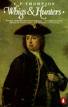
‘Whigs and Hunters’ by E. P. Thompson

thompsonwhigs

1975, 269 p.

Whigs and Hunters is one of those books that appears again and again on the bibliographies of other books and articles I’ve been reading about the law in 19th century colonial societies.   I read Thompson’s Making of the English Working Class many, many years ago, and have since heard it referred to many times as a seminal history text by historians I admire.

The full title of the book is Whigs and Hunters: The Origin of the Black Act.  I knew that the Black Act referred to the death penalty applied to crimes like poaching and the cutting of trees. One of the first surprises of this book is that the Black Act was not so called,  as I assumed,  as a description of its severity.  Instead, the “Black” refers to the practice of blacking faces to disguise the perpetrators undertaking the depredations under cover of night.

But the Act was certainly   “black”   in terms of its subversion of legal process.  It was enacted in four weeks in May 1723, with little parliamentary debate.  The first category of offenders was persons ‘armed with swords, fire-arms or other offensive weapons, and having his or their faces blacked’ who appeared in any forest, chase, park or enclosed ground where deer had been, or shall usually be kept, or on any high road, heath, common or down.  Offences included hunting, wounding, stealing red or fallow deer, poaching of hares, conies or fish; breaking down the head of a fishpond;  maliciously killing or maiming cattle; cutting down trees; setting fire to any house, barn, haystack; or forcibly rescuing any one from custody accused of any of these crimes.  If any person was accused of any of these offences on information sworn by credible witnesses,  he would become a ‘proclaimed man’.  If he failed to surrender himself after a proclamation was read in two market towns on two market days and affixed on some public place, he could be deemed guilty and sentenced to death without further trial. Moreover, if any person was found to  ‘conceal, aid, abet or succour’ anyone accused in this way who had not surrendered within forty days, then he too would be guilty of felony and sentenced to death.

It was, Thompson claims ” a bad law, drawn by bad legislators, and enlarged by the interpretations of bad judges” (p. 267).   There were fifty distinct offences for which capital punishment was provided, but under the different categories (e.g. principles in first or second degree; accessories etc), it gave rise to a total of 200 and 250 capital offences (p. 23).   Originally passed only for three years, it was extended and enlarged over the next hundred years until its repeal in the 1820s and 30s.  Its  definitions  became broader:  the carrying of a stick and cropped unpowdered hair and the absence of a wig  could be classed as “armed and disguised”.   The cases were removed from the vagaries of local juries by moving the trial to the Court of the Kings Bench.

In this regard, I found myself thinking of the Anti-Terrorist legislation enacted in Western countries that otherwise pride themselves on their adherence to the “rule of law”.    Our 21st century “black” acts were likewise developed in haste, with little parliamentary scrutiny, ostensibly for a prescribed period of time.  They, too, removed proceedings from the conventional legal system and could be extended to people who were thought to have knowledge of the acts, or contact with the perpetrators,  without actually committing them themselves.   I read with disgust in October 2008  that England used anti-terrorist legislation to seize Icelandic assets in the face of Iceland’s failure to guarantee British savings.   This legislation, like the Black Act, is loosely-drafted and can be used for multiple purposes beyond those stated.

Thompson writes in the preface that the book arose from his contribution of a single chapter on the Black Act  to Albion’s Fatal Tree.  As such, it was based in the 50 years prior to his own area of  expertise (social history post 1750).   He writes:

Most historians do not put themselves at risk in this kind of situation, and they are wise not to do so.  One normally reads very widely into a ‘period’, before or alongside one’s researches, accepting the received context offered by previous historians, even if at the conclusion to one’s work one is able to offer modifications to this context.  I decided to work in a different way.  I was like a parachutist coming down in unknown territory: at first knowing only a few yards of land around me, and gradually extending my explorations in each directions.  (p. 16)

He starts with deer hunters in Windsor Forest and Hampshire, then moves to forest governance through stewards and keepers, then onto the courtiers and bishops, then onto Walpole and government ministers at the highest level.  Much of his evidence is, as he admits,  scrappy and insubstantial, and much of it is drawn from the holdings of small historical societies and the archives of particular families and properties- the small minutiae of local and family history.  He moves back from this detailed study of the perpetrators into a consideration of their connection with the large politics of Walpole, the King and the Whig ministers.  He argues that the Black Act was promulgated by the supporters of the Hanoverian kings who had recently come into possession themselves of new estates, where they pulled down the old manor houses to build new Georgian buildings, surrounded not by the time-honoured forests of old, but by expansive and expensive landscaped lawns and formal gardens.   The Black Act criminalized the resistance to this takeover, not only by small farmers and workers deprived of traditional wood-gathering and hunting privileges, but also by the gentry and larger farmers who had been sidelined by the accumulation and consolidation of property by this new elite.

This shift from the details of localized crime up into the higher reaches of power is the nub of his argument, but I found this part the least convincing.  Perhaps he assumed a knowledge of Walpole and Hanoverian politics that I lack, but although he makes much of the “Whig state of mind” (p. 207),  he doesn’t make clear what this state of mind actually is and how it manifested itself.

Thompson writes well: he has a good eye for the telling episode, he is disarmingly candid about his frustration with the limitations of his sources,  and his frequent use of “we” pulls you into his argumentative undertow.  But at times, the combative historian emerges- in this case in a four-page joust with Professor Pat Rogers on his article from Historical Journal XVII, 3, 1974.

Professor Pat Rogers has recently confused these questions, in the first scholarly article to appear on the origins of the Black Act.  I do not wish to quibble about minor disagreements in our accounts of events, although certain points require correction…. (p. 192)

which, of course, Thompson then proceeds to do.

The confidence, and perhaps even the swagger, are (one feels) less those of the Blacks than those of Professor Rogers.  He is able, from slender evidence, and from evidence which is assembled by the authorities and opponents of the Blacks, to pronounce with assurance upon the objectives, motivations, organization and moral worth of these elusive men.  Although I think that I have shown some of the critical economic and social tensions aroused in the forests, I cannot share Roger’s confidence  (p. 193)….I must apologize to Professor Rogers for hanging these lengthy reflections upon the hook of his article… (p. 195)

Apology or no, the exchange echoes with the clashing of rhetorical swords in the conference arena!   He circles for another joust, but this time with other Marxist historians,  in his final chapter where he makes  an 11-page defence of the concept of the “rule of law” as an “unqualified human good” .  This chapter was written, Dorothy Thompson told Daniel H. Cole for his 2001 article, as an afterword:

While conducting research for this essay, I contacted Thompson’s widow Dorothy- an renowned historian in her own right- to enquire about possible sources for her late husband’s epiphanic conversion to the Rule of Law.  I received in reply a brief letter in which she sheds some light on the subject. E. P. Thompson returned to complete Whigs and Hunters after he finished co-editing with ‘fellow historians in the Marxist tradition’ Douglas Hay, Peter Linebaugh, John G. Rule, and Cal Winslow  Albion’s Fatal Tree: Crime and Society in Eighteenth Century England.  According to Dorothy Thompson, his collaboration on that work left him deeply pessimistic about the role of law in society.  She engaged him in a ‘very heated discussion’, during which she suggested that ‘he was leaning too far in the direction taken by some of the contributors to Albion’s Fatal Tree in dismissing the law simply as an instrument of class power.  He took time to re-think the question and added the famous afterword to W and H‘. (Cole, 2001, p 183).

And some afterword it is.  It’s a completely different chapter in focus, voice and intent- and it’s the most heavily underlined chapter in the copy I borrowed from the library.  Thomson writes:

We might be wise to end here. But since readers of this study may be provoked to some general reflections upon the law and upon British traditions, perhaps we may allow ourselves the same indulgence (p. 258).

But, he asks,  is this emphasis on British tradition merely  a form of narcissism or parochialism?

Alternative perspectives must diminish the complacency of national historical preoccupation. If we see Britain within the perspective of the expansion of European capitalism, then the contest over interior rights and laws will be dwarfed when set beside the exterior record of slave-trading, of the East India Company, of commercial and military imperialism.  Or, to take up a bright new conservative perspective, the story of a few lost common rights and of a few deer-stealers strung from the gallows is a paltry affair when set beside the accounts of mass repression of almost any day in the day-book of the twentieth century.  Did a few foresters get a rough handling from partisan laws?  What is that beside the norms of the Third Reich? Did the villagers of Winkfield lose access to the peat within Swinley Rails? What is that beside the liquidation of the kulaks? (p. 259)

His use of “we” throughout the text has invited us to sit beside him, and all of a sudden we are brought to sit alongside him.

I stand on a very narrow ledge, watching the tides come up.  Or, to be more explicit, I sit here in my study, at the age of fifty, the desk and the floor piled high with five years of notes, xeroxes, rejected drafts, the clock once again moving into the small hours, and see myself, in a lucid instant, as an anachronism.  Why have I spent these years trying to find out what could, in its essential structures, have been known without any investigation at all? (p. 260)

I’m obviously not the only one to have 2.00 a.m. crises of confidence!  But whereas I question the whole point of what I’m doing, Thompson enters the ring for another bout, this time against his erstwhile fellow-Marxists.

I am disposed to think that it does matter; I have a vested interest (in five years of labour) to think it may.  But to show this must involve evacuating received assumptions- that narrowing ledge of traditional middle ground- and moving out onto an even narrower theoretical ledge.  This would accept, as it must, some part of the Marxist-structural critique; indeed, some parts of this study have confirmed the class-bound and mystifying functions of the law.  But it would reject its ulterior reductionism and would modify its typology of superior and inferior (but determining) structures. (p. 260)

I’m not familiar enough with Marxist explanations of law and ideology to engage with his argument.  But what he does argue, and I can see why this would be so controversial, is that

there is a difference between arbitrary power and the rule of law.  We ought to expose the shams and inequities which may be concealed beneath this law.  But the rule of law itself, the imposing of effective inhibitions upon power and the defence of the citizen from power’s all-intrusive claims, seems to me to be an unqualified human good. (p. 266)

… If we suppose that law is no more than a mystifying and pompous way in which class power is registered and executed, then we need not waste our labour in studying its history and forms. One Act would be much the same as another, and all, from the standpoint of the ruled, would be Black.  It is because law matters that we have bothered with this story at all. (p. 267)…Since we hold this value to be a human good, and one whose usefulness the world has not yet outgrown, the operation of this code deserves our most scrupulous attention.  It is only when we follow through the intricacies of its operation that we can show what it was worth, how it was bent, how its proclaimed values were falsified in practice…. we feel contempt for men whose practice belied the resounding rhetoric of the age.  But we feel contempt not bedause we are contemptuous of the notion of a just and equitable law but because this notion has been betrayed by its own professors. (p. 268)

I find little to argue with here- but then again, I’m no Marxist.  The rule of law, as I see it, is an unqualified human good in that it limits arbitrary power, and I can’t see that it can ever “wither away” in any complex society.  Thompson distinguishes between the concept of the rule of law, and the content of that law, and where it is bad law, it should be challenged.  Amen to that..

References:

E. P. Thompson Whigs and Hunters,  Penguin Books, 1975

Daniel H Cole ” ‘An Unqualified Human Good’: E. P. Thompson and the Rule of Law” Journal of Law and Society, Vol 28, No 2, June 2001, pp. 177-203.

Pat Rogers “The Waltham Blacks and the Black Act” Historical Journal XVII, 3, 1974.

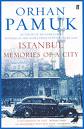
‘Istanbul: Memories and the City’ by Orhan Pamuk

pamuk

2005, 333p.

I’ve been meaning to read this book for some time.  It sounded interesting when it was first released, and then I heard it mentioned more recently in terms of a discussion of nostalgia.  Certainly the book is steeped in nostalgia, but Pamuk himself characterises this emotion as ‘huzun’ (the word needs little dotty things over the ‘u’s but I don’t know how to do them).

Pamuk distinguishes his use of the term huzun from other usages.  It is not, as the Koran uses it, a feeling of deep spiritual loss; not is it in the Sufi mystic tradition, a spiritual anguish because we cannot be close enough to Allah.  Instead, he uses it as

not the melacholy of a solitary person, but the black mood shared by millions of people together.  What I am trying to explain is the huzun of an entire city, of Istanbul.  (p. 83)

As such it is similar to, but not the same as, the melancholy felt in other cultures because it is deeply steeped in the specific landscape of Instanbul, and deeply imbued with the lost historical power of the Ottoman empire.  In a long riff that extends over several pages, he evokes the concrete and sensory manifestations of this mixture of pride and loss

I am speaking of the evenings when the sun sets early, of the fathers under the street lamps in the back streets returning home carrying plastic bags.  Of the old Bosphorus ferries moored to deserted stations in the middle of winter, when sleepy sailors scrub the decks, a pail in their hand and one eye on the black-and-white television in the distance; of the old booksellers who lurch from one financial crisis to the next and then wait shivering all day for a customer to appear…

on and on it goes, over five pages- these snapshots and slivers of life, all beautifully and evocatively captured.

There’s a sense of the ‘other’ alternative history that Istanbul could have had, had the Ottomon Empire survived, and had it not been overlaid by a homogenizing,  deadening Westernization. This sense of the ‘other’ is the second thread that runs through this memoir: the little boy who could have been other than he was.  His family originally lived in a multi-storey apartment block inhabited entirely by different branches of the extended family, overseen by a bed-ridden grandmother matriarch.  The young Orhan was free to move from storey to storey with different aunts and uncles, but the richness of this family atmosphere was stripped away when, after the breakdown of his parents’ marriage, he was despatched to live alone with his mother’s sister’s family.  On the wall they had a picture of a nameless young boy who looked similar enough for them to nod at him and say “That’s you” and yet for him to know, most certainly, that it wasn’t him.  The childhood story is interwoven through the text, as we follow his combative relationship with his brother and the sad spiralling story of  his first love, a strange relationship cut short when her parents dispatched her to Europe in order to separate them.

Finally, there are the black-and-white photographs of Istanbul that appear throughout the book. They are not corralled in a glossy section, separate from the text, but are instead spread throughout, and their graininess and monochrome reflect the huzun he is working to evoke.  He speaks much of the outsider’s eye and its perception of Istanbul- through the writings of  Flaubert, Burton, Nerval, Gautier and Gide; and the paintings of the Bosphorus and the winding streets that Orhan himself imitated, over and over.   The photographs, Pamuk tells us in an endpiece, are largely from an archive of photographs by Ara Guler and Selahittin Giz.  In this regard, the book reminded me very much of Terence Davies Of Time and the City that I saw a few months back.  It wasn’t just the black and white photographs, but also the yearning, time-weary tone of both this book and the Davies documentary.  But there’s a bitterness about Davies’ work that is not found here- instead Pamuk’s writing is a long, wistful love song.

It comes as a surprise, then, to remember that Pamuk himself was born in 1952, and was too young to remember many of the scenes depicted in the photographs.  As almost a contemporary of myself, he grew into consciousness in the 1960s and 70s, as the pace of Westernization increased, and he is mourning a death that already underway during his own lifetime.  I can’t work out how this conservatism- or is it even ‘conservative’ if an imagined time never did exist?- works out at a political level.

Structurally, the emphasis on the visual and the sense of the other come together at the end of the book.  We have followed the adolescent Pamuk as he explores the streets of Istanbul with the painter’s eye, but in the final paragraph of the book we leave behind this intensely visual appreciation with his declaration to his mother “I don’t want to be an artist.  I’m going to be a writer”.  And as I closed the book, I realized that yes, this is what he has been all along.

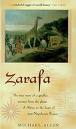
‘Zarafa’ by Michael Allin

zarafa

1998, 202p

I seem to be tapping into other peoples’ obsessions at the moment (the philosophers in Richard Holmes’ Age of Wonder and the fictional counting-obsessive in Addition), and this book is certainly the fruit of a long-term obsession.  In this case, the object of fastidious attention is the giraffe donated to the King of France, Charles X,  by Muhammad Ali, the pasha of Egypt in the mid 1820s.   The author, Michael Allin, gives her the Arabic name ‘Zafara’ and in this book he traces her journey from her original capture in Sudan,  across to Khartoum strapped onto the back of a camel (I’m finding it quite hard to imagine this), then down (up?) the Nile to Alexandria, where she embarked a ship to Marseilles.  On arrival at Marseilles, it was decided that after a winter lay-over, she would walk the 900 km to Paris.  Her trip, which took 41 days, excited keen interest in the crowds that greeted her at each stop and indeed, the whole of France was convulsed with ‘giraffe-mania’.   She took up residence in the Jardin des Plantes in Paris, where she lived for another 18 years.  Her stuffed corpse now rests at the museum at La Rochelle where it is too fragile to shift further.

You might wonder how 200 pages can be devoted to a giraffe going for a long walk, but the book covers far more than this.  We look at the use of exotic animals by the Romans, the effect of the Enlightenment on the flowering of scientific knowledge, and the fascination with Egyptology.  The narrative lingers with the savants who stayed behind in Egypt after the defeated Napoleon sneaked back to France. It  emphasises the deep effect of the Egyptian experience on these intellectuals once they returned to post-Napoleonic France, often deeply imbued with a love of Egyptian culture and continued admiration of Napoleon in a changed political climate.  It links the gift of the giraffe with European diplomacy at the time, with the Pasha of Egypt hoping to distract and soften French and British anger over Egypt’s intervention in the Greek War of Independence.

This book is a real work of love and is beautifully presented with small pages with generously spaced print and many pictures.  When the author finally finds the stuffed Zarafa beside the staircase in the French museum, you feel a rush of affection for her and want to cheer the author and slap him on the back for his dedication to his obsession.