Category Archives: Book reviews

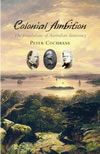
‘Colonial Ambition’ by Peter Cochrane

2006, 511 p & notes.

As you might expect, I am fascinated by the 1830s and 1840s in Australia- that time when the penal colonies were emerging into something different-( but what? ) and new colonies driven by a mixture of philosophy, moral entrepreneurship,  political theory and capitalism were being brought into being- (and would it work? ).  But try as I might, I find it hard to get energized by the crown land acts and constitutional legislation.  Perhaps it’s those years in school going on about squatters, selectors, dummying and peacocking;  and all those men in top-hats and Legislative Councils and Legislative Assemblies.  The lived politics of the time only really came to life for me with Margaret Kiddle‘s Men of Yesterday (of which more anon, I think) which brought people back into the situation- and this is what Peter Cochrane has done in this book too.

In one of the blurbs on the back, John Hirst wrote that

This is not the usual political history; it’s more wide-ranging, more vivid, more alive with people, places and talk.

At first I thought this a rather prosaic endorsement, but having finished the book, Hirst is spot-on.  There are people here- strongly drawn, complex, real people who change over time, whose public life is interwoven with their private concerns and anxieties.  And what a cast:  the strange-looking, brilliant, waspish Robert Lowe; the wealthy, bombastic, driven Wentworth, stung by  social exclusion on the grounds of convict origin ;  the versatile, enthusiastic, financially-straitened toyshop owner Henry Parkes.   And there are places: the action is located onto the Sydney city map  in theatres, parade grounds, street corners and houses.  The sense of place is perhaps not quite as strong as in Grace Karsken’s The Colony, but it’s reminiscent, say, of Jeff and Jill Sparrow’s work on Radical Melbourne.  It’s a politics that spills out of Governors’ offices and Legislative Council chambers onto the streets and newsprint, placards and petitions. And talk- yes, there’s lots of talk as well in the bubbling cauldron of the newspaper editorial and the forceful oratory of the public address.

What comes over strongly in this book is the dilemma of liberal politics at this time.   “Democracy” at this time- and especially during the politically turbulent mid-1840s-  was a concept that dared not speak its name. Both liberals and conservatives drew on the trope of Britishness, and ancient British traditions and loyalties.  For the liberals in particular,  responsible government was a poisoned chalice if it was a means by which the existing elites could cement their political position indefinitely.  For conservatives, long-standing demands like a nominated upper house and lifetime nominations became just as toxic when it was a liberal government in ascendancy, cementing its own position indefinitely.  To draw on cliches: you leave the book aware that, somehow or other, a fork in the road had been negotiated and that there was an alternative road that had not been travelled.

The book weaves local and imperial politics together well.  The regular churning of Secretaries of State at the Colonial Office was matched by the instability of the early ministries in the years immediately following responsible government in Australia.  Cochrane alerts us to the wider political debates and issues that the Colonial Office was dealing with at the same time: the Durham Report in Canada and the gradual implementation of its recommendations; the political trickiness for the British Government of the Crimean War; the empire-wide horror at the Indian Mutiny.  In the speeches quoted from radicals, liberals and conservatives alike, we see orators cherry-picking from historical analogy, particularly drawing on the American War of Independence and Canadian history for examples.

The book captures change well.  An idea that might be greeted with horror in one decade is not so unthinkable in the next.  The empire changes: local politics change: people change.   Cochrane illustrates that all sides of politics needed to learn how to “do” politics: governors needed to learn how to withdraw; liberal politicians like Cowper needed to learn how to make space for negotiation;  conservative politics like Henry Parker needed to learn how to bring his own colleagues along with him.   Liberals, conservatives and governors alike had to learn how to handle the politics occurring “out of doors” in meetings and street protests; how to project decisiveness and yet temper it with a degree of responsiveness.

I learned a great deal from Cochrane’s intermeshing of personality, place and politics- and it’s something that I’d like to emulate in my own work.  The book was written for the Sesquicentenary of Responsible Government in New South Wales (hence the focus on Sydney) and could have suffered from a eye-glazing sense of  “worthiness” and hat-doffing to a small readership.  Instead, it won the inaugural Prime Minister’s Prize for History in 2007, along with Les Carlyon’s The Great War.    At over 500 pages, Colonial Ambition is a long book but it moved quickly.  It is a very human book, and this focus on personality, flaws, ambitions and emotions was well-sustained and only on rare occasions struck me as being perhaps a little too fervent in places.  The ending, while emotionally satisfying and well-crafted in terms of the structure of the book, was rather too  rounded-off for my taste, and is perhaps my main qualm about the book. Nonetheless, as throughout the book,  his final paragraphs returned us to a person, to encapsulate the long constitutional journey we had been on.

But I don’t want to end on such a snarky note.   Cochrane has opened my eyes to a different sort of writing, and he has breathed life into a topic that could be otherwise dry and unappealing.  It’s a damned good read.
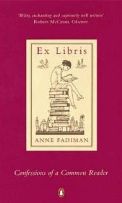
‘Ex Libris: Confessions of a Common Reader’ by Anne Fadiman

1998, 125p.

My husband gave me this book.  He bought it second-hand for $1.99 at an op-shop  and inscribed it.  None of this may seem significant, but after reading this small delightful morsel of a book you’ll realize that it is.  The book is a compilation of  “The Common Reader” columns that over a number of years Anne Fadiman contributed to Civilization magazine, the journal of the Library of Congress.  Hence, the chapters are short (4 or 5 pages) , snappy and personal and you come to feel that you are in the company of a good friend who shares your love of reading.  The book as object is itself a thing of beauty- very small, with a tasteful crimson and gold cover with what looks like a gold-embossed bookplate on the front.

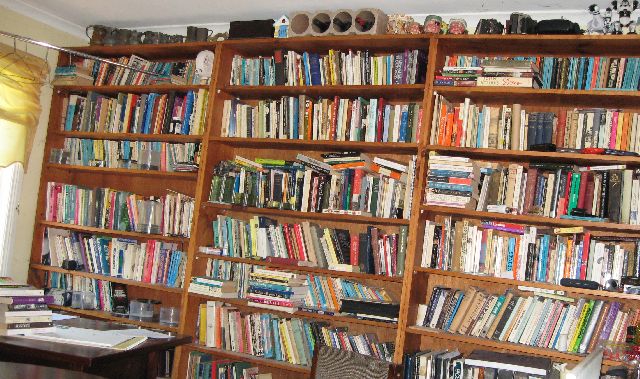
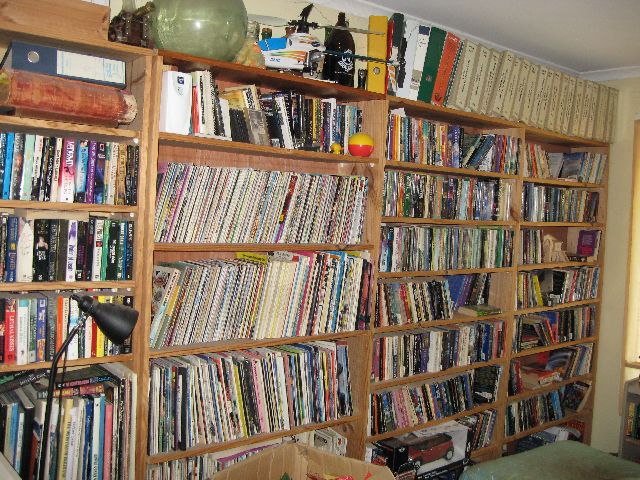
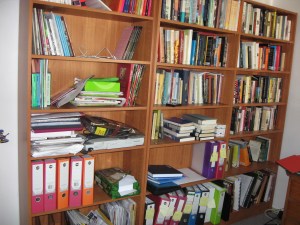
Its opening chapter concerns the merging of book collections of two avid readers and immediately this struck home.  Mr R.J. and I have quite distinct collections aided by the rather unconventional design of our living arrangements- we live in two separate but joined units with our own separate lounge rooms, kitchens, bedrooms etc.  I suppose that at some stage we will actually live in the same house- but what to do with the books?

Mind you, he has FAR more than I do.  He is the most appalling library patron, accumulating fines with gay abandon.  He reads more voraciously than I do, and is happy to have his reading diet determined by what he finds in op-shops, garage sales and fetes. He is equally reluctant to relinquish them.   He ALWAYS finds good books amongst towering piles in second-hand bookshops, even though I might have looked at the same pile just two minutes earlier.

And yes, they are doubled-up on the shelves.

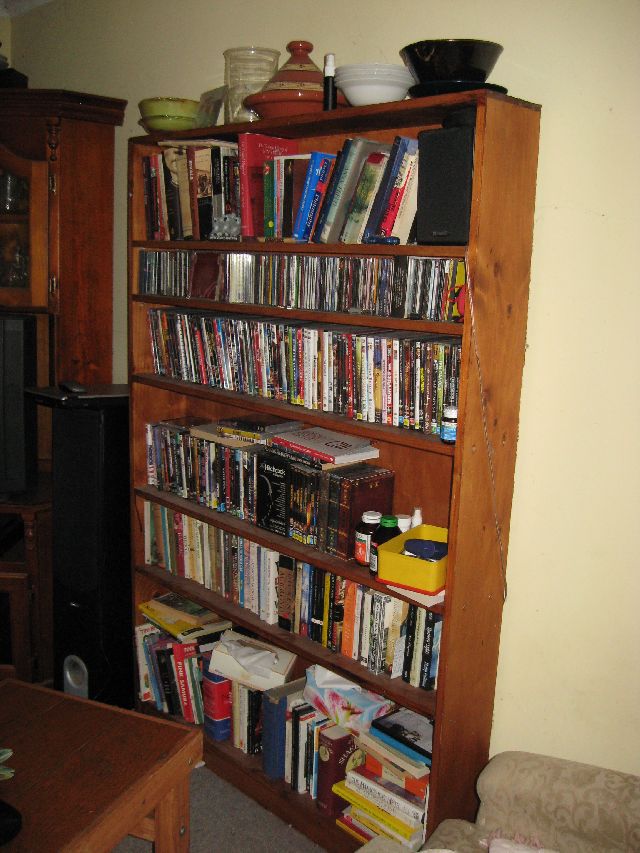
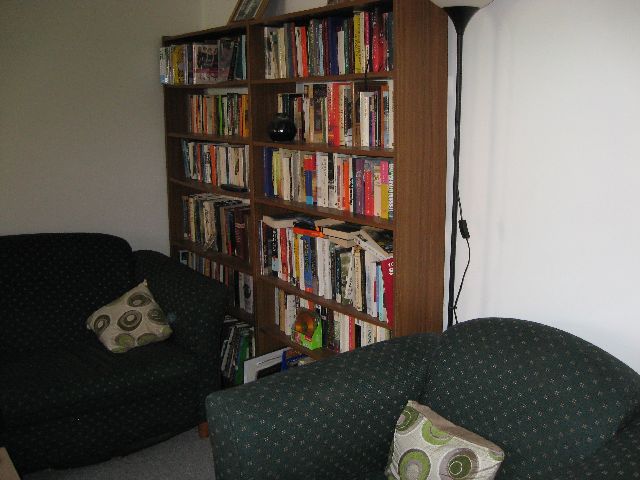
My collection is much more modest, and particularly in the relatively new shelves in the study (which is itself a new incarnation of my son’s bedroom now that he’s moved out of home), there’s PLENTY of space to buy more!  I’m more a library-gal myself and I make good use of the “place hold” function on the library catalogue to borrow books that I see in bookshops selling new.  However, I’ve become increasingly aware of the ephemerality of book availability nowadays with books often restricted to the initial edition and shunted off the shelves for the next new thing, so I tend to buy more non-fiction than I used to.  The fiction shelves in the lounge room (a particularly crowded loungeroom at the moment because it has to also accommodate my precariously-balanced Christmas tree) are doubled up, but at the moment the non-fiction shelves in the study are single-row only and share the space with scanners, printer paper,  recipe books and unopened issues of ABR and The Monthly.

But how to merge our collections?  It’s quite clear that there’s not room for both Mr R.J.’s books  and my own.  Anne Fadiman and her husband George, who shares her love of books, have had to face this problem.  It took them about a week to sort out the duplicates, then face the trauma of deciding ‘yours or mine’?  Hardbacks prevailed over paperbacks, unless the paperbacks contained marginalia.  The task completed, they kissed, and felt that they were now TRULY married.  I shall take another tack.   For me, I turn my eyes to our rumpus room, which was formerly a double garage that joins the two units and which we’ll keep if and when we “move in together” at a combined age of well over a century!  Yes, there’s scope for books here, with a gas-fired fake fire, winter sun, a  whole wall of shelf space and two under-utilised bookshelves there already.  I’m thinking -“hmmm, compactus!”

(Actually, looking at these photos about to be launched into the blogosphere,  I’m a little embarrassed by my furniture.  Our house is frozen in 1980s decor- no polished boards and downlights for us! I tell myself that our furniture will soon be ‘vintage’ and that people will murmur in appreciation, rather than disapprobation at its 1980s authenticity.)

Enough about me- back to Anne Fadiman and her books.  And really, that’s what this book is about: the importance of books to a book-lover’s lifestyle, environment and identity even.  It’s a lovesong to the act of reading, and you find yourself smiling, with a mixture of recognition and confession, at a kindred-spirit.  It’s all here- the lure of the second-hand book; the conversation of the annotation; the treasure-hunt of the footnote; the pedantry of apostrophes and spelling errors.  This is a delightful book- in fact, I eked it out over about a fortnight, a chapter a night,  not wanting to relinquish a conversation with a book-loving friend who knows me so well!

‘The Uses and Abuses of History’ by Margaret MacMillan

This is only a slim book, based on a series of lectures.  The lecture-hall origins still show- the chapters are all pretty much the same length; the sentences are short, and there’s a sparseness about the writing that would probably aid comprehension if you were listening, but comes over as rather bald and workmanlike on the page.

I’ve only read one of Margaret MacMillan’s works- Paris 1919. I thought that it was wonderful- an engagingly written analysis of the multiple perspectives being brought to the conference that culminated in the Treaty of Versailles, and the intractability for the participants of disentangling historical, cultural and national borders in the wake of  what had been a truly global war.

She brings this wide-ranging perspective to this book but I’m not really sure what the overall point is that she is making here.  Yes- history can be used to make ourselves feel relaxed and comfortable about ourselves; it can be used to justify actions in the present; it can be used to predict rightly or wrongly what is about to happen on the basis of earlier precedents; it can be used to create and bolster national identity for good and for ill etc. etc.   Each of these cautionary tales is supported by examples from all over the world; little cut-and-dried vignettes   to support the contention of that particular lecture.  But put them all together, and what are we left with?  That history should be used carefully and with humility- good advice no doubt, but I felt paralysed, rather than empowered, by such observations.  Given that “good” history can be used for “evil” purposes, that those purposes can change naturally or be subverted deliberately, well- perhaps we should just immerse ourselves within an event, culture or timespan and just stay there, in a rather antiquarian sense, resolutely mute in the face of current events.

If I had attended these lectures, I don’t think that I would have come out from the lecture theatre walking on air.  There’s an abstractness about the examples she uses and no real people. There’s no human story that you come away with; no image etched onto your consciousness that you’ll remember the next day. Other historians have done similar things- Inga Clendinnen in her Quarterly Essay “The History Question”  or in her Boyer Lectures, for example, but she leaves you fizzing with ideas after an encounter with a person or situation that  embodies the questions she has raised.

Perhaps, though, her global orientation and  rather jaundiced views emerge from the work she has done on the aftermath of World War I.  I’ve just been listening again to her speaking on a RN radio documentary about the Paris Peace Conference and this is big, policy-driven, grubby, idealistic, complex history that exemplifies all the human failings that she discusses in this book.   Abuse of history at its worst.

Afterword

I’ve just been listening to a podcast of  Margaret MacMillan talking about this book on Radio National’s Hindsight program in a broadcast called “Dangerous Games- the Uses and Abuses of History”.  You can download it or read a transcript here.  It’s well worth listening to, and has caused me to re-think my response to the book somewhat.

It’s very similar to the book – no doubt it has been delivered countless times previously.  But listening to her, as distinct from reading the book, there’s a flow in her spoken presentation that to me seemed to be missing when chopped up into separate, longer written chapters- indeed I now start to wonder whether the speech or the writing came first!  And I didn’t feel quite so hamstrung as an historian- instead, her oral presentation seemed to emphasize the importance of history (and historians)  in asking the right questions and drawing on the right analogies.  I came away with a stronger sense of her statement in the book about the importance of humility and acknowledging the boundedness of our own perceptions of the past.

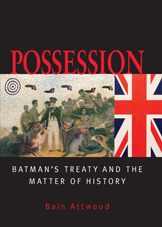
‘Possession: Batman’s Treaty and the Matter of History’ by Bain Attwood

2009, 323 p & notes

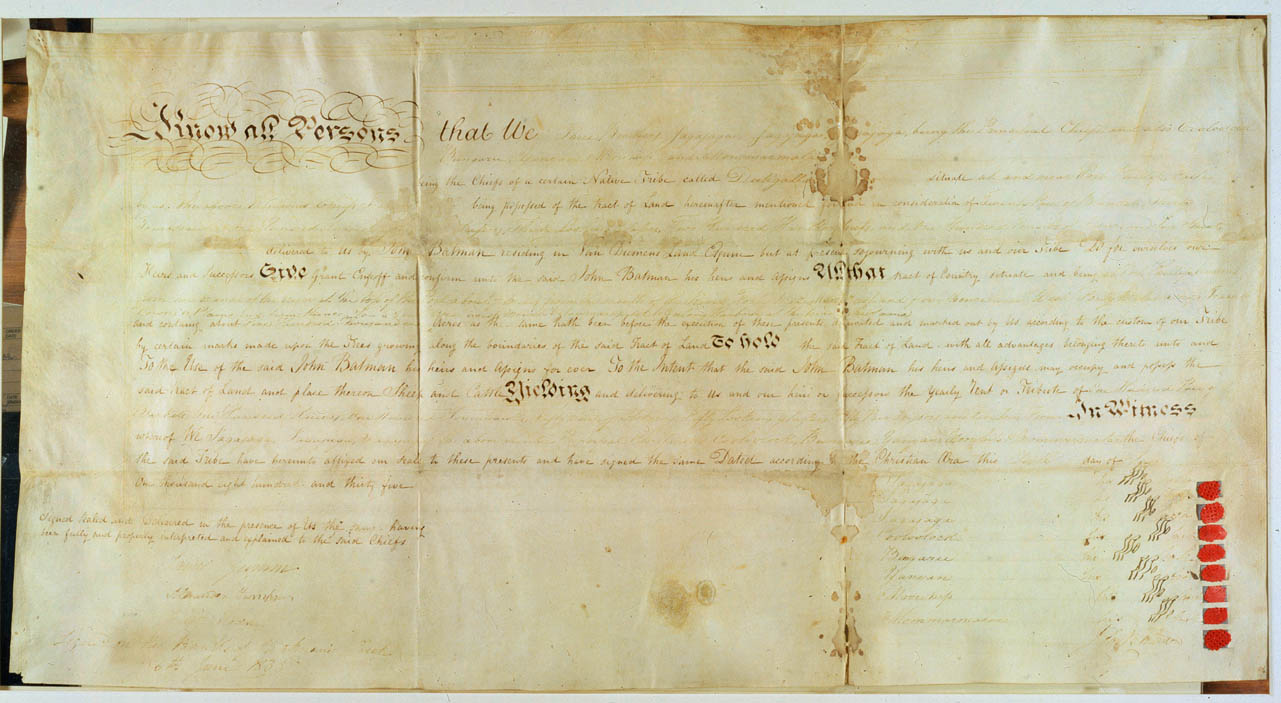
We will never really know how much of the [Port Phillip] Association’s narrative was true because of the paucity of contemporary sources.  Indeed, all we have are the few accounts created by these colonisers.  In respect of the famous treaty-making, we cannot even be sure it took place.  Arguably, it might simply be an imaginary event that never happened.  In the end, it probably doesn’t matter very much whether it occurred or not. (I assume that some parts of the treaty-making did take place.) What is more important historically are the stories that have been told about it. (p. 47)

As you might gather from this quote, this book is not just about Batman’s treaty.  In fact, looking at the book lying on my desk here with  “Possession” in large silver letters on the spine, I’m not really sure that the book is about possession at all.  The treaty itself could be a construction, and whatever ‘truth’ there is about it has been overlaid by boosterism, intentional forgetting and spin.

The treaty document itself was drawn up in Van Diemen’s Land before Batman arrived in Port Phillip; the ‘signatures’ have a suspicious similarity, and Batman did not, as he claimed, walk the boundaries of the land ‘traded’.  The motivations for the treaty and its subsequent quashing by the NSW goverment,  as Attwood explores, are best explained in terms of the time in which it was put forward – 1835- in the wake of the Black Wars in Tasmania, under the influence of the humanitarian lobbyists in London, and in light of the invention through the NSW courts during the 1830s and 1840s of a spurious ‘authorized’ history of British sovereignty in New South Wales, some 50 years after the event.

The creation and rejection of the treaty takes up only the first 100 pages of the book.  It then meanders into an exploration of the artistic depiction of the treaty over time and the change in emphasis on Batman’s treaty to Batman’s purported (and spurious) sailing up the river and declaration “This will be the place for a village!”.  I found the artwork fascinating.  Some time ago I had pooh-poohed the grand, commemorative American artwork tradition but here it is, alive and well in Melbourne- see here – it’s just not displayed in our art galleries any more.

The book moves into a discussion of history-writing in Victoria, with a string of antiquarian historians burnishing the Batman legend and feeding the Victorian (in both senses of the word) obsession with memorials and commemorations.  There was the Batman memorial over his putative grave; a memorial stone embedded in the footpath, Batman Park, Batman Avenue.  Then gradually the cracks in the image started appearing with questions over Batman’s parentage and sobriety and the championing of Fawkner’s settler history as an alternative story, pushed along by the tourism industry and latter-day Melbourne boosters and P.R. agents.  Gradually the memorials were shifted to quieter, less prominent locations, parks were renamed, and explanatory plaques were attached to statues qualifying some of the more gushing tributes to Batman and his activities. Just to add another layer to this already contorted history, it was Aboriginal people in Victoria who maintained the memory of Batman as the white man who dealt fairly with them, at a time when white history had consigned his treaty to the status of a curiosity.  The turn to politics becomes more weighty when Attwood takes on Henry Reynolds’ book The Law of the Land , which Attwood argues was a juridical history, intended to present sovereignty as a legal problem for 20th century political  purposes and one that, oddly, disregarded the Batman treaty entirely in the original edition of Reynolds’ book.

This is a richly illustrated book with coloured reproductions of the grand celebratory paintings, photographs of top-hatted men at yet another Batman memorial unveiling, reproductions of the string of illustrated histories that were published over the years and recent colour photographs of the now-discredited old memorials  and their newly-minted replacements.  It’s a book that takes us far beyond the treaty.

Oh, alright then…

Everybody else is doing it, so here are my eleven top reads for 2009. Why eleven? Because I had three 10/10s, one 9.5/10 and the rest were 9/10 and it seemed churlish to omit one just to get to ten.  I notice that I haven’t read as much this year as in previous years- 53 compared to over 100 in other years.  I shall attribute this to actually doing some writing on my thesis (as distinct from reading away merrily in the meadows of literature) and an improvement in health in the second half of the year.  Both thoroughly good things.

So here they are, folks with links to the posts if I’ve written them:

1. Nam Le  The Boat 10/10

2. Leo Tolstoy War and Peace 10/10

3. Richard Holmes The Age of Wonder 10/10

4. Grace Karskens The Colony 9.5/10

5. Peter Godwin When a Crocodile Eats the Sun 9/10

6. Richard Flanagan Wanting 9/10

7. Kate Atkinson Case Histories 9/10

8. Louis Nowra Ice 9/10

9. F. Scott Fitzgerald The Great Gatsby 9/10

10. E. P. Thompson Whigs and Hunters 9/10

11. Wendy Moore Wedlock 9/10

Not a bad little list, if I say so myself.  A few of the classics there- Tolstoy and Fitzgerald; three recent Australian fictions – Le, Flanagan and Nowra; and a historian/biographer or two- Thompson, Holmes, Karskens.

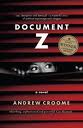
‘Document Z’ by Andrew Croome

2009, 345 p.

‘Document Z’ opens with an image instantly recognizable to Australians-of-a-certain age, even if we were not born at the time.  It’s the image of Evdokia Petrov on the tarmac of Mascot Airport, flanked by a burly man each side of her, clutching her handbag, hand across her chest as if she is heaving, with one shoe lost.  For those of us brought up in the black-and-white certainties of Menzies’ world, it captures the fear of the Communist enemy: that they’ll come and get you and hustle you onto an aeroplane.

But whatever misconceptions we attach to the picture, it is not the full story.  She was not so much frightened of the men, as frightened of the crowd surrounding the plane, and she was a woman torn just as much by conflicting emotions as the physical presence of the people surrounding her.  What a dreadful situation to be in. Her husband and fellow-spy had defected and was no doubt talking to the Australian agents about her;  she was frightened for her family back in Russia, and she was wary of official censure when she returned irrespective of her husband’s actions.

The title ‘Document Z’ plays on Documents H and J that were tendered to the Royal Commission that followed the Petrov defection.  I wonder if it is, as the title rather cheekily suggests, the last word- certainly since Robert Manne’s book The Petrov Affair, the debate seems to be over.

The book is a fictionally reimagined telling of the Petrov defection from the perspectives of the participants- Evdokia, her husband Vladimir,  Michael Bialaguski the doctor go-between and the various agents on both sides.  Croome has obviously done his homework (occasionally a little too obviously) and I marvel at his courage in describing a time long before he was born that is still within living memory today- lots of scope for slips and false notes there.  He captures well the sterility of 1950s Canberra with the claustrophobic and enmeshed atmosphere of the Soviet Embassy enclave.

I’m not sure if it’s a failing of the book, or the nature of the relationship he is describing, but there is a flatness to the relationship between the Petrovs themselves.  They worked alongside each other, and they shared the same career trajectory for better and for worse but there’s an emptiness at the core of their marriage as Croome depicts it.  And again we run up against the dilemma with writing within a historical event, but I feel that Croome has shaken free of those restraints.  I was puzzled that he didn’t use ‘that’ picture on his front cover (cost? copyright?) but it liberates him from having to stick only to the historical sources.  If the relationship is sterile perhaps he meant it to be, or perhaps he could not, for whatever reason,  make it otherwise.

I enjoyed this book, and this is from someone who loathes spy-novels.  I liked the atmosphere- the juxtaposition between the bright light outside and the whispers and fears inside.

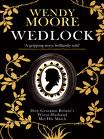
‘Wedlock’ by Wendy Moore

2009, 310p + notes

The author of this book is a journalist, not an historian, but she’s certainly done her homework.  It is the story of Mary Eleanor Bowes-Lyon, daughter of the Earl of Strathmore, and her violent marriage to Andrew Robinson Stoney.  Stoney was the inspiration for Thackeray’s book The Luck of Barry Lyndon, which was turned into film by Stanley Kubrick.  ( I strongly encourage you to follow these Wikipedia links- it will give you a much better idea of the plot than I could).

But Barry Lyndon the book was fiction: this was true life, even if it reads like fiction today.  There’s everything here: scandal, kidnapping and duping of heiresses, midnight horseback rides through the Pennines, coffee shop pamphlets, court cases etc.  Wendy Moore does this rich material proud, starting her story with a mysterious duel in a public house, and introducing each of the main characters one by one before turning around to deconstruct the duel completely and expose it as a completely faked scenario, intended to lure the wealthy heiress Mary into an ill-advised marriage.  Andrew Robinson Stoney, who changed his name to Bowes in order to access Mary Eleanor’s fortune, was almost unbelievably cruel, vindictive and scheming and a thorough rotter.

Moore is firmly on Mary’s side and portrays her as the victim both  of domestic violence and a legal system that strongly favoured rich men.  But the sources that Moore draws on are deeply problematic and themselves part of an ongoing propanda war, played out in the full glare of publicity.   She relies heavily on Jesse Foot, the author of The lives of Andrew Robinson Bowes Esq and the Countess of Strathmore who was himself deeply implicated in Stoney’s schemes, and seems to have changed his allegiences several times.  Mary’s “confession”, which was also published, was apparently forced from her at the point of a gun but was also published. In fact, the whole scenario brought domestic violence amongst the aristocracy out into the public domain, and it played out through, and itself fed,  the appetite for gossip and innuendo. Mary, however, was no innocent and could play the game of gossip and publicity just as well as her husband could: while not cruel or violent, she was just as cavalier with her emotions and children as her husband was.

The story is carefully and well told.  After its particularly well-constructed beginning, it is a fairly straight chronological account and, to its credit, the story is so well told that you rarely lose track.  A family tree would have been useful, but no doubt it would have ended up looking like a family thicket!  The author wanders off into some interesting little byways- e.g. contraception in the late 1700s; the coffee-shop culture etc., but I do wish that she’d picked up more on the nature of her sources, the 18th century public sphere and the expectations of the aristocracy.   I think that she could have upped the analysis, but then perhaps it would alienated its bodice-ripper audience. As it stands, it’s a rattling good read, with the edginess of knowing that it was based on a real marriage among real people.

‘The Commandant’ by Jessica Anderson

This book has been recently re-released as part of Sydney University Press’ Australian Classics Library.   The original was published in 1975 and there are still copies of the original imprint around: mine has a particularly lurid cover that would deter any casual browser.

The penal colonies at Sydney and Van Diemen’s Land have long attracted novelists- Thomas Keneally has been writing about them for decades and Kate Grenville has been lured by them more recently.  But there were other penal outposts in the Australian colonies as well: Norfolk Island, Moreton Bay in Queensland, Western Australia after 1850 and even Port Phillip, while not a penal colony as such, had convict gangs engaged on public works and the Pentonvillians in the second half of the 1840s.

“The Commandant” is set in Moreton Bay under the command of Patrick Logan.   The setting of the book is fairly accurate:  Logan did exist; his wife was called Lettie; he did come to a sticky and inconclusive end.  But the main character of the book, Frances O’Beirne, is Jessica Anderson’s invention entirely and here Anderson can let her imagination take flight.  This is a penal colony described from the domestic perspective, with the convicts not as “the men out there” but as shadowy but ever-present domestic servants.  Here we can see the blurring of the lines that John Hirst writes so well about in Convict Society and its Enemies with assigned convicts occupying that here-but-not-here space of the English domestic servant whose intimate presence gave them such an ambiguous status.

This is a very ‘interior’ novel in that much of it takes place inside, and much of the text is turned over to dialogue.  It is almost Austenesque in this regard, and I found it a little noisy and claustrophobic.  For me, the novel really opened up once it got outside into the Australian landscape- until this point it could have been set anywhere.

Frances O’Beirne is a recent arrival in the colonies and after a short time in Sydney, she travels up to join her sister Lettie who is married to Capt Logan. While in Sydney she comes into contact with the daughters of Edward Smith Hall, the editor of the Monitor and the (real life) opponent of Governor Darling.  She absorbs the ‘radical’ views circulating in Sydney, and is wary of her brother-in-law Logan, who is about to fight a libel case against the Sydney newspapers over reports of his excessive cruelty.  She is uneasy about the convict presence, and appalled by her brother-in-law’s discipline.

In an interview about the writing of The Commandant in “Making Stories” by Kate Grenville and Sue Woolfe (generous extracts available here), Anderson talks in an interview about the character of Frances

INT: Did you consciously seek a character to, as you say, ‘identify with’ or did the character come to you?

JA: Well I came to myself.  But I had to have someone who could see and comment on the action. But not just one person, and not just one point of view.  So I had Frances, Louisa and Letty.  Particularly Frances, although the other points of view are both well within my own range.  My daughter said it was quite easy to see who I was. But she saw me as Louisa.

INT: Is Frances really, in fact, a twentieth century character?

JA: There were people like Frances, radicals and reformers , in Sydney. There was nobody like her at Moreton Bay.  But I couldn’t have done it without her.  I needed an opponent for Logan.

Despite Anderson’s protestations, I’m not really sure that Frances isn’t a 20th century character. I don’t think that Anderson caught the religious aspects of a humanitarian anti-transporation stance, complete with its racism, class bias and cast iron certainties. Instead Frances’ opposition to the penal system is a bit too secular and Amnesty International.

Anderson’s real stroke of brilliance is in explaining Logan’s death- which, again, is historic fact. But her explanation which runs against the popular story about how he died is, unfortunately,  plausible and we can see with 20th century eyes what the implications of such an explanation could/did set in train.

I enjoyed this book and I’m glad that it has a second outing.  I think that it stacks up well against Keneally’s convict works like The Playmaker and Bring Larks and Heroes and Grenville’s The Secret River and The Lieutenant (which I haven’t read yet).  It isn’t as imaginatively extravagant as Flanagan’s brilliant Gould’s Book of Fish, but her twist on the narrative and history is inventive and deserves to be better known.

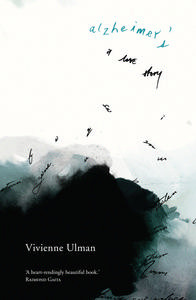
‘Alzheimers: A Love Story’ by Vivienne Ulman

2009, 212 p.

As I wrote in my posting on Hazel Hawke, I’ve been a bit reluctant to embark on a reading binge of books on Alzheimers, even though my mother suffers from the condition.  Perhaps it’s part of the denial that families have at the early stages of the disease- ours is no exception- and not wanting to look too far ahead for fear that it will cast a shadow over what is here right now.  But in recent months Mum’s had a fall, broken her pelvis, been hospitalized and her condition has deteriorated appallingly.  She’s been in transition care for some months and a couple of weeks ago moved into the high level nursing home that will be her home now.  This litany of decline,  for those of you who haven’t been down this road,  must seem like just a string of cliches.  But the fall-broken pelvis-transition care-nursing home downward trajectory obscures the pain of it all.   Like all families, particularly when one partner is still living in the family home, there’s guilt, sorrow, grief, anger, with family members pulling together and yet pulling  each other down as well.   I haven’t really wanted to read about other families doing this up until now, but perhaps because such a big step has been taken now with Mum moving into the nursing home, I’m now more open to read about how other families have coped with all this.

Vivienne Ulman is the daughter of Saul and Lucy Same who started Gloweave shirts, those rather quaint fashion items of the 1970s.  The Melbourne she describes is one that I’m not familiar with in many ways- south of the Yarra, Jewish, and obviously very very wealthy.   But in other ways, there’s much that is recognizable: Graham Kennedy’s advertisements for Glo-Weave (it used to have a hyphen) on IMT; the factories in inner northern Melbourne (far more my stomping ground), and the influence of Melbourne-based ALP politicians.  Her parents both emigrated to Melbourne separately with their families  prior to World War II and worked the business up from scratch.  They had a strong commitment to leftish politics and a lifelong association with the ALP although that surely must have been tested by the “structural adjustment” (what a weasel word!) changes imposed onto the clothing and textile industry.

This book has several strands that, just like the fabric that Glo-Weave created, are woven together into a whole.  There’s the day-to-day current reality of Lucy Same in her nursing home, increasingly difficult and incoherent with her husband Saul pouring into her all the love he can; there’s Vivienne’s upbringing in 1960s and 70s Melbourne in a bustling Jewish family, and there’s the Glo-Weave business history as economic changes, industrialisation, technology and marketing change the directions of the enterprise.   All three strands are interesting and well-told, with just the odd stilted phrase that belies the creative writing course origins of the book.

The structure is interspersed with Vivienne’s letters to her mother (another waft of the creative writing course?); letters of course that her mother will never read now.  But I now know, in a way that I didn’t a year ago, about that longing to be able to talk with the person with Alzheimers in the way that you used to, when you took such conversations for granted.  For myself, I often catch myself looking at the clock at about 8.10 in the morning.  When I was home with young children, Mum used to ring me at that time nearly every morning, not really with anything to say but just keeping contact.  I hadn’t thought about those phone calls in a long time, but now I would give anything to have one of them and to know that my busy, efficient, bustling little mum was on the end of the phone and talking to me.

I’m reading the book with a frisson of anxiety.  Saul spends ALL DAY at the nursing home- we don’t do that- should we?  Are we remiss or is he obsessive?  He pays for a carer to stay with Lucy all day in the nursing home-  is there something going on in nursing homes that we don’t know about that we should do the same thing too (if we could afford it) ?  The nursing homes, even though they are high care, are constantly shifting Lucy on because she’s too difficult-  what if my Mum becomes ‘difficult’ too?- will she be moved out of a place that so far I’m happy with?  My Mum so far is not physically aggressive- will she become that way in the future?

There’s so much guilt and anger here too, and this I can now appreciate. Vivienne herself lives in Tasmania as part of a tree-change lifestyle.  As the only daughter (and why is it that daughters feel that it falls on them?), she feels guilty, spends much time over in Melbourne, but doesn’t move back permanently. [Should she? thinks my inner judge and nitpicker. I’m sure that she wonders the same thing.]   She is angry at the disease, angry at the mother who is so angry at her, angry at her father whose absolute devotion makes Vivienne feel inadequate and yet wary of being drawn into his obsession as well.  All of this I know now.

This is a good book on many levels; or at least, it’s a good book for ME right now.

‘The Colony’ by Grace Karskens

karskens

2009, 549p plus notes

This is an absolutely beautiful book.

Physically, it is a thing of beauty.  It is hard cover, brimming with photographs and drawings (some glossy museum pictures juxtaposed with current photographs that the author has taken herself), with thick, luxuriant white pages.   And beautiful it should be, I suppose, supported as it is by the City of Sydney, the Australia Council, the Australian Academy of Humanities and the State Library of NSW.  In fact at first I thought it was a coffee table book to accompany a series (there was an SBS series of that name) but it’s not.  It’s a history (with the humility to designate itself a history rather than the history) fair and square, without apologies.

Karskens nails her colours to the mast: she is writing as an historian, and participating in a historical conversation with other historians:

This book has its roots deep in a great mountain of existing research, thinking and histories.  Historians work collectively, within a wider community of scholars.  So history writing is less an individualist pursuit than a collective quest, and an ongoing process.  This is one reason references are so important: they rightly acknowledge the work of past scholars, as well as guiding future readers and scholars into the literature.  In the notes and bibliography of this book you will find, besides original manuscripts and archival records, maps and pictures, an extraordinary and diverse body of scholarship about early Sydney, works mainly by historians, but also archaeologists, economists, anthropologists, art and architectual historians, ecologists, geologists, museuologists, geographers, biographers and local and community historians.  (p. xii)

She is true to her word.  There’s a heavy debt to Inga Clendinnen here, not only in content but in writing style, and likewise to Alan Atkinson– two historians I deeply admire whose writing turns an event around and looks at it from different angles, giving us the gift of coming to the familiar with new eyes.   There’s also a connection with James Boyce whose recent book Van Diemen’s Land is almost a pigeon-pair with this book in its re-visioning of the penal colony as a new environment with new opportunities.  Unlike Robert Hughes’ The Fatal Shore, this book joins other histories- John Hirst’s work springs to mind-  written with  a determination to look beyond Hughes’ gulag and horror: it looks to the agency, optimismism and opportunism of ordinary people in a new environment instead of just the dregs of the old world.

The history itself is a thing of beauty too.  It breaks free of many straitjackets: more than perhaps any other history of Australia that I have read it interweaves Aboriginal history, archaeology, women and environmental history throughout the book.  Not content with the almost obligatory “before” chapter dealing and then dispensing with “the aborigines”, she asserts that Sydney remained an Eora town- that Eora people continued to live within Sydney on their own terms, with their own geography and in resistance to christianizing impulses, into the 1830s and 40s. Indeed, they have never left.

The environmental theme carries throughout the book as well.  She starts in deep time and emphasizes the connection between landscape and food supply not just along the coastal regions, but inland along the rivers and ravines.  Unlike other histories which are drawn to the inland and the importance of crossing mountains and going towards the centre, she turns back towards the sea, just as the early Sydney people did.  She reminds us that Sydney had three beginnings: the abandoned Botany Bay settlement;  Port Jackson (truly a ‘port’ city where early convicts settled into the Rocks with their own raucous, uninhibited subculture), and then the third, more ordered attempt to start again in Parramatta by imposing conformity onto the layout.  She reminds us that once settlers spilled onto the Cumberland Plain, confronted by different tribes, the same battles had to be fought anew with new opponents.   The Europeans of early Sydney were not the industrialized huddled-masses; they were pre-modern people bringing with them the patterns of village tradition and the pre-industrial paradox of deference combined with the English moral economy.  At the same time, though, they were a consumer society, tied into the broader imperial economy by virtue of the port which serviced and was served by British trade routes and markets.

In Karsken’s book Macquarie is not the benign “Father of Australia”.  Instead she depicts both Lachlan and Elizabeth Macquarie as landscape artists, imposing their improving architectural vision onto Sydney, obliterating the emergent, spontaenous eruption of the workers’  lifestyle and culture by appropriating public space for the ‘respectable’ in mimicry of  a modern European urban landscape.

Nor, despite her obvious respect,  does she let Clendinnen’s romantic vision of dancing strangers blind us to the violence that was the first response and default position.  She is not so enamoured of Watkin Tench that she sees his expedition under Phillip’s orders as a face-saving farce, as Clendinnen argues.

In her review of the book  Cassandra Pybus chided Karskens for following the well-worn and well-mined biographies of  governors, scribbling military officers, Macquarie, Ruse and a few high-profile convicts.  I’m not sure that this is fair: the book is studded with small stories that move into the spotlight then fall back to the wings- not grand narratives to be sure, but small solo items that illuminate and make larger arguments human before moving on.  There is the grand design of official planning and policy, but she emphasizes that there was a complementary,unofficial, spontaneous counter-reality that emerged from the myriad small stories and small lives of ordinary people.

Some quibbles?  Karskens had succeeded so admirably in integrating an aboriginal worldview and interaction throughout the book, but two lengthy chapters at the close of the book focus on black/white relations in the Cumberland region.  Given that she was already handling this so naturally and unselfconsciously these two chapters deflected the book into another direction.  They are both long chapters.  Up to this point, there had been such elegance in the writing, at both structural and sentence level, but the conclusion of the book is  weighted unevenly and the work as a whole loses its symmetry.

The book is richly illustrated, so much so that I was surprised to find colour plates half-way through.  I had assumed that it was black and white only, and there was no reference in the text (e.g. Plate 3) to prompt the reader to search for them.  I felt almost cheated to find them later.  Likewise, maps would have reinforced her argument about the importance of waterways and coast and the pattern of the spread of settlement.

Ah, but these are just quibbles.  This is an insightful, intelligent, deeply human history with immaculate scholarship.   In his review published in The Monthly, Alan Atkinson wrote that the book  “propels Karskens straight to the first rank of Australian historians”- high praise indeed.  It’s certainly had me engrossed for about the last three weeks (hence the paucity of other book reviews recently), and you know- I think I’ll read it again one day.