Category Archives: Book reviews

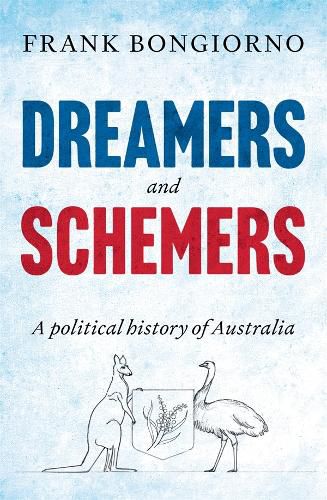
‘Dreamers and Schemers: A political history of Australia’ by Frank Bongiorno

2022, 396 p. plus notes

My overwhelming feeling on finishing this book is sheer admiration for the breadth of endeavour to write a political history of Australia right from pre-colonial through to COVID times. Few historians would take on such a task: even fewer could carry it off without flagging. But Frank Bongiorno does, with his customary clarity and a mischievous twinkle in the eye when he encounters absurdity and pretension.

I like Frank Bongiorno, and he is a historian who takes his role as a public commentator seriously. He is current president of the Australian Historical Association, and on the Federal Executive of the Australian Society for the Study of Labour History. He is a contributor to newspapers and journals (both academic and general) and he’s likely to pop up on politics programs on the ABC television and radio. I found myself wondering whether his own political leanings would influence his analysis once he reached the years which he would remember (he was born in 1969) but I couldn’t really detect any change in his stance. The title, while catchy, is a little misleading: it evokes a ‘Hundred Ratbags’ sort of book based on crackpots and shysters. The book takes a much more general approach than this, with more emphasis on the big sweeps and arcs of history rather than the foibles of transitory individuals. The ‘Dreamers and Schemers’ are not just found on the floors of parliamentary chambers – they are out in the pubs, meeting halls, churches and unions as well, but the main focus is on formal political structures.

We often talk today of ‘political junkies’, who delve into the minutiae of political events that many others flip past when they encounter them in the newspapers, and who see everything through a political lens. By writing a political history, Bongiorno focuses his attention on the science of politics as it played out chronologically over Australia’s white history, which means that there is necessarily an emphasis on the dead white men who dominated big-P politics, while many other forces are omitted. Women, for instance, are barely seen in the first third of the book because, politically, they were insignificant. Bongiorno starts the book with First Nations politics: something that is barely acknowledged in Australian history, and when it is, it is more anthropological than political. Indigenous politics are woven throughout the rest of the text, but reflecting the events of the time, they disappear for whole decades only to reappear 40 or 50 years later. Economic fluctuations and wars appear in the narrative, but only to the extent that they affected the politics of the day. Likewise, international events feature in the early chapters, when Australia’s nascent politics were a reflection of political currents that affected the empire generally, and they reappear in the closing chapters when a world-wide pandemic disease and cynicism over politics generally bring politics to uncharted territory.

One of the real strengths of this book is that it considers both federal and state politics alongside each other, taking care to address each of the states, and not just the most populous ones. Personalities tended to loom larger at state level, with a predominance of ‘schemers’ over ‘dreamers’. The distinctiveness of the different states is highlighted: the conservatism (by design) of the Legislative Council in Victoria; the radicalism of Queensland at the turn of the 20th century which contrasted so much with the Bjelke-Petersen era some 70 years later; the way that South Australia often seemed to be travelling its own path. This emphasis on the states means that the full range of politics is explored -not just the big moves of a Federal government, but the compromises and obligations of State governments as well.

I was interested to see how Bongiorno structured the chronology of the book. He proceeds chronologically, but decisive events like Federation, war, the Depression or the Dismissal are subsumed under broader categories, rather than meriting a chapter in their own right. The chapters are:

  • Autocracy, Community and Democracy: from Earliest Times to 1855 (i.e. the granting of a degree of not identical self-government to the separate colonies as part of a broader sweep towards reform across the settler empire)
  • Making Democracy Work: 1857-90 (which takes us far from the 1850s view of self-government to a concept of government as an entity which can transform society, alongside increasing demands – particularly through the unions- for direct representation of class
  • A New Australia 1891-1914 (emphasizing the importance of the ‘Deakinite Settlement’, and the rise of the Labor Party and fusion of conservative forces)
  • Loyalty and Interest: 1914-1939 (a big time span, collapsing WWI into the post war era until the start of another war. Labor dominance during the early years of the war, the rise of sectarianism, rise of the Country Party, first Menzies government)
  • War and Peace: 1939-49 (war and post-war considered together. Co-operation between Menzies and Curtin in welfare provision. The Labor Party would not have dreamt that they would be in Opposition for so long)
  • The Good Times 1949-1966 (Menzies’ second prime ministership; influence of Santamaria and Victorian Labor split)
  • Revolt, Reason and Reaction: 1966-1982 (series of Liberal prime ministers after Menzies, Victoria a brake on an ALP victory earlier than 1972, Kerr/Whitlam/Fraser conceptualized as a contest of manhood; Fraser more like a Country Party politician. A changed world- free trade, unions but reaction through Bjelke-Peterson in Qld, Charles Court in WA; rise of Australian Democrats)
  • Australia Remade? 1983-99 (Winding back of the protective state, much of it by the ALP; influence of globalisation and free market economics; Howard and Hanson)
  • ‘The Glimmer of Twilight’: 2000-19 (2001 the end of progressivism- emergence of the darker side of globalization. 2005 Howard wins Senate majority and introduction of WorkChoices, Australian Wheat Board, David Hicks, the Intervention; Kevin Rudd and the Summit, Kyoto, the Apology. Gillard’s first minority government since WWII but passing of 561 pieces of legislation; lower primary vote and rise of independents and Greens; Abbott, Turnbull, Morrison – studied ordinaryiness)
  • Conclusion – In the Age of COVID

I’m not going to go through the details: you’ll need to read the book for them. It’s a fact-heavy book, driven by chronological events. But there are themes that arise out of this mosaic of personalities and events.

The first is the continuity of the view of an interventionist government. He devotes much attention to the Deakinite Settlement of the 1890s, which held over many decades (perhaps there are even traces of it today) and brought Australia to the forefront of progressive legislation in the early decades of the 20th century. The economic interventions of the post-WWII governments in the 1940s – and here Bongiorno echoes Stuart Macintyre, to whom the book is dedicated- continued under Menzies and were only ruptured in the 1980s. Even during the COVID pandemic, with which the book closes, there remained

a broad acceptance, no doubt stronger among some than others, that government should play the predominant role in defining where the boundaries between individual rights and the common good lie….Outside extreme libertarianism, a minority taste in Australia, there tends to be only mild political disagreement. Otherwise, most people get on with their lives, expecting the state to set reasonable parameters for individual behaviour while allowing people a wide scope to pursue their private interests as individuals and families.

p.392

Related to the early adoption of progressive electoral legislation, voting schemes continued to evolve over the early 20th century. The method of voting (preferential, above-the-line, secret) etc. continued to be experimented with as the system was finessed. Democracy was not delivered cut and dried: instead, it evolved over time.

Some issues remained constant (or intransigent) over decades. The question of land and vested interests dominated colonial politics. Free trade versus protectionism was a major dividing line between states and parties, and still underpins politics today. Sectarianism and racism (against First Nations, Chinese, immigrants) bubbled under the surface throughout Australia’s political history.

That said, another theme was the sense of roundabouts and swings. One or the other of the major parties would make a clean sweep at both federal and state level, only for the jigsaw to be quickly broken apart as the opposing parties would have electoral success and the cycle would begin again. Where there was a long period of one-party dominance, it was largely through the weakness of the opposition. The significance of sectarianism, and especially the influence of Bob Santamaria and the ‘groupers’ in Victoria is highlighted as a brake on Labor success at both federal and Victorian level over an extended time.

Despite the title ‘Dreamers and Schemers’, the relationship between individuals and the big movements of political history is a nuanced tension between practicality, complacency and continuity on the one hand, and vision and courage on the other. In this, we see Bongiorno the progressivist historian coming out. He notes:

Australian political history has had its dreamers and visionaries alongside the pragmatists and schemers…Big change of the kind that occurred in Australia in the 1850s, 1890s, 1940s and 1980s would have been impossible without the idealists and thinkers: that is, without political leaders, activists, intellectuals and movements who refused to be merely ‘practical’. Change depended on people willing to resist complacent utilitarian appeals to majority interests and consensus opinions, on refusing to accept injunctions merely to tinker rather than transform. In the end, it depended on a vision, however modest, of the good life.

p. 392

This book is written for the general reader, but the relentlessness of change and a succession of actors means that it does require concentrated reading. It provides a wide sweep of history, enabling ‘political junkies’ to step aside from their own cauldron of day-to-day politics to reflect on continuity and courage, both of which have existed across Australia’s political history. Although I have read ‘generalist’ Australian histories that take a broad-lens approach from settlement onwards, I haven’t read another book quite like this one that is so disciplined in its focus on politics as the framework of analysis. It’s an important book, and well worth reading.

My rating: 9

Sourced from: review copy Black Inc books
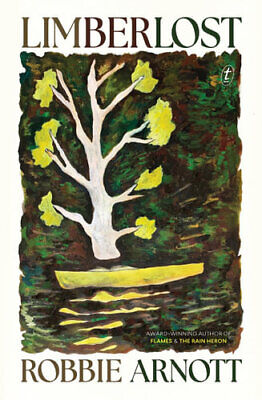
‘Limberlost’ by Robbie Arnott

2022, 226 p.

Had I given up on this book half-way through, which I was tempted to do, I would have agreed with the author’s rather rueful reflection on how the plot of this story would appear to his two older brothers, should they return from WW2

As far as his brothers would ever know – when Toby came back, if Bill came back – their warless little brother had spent a pleasant few months killing rabbits, buying a boat, repairing and then selling it before he went back to school. To them, that would be the extent of his work. That would be the story.

p. 202

That’s what I felt for much of this story. Fifteen year old Ned West lives with his widowed father and older sister on an orchard in Tasmania during World War II. Ned’s two brothers Bill and Toby have gone to fight, and no news has been heard of Bill for some time. Set over the summer school holidays, Ned embarks on his own bloodbath in trapping and shooting rabbits, selling their pelts in town, ostensibly as part of the war effect, but in reality to perhaps, one day, buy a little boat of his own. He inadvertently traps a quoll, which he hides and feed, even though it is savage and more burden than joy. Shamed by his sister into taking his limping horse to the vet, he shows the quoll to the vet who treats both the quoll and his horse without charge on condition that Ned shoots the rabbits that were overrunning her property. As a result, he accumulates more and more money until he is able to buy a shabby little boat which, after he strips the paint off, turns out to be a beautiful Huon Pine boat. But between the shooting and the sanding-back, nothing much seemed to be happening in this book. There were flashbacks and leap-forwards which made little sense, and I was just tiring of this tedious, if beautifully described, summer.

It was only in the last third that the book came together for me. Those obscure flashback/forwards all of a sudden made sense, and lifted the book into a broader story of loss, regret and love. By the end, my frustration had dissipated into admiration for how beautifully the book was written, and the control that Arnott has of a deceptively complex narrative. I don’t know if the shift was in me, or in the writing, but I’m glad that I persevered.

My rating: 8 – would have been higher had the book not taken so long to get going.

Sourced from: Yarra Plenty Regional Library.

‘William Cooper: An Aboriginal Life Story’ by Bain Attwood

2021, 204 p. plus notes

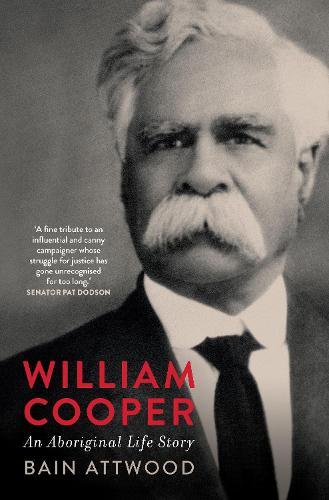
Unfortunately, I think that Australians may be more aware of African American political activists than they are of Indigenous Australian ones. William Cooper is now commemorated by an electoral district and a statue in Shepparton, but neither of these capture Cooper’s contribution to Australian history – in fact, in some ways they do a disservice to it. William Cooper’s attempt to have designated Aboriginal representation in Parliament never eventuated to this day, and the Shepparton statue commemorates an event which was only tangentially connected with his lifetime of Indigenous activism. The resolute, handsome face that stares out from the cover of Bain Attwood’s book William Cooper: An Aboriginal Life Story should be instantly recognizable to us, but it is not.

William Cooper was a Yorta Yorta man, born on the junction of the Murray and Goulburn Rivers in northern Victoria. His date of birth -sometime around 1860- is inexact, but as Attwood points out, the actual date was largely immaterial compared with the significance given to the place of someone’s birth, their family and kinship group and totem. Nor was his paternity particularly relevant. Attwood claims that that the Yorta Yorta, like other groups, tried to establish a reciprocal kin relationship with the white invaders of their country, by encouraging sexual relationships between their women members and whitefellas (p.5). Thus, several of Cooper’s siblings adopted the surname of Atkinson, for John Olbury Atkinson who worked on the nearby Moira run as overseer, while other siblings (including Cooper) adopted Cooper as their surname, perhaps for Edward Cooper – or maybe not. This meant that Cooper was “half-caste”, a distinction which he himself vehemently rejected, but which came to have ramifications as Aboriginal Mission policy changed over time. He was taken as a child to Melbourne in 1867 by the leaseholder of the Moira station, politician John O’Shanassy, and appeared to have lived with him in his Camberwell mansion Tara Estate- or maybe he worked for O’Shanassy in his New Imperial Hotel in Elizabeth – it’s not really clear. In any event, he returned to the Moira estate on his own Country as a teenager, and learned horse-breaking and pastoral skills that he drew on for the rest of his working life.

It was around 1874 when ‘Billy’ Cooper first approached the Maloga mission, established by Daniel and Janet Matthews on land selected by the Matthews brothers on the Barmah sandhills on a bend of the river Murray. This land had been traditional ceremonial grounds, and was formerly part of the Moira station – a source of later conflict. He moved there largely for the safety of his mother and younger siblings, but he himself moved away to work on surrounding pastoral stations. In 1881 the Matthews were joined by Thomas Shadrach James, from Mauritius, who worked as a teacher there and later married Cooper’s sister Ada. Cooper returned to Maloga more or less permanently from 1882, and two years later, he converted to Christianity, part of a wave of conversions amongst Indigenous men at Maloga at this time. The influence of the Matthews and Thomas James on Cooper’s political mindset was fundamental. Through their preaching, and drawing largely on the Old Testament and hymns, they gave him a framework that held that all people were God’s children and thus potentially equal, and that salvation was promised in the future for the oppressed. (p. 38) Shortly after his conversion, Cooper married Annie Murrie, but she died suddenly of respiratory illness after having two children. He remarried 21year old Agnes Hamilton in 1893 and over the next seventeen years she was to have seven children, six of whom survived infancy. However, the Maloga mission fell victim to the priorities and policies of the Aborigines Protection Association NSW which comprised white clergymen, philanthropists and leading parliamentarians under the patronage of the governor himself. Maloga was stripped bare, and incorporated into Cumeroogunga Mission, which is better known today. After initial problems, Cumeroogunga boasted 60 buildings by 1908, with three streets, gravel footpaths, a church, a meeting house, a school, a dispensary, storerooms and many outbuilding. With over 300 people, it was the largest Aboriginal reserve in NSW. But Cooper left the Mission in 1909 after conflict and controversy over the refusal to grant land blocks arose yet again, and following Agnes’ death from tuberculosis. Further deaths followed, including his eldest daughter in August 1913, his eldest son Daniel at Ypres during WWI, and several years later, Jessie the eldest daughter from his marriage with Agnes died of peritonitis after giving birth. In 1928 he married for a third time, to Sarah McRae (daughter of the artist Tommy McCrae). Cooper was to live to a ripe old age, but the reality of the foreshortened Aboriginal life expectancy, meant that he was surrounded by family deaths. In 1933 he and Sarah decided to move to Melbourne and embarked on a new phase of his activism as a seventy-year old.

Here Cooper set in train the actions for which he is best known today. He established the Australian Aborigines’ League around 1934, an organization which is often confused with the Aborigines Advancement League (of Victoria) which was formed in 1957. He was supported in this by several white supporters. The first was English-born fervent Christian and self-described “Christian communist” (p. 119), Helen Baillie, who had connections with many other Christian humanitarian networks involved in missionary work among Aboriginal people. The second was Arthur Burdeu, another fervent Christian, but wary of left-wing influences subverting Aboriginal organizations. Like Cooper, he was a strong Labor man; they had both lost family members in the Great War, and they lived relatively close to each other. He was appointed president of the Australian Aborigines’ League, even though by its constitution, full membership was only open to Aboriginal people. This raises the inevitable question of whether the League remained the voice of Cooper and other Aboriginal members, and whether the letters in Cooper’s name (generally composed by Burdeu) represented his views. By looking at the way that Cooper and Burdeu worked together, Attwood concludes that the letters in Cooper’s name by and large did represent his views, although formal statements were generally Burdeu’s work (p. 132). Cooper was joined by fellow Indigenous campaigners Shadrach James (his nephew) Anna and Caleb Morgan, Margaret Tucker, George Patten and and Doug Nicholls.

So what were Cooper’s views? Throughout all his activism – right from his time at Maloga- he drew on his Christian belief that as the first people of the land, created by God, and as British subjects, they had a rightful claim on the land, and on the government. However, ‘equal rights’ or ‘citizenship rights’ as distinct from Indigenous rights, were conditional in the sense that they rested on the capacity of their people to exercise them – not so much an entitlement as something that had to be earned (p.134). He framed this in different ways at different times.

At a time when Aboriginal people’s difference was deemed to be the cause of their plight and constituted the grounds upon which they were denied the rights and privileges enjoyed by British subjects, they emphasised their common nature with their fellow Australians and demanded the same rights as Australian citizens had. But in pressing these claims they often made reference to their difference, though the differences they had in mind were primarily rooted in their people’s history rather than culture (or civilisation) and race (or biology). Most often, Cooper and the members of his organisation invoked the fact that they were the descendants of this county’s first peoples and that the British Crown had given them an undertaking to protect them.

p.203, 204

This was exemplified in the petition that he drew up in 1933, prior to the establishment of the Australian Aborigines’ League but promoted and submitted under its auspices. It is not surprising that Cooper should turn to a petition as an instrument of persuasion. Indigenous people in Australia and across the empire, tended to look to the King/Queen as the source of power, rather than the local government, and had turned to petitions as their means of communicating with them. This petition, addressed to King George V argued that the commission issued to “those who came to people Australia” included a strict injunction that the original inhabitants and their heirs and successors should be adequately cared for. Given that the terms of the commission had not been adhered to, in that their lands were expropriated by the King’s Government and legal status was denied by the King’s Government in the Commonwealth, they prayed that the King would intervene to prevent the extinction of the Aboriginal race, give better conditions for all, and grant them power to propose a member of parliament “in the person of our own blood or white man known to have studied our needs and to be in sympathy with our race, to represent us in the Federal Parliament”. (p. 103) Actually, this was a watering-down of Cooper’s lifelong call for parliamentary representation, prompted probably by his white advisors, because he believed that white men could not “think black” and therefore they needed an Aboriginal representative in Parliament. The petition was signed by over 1800 Aboriginal people – no small feat when access to missions and permission to circulate the petition had to be sought over and over again. It was held back for some two years until after a meeting of all the administrators of Aboriginal affairs in Australia in mid 1937. It was only when this meeting failed to deliver any outcomes that the petition was finally submitted to the Australian government. However, it fell largely on deaf ears. Although Prime Minister Joseph Lyons expressed his sympathy, the petition was dismissed by the secretary of the Department of the Interior, J. A. Carrodus and was never submitted to the King. I found myself angered by such a supercilious dismissal, and the words of the Uluru Statement “the torment of our powerlessness” spring to mind.

Asking did not work: perhaps protest would. After witnessing a ceremony in Melbourne on 24 January 1937 to celebrate John Batman’s founding of Melbourne, Cooper realized that the imminent 150th anniversary celebrations in Sydney on 26th January 1938 would be of the same triumphalist tenor. Drawing on his Biblical schema of epochs and days – of Judgement and Restitution, Mourning and Hope, and eventual Deliverance, Cooper proposed “a day of mourning” to be held simultaneously with the sesquicentennial celebrations. The original idea was his, but the proceedings themselves, held at the Australian Hall, were dominated by Bill Ferguson and Jack Patten of the Aborigines Progressive Association. Cooper, Nicholls and Tucker attended, driven to Sydney by Helen Baillie in her little car, but did not play a prominent part.

Although Cooper lived in Melbourne, he and many of the League’s members retained their emotional connection to Cumeroogunga. He continued to appeal to NSW government to provide Aboriginal people with land and capital so that they could develop the land for their communities and become self-sufficient- something he had urged since his Maloga days. He urged that the services provided on reserves should be put into the hands of Aboriginal people themselves, and that regulations should ensure that no resident could be expelled from a reserve without an open enquiry. In June 1937, contrary to the wishes of the Aboriginal people, Arthur McQuiggan had been appointed as manager of Cumeroogunga, despite repeated complaints about his violence as superintendent of Kinchela Aboriginal Boys Home. Some people made preparations to leave, but were prevented from doing so by the police on the basis of “quarantine” regulations. Cooper submitted another petition signed at Cumeroogunga to the government, but this had no effect. On 26 January 1939 Jack Patten, born and bred at Cumeroogunga, returned there and addressed a gathering of the people in the church two days later, urging them to “walk off”, before they were prevented from leaving again. Cooper and Burdeu were rather ambivalent about this direct action. The League had long had a preference for representations, appeals, petitions and public meetings, and Cooper and Burdeu were apprehensive that Patten’s methods would alienate the League’s white supporters. In the end, it was socialists, communists and Labor supporters in Melbourne who backed what they saw as a “strike” at Cumeroogunga, providing moral and material support for the people who had walked off. But after nine months of hardship, the protest achieved nothing, and there was a tailing-off in the League’s activity, exacerbated by Cooper’s decline in health.

By now WWII was in train. Cooper had lost his son in World War I, and he was disillusioned by the failure of the Government to grant citizenship to the thousands of Aboriginal men who had enlisted in the AIF after World War I. He pointed out that Aboriginal men had ‘no status [and] no rights’ and ‘no country and nothing to fight for but the privilege of defending the land which was taken from him by the white race without compensation’. (p. 197) This was not necessarily a popular stance.

It is ironic that the only monument to William Cooper (presently) is the one in Shepparton, funded by Jewish philanthropists through Gandel Philanthropy. The monument depicts him holding a petition defending the human rights of Jewish people in response to Kristallnaucht, “The Night of Broken Glass” which he presented to the German Consulate in December 1938. The petition served an Indigenous purpose as well: it stated “Like the Jews, our people have suffered much cruelty, exploitation and misunderstanding as a minority at the hands of another race”. This fleeting act, which has captured and been embraced the (white) public imagination, tends to overlook the fact that several left-wing groups, churchmen, pacifists and civil libertarians had already raised their voices against the Nazi persecution of the Jews. Consistent with Attwood’s claim that this is a minor part of Cooper’s contribution, he spends only four pages on this petition, although he expands in further detail in the footnotes. I think that it says much about white Australia and its unease with Aboriginal activism, that Cooper should be commemorated for this one act of solidarity with an overseas injustice, rather than his activism against injustice here in Australia over many decades.

Attwood started his book by pointing out that, especially in relation to Cooper’s childhood, documentary sources are thin. Cooper was an eloquent speaker, but he found writing a struggle, and often turned to his white supporters to undertake this task. Moreover, members of Cooper’s family have their own stories about him, which differ in places from the stories Attwood is telling. He points out that a biographical approach can misrepresent the life of an Indigenous man or woman by casting them as exceptional.

Make no mistake: I believe Cooper was a remarkable man. But the political work for which he is best remembered was the product of a broad network of family, kin and community, and the outcome of a historical experience that he and his fellows had in common and shared with each other.

p. xiv

The book has many black-and-white photographs throughout the text, courtesy of Cooper’s family, and they emphasize both Cooper’s striking bearing but also his embeddedness amongst other activists. Attwood is writing within the academic discipline of history, and this tone pervades the book, with an essay-like introduction and conclusion, a cautious use of “I” and rather stilted cross-references in parentheses to different parts of the book. I sense a reserve in Attwood’s writing.

I’m sure that Attwood did not intend it this way, but I found the book ultimately depressing. William Cooper worked all his life for Aboriginal rights, but had little to show for it. His optimism that if only people knew; if only the King knew, then things would change- was sadly misplaced. He had a faith in white Australia that was not reciprocated. There are, of course, many resonances today. I hear shades of William Cooper in Noel Pearson, who shares his suspicion of “the left” and his deep faith in Christianity particularly in the linguistic and schematic framing of injustice in biblical terms. Cooper’s faith in white Australia echoes in the Uluru Statement from the Heart, and the call for a Voice has resonances of his call for parliamentary representation. Hopefully this time – at last- white Australia will recognize the generosity of what is being offered and finally fulfill William Cooper’s expectations.

Rating: 8.5/10

Sourced from: Yarra Plenty Regional Library.

‘Caleb’s Crossing’ by Geraldine Brooks

2012, 432 p.

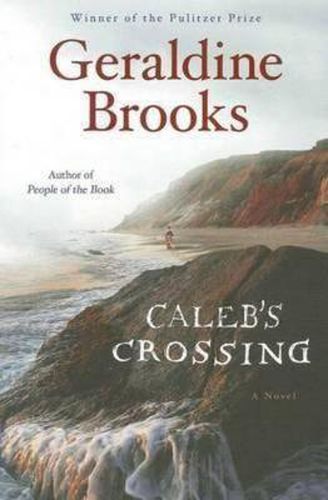
I read somewhere that when considering a film that claims to be “based on historical facts”, you should look for the most momentous, the most memorable part – and that will be the bit that was made up. I’m not sure whether this applies to historical fiction as well (it may) but I didn’t have that sense in reading Geraldine Brooks’ Caleb’s Crossing. She has kept herself strictly within established historical and biographical boundaries, which means that there is no momentous, memorable part, and that flights of fictional fancy are strictly curtailed. But I am full of admiration for the research that has gone into this book that rests so lightly in the background, and for the fidelity that such restraint lends to the story.

The book is arranged in three parts. The first two parts take place over a two year period in 1660 and 1661 while the third part is ostensibly written some 50 years later in 1715. The eponymous Caleb is a historical figure: Caleb Cheeshahteaumuck, the first Native American to graduate from Harvard College, which was then a small, struggling educational institution with more pretension than finance. A Wampanoag man, his father was sacham of his tribe. Caleb and a classmate attended school at Martha’s Vineyard, where he was born, then attended Grammar School in Cambridge, before enrolling and graduating from Harvard. He died from tuberculosis a year after graduation. These, then, are the biographical facts that Brooks needs to write around.

But she is left considerable space to invent her own character, and this is what she does in Berthia Mayfield whom we meet as a young teenager in Great Harbour where her father is a missionary to the Wampanoag. Her family has been at Noepe since her grandfather purchased land – however that purchase was understood at the time- from the Wampanoag. A bright young girl, she finds her future become increasingly circumscribed by the inevitability of her marriage and her mother, aware of this, allows her a short-lived freedom to roam the island. It is on one of these forays that she observes, and becomes fascinated by Caleb – a fascination that he reciprocates. However, when tragedy strikes the family, she blames herself and submits to a plan whereby she will be indentured to the grammar school master to enable her brother, Makepeace, to attend Harvard College. Caleb, and his friend Iacoomes who have been taken under the wing of her father, are to attend Harvard as well.

We follow her to Cambridge in 1661 in Part II. Her formal education has been sacrificed for that of her brother, but here she can secretly listen to the instruction given to the students. She observes the subtle prejudice directed towards Caleb and Iacoomes and witnesses the sexual abuse of a young Native American girl Anne by the Governor’s son. Once again, men are making decisions about her marriage. There is an unspoken attraction between Berthia and Caleb, but from the outside it appears that she has submitted to the wishes of her employer by marrying his son- only we, as readers, know that Berthia had more agency than it appears. The final part of the book is set in 1751, when Berthia is dying back in her childhood home in Great Harbour. She recalls the deaths of Iacoomes and Caleb, and the tragedy of the King Philip’s Wars as the uneasy wariness and compromises of early contact harden into violence and warfare.

Brooks has adopted an archaic, 17th century language in giving Berthia voice, and she sustains it wonderfully throughout the book. Perhaps there is an anachronistic 21st century feminism seeping through the book, but is framed within a deep religiosity. Brooks knows the line between fact and fiction and she respects it in her writing. So much research must have gone into this book, but it never feels laboured. Instead, through the narrative voice that Brooks has fashioned for Berthia, we feel as if we have been immersed into a 17th century world and worldview.

My rating: 9/10

Sourced from: CAE bookgroup

‘Search: A Novel’ by Michelle Huneven

2022, 393 p.

If you’re not a Unitarian Universalist, don’t read this book. You can read my review, but don’t read the book.

I am a Unitarian Universalist, but I’m an Australian one. In Australia there are usually at most two UU churches/fellowships in each state (with one often formed as a conscious contrast in tone and philosophy to the other). Fewer than half have their own building, much fewer than half have a salaried minister and UUism generally has a low profile in a land that is largely ambivalent about public displays of religion. In America on the other hand, where this book is set, there might be multiple UU churches in a large city; most cities would have a UU church; most have their own church buildings; there is a tradition of philanthropic endowment. There is a well of ordained ministers to choose from as they move from church to church in a scheduled ‘season’ of relocations, as part of their full-time career. It is this search for a new minister that is the topic of this book: a topic that would not seem likely to reach to 357 pages, and one that would probably be of little interest to someone not involved in a church community.

Despite the subtitle “A Novel”, the frontispiece declares the book “Search: a Memoir with Recipes by Dana Louise Potowski. A Novel . Michelle Huneven”. If this is the frame-story, then it’s a convoluted one. The preface to this second edition muddies the water even further.

Yes, this is a memoir of a real experience. It is not fiction. I was on a search committee for a senior minister and this is my story of that search. Others might tell it differently. That said, names and certain details have been altered to protect identities. Several of the living have recognized themselves, although sometimes in the wrong character….Some readers- and many who haven’t read the book- argue that I have talked too much out of school, and by exposing the behind-the-scenes machinations of a church and its search committee, I have disclosed too many secrets, certainly more than the average credulous churchgoer cares to know. I believe that the more the average credulous churchgoer knows, the more responsible their decisions will be when choosing a leader. The health and future of their institution depend on it.

p. 1-2

So, accepting the conceit that this memoir is a novel, and yet somehow not fiction, the book is narrated by Dana Potowski, middle-aged food writer and restaurant reviewer. She has recently completed her last book, and is casting around for a plot for her next book. She is a long-time member of her local Unitarian Church, Arroyo Unitarian Universalist Community Church in Altadena California, with its ungainly abbreviation “awk”. It is a church set on three acres of gardens, wealthy, with a congregation of 290-plus of the “highly educated left”:

Caltech and NASA scientists, schoolteachers, entertainment types and hospital workers, college professors, political activists, artists and local soreheads.

p. 9

Although she had been a member for more than 20 years, and was a personal friend of the departing minister, Tom Fox, she was feeling jaded by her church and finding herself reluctant to go to services. However, when she was asked to join the search committee to look for Tom’s replacement, she jumped at the chance – not just as possible source material for a new book (this new book) but also as a way of reactivating her own spiritual commitment. She had attended seminary herself some years before and begun following the path to ministry herself until she realized that what she really wanted to do was write.

So she finds herself on a search committee of eight: four women, four men. Together, they were charged with a year-long project to form a short-list of potential new ministers, interview them and evaluate their sermons in a neutral church, then come up with a unanimous recommendation that would need to be approved by 85% of the congregation. Belinda was an 80 year old former church president deeply steeped in the history of AUUCC; Sam was in his late seventies; Charlotte, one of the chairs was in her sixties, gay, and three decades sober. Adrian was Black and in his late forties (and in her writerly moments Dana imagined that he might be the love interest of the story), Curtis was Filipino American in his late thirties/early forties and had been rejected by his past Christian church because he’s gay; Riley was in his early thirties, a polyamorist and aspirational bar-tender, and the conductor of the church handbell choir. Jennie was mixed race (mother Japanese American; father white), in her twenties, a young mother and agitator.

If you’re rolling your eyes a bit at the care with which this committee has been constituted to represent every possible age/colour/ethnicity/gender/sexuality combination (irrespective, perhaps, of the actual bums-on-seats profile of the congregation), so was I. In fact, there were many times when I was rolling my eyes at the earnestness and intensity with which people approached a myriad of lifestyle decisions over food eaten, relationships and issues of identity. It almost seemed like a parody of Unitarian Universalism and UUs, but if parody is going to work, it has to have a kernel of recognizable truth – and all this rings completely true, while written with a gentle humour. The book would not have been written with this purpose, but I felt as if I had been given a glimpse into the life that I would probably be leading had I been picked up and transported into North America.

The requirement that their recommendation be unanimous meant that this committee, comprised of flawed people with their own agendas, would have trouble reaching consensus. “Consensus is not just everybody agreeing” cautions an older member of the search committee, but as the committee splinters along age lines and is pulled in different directions by opposing strong characters, the decision does seem to be framed as “winning” and “losing”. At times I wondered: is this really the stuff of a whole, full-length novel? – but then I remembered just how much of our working lives (and recreational lives too, if you’re someone who volunteers as part of your community involvement) is spent finessing the politics, creating alliances, back-stabbing, and soothing the egos of colleagues. This search committee is no different, and Dana herself seems oblivious to her own strength and obstinacy on the committee. In fact, the whole act of writing the book which was ethically dubious from the start is weaponized as an act of “I told you so” by the end.

Along the way – and this is where secular readers would bail out- the search committee and we as readers observe a range of preaching/ministering approaches as Skype interviews are reported and sermons are reproduced. Dana as narrator is too invested in her own choices to give an unbiased account, but I did find myself wondering how I would have responded had I been on the search committee. Would I even want to go to this church? I wonder.

The second part of the title ” A Memoir with Recipes” raises red flags for me, given my deep aversion to books that describe food. As I was fore-warned, I just let the emphasis on food slip by… but it still really grated on me and seemed to be of a piece with the affluence and privilege of this educated, wealthy congregation.

Did I enjoy it? Yes, I did but I know that many other readers would not. It’s a bit like a Marilyn Robinson novel with its small-town, American religiosity, but with spikes. For something as mundane as a series of committee meetings amongst the everyday life of a group of flawed, very human characters, it was strangely compelling and I wanted to read to the end to find out who was their final selection. But if you’re thinking of seeking it out, go back to my first sentence before you do.

My rating: for me – 7.5. For you- who knows?

Sourced from: a UU friend and read on her recommendation.

‘My Accidental Career’ by Brenda Niall

2022,293 p

Brenda Niall is one of Australia’s best known biographers. I first ‘met’ her on paper in a course on children’s literature that I did with Deakin University a lifetime ago, and then again with her biography of Georgiana McCrae which, along with Robyn Annear’s Bearbrass helped fuel my love of Melbourne history. She has written several biographies since then, particularly focussing on literary or artistic biography or biographies of fellow-Catholics such as Archbishop Daniel Mannix or Father Hackett. She dipped her toes into family biography with Can You Hear the Sea? My Grandmother’s Story but here she wades in at least knee-deep with her own memoir My Accidental Career. A biographer knows the tricks and pitfalls of the trade, and she keeps careful control of what she chooses to reveal.

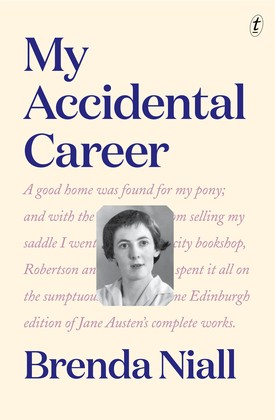
The title My Accidental Career of course triggers associations with Miles Franklin’s My Brilliant Career, but there is no brashness or boasting here. Instead, the book is perhaps a little too self-effacing and deferential but even this is of a piece with the life she is presenting. Written at the age of 91, she justifies her biography, and its choice of title like this:

Looking back over more than sixty years of work as academic and writer, I see a pattern of surprises. For better and worse, fortune’s wheel kept spinning. Am I right in thinking of an ‘accidental’ career? Freud said that there are no accidents, and it’s easy to look back and see inevitabilities in events that seemed random. In the following pages, I’ve tried to show how it felt at the time, when each turn of fate appeared to me as unpredictable. To be born in 1930 meant that I entered the adult world well before the sharp, fresh breeze of the women’s movement. With my own inner wars of independence to fight, I had little awareness of the public world as a shaping force…My Accidental Career is the story of a 1950s consciousness gradually waking up to a new world in which opportunity and equality were within a woman’s reach. And that I wanted them.

p.2

Born in 1930 as the youngest of three children, her father was a prominent cardiologist and she lived in a wealthy enclave in Kew, attending Genazzano college, one of Melbourne’s prominent Catholic Girls’ schools. Her Catholicism permeated her life. Living in their large house in Studley Park Road, one of her neighbours was Archbishop Daniel Mannix (whose biography she would later write), and her first job was with in Bob Santamaria’s Catholic Action office, a research position in which she seems to have been particularly naive and unsuitable. She was no political warrior: instead, she had imbibed the values of quietness and gentleness from her education. (I must admit that the women I know who had a Catholic Girls’ School education, admittedly younger and who came to adopt leadership positions in education, were neither quiet nor gentle but did have a quick, direct and rather distinctive confidence and articulateness exemplified by Geraldine Doogue or Susan Ryan. Perhaps this reflected post-war change in Catholic Girls’ education? Or was it the effect of Vatican II?) When her father died with a brain tumour at the age of 53, there was an unspoken assumption that marriage would be the escape from the ‘caring’ role often visited upon an unmarried daughter, and this was something that she was quietly but implacably determined to avoid.

On the one hand, Niall is clearly aware of her privilege but by reverting to the self-effacing declaration that her career was ‘accidental’, she seems unconscious of its effect on her life. Her family was financially comfortable; her childhood neighbourhood was affluent; she attended private school throughout, and her Catholic connections led to her first job. She was clearly brilliant: she was one of only five girls to win a Special Exhibition at Matriculation, and the only one from a Catholic Girls’ School to do so. She enrolled in English Honours in post-war 1949, just after an influx of older ex-servicemen on veterans’ grants and when women lecturers were rare. She won the exhibition in English language and literature in 1950 but missed the First Class Honours she was on track for after her father died. This was the first of a number of false starts where she was progressing towards academic prominence (dare I say “A Brilliant Career”?) only to find herself almost frozen to immobility by external events or her own diffidence. A broken engagement with ‘G’ prompted her mother to fund a round-the-world airline ticket in April 1958, leading to the first of the journal entries that Niall includes in the book.

There are five of these journal entries, distinguished from the rest of the text by a stylized corner at the top and bottom of the page. They mark out her various overseas sojourns in Limerick (1958), Ann Arbor (1967-68), Yale New Haven (1975) and two research trips undertaken as part of her work on the Boyd family in 1985 and again in 1999. Drawing on a journal does solve a narrative problem for the auto/biographer – you can go straight back to the source material- but I found myself wondering about the authenticity of these remarkably lucid and self-explanatory entries.

However, they do highlight the opportunities that opened up for her, even though she describes them rather diffidently. After moving to ANU in Canberra for postgraduate studies, she wrote her thesis on Edith Wharton and was offered jobs at Melbourne, Monash and ANU universities. She accepted a tutorship at the four-year old Monash, and her thesis was awarded first-class honours by both the internal and external examiners. She was later to embark on a long-term relationship with Grahame Johnson, the internal examiner at ANU and her mentor, but because of their shared Catholic faith, divorce and a second marriage was impossible, as Niall explains rather clinically. Grahame was to become the deputy director of the newly established ANU Centre for Research in the Humanities when he died suddenly in December 1976, aged forty seven. She does not expand on this, although she notes the “feeling of emptiness” and the “kindness of people who didn’t know what to say to me.” (p. 171) Not one to push herself forward, she remained at Monash, mainly working in teaching and administrative roles. However, she was feisty enough when another female academic began to muscle in on work that she had commenced on Martin Boyd, suggesting that they could be co-authors. She wrote back, saying that her work would be a biography, and that there would still be sufficient space for a critical study, should her colleague choose to write one. She didn’t. Niall’s solo-authored biography Martin Boyd: a Life won several awards in 1989, and marked a turning point from a tenured academic to an independent writer.

We tend to lionize prodigies and youthful success, and it was interesting (and encouraging) to read of a career that only found itself near the end, at the age of 59. At the age of sixty she was admitted to the Australian Academy for the Humanities. She was invited to write reviews of biographies, reviewing one book a fortnight between 1997-8 and several other biographies followed with Georgiana (1994), the group biography The Boyds: A Family Biography (2002) (my review here), Judy Cassab: A portrait (2005), The riddle of Father Hackett : a life in Ireland and Australia (2009), True North: the story of Mary and Elizabeth Durack (2012), Mannix (2015), Friends and Rivals: Four Great Australian Writers: Barbara Baynton, Ethel Turner, Nettie Palmer, Henry Handel Richardson (my review here). She wrote about the craft of biography in Life Class (2007), and wrote her grandmother’s story in Can You Hear the Sea in 2018. This is a woman who has found her strength.

It is hard to believe that Brenda Niall and Dale Kent (author of The Most I Could Be – my review here) were working in Victorian universities at the same time, albeit in different disciplines. Kent’s academe is a ferocious place where you had to fight for your position; Niall’s “accidental” career is helped by colleagues, mentors and champions – mostly men- to whom she acknowledges her debt. Kent’s biography is hormone-driven and personal; Niall’s is almost ascetic.

I sensed throughout this book Niall’s control in what she was telling, and what she was choosing not to tell. It is a quiet biography, where she is applying to herself the techniques she might use in narrating another’s life. There is a reluctance to brag, a readiness to cede credit to others, and a sense of almost incredulity that these things occurred unbidden and so generously. The nuns taught her well.

My rating: 7/10

Sourced from: borrowed from my friend Patricia.

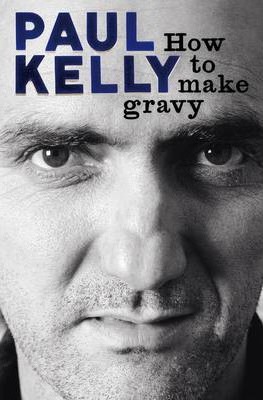
‘How to Make Gravy’ by Paul Kelly

2010, 549 pages

It’s the 21st of December, which makes it Gravy Day and what better day to review Paul Kelly’s How to Make Gravy. Actually, I’ve had this book beside the bed for the best part of six months and I just dip into it now and then, partially because I didn’t want it to finish. I bought it at the op-shop ages ago and it’s the best $2.00 I’ve ever spent.

Paul Kelly is a brilliant Australian singer/songwriter – he’s Australia’s Bob Dylan. While there are better singers around, no other Australian songwriters captures masculine vulnerability and love of country as well as Paul Kelly does. The book is a written version of his A-Z show, a four-night performance that he first wrote for the Speigeltent in Melbourne in 2004. Each night he would sing 25 songs from his repertoire of over 300 songs (at that stage- there would be more now), arranged alphabetically, with a different setlist on nights 1, 2, 3, 4. Some people just came to see one night; others came for all four. In his introduction he says that he realized that he just couldn’t sit there and play 25 songs one after the other, and uncomfortable with stage-patter, he wrote a script to go along with it. He released the songs as a CD collection, and then wrote this book based on the songs and his show notes. He’s typically self-effacing about it:

Before too long a mongrel beast appeared. Was I writing an idiosyncratic history of music, a work diary or a hymn to dead friends? There were lists, letters, quotes, confessions, essays and road stories. Could I get them all to fit? Could I make the architecture sing? And what kind of megalomaniac would assume that setting his lyrics down and writing commentary around them – a kind of Midrash- would be interesting to others?

p.3

The book is in four parts, reflecting the four nights of the performance. The songs are presented alphabetically and the lyrics precede each chapter, bolstered at times by poetry by other poets (Yeats, Donne, Shakespeare), quotations from books, and definitions. Some of the chapters directly relate to the song; others are a form of mental riffing on his childhood and adolescence, a succession of marriages and breakups, drug addiction, diary extracts while on the road, reminiscences of concerts seen and performed. The index of people and bands at the end of the book stretches to eight pages, and he cites movies, books and other people’s music. It’s an erudite, generous memoir by a gifted, intelligent man- and one of the best memoirs I’ve ever read.

Let me leave you with the video of the eponymous How to Make Gravy. Happy 21st December, Gravy Day.

‘Kiss Myself Goodbye’ by Ferdinand Mount

2021, 272 p.

I read this in an e-book version, so I didn’t really have an opportunity to pour over the front and back covers. Without the little telltale identifier ‘biography’ ‘memoir’ or ‘non-fiction’ that some books have on the back cover, I found myself wondering exactly what I was reading here. Was it really a memoir written by a rather arch, conservative, class-conscious Englishman, or was this a masterful frame story for what was essentially fiction? Well, it seems that it is indeed non-fiction and a memoir, which places it back in the pack as being just another family-history-as-search type book, a genre of which I am not particularly fond.

Ferdinand Mount starts his memoir by recalling the various houses in which his Aunt Betty and Uncle Grieg lived. There are quite a few of them, in varying degrees of opulence, and the opening chapter starts, as the rest of the book continues, as a type of roll-call of the significant people to whom his aunt and uncle have tenuous links. It is Aunt Betty who suggests that instead of calling them such prosaic names as “Betty” and “Grieg”, her nephew and niece call them “Munca” and “Unca” after the two mice in Beatrix Potter’s The Tale of Two Bad Mice. At the time the author thinks that this is a childish suggestion to come from an adult, and inaccurate too, as there was actually only one mouse called Hunca (with an H) Munca. However, he acquiesced at the time, and continues to do so during the book, varying between “Munca” and “Betty”. The title of the book comes from a pre-war song with the lyrics:

I’m going to kiss myself goodbye

Oh goodbye, goodbye

I’m going to get on my wings and fly

Up high, Up High

This is more appropriate, because this is the story of the deception undertaken by several members of his family as they accelerate their climbing of the social ladder in Britain, breaking through the famed class system by the adoption of different names and shady dealings.This is not necessarily an unique story: Robyn Annear did it better with the Tichborne inheritance in The Man Who Lost Himself and Kirsten McKenzie adopted a more scholarly approach to false identity and deception in A Swindler’s Progress (my review here). However, while distance and the colonies provided good coverage for false identity, there is a certain brazenness about Aunt Betty’s story, slipping through names and marriages without moving out of England.

The book is structured around his family history search for the truth about his Aunt Betty, whom he always found evasive and mysterious. It is a search driven by documents and he is a particularly inept family historian, naive about sources, and unusually reliant on other people finding things for him. He uses his search for a particular member of his family as the rationale for a new chapter, which means that there is a certain amount of back-tracking and foreshadowing, and he weakens his book considerably by including updates on his searches at the end which diffuses, rather than tightens, his ending.

The book is not just about his Aunt Betty/Munca, but he infuses it with a lot of his own memoir as well. He is an undisciplined narrator, launching off into long descriptions of tangential information, and drawing links with minor royalty and celebrity figures. I don’t think that I would particularly like this man personally. He is certainly well-connected with the literary scene and Conservative Party politics: head of the Policy Unit during Thatcher’s time, the holder of a hereditary baronetcy through his uncle, contributor to the Sunday Times and the London Review of Books, former editor of the Times Literary Supplement for eleven years, and a fellow of the Royal Society of Literature. I can only assume that it is these latter connections that landed him Hilary Mantel’s saccharine and very prominent front-cover blurb that the book was “Grimly funny and superbly written, with a twist on every page”.

The book is well written, but there is a gaping vacuum at its heart where he fails to interrogate or even imagine the nature of Aunt Betty/Munca that led her to such contradictory and often callous actions. It is as if he has traced the steps but never stopped to ask “why”. This would, of course, require speculation but he has not resiled from speculation and guesswork elsewhere. Given the wreckage that she left behind her in terms of marriages and adoption, his tunnel vision suggests that perhaps there is more of Aunt Betty/Munca in him than he would like.

My rating: 6/10

Sourced from: purchased e-book; read for the Ivanhoe Reading Circle.

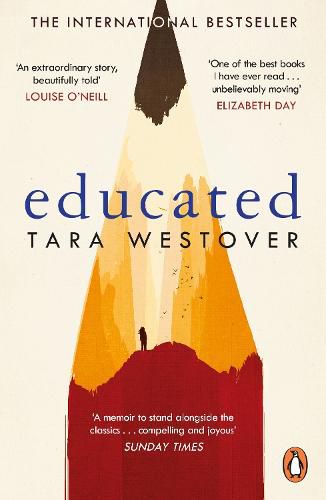
‘Educated’ by Tara Westover

2018, 400 pages

There was a lot of hype about this book back in 2018, when it was released. Barak Obama nominated it as one of his five favourite books over summer that year, Bill Gates put it on his holiday reading list. It was named as one of the best books of the year by The Washington Post, O, The Oprah Magazine, Time, NPR, Good Morning America, The San Francisco Chronicle, and The Guardian. And I think that here in Australia, I recommended that my library buy it (which it probably would have done in any case) and then I took four years to actually read it- by which time I’d bought it on special on my Kobo instead.

I can see why it received such acclaim in the United States. I can see the appeal of a story of a young Mormon girl from Idaho – could anything be more American than a Mormon?- who overcame her father’s paranoid survivalist beliefs about government and her rudimentary home-school education to attend elite universities in both United Kingdom and America and to achieve her PhD. The book has that rather furtive appeal of trauma narratives: a genre and publishing phenomena that is starting to devour itself by becoming rather too commonplace.

Tara is the youngest of seven children to Gene and Faye Westover. The family’s financial success rested very much on her mother’s work as a midwife and herbalist/healer, while Gene enlisted his children in his metal recovery business which sprawled over their farm property. There was an extended but estranged family, because both grandmothers disapproved of Gene and his anti-government stance. This was a threadbare upbringing, isolated even from other congregants in their Mormon church, whom Tara’s father thought too wishy-washy. The children received little encouragement to undertake their home schooling and they were expected to labour in a dangerous work environment alongside their father. At various stages, members of the family including her brother and father received horrendous injuries that were treated within the home. Her older brother Shawn is a menacing presence throughout the book, physically and emotionally, and I would not have been surprised had it been sexually as well (although she does not say this). It was another older brother, Tyler, who encouraged her to follow his example in leaving home to go to college. This involved essentially a period of self-education from textbooks, and she achieved entry to Brigham Young University. Although a Mormon university, here she was challenged by living with Mormon girls whose upbringing had been much freer than hers had been. She did well, and eventually achieved a scholarship to Cambridge University in UK where she received encouragement from historian Professor Jonathan Steinberg and Professor David Runciman. It is quite amazing to think of someone coming to undergraduate-level material with absolutely no pre-exposure to academic conventions and ‘received’ wisdom, context or media exposure. I guess that there would be a purity there, but also a type of shallowness as well- to say nothing of the sheer hard work it must have taken to cover what other students would have absorbed almost by osmosis. She completed her PhD and seems to have returned to the United States.

The book is written in a fairly simple, unadorned style and at first I found myself wondering whether she had the writing skills to complete a PhD. But once she started writing about her subject matter, the writing kicked up several notches in complexity and abstraction- as you would hope it would, when writing about one’s academic field. The final part of the book was devoted to the family fall-out both from her pursuit of an academic career, and after a confrontation with her parents over Shaun’s abuse of her and her other sister. Members of the family distanced themselves from her, and she learns that although her mother may appear sympathetic, her loyalties will always lie with her husband. It’s almost a love letter to her family, shot through with grief.

I hope that Tara Westover becomes known for more than just this memoir. Google Scholar suggests that she is a topic for academic consideration, rather than an academic contributor herself. She is still very young and I wish that she had waited ten years before writing this memoir.

My rating: 8/10

Sourced from: purchased e-book

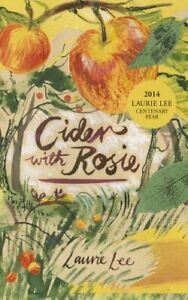
‘Cider with Rosie’ by Laurie Lee

1959, 231 p.

I’m rather appalled at the thought that I first read this book fifty years ago! How could that be? It was another of those books that seemed to lurk on the school library shelves, and I read it as a 15 year old. Segments of it felt very familiar, and I am sure that it was anthologized in various readers at Years 7 and 8 level. It is part of an autobiographical trilogy first published in the late 1950s and it seems to have been in print ever since.

It is an autobiography/memoir of a childhood spent in the Cotswold village of Slad, near Gloucester and it is an elegy for the passing of a simpler, horse-drawn, feudal village past in the years immediately following World War I. We meet Laurie (or Loll) at three years old as he is unceremoniously dumped from the cart that is taking his mother, siblings and half-siblings to a crowded, decrepit cottage on a steep bank above a lake. We learn that his father, an older man, had deserted his second wife – Loll’s mother- leaving her with four step-children and three sons of her own. Money is tight, as his father sends little financial support, and the family scrapes by financially through the networks of the village and through the wages that the older girls bring into the house when they start working.

The chapters are all pretty much self contained vignettes of different aspects of village life. They proceed more or less chronologically as Loll goes to school, joins the other boys in their adventures around the village, becomes interested in girls and as his sisters eventually marry and move away. He speaks of the two ‘Grannies’ of very different temperaments and habits- Granny Trill and Granny Warren – who live in the cottages adjoining theirs, and his uncles and their families, who loomed large in this father-less family.

Probably the most clearly developed character is his mother. After working in service in Big Houses, she returned to help her father run a pub. Tiring of dealing with drunks and her rather feckless father, she answered an advertisement for a housekeeper in the newspaper by a widower with four children. Reader, she married him. She remained in love with him for the rest of her life, even though he deserted her, leaving her with the care of his children from the first marriage. ‘Mother’, as she is always addressed in the narrative, was a rather fey, disorganized, extravagant woman: qualities that did not sit well with the poverty in which she and her family were living. In many ways, Loll was brought up just as much by his older half-sisters as by his Mother. The large family crammed into the kitchen, which was the heart of the house; food was sparse and the house-keeping was minimal.

Although steeped in nostalgia for a simpler time, there is an edge to the hierarchical, closed nature of village life. The church pews are arranged according to wealth and standing, there is poverty and hunger, lives are constrained by the village boundaries. In an essentially feudal and pre-bureaucratic system, crime is dealt with by the villagers themselves, with all the possible injustice that could entail.

Our village was no pagan paradise, neither were we conscious of showing tolerance. It was just the way of it. We certainly committed our share of statutory crime. Manslaughter, arson, robbery, rape cropped up regularly throughout the years. Quiet incest flourished where the roads were bad; some found their comfort in beasts; and there were the usual friendships between men and boys who walked through the fields like lovers. Drink, animality, and rustic boredom were responsible for most. The village neither approved nor disapproved, but neither did it complain to authority. Sometimes our sinners were given hell, taunted and pilloried, but their crimes were absorbed in local scene and their punishment confined to the parish.

p. 206

The title refers to his first sexual experience – although he is not explicit about how sexual it actually was- with Rosie, who took him under the wagon where they drank fermented cider. In a way, it’s a misleading title, because Rosie is a minor character who only appears in the second last chapter. She was one step on from some fairly innocuous ‘doctor and patient’ sex-play as an 11 or 12 year old with a younger girl. Rather more disturbing was his description of the Brith Wood rape “if it could be said to have occurred”. Half a dozen boys planned to attack sixteen year old Lizzy Berkeley, a deeply religious girl who they designated as “daft in the ‘head”. They decided to waylay her on her journey home from church and

We thought of little else but that coming encounter; of mad Lizzy and her stumpy, accessible body which we should all of us somehow know.

p.212

It seemed that Lizzy wasn’t going to arrive, but at last she did. The boys barred her path, one laid a hand on her shoulder and she hit in twice, fell down, got up, looked round “and trotted away through the trees”. Although the boys felt guilty there were no consequences. This was, he claims, because early sex-games were “formal exercises”. They were “readily forgotten; very little in the village was either secret or shocking, we merely repeated ourselves.” (p 205) It was just part of this nostalgia-tinged, gentler world, although I doubt that Lizzy would have seen it that way. The ease and chuckling tone of this chapter unnerved me, and I can’t imagine that the book, with this chapter intact, would find its way onto a school library shelf today.

Although I can’t really imagine that a 15 year old would be particularly attracted to this book anyway. A series of vignettes from a lost past might appeal to adults, or those interested in social history, but it seems particularly quaint. The writing is beautiful -indeed, some paragraphs read like poetry- but the sentence structure is formal and rather arcane, evoking the voice of an elderly British actor at the National Theatre or on the BBC. I’m not a 15 year old anymore (far from it), and I don’t need solid plots and excitement. I was happy – until that problematic ‘First bite of the apple’ chapter- to steep myself in a quiet, sepia-toned elegy that captured a lost, simpler, ordered time with beautiful language and the perspective of distance.

My rating: 8/10

Sourced from: CAE bookgroups.