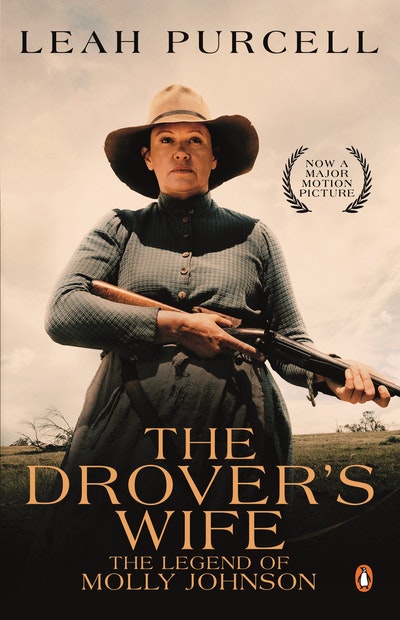
Any Australian child who grew up during the 1960s would know the story of The Drover’s Wife. It was in the Fifth Grade School Reader, and we all had the vision of the unnamed woman, dressing up on Sundays and walking through the lonely bush pushing the perambulator with her children beside her; and sitting up all night waiting for the snake to come out from the woodpile into the house, with Alligator the dog stretched out, his hackles rising as the snake finally slithers into the log hut.
I hadn’t realized that the version we read at school was an abridgment of the longer story (which can be found at http://www.eastoftheweb.com/short-stories/UBooks/DrovWife.shtml) and it was only when I read the longer version that I realized the racism threaded through it. The “stray blackfellow…the last of his tribe and a King” had built the woodpile hollow, and was thus indirectly to blame for the presence of the snake in the house; then there is the caricature figure of King Jimmy, who sent his wife Black Mary “the “whitest” gin in all the land” to assist with her third childbirth. Thankfully, these do not appear in the School Reader version.
But it’s easy to see how the story of The Drover’s Wife acts as a springboard into Purcell’s 20th/21st century reimagining of the story with an aboriginal protagonist, domestic violence and rape wrought by white men, and morally superior indigenous characters. Far from the heroic white settler ideal, the white men here are murderous brutes and ‘justice’ is warped. She fleshes out and gives a name to The Drover’s Wife – Molly Johnson- and she gives “Black Mary” a backstory that reflects the violence of Australia’s colonial history. There are no white saviours here: the good man is Yadaka, and it is Yadaka who reveals Molly’s own story to her.
There are nods to the original Lawson story – a fleeting reference to the Sunday walks through the bush- enough for someone who knows the story to recognize it. But younger readers, I suspect, would not know the Lawson story and would perhaps not recognize the subversion of the original that Leah has executed. Perhaps in 30 years, the subtitle will be sufficient ‘The Legend of Molly Johnson’.
This was such a clever, insightful playing with white settler fantasies that I feel curmudgeonly in pointing out the flaws in the story which are, unfortunately, many. The book is an expansion of the stage play and it still bears the strong use of dialogue that would have marked a performance. But with the tasks of expanding into a novel, Purcell has permitted herself to explore her characters’ “inner thoughts” and this is one of the things that brings the book undone. She skips from character to character, switching between first and third person which gives a disjointed feel to the narrative. She has introduced two white characters into the book – Nate and his wife Louisa Clinton- who, in a twist that doesn’t quite come off, ends up being a nod to Henry Lawson’s mother Louisa Lawson. There are plot steps that just don’t make sense: for an isolated bush-hut there seem to be many people going past, and it is never explained why Molly stops, endangering her children whom she has protected fiercely throughout, on their way to Yadaka’s cave. The ending was heavy-handed and cliched.
There were a number of disconcerting anachronisms in the book. Women had ‘baby bellies’; there were ‘hobby farms’; people did ‘business degrees’ (universities offered no such courses); people were affected by hormones (not discovered until 1935). This is not the American West: executions required a Supreme Court trial, not the local magistrate, and they took place in capital cities. Even the scenario of children ordered by a judge to be ‘taken’ without reason is anachronistic, the legislation being introduced in the early 20th century. This book cried out for good editing and fact checking.
There is much to admire in its subversion and defiance. But this book has shown me that playwrights are not necessarily novelists, and that even the most creative and politically sharp critiques can be brought undone by infelicities.
“Have you read The Dictionary of Lost Words?” I asked my daughter-in-law. She hadn’t, she said, although she started it and then abandoned it because she didn’t find it very interesting. I could sympathize: I wasn’t too enamoured of the first eighty or so pages of the book either. But I’m really glad that I persevered, because by the end, I absolutely loved this book.
I am a historian, and I love history, but I am very conscious of when the research behind a book swamps the narrative. I find myself wishing that the author had done their research, and then just put it away out of reach and written into the spaces left in the history. This is exactly what Pip Williams has done here, and her book is all the stronger for it.
The book is based on the real-life compilation of the Oxford English Dictionary, which formed the basis of Simon Winchester’s The Surgeon of Crowthorne, a book which describes the relationship between James Murray, the Editor of the OED and volunteer Dr. William Chester Minor, incarcerated at Broadmoor Asylum. Pip Williams read that book too, and in her author’s note, she says:
I thoroughly enjoyed it, but I was left with the impression that the Dictionary was a particularly male endeavour. From what I could glean, all the editors were men, most of the assistants were men, most of the volunteers were men and most of the literature, manuals and newspaper articles used as evidence for how words were used, were written by men. Even the delegates of the Oxford University Press- those who held the purse strings- were men
p. 410
Yet there were women involved in the Dictionary, and Pip Williams found them. There were James Murray’s wife Ada and three daughters Hilda, Elsie and Rosfrith who were engaged in the endeavour. Edith Thompson and her sister Elizabeth provided 15,000 quotations – perhaps not as many as Dr Minor, but prolific nonetheless. There was Eleanor Bradley who worked as part of her father’s team of assistants. Then there were the women who sent in quotations for words, or who wrote the texts that counted as ‘evidence’ of a word.
It is among these real-life women that Williams has created her story, finding the gaps and merging fact and fiction. Her fictional character, Esme, is the daughter of one of the lexicographers working in the Scriptorium, a rather-grandly named shed in the grounds of James Murray’s house. Her mother had died, and her father is raising her with the aid of Lizzie, an Irish maid not much older than Esme herself. Esme accompanies her father to the ‘Scrippy’, where she hides under the table as the lexicographers work, and it is from under the table that she notices one of the slips on which the words are written floating down to the floor. It’s the word ‘bondmaid’, and she takes it and hides it in the trunk under Lizzie’s bed onto which she scratches the label ‘The Dictionary of Lost Words’. As she becomes increasingly aware of the class gap between herself and Lizzie, and the gender gap between the men compiling the Dictionary and the women whose work provides the fabric of their middle-class existence, she is drawn to more ‘lost’ and ‘unknowledged’ words. She collects them from Lizzie, from old, toothless Mabel in the market, from actress-turned-suffragette Tilda, and as her experience grows, from her own knowledge of women’s bodies.
At the same time, this fictional Lizzie is living within a real-life historical world including the suffrage movement and World War I. Just as we are shaped by events and trends (for myself: baby-boomer prosperity, a politics in which the Labor Party became a viable political contender, the internet, 9/11, COVID), so too Lizzie’s life is touched by historical events, but Williams deftly keeps these as external, but inexorable influences without letting them overwhelm the narrative. She has her research well under control.
The book is steeped in questions of language and power, and there are some nice little plot tweaks that highlight the importance of language and words. One of the lexicographers speaks to Esme in Esperanto – that quixotic attempt to construct an international language and the Suffragettes adopt the motto of “Deeds, Not Words”. The epilogue, which takes us to a Lexicography conference in Adelaide in 1989 might seem superfluous or tangential but it’s not: the collection of the Kaurna language by ethnographers and missionaries and its restoration, like language reclamation projects in many Indigenous communities, is another form of “lost words”. In this way, Williams takes the process of transcription and compiling out of the little Scriptorium in an Oxford garden over a period seventy-one years to our own present as Australians as we face our own truth about languages that were proscribed and extinguished, only to be found again.
I really enjoyed this book, and didn’t want it to finish.
My rating: 9/10
Sourced from: CAE bookgroups, and my own copy as well.
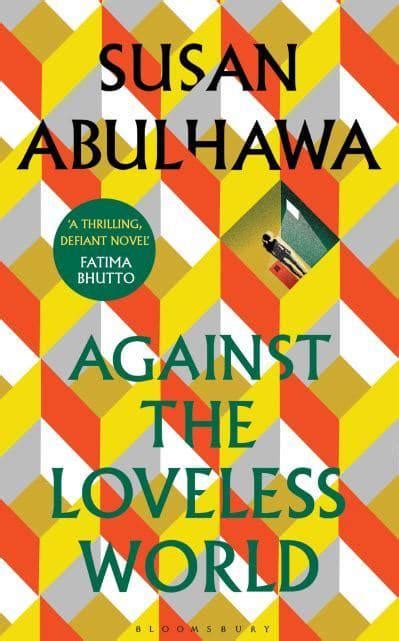
I’m not proud of the fact that I have never read a book about Palestine, until this book. It is a book that is framed completely within the Palestinian viewpoint, written by a writer who is forthright and active in promoting Palestinian rights and decrying Nazism and Zionism and suggesting their connection with Ukraine (as we can tell by recent tweets that have prompted withdrawals of other speakers from the Adelaide Writers’ Festival). The front cover of my version referenced the structure that the author has used in her narrative: that of the cube with its East, West, North, South, Up & Down orientations and the Unreachable Beyond. We meet the Cube in the opening pages, a nine-square-metre, high-tech solitary confinement cell in which Nahr is imprisoned for years, visited occasionally by international inspectors, and a passive-aggressive journalist accompanied her highly-constrained but sympathetic translator. Eventually given a notebook and pens, this is Nahr’s memoir through which we learn how she came to be in the Cube and why.
Superimposed over this ‘cube’ device are the locations in which the book is set, and they are many, because this is a story of dispossession and flight. Nahr’s family originally came from Palestine, but as Israel increased its grip on Palestinian territory, they moved from country to country as refugees. Part I is based in Kuwait, Part II in Iraq, and Part III in Jordan after the geo-politics surrounding Saddam Hussein and the US-led invasion of Iraq forced them to find a more welcoming environment. Part IV is based in Palestine, Part V a quick return to Jordan, then Part VI Palestine, Always.
Nahr actually has three names: Nahr (meaning ‘river’); Yaquoot (insensitively chosen by her father after the name of his lover) and Almas, the name she adopted when she becomes involved in prostitution as a way of supporting her family, who had no idea of how she was earning the money that supported her brother’s studies. She marries early, but the marriage fails. She travels to Palestine to obtain a divorce from her first husband, only to find herself drawn into her former in-law’s family and the Palestinian struggle to hold their land against Israeli settler encroachment.
The title is taken from the James Baldwin’s Letter to my Nephew, making the political point of the link between the African-American struggle in the US and Palestinian oppression. There’s a lot going on here in terms of educating Western readers, especially in its explanation of the implications of Middle East policy for Palestinian families. Too much preaching? Maybe, but I found myself thinking about Australia’s own history of settler-colonialism. I watch the spasms of violence in Gaza and the West Bank; I know about the check-points; I am familiar with the thrusting appropriation of land by the settlers. I know about all these things, but with this book the oppressiveness of colonialism and occupation over everyday life is made real, highlighted by the author’s description of landscape and sense of home.
Thank God that’s over! Never have I complained so much about a book that took me so long to read. So long, in fact, that it is massively overdue and the library has blocked my account. But once I had committed to about 500 pages, I felt that I had to keep going partly out of obtuseness (no big fat 1200 page book was going to beat me!) and because, flicking ahead, I’d find parts that interested me and wanted to reach them. But after probably six weeks of reading, was it worth it? Probably not.
It started well. I was interested in the book after reading an interview with the author, well known as a Russian historian, and the sheer scope of the endeavour impressed me. Starting off with the footsteps found in Happisburgh, England, of a man and four children, dating from between 950,000 and 850,000 years old, Montefiore looks to the family – “the essential unit of human existence”- as a way of linking great events with individual human dramas. By focussing on individuals, families and coteries, he admits that the families and characters that he follows in this book are exceptional, but they also reveal much about their era and place.
It is a way of looking at how kingdoms and states evolved, at how the interconnectivity of peoples developed, and at how different societies absorbed outsiders and merged with others. In this multifaceted drama, I hope that the simultaneous, blended yet single narrative catches something of the messy unpredictability and contingency of real life in real time, the feeling that much is happening in different places and orbits, the mayhem and the confusion of a dizzying, spasmodic, bare-knuckle cavalry charge, often as absurd as it is cruel, always filled with vertiginous surprises, strange incidents and incredible personalities that no one could foresee
xxxv-xxxvi
One of the things that I very admired in this book was his attempt to cover the whole of human endeavour, looking at all the continents across time. Admittedly, Australia gets pretty cursory treatment but both Americas, Africa, the Middle East, Asia and Europe are all dealt with in his chronological swirl throughout human history. The book itself is divided into twenty-two chronological acts, identified not by dates but instead by world population size. Within each ‘act’, there are a number of sections identified by family surname, often conjoining ruling families from very different parts of the globe. Taking Act Eight, for instance, when the world population was 360 million, its four sections set in the 1100 and 1200s are:
Genghis: A Conquering Family
Khmers, Hohenstaufen and Polos
The Keitas of Mali and the Habsburgs of Austria
The Tamerlanians, the Ming and the Obas of Benin.
Its final ‘act’ 22, with a world population of 4.4 billion takes us right up to the present day with:
Yeltsins and Xis, Nehruvians and Assads, Bin Ladens, Kims and Obamas
Trumps and Xis, Sauds, Assads and Kims
I had expected more of an emphasis on dynasties, which certainly do appear in this book, maintaining a presence across several ‘acts’ (e.g. Hapsburgs, Hohenzollerns). Nonetheless, quite a few of his actors are not part of a multi-generational power base (e.g. Yeltsin and Obama in Act 22) but are instead individuals who flame up and then events move beyond them. He does not particularly consider ‘the family’ as a unit of analysis, or identify ways in which it changed in any great depth. However, as he points out in his introduction, by taking ‘the family’ as his frame, it is possible to pay more attention to the lives of women, both as shapers of the men who dominate the main narrative, but who also formed the sinews of dynastic control, stepping in as regents, and as court powers in their own right.
There were some rather surprising omissions. I would have thought that the War of the Roses might have been dealt with, given that family and dynasty were fundamental to it. Perhaps Australia could have got a look in with the Murdoch family that we have inflicted on the late 20th-early21st century Anglo-sphere.
But the book is already overwhelming in many ways. Not only is there the kaleidoscopic effect of shifting from one continent and culture to another, but there is just so much. I gave up trying to keep it all straight, and just let it sweep me along, not even attempting to create my own internal mental narrative while reading.
I was also disconcerted by infelicities that I could detect that undercut my confidence in him as a historian somewhat (and who knows how many went undetected). He starts with Egypt, Africa, Athens, Persia and India, and I must admit that this part read a bit like the ‘begats’ section of the Old Testament. For me, it was only really with the arrival of the more familiar (to me) Romans that the narrative seemed to become more human-based instead of “one damned thing after another”. Now, I am no expert on Rome, beyond listening regularly to two podcast series on Ancient Rome, but one thing that the historians in these podcasts have highlighted is the slanted nature of the remnant narratives available to us today, shaped by the agendas and perspectives of their classical authors. There was no hint here of the cautiousness with which these historians embroider every statement: instead contested events and interpretations were presented as fact. So, likewise, I found myself reading of the truly horrific cruelties imposed by powerful men on the powerless with a similar twinge of skepticism. While not at all doubting man’s ability and perverse imagination in torturing other men, what was the purpose of counting and recounting these chilling punishments?
My wariness was increased further when I learned that:
The first outsiders to reach Australia were not Europeans (the Dutch landed there in 1606), but African sailors from Kilwa [near Tanzania], as evidenced by the discovery of copper Kilwan coins, inscribed in Arabic with the name of an amir of Kilwa, dug up on Marchinbar Island, Northern Territory.
p. 268
What???? Thanks to Google, I found that indeed copper coins, inscribed in Arabic were indeed found in the Northern Territory, but even though their origin remains a mystery, there is little credence given to the idea that they were brought by African sailors in the tenth century CE. Who was he reading? I wondered, to come up with this rather out-there hypothesis, but there was no bibliography. I only found out once I finished the book that there was an online bibliography available so as not to add to this already lengthy book.
Of course, a book focussing on the family is going to deal with sexuality, which was often only tangentially linked to marriage and the passing-on of DNA. But I did find myself wondering what was the point of frequent tales, especially in the footnotes, of perversion and sexual oddity, and the narrative and political purpose such anecdotes served in the histories from which they were drawn. In fact the footnotes, while often interesting and quirky, seem to act as a bit of a catch-all for the facts that he had uncovered that he couldn’t bear to leave out, even if they were only obliquely related to the text.
However, one thing that came through clearly was the distorting effect of slavery – probably the most anti-family activity man ever invented. Not just Atlantic slavery, but across all societies and often as a by-product of warfare, slavery enriched some families and dynasties, and the consequences of that wealth stretched across centuries, furthering further empire-development and discovery.
This book was published in 2022, and particularly the last chapters are narrowing in on Ukraine and Russia, the author’s specialty. I suspect that events yet to come will render these chapters out-of-date and possibly downright wrong. In a book which has travelled so far, across so much time and geography, I am surprised that he is risking rendering his scholarship obsolete by such presentism. His frequent coy references to “this author” in referring to his own interviews with influential political actors remind us that his work has not just been desk research, but that he has been a player in present-day politics as well. That said, I was interested that in a footnote in the closing pages, he rebutted Putin’s argument about Ukraine’s Muscovite and Russian origins by pointing out that Ukraine has, over time, been ruled by Ottomans, Habsburgs, Polish kings and Lithuanian dukes, and peopled by Cossacks, Tatars, Poles, Jews, Italians and Greeks, as well as Russians and Ukrainians (fn. p.1231)
This book was written “during the menacing times of Covid” (p. xxviii) and perhaps that accounts for its length. I was drawn to keep reading but I found myself resenting the sheer weight and length of the book, and the relentless piling on of actors and actions. I found myself wishing that he would take a break from the narrative, to take stock and analyze for commonalities and change, before continuing on.
Am I glad that I read it? Probably, in that I will probably take away flickers of recognition of names and cultures, and from the effect of seeing events that occurred contemporaneously that I had only seen in isolation previously. But it was damned hard work and I just don’t know -yet- whether it was worth it.
My rating: My God, how does someone rate a book about the whole of human written history? 7/10?
Sourced from: Yarra Plenty Regional Library. Please, YPRL and the borrowers waiting for me to return it, forgive me for holding on to it for so long. But I bet that few future borrowers will be able read it in four weeks either.
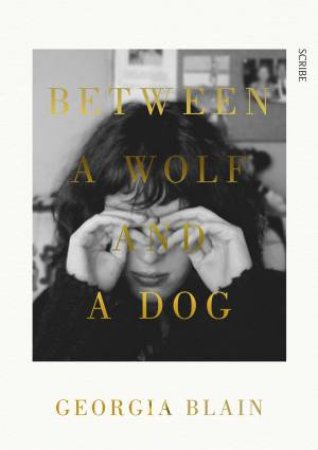
I have often thought that one´s response to a particular book is often shaped by the books you have read immediately prior. Sometimes a brilliant book casts everything else into the shadows and dulls your appreciation for whatever comes after, but sometimes it works the other way too. Immediately before reading this book, I read a dialogue-heavy political novel and I’m still reading a very long survey history non-fiction book. There’s no ‘singing’ prose in either of them. But right from the first page of Georgia Blain’s book I just relaxed into her precise and confident prose, knowing that I was reading a writer who can really write.
Much of the action in the book takes place over one day – a dank, wet Sydney day with the rain pouring down almost without stopping. We learn in the early pages that 70-year old Hilary is very ill, but she is keeping this knowledge from her two adult daughters, April and Ester. The two sisters have been estranged for three years, after April and Ester’s husband Lawrence had a brief fling. There had always been an underlying tension between the two siblings. Ever since childhood, April has had a scant regard for possessions, and freely takes what she desires. However, ‘taking’ Ester’s husband is a far cry from the ‘borrowed’ clothes and pilfered jewellery from their childhood. Ester and Lawrence’s marriage breaks down, and the two parents are negotiating the shared care of their children.
The phrase ‘Between a Wolf and a Dog’ refers to that twilight time when the shape of things is blurred, and it is no longer clear whether an animal is a wolf – a threat- or a dog -potentially friendly. Likewise, all the characters in the novel are at a pivot of change. Ester, a counselor, has met a man who might be a possibility; Lawrence’s career reputation is about to come crashing down; April and Ester are both wearying under this long estrangement, and Hilary is facing big, life-and-death decisions.
The narrative focus swaps from one character to the other, while the book itself is divided into sections ‘Now’ and ‘Three Years Ago’. I didn’t find all parts equally compelling. Following Ester through her counselling consultations as she negotiates around other people’s pain seemed superfluous, and could easily have been omitted. April and Lawrence’s separate irresponsibility and obliviousness to consequences was repellent, but Blain captured their own self-absorption and recklessness well. One character who remained shadowy was Hilary’s husband and the girls’ father Maurie, a successful artist whose reputation continues to grow after his death from heart attack. His widow Hilary is curling into her own ball of pain, and the closing scenes were poignant as she meets separately with her daughters who are blithely unaware of what is about to come.
The most beautiful writing in this book is in her descriptions of that drumming, streaming rain which lowers like an oppressive cloud over the family. Particularly the two opening scenes, where Lawrence and Ester wake up in their separate houses to the sound of the rain on the roof brought me right into the room with them.
Georgie Blain’s own experience of the same cancer that Hilary faced is a tragedy of irony, but it would be wrong to read this book solely in terms of the author’s own illness. The characters were so real to me that I found myself wondering what happened next, even while reminding myself that it is fiction. That doesn’t mean that it doesn’t hold its own truth.. It is a beautifully written, domestic novel, carefully constructed and balanced.
My rating: 8.5
Sourced from: CAE as our February 2023 bookgroup read.
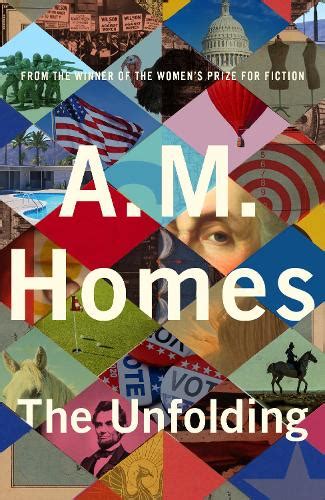
This book is set in a very specific timeframe: from Wednesday 5th November 2008 to Tuesday 20th January 2009. Ring a bell? Probably not. I’ll help you out. It’s the time between the election night that saw Barak Obama elected as President of United States, and the day of his inauguration the following year.
If you’ve ever been to an election-night function as a volunteer, you’ll recognize the awful, chin-trembling bleakness of defeat when the balloons, the music, the party pies all of a sudden take on a bilious yellow hue. For white, racist, life-long Republicans that election night -more than any other before it- must have seemed like the world was shifting on its axis. And so we meet Hitchens, nick-named “The Big Guy” who decides that something must be done. He calls on his mates, fellow-Republicans, entrepreneurs, a crackpot historian, a tax lawyer etc, all rich, entitled, puffed up with their delusions that they can change history if they get the right people onside and pull a few strings. And so they launch into a series of sleazy meetings with ‘fixers’ and quasi-military figures where men talk in catch-phrases and allusions, plotting to somehow over-turn Obama’s election, to set the world right again. If we hadn’t seen Rudy Giuliani sweating away in the All-Seasons Garden Supply car-park, or January 6th, this would just seem like farce. Not any more: as the author of this book, published in 2022, knows only too well.
While all this is going on, the Big Guy has his own problems at home. His wife Charlotte is an alcoholic who finally seeks help for her addiction; his daughter Meghan is at boarding school and starting to question her own views on life and politics, after joining the family jaunt to the polling booth to vote for John McCain. The family has its own secrets and it is forced to face up to them, while Big Guy is escaping reality through his ham-fisted political manipulations to try to go back to the good old days.
This book read very much like a play, with a heavy reliance on dialogue. There are no chapters, but instead a series of ‘scenes’, each identified by date and location. There are probably a lot of political references and in-jokes that escaped me, and I felt my Australianness keenly while reading the book. What an unsavoury group of people. How depressing that they’re still here.
My rating: 6/10
Sourced from: Yarra Plenty Regional Library
Read because: I heard the author on a BBC Start the Week podcast (see my response to the podcast here). This podcast has a lot to answer for.
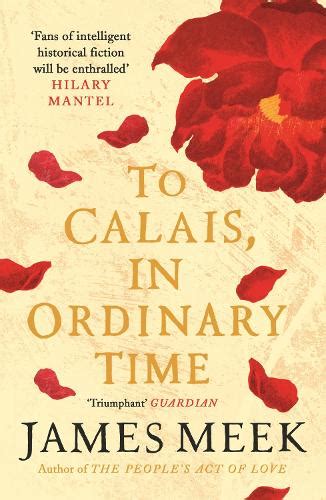
I have only read one other James Meek novel, The People’s Act of Love, although I’ve often seen his articles in the London Review of Books. I read The People’s Act of Love before I started blogging. It was set during the Russian Civil War that followed the Revolution – a time when fortunes and allegiances shifted in response to the global political situation, and when loyalty and survival were pitted against each other. Meek’s most recent book To Calais, in Ordinary Time is likewise set in 1348, a time of political flux, but this time politics is rendered hollow by the threat of plague. This book was published in 2019, before our own world was to face its own plague, and to read it in 2022 is to find resonances of which the author would have been unconscious, as the plague is at first just a rumour, dismissed, politicized or seen as divine intervention. But by the end of the book, the plague dominates, throwing into question social distinctions, faith, and the nature of commitment.
The book involves a journey from South-West London to Calais, two years after the battle of Crecy where a group of archers under Edward III routed a larger French army and went on to capture Calais. A band of battle-hardened archers is gathered together by knight Laurence Haket to return to Calais, and young serf Will Quate is nominated by his liege lord to join them. The other archers, led by Hayne, had been involved in the sack of Crecy two years earlier and had taken captive French noblewoman Cess, who was forced to accompany them back to England. Now they are heading back to Calais again, and they are joined by Lady Bernardine, Wills’ master’s daughter who is escaping an arranged marriage to an older man; Thomas, a clerical administrator on secondment to an abbey who, while not an actual priest, is steeped in the church; and Hab, a swineherd with desires of his own. While they are heading to France, the plague is heading towards them.
The narrative is told in different voices. The cleric Thomas writes his first-person narrative on parchment, in a high, intellectual tone; while the third-person narrative depicts Lady Bernardine as speaking in a lofty, French-inflected language. Will, Hab and the archers, on the other hand are depicted as speaking a form of dialect : not quite Chaucer, but with many unfamiliar words (‘neb’ for face; ‘steve’ for voice) and a curious sentence-construction. Meek sustained this well throughout the book, although I confess that it often tangled my reading.
What I found most confusing, though, was the names. Hab (the swineherd) is very similar to Mad (one of the archers); Mad (the archer) is very similar to Madlen (Hab’s ‘sister’); Hayne (the leader of the bowmen) is very similar to Haket (the knight). Add to this abbreviations (Cess for Cecily; Berna for Lady Bernardine), some gender-bending, and a play within in a story- and I didn’t know where I was for much of the book. In a way, my own confusion mirrored the other-worldliness and the unfamiliarity of the 14th century setting. It did resolve, particularly as the plague set in and different characters dropped away.
In her blurb for the book, Hilary Mantel wrote:
Fans of intelligent historical fiction will be enthralled by a story so original and so fully imagined. Meek shows the era as alien, which it is, and doesn’t falsify it by assimilating it to ours. But his characters are recognisably warm and human.
I confess that I found myself wondering if I was “intelligent” enough for this book, because I did find it challenging. But as Mantel points out, Meek has created a world on its own terms, with disorienting little twists, that reinforces that his characters are not just ‘us in funny clothes’ and he sustains this across the whole book. And, by chance, we bring to this 14th century world our own 21st world view of plague which, for me, only enhanced the book further. It’s a remarkable- but challenging- book.
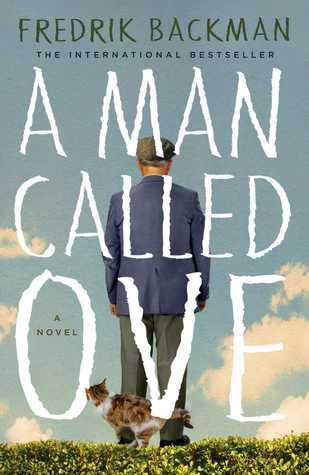
Although this book purports to be about a curmudgeonly old man, the American film (renamed ‘A Man Called Otto’) stars Tom Hanks so he certainly couldn’t be too curmudgeonly. As someone who has experience of Grumpy Old Men (Reader, I married one) Ove is only eye-rollingly annoying with a heart of gold. It was altogether too saccharine for me.
There are advertisements at the end of the book for the author’s other publications, My Grandmother Sends Her Regards and Apologizes and Britt-Marie was here. They sound just like this book with an misunderstood older person covering a hidden warmth who blossoms under the attention of others. Pardon my cynicism.
Sourced from: purchased e-book (it was on special)
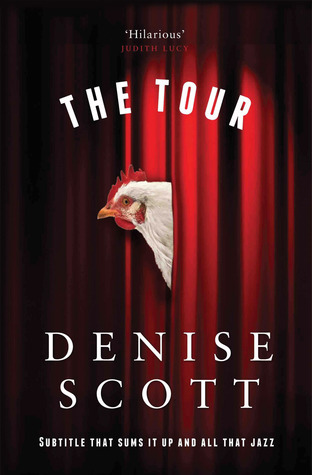
Denise Scott is one of my favourite comedians – no, she’s my FAVOURITE comedian. I enjoyed All that Happened at Number 26 and when I was looking for a book to read quickly to round out my Goodreads Challenge for 2022, this seemed a good choice. There’s quite a bit of repetition here from All that Happened at Number 26 but that didn’t stop me laughing out loud in bed and on the train and bus on a 3 hour journey.
We were both born in the same year, and she grew up in Watsonia/Greensborough which is just up the road from my own house, so many of the schools and places she mentions are familiar to me. So, too, are the experiences of facing the death of parents and the bodily indignities of aging. It was interesting to read of the frequency of sexual assault, that of course underpins the whole “me too” movement, but was almost taken for granted by women of our age. I suspect that a younger woman today would conceptualize and write about it very differently.
It’s not high literature but she’s funny and human and I wish that I were sitting beside her, just listening to her and laughing.
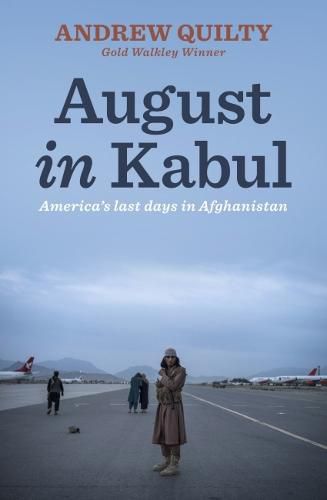
Photojournalist Andrew Quilty had been thinking about writing a book about Afghanistan since late 2020. The Doha agreement had been signed in February 2020, thousands of Taliban prisoners had been released, and the Americans were pressuring Kabul to take more responsibility for ‘active defence’ so that the US troops could withdraw as planned. In this book that he imagined writing, he intended following the theme that he’d been following for several years in his reporting: that the US refusal to deal with the Taliban had ignited the insurgency, as it had in Iraq. He would follow the lives of rural Afghans, who had experienced a very different war from that experienced from Kabul, and bring their experiences to attention.
But then August happened, and that book was put aside and this one written instead. Biden had specified a withdrawal date of 31 August, but as the Taliban took Kabul, the date was brought forward. By mid August foreign embassies were closing, expatriates were being brought home, and crowds of people desperate to escape the return of the Taliban surrounded the airport, standing in a canal of sewage, clinging to the undercarriage of airplanes. We all saw it, but the sheer press of humanity turned these people into a ‘mob’. Andrew Quilty gives them back their individuality.
The book is written chronologically in three parts, with each chapter set at a different location, with some locations appearing in all three parts. Part I is set in early August, as the rumours of the return of the Taliban become stronger; Part II is set in mid-August as the government falls apart; and Part III is set in late August as the Taliban take Kabul and those who can, try to flee. In Part I in particular, he captures some of what he intended in his earlier planned book, interviewing soldiers protecting the Antenna Post in Maidan Wardak Province, but also the villagers who, because of their own conservative beliefs and lifestyles, saw no threat from the returning Taliban. In the later sections he focuses his attention on Kabul, not only because the provinces are now Taliban-dominated and thus less accessible to him, but also because it is city-dwellers and those who had assisted the US and other foreign troops who have more to fear and more to lose as a result of the return of the Taliban after two decades.
The journalistic leanings of the author are clearly visible. Each chapter is written almost as an object of long-form journalism, with interviews and stories of colleagues and antagonists interwoven with each other. It reflects my own cultural blinkers, I know, but I did become a little confused between characters whose names seemed very similar to me, and I would have appreciated a list of characters with an identifying paragraph at the start of the book. However, the index was very useful, and most of the acronyms were spelled out in the index as well. I was bemused, though, by his insertion of a chapter of historical background which appeared in Chapter 8, two-thirds of the way through the book. I would have thought that it would have been more useful earlier.
And I don’t know if it is because I am a woman, or whether the recent closure of universities and NGO jobs to women in Afghanistan has heightened our awareness, but I responded most to the stories of women, in particular Nadia, whose oppression within the family became more suffocating as the Taliban approached. It was as if her brother was emboldened within the family home by the appearance in the streets of the Taliban perched on their jeeps, bristling with guns. The power of her older brother within the family is frightening, as he cajoles his father into stricter discipline of his daughter, and her mother averts her eyes. Then there is Hamed, a presidential staffer, who watches as all the framework of government melts away as men decide to look to their own safety first by taking advantage of opportunities of escape that were not available to those crowds surrounding the international airport. Quilty takes us to those people at the airport, some of whom manage to get inside and escape to a new, if uncertain, future and others who after days of heat, dehydration, crowding and sloshing through that foul canal of sewage decide that it is futile and return home.
There are many dangerous places in the world, but surely the most perilous time must be as one regime gives way to another. If you have made a commitment to either side, all traces need to be expunged without hesitation or sentimentality, and it becomes clear where the limits to loyalty lie. And now, as the Taliban reneges on its promises about women and as the world struggles with how to deal with this inexorably hardline government, I wonder what happened -and will happen – to the people that Andrew Quilty has brought forward into Western consciousness.
My rating: 8/10
Sourced from: Yarra Plenty Regional Library. Read because I read a review of it somewhere.

 The Resident Judge of Port Phillip