Category Archives: Book reviews

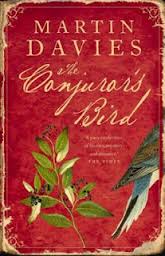
‘The Conjuror’s Bird’ by Martin Davies

conjurersbird

2005, 400 p.

On Captain Cook’s second voyage to the Pacific, a bird- not necessarily uncommon and rather unprepossessing – was caught, preserved and sent back to England where it became part of Joseph Banks’ enormous collection.  But the Mysterious Bird of Ulieta was never seen again, in either its preserved form or in the Pacific.  The lost bird is the central motif of this book.

The story is told through two separate and alternating narratives.  The first, set in the present day  tells the story of  John Fitzgerald, an academic whose specialty is extinct birds, who is visited by his ex-lover, conservationist Gabriella. He is spurred by her visit to renew his search for a trace of the now-lost specimen, aided by Katya, a young graduate student.  There’s lots of skullduggery and double-crossing as various people, with even more various reasons, are all looking for the same lost bird.

The second story line, displayed in a smaller font and voiced in  more formal, old-fashioned language, tells the story of Sir Joseph Banks, a man well-known to Australians as the naturalist on Cook’s first voyage of discovery.  He intended travelling on Cook’s second voyage as well, but suddenly withdrew, ostensibly because the cabin arrangements were not to his liking.  This narrative thread explains his withdrawal and the provenance of the preserved remains of the mysterious bird.  It’s a love story and is quite beautifully told, in a way that honours the careful  style of nineteenth-century fiction.

Martin Davies is a BBC television producer and he brings this experience to the first narrative thread of this book.  It’s all very much BBC Friday night mini-series fare: fast paced, with multiple story-lines and red herrings and a nice satisfying ending.   I preferred, and have more respect for the second storyline, woven around on a number of documented facts into a plausible and satisfying explanation.

I read this book with my bookgroup, and quite a few of us spent time Googling Joseph Banks.  It made me almost regret that Googling is so easy now, because the real art of historical fiction of this type is colouring in the spaces between the known facts.  It brought to mind something I read in the London Review of Books recently, where a review of Rupert Thomson’s book Secrecy discussed techniques that writers like Peter Ackroyd and A. S. Byatt have adopted (changing the name of their character; cutting the biographical link) in order to defend the imaginative space to write about historical figures:

…instant access to information strengthens the case for  such defensive strategies.  It only takes a mouse-moment to move from ignorance to an unrooted expertise.  There’s a lesser allocation of breathing space to projects that both plunder the real and depart from it.  It becomes all to easy to collapse a fictional narrative into a piece of failed history, turning it into a travesty of something it never claimed to be  – Adam Mars-Jones ‘The screams were silver’ London Review of Books 25 April 2013.

I enjoyed this book as a bit of a romp, with enough fidelity to the historical record to go along willingly for the ride.

My rating: 8.5/10 (it would be a good holiday read)

Read because: Book group selection

Sourced from: CAE Bookgroups.

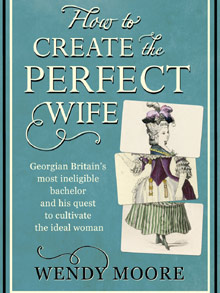
‘How to Create the Perfect Wife’ by Wendy Moore

wendy-moore-cover-_2474788a

2013,  259 p. & notes

The original Pygmalion of Greek mythology was a sculptor who, disgusted by the impurity of the daughters of Propoetus, fell in love with the beautiful sculpture of a woman that he had carved out of ivory.  Before the altar of Venus, he secretly wished that he could marry a woman who would be the living likeness of his sculpture, only to find that his wish was granted.   A man creating his ideal woman is a story that was repeated in Shaw’s Pygmalion, in My Fair Lady and  Pretty Woman– and so too, in this book.  But there’s nothing romantic, feel-good or funny about this book at all.

In 1769  twenty-year old Thomas Day was wealthy, intense, disheveled and a young man of questionable personal hygiene. He did not take his first rebuttal in love at all well.  Spurned by the sister of his friend Richard Edgeworth and deeply influenced by Rousseau’s book Emile, he and Richard contrived to adopt one, then two, 12 year old girls from the Foundling Hospital in order for Thomas to mould them into a woman who would make a perfect wife. Although ostensibly adopted by the safely married Richard Edgeworth, the two girls became Thomas’ possessions as he changed their names, took them away and followed the prescriptions in Emile.  When the first girl proved unsuitable, she was bundled off to be apprenticed and he turned his attention to the second, ‘Sabrina’.  We certainly would see his treatment of her as abuse today: isolation, exposure to the cold and wet,  the dropping of hot wax onto bare skin and the expectation of unquestioning and  absolute obedience.  But in Georgian Britain?  His friends, members of the nonconformist and free-thinking Lunar Society of Birmingham   (James Watt, Erasmus Darwin, Matthew Boulton, Josiah Wedgwood etc. ) were aware of his ‘experiment’ and his odd obsession, and while they thought it strange, did not intervene.

But even the  young orphans refused to be part of a such a perverse undertaking, and he lost Sabrina. He immediately turned his attention to other women in his circle, still striving for the perfect wife who would live with him in isolation and penury by choice, completely subservient to his wishes.  The chapters in the book are arranged by the women he turned to, one after the other and some even more than once,  in his quest.  At last he found a woman who loved him deeply and complied with his wishes, even though she was not at all the type of woman he had tried to create.

The book focuses on Thomas Day and Sabrina, one of the orphan girls.  She survived him, but was almost brought undone by the exposure of her story and her illegitimacy by the writings of people in Thomas Day’s literary circle.  Thomas Day himself is a paradox: a strange, driven, single-minded man who was at the same time the author of one of the most popular children’s book series  (The History of Sandford and Merton), the author of a highly influential anti-slavery tract The Dying Negro, and a strong supporter of American Independence.

The author, Wendy Moore, obviously knows a good story when she sees one.  She wrote the best-selling Wedlock (see my review here) , which was a retelling of the story of Andrew Robinson Stoney and Mary Eleanor Bowes, the inspiration for Thackeray’s Barry Lyndon .  Both that book and this one are non-fiction, well researched and well-documented, drawing on the extensive writings of these educated, literate characters of Georgian England.

Moore writes a rattling good yarn, which moves quickly and lightly.  It is told in a rather conversational style that is rather sweeping as far as the big picture is concerned, but the extensive footnotes at the end reveal how source-based the material is when she is dealing with Thomas Day himself.   It’s a good, if unsettling, read.

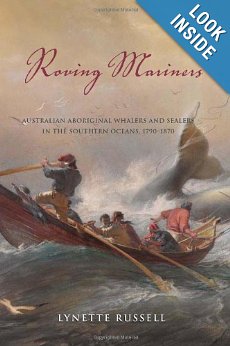
‘Roving Mariners’ by Lynette Russell

rovingmariners

Roving Mariners: Australian Aboriginal Whalers and Sealers in the Southern Ocean 1790-1870

2012,  140 p & notes

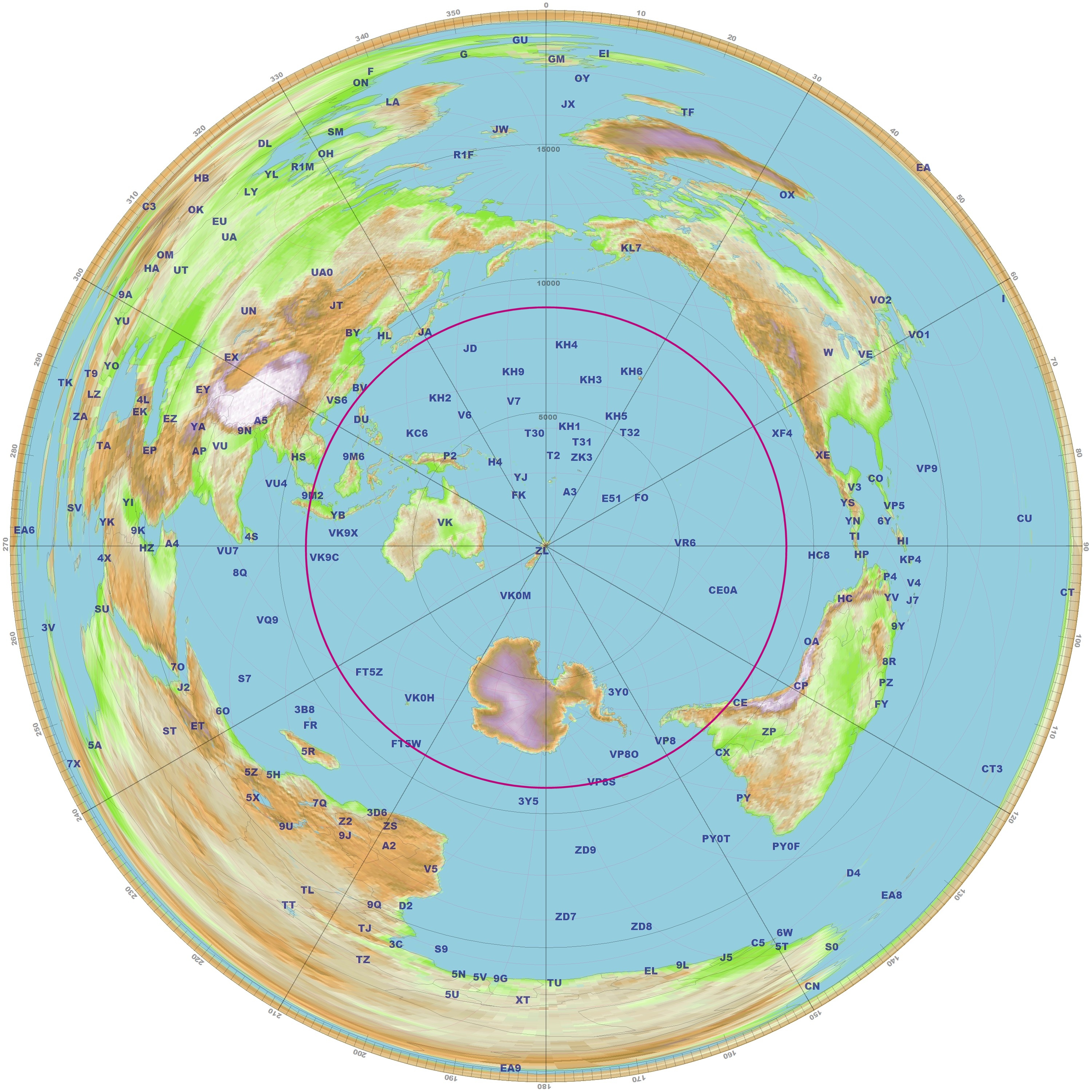
There are two decenterings that this book demands of its readers.  The first is encapsulated by a map that looks something like this:

great_circle_SM3GSJ

It’s a map showing the great circle route of the southern ocean.  Dotted around and radiating out from the centre of the circle are the islands of the southern ocean: the larger land masses of  Antarctica, Australia, New Zealand,  and although you can’t see it here, Macquarie Island, Pitcairn Island,, Kerguelen, Chatham Island, Tahiti, Society Islands,  Solomon Islands, Falkland Islands, South Georgia.  It’s a view that challenges our land-mass bias by emphasizing the ocean and the space, and the relative proximity of small islands flung into the centre of the Indian, Pacific and Atlantic Oceans.

The second decentering reflects the focus on whaling and sealing in this book right up to 1870.  We’re often told that whaling and sealing were primitive, increasingly marginal endeavours which were eclipsed by the pastoral industry and then the gold rushes that super-charged the Australian economy in the 1830s, 40s and 50s.  It’s odd: I’ve been reading through 1840s newspapers for years now seeing mainly sheep, sheep, sheep but after reading this book suddenly I saw references to whaling all over the place- not long articles mind you, but the steady ongoing enumeration of whaling ships in the shipping news and, I must admit, the frequent presence of whalers and sealers in the criminal news.

Lynette Russell is the director of the Monash Indigneous centre at Monash University, and is herself of Tasmanian Aboriginal descent. Her own personal engagement with the history of whaling and sealing was prompted by a discussion she had with an elderly distant cousin who, like her, acknowledged descent from both Aboriginal and European ancestors.  He explained that his great-great-grandparents had been sealers, she a Tasmanian Aboriginal woman and he a British seaman.  When she sympathized with the virtual slavery in which Tasmanian Aboriginal women were kept, he pulled her up.  They were both sealers, he said, rather than a sealer and his ‘woman’ (p. 22).  This set her off to explore in a more nuanced way the complexity of the Southern Australian sealing industry.

In regard to her own Aboriginal identity, Russell embraces notions of undecidability and uncertainty:

As such, I emphatically state that I am neither one thing nor another.  Though I recognize that for many (perhaps most) people the desire to acknowledge one identity over all others is paramount.  For me, the binaries of Indigenous- non-Indigenous or native-newcomer- binaries that, despite their obvious artificiality, continue to be widely used- are meaningless; such simplifications hamper our understanding of the past. (p. 21)

This personal stance is reflected in the history that she writes in this book.

One of my key desires is to create a more complex and less linear narrative than has been previously produced for southern Australia.  One of the complexities I wish to develop concerns the question of the boundaries surrounding who was categorized as native, who was not, and who was described as newcomer…. I believe that these categories were not stable, and during the sealing and whaling period they were perhaps in a greater state of flux than they were either before or afterward. (p. 13)

The whaling and sealing industries of the Southern Oceans were always ethnically diverse with a strong representation of ‘coloured seamen’: African and Native Americans, Native Canadians, Pacific Islanders, Maori and Aborigines. Her sources are the archival records of the maritime industry including  logs, ships’ records, diaries, journals, visual materials including photographs and European artifacts.  After trawling through the sources, she concluded that there was ultimately a paucity of information about the ‘coloured seamen’ that she wished to write about.  This, she says, enabled space for her to imagine their lives and labours and to be “intentionally creative” (p. 16).  She plunged herself into the experience of whaling and sealing:  standing on the deck of a ship in the midst of a pod of sperm wales; standing on Kangaroo Island amongst a colony of noisy, smelly fur seals.

I must admit that there is much in her upfront description of her political stance and methodology that discomfits me (and I should imagine that within Indigenous politics, some would be even more uncomfortable), but I found little  in the text itself that unsettled me.   Instead, I sensed that she had read widely and imaginatively and that there was a strong tethering in verifiable, if diverse, sources (with one major exception where I felt that her creative imagination was straining the evidence too much).  She is very much present in the text. Her argument is strenuous and well argued, and it has the effect of challenging easy assumptions.

She focusses in particular on two men: Tommy Chaseland, and William Lanne.  Thomas Chaseland was born illegitimately to an Aboriginal woman and a white emancipist father.    He was sent to work in the shipping yards of the Hawkesbury River and signed on to the Jupiter. After a succession of stints on various whaling ships, he settled in New Zealand where he became the husband of a high-ranking Maori woman and made his home on the isolated Codfish and Stewart Islands before moving to the Fiordlands west of Stewart Island where he and his wife worked on a whaling station.

William Lanne, often incorrectly described as ‘the last Tasmanian Aboriginal male’  is more widely known, largely in terms of the outrageously disrespectful treatment of his body after his death.  Russell examines Lanne as one of three  Tasmanian Aboriginal men who pursued their luck at sea alongside Captain Henry Whalley and Walter George Arthur.  The details of what happened after his death almost obscure the life that he lived, but Russell attempts to reconstruct it.

Reconstruction of a life becomes even more difficult when she turns her attention to Tasmanian Aboriginal women.  Here she follows two other historians, Rebe Taylor who examined Kangaroo Island and Lyndall Ryan who focussed on Bass Strait and Tasmania.  She acknowledges her debt to this work, and tries to take it further by endeavouring to bring the wives and women from the shadows of the narrative.  It is a difficult task that involves reading against the sources, many of which were written by the missionaries who tried unsuccessfully to get the women to leave the islands.  She is extremely careful in her discussion of freedom, action and choices and her caution in the text behooves us to read closely and to attend to her hesitations and qualifications.

This is a beautifully written and nuanced  reflective history. It is at the same time easy to read and yet requires much of the reader as well in terms of weighing the argument and her use of sources.

A review of the book is available on H-Net.

awwbadge_2013I am posting this review to the Australian Women Writer’s Challenge under the History/Biography/Memoir section.

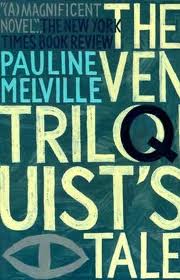
‘The Ventriloquist’s Tale’ by Pauline Melville

Melville

1997, 357 p.

All stories are told for revenge or tribute.  Take your pick (p.9)

So says the ventriloquist, the narrator (‘You can call me Chico. It’s my brother’s name but so what‘)  who appears in the opening and closing pages of this book. He is an unsettling, jeering presence who adds nothing to the book as a whole and yet manages to subvert it as well.

Ah, secrecy, camouflage and treachery.  What blessings to us all.  Where I come from, disguise is the only truth and desire the only true measure of time. (p.7)

His tale, sandwiched between the prologue and epilogue, is told in three parts. The first and final parts are the framing story of Chofy McKinnon, an Amerindian married man who embarks on an affair with Rosa Mendelson , a British academic who has travelled to Guyana as part of her research into Evelyn Waugh.  While interviewing an old woman in London who had worked as a governess for the McKinnon family in what was British Guiana at the time, Rosa had been told that Evelyn Waugh had stayed with the McKinnon family, and that she had even cut his hair sixty years earlier.

Poor man.  He was so out of place.  He sat out in the open that first day and that was when I gave him a haircut.  Nobody really knew what the hell he was doing there…. For all that he was looking for material, he missed one story that was under his nose…If you find any of the McKinnon’s they will be able to tell you about Mr Waugh.  The other business had to do with Danny McKinnon and one of his sisters.  Her name was Beatrice…I don’t know why Mr Waugh didn’t write about that.  He certainly knew about it. (p. 49)

And so Rosa travels to Guyana to track down any McKinnon descendants.  There she encounters Chofy, who was estranged from his wife Marietta and son  Bla Bla. His aunt Wilfreda, sister to Danny and Beatrice knows the story too, but she doesn’t want to tell it.

The second and largest part of the story concerns Danny McKinnon and his sister Beatrice sixty years earlier.   Scots-born Alexander  McKinnon had arrived in British Guiana at around the turn of the twentieth century, married two Indian sisters and had several children to both sisters, including Danny and Beatrice.  When Danny and Beatrice fell in love, the villagers accepted it as something that happened occasionally.  A brother-sister love affair was even referenced in the tribal myths and stories about the sun and moon.  The author, Pauline Melville, takes a similar approach in writing about the relationship: sensual and evocative but neither condemnatory nor sensationalist.  The Catholic priest, Father Napier, however, cannot abide the relationship as he pursues the couple to bring God’s punishment on them.  He is not the only one punished.

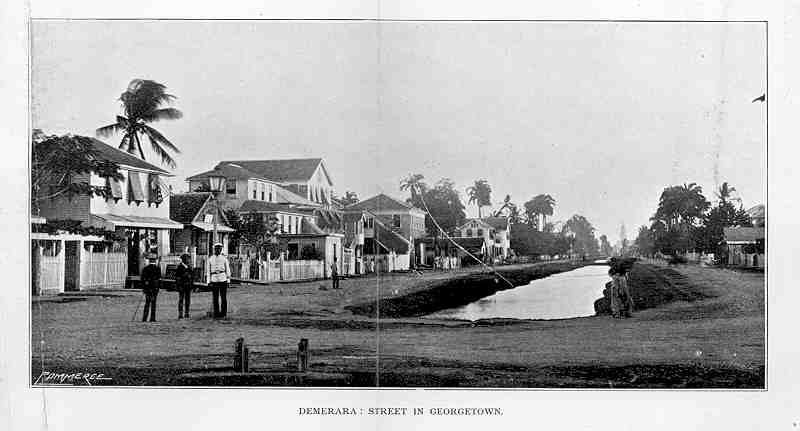
I heard about this book when it was reviewed by M D Brady at Me, You and Books as part of her Global Women of Colour reading challenge.  A book about Guyana! I’m attracted to reading about Guyana/Guiana because it’s part of my own research into Judge Willis for my thesis.   I’m sure that very few readers of The Ventrioloquist’s Tale thrilled to Melville’s description of Georgetown, but  I certainly did.  Given that I have never seen Georgetown and probably never will, this captured what I have gleaned from my reading and can see in my mind’s eye:

Chofy had not visited Georgetown often.  From his first visit as a young boy, the city had made him uneasy.  It was not just the geometrical grid of the Georgetown streets, the parallels, squares and rectangles which disoriented him after the meandering Indian trails of his own region, but as he walked over the dry brown clumps of grass along the verges, he experienced the unaccountable sense of loss that hung in the spaces between buildings renowned for their symmetry and Dutch orderliness.

From early on in its history, there had been something pale about the city of Stabroek, as Georgetown was known in the eighteenth century.  It was as if the architects and builders had attempted to subdue that part of the coast with a geometry to which it was not suited and which hid something else.  The labours of men had thrown up a city made of Euclidean shapes, obtuse-angled red roofs, square framed houses on evenly spaced stilts, delicately angled Demerara shutters, all constructed around transparency, emptiness and light. (p. 35)

demerara

This book is a delight in itself, quite apart from any post-colonial theorizing imposed onto it.  But it is a robust enough text to withstand heavy-duty academic analysis (see, for example here)  and my admiration for the text grew even stronger when I read about the connections between the author’s own family history and the text here and in this Guardian interview with the author.  Melville has not just taken her family’s real-life connection with Waugh but has, I think, taken her revenge, as the ventriloquist suggested, on Waugh’s simplistic and blinkering dismissal of his time in British Guiana and Brazil.

I had borrowed this book out of a desire to read literature set in British Guiana. I was given much, much more. Brilliant.

My rating: A big fat 10.

Sourced from: LaTrobe University Library

Read because: M.D. Brady’s review.  Thank you.

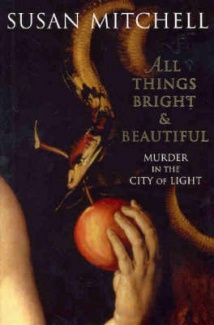
‘All Things Bright and Beautiful’ by Susan Mitchell

Mitchell

2004 ,259 p

This book gave me nightmares.  I usually do my non-thesis reading in bed, just before falling asleep and this book falls well into the ‘not thesis’ category. But not once but three nights in a row I found myself sitting up in bed, heart pounding after a nightmare prompted by reading this book.   So I decided that if I was ever to finish it, I’d have to read it by light of day.

You only have to say the word ‘Snowtown’ to an Australian and they’ll immediately think of a disused bank in a small, South Australian country town, with barrels stuffed full of rotting, dismembered body parts.  It’s a sordid tale: a boorish, violent man on a self-propelled mission to rid the world of paedophiles, drawing vulnerable and rather simple men into his campaign to torture and kill the “dirties” as he calls them.  Twelve lost, marginal often mentally ill victims: so many dysfunctional histories of sex abuse and neglect. Truly the stuff of nightmares.

The author, Susan Mitchell, was born in Adelaide but at the time of writing this book was living in Brisbane.  She had been a presenter on ABC radio in Adelaide, and she still had contacts and friends there.  This book is only partly about the Snowtown murders.  It is just as much about Adelaide itself- Adelaide the city of churches; Adelaide the planned city surveyed and planned by Colonel Light (hence the second part of the rather clever title ‘Murder in the City of Light’); Adelaide the festival city with its Festival of Ideas and its Writers Festival; Adelaide with its worthy Wakefieldian principles and Adelaide with its enlightened social policy.  How does this Adelaide reconcile itself with Snowtown, the lost Beaumont Children,  the drowned law lecturer George Duncan and the sense that there’s something just a little strange about Adelaide?  As she puts it:

If a city is planned to be perfect, if its citizens think of themselves as having the best possible life, if the expectations of Utopia are ever-present, how, then do they cope with its underbelly, with the serpents slithering about, unnoticed and disregarded on these hot, bright, plains of Paradise? (p. 63)

This book is written as first-person reportage, much like Helen Garner’s work in Joe Cinque’s Consolation or The First Stone,  or Anna Krein in Into the Woods, or  Chloe Hooper in The Tall Man.  As with Garner and Hooper’s work, much of this book is set in a courtroom listening to evidence, watching witnesses and the legal system at work.  However, Mitchell doesn’t do the hard yards in quite the same way: instead of sitting in the courtroom day after day (which lends its own perspective on the proceedings), she jets back and forth between Brisbane and Adelaide, catching up on the transcripts in between times.

Now that I was reading the book by harsh (and comforting) light of day, I became much more aware of the second part of her quest in writing this book: to reconcile the City of Light with the city that spawned Snowtown.  And, I have to admit, I became increasingly critical.  She sits in her five-star hotel, ordering room service and a good bottle of wine, and then mulls over the transcripts of terror that she has read.

She speaks to people: which people? you ask. Why, lawyers, Christopher Pearson the conservative bon vivant, wealthy philanthropists, writers, the Lord Mayor of Adelaide of course. The brightest stars in the City of Light.

She hops in her car and drives to Elizabeth, the impoverished industrialized town in which the murders took place, and gets her directions from a helpful girl on the telephone.  She drives around looking,  looking at the “sullen, blank stares of the people in the malls, of the people loitering outside Centrelink, of the teenage mothers dragging little children behind them (p. 77). ”  What a relief to return to leafy Dulwich, in her house with its high ceilings, open fires and leadlight windows  where “An open fire, a deep couch and a glass of wine could, perhaps, take the chill out of my soul” (p.79)

Or what about a day trip to Snowtown itself, where the bulging barrels with their appalling stench were stored in a disused bank, a plastic curtain shielding them from curious eyes?  Again, driving around, safe in the car,  she is looking, looking, although at least she does get out at one stage.  She has a quick conversation with the only person she sees, the elderly owner of a bric-a-brac, antiques and gift shop.

Perhaps I should follow her and buy some useless piece of bric-a-brac just to give her some income, I thought.  It was a damning legacy for this small town, forever branded through no fault of its own as a place of torture and murder. …Of course, as soon as I shut myself in the car the thought of what had happened in that bank was so chilling and repulsive that I put my foot on the accelerator and left Snowtown behind, a diminishing reflection in my rear-view mirror( p. 98)

There are no conversations with the denizens of the dark side.  Even if she felt unable to actually talk with the Snowtown woman or the people in the Elizabeth mall or those outside Centrelink, surely there would be a nice Lord Mayor of Elizabeth (rather than Adelaide) to talk to; or the lady behind the Centrelink desk, or the local vicar.

Mitchell is completely aware of her pusillanimity and her preciousness.  She mocks and berates herself, and pours herself another glass of very fine wine.

In the middle of the night,  I found myself jolted awake, feeling as if I were suffocating  at the thought of the torture in the bathtub that these victims endured.  But by light of day, I found myself feeling grubby and complicit in Mitchell’s voyeurism and smugness- while at the same time, compelled to keep turning the next page.  I strongly suspect that she was aiming for exactly this response in her middle-class, educated, reading audience.  But I’d like to think that I’d at least get out of the car.

Note:

awwbadge_2013I am posting this review to the Australian Women Writer’s Challenge.  I suppose that I will post it under the category ‘True Crime’, which feels rather odd as I don’t often read books in this category.  I could just as easily post it under Memoir on Non Fiction other as well.   I don’t really know how to rate the book because I think that it would be influenced by my emotional reaction to the book and the stance of the author.

Read because: I’d heard of the book (I think I heard her interviewed on the radio when it was released?)

Sourced from: my own bookshelf, bought second-hand.

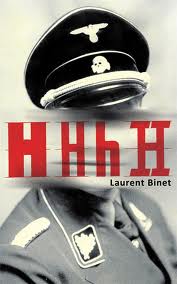
‘HHhH’ by Laurent Binet

HhhH

2012, 336 pages

Sometimes I think you enjoy a book better if you don’t know much about the topic.  I’m rather abashed to mention that I get a little confused about the Nazi leaders: all those H’s (Hitler, Hess, Himmler, Heydrich….) When I read on the blurb that this book was about the assassination attempt on the life of Reinhard Heyrich, I really didn’t know whether it was successful or not (and if you don’t know either, I’m not going to tell you).

The front cover is striking – that chilling army hat with the death’s head insignia and a blurred face (is he just passing quickly by or is he being erased?) overstamped with ‘HHhH’ , the German acronym for the common saying ‘Himmler’s brain is called Heydrich’.  Reinhard Heydrich, known as the Blonde Beast and the Butcher of Prague, was responsible for Kristalnacht, was an SS general, was appointed Acting Reich Protector of Bohemia and Moravia and was one of the main architects of the Holocaust.  But, says the book’s discouragingly young author Laurent Binet, Heydrich is not the protagonist of this book, but instead the target.

The book is classified as ‘fiction’ (or at least, the publisher has decided to categorize it this way) , but it’s true. ‘The good thing about writing a true story’ says Binet ‘is that you don’t have to worry about giving an impression of realism’ (fragment 20).And it’s not history: he finds it untellable as history:

I’m fighting a losing battle.  I can’t tell this story the way it should be told.  This whole hotchpotch of characters, events, dates, and the infinite branching of cause and effect- and these people, these real people who existed.  I’m barely able to mention a tiny fragment of their lives, their actions, their thoughts.  I keep banging my head against the wall of history.  And I look up and see, growing all over it- even higher and denser, like a creeping ivy- the unmappable pattern of causality. (fragment 150)

The author announces, close to the end “I think I’m beginning to understand.  What I’m writing is an infranovel” (fragment 205).  Yet if it is a novel, he is brought back to the evidence.  How is he to write a dialogue that seems plausible to him, when he has an eyewitness recollection of a conversation that feels artificial? How is he to second guess the inner thoughts of his characters?  He even bridles against the thought of them as characters:

The people who took part in this story are not characters.  And if they became characters because of me, I don’t wish to treat them like that. (fragment 251)

Yet if he is not writing history, then there is fictionalizing to be done- but he resists that as well:

That scene, like the one before it, is perfectly believable and totally made up.  How impudent of me to turn a man into a puppet- a man who’s been dead for a long time, who cannot defend himself.  To make him drink tea, when it might turn out that he liked only coffee.  To make him put on two coats, when perhaps he had only one.  To make him take the bus, when he could have taken the train. To decide that he left in the evening, rather than the morning. I am ashamed of myself…. But I’ve said that I don’t want to write a historical handbook.  This story is personal.  That’s why my visions sometimes get mixed up with the known facts  It’s just how it is. (fragment 91)

I think that from these extracts, you can detect the flavour of this book.  There are twin intentions at play here: first to tell of the assassination attempt on Heydrick’s life and to pay tribute to the bravery of the men who carried it out and second to grapple with the act of narrating this story.  The narrator is,  I think (without being absolutely sure) genuinely Laurent Binet the writer.  He is present throughout: apologizing, backtracking, clarifying, justifying.  Underlying this is a trenchant critique of historical fiction- most particularly of Jonathan Littell’s The Kindly Ones which was released at much the same time as this book was nearing completion- but also admiration of other writers who have attempted similar feats like W.E. Sebald, Vollman in Europe Central, Flaubert in Salammbo .

But there are a couple of places in which the author steps away and lets the story take place.  The first is the assassination scene, which he circles around, almost too frightened to commence.  At this point, as he baulks and dissembles, I felt like throwing the book against the wall, but once he starts it is brilliant writing that goes on for page after page.  It is engrossing, breath-holding writing and it extends over several pages, unbroken, compared with the short sometimes only paragraph-length segments of the rest of the book.   The second is the hunt scene- again, told at length.  At first he attempts to tell it in the words of one of the assassins, but soon drops the pretense:

I am not Gabcik and I never will be.  At the last second, I resist the temptation of the interior monologue and in doing so perhaps save myself from ridicule at this crucial point.  The gravity of the situation is no excuse. … The truth is, I don’t want to finish this story.  I would like to suspend this moment for eternity… (Episode 250)

He then starts a countdown by day, but the dates are in 2008, as he (supposedly) writes this section- sometimes just a sentence, other times even a page.  He writes about an episode eight hours in length, but it takes him from May 27-  June 18 2008.  Of course, all this is artifice: he’s probably rewritten these paragraphs several times.  His story of himself as writer is a narrative conceit that he chooses to foreground, just as other authors choose to suppress their own presence in the text.

I often find when I’m reading that I frame the text I am reading against one that I’ve recently finished, or perhaps am still reading.  In this case, I read this book immediately after reading Kitty’s War. There are similarities between the two books: both are written in the present tense; both have the author on  stage; both co-opt the reader as ‘we’ (whether you want to be included or not); both purport to resist the text even while they are dealing with it.  What makes one ‘history’ and the other ‘fiction’?

Butler’s book has a named, verifiable source text, even though it is held in private hands.  The other texts that she triangulates it against have a similar status, and her work draws on secondary texts which themselves call on similar provenances.  It has the academic architecture of footnotes and bibliographies.  Binet’s book has none of these things.  In the end, you just have to take his word for it- there’s nothing named specifically to check against.

Perhaps it also comes down to the authenticity and reputation of the “I” as author.    Binet treats himself as author with self-deprecation and undercuts himself at every turn; Butler – as with all academics- never does.  She might admit doubt and go out on a limb, but she always takes her endeavour seriously, as indeed it is her professional responsibility to do.

Another way to think of it might be to think about what the author would need to do to the text to transform it from fiction to non-fiction or vice versa.  To turn the Binet text into history (albeit a very post-modern history) , you’d need to tone down the authorial interruptions (especially about his girlfriend) and invented conversations and add footnotes and references, but much of the text could remain more or less intact.  Butler’s book, however, would need to be turned inside out to make the transformation into fiction. In fact, I don’t think it could be done without dispensing with much of the book, and it would lose its whole raison d’etre.  Perhaps that is the ultimate testimony to its historicity.

Laurent Binet will be attending the Melbourne Writers Festival later this month, and his session in conversation with Michael Cathcart, will be simulcast on Radio National on Friday 23 August 2013 at 10.00 a.m.  No doubt it will be available as a podcast afterwards.

My rating: 9.5/10

Sourced from: La Trobe University Library

Read because: London Review of Books review.

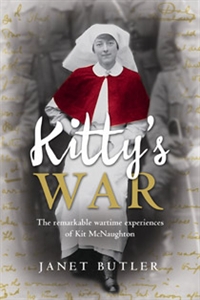
‘Kitty’s War’ by Janet Butler

Butler

2013,  231 p & notes

KITTY’S WAR by Janet Butler

I had forgotten the power of a beautifully written introduction to a history.

Imagine, for a moment, that we are granted an eagle’s eye-view of the fields and villages, the roads and towns of northern France.  It is dusk on a mid-autumn evening.  This is the Western Front, one hundred and eighteen days after the beginning of Operations on the Somme…. (p. 1)

Sister Kit McNaughton was a nurse from Little River, near Geelong who heeded the call for nurses during the First World War.  As did many others, she wrote a diary and this book, by Janet Butler presents extracts from that diary.  But Butler here is not an editor, stepping to the side to allow the diary and the diarist’s voice to take centre stage (as, for example, Bev Roberts has done in Miss D. And Miss N.)  Instead, Janet Butler  interrogates the diaries: she triangulates them against other writing; she supplements them with secondary sources; she looks for patterns and changes over time and she listens to the silences.  Kitty’s own (rather prosaic) entries take up a small proportion of the book – perhaps ¼ of the text, if that.  The majority of the text is the historian at work, always respectful of Kit McNaughton and privileging her perspective, but grappling with the diary as text and the emotional and physical enormity of the unfolding experience that it documents as well.

A diary fills multiple and often changing purposes. The writer often has an audience in mind: sometimes explicit (as in Anne Frank’s ‘Kitty’) or sometimes unnamed but tacitly understood.  As Butler writes about Kit McNaughton’s diary:

There is clearly a ‘you’ addressed in its pages. ‘We often think of the people at home & wonder what you are all doing,’ she writes after describing a concert given by the troops, the first day out of Australian waters, ‘& if you could only see us all doing the grand you would know how we are enjoying our selves’. It is to this audience that Kit’s presentation of herself has to be acceptable. (p. 13)

Kit conceives her writing as a travel diary, but she also is conscious that she is chronicling history as well.

…Kit’s diary intersects briefly, under the umbrella of the travel diary, with another kind of diary: the public chronicle of an historic event, which is more often than not a male prerogative (p. 27)

Kit McNaughton is aware that she is writing for an Australian audience ‘at home’ who will read her diary with a particular consciousness: they will want to see her as the ‘good nurse’ imbued with the discipline, rigour, efficiency and obedience of her professional calling; they will be sensitive over descriptions of Australian suffering and death;  and they will share her sense of Australianness. She  draws from the rhetoric of the Anzac legend, already being honed in the despatches of the war correspondents and seized for recruiting purposes at home, as a way of presenting herself. In doing so, she contributes to our own understanding of the legend 100 years later.

Her use of the ANZAC legend to actively craft her persona shows agency.  The nurses are not simply passive recipients of the identities thrust upon them.  It reveals a desire for a level of freedom denied them at home.  For nurses travelling to war, the Anzac legend opens out the boundaries of acceptable behaviour…. They continued the work they did as civilians, but their journey into war challenged and enabled them to expand their sense of self.  (p. 18)

The book follows Kit chronologically as she starts off in Egypt, as so many WWI soldiers did; is sent to Lemnos,  falls ill and is sent to a convalescent hospital. On going back to Europe, she nurses wounded German soldiers on the Somme, returns to No 2 Australian General Hospital at Trois Abres just six kilometres from the front, goes across to No. 3 Australian Auxiliary Hospital in Dartford, Kent and finally is sent to Sidcup maxilla-facial hospital nearby.  Each separate placement has its own chapter in the book, but multiple themes run across them all: her sense of being Australian; the resentment with which the nurses are sometimes greeted either because they are women or Australian or both; her companionship with the ‘boys’ she met up with in Cairo and her friendship with other sisters (in both senses of the word).  There is much that she cannot say, however.  To complain about the dismissiveness of the doctors would be insubordination (and a ‘good’ nurse is never insubordinate); to speak too much of the death and injury of Australian soldiers is too sensitive.  Nursing German soldiers however- the enemy- is different, and here she can write of the injuries and the smell and the loss in a way that she could not when nursing Australian soldiers:

I have eleven with their legs off and a cuple ditto arms & hips & heads galore & the awful smell from the wounds is the limit as this Gas Gangrene is the most awful thing imaginable, a leg goes in a day. I extracted a bullet from a German’s back today, and I enjoyed cutting into him…the bullet is my small treasure, as I hope it saved a life as it was a revolver one (p. 130)

In many ways Kitty understates her own role.  As we can see, she was entrusted with the scalpel, and she later worked in the operating theatre and administered anaesthetics- all skills that were denied nurses ‘at home’. She was mentioned in despatches; she won a Royal Red Cross.

But soon the silences are not just evasions and glossing-overs but the actual lack of words.  Particularly once she reaches Dartford, her entries become summaries,  widely spaced and sparser, reflecting her own “disengagement  from the war of which she no longer feels so much a part” (p. 197).  Kit is no longer on her journey, and she is no longer writing a travel diary.  There is no adventure, no sightseeing (which she had earlier managed to do), and Butler suggests that she is probably suffering what we would call post-traumatic stress.  Certainly, her photographs show that the war has taken its toll on her. Her hair has gone grey; she has lost two stone; she is in poor health.

As Butler says:

Statistics alone cannot provide a guide to the impact of war on personal lives.  Our journey with Kit has shown biography to be a way of reaching to the level of the personal and private.  Stepping beside Kit, an individual, into the aftermath of her war- reading her life, as we once read her diary- offers the possibility of insight into the effects on women, on the relationships between women and men, and therefore on Australian society, that more objective measures cannot. (p. 216).

The book is written in the present tense throughout.  I must admit that I’m rather ambivalent about the use of the present tense in fiction because it makes me feel edgy and anxious.  (Says she who has written this whole review in the present tense!)   It’s an interesting and striking choice in non-fiction, and one that I haven’t seen used often in history. I’m not quite sure how I feel about it. It makes me feel edgy here too, just as it does when it is used in fiction, but it certainly has its strengths as well.   It brings the intellectual and emotional interrogation of the diary right onto centre stage, and Butler’s frequent use of “we” draws you, as reader,  into engagement with the diary as well.

“Kitty’s War’  is a reverent and sensitive tribute to Kit McNaughton.  It’s much more than a platform for making her diary available to a wider audience.  It shows the historian at work, shuttling between the small detail and wider overarching questions of gender, war, personal identity, Australian identity and the ANZAC legend.

You can read Lisa Hill’s review of this book at ANZLitLovers and Yvonne Perkins has reviewed it at Stumbling Through the Past.  You can also read Janet’s own guest post about writing the book on a nursing blog.

I have posted this review as part of the 2013 Australian Women Writers Challenge.

awwbadge_2013

‘Miss D and Miss N’ by Bev Roberts

If I were a well-travelled person, at this point I would wave airily and announce that I always try to read a book set in a place that I am visiting.  Alas, I am not;  I can claim that I read Henry James’ The Bostonians while in Boston, and Dickens while in London…but that’s about it, I’m afraid.

So, a couple of weeks ago when we went down to Geelong (a whole 100 kms away!), I decided that of course I must read a Geelong book!!  But where to find a Geelong book? you ask.  The answer is: Miss D. and Miss N.  In fact, there’s a chance that if you’re on the Bellarine Peninsula that you’ll drive right through the areas named for them: Drysdale and Newcomb.

missdmissn

2009, 326 p.

The two women share an entry in the Australian Dictionary of Biography.   Drysdale was twenty years older than her friend Caroline Newcomb.  Anne arrived in Port Phillip in 1840, aged forty-seven, with the experience of farming in Scotland under her belt, capital at hand, and determined to take up sheep farming in the booming pastoral industry of early Port Phillip.    Caroline Newcomb had arrived in Hobart in August 1833 and found a position as a governess with the family of John Batman, one of the members of the Van Diemen’s Land- based  Port Phillip Association that looked across Bass Strait to establish pastoral runs in what they perceived (incorrectly) as land for the taking.   When she arrived in Port Phillip on April 19 1836, she was one of only thirty-five women in the settlement, out of a white population of 177.  In March 1837 she shifted to Geelong, presumably as governess to  Dr. Alexander Thomson.  The two women met at Dr Thomson’s house where they formed a strong friendship, despite the twenty year age difference between them.   This friendship became a partnership that lasted twelve years when Anne asked Caroline to join her as a pastoralist on Boronggoop, a squatting run on the Barwon River at Geelong.  In August 1849 they achieved their wish “to have a piece of land &c a stone cottage” when they moved to Coriyule, a beautiful stone house that they had built (and which, it seems, still exists).

This, then,  is Anne’s diary, commenced from on board ship in Scotland in September  1839 going through to 1852 and 1853 when she fell ill and the writing of the diary was taken over by Caroline. Continue reading

‘Started Early, Took My Dog’ by Kate Atkinson

Image

2010, 350p.

Kate Atkinson is a favourite author of The Ladies in my bookgroup.  We’ve read several of her Jackson Brodie books, and Behind the Scenes at the Museum is one of my all-time favourite books.  But I must admit that I think I’m just starting to tire a little of the Jackson Brodie series.

I looked back at the reviews I’d written of her books on this blog- One Good Turn  and When Will There Be Good News (and I’d read Case Histories and Behind the Scenes before I’d started blogging here) and I think that I could make exactly the same observations about this book as I did with her earlier ones:  that you need to suppress your fear of being unable to keep up with such a huge array of characters because it all comes clear at the end; that red herrings and coincidences abound;  that she is really having fun with the genre etc. etc.

Atkinson does reference events that occurred in her other books, but not so much that you’d feel excluded if this was the first Jackson Brodie you’d read.  It’s like a little wink to the initiated, but unfortunately The Ladies and I found ourselves racking our brains to remember the specifics of the earlier books. I noticed in my other reviews that I didn’t say much about plot- no doubt from a fear of giving things away in a plot-driven book- but I found that my reviews were of absolutely no use in triggering memories of the book I’d read.

So, in anticipating that a) Kate Atkinson will probably write another Jackson Brodie after all even though she said she mightn’t  and that b) I’ll probably read it—- here’s a plot and character summary for future reference.

  • Jackson Brodie- our main character from the series; ex-cop turned private investigator; still smarting from being ripped off by his second wife Tessa; coming to terms with the idea that he has fathered young Nathan with Julia the actress
  • Tracy Waterhouse- in her fifties; a large woman; recently retired from the police force
  • Tilly – an aging soap-opera actress, frightened by her rapidly-gathering dementia which is opening up regrets from her past
  • Kelly Cross- a prostitute who sells her daughter Courtney to Tracy
  • Courtney- four years old, says little but gives the thumbs-up to life

In this book, as in Atkinson’s others, there are doubles, parallels and counterpoints.  Tracy witnesses the abusive treatment of a child in a shopping centre and somehow ends up with the child Courtney: Jackson witnesses a dog being mistreated and somehow ends up with the dog. There are two murdered prostitutes; two private investigators; two children looking for their roots; lost memories and lost children, and the hunters become the hunted. There are two narratives here- one is a flashback to 1975 policing which evokes the television series Life on Mars beautifully, while the other is set six months ago.  The flashback narrative is intentionally confusing but it gradually settles into something more definite, while the current day plotline becomes far more tentative and unresolved.

The missing child is a theme in Atkinson’s writing that goes right back to Behind the Scenes and there is certainly an elegiac,yearning quality that seeps through the otherwise conventional (if subverted) crime fiction elements of the story.

But I must confess to feeling that I’d read the book before and had almost been taken back to where I started with her first book Behind the Scenes at the Museum.  I think that perhaps she should give Jackson a bit of a breather.  Although having said that, I must confess being tempted just a little by her new book.  I must just wait a while, though.

‘Restless’ by William Boyd

RestlessNovel

2007, 336 p.

Last month I was rather embarrassed that the bookgroup ladies disliked my book group choice, Brooklyn, so vehemently. So it was with relief that I was able to march in this month, book under my arm, and proudly announce that “I chose this book!”

I must admit, though,  that when I read the blurb on the back I wondered if I really had chosen this book.  I’m not really into spy novels at all- so why had I nominated this one?  I could only think that I was aware of his book Any Human Heart and must have been swayed by the comments about the book in the catalogue (which does beg the question ‘why didn’t I go for Any Human Heart then?)  Oh well- no matter.  This is a very good book for readers who don’t like spy novels.

There are two alternating narratives.  The first, told in the first person, is that of Ruth in the 1970s whose mother Sally begins acting very strangely.  Her mother hands over to her, chapter-by-chapter, her autobiography that reveals that her mother is not, as Ruth believes, an English-bred housewife and mother but instead, a spy for the British recruited during WWII.  The second narrative is the third-person autobiography itself, which tells of Eva (Ruth’s mother) and her recruitment and life as as a British agent, working to influence America to join the war effort during WWII.  This part of the book is quite factual, based on British Security Coordination, an espionage unit based in the Rockefeller Centre.

The descriptions in the book are very carefully written, with the eye of one trained to notice small details, as Eva was. Increasingly her daughter Ruth, and eventually you, too, as reader begin to scan the settings he describes with a  heightened awareness as well.  He brings the two narratives together carefully, leaving you quite unsettled about the ending.  Normally I don’t particularly like alternating narratives because I come to favour one over the other and resent being tossed between them, but I didn’t feel that way with this book: I enjoyed each narrative equally.

There’s not a lot of violence in this book (some, but not excessively) and it has much to do with identity, manipulation and distrust- all very human emotions  at the intersection of relationships and this other, weirder world of espionage.

I enjoyed it. There’s a 2 part BBC series that aired in England in December 2012. (Fantastic cast- Charlotte Rampling, Rufus Sewell, Michael Gambon…..)

My rating: 8.5/10

Sourced from: CAE book groups

Read because: Book group selection