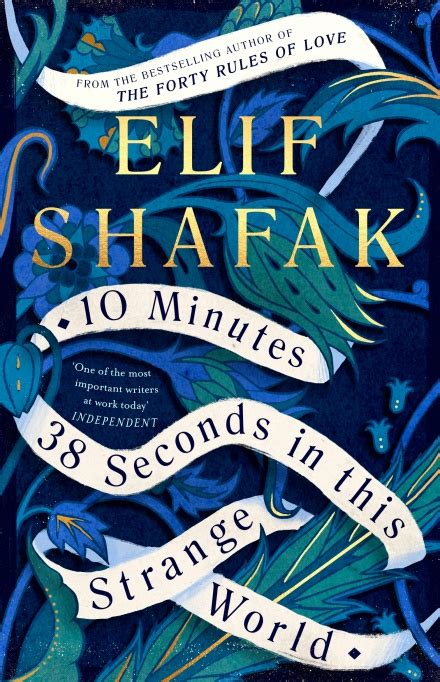
I had read somewhere – as has this author, obviously- that the mind does not shut down immediately upon death. As the morgue technician inspecting the body of a woman found in a garbage bin observes:
When exactly did a living being turn into a corpse? As a young graduate fresh out of medical school, he had had a clear answer, but he wasn’t so sure these days….Researchers at various world renowned institutions had observed persistent brain activity in people who had just died; in some cases this had lasted for only a few minutes. In others, for as much as ten minutes and thirty-eight seconds. What happened during that time? Did the dead remember the past, and, if so, which parts of it, and in what order?…If that were true, shouldn’t human beings be considered semi-alive as long as the memories that shaped them were still rippling, still part of this world?
p.190,191
This, then, is the premise by which the first part of the book is organized. Ten minutes and thirty eight seconds, counted off chapter by chapter as Leila’s murdered body, stuffed into a rubbish bin, gradually shuts down. Minute by minute she remembers impressions, smells and senses that convey us through her life, not necessarily chronologically, as a young girl growing up in post-WW2 Turkey until her death in 1990. The opening chapter sees her slip as a baby from her mother’s body, into the arms of her father’s infertile first wife who claims the title of mother, relegating the second wife and birth mother to ‘auntie’. We see a child drawn into secrets – those of her own mother, and other more devastating secrets- that make her guilt-ridden and wary. When her father becomes increasingly religious, Leila rebels against him and ends up working in the brothels of Istanbul. It is this work that sees her violently murdered by religious zealots who cruise the streets of Istanbul, collecting angel figurines on the dashboard as they murder prostitutes in the name of ‘cleansing’ the streets. Along the way, Leila collects five friends – a childhood friend who always loved her, and four female friends, one of whom was trans-sexual- and these friends, and their stories, are numbered off in turn, with a chapter giving their own backstories.
All of this is embedded within the twentieth-century history of Turkey. In her birth city of Van, in east Turkey, the family lives in a house that had previously been owned by Armenians. The arrival of the Sixth Fleet of the U.S. Navy in 1968, the opening of the Bosphorus Bridge in 1973, the Taksin Square massacre of 1 May 1977 and the endemic corruption and string-pulling of the 1990s frame the story, sometimes a little too self-consciously. What did ring true was the increasing hardening of religious influence over daily life, giving a sharper sectarian edge to the already patriarchal and abusive treatment of women.
I loved the first part of this book, titled ‘The Mind’, and the creative (if somewhat ghoulish) device of counting down the minutes to her eventual shutdown. I was less enamoured of Parts II (The Body) and Part III (The Soul) which comprised the final third of the book. Here her friends rally around to take custodianship of her body, which had been consigned as to the bleak and distant Cemetery of the Companionless, in a form of paupers’ funeral. Leila was not companionless and her five friends embark on an attempt to remove her to a different cemetery. Unfortunately, this Keystone Kops farce detracted from the strong first 2/3 of the book although the final section, which is more evocative of Part I does rescue it somewhat. I had enjoyed Part I so much: perhaps I should have left it there.
My rating: 8/10 (would have been higher without Part II)
Sourced from: Yarra Plenty Regional Library. I think that I must have read a review of it somewhere.
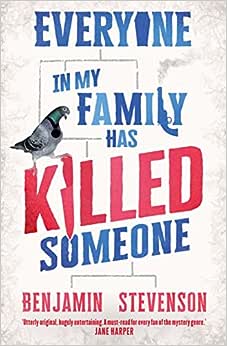
Notwithstanding my recent dalliance with Robert Galbraith, I am not a great fan of murder mystery fiction- as I have said many times before. But if someone’s going to take the mickey out of it while writing it, then count me in.
The book starts with the real-life Ronald Knox’s 10 Commandments of Detective Fiction from 1929, namely:
The criminal must be someone mentioned in the early part of the story, but must not be anyone whose thoughts the reader has been allowed to follow.
All supernatural or preternatural agencies are ruled out as a matter of course.
No more than one secret room or passage is allowable.
No hitherto undiscovered poisons may be used, nor any appliance which will need a long scientific explanation at the end.
No Chinaman must figure in the story. (although Stevenson omits this one because of its culturally outdated historical wording)
No accident must ever help the detective, nor must he ever have an unaccountable intuition which proves to be right.
The detective must not himself commit the crime.
The detective must not light on any clues which are not instantly produced for the inspection of the reader.
The stupid friend of the detective, the Watson, must not conceal any thoughts which pass through his mind; his intelligence must be slightly, but very slightly, below that of the average reader.
Twin brothers, and doubles generally, must not appear unless we have been duly prepared for them.
He then introduces his narrator, Ernest Cunningham, aficionado of crime novels, who proceeds to tell the reader the page numbers on which deaths will occur. He promises the truth, and “only one plot-hole you could drive a truck through”. For a genre in which the writer is the invisible puppet-master, Stevenson through his narrator Ernest Cunningham, is front and centre.
In best ‘big-house’ detective fiction tradition, he sets his novel in an Australian ski-resort, which provides the requisite isolated location and circumscribed number of protagonists. He devises a number of deaths through asphyxiation of fine cinder dust, some near misses, and even brings all the characters into the library to unveil the eventual murderer, which he does so clearly that even I understood it. The whole book is a spoof of the genre, and an extended exercise in metafiction, with frequent asides to the reader. I feel that this book is a bit of a one-off – this piss-take would be wearying carried onto other books – but I certainly enjoyed the ride far more than other detective stories with their cynical and inscrutable protagonists
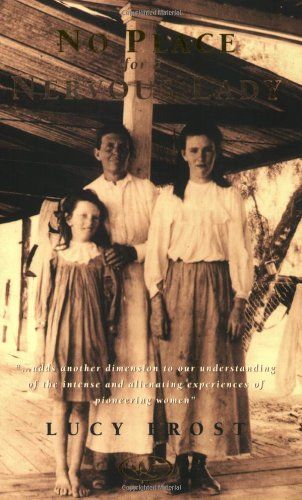
If you were to rely on the ‘Australian Bush canon’ penned by male writers (Lawson, Furphy, Paterson) etc. you’d think that there were no women in the Australian bush at all. That’s not true of course, but until Barbara Baynton wrote her Bush Studies, they were largely invisible in the ‘bush legend’ genre. Historian Lucy Frost, whose books mainly deal with lost and abandoned women and children in 19th century Australia, presents the letters and diaries of a selection of women who emigrated to Australia between the 1840s and 1880s. The women she features are not well-known, but in many ways they are the stuff of legend.
The way that she has arranged these women within her chapters is interesting. The first chapter starts with letters written home after the sea-voyage from Britain to Australia. She starts with a long letter written by Anna Cook to her mother in 1883 which brims with Anna’s own enthusiasm and positivity. Blessed with a constitution immune to sea-sickness, Anna depicts shipboard life as a small village, with plenty of food, and a conscientious captain and doctor. This is very different from the journey described by Ellen Moger who travelled to Australia in 1840, losing three of her four children on a trip that claimed the lives of thirty passengers and, one suspects, her own sanity as well. No doubt striking dread into the recipient, Moger starts her letter “I have very melancholy accounts to give” and it certainly is a sad epistle that follows. Frost has reversed the chronological order of these two letters, perhaps reluctant to start with such a pessimistic account, but in doing so loses any sense of improvement in ship conditions over the forty-three years that separate them.
Her second chapter deals with just one woman, Louisa Clifton, who travelled as a 25 year old with her parents and multiple siblings to Australind, near Bunbury. She had chosen her mother over her suitor and was disappointed in love, but one senses – but cannot know because the letters cease- that she will find love again. I was sorry that Frost did not give more history of the Australind settlement, which was established on Wakefieldian principles but was plagued by indecision over where it should be established, and failed within a few years.
The third chapter, which was my favourite, featured Annie Baxter (later Annie Baxter Daubin) whose diary commenced in 1834 as a 17-year-old bride, joining her 20-year-old husband Lieut Andrew Baxter for Van Diemen’s Land. They left VDL for ‘Yesabba’, a pastoral run in the Macleay River valley in NSW. Frost concentrates on the period 1843-4, when their marriage has soured, partially because of husband’s affair with a ‘lubra’, and then because he discovered in the pages of Annie’s diary her passion for Commissioner of Crown Lands, Robert Massie. Because he destroyed pages of the diary, we do not know exactly the nature of their relationship, but she certainly rebuffed his attempts to re-establish marital relations, fearful that she would fall pregnant. Her journal is gossipy and lively, emphasizing the importance of the social life, limited though it might be, amongst other settler families in the district. I’m rather excited to find that I already have Lucy Frost’s A Face in the Glass: The Journal and Life of Annie Baxter Dawbin sitting unread on my bookshelves.
Penelope Selby wrote a series of letters to her extended family back in England between 1840 and 1851. Her strong Protestant faith sustained her through a series of stillbirths, with her final child living only a few hours, which was perhaps even more heartbreaking. She formed a strong friendship with her neighbour Mrs Dawson, whose demise she seemed to predict regularly every letter, but ironically it was Mrs Selby who was to die suddenly after a fall from a horse.
These single-subject chapters are followed by a chapter drawing on the correspondence of four women who came to Australia to work as governesses under the auspices of the Female Middle-Class Emigration Society. These are mostly dissatisfied letters, with only Louisa Geoghegan expressing any enthusiasm for this new life. The snippy letter from the Society’s patron in Australia, Mrs a’Beckett, makes it quite clear that she is not going to meet these women at the wharf, or help them to find a position, and the high costs of the boarding house funded by the Society provided little assistance to women if they could not find a position immediately.
Ann Williams (1882) and Lucy Jones (1883) both wrote diaries of their travel from one part of Australia to another- and what an ordeal inter- and intra-state travel was for women, expected to wash and cook as their drays took them through rough country, with young children to care for. Sarah Davenport also wrote in her memoirs of her travel across bush, with her feckless cabinet-maker husband who seemed incapable of doing the two things she really wanted: to gain a paying job, and to bring back her daughter who was separated from them.
We read this book for my CAE bookgroup, and I was interested to see what the others thought of it. I am drawn to primary sources (especially by those written by women) in small colonial societies, but this repository of letters, diaries and memoirs do not form a shaped narrative and resist a tidy ending. Letters and diaries just stopped; once their pen stopped writing, Frost can only turn to biographical details of locations, births, deaths and marriages. We all enjoyed it, with an admiration for the matter-of-factness with which they dealt with circumstances over which they had little control, and the sheer courage needed to embark on a journey to the other side of the globe, with so few certainties.
When I sat down to think about it, my family has had more contact with Freemasonry than I realized. I certainly knew that my grandfather (whom I never met) was a staunch Lodge man. One of the few times my father really lost his temper with us as children was when we found his father’s Lodge case, opened it, put on our grandfather’s spectacles and wore his apron draped over our heads and paraded around on our billy carts. My grandfather had encouraged my father to join the Masons, but Dad went a couple of times and didn’t like it. One of the few social functions that I remember with my father’s family was a 21st birthday party of a distant cousin that was held in the Loyal Orange Hall, where I was bemused by the name of the hall, given that it wasn’t orange at all. On my husband’s side, his father joined the Freemasons in his small country town, because a man had to be either Catholic or a Mason.
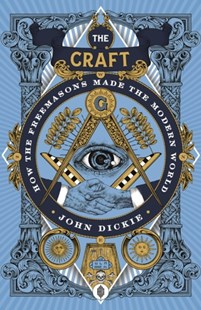
So in our family, our fathers and grandfathers were all involved, to varying degrees of commitment, with the Masons but it was not unusual for the 50’s and 60’s. As John Dickie points out in his book How the Freemasons Made the Modern World, by the dawn of the 1960s in America, one in twelve adult males was a Freemason (p.351). Although there were nearly twice as many Freemasons in America as in the rest of the world combined, Australia was not immune to the popularity of Freemasonry either. Certainly in the colony of Port Phillip prior to the gold rush, the freemasons played an important role in marking the construction of civic buildings, with elaborate rituals accompanying the laying of foundation stones including the first purpose-built Supreme Court in July 1842.
When I first saw the title How the Freemasons Made the Modern World, I thought that the author, whose grandfather was a Freemason, was over-reaching somewhat. His focus is mainly on Britain, Europe and the United States but given that these were the colonizing powers, then Freemasonry’s reach did touch the whole modern world. What was fascinating was the different complexion it took on in so many countries across the world.
For a movement with its origins supposedly in antiquity, there’s a lot of different origin stories at play. One is that masons are the direct descendants of medieval stonemasons, like those who worked on Salisbury, Lincoln and York Minster cathedrals in “merrie England”. Except that the stone masons, as peripatetic workers, didn’t actually have a “guild”. They did, however, have a rich store of rules, symbols and myths known as the “Old Charges” which includes an origin story from a lucky dip of sources – Genesis and the Book of Kings from the Old Testament; the legendary Hellenic figure Hermes Trismegistus who re-discovered the geometrical rules of masonry after Noah’s flood; Euclid; and King Solomon and his chief mason Hiram Abiff.
Then there’s Scotland’s influence, with King James and his Master of Works William Schaw. Schaw established secret “lodges” of master stonemasons, charged with building the Chapel Royal at Stirling, the earliest Renaissance building of its kind in Britain. He instituted the Art and Science of Memory (based on the Memory Palace concept) based on embedding secrets and codes into the masonic Lodge itself- columns, patterned floor etc. Once it spread from Scotland to England during the reign of Charles I, elements of Rosicruciamism were added and the principle known as ‘acception’ allowed non-masons of high standing to be adopted or ‘accepted’ as masons. The Grand Lodge was created by Whig power-brokers, who had ties to the Royal Society and the magistrates’ benches. It established a constitution in 1723 which included rules and a fantastical history of Freemasonry, claiming Adam and Noah, the Israelites generally and Moses as masons. Patronage bestowed on the Craft from the very top of the social scale ensured that Grand Masters were Lords, Viscounts, Earls, Marquesses, Dukes and even Princes.
It spread to France, where added to this existing lore was the claim that the crusading knights rediscovered the secrets of Solomon’s Temple and the Craft while they were in the Holy Land, imbuing it with the ideals of chivalry. The Lodges reflected the more fixed nature of the social classes in France, and traditional forms of Catholic chauvinism. Then in Germany, we had the introduction of the Illuminati, founded by Adam Weishaupt, who initially detested Freemasonry, but later moved to infiltrate them to promote the ideas of the French Enlightenment. Meanwhile, in Italy, Napoleon’s brother-in-law Joachim Murat and his brother Joseph Bonaparte used lodges as a form of networking. In the wake of the French Revolution, quasi-Masonic political brotherhoods appeared in Europe’s trouble spots including the United Irishmen, the Greek Filiki Eteria and the Russian Decembrists- and most infamously, the Charcoal Burners and the Cauldron-Makers in Naples which morphed into the Mafia.
Meanwhile, in America, George Washington used Freemasonry as a civic religion, and was venerated by generations of American masons. Freemasonry’s principles of self-betterment and the brotherhood of all men meshed in with the ideas exemplified by the Declaration of Independence. Such ideals didn’t extend to Afro-Americans, though, and Prince Hall Freemasonry emerged as a completely separate, black Freemasonry. In India, Parsi, Sikh and Muslim initiates were admitted to the Craft, and to a lesser and more-contested extent, Hindus as well, although there was an undercurrent of bigotry as well. Meanwhile, Freemasonry spread to South Africa, Australia, New Zealand- and Melbourne.
What I had absolutely no idea about is the oppression that Freemasonry endured at the hands of twentieth-century dictators like Mussolini, Hitler and Franco (as well as in Hungary, under the Portuguese dictator António de Oliveira Salazar and in Vichy France). As he points out, it may not have been Freemasonry in itself that brought it under the scrutiny of dictators, but just as much the progressive ideas of brotherhood, humanitarianism and civil society that Masons often held alongside their Freemasonry. And certainly, in Nazi Germany and the countries that adopted Nazism, Lodges participated in anti-Semitism and Aryanization as well. Franco’s Spain exhibited the most virulent hostility against Freemasonry, and it remained illegal in Spain until democracy returned in the late 1970s/early 1980s. Meanwhile, in Italy Licio Gelli, the Venerable Master of the Lodge Propaganda 2, or P2, was involved in a string of scandals and protection rackets, conspiracy and terrorism.
One of the hallmarks of Freemasonry has always been secrecy. This gave rise to lurid rumours about what went on behind the walls of the temple, and also opened Freemasonry and its exposés, to trickery and forgery. I remember, while I was being told off by my father for my broaching the privacy of my deceased grandfather´s Lodge case, that we couldn´t possibly understand the importance of what was in it because it was all a sworn secret. Yet some fifty years later, I went with a member of the historical society on a tour of the local masonic temple, where he was quite open about what went on there. Likewise, in the second chapter of this book, Dickie explains about the degrees, the rituals, the handshakes, and names the words that must never be uttered. As he says:
The purpose of Masonic secrecy is secrecy. The elaborate cult of secrecy within Freemasonry is a ritual fiction. All the terrifying penalties for oath-breaking are just theatre- never to be implemented…In the end, while Masonic secrecy has very little to it in the pure sense, it is also all the many things that, throughout history, and across the world, both the Brothers and their enemies have made of it.
p.25, 26
The final chapter of the book is titled ‘Legacies’, and you certainly go away with a sense that, despite blips of interest generated by Dan Brown’s Da Vinci Code and The Lost Symbol, Freemasonry doesn’t have much of a future. Masonry has increasingly become a phase that men go through, rather than a long-term, lifetime commitment (as with my grandfather). Although there have always been small, female Lodges especially in France, the overwhelming image of Freemasonry is male, with the good little woman at home putting the kids to bed while Dad is off doing his Mason thing. It may seem an extraordinary thing that the Grand Orient of France welcomed Sisters with equal Masonic status to their brothers in 2010, with architect Olivia Chaumont the first Sister with full Masonic status, elected a few months later as the first woman to sit on the throne of a lodge master. Although women have followed in her footsteps, Chaumont is a trans woman, who had originally embarked on Freemasonry as a male. The Museum of Freemasonry in the Grand Orient building in Paris devotes only two sentences to the decision to admit women, and there is no mention of Olivia at all. As Dickie notes wryly “Even when Freemasonry changes, it would seem, it is reluctant to change its story”. (p. 423)
The author, John Dickie, is Professor of Italian Studies at University College London. His previous works have included books about the Italian mafia, which perhaps explains the dominance of Italy, and especially Naples, in this book. I was frustrated by frequent allusions to “the leading historian of ….” without actually naming them, and the lack of footnotes was deplorable, replaced instead by an alphabetical list of references for each chapter at the end making any further reference impossible. He acknowledges that this is a “poor substitute”. He’s right.
Despite the decline in numbers and wealth, I’m not sure that Freemasonry (or some other variation thereof) is completely finished, given the rise of conspiracy thinking, polarized politics and the attempt by some on the right to return to some lost golden age of patriarchal and ordered society. Rather more positively, Dickie closes by suggesting that:
Even those of us who would never dream of being initiated can find lessons to learn by viewing history through a Masonic lens. Globalization and the Internet are forcing us to rethink and reinvent a fundamental human need: community
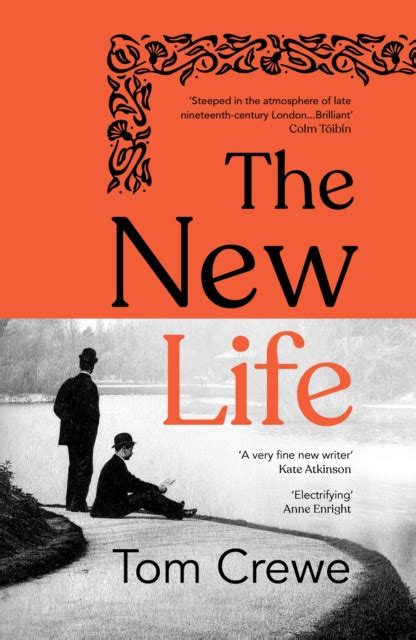
I can’t remember why I ordered this book from the library – perhaps I read a review of it somewhere- but I didn’t expect a sex scene in the first chapter..and the one after that…and the one after that. Although the term ‘sex scene’ isn’t quite right because what we see in this book is secret, often thwarted, desire and shame and fear. It is the fictionalized story of John Addington (in real life, John Addington Symons) and Henry Ellis (in real life, Havelock Ellis) who together wrote a book called Sexual Inversion in the 1890s. Wealthy John Addington had married the very respectable Catherine, largely out of an attempt to escape and give cover for his homosexual desires. Despite three children, these desires were just as strong, and gave way to an affair with Frank, a working-class printer, whom he met by the river where men would strip off to bathe. Meanwhile, the shy and academic Henry Ellis, enmeshed in the free-thinking and radical intellectual circles of the day, married Edith, an intellectual and lecturer in her own right, for companionship and as illustration of the “new life” of relationships that they hoped would open up in the twentieth century. Although friends, they do not share a house, and Edith has her own relationship with Angelica, who is more radical than both of them and who comes to play an in-between role.
These two three-way constellations of relationships exist independently of each other, until Addington and Ellis decide to co-write a book about homosexuality, based on interviews they have conducted themselves, and drawing on German research at the time which argued for ‘inversion’ as an inborn condition, and not a criminal or immoral act. At first their writing arrangements are carried out through correspondence only, but once the book is published, and runs into legal problems, they find their writing partnership ruptured by their different feelings about their own homosexuality and marriages.
The book is divided into four parts, following the seasons of the year. The narrative swaps evenly between Addington and Ellis. Part One June-August 1894 is in summer, as they both embark on their ‘new life’, with all the excitement and potential that holds. Part Two October-November 1894 emphasizes the fog that engulfs London, and the thickening complications of these unconventional relationships. Part Three, from February-September 1895 sees their book being caught up in the Oscar Wilde trials (in fact, the real book was not published until 1897) and the differing responses to Wilde’s recklessness amongst other homosexual men, who were endangered by the publicity the trial engendered, and who felt pity and anger towards Wilde- sometimes both at the same time. Part Four covers December 1895-March 1896 as their own book is drawn into the courts through the arrest of Higgs, who sold copies of their book. The two men take very different approaches to the court-case, and the prospects for their book in a new world which has not yet taken shape.
The descriptions in this book are exquisite: you can almost smell the fog, the bursting of spring, the languor of summer. You can feel the blushing embarrassment of sexual ignorance, and the breathy urgency of repressed desire. London life of the time is carefully drawn with such attention to detail, and where as an ex-historian, he has played with the facts, he owns his alterations and time-shifts. After all, as he says in his afterword “Truths needn’t always depend on facts for their expression”. It is a book truthful to the time, while bringing a 21st century identification to the issues of sexuality, crime, repression and radicalism. It’s very good.
My rating: 9/10
Sourced from: Yarra Plenty Regional Library – and I have no idea why I read it.
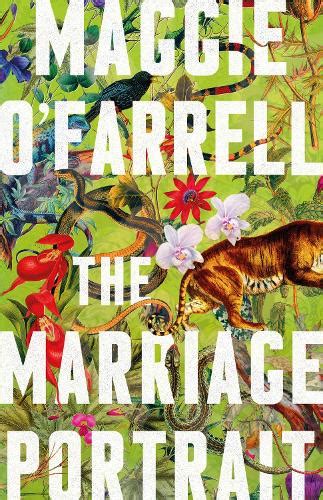
You know within a few pages of this book that there is a murder about to occur, who the perpetrator is and who the victim will be. It starts with a historical note that fifteen year old Lucrezia di Cosimo de’Medici left Florence in 1560 to begin her married life with her husband Alfonso II d’Este, the Duke of Ferrara. Less than a year later, she would be dead, with her official cause of death noted as ‘putrid fever’, but with rumours that she had been murdered by her husband. This is followed by two lines from Robert Browning’s ‘My Last Duchess’, subtitled ‘Ferrara’ where a widowed Duke is discussing the shortcomings of his deceased first wife with the emissary of his intended second wife. There is a chilling suggestion that he killed her.
Maggie O’Farrell’s book opens in Fortezza, near Bondeno, in a bleak isolated castle, and Lucrezia is convinced that her husband is about to kill her. The narrative in the story veers back and forth between this tense cat-and-mouse game, and earlier flashbacks to Lucrezia’s early life in the Florentine palazzo owned by her father, the wealthy Cosimo de Medici. We travel with her to Delizia, a rural villa, in Voghiera where she spends her early married days in a form of honeymoon; and the Castello Ferrara, the Duke’s ancestral castle where he lives with his family and where she comes to realize the mercurial nature of her husband and the dynastic imperative that she fall pregnant. We return to the forbidding fortezza near Bondeno ten times during the novel, which ensures that the tension is held throughout the novel. The book is written in the present tense, which I tend to find oppressive and straining, but O’Farrell’s choice to use it here adds to the suspense that is sustained throughout.
I liked that O’Farrell imbued Alfonso with such ambiguity that, like Lucrezia, you relaxed into his charm, only to find it whipped away in an instance. Lucrezia, astute and intelligent, only gradually realized the menace that she faced. However, I could have done without the multiple dream sequences in the book, which I always see as a rather clumsy backdoor way of advancing the story.
One of the things that I look for in a historical novel is that the characters act in a manner consistent with the norms of the time. It is not sufficient to pick up a 21st century character and sensibility, like a chess piece, and plonk it onto a historic situation that has its own expectations and coherence. Or, as historian Greg Dening put it, it is a mistake to think that “the past is us in funny clothes”. The actions need to remain consistent with the time, but the thoughts behind them don’t necessarily have to comply. As Hilary Mantel showed us, an author can stay faithful to the facts, while imbuing her characters with textured and nuanced motivations and reflections within those facts. I did think of Hilary Mantel while reading this book (which is, alas, just a shadow of her work), both in terms of the present tense voice, and also in its intent and richness of detail. But Hilary Mantel would never have written the ending of this book, and she certainly wouldn’t have foreshadowed it as clumsily as O’Farrell did. I guessed what the ending would be long before the end, and I felt rather disgruntled that she had set it up so obviously.
Nonetheless, I did find the final section of the book a page-turner, and stayed up much later than I intended to read it. It generated a good discussion, and exposed diametrically opposed attitudes towards the book at the Ivanhoe Reading Circle meeting.
My rating: 8/10
Sourced from: purchased e-book, read for the Ivanhoe Reading Circle.
Because I’m learning Spanish, I have met several people who have ‘done’ the Camino de Santiago and have taken up Spanish before embarking on the journey. They seem to have undertaken it for various reasons: some because they are already seasoned walkers, others as a bucket list challenge, and only one or two for religious reasons. (I must confess that it holds no appeal for me whatsoever.)
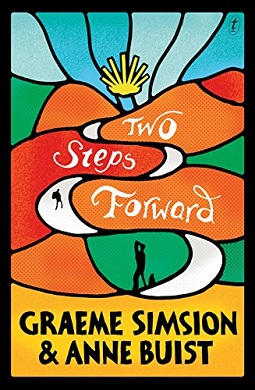
In Two Steps Forward, the two main characters Zoe and Martin had different reasons for undertaking the walk. Zoe was from America and imbued with New Age flakiness, while British-born Martin was an engineer, keen to road-test a walking trailer that he had invented. Zoe’s husband had died only a matter of weeks previously, and faced with unexpected shock that the family company was bankrupt, she abruptly left everything to visit an old school friend in France and undertake the France-Spain leg of the Camino. Martin had undergone a bitter divorce, leaving his daughter Sarah torn between her loyalties with both parents. Martin and Zoe keep running into each other on the Camino, neither particularly liking the other, and as you might expect, romance buds between them. But they each have ‘issues’ which they need to resolve before they can establish a relationship, a fact that becomes clearer as they travel together. Its ending leaves scope for a second volume, which I see appeared as Two Steps Onward in 2021.
The book is written by husband-and-wife team Graeme Simsion (of The Rosie Project fame) and Anne Buist, who writes erotic fiction as well as crime novels, including Medea’s Curse (which I reviewed here). It is told in alternating first- person narrative chapters, Martin’s chapter written by Simsion, Zoe’s by Buist. The clash of American/British, heart/head viewpoints is rather stereotypical, and I’m not sure that the narrative voices between the alternating chapters differed enough to know instantly ‘whose’ chapter you were reading.
I often reflect that my response to a book is largely framed by the book that I read immediately preceding, and in this case Two Steps Forward suffered badly from being compared with Marguerite Yourcenar’s Memoirs of Hadrian. Simsion and Buist’s book is a light-weight little thing, with flat writing and ultimately rather trivial. Frankly, I wouldn’t bother.
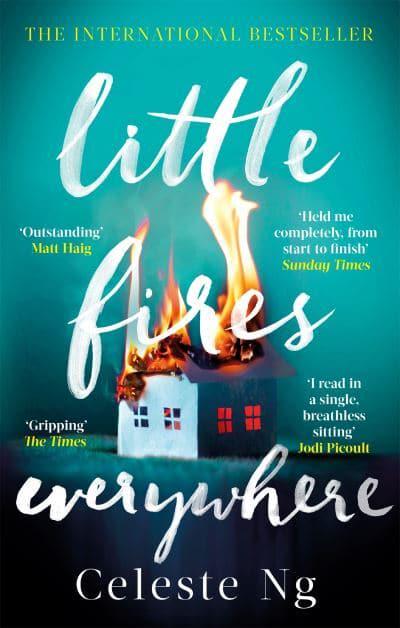
This book was received to great acclaim. It was a New York Times bestseller, Amazon’s best fiction book of 2017 and according to the author’s webpage, it was named a best book of the year by over 25 publications. For me, it didn’t live up to the hype. It was an enjoyable enough read – in fact, I stayed up past midnight to finish it – but to me it felt like a spiky Jodi Picoult, crammed full of moral dilemmas and bookgroup discussions and rather heavy-handed and judgmental.
The book is set in Shaker Heights, a liberal, planned neighbourhood with strict controls over house colours, gardens etc. In fact, the author lived in this real-life neighbourhood, and her cynicism about the hypocrisy underlying this seemingly-idyllic middle-class enclave permeates the book. Even though there is this rather snide, unsubtle critique of liberalism and its intersection with class and race, the real theme is motherhood, explored through issues of abortion, adoption, surrogacy and teenage pregnancy. The story focuses on three families: Bill and Elena Richardson and their four children Lexie, Trip, Moody and Izzy; their tenants in a nearby duplex Mia Warren and her daughter Pearl; and Mark and Linda McCulloch who, after many years spent trying to have a baby, have finally adopted an abandoned Chinese-American baby.
The book opens with the Richardson’s house catching fire, a clear-cut case of arson with “little fires” lit everywhere. The family is quite sure that the fires were lit by the youngest daughter Izzy, who is missing after a family argument. It’s certainly not a who-dun-it, because the perpetrator has been identified by the end of the first page, but more a why-dun-it.
Elena Richardson as a mother is rigid and judgmental, masked by a self-serving public charity that keeps strict account of services rendered and owed. Despite an American “mom” persona, she has never warmed to her youngest daughter Izzy whom she finds difficult. She works part-time as a local journalist, which gives her rather far-fetched access to information which she uses gratuitously and oblivious to the damage she is doing. Although she would dispute it, she is quite unaware of the lives of her children, who are drawn to a very different type of mothering displayed by their tenant, Mia Warren.
Mia is an artist, who has lived in many places with her daughter Pearl. They live simply, with few possessions, and when they shift into the Richardson’s rental property, inherited from Elena’s mother, Mia agrees to work as a housekeeper for the Richardsons, as well as taking shifts in a local Chinese restaurant. She is different, and Izzy and later Lexie, are drawn to her quietly subversive, attentive mothering. The book moves away from the Richardsons in giving Mia’s back-story, which explains her nomadic lifestyle and her relationship with Pearl.
Finally, the whole of Shaker Heights is happy when Mark and Linda McCulloch adopt Mirabelle, their Chinese-American baby, until the baby’s mother emerges, demanding the return of May Ling Chow. The dispute inevitably finds its way to the courts, where the questions of ‘best interests of the child’ and connection with culture are raised. Linda McCulloch does herself no favours with her ethno-centric, blinkered views of “culture”.
There are lots of hot-button topics here, especially for women (fathers are very much side-lined in this book). So many, in fact, that I felt as if they were being stuffed in for discussion value with an eye to the female, liberal, book-group target market which the author courts and yet despises. The book is written well enough, although it felt like three different books as the author moved her attention from one family to the other. Her use of the “little fires” metaphor was rather heavy handed: it starts with a fire, the baby is abandoned at a fire-station, Mia talks about a cleansing burn as a way of clearing the past. Heavy handed, too, was her critique of the hypocrisy of Elena Richardson and Linda McCulloch, which made them almost caricatures of entitlement and heedlessness.
It was certainly a page-turner, and as intended, it sparked a good bookgroup discussion. But ‘book of the year’ it ain’t, for me anyway.
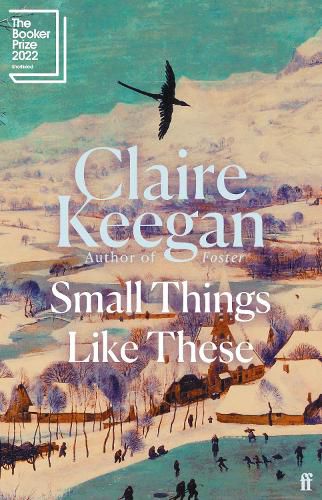
I hadn’t heard of Claire Keegan until she was short-listed for the Booker Prize with this book. It struck me at the time as a strange thing that such a short book of just 116 pages- a novella, really- would be on the Booker shortlist. Between ordering it at the library (months ago) and receiving it (with a further 76 reserves on it when I return it!) I saw the beautiful movie ‘The Quiet Girl’ based on her earlier novella Foster. There are certainly parallels between the two books. Both are set in rural Ireland and both deal with being wanted and rejected. Both are quite heartbreaking, in different ways.
SPOILER
It is 1985 and Bill Furlong, a coal and wood merchant, is busy as the winter sets in before Christmas and the inhabitants of his small town buy in fuel. Although he owns the business, he works alongside his men, and the company is just breaking even. He is married, and he and his wife Eileen, have five young daughters who are all looking forward to Christmas. He has lived in the village all his life, born to a single mother who worked as a domestic servant in a big house owned by Mrs Wilson, a Protestant widow. When his mother fell pregnant, Mrs Wilson encouraged her to keep working, and Bill grew up at the big house too, alongside Ned, another domestic worker. When he married, Mrs Wilson gave him a thousand pounds to establish the business.
Despite his job, wife and family, there is an uneasy emptiness in Furlong. He does not know who his father is. He works hard, and does not know what it is for. His wife and girls are in their own constellation, and he feels that he stands outside it. One bitterly cold night he makes a delivery to the convent which stands outside the village, and when he finds a young woman sheltering in a shed, he starts to question the convent and its treatment of the young unmarried mothers there. He is aware that his own life could have been very different: he owes much to Mrs Wilson and her kindness in keeping his mother on in work at a time when she could have ended up in a similar institution to that where he is now delivering the coal. But he finds his own wife, and the other villagers, closing ranks to form a protective shell around the convent: don’t ask questions, don’t interfere. The church is a powerful entity with tentacles reaching throughout the village.
I often find that the book I am reading speaks to the book that preceded it, and this is certainly the case here. Ghosts of the Orphanageis non-fiction, but Keegan’s novel has its truth too, not just in events but in the human responses of fear, pity and responsibility – all of which were present in ‘The Quiet Girl’ (Foster) as well.
This book is just the right length. It is beautifully written, and I can see the action playing out in my mind’s eye. And yet I wonder if it could be made into a film – it would no doubt do well in picking up a northern hemisphere Christmas market- but I think that film would struggle to capture the layers of feeling in this unsettled, rather inarticulate but good man. It is so carefully, deliberately written, and I’ve found myself turning it over in my mind all day.
A book can have interesting characters, an intriguing setting and a thought-provoking premise, but if you just don’t buy into a major point in the plot, none of these other things matter.
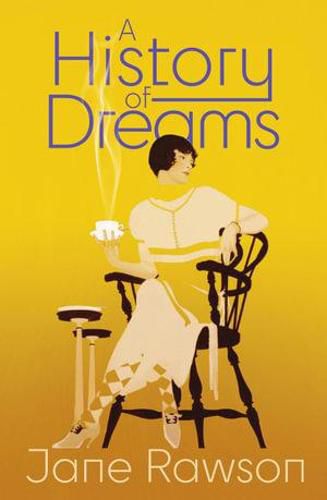
For me, this was the case with Jane Rawson’s A History of Dreams. Set in 1930s Adelaide, the book is based on the counterfactual of Australia aligning with Germany during WWI, rather than throwing itself behind the Commonwealth and the US. It is the story of four young women, sisters Margaret and Esther Beasley, Phyllis O’Donnell and their communist school mate Audrey Macquarie, who decide to resist the closing-in of women’s opportunities as Nazi sympathizers take control of the government and align Adelaide with Germany during World War II. It felt a bit like a Mallory Towers or a jolly-hockey-sticks girls’ school novel, blended with The Handmaid’s Tale, although without its complexity. What brought me undone was the introduction of witchcraft which manipulated people’s dreams while they slept at night, in a way that was never really explained,.
I almost gave up after about fifty pages, and I probably should have. I just couldn’t get past the witchcraft.

 The Resident Judge of Port Phillip