Actually, I reviewed this book ages ago and forgot to post my review!
I’ll try hard not to put spoilers in this review, but …..
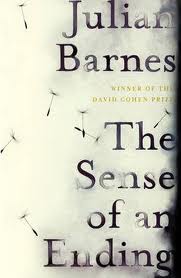
This is only a small book, although I hesitate to call it a novella as it covers a large amount of territory. (Whispering Gums has reflected on the qualities of a novella here) It was awarded the Booker Prize in 2011, where its brevity certainly sets it apart from the other thick books that have won it recently.
It is written in two parts. The first part is a reflection written in the first person by Tony Webster, now divorced and retired, reminiscing about his final year of school. Three, smart-alecky, academically pretentious boys were joined by a newcomer, Adrian Finn, who was smarter than all of them put together. They left school, Adrian went to Cambridge while Tony went to Bristol, and he found himself a girlfriend, Veronica. The relationship didn’t last. By now, the friendships had drifted off and other jobs and other relationships took over. Adrian and Veronica took up together and some time later Tony was jolted to learn that Adrian had killed himself.
In Part Two, life has gone on. Many years later Tony receives a letter informing him that Veronica’s mother had left him some money and a diary. Why the bequest? he wonders. There had only been one brief, quizzical conversation between them one weekend when Tony visited her family. The diary does not belong to Veronica’s mother, but instead is Adrian Finn’s. The transfer of the money goes smoothly, but Veronica resists giving him the diary. After Tony confronts her, she gives him a fragment of a letter than he had written long ago, that he had forgotten completely.
A large part of this book is devoted to a reflection on time and memory, and the stories we tell ourselves. Tony here is not so much an unreliable narrator, as an unconfident one. He alerts us to his uncertainty from the start:
We live in time- it holds us and moulds us- but I’ve never felt I understood it very well. And I’m not referring to theories about how it bends and doubles back, or may exist elsewhere in parallel versions. No, I mean ordinary, everyday time, which clocks and watches assure us passes regularly… And yet it takes only the smallest pleasure or pain to teach us time’s malleability. Some emotions speed it up, others slow it down; occasionally, it seems to go missing- until the eventual point when it really does go missing, never to return. (p. 3)
Tony read history at Bristol, but at this time of his life he is far more concerned with life-narrative and how it we construct it. He thinks back to a quote that Finn had offered in their sixth-form history class in response to their teacher’s question “What is history?” (Ah, how Carr-sian!) Finn cited a quote from a (fictional) author, Patrick Lagrange that “History is that certainty produced at the point where the imperfections of memory meet the inadequacies of documentation“. (p. 17)
Tony is wracking his brain to recall writing the letter which has discomfited all the recollections that he has held onto of that time. The “imperfections of memory” have met “the inadequacies of documentation”, but he finds only uncertainty.
I theorise- that something- something else- happens to the memory over time. For years you survive with the same loops, the same facts and the same emotions. I press a button marked Adrian or Veronica, the tape runs, the usual stuff spools out. The events reconfirm the emotions- resentment, a sense of injustice, relief- and vice versa. There seems no way of accessing anything else; the case is closed. Which is why you seek corroboration, even if it turns out to be a contradiction. (p. 120)
The title of the book is The Sense of an Ending, and it’s truly only a ‘sense’ that you are left with. Tony, too, thinks that he has found an ending to his story, but “there is unrest. There is great unrest.”
I thought that I had reached the end of the book, and had my own certainty that I’d finished with the story. In planning to write this post, I looked at a few other reviews in newspapers and blogs- only to find that perhaps I hadn’t finished it at all. Read this review that explains the ending, then keep on going through the comments -ye Gods, 423 of them!- and the real cleverness of the book reveals itself. It has sent me back to the start again!
[Written much later }I didn’t give it a score at the time of writing, and I have no idea now what I thought of it then. But obviously the ending passed me by completely, which can’t really be a good thing, can it?
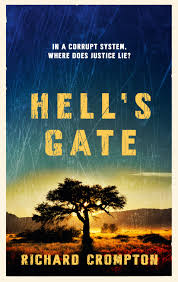
I don’t usually read detective stories, but this is the second story I have read by Richard Crompton featuring Detective Mollel, of Maasi origin who works with the Kenyan CID. I read Crompton’s first book, The Honey Guide after visiting Nairobi for the first time and I’m surprised that I didn’t review it on this blog, because I enjoyed it. The Honey Guide was set in Nairobi, in the midst of the violence that broke out in Nairobi after the elections in 2007. Visiting Nairobi in 2014, I found it hard to imagine the bloodshed that occurred just streets from where we were living, and to realize that the locals we met had experienced (and possibly participated?) in the violence.
The author is a British journalist who has lived in Nairobi since 2005, having previously worked at the BBC. He captures Nairobi really well, and he does the same thing again with the Lake Naivasha setting of Hell’s Gate. Again, we had visited Lake Naivasha in 2014 and stayed on the lake edge, and the kids visited the Hell’s Gate National Park for which this book is named. It’s a strenuous walk amongst volcanic outcrops and I bailed out, I confess. So, even if I’m not a great fan of detective novels, it’s the Kenyan setting that draws me in – and lets face it, how many Kenyan detective stories have you read?
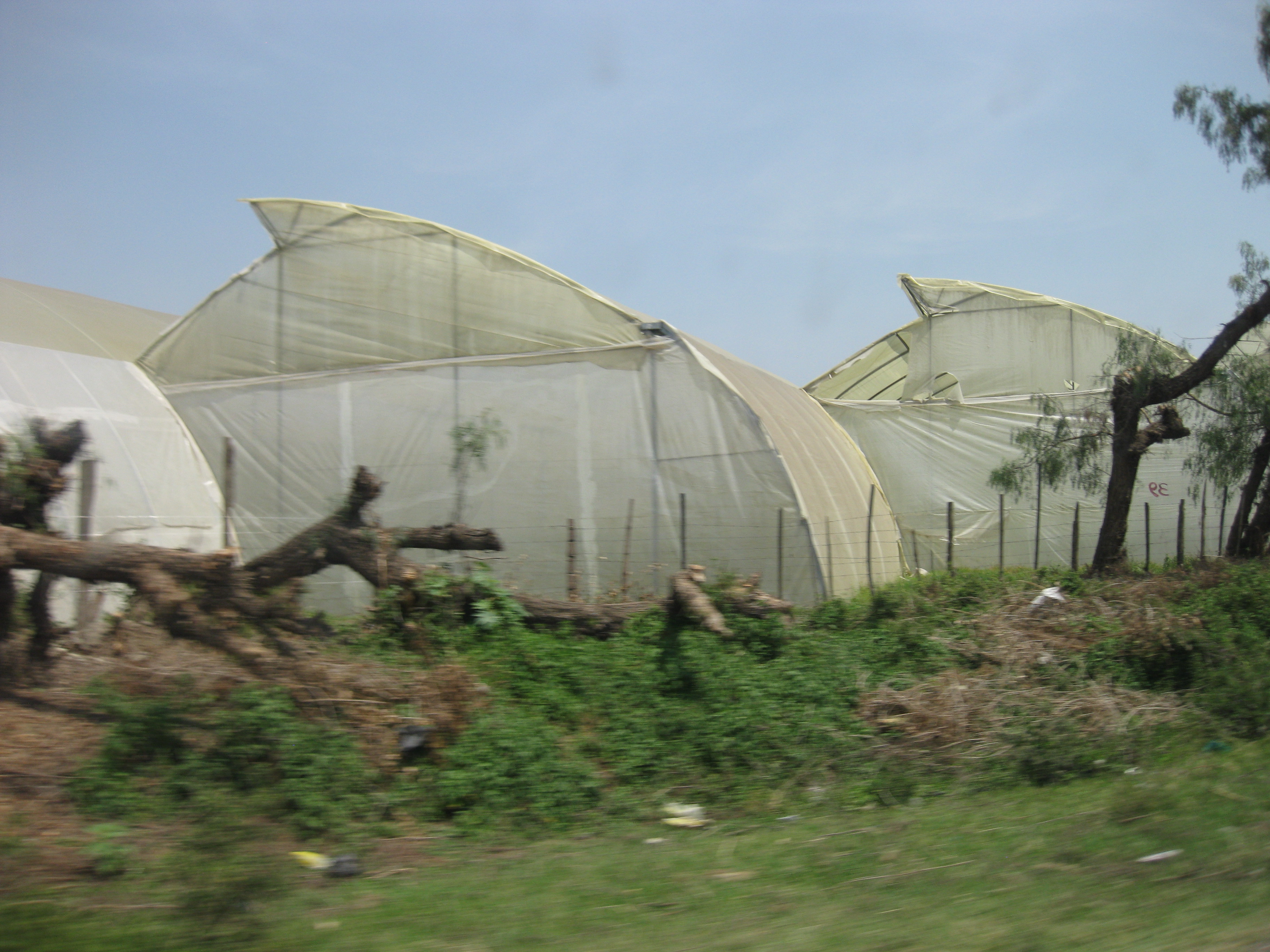
As with all good detective stories, there are disappearances, and there is a loner detective. In Mollel’s case, he is Masaai amongst a police force made up of Kikuyus and Luos, working in a police force notorious for its corruption. His wife had died several years earlier in the 1998 bombing of the American embassy in Nairobi, leaving him to bring up their son. This book starts with a jolt as Mollel is thrown into jail – not a place anyone (let alone a policeman) would want to be -and then backtracks a week to explain how he got there. The plot is set against the cut-flower industry that dominates Naivasha with its huge plastic tunnels, and the Chinese influence that we noticed through the thermal activity infrastructure just up from the lodge in which we stayed. The Kenya Wildlife Service gets a look-in as well, in this tourist-dominated town that has many different agendas running against each other.
The huge plastic ‘glasshouses’ where flowers are grown for the European flower markets. There are hundreds of these plastic tunnels with associated worker housing all around Lake Naivasha.
I really don’t do detective films, series or books very well because I usually end up wondering whether I ‘got’ it. It always seems that there are so many false leads that when the crime is on the point of being solved, everything happens at once. This happens in Hell’s Gate as well, as your perception of ‘goodies’ and ‘baddies’ gets completely tangled. Do I know who did it and why? I think so, but that’s not why I read it. I read it for the Nairobi setting and the flashes of recognition from several visits.
My rating: I don’t really know quite how to rate it as it’s not a genre I usually read, and that’s not why I read it. 7?
Sourced from: my own bookshelves, given to me by my son an embarrassing number of years ago. I shouldn’t have waited so long.
2002 first edition NSW Press; 2005, 2nd edition Paul Fitzsimons , 305 p.
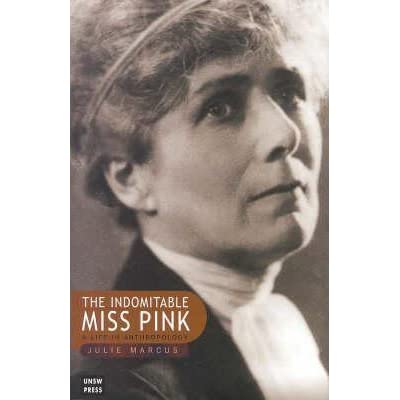
When Miss Olive Pink was commemorated among 200 Remarkable Territorians in a bicentennial mosaic in Darwin, her tile read ‘Olive Pink – Eccentric’. Her niece, Dame Phyllis Frost, was shocked to see her aunt memorialized in this way and arranged to have it replaced with a new tile reading ‘Olive Pink- Anthropologist’. But as Julie Marcus shows us through this biography, Olive Pink was indeed both an anthropologist and an eccentric, although the latter has tended to overshadow the former in popular memory.
For remembered she is, both in the Olive Pink Botanic Gardens and by people who knew her, both indigenous and European. She is spoken of as a tall, erect woman, dressed in white, with a long skirt and parasol. Neighbours and little children remembered her derelict hut with its idiosyncratic ‘museum’ and a straggly garden where she grew flowers for sale. Pastoralists saw her, and her activities, as a threat to their leases. Arrernte and Warlpiri had their own stories of Olive Pink from the time that she lived amongst them in the 1930s and 1940s, learning their language and customs. Bureaucrats and public officers had their own Olive Pink stories when they were on the receiving end of her remonstrations, delivered in person face-to-face or through long, underlined, parenthesized letters.
Olive Muriel Pink was born in Tasmania in 1884. She never married (although there was a story that ‘her very dear friend’ died at Gallipoli). After training in art both in Hobart and in Sydney, she was employed as a tracer in the drafting department of the New South Wales Government Railways and Tramways. In 1926, at the age of 42 she took advantage of her staff discount on the railways to travel to Ooldea, South Australia where she visited Daisy Bates. It changed her life. Like Daisy Bates, she was drawn back to outback Australia (in Olive’s case, in the Northern Territory) and studied and lived with indigenous tribes until 1946. In appearance and clothing the two women were not unalike, and both lived in harsh, austere conditions.
Olive Pink’s attitudes towards her indigenous friends – and I certainly think that she would have perceived them as friends – sit uneasily with us today. Her concern was solely for the “full-bloods”, a typology that we find uncomfortable, and she had little time for “half-bloods”. She used her considerable presence, which both intimidated and wore down her advocates as well as her enemies, to agitate for land rights for “full bloods”. She wanted land set aside, with no missionary involvement, with full ownership of minerals, water and the economic resources that attached to the land. She was critical of both missionaries and anthropologists who, in her view, manipulated and betrayed the tribes that they came into contact with, especially in relation to secret business. She opposed civil rights for ‘full-bloods’, because that would render them accountable under white-man’s law.
She fought with nearly everyone. She would gain the support of a person, only to harangue them with long, discursive, underlined letters until they either gave in or gave up. She battled against the competitive possessiveness of male anthropologists (although she was not beyond competitive possessiveness herself, either) and Theodor Strehlow was her particular adversary. She befriended A.P. Elkin, who despite provocation, remained her advocate with the anthropological community generally. She cajoled and alienated members of both the Anthropological Society of New South Wales, and the Australian and New Zealand Association for the Advancement of Science. Her formal training in anthropology was not extensive, and she needed to publish and speak at conferences to maintain her professional credibility. She was not always politic in what she chose to speak about, amongst ‘colleagues’ who barely accepted her.
She was not a rich woman, and for the early years of her career, when she was already a middle-aged woman, she had to move back and forth to Sydney to earn enough money to return to the outback. She needed all of Elkin’s support to obtain Australian National Research Council grants, which she eked out with her own finances and small donations from the Quakers and the Sheetmetal Workers Union, to buy food and supplies to support her research. Meanwhile other male anthropologists, with more secure reputations, research resources and qualifications, were circling. She was granted access to descriptions of secret rituals, which other anthropologists craved, but she refused to divulge her information because she had given her word that she would not. Not all other anthropologists were so honorable.
By 1946 she finally achieved a lease to develop a ‘secular sanctuary’, but it did not last for long. Drought, lack of money, and a bashing by a young Warlpiri man when she refused his demands for food forced her back into Alice Springs. By now destitute and 62 years old, she lived in a corrugated iron hut on Gregory Terrace, selling flowers and fruit from her garden and working as a cleaner in the local courthouse, where she monitored cases when Aboriginal defendants appeared before the court – an assistance that was often unwelcomed by the police and court officials. After losing her job at the court, she set up a museum in one end of her hut, until a quarrel with the fire station next door, a courtcase for assault, and the firing of her hut led her to shift again, this time to a tent. She lived under canvas until she moved to a small plot of land where she established, with the assistance of the Minister for Territories, Sir Paul Hasluck, the garden which bears her name. Hasluck, who was often on the receiving end of her denunciations as well, encouraged her to accept a stipend for curating the garden which just happened to be of the same value as the old age pension that she spurned. She died in 1975.
The book progresses chronologically, and draws heavily on Pink’s voluminous and lengthy correspondence. In both the introduction and the conclusion, Marcus discusses the mythologizing of Olive Pink, but the majority of the book is very grounded in Pink’s sheer hard work and determination.
Marcus has to tread a narrow line with this book, and she does it well. She clearly admires the moral clarity of Olive Pink, even if she distances herself from the racialised language in which it is expressed. She is well aware of Pink’s prickliness, stubborness and emotional stupidity, but there is a swell of respect for her grit and resilience – a much over-used word today, but completely appropriate for Olive Pink.
And that tile in the Darwin park? Well, after reading this book, I think that the tile should have read ‘anthropologist and eccentric.’
My rating: 9/10
Sourced from: a friend of a friend. This is the second edition of the book, published by Paul Fitzsimons in Alice Springs,even though the original edition was published by UNSW Press.
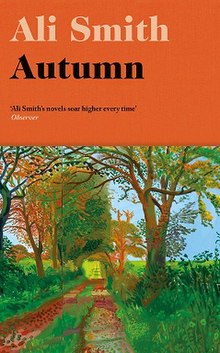
This is the first book in a quartet of stories written in real-time. Written in 2016, and set in England after the Brexit vote, it moves back and forwards in time as Elizabeth, a 32-year-old junior lecturer in Art History at a London University, visits her elderly neighbour (very elderly- 101!) Daniel Gluck as he lies dying in hospital. She had always been close to Daniel, who recognized her intelligence and sensitivity, even though her mother disapproved of the relationship because she assumed that he was gay. It was Daniel who introduced her to the works of the real-life 1960s British Pop artist Pauline Boty, who died in 1966 at the age of 28, with her works unrecognized for many years. The story alternates between Daniel’s prolonged dreams as he drifts towards death, and Elizabeth’s memories of her childhood with this kind neighbour who opened up the world for her.
The book reminded me of Virginia Woolf’s Mrs Dalloway in its quotidian Englishness. As with Woolf, Smith reveals her strong narrative muscles in what seems a simple story in which little happens. The pettiness of bureaucracy and the barely-disguised boorishness of the Brexit vote, the threadbare nature of casualized work, exist alongside a reflection on how hard it is to really live, and how hard it is to die, too.
I’m looking forward to reading the other books in the series too. I love the idea that they are written in real-time as events are happening, with the author just as oblivious to their meaning and significance as her characters are. And boy, can she write! It’s confident, masterly writing, in a short book with little actual plot, that makes me realize how much of what I read is neither confident nor masterly.
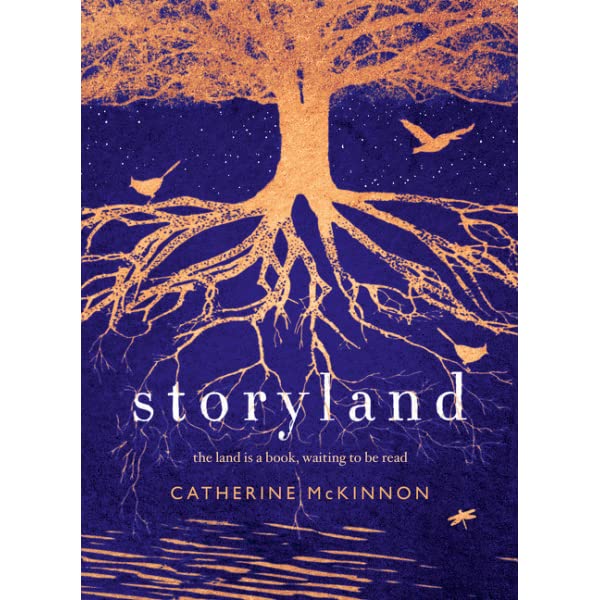
I will confess that I spent the first half of this book being angry at it (a rather futile endeavour, I must admit). The ‘hook’ of the book is its pyramidal structure where each separate story builds chronologically onto the next one, with a link between each story until it reaches an apex, then goes back down again, revisiting each story in descending order. It was used to brilliant effect by David Mitchell in his Cloud Atlas in 2004, a book which I absolutely loved. Mitchell was able to draw you to his characters emotionally, so that you felt reluctant to let them go when the next story commenced. Unfortunately, this wasn’t the case in Catherine McKinnon’s book, which followed a similar structure, even to the point of having a dystopian story as the apex story. As a shorter and ‘thinner’ book (both in page numbers and in imaginative complexity), there was not time to develop the same engagement, and the choice of characters felt a little didactic rather than creative. So, for much of the book, I felt cross that it was such a poor, derivative shadow of an idea.
Where McKinnon’s book differs from Mitchell’s is that the stories are all set in the same geographical location: around Lake Illawarra (south of Sydney Cove and Botany Bay, near Wollongong). As the title and subtitle (‘the land is a book, waiting to be read’) suggest, the land is the unifying feature, although birds and a stone axe are also literary talismans that appear in each story. The stories in her triangle are:
Will Martin – 1796 based the real-life William Martin who accompanied Matthew Flinders on his second Tom Thumb journey of exploration
Hawker 1822- based on a real-life court case where a convict, Seth Hawker, was tried and acquitted of murdering an Aboriginal woman on a farm at Exmouth in the Illawarra district
Lola 1900 – when farming came to the Illawarra
Bel 1998 – when the suburbs have reached the lake, and indigenous art has become commercialized. Children, not quite understanding what they are witnessing, are exploring their neighbourhood and are befriended by a young indigenous woman in an abuse relationship
Nada 2033-2717. Nada is the ‘hinge’ story, where an apocalyptic climate event has wiped out the Illawarra area. A survivor, Nada, has had her DNA and brain data stored, and 684 years later technology has given her a new body and is trying to piece together her memories.
and then, back the other way again……
I said that I begrudged the book for the first half. For me, the breakthrough came with the Nada story. Clambering back down through the stories that had been set up in the first half of the book, at first I found it a little difficult to remember the scenario that had been set up and had to flip back to the matching story in the first half. However, if the apex Nada story was about the reconstruction of an unfiltered memory, in each of the ‘climb down’ stories there was an obfuscation of the truth, an agreement to twist the narrative just slightly. As well as this reflection on history, there was the underlying thread of the land, against which her characters battled, and then tamed, only to be defeated by it again. The land is beautifully described, in its untamed and strange menace, and its persistence amongst suburbia. Indigenous people are always there, right from the voyage of the Tom Thumb II, and the telling of their stories becomes caught up in false narratives, false testimonies and false merchandise.
And so, I ended the book with an appreciation of its themes, rather than the characters as such. I still regret the similarity with Cloud Atlas, and there was an earnestness about the selection of her characters as representations of a historical phase, rather than complete in themselves. Nonetheless its intent in telling the story of the Illawarra, a land like a book, with its omissions and evasions, was well realized.
I read The Handmaid’s Tale back in 1997, before I started this blog. I can remember turning the last page and cursing that everything was left so indeterminate. Well, 36 years later, we finally have closure! Of course, in between there has been the enormously successful HULU series which started in 2017, and the red cloaks and white bonnets have been incorporated into protest iconography, especially in response to abortion rights and the Trump presidency.
The Testaments is told in alternating chapters, that are labelled either ‘The Ardua Hall Holograph’ or ‘Transcript of Witness Testimony 369A or 369B’. The Holograph is addressed to an unknown reader, by a writer who does not know if it will ever be read. She introduces herself to us in the second segment:
I am well aware of how you must be judging me, my reader; if that is, my reputation has preceded me and you have deciphered who I am, or was. In my own present day I am a legend, alive but more than alive, dead but more than dead…. I’m a bugaboo used by the Marthas to frighten small children – If you don’t behave yourself, Aunt Lydia will come and get you!
p.32
And so we meet Aunt Lydia again, indelibly cast in my mind as the actress Anne Dowd. We learn more about the Aunts, who now need to recruit young missionaries to cross over into Canada to entice young women across to Gilead. As one of the four ‘founding’ Aunts, Aunt Lydia has power, although the founding Aunts have decided to publicly defer to the Commanders. In the pre-Gilead world, Aunt Lydia was originally a Judge- which is rather uncanny with the confirmation of Amy Coney Barrett to the Supreme Court, a member of ‘People of Praise’ group that used to have a religious rank ‘handmaid’. (This article explains that another Catholic charismatic group ‘People of Hope’ who also used the term ‘handmaid’ may have influenced Atwood’s original book). Through Aunt Lydia’s book, conveyed through Holograph, we learn what her experience was as Gilead became a Theocracy, how and why she became an Aunt, and how Gilead is sustained through the Aunts’ work.
It takes a little while to work out the Witness Testimonies. It becomes clear that there are two witnesses, although their narrative voices are very (and too) similar. I won’t say how they fit into the story, but I became increasingly apprehensive about why they were designated ‘Witness Testimonies’. The ending of the book very much echoed the epilogue of the original Handmaid’s Tale.
The visual imagery and architecture of the HULU Handmaid’s Tale streamed series is so striking that this book seemed particularly devoid of description. I can’t remember whether that was the case for the original Handmaid’s Tale book or not. Atwood has worked as consulting producer on the series, and perhaps she – like us – has internalized the ‘look’ of Gilead so much that there is no need to spell it out.
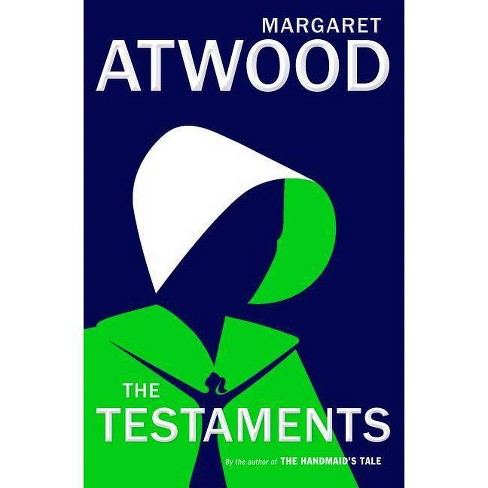
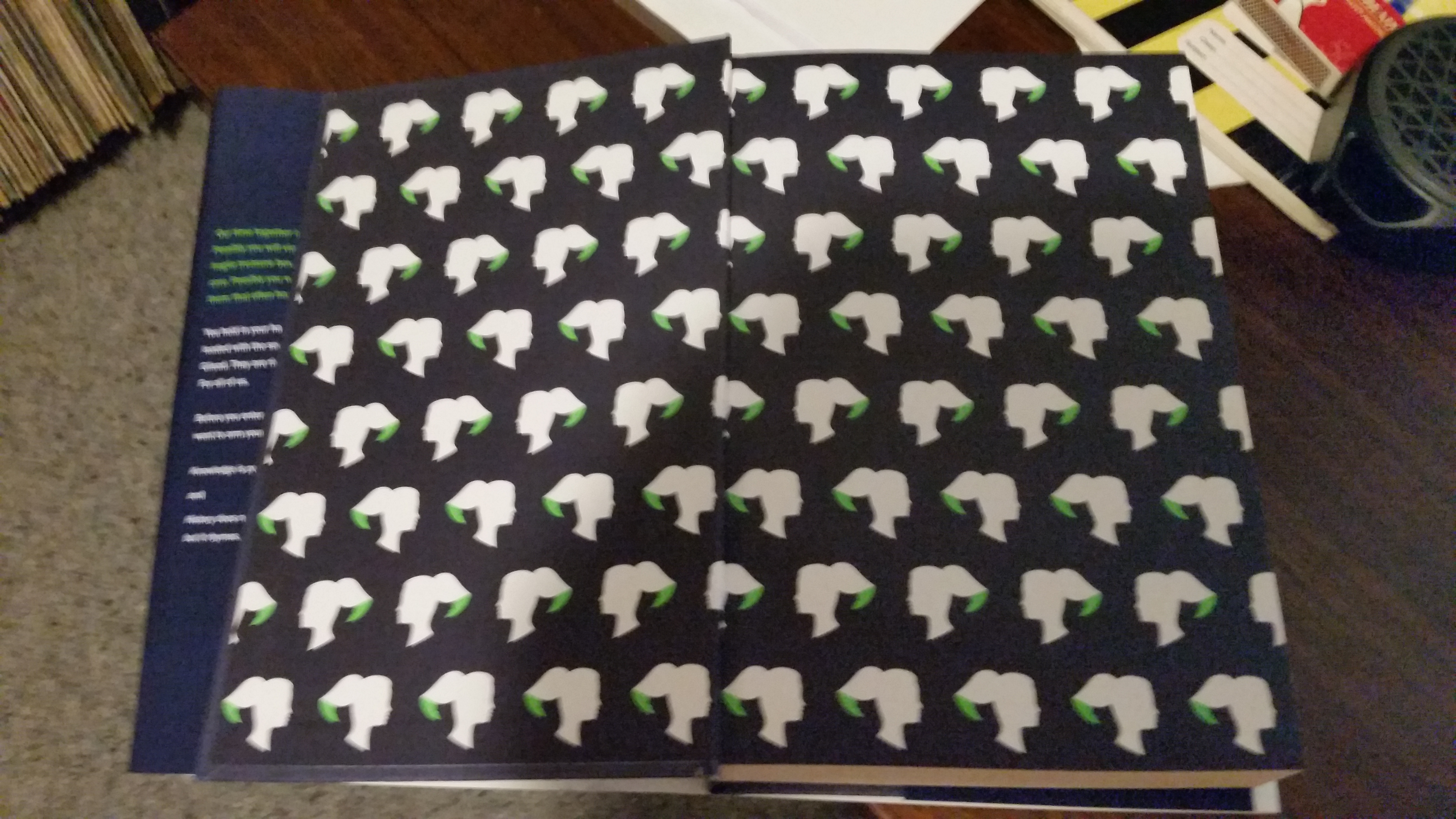
I bought the hardcover version, which is really beautiful. It has eschewed the red and white of the handmaid’s uniform for dark blue, bright green and white. The endpapers (is that the right word? the inside of the cover) are a clever visual trick that switches between handmaid and girl with a ponytail. It made me remember how much I enjoy reading a real, hard-cover, printed book.
I finished the original The Handmaid’s Tale thinking “NOW what happens??” Margaret Atwood doesn’t leave her readers so unsatisfied this time – you know exactly what happened. And she has left plenty of space for Series 4, Series 5…as many Series as they want.
This book was awarded the 2019 Booker Prize, even before it was released here in Australia. I don’t know whether it really deserved it in its own right as a literary work, as distinct from a cultural phenomenon. It’s well constructed and satisfying but the writing is rather pedestrian, although that may well reflect the paucity of intellectual life in Gilead and post-Second-Civil-War Canada. I can’t help thinking that it received the Booker through gratitude that there finally was a sequel, and for the perspicacity that created a Gilead that we have more cause to fear now than in 1985.
My rating: 8.5 /10
Sourced from: purchased as a pre-lockdown indulgence.
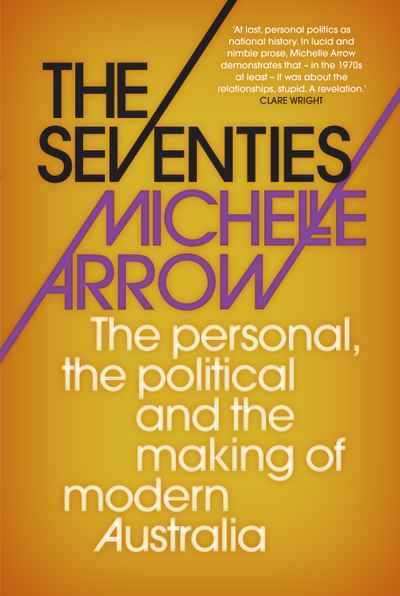
It’s strange when you read a history that is analysing events that you lived through yourself. The events are familiar, of course, but there’s also an element of surprise at things you didn’t realize at the time, and at the matters that the historian has placed emphasis on, when you weigh them against your own perspectives and memories. It’s also rather disconcerting to realize that your own lifespan is now considered ‘history’.
Of course, histories of a given decade or century do not neatly conform to calendars. Historians speak of the ‘long’ eighteenth and nineteenth centuries, and in this case, Michelle Arrow sets the start date for the ‘sixties’ with the retirement of Robert Menzies in 1966 (I don’t know if I agree with her here), and ends ‘the seventies’ with the election of the Hawke ALP government in 1983. As she points out, there has been relatively little scholarly interest paid to the Seventies in Australia, especially in comparison with the United States and the United Kingdom. The decades of the 1950s, 1960s and 1980s in Australia have all received book-length treatment, but the only stand-alone study of Australia in the 1970s was Frank Crowley’s Tough Times: Australia in the Seventies. The 1970s, she argues, have either been defined solely in political terms, most particularly involving The Dismissal, or as a gloomy economic narrative leading up to the 1980s and 1990s as a period of economic deregulatory reform (think Paul Kelly’s The End of Certainty or George Megalogenis’ work).
Her book does not pretend to be a comprehensive history of the decade, but it does emphasize social change rather than political events and economic policies:
Somehow the social movements and social change of the decade sit just outside the frame through which we see the 1970s…This book places them front and centre and positions them as key drivers of change…this book is primarily concerned with the ways new understandings of gender and sexuality transformed Australia, and as a result it focuses on the women’s movement and the gay and lesbian movement.
p.11
And so, having made the women’s movement and the gay and lesbian movement her main frames of analysis, this book traces these two themes through the 1970s, discussing social and political events of those years along the way. As has been the case with many of the decisions and programs of the Whitlam government (e.g. dismantling the White Australia policy, withdrawing from Vietnam), quite a few had already been set in train in the last years of the 1960s, although not prosecuted with the fervor of the Labor years. This was also true of the women’s movement and the gay/lesbian movement. There had been ‘women’s groups’ of different political hues throughout the twentieth century, pushing for ‘liberalism’ rather than ‘liberation’. The Homosexual Law Reform Association of the Act was formed in 1969, priding itself on the knowledge that ‘no member of our committee is a practicing homosexual’ (p. 30)
What changed in the 1970s was that the mantra ‘the personal is political’ was taken up by both the women’s movement and gay/lesbian rights groups. Consciousness-raising groups brought up individual stories which were then woven into a political analysis of systemic oppression. It’s hard for us to realize now, in our time when everyone has their ‘story’ and their ‘journey’, that 1960s Australia, along with other Western cultures, was content for uncomfortable stories to be kept private, out of the public eye, and certainly not the basis for political (as distinct from individual) action.
However, ‘The personal is political’ did not translate into electoral success for women in the 1972 election that swept Gough Whitlam to power after 23 years of Liberal-Country party government. (An amazing thought: people voted in that election who had never seen any other government than a Liberal-Country party one). There were no women in the House of Representatives, and the only two women in the Senate were from the Liberal Party. As a result, Gough Whitlam appointed Elizabeth Reid to be his advisor on women’s affairs, from a short list that included Anne Summers, Eva Cox and historian Lyndall Ryan. It was a tough gig. She had no staff but she became the public face of the women’s movement (p.93). Many in the women’s movement objected to her appointment by a man. She embarked on a listening tour and inviting women to write to her, hearing women’s stories- there are those stories again- in order to develop policy ideas to turn the personal into policy. Equal pay for equal work, the introduction of the single mothers benefit, and improving the quality and availability of child care emerged as the most important needs. There was an uneasy relationship between the Whitlam government and the women’s movement, and between Elizabeth Reid and the women’s movement as well.
In 1972 with Helen Reddy’s ‘I am Woman’ ringing in their ears, the UN General Assembly declared 1975 to be International Women’s Year. In the leadup, Spectrum research had conducted a research report into the status of women that both provided a snapshot into women’s lives but also revealed a widespread lack of interest in feminist issues and the women’s movement more broadly. A grants program set up as part of IWY further exacerbated this schism (although many of the projects and women creators who were supported through these grants have stood the test of time). The headline event was the week-long Women and Politics conference in Canberra, which was opened by Gough Whitlam on the evening of the 31 August. Arrow notes that in many ways it was an exemplary feminist project, with subsidized fares for low-income participants and free child care. But it also highlighted the fractures in the women’s movement between white feminists and migrant women, working class women and particularly Aboriginal Women, led by Marcia Langton, many of whom had different priorities to the largely middle-class white feminists. But as the political temperature rose in 1975, Reid’s power was reduced; there was a suggestion that she be moved into the bureaucracy, and she tendered her resignation.
‘The Personal is Political’ was writ large in the Royal Commission on Human Relationships, headed by Justice Elizabeth Evatt, journalist Anne Deveson and Brisbane Anglican archbishop Felix Arnott, which was established by the Whitlam government in late 1974. By the time it reported on 28 February 1978, the Fraser government wanted no part of it. It was not the first government inquiry into human relationships – the Royal Commission on the Decline of the Birth-Rate and on the Mortality of Infants in New South Wales of 1903-04 was a world-first – but unlike that earlier commission which mainly heard from men, the 1974 commission actively sought the views of women. The files of this Commission form the heart of Arrow’s book, where she describes some of the evidence collected in the submissions, both in relation to women’s issues and homosexuality, and traces through the muted response once the government had changed.
Australia had become a “nation of bank tellers” in the second half of the 1970s, as the role of women’s adviser became circumscribed, the Women’s branch had its resources cut, and funding for refuges dried up. The National Women’s Advisory Council was established in 1978 ‘to assist in policy making’. Chaired by the vice-president of the Victorian liberal party, Beryl Beaurepaire, it included an Aboriginal woman, a migrant woman, a representative of the ACTU, the President of the Family Planning Association, law lecturer (and later Governor General) Quentin Bryce and a representative of the CWA. Only Wendy McCarthy, the Family Planning president, was part of the women’s movement. Arrow argues that it replicated much of the work of the Commission on Human Relations, and although it developed a comprehensive policy agenda, none of the initiatives came to fruition until the Hawke Labor government. There was backlash over abortion reform (think Margaret Tighe and the Right to Life); religious conservatives became more organized (think Festival of Light) and groups like the Women’s Action Alliance and Women Who Want to be Women formed a visible anti-feminist front. Sex education became bitterly contested, especially in its approach to homosexuality. The first Mardi Gras parade, held in June 1978 opened up a new more confrontational phase in gay and lesbian politics. (p. 220)
Reflecting the ‘long’ Seventies that Arrow deals with, the book closes with the Women Against Rape collective protests at Anzac Day commemorations in the early 1980s – a reassertion of the ‘personal is political’ trope into national affairs. In her Afterword Arrow picks up on the Hawke Labor government, and the emphasis on the economy that has largely obscured the importance of using individual story-telling as the basis for political action. But there is no great triumphant ending here. Perhaps the most important legacy is the continuation of the recognition that the personal is political, as seen in the Human Rights Commission Bringing Them Home report in 1997 and the Royal Commission into Institutional Responses to Child Sexual Abuse in 2017. But, as Arrow points out, too often “personal stories are told without political activism to animate them…the political is all to often reduced to the personal.” And there is still much unfinished business of the 1970s.
This book won the Ernest Scott Prize for 2020, awarded annually “to the book judged to be the most distinguished contribution to the history of Australia or New Zealand or to the history of colonisation published in the previous year.” It is carefully footnoted and researched, but it maintains a light tone which is personal at times. It is well-structured in a narrative sense with chapters divided into discrete sections, and ‘hooks’ at the start and end of each section to drive the argument forward.
But, having lived through the seventies myself, I do wonder about the difference between the historian’s view and the perspective of those who lived at the time. In Arrow’s book, a documentary archive (i.e. the correspondence of the Royal Commission on Human Relationships) takes on an importance for a historian that I’m not really sure it had for the general public at the time. Was I even aware of it? I certainly didn’t contribute to the commission- in fact, did I know anyone who did? Maybe my obliviousness to this Royal Commission reflects nothing more than my own sheltered, middle-class, conservative, politics-free life at the time.
But perhaps even the visibility of, and participation in, inquiries then and now signals a change. I think of inquiries held today into what would previously been seen as ‘personal’ matters, most especially the Institutional Response to Child Sexual Abuse inquiry, and I think that there is a high level of public buy-in (e.g. the animus against George Pell; the ribbons on church railings) that I don’t recall existing in the 1970s. But perhaps the importance of an inquiry doesn’t rest in its creation or impact at the time, but the use that is made of it in the years and even decades following.
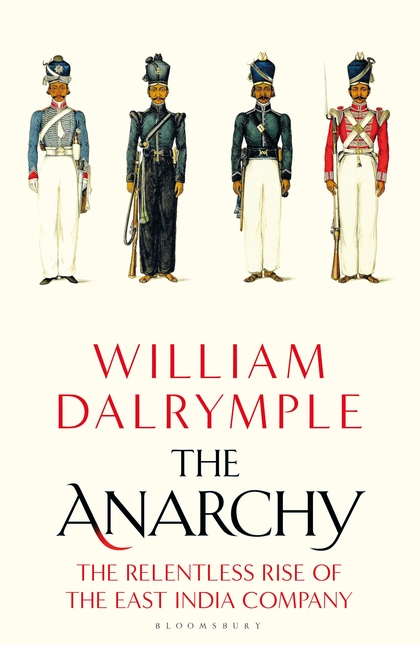
In 1608, who would have thought that India – with a population of 150 million and the source of one quarter of the world’s manufacturing – would be devastated by a small joint-stock company from England, a country that had just 5% of India’s population and contributed only 3% of the world’s manufacturing? But over the next 250 years, that is just what happened, as the East India Company steadily drained India’s wealth in goods and precious stones and cash, pouring it into the Company’s coffers for its shareholders. This is the story that William Dalrymple tells in his The Anarchy: The Relentless Rise of the East India Company.
When the East India Company was established in 1599 in Tudor England, there was no indication that it was to become the behemoth that it did. Other joint-stock companies had been founded, and it was competing with similar companies from other European nations, all jostling to establish trade routes with the East Indies. Its ports in India were founded almost as a consolation prize when the better-financed Dutch dominated the Moluccas. However, through ingratiating themselves with the enormously wealthy Mughals in India, only to later exploit their rivalries, the East India Company had found a source of wealth even more lucrative than the East Indies. The wealth flowed one way only: straight to London. The precious stones, the golden thrones, the eye-watering amounts of money: this is the pillage that Shashi Tharoor describes in his Inglorious Empire (my review here).
But England was not the only nation involved in India, and the amount of European activity and interference in what England saw as its own market surprised me. Technological changes in warfare technology added to the European-based rivalry between Britain and France throughout the eighteenth and early nineteenth century. This rivalry played out in the Carnatic Wars between the French and British armies stationed in India, using Indian troops, paid for with Indian money and lives. European technology also weighted the scales when the British extended their ‘assistance’ (at a price, of course) to different rulers vying for supremacy in India. I was surprised, too, by the involvement of European soldiers who adopted Indian names and headed various armies of Indian soldiers, on both the French and English sides.
Dalrymple tells his history through individuals, most particularly the East India Company merchants, the governors from England, and the Mughals, Nawabs, Rohillas, Sultans and Marathas whose assets were steadily stripped by the EIC. In telling his story, Dalrymple has his goodies and baddies. Robert Clive (yes, he of the Curry Powder) was a baddie, who had three stints in India, amassing huge personal wealth, facing (and staring down) a Parliamentary enquiry, and finally committing suicide. Warren Hastings, the first Governor of the Presidency of Fort William (Bengal) in Dalrymple’s eyes was a qualified goodie – and now I understand the nuances of Barry Jones’ response to the question ‘Who was the the first Governor General of India?’ Hastings, who was not beyond enriching himself either, was undermined by Sir Philip Francis -certainly a baddie in Dalrymple’s eyes (and incidently thought to be the author of the ‘Junius’ letters, much discussed in 19th British legal history). Francis was appointed to the supreme council of Bengal during Hastings’ Governor-Generalship. On his return to England, Francis began agitating for the impeachment of Warren Hastings which, after seven years, led to Hastings’ acquittal. Then there are the historic figures who are better known in other arenas. There’s Wellington (just plain old Arthur Wellesley at this stage) who led a number of battles, under the governor-generalship of his brother Richard. There’s General Cornwallis, who arrived in Calcutta in 1786 to replace Warren Hastings, after his surrender of the 13 Colonies to George Washington. He was determined to ensure that a settled colonial class would never emerge to challenge British rule in India as it had in America, and so he introduced a “whole raft of unembarrassedly racist legislation” (p.327) ensuring that the children of British men with Indian women would never be employed by the Company.
Dalrymple’s emphasis on individuals extends to the Indian protagonists in the story too. I’m ashamed to admit that as a European reader, I struggle to distinguish Indian and Muslim names. Dalrymple has gone to some lengths to support the reader in this. The narrative is prefaced by a lengthy list of Dramatis Personae, helpfully arranged more or less chronologically into categories: the British, the French, the Mughals, the Nawabs, the Rohillas, the Sultans of Mysore, the Marathas. Maps in the preface show the main cities, with the areas of influence by various chieftains, peshwahs and emperors identified. A paragraph after each name summarizes the main points of their story, and gives each one a distinct personality. The beautiful illustrations, inserted in three places in the book, also have an identifying paragraph. Most clearly defined of all is the Mughal Prince, Shah Alam, handsome, intelligent, and culture, who was tortured and blinded by the Rohillas. In fact, the violence in this book – who knows how accurate it was, depending on the chronicler – is really chilling.
The subtitle of Dalrymple’s book is “The Relentless Rise of the East India Company”. While it was certainly relentless, the rise was not without its setbacks. East India Company troops were defeated by the French-led troops on several occasions, and the company needed to be bailed out of bankruptcy in 1772 in exchange for greater British government oversight. This was always likely to be light-touch regulation, and many Parliamentarians had East India Company shares. And still the Company kept churning on, stripping Indian assets in order to distribute them for its British shareholders.
It’s interesting that Dalrymple chooses to end his book with the Battle of Delhi, with the defeat of the Marathas, in 1803. This left the Company the dominant military force and “the sinews of British supremacy” now established (p.382). He finishes at the high point of East India Company power, rather than with its removal from power after the Indian Mutiny as it is known in Britain, or the First War of Independence as it is known in India, and the final expiry of its charter in 1874.
Dalrymple’s purpose is not a ‘Rise and Fall’ story. Instead, it is a cautionary tale about corporations and power, as he makes clear in his epilogue. When corporations become too big to fail, as the East India Company was; or when they have Parliaments in their thrall through lobbyists and parliamentary shareholders; or when they can just buy military might and other people’s bodies – then much is at stake. As he says in his closing sentence: “Four hundred and twenty years after its founding, the story of the East India Company has never been more current.” (p.397)
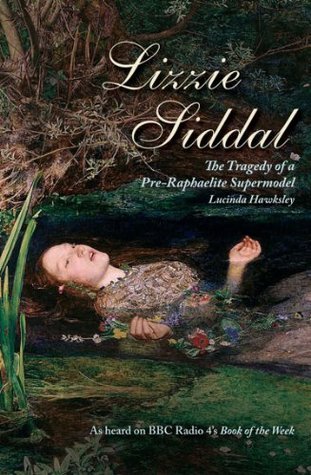
You might not recognize the name, but you probably recognize the face of Lizzie Siddal. You will have seen her in John Millais’ painting Orphelia, deathly pale, her red hair flowing around her, her hands uplifted in supplication. It is the image that Lucinda Hawksley has chosen to use on the cover of her book about Lizzie’s life. In her subtitle ‘The Tragedy of a Pre-Raphaelite Supermodel’, Hawksley draws a not-completely satisfying parallel between Lizzie’s life and those of the supermodels of the 1990s. I might quibble with the supermodel concept, but certainly not with the designation of ‘tragedy’. Lizzie Siddal’s life trajectory took her far beyond her origins, but she was always insecure and wary, and eventually succumbed to addiction.
2004, 256 p.
Lizzie Siddal (originally spelled Siddall but changed on her husband’s suggestion to make it look more genteel) worked in Mrs Tozer’s hat shop in 1849 when she was approached by an artist, Walter Deverell, who was looking for an artists’ model for Viola in a painting of Twelfth Night that he was working on. Lizzie had had a ‘respectable’, religious lower class upbringing. In a scenario reminiscent of Tess of the D’Urbervilles, her father was engaged in a long and ultimately fruitless attempt to claim ownership of a convoluted family fortune. Her father worked as a cutler, and the children needed to work, but this did not mean that Lizzie leapt at the opportunity. Walter Deverell’s mother called on Lizzie’s family to assure them that Lizzie’s reputation would not be damaged by the modelling, as Mrs Deverell herself and her daughters would be present at all times. Thus Lizzie was launched into a milieu completely foreign to her.
Walter Deverell was amongst the circle (although not one of the original members) of the Pre-Raphaelite Brotherhood (PRB), a group of seven students who criticized the teaching of art in art schools, harking back to the rich colours and animated subject matter of Botticelli and other early Italian artists. It had all gone downhill since Raphael, they said, and so they adopted the name ‘Pre-Raphaelite’. The original group of 7 included John Everett Millais (who painted ‘Ophelia’), William Holman Hunt, Dante Gabriel Rossetti and his brother William, Thomas Woolner, Frederic George Stephens and James Collison. It expanded to include Ford Madox Brown, Walter Deverell, William Morris and Charles Allston Collins. They were always on the lookout for ‘stunners’ and in Lizzie Siddal they found one.
Unfortunately for Lizzie, she was not the only ‘stunner’ associated with the PRB. New women were being brought in all the time, and like Lizzie, often engaged in relationships with the artists. Lizzie fell in love with Dante Rossetti, who made moves to marry her (against his family’s wishes) but he then retreated over a number of years, embarking on relationships with other women within the circle, before returning to Lizzie. A destructive cycle was established: Dante would go off with another woman; Lizzie would increase her intake of laudanum, a commonly used drug, and refuse to eat; Dante would come rushing back to her bedside; she would improve; he would go off again.
As Hawksley points out, laudanum or ‘tincture of opium’ was a mixture of opium and alcohol that was widely available over the counter from greengrocers, barbers, ironmongers or at market stalls. Mothers spiked their babies’ bottles with in when they had to work and it was used to quell the symptoms of cholera, diarrhoea, gout, rheumatism, toothache, sprains and ulcers…and any number of other symptoms. Certainly, just do an image search on Google for Lizzie Siddal, and you’ll see her depiction in myriad paintings looking very much ‘on the nod’.
I wasn’t really aware of Lizzie Siddal’s story, and so I’m not going to divulge the ending, although you’re probably already well aware that it’s not going to end well. And, in keeping with the Victorian gothic sensibility that runs just under the surface of the whole book, just being dead wasn’t the end of the story.
Hawksley is fairly condemnatory of Lizzie Siddal, seeing her as emotionally manipulative, and using her possible eating disorder and addiction as a way of drawing Rossetti back to her. That might be true, but I think I’d cut her some slack in what I see as a mutually unhealthy relationship, where she had little other power.
Although focussing on Lizzie and Dante, this book has a wide range of supporting characters with familiar names – almost like a who’s who of the mid 19th century British artistic world. At times I feel that Hawksley pursued too many rabbits down rabbit holes for the sake of a good story, and I wished that she had indicated in the text whether the painting under discussion was included amongst the illustrations in the book. But Hawksley explains things well for a reader with only fragmentary knowledge of the PRB, and manages to keep a huge number of characters under control. I heard the author, who happens to be Charles Dickens’ great great great grand-daughter speaking in Birmingham when we were there in 2011.
Lizzie as supermodel? Certainly she was chosen because her looks – her striking (although unpopular at the time) red hair, her slim boyish figure, her languor – suited the medieval sensibility that the PRB was trying to create/recapture. Addictions and eating disorders are not unknown to supermodels. But I’m not sure that she had ‘fame’ in the sense that we granted to the supermodels of the 1990s, and certainly her respectability and reputation was compromised by mingling in ‘artistic’ circles. It’s hard to see positive agency in Lizzie’s life. So I think I’ll just leave the ‘supermodel’ aside, but I certainly acknowledge the ‘tragedy’.
My rating: 7/10
Sourced from: my own bookshelves. At last. I think we bought it in 2011 after hearing the author speak.
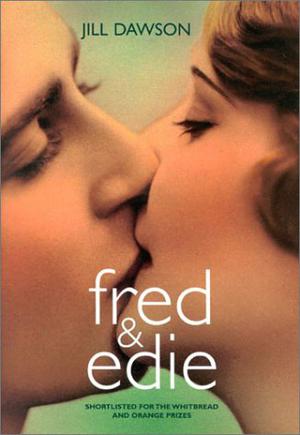
I obviously bought this book at some stage but can’t remember why. Was it after a review that I had read; because of the steep reduction in price from $31.30 to $6.95, or on account of the striking cover? (am I so easily swayed?) For whatever reason, it has been on my shelf for some time.
The book was shortlisted for the Orange Prize and the Whitbread Novel of the Year in 2000. It is loosely based on the real-life murder case of Edith (Edie) Thompson and Freddy Bywaters, who were hanged in January 1923 for the murder of Edith’s husband Percy. It is written as a series of letters from Edie in her jail to Fred in his, where they are both awaiting trial. Hoping at first to smuggle the letters out, Edie decides not to actually convey them to Fred, which frees her to be more frank. The letters are interspersed with authentic newspaper articles from the time, and a first-person present-tense narrative that gives the back story.
Edith Thompson was nine years older than her lover, Freddy. Edith was a modern, intelligent, independent young lady with shingled hair, who earned a good wage in a millinery shop. At first Freddy was going out with her sister Avis, but he was attracted to Edie and came to live for a while with the unhappily-married Edith and Percy. After an altercation between the two men, Freddy left.
Some time later Edith and her husband Percy were walking home from a night at the theatre, when a man jumped out and stabbed Percy to death. Fred was arrested, and on being (incorrectly) told that he had confessed, Edith admitted that she knew that Freddy was the assailant and the nature of their relationship.
Even though Edith had no connection with the actual murder, the discovery of a cache of letters that Edith had written to Freddy was tendered to the court in evidence, revealing their affair and Edith’s attempt to poison and kill Percy by putting ground up glass in his food. They were both found guilty of murder. Freddy Bywaters protested Edith’s innocence, which ironically led to a surge in public pressure against his hanging. Edith’s position with the public – despite Bywater’s declarations and the lack of her involvement in the murder- was more equivocal. For many people, including the judge and jury, she was seen as the master-mind and an adulteress – and guilty. You can’t help thinking that she was executed for being a passionate, feisty adulteress (not a capital crime) rather than as a murderer.
Dawson has been able to use the real-life letters that were tendered in the court as a model for Edie’s voice in this fictionalized account. Edie’s awakening sexuality, even with the boorish Percy in her heightened sense of attraction, is well described, and the fictional letters capture well the giddiness and rashness of early infatuation.
There’s a fantastic website put together by one of her biographers Rene Weiss that can be found at https://edithjessiethompson.co.uk/ that includes all the authentic letters, an entire copy of Weiss’ book, photographs, and current news. I enjoyed the book in its own right, but I must admit that my admiration for Dawson’s book increased further when I saw the source material from which she drew to write her own fictional account.

 The Resident Judge of Port Phillip