Category Archives: Book reviews

‘Amnesia Road’ by Luke Stegemann

2021, 267p.

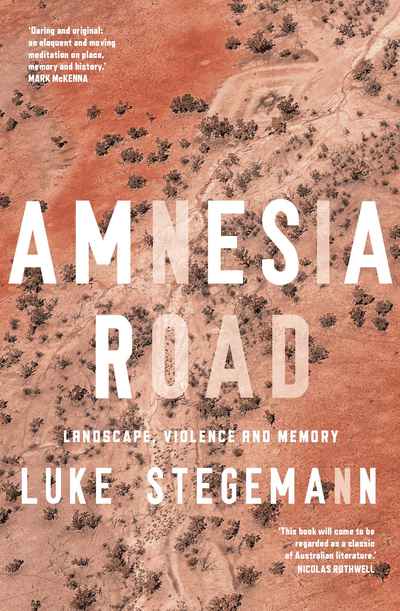
South-western Queensland and the rural backlands of Andalusia in Spain are two landscapes and histories that rarely mentioned in the same breath. However, they are not dissimilar to look at: indeed, the image on the front cover could be of Australia’s red centre or the arid desert regions of Andalusia. I suspect by the red tones that suffuse the photograph that it is of Australia, but blood is red too, and it has soaked into the landscape of both settings. In Queensland there were the barely acknowledge massacres of indigenous Australians as settlers moved westward; in Andalusia, there were the bloody atrocities on both sides during the Spanish Civil War.

There are few other people whose knowledge spans both locations, apart from fleeting visits by most travellers. This is where Hispanist and cultural historian Luke Stegemann comes in. He travels the backroads of Queensland as a boxing referee, while he refers to Spain as his ‘second patria‘. Deeply familiar with both, he brings them together in what is described as a “literary examination” of landscape, violence and memory in the two places.

He doesn’t actually describe what a “literary examination” or a “literary meditation” is, but I assume that it is a drawing together of the visions of other writers about an event or place. Certainly, he does reference other authors, but this is no mere desktop activity. He physically visits many of the places that he writes about, mainly as an outside observer. He marries the literary and experiential into a discursive, poetic, beautifully shaped exploration of questions about the memories that a landscape can hold, and the tenacity with which those memories take hold, despite the tacit or overt agreement to deny them.

This book employs two scenarios- the mid-nineteenth century pastoral frontier of south-west Queensland, and a series of early twentieth-century civilian massacres in southern Spain – as pathways towards examining the ways history is turned over and inspected, sometimes with fascination, sometimes with disgust, and its angles then polished for specific cultural and political purposes. Both scenarios are at the centre of contemporary debates around the need to tell, and approved methods of telling, troubled – perhaps better to say infamous – aspects of national history.

p.6

The opening chapters wrestle with the ideas of memory and forgetting, memorializing through graveyards and forgetting through unnamed massacre sites. He shuttles between Australia and Spain, using the writing from one culture to illuminate the other. In places this seems like a linguistic game, with chapters titled ‘The verb that has no name’ or ‘The Language of Eden’. The passing of generations and their knowledge is described grammatically:

The past tense soon closes down the present perfect nature of that claim: people have seen becomes, forever, people saw. Descendants remain, but the last of the witnesses are gone. The final death is often unremarked for who knows who is the last of the witnesses?…Each day, each year, each decade, periods of history move further away and we are left with an imperfect detritus. Windows are closed, doors shut, voices silenced, graves sealed.

p.34

The book is mainly based on the Australian experience, with the Iberian example used as a point of both comparison and contrast. The heart of the book lies in the two long chapters ‘Threnody’ (which I confess I had to look up – it means “a wailing ode, song, hymn or poem of mourning composed or performed as a memorial to a dead person”) and ‘Iberian Hinterland’.

The ‘Threnody’ chapter, at 50 pages, has the structure of a guided tour across the landscape of south-west Queensland. At each stop, he gives us a description of the landscape and a short history of the ‘interactions’ that took place there. He intersperses this with the local and amateur histories of these places, which generally celebrate the ‘progress’ of settlement and the ‘success’ of ‘dispersal’.

We have a duty to look unsparingly at the acts committed. We can now both see and understand the absurd vanity of the acquisitive graziers, to say nothing of the wretched illegality of their land grabs; nevertheless our contemporary morality is of limited use in grappling with this history. Unavoidably, the expansion of the Europeans across south-west Queensland involved tremendous cruelty and episodes of outright violence that mark our national history, though this fact must be tempered with the knowledge of acts of tenderness and attempts at understanding on both sides, and what were often immediate and close relationships between Indigenous people and settlers.

p. 85

Nonetheless, as he points out, in order to considered these acts of goodwill, “it is first necessary to climb over the bodies. The toll cannot be avoided.” P. 118 On the Massacre Map produced by the University of Newcastle, the area of South West Queensland is not studded with dots (as the coastal areas are) but when you do click on the massacres, they are of huge numbers of people. I have read of frontier violence before, but it was generalIy deployed against small groups of warriors, or family groups of women and children. I hadn’t imagined 300 people being massacred, as at Bulloo River. Imagine it. The vision is horrifying.

In the succeeding ‘Iberian Hinterland’ chapter, at 63 pages in length, he takes a similar approach, although here he overlays the bloody Civil War history with the tourist itinerary, which exists largely oblivious to what happened less than a century before. I remember reading in the guide book that I took with me to Andalusia just a few years ago, there was still sensitivity about the Civil War, and to not ask pointed questions. But unlike the anonymity and paucity of Indigenous deaths in Australia, there is “a paper trail and a line of bones” that testify to a national total of some 115,000 murdered behind nationalist lines, and 55,000 behind Republican lines (p.135). With the passing of the Law of Historic Memory in 2007 there has been a deliberate political decision that the tacit silence about this slaughter will be broken; that bodies will be exhumed; that Franco will be shifted from the Valley of the Fallen to a private family vault.

Just as there is no turning away from the brutal slaughter of Indigenous people in south-west Queensland, there is no turning away from the indiscriminate killing of tens of thousands of innocent people in the first months of Spain’s civil conflict. And it has been the slow revelation of these details, the political environment into which they have been released, and the arguments they have triggered around questions of memory, truth, justice, compensation and reconciliation, and where these might find their place in a modern democracy, that have added weight to what might otherwise have been just one more collection of twentieth-century bones- anonymous, roadside or forest-deep- abandoned to their violent quiet.

p. 137

Stegemann sees a similar movement at work here in Australia too, as the Great Australian Silence (in Stanner’s words) is finally being broken down. In particular he points to the Uluru Statement (awarded the 2021 Sydney Peace Prize but still shamefully suspended in limbo four years later). But he points out that reconciliation is hard work. The passing and implementation of the Law of Historic Memory in Spain has been fraught, and is likely to become even more so with the rise of populism. In Australia, the ideological ravine scours ever deeper with social media and a shrill press.

This really is a beautifully written book. You could open any page and find a paragraph that is beautifully crafted and insightful. It has high expectations of the reader. The dual emphasis on Indigenous Australia and Andalusia particularly appealed to me because my interests align along those tracks as well, but also because it illustrates the way that our learning in one field illuminates and enriches the other fields of knowledge that we encounter.

My rating: 9/10

Sourced from: Yarra Plenty Regional Library
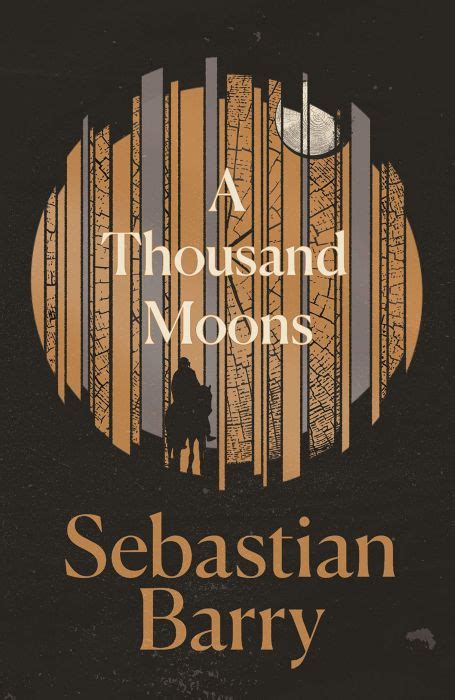
‘A Thousand Moons’ by Sebastian Barry

2020, 251 p.

SPOILER ALERT

Obviously Sebastian Barry (middle-aged, White, Irish male) didn’t read the memo on cultural appropriation when he wrote this book in the narrative voice of a teenaged, lesbian Lakota girl.

I am Winona. In early times I was Ojinjintka, which means rose. Thomas McNulty tried very hard to say this name, but he failed, and so he gave me my dead cousin’s name because it was easier in his mouth. Winona means first-born. I was not first-born.

p.1

When we meet Winona, she has already been swept up into a white man’s world. And if you have read Barry’s earlier book Days without End, you have already met Winona, when she is adopted by Thomas McNulty and his Indian-heritage lover John Cole after her family is killed in a massacre attended by McNulty and Cole themselves. It is now 1870 and the unconventional family are living together on Lige Mangan’s tobacco farm outside Paris, Tennessee, along with former slaves Tennyson and Rosalee Bouguereau. Winona, growing into womanhood, is shyly entering into a naive and rather ambivalent engagement with Jas Jonski, a Polish boy who works at a nearby store. Plied with whisky, she is raped and does not even have the words for what has happened to her. Nor can she remember who raped her, and her shame and uncertainty triggers off a cascade of other events.

The Civil War might be over and the Union may have won, but racism and menace are quickly rising in this former Confederate area, especially for ‘others’: Native Americans, freed slaves and even Union soldiers – especially if their homosexuality became public knowledge . I’ve been listening to Heather Cox Richardson’s series on Reconstruction, but history alone cannot capture the feeling of impotence against the night-riders and the inexorable closing in of racism clothed in official dress, as positions at the head of militias and the courts are turned over to racists. The ‘goodies’ are not always good: nor are the ‘baddies’ completely bad.

This book is part of the McNulty/Dunne family that Barry has been exploring through his fiction over many years. In many of these books, the connection is only by surname and a bit of back history. This book, however, is more closely tied to Days without End. I can only imagine that new readers would be baffled by the cross-dressing and loving relationship between McNulty and Cole, and backwards references to murder and jail.

When you think about it, Barry really is pushing the boundaries of plausibility with a homosexual adoptive couple, an adopted Lakota daughter, and then her falling in love with another young Native American girl. That he manages to do this so quietly and naturally speaks to the complexity of his characters and the contradictions of the world that they face. My reading of this book was really enhanced by my recent listening to podcasts about Reconstruction, and I think that I enjoyed it even more than Days without End.

My rating: 9/10

Sourced from: Yarra Plenty Regional Library
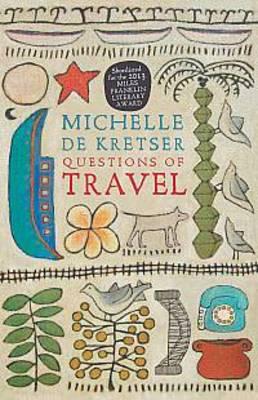
‘Questions of Travel’ by Michelle De Kretser

2012, 515 p.

SPOILER ALERT

I come to this book nine years after it was published. It comes garlanded with prizes: The 2013 Miles Franklin; the Prime Ministers Literary Award, the Australian Literature Society Gold Medal, and shortlisted for the inaugural Stella Prize. How does it stand up, almost a decade later?

It is a long book at just over 500 pages, and I was reading it under pressure for a looming book group meeting. Five hundred pages is a hefty tome, but if you asked me to summarize the book, it really comes down to two rather simple stories.

Australian Laura Fraser is the large, ungainly daughter in a wealthy family, who spends much of her early adulthood travelling abroad. Tiring of travel, she returns to Australia and begins working Ramsay Publishing, a travel guide publishing company in competition with Lonely Planet, while renting small rooms on the upper storeys of an old ramshackle Harbourside house, owned by an elderly man with a large, untidy collection of paintings by deceased artist, Hugo Drummond. She is largely rootless: she owns no property, and has a strings of affairs with unavailable, married men, dalliances with older men and infatuations with gay men.

In the other story, Sri Lankan Ravi emigrates to Australia as a refugee after his wife and son are found murdered in mysterious circumstances that hint of official and police involvement and cover up. Although, as a Sinhalese Ravi was not in political danger, as he might have been had he been Tamil, his wife had been a Human Rights activist. Shifting from house to house, and disguising himself as a tourist in Colombo, one of his wife’s activist friends arranges for him to fly to Australia on a tourist visa, with a view to seeking asylum after arrival, hence avoiding the detention scheme for refugees who arrived by boat. He is a rather passive and ambivalent refugee, confounding our easy assumptions about ‘real’ asylum seekers.

The book follows the trajectory of these two main characters from the 1960s through to 2004. The narrative is often quotidian yet detailed, and there were many times when I wondered where (if anywhere) this book was going. The descriptions are so clear that you can almost see them in your mind’s eye, even though I had not been to many of the places described. They combine everyday, unexceptional life with large, explosive world events that occur off-stage – the death of Princess Diana, 9/11 etc. Big events occur, completely without warning or emphasis, and you find yourself re-reading to make sure that what you thought happened, actually did. As a reader, you develop a warmth towards this large, essentially aimless girl, and this man, traumatized by the deaths of his wife and child who somehow seemed more loveable to him once they had died. The book plaits the two stories, one over the other, and any expectation that somehow they are going to merge in some large plot development is disappointed. The action that moves the book forward is everyday and largely inconsequential, within a framework of larger, international events. Both Laura and Ravi are rootless, even though they are both drawn ‘home’.

This pointillist, rather aimless structure plays out de Kretser’s larger argument about “the question of travel”. As her character Laura observes, much of travel involves just hanging around, doing nothing, waiting for the next thing – just like in this book. Laura works at a ‘travel’ book publishing company, priding itself on supporting ‘travel’ rather than the more grubby, commercial ‘tourism’ – but where does the difference lie? Is it ever possible to have an ‘authentic’ travel experience, or does authenticity lie in the everyday and banal? How has the internet, the development of which she traces in this book, changed the nature of travel when experiences can be rendered digitally? And what of those who choose to travel, as distinct from those who are forced to travel?

I don’t really know what to think about this book. At over 500 pages, it was very long and much of the book consists of rather banal detail. Events land unexpectedly, just as in real life. Some change the whole trajectory of the book; others are absorbed into the flow. I found myself thinking of the book as a type of mosaic. Each little tile by itself is inconsequential, and yet the connection of each little tile contributes to a bigger picture. I suspect that the details of this book have wormed themselves into my consciousness far more than I realize, and that my appreciation of the book will grow, rather than diminish, over time. It is beautifully and intelligently written, and you could choose any page at random and find a sentence that captures an image with crystal clarity or skewers an observation with a spiky, mordant wit. Just like when travelling, much of it was boring and inconsequential. And, much like when travelling, the experience of reading afforded by this book creates something much bigger than its parts.

My rating: 7.5

Sourced from: CAE bookgroup. My bookgroup was divided in its opinion.

I have included this on the 2021 Australian Women Writers Challenge website.

‘The Lying Life of Adults’ by Elena Ferrante

Translated by Ann Goldstein, 2020, 322 p.

SPOILER ALERT

A new Elena Ferrante book! I’ve just finished watching Season 2 of the television series ‘My Brilliant Friend’, which reminded me just why I loved the Neapolitan Quartet so much. Having snaffled this new one off the library shelves, I held off reading it until I finished the television show, fearing that I might become confused between the two. It was a good decision. Much as I love Elena Ferrante, there are many – possibly rather too many – similarities between the Neapolitan Quartet and this new book.

Giovanna is an only child, living in one of the upper class suburbs above Naples, the daughter of two teachers. At the age of twelve, and in trouble because of her poor grades and attitude at school, she overhears her father complaining that “she’s getting the face of Vittoria”. Vittoria is her father’s estranged sister, who still lives in the industrial area of Naples, down in the valley below, from which her father had escaped. Hurt and defiant, she decides to seek out this aunt, whom she barely knows, as a way of resisting her parents and finding her own identity.

She learns that the definitive break between her father and her aunt occurred over Vittoria’s affair with a married man, Enzo, who later died leaving his wife Margherita, and three children Tonino, Guiliana and Corrado. Both Vittoria and Margherita mourned the same man, and created an odd alliance where Vittoria was known as ‘Aunt Vittoria’ to Enzo’s children. In developing her relationship with her aunt, Giovanna is drawn into this unusual family circle and their friends as well.

At the same time, her own small family splinters as her father leaves her mother to move in with Costanza, the wife of a former colleage and close family friend. Giovanna in effect inherits two step-sisters, Ida and Angela, with whom she was already close.

As with the Neapolitan Quartet books, Ferrante is so good at capturing adolescent female friendships, and the physical awkwardness and fervour of changing bodies. As with My Brilliant Friend, there is a friendship that shifts between intimacy and betrayal; there is an intelligent young girl who drifts away from and later embraces her intellectual aptitude; there is an academic male over whom the main character and her friend compete; there is fascination coupled with revulsion against men, their testosterone-driven sexuality and their power; and again there is the industrial area of Naples (now seared in my mind by the television series, and completely different from how I pictured it when I was reading the original Neapolitan books).

There is an element of fairy tale here too, in the form of a family bracelet with a provenance that reflects the evasions and untruths that Giovanna learns all adults generate. So too, Giovanna, as a seventeen year old, learns to lie and betray as she steps into her own adult world, replicating many of the entanglements that her own family members perpetrated before her.

The ending surprised me – why did she do that? – and I wonder if this is not the first book in another quartet. Does it matter if this book is so similar to the other books for which Ferrante has become so well-known?After all, Jane Austen mined similar characters and social settings for many of her books. Is it a stretch to link Austen and Ferrante? I don’t think so. Both are brilliant in capturing the nuance and treachery of female friendship, and the experience of feeling your way into your identity within a network of expectations. And when the next Ferrante comes out, I’ll snaffle it off the shelf too.

My rating: 9/10

Sourced from: Yarra Plenty Regional Library
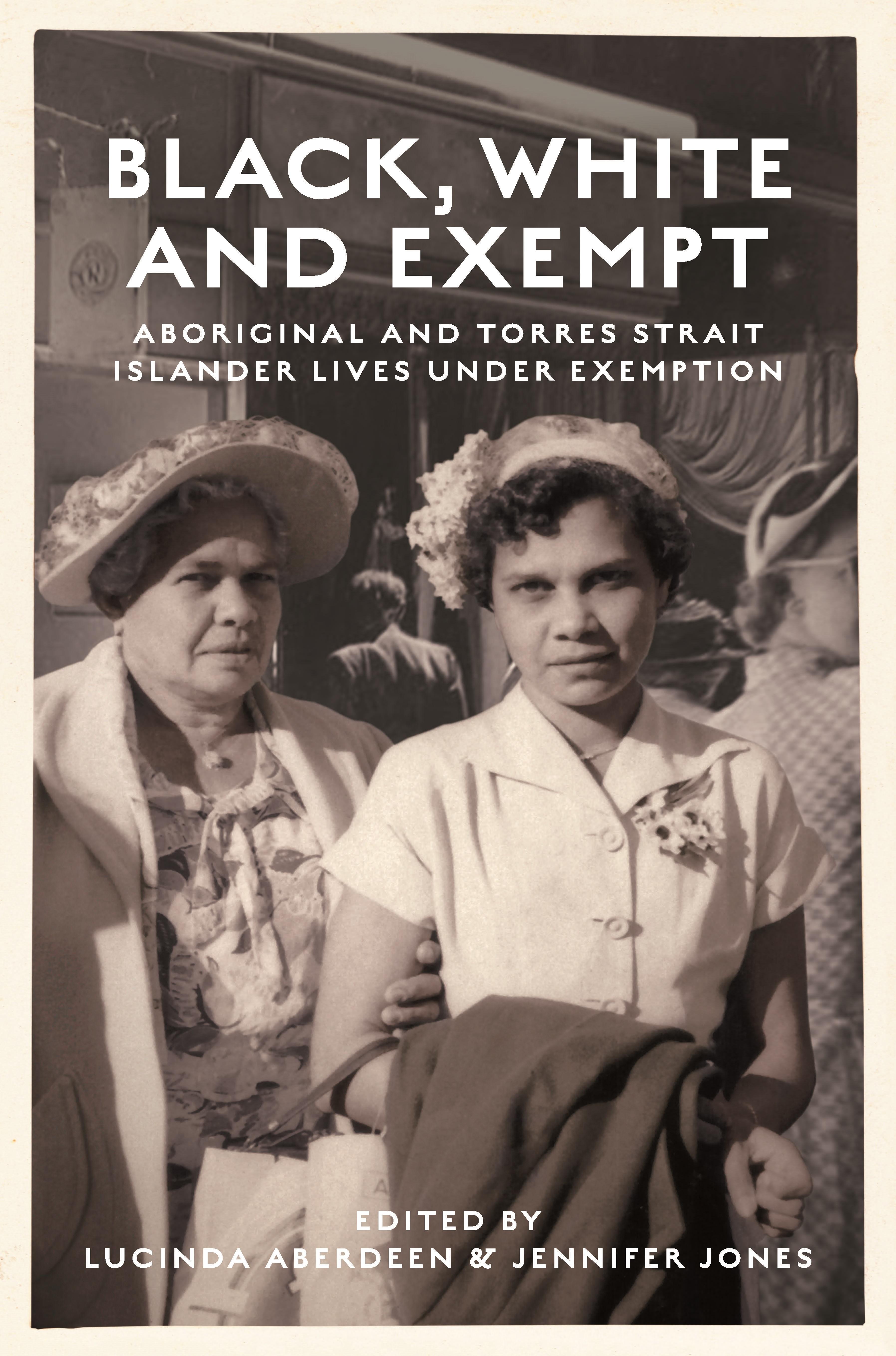
‘Black, White and Exempt’ by Lucinda Aberdeen and Jennifer Jones (eds.)

2021, 184 p.

Aboriginal and Torres Strait Islander people are respectfully advised that this publication contains names and images of deceased persons and culturally sensitive information.

I think that one of the most damning and poignant phrases in the Uluru Statement from the Heart refers to “the torment of our powerlessness”. I think about the massacres; I think about the Stolen Generations and now, after reading this book, I add the ‘certificate of exemption’ to this grim array of injustices.

The exemption legislation, introduced across Queensland (1897), Western Australia (1905), Northern Territory (1936), South Australia (1939) and New South Wales (1943) is almost breathtaking in its condescension and its nonchalance to its implications. Although the legislation differed between the states, it involved a process by which individual Aboriginal people could apply for a certificate to declare that they were exempt from the ‘Protection Acts’ on the grounds that they were more ‘assimilated’ than other Aboriginal people – lived moral lives, didn’t drink too much, had steady jobs – and didn’t participate (at least as far as the government was concerned) in Aboriginal culture or socialize with other ‘unexempt’ Aboriginal people. This exemption could be revoked at any time: likewise, it could be imposed without consent on ‘troublemakers’ to separate them from the community.

Ironically, some white Australians, wanting to challenge and negate Indigenous narratives, today deride their authors as “not real Aborigines” (yes, I’m looking at you Andrew Bolt). Yet the Australian government deliberately encouraged this conscious self-rejection of Aboriginal identity, which passed as a matter of course to their children.

This book arose from a two-day symposium called Rethinking and Researching 20th Century Aboriginal Exemption in Australia, held at La Trobe University’s Shepparton Campus in October 2018. Elders directed the planning committee and community member involvement, and there was input from the Aboriginal and Torres Straight Islander Cultural Arts Centre for Koorie Education at GOTAFE. Separate ‘yarning circles’ were held for Indigenous and non-Indigenous community members, academics and students. Of the eleven authors who contributed chapters to this collection, all but one are women, and four are Indigenous. This affects the type of book it is. A collection of papers presented as part of a conference or symposium has a different structure and tempo from a volume written by one person alone. Because they are written to reflect a timed, oral presentation, there is a fairly standard length and each one is self-contained, taking its own ‘bite’ at the question. Within each one there is a structure of introduction-evidence-conclusion, but unless there is a final, integrating chapter (and in this collection, there is not) there is often no over-arching conclusion. The La Trobe University connection between the authors comes through very clearly, with a strong representation of La Trobe academics and alumni.

Australia was not the only country to introduce exemption legislation. John Maynard, in the opening chapter, points out that historically, there were similar processes in French and Belgian colonies – not that looking to the Congo for policy is much of a recommendation (p. 14) Both Canada and America had similar policies with their Indigenous populations, starting with Canada in 1857 and in America in 1906. Rather disingenuously, the Queensland legislation of 1897 was called the Aboriginal Protection and Restriction of the Sale of Opium Act, even though only 6 of its 33 clauses related to opium, the remaining all directed towards control of Indigenous people.

So how did one get exempted? When the individual Indigenous person initiated the process, it involved writing a letter to the responsible authority, providing references, then attending an interview. It was intrusive and judgmental. All of this correspondence, and the government reports that led to either the approval or rejection of the application are part of the National Archives of Australia collection. As Katherine Ellinghaus noted in her chapter where she reviews the history of the exemption legislation, “the archives of exemption are incredible: vast, intimate and confronting”. They make judgements on intimate details of Indigenous lives: the cleanliness of their houses, whether or not they drank alcohol, who they were married to, if they were ‘troublesome’.

Those [records] that remain contain evidence of cruelty, misfortune and sadness, but also resistance, activism and survivance [sic]. Even the simplest and most everyday applications for exemption should be seen as documents of negotiation…[containing] extraordinary detail of people’s lives and families, often rendered in racist and unkind bureaucratic language

p. 40

As a result, the records are on restricted access, available only to their families, which is only right. Some families have allowed historians to access them, with names redacted. Other Indigenous people have drawn on these records in telling their own stories in the form of biographies and memoirs. Other stories are in oral form only. In this book, Indigenous contributors Aunty Kella Robinson and Aunty Judi Wickes draw on their own family stories, while in other chapters families have given permission to the historian, with names changed.

From these stories, we see that people sought exemption for a number of reasons. Sometimes it was because other welfare provisions were tied up with it- that you could only get a Commonwealth old-age pension if you held a certificate of exemption. For other people, it was a way of escaping the mission and taking up work opportunities elsewhere. Even there was no specific legislation in Victoria, families sought to escape the involvement of the Aborigines Welfare Board in their lives by seeking ‘self-determined exemption’ (p.85) from the vagaries of changing government policies, as explained in Jessica Horton’s chapter. Ella Simon, a revivalist preacher associated with the evangelical United Aborigines Mission, despised the certificate of exemption she gained in 1957. As Jennifer Jones shows in her chapter, gaining exemption meant that she could undertake her travelling ministry without being exposed to segregation, but it meant that she had to officially abjure her links with the Purfleet UAM mission, which was an integral part of her identity and faith. Karen Hughes’ chapter looks at the examples of two US War Brides, whose certificate of exemption enabled their journey to the United States, where they faced new forms of discrimination. Leonie Stevens’ chapter ‘Smash the Exemption System’ examines the Northern Territory, where at the time of introduction, Indigenous people (themselves a multi-cultural group) were the majority of the population, outnumbering the non-Indigenous population 4:1(p. 167). The Half Caste Progressive Association played an integral role, first in achieving the legislation in the 1930s and then attacking it in the 1950s. The Northern Australian Workers Union, active in the Pilbara strikes, and other networks drew on the United Nations Declaration of Human Rights, widening the pressure for change beyond the Territory to a national and international level.

At the same time, these stories highlight the precariousness of the status awarded by a certificate of exemption. If it was rescinded, families were forced to return to the mission, where there was a strong chance that their children would be taken. As part of their powerlessness, if the policies changed, their lives changed too. Beth Marsden’s chapter ‘Destination of Pupil ‘Unknown” shows the fluidity of family relocations along the Victorian/NSW border as children were enrolled in school, often with vague information provided by the parents, and then withdrawn to escape the scrutiny of the state and the fear of removal. In NSW segregated schooling had developed when school principals requested to exclude Aboriginal children on the grounds of complaints made by white communities (p.109) Shifting back and forth across the border was a way of maintaining family networks and resisting the bureaucracies of both states, but it must have affected the childrens’ education.

I was appalled, reading these stories, one after the other. I understand completely the sensitivities and pain involved in telling family stories, where the decisions of one generation about identity and identification cascade through into succeeding generations. These stories, and the judgments and prejudices that prompted them, are for the family to tell. But the repetition of these injustices, in one family and then another and another, highlights that this was a structural, government-sanctioned process. It should be better known, and it needs to be part of the Truth Telling that must, eventually, come.

As Ellinghaus says:

The history of exemption must be fully told, not just to historians and stakeholders, but to mainstream Australia as part of the truth-telling that this nation sorely needs. There should be public recognition of the damage that has been done by these policies, perhaps in the same way that we have seen for the Stolen Generations. Not just recognition, apologies and reparations, but the inclusion of these people who have suffered through this policy in the narrative of settler colonialism in Australia.

p. 41

On the basis of the editorship and the predominance of female contributors, I have included this book in the Australian Women Writers Challenge.

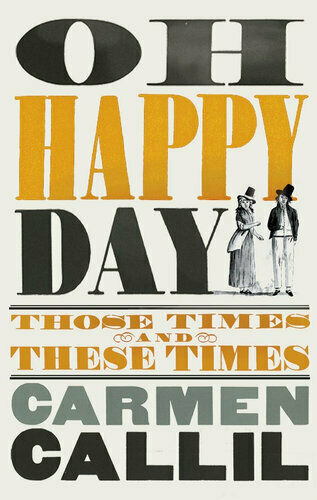
‘Oh Happy Day: Those Times and These Times’ by Carmen Callil

2020, 282 p.

Somehow or other I have ended up with a second-hand copy Carmen Callil’s earlier book Bad Faith on my bookshelf. When I purchased it from who-knows-where, I did not know who Callil was, but I was aware that her book had been well received. Even though Bad Faith remains unread, I now know that Carmen Callil is Australian, even though she has lived in England since 1964, and that she started Virago Press and has worked in the field of publishing and literature ever since. So I picked up her most recent book Oh Happy Day: Those Times and These Times when I saw it at the library.

The blurb on the back reads:

Carmen Callil explores her roots in a book that is a miracle of research and whose writing is fuelled by righteous anger…Carmen Callil not only reclaims from obscurity the lives of these ordinary men and women who were sent to Australia as convicts or domestic servants, but also draws telling parallels for our own times. Oh Happy Day is a moving story of poverty, social injustice, Empire and migration.

As I have said many times before on this blog – so many times that I’m boring myself too- I am drawn to ‘Who Do You Think You Are’-type books and programs, and I am usually disappointed. I like the history; I like the stories of largely unknown people, but I find the displays of emotion on the part of the searcher to be maudlin and somewhat self-centred. The tears are triggered more by a sense of identification – “that’s MY great-grandmother” – rather than from a sense of injustice that anyone endured such sorrow or deprivation. Probably the best family history/quest I have read is Graeme Davison’s Lost Relations, and re-reading my review here, I again find myself nodding in agreement with Davison’s reservations about the endeavour, many of which I share. Callil’s book is not unlike Davison’s in that it takes a broad view of the context, then embeds the individuals within it, rather than the other way round. And that’s the way I like it.

The three sets of family trees in the book, one at the front, two in the appendices, makes it patently obvious that this is going to be a book based on genealogy. In her introduction Callil writes that she intended to write about all her English, Irish and Lebanese emigrant ancestors, but then decided to focus on three: Sary Lacey; George Conquest, the father of one of Sary’s children, and Mary Ann Brooks, who married Sary’s son. All three ended up in Australia via different routes; all three are found on branches of Callil’s family tree; and all three are used as vehicles by which Callil tells her story of nineteenth century working class life.

I’m not going to go into the details of these individuals’ lives. As often happens with family historians, the researcher feels a familiarity (on first name basis no less) with the individuals on their family tree and the minutiae of their lives, that can become eye-glazingly tedious to outsiders. I’m more interested in the bigger themes that she draws out.

The first theme is the effect of technological change on the stocking frame workers in Leicestershire. Until now, I wasn’t particularly clear on what a stocking frame even was. The home-based stocking frame workers had a rhythm to their working week – collecting the wool, working feverishly for about four days, taking back the finished product then a few days later collecting the wool to start the whole cycle again. They rented their frames from middle-men, who took their own cut. However, the fashions changed, new machines that did not fit inside a house were invented, and the trade shifted into factories instead, with those few stocking frame workers clinging to the old ways offered less and less for a product that no one wanted.

Second, I knew about the changes to the Poor Laws in the 1830s, but I hadn’t quite realized the ‘like it or lump it’ approach it took to the destitute who sought assistance: it was the Poor House or nothing. Her telling of Sary’s life in particular illustrates the contingent and precarious nature of working class life, and the thread of relationships that could keep a family just outside the Poor House walls. The stories of Callil’s ancestors emphasize the physical proximity of family, shifting from street to street, generally staying close to other family. She hints – because she can do no more than that- at an incestuous relationship. She suggests the ruses and half-truths that enabled Sary to work the system sufficiently to survive. She notes the importance of Nonconformist religion amongst the working class and highlights the political turmoil amongst the working class at the time, even though there is no evidence that her family was involved.

Third, only one of her three ancestors is transported to Australia, but she devotes considerable space to the convict system as it changed over time, and as George Conquest experienced it. Here I feel that she faces the similar hazard as Babette Smith confronted in her Defiant Voices (my review here) where the dramatic and cruel is emphasized, but the examples in the book reveal the opposite. Callil is not a historian, but she does engage with the academic literature. Her own dispute with John Hirst’s argument that the convict system was more negotiable than, say Robert Hughes’ depiction of systematized violence and terror, is played out more in the footnotes than in the text. In a footnote she describes Hirst’s Convict Society (my review here) as “an exquisite example of Australian revisionist history, revealing much about its writer and little about the experience of convicts- and others of the time” (p. 308). Even though she spends many pages describing whippings and brutality, her ancestor George Conquest was not sent to a secondary penal settlement, and there is no evidence that he was whipped. In fact, he was almost a poster-child for the opportunities that could open up through transportation, partially through the benevolence and assistance of a magistrate-settler to whom he was assigned, and also through his own astuteness and hard work in taking advantage of the situations that presented themselves. Even though the convict system was intended to keep convicts on the other side of the world, George Conquest was even able to visit England again, returning by choice to Australia and finding himself in a position to help family members.

In her introduction Callil wrote that she had a present-day purpose in writing this book:

So I decided to tell only the story of Sary, George and Mary Ann, natives of England’s labouring poor – the paupers, asylum seeks and refugees of their day. Their story raised a question: had so little changed in Britain in the last 200 years, that generation could succeed generation, each one repeating their grim experiences?

p. xvi

I don’t know that she really explores this question in much depth in the book. Where she does draw parallels with the present day, it is in passing or concentrated within the closing pages of the book, almost as a polemic about refugees, Brexit, indigenous affairs, rather than engaged with as a serious question. I was disappointed, too, that she did include her Lebanese forefathers at the end of the book after all, despite her intention to concentrate on Sary, George and Mary Ann. It is such a cursory treatment that I felt it weakened the book, rather than strengthened it. Sary, George and Mary Ann are strong characters, whose lives provide much to work with, and I think that she should have stayed with them alone. Her research into the Britain they left, and the Australia to which they came is detailed and rich, especially for people who are unknown to all but family, but I’m not sure that the book meets the expectations for present-day commentary that the title and her introduction suggest.

My rating: 7/10

Sourced from: Yarra Plenty Regional Library.

I have included this on the Australian Women Writers Challenge.

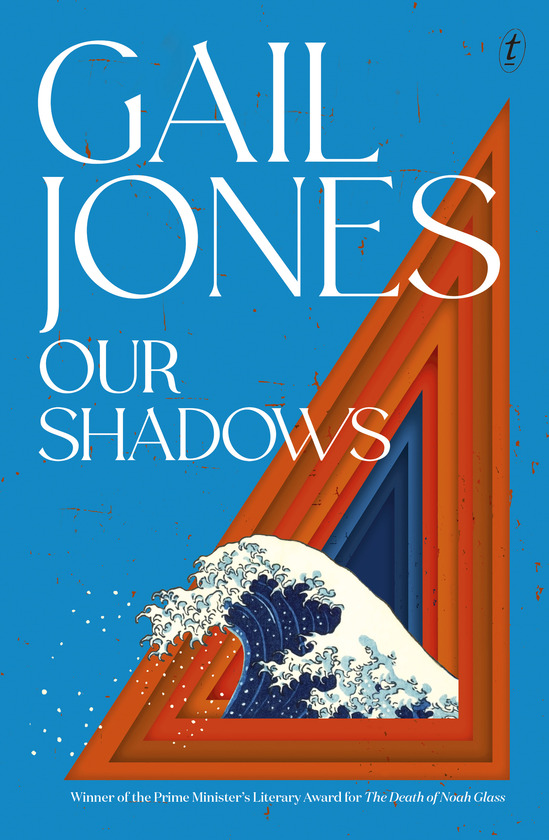
‘Our Shadows’ by Gail Jones

2020, 320 p.

As a child of a 1960s education, I’ve often thought that the stories we read in our School Reader have a particular endurance in our memories. Perhaps it was because it seemed that the whole curriculum seemed to centre around the School Reader, or because as a fast reader, I was condemned to reading and re-reading the story until the slower readers caught up. When I read the italicized preface to Gail Jones’ Our Shadows, where a young girl is remembering a story of a trapped Italian miner named Modesto Varischetti waiting to be rescued, something snagged at me. It was only at the end of the book that Jones brings this preface back into focus. It was a story in the ‘Fifth Book’ of the Victorian School Readers. There had been a mining accident; the water rose too quickly in the mine; he was trapped on a ledge; then divers came for him, with those huge circular diving helmets. And for any of us who read and remembered that story with its blurry black-and-white sketches, it all sprang into life again with the rescue of the boys in the Tham Luang Cave Rescue in 2018.

This story is part of the clever bookending that Jones employs in Our Shadows. The past and the present jostle against each other, just as they do in the threaded narrative of the book. There are multiple strands. One is Paddy Hannan, famed as the discoverer of the gold that made Kalgoorlie and Coolgardie famous as ‘Wild West’ gold towns during the 1890s. Fleeing the Irish Famine that has winnowed out his family, the discovery of gold and his notoriety is just one part of his long life as he escapes to Melbourne where he drifts around St Ambrose’s church in Brunswick and the domed, green lamp-lit State Library.

The other, more substantial strand is the Kelly family, who lived in Kalgoorlie. In the present day, there are two sisters, Nell and Frances. Their mother Mary died after Frances was born, and their devastated maternal grandparents, Fred and Else, took over the care of the very young girls. Their father, Jack, left and the girls grew up completely in the care of their grandparents. Now Fred has died, and Else is in a nursing home. The two sisters, while not estranged, are awkward and tentative around each other. Nell suffered with mental illness as a teenager, while Frances has recently been widowed when her husband died with mesothelioma from a childhood spent in an asbestos mining town. Frances, the younger sister, is perhaps more grounded than her older sister, and when they agree to look for their father, it is Frances who travels back to the family home, now occupied by their embittered aunt Enid.

At first I thought that this was going to be a multi-generational family history story and I felt that Gail Jones was punching below her weight to adopt such a clichéd narrative structure. I should have trusted her more, because the writing is much more complex than that. One of the shadows that falls over the sisters is their innocent acquiescence in the erasure of their mother’s memory by their grief-stricken grandparents, and the dominance of the maternal side of the family when their father disappears. So the narrative skips back and forth between the present day, and their grandparents’ own story, and the sisters’ childhoods. The interweaving of Paddy Hannan’s own story complicates the narrative even further.

Jones writes landscape beautifully, and I think that her Western Australian sensibility shows through here. Her writing, in this as in her other books, is very carefully wrought, although at times over-wrought. Frances deciding to go for a run for its ‘ravishing repetition’, and feeling the ‘delectable’ pull of her muscles when doing hamstring stretches feels like the writing of a much less experienced, polished writer. I have read several of Gail Jones’ books, although I only reviewed Five Bells (see my review here) and it seems that I have had similar reservations about her other books as well.

As the winner of the Prime Minister’s Literary Award for The Death of Noah Glass (which I have not read), Gail Jones is often regarded as a ‘literary’ and ‘hard’ writer. I do not find her this way, but this book is probably more accessible than her other books because of its apparently familiar family-history structure. It is much more complex than that, picking up the themes of her other books – estrangement, guilt, white response to indigenous dispossession, strained relationships – explored within family bonds. Her control of the different strands and time shifts is masterful, and it is a ‘meaty’ book with multiple themes and reflections.

My rating: 8.5

Sourced from: Yarra Plenty Regional Library
I have included this review on the Australian Women Writers Challenge database.

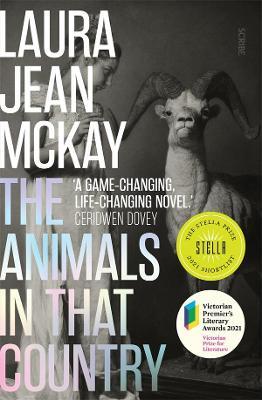
‘The Animals of that Country’ by Laura Jean McKay

2020, 277 p.

This book won the Victorian Premier’s Literary Award for 2021 and it comes emblazoned with glowing praise from other writers and reviews. ‘A game-changing, life-changing’ novel, it is supposed to be, according to Ceridwen Dovey. High praise indeed, but I’m afraid that it left me rather cold.

Jean is an older woman who has lived hard. She is an untrained wildlife carer and guide in a refuge, a job that allows her to be close to her granddaughter Kimberley. Kimberley’s mother, Ange,the manager of the refuge, grudgingly allows Jean to live on site even though her partner, Lee (Jean’s son) shot through years ago. News begins filtering through of a pandemic – [oh yes, a pandemic. Are we about to be deluged with books about pandemics? Spare us] – colloquially known as ‘zooflu’ which turns your eyes red and makes you able to understand animals talking. I must admit that the implausibility of this turned me off from the start.

The effect was not Dr Doolittle. Instead, people were driven crazy by the voices that they heard, and as fear gripped the community, some chose to expunge every animal from their environment; while others were drawn to the animals who surrounded them, to their own peril.

When the infection finally reached the wildlife refuge, they were closed down immediately. Jean’s son Lee, already suffering from the influenza returns home, and takes his estranged daughter Kimberley with him. Jean feels compelled to follow.

Jean drinks too much, smokes too much, and is harsh and uncouth. She does love animals, though, especially a dingo called Sue, even though Sue had bitten her when she was trying to release her from some wire. Jean and Sue take off in their ute, following Lee and Kimberley’s trail through an increasingly desolate landscape. Jean is infected too, and soon can hear Sue’s thoughts. The infection from the dingo bite is becoming increasingly toxic as the surrounding animals become more menacing, and as societal norms break down.

So what do these animals sound like? McKay depicts their language in a sort of blank verse in a bold font, tangentially related to events, usually fixated on food or excretion, and somehow ‘off’.

Gasping

over the lock (I’m

mingy.) It’ll call me and

I’d like

to get a drink of

it

p. 82

I must confess that I found these animal dialogues opaque (as they were intended to be) and rather twee. I kept thinking “this book is ridiculous”, and even though the concept is interesting, this is pretty much the way I felt through the whole book. Written in Jean’s voice – and a limited and uneducated voice it is, too – it is told in the present tense throughout. There were many times when I was confused about what was happening, although my confusion was generally resolved so that I think I know what happened.

I’m surprised that this book has received the acclaim it has. Although it was written prior to our own pandemic, it probably was released into a market more primed for pandemic-books than might have been the case five years earlier. I found the basic premise implausible (although interesting) and the writing rather flat. Not my type of book, I’m afraid.

My rating: 6/10

Sourced from: Yarra Plenty Regional Library.

I have included this on the 2021 Australian Women Writers Challenge.

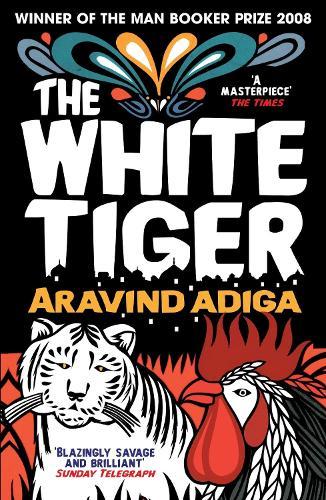
‘The White Tiger’ by Aravind Adiga

2008, 336 p

I suggested this as a read for our bookgroup about three years ago, and it finally arrived! Fortunately I hadn’t read it while I was waiting, so I came to it ‘fresh’ even though it was published in 2008 and won the Booker Prize that same year. It is told in the voice of Balram Halwai, a village boy made good as an ‘entrepreneur’, who writes a series of letters to the Chinese Premier, Wen Jiabao. Describing himself as a ‘half-baked Indian’, he also sees himself as a White Tiger: “the rarest of animals – the creature that comes along only once in a generation”. Unlike the rest of his family, he takes (and makes) his opportunities to get ahead, and escape the destiny of custom and servitude.

He tells us from the very start that he killed his employer, Ashok, one of two brothers who along with their father, hire him as a driver. Forced to leave school despite his intelligence, Balram takes the opportunity to become the main driver when Ashok, and his American wife Pinky Madam move to Delhi. There Ashok becomes enmeshed in the corruption of political figures. When by p.285 Balram does finally kill his master, we have come to share his disdain for Ashok’s weakness and the dog-eat-dog world in which Balram lives. While the actual murder takes several pages, Balram then makes huge mental leaps over the consequences of the murder, especially for his family. He is completely unrepentant, on several levels.

The most striking image that I took away from the book was that of the ‘rooster coop’ where individuals are hemmed in by their family pressures to stay within that coop, and not even seek to escape. It is a self-imposed structure that keeps workers honest, even against their own interests. This is something that I have thought about when travelling in second or third world countries: why don’t people rob me? Why is it acceptable for me to move through their society so heedlessly, when my spending money for just that day could make a change to their lives?

One of the things that I loved most about this book was Balram’s narrative voice, which leaps off the page. He is a sardonic, self-serving and perceptive humble-bragger and like all good entrepreneurs, he takes you along with the dream, no matter your misgivings. The book is told completely from Balram’s point of view, although the author gets in his own critique of post-colonialism, corruption, loyalty and the deadening effect of the supposedly-extinct caste system. It is never really explained why Balram is writing to Wen Jiabao, except as the head of the rising power within Asia as distinct from the rotting and dying power of the old India.

I enjoyed this book, its structure as a series of letters and the sheer vitality and front of Balram himself. The author Aravind Adiga has had a life nothing like that of Balram, but he says that Balram is a composite of the many men he heard talking while they hanging around drivers’ ranks and train stations, in slums and in servants quarters. The narrative voice is so strong that you feel as if you are hearing it direct, even though it is as much of an artifice as the epistolary structure that Adiga has employed. Still- I don’t think that I have read another book quite like it.

My rating: 9/10

Sourced from: CAE bookgroup.

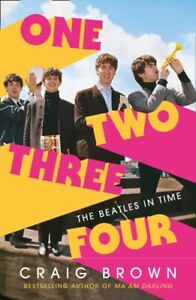
‘One Two Three Four: The Beatles in Time’ by Craig Brown

2020, 628 p.

I am a sucker for anything about the Beatles, even though I’m sure that every interview has been reported and combed over and every possible angle explored. Books, documentaries, podcasts – I’ll consume them all. But, enjoyable enough though it was, I really don’t know if the week that it took me to read this huge tome was really well spent.

The book takes a chronological approach, from the earliest days of playing together and goes through to their last performance on the roof of the building in London. It is written as a series of short chapters – 150 of them – some a few pages in length, some only taking up a page.

There are little vignettes that he repeats throughout the text. For example, he writes present-tense descriptions of various parties held over the years that the Beatles were together, where he names who was there, the drugs consumed, the ‘vibe’. As they accumulate, you sense the increasing lack of control as the Beatles and their hangers-on descend into a vortex of jealousy, unhappiness and irresponsibility.

The references are all at the back, and there are many of them, but what is more interesting is the footnotes which become increasingly florid as the book continues. Many of his anecdotes involve unknown people, whose ‘celebrity’ is only revealed in the footnote, and you do get a sense that this is a little microcosm of people who know people.

Some of the chapters are quite quirky- e.g. the list in Chapter 97 of the figures on the cover of Sgt. Peppers (e.g. Dr David Livingston, Oscar Wilde, Aldous Huxley, Lenny Bruce, Stephen Crane the author) and those who were dropped (Mahatma Ghandhi because of pressure from the head of EMI; Leo Gorcey the actor who wanted $400 for his images; and Hitler and Jesus Christ, both requested by John but dropped because too controversial). There are interviews with people who saw his concerts (the Ruby Wax one is really funny), rehashed interviews with the Beatles themselves, and quirky stories. Black and white photographs appear in the chapter to which they apply, which I much prefer to an insert where all the photographs are grouped together. The ending of the book is interesting. He finishes with Brian Epstein, and tells the story backwards, highlighting the many ‘what-if’ paths that could have been taken along the way.

Some of the chapters are autobiographical, where the author talks about his own experience of the Beatles, and his rather dyspeptic current-day excursions to tourist ‘attractions’ in Liverpool. Some chapters are counterfactuals e.g. a chapter where he posits Gerry and the Pacemakers becoming the big thing of the 1960s, with the Beatles just lowly support acts. Other chapters are about things only tangentially related, that occurred at the same time. I must confess that I was hoping for something a little more analytic and dare I say ‘historical’, but this was not the book to bring me either of those things.

My rating: 7/10

Sourced from: Yarra Plenty Regional Library