Category Archives: Book reviews

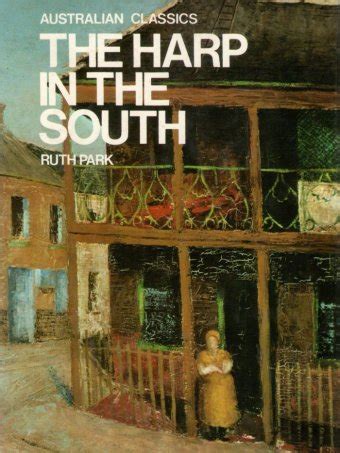
Revisiting Ruth Park’s ‘The Harp in the South’

The Harp in the South was the July selection for the Ivanhoe Reading Circle. I read all three books in the trilogy back in 2010 and had read The Harp in the South (the first written but second book in the trilogy) decades before that. So this book and I go back quite a way.

At the Ivanhoe Reading Circle, it is the practice for one or two people present a paper on the book under discussion (and after tracing through the 102 year old history of this book group – Melbourne’s oldest- I can tell you that this was exactly the procedure they followed back in 1920 too). The first of the papers was about Ruth Park’s own biography and the writing of The Harp in the South. She was Catholic herself, and had had a Catholic education. She grew up in New Zealand, but on shifting to Australia in 1942 and marrying, she and her husband lived for a time in Surry Hills in Sydney. It was this experience that she drew on in 1946 when writing The Harp in the South as an entry in a writing competition with the Sydney Morning Herald. It was published in twelve daily installments in the newspaper, and attracted both criticism and praise for its depiction of slum life, right from the start. It was reluctantly published by Angus & Robinson as part of the prize.

The second paper dealt more closely with the book, and opened it up for discussion. It is rather confronting reading of the prejudice towards Chinese and Indigenous people, and the words with which it is expressed in this book, but the group felt that it was realistic for the time. (Indeed, I would suggest, today. Didn’t one of the Royal Family express concern about the colour of the Royal Baby when Prince Harry married Meghan Markle?- just as Mumma did in this book when Roie married the indigenous Charlie). Indeed, the title itself which references the Irish immigration to Australia, and Park reminds us that Surry Hills contained people of many cultures. Despite cringe-inducing slang, she treats these characters with respect and nuance.

Some of the group felt that the book lacked plot, but others would describe it as ‘domestic realism’. For myself, it was the lack of plot that appealed to me. People who didn’t enjoy it were even more repelled by the tidy ending. I must confess that I found the ending rather too saccharine as well.

The group had read Shuggie Bain last month, and several people mentioned similarities and differences between the two. Both involved dire poverty and alcohol, but in Harp it is Mumma who holds the family together instead of dragging it down with her. Some readers noted the Irish Catholic fatalism of that time which made a virtue of lack of aspiration. This was not a feature of 1980s Glasgow in Shuggie Bain: in fact, there is a sense of grievance and thwarted ‘effluence’ (to quote Kath and Kim) in the more recent book.

For me, reading this book in the wake of the Supreme Court’s recent decision on abortion made me even more aware of just how regressive this decision is. Even though Park took the narrative easy way out in her book, she still captured well the fear and desperation that drove women to backyard abortionists in a time when there was no other choice. I had to remind myself, too, that in 1946 this book would have been writing about contemporary lives, not history. Indeed much of the criticism of the book was her depiction of slums at a time when many people declared there were no slums in Sydney. Not so – the book is credited (for better or worse) for driving the slum clearance movement in Sydney. I appreciated the historical detail that was conveyed almost in passing – for example, in describing rubbish collection when Dolour picked up a paste brooch- having found myself trying to investigate this in 1920s Heidelberg.

Anyway, I loved this book just as much on this third reading as I did on the first. The discussion of Ruth Park tempts me to read her autobiography A Fence Around the Cuckoo (1992) and Fishing in the Styx (1993). Just add it to the pile.
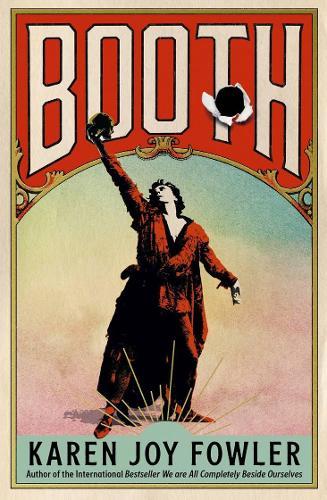
‘Booth’ by Karen Joy Fowler

2022, 466 p.

As it happens, I have read two historical novels in fairly close succession. In the first, The Birth House, I felt that the plot was being driven by the desire to draw in as much historical detail as possible. In this second book, Booth, there is the opposite scenario: fidelity to the events and personalities has meant that plot development is slow and measured. The events of the assassination of Abraham Lincoln are well-known (probably much more to American readers than to Australian ones) and the author’s intent here is to widen her lens to look at the family of John Wilkes Booth and the effect of his radicalization and its resultant crime on the Booth family more broadly. Much like Jacinda Ardern’s refusal to name the Christchurch terrorist, Karen Joy Fowler does not dwell on the assassination as such, but more the events leading up to and following on from it.

The book also clearly locates itself in the present day, although it is only in the Afterword and Acknowledgments that she identifies Donald Trump by name. But the first of the Lincoln-related chapters starts with an epigraph from Lincoln himself asking Is it unreasonable then to expect, that some man possessed of the loftiest genius, coupled with ambition sufficient to push it to its utmost stretch will at some stage spring up amongst us? And when such a one does, it will require the people to be united with each other, attached to the government and laws, and generally intelligent, to successfully frustrate his designs. (p. 5) The theme of political violence, both through civil war and through the acts of an individual, throbs underneath the book.

The historical John Wilkes Booth is not the only Booth in this story. Instead, it is the whole family of Booths- father and sons. It opens with Junius Booth who emigrates with his family to Baltimore where he becomes a celebrated Shakespearean actor. Several of his sons follow in his footsteps: June, a rather unsuccessful actor; John Wilkes who was to become (in)famous for other reasons; and Edwin, who becomes the most famous and wealthy of them all, although for many years in his father’s shadow. Joe, the youngest son, is the only one not to follow his father’s theatrical career. Rosalie, his eldest daughter never marries and finds herself subject to her brothers’ plans and domestic arrangements, while her sister Asia does marry and has several children. The family itself displays different political leanings (shades of Trumpism here too) with the increasing radicalization of John in the face of his siblings’ varying degrees of support for Lincoln and abolition. Each member of the family was affected differently by John’s actions. All are shunned, with instant career implications for the brothers who were working as actors. Some family members blamed themselves, or each other, and all distanced themselves from the assassination.

The narrative intertwines the stories of Abraham Lincoln and John Wilkes Booth as they both move towards the assassination that we know will happen by the end of the book. There is an irregular structure within the Booth stories. At times the narrative just flows chronologically, but at other times the author takes each family member in turn to explore events from their perspective (but still with omniscient narrator voice). I found this inconsistency rather annoying: I prefer a structure to be sustained throughout. There are many small chapters- rather too many for my liking- headed with a roman numeral, evoking a 19th century novel. The narrative is in the present tense, which worked well in highlighting the contingent and unfolding nature of events.

As she explains in the afterword, Fowler has blended fact and fiction. The Booth family has been much researched, both at the time in trying to make sense of the assassination, and later in historicizing it. Rosalie as the eldest daughter was the least defined historically, which gave author greatest scope for invention, albeit within the constraints of the spinster daughter role.

Karen Joy Fowler is explicit in her linking Lincoln’s assassination and the rise of Donald Trump. Would the book work just as well without these current-day references? I suspect that it would, although I wonder how a pro-Trump reader would react to her clearly anti-Trump stance. As it is, it is a well-researched fictionalized telling of a family story that wears its research lightly, but subjects itself to the constraints of facts in its plot. For me, this is historical fiction with fidelity.

My rating: 8.5/10

Sourced from: Yarra Plenty Regional Library

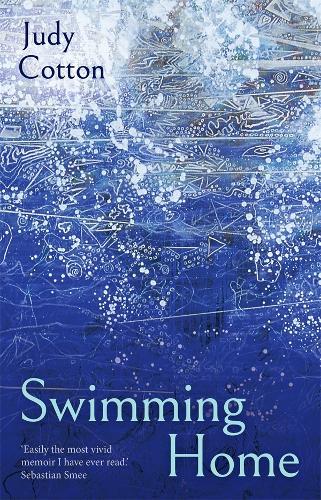
‘Swimming Home’ by Judy Cotton

2022, 240 p in paperback

So what do you do when you have a memoir in your hand, but know absolutely nothing about the author? One option is to start Googling so that you have some context into which to slot the biography, and to gauge some sense of authority of the writer. The other is to just read it as a piece of writing, on its own terms, and then Google afterwards. This is the approach I took with ‘Swimming Home’ by Judy Cotton.

So, drawn from this memoir, who is Judy Cotton? She is an artist, based in New York, but born in Australia during WWII in Broken Hill. Her father, later to be the parliamentarian and U.S. ambassador Sir Robert Cotton, trained for the RAAF but was posted to Broken Hill by the Dept of Supply during WWII because of his familiarity with mining. He and his family later shifted to Oberon in NSW to establish a timber industry, another crucial war-time industry. Judy was one of three children born to Robert and his wife Eve. The children were sent to boarding school in Sydney where Judy’s older sister Anne received treatment for crossed-eyes. Her father embarked on a parliamentary career with the Liberal Party and her mother, an accomplished pianist became involved in sheep-breeding. Judy attended university and married a diplomat who was posted to Korea. Her marriage broke up, and she and her son Tim went to Japan, and then to New York where she worked as a journalist and successful artist, until contracting Lyme disease which forced her to change her artistic direction. Her parents moved to America too, when her father was appointed Consul-General in New York between 1978-81 and U.S. Ambassador between 1982-85 before returning with Eve to retirement in Sydney and then Palm Beach. Her mother died in 2000, her father six years later in 2006, having re-married.

All of this sounds quite straightforward, but I have imposed an order that does not exist onto this memoir, thereby leaching it of its power and beauty. You have to work hard as a reader to piece a chronology together: indeed, I could only do it by going back to read it again. The chronology does move forward at a chapter level, but each chapter splinters into shard from different times, identified by year, but fused together. It is more like a mosaic than a canvas. Although a memoir, many aspects of Cotton’s own life are left oblique – her first marriage, her success in New York, her 40 year relationship with Yale.

The book opens in 1923 with ‘Eve’ playing imaginary scales while hiding under the fig tree. She was somewhat in awe of her beautiful older sister Jean, protected by her mother Ollie from her drunken father Archie. We soon learn that ‘Eve’ was Judy Cotton’s mother. And the cracks in the author’s relationship with her mother are quickly revealed:

Eve rated my sister and me by the same terms, and we both lost in the equation. She scored us on looks, clothes and marriages, having decided that achievement in the world was best left to my father. She worked hard to even things up between my sister and me, tying me down by one metaphorical leg so that I could not run faster than my blue-eyed sister

p.14

I must admit that my heart sank a bit when I read this. As I explained in my review of Nadia Wheatley’s Her Mother’s Daughter (see my review here), I am not particularly comfortable with the parental memoir genre, and the sense of grievance that seems to pervade it. It’s certainly in evidence in this book, as Cotton stores up the injustices and harsh comments committed by her mother in a form of emotional ledger.

What are Judy Cotton’s accusations against her mother? Sending her two daughters away from their country town in NSW to boarding school ; her parents’ (especially her mothers’) response to Judy’s divorce “they wanted to see the wreckage for themselves…they left me stranded and penniless in Korea in the hope that it would force me to stay married and not embarrass them”. Once divorced and living in Japan with her son “Eve [her mother] waged a relentless campaign for me to return to Australia so she could ensure I did not take lovers and become like Jean [her mother’s sister]”. Her mother, by then living in New York with her husband who was US ambassador, had a heart attack: “Eve worked up a good set of arterial blockages in preparation for a massive heart attack. She had talent and she used it”. On her mother’s return to Australia, she remained imperious to the last. She had a clear sense of how things should be, rejecting things that were ‘not just exactly right’. She was blunt, with a pertinent charm: ‘Horizontal stripes are unkind to your hips’ ‘Oh dear, not grey again’.

She commented on inappropriate clothing, husbands and haircuts, on roots showing, a vase of flowers or world news not arranged to her liking. She pecked at tiny flaws and big ones, a hen in the yard after grain, a pianist aiming for precisely the right note

p.105

In these lists of wrongs, I sense little of the adult (with her own secrets, compromises and vulnerabilities) appraising another adult (with her own secrets, compromises and vulnerabilities), only the resentful, hurt child. And yet, from the outside, Cotton would seem to be very much the dutiful, loving daughter. When her mother is elderly and failing, she flies back and forth over the globe, sitting by her hospital bed, being as supportive as an expatriate child can be. She is both made by her mother’s life, and unmade by her mother’s death.

It is this sense of being drawn away and yet returning that is captured in the title ‘Swimming Home’ and in the frequent descriptions of shores that are repeated throughout the book. It is there right in the opening preface:

Undertow is perilous, the Pacific riptide hauling me hand over hand like a movie on rewind as I watch from the plane. Landing, I struggle to take off instead, but no matter how many times I leave, the land has me by the ankles with a grasp that won’t let go

Dedication

She returns again and again to the sea, just as she returns again and again to Australia with its light, its smells, its birds, its trees. It is a wide Australia on a huge canvas: it is also a prison, steeped in the blood of dispossession and injustice. The ocean represents openness and distance, and yet also a treacherous pull. Her descriptions of the sea are beautifully created images. I think of George Orwell’s injunction against worn-out metaphors, and certainly she has imbued each of her descriptions of the sea with new, completely original images. The Pacific “hiccuped its briny breath”, it has “goosebumps”, the waves are “an ancient island’s rasping breath” and, most evocatively “the sea shivering in filmy layers as if it were sheer fabric pulled diagonally in ruched pleats one across the other ” (p. 103).

Her final words encapsulate the expatriate’s tug and flow.

Then I will leave again, attempting to evade the land and people that still hold me prisoner, shake off its fierce undertow…I resist the invisible feelers that creep like tiny heat-seeking missiles to cut to my core. I cannot afford to feel. Age has taught me that. I leave again.

No one’s story can explain the past.

No one story

p. 126

I must admit I found myself relieved that this memoir was relatively short (my e-version has 131 pages; the paperback book appears to have 240 pages). The writing is almost too sharp, too crystalline, almost as if you were reading a whole book of poetry in one sitting. I found myself gaining a new appreciation for the book in the second reading I was compelled to undertake, in order to be able to write this blogpost. And this written, now I’ll look at her work.

My rating: 8/10 (hard to say)

Sourced from: review copy from Black Inc. books.

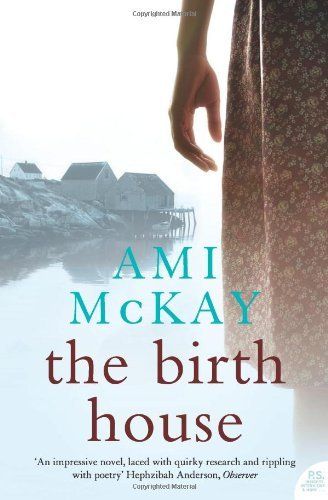
‘The Birth House’ by Ami McKay

2007, 352 p.

One of the ongoing debates in literary and historical circles revolves around the question of the dividing line between fiction and history. Just this morning, I read another contribution: Between Fact and Fable: Historical Fiction or Non Fiction Novel? I must confess to my own wariness when historians include speculation in their histories, and am critical of historical fiction that does not display fidelity to the time that it is depicting. In reading this book, however, which was nominated for the International IMPAC Dublin Literary Award, I find myself disconcerted by yet another variation on the conundrum. Is this a novel, or mainly a device upon which to hang the author’s research?

The subject matter interests me: I have always been interested in midwifery practices in the past, and the nature of women’s knowledge about their bodies. Set in Scots Bay in Nova Scotia (a real place) during and immediately after WWI, its main character is Dora Rare, the first female Rare in six generations. She is treated with suspicion by the people in the small town, and is drawn to Miss B. the town midwife, who is similarly ostracized (and feared?) by the locals. Out of love for Miss B. and drawn by her own interest, Dora becomes a trainee midwife. However, both Miss B. and Dora find their knowledge and skill questioned when Dr Thomas, an obstetrician in the employ of Farmers Assurance Company of King’s County, arrives in town. He talks up the advantages of health insurance, and deprecates the old folk ways of midwives, which are under threat not only from him but from legislation and regulations encouraging ‘safe’ hospital births.

Despite ‘catching’ many babies, Dora herself struggles to fall pregnant. Faced with no other real alternative and eager to have her own child she has married Archer Bigelow, a feckless man who enjoys the unfettered access to his wife in order to impregnate her. This marriage and her own maternity does not turn out the way she envisaged it would. Forced to leave Scots Bay, she travels to Boston where she meets liberated and unconventional women involved in the suffragette movement. There she develops an independence which helps her to return to fight, along with her friends from the ‘Occasional Knitting Society’, for the rights of Scots Bay women to give birth as they wish.

By its very nature, the author of historical fiction chooses a particular time and place in which to set the novel. By establishing her book in 1916-1920s, a range of fascinating historical situations opens up for Mackay. There’s the Canadian contribution to WWI; the Canadian homefront and attitudes towards men who did not enlist; the Spanish flu epidemic; women’s suffrage; the rise of the ‘girl’ and changing attitudes towards women and their sexuality and maternity. She has clearly researched all these things, but I found myself wondering if the plot was being driven too much by the search for scenarios in order to utilize all this research. While reading it, I don’t think that I ever lost the consciousness that I was reading a book and that there was an author pulling the strings – and for me, that’s not a good thing.

My rating: 6/10

Sourced from: CAE book groups

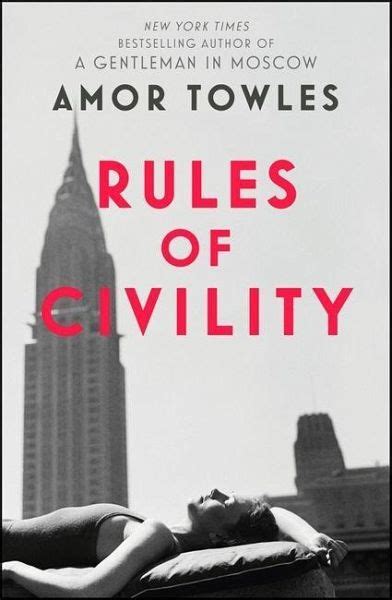
‘Rules of Civility’ by Amor Towles

2012, 368 p.

I had to wait for a long time for this book to become available at the library, and it was well worth the wait. I just loved it, and didn’t want it to finish. The story is set in New York in 1937, and is evocative of all those black-and-white films with the Empire State Building in the background and imbued with New York glamour. There’s shades of Gatsby here too, through the first-person narration of a young woman of humble background who is drawn into the milieu of fabulously wealthy people.

The frame story introduces us to Katey Kontent on the 4th October 1966 who, along with her husband, attends a photographic exhibition ‘Many are Called’ at the Museum of Modern Art. This exhibition features never-before-seen portraits taken by Walker Evans with a hidden camera in the late 1930s on the New York subways with a hidden camera. These black-and-white images are of just ordinary people, taken without their knowledge or consciousness. One image in particular attracts her attention. She knows that well-dressed, urbane business man, and she knows that an image of a gaunt, disheveled man is him too- it is Tinker Grey.

And thus we are taken back to New Years Eve 1937, when Katey, along with her room-mate Eve Ross, first meet Tinker in a nightclub, as they try to eke out their money for drinks to see them through to the new year. Eve, is blonde, with dimples “so perfectly defined that it seemed like there must be a small steel cable fastened to the center of each inner cheek” (p.15) Tinker is rich and good fun, and both girls – neither of whom is rich – are swept up into a life of parties and nightclubs until it all comes to a sudden halt. Despite Katey and Tinker’s attraction to each other, life goes off in a different direction. Katey takes us through the year of 1938, each time taking care to note the exact date, as she changes her job, and negotiates her way around a wealthy, dissolute milieu with Wallace Wolcott, Dicky Vanderwhile, and Anne Grandyn. Meanwhile, Eve and Tinker go off on other trajectories. One one level, Katey learns that wealth and power can influence events and give people the wherewithal to manipulate and intervene in other people’s choices: on another level, there is still that aspect of chance and unexpected event that sends everything awry.

The title of the book comes from the Young George Washington’s Rules of Civility and Decent Behaviour in Company and Conversation which Katey discovers amongst Tinker’s possessions. She realizes that these 110 homespun maxims are more influential on Tinker than she at first thought, especially the last one: “Labour to keep alive in your Breast that Little Spark of Celestial fire called Conscience”. And it was that last one that brought Tinker to the dishevelled state that the photographer Walker Evans captured in his photograph.

At the end of the book, and looking back on that year of her life, the older Katey says:

It is a bit of a cliché to characterize life as a rambling journey on which we can alter our course at any given time- by the slightest turn of the wheel, the wisdom goes, we influence the chain of events and thus recast our destiny with new cohorts, circumstances, and discoveries. But for the most of us, life is nothing like that. Instead, we have a few brief periods when we are offered a handful of discrete options. Do I take this job or that job? In Chicago or New York? Do I join this circle of friends or that one, and with whom do I go home at the end of the night? And does one make time for children now? Or later? Or later still?…

Life doesn’t have to provide you any options at all. It can easily define your course from the outset and keep you in check through all manner of rough and subtle mechanics. To have even one year when you’re presented with choices that can alter your circumstances, your character, your course- that’s by the grace of God alone. And it shouldn’t come without a price.

p. 323

I’ve been oblique about the plot, because I don’t want to spoil it for you. Suffice to say that I really enjoyed reading this book and feel as if I have been in the hands of a master storyteller.

My rating: 9.5/10

Sourced from: Yarra Plenty Regional Library.

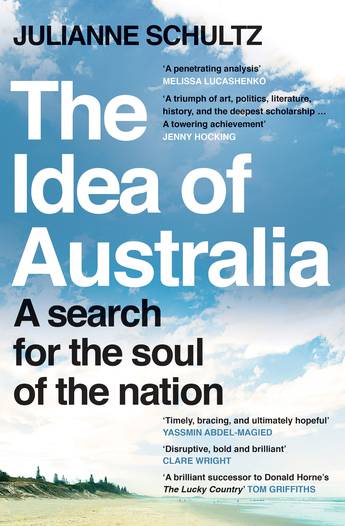
‘The Idea of Australia: A search for the soul of the nation’ by Julianne Schultz

2022, 416 p. plus notes

I must confess that I’ve never really engaged in discussions of Australian identity. It has always seemed to me to be a topic that can too often by hijacked by the ra-ra Akubra mob, and infused with the whole Anzac, flag, fair dinkum rhetoric. But I was encouraged to read this book, largely on the basis of the many positive blurbs on the cover, but also by the inclusion of that little word “soul”. Leaving aside its religious connotations (which Schultz does too), she is probing beyond the surface and the image to consider something more personal, more integral to the idea of Australia and Australians, as distinct from the performance of Australian-ness. As a commentator she is well placed to do so: she was the inaugural editor of the Griffith Review which, over and beyond the 64 volumes she edited, has explored various features of Australian life in essays, poetry and story.

In many ways the chapter headings in this book echo the titles of the Griffith Reviews that I have on my shelves: From Somewhere; Making the Nation; Remaking the Nation; People Like Us; From Little Things. Like a Griffith Review volume, these discursive chapters weave together strands of her own biography, history, literature and politics.

She has a number of themes that she returns to across different chapters. One of these is the idea of the ‘Covid X-ray’ which revealed the fault-lines within Australian society. Another is Linda Colley’s idea that, without catastrophe, most change takes ‘three score years and ten’ to move from idea to reality- an oddly reassuring thought. Schultz references this ‘three score years and ten’ often during her book, giving it an oddly ponderous, almost religious tone at times. She refers several times to the Sydney Olympics and the feeling of pride that many of us, ready to sneer, felt at its irreverent and insouciant depiction of our country on a global scale. Where has that Australia gone? Finally, and most importantly, she returns again and again to the Uluru Statement, that call to Australia’s soul, that she feels will “sooner or later, fundamentally reshape the idea of Australia” (p. 146).

This book is unashamedly a product of the twenty-first century. Her chapter-by-chapter references (unfortunately the book lacks a compiled bibliography) favour recent publications and the rather excessive long list of laudatory paragraphs at the start of the book embed the book within a progressive intellectual milieu. So far, I have not read reviews of the book from The Australian or Quadrant, which ordinarily would leap on a book about ‘Australia’s identity’- one of their favourite topics despite their deprecation of ‘identity politics’. In a way this book is timely, given that we faced a general election in the wake of strange times. But I also have hopes that, given its historic span that draws from historians and events across Australia’s history, it might transcend that short-termism. I suspect this book may well stand the test of time, as Donald Horne’s The Lucky Country, Hancock’s Australia, Bernard Smith’s Boyer Lecture The Spectre of Truganini and Stanner’s phrase ‘The Great Australian Silence’, each of which she references repeatedly, have managed to do. At least, I hope that it does. By talking of ‘the soul of the Nation’ she steps beyond the economy and politics into something more intimate and powerful and inspirational.

My rating: 9/10

Sourced from: Yarra Plenty Regional Library.

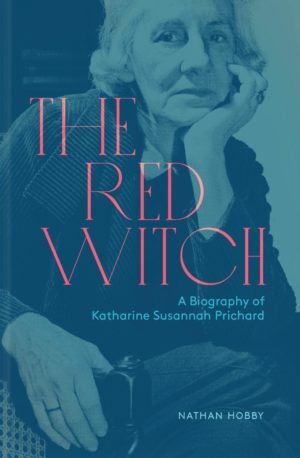
‘The Red Witch’ by Nathan Hobby

2022, 385 p & notes

Near the end of her life, the author Katharine Susannah Prichard was sorting through her papers and correspondence, threatening to burn “while there’s still time”. Her friend Catherine Duncan wrote back to her

I can understand that you should want to put a time limit on giving students access to personal papers, but in fifty years, dearest Kattie, the KSP you are now will have become someone else- she will have escaped you…Perhaps in the end it’s better to surrender the truth to posterity rather than allow one’s self to be deformed by supposition.

p.378

Well, fifty years have passed and here is Nathan Hobby’s biography of Katharine Susannah Prichard. I wonder what KSP would think of it? She was, after all, very conscious of posterity and it was the attempt of early biographer Cyril Cook to apply a Freudian lens to her biography that led her to write her own autobiography Child of the Hurricane. Time and politics have not been kind to some aspects of her legacy: for example, Coonardoo needs to be read within the time it was written and would never appear on school reading lists today, and her staunchly pro-Stalinist political views, controversial then, would appeal to an even smaller group of adherents now. But I think that she would embrace the roundedness of Hobby’s biography, which combines beautifully the personal, the literary and most importantly, the political in presenting her life.

What a complex thing it is, constructing a person’s personal life from the outside and at fifty years’ remove! What she herself said about her relationships with men, and what her son, who was her literary executor, might have written are not necessarily what an outsider decades later might have said. What we think or write ourselves about our relationships (retrospectively in a memoir, or contemporaneously in correspondence) is refracted by our need to have an emotional coherence to the story we tell ourselves and others about our choices and actions. A biographer looks for coherence too, but is more tolerant of ambiguity and inconsistency. And so, Prichard’s relationship with the older married man William Reay reads now as a compromised, rather questionable entanglement, the relationship with Guido Barracci is tinged with betrayal and her dalliance with Hugh McCrae seems opaque and puzzling. Reading from the outside, her marriage with Hugh Throssell seems an enigma. To the end of her life, in her letters to her son and friends, she declared her love for him and mourned his ongoing absence in her life. Yet they seemed to share little of her literary life (although it did sustain them financially), they spent quite a bit of time apart, the family suffered on account of his financial ineptness and I suspect that Hugh was never as politically active as she wanted him to be. Did the circumstances of his death colour the story she told herself about her marriage? And then there are her other friendships. What was it like to be her friend? There are obvious falling-outs with many friends, despite the effusiveness and overtly literary tenor of her correspondence.

To be honest, I was completely unaware that she had written so much. Certainly, this was her working job, and, especially during the Depression years and later, she needed the money from her novels, short stories and newspaper stories. But this is a lifelong job, and the to-and-fro with publishers and editors continued throughout. Competitions play a bigger part in her writing life than I would have imagined, although I guess awards (a ‘competition’ under another name?) play a similar role in our literary scene. She received a Commonwealth Literary Fund grant in 1941, but I am not at all surprised that the security service recommended in future that the names of applicants for fellowships be submitted to them “for comment” to prevent any other writers with Katharine’s political leanings from being considered. A literary biography needs to accommodate both readers familiar with the subject’s works, and those who have not read them at all. I felt that Hobby did well, giving enough of the flavour of her work for those unfamiliar with it, drawing together his own evaluations with those of readers at the time, but not labouring the work either. That said, the only one of Prichard’s works that I am tempted to read after reading this biography is the goldfields saga (The Roaring Nineties; Golden Miles and Winged Seeds). Her frequent trips to the places in which she set her novels reflects her emphasis on authenticity (within limits, of course), although the outback seems to held more allure than urban settings.

The strongest part of this biography, as reflected in the title The Red Witch, is Hobby’s examination of her politics, which enriched but complicated her life enormously. It seems to me that she projected her political commitments onto her husband Hugh, who showed only fitful involvement in politics. She both gained and lost friends through differences of political opinions. Her politics could have cruelled her career (her receipt of a Commonwealth Literary Fund grant probably stymied the chances of Communist writers who followed her) and certainly many readers and reviewers felt that the vehemence of her politics straitened her novels. Her unshakeable admiration of Stalin, when so many other colleagues dropped away, can be variously read as loyal, steadfast, inflexible or willfully blind. But her politics were so interwoven with her friendships and her writings that it is impossible to cut them out and make a judgement of her life and writings without them.

The book is arranged in five chronological parts: Kattie 1883-1907; Freewoman 1907-1919; Mrs Throssell 1919-1933; Comrade 1934-1949; Katya 1950-1969. Within each part there are multiple chapters- possibly a few too many, when some were as little as seven pages in length. The preface plays the part of the literature review, and is probably the most evident sign of the PhD thesis that preceded this book. I really enjoyed the Afterword, set in Prichard’s former home in Greenmount W.A. in 2019 when the author comes on stage properly. Nathan Hobby has been present in the book throughout, especially in his appraisals of Katharine’s writing, but it has always been behind the scenes, which is the way I prefer it. But I was glad that he stepped forward at the end.

He has been well-served by Miegunyah Press, which has given him expansive footnotes, an excellent index and a bibliography as well- something that is much appreciated instead of having to hunt through footnotes for the first reference to a source. The footnotes reveal the rich archive of correspondence that underpins Hobby’s work, and the variety of newspaper sources from which has drawn.

It is probably true that, as Catherine Duncan predicted, some fifty years after her death, ‘KSP’ has become someone else but I think that she would recognize herself in this book. The KSP of the future may have escaped her, but I don’t think that she escaped Nathan Hobby. He has presented her to us in all her aspects – as lover, mother, wife, comrade, writer, companion and public figure – with diligence, empathy and tempered admiration. No subject could ask more of her biographer.

My rating: 9/10

Sourced from: review copy Melbourne University Press

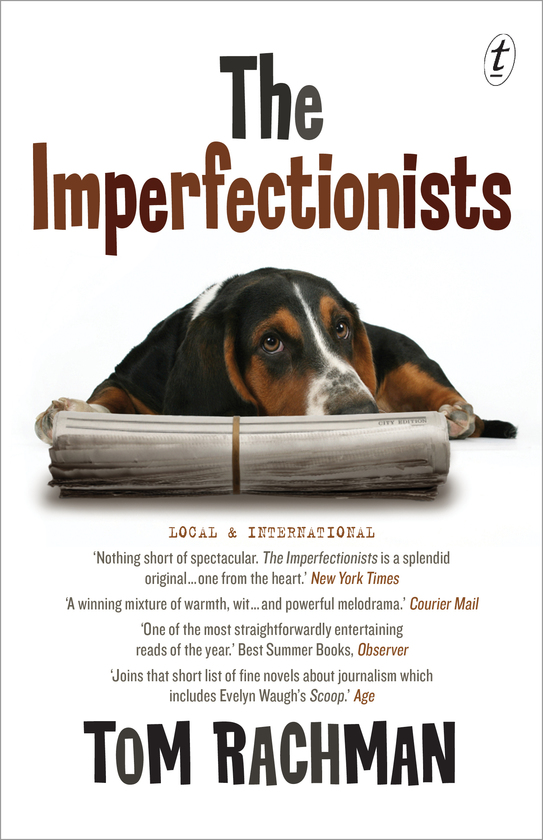
‘The Imperfectionists’ by Tom Rachman

2014, 288 p.

As it happened, I read two books in a row that were debut novels written by authors writing about their own profession. One of them was As Swallows Fly, based partially in a hospital, and written by a Professor of Nephrology (see my review here), and the other is The Imperfectionists, set in an English-language newspaper published in Rome, written by a former International Herald Tribune staffer. As you might expect, the language and narrative was handled much more confidently in this book which uses the chronological rise and decline of the un-named newspaper founded in 1954 by an American industrialist named by Cyrus Ott as the narrative structure for a series of chapters about different characters involved with the newspaper.

Each ‘character’ chapter has a catchy title, sometimes (but not always) referencing an article being written by the particular journalist, or more often referencing the article which bumped the character’s own work from the columns of the newspaper. In ‘Bush Slumps to New Low in Polls’ we meet Lloyd Burko, who is at the end of his career, while in ‘World’s Oldest Liar Dies at 126’ we see the career rise of Arthur Gopal, originally employed as the obituary writer who becomes fascinated by Gerda Erzberger, a dying Austrian intellectual. ‘Europeans are Lazy, Study Says’ introduces Hardy Benjamin, an insecure woman who settles for a boorish boyfriend for fear of being left alone and disappointing her father. ‘Global Warming Good for Ice Creams’ features Herman Cohen, the Corrections Editor and his relationship with his old friend Jimmy, a scammer and blow-hard. Kathleen Solson, the Editor-in Chief, is the main focus of ‘US General Optimistic on War’ and the foreign correspondent Winston Cheung, based in Cairo, meets the egotistical Rich Snyder while on assignment in ‘The Sex Lives of Islamic Extremists’. Ruby Zaga, the Copy Editor is unhappy and fears that she will be fired in ‘Kooks with Nukes’, while Craig Menzies the News Editor is besotted with Annika but they destroy their relation through their demands of each other in ’76 Die in Baghdad Bombings’. The story that I liked most was ‘Markets Crash Over Fears of China Slowdown’, where Abbey Pinnola, the Chief Financial Officer, finds herself seated on a flight next to a man who she had organized to be fired from the newspaper as part of cutbacks. ‘Cold War Over, Hot War Begins’ moves away from the writers to the reader- in this case, Ornella de Monterecchi, who read each page of the newspaper, column by column, refusing to move to the next issue until she had read the last. (This reminds me of myself, and the two last editions of the Saturday Paper still in their plastic because I haven’t finished the preceding one). Oliver Ott, the grandson of the paper’s founder, features in ‘Gunman Kills 32 in Campus Rampage’ where he is charged by the rest of the family with closing the failing newspaper down after more than sixty years.

Although each character has their own focus chapter, they are threaded through the other chapters as well, sometimes as walk-on parts, at other times as background. Meanwhile, the shaky start of the newspaper, its success and decline, are traced in the connecting chapters, and we learn from the final story that the newspaper has only ever been an act of love, and not intended to make money. But it is an act of love within an industry that is spurred by technology and communication change, but eventually sidelined by the digital media.

I enjoyed this book. Although not particularly fond of short stories, I like it when they are tied together by a theme, and when characters appear and disappear in other stories. The story-telling was very assured, capturing in short brush-strokes the personalities and career trajectories of its characters, while making an ultimately futile plea for the humble, paper-based newspaper.

My rating: 8/10

Sourced from: CAE bookgroups

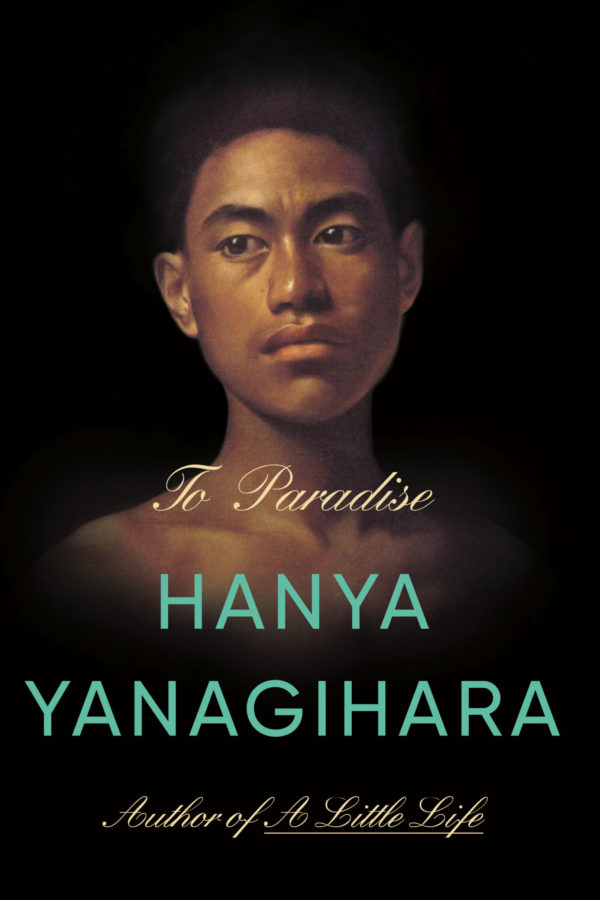
‘To Paradise’ by Hanya Yanagihara

2022, 704 p.

I admit it- I was attracted to the cover of this book, and it was only when I looked closer that I discovered that the author had written A Little Life, a big fat book that I have on my shelves but have not read, even though I know there was a lot of commentary about it. The author is obviously fond of writing big fat books, because this is another one, at 704 pages. But for the last few days I have been completely engrossed in it, and even now I don’t want it to end.

It is set in three parts, each set 100 years apart. This is clear from the start, with the opening pages consisting of three hand-drawn maps, each related to Book I, II or III. The first depicts the the United States in 1893, showing the Free States on the East Coast; the United Colonies in the ‘South’; a blank Uncharted Territories where Utah, Arizona and New Mexico are today; The Western Union comprising California, Washington State and Oregon and the American Union, comprising all the other states, in the centre. The second map is of the Hawaiian Islands in 1993, and the third map, dated 2093, shows Manhattan Island, divided up into Zones, with Central Park now ‘The Farm’ and with Washington Square marked out in Zone 8. The building in Washington Square is important, as it is going to appear in some guise in each of the three Books.

In Book I (1893) we find David Bingham, the unmarried son of a rich grandfather who has made him heir to the Washington Square house on his death. This first book was very evocative of Edith Wharton’s work, both in its focus on the nuances of upper-class life, and in its formal, mannered language. But this New York is set askew: the Free States and the United Colonies are two separate nations after all, and homosexual marriage is an accepted fact. David’s grandfather is concerned that his grandson marry, and so he encourages an arranged relationship between David and the older Charles Griffith. Despite knowing that his grandfather is acting only out of love, David becomes infatuated with an impoverished, unreliable and possibly dastardly teacher Edward Bishop, who implores David to accompany him to California, even though homosexuality is illegal there. I just loved this first part – the cushioned luxury, the restraint, set against the passion and recklessness of David and Edward’s relationship. I didn’t want to let them go as I turned to Book II, set 100 years later in Hawaii.

But hold on- here they are again – David, Edward, Charles, Eden – but they’re not the same people, even though the names are the same. Here is another aimless David Bingham, but this time he is the young partner of an older Charles Griffith, who lives in Washington Square and who this night is hosting the final party of his former lover Peter who is dying of cancer, even though AIDS is ravaging the gay community. He receives a letter from his dying father from Hawaii, another David Bingham, known as Wika (for Kawicka) who has been inveigled? coerced? by an old schoolmate Edward Bishop into stepping into his role as hereditary royalty in establishing a breakaway settlement in Lipo-Wao-Nahale. Edward and David live there, and David’s son (also named David) lived there during vacations as well, until he refused to visit any more, travelling instead to New York where he met Charles Griffith. His father, David Bingham senior, has a breakdown and is hospitalized, writing his last letter to his son. I must admit that after my initial delighting in meeting David, Edward and Charles again, this second book left me underwhelmed, with the last-supper dinner of the dying Peter seeming to stretch on interminably, mirrored by the equally prolonged death of David Bingham senior in Hawaii.

[Update: I have since learned more about the history of Hawaii through a ‘Stuff They Don’t Want You to know podcast, which I mention here, most particularly the coup d’etat by white landowners in 1893. Clearly 1893 is a significant date- but why did she set Part II a hundred years later? I’m mystified.]

Any disappointment that I felt in Book II was quickly forgotten in Book III, set in Manhattan in 2093. It doesn’t surprise me that this book was published in 2022 because it certainly bears the traces of the COVID pandemic. Now that I had realized how the book worked, I was on the lookout for David, Charles and Edward and they were here too, but in very different guises. New York- and indeed, the whole world- had been ravaged by waves of pandemic diseases, with resultant surveillance and government over-reach to quell and fend off the next epidemic. Global warming has resulted in the collapse of the food chain, there is an ongoing drought, and New York is only liveable if you wear a cooling suit while you are outside. Charlie is the grand-daughter of Charles Griffith, who has been the policy architect of a lot of the pandemic responses: confinement of infected people and their families (after initially separating children from their parents, whole families would go into confinement and inevitable death together), wholesale cremations, rigid government control. Charlie had contracted one of the pandemics as a child, and is now infertile and emotionally frozen, and her grandfather arranges for her to marry Edward, a gay man who will look after her but never love her. The narrative is in two parts here: Charlie’s story told with Ishiguro-like flatness, and as a series of letters over decades between Charles and Peter, a high-level bureaucrat in New Britain. While the letters did fill in background for how New York had ended up as it had – and a very depressing trajectory is it, with more points of verisimilitude than I like- the idea of letters being so lengthy and conversational is rather implausible.

Despite its severity, I really enjoyed Part III, as much as I did Part I and I have found myself thinking about Part III a lot since finishing reading it: for me, a sign that a book has really affected me. Reading back over this review, I see that I have likened the writing to Edith Wharton or Kazuo Ishiguro, and there is an element of pastiche about the book. There were hints that the whole thing was going to fall into place with a resounding clunk, but that never happened. Instead there were wisps of connections, and a low drumbeat of repeated themes- homosexuality, illness, searching for something better, loneliness – and the repeated names. Worth 700 pages? For me, yes.

My rating: 9.5/10 (Maybe even 10/10?)

Sourced from: Yarra Plenty Regional Library.

‘As Swallows Fly’ by L.P. McMahon

2021, 384 p.

I had not heard of this book, or its author until L.P.McMahon was invited to be the Ivanhoe Reading Circle’s annual guest speaker. His book, As Swallows Fly is set in Pakistan and Melbourne, but Lawrie himself hails more locally from Rosanna as a child and ended up as Professor of Nephrology at Monash University. That local connection may well have been why the Ivanhoe Reading Circle invited him to speak. His immersion in the world of medicine comes through clearly in his book, particularly at the end, and from his talk we learned that he and his wife had visited a Catholic mission in a Pakistani village which largely mirrors the village in the opening chapters of the book. So, in many ways McMahon is following the injunction “write what you know”.

Although this book is fiction, it evokes shades of the story of Malala Yousafzai, who was severely injured after a Taliban assassination attempt, and was treated in a UK hospital. In this book, however, young Pakistani and Christian Malika was attacked as a more personalized act of resentment and power, and she ended up in Australia more on account of her mathematical brilliance which was being wasted in a small village, than because of her injuries. She boarded at a private school and attended extension activities at the University of Melbourne. As a back-stop, her village priest in Pakistan put her in contact with Dr Kate Davenport, a plastic surgeon, who assumes incorrectly that Malika is hiding her face behind a veil for cultural/religious reasons. Rather implausibly, neither Malika nor Kate realize at first the possibilities for healing that the situation could provide.

The book has several ‘starts’ before arriving at the present day. The opening pages are a prologue set in Melbourne, twenty-three years earlier where we sense the tension between a teenaged Kate and her mother; Part One commences in Rural Pakistan five years earlier as we learn how Malika came to live in the Christian village and come under the care of Ayesha, her foster mother, along with Tahir, a Muslim boy, after a car accident. Part Two finally brings us to present-day Melbourne where Kate, now a successful plastic surgeon, is cleaning out her now-deceased mother’s house when she is approached to care for Malika on the weekends. Part Three takes us to Malika’s boarding school, where she struggles with the other girls, who are jealous of her brilliance. Part Four explores the evolving relationship between Malika and Kate, and expands on Kate’s own working life and the political struggles in a high-stress, ego-driven profession, along with the family emotional baggage that she is still dealing with. If you think that there’s going to be a Cinderella ending, between the plastic-surgeon and her damaged protege – there’s not.

As you can see, there’s quite a lot going on here- rather too much, I think. I was rather surprised that McMahon chose to write from the point of view of two women- Kate and Malika- and he generally carried it off sensitively, with just a few infelicities. By making Kate a plastic surgeon, McMahon was able to explore ideas of facial perfection and imperfection, but at times I felt that he betrayed his male gaze in his descriptions of women. The author’s own medical experience comes through, especially in the sections dealing with professional rivalry with other specialists, and in medical terminology when describing clinical conditions. I certainly don’t share Malika’s gift for mathematics, and I just have to take on trust that her fascination with the flocking behaviour of swallows as a mathematical problem is more than just a metaphor for being on the edges of the crowd. Some of the characters seemed rather one-dimensional: the only mentions of Muslim characters were negative, and Sam the receptionist was so brazen as to be a caricature. The narrative relied heavily on dialogue, which at times verged on the banal and the writing felt forced at times.

In spite of my reservations about aspects of this book, I found myself more emotionally engaged with the characters than I expected to be, and sat up in bed until quite late to finish the book. And I’m always attracted to books set in my own home town, and he wrote Melbourne well.

My rating: 6.5/10

Sourced from: purchased e-book.

Other reviews: Lisa at ANZBookLovers enjoyed the book (probably more than I did) and reviewed it here.