Category Archives: Book Reviews 2024

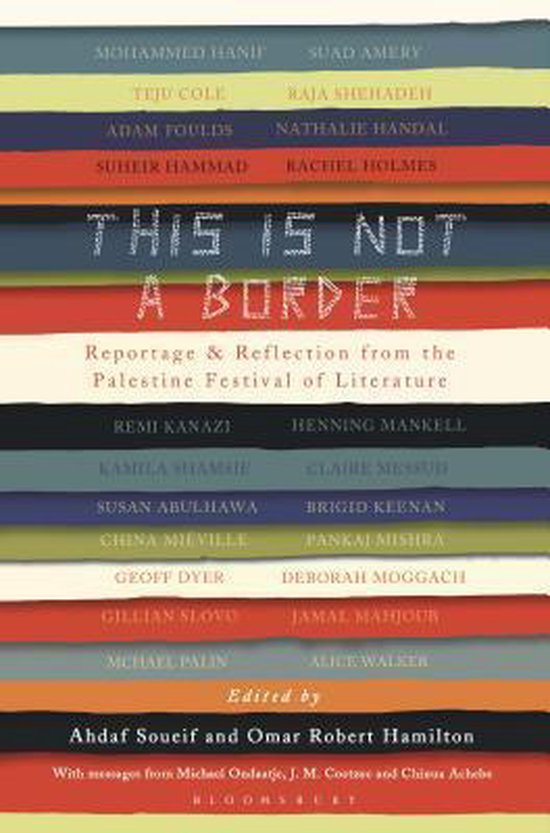
‘This is Not a Border’ ed. Ahdaf Soueif & Omar Robert Hamilton

2017, 328 p.

The first Palestinian Festival of Literature was conducted in 2008, and this volume of writing was produced to celebrate its tenth anniversary. We in Australia take for granted that if we want to go to a writing festival in our own city, or regional area, or interstate for that matter, then there is nothing to stop us. That isn’t the case for the residents of the Gaza Strip (especially now) or the West Bank, who face checkpoints and turnstiles and outright prohibitions against travelling from one place to another. So the founders decided that if people couldn’t go to the festival, then the festival would come to them. Attracting noted Western authors, the presenters were bussed from region to region, intentionally exposing them to what the Israeli government does not want outside visitors to see, with the hope and expectation that these authors would return home and use their words – their tools of trade- to expose what is happening.

So who are some of these authors? Among others: J. M. Coetzee, Geoff Dyers, Alice Walker, Deborah Moggach, Henning Mankell, Michael Ondaatje, Michael Palin, Chinua Achebe, and China Mieville, and many other Middle Eastern writers I am not so familiar with.

Most of the contributions are only about 4 pages in length, or else single-page poems, and I must confess to feeling a bit as if I were reading a lot of “What I Did on my Trip” responses. As you might expect from writers of this calibre, they are all well written, but the length constraint (and perhaps the task itself) imposed a sameness and almost a banality in most of the short chapters. In spite of this, certain images repeated: the Allenby Bridge and Qualandia checkpoints where unseen young Israelis surveil the waiting lines through CCTV; the wire netting constructed over markets where settlers in high rise buildings throw their rubbish, urine and faeces onto the street below; the incessant tunnelling conducted by Jewish settlers (facilitated by the Israeli government) under Palestinian homes and mosques, with the risk (expectation?) that the honeycombed land will collapse completely. For me, the power of a book can be measured by how much I tell other people about it, and I have been bailing up anyone who will listen with “Hey, there’s this book I’m reading and did you know….?”

The most powerful pieces in the book for me where when the author was able to exceed the word limit, particularly China Mieville’s piece that was actually illustrated with photographs of the checkpoints, even though photography at checkpoints is prohibited. It was followed by a longer chapter by one of the current trustees of the festival, Omar Robert Hamilton who speaks of the importance of J. M. Coetzee’s short half-page contribution where, after resisting attempts to urge him to name the situation ‘apartheid’, he defines South African apartheid then describes Palestine in exactly the same words and invites us to “draw your own conclusions” (p. 35). Hamilton highlights the importance of words in describing what is happening in Palestine, resisting the neutrality of language that we use for fear of being labelled ‘anti-Semitic’.

I’m struck by the injustice and the sheer vindictiveness of small power plays against the Palestinian people, carried out over and over again, day after day. This book was published years before October 7, but it’s all of a piece. I’m so far trying to resist seeing what is happening in Gaza in binary terms, but it’s becoming harder to do so, and this book has largely contributed to this.

My rating: Hard to say. As individual stories, perhaps an 8/10 but taken as a whole, and in terms of impact on me, 9.5/10

Sourced from: Yarra Plenty Regional Library

Read because: of my distress about what is happening in Gaza
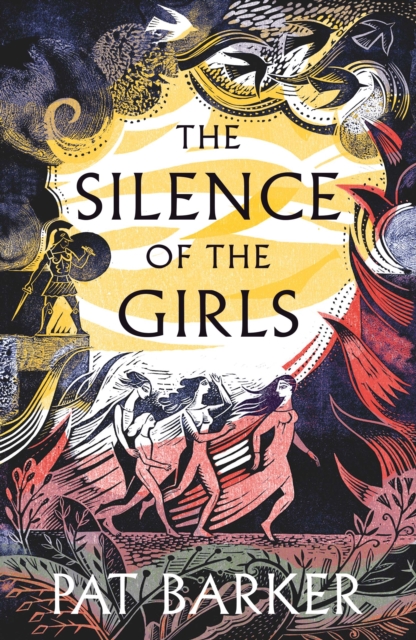
‘The Silence of the Girls’ by Pat Barker

2018, 324 p.

I have come late to The Iliad, only having just completed reading it (well, listening to it) for the first time. I had picked up bits and pieces of it over time, and read David Malouf’s Ransom some years ago, without having read the source material. I know that Pat Barker is not the first writer to approach The Iliad from a woman’s perspective, but after having been drenched auditorially in the gore and the testosterone of Homer’s work, I really enjoyed reading this book soon after reading the original, although I found the ending too neat, as if she was scratching around to end on a positive note.

It is mainly told from the viewpoint of Briseis, who had been captured when Achilles took Lyrnessus and slaughtered her whole family. She is his trophy, taken nonchalantly at first, until his commander Agamennon claimed her as his own after being forced to relinquish his own trophy sex-slave, Chryseis, when her father had called down plague on the troops encamped around Troy. Achilles bridles against this humiliation, not out of any great affection for Briseis, but because of the challenge to his own status as prized warrior by his commander. Briseis finds herself appropriated by Agamennon, who treats his women with violence, and then surrendered against back to Achilles who had previously treated her with nonchalance and disdain. As the war between the Trojans and Aecheans swings in the balance, so swings too her own future should she align herself with the Trojan women who are likely to meet the same fate as the women of Lyrnessus.

Perhaps it is because the reading of The Iliad is so fresh in my mind that Silence of the Girls seemed so powerful. The pathos and emotional depth of the final book 24 of The Iliad helps you to forget that you have sat through book after book of gore and vain-glory. Women are a by-product of that: either a disposable receptacle for lust, or valued mainly for their status as a trophy to be won or traded at the price that the enemy is willing to pay. I think, in a current-day context, of the Boko Haram “brides” kidnapped from Nigerian rural boarding schools (see a recent Amnesty International report here), and enslaved as a sexual convenience yes, but also as a challenge to the other side to fight or pay to ransom them. As in all hostage situations, the abductor is bringing into his – and yes, I will say “his”- ranks a resentful, frightened, angry enemy who, at first at least, must be terrorized into submission .

The women of Lyrnessus are slaves, outnumbered amongst violent men who, in this case, have the weight of military tradition and their kingdom, behind them. Women are the plaything of their Aechaen master, who can do what he will with them. ‘Unallocated’ women have an even more abject existence, available to any man in the camp. There is rape, violence and subjection, but I found myself particularly revolted by Agamennon’s act of deliberately spitting into Briseis’ mouth: there are, after all other fluids that a man can force into a woman. I don’t know why this disturbed me so much: perhaps it was the slow deliberation of the act. Resistance and agency, as a matter of survival, will be subtle, covert and “in the mind” despite what the body is forced to do.

Barker tells Briseis’ story in the first person, but with a twenty-first century viewpoint. The conversation and language, too, is twenty-first century. Often in historical fiction I am critical of such infelicities, but I have enough respect for Pat Barker as historical fiction writer to know that this would be a deliberate decision on her part, rather than ignorance or a lapse in concentration. I was disappointed in the ending though, because a writer of her status has no need to neaten things up, or end on an uplift.

At many times when listening to The Iliad I wondered why I was listening to so much boasting, repetition and gore. The final books made me forgive all that. And reading Barker’s The Silence of the Girls made me forgive all that boasting, repetition and gore too, because it provided a counterpoint to it, another reality more sobering and sordid and barely mentioned.

My rating: 8.5/10

Read because: I have a copy of Women of Troy (the next in the series) and I wanted to read the first book before embarking on it.

Sourced from: Yarra Plenty Regional Library Service (who I am horrified to see no longer hold any copies of the Regeneration trilogy. Surely a library service of this size could have one copy. This obsession with ‘chuck out the old and bring in the new’ is ridiculous.)

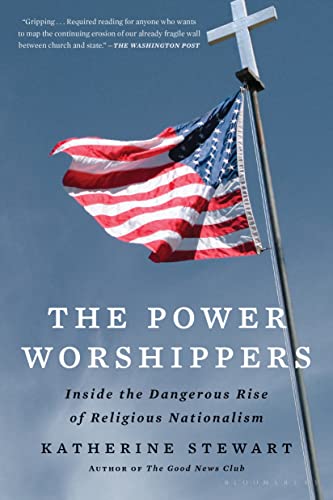
‘The Power Worshippers’ by Katherine Stewart

2020, 352 p.

A few months back, I spoke at a service at our Unitarian Universalist fellowship based on Elle Hardy’s book Beyond Belief: How Pentecostal Christianity is Taking over the World. As part of that, I spoke about the Seven Mountains Mandate which calls upon Christians to influence the ‘seven mountains’ of education, religion, family, business, government/military, arts and entertainment and media as a way of ‘taking back’ society and bringing on the ‘end times’. Elle Hardy only really mentioned the Seven Mountains by name in one chapter, as she travelled from congregation to congregation looking at the influence of Pentecostalism. In this book, however, Katherine Stewart looks beyond faith communities to examine broader society and how it is being influenced, often unwittingly by ‘Christian nationalism’ (her preferred term).

Christian Nationalism is not a social or cultural movement, but a political movement and its goal is power.

It is not organized around any single, central institution. It consists rather of a dense ecosystem of nonprofit, for-profit, religious, and nonreligious media and legal advocacy groups, some relatively permanent, others fleeting. Its leadership cadre includes a number of personally interconnected activists and politicians who often jump from one organization to the next. It derives much of its power and directions from an informal club of funders, a number of them belonging to extended hyper-wealthy families.

Introduction

She cautions that we need to distinguish between the leaders of the movement, and its followers. Its followers, she says are

…the many millions of churchgoers who dutifully cast their votes for the movement’s favored politicians, who populate its marches and flood its coffers with small-dollar donations are the root source of its political strength. But they are not the source of its ideas….The leaders of the movement have quite consciously reframed the Christian religion itself to suit their political objectives and then promoted this new reactionary religion as widely as possible, thus turning citizens into congregants and congregants into voters.

Introduction

She starts off at the Unionville Baptist Church, 45 minutes out of Charlotte, North Carolina, at a meeting sponsored by an affiliate of the Family Research Council, “one of the most powerful and politically connected lobbying organizations of the Christian right”, where pastors are being encouraged to use their pulpits for the upcoming half-term elections. Speakers rail against the Johnson Amendment that bars houses of worship and charitable non-profits from endorsing political candidates, they commend the use of NGOs internationally to spread the word of God, and urge the need to bring Latino and Black Americans onto the “right” side of history through their churches.

She visits the World Ag Expo in Tulare, California, where agribusiness leaders elevate politicians who espouse low regulation, foreign trade, water access and minimal workers’ rights. They gain direct access to the White House (and specifically Trump’s White House) through pastors who hold weekly bible studies there amongst the politicians. She ventures into the March for Life anti-abortion movement, where during the 1970s abortion was packaged and sold as the unifying issue of the global conservative movement drawing together conservative evangelicals and catholics in a way that could not have been imagined decades earlier. She talks about the Green family, the owners of Hobby Lobby stores and their Museum of the Bible and the push towards charter schools with sectarian agendas and the insistence that America was founded on Judeo-Christian principles with the intention of being a Christian nation. She emphasizes the interconnection between various groups with innocuous-sounding names, and their affinities with religious nationalist groups in other countries. Throughout, she stresses the connection between seriously-wealthy backerswith their own political agendas, government, and charismatic church leaders who are bringing their congregations and their votes along with them.

This is a wide-ranging, accessible book which has far more local American detail than an Australian reader is likely to appreciate. She makes her argument that Christian Nationalism is a political ideology in the introduction, and spends the rest of the book prosecuting it. It is sobering reading. I might have dismissed it as a conspiracy theory if I didn’t see it playing out in front of my eyes in our own local politics. There’s the influence of U.S. lobbying and advertising firms bringing their ‘expertise’ from sectarian US politics to advise the ‘No’ campaign at our recent referendum. There’s the rise of far-right and populist politics in Argentina and the Netherlands and although these new leaders might not be believers themselves, Christian nationalist believers support them. And most disturbing of all, the seeming untouchability of Donald Trump and his unwavering support among Christian nationalists should make us all pause.

My rating: 8.5/10

Sourced from: purchased e-book

You can read more about Christian Dominionism and its links to Australian politics at Chrys Stevenson’s article Christian Dominionism: Follow the Money which can be found on her Gladly The Cross-Eyed Bear blog.

.

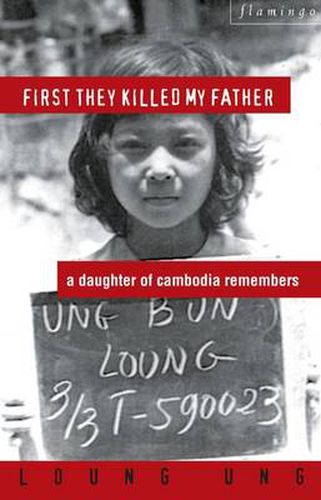
‘First they killed my father: a daughter of Cambodia remembers’ by Loung Ung

2001, 336 p.

As you might know, some months ago I travelled to Cambodia and am likely to repeat the trip a few times more over the next few years. First They Killed My Father is one of the books that tops the ‘Books You Must Read Before Travelling to Cambodia’ lists, but I felt rather reluctant to read it. In my mind Cambodia was defined by two things: Pol Pot and Angkor Wat, but I want it to be more than that. And yet, having now been there, the influence of both is inescapable. They don’t necessarily define Cambodia, but they have shaped it.

Loung Ung was five years old when the Khmer Rouge swept into Phnom Penh. They were wealthy and of Chinese descent: her mother was ‘full Chinese’ and tall, with almond shaped eyes and a straight Western nose. Her father, part Chinese, part Cambodian, she describes as having “black curly hair, a wide nose, full lips and a round face” with “eyes shaped like a full moon.” Her father originally worked for the Cambodian Royal Secret Service under Prince Sihanouk, and then as a major in the military police under Lon Nol. We don’t actually learn what he did in either of these jobs, but it did afford them an upper-middle class lifestyle in Phnom Penh. She was raised to distance herself somewhat from Cambodia: in the mornings she studied French, in the afternoons Chinese and at night Khmer, and her parents spoke about Cambodian customs as being something “other”.

Not that any of this helped when the Khmer Rouge evacuated the city completely, under the pretense that the US was about to bomb the city, and that they could return in three days. Her mother soon realizes the reality, with her offering money notes to her daughter to use as toilet paper. The family is shifted from location to location, siblings are sent to jobs in different places, and her parents are acutely aware of hiding their middle class origins and pretend that they and their children are peasants. Her parents had reason to fear. I found that one of the most chilling sights in the Tuol Sleng Prison (Security Prison 21), which I visited, was the sight of children, arrested along with their parents, who were questioned and later killed. It was fear of being arrested as a family that led her parents to send their daughters away to fend for themselves. Yet somehow, miraculously, some (but not all) members of the family find their way back to each other when the madness comes to an end. With the family in tatters, she and her brother travel to Vietnam, then use a people smuggler to go to Thailand where they end up in the Lam Sing Refugee Camp, waiting to be taken in by another country. Did her brother’s conversion to Christianity help?- possibly, and she and her brother are granted residency in Vermont.

The book is written in the present tense, and it moves chronologically in a methodical way, with each chapter headed by a date. It purports to be a child’s-eye view, but of course it is being written by an adult. The book has been criticized in Cambodia for inaccuracies, her obliviousness to her privilege, implausibilities and the racism she displays against the ‘base people’ in emphasizing her Chinese origins. You can read several critiques at Kymer Institute – in fact, it’s well worth doing so. Certainly I noticed her disdain of peasants and Cambodians generally, but as for the rest of the criticism- I don’t know enough. I read it partially as a way of trying (unsuccessfully) to understand the Khmer Rouge and how and why they took power with so little apparent resistance. Exhaustion from war and exposure to unyielding and ideologically-driven violence have much to do with it, I suspect. Reading this book while in the country, I enjoyed the descriptions of Phnom Penh (albeit at fifty years remove) and gave context to my ambivalent visit to Tuol Sleng Prison. I’m still looking for books about Cambodia that, while not blithely ignoring the Khmer Rouge years, are not defined by them.

My rating: Hard to say – 7???

Read because: I was there. E-book.