Sometimes I have heard about a book long before I have read it. This was the case with Angela Carter’s The Bloody Chamber. I didn’t know much about it, but I knew that it was a feminist take on traditional fairy stories, much admired by some pretty intense and impenetrable feminist writers. I assumed that I would find Carter’s writing as dense as I do these commentators but I was pleasantly surprised: Carter’s stories were easy to read, although the subject matter was disturbing. Although, fairy stories are pretty disturbing too, when you think about it.
The book contains a number of short stories. The first, The Bloody Chamber is the longest by far, set in a recognizably present time and unlike the other stories, has no supernatural or shape-shifting elements. Based on the story of Bluebeard, a young girl marries a wealthy older man who has had several other wives. Left alone in the their large old house, and warned not to enter a particular room, she of course enters the room where she finds pornographic and torture instruments and the body of one of her predecessors. I found this off-putting: I always find it difficult to watch screen depictions of torture, and this story was no exception. But it was saved by MUM riding to the rescue- good old mum!
The other stories also riffed off fairy stories- not a straight retelling necessarily, but certainly picking up on themes in the original. Several of them were based on Beauty and the Beast, or Little Red Riding Hood, and there are three stories about wolves or werewolves. There are enough resonances in the language and structure for you to relax into reading a fairy story, until she subverts your expectations by going in a different direction. Most of the stories are set in an undetermined, gothic European setting without specific reference to time and place. Some are very short, consisting of only one or two pages.
There is no sex in it as such, although there is plenty of disrobing and exposure, and it was also interwoven with coercion and threatened violence. I must confess to finding it disturbingly erotic as well. It is beautifully written, with very skilled control of pacing and a light touch in combining familiarity with disequilibrium.
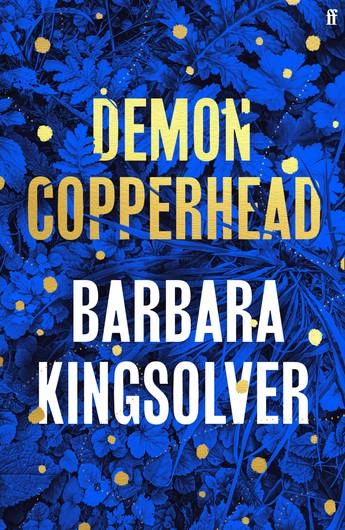
Before I read this book I already knew that Barbara Kingsolver wrote it as a homage and 21st century take on Charles Dickens’ David Copperfield. Kingsolver’s book at 548 pages is certainly seen as a ‘big baggy monster’ by today’s standards, but because I am a complete glutton for punishment I read the original David Copperfield as well, and you can see my review here.
I’m so pleased that I read the original before I read Demon Copperfield because, even though Kingsolver’s book stands on its own two feet perfectly well, I enjoyed seeing parallels between the two books, and how she gave the events of the original book a 21st century twist. Quite amazingly, I think, these allusions to the original (which would only be obviously to readers who had read it) did not propel the modern book into farce or melodrama, which a homage to a 19th century, somewhat dated, book could easily do. Instead, they made perfect sense within a modern context.
In Dickens’ time, child labour blighted the childhoods of children. In the 21st century, drug addiction blights the children of users, who often end up using themselves. Vicious and avaricious stepfathers and childbirth deaths could orphan a child in the past: now it is overdoses, particularly of prescription drugs like Oxycontin which spring from, and in turn, corrupt the medical/pharmaceutical/crime network that have made them the scourge they are in America. (Thank God and successive Australian Governments for the Pharmaceutical Benefits Scheme and drug detection schemes that have prevented the same thing happening in Australia). The original David Copperfield was left to the mercy of unscrupulous employers: Demon Copperhead was the plaything of a welfare bureaucracy that worked more to the interests of unscrupulous ‘care’-givers playing the system for profit. Sport and his ability to draw became Demon’s means of escape.
The Wikipedia page for Demon Copperhead shows the pairing of original characters with Kingsolver’s characters. The names have resonances, but the judgements you make of them as a reader do differ. Dori (Dickens’ Dora) is addicted to Oxycontin, and although she is passive and in thrall to her addiction, she is not the airhead that Dora was. Mr Micawber in Dickens’ book was a larger-than-life, loveable perennial optimist: Mr and Mrs McCobb are grifters and schemers, just as reprehensible as Mr Creakle who fosters boys as a cheap labour source and in order to get their welfare payments. U-Haul does not have the same sinuous oiliness of Dickens’ original Uriah Heep, who made so much of his purported ‘umbleness – there is no 21st century equivalent of ‘humility’ as a virtue- and he seems to play a less important role in Kingsolver’s plot. Dickens is coy about Steerforth’s corruption of Emily: Kingsolver is upfront about the prostitution and sex trafficking into which Sterling Ford drags Emmy, Demon’s childhood friend.
In Dickens’ books, London and the large Victorian cities provide a backdrop to the plot. Kingsolver, who is from Appalachia herself, sets her book in the southern Appalachian mountains of Virginia. She knows these places (as did indeed Dickens know London and England), and both writers use their books as a critique of their own society. I did find myself thinking of Shuggie Bain or J.D. Vance’s Hillbilly Elegy, and there has been some critique of Demon Copperhead as being ‘poverty porn’. I didn’t see it that way. I was driven to finish the book, fearful that Kingsolver would do something very smart-alecky and postmodern to the ending. Did she? You’ll have to read it to find out.
This book garnered many prizes including the Pulitzer and the Women’s Prize for fiction. It well deserved them. It was a brilliant re-telling of David Copperfield, with many winks and nudges for those familiar with the original, and a perfectly independent story on its own terms.
One of my reading groups read Demon Copperhead in March. I knew that the writing of Demon Copperhead was influenced by Dickens’ book, and so I decided to re-read it. I seem to have read a succession of recent books that are written well-enough recently but I craved something a bit more complex and convoluted. When I thought about it, I read David Copperfield nearly 50 years ago at university and I thought that it could probably withstand a re-reading at that distance!
It certainly did, although it was a big ask. At 1024 pages in the Penguin edition (and over 2000 pages on my Kobo reader), it took me over 26 hours to read. But it has such a wide cast of characters who have found their way into literary culture that it rewards meeting them again in the original: Mister Micawber, always waiting for something to turn up, and the slimy Uriah Heep.
Fifty years later, I still find bubble-headed Dora and her stupid, snappy little dog Jip tedious and frustrating. Agnes is still too noble and angelic. If anything, Dickens’ depiction of women in this book has become even more problematic than it was back in the 1970s. The steely coldness of his step-father Mr Murdstone is ‘of a type’ more common back in Victorian times, but still conveys the sense of David’s security being stripped away bit by bit.
But what surprised me on this later reading is how much about colonial immigration – particularly to Australia- there is in the book. It’s almost like an advertising brochure for escaping your problems by heading off to the colonies. I hadn’t been quite so aware of Dickens’ social and legal commentary, either, when I read it 50 years ago. I think that I had more sympathy for David Copperfield’s creeping disillusionment with Dora and his marriage, and his dogged decision to keep on with the marriage, even though he was getting so little from it.
So worth 26 hours of my life? (In fact, if you consider that this is a second reading, that makes 52 hours of my life). Absolutely. As you will see, it enhanced my reading of Demon Copperhead immeasurably, and I’m grateful that, age and digital-attention-span notwithstanding, I can still tackle this big baggy monster of a book, and enjoy it thoroughly.
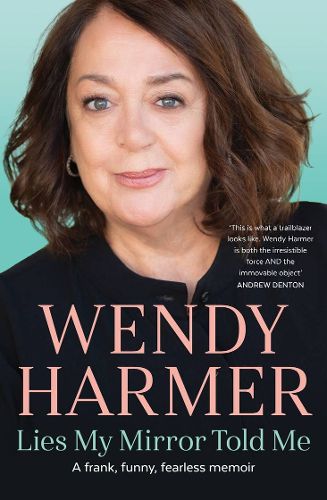
I read this book because it was written by Wendy Harmer and because of the characteristic we have in common: cleft lip and palate.
You know, she’s the only woman with a cleft that I know of in public life. Cleft lip and palate is not that uncommon, affecting 1 in 800 births. If so, where do we all go? I know of a couple of male (but not female) actors, no politicians, no business people, no teachers, no doctors. People with clefts always recognize each other with a quick glance, close attention to the speech, a heartbeat of recognition, but nothing said.
But Wendy Harmer, as one of Australia’s most recognized comedians, is upfront about her cleft, having told her story on television and radio programs many times. In this book, she has the time and space to talk about it without her story being shaped by an interviewer’s questions, and to place it in context among the other varied aspects of her career, now that she, like me, is in her late sixties.
She uses the construct of the mirror as a way of organizing her book, with many chapters starting with a mirror in a different location and the self-talk that accompanies her looking at herself in the mirror. I think that most women in particular (men too?- I can’t speak for them) have a fraught relationship with a mirror: “I’m too fat”; “I have a pimple on the end of my nose”; that close scrutiny of yourself when applying make-up. I think that this ambivalence is probably stronger for people with clefts because you are seeing yourself and your difference from the outside, as others see you. That difference is always a little jolt. I can remember, even as an adult, being fascinated by the three-way mirrors in a triangular dressing room, seeing my asymmetrical profile in a reflection of a reflection, something that I had never seen before. For the child with a cleft, you have sat in a surgeon’s consulting room as your face is scrutinized as a medical problem to be solved; after surgery (once they let you have a mirror!) you stare at the stitches, wishing that somehow they are going to make your life different.
Harmer’s relationship with a mirror was particularly stark when, as a child she complained about teasing, her mother’s response was to say “I want you to go and stand in front of the mirror and when you can find something complain about, you come out here and tell me”. A risky bit of tough-love, I’d say, although Wendy came out saying “I’ve got nothing to be sorry for”. What Wendy only learned decades later was that after she said that, her mother “bawled and bawled my eyes out. Bless your little heart for saying that. I look back and think how harsh that was. I wish I could have been softer.” (p. 378) For in truth, there was something to complain about. Not just the cleft, but also a really difficult childhood, with frequent shifts between schools, an absent mother, a frequently-absent father, a vindictive stepmother and far, far too much responsibility as the eldest daughter.
I hadn’t realized just how varied Harmer’s career has been. She started off as a journalist, first with the Geelong Advertiser in the country, then working for The Sun in Melbourne during the 1970s. The Sun’s features editor sent her off to an ‘alternative comedy’ night at Melbourne University for an article. On stage were Steve Vizard, Paul Grabowsky, Gina Riley, Richard Stubbs and Los Trios Ringbarkus – all of whom ended up being stalwarts of Melbourne comedy/arts scene. She returned to the Sun office, wrote the article and declared that she was going to give up journalist for a crack at comedy.
Here the book becomes much more your standard ‘celebrity autobiography’. I recently saw an interview with comedian Wil Anderson and he spoke about how fundamental Wendy Harmer is to Australian comedy, and even more so women’s comedy, and it’s writ large in this long roll-call of people that she has worked with, both in Australia and overseas. I had only become aware of Harmer through ‘The Big Gig’ and ABC comedy shows from the days when the ABC poured money into locally produced comedy shows instead of a succession of panel discussions and quiz shows. But she has been around for decades, plying her craft in cabaret venues, on TV and in comedy festivals in Australia, Edinburgh and in the US. There’s always a risk that this descends into name-checking and cliché, and the book does suffer from this a bit- there are just so many names! There’s her shift to the bear-pit of Sydney breakfast radio; her many fairly-light novels, her children’s stories; her screen-writing; her ‘Is it just me?’ podcast with Angela Catterns which I mourned when it finished; the Hoopla website between 2011 and 2015. Along with the successes, there are failures as podcasts and websites close, radio breakfast teams churn on to the next iteration of the same formula, and the gig of hosting the Logies devours its next victim. Despite such a varied and full career, there is an element of regret and nostalgia near the end of the book as times change, the media environment becomes crasser and ‘women of a certain age’ become less bankable as media personalities. Her father has died; her relationship with her mother is wary; one sibling has died while another is estranged in the way of families. But Harmer herself is in a good place. As she says,
I search for so many people I loved dearly in the rear-view mirror. But the times I spent with my beloved companions can’t be found in any looking-glass. They are a smell, a touch, sounds and words which cannot be framed and hung on any wall. We see only our own faces when we look into a mirror.
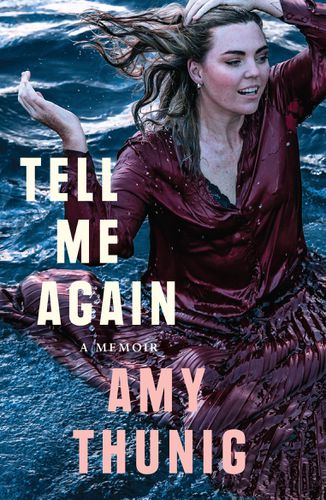
I’m often rather amused by (dismissive of?) a memoir written by someone under 40. However, in this case Amy Thunig has packed a lot of living into her forty-odd years. She is obviously of a different generation to me: I had never heard of her, despite contributions to Buzzfeed,Sydney Review of Books, IndigenousX, The Guardian, Junkee and a lively online presence. She is a Gomeroi/Gamilaroi/Kamilaroi woman, writer and academic and this book is a series of essays on her life.
In her prologue she writes:
I often wonder about timelines and the way a Eurocentric view positions time as linear but as Indigenous peoples we are raised to understand time as circular. Within a circular understanding of life: time, energy and generations coexist. Coexistence with and within Country on lands, within waterways, and skies. Our accountability and obligations are therefore to our ancestors, and our descendants, as well as to ourselves….I do not know the simple way of saying that child-me could see and feel future-me, that our coexistance within circular time meant we conversed and encouraged one another, and as we are one and the same, I knew where I would land even though I could not see how I would journey there. Exchanges of energy and love, across time spent in the locations, encouraged by ancestors.
p.2
This circularity is reflected in her writing, which consists of a large number (28) small-ish chapters of about 4-8 pages, usually introduced by a current-day, or at least a future-me, reflection, before launching back into memoir. This gave the book the feeling of being a series of essays or writing exercises, although perhaps she does not yet have enough distance to impose onto this writing a broader, overarching theme.
It must be that future-me that brought the child Amy through a childhood and adolescence in 1980s Australia that would have defeated many other children. She was the second of four children, and both her parents struggled with drug addiction, and her father spent some time in jail. The family shifted several times although her grandparents, particularly her Pop, remained points of continuity in her life. Despite some appalling instances of racism and classism by teachers, she did well in school and maintained the appearances of an engaged after-school life of dancing, school performances and after-school jobs despite a chaotic and violent home life and poverty. This culminated in being kicked out of home in late secondary school and couch-surfing while continuing to attend classes. She did well, and attended university, moving through undergraduate, graduate and finally PhD level but always aware of the precariousness of the image she was adopting, drawing comfort from other indigenous academics in the academy.
She proudly proclaims her indigenous heritage in the reflections that launch each chapter, as she returns to, and draws strength from Country. She speaks of the influence of her ancestors, and her present-day passages mention the aunties and elders who surround her. However, the discrimination and cruelty that she experiences as a child is not voiced as racism, even though racism underlies it. As a daughter she feels the stigma attached to her parents’ drug-addiction and imprisonment, which applies to all children in similar circumstances (although the high representation of indigenous people in prison means that this would be a more common experience for indigenous children). She speaks often of the influence of her grandparents, but support from her broader extended family seems to be absent, especially when she is homeless. There does not seem to be any involvement at all of formal indigenous organizations. She is largely silent about the political aspects of her aboriginal identity, even though it clearly fundamental to her experience and story.
In one of the last chapters of the book she writes:
The journey of reconnecting with my parents was a slow and clumsy one. It began with a desire to have them there for big moments- I missed them. It involved the realisation that while they had struggles, and sometimes those struggles had hurt me, unlike other people I met when away from them, they never sought to hurt me… Reconnecting with my parents, and understanding them, were two unrelated journeys. I didn’t understand my parents, even when I started to reconnect with them. You don’t have to understand fully to begin to accept in part, and I continued to be deeply resentful for many years, believing that they actively, consciously chose drugs over me. That it was a binary and I was the lesser option.
p. 249
It was only when she was given a synthetic heroin painkiller in hospital in her twenties that she realized that using brought a sense of silence.
That was when I began to understand that the nothingness is the bliss. My parents have experienced high levels of trauma- generational and individual- and all without the supports needed to actively heal…They weren’t choosing heroin over me; they were choosing quiet over the overwhelming noise. It was then that I moved towards understanding, and my resentment began to ease a little.
p.250
Personally, I don’t know if I could overcome my resentment and I wish that she had explored this in more detail. Perhaps her adult relationship with her parents is still a work in progress, and too close to be written about yet. But to even reach this point of understanding and reconnection suggests that she is ready to write this memoir, despite still being relatively young.
My rating: 8/10
Read because: I read a review in the Saturday Paper
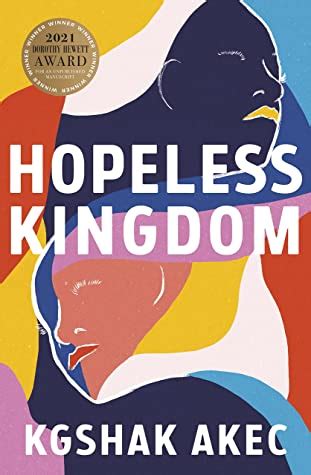
This book won the 2020 Dorothy Hewett award for an unpublished manuscript, and as a first book, I suspect that it has a strong autobiographical element. It has a double narrative of mother and daughter, retelling the same events from their own perspective. Taresai, a Sudanese woman, has emigrated to Australia with her husband and four children, while her eldest daughter Akita is forced to take over the care of her younger siblings as it is expected an eldest daughter will do. Ironically, Taresai herself was placed in a similar situation with her siblings back in Sudan, where her education was sacrificed for that of her younger sisters, still a source of festering resentment between Taresai and the other women in her family.
To the extent that there is a ‘typical’ migrant story, this is it, but told from the “other side”. Many of the tropes are here: the shift from Sydney down to Corio, a working class suburb of regional Victorian city Geelong; the father who cannot cope with the loss of status and returns ‘home’ to Sudan; the older brother who becomes enmeshed in drug addiction, crime and mental illness; the studious daughter burdened with domestic duties and academic expectations that her family does not have the financial or intellectual capital to support; chain migration of mothers, aunts and cousins; the shared multigenerational households and the clash between traditional upbringing and the perceived ‘slackness’ of Australian parenting.
The alternating structure between mother and daughter leads to a ‘bittyness’ in the narrative, presenting it as a series of episodes told in short chapters. While I find long chapters somewhat oppressive (as in, for example, Christos Tsiolkas’ The In-Between) short chapters seem to me to be a bit of a cop-out for the writer, enabling them to avoid the responsibility for carrying the narrative. Nor am I sure that the narrative voices of the two women are clearly enough defined, a viewpoint with which Lisa at ANZLitLovers differs (see her review here), seeing the question of voice as being more as one of register. I’m not convinced: I too often had to flip back a couple of pages to see who I was reading. At times the writing in both Taresai’s and Akita’s sections is quite beautiful, and psychologically perceptive; at other times it is a bit thin and marred by small errors which should have been picked up before publication.
I was puzzled by the title Hopeless Kingdom, because the ending certainly doesn’t reflect that, with Taresei reaching a point of equanimity, and Akita breaking free. The book was short-listed for the Miles Franklin, and it certainly does present first-generation Australian experience “in any of its phases”. It is a good exploration of belonging and not belonging, mother and daughter relationships, and the migrant experience. Akec isn’t the first first-generation Australian writer to gain acclaim with her debut work – I’m thinking particularly of Alice Pung- and I’m interested to see if her next novel takes her beyond autobiographical writing.
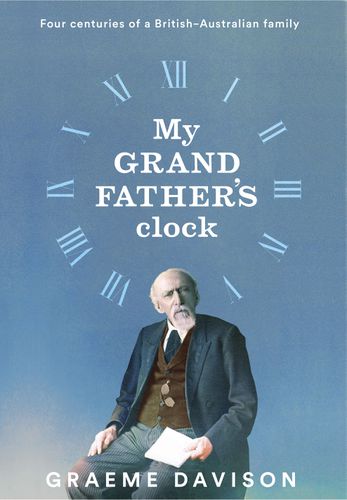
In 2015, Graeme Davison published Lost Relations, (my review here) where this acclaimed academic historian succumbed to his family’s entreaties and waded into the waters of family history to research his mother’s family. It was not without a bit of heartburn and defensiveness, but in telling his mother’s family’s story, he also gave us a reflection on family history itself, its emotional resonances and limitations, and the wider context into which the story of individuals must be placed.
In this more recent book, he turns instead to his father’s family. He writes:
When I published ‘Lost Relations’, a history of my mother’s family, some readers asked why I wrote so little about my father. As I grew up, he discouraged interest in his family’s past, not because it was scandalous- although, as I later learned, there were buried sorrows unknown to me and perhaps to him- but because it was, at least in his eyes, so recent and undistinguished.
p. 2
Later in his life, his father changed his mind, joined the local historical society, and wrote a brief account of his life. Davison changed his mind too, although in his case his interest was piqued by a 200 year old grandfather clock that had been willed to his father by his aunt, and eventually came to him. It couldn’t have gone to a better member of the family: Davison had always loved time-telling and clockwork and indeed, in 1993 had written The Unforgiving Minute, a history of time-telling in Australia. This clock becomes a sort of talisman in this book, marking not just the generations of family that it had passed through, but also marks the changing of attitudes to work, leisure and godliness over time. There is a danger in writing a family history that, to misquote Toynbee, it just becomes one damn generation after the other, but having a concrete object like a clock serves as both metaphor and sticky-tape, connecting albeit tenuously, generations and relationships. The clock is woven into an anecdote told to Davison by his Uncle Frank, who told of visiting his Great Grandfather Thomas Davison in 1929. When the clock chimed, Thomas lift one finger and said “listen to our ancestors”.
Davison, as you will see in my review of Lost Relations, reflected deeply and at length on the nature of family vs. academic history. He has no need to do so again. He pushes the family history boundaries harder in this book, starting in the Scottish borderlands and following the story through to his own career as historian in the academy. By tracing back beyond 1750 he needs to leave behind the genealogists’ stepping stones of formal written records, and turns to tribal and kinship memories- something that required him to bring “my scepticism as well as my romanticism along for the ride” (p. 26) He could only deduce from generalized knowledge of practices of the time and documented histories of the Davisons/Davysouns/Davysons who may or may not be direct descendants. He dips into the soup of DNA testing, and is disillusioned by the suppositions and guesswork it evokes without documentary evidence. He finds a few facts, but has to resort to questions and hypotheses as the family moves back and forth across the Scotland/England border, in a
journey that would take his descendants, step by step, from a small port town to an industrial village, to a factory suburb and finally to an industrial metropolis. Eventually, a century later, they would journey to the other side of the world…Each step was a one-off response to the map of opportunity at the time, but seen over the longue durée the moves fall onto a pattern that suggests the operation of powerful unseen forces… At each step along the journey, they became a little more accustomed to the ideas and values that prepared them for the next. Many factors, invisible to us, probably influenced their outlook, including religious and political ones
p.70-71
Through the “miracle of digitisation” of the British Library’s newspaper archive, he finds his great-great-grandfather addressing a temperance meeting in a speech that could just as easily have been given by his own grandfather and father, lifelong teetotallers. The family line shifts to Birmingham, the workshop of the world, and involvement in a more active political role through workers’ societies, and then a minor manager role in a tinplate company.
It was his grandfather, John Potter Davison, who in 1912, at the age of forty-three, closed his business, said goodbye to his parents and siblings, and embarked for Australia with his wife and four children, with only twenty pounds in his pocket. He was a Methodist, a denomination that encouraged migration, and in Australia he joined other members of the Islington Chapel who had emigrated earlier. They settled in Scotia Street Ascot Vale, along with other Methodist immigrants. Still in the western suburbs, Davison’s father lived with his family in a rented four-roomed cottage in Athol Street Moonie Ponds. The young men of the family moved into apprenticeships as printers and plumbers, joined the Scouting movement and were involved in the church. As the Depression hit, the family purchased a timber cottage in Washington Street, ten minutes’ walk from Essendon station and joined the North Essendon Methodist Church. It was here that Davison’s parents Vic and Emma met, thus joining this story with that he has already told in Lost Relations. He was born a little over nine months later “born into the luckiest and most consequential generation in the history of the planet.” (p 189)
At this point Davison moves into his own memoir, starting with his childhood home at 16 Banchory Street Essendon, purchased by his parents in 1939. He attended government schools in Aberfeldie and Essendon and in 1958 took up a studentship, with its stipend that made studentships particularly attractive to lower middle class parents whose families had no experience of university. He attended the University of Melbourne and gravitated towards the Student Christian Movement. He was one of the founders of The Melbourne Historical Journal, undertook his honours dissertation, and found himself as one of a small number of secondary teaching students released from their bond by the Education Department to become university teachers. He applied for scholarships in England, and found himself on a boat bound for England, in effect, completing the circumnavigation that his family started. The shift into memoir runs the risk of many professional memoirs that become a roll call of acquaintances’ names, and a travelogue – and although I’m interested in historians’ biographies and intellectual influences, I wonder how many other readers would be.
As well as covering a much wider 400-year timespan, this is a far more personal book than Lost Relations, and in many ways it is a more conventional genealogy-method book than the earlier one. Both books expand the circumstances of his particular ancestors into a wider context, and it is interesting that religion plays such a strong part in both strands of his family history given that it is often rather peripheral to Australian experience. He finds continuities, too, with the traditional of skilled manual work, and the moderate Labor or centrist politics. Of course, there is a limit to the interest that one might have in another person’s ancestors (and, it would seem, no limit at all for one’s own family, for some family historians). And as with Lost Relations, this is a stellar example of a master historian telling family history but drawing on much more than just documents and lineages. He finishes his book as he started it, with the clock that has accompanied his family story, joking about his own family’s eye-rolling when he, too, intoned “listen to our ancestors” on hearing the clock. Davison’s ancestors have clearly spoken to him, and through these two books we eavesdrop on the conversation.
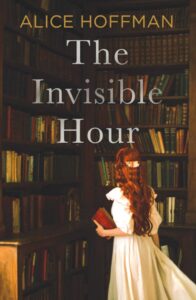
I’ve done it again. I borrow books by Alice Hoffman, thinking that it’s Alice Walker… and it’s not. I did that with Practical Magic and I’ve done it again with The Invisible Hour. I thought from the blurb that I was borrowing a book about a young woman and her daughter breaking away from a cult, only to find that I was reading a time travel book about Nathaniel Hawthorne, author of The Scarlet Letter. Now, I’m not opposed to time travel books, but I do feel that they are a bit of a guilty pleasure and that there’s something almost adolescent about them. For me, they are plots built on a rickety foundation that can collapse quickly if I start thinking about them too much. [Having said that, I’m really enjoying Life after Life on ABCTV- more than the book, in fact].
Ivy, a sixteen-year old girl from Boston, is estranged from her family who cannot accept her pregnancy. She runs away and joins a cult in rural Massachusetts, and the leader of the cult, Joel, takes her as his wife and, although theoretically all children belong to the community, takes a particular interest in her daughter Mia. Born into the community, Mia knows no other life than this one, controlled by Joel and his rules and punishments, where members work on the apple orchards that fund the commune and are kept in ignorance of the outside world. Ivy, yearning for the world that she has left behind but too frightened to leave the community, encourages her daughter to go to the town library, located in an old building, and staffed by conscientious and sensitive librarians who, aware of the rarity of a community child coming to a library, turn a blind eye to Mia’s theft of books. There Mia comes across The Scarlet Letter by Nathaniel Hawthorne which, curiously, has an inscription to her– Mia- in the frontispiece. She steals this book too, and becomes enamoured of its author, who died in 1864. This book, and the death of her mother Ivy, emboldens her to run away and to seek the help of the librarians. She is stalked by Joel, determined to bring her back to the community and to find a paper which he believes she has stolen.
Somehow, and don’t ask me how, this book transports her back to the 1830s where she meets Nathaniel Hawthorne and falls in love with him. He has not yet written The Scarlet Letter, and she knows that Hawthorne will marry Sophia Peabody and have children, and that although suffering writer’s block at the moment, he will become a famous author. Meanwhile, she is stalked by Joel, who manages to travel through the same time portal that she does. She is aware that she needs to distance himself from Hawthorne in order for him to fulfill the life that he does have, and the menace represented by Joel insinuates itself into both her 1830s and present-day lives.
As I said, it doesn’t bear to think too hard about the logistics of all this. In many ways, the book is a paean to the power of books and reading, and parts of it are beautifully written. I haven’t travelled much in America, but I did travel to Boston and (for my sins) Salem, and I enjoyed her descriptions of them both. It’s the sort of book that would make a good, if rather lightweight film and it’s the sort of book that might attract a ‘Womens Weekly Good Read’ sticker if such things still exist.
Well named, because this is exactly how I felt about this book. Yeah, I like to listen to William McInnes, who tells anecdotes so well in his mellow, very Australian voice. I could listen to him for hours, but when I think about it, it’s the sort of listening you do in the car, or when working around the house, when you’re not particularly paying attention.
And so Nah, my reading time is so limited, I’m not going to live forever, and there are so many other books that I could be reading instead. I gave it 100 pages, and then decided Yeah Nah. It was too much like listening to someone rabbitting on without getting anywhere. Might be worth looking for an audiobook version, if he was narrating it.
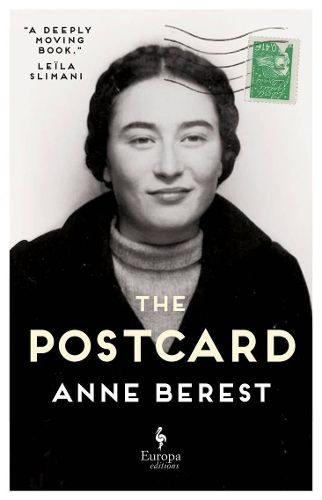
This book is an autofictional telling of the virtual extermination of a Jewish family by the Vichy regime. It stands almost as a companion piece to Irene Nemirovsky’s Suite Francaise and indeed, Nemirovsky appears as a shadow character in this book. For me, it is a strong story betrayed by some lacklustre telling of the frame story.
Expectant mother, Anne, is fascinated by a postcard that is delivered to her mother’s family home in Paris in 2003. On the front is a photo of the Opera Garnier in Paris. On the back written in an awkward hand are the names of the author’s great-grandparents and their children, all of whom had died in concentration camps. Given that court cases were underway over reparations for Nazi confiscations, was this an anti-Semitic taunt? Was there someone who knew more of the family history than the family did itself? Why was it sent?
And so, framed as some sort of detective story/ researcher-as-hero search, Anne turns to her mother who has herself been undertaking her family history research for years before the arrival of this postcard. Her mother co-operates to a point, but then withdraws once it gets close to her own part of the family history, leaving Anne to continue the search alone.
The novel (at least, it describes itself as ‘fiction’ on the copyright page) alternates between the current-day search and the findings of that search. I have no problem at all with Berest’s telling of her great-grandparents’ and grandparents’ story. She captures particularly well the gradual tightening of the Nuremberg Laws and stripping away of rights, wealth and independence described so well in Saul Friedlander’s Nazi Germany and the Jews. Ephraim and Emma, Anna’s great-grandparents had already fled once, from Moscow to Latvia, and then had moved briefly to join Ephraim’s parents in Palestine, before returning to Paris where Ephraim sought ceaselessly to obtain French citizenship for himself and his family. He did not succeed, but in any event it would not have saved the family: although at first directed against ‘foreign Jews’ the racial laws against Jews would have trumped any citizenship claims anyway. Living away from Paris, the family seems to be existing in a summer bubble, until all of a sudden the Nuremberg laws come right to their door. The family is separated, with two children sent off on the pretext that they were going to work, the parents left to desperately search for them, and one married daughter, Myriam, sent away by her father to avoid deportation as well. The story follows Myriam, who is the only one to survive as she lives in isolated places and joins the resistance. But this is not a ‘derring-do’ resistance type story: her activities are spasmodic and often in abeyance. Her marriage, which in many ways was her salvation, takes her to strange places and experiences that she would never have anticipated. It is Myriam who haunts the Hotel Lutetia, where prisoners released from the camps are sent, searching for the family that she will never find.
So strong was the Myriam story that the frame story seemed insipid and banal in comparison. Heavily conversation-based, I found myself resenting when it intruded on the main narrative, and I wished that the narrator and her mother would just get out of the way. One part that was interesting was the modern-day Jewish parents’ outraged response to anti-antisemitism experienced by the narrator’s daughter at school, and the discussion of inter-generational trauma. But for me, this just distracted from the main story. After all, does the world really need another family history as quest novel? I ask myself. It has been done over and over and over again.
So, I have mixed feelings about the book. The story of Miriam and the loss of her family was excellent: the frame story (which may well have been true) less so.
My rating: 8/10 (high because of my regard for Miriam’s story)



 The Resident Judge of Port Phillip