Category Archives: Book Reviews 2024

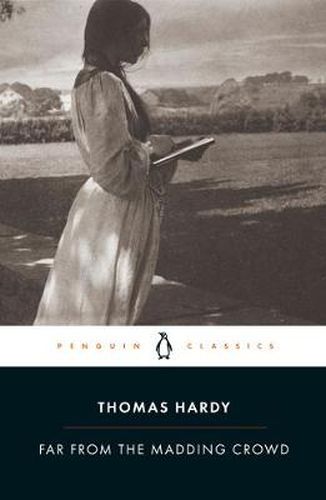
‘Far From the Madding Crowd’ by Thomas Hardy

480 p. 1874

I didn’t read Far From the Madding Crowd at school, even though many people of my age did. It seemed to be a perennial of the Year 12 (HSC) English reading list. I hadn’t read any Hardy at all until I read Tess of the D’Urbervilles at university, which I remember enjoying although now, having read Far From the Madding Crowd, I wonder whether I would still do so.

Like Hardy’s other Wessex novels, Far From the Madding Crowd is set in rural England, harking back to an agricultural past and village life that had been largely eclipsed by the time the book was written in 1874. Although the novel is peopled with stock characters from tales of rural life- the chortling peasants in the local pub, the perfidious army officer, the worthy but stodgy landowner next door- the two main characters, Bathsheba Everdene and Gabriel Oak are of a more complicated economic and social milieu. When we first meet Bathsheba, she is a young, well-educated, independent but young woman without her own financial resources, confident enough in her own opinions to reject the marriage proposal of the hard-working and earnest Gabriel Oak. By the next time we meet her, she has inherited property from her aunt and is determined to manage the farm by herself, without the assistance of a bailiff. Gabriel Oak suffers a reversal in fortune and is now forced to work on Bathsheba’s farm, undertaking the tasks of a bailiff without the title.

Clever but impetuous Bathsheba sends a Valentine to her older, rather stodgy neighbour Mr Boldwood, daring him to ‘Marry Me’. He takes Bathsheba at her word, and tries to woo her but Bathsheba, who wants more passion in a relationship than she could ever feel with Mr Boldwood, rebuffs him. Gabriel, aware of the hopelessness of his love, continues to care for Bathsheba. He tries to warn Bathsheba against the perfidious Sgt. Troy, but she plunges into a hasty marriage with him anyway, only to find that he is gambling away all her inheritance. When Troy disappears after his illicit relationship with servant-girl Fanny becomes public, Bathsheba is in a holding pattern, still legally married to Troy and having to bat away Mr Boldwood’s renewed wooing. It is only after Troy is finally killed, and Mr Boldwood taken away as his murderer, that Bathsheba and Gabriel are free to marry. Unusually for Hardy, there is a happily-ever-after-ending.

I grant that Hardy’s depiction of Bathsheba is nuanced and complex. In some ways she is an air-head, toying with men and their emotions, self-centred and wilful. However, she is also independent and principled, although she is exposed to almost intolerable emotional coercion by both Troy and Boldwood. The timeless theme of a woman surrounded by eager suitors, of differing degrees of integrity and suitability, reappears in different guises throughout film and literature.

But each time the book got bogged down in yet another pub-scene or drowned the reader in its lush descriptions of sunrises and fields, I found myself thinking “How on earth would you interest a Year 12 boy in THIS?” I was relieved to hear in the discussion at the Ivanhoe Reading Circle that this book is no longer on reading lists for secondary students, and thank God for that. I may roll my eyes at yet the recently-published but ultimately forgettable fiction books drenched in current politics and sensibilities that are assigned to students today, but some “classics” are too heavily freighted with the politics, sensibilities and stylistics of their own earlier time to become virtually unreadable without a strong reason for doing so.

My rating: 6/10

Read because: Ivanhoe Reading Circle July selection.
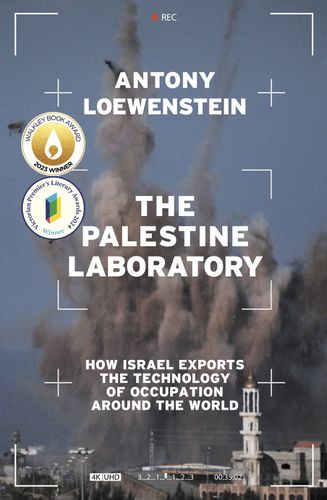
‘The Palestine Laboratory’ by Antony Loewenstein

2023, 214 pages & notes

It’s strange that this book is at the same both aposite and urgent on the one hand, and rather overtaken by events on the other. It was written in 2023, before October 7 at a time of blithe confidence on the part of the Israeli government that Palestine had been ‘contained’ and when, Loewenstein would argue, it benefited Israel to have a proving ground for their technologies of surveillance and repression. I’m not sure that it’s still the case now. The supremacy of these technologies was found lacking on October 7, when men on motorbikes proved the vulnerabilities in high-tech solutions, and although the Israeli response demonstrates the sophistication of their weapons, the outcomes are just as blunt and primitive as war has ever been over centuries.

In this book Loewenstein argues that:

Israel is still often framed as a thriving if beleaguerered democracy and a key ally in the battle against extremism. Its status as a leading defense exporter is legendary, willing to militarily assist, arm, or train the majority of nations on earth…. Israel has perfected and led the “global pacification industry”, a term coined by Israeli-American writer and academic Jeff Halper in his book War against the People: Israel, the Palestinians and Global Pacification. He explains that the occupation is not a financial burden on the state but the exact opposite, both in terms of Palestine being an invaluable testing ground for new equipment on behalf of a global military hegemon serving other militaries across the globe (p. 206, 207)

He argues that Palestine has acted as a type of laboratory in which technologies and strategies can be ‘tried out’ on a subject population and then exported to other countries. Missile technology, facial recognition surveillance, software infiltration, concrete walls, drones – all have been tested on Gaza and the West Bank and their “success” has bolstered the Israeli arms industry. Israeli ubiquity across the whole arms manufacturing chain means that even countries wishing to distance themselves from it are implicated by the inclusion of small components in their technology purchases, as the Australian government tried to claim . The ‘War on Terror’ turbo-charged Western anxieties about terrorism, softening resistance amongst governments and their electors to surveillance and border militarization technologies that would have been rejected in the past. At the same time, Israel has been willing to sell their technology to any government that wished to purchase it, with no questions asked about the purpose to which it would be deployed.

The book ranges widely over different governments and regimes in order to bolster its argument. I found myself rather confused by the chapter titles, which seemed to signpost a progression of the argument, but which bore little relation to the material in the chapter. There are seven chapters:

  1. Selling Weapons to Anybody Who Wants Them
  2. September 11 Was Good for Business
  3. Preventing an Outbreak of Peace
  4. Selling Israel Occupation to the World
  5. The Enduring Appeal of Israeli Domination
  6. Israeli Mass Surveillance in the Brain of Your Phone
  7. Social Media Companies Don’t Like Palestinians.

Of these chapters, Chapters 1, 2 4 and 5 were all variations on the same theme: that Israel could boast of the success of its military industry through its deployment against Palestinians, and it was prepared to sell it to anyone who wanted it. He draws on evidence from all over the world, but all to the same end. Chapters 6 and 7 were probably the most closely related to their titles, where he describes Israeli software development and its influence over social media companies to shut down Palestinian voices. I think that Chapter 3 ‘Preventing an Outbreak of Peace’ is probably the most pertinent to recent events as we see the implacability of the right wing of the Israeli government against any form of ceasefire, and Loewenstein’s book has caused me to see that there is an economic, as well as political, impetus for this. But the actual chapter 3 in his book said nothing about Palestine or peace, instead it was just a repetition of the preceding chapters, using other countries as examples.

There was one insight in particular that I took from the book. I had often wondered why far-right demonstrations in recent years have featured Israeli flags. Loewenstein argues that this is not through any affinity with Israel or Judaism – in fact, the opposite- but because Israel is a prime example of an ethnostate which has succeeded in emasculating a minority (or so they thought) through technology, brute force and surveillance without attracting world censure. And this is the methodology and example that Israel is exporting to dictators throughout the world.

So, an interesting book, exhaustively researched and exhausting to read, that was let down by a structure that promised a more nuanced argument than it delivered.

My rating: 7/10

Sourced from: Yarra Plenty Regional Library.

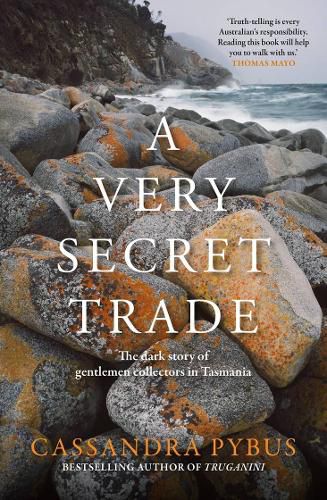
‘A Very Secret Trade’ by Cassandra Pybus

2024, 336 p.

If too many Australians thought that The Voice was too hard, then Truth Telling is going to be even harder. Cassandra Pybus’ book A Very Secret Trade: The Dark Story of Gentlemen Collectors in Tasmania confronts the clandestine trade in Tasmanian indigenous remains head-on: something we’ve all long known about but somehow tucked away back of mind. In a way, we’ve been softened up for the truths in this book by Marc Fennell’s podcast and TV series ‘Things the British Stole’. But in this book, the blame is not easily sheeted off to ‘the British’. Certainly, the governors and many of the civil servants in Van Diemen’s Land in the 1840s and ’50s were sojourners, returning back ‘home’ to England once they had attained their long-sought pensions. But collecting institutions like museums and universities were founded here as permanent institutions, and they need to own their histories of acquisition, obfuscation and refusal.

It was Zoe Laidlaw’s early book Colonial Connections 1815-45: patronage, the information revolution and colonial government (2005) that first opened my eyes to the connection between patronage, colonial careers and collecting. It underpinned the webs of influence that stretched from wealthy gentlemen collectors back in Britain, who could pull their parliamentary and civil service strings, across the ocean to civil servants in the colonies on a couple of hundred pounds a year. Once here, those local civil servants could pull on their own (rather more threadbare) strings to source animal and human remains which could be forwarded back ‘home’ to keep the connection strong. The gentlemen patrons back ‘home’ competed amongst themselves over the size of their personal collections and the prestige of the institutions with which they associated themselves, so there was always a market for curiosities, and especially those curiosities which were perceived to be on the road to extinction.

I hadn’t realized, though, that once the local functionary was in the colonies, he (and it was almost always ‘he’) deliberately petitioned and importuned for postings that made it possible to source such objects for his patrons. Pybus introduces us to doctors and surgeons (many of them), constables, merchants, Superintendents and magistrates, surveyors and artists, clergymen and librarians who were part of this network. Most disturbingly, some of them – especially those charged with the ‘care’ of this ‘dying’ race- deliberately maneuvered their positions so that they were untrammeled in finding, digging up and shipping human remains. And so many remains, often innocuously labeled as ‘specimens’ flowed across the ocean into private and institutional collections.

As a historian, Pybus has to work with silences and euphemisms. Clearly all these people realized the sensitivities of the indigenous people over the treatment of their people after their death, and so no-one actually wrote definitively about what they were doing. Many of the disinterments took place in isolated places or under the veil of darkness, and permission was neither given nor sought. Thus, the documentary record from the Tasmanian end is largely silent but at the receiving end, accession files, private correspondence and wills reveal the flood of ‘objects’ that made their way across to British and European patrons and institutions. They were being shipped overseas at scale, under the anodyne label of ‘specimens’.

Both through her own personal connection, and in keeping with her earlier book Truganini (my review here), Pybus focusses particularly on the islands north and east of Tasmania and the nearby mainland coastal areas, and the remaining people of the different nations on Van Diemen’s Land who were shipped between Wybalenna (Flinders Island) and Oyster Cove. They are so few that they can be named, and she does so in her Appendix 2. I’ve read quite a bit about George Augustus Robinson, the ‘Protector’ but I was unaware of his upwards change of fortunes once he returned ‘home’, where a lucrative marriage gave him all the property and status that he ever yearned for. He barely needed the dozen or so skulls that he carried in his luggage home, sourced from the First People who died under his ‘care’ at Wybalenna.

Lady Jane Franklin, too, is cast in a different light by her cultivation of collectors in her circle of friends, particularly young and handsome ones. Her expeditions across rugged terrain take on a new meaning when you realize the collecting intentions of the gentlemen accompanying her. The sheer number of surgeons and doctors in Pybus’ Appendix 1 of ‘The Worshipful Society of Body-Snatchers’ is chilling.

Pybus closes her book with Truganini, the so-called “last Tasmanian Aborigine” who, in floods of tears, had begged a minister whom she trusted that when she died, her body be burnt and the ashes thrown into the deepest part of the D’Entrecasteaux Channel. It took a hundred years for her wishes to be complied with. Copies and casts of her articulated skeleton were on display until 1969, and may even still be on display somewhere in the world as part of the inter-museum trade in objects. The push-back to the idea of repatriation and burial from the Tasmanian Museum and Art Gallery is instructive, as they garnered support from various professors of Anthropology and Anatomy, all of whom agreed that it would be a crime against humanity to comply with her wishes, even though Truganini’s remains had barely been properly studied at all in the 100 years of institutional custodianship.

This is a very personal book for Pybus too. It is beautifully written, and her use of ‘I’ is measured but always warranted. She grew up overlooking the D’Entrecasteux Channel, and although oblivious to it as a child, gradually came to understand her forebears’ connection with Oyster Cove. She had always thought of them as altruistic, but as she came to realize the web of patronage and obligation that touched her family too, she began to question this. I’m reminded of David Marr’s stance on ancestral guilt (see here) but I think that Pybus – who shares their name in a way that David Marr does not with the ancestors he writes about- cannot distance herself so easily. Her love of Tasmania, and especially the eastern coast bursts through her beautiful descriptions, and her own sense of country gives her an added feeling of indebtedness and complicity in the dispossession of the First People who were there before her. She had resisted for many years the ‘thorny’ word “genocide” but admits that “after years of research into the hidden corners of the history of my beautiful island home, I find the fact of it inescapable.” (p. 256) The rapid commodification of the remains of indigenous people, the ransacking of burial grounds, and the trade to collectors and museums world-wide with the added marketing-edge of “last of” and “extinct” certainly makes the word hard to avoid.

My rating: 9/10

Sourced from: Yarra Plenty Regional Library

‘Birnam Wood’ by Eleanor Catton

2023, 423 p.

Silly me. Here I was assuming that this book, with a title referencing Macbeth, would be an updated telling of the Macbeth story – but any connections with Macbeth are rather tangential. You may remember that in Shakespeare’s Macbeth, he took comfort in his security as King from the prediction that “Macbeth shall never vanquished be until / Great Birnam Wood to high Dunsinane Hill / Shall come against him”. Assuring himself that trees could not move, he later realized the true meaning of the prediction when his enemy and his army advanced on Macbeth’s castle under the protection of the tree branches they carried, thus appearing to be a forest moving up the hill.

‘Birnham Wood’ was the name that a gardening co-operative adopted for themselves as they engaged in organic ‘guerilla gardening’ on unattended plots and spaces, living on the food grown as they squatted on disused sites, using water if it was available, carting their own if it was not. There’s elements of humour in Catton’s book, and this is one of them: in a world of terrorists and rogue militias, guerrilla gardening seems rather incongruous. [Having said that, the son of one of my distant relatives is a hard-core forager and dumpster-diver, and his parents have found it very difficult to cope with his subversion of all of their expectations for his career and future in his outright rejection of the capitalist economy.]

Acting as a collective, there are nonetheless power differentials between the members of Birnam Wood. The group was founded by 29 year old Mira Bunting who is approached by Robert Lemoine, a shadowy multi-millionaire attracted to New Zealand as part of the wave of ultra-rich Westerners looking for a bolt-hole in the event of nuclear war. His true intent is the surreptitious mining of rare-earth minerals in a remote national park, carried out under the cover of his pest-eradication drone company. He offers the Birnam Wood collective the opportunity to farm on his property and funding, and takes on the ‘conquest’ of Mira as a personal challenge. At the meeting of the collective to decide whether to accept Lemoine’s offer, Mira is confronted by Tony, with whom she had had a drunken sexual encounter before Tony left for overseas, four years earlier. He has now returned to the collective and rejects Lemoine’s offer as blood money. When his objection is voted down, he leaves, suspicious – correctly as it turns out- that there is more to Lemoine’s proposal to the group. The group meeting to decide the matter evoked brilliantly the interminable earnest university meetings I remember, overlaid with a 21st century patina of political correctness. In the meeting, Mira was backed up by her best friend Shelley, who was actually thinking of leaving the collective.

The book is quintessentially New Zealand, with its ‘pure’ image, green and fertile national parks, and propensity for earthquakes and landslips that has rendered the wider Christchurch area largely inaccessible after the main highway is cut. There is something slightly ‘woolly jumper’ about the collective which includes sincere and rather unworldly workers, inspired by ideas of conservation, ecology and rejection of capitalism.

Against this bucolic background, Robert Lemoine stands out as a 21st century James Bond villian/ Egon Musk type caricature. His sheer evilness is made more believable by his control over the electronic communications channels of mobile phone and internet and his surveillance of the members of the collective, which keeps him one step ahead of Mira, Shelley and Tony as they each think that they are acting autonomously, competing to come out on top in dealing with Lemoine.

The satire drops away and the book ramps up in the second half to become a page-turning, cat-and-mouse thriller, something I would have thought impossible in a story about an idealistic group of guerilla gardeners (of all things!). It’s to Catton’s credit that she’s able to carry this off at all. I won’t give away the ending, except to say that the ending probably had more to do with Macbeth than anything else in the book.

I read this book with the Ivanhoe Reading Circle as their June selection. Many of the members were disappointed with the ending: I was perhaps less critical, seeing any other possible ending as a cop-out, and spying a few loose ends that Catton may left dangling that could presage a different outcome.

Most of all with this book, I was so impressed with Catton’s ability to switch so skillfully into a completely different genre to that of the historical fiction The Luminaries, the only other Catton book that I have read. So many writers ‘stick to their lane’ after having a book as successful as The Luminaries was, but Catton has upended these expectations completely. It is a book that surprised with its completely modern setting and its morphing from a somewhat prickly social satire into a page-turning thriller. Eleanor Catton is completely in charge of her narrative, and has the flexibility of a very skilled writer with decades of writing ahead of her!

My rating: 8.5/10

Read because: Ivanhoe Reading Circle selection.

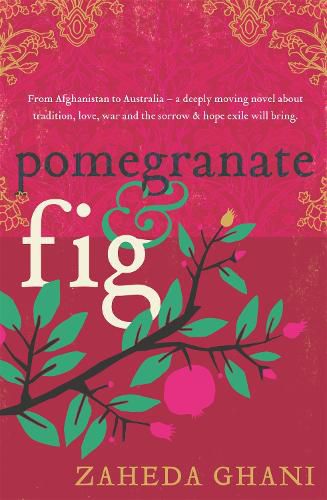
‘Pomegranate and Fig’ by Zaheda Ghani

2022, 288 p.

Much of our awareness of Afghanistan comes from twenty-first century events: the detonation of the Bamiyan Buddhas in 2001, the invasion of Afghanistan by U.S. troops after 9/11 and the protests against the presence of Australian troops in such a misguided, downright wrong war, and then the chaotic recapture of Kabul by the Taliban in August 2021. This book takes us even further back to life before the Soviet invasion in 1979 and the rise of the Mujahadeen – a life which, for middle- and upper-class Afghanis could be cultured, intellectual and free from want.

The book focuses on brother and sister Henna and Hamid, and the man who will become Henna’s husband, Rahim. Henna and Hamid are the youngest of four children, and the two older sisters have married and moved away. Henna and Hamid are both well-educated, with Henna planning on becoming a teacher, while Hamid’s interests are more theological and philosophical. However, being the youngest daughter of a wealthy family, the prospect of marriage is drawing closer and becoming more inevitable. Lawyer Ramid and his family come to her parents seeking marriage, which she knows will close doors to her options in the future, but her quiet resistance at first turns into acquiescence. Hamid knows that he is losing his closest friend, but he acquiesces as well. Family and tradition hold a firm grip on their futures.

The book is divided into three parts: Herat, War and Exile. ‘Herat’ is the ‘before’ time, as Henna and Rahim marry and have their first child in a steady, middle-class milieu underpinned by family loyalties and devotion to Islam. ‘War’ brings the assassination of the President, the stirring of the mujahadeen resistance and the invasion of the Soviets. Although the family is not overtly political, Rahim knows, as a prosecutor, that he has to be careful with his words and circumspect in his loyalties. He is arrested and beaten for a slight involvement with the mujahadeen, and it is only through the influence of his contacts that he is released. None of them know it (although we, as readers 40 years lager do), but worse is to come than the Soviet invasion and the appropriation of their property. They flee the country before all of this happens.

This leads to the third part, Exile, where Hamid flees to Iran where he works at a menial job in a kitchen, and Rahim and Henna leave for India where they gradually move from place to place until they seek asylum in Australia. We now in Australia are so conscious of ‘grounds for seeking asylum’, and Ghani is largely silent about the bureaucratic process that made it possible for them to come here. Hamid tries to go to India, too, but he is rejected at the airport and returns to Iran. Once here, Rahim and Henna decide to start their own small tailoring business in the garage. Rahim cannot find work as a lawyer, but they are both grateful for a safe country.

The story is told in short alternating chapters, which I always find a bit of a cop-out. Having said that, I have recently read two books with inordinately long chapters and I found those oppressive, and these short chapters were a relief. It is told in the present tense throughout. Although the book’s sympathies lie mainly with Henna, I think, it also rounded out the characters of the men in her life. Her brother genuinely loved her, and although it was an arranged – or at least, mediated- marriage, Rahim and Henna came to love each other two through their mutual dependence in a world that seemed to have lost all its certainties: home, profession, family. Many books about Middle Eastern Islamic women portray the men in their lives as tyrants, but neither of these men were, although viewed from a distance they may have appeared to be.

No translator is mentioned, so I think that this book must have been written in English. It is simply written, with a poetic lilt. It conveys well a sense of yearning for a disappeared past, and a stoic acceptance of negotiating a new life from a maelstrom of war and political instability. I wonder if I would have such endurance.

My rating: 7/10

Read because: CAE bookgroup selection. Unfortunately I missed the discussion because I had been in contact with COVID and feared giving it to my older Bookgroup friends.

‘Malma Station’ by Alex Schulman

2024, 263 p.

Translated from the Swedish by Rachel Willson-Broyles

Spoiler alert

I can’t really talk about this book without revealing what I learned about it by the end of it, and I suspect that the confusion the reader is experiences is completely intentional on the part of the author. Told as a narrative in three alternating parts, named for their protagonists Harriet, Oskar and Yana, I found myself having to flip back to clearly distinguish the stories of the three characters because events and references kept recurring. I was starting to think that perhaps the problem was me, but having worked out what was going on by the end, I’m reassured that I understood more of it than I thought I did while reading.

There are three journeys, all heading towards Malma Station. (Any such place? I had heard of Malmo, but not Malma). It is a small station, surrounded by forest, with a lake. Our three travellers Harriet, Oskar and Yana are actually all related, but the journeys they are taking are all decades apart. Harriet, a young girl, is travelling with her father to bury her pet rabbit by the lakeside. Her mother and sister live in Malma, but Harriet has not seen them in a long time after the family fractured and the children were divided between the parents. Oskar is Harriet’s husband, decades later, and he is returning to Malma with Harriet who wants to revisit her earlier trip to Malma with her father. Oskar is frustrated by Harriet’s evasions, flightiness and infidelity, and their marriage is in tatters. Yana (whose name we later learn is an acronym for ‘You Are Not Alone’) is the daughter of Harriet and Oskar, and like her mother she too is the child of a broken relationship and she, too, lost her mother. She is travelling with a photo album that she has inherited after her father’s death, and she too is undertaking a pilgrimage to recover lost times. There is a sense of foreboding which pervades the novel as the train makes its way to Malma, but this dread is not always justified. In fact, I found the ending rather an anti-climax, albeit a disturbing one.

The circularity of the book is intentional. Mistakes and misjudgments are repeated across the generations, as children hear adult conversations that they shouldn’t, and are shuffled around like chess pieces. The book is steeped in unhappiness and families are opaque, with an edge of danger.

My library has decided that this book is a ‘saga’ on the label on the side. Even though it’s about three generations, it is not a ‘saga’ in the usual sense of the word. It’s far more intense than that, as these three generations do not so much move on and keep revolving around a hard knot of hurt and betrayal.

My rating: 7/10

Sourced from: Yarra Plenty Regional Library

Read because: I think I must have read a review of it somewhere, although I can’t find where.

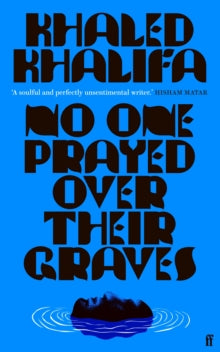
‘No-one Prayed Over Their Graves’ by Khaled Khalifa

2023 (original Arabic 2019), 399 p.

Translated by Leri Price

Sitting in the warmth, with the red leaves of the ornamental grapevine filtering the late-autumn sunlight, I finished this book feeling as if I had been on a very long journey to a strange land. It is a strange land to me: set mainly in Aleppo, Syria, this book has been translated from the Arabic and I felt the whole way through as if I was listening to a story-telling mode that is unfamiliar to me.

The book opens with a sudden, devastating flood in the village of Hosh Hannah in January 1907. Two women cling to a tree as bodies, wreckage and furniture stream past them in one of those red torrents that we are seeing all too often on the news today. One of the women, Shaha Sheikh Musa is the wife of Zakariya Bayazidi, who is absent from the village that day with his friend and adopted brother Hanna Gregoros as they are off visiting their brothel/casino ‘The Citadel’. She clutches her dead son as the water swirls around them. The other woman is Mariana Nassar, the local teacher. She sees the bodies of Hanna’s wife Josephine and her son being swept past, and those of her family, neighbours, students and family friends from other villages. As Zakariya and Hanna return to the ruined village, the flood marks for them a ‘before’ and an ‘after’, and they carry it with them for the rest of their lives. They bury the bodies, heedless of the distinction between Muslim, Christian and Jew, but they live on for decades later yearning for death to complete the cycle for them.

Just as we saw in Syria over a century later, when the country again ripped itself apart in the latest manifestation of its Civil War, Aleppo and the village of Hosh Hanna were religiously complex communities, with interpersonal links between religious groupings overlaid by deep enmity at a broader political level. Hanna had been brought into Zakariya Bayazidi’s Muslim family after his Christian family was massacred by the Ottoman Turks, and the interconnections between the families of the two men (sisters, nieces, nephews, grandchildren) continued across the novel in a series of lost chances, feuds and unconsummated love. As the twentieth century progresses and religious faultlines harden, politics and history make it harder for breaches to be healed.

I must confess that I found this book very difficult. The text is almost relentless, with only ten chapters in nearly 400 pages and no white space at all to separate one paragraph from the next. The chapters are not headed and so they feel as if they are stretching on interminably. I know little about Syrian history and the book is strangely devoid of descriptions which could help you gain a sense of place. Middle-eastern names are unfamiliar to me, and I kept getting confused between characters. The narrative moves between 1881,1903,1907, 1908, 1915, 1948 and 1951 but not strictly chronologically.

Nor is the book written in a way to help the reader. Paragraphs slip back and forward in time without warning, and the author introduces new characters almost at will and with little rationale. Big events happen abruptly. Some chapters are written in a third-person, detached tone, interspersed with italicized segments of Hanna’s autobiography, and then a story-within-a-story written by a minor character. If ever a book cried out for a family tree, it’s this one.

But, if you’re willing to persevere, the book repays the effort. Its closing pages close the circle, enclosing myriad regrets and lost opportunities. But be warned: you’ll have to work hard as a reader with this one.

My rating: 7/10

Sourced from: Yarra Plenty Regional Library

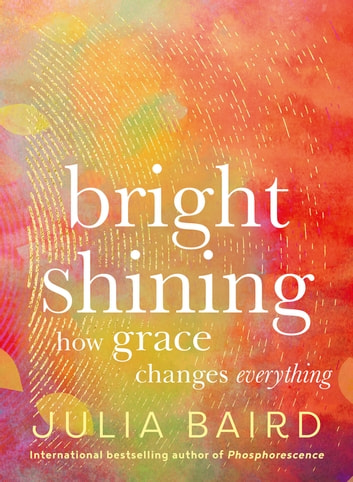
‘Bright Shining: How Grace Changes Everything’ by Julia Baird

2023, 279 p.

The first thought that comes into my mind if you say the word “grace” is the physical sense of poise, dignity and a quiet confidence. The other meanings of “grace” seem to me to have been co-opted by religion – particularly Christianity- and I’m rather less comfortable with that. In this book, Julia Baird explores the concept of “grace” in ever-widening circles: Our Souls, Ourselves in Part I; Our Circles in Part II, Our Strangers in Part III, Our Sins in Part IV and Our Senses in Part V. I think that even this structural skeleton of the book highlights its major weakness: trying to stretch the concept to cover too much. It is a digressive book, interweaving research, commentary and her own personal struggle with cancer, and I’m not sure that she completely succeeds here.

As it says on the front cover:

Grace is both mysterious and hard to define. It can be found when we create ways to find meaning and dignity in connection with each other, building on our shared humanity, being kinder, bigger, better with each other. If, in its crudest interpretation, karma is getting what you deserve, then grace is the opposite: forgiving the unforgivable, favouring the undeserving, loving the unlovable.

Which all sounds rather gooey and do-goody to me.

In Part I she does try to define “grace”, noting that it is wrapped in the everyday but still extraordinary (p. 8). Her definition which remains nebulous, comprises three elements:

  1. to be fully, thrillingly alive
  2. something undeserved
  3. the ability to see good in the other and to recognize their humanity

Part I Our Souls comprises two chapters. Chapter 1 ‘2.3 Grams’ considers the 1907 experiment of weighing a soul: the difference in weight between when someone is still alive, and when they have died. Chapter 2: Anonymous Samaritans explores the phenomenon of blood donations, and why people might do something altruistic for people they will never meet.

Part II Our Circles has four chapters, two of which are largely autobiographical. In Chapter 3 ‘Grace Inherited’ she writes of her mother, who visited women in prison, most particularly Katherine Knight who was jailed for life without parole for the horrific murder of her boyfriend. Yet her mother spoke of Knight’s gentleness. This chapter is bookended by Baird’s response to her mother’s death, sitting vigil as she died, and then the grace of a friend afterwards. Chapter 4 ‘Icarus Flew’ continues the theme of grief as she talks about the death of an ex-boyfriend in a Garuda aircrash, and the difficulty of finding a place for grief as a former girlfriend in the hierarchy of grief. Chapters 5 (‘Inhale the World’: An Ode to the Fire of Teenage Girls) and Chapter 6 (‘On Being Decent Men’) are particularly apposite as the spotlight on domestic violence has turned to changing attitudes amongst men and boys – an approach that I find rather insufficient, personally.

Part III Our Strangers is again a bit of a grab-bag. Chapter 7 ‘Other People’s Lives’ points out that we see only a sliver of other people’s reality, and that grace would extend our lens further to see the whole person. Chapter 8 ‘The Comfort of Strangers’ talks about kindness of others, especially during travelling when through unfamiliarity and language problems, we are often at the mercy of people unknown to us. Grace? or just human decency and empathy? Chapter 9 ‘The Discomfort of Estrangers’ looks at the obverse: the harassment of online warriors liberated by anonymity. In Chapter 10 ‘Restlaufzeit: In the Time We Have Left We Must Dance’ she returns to the theme of illness and the precariousness and preciousness of life, both for herself and for others.

Part IV Our Sins is the longest section of the book, and while I found this the most interesting part of the book, Chapter 11 ‘Napoleon’s Penis: What We Choose to Remember’ does not seem to fit into the other chapters, which deal more with forgiveness and justice. In Chapter 11 she discusses public memory, the role of the historian, and what we choose to remember in public figures. Moving then to forgiveness and justice, in Chapter 12 she looks at ‘When You Can’t Forgive’; the expectation that women in particular should forgive, and the potential for weaponization of forgiveness by imposing it on the victim. This is picked up again in Chapter 13 ‘The Stolen Generations: What Does Forgiveness Mean?’ where she reminds us of Scott Morrison’s exhortation that forgiveness be displayed the part of Aboriginal people. This completely ham-fisted ‘suggestion’ was brusquely rejected by indigenous people who bridled at the inappropriateness of placing an expectation of forgiveness onto another person. In Chapter 14 ‘We Will Wear You Down with Our Love’ she turns to truth-telling, and the treatment of Stan Grant by the ABC and other media commentators, especially those from the right-wing press. Chapter 15 ‘The Callus: On Restorative Justice’ refers to the callus, the fibre that knits bones together, and she looks at Restorative Justice schemes as a way of knitting together after injury, starting with the story of Debbie McGrath, who participated in one such scheme eleven years after her brother was killed by his best friend. In Chapter 16 ‘A Broken Place: People Who Have Forgiven’ she explores examples of forgiveness rooted in faith, whether it be Christianity, Islam or Judaism. While I found these interesting, I think that they would have been better framed in a discussion of forgiveness in its own right, rather than trying to squeeze them into a ‘grace’ framework.

Part V ‘Our Senses’ is only short. Chapter 17 ‘Fever Dreams’ again refers to her experience of cancer, and her determination to be “fully, thrillingly alive”. In Chapter 18, the last of the book, she returns to the idea of ‘grace’, referencing the hymn Amazing Grace, from which she has taken the title.

As you can see, this book wanders off down a number of different pathways, all of which are enjoyable enough to follow, but which do not cohere into a rounded whole. Which is ironic really, as one of the definitions of ‘grace’ that she cites in the book is that given by Marilynne Robinson who described grace as an ethical “understanding of the wholeness of a situation”. This is the definition which most resonated with me, and the one to which I (unsuccessfully, I’m afraid) aspire.

My rating: 7.5/10

Read because: It was on the shelf.

‘So Late in the Day’ by Claire Keegan

2023, 47 p.

Claire Keegan is a very, very good short story writer. Within less than fifty pages she can create a whole world and characters that you respond to – and in this case, with increasing wariness and dislike. It’s a short story, so spelling out the plot would eviscerate it completely, so I’m not going to even try. The most I can do is tell you that it is set on a sunny Friday morning in Dublin, and Cathal is at work even though the date was, or should have been, an important one.

I’m glad that she changed the title that she had originally chosen for this book, which I’m not going to tell you either. You can read it at the end of the book after your quick afternoon’s read of the whole thing. By changing the title, she allows you as a reader to come to your own opinions about the characters, instead of having it framed for you from the start.

But Faber takes us for mugs. This $20.00 hardback could be read in an hour for a rapid reader. It appeared in the New Yorker magazine in February 2022, as have other of her stories. I guess that Faber are cashing in while they can, but I can’t help feeling a bit ripped off. I’m glad I got it from the library instead.

My rating: 9/10

Sourced from: Yarra Plenty Regional Library

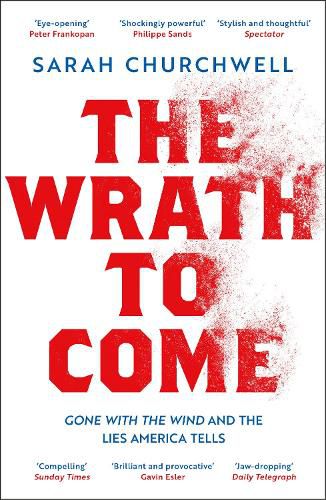
‘The Wrath to Come’ by Sarah Churchwell

2023, 464 p.(including notes)

Sometimes, a good essay is more forceful than a book, I reckon. This is what I kept thinking when reading this book, and although the pace picked up and the book ranged more widely once Part I was out of the way, I just felt as if I had been hit over the head with a mallet as the same argument was repeated again and again. I wish it had been a good long-form essay New Yorker-style rather than a 389 page book.

Churchwell’s argument, which she spells out succinctly in her prologue, is that there is a connection between Gone With the Wind, the instant bestseller of 1936 and the later movie adaptation which became the most successful of its time, and the events of January 6 2021 as the crowd, fortified by defeated-President Trump’s support (“So we’re going to, we’re going to walk down Pennsylvania Avenue. I love Pennsylvania Avenue. And we’re going to the Capitol…”) crashed its way into the US Capitol. It is not so much about the history, but about the book and the film as paired phenomena:

‘Gone with the Wind’ provides a kind of skeleton key, unlocking America’s illusions about itself. When we understand the dark truths of American experience that have been veiled by one of the nation’s favourite fantasies, we can see how the country travelled from the start of the Civil War in 1861 to parading the flag of the side that lost that war through the US Capitol in 2021. That journey was erratic and unpremeditated, but America ended up there all the same. (p. 8)

The book Gone With the Wind appeared in 1936, and sold a million copies in less than six months, won the Pulitzer Prize in 1937, was translated into at least 27 languages and became within a few years the best selling American novel of all time. The film Gone With the Wind was released in 1939 and smashed all records, and adjusted for inflation, is still the highest-grossing film of all time.

The book, which Churchwell has obviously read closely (and which I have not read at all), is more overtly racist than the film. David Selznick’s film consciously eliminated the novel’s many casually racist slurs, as a result of the lobbying from the film’s Black stars. However, the racism continued in the manifestation of the film as a phenomenon: the Black actors were not invited to the film’s premiere, and when Hattie McDaniel became the first Afro-American to win an Oscar for her portrayal of Mammy, she was sitting at a separate table to the rest of the cast, after Selznick had managed to overturn the Cocoanut Grove nightclub ban on black patrons.

Churchwell’s book follows the narrative of the book and film, starting off with ante-bellum Georgia and the rumblings of war. As Churchwell tells us over and over, Mitchell’s portrayal of plantation life (especially in the book) was gratuitously racist and infantalizing. I was relieved to move onto the post-war section of Churchwell’s book, even though I think I remember feeling (it was a very long time ago) that the film had lost impetus once Scarlett returned to Tara. But in Churchwell’s analysis, it is in the return to Tara that the book takes up its major purpose to reify the Lost Cause into American identity. Scarlett O’Hara is not the heroine of Gone With the Wind, instead the real heroine is Melanie, and it is not a love story, but a story of revenge. It is profoundly anti-democratic and consistent with fascism. And this, Churchwell argues, is what fuelled January 6.

I am not at all well-read in Reconstruction and Jim Crow legislation, many hours of listening to Heather Cox Richardson notwithstanding. I saw Gone With the Wind decades ago and have no particular wish to re-watch it, and I have never read the book and am not likely to do so. This book was too detailed for me, although admittedly I’m sure that it was not written for an Australian audience. I was deeply affected, though, by the sheer and graphic violence meted out by the Klan and other vigilante groups: I had not read this before.

Overwhelmingly, this is an angry book, which is ironic given that anger was the predominant driver of January 6 too. I felt that it was too repetitive in its critique, and would have been much punchier as a long-form essay. It felt a very long , and I was pleased to have reached the end of it so that I could move onto something else.

My rating: 7/10

Read because: I heard about it on a podcast, I think.