Category Archives: Biography

The Seymour Biography Lecture: Ray Monk

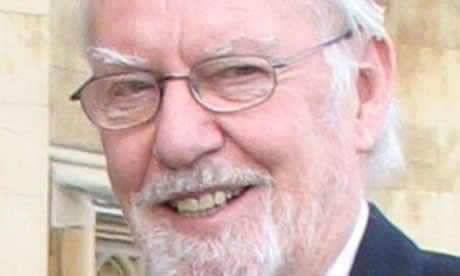
monk

“How Can I be a Logician before I’m a Human Being?” The Role of Biography in the Understanding of Intellectuals, Seymour Biography Lecture, 22 September 2014

“I don’t even know who this guy is….” I thought while RSVPing for the Seymour Biography lecture in Melbourne, held last night.  When I looked the books he’s written, I understand why.  While I’ve read many historical and literary biographies, I must confess to not being overly attracted to biographies of philosophers and scientists.  However, in my own work on Judge Willis, I share the problem of working on a man who has a body of work in the intellectual realm (in my own case, an accumulation of addresses to a jury and written judgements) which, while abstract and de-personalized (in a way that, perhaps, a fiction oeuvre for a writer is not), is also integral to his own identity.

Ray Monk is a Professor of Philosophy at the University of Southampton, coming from a background in the philosophy of mathematics. Although his four works are based on philosophers and, more recently, a scientist, he does not believe that biography necessarily contributes to an understanding of all philosophers and moreover, that you can’t evaluate the philosophy in terms of the life of its proponent.   However, he was attracted to write about Wittgenstein after reading two very different appraisals of Wittgenstein’s work and concluding that, if these writers had understood Wittgenstein as a man, they would not have developed particular misunderstands in their analysis.

In a very academic-y way, he investigated the methodology of biography writing before embarking on his biography of Wittgenstein.   In effect, he followed Biography 101, commencing with classical biographies,  Samuel Johnson and Boswell, Virginia Woolf, and ending up with Richard Ellman’s Oscar Wilde and Andrew Hodge’s Turing: The Enigma as exemplars for his own work.

In his presentation, he focussed on Johnson’s own reflections on biography that he expressed through two articles ‘Biography’ in The Rambler in 1750 and ‘On Biography’ in The Idler 1759.  He addressed five questions from Johnson:

1. What is the relation between biography of other genres, most particularly history and fiction?  His answer- there’s an overlap.

2. Who deserves a biography? Many philosophers don’t live sufficiently interesting lives to warrant a biography, he said.

3. What details to include? He mentioned that there were facts that he had omitted from his two-volume work on Russell – a publication that he seemed oddly apologetic about.  He explained that had he included them, they would have completely skewed the response to the book, and so he omitted them.

4. What are the moral responsibilities of the biographer? He identified three- to the subject; to the public and to the truth. Although he nominated the ultimate responsibility to the truth, he noted that surviving relatives often have a stake as well.

5. Can one know the inner life?  Johnson believed that this was not possible: “By conjecture only can one man judge of another’s motives or sentiments”. Monk disputed this very 18th century view, giving examples in his books where he had looked to action as a window on the inner life.

There is a particular challenge, I think, in writing biographies of intellectuals, as opposed to biographies of politicians or literary figures.  There is the content of their philosophy, as well as their own life as part of a familial, historical and intellectual milieu.  Monk noted the tendency of academic biographers, in particular, to give a quote from the philosopher’s work then in the following paragraph to proceed to paraphrase and explain it. Just leave the quote alone, he advised.

He noted that a biography is not just a collection of facts: that the facts need to be shaped, and that the biographer has a point of view. He finished with a very Wittgensteinian idea that is particularly applicable to biography-writing “The understanding that exists in seeing connections”.

There’s a very good review from the Guardian (10/11/12) of his Oppenheimer book which also discusses Monk as a biographer. You’ll get a good taste of the lecture from this article.

More:

I’ve been frustrated in the past that the Seymour Biography Lecture has been delivered in Canberra and, as far as I’m aware, not in Melbourne as well. But I’ve just found podcasts or transcripts of recent lectures on the NLA site. Ah, isn’t the internet a wonderful thing?
‘The Ordeal of Elizabeth Marsh: A Woman in World History’ by Linda Colley

colley_ordeal

303 p. & notes, 2007

Now THIS is the sort of history I want to write!  I’ve had this book on my shelves for years, ever since I began writing my thesis.  It takes just the approach that I want to use:

…this is a book that ranges between biography, family history, British and imperial history, and global histories in the plural.  Because of the tendencies of our own times, historians have become increasingly concerned to attempt seeing the world as a whole.  This has encouraged an understandable curiosity about very large-scale phenomena: the influence of shifting weather systems on world history, ecological change over time, patterns of forced and voluntary migration, the movement of capital, or commodities, or disease over continents, the transmission of ideas and print, the workings of vast overland and oceanic networks of trade, the impact of conflicting imperial systems and so on.  These, and other such grand transcontinental forces, were and are massively important.  Yet they have never just been simply and inhumanly there.  They have impacted on people, who have understood them (or not), and adapted to them (or not), but who have invariably interpreted them in very many different ways.  Writings on world and global history (to which I stand enormously indebted) sometimes seem as aggressively impersonal as globalization can itself.

In this book, by contrast, I am concerned to explore how the lives of a group of individuals, and especially the existence of one particular unsophisticated but not unperceptive woman, were informed and tormented by changes that were viewed at the time as transnational, and transcontinental, and even as pan-global, to an unprecedented degree.  I seek to tack between the individual and world histories ‘in such a way as to bring them into simultaneous view’. (p. xxxi)

Linda Colley is an acclaimed historian of Britain and empire.  Her book Britons is heavily cited in discussions of Britishness ( although may I admit in a very small voice that I have this book on my shelves, too, waiting to be read?)  She writes big histories, but in this book she brings it back to individuals and their families.

So who was Elizabeth Marsh?  As in many cases when writing biography of a person who is not a public figure, the source material is patchy and in several instances, contestable.  From genealogical sources, Elizabeth Marsh can be located as a woman who lived from 1735 to 1785, who had two children, and was a wife, daughter and niece.  From her own writing in published travel narratives, we know that she was kidnapped by the Moroccan Sultan, Sidi Muhammed, and that she travelled extensively along the eastern coast of India.  From her uncle’s scrapbooks and journals, we learn of her extensive family networks and its mobility across the world.  A map on the opening pages of the book shows just how wide-ranging these family travels were: the Caribbean, the Americans, Britain, France, Spain Italy, Brussels, Hamburg, Menorca and Madiera, India, New South Wales, Marrakech, Tunis, Cairo, Sierra Leone and the west coast of Africa.

And yet there is so much that we don’t know about her, right down to the question of her appearance.  Her mother was Jamaican, but there is no way of knowing whether Elizabeth or her mother were coloured.  Elizabeth tells us that she was not sexually compromised during her kidnapping but can we believe her? She is largely silent on the nature of her relationship with George Smith, who accompanied her on her travels in India.  Nor can we know how her marriage to James Crisp, her fellow-abductee in Morocco, worked.  Colley speculates and imagines but she is upfront about the guesswork and supposition that she has utilized in piecing together Elizabeth Marsh’s life.

The book commences with a short introductory summary of Elizabeth Marsh’s life and clear identification of the themes that run through it:  her life; her family; her worlds; herself; history and her story.  There- it can be done in just thirteen pages!!  (says she, whose introduction threatens to engulf the whole thesis].   There are only six chapters and a conclusion, organized chronologically and each taking up a separate continent on her travels.   Without fail, each time I thought “Jeez, I could use a map here”, I turned the page and there it was.

But the book is much more than a biography (i.e. writing about the life of an individual) : it is history in its own right, with much to say about mobility, networks,  sea-consciousness and the British navy, trade and the intersection of the domestic and intimate with the commercial.  Each step of Elizabeth’s own life is embroidered with contextual and supplementary information so that as a reader you’re better able to judge the exceptionality or conventionality of what you have just read.  Is this distracting? Possibly, if you’re after a straight biography, but there was only one occasion where I felt that she was wandering a bit too far offtopic.

At times Colley moves into the present tense when describing Elizabeth’s lived experience, returning to past tense in her analysis,  with occasional shifts back into the present tense when describing her own insights as researcher and investigator.  These changes in tense are handled so adroitly that you’re barely aware of them.  They add to the immediacy of the narrative, and the feeling as if you’re being addressed by a researcher steeped in expertise and well in control of her material and eager to share it with you.

Do I regret leaving it so long to read this book?  Not really. I think that I would have been intimidated by it earlier in my own research, and reading it at the stage I’m at inspires me with an example, right there on the page, of the type of historian I’d like to be.

Other reviews (by a veritable Who’s Who of authors):

Claire Tomalin in the Guardian

Megan Marshall in The New York Times

Hilary Mantel in the London Review of Books (a lengthy but excellent review)

Lisa Jardine in the Times Higher Education Supplement

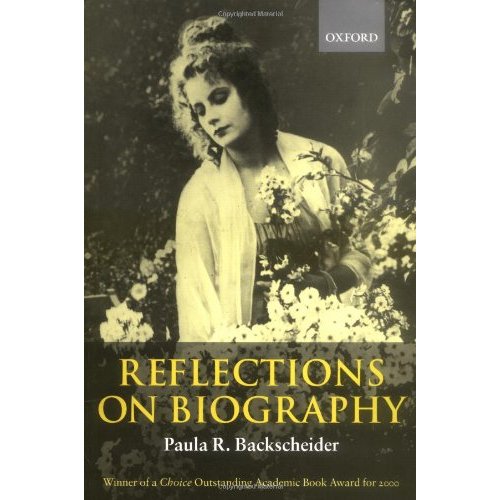
‘Reflections on Biography’ by Paula R. Backscheider

backscheider

2001,  235 p. & notes

It’s not hard to find biographers writing about the act of researching a biography.  One of my favourite biographers, Richard Holmes has done it here and here, and there’s a whole literature on the theory and practice of biography. This book, however, looks at the writing of biography, rather than the researching of it. It concentrates on the creation of the biographical text as completed artefact, rather than the ‘journey’ that the biographer undertakes in an attempt to understand and convey the subject’s inner life.

In her preface, Paula Backscheider notes with frustration that reviewers of biographies often retell the subject’s life gleaned from the very biography that they are reviewing without engaging in questions of selection, organization or presentation. These questions are the focus of this book. Continue reading

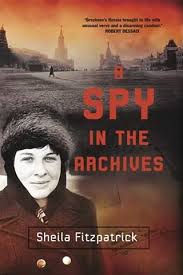
‘A Spy in the Archives’ by Sheila Fitzpatrick

fitpatrick

2013,  345 p.

I have been the first person in my immediate family to go to university, although several of my cousins did as well.  I find it hard to imagine what it would be like to grow up as the child of academics and intellectuals. Part of my fascination with this book was reading about the child of historians becoming a historian herself.  Sheila Fitzpatrick’s father was the left-wing historian and public intellectual Brian Fitzpatrick and her mother Dorothy Fitzpatrick taught history at Monash University.

This book is the second memoir written by Sheila Fitzpatrick, noted Soviet Historian, and now Honorary Professor at the University of Sydney after a long academic career overseas. Her first memoir was called My Father’s Daughter  which, from the title,  I assume explores the generational issue further.

In this second memoir we are taken on the first steps of the author’s academic journey as she travels first to Oxford University to undertake her doctorate in Russian history. Her dissertation topic was Anatoly Vasilyevich Lunarcharsky, the Russian author and politician who was appointed Commissar of Enlightenment between 1917 and 1929.  Her thesis was titled ‘Lunarcharsky as Philosopher  and Administrator of the Arts’ and it ended up being published by Cambridge University Press as The Commissar of Enlightenment in 1970.  It was the stepping stone to Fitzpatrick’s eminent career as a historian of Russia.

It was not surprising that a daughter of Brian Fitzpatrick would be attracted to such a topic, but she claims that “Becoming a Soviet historian wasn’t a foregone conclusion, even with a left-wing father and a bit of Russian” and that from the age of about 13 she had become “less of a true believer in my father’s causes than earlier” (p.7).  Fitzpatrick’s father had died by the time she embarked on her academic career, and yet one senses that she continued to have an intellectual argument with him in her head at least.  The book is not so much a ‘ coming-of-age ‘story , as a story of  ‘coming-as-historian’ as she finds her own mentors and develops her own confident intellectual stance as a historian.

In the 1960s it was common for first class honours students in history to undertake their doctorates overseas, and so she trod a well-worn path. She was not terribly impressed with St Anthony’s College at Oxford and the supervision she received there.  In 1966 she applied for a British Council exchange scholarship to enable her to live in Moscow and to use the archives there for her research. Her application was refused initially but eventually received after she embarked on a rather utilitarian marriage to a fellow British student.  As part of the preparation for her stay in Moscow, she and her cohort of fellow researchers were warned against spies- indeed, against friendships with Russian people, full stop.  Like her fellow students  she ignored this advice, and this book describes her friendship with Igor, a middle-age friend of the now-dead Lunarcharsky, and Irini, Lunarcharsky’s daughter,  that developed as she delved deeper into her research.

This book emerged from a long article that she wrote in the London Review of Books, and you can get the flavour and much of the content from reading this article alone (which is often the case with LRB articles).  In fact, it’s such a detailed article that you barely need to read the book!  I must admit that, with little knowledge of post-revolutionary and Cold War Russia (or at least, I’ve forgotten what I ever did know), I found the content aspects of this article easier to follow than the book.  But it’s well worth going to the book itself because her research is only one facet of her story: it’s also about friendships, authenticity, insecurity in a clandestine world, and history-writing.

She writes of the joy that all historians feel when working in archives, but to her, working in the Soviet archives was particularly pleasurable- in fact, she pitied those British historians who would roll up to the PRO, ask for a file, and have it handed over instantly.  In Moscow, not only was there the challenge of even getting access to the archive,  but once admitted, there were strict limits on what was made available because the thesis topic is treated like a straitjacket.  There’s no chasing off down rabbit holes and false leads and serendipitous rainbows here: if a file was not directly related to the topic as you first conceptualized it, then you couldn’t see it.  Foreign researchers were not given access to catalogues,  so there was no way of knowing what to ask for.  Contact between foreign researchers and  their Russian counterparts was strictly forbidden, and the archivists held enormous power over what you could see and what you could not.  It all became a bit of cat-and-mouse, albeit playing with a cat with sharp eyes and sharp claws that you could not always assume would remain sheathed.

However, one aspect in the book that does not come through in her article is the process of the historian writing a memoir.  She mentions at one stage that one of her husbands had returned the letters she had written to him, in order for her to write this memoir.  She uses the correspondence between her mother and herself as well, triangulating it against the diary that she wrote at the time.  She often says that she cannot remember certain events that are documented, and is often nonplussed to explain things that she had written at the time.  As a result, it is a careful memoir that has a sense of distance between the writer and what she remembers  (or does not remember)  about the events she experienced.

And was she a spy?  In the end the Soviets thought so and clumsily ‘outed’ her, and she herself is not completely sure. She certainly was not an MI6-type spy but, as she admits, it would have been plausible for her to have turned out to be one after all:

Was I, in some sense, a spy? If the Soviets couldn’t make up their minds, it’s not surprising that I had trouble.  I can certainly recognize some spy-like characteristics in myself, starting with my intention to find out everything about Soviet history, including the things that the Soviets wanted to keep hidden.  If a spy is a chameleon who can speak two languages and doesn’t know what his ultimate allegiance is, that partly fits. (p. 342)

I enjoyed this book, and the undercurrent of Cold War tension that runs underneath it. I liked the reflexivity of her writing and the caution with which she treats the memoir genre.  I wish that I knew more about Russia, because I did find the details of her research rather overwhelming at times but not so much that I was ever tempted to give up.  I resisted the temptation to Google, trusting her to take me on the journey, and she did not let me down.

awwbadge_2013I’m posting this to the Australian Women Writer’s Challenge under the History/Memoir/Biography section- and, for this book at least, it fits all three categories!

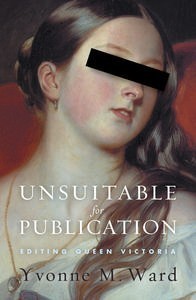
‘Unsuitable for Publication: Editing Queen Victoria’ Yvonne M. Ward

ward2013

2013,  173 p.

We’re told that it’s all about controlling the narrative.  Politicians all do it, it seems; and we risk losing control of our narrative by putting too much of our lives onto the internet, we’re told.  All this might seem far removed from good old Queen Victoria, but on reading Unsuitable for Publication, I’ve realized that it isn’t.  Then and now, it’s all about image creation and the interplay between the image we think we have constructed and the image that others might massage or manipulate from our words.

Queen Victoria was a huge correspondent.  She wrote 122 volumes of her diaries over her long life and she maintained a large correspondence with her family  members so widely dispersed amongst the royal families of Europe, as well as a vast network of communication amongst politicians, and other notables. It has been estimated that she wrote an average of 2500 words each day of her adult life, and perhaps sixty million words in the course of her reign (p.9).  What to do with all this writing?  Her daughter Princess Beatrice thought that she knew.  Queen Victoria had appointed her as her literary executor, and after her mother’s death and over 30 years she copied the entries of the 122 diary volumes into 111 thick exercise-books, altering and censoring anything liable to ‘affect any of the family painfully’, then burnt the originals.  Interestingly, Victoria herself had published extracts from her own journals while she was on the throne, so she wasn’t beyond a bit of image-creation herself. Continue reading

‘Writing Lives Forwards: A Case for Strictly Chronological Biography’

MappingLives

2002, 360 p.

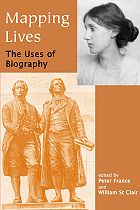
As you might know if you’ve been following this blog for any length of time,  I’ve been thinking and grappling recently with the narrative form that biographies can take- chronological, thematic and novelistic- and wondering how much latitude the thesis genre allows in adopting these approaches.  As part of this,  I’ve been reading a book of essays on the writing of biographies called Mapping Lives: The Uses of Biography, edited by Peter France and William St. Clair.

I was particularly taken by an essay in this volume by Mark Kinkead-Weekes called ‘Writing Lives Forwards: a Case for Strictly Chronological Biography’.  Kinkead Weekes was a D. H. Lawrence scholar and the lead author for the Cambridge University Press three-volume biography of Lawrence,  for which he wrote the second volume dealing with the years 1912-1922 of Lawrence’s life. This biography adopted a straight chronological approach, as Kinkead-Weekes notes, “following his life forwards, miming the way it was lived, and banning all hindsight” (p.236).   David Ellis, the author of the final volume, wrote in his obituary of Kinkead-Weekes in 2011 that Kinkead-Weekes’ forte was infinitely painstaking and sympathetic exposition of an author’s processes and intentions” and I think that you can see this in Kinkead-Weekes’ chapter  that praises “strictly chronological biography”.

Kinkead-Weekes

There does seem to me to be something rather workmanlike about a chronological account and so I was interested to read an argument in support of it.   Why did he choose to write Lawrence’s biography this way?

The main reason for adopting a chronological method however was to resist the urge, so powerful in biographers, to structure a life too early and too simply into some overall pattern and explanation. (p.238)

He does qualify his support for chronological method somewhat by upholding its usefulness particularly at first draft stage.

Of course, biographers who have been researching for years do already know the general shape of the story they have to tell and how it will end, before they write the first word; and of a course a life could not be written week by week, let alone day by day, even if enough data were available, without insufferable tedium.  What is possible, however, at the crucial first-draft stage when a general sense of things begins to develop into an organized story, is to work on, and then narrate in, time-spans small enough to allow all the evidence to be freshly commanded at once, with nothing but space ahead.  This approach brings immediate advantages.  Misconceptions show up, puzzles can be clarified, unexpected connections appear, simply through careful attention to the exact sequence and context of events…” (p. 236)

But even beyond the first draft, there are other advantages as well:

Above all, strict chronology allows some miming for a reader of how a life may have felt to live, at the time.  There will be too many spaces, unknowns, opacities, for this to be more than partial, and frustrating, as biographers know only too well; but the strictly chronological method also tends to show up the gaps in the evidence which confident analysis conceals.  It constantly throws the emphasis on the experience of the biographee rather than on the commentary of the biographer.  It is also a way of inviting the reader in on more equal terms, watching the life unfold rather than having its significance anticipated, or being enclosed in the biographer’s analytic structure, or for that matter the subject’s own retrospective imagining.  In try to make change and development more manifest, it also affects the treatment of relationships, aiming at greater complexity and changefulness in other characters too.  Finally- although an avidity for judgement is one of the less admirable reasons for the fascinations of biography and no biographer can be wholly free from presupposition and prejudice- the chronological method does tend to delay verdicts until there has been sufficient exploration of process and development. (p. 251)

However, he was aware that a strictly chronological approach had its drawbacks as well.

The price that has to be paid for strict chronology, however, is also huge.  Every one of its gains will increase the length, slow the pace, and involve a degree of repetition when the eventual bearing of previous developments becomes clearer (p. 251)

The result, he feared, is bagginess, and you’d have to say that the Cambridge biography (which I haven’t read) in three parts at a total length of 2,349 pages might fall into that category!  Makes a thesis look a mere bagatelle!  And, unfortunately, undercuts completely his argument about his usefulness for a strictly chronological approach- at least for the final product- I’m afraid.

‘Biography and history’ by Barbara Caine

caine

2010,  124p & notes

This is only a small book and would have fitted well into that ” Very Short Introduction to ….” series put out by Oxford University Press.  As it is, it is part of Palgrave Macmillan’s series on ‘Theory and History’ which aims at introducing undergraduate students to themes like transnationalism, gender, narrative, postmodernism etc. and history.   It is very clearly written, and while the experience of reading it is enhanced if you are familiar with some of the biographies that she describes (as I am) , it stands in its own right as a review of the methodological and narrative questions raised by the relationship between history and biography.

Barbara Caine was Professor of History at Monash University and is now at the University of Sydney.  Many academics working in biography come from the literary studies area, rather than history.  Her projects and publications testify to her long and deep experience with biography, autobiography and history, and the ways to approach an individual life as an exercise in historical methodology. Continue reading

‘Dewigged, Bothered and Bewildered’ by John McLaren

mclaren

2011, 303 p plus notes

John McLaren ‘Dewigged, Bothered and Bewildered: British Colonial Judges on Trial 1800-1900’.

The title Dewigged, Bothered, and Bewildered is a play on the show-tune with a similar title, (Bewitched, Bothered and Bewildered). It examines the careers of several 19th century judges of the British Empire who, for various reasons, found themselves removed or ‘dewigged’ from their positions.  The title reflects the tone of this book- light and jocular at times- but it belies the sheer breadth of knowledge of individual colonies that it covers.   Its author, John McLaren, is professor emeritus in the Faculty of Law at the University of Victoria (Canada)  and as Bruce Kercher’s endorsement on the back cover says “John McLaren is the only person I know with sufficiently broad legal historical knowledge to attempt such a huge task, and he succeeds at it remarkably well”.

It  might seem strange that a book about 19th century judges  starts with an analysis of judicial tenure in the seventeenth century.  It was during the constitutional maelstrom of Charles  and James and the Glorious Revolution that two competing mechanisms for appointing and controlling judges emerged.  The ‘Cokeian’ model, associated with Sir Edward Coke, drew on the rhetoric of the Ancient Constitution and the ‘rights of freeborn Englishmen’ to  argue that the King, like other mortals, was subject to the law, and that he and his officers were subject to the jurisdiction of the stewards of the Common Law, the judges of the King’s Bench, Common Pleas, and Exchequer.  The rival ‘Baconian’ model, expounded by Lord Francis Bacon, emphasized the Divine Right of Kings and emphasized that judges must be the loyal servants of the monarch.  Hence, under the Cokeian model, judges should be employed ‘during good behaviour’ where, as long as there was not actual judicial impropriety, the judges were independent of the Crown.  The Baconian model, on the other hand, employed judges “at His Majesty’s pleasure” and kept the judges under the control of the King and his government.

All this might seem far removed from a judge in Port Phillip, Sierra Leone, Newfoundland or Upper Canada 150 years later, but McLaren argues that this 17th century argument about the independence of the judges, abuses of power by the government,  and local control over the judiciary was played out  over again, this time in the colonies.  In this book, McLaren uses group biography to examine how these battles were exemplified through the careers of a number of colonial judges from Upper Canada, New South Wales and Van Diemen’s Land, Sierra Leone, Newfoundland and the West Indies.

Judge Willis has a starring role here: we meet him in the opening pages, and he is featured in two chapters.  He is, however, not the only judge in this book who appears as a trouble maker in two separate colonies.  Jeffrey Bent, well known in Australia for his struggles with Macquarie, reappeared in Grenada, where he again clashed with the governor.  Robert Thorpe, who was a ‘radical’ judge in Upper Canada prior to Willis’ appointment, also had trouble in Sierra Leone, and Sir John Gorrie seemed to be shifted from place to place when he fell out with various people in Fiji, the Leeward Islands  and  Trinidad.  There are a number of troublesome judges whose travails were restricted to one colony alone: Boothby in South Australia; Sewell and Monk in Lower Canada; Montagu in Van Diemen’s Land; Beaumont in British Guiana.

The chapters are arranged thematically, but chronologically and geographically as well. For example, the chapter ‘Courting Reform in a Counter-Revolutionary Empire 1800-1831’ deals with Robert Thorpe and Judge Willis in Upper Canada, where the judges’ reforming zeal clashed with conservative local interests.  It is followed by a chapter that makes the argument in the opposite direction for other British North American colonies  ‘Ultra Conservative Judges in an Era of Developing Reformist Sentiment in the British Empire 1810-1840’.  It covers similar years to the first chapter, but this time switches the focus around.  It  examines the  cases  of Sewell and Monk in Lower Canada and Henry Boulton in Newfoundland,  where conservative judges fled  the radical colonies for the protection of the home government.

Chapters 6-8 are focussed on Australian examples.  Chapter 6 ‘Guarding the Sanctity of the Common Law from Local ‘Deviations’ in Convict Colony 1800-1830’ examines the career of Ellis and Jeffrey Bent in New South Wales, followed by Ch 7 ‘English Legal Culture and the Repugnancy Card in the Australian Colonies 1830-1850’ which follows on chronologically in examining Montagu and Pedder in Van Diemens Land, and Willis in Port Phillip.  The term ‘repugnancy’ refers to the tenet that colonial law should not contradict English law.  Part of a colonial judge’s role involved analysing local laws drawn up in the colony and advising the governor whether the law was ‘repugnant’ or not.  Chapter 8 takes up the repugnancy question in Australia after 1850 with Benjamin Boothby in South Australia.

Chapters 9 and 10 examine judges in the slavery colonies in the West Indies and West Africa, with George Smith in Trinidad,  Thorpe in Sierra Leone and Jeffrey Bent in Granada between 1800-1830 in Chapter 9.   In Chapter 10 the time frame shifts to 1834-1900 with Joseph Beaumont in British Guiana and Sir John Gorrie in Mauritius, Fiji and Trinidad.

The final chapter draws together themes that emerge throughout the stories.  In a way, this chapter subverts, or at least challenges, the structural logic of the other chapters because some of these judges, Willis in particular, are not easy to pigeonhole.

As McLaren points out, it is important that troublesome, contrary, complex and contradictory judges should not be committed to “the ashcan of historical ephemera”.  We gain a view of empire from them that is not available from ‘don’t rock the boat’ jurists, and we must never lose sight of the fact that law is never a sideshow. Instead, it was an important instrument in the extension of imperial authority, infused with and supported by the constitutional and legal values of the English-speaking world of the previous two centuries. (p. 273, 274)

It is the PhD student’s nightmare that a highly prominent, esteemed and widely published academic release a book on one’s very topic while you are still working on- or worse, just as you finish-  your thesis.  I became aware of John’s work while I’ve been working on Willis myself, and it was with a mixture of trepidation and curiosity that I read his book.  I gained much from it, particularly in being able to compare Willis with other judges in similar situations, and it’s with relief that I can see where my own  more  bottom-up work can fit under his broad umbrella of judicial misbehaviour and discipline.

A group biography, like this one, has challenges beyond that of the individual biography.  There’s a danger that so many situations and people are introduced that the whole thing breaks down in confusion, but there’s also the advantage of being able to better define the exceptional.  I think that a sign that McLaren has succeeded so well is that on encountering a particular judge a second or even third time, there is a rush of recognition.  His judicial characters are so well drawn that when the final chapter draws together observations from across the work as a whole, there is no need to check back to see ‘now, who’s he again?’  The book is suffused with a lightness of touch and a sure grasp of the contours of so many different colonies that comes from the author’s long, deep immersion in colonial legal history.

Judicial biography and Pamela Burton’s From Moree to Mabo.

Lurking under the general heading of ‘biography’ are a whole range of particular genres of biography that have their aficionados but are rarely found on the best-seller lists.  Judicial biography is one such genre.  Because my research interest is a nineteenth century judge, I’ve been delving into quite a few judicial biographies and becoming even more certain that my work could not usefully be described as ‘judicial biography’ at all.

The celebratory judicial biographies of the early Victorian era (e.g. Campbell’s Lives of the Lord Chancellors) were described by Phillip Girard (2003)  as “partisan, gossipy, cavalier with facts and delightfully titillating.”  Certainly John Raithby, who wrote The Study and Practice of the Law considered, in their various relations to society in a series of letters (2nd ed, 1816) felt that we would all be better men if we read judicial biography

  ‘When I look back upon the history of my own country, or search the records of those which are no more, I rejoice that the most elegant ornaments of the one, and the noblest monuments of the other, are to be found in the fame of those men who have studied the laws, and directed the jurisprudence of their respective nations … . Look up to these exalted characters, and resolve to imitate, if you cannot equal them. … [N]ot only their works but their actions ought to be the objects of investigation. Endeavour to mark their feelings while you peruse the accounts of their lives; see how the ambition of this man has led him too far, or the immoderate love of repose too greatly restrained him … how the intemperance of lust has destroyed another, or his want of social affection rendered his powers and acquisitions useless.” (p. 17, 28)

More recent judicial biographies are lighter on the moral lessons, but sometimes they do still tend to be rather hagiographical and worthy.  They are often written by judges and lawyers (and to a certain extent they need to be if the courtroom aspect of their life is to be examined critically)  but they are often permeated by a sense of deference that emerges, perhaps, from a life spent within a hierarchical system. In this regard, they remind me of military biographies, where everyone is named, lest offence be caused by omitting someone important; and there’s a masculine clubbability that underpins them as well.

James Thomson in 2007 wrote that:

Judicial biographies must provide explanations and analysis of, at least, the major cases; explore the judge’s interpretive strategies and decision-making processes; expose intra-mural relationships— collegiality, collaboration and confrontation—with other Justices; trace the origins and development of the judge’s character, beliefs, views and motivations; and delineate the influences—public and private—on the judge’s opinions and decisions.

Phillip Girard imposed another requirement:

“which is that the time spent by the subject in judicial office, as opposed to doing other things, should be of more than passing interest to the biographer.”

So, hedged with all these exhortations and injunctions, how does Pamela Burton’s From Moree to Mabo: The Mary Gaudron Story stack up?

For a start, that masculine clubbability is challenged from the outset. Mary Gaudron was Australia’s first female High Court judge, and her biographer is a woman as well.  There is still just a hint of that professional in-groupness that is so impenetrable to outsiders, but because it is interwoven with the personal and political, it does not skew the whole worldview of the book.

The author Pamela Burton is a barrister herself, and as well as founding her own law firm, was a Senior Member of the Commonwealth Administrative Appeals Tribunal and was legal counsel for the Australian Medical Association.  Her experience serves her (and thus, us) well.  As Posner, Chief Judge U.S. Court of Appeal (1995)  wrote, it is difficult for a non-lawyer to write a judicial biography.

This is not only because judges deal with technical legal issues but also because the role of the judge is difficult for nonlawyers to understand. Nonlawyers tend either to be credulous about judges’ self-serving rhetoric of disinterest or to assume that judges are merely politicians (“statesmen” if the nonlawyer shares the judge’s politics) in disguise, whereas the truth usually lies somewhere in the middle….Judges are great bluffers, and it is particularly difficult for nonlawyers to penetrate the bluff unless they are highly cynical. (p. 513)

A quick flip through the index to the book highlights the heavy use of court records and case reports.  There is no doubt at all that this is a life spent in the law.  She presents the cases well, with enough background for someone unfamiliar with them to make sense of them.  It’s a difficult line for an author to tread: enough evidence from the judge’s behaviour in court to support the observations made in the biography, but not so many that the reader- particularly a non-lawyer reader- feels engulfed.

To my way of thinking, a biography is not just a chronicle of events.  While the elapse of time does impose a certain chronological shape to the subject’s life, it is the author’s decision where to place the emphasis and how much space in terms of pages to devote to various aspects of a life.  The author is an active agent in the telling by crafting an argument about what this life means.  Burton grapples with the issue of politics and the law by exploring the nature of ‘political connections’ as a means of progressing a career and yet resisting being captured by one side of politics.  She takes the issue of judicial logic and intellect very seriously, and in this regard the book could be just as easily conceptualized as an intellectual biography as a judicial one.  She balances the personal, the political and the professional.

Gaudron did not co-operate in the writing of this biography: in fact she said that she had a horror of biographies.  The bibliography of this book shows where the author mined to gather her material.  There are three boxes of her papers at the National Library, but these only go up to 1979 and the Conciliation and Arbitration phase of her career.  There are three oral histories, but one of them is closed to research and public use until 5 January 2043.   Gaudron herself has written the foreword to others’ books and some articles, but the bulk of the primary material is drawn from Gaudron’s speeches and court transcripts. The author undertook extensive interviews with Gaudron’s colleagues, although not all wished to be named.  As the author herself admits “A measure of boldness is required to write a biography of a living person who is not enthusiastic about it being written.” (p. xviii).  I must admit that I would quail at the thought.

References

Girard, Phillip  ‘Judging Lives: Judicial Biography from Hale to Holmes.’ Australian Journal of Legal History  Vol 7, No. 1, 2003 p. 87-106

Posner, Richard ‘Judicial Biography’ New York University Law Review, Vol 70, No. 3 1995, p. 502

Thomson, James ‘Biographies and Biographical Writing’ in  Michael Coper, Tony Blackshield and George Williams (eds.), The Oxford Companion to the High Court of Australia, 2007 p.

‘From Moree to Mabo: The Mary Gaudron Story’ by Pamela Burton

burton

2010,  401 p. & notes

I think that most of us would be hard pressed to name the judges on the High Court of Australia- I know that I would be.  Occasionally a judge ‘cuts through’ into the mainstream- Michael Kirby comes to mind (perhaps even more since retiring from the bench than while on it?), as does William Deane (although probably more as Governor General than judge)- and Mary Gaudron is another.  Mary Gaudron was the first female High Court judge in Australia- just one of the many firsts in her career.  As the title of this book highlights, she was one of the judges involved in the Mabo decision, arguably one of the most important judicial decisions in Australian history (although- fascinating parlour game- no cheating on Google- who were the other judges in the Mabo case???) Continue reading