Category Archives: Australian Women’s Writing

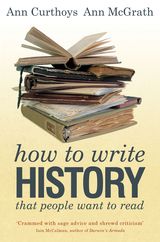
‘How to Write History that People Want to Read’ by Ann Curthoys and Ann McGrath

2009, 238 p.

This book is exactly what the title says it is: a how to book on writing history.  This no-nonsense approach pervades the book- it’s a real [clap] “Come on! Get stuck into it!” sort of book.  It could have, but wisely has not, been called “History Writing for Dummies” because it shares features of those little yellow books- the cheery, confident tone, the jokes that make you groan, the dot points,  the anecdotes and the bubbling optimism that of COURSE you can write history that people want to read!  I must admit that there’s something about all this bustling, practical advice that brings out the long-lost teenager in me.  I want to roll my eyes, toss my head, and mutter “der–” (the ultimate expression of nonchalance and superciliousness in my adolescence- I warned you that it was some time ago).

Except that it is so damned practical and, yes, good advice.  The book is aimed at a wider readership than just  PhD student- it also has family historians and local historians in its sights.  It is very simply written, with short sentences which at times seemed  just a little patronizing.  But of course, this is a book of advice and it does not pretend to be other than this. Clarity and  a certain amount of  firm direction is fundamental to the act of giving advice: I must remember that a bit of humility and preparedness to listen is fundamental to gaining from it.

This book starts from the beginning, right from conceptualizing your history project and your projected audience.  It has good, practical advice about archives  and the how-to of working with sources , then moves on to the writing.  It was at this point that I stopped my eye-rolling and read more carefully because writing, and thinking about narrative and action, character and the emotions  is right where I am at the moment.  And this is probably the real strength of this book; at some stage it is going to connect with you as history-writer at some point in the cycle.  In this regard, you could buy it at the start of your thesis or project, and dip into it usefully for a bit of a kick up the backside or a dust-off after a setback when you need it. The examples they used from a range of histories were well-chosen; you didn’t need to know anything about the content, and the text guided you to look through the content to the technique.  The discussion of footnotes, grammar and punctuation again had me tossing my head with impatience -until I’d come across something that I thought “oh really? Is THAT the difference between a colon and semicolon?” and “You mean that my examiners won’t even READ my quotations?”.  At times I bridled at the decisiveness of their approach but when I came to areas that for me are foggy and ill-defined, the clarity was reassuring.  I suspect that  I am very bad at taking advice.

The trouble with aiming at a broad audience is that sometimes, in order to avoid alienating one audience, the needs of another audience are put onto the backburner.  As a postgraduate student, I yearned for a chapter about analysis.  They do mention analysis, but its difficulty is downplayed by giving it equal billing with themes and chronology as a narrative problem.  I think that analysis is more than this: it goes to the heart of the endeavour; it is what makes history more than just a good story.  It might be stripped out of histories for publication so as to attract a wider audience; it might be over-kill for a local or family history, but for an academic thesis there  is a fundamental assumption that your thesis says something, means something beyond just the narrative at hand.  This is the real work of history,- it’s the part that makes your head hurt- and it’s hard.

I almost didn’t read this book when I first heard about it because I thought that I had read it before. But no- that was an earlier book (2000)  by the same authors that has been recently re-released: Writing Histories: Imagination and Narration.  It  is an edited collection of papers by contributors to a Visiting Scholars Program workshop for fifteen very lucky post-graduates, and is a who’s who of Australian historians who I admire deeply:  Tom Griffiths, Bill Gammage, Donna Merwick, Greg Dening, John Docker, Deborah Bird Rose, Peter Read and of course Ann Curthoys and Ann McGrath themselves.  This book, in many ways, supplied my “missing” chapter, even though I found it rather daunting.  In my reading journal after reading this book I wrote:

I can’t say that I feel empowered- intimidated more like it; overwhelmed by other people’s erudition and breadth, and feeling stodgy and constipated!

It’s a pity that the two books aren’t released by the same publisher, because they would be a wonderful combination within the same volume.  The prose and vision doesn’t exactly soar in “How to Write History” but it is warm, encouraging and empowering.  The virtuosity and incisiveness of the historians talking about their craft in “Writing Histories”  while inspirational, can be almost paralysing.  As an aspiring history writer, I need both.  I need to be beckoned onwards by those up ahead of me;  I need the grip of a confident, more experienced friend at my arm, and  a damned good shove from behind as well!
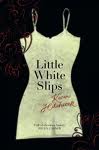
‘Little White Slips’ by Karen Hitchcock

2009, 249 p.

I’m not a great short-story reader, especially when they are in a collection like this.  If they are truly short short-stories, then do you read them one at a time over an extended period, or do you pop them in, one after the other, like a bag of lollies?  I don’t like being jerked around from one situation to another in a single reading.  I tend to remember short stories better when I hear them read aloud, rather than when I read them myself.  With the exception of Nam Le’s The Boat, I  tend to find a volume of short stories to be a bit of a curate’s egg.  But is it realistic to expect every story in a collection to blow you out of your reading-chair, or is a hit-rate of a couple of memorable stories within one volume sufficient?  Is a short story MEANT to be memorable? If so, then I am a miserably failed short-story reader.

Karen Hitchcock is being hailed as a “bold new voice in contemporary fiction”.  Certainly, the first couple of stories in this book were very good, especially the first rather lengthy story about a doctor swotting to pass her specialist examinations.  There are a couple of stories about body image; a couple about the study involved in becoming a psychiatrist- the first of which seemed to form a good counterpart to the opening story about studying to become a specialist from the other partner’s perspective.  But the middle of the book seemed to sag with stories that seemed more like baggy and rather nebulous reminiscences, and too many stories  seemed to pick up on the same themes from a different perspective.  The last story, which gives the collection its title, was good, as I rather hoped it would be.

Perhaps there is an overarching structure to this book that I couldn’t detect.  Certainly it deals with “women’s iss-ews” like body image, medicine,  the limits of male and female friendship, professional life and identity etc.   But I felt as if the same narrative voice was telling all these stories- an educated, Australian, mid-30s, often childless, professional voice, or in the case of the reminiscences,  the voice of someone who would grow up to be this person.  Did the author have a vision for this collection of stories as a whole that contributed to this sameness? or is the author not ready or unwilling to move beyond this?

I will read other stories written by Karen Hitchcock.  Perhaps I would have enjoyed her more in a collection with other writers where she shares the stage with others, rather than a solo performance- I see that several of these stories have previously appeared in Meanjin and The Sleepers Almanac, and were picked up in Best Australian Short Stories in 2006, 2007 and 2008.   Or perhaps I just need to find a way to read short stories differently.

‘The Commandant’ by Jessica Anderson

This book has been recently re-released as part of Sydney University Press’ Australian Classics Library.   The original was published in 1975 and there are still copies of the original imprint around: mine has a particularly lurid cover that would deter any casual browser.

The penal colonies at Sydney and Van Diemen’s Land have long attracted novelists- Thomas Keneally has been writing about them for decades and Kate Grenville has been lured by them more recently.  But there were other penal outposts in the Australian colonies as well: Norfolk Island, Moreton Bay in Queensland, Western Australia after 1850 and even Port Phillip, while not a penal colony as such, had convict gangs engaged on public works and the Pentonvillians in the second half of the 1840s.

“The Commandant” is set in Moreton Bay under the command of Patrick Logan.   The setting of the book is fairly accurate:  Logan did exist; his wife was called Lettie; he did come to a sticky and inconclusive end.  But the main character of the book, Frances O’Beirne, is Jessica Anderson’s invention entirely and here Anderson can let her imagination take flight.  This is a penal colony described from the domestic perspective, with the convicts not as “the men out there” but as shadowy but ever-present domestic servants.  Here we can see the blurring of the lines that John Hirst writes so well about in Convict Society and its Enemies with assigned convicts occupying that here-but-not-here space of the English domestic servant whose intimate presence gave them such an ambiguous status.

This is a very ‘interior’ novel in that much of it takes place inside, and much of the text is turned over to dialogue.  It is almost Austenesque in this regard, and I found it a little noisy and claustrophobic.  For me, the novel really opened up once it got outside into the Australian landscape- until this point it could have been set anywhere.

Frances O’Beirne is a recent arrival in the colonies and after a short time in Sydney, she travels up to join her sister Lettie who is married to Capt Logan. While in Sydney she comes into contact with the daughters of Edward Smith Hall, the editor of the Monitor and the (real life) opponent of Governor Darling.  She absorbs the ‘radical’ views circulating in Sydney, and is wary of her brother-in-law Logan, who is about to fight a libel case against the Sydney newspapers over reports of his excessive cruelty.  She is uneasy about the convict presence, and appalled by her brother-in-law’s discipline.

In an interview about the writing of The Commandant in “Making Stories” by Kate Grenville and Sue Woolfe (generous extracts available here), Anderson talks in an interview about the character of Frances

INT: Did you consciously seek a character to, as you say, ‘identify with’ or did the character come to you?

JA: Well I came to myself.  But I had to have someone who could see and comment on the action. But not just one person, and not just one point of view.  So I had Frances, Louisa and Letty.  Particularly Frances, although the other points of view are both well within my own range.  My daughter said it was quite easy to see who I was. But she saw me as Louisa.

INT: Is Frances really, in fact, a twentieth century character?

JA: There were people like Frances, radicals and reformers , in Sydney. There was nobody like her at Moreton Bay.  But I couldn’t have done it without her.  I needed an opponent for Logan.

Despite Anderson’s protestations, I’m not really sure that Frances isn’t a 20th century character. I don’t think that Anderson caught the religious aspects of a humanitarian anti-transporation stance, complete with its racism, class bias and cast iron certainties. Instead Frances’ opposition to the penal system is a bit too secular and Amnesty International.

Anderson’s real stroke of brilliance is in explaining Logan’s death- which, again, is historic fact. But her explanation which runs against the popular story about how he died is, unfortunately,  plausible and we can see with 20th century eyes what the implications of such an explanation could/did set in train.

I enjoyed this book and I’m glad that it has a second outing.  I think that it stacks up well against Keneally’s convict works like The Playmaker and Bring Larks and Heroes and Grenville’s The Secret River and The Lieutenant (which I haven’t read yet).  It isn’t as imaginatively extravagant as Flanagan’s brilliant Gould’s Book of Fish, but her twist on the narrative and history is inventive and deserves to be better known.

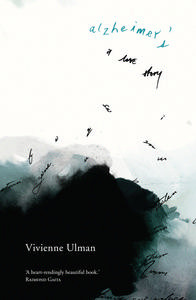
‘Alzheimers: A Love Story’ by Vivienne Ulman

2009, 212 p.

As I wrote in my posting on Hazel Hawke, I’ve been a bit reluctant to embark on a reading binge of books on Alzheimers, even though my mother suffers from the condition.  Perhaps it’s part of the denial that families have at the early stages of the disease- ours is no exception- and not wanting to look too far ahead for fear that it will cast a shadow over what is here right now.  But in recent months Mum’s had a fall, broken her pelvis, been hospitalized and her condition has deteriorated appallingly.  She’s been in transition care for some months and a couple of weeks ago moved into the high level nursing home that will be her home now.  This litany of decline,  for those of you who haven’t been down this road,  must seem like just a string of cliches.  But the fall-broken pelvis-transition care-nursing home downward trajectory obscures the pain of it all.   Like all families, particularly when one partner is still living in the family home, there’s guilt, sorrow, grief, anger, with family members pulling together and yet pulling  each other down as well.   I haven’t really wanted to read about other families doing this up until now, but perhaps because such a big step has been taken now with Mum moving into the nursing home, I’m now more open to read about how other families have coped with all this.

Vivienne Ulman is the daughter of Saul and Lucy Same who started Gloweave shirts, those rather quaint fashion items of the 1970s.  The Melbourne she describes is one that I’m not familiar with in many ways- south of the Yarra, Jewish, and obviously very very wealthy.   But in other ways, there’s much that is recognizable: Graham Kennedy’s advertisements for Glo-Weave (it used to have a hyphen) on IMT; the factories in inner northern Melbourne (far more my stomping ground), and the influence of Melbourne-based ALP politicians.  Her parents both emigrated to Melbourne separately with their families  prior to World War II and worked the business up from scratch.  They had a strong commitment to leftish politics and a lifelong association with the ALP although that surely must have been tested by the “structural adjustment” (what a weasel word!) changes imposed onto the clothing and textile industry.

This book has several strands that, just like the fabric that Glo-Weave created, are woven together into a whole.  There’s the day-to-day current reality of Lucy Same in her nursing home, increasingly difficult and incoherent with her husband Saul pouring into her all the love he can; there’s Vivienne’s upbringing in 1960s and 70s Melbourne in a bustling Jewish family, and there’s the Glo-Weave business history as economic changes, industrialisation, technology and marketing change the directions of the enterprise.   All three strands are interesting and well-told, with just the odd stilted phrase that belies the creative writing course origins of the book.

The structure is interspersed with Vivienne’s letters to her mother (another waft of the creative writing course?); letters of course that her mother will never read now.  But I now know, in a way that I didn’t a year ago, about that longing to be able to talk with the person with Alzheimers in the way that you used to, when you took such conversations for granted.  For myself, I often catch myself looking at the clock at about 8.10 in the morning.  When I was home with young children, Mum used to ring me at that time nearly every morning, not really with anything to say but just keeping contact.  I hadn’t thought about those phone calls in a long time, but now I would give anything to have one of them and to know that my busy, efficient, bustling little mum was on the end of the phone and talking to me.

I’m reading the book with a frisson of anxiety.  Saul spends ALL DAY at the nursing home- we don’t do that- should we?  Are we remiss or is he obsessive?  He pays for a carer to stay with Lucy all day in the nursing home-  is there something going on in nursing homes that we don’t know about that we should do the same thing too (if we could afford it) ?  The nursing homes, even though they are high care, are constantly shifting Lucy on because she’s too difficult-  what if my Mum becomes ‘difficult’ too?- will she be moved out of a place that so far I’m happy with?  My Mum so far is not physically aggressive- will she become that way in the future?

There’s so much guilt and anger here too, and this I can now appreciate. Vivienne herself lives in Tasmania as part of a tree-change lifestyle.  As the only daughter (and why is it that daughters feel that it falls on them?), she feels guilty, spends much time over in Melbourne, but doesn’t move back permanently. [Should she? thinks my inner judge and nitpicker. I’m sure that she wonders the same thing.]   She is angry at the disease, angry at the mother who is so angry at her, angry at her father whose absolute devotion makes Vivienne feel inadequate and yet wary of being drawn into his obsession as well.  All of this I know now.

This is a good book on many levels; or at least, it’s a good book for ME right now.

‘The Colony’ by Grace Karskens

karskens

2009, 549p plus notes

This is an absolutely beautiful book.

Physically, it is a thing of beauty.  It is hard cover, brimming with photographs and drawings (some glossy museum pictures juxtaposed with current photographs that the author has taken herself), with thick, luxuriant white pages.   And beautiful it should be, I suppose, supported as it is by the City of Sydney, the Australia Council, the Australian Academy of Humanities and the State Library of NSW.  In fact at first I thought it was a coffee table book to accompany a series (there was an SBS series of that name) but it’s not.  It’s a history (with the humility to designate itself a history rather than the history) fair and square, without apologies.

Karskens nails her colours to the mast: she is writing as an historian, and participating in a historical conversation with other historians:

This book has its roots deep in a great mountain of existing research, thinking and histories.  Historians work collectively, within a wider community of scholars.  So history writing is less an individualist pursuit than a collective quest, and an ongoing process.  This is one reason references are so important: they rightly acknowledge the work of past scholars, as well as guiding future readers and scholars into the literature.  In the notes and bibliography of this book you will find, besides original manuscripts and archival records, maps and pictures, an extraordinary and diverse body of scholarship about early Sydney, works mainly by historians, but also archaeologists, economists, anthropologists, art and architectual historians, ecologists, geologists, museuologists, geographers, biographers and local and community historians.  (p. xii)

She is true to her word.  There’s a heavy debt to Inga Clendinnen here, not only in content but in writing style, and likewise to Alan Atkinson– two historians I deeply admire whose writing turns an event around and looks at it from different angles, giving us the gift of coming to the familiar with new eyes.   There’s also a connection with James Boyce whose recent book Van Diemen’s Land is almost a pigeon-pair with this book in its re-visioning of the penal colony as a new environment with new opportunities.  Unlike Robert Hughes’ The Fatal Shore, this book joins other histories- John Hirst’s work springs to mind-  written with  a determination to look beyond Hughes’ gulag and horror: it looks to the agency, optimismism and opportunism of ordinary people in a new environment instead of just the dregs of the old world.

The history itself is a thing of beauty too.  It breaks free of many straitjackets: more than perhaps any other history of Australia that I have read it interweaves Aboriginal history, archaeology, women and environmental history throughout the book.  Not content with the almost obligatory “before” chapter dealing and then dispensing with “the aborigines”, she asserts that Sydney remained an Eora town- that Eora people continued to live within Sydney on their own terms, with their own geography and in resistance to christianizing impulses, into the 1830s and 40s. Indeed, they have never left.

The environmental theme carries throughout the book as well.  She starts in deep time and emphasizes the connection between landscape and food supply not just along the coastal regions, but inland along the rivers and ravines.  Unlike other histories which are drawn to the inland and the importance of crossing mountains and going towards the centre, she turns back towards the sea, just as the early Sydney people did.  She reminds us that Sydney had three beginnings: the abandoned Botany Bay settlement;  Port Jackson (truly a ‘port’ city where early convicts settled into the Rocks with their own raucous, uninhibited subculture), and then the third, more ordered attempt to start again in Parramatta by imposing conformity onto the layout.  She reminds us that once settlers spilled onto the Cumberland Plain, confronted by different tribes, the same battles had to be fought anew with new opponents.   The Europeans of early Sydney were not the industrialized huddled-masses; they were pre-modern people bringing with them the patterns of village tradition and the pre-industrial paradox of deference combined with the English moral economy.  At the same time, though, they were a consumer society, tied into the broader imperial economy by virtue of the port which serviced and was served by British trade routes and markets.

In Karsken’s book Macquarie is not the benign “Father of Australia”.  Instead she depicts both Lachlan and Elizabeth Macquarie as landscape artists, imposing their improving architectural vision onto Sydney, obliterating the emergent, spontaenous eruption of the workers’  lifestyle and culture by appropriating public space for the ‘respectable’ in mimicry of  a modern European urban landscape.

Nor, despite her obvious respect,  does she let Clendinnen’s romantic vision of dancing strangers blind us to the violence that was the first response and default position.  She is not so enamoured of Watkin Tench that she sees his expedition under Phillip’s orders as a face-saving farce, as Clendinnen argues.

In her review of the book  Cassandra Pybus chided Karskens for following the well-worn and well-mined biographies of  governors, scribbling military officers, Macquarie, Ruse and a few high-profile convicts.  I’m not sure that this is fair: the book is studded with small stories that move into the spotlight then fall back to the wings- not grand narratives to be sure, but small solo items that illuminate and make larger arguments human before moving on.  There is the grand design of official planning and policy, but she emphasizes that there was a complementary,unofficial, spontaneous counter-reality that emerged from the myriad small stories and small lives of ordinary people.

Some quibbles?  Karskens had succeeded so admirably in integrating an aboriginal worldview and interaction throughout the book, but two lengthy chapters at the close of the book focus on black/white relations in the Cumberland region.  Given that she was already handling this so naturally and unselfconsciously these two chapters deflected the book into another direction.  They are both long chapters.  Up to this point, there had been such elegance in the writing, at both structural and sentence level, but the conclusion of the book is  weighted unevenly and the work as a whole loses its symmetry.

The book is richly illustrated, so much so that I was surprised to find colour plates half-way through.  I had assumed that it was black and white only, and there was no reference in the text (e.g. Plate 3) to prompt the reader to search for them.  I felt almost cheated to find them later.  Likewise, maps would have reinforced her argument about the importance of waterways and coast and the pattern of the spread of settlement.

Ah, but these are just quibbles.  This is an insightful, intelligent, deeply human history with immaculate scholarship.   In his review published in The Monthly, Alan Atkinson wrote that the book  “propels Karskens straight to the first rank of Australian historians”- high praise indeed.  It’s certainly had me engrossed for about the last three weeks (hence the paucity of other book reviews recently), and you know- I think I’ll read it again one day.

‘Journey from Venice’ by Ruth Cracknell

cracknell

2000, 271 p

Ruth Cracknell was a much-loved Australian actor- sharp, eloquent, funny, rather patrician in an ‘older woman’ sort of way. Although, of course, her character Maggie Beare in ‘Mother and Son’ (where she plays the devious elderly mother whose hapless adult son returns to live with her)  was none of these things!

I had to keep flicking to her picture at the back of the book to remind me that she was the author, because her celebrity is almost inconsequential to this story.   It’s not so much Ruth Cracknell here, but Mrs. Ruth Phillips, mourning the death of her husband Eric.  It’s as woman and widow, mother and grandmother that we meet her, not as a ‘star’.

This is a beautifully constructed memoir.  The preface starts with Eric’s funeral,  written in italicized third person, as if she is watching herself going through the ritual.  She then moves back in time to their arrival in Venice for a holiday together and the pace of the narrative moves to a slow sort of travelogue, overshadowed by the certain knowledge that death  is hovering over them like an unseen, malevolent force.  This sense of foreboding permeates the book, even when Eric is finally well enough to fly home to Melbourne where cancer is diagnosed.  The title is well chosen: I kept thinking of Mann’s ‘Death in Venice’, but Eric does not die there. He recovers sufficiently to be medi-evacuated back to Australia, has two precious trips back to the family home for Sunday lunch, and some weeks later dies of the cancer, not the bleeding that initially threatened his life.  And so, by the end of the book, we return to the funeral and we, too, grieve.

While waiting in Venice for him to recover sufficiently for the trip home, the tourists leave as the summer season ends, the deeper water laps at the floor of her ground floor flat, and Ruth becomes aware of the sheer inconvenience of living (as distinct from visiting) Venice.  That holiday, so eagerly anticipated, so richly enjoyed for the first few days becomes instead a stark, lonely, bewildering exile.

This is, instead, a journey from Venice, not to it, and in the weeks they have together, they fall in love again- a different sort of love, suffused with the knowledge that it is all they have left.  They truly do live “in the moment”: the sharing of a blood orange is a sensuous joy, and she sees and loves anew the stripped down, solid core of the man she has been married to for over 40 years.

It was interesting to read this book after recently finishing Caroline Jones’ book about her father’s death.  This is a much more grounded, sane and adult book, and one that gives much more comfort.  It is beautifully written and constructed, and it shares the poise, groundedness and authenticity of its author.

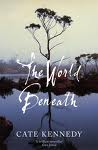
‘The World Beneath’ by Cate Kennedy

kennedy

2009, 342p.

Rich and Sandy are 40-something leftovers from the 1980s, still stuck in the victory of the Franklin River blockade that they look back to as the high point of their lives.  They met on the campaign and shifted to a small hippy country town together but their relationship broke up while their daughter Sophie was very young.  Sandy immersed herself in the companionship of her earth-mother friends, while Rich headed off around the world as a photojournalist.  Neither has moved on at all from their dreams of the early eighties: Sandy’s dreamcatchers and pottery are now tatty, dated and twee, while Rich’s career in photojournalism finds him washed up in the dead-end of editing  infotainment  segments for morning television.  The story opens as Rich re-establishes contact with his moody, anorexic, goth 15 year old daughter Sophie, and suggests a bushwalk to Cradle Mountain as a new start to their relationship.

Sandy is reluctant to let him back in to their lives; Sophie is curious and at first attracted by his footloose approach to life, especially compared with Sandy’s smothering neediness and flakiness.  But Rich, in his own way, is just as stuck in the 1980s as Sandy is,  just as blind to Sophie’s anorexia and just as flawed as a parent, whatever his initial attractiveness.  When he encourages Sophie to go for a walk off the tourist trail, they get lost and Sophie loses her illusions about him.

These are very human characters, and Kennedy teeters of the verge of parody, especially with Sandy.  She hones in on Sandy’s ineffectual, rather vacuous new-age, earthmother persona and Rich’s self-deception, cynicism and lack of commitment.  Sophie is a sullen, sneering adolescent, cocooned in her technology and affected world-weariness.  But there’s a recognizability about them all too, and an element of send-up that lacks the venom of  Christos Tsiolkas’ The Slap, to which this book has been compared.

This gently-skewering parody is acutely done, but after a while it didn’t seem to be going anywhere. But the second half of the book picks up pace and it becomes a real page-turner: I was literally sitting up in bed, wanting to finish it but despairing at how late it was becoming as I kept reading.

There are some fantastic interviews with the author: one on the Radio National Book Show and another at The Ember, and good blog posts by Lisa at ANZLitlovers and Kerryn Goldsworthy at Australian Literature Diary.  I must admit that, particularly after reading the interviews, I found nuances and depths in the book that I hadn’t picked up on at first reading.   I’m not sure why this is- I was aware of the references and paradoxes in the book, but almost needed to listen (or read) someone talking it over for them to coalesce for me.  I’m not sure whether this reflects a weakness in the book, or in me as a reader, or whether this is the sort of book that is best shared with others and talked about as much as read.

This is a good book.  I wonder if its references to MySpace and ipods will date it, but the observations of character and the wonderful descriptions of landscape will sustain it even when Sophie is just as dated and twee with her early-21st century technology as Sandy and Rich are with their 1980s idealism.

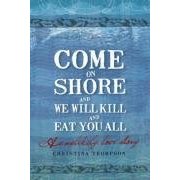
‘Come on Shore and We Will Kill You and Eat You All: An Unlikely Love Story’ by Christina Thompson

thompson

288 p.

I’ve been fascinated by the title of this book for some time, after hearing the author interviewed on Radio National’s Book Show.  An intriguing title, I thought, but rather long and unwieldy.  But having now read the book, I can see the nuances in the choice of title, and I think it a good one.

But I came to read this book immediately after reading Caroline Jones’ Through a Glass Darkly and here again, I find myself confronted by a book that is not just an autobiography taking a life lived across a long period of time, but instead a slice of the author’s life that examines a dilemma or situation faced by the author.  In this case, Thompson writes of her marriage to Seven, a Maori man and the three children she has with him.  She is an American academic, based in Melbourne to write her doctoral thesis, and when she meets and marries Seven, she finds herself enmeshed in Maori family and community obligations that she both observes and critiques as a border-crosser.  She is quite open about the fact that there are values and responses that she does not share, or even completely understand, and she feels conflicted about the historical trajectory that has seen her New England family amass wealth and status over another disenfranchised people, the American native.  She can see the parallels in her own story, and that of the history of Seven’s family and culture.

I liked the way that in several chapters, she chooses an emblematic episode or object and uses it as a focus around which to embroider observations, history and politics.  Her story ranges across the world- New Zealand, New England, Melbourne, Hawaii, and explores different aspects of border-crossing and contacts.  I’m not completely convinced by her writing style, though.  It is certainly readable enough, but in spite of the general notes at the back – not too academic lest they frighten the reader- the book veers between accessibility and colloquial chattiness.  She is obviously a careful observer and incisive yet wide-ranging thinker, but it’s as if she has subjugated her erudition- perhaps at her publisher’s suggestion? Or is it perhaps a reflection of the compromise she has had to make more generally in her life?

For her academic career and her marriage seem two completely disconnected, compartmentalized aspects of her life.  She hops from one postdoctoral fellowship to another, and obviously has a respected if not lucrative academic career.  Academia is often peripatetic  by nature, but there’s also an element of nonchalance that Seven seems to bring to this as well.  I am unsettled by the whole precept of the book and her foreword, where she explains that she has changed the names of Seven’s family but not other aspects of the story, suggests an uneasiness on her part as well. What is the authority by which she writes this book?  Is there an element of trophyism and appropriation going on here?  And, as with Caroline Jones’ book, I ask myself: do I have any right to criticize the choice that another person makes, just because I would have chosen differently?  But a part of me answers: but SHE wrote this, she put it out here into the public domain, she has invited her readers to observe her and, by extension, critique what they find.

The quote from which the book takes its title is from Charles Darwin who, tired and homesick after his long journey on the Beagle, misquotes from journals during Cook’s voyage written decades earlier. Cook and Banks realised that the taunt “Come on shore and we will kill you” was a performance and  a posturing stance towards any stranger that a Maori group might encounter, and was not necessarily acted upon.  The suggestion of cannibalism was added by Darwin himself.  It works well as the title for this book: it too is a challenge, and reveals layers of truth, representation and contact between cultures at the political and personal level as well.

‘Through a Glass Darkly’ by Caroline Jones

jones

224p. 2009

Caroline Jones is probably best known as one of the presenters of  Australian Story the long-running ABC documentary series on a Monday night.  The stories featured on Australian Story are human-interest, generally uplifting and ‘inspirational’ features of half an hour in length, combining a narrative, flashbacks, and interviews with friends and family of the person featured.  Caroline Jones comes across as an older, wiser, immaculately groomed, sensitive presenter.   As an English judge was moved to say of Lady Archer (huh!)  “Has she fragrance?  Has she elegance?” and the same question could well be asked of Caroline Jones.  I’ve always found her rather cloying though, and after reading this book, I am even more wary of such unmitigated ‘niceness’.

The book appears to be taken from Jones’ own diary, written after her 93 year old father had undergone heart surgery.  It traces though his time in intensive care and eventual death after a number of weeks, then with her devastation in dealing with his death.  She draws no comfort at all from the idea that he had ‘a good innings’ and, as she is an only child without children herself, she finds herself completely bereft of family.  She finds that her spirituality brings her no comfort at all and her pain seems to abate only with time.

I feel rather uncomfortable writing about her book, as to criticize the book is to criticize her. And yet, she is the one who wrote the book (for whatever reason); she is one who has chosen to expose herself in this way; she is the one who has put her own actions and responses into the public domain.   It’s a strange genre- not memoir as such, which is a construction in itself;  and by focussing on just one aspect of a life lived, it lacks the completeness of an autobiography.  It’s almost an argument of sorts; a point of view over a particular event, and I think that by writing it, the author invites challenge.

There seem to be many things that Caroline Jones has NOT spoken about with her father:  whether he should even have the surgery at the advanced age of 93 (and to my way of thinking, there’s something decadent about a society that even offers this option) and  whether Caroline has the right to say ‘enough- no more treatment’.   Jones herself says that she and her father have never really spoken about Caroline’s mother’s suicide when Caroline was a young girl- surely a huge,  unresolved (and unresolvable) ache in both their lives. For all her assertions of closeness and love between them, there are many things unsaid that should have been said.

Despite her “niceness” Caroline is filled with rage at her father’s predicament-  the breathing tube, the continued surgeries, the poor outcome- and she is watching like a hawk.  She is there every day: she does not leave until the night staff come on so that she knows who is on duty.  On the rare occasions when she leaves to fulfil firm obligations, she yearns to be back by his side.  It is a long drawn out nightmare for them both.

Her spirituality leaves her cold, and yet she brings many of her own spiritual mentors in to visit her father, even though he does not share her Catholic faith and has not expressed any particular personal faith.  Like many a loving father, he is content to let her have her own religion; but as a loving daughter she does not provide him the same space.

The book closes with two appendices, written by her friends in response to reading an early draft of the book.  I think that they are a self-serving addition, acting only to bolster her own world-view.  The second appendix, written by a doctor at the hospital where her father died, assures her that she was “controlled”, not “controlling”.  I can only assume that someone must have made this comment sometime about her.  I disagree.  She is very controlling.

To be honest, this book angered me.  I don’t think that I want to write any more.

‘Sex and Suffering’ by Janet McCalman

mccalman

1998, 368p

I’d already worked out what I was going to say in reviewing this book.

I am not keen on institutional histories.  I dislike their celebratory nature and the way that their authors obviously feel compelled to doff their hats and gush over the institutional big-wigs and stalwarts.  You can often sense the shadowy presence of the steering committee in the back-ground and that a publicist and risk-management expert are hovering in the wings.

However, I was drawn to read this history of the Royal Women’s Hospital after hearing a Radio National Hindsight program on it, available for download hereJanet McCalman, from the University of Melbourne ( I see that she, at least still works there, given the University’s decimation of its Arts faculty) wrote Struggletown: Public and Private Life in Richmond 1900-1965 – a history of the working-class suburb of Richmond,  and Journeyings: The Biography of a Middle Class Generation 1920-1990, which followed the No 69 tram through the middle-class suburbs of Melbourne.  She’s obviously drawn to writing larger social histories by focussing her lens on a small patch of inquiry.

And so Sex and Suffering: Women’s Health and a Women’s Hospital carries on an approach that she obviously feels comfortable with.  As the title might suggest, this is not just a history of an institution: instead it deals with sex and the experience of being woman, health and institutions.

The experience of childbirth is intimately woven into the hidden parts of private lives and soon overlaid by the other experiences and achievements of a growing person.   It is common to us all, and for a short period of time is overwhelming in its effect on the mother at her exposed, most basic core and on the people closest to her.   So it was fascinating to consider the act childbirth- that most intimate and personal of events- as part of a social phenomenon that can be handled at the structural level in so many ways.

The book itself follows a chronological approach, with seven sections covering roughly 20-30 year periods.  The emphasis varies in the sections, from the clinical (particularly in the sections discussing sepsis and antisepsis) to the social and structural (where the judgments of upper-middleclass doctors and the Board of Management were trained onto the predomiantly working-class and migrant clientele).   Throughout most of the book, she draws on the case notes of individual women- helpfully supplemented with a glossary of medical terms in the margin- to make real her discussion of anaesthesia and surgery and its effect on horrendous labour situations, the horror of clostridium welchii which could kill a woman in hours, and the changes in attitudes towards labouring women and their partners.  Ye Gods- some women had enormous babies- particularly in the post-Gold Rush period when women who had suffered malformations of the pelvis through malnutrition themselves as children, especially in Ireland,  gave birth to large babies when their own diets had become carbohydrate-heavy in a new country.  There’s something stark in reading the case notes reproduced at the end of the book that chart the death over a number of days of a woman, knowing that there are mothers and fathers, husbands and other children who have been left bereft.

I know that when I was in labour with my children, I was very conscious that I was part of a chain of labouring women in my family and thought -even then!- about how absolutely dreadful it would be to die in childbirth. Hormonally, physically and from an evolutionary sense, every sinew of your being is focussed on giving birth to that child then and there, even if it is your twelfth or illegitimate.  I felt as if I was surrounded by generations of women who had given birth before, and that I was stripped down to my essential female-ness.  In reading this book I was made conscious of the effects of bad births- those fistulas you now only know of in Third World countries,  the lifelong invalidism that followed some births, and the amount of pain that lingered on year after year.  It made the knowledge of my maternal grandmother’s seven births and several miscarriages, and my paternal grandfather’s first wife’s death in childbirth, more meaningful.

There are wonderful photographs and diagrams in this book.  The photographs of Melbourne in the early chapters from both the La Trobe Picture collection and the Royal Women’s Hospital Archives are clear and showed perspectives of my city that I hadn’t seen before.  The internal photographs of the hospital, again from the hospital archives,  while deliberately posed, speak volumes about hospital discipline and nurses’ roles.

A second thread that runs through the book is a commentary on class and gender in Melbourne. The more feminist, women-centred  Queen Victoria hospital stands as a counter-point to the more traditional, male-dominated Royal Women’s Hospital, and the class perspectives of the charity-oriented upper-middle class female board members run through the attitudes towards sexually-transmitted disease, abortion and adoption that the hospital had to deal with.

Well, this is what I was going to say until I got to the last part of the book.  The last section, unfortunately, descended into that boosterism and oily fulsomeness of the standard institutional history.  Probably for privacy reasons, the case histories dropped out of the narrative.  Although they were replaced by oral history reminiscenes of experiences in the Women’s, they lacked the immediacy and contingency of those earlier case notes.   Judgments about individuals who are alive and likely to read this book need to be tempered, and as a still-operating (though re-located) hospital , there is the equivalent, I guess, of the doctor’s  “do no harm” in writing about the institutional culture.  The management-speak of the final pages reflects the funding and political milieu in which institutions now exist, but I also suspect that it has been carefully vetted by the current hospital administration as well.

So, if you read this book- and I exhort you so to do- you might want to stop after Section VI in 1970.  To that point, it’s fascinating.