Category Archives: Australian Women’s Writing

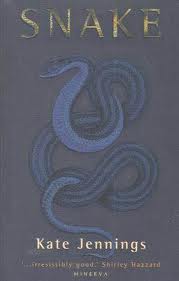
‘Snake’ by Kate Jennings

Kate Jennings Snake,  Melbourne, Minerva, 1996, 145 p.

Snake is a short book: only 145 pages and easily readable in one sitting.  It is a sharp, gritty book and you know from the opening pages that this is not going to be an easy reading experience.

The layout of the book is interesting.  It is in four unevenly sized parts, each divided with an engraved version of the snake of the front cover.  Part 1, only nine pages in length, is written in the second person and addressed to Rex, the father of the family. Immediately you are plunged into Australian Gothic:

Everybody likes you.  A good man.  Decent. But disappointed. Who wouldn’t be? That wife.  Those Children.

Your wife.  You love and cherish her.  You like to watch her unobserved, through a window, across a road or a paddock, as if you were a stranger and knew nothing about her.  You admire her springy hair, slow smile, muscled legs, confident bearing.  If this woman were your wife, your chest would swell with pride.

She is your wife, she despises you.  The coldness, the forbearing looks, the sarcastic asides, they are constant.  She emasculates you with the sure blade of her contempt.  The whirring of the whetstone wheel, the strident whine of steel being held to it, that is the background noise to the nightmare of your days  (p. 3)

Part 2 moves into third person, and is only a little longer- 11 pages and it takes us to their wedding, and already the ashes are in our mouth as we move through the unvoiced thoughts of the unlovely people who make up their extended family.

The longest section of the book is in Part 3, where there are short vignettes of the pettiness and the cruelties of everyday life in this blighted family:  Irene’s love letter to ‘the other man’ intentionally left where her husband Rex would find it; her moodiness and favouritism, the dog tragically left to die in a car. You know- as you’ve known from the opening pages, that this isn’t going to end well.

The final Part IV returns to the second-person voice, but this time it is addressed to Irene.  It is short- the shortest part of the book- and bitter.

All of the chapters in this book are short – in some cases the title is almost as long as the chapter itself!  The relationship of the title to the chapter is often oblique, as is the image of the snake that slides through the book both graphically and structurally.

Sue at Whispering Gums wrote a fantastic post about ‘taker-outers’ in books, and this book is just about as spare as you could get.  It is as dry and dessicated as the family it is describing, and all the more powerful for that.

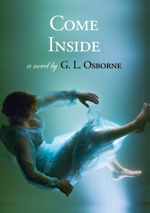
‘Come Inside’ by G. L. Osborne

2009, 170 p

I hadn’t heard of this book until I read Lisa’s review at ANZLitLovers, but I see that it has attracted quite a bit of attention with shortlistings at both the Commonwealth Writer’s Prize First Book of Fiction and the Age Book of the Year.  It’s only short- just the right length really, because she teases her reader and as we know, it’s a narrow line between teasing and tears.

It’s an unusual and risky book.  A young girl is rescued by a young man after being swept ashore as the only survivor after a shipwreck in 1887.  She is  unable to remember her earlier life, and her story becomes part of the local folklore, heavily mined by the press at the time,  a series of oral histories in the 1940s and then centenary publications a hundred years later.   There’s shades of the Loch Ard here, but not quite; the small seaside town of Colego seems as if must exist somewhere in Western Australia, but it doesn’t seem to, either.  The slippage between fact and fiction starts on the flyleaves, where the author thanks “Ken and Claire Stewart” for the extracts from an unpublished manuscript by Caroline Stewart held at Colego Public Library.  It is this manuscript that forms one strand of  the narrative: the other strand is the drugged delirium of a woman on what appears to be a ship.  Woven around these two main strands is an assortment of tangentially-related ‘evidence’- press clippings and letters from 1887,  extracts of books, interviews with Colego inhabitants in 1946, a collection of letters by Isobel Smith, a book by the same Isobel Smith, then an edited anniversary edition of the same work.

There’s much here about memory and history, as layer upon layer is built up over the story.  Caroline Stewart, the author of the manuscript, works in the small Colego museum where she works cataloguing the objects,  and although her instructions are to label the materials empirically, the edifice of objectivity is just as tottery for the ‘fact-based’ local museum as it is for the other retellings. The curator of the museum is fiercely protective of the artefacts and the version of local history that the museum promulgates but there’s a flatness and deadness about the history it embalms, especially compared with the other stories we are given based on people rather than things.

A risky book? Sure is.  She has assembled it all carefully, but it is the reader who puts it together.  I’m not sure if I understood it, and that’s an uncomfortable reading experience.  At 170 pages it is short and as the number of pages diminished,  I found myself wondering how she was going to draw it to a close, and even why it ended at that particular point.  It is beautifully written, and she deftly catches the tone and cadence of many different genres in the material that she lays out for us.   And yes, I know the adage about judging books and covers, but that is a truly lovely photograph on the front.

I mentioned a couple of posts ago a book called Pistols! Treason! Murder! which, labelled “History” on the back cover, uses a similar methodology.  I’ve borrowed it and I’m interested to see the technique used in non-fiction. I wonder if I’ll experience the same sense of floating anxiety (yes- that front cover is well chosen)  about whether I’m putting it together “properly”.

‘Cosmo Cosmolino’ by Helen Garner

1992, 221 p.

Helen Garner is thirteen years older than I am, and I feel as if I have been walking in her footsteps all my life.  Not following her lifestyle, mind you, but watching her with curiosity, as a life that I might have led had I been a little older and more confident. I felt as if I knew Dexter and Athena in The Children’s Bach– in fact, I’m sure I know where their house is!  When I was an undergraduate, still living at home with Mum and Dad, I’m sure that my fellow students were living a far more exciting Monkey Grip life than I was. Like Garner, I felt troubled by the challenge to feminism in The First Stone, and repelled and yet fascinated by Anu Singh in Joe Cinque’s Consolation.  Now that I’m growing older and facing the deaths of parents and friends, I see myself in The Spare Room.  But with Cosmo Cosmolino, published  in 1992 when Garner was fifty, my sense of identification breaks down.

The book contains three stories, tangentially linked.  Cosmo Cosmolino is the longest of the three, and although they are different characters, the lifestyle of its protagonists almost picks up, twenty years on from where the lifestyles of the people of  Monkey Grip left off.  The anarchic share-houses of the 70s are now just shells, containing wary, embittered middle-aged people, somewhat discomfited by the capitalist mores they found themselves adopting almost in spite of themselves, and younger drifters in a world of marginal working lives that is less tolerant of the artistic temperament than the 70s were.  These are people whose family relationships are just single strings rather than a densely woven fabric; there is a bleak loneliness about their situation and their outlook.  They are trying to find some meaning in their days, either through trying to recreate an idealized past of share-houses now gone, or through a fervid evangelical Christianity or a loopy new-age spirituality.

I’m not sure if my discomfort with this mushy angel-think is a reflection of my own cynicism, or whether it is because the book is nearly twenty years old.  Perhaps in the early 1990s, belief in angels was not so twee and flaky- after all, didn’t they market those bumper stickers “Magic Happens” back then? When were healing crystals and all that other dusty paraphernalia around?  There’s something pathetic about this book, and I suspect that it was not intended to be so.  I think that Garner is genuinely working through issues of spirituality and meaning.  It’s just not a quest that I find particularly compelling.

‘The Book of Emmett’ by Deborah Forster

2009, 304 p.

This book opens with a funeral.  It is a stinking hot day and four adult children mill with their mother outside one of those drab suburban funeral parlours that just seem to have always been there in small strip shopping centres, easily ignored until you actually attend a funeral there. These children are clearly ambivalent about their father and as the book unfolds, you learn why.

The first chapters of this book are striking.  Forster writes about the 1960s Menzies years and working-class Footscray so clearly that you feel as if you have been there.  She captures the tensions of an unhappy family and I could feel myself becoming taut and anxious too, almost cowering as I read.  She writes in the present tense, a technique that even though I am using it right now, often makes me feel on edge.  In this case, it worked well to heighten even further the brittleness of the story she is telling.

But what about the bigger picture?  She does pointillism so well, but I’m not sure that she carried it across into the broader arch of the story.   Even though this book is fiction (and, rather disconcertingly ‘vaguely autobiographical’, according to the author), in some ways it felt like a non-fictional biography of a family.  One of the arts of biography is to develop a narrative that keeps moving, even though the day-to-day events in themselves are not momentous.  This book covers a span of probably forty years, but it unspools slowly without any obvious shape to the telling.

The book is presented as sixty fairly short chapters – sometimes only a couple of pages each.   On occasions these already short chapters were further divided into scenes, separated by an asterisk.  I felt while I was reading it as if I were being offered a series of anecdotes and that the broader narrative was only inching along slowly.  There is a shaping to the long-term story, but I found it rather dissatisfying, as  it petered into a sullen powerlessness and acquiescence, rather than giving me the dramatic act of revenge I craved.  I felt this at the structural level, as well as at the intellectual level.  How do you break out of a cycle of pain, pain and more pain? Is forgiveness a form of surrender rather than an act of will?  Can family dysfunction come to an end through any one definitive act, or is it inevitable that it goes on and on, shifting shape, but slowly poisoning everyone?

This book rather reminded me of Sarah Watts’ movie My Year Without Sex.  It’s not just the western-suburbs setting that they have in common: they also share a slow, intimate gaze on domestic family life , albeit dealing with two very different families.  The movie, however, had the month-by-month structure to draw it together. Although this book had a structure too, (starting with the funeral then rewind and play through until we reach the funeral again), I felt as if it was stuck in the one miserable place, and it was not a place that I wanted to be.

So- Miles Franklin material?  Not yet, and not with this book although I’d give it the nod for the short-list on the strength of its evocation of time and place and acute ear for voice.  So far, I’d put my money on Lovesong, although I’m now reading The Bath Fugues and it’s shaping up as a worthy contender.  Watch this space- only ten more sleeps!

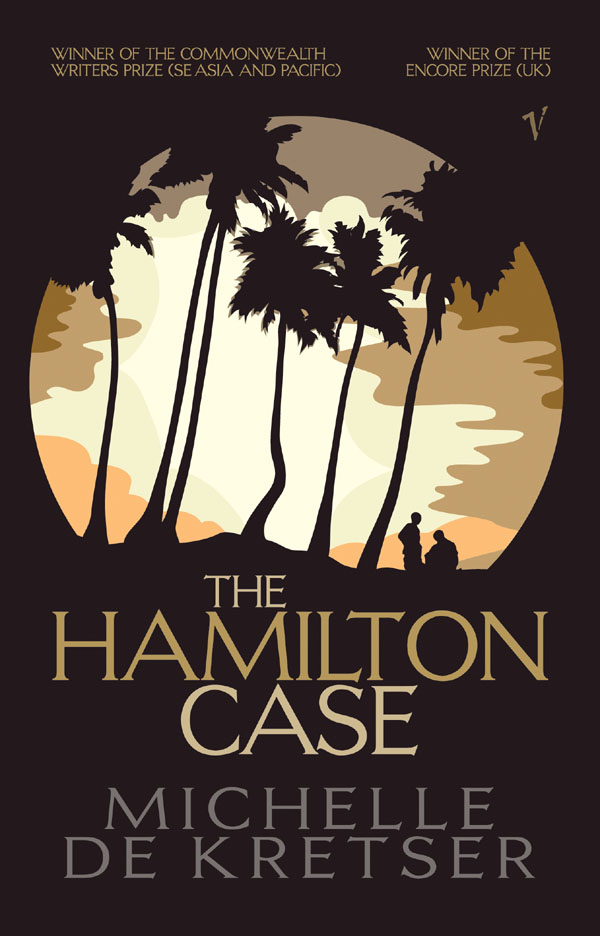
‘The Hamilton Case’ by Michelle de Krester

2003, 367 p.

Three puzzling books in a row.  My dear daughter, bless her, says that I’m just getting stupider.  That may be the case (I blame Judge Willis), but in my own defence in my last three fiction reads I think that I’ve read

  1. a wilfully abstruse  book (House of Splendid Isolation)
  2. a genre high-wire act (Truth)
  3. and now a carefully constructed, unsettling book that I feel satisfied to puzzle over.

This was my face-to-face book group read for the month.  It was my selection (“Who chose THIS book?”) and I was rather disappointed to find when I was flipping through my reading journal that I’d actually read it before, in 2004.  I now realize that what I meant to nominate was her next book The Lost Dog which she wrote in 2007.  It didn’t matter though- I really could not remember much about The Hamilton Case at all.  I was interested to see that the comments I made six years ago are pretty much the same comments I’m going to make now.

This is a clever, clever book.  It commences with an autobiographical fragment, written by the elderly Ceylonese lawyer Sam Obeysekere, reminiscing about The Hamilton Case which he prosecuted many years previously.  The case was emblematic of Sri Lanka’s colonial past: it occurred on a tea-plantation where the white manager was murdered and two labouring coolies were accused of the murder.  Our narrator is a pompous, deluded, rather pathetic character, reminiscent of the narrator of  Ishiguru’s The Remains of the Day.  This section ends abruptly and the narrative broadens to an omniscient third-person perspective.  This is perhaps a little unfair as we have been repelled by Sam’s character in the first section, just as other characters in the book had been repulsed by him for other reasons.  What follows is a narrative of Sam’s family- his mother, sister and son- and what a steaming, foetid family this is.  De Kretser  evokes vividly the rampant Sri Lankan jungle- it reminded me a little of One Hundred Years of Solitude– and the book is drenched with colonial decay.   Much though I was enjoying this section, I did find myself wondering about the title, given that the Hamilton Case itself had taken up only a small part of the book.  But I was in confident hands, and sure enough the last section of the book, written as a letter from an author who had fictionalized (or had he??) the Hamilton Case, disrupted completely Sam’s telling of the case in the book’s opening.

Confusing?  It might read that way in my summary of it, but it didn’t feel confusing while reading.  Certainly, as a reader, you felt distrustful of all the characters and alert to the nuances and tricks of memory but at no stage did I feel that the author was losing control of her own narrative.  On the contrary, it was very assured, clever writing, very careful and well worth a second (or in my case- third!) reading.

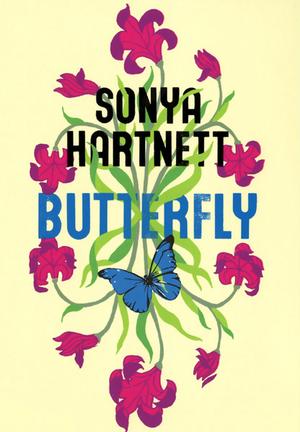
‘Butterfly’ by Sonya Hartnett

2009, 215 p.

I don’t think I want to live in Sonya Hartnett’s worlds.  They’re brutal places where damaged children are lacerated by cruelty and neglect, and where as a reader you start to feel as if you have no skin.  This is the third Hartnett I have read and I feel as if I am reading the same book over and over. I’m starting to wonder if there’s something rather unhealthy about her work.

This has been shortlisted for the Miles Franklin and as my annual torment, I  try to read the shortlist before the winner is announced.  I doubt if I’ll succeed this year, but I’ll give it my best shot.  This is not the first time Hartnett has been shortlisted for major awards- she was shortlisted for the Miles Franklin for  ‘Of a Boy’ in 2003 which at the time I wondered about, and was shortlisted for the Age Book of the Year for ‘Surrender’ in 2005, and at the time I thought that she had a real chance of winning.

And now ‘Butterfly’.  Again I find myself raising a quizzical eyebrow and wondering “Mmm- Miles Franklin?”.  The book started off badly for me because I loathe books that start off with a character regarding themselves in the mirror then proceeding to describe everything they see.  In my list of writing sins  this comes pretty close to the top, followed closely by describing food and Hartnett does quite a bit of that too.  I’m as entranced by the “lyrical” novel as much as the next reader but her images and metaphors just sit on the page, indigestible and distracting.  Even the name annoys me:  “Plum”. I felt very much as if I was reading a Donna Parker book from my early adolescence and despite the frequent references to the heat, I felt as if it was set in 1960s America- perhaps it was the double storey house that did it? It’s written in the present tense which is another narrative technique that makes me fidget.

For probably 2/3 of the book I was very close to giving up on it- and that’s from someone who rarely fails to finish a book.  I kept reading and finally, in the last part of the book it did click, after all.   But I’m not convinced that a book shortlisted for the Miles Franklin should take 130 pages to engage its reader.

I’m no longer an adolescent girl of course, and thank God. Yes, I know that friendship is hard, and that hanging round with a large-ish group of girls as I did in high school had its own perils and insecurities.  It hurts to think back, and I’m pricked by my own embarrassment and shamed by times when I behaved just as badly to others.   Would it have helped to read about it at the time? I don’t know.  Do I want to read about it now? No.

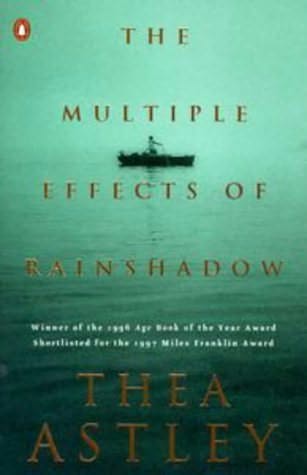
‘The Multiple Effects of Rainshadow’ by Thea Astley

1996, 296p

Thea Astley’s book was written fifteen years ago about an event that happened in the 1930s but this historical fiction has turned out to be tragically prescient.

It begins with the cyclone that annihilated the Aboriginal settlement Mission Beach and led to the establishment of a new mission on Palm Island and it ends with the 1957 strike of the Palm Island men against the menial tasks they were expected to do- an industrial action that was severely repressed.  And though Thea Astley didn’t know it, we could add another post script to her story with the Palm Island death of Mulrunji Doomadgee that Chloe Hooper has described so sensitively in her book The Tall Man.

The central action in the book is the massacre inflicted by the superintendent of the island, Robert Curry (known in the book as “Uncle Boss Brodie”) who, crazed by the death of his wife and suffering from neuralgia, torched his own house killing his children,  shot and wounded the Doctor and his wife (mistress in the book), set fire to the other houses and blew up the buildings on the reserve.  He was eventually shot by one of the Palm Islanders on the orders of one of the white officials.

At first I thought that the book was going to unfold as a series of Rashamon-like chapters, each telling of the killing from different perspectives.  The book started with an Aboriginal English telling of Palm Island’s history – a technique that non-Aboriginal writers might flinch from now.  Then the narrative voice shifts to Mrs Curthoys the hotel-keeper;  then Morrow the inept Works Manager;  and finally Brodie himself.  But then it jumps ahead some fifteen or so years and picks up on other characters who had been there on the island that night: the teacher, the Catholic priest, and even beyond them to the children of those witnesses who had not even been born at the time of the massacre.

Brodie dies; the Aboriginal boy who shot him is jailed but then released.  At one level it is over, but the witnesses and their children are drawn back to it like a web.  The jobs they take, the marriages they make, the choices their children make are all set wobbling onto a different trajectory by what happened on Palm Island in the 1930s.  On Palm Island, too, Brodie is replaced by other administrators who, like their predecessor, become crazed with their own authority and the tension builds again.

I had mis-read Astley’s metaphor of the rainshadow.  I had in my mind those billowing afternoon clouds of tropical Queensland that build like towers in the sky until the rain pours down, the skies clear overnight and then the whole cycle starts again the next day.  I thought that she was referring to the oppressive humidity, or the fury of rain.  It seemed apposite:  Palm Island’s recent history seems to have been a succession of crises that build, burst, abate then begin to build again.

But a rainshadow is a desert, not a jungle.  It’s the phenomenon by which rain falls on one side of a mountain range but it remains dry on the other side.  Now that I know this,  the rainshadow metaphor works well too.  There is a cataclysm; it occurs, then there is parched emptiness. There is a dessication about the people in this book: they move out from Palm Island onto the mainland where they live unhappy, meaningless lives.

The book ends in despair and hopelessness.  There’s no redemption here for anyone. Even less for the Palm Island that Chloe Hooper brought us some eighty years later.

Postscript

If you read the comments below, you’ll see that Whispering Gums and I both wonder if our reviews (her review is here) emphasize strongly enough that the book is fiction.  As I look at my posting, I think that’s a valid point.  The bookends that frame the book- the rampage and the strike- are both factual events, but she has fictionalized the characters.  Even Brodie/Curry (a factual character) has been filled out from the imagination, as he did not survive to give any account of his motivation.  So- look for Astley on the fiction shelves, not the non-fiction! and tease out a little more that eternal conundrum about history and fiction…

The newspaper reports of the day provide a sobering illustration of the imaginative space that Astley had to roam in- they are stark, skimpy reports that read as if they were coming from outer space or a distant, distant frontier .  From the National Library newspaper site, here’s an article about Palm Island that will make you cringe written prior to the event;  and here’s one about the rampage itself.  There’s others too- just search “Palm Island”, narrowing the dates to around 1930.

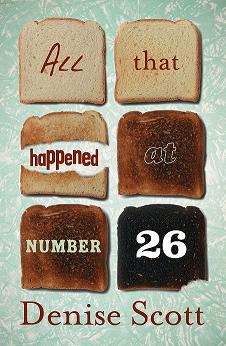
‘All that happened at Number 26’ by Denise Scott

2008, 257 p.

So what does one turn to after finishing reading Hilary Mantel’s stunning Wolf Hall? Why, an autobiography written by someone who feels like a very funny friend, that’s what.  And neither book suffered by the juxtaposition.

Denise Scott is one of the two comedians that I love seeing on Spicks and Specks on a Wednesday night, and if Hamish Blake is on as well then even better!

Denise Scott is my age and she lives a couple of suburbs away.  My stepchildren were involved in some of the episodes of the book, and reading the book is like reading my own life through the eyes of someone much funnier than I am.  I laughed out loud often in this book, much to the disgruntlement of Mr Judge trying to sleep on the other side of the bed.

Nothing really happens in the book- it’s more a series of anecdotes and yarns about family life, marriage, motherhood and daughterhood.  Family is at the heart of this book, but there’s barbs too:  the marriage falls apart at one stage; her mother suffers from Alzheimers; her closest friend Lynda Gibson dies.   She obviously enjoys having young children around her but feels that she is being left behind in her career.  Money was really tight at one stage and you feel a rush of gratitude to whoever it was who left an envelope with $500.00 to tide them over.  She embarks on her comedy career, nauseous with anxiety, but withdraws from the overseas trip that her  fellow-comedians undertake when their act is successful because she doesn’t want to leave her children.

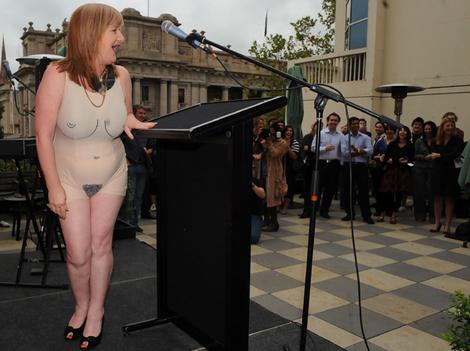
She fears that now that her children have grown up that she has lost her well of family anecdotes, but I don’t think she need worry.  She has that wonderful ability of sniffing out the ridiculous in life and she makes me feel good about being a 50plus year old woman living in Melbourne. And hey, anyone who’s game to appear in public like this will always have a place in my heart!

‘The Bee Hut’ by Dorothy Porter

2009, 139 p.

I wasn’t going to write this post. I was going to write about my own experience of poetry as a reader, the frustrations of reading a collection of poetry in an online environment etc. etc. But I’ve just been crying as I turn the page on the last poem in The Bee Hut, the collection of Dorothy Porter’s poetry that was completed just before she died in December 2008.  I feel so very sad at the thought that this is, literally, the last poem. I’ve been thinking, too, of my friend Dot Mac (everyone knew her that way)- another Dot, my Dot-  who also died of breast cancer a few years ago, at much the same age.  I still can’t quite believe that my life goes on, day after day, and yet she is not here.

While I was reading this book, I found myself wondering about the interweaving of the poet’s life and her poetry. It seemed to me that the whole book was pervaded by a clearness of vision- a close, intense, way of looking- that had been sharpened by her cancer and confrontation with death. In the final poems there is a closing around and a drawing inwards that I think even someone unaware of Dorothy Porter’s own biography would detect.

The book itself is divided into sections, almost like the acts of a play. In this way, it has its own narrative thread, as a collection.  There are travel poems- dust-laden poems about Egypt, cold green poems about London; there are theatrical poems written as lyrics for stage performance.  There’s a section of poems about illness, reflecting the first bout of cancer years earlier, then there are the final, quiet poems at the end. There’s a sense of movement through the poems as a whole, rather than just one self-contained poem after another.

I read this book as part of an online book group that I’m in that focuses on Australian literature-http://groups.yahoo.com/group/AustralianLiterature if you’re interested in joining us. We read and discuss (rather desultorily I must admit) one book a month. This was the first poetry book we have read, and I found it hard to actually comment on it during the process of reading, beyond saying “I liked this bit….” and quoting particular phrases and stanzas.  But there’s an artificiality about reading a book over a month like this, and I don’t think it serves poetry well.   I think that poetry has to be purchased, rather than borrowed; I think that you need to have it at hand for dipping into, rather than reading straight from cover to cover.  I think it needs to be read out loud, rather than read through. It stands on its own two feet: anything that I could add is superfluous.

I really didn’t think that I’d be in tears at the end of it.  The opening poem has been well chosen: the first words you encounter are:

The most powerful presence/is absence.

And what a powerful presence this is.

‘This Errant Lady’ by Penny Russell

2002, 207p.& notes

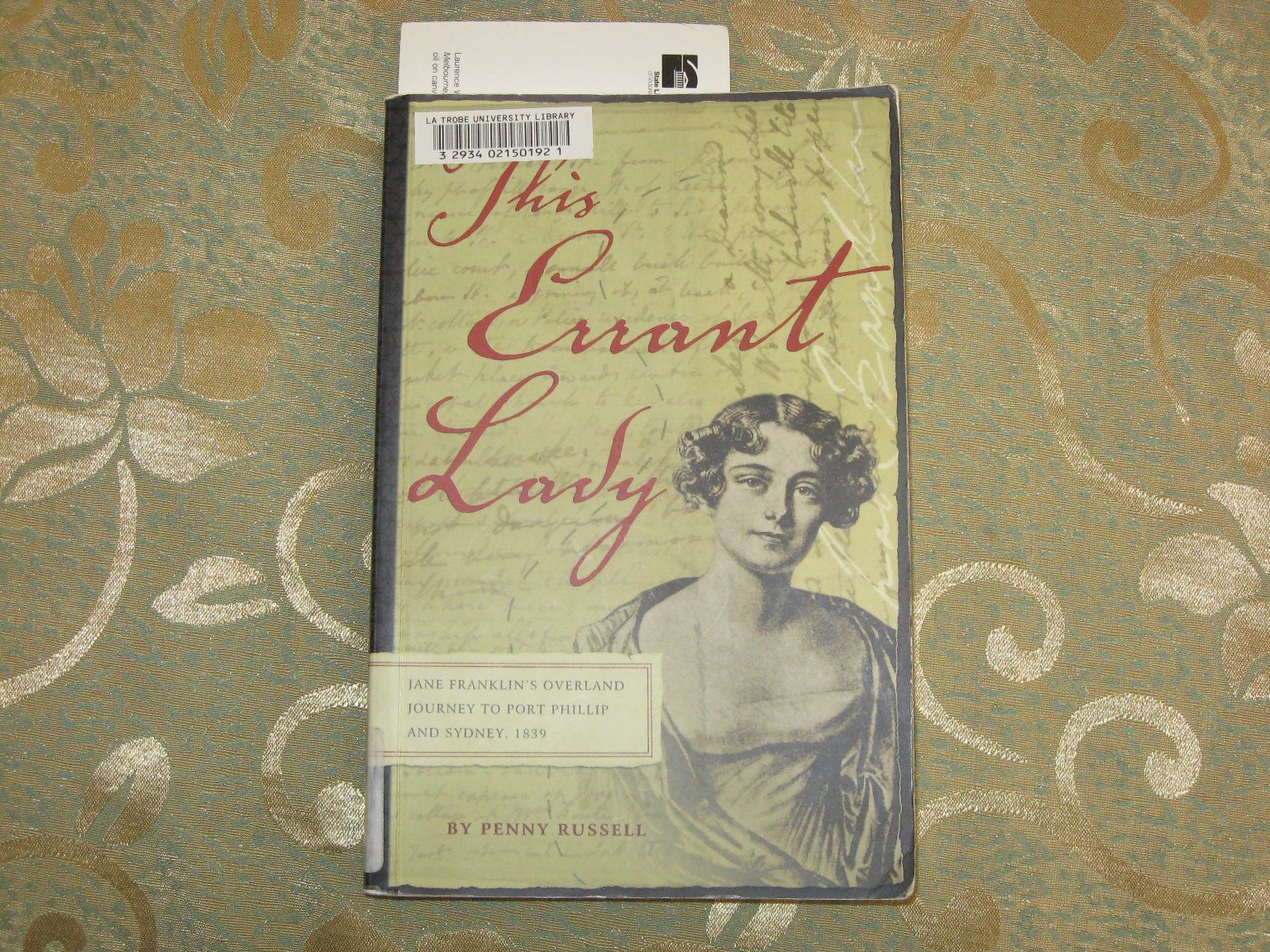
Now here’s a way to decide which book to read next-  what goes well with your decor?  It gave me great pleasure to see Penny Russell’s This Errant Lady lying on my bed, matching so well with my doona cover!  Martha Stewart, eat your heart out!

I was drawn to read this after finishing Ken McGoogan’s Lady Franklin’s Revenge recently.  I’d forgotten that Jane Franklin visited Port Phillip and Sydney in 1839 and I was interested to see what she said about Port Phillip in particular, even though Judge Willis, the Resident Judge of Port Phillip had not arrived at this stage.  I’ve been writing a chapter the last few weeks on Judge Willis’ involvement in colonial politics, which has taken me back to his relationships with Sydney colonists, and as a member of the government elite (albeit of a neighbouring colony), Jane Franklin was well-placed to comment on political events and personalities in Sydney.

Having now read her journal of her overland trip to Port Phillip and Sydney in 1839, I can now see why Ken McGoogan wrote the biography he did, quite apart from any other propensities that a writer on arctic exploration might have.  Jane Franklin’s journals are travel diaries in the true sense of the word- lots of information about routes taken, facts gleaned, people met etc. but not much about her own inner world.  I share the frustration of Penny Russell the editor in her preface:

In recording this epic adventure, Jane Franklin treated her diary essentially as a notebook, producing a compendium of often unrelated scraps of information.  This was in keeping with her general habit in travel writing.  Despite her enthusiasm for knowledge, Jane Franklin rarely ventured to express her opinions, speculations, or interpretations in writing.  The judgments offered in this, as in all her diaries, are generally borrowed from guidebooks, histories or local inhabitants.  Whether she agreed with them or not, she did not see her diary as a space for formulating her own opinions.  She confined her attention to the external, the observable- to what could be ‘fixed’ on the page (p. 16). … Her opinions, her thoughts, her own personality must be deduced as much from what is unwritten as from what is written- her character sketched in the space left vacant in her accounts. (p. 17)

This utilitarian approach can be partly explained by the fiction by which her trip was justified, both to her husband and to Tasmanians generally- that it was a research trip into a sister-colony that would be of use to her husband Sir John Franklin, Governor of Van Diemen’s Land, and would be a form of diplomatic representation of VDL at a governor-to-governor level.  The reality was that she was restless and curious and liked nothing better than getting away from her husband and the scrutiny of a small colonial society.  Mind you, she liked her comforts too- the iron bedstead came on this trip, just as it did on all her journeys.  But she revels in ‘roughing it’ and escaping amongst people who were only vaguely aware of who she was, and you sense the increasing tightening of protocol and deference as she moves from the outlying areas into the more settled districts surrounding Sydney.

The editor, Penny Russell, has excluded much of  the weight of detail that shackled Ken McGoogan’s biography, but she has tried to keep enough in

to preserve the rich texture of Jane Franklin’s portrayal of a colony arrested at a particular moment of development: a moment of optimism for the future, in a society still built on convict labour and pastoral expansion, in which progress rested upon the sufferings of the chain gangs and the brutually dispossessed Aborigines…But the catastrophic pastoral depression that would destroy the hopes of so many in the early 1840s had not yet made its mark, and the grandeur of half built churches and suburban villas, the growing concern over education, and the diversity of experiments in agriculture and industry all suggest an overall confidence. (p. 16-7)

Russell  has also worked hard, though, to preserve the human aspects of Jane Franklin’s interactions with the people she met.  Her trip was a long one- from April to July 1839- and she was quite devious in her excuses to cut it short as Sir John wished her to do.  But she probably should have come home earlier: it was quite clear by July that she had outstayed her welcome with the Gipps’, and it is her discomfort at this knowledge that makes her more likeable.  We have the intimacy of her coming into Mrs Gipps’ bedroom for a chat, thinking that she was alone, and finding Governor Gipps stretched out on the bed; we have the cringing, walking-on-eggshells  embarrassment when Gipps was furious that she had allowed his carriage to become soaked while she was using it.

For me- and I admit that this is probably an acquired taste- I enjoyed finding characters from “my” Port Phillip and Sydney strolling onto the stage.  So we meet Mr Verner (who was to become Judge Willis’ good friend and neighbour) bowling along in his carriage with two friends;  there’s a ship with Protector Robinson’s Van Diemen’s Land aborigines on board (some of whom were to be sentenced to death by Judge Willis two years later);  Captain Lonsdale (who was to become one of Judge Willis’ targets) taking them to a corroboree but arriving late so that it was all over by the time they arrived; there’s Chief Justice Dowling and his wife, and Justice Alfred Stephen (Judge Willis’ brother judges with whom he was anything but ‘brotherly’).  In fact- and this is important for my purposes- conspicuously absent is Judge Willis and his good lady from the balls and levees and receptions that were laid out for Lady Jane Franklin.

And so, eventually Jane headed for home. What a trip that was!  As with all journeys, once you’ve decided that yes, you’re ready to go home, it seemed to take an age.  But in this case it did-  five weeks from leaving the heads to their arrival back in Hobart (a trip that can take about 3-4 days for the Sydney to Hobart yacht race today).  Buffeted by storms, and with food and water supplies running low, their ship bobbed around; once almost glimpsing the coast of Tasmania before being swept out into the seas again over towards New Zealand.   Relieved, no doubt to be back, you still sense Hobart society swallowing her up again, with criticisms of her recklessness in even embarking on the trip and sniffy comments about petticoat government.

Penny Russell has intervened quite a bit in this book.  She has, by her own admission

emphasised particular stories, bringing into bolder relief images that are blurred, tangled or broken in Jane Franklin’s original. (p.17)

From the original transcript, retrieved and recorded by Roger Millis (who wrote the huge tome on Waterloo Creek), she has favoured people over trees or buildings, but not reproduced “the exhaustive and inexhaustible coverage of the original”, she has omitted hearsay information, and trimmed wordiness and detail “to give them greater narrative cohesion and more dramatic immediacy.”  She has supplemented the text with lengthy footnotes, giving a biographical sketch of the people Franklin mentions in passing, and interspersed Jane Franklin’s own text with clearly marked corroborating information from letters and other people’s diaries.  The book is given a clearer structure by its division into chronological chapters, many of which are prefaced by an italicized introduction.  You are aware, and Russell makes no secret of the fact, that you are reading a mediated text.   Which is probably a good thing: as the back cover blurb notes:

An intrepid traveller, Jane Franklin was consumed by an unquenchable curiosity. She looked, questioned, listened and wrote- pages and pages of minuscule notes on every topic that came to hand.  This edition, carefully abridged and introduced by Penny Russell, makes the diary available for the first time to general readers.

And while it’s probably not exactly a ripping yarn,  we general readers (and more specialized ones too)  should be glad that she has.