Category Archives: Australian Women Writers Challenge 2021

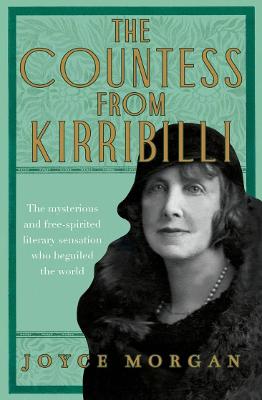
‘The Countess from Kirribilli’ by Joyce Morgan

2021, 313 p.

Perhaps Joyce Morgan is channelling the spirit of Mary Beauchamp/Elizabeth von Armin, the subject of this biography, in choosing such a deceptive title. Particularly for those of us who do not live in Sydney, Kirribilli is synonymous with the ‘second’ Prime Minister’s Residence located on the shores of Sydney Harbour ( a cause for some interstate disgruntlement when the incumbent Prime Minister is from NSW and spends most of his time on Sydney Harbour rather than in Canberra). So who is this Countess?

It’s all a bit misleading, because when young Mary Beauchamp lived at Beulah House in the suburb of Kirribilli, she was certainly not a countess. She was born in Australia in 1866, with an English-born, merchant father, and a Tasmanian-born mother Louey. After living in several houses in Kirribilli, they finally shifted to a (now demolished) waterfront house, Beulah, close to their wealthy maternal uncle Frederick Lassetter and his family. When she was three, her father decided to follow the Lassetters when they returned to England. Mary – or ‘Elizabeth’ as she was better known through her first book Elizabeth and her German Garden, a name which she adopted permanently as a widow, – never returned to Australia again. She made no claim to Australian identity, and it’s interesting that she has no entry in the Australian Dictionary of Biography.

So where did the ‘Countess’ part come from? She gained the title through marriage to Count Henning August Arnim-Schlagethin, a Prussian aristocrat, fifteen years her senior who, while titled, had also inherited his father’s debts. They lived in Germany, and she soon found herself burdened by serial pregnancies with three children in less than three years, five in total. She and her husband spent much time apart. Mary and her children lived in Nassenheide, in a dilapidated schloss, which she renovated. It was a marriage marked with conflict. After Henning died, her next marriage, to Earl Frank Russell (grandson of Lord John Russell the Prime Minister) and brother of Bertrand Russell, was no happier. She kept her ‘Countess’ designation, but now she was Countess Russell. She seems to have swung between happiness and misery in a tempestuous and emotionally labile second marriage. After this marriage broke down, she had other affairs, possibly with her friend H. G. Wells, and with Alexander Frere, who later became a noted publisher, 27 years her junior and literally half her age.

Her former brother-in-law Bertrand Russell warned his children “Do not marry a novelist”. He was right. Elizabeth’s life and experiences very much informed her books, and she drew on both her husbands as characters in her books, and not to their advantage. Framed humourously at first, but then in a more sinister light, she called the Henning-like character in first book Elizabeth and her German Garden ‘the Man of Wrath’. When she wrote The Pastor’s Wife in 1914, the epynomous pastor was Prussian, and took his innocent English wife Ingeborg to provincial life where (like Henning) he studied agricultural developments, and kept her constantly pregnant until an artist (not a writer, as H. G. Wells was) came into her life and convinced her to leave. Vera, seen as the darkest of her books is a “terrifying portrait of domestic tyranny” (p. 185). The husband in this story, Wemyss, takes his young wife Lucy to a gloomy house The Willows (very similar to Frank Russell’s house Telegraph House) where he works to exact total submission from his wife through his moods, vile tempers and manipulation.

Elizabeth worked hard as a writer, almost constantly working on a book. She made sure that she had a working studio in each of the homes she created, and would keep working even when hosting an ongoing stream of visitors. To be honest, I hadn’t heard of any of her 21 books, which seem to range from whimsy to some rather dark domestic themes and back to memoir again. In a literary biography, there is a narrow line for authors to tread between giving the flavour of their subject’s writings for those who have not read them on the one hand, and delving into a more detailed analysis that assumes that the reader is familiar with them on the other. I think that Morgan handled this well, demonstrating the variety that can be found in von Armin’s writing, integrating these largely-autobiographical works into her telling of von Armin’s life, and encouraging the reader to actually read her books.

Most striking is just how well connected in a literary sense Elizabeth von Armin was. Her cousin was Katherine Mansfield, with whom she had a close, but at times, strained relationship. She counted H. G. Wells, E. M. Forster, Rebecca West, D. H. Lawrence amongst her friends and acquaintances, and she knew innumerable people amongst the English intelligentsia. She lived through both the first and second World Wars, fearing for two of her daughters still in Germany, and apprehensive about the Jewish connections in her first husband’s family. Even though she hated travelling by sea in a time when air travel was not yet available, she travelled and lived in various places in Europe and visited those of her children living in America.

She was an idiosyncratic mixture of exhibitionist and dissembler. She wrote best-sellers under a non-de-plume for almost 30 years before her identity as ‘Elizabeth’ was definitively established. She kept secrets from her friends and family and she burned many of her letters (which fortunately the recipients kept). Yet she treated her life as raw material for her semi-autobiographical writing, thus putting her family and friends into the public arena, without consulting them.

Joyce Morgan has presented an enigmatic, fascinating woman who lived a life very far removed from an Australian experience. She has a light touch as a biographer, starting each chapter or section with a narrative, scene-settling, imaginative paragraph or two, as if she is coming up for air, before diving down into description and analysis again. This leads to a fairly ‘choppy’ sort of reading experience, but it also keeps the biography at an easily-accessible level. It is only when you turn to the back of the book that you realize how well she has integrated primary sources into her narrative, drawing on journals and letters by Elizabeth, Katherine Mansfield and H. G.Wells. A rather odd coda has been added to the book where Morgan delves further into von Armin’s Australian family history, almost as if the author feels that she needs to ‘prove’ her Australian-ness which is otherwise incidental to the rest of Elizabeth von Armin’s life.

For me, Morgan has piqued my curiosity sufficiently to seek out one or two of Elizabeth von Armin’s books, and Gabrielle Carey’s biography as well. For a biographer, I’m sure that means ‘mission accomplished’.

My rating: 8.5

Sourced from: Yarra Plenty Regional Library.
I have included this review on the Australian Women Writers Challenge Database.
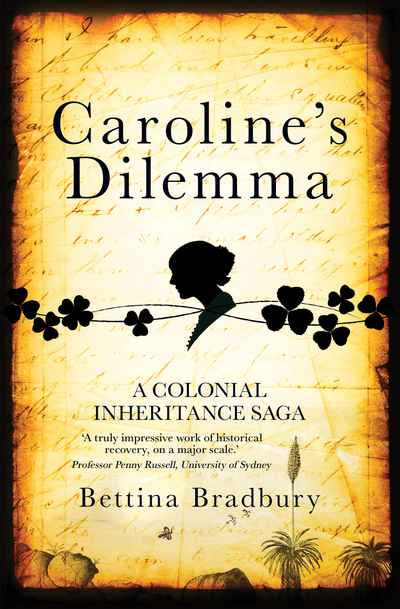
‘Caroline’s Dilemma’ by Bettina Bradbury

2019, 352 p.

‘Ruling from the grave’ seems a particularly insidious form of personal power, as Caroline Kearney found out as a 31 year old widow with six children. She had immigrated to Australia with her family from England as a 17 year old, and married Edward Kearney, a Catholic Irishman who had left his family back in Ireland when he settled in Australia. After farming in South Australia and then the Wimmera in Victoria, Caroline expected that her sons would inherit the family property. It was only when her husband died in October 1865 that she learned that the inheritance, for both herself and her children, depended on her shifting to Ireland and raising the children there as a widow, under the guidance and oversight of her very Catholic -inlaws. She was English: she had never been to Ireland, and all her children had been born in Australia. A dilemma indeed.

It says much for this book that I’m not going to tell you any more. The decisions made and tactics deployed by both Caroline and the Kearney family lie at the heart of this narrative, and I don’t want to spoil your enjoyment by telling you what happened.

Bettina Bradbury is a New Zealand-born historian, who spends much of her time in Australia. She has spent much of her academic life in Canada, writing women’s and family history and her most recent book Wife to Widow: Lives, Laws and Politics in Nineteenth-Century Montreal won multiple awards. It was in widening her lens to look at marriage, property and inheritance in the British Empire more generally that she encountered Caroline Kearney. She found the reports of Caroline’s contest against the will in the Victorian Law Reports, and scrawled “Wow, draconian patriarch” and “controlling father too” across her copy. Fascinated by the case, and the ways in which it embodied the themes she wanted to explore, she put aside the broader book she planned, and concentrated on Caroline instead.

Although she acknowledges the assistance she received from two great-great-grandchildren of Caroline and Edward, this is not your usual family-history search narrative, freighted with family identity and identification. That is not to say that Bradbury was not emotionally invested: her loyalties clearly lie with Caroline and other women whose financial rights were circumscribed by property and inheritance law until Married Women’s Property Acts were legislated across the British Empire. But she brings to this case study her historian’s eye, conscious of context and the norm, and alert to the anomalous and unusual. Her extensive bibliography (how lucky she is to have footnotes AND index AND separate bibliography!) reveals the breadth of her sources: newspapers, genealogical information, legal documentation, secondary sources and an unpublished family history, written by one of Caroline’s sons explaining his family upbringing. These sources enable her to focus in closely on Caroline’s case, but then step back to take a wider perspective. In this way, we roam across emigration history, pastoral history, 19th century legal principles, sectarianism, social history, women’s rights, paternalism and history of the family more generally.

Bradbury is present throughout the narrative, interjecting “I” observations at various places. She is open in admitting where the sources fail her, and where she has had to turn to imagination and empathy instead. While her sympathies clearly lie with Caroline, she is not unaware of her foibles. From the perspective of more than a century later, mis-steps and wrong turns become clearer, but not more explicable. In some of the twists and turns of the story, Bradbury is incredulous – wondering whether the person named in a document really is ‘her’ person because their actions seem so discordant. I guess that it’s the difference between a life lived, with all its contradictions and compromises, and a life documented in the flat and abbreviated historical record.

Bradbury has hit the sweet spot between an engaging narrative history and insightful analysis with this book. Because the two are interwoven so seamlessly throughout the text, I was a little disappointed in the ending, which was a ‘what happened next’ follow-through with the members of the family. While I did want to know what became of the children, this section was necessarily more cursory in its treatment, and became rather too much of a genealogical run-through. There was a short, more analytic summary in the closing pages, but I would have preferred that it was longer, with a wider scope.

This book was shortlisted for the 2020 Ernest Scott History Prize, which is awarded to “the book judged to be the most distinguished contribution to the history of Australia or New Zealand or to the history of colonisation published in the previous year.” Its span and its strong tethering in the carefully-documented sources give it historical “chops” but it’s a very human, sensitive story as well, told with discernment and compassion.

My rating: 9/10

Sourced from: review copy from New South books. Also available from the Royal Historical Society of Victoria bookshop

I have included this book in the Australian Women Writers Challenge.

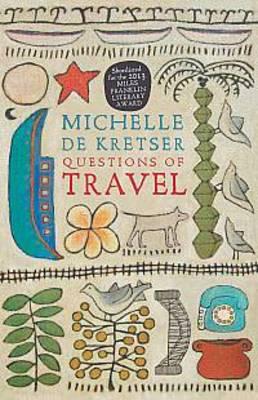
‘Questions of Travel’ by Michelle De Kretser

2012, 515 p.

SPOILER ALERT

I come to this book nine years after it was published. It comes garlanded with prizes: The 2013 Miles Franklin; the Prime Ministers Literary Award, the Australian Literature Society Gold Medal, and shortlisted for the inaugural Stella Prize. How does it stand up, almost a decade later?

It is a long book at just over 500 pages, and I was reading it under pressure for a looming book group meeting. Five hundred pages is a hefty tome, but if you asked me to summarize the book, it really comes down to two rather simple stories.

Australian Laura Fraser is the large, ungainly daughter in a wealthy family, who spends much of her early adulthood travelling abroad. Tiring of travel, she returns to Australia and begins working Ramsay Publishing, a travel guide publishing company in competition with Lonely Planet, while renting small rooms on the upper storeys of an old ramshackle Harbourside house, owned by an elderly man with a large, untidy collection of paintings by deceased artist, Hugo Drummond. She is largely rootless: she owns no property, and has a strings of affairs with unavailable, married men, dalliances with older men and infatuations with gay men.

In the other story, Sri Lankan Ravi emigrates to Australia as a refugee after his wife and son are found murdered in mysterious circumstances that hint of official and police involvement and cover up. Although, as a Sinhalese Ravi was not in political danger, as he might have been had he been Tamil, his wife had been a Human Rights activist. Shifting from house to house, and disguising himself as a tourist in Colombo, one of his wife’s activist friends arranges for him to fly to Australia on a tourist visa, with a view to seeking asylum after arrival, hence avoiding the detention scheme for refugees who arrived by boat. He is a rather passive and ambivalent refugee, confounding our easy assumptions about ‘real’ asylum seekers.

The book follows the trajectory of these two main characters from the 1960s through to 2004. The narrative is often quotidian yet detailed, and there were many times when I wondered where (if anywhere) this book was going. The descriptions are so clear that you can almost see them in your mind’s eye, even though I had not been to many of the places described. They combine everyday, unexceptional life with large, explosive world events that occur off-stage – the death of Princess Diana, 9/11 etc. Big events occur, completely without warning or emphasis, and you find yourself re-reading to make sure that what you thought happened, actually did. As a reader, you develop a warmth towards this large, essentially aimless girl, and this man, traumatized by the deaths of his wife and child who somehow seemed more loveable to him once they had died. The book plaits the two stories, one over the other, and any expectation that somehow they are going to merge in some large plot development is disappointed. The action that moves the book forward is everyday and largely inconsequential, within a framework of larger, international events. Both Laura and Ravi are rootless, even though they are both drawn ‘home’.

This pointillist, rather aimless structure plays out de Kretser’s larger argument about “the question of travel”. As her character Laura observes, much of travel involves just hanging around, doing nothing, waiting for the next thing – just like in this book. Laura works at a ‘travel’ book publishing company, priding itself on supporting ‘travel’ rather than the more grubby, commercial ‘tourism’ – but where does the difference lie? Is it ever possible to have an ‘authentic’ travel experience, or does authenticity lie in the everyday and banal? How has the internet, the development of which she traces in this book, changed the nature of travel when experiences can be rendered digitally? And what of those who choose to travel, as distinct from those who are forced to travel?

I don’t really know what to think about this book. At over 500 pages, it was very long and much of the book consists of rather banal detail. Events land unexpectedly, just as in real life. Some change the whole trajectory of the book; others are absorbed into the flow. I found myself thinking of the book as a type of mosaic. Each little tile by itself is inconsequential, and yet the connection of each little tile contributes to a bigger picture. I suspect that the details of this book have wormed themselves into my consciousness far more than I realize, and that my appreciation of the book will grow, rather than diminish, over time. It is beautifully and intelligently written, and you could choose any page at random and find a sentence that captures an image with crystal clarity or skewers an observation with a spiky, mordant wit. Just like when travelling, much of it was boring and inconsequential. And, much like when travelling, the experience of reading afforded by this book creates something much bigger than its parts.

My rating: 7.5

Sourced from: CAE bookgroup. My bookgroup was divided in its opinion.

I have included this on the 2021 Australian Women Writers Challenge website.

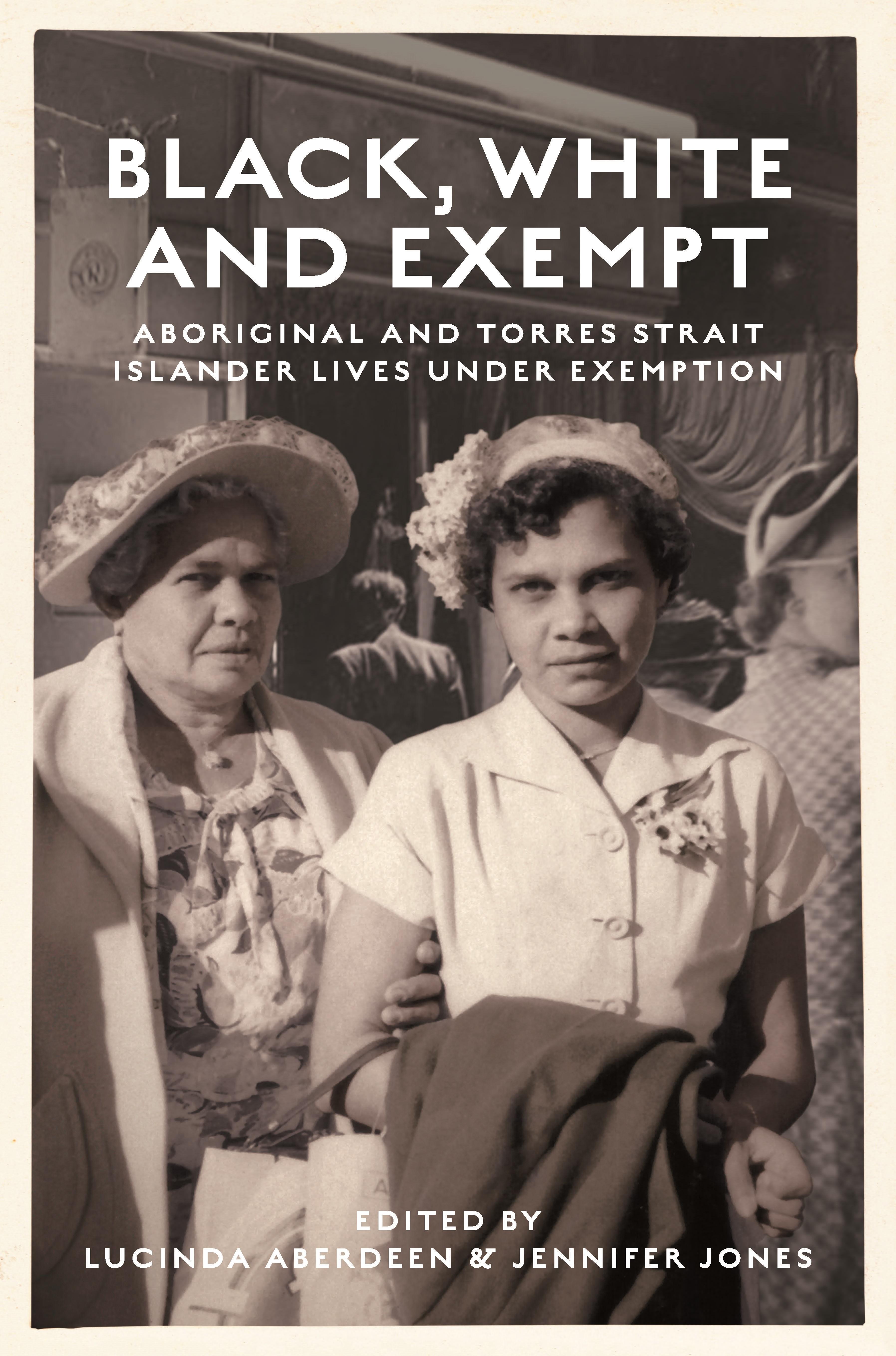
‘Black, White and Exempt’ by Lucinda Aberdeen and Jennifer Jones (eds.)

2021, 184 p.

Aboriginal and Torres Strait Islander people are respectfully advised that this publication contains names and images of deceased persons and culturally sensitive information.

I think that one of the most damning and poignant phrases in the Uluru Statement from the Heart refers to “the torment of our powerlessness”. I think about the massacres; I think about the Stolen Generations and now, after reading this book, I add the ‘certificate of exemption’ to this grim array of injustices.

The exemption legislation, introduced across Queensland (1897), Western Australia (1905), Northern Territory (1936), South Australia (1939) and New South Wales (1943) is almost breathtaking in its condescension and its nonchalance to its implications. Although the legislation differed between the states, it involved a process by which individual Aboriginal people could apply for a certificate to declare that they were exempt from the ‘Protection Acts’ on the grounds that they were more ‘assimilated’ than other Aboriginal people – lived moral lives, didn’t drink too much, had steady jobs – and didn’t participate (at least as far as the government was concerned) in Aboriginal culture or socialize with other ‘unexempt’ Aboriginal people. This exemption could be revoked at any time: likewise, it could be imposed without consent on ‘troublemakers’ to separate them from the community.

Ironically, some white Australians, wanting to challenge and negate Indigenous narratives, today deride their authors as “not real Aborigines” (yes, I’m looking at you Andrew Bolt). Yet the Australian government deliberately encouraged this conscious self-rejection of Aboriginal identity, which passed as a matter of course to their children.

This book arose from a two-day symposium called Rethinking and Researching 20th Century Aboriginal Exemption in Australia, held at La Trobe University’s Shepparton Campus in October 2018. Elders directed the planning committee and community member involvement, and there was input from the Aboriginal and Torres Straight Islander Cultural Arts Centre for Koorie Education at GOTAFE. Separate ‘yarning circles’ were held for Indigenous and non-Indigenous community members, academics and students. Of the eleven authors who contributed chapters to this collection, all but one are women, and four are Indigenous. This affects the type of book it is. A collection of papers presented as part of a conference or symposium has a different structure and tempo from a volume written by one person alone. Because they are written to reflect a timed, oral presentation, there is a fairly standard length and each one is self-contained, taking its own ‘bite’ at the question. Within each one there is a structure of introduction-evidence-conclusion, but unless there is a final, integrating chapter (and in this collection, there is not) there is often no over-arching conclusion. The La Trobe University connection between the authors comes through very clearly, with a strong representation of La Trobe academics and alumni.

Australia was not the only country to introduce exemption legislation. John Maynard, in the opening chapter, points out that historically, there were similar processes in French and Belgian colonies – not that looking to the Congo for policy is much of a recommendation (p. 14) Both Canada and America had similar policies with their Indigenous populations, starting with Canada in 1857 and in America in 1906. Rather disingenuously, the Queensland legislation of 1897 was called the Aboriginal Protection and Restriction of the Sale of Opium Act, even though only 6 of its 33 clauses related to opium, the remaining all directed towards control of Indigenous people.

So how did one get exempted? When the individual Indigenous person initiated the process, it involved writing a letter to the responsible authority, providing references, then attending an interview. It was intrusive and judgmental. All of this correspondence, and the government reports that led to either the approval or rejection of the application are part of the National Archives of Australia collection. As Katherine Ellinghaus noted in her chapter where she reviews the history of the exemption legislation, “the archives of exemption are incredible: vast, intimate and confronting”. They make judgements on intimate details of Indigenous lives: the cleanliness of their houses, whether or not they drank alcohol, who they were married to, if they were ‘troublesome’.

Those [records] that remain contain evidence of cruelty, misfortune and sadness, but also resistance, activism and survivance [sic]. Even the simplest and most everyday applications for exemption should be seen as documents of negotiation…[containing] extraordinary detail of people’s lives and families, often rendered in racist and unkind bureaucratic language

p. 40

As a result, the records are on restricted access, available only to their families, which is only right. Some families have allowed historians to access them, with names redacted. Other Indigenous people have drawn on these records in telling their own stories in the form of biographies and memoirs. Other stories are in oral form only. In this book, Indigenous contributors Aunty Kella Robinson and Aunty Judi Wickes draw on their own family stories, while in other chapters families have given permission to the historian, with names changed.

From these stories, we see that people sought exemption for a number of reasons. Sometimes it was because other welfare provisions were tied up with it- that you could only get a Commonwealth old-age pension if you held a certificate of exemption. For other people, it was a way of escaping the mission and taking up work opportunities elsewhere. Even there was no specific legislation in Victoria, families sought to escape the involvement of the Aborigines Welfare Board in their lives by seeking ‘self-determined exemption’ (p.85) from the vagaries of changing government policies, as explained in Jessica Horton’s chapter. Ella Simon, a revivalist preacher associated with the evangelical United Aborigines Mission, despised the certificate of exemption she gained in 1957. As Jennifer Jones shows in her chapter, gaining exemption meant that she could undertake her travelling ministry without being exposed to segregation, but it meant that she had to officially abjure her links with the Purfleet UAM mission, which was an integral part of her identity and faith. Karen Hughes’ chapter looks at the examples of two US War Brides, whose certificate of exemption enabled their journey to the United States, where they faced new forms of discrimination. Leonie Stevens’ chapter ‘Smash the Exemption System’ examines the Northern Territory, where at the time of introduction, Indigenous people (themselves a multi-cultural group) were the majority of the population, outnumbering the non-Indigenous population 4:1(p. 167). The Half Caste Progressive Association played an integral role, first in achieving the legislation in the 1930s and then attacking it in the 1950s. The Northern Australian Workers Union, active in the Pilbara strikes, and other networks drew on the United Nations Declaration of Human Rights, widening the pressure for change beyond the Territory to a national and international level.

At the same time, these stories highlight the precariousness of the status awarded by a certificate of exemption. If it was rescinded, families were forced to return to the mission, where there was a strong chance that their children would be taken. As part of their powerlessness, if the policies changed, their lives changed too. Beth Marsden’s chapter ‘Destination of Pupil ‘Unknown” shows the fluidity of family relocations along the Victorian/NSW border as children were enrolled in school, often with vague information provided by the parents, and then withdrawn to escape the scrutiny of the state and the fear of removal. In NSW segregated schooling had developed when school principals requested to exclude Aboriginal children on the grounds of complaints made by white communities (p.109) Shifting back and forth across the border was a way of maintaining family networks and resisting the bureaucracies of both states, but it must have affected the childrens’ education.

I was appalled, reading these stories, one after the other. I understand completely the sensitivities and pain involved in telling family stories, where the decisions of one generation about identity and identification cascade through into succeeding generations. These stories, and the judgments and prejudices that prompted them, are for the family to tell. But the repetition of these injustices, in one family and then another and another, highlights that this was a structural, government-sanctioned process. It should be better known, and it needs to be part of the Truth Telling that must, eventually, come.

As Ellinghaus says:

The history of exemption must be fully told, not just to historians and stakeholders, but to mainstream Australia as part of the truth-telling that this nation sorely needs. There should be public recognition of the damage that has been done by these policies, perhaps in the same way that we have seen for the Stolen Generations. Not just recognition, apologies and reparations, but the inclusion of these people who have suffered through this policy in the narrative of settler colonialism in Australia.

p. 41

On the basis of the editorship and the predominance of female contributors, I have included this book in the Australian Women Writers Challenge.

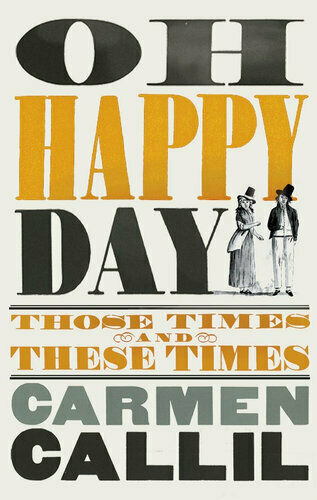
‘Oh Happy Day: Those Times and These Times’ by Carmen Callil

2020, 282 p.

Somehow or other I have ended up with a second-hand copy Carmen Callil’s earlier book Bad Faith on my bookshelf. When I purchased it from who-knows-where, I did not know who Callil was, but I was aware that her book had been well received. Even though Bad Faith remains unread, I now know that Carmen Callil is Australian, even though she has lived in England since 1964, and that she started Virago Press and has worked in the field of publishing and literature ever since. So I picked up her most recent book Oh Happy Day: Those Times and These Times when I saw it at the library.

The blurb on the back reads:

Carmen Callil explores her roots in a book that is a miracle of research and whose writing is fuelled by righteous anger…Carmen Callil not only reclaims from obscurity the lives of these ordinary men and women who were sent to Australia as convicts or domestic servants, but also draws telling parallels for our own times. Oh Happy Day is a moving story of poverty, social injustice, Empire and migration.

As I have said many times before on this blog – so many times that I’m boring myself too- I am drawn to ‘Who Do You Think You Are’-type books and programs, and I am usually disappointed. I like the history; I like the stories of largely unknown people, but I find the displays of emotion on the part of the searcher to be maudlin and somewhat self-centred. The tears are triggered more by a sense of identification – “that’s MY great-grandmother” – rather than from a sense of injustice that anyone endured such sorrow or deprivation. Probably the best family history/quest I have read is Graeme Davison’s Lost Relations, and re-reading my review here, I again find myself nodding in agreement with Davison’s reservations about the endeavour, many of which I share. Callil’s book is not unlike Davison’s in that it takes a broad view of the context, then embeds the individuals within it, rather than the other way round. And that’s the way I like it.

The three sets of family trees in the book, one at the front, two in the appendices, makes it patently obvious that this is going to be a book based on genealogy. In her introduction Callil writes that she intended to write about all her English, Irish and Lebanese emigrant ancestors, but then decided to focus on three: Sary Lacey; George Conquest, the father of one of Sary’s children, and Mary Ann Brooks, who married Sary’s son. All three ended up in Australia via different routes; all three are found on branches of Callil’s family tree; and all three are used as vehicles by which Callil tells her story of nineteenth century working class life.

I’m not going to go into the details of these individuals’ lives. As often happens with family historians, the researcher feels a familiarity (on first name basis no less) with the individuals on their family tree and the minutiae of their lives, that can become eye-glazingly tedious to outsiders. I’m more interested in the bigger themes that she draws out.

The first theme is the effect of technological change on the stocking frame workers in Leicestershire. Until now, I wasn’t particularly clear on what a stocking frame even was. The home-based stocking frame workers had a rhythm to their working week – collecting the wool, working feverishly for about four days, taking back the finished product then a few days later collecting the wool to start the whole cycle again. They rented their frames from middle-men, who took their own cut. However, the fashions changed, new machines that did not fit inside a house were invented, and the trade shifted into factories instead, with those few stocking frame workers clinging to the old ways offered less and less for a product that no one wanted.

Second, I knew about the changes to the Poor Laws in the 1830s, but I hadn’t quite realized the ‘like it or lump it’ approach it took to the destitute who sought assistance: it was the Poor House or nothing. Her telling of Sary’s life in particular illustrates the contingent and precarious nature of working class life, and the thread of relationships that could keep a family just outside the Poor House walls. The stories of Callil’s ancestors emphasize the physical proximity of family, shifting from street to street, generally staying close to other family. She hints – because she can do no more than that- at an incestuous relationship. She suggests the ruses and half-truths that enabled Sary to work the system sufficiently to survive. She notes the importance of Nonconformist religion amongst the working class and highlights the political turmoil amongst the working class at the time, even though there is no evidence that her family was involved.

Third, only one of her three ancestors is transported to Australia, but she devotes considerable space to the convict system as it changed over time, and as George Conquest experienced it. Here I feel that she faces the similar hazard as Babette Smith confronted in her Defiant Voices (my review here) where the dramatic and cruel is emphasized, but the examples in the book reveal the opposite. Callil is not a historian, but she does engage with the academic literature. Her own dispute with John Hirst’s argument that the convict system was more negotiable than, say Robert Hughes’ depiction of systematized violence and terror, is played out more in the footnotes than in the text. In a footnote she describes Hirst’s Convict Society (my review here) as “an exquisite example of Australian revisionist history, revealing much about its writer and little about the experience of convicts- and others of the time” (p. 308). Even though she spends many pages describing whippings and brutality, her ancestor George Conquest was not sent to a secondary penal settlement, and there is no evidence that he was whipped. In fact, he was almost a poster-child for the opportunities that could open up through transportation, partially through the benevolence and assistance of a magistrate-settler to whom he was assigned, and also through his own astuteness and hard work in taking advantage of the situations that presented themselves. Even though the convict system was intended to keep convicts on the other side of the world, George Conquest was even able to visit England again, returning by choice to Australia and finding himself in a position to help family members.

In her introduction Callil wrote that she had a present-day purpose in writing this book:

So I decided to tell only the story of Sary, George and Mary Ann, natives of England’s labouring poor – the paupers, asylum seeks and refugees of their day. Their story raised a question: had so little changed in Britain in the last 200 years, that generation could succeed generation, each one repeating their grim experiences?

p. xvi

I don’t know that she really explores this question in much depth in the book. Where she does draw parallels with the present day, it is in passing or concentrated within the closing pages of the book, almost as a polemic about refugees, Brexit, indigenous affairs, rather than engaged with as a serious question. I was disappointed, too, that she did include her Lebanese forefathers at the end of the book after all, despite her intention to concentrate on Sary, George and Mary Ann. It is such a cursory treatment that I felt it weakened the book, rather than strengthened it. Sary, George and Mary Ann are strong characters, whose lives provide much to work with, and I think that she should have stayed with them alone. Her research into the Britain they left, and the Australia to which they came is detailed and rich, especially for people who are unknown to all but family, but I’m not sure that the book meets the expectations for present-day commentary that the title and her introduction suggest.

My rating: 7/10

Sourced from: Yarra Plenty Regional Library.

I have included this on the Australian Women Writers Challenge.

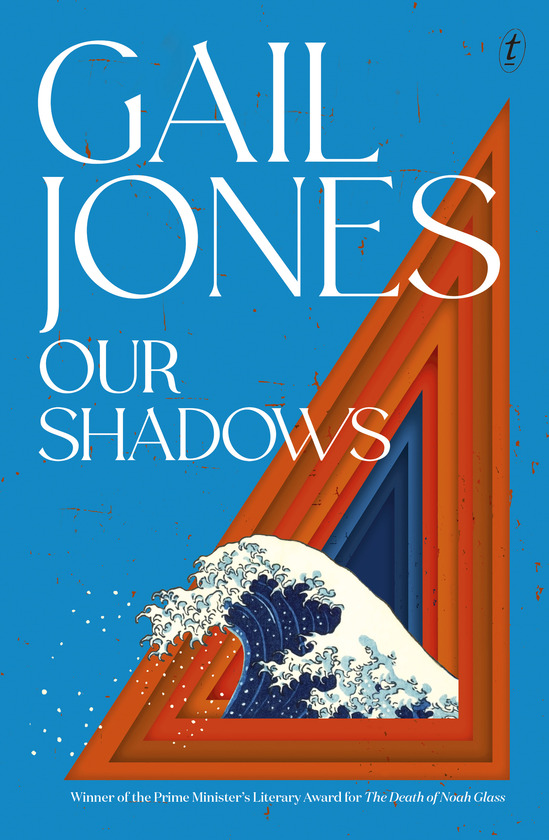
‘Our Shadows’ by Gail Jones

2020, 320 p.

As a child of a 1960s education, I’ve often thought that the stories we read in our School Reader have a particular endurance in our memories. Perhaps it was because it seemed that the whole curriculum seemed to centre around the School Reader, or because as a fast reader, I was condemned to reading and re-reading the story until the slower readers caught up. When I read the italicized preface to Gail Jones’ Our Shadows, where a young girl is remembering a story of a trapped Italian miner named Modesto Varischetti waiting to be rescued, something snagged at me. It was only at the end of the book that Jones brings this preface back into focus. It was a story in the ‘Fifth Book’ of the Victorian School Readers. There had been a mining accident; the water rose too quickly in the mine; he was trapped on a ledge; then divers came for him, with those huge circular diving helmets. And for any of us who read and remembered that story with its blurry black-and-white sketches, it all sprang into life again with the rescue of the boys in the Tham Luang Cave Rescue in 2018.

This story is part of the clever bookending that Jones employs in Our Shadows. The past and the present jostle against each other, just as they do in the threaded narrative of the book. There are multiple strands. One is Paddy Hannan, famed as the discoverer of the gold that made Kalgoorlie and Coolgardie famous as ‘Wild West’ gold towns during the 1890s. Fleeing the Irish Famine that has winnowed out his family, the discovery of gold and his notoriety is just one part of his long life as he escapes to Melbourne where he drifts around St Ambrose’s church in Brunswick and the domed, green lamp-lit State Library.

The other, more substantial strand is the Kelly family, who lived in Kalgoorlie. In the present day, there are two sisters, Nell and Frances. Their mother Mary died after Frances was born, and their devastated maternal grandparents, Fred and Else, took over the care of the very young girls. Their father, Jack, left and the girls grew up completely in the care of their grandparents. Now Fred has died, and Else is in a nursing home. The two sisters, while not estranged, are awkward and tentative around each other. Nell suffered with mental illness as a teenager, while Frances has recently been widowed when her husband died with mesothelioma from a childhood spent in an asbestos mining town. Frances, the younger sister, is perhaps more grounded than her older sister, and when they agree to look for their father, it is Frances who travels back to the family home, now occupied by their embittered aunt Enid.

At first I thought that this was going to be a multi-generational family history story and I felt that Gail Jones was punching below her weight to adopt such a clichéd narrative structure. I should have trusted her more, because the writing is much more complex than that. One of the shadows that falls over the sisters is their innocent acquiescence in the erasure of their mother’s memory by their grief-stricken grandparents, and the dominance of the maternal side of the family when their father disappears. So the narrative skips back and forth between the present day, and their grandparents’ own story, and the sisters’ childhoods. The interweaving of Paddy Hannan’s own story complicates the narrative even further.

Jones writes landscape beautifully, and I think that her Western Australian sensibility shows through here. Her writing, in this as in her other books, is very carefully wrought, although at times over-wrought. Frances deciding to go for a run for its ‘ravishing repetition’, and feeling the ‘delectable’ pull of her muscles when doing hamstring stretches feels like the writing of a much less experienced, polished writer. I have read several of Gail Jones’ books, although I only reviewed Five Bells (see my review here) and it seems that I have had similar reservations about her other books as well.

As the winner of the Prime Minister’s Literary Award for The Death of Noah Glass (which I have not read), Gail Jones is often regarded as a ‘literary’ and ‘hard’ writer. I do not find her this way, but this book is probably more accessible than her other books because of its apparently familiar family-history structure. It is much more complex than that, picking up the themes of her other books – estrangement, guilt, white response to indigenous dispossession, strained relationships – explored within family bonds. Her control of the different strands and time shifts is masterful, and it is a ‘meaty’ book with multiple themes and reflections.

My rating: 8.5

Sourced from: Yarra Plenty Regional Library

I have included this review on the Australian Women Writers Challenge database.

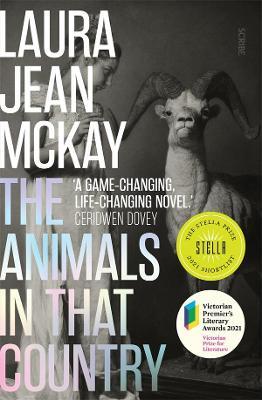
‘The Animals of that Country’ by Laura Jean McKay

2020, 277 p.

This book won the Victorian Premier’s Literary Award for 2021 and it comes emblazoned with glowing praise from other writers and reviews. ‘A game-changing, life-changing’ novel, it is supposed to be, according to Ceridwen Dovey. High praise indeed, but I’m afraid that it left me rather cold.

Jean is an older woman who has lived hard. She is an untrained wildlife carer and guide in a refuge, a job that allows her to be close to her granddaughter Kimberley. Kimberley’s mother, Ange,the manager of the refuge, grudgingly allows Jean to live on site even though her partner, Lee (Jean’s son) shot through years ago. News begins filtering through of a pandemic – [oh yes, a pandemic. Are we about to be deluged with books about pandemics? Spare us] – colloquially known as ‘zooflu’ which turns your eyes red and makes you able to understand animals talking. I must admit that the implausibility of this turned me off from the start.

The effect was not Dr Doolittle. Instead, people were driven crazy by the voices that they heard, and as fear gripped the community, some chose to expunge every animal from their environment; while others were drawn to the animals who surrounded them, to their own peril.

When the infection finally reached the wildlife refuge, they were closed down immediately. Jean’s son Lee, already suffering from the influenza returns home, and takes his estranged daughter Kimberley with him. Jean feels compelled to follow.

Jean drinks too much, smokes too much, and is harsh and uncouth. She does love animals, though, especially a dingo called Sue, even though Sue had bitten her when she was trying to release her from some wire. Jean and Sue take off in their ute, following Lee and Kimberley’s trail through an increasingly desolate landscape. Jean is infected too, and soon can hear Sue’s thoughts. The infection from the dingo bite is becoming increasingly toxic as the surrounding animals become more menacing, and as societal norms break down.

So what do these animals sound like? McKay depicts their language in a sort of blank verse in a bold font, tangentially related to events, usually fixated on food or excretion, and somehow ‘off’.

Gasping

over the lock (I’m

mingy.) It’ll call me and

I’d like

to get a drink of

it

p. 82

I must confess that I found these animal dialogues opaque (as they were intended to be) and rather twee. I kept thinking “this book is ridiculous”, and even though the concept is interesting, this is pretty much the way I felt through the whole book. Written in Jean’s voice – and a limited and uneducated voice it is, too – it is told in the present tense throughout. There were many times when I was confused about what was happening, although my confusion was generally resolved so that I think I know what happened.

I’m surprised that this book has received the acclaim it has. Although it was written prior to our own pandemic, it probably was released into a market more primed for pandemic-books than might have been the case five years earlier. I found the basic premise implausible (although interesting) and the writing rather flat. Not my type of book, I’m afraid.

My rating: 6/10

Sourced from: Yarra Plenty Regional Library.

I have included this on the 2021 Australian Women Writers Challenge.

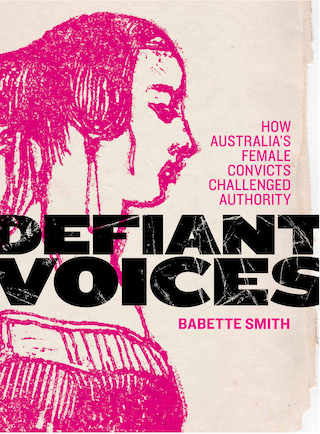
‘Defiant Voices: How Australia’s Female Convicts Challenged Authority’ by Babette Smith

2021, 253p.

The response to a convict in the family has changed markedly over recent years. Once a source of shame and embarrassment, now it is brandished as a badge of pride (including by our own Prime Minister). One feels almost chagrined that despite rattling the family closet, there are ‘only’ later emigrants.

Family historians with a convict in the family have an advantage when it comes to sources. Across modern history there seems to be a reciprocal relationship between the severity of an institutional regime and the complexity and volume of their records and bureaucracy (thinking, for example, of Eastern European communist countries or Nazi Germany). In the case of Australia’s convicts, the transportation system generated a range of documents. Because they fell into a bureaucracy, we know so much about these individuals than we would have otherwise – their height, appearance, the circumstances of their crime- and yet, particularly for women convicts, their voices are rarely heard. This book seeks to recover those voices.

As Babette Smith observes, the characterization of the convict system generally, and women convicts in particular tends to fall into two extremes. The first (and I would put Robert Hughes’ The Fatal Shore into this category) sees Australia as a place of barbarity, oppression and cruelty; the second (and here I am thinking of John Hirst’s Convict Society and its Enemies) sees it as a place where the overwhelming concern was that convicts not return to Britain once their sentence had expired. As a result, there was encouragement to marry, establish a livelihood and in effect, start over again- as long as it was as far from Britain as possible. In relation to women, some sources were particularly hostile, depicting them as debauched and incorrigible. Other sources, Smith claims, have been interpreted by feminist historians as characterizing convict women as passive victims of the patriarchy (p.9). In this book, Smith muddies the distinction. She detects elements of both but most of all emphasizes the agency of women convicts, whether it be by choosing to marry and thus disappear from the record, or by repeatedly challenging authority through their ‘defiant voices’.

The book is arranged in a loosely chronological structure, starting off in Chapter 1 ‘The Crown v. the People’ describing the female convicts’ interactions with the legal system back in Britain. She discusses social changes and the criminalization of poverty. She points out that most female convicts sent to Australia were convicted of theft, particularly from lodging houses, shops, and trickery. Women were also involved in counterfeiting and ‘receiving’ stolen goods. She draws from the criminal records, court reports and newspaper articles, and observes that few women cried when sentenced, because tears and outbursts would certainly have been noted in the newspaper reports. Although male prisoners were sent immediately to the hulks, women were often held in jail until there were enough of them to fill a ship (p. 32).

Chapter 2 ‘All at Sea’ describes the sea voyage to Australia. Because convict ships also carried officials and clergy, many of the most critical descriptions came from relatively wealthy fellow-passengers appalled at their proximity to their unadulterated working class. These are the documents that have largely fueled the ‘strumpet’ characterization of convict women. Many of these descriptions were observations only, as the two groups were physically close but with little or no actual interaction.

Chapter 3 ‘Camping’ concentrates on the arrival of the early female convict transport ships and the immediate experience on disembarking. She points out the shortages of food and fabrics, the variety of physical relationships with men, and the paucity of knowledge that we have about the relationship between convict and indigenous women. Chapter 4 ‘Expansion and Consolidation’ widens the geographical lens to look at the other convict settlements at Norfolk Island and Van Diemen’s Land. In the section ‘Turning Respectable’ she describes the changes that Governor Macquarie brought both to the colony and penal theory. He represented the rising religious morality of the middle classes, and constructed the Female Factory at Parramatta, which introduced more regulation into women’s experience. Chapter 5 ‘Women at Work’ argues that because of the shortage of female domestic labour, women found themselves at an advantage – often for the first time in their lives- and resistant to the ‘niggling’ of their mistresses and employers. Absconding was often part of this battle of wills, although as Smith points out, with an absconding rate of 25%, the majority of women stayed put.

Chapter 6 is devoted to the Female Factory at Parramatta, the design and administration of which was strongly influenced by the Quaker prison reformer Elizabeth Fry. From 1823 it was divided into three sections: the first for women waiting to be reassigned (the source of the ‘marriage bureau’ trope), the second for pregnant and nursing mothers and the third for punishment. Most of our ideas about the Female Factory are shaped by the appalling child mortality figures from the second section, and the defiance and insubordination of the third section. Here Smith develops her argument about women’s voices. The third section was noisy. Cheering, jeering, yelling, quarrelling were punished by hair cutting and confinement to cells. As she did in Chapter 4, Smith again widens her analysis in Chapter 7 ‘Secondary Punishment Settlements’ to take in the places of secondary punishment (i.e. sentences passed within NSW and VDL rather than back in Britain) in Newcastle, Macquarie Harbour, Port Macquarie and Moreton Bay.

Chapter 8 ‘Female Factories in Van Diemen’s Land’ looks at the factories at the Cascades, Hobart in George Town (Launceston) in the north, and later in Ross. As with the Parramatta factory, these factories were divided into sections, and all were overcrowded. Here, too, the women talked (p. 193), much to the chagrin of the superintendent of Cascades. They rioted, they sang, they danced, they jeered, they ridiculed – just as they did in Parramatta. Policies came and went, with ‘probation’ introduced in 1845 to inculcate discipline and submissiveness, but it was abolished nine years later.

Chapter 9 ‘Love and Loss’ looked at the role of marriage as a stepping-stone to morality in many cases, and further violence in others. Here she describes the conditions and death toll at the Cascades nursery in particular, and the role of orphanages. In a nice bit of symmetry, Smith closes the book in the final chapter titled ‘The People v. The Crown’, a neat inversion of the opening chapter. She emphasizes that the outcome for convict women ranged from ‘triumph to tragedy’. (p. 242). She points out that while the Crown always won back in Britain, in the colonies the tables were turned. The gentry needed the co-operation of the prisoners. Starting with the ship journey to the colony, there was a change in the power balance. The health care received on ship was better than many women had ever experienced before. Undoubtedly there were women who had sex with the crew,the officers, and possibly male passengers, but this may well have been their choice. On shore, women convicts were involved in every kind of sexual relationship, of which rape and coercion was just a part, but always a threat. However, as the century and the former penal colonies progressed, women changed, sometimes crossing class barriers in their relationships.

They were not silent. Smith notes:

Some historians have advocated a shift in historical imagination from ‘seeing’ to ‘hearing’ the past. And they are right. But it has been predominantly the sounds of a male world to which they have listened. Distracted by our feminist preconceptions about sexuality and gender power imbalance, we missed how loudly the voices of women convicts ring out from history’s page. Moving past the sites of exploitation suggested by the gentry, such as the voyages and relationships, we can hear more clearly what the women were saying, the force with which they spoke and recognize its impact on others. Their use of shouting, wailing, singing and ridicule as weapons in a war of attrition against authority is now fully exposed, with the range and depth of it much greater than we realized.

p. 251

There were many things that I liked about this book. It is generously and lavishly illustrated throughout the text with images and artefacts from the convict era, although I wished that some of the text-based artefacts were reproduced in a larger size so that they could be read instead of merely observed as an object. The text is interspersed with little biographical break-outs, which tell the story of individual women convicts across their whole life span, reflecting the work of family historians. I liked the way that she recognized the changing nature of the convict system over time, as the idealism of the early plans had to yield to shortages and unforeseen situations, the influence of Macquarie, and the regimentation of later convict policy.

And yet those frequent potted biographical break-outs exemplify the tension in her argument. They also highlight the importance of the choice of name for a book – something that I know is often driven more by the publisher than the historian, although in this case Smith thanks her Twitter friends, who overwhelmingly favoured ‘Defiant Voices’ as the final title. As Smith points out many times, the transportation scheme opened up pathways that would probably not have been available to women had they stayed in Britain. Particularly during the earlier years of transportation, when women and domestic servants were scarce, women found themselves in the box-seat, probably for the first time in their lives. Smith rightly emphasizes the women’s agency, and for many women, this involved making domestic choices that took them out of the convict system entirely. Again and again, her break-out boxes feature women who married or settled into some other sort of domestic relationship, and went on to have many children. Some became wealthy, others ended up being buried in impressive vaults, others became pillars of the church. I wonder how many of their friends (and indeed children?) knew about their convict origins? These details are drawn from genealogical records, rather than prison records.

Meanwhile, the more voluminous prison records deal with those ‘noisy’ women denoted by the title. Making noise is another form of agency – of resisting, calling attention, of refusing to conform – but the women’s loudness and the weight of documentation generated by their intransigence tends to overshadow that other domestic, quieter agency of summing up the options, and choosing the best.

It is rather misleading because in the body of the text, Babette Smith has resisted being dragged into an either/or, strumpet/victim dichotomy. The book is far more nuanced than the title and back-page blurb suggests. It is instructive to hear those voices of defiance, but it is important to recognize those other, more domestic choices as well – as Smith does well, despite the title.

My rating: 8.5/10

Sourced from: Review copy from NLA Publishing through Quikmark Media.

I have included this review on the 2021 Australian Women Writers Challenge website.

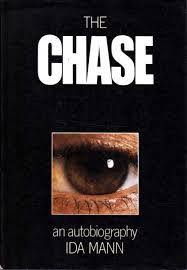
‘The Chase’ by Ida Mann

1986, 217 p.

Our face-to-face book went into hibernation during the lockdown throughout 2020, so when received our most recent read, The Chase, an autobiography by Ida Mann, we opened the box with anticipation. But what a smell ! the books had obviously been unread for a very long time (probably pre-dating COVID) and they were very musty. And having finished the book now, there’s probably a good reason why this book has not been particularly popular. Published in 1986, it’s very much a product of an earlier time, drawing on fairly pragmatic and workmanlike ideas of autobiography, and expressing attitudes for which Ida Mann would be condemned today (and indeed, in the 1980s as well).

If you’re wondering ‘Who is Ida Mann?’, you’re not alone. She was a world-famous ophthalmologist, born in 1893 in England, who had already reached the peak of her research career when she emigrated to Australia with her husband Profession William Guy, an acclaimed cancer research in 1949. After her husband died in 1952, she continued her work in ophthalmology, researching the prevalence of eye disease (especially trachoma) in indigenous populations, and speaking at World Health Organization conferences in many places throughout the world. She was also an inveterate traveller.

As might be expected from a woman steeped in the sciences, the book is very much a start-at-the-beginning-and-go-through-to-the-end endeavour. The presence of lines of verse scattered through the text does little to dispel this impression, reflecting the old-fashioned nature of the narrative rather than the author’s literariness. In its tone, the book reminded me of military histories, where every single individual has to be named and acknowledged, and Christmas family letters regaling the reader with travel tales to exotic places (from the days when we still could travel). Neither genre particularly appeals to me. The book (which admittedly has been edited from an even lengthier text) descends into an extended travelogue at the end.

This is not to detract from her professional achievements, which are many. One hundred and forty three published papers, a string of scholarships and fellowships, a CBE and DBE attest to her hard work and professional reputation within the field of ophthalmology. She was, however, no feminist. Just as Margaret Thatcher did little for the cause of feminism, Ida saw the ‘nonsense about women’s rights’ as unnecessary, because if you wanted a job enough, you would get it. She was vehemently opposed to the NHS, and it was its introduction, along with her husband’s ill health, that prompted her shift across the world. She expresses little empathy for patients, preferring the research aspect of her work. She was dismissive of the Australian slap-dash attitude when the pure genetic lines of her research mice were compromised because insufficient care was taken. Particularly repellent was her classification of the Aboriginal people she examined for eye disease into the categories based on their likeness to ‘us’: Similar, Almost, Rather, Hardly and Not-at-all. (p. 150)

Yet this intensely driven and pragmatic woman had a mystical side as well. She writes often of her dreams, particularly one vivid dream where she was presented with two doors. In the dream, she chose the door that opened onto sunshine, blue sky and fear, and this dream changed her life. She rejected the life of an office-worker that her parents had chosen for her, and became proactive in choosing and pursuing her own career. As in most autobiographies, there are elisions and silences, most particularly in her response to her husband’s death and a rather curious allusion to incestuous feelings towards her older brother, Arthur.

You’re unlikely to find a copy of this autobiography very easily. In a way, that is a pity because autobiographies of female scientists are not common. On the other hand, the stilted narrative, incessant name-dropping and dismissive individualism are not appealing features of this autobiography. Perhaps Ida Mann needs a biographer who can rescue her life from her own narrative.

My rating: 6/10

Sourced from: CAE as the March book for The Ladies Who Say Oooh (i.e. my face-to-face bookgroup). The other ladies enjoyed the book more than I did, and were more appreciative of her achievements than I was.

Ida Mann appears in the Australian Dictionary of Biography, so I have included her on the Australian Women Writers Challenge Database.
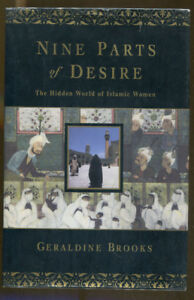
‘Nine Parts of Desire: the Hidden World of Islamic Women’ by Geraldine Brooks

(1995) 2008, 272p.

Given that this book was written in 1995, (reprinted in 2008 with a new afterword) I hoped that her analysis of the lives of Islamic Women in Middle East countries might have been rendered redundant. That hope has not been realized. Despite the Arab Spring, the position of women in Islamic countries remains parlous, and possibly even worse than when Brooks wrote this book prior to 9/11, the rise of ISIS and the wars that followed in its wake.

Geraldine Brooks, who was born in Australia, worked as a journalist and foreign correspondent for many years, although she is probably better known now for her historical fiction. While she was working as the Middle East bureau chief for the Wall Street Journal, she was frustrated by the customs that made her life as a journalist so difficult, compared with her male fellow journalists. Then she noted that her colleague and translator, Sahar, had begun wearing the hijab. Curious about why Sahar had adopted it, she realized that as a woman she had access to women’s experience that was closed to male journalists.

For almost a year I fretted and kicked at the Middle East’s closed doors. Then, thanks to Sahar, I looked up and noticed the window that was open only to me.

p. 7 1995 edition

Taking on Islamic dress herself, she sought out women who were still working as journalists, politicians and activists. Many women told her that, historically, Islam provided an improvement on women’s conditions, that the Prophet himself was pro-women, and that Islamic dress provided a respite from the male gaze. She was not convinced:

Once I began working on this book, I looked everywhere for examples of women trying to reclaim Islam’s positive messages, trying to carry forward into the twentieth century the reformist zeal with which Muhammad had remade the lives of many women (other than his own wives and the Muslim army’s war captives) in the first Muslim community at Medina. It turned out to be a frustrating search. In most places the direction of the debate seemed to be exactly the reverse. Palestinian, Egyptian, Algerian and Afghani women were seeing a curtain come down on decades of women’s liberation as Islamic leaders in their countries turned to the most exclusionary and inequitable interpretations. For those women who struggled against the tide, the results were a discouraging trio of marginalization, harassment and exile.

p. 232, 1995 edition

The title of the book is taken from a quote from Ali ibn Abu Taleb, the husband of Muhammad’s daughter Fatima and the founder of the Shiite sect of Islam. “Almighty God created sexual desire in ten parts; then he gave nine parts to women and one to men”. This sounds like an invitation to male lasciviousness to me, and the desires that Brooks explores in this book are not sexual. Each chapter starts with a relevant quote from the Koran.

Chapter 1, The Holy Veil talks about Brooks’ own interview with Hashemi Rafsanjani, who was President of Iran between 1989-1997, for which Brooks wore the chador. She writes about the variations of Islamic dress in different Middle East countries, and the effect of Iran’s theocratic revolution. Chapter 2 “Whom No Man Shall Have Deflowered Before Them” discusses female genital mutilation and its absence in the Koran itself, honour killing, and the paradox between sexual licence for men and repression for women. Chapter 3 “Here Come the Brides” looks at Islamic marriage while Chapter 4 “The Prophet’s Women” looks at Muhammad’s own family life, making the point that many of the revelations from God seemed to be particularly apposite for Muhammad’s own situation. Chapter 5 “Converts” focuses on Janet, an American who had married and converted to Islam, and Janet’s American friend Margaret. Both women complied completely with the demands of their husband and in-laws. Chapter 6 “Jihad is for Women, Too” looks at the paradox of women incorporated into the military forces in Islamic countries, and the empowerment (within limits) that this sometimes provided. Chapter 7 “A Queen” looks at the situation of the American-born Queen Noor of Jordan, a country that at the time offered the most hope for political liberalism. Chapter 8 “The Getting of Wisdom” examines women’s education in different Middle East countries, with differing degrees of segregation and the increasing presence of fundamentalism. Chapter 9 “Risky Business” looks at women’s role in the workforce, and Chapter 10 “Politics, With and Without a Vote” looks at the varied (and decreasing) political roles available to women. Ironically, some Islamic women were elected in hard-line Iran, but I sense that her political acceptability was increased by her persecution under the Shah which made her a striking example of the repressiveness of pro-Western politics. She picks up on the campaign by Saudi women to be able to drive- something that is shamefully still a travesty. Chapter 11 “Muslim Women’s Games” addresses the women-only Islamic Women’s Games and in Chapter 11 “A Different Drummer” Brooks herself gets physical by taking a belly-dancing course.

In her conclusion “Beware of the Dogma” she comes out most strongly with her own conclusions and the question of how we, as Europeans, should respond. She argues that “In an era of cultural sensitivity, we need to say that certain cultural baggage is contraband in our countries and will not be admitted.” (p.238) At the time of writing, America did not have laws banning female genital mutilation (Australia does). She argues – but does not believe that it will ever be accepted – that Islamic women should have a right to asylum on the grounds of “well-founded fear of persecution” as a matter of course.

I have read this book before, and I think that I am even more conscious of the issues that she raises, especially after the Arab Spring sputtered out. Her criticism is most strongly directed at Saudi Arabia, a country which has assumed even more importance on the world stage since Trump. She is strong in her condemnation, especially in her conclusion, but she avoids the reflexive Islamophobia of, say, Ayan Hirsi Ali (who lost me with her association with the American Enterprise Institute). Her interviews mainly deal with middle-class and educated women, but that probably reflects the milieu in which she was working and the contacts that she made. She seems rather oblivious to the effect that her Judaism – something that she does not hide- may have had on her informants.

My rating: 8/10

Sourced from: CAE Book Groups.

I have included this on the Australian Women Writers Challenge Database.