Category Archives: Australian literature

‘Modern Interiors’ by Andrea Goldsmith

goldsmith

1991, 242p.

This is Andrea Goldsmith‘s second book, and one that I hadn’t heard of before.  I read it for my C.A.E. bookgroup – a night of wine, laughter, affection amongst the women my daughter has dubbed “The Ladies Who Say Oooooh” (because apparently we work ourselves up into a chorus of  ‘oooooh’ at some stage during the night. I’m not sure if this is a compliment or not).

The book’s main character, Phillipa Finemore, is a wealthy widow whose adult children expect her to share the family money with them and subside into a well-heeled widow’s existence as their mother and grandmother.  Instead she sells the big family home, shifts into a terrace house in Carlton, starts a charitable foundation, travels with her deceased husband’s lover and secretary, and befriends a Jewish bookstore owner and then a 25 year old university student.

The goodies and baddies are stereotyped and one-dimensional.  There’s the grasping daughter and embezzling son-in-law; the insipid and incompetent son, and the good gay son who gets on well with his mother.  There are overdrawn parodies of the self-aggrandizing business school and a grasping evangelical preacher and his young wholesome wife.  The slabs of Goldsmith’s own opinions about the perils of family and the commodification of university education, voiced through the characters, became laboured too.

In spite of all this, though, I enjoyed reading the book.  It was almost Anne Tyler-ish in places, and although very wordy, captured emotions and descriptions well.  I felt glee at the come-uppance of such unpleasant people, so I must have been engaged with this book in spite of myself.

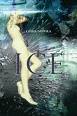
‘Ice’ by Louis Nowra

nowra

2008, 322 p.

I’ve now finished  the final of the Miles Franklin shortlist for 2009- a shortlist this year dominated by the literary bulls of Australian literature (Winton, Flanagan, Nowra, Bail and Tsiolkas).  I don’t know whether to be assured that the shortlist is truly gender-blind by not including a token female writer, or whether to snort that SURELY one of the many books published by female writers must have qualified.

I think this is the one amongst the shortlist  that I enjoyed reading the most.  At first it seems to be a straight fictionalized biography of Malcolm McEacharn,  a colonial entrepreneur responsible for the refrigerated meat export trade among other things.   Nowra has used some fictional licence here, but sticks fairly closely to McEacharn’s biography.  A shy, diffident man, McEacharn’s mother remarried and shifted to India, leaving him as a young worker to find his own way in the world. He falls in love with Ann, a bewitching beautiful girl. When she dies, he is maddened by grief, and the rest of his life- apparently successful with money, clothes, mansions, political influence- is just a series of layers with his love for Ann at its core.

Running parallel to this is the present-day voice of Rowan Doyle, likewise maddened sitting beside his comatose wife, who had been writing a biography of McEacharn when she sustained catastrophic injuries when attacked by a crazed ice addict.  Doyle picks up the story, based on her research, but embues it with his own feelings of grief and loss, and finds himself unable to stop writing because it is his last contact with his wife.

This juxtaposition of death/coma and ‘ice’ in its many manifestations is deliberate, self-conscious and a little laboured at times, but I found myself drawn into the sorrow and obsessive love in the book and was in tears by the end of it.  The modern narrative breaks in at unexpected places, and because the biography itself is a product- their joint product, already researched with its ending known- there is quite a bit of foreshadowing.

Louis Nowra was interviewed on RN’s ‘Book Show’ and made this comment about biography and historians:

Louis Nowra: The interesting thing about all this is that I don’t believe you can know anybody after two generations. What I’m saying is if I write about an historical character…I really don’t know Malcolm. All I know is these papers that I’ve read and a couple of interviews that he did. I have a kind of a vague idea about him. So really the novel is not an historical fiction. What I’m attempting to do is almost parody historical fiction. I’m not saying this is the real Malcolm, I’m saying this is Rowan’s version. No one can possibly know about people more then 50 years into the past, I think…

Ramona Koval: So you’re talking about straight history as well?

Louis Nowra: I think straight history is fine, but once you start to second-guess characters, once historians start to identify with a character, I think you become very much on slippery ground. Like my grandparents, for example, I have learned a lot about their lives when I wrote my first memoir. At the same time, they are tremendously vague for me because I don’t have their values, I don’t have their sense of morality and I don’t have their sense of how they fought so hard for money. So I cannot judge them. And the same is with historians. I actually think that sometimes there’s a bit of flimflam that goes on.

Through his character Rowan, Nowra (hah! an anagram!!) backs away from claiming ‘truth’ from his writing.  He tells his comatose wife that he’s found extra information to add to her already-completed  research; he reads her research notes and moulds them into an explanation that is more consonant with his own emotional response to grief, rather than a straight biographical account.

And as Nowra says in this interview, ‘Ice’ is very much a love story and a meditation on the narrow line that divides love from obsession.  It’s not unlike ‘Wanting’, one of the other Miles Franklin shortlist for 2009, but it’s more tender in its approach.  I hope it wins, although I suspect that ‘The Slap’ will win, and that ‘Wanting’ should win.  But I can always hope, can’t I?

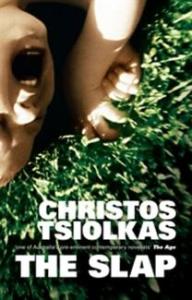
‘The Slap’ by Christos Tsiolkas

the-slap-by-christos-tsiolkas

2008, 483p.

It’s doing well, this one.  Plans for a television series; won the Commonwealth Writers Prize, and shortlisted for the Miles Franklin.   The Miles Franklin is awarded for any ‘published novel or play portraying Australian life in any of its phases’ .  [An aside: I hadn’t realized that a play could win it.]  Certainly, The Slap portrays Australian life of  the backyard barbeque of inner-ish  suburb of Northcote, Melbourne in the 2000s in all its domestic, self-absorbed, middle class glory.  When one of the fathers slaps an obnoxious four-year old he triggers off much tut-tutting amongst the witnesses that ripples out into broader questions of discipline, family loyalty, abuse, friendship, class, religion, ethnicity, suburbs- the lot.  Everyone’s here- the yuppie bayside suburb Greek boy made good; his cousin married to the Indian vet; the Sex-and-the-City writer who wants to do more than write soap opera scripts; the earth mother and her drop kick partner; the young gay adolescent boy struggling with his sexuality; the Greek grandfather; the Aboriginal muslim and his Aussie wife.  Yep- I think that covers every inner-city suburban stereotype we need.

The book is told in long chapters written from the perspective, but not in the voice of,  people who were at the barbeque and witnessed the slap.  For some, it was just that- a spur of the moment slap to a child behaving badly; for others it was a violation of the rights of the child and his parents; others saw it as a criminal act; yet others as an unspoken manifestation of other domestic violence.   These chapters work well: they are long enough for a reader to shift into the character’s mindset, and because they move forward chronologically, they keep the plot unspooling.

There are actually two slaps- or at least physical encounters with this same little brat-  in this story, each bookending the first and last chapters of the book, and yet we don’t see them in the same way- largely because of  the other knowledge we have gleaned about the characters along the way.   Much of this other knowledge is fairly unattractive.  It uncovers infidelity, jealousy, class envy, prejudice, vindictiveness, self-centredness  and dishonesty. To be fair, it also uncovers loyalty to family and loyalty to friends, but even these things look rather shabby and unhealthy too.

Gerard Windsor reviewed this book in the Sydney Morning Herald where he described this book as “a strikingly tender book”. I didn’t see it this way.  I think it’s a jaundiced book, populated with human, recognizable but ultimately unlovely people.  I’m not convinced that it’s high literature: it smacks of the four-part miniseries- almost like Big Brother in the Backyard.  Perhaps the same sense of voyeurism is what keeps you reading, to find out what people just like you are going to do in this situation.

As a Port Phillip District resident, I enjoyed reading about my Melbourne home town.  The Heidelberg Court House is just down the road,  I know the streets that he’s talking about.  I know these people too. As  inner suburban, middle class, university-educated, chardonnay-sipping Melburnites older than 25, we’ve met them all one way or another.  It truly is “Australian life in its 2008 phase”, but somehow I think I’ll feel a bit short-changed if it wins the Miles Franklin.  Is “reality reading” (like reality television), authentic and identifiable as it is, the same as “literature”? I’m not sure.

‘The Pages’ by Murray Bail

bail

2008, 199 p.

To be honest, I’m not absolutely sure that I ‘got’ this book.  I am wary with Murray Bail- the first time I read ‘Eucalyptus’ I found it pleasant enough though underwhelming, but on a second reading wondered why I hadn’t picked up on the brilliance of its structure the first time.   Does ‘The Pages’ have another level as well?  But should you have to read a book twice in order to understand it?

In many ways ‘The Pages’  reads as if it is a complement to ‘Eucalyptus’.  Where in ‘Eucalyptus’ we had an antipodean Scheherazade weaving stories from the landscape, in ‘The Pages’ we have an antipodean Wittgenstein who travels the world and returns to immure himself in the solitude  of his  shearing shed to write his philosophy of the emotions.  In ‘Eucalyptus’ we have stories hanging like leaves, evoked by the names and appearances of eucalyptus trees ; in ‘The Pages’ we are left with sheets of paper, largely empty except for single, aphoristic thoughts.

The plot, such that it is, operates at two levels.  Erica, a competent, articulate academic philosopher, has been engaged to assess and edit for publication an archive of papers left by Wesley Anthill,  a peripatetic and largely self-taught philosopher who returned from travelling Europe to his family pastoral property, where he locked himself away to write a philosophy of the emotions.  Erica travels out to the outback homestead to examine the materials, accompanied by her psychoanalyst friend Sophie who is recovering from yet another failed relationship, this time with a married man.   While there, Erica sinks into the quiet rhythms of the pastoral lifestyle shared by Wesley’s brother Roger and sister Lindsay, who indulged  and supported their eccentric brother’s writing.  Erica comes to appreciate and love Roger’s  earthy, grounded ‘philosophy of the hand’ which is such a contrast to the laboured and hard-wrung philosophy that Wesley had grappled with, alone in his woolshed and now nothing more than sheaves of paper, expungable with the simple act of spilling a cup of coffee.

The second plot involves Wesley’s own gradual quest for knowledge, stepping tentatively from autodidactism into formal academia, then moving around Europe in the footsteps of other philosophers.  Although he fled Australia because he felt it unreceptive to philosophy, he returned there, after tragedy, to find and write his own, original philosophy.  An essentially solitary man, he seems ill-fitted to write a philsophy of the emotions.

The pacing of this book is unusual.  It unspools slowly, like a laconic country story, and when I was approaching the end of the book, I wondered how Bail was going to finish it in so few pages. It ends with a string of disconnected thoughts that just hang there.     It’s a big book: themes of philosophy, psychoanalysis, words, Europeanness, Australianness ; and yet not much happens in the book.  It’s complex but simple.

If this sounds ambivalent and contradictory, it’s probably because that’s how I found the book.  I’m not sure if it’s brilliant or banal- which is very much the way I felt about ‘Eucalyptus’.   Miles Franklin winner? Well, ‘Eucalyptus’ won the Miles Franklin a few years back- so obviously many people detected at first what I took two readings to find.  Perhaps ‘The Pages’ is like that also, but I tend to think that put up against novels with a stronger story, ‘The Pages’ will be seen as too elusive, too strange.

‘Wanting’ by Richard Flanagan

wanting3

2008, 261 p.

I haven’t see Baz Luhrman’s Australia (and nor do I think I shall), but I wasn’t surprised to hear that Richard Flanagan had worked on the screenplay.  From the comments of those I’ve spoken to who have seen it, the film  seems to elicit a shifting discomfort in its audience – as if the viewer is not quite sure whether it’s a parody or not; whether to go with it, resist it or mock it.

It seems that Flanagan has quite a skill at unsettling his reader by playing around within genres.  As with Luhrman, you’re always very much aware of the author there, constructing, drawing together, working, and so the work becomes performance as much as narrative.  This was particularly the case in Gould’s Book of Fish which I think is probably the best ‘Australian’ novel of the last five years- a wild, inventive riff on a historical character that was also beautifully, carefully, lovingly presented as artefact.

Wanting is in much the same vein. It  plays within the historical fiction genre, leaping across continent and plotline to draw together Charles Dickens, Sir John and Lady Jane Franklin,  the young Aboriginal girl Mathinna, George Augustus Robinson, Wilkie Collins- a whole cast of mid-century ‘historical’ characters.  As a reader, you’re constantly aware of Flanagan moulding and threading his different storylines, and his deliberate construction of ironies, opposites and parallels in the surface and ‘true’ stories in the book.  I noticed that he used the term “motley” several times in the book and on his website, and he uses it in the sense of the costume, the trappings of the fool who jeers and capers while he tells the truth.

Flanagan on his website shrugs off the research he has done for this book:

These notes are for those readers who wish to discover something more of the historical truth behind some of the characters and events mentioned in Wanting. Perhaps because I am drawn to questions which history cannot answer, and because these characters and events thus become the motley thrown over the concerns that are the true subject of this novel, I am disinclined to research. Accordingly, I have leaned heavily on a very small post made up of only a few books. I do not know if they are definitive, only that they were useful.

He’s being too modest here: the historical research holds up well, but it doesn’t hamstring him as it so often tends to do with ‘historical fiction’ in more reverent, tentative hands.   He uses it as a playground, a trampoline, an arena in which he can write about bigger truths that cannot be held by a single act in a single lifestory.  The quote from the back cover “We have in our lives only a few moments” has all of the schmaltz and extravagance of  Baz Luhrman’s red-curtain trilogy- in fact, for me, the cover evokes  red velvet, sunset and blood-, and yet the phrase also captures the paradox of the historical ‘actor’ and the banality, humanity, and  tragedy of small actions, petty desires and fleeting decisions when they are writ large on the historical stage.

‘American Journeys’ by Don Watson

images

2008,  326 p.

I haven’t been to America.  And I don’t normally read travel books.

That said, Don Watson’s American Journeys strikes me as a rather unusual specimen of the genre.  It starts off conventionally enough, with a map of America with snail trails all over it, zigzagging right across the country.  It’s only when you embark on the book that you realise that these are indeed, journeyS plural, undertaken just for the pleasure of seeing what’s there, and that the experience of travel- i.e. moving from point A to point B- is just as important as the final destination.

This feeling of disembodiment- moving across- the continent is reinforced further by the blandness of the table of contents- just Chapter 1, Chapter 2 etc.  It’s really quite hard to locate favourite sections again in this book- it all just flows past.

Nonetheless, there are some truly memorable chapters- the New Orleans chapter in particular is damned good reportage- and indeed, as I flip through the book, I find good segments throughout that I had enjoyed but passed on over without them really making a strong impression on me. Is this shallowness intentional?

But there’s also a repetition about the book.  Again, I can’t work out if this is a weakness, or whether it’s a commentary on the nature of America itself.  Fast food strips, the shambolic nature of privatized public transport with Amtrak, the narrow fundamentalism, the puffed-up boasting, the distance…all these themes crop up again and again, right across his journey.  But then I think about how few concepts one really takes from a book when the last page is turned, (maybe four at best??) and if leaving with a multi-stranded memory of a book is a sign of success, then this book succeeds admirably.

Most of all, this book gave me a more nuanced understanding of American freedom, although I probably still don’t ‘get’ it.  In the past, I have bristled at the smugness and selfishness of George W. Bush’s ‘fridom’ that was so disrespectful of that of other nations.   Don Watson explains it much better than I could paraphrase, so I’ll let him do it:

Freedom is such an old chestnut of American rhetoric that it does not impress outsiders as perhaps it should.  The more the president speaks of it, the less meaning it registers.  When he says ‘Our enemies hate us for our freedoms’ we cringe, even though we know that, down the years, Americans have died in tens of thousands for the cause. In any case, we think, it’s less for the freedoms that they hate you, and more for the influence you exercise. ‘Our enemies hate us for our power, our hegemony’ would be a truer statement, and little would be lost by stating it in these terms.

And yet, when one travels in America, the chestnut sheds at least some of its shell. You come to see that, to Americans, freedom means something that we incurable collectivists do not quite understand; and that they know freedom in ways that we do not.  Freedom is the country’s sacred state.  Freedom is what must be protected.  All over, they will tell you what is wrong with America, but freedom is the one thing they think right.  And whatever the insults to my social democratic senses,  that is what I find irresistable about the place- the almost guilty, adolescent feeling that in this place a person can do what he wants…

If I am American, I am as free as a person can be.  If I am free, I can do- or dream of doing- all the things that it is in my nature to do or to dream; no other place on earth need interest me.  So long as I am guaranteed this freedom, I will forgive the things my country does that are not in my nature or my dreams.  I will be ‘spared the care of thinking about them’.  That is, of course, unless my country or some other place threatens freedom.  (. 325)

The blurb on the back of my book quotes Watson saying “Love and loathing come and go in about the same proportion”, and he conveys this ambivalence so well.

Book catalogues

The postman brought me today one newsletter from Amnesty International, a bill for my subscription for the Age and the Summer Book Guide from Reader’s Feast

spring08final-cover_small

This is an old one from Spring 2008, but you know what I mean- those glossy little publications from your favourite bookstore with all the latest products, short blurbs and some breathlessly enthusiastic recommendations from staff with names like “James” and “Rosie”.   What suckers are we: actually SIGNING UP to receive advertising!  How much does one have to pay, I wonder, to have one’s book featured in this little freebie that keen readers actually ASK to receive?  Still, I do like to see what’s around and tuck it away in the I’d-like-to-read-that-someday part of my brain.

Just occasionally I marvel at the fact that “James” and “Rosie” manage to read such current books that- well, look at that!- just happen to be advertised in the same little publication, but hey- they work in a bookshop.  But I was impressed that “Nigel” in this recent brochure nominated Geraldine Brooks’ “Foreign Correspondence” as his favourite book of the year- a book that was published in 1998  and much enjoyed by the ladies-at-bookgroup. Or, I wonder suspiciously, has it been re-released?

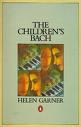
‘The Children’s Bach’ by Helen Garner

1984, 96p.

Don Anderson, in reviewing Helen Garner’s book The Children’s Bach wrote:

There are four perfect short novel in the English language.  They are, in chronological order, Ford Maddox Ford’s The Good Soldier,  Scott Fitzgerald’s The Great Gatsby,  Hemingway’s The Sun Also Rises and Helen Garner’s The Children’s Bach.

Boy- where do you go after that???!!

I think that brevity is an intrinsic feature of this book.  Like a small Bach piece, it is short and self contained, simple and yet complex.  It takes a slice of life in 1980s Melbourne, and in this regard, Garner’s keen observations almost provide an ethnographic (and now historical!) artefact.  Athena and Dexter are 1980s people who feel like people you’ve known and  their house and lifestyle is so well-depicted that you feel you could recognize it if you walked in the door.  As a northern suburbs gal myself, I can recognize many landmarks and events that she mentions almost in passing.  In fact, I reckon you could plot a pilgrimage walk of the book!

The relationship between Athena and Dexter lies at the heart of the novel.  They have two children- an autistic son, Billy, and a bright articulate son called Arthur.  The summary on the back of my edition, and the recent rendering of the novel into an opera both make more of Billy’s autism than I was aware of in the book, where Billy is a stolid presence, but not particularly the focal point of the family dynamics.  It’s not just the strain of Billy that drags at Athena, drawing her to abandon it all: it’s also her husband’s exuberance and obliviousness to her own personhood and the dream of being someone else in another more exciting world than hers.

I’ve read this book three times now, which is easy to do as it’s so short and it tumbles over you like a conversation overheard.  It’s a book to grow up with. As I’ve grown older, I see different things in it, as if I’m revisiting my own young-motherhood at much this same time.  I sense that in Garner’s most recent book, The Spare Room, she’s also revisiting the sort of characters in The Children’s Bach, grown older.

This is not the stuff of crashing drama: it’s lived-in life, with fallible and flawed human people, mess, and making do.  Taking liberties with the final sentence, life as depicted in The Children’s Bach is the steady rocking beat of love and family in the left hand, and the flying arpeggios of “what if’s” and “maybes” in the right.

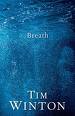
‘Breath’ by Tim Winton

2008

Had this been the only Tim Winton book that I had ever read, I too would be throwing every award that I could at it: last night it was announced that it had won the Age Book of the Year.

Like the swell of ocean waves, you think that it’s building into a surf-story, then all of a sudden you realise that you’re into the full-blown coming-of-age story complete with betrayal, sexual experimentation, parental estrangement, empty dreams and disillusionment. It has it all: beautiful writing that just takes you along with it, a wry narrator whom you almost instantly like, a love for the ocean, and an ease of telling that is sure without being pretentious.  Much like the public persona of Tim Winton himself, it seems.

And I guess that here lies my problem with it.  I’ve read several Tim Winton books, and I feel as if I’m reading the same story again and again.  His evocation of his Western Australian roots, his Christian background, his middle aged male protagonists, his collection of broken, betrayed and disillusioned people…they’re all there in The Riders, Dirt Music, The Turning and now again in Breath.  The sheer exuberance of Cloudstreet- probably my favourite Australian novel- seems a long time ago, and it was. He does Angelus, and his nostalgic male protagonists very, very well.  But I think of other authors- Peter Carey, Margaret Attwood, Joyce Carol Oates- who really stretch themselves and their writing into new shapes and places and I wish that, perhaps, he was a bit braver.