Category Archives: Australian literature

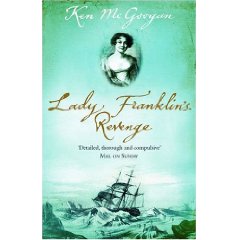
‘Lady Franklin’s Revenge’ by Ken McGoogan

2006, 435p & notes

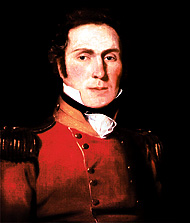
The author of this book has written several biographies related to arctic exploration and one senses that he came to this biography almost grudgingly.  His other biographies focus on Arctic heroes- John Rae, Samuel Hearne and Elisha Kent Kane.  Amongst these male explorers, Lady Jane Franklin must have seemed an obsessed, vindictive, indulged woman, intent on pushing forward her husband’s reputation to the expense of others’.   Perhaps McGoogan still feels that way, but it seems that he found much more in Jane Franklin than he expected to.

Well educated and well-to-do, Jane Griffin did not marry John Franklin the Arctic explorer until she was thirty-seven years old.  He was a fleshy, dull man and she was driven and ambitious and she used her connections to procure a position for him on the Mediterranean, and later as Governor of Van Diemen’s Land.  She was an inveterate traveller, heading off for months and sometimes years at a time, accompanied by her iron bedstead which she insisted on having assembled for her on her travels.

The author is Canadian, with a readership no doubt attuned to Arctic themes.  But as an Australian, Lady Jane Franklin is far more familiar to us as the Governor’s wife; we see her in Richard Flanagan’s Wanting; we know of the Franklin River, and her diaries while travelling to Melbourne and Sydney have been well-mined. In fact, there seems to have been quite a Lady Jane Franklin revival recently.

McGoogan captures well the limitations of women’s financial position and influence in Victorian Britain.  He describes well the small-colony political machinations surrounding the dismissal of the VDL Colonial Secretary Montagu, and the lumbering, stiff style of Colonial Office politics and communications.  Lady Jane Franklin has money in her purse to bankroll numerous expeditions in search of her husband when he disappears into the Arctic white and she uses her connections with Dickens, the media, the American government and the Admiralty well.

There is much detail in this book- rather too much, I thought.  He does rise above the mass of detail to make informed and informative observations about gender, patronage, love, women’s position, memory and memorialization, but sometimes it is engulfed by too much information. Of course, Jane Franklin is a generous source: she diarized her life extensively; there is a wealth of communication; the Colonial Office and British bureaucracy built their edifice on paper and she used the public sphere to her advantage.  It is an embarrassment of riches- oh to have that as a problem! but I can see that sometimes you just have to say ‘enough’.
‘Ransom’ by David Malouf

2009, 224 p.

In this book Malouf takes a couple of lines from the Iliad, where King Priam travels to recover the body of his son Hector, who died on the battlefield as a revenge killing.  His body has been dragged behind a chariot, day after day,  in a fury of grief and revenge by the crazed Achilles.  From the interstice of Homer’s brief telling of this paternal act of love, Malouf fashions a small jewel of a story about love, masculinity, fatherhood and fame.  I use the word “fashions” deliberately because as you’re reading it, you’re very much aware of the careful weighting of each word and the crafting of the images. It is deeply poetic in places, and makes you as a reader slow down, re-read, and roll the words around in your mouth, savouring them.

His plan is to travel incognito to meet with Achilles: to speak with him man-t0-man and father-to-father to ask that Hector’s body be released to his family.  Instead of travelling in state, he decides to travel with an unlettered carter named Somax and his mule-drawn cart, selected almost at random from the market where Somax awaits work as he does every day.  This small book is the story of the short journey they take together, and Priam’s encounter with his son’s enemy.

Priam is powerful, and yet powerless to stop the desecration of his son’s body at the hands of his enemy.  His is an act of paternal love, and yet in terms of fatherhood, his relationship with his many sons (borne of many wives) is sterile and formalistic with none of the intimacy that Somax has had with his sons before their deaths.    Priam is feted as the wise king, and yet he knows little of the world outside his own palace walls.

Both Achilles and Priam are aware, through the prescience granted to them by the gods, of the past and the future and their own place in stories to be told in the future.  Achilles is fired by grief , rage and bursting masculinity; Priam, as an older man, is aware of the contingency of a life’s journey and the life not lived.  My favourite part of the book was where he considered the other life he could have had, if his sister had not ransomed him from captivity as a boy. Despite his wealth and position, he is haunted by this other-life and feels somehow inauthentic.

Time in the book seems suspended, like a drop of water  shimmering from a branch before it falls.  The war has dragged on for years and it has that nightmarish quality of an never-ending, intractable stalemate.  Achilles drags Hector’s body behind his chariot, hour after hour, day after day and yet the gods renew it each night so that the nightmare goes on.  The trip in the cart itself takes only a day, and yet it feels much longer.   The meeting with Achilles occurs abruptly.

In the afterword, and in interviews at the launching of this book, Malouf alludes to the wartime experience of his childhood, and indirectly today in Iraq and Afghanistan, where war seems intractible and never-ending.   I don’t really think that this book needs contextualizing in this way.  It stands in its own right as a book that, perhaps, only an older man could have written. There’s a timelessness about the themes and the literature from which it springs, that does not need to be historicized.

There is a dreamlike quality throughout the book, as with many Greek myths.  Gods materialize in a thickening of the air and shift shapes between the prosaic and the ethereal.  The world of the gods works to its own whims: the world of men has a rhythm and meaning of its own.  And as with much of Malouf’s work, the imagery is crystalline and quite, quite beautiful.

‘In Tasmania’ by Nicholas Shakespeare

2004, 396p.

It was fitting that I should read this book so soon after finishing Ann Curthoy and Ann McGrath’s book “How to Write History that People Want to Read“.  Nicholas Shakespeare certainly can write and his book did quite well as I recall. So, two out of the three.  But I ask myself- is it history?  I suspect not, despite the “History/Travel” designation on the back page- or at least, it’s history in the same way and to the same extent that the television program  “Who Do You Think You Are?” is.

In fact, the “Who Do You Think You Are” television series came to mind several times while reading this book: there’s the quest story for an ancestor; the findings; and some sort of meta-narrative that ties it together.  As with the television show, there’s an emotional and partisan sympathy for characters solely on the basis of their blood-relation to the narrator:  a large and all-encompassing historical tragedy only becomes real once it can be centred on an individual who happens to be related.  And as with the television show,  the voice and perspective of a professional historian who weighs in with an objective, distanced observation rescues you as reader/viewer from the fug and too-close identification with an ancestor.

Shakespeare himself is a recent immigrant to Tasmania, and part of his own sense of belonging in Tasmania is tied up in the identities of two ancestors, from different branches of his family tree, whose destinies- as one might expect in a small island community- run parallel with occasional points of connection.  Anthony Fenn Kemp, the army officer and merchant is a linch-pin figure whose ubiquity enables Shakespeare to bring in Alexander Pearce the cannibal, Tasmanian Tigers and other riffs on Tasmanian history.  The other ancestor, Petre Hordern was a failed alcoholic from a wealthy family, who submerged himself in the bush and dragged his family into poverty.  These two characters form the book-ends of his narrative, and Shakespeare meanders throughout history and his current-day genealogical quest.

Shakespeare speaks to historians, and reads the histories they have written, but he cites only conversations.  His intent springs from the personal, and he excavates the primary material he has unearthed,  literature and other writers, and family lore as his richest lode. His eye is always on the story as story.  Nonetheless, it is beautifully written, human and textured- but it’s not necessarily history.

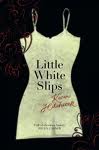
‘Little White Slips’ by Karen Hitchcock

2009, 249 p.

I’m not a great short-story reader, especially when they are in a collection like this.  If they are truly short short-stories, then do you read them one at a time over an extended period, or do you pop them in, one after the other, like a bag of lollies?  I don’t like being jerked around from one situation to another in a single reading.  I tend to remember short stories better when I hear them read aloud, rather than when I read them myself.  With the exception of Nam Le’s The Boat, I  tend to find a volume of short stories to be a bit of a curate’s egg.  But is it realistic to expect every story in a collection to blow you out of your reading-chair, or is a hit-rate of a couple of memorable stories within one volume sufficient?  Is a short story MEANT to be memorable? If so, then I am a miserably failed short-story reader.

Karen Hitchcock is being hailed as a “bold new voice in contemporary fiction”.  Certainly, the first couple of stories in this book were very good, especially the first rather lengthy story about a doctor swotting to pass her specialist examinations.  There are a couple of stories about body image; a couple about the study involved in becoming a psychiatrist- the first of which seemed to form a good counterpart to the opening story about studying to become a specialist from the other partner’s perspective.  But the middle of the book seemed to sag with stories that seemed more like baggy and rather nebulous reminiscences, and too many stories  seemed to pick up on the same themes from a different perspective.  The last story, which gives the collection its title, was good, as I rather hoped it would be.

Perhaps there is an overarching structure to this book that I couldn’t detect.  Certainly it deals with “women’s iss-ews” like body image, medicine,  the limits of male and female friendship, professional life and identity etc.   But I felt as if the same narrative voice was telling all these stories- an educated, Australian, mid-30s, often childless, professional voice, or in the case of the reminiscences,  the voice of someone who would grow up to be this person.  Did the author have a vision for this collection of stories as a whole that contributed to this sameness? or is the author not ready or unwilling to move beyond this?

I will read other stories written by Karen Hitchcock.  Perhaps I would have enjoyed her more in a collection with other writers where she shares the stage with others, rather than a solo performance- I see that several of these stories have previously appeared in Meanjin and The Sleepers Almanac, and were picked up in Best Australian Short Stories in 2006, 2007 and 2008.   Or perhaps I just need to find a way to read short stories differently.

‘The Commandant’ by Jessica Anderson

This book has been recently re-released as part of Sydney University Press’ Australian Classics Library.   The original was published in 1975 and there are still copies of the original imprint around: mine has a particularly lurid cover that would deter any casual browser.

The penal colonies at Sydney and Van Diemen’s Land have long attracted novelists- Thomas Keneally has been writing about them for decades and Kate Grenville has been lured by them more recently.  But there were other penal outposts in the Australian colonies as well: Norfolk Island, Moreton Bay in Queensland, Western Australia after 1850 and even Port Phillip, while not a penal colony as such, had convict gangs engaged on public works and the Pentonvillians in the second half of the 1840s.

“The Commandant” is set in Moreton Bay under the command of Patrick Logan.   The setting of the book is fairly accurate:  Logan did exist; his wife was called Lettie; he did come to a sticky and inconclusive end.  But the main character of the book, Frances O’Beirne, is Jessica Anderson’s invention entirely and here Anderson can let her imagination take flight.  This is a penal colony described from the domestic perspective, with the convicts not as “the men out there” but as shadowy but ever-present domestic servants.  Here we can see the blurring of the lines that John Hirst writes so well about in Convict Society and its Enemies with assigned convicts occupying that here-but-not-here space of the English domestic servant whose intimate presence gave them such an ambiguous status.

This is a very ‘interior’ novel in that much of it takes place inside, and much of the text is turned over to dialogue.  It is almost Austenesque in this regard, and I found it a little noisy and claustrophobic.  For me, the novel really opened up once it got outside into the Australian landscape- until this point it could have been set anywhere.

Frances O’Beirne is a recent arrival in the colonies and after a short time in Sydney, she travels up to join her sister Lettie who is married to Capt Logan. While in Sydney she comes into contact with the daughters of Edward Smith Hall, the editor of the Monitor and the (real life) opponent of Governor Darling.  She absorbs the ‘radical’ views circulating in Sydney, and is wary of her brother-in-law Logan, who is about to fight a libel case against the Sydney newspapers over reports of his excessive cruelty.  She is uneasy about the convict presence, and appalled by her brother-in-law’s discipline.

In an interview about the writing of The Commandant in “Making Stories” by Kate Grenville and Sue Woolfe (generous extracts available here), Anderson talks in an interview about the character of Frances

INT: Did you consciously seek a character to, as you say, ‘identify with’ or did the character come to you?

JA: Well I came to myself.  But I had to have someone who could see and comment on the action. But not just one person, and not just one point of view.  So I had Frances, Louisa and Letty.  Particularly Frances, although the other points of view are both well within my own range.  My daughter said it was quite easy to see who I was. But she saw me as Louisa.

INT: Is Frances really, in fact, a twentieth century character?

JA: There were people like Frances, radicals and reformers , in Sydney. There was nobody like her at Moreton Bay.  But I couldn’t have done it without her.  I needed an opponent for Logan.

Despite Anderson’s protestations, I’m not really sure that Frances isn’t a 20th century character. I don’t think that Anderson caught the religious aspects of a humanitarian anti-transporation stance, complete with its racism, class bias and cast iron certainties. Instead Frances’ opposition to the penal system is a bit too secular and Amnesty International.

Anderson’s real stroke of brilliance is in explaining Logan’s death- which, again, is historic fact. But her explanation which runs against the popular story about how he died is, unfortunately,  plausible and we can see with 20th century eyes what the implications of such an explanation could/did set in train.

I enjoyed this book and I’m glad that it has a second outing.  I think that it stacks up well against Keneally’s convict works like The Playmaker and Bring Larks and Heroes and Grenville’s The Secret River and The Lieutenant (which I haven’t read yet).  It isn’t as imaginatively extravagant as Flanagan’s brilliant Gould’s Book of Fish, but her twist on the narrative and history is inventive and deserves to be better known.

‘Journey from Venice’ by Ruth Cracknell

cracknell

2000, 271 p

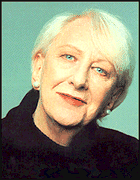
Ruth Cracknell was a much-loved Australian actor- sharp, eloquent, funny, rather patrician in an ‘older woman’ sort of way. Although, of course, her character Maggie Beare in ‘Mother and Son’ (where she plays the devious elderly mother whose hapless adult son returns to live with her)  was none of these things!

I had to keep flicking to her picture at the back of the book to remind me that she was the author, because her celebrity is almost inconsequential to this story.   It’s not so much Ruth Cracknell here, but Mrs. Ruth Phillips, mourning the death of her husband Eric.  It’s as woman and widow, mother and grandmother that we meet her, not as a ‘star’.

This is a beautifully constructed memoir.  The preface starts with Eric’s funeral,  written in italicized third person, as if she is watching herself going through the ritual.  She then moves back in time to their arrival in Venice for a holiday together and the pace of the narrative moves to a slow sort of travelogue, overshadowed by the certain knowledge that death  is hovering over them like an unseen, malevolent force.  This sense of foreboding permeates the book, even when Eric is finally well enough to fly home to Melbourne where cancer is diagnosed.  The title is well chosen: I kept thinking of Mann’s ‘Death in Venice’, but Eric does not die there. He recovers sufficiently to be medi-evacuated back to Australia, has two precious trips back to the family home for Sunday lunch, and some weeks later dies of the cancer, not the bleeding that initially threatened his life.  And so, by the end of the book, we return to the funeral and we, too, grieve.

While waiting in Venice for him to recover sufficiently for the trip home, the tourists leave as the summer season ends, the deeper water laps at the floor of her ground floor flat, and Ruth becomes aware of the sheer inconvenience of living (as distinct from visiting) Venice.  That holiday, so eagerly anticipated, so richly enjoyed for the first few days becomes instead a stark, lonely, bewildering exile.

This is, instead, a journey from Venice, not to it, and in the weeks they have together, they fall in love again- a different sort of love, suffused with the knowledge that it is all they have left.  They truly do live “in the moment”: the sharing of a blood orange is a sensuous joy, and she sees and loves anew the stripped down, solid core of the man she has been married to for over 40 years.

It was interesting to read this book after recently finishing Caroline Jones’ book about her father’s death.  This is a much more grounded, sane and adult book, and one that gives much more comfort.  It is beautifully written and constructed, and it shares the poise, groundedness and authenticity of its author.

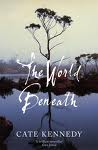
‘The World Beneath’ by Cate Kennedy

kennedy

2009, 342p.

Rich and Sandy are 40-something leftovers from the 1980s, still stuck in the victory of the Franklin River blockade that they look back to as the high point of their lives.  They met on the campaign and shifted to a small hippy country town together but their relationship broke up while their daughter Sophie was very young.  Sandy immersed herself in the companionship of her earth-mother friends, while Rich headed off around the world as a photojournalist.  Neither has moved on at all from their dreams of the early eighties: Sandy’s dreamcatchers and pottery are now tatty, dated and twee, while Rich’s career in photojournalism finds him washed up in the dead-end of editing  infotainment  segments for morning television.  The story opens as Rich re-establishes contact with his moody, anorexic, goth 15 year old daughter Sophie, and suggests a bushwalk to Cradle Mountain as a new start to their relationship.

Sandy is reluctant to let him back in to their lives; Sophie is curious and at first attracted by his footloose approach to life, especially compared with Sandy’s smothering neediness and flakiness.  But Rich, in his own way, is just as stuck in the 1980s as Sandy is,  just as blind to Sophie’s anorexia and just as flawed as a parent, whatever his initial attractiveness.  When he encourages Sophie to go for a walk off the tourist trail, they get lost and Sophie loses her illusions about him.

These are very human characters, and Kennedy teeters of the verge of parody, especially with Sandy.  She hones in on Sandy’s ineffectual, rather vacuous new-age, earthmother persona and Rich’s self-deception, cynicism and lack of commitment.  Sophie is a sullen, sneering adolescent, cocooned in her technology and affected world-weariness.  But there’s a recognizability about them all too, and an element of send-up that lacks the venom of  Christos Tsiolkas’ The Slap, to which this book has been compared.

This gently-skewering parody is acutely done, but after a while it didn’t seem to be going anywhere. But the second half of the book picks up pace and it becomes a real page-turner: I was literally sitting up in bed, wanting to finish it but despairing at how late it was becoming as I kept reading.

There are some fantastic interviews with the author: one on the Radio National Book Show and another at The Ember, and good blog posts by Lisa at ANZLitlovers and Kerryn Goldsworthy at Australian Literature Diary.  I must admit that, particularly after reading the interviews, I found nuances and depths in the book that I hadn’t picked up on at first reading.   I’m not sure why this is- I was aware of the references and paradoxes in the book, but almost needed to listen (or read) someone talking it over for them to coalesce for me.  I’m not sure whether this reflects a weakness in the book, or in me as a reader, or whether this is the sort of book that is best shared with others and talked about as much as read.

This is a good book.  I wonder if its references to MySpace and ipods will date it, but the observations of character and the wonderful descriptions of landscape will sustain it even when Sophie is just as dated and twee with her early-21st century technology as Sandy and Rich are with their 1980s idealism.

‘Jasper Jones’ by Craig Silvey

silvey

2009, 299 p.

Set in 1965, this book opens with a dilemma.  Charlie Bucktin, the bookish, nerdy, teacher’s son is startled by a knock at the louvres of his sleep-out when Jasper Jones, the town ‘bad boy’, calls him out into the backyard.  Somehow or other Jasper Jones cajoles him into assisting with the disposal of the body of a young school acquaintance that Jasper found hanging from a tree in his special place in the bush.  This young girl was Jasper’s secret girlfriend and Jasper is terrified that he will be blamed for her murder.  For me, one of the main problems with this book started at this point: I just didn’t buy into Charlie’s involvement and why two innocent boys would dispose of the body.  Hence, the whole premise of the plot was shaky for me as a reader.

For me, the book didn’t start well.  It took almost 25 pages for young Charlie to be faced with his opening dilemma.  The book then spooled into an equally long conversation between Charlie and his Vietnamese friend Jeffrey about the respective qualities of superheroes.  There is a self-indulgence about the length of these digressions and internal dialogues, and an indulgence too in the number of themes the author crams into the book: first love, friendship, bullying, police brutality, racial prejudice, marriage breakup, incest, youth suicide, social exclusion.

As if this wasn’t enough (and it is!) the book is framed within a homage to Harper Lee’s To Kill A Mockingbird.  This, too, is rather heavy-handed.  We have the hermit misfit, the childhood taunts and dares about ‘raiding’ his house, the trips through the forest at night (albeit, not dressed as a ham) and the revelation of a mild father standing up to a bully, evoking Atticus  shooting the rabid dog.

All of this suggests to me a lack of good editting in curbing an energetic young author.  And he IS young- his Wikipedia entry claims that Craig Silvey was born in 1982.  At this point, though,  I have to doff my hat.  He is writing about small town life set 17 years before he was even born and he doesn’t put a foot wrong.  He captures beautifully a world where television was incidental, where kids’ consumerism was limited by pocket money, where community events were not so strictly segregated and segmented by age brackets and where kids had a wider geographic zone not necessarily under the constant surveillance of their parents.  He portrays well the anxiety about disappearing children and the perceived, if brittle,  authority of community figures like mayors and police officers.  There must have been careful research here and the book carries it effortlessly.

I’d be really interested to know how readers much younger than I respond to this book.  It would lend itself well to film, and the coming-of-age aspect and the nostalgia for a simpler time would endear it to baby-boomer viewers- in fact, possibly more than to the young adolescent readers for whom it was probably written.

‘My Father’s Moon’ by Elizabeth Jolley

I have to admit to not being a fan of Elizabeth Jolley.  I know that she’s highly thought of:  a good reading friend whose reading judgement I trust  (and who is probably reading this post!) very much likes her. So why do I find her so off-putting?

I’ve really tried: I’ve read several of her books but find myself being repelled by the mustiness and acidity of her female characters.  They’re like a prickly heavy British overcoat: they’re like Hetty Wainthrop and Hyacinth Bucket; like a whiskery old Aunt.  Even in the books set in present time (given that she stopped writing about ten years ago), there’s a dissonance about these characters, as if they are out of time.   Her novels are often set in Australia, but there seems to be an innate Britishness about them.

I’ve seen her described as “disturbing” and perhaps this is what I’m alluding to, but I’m never really quite sure whether Jolley’s writing is deliberately subversive and edgy.  I think her dialogue is often wooden- or does that reflect the awkwardness of the characters she’s describing?  I think that her books seem to jerk around without a strong narrative thread- or is she being very clever and post-modern?  Is it bad writing?  Or good writing?  I really don’t know.

That said, I’ve enjoyed My Father’s Moon more than the other works I’ve read.  It is set in London during WW II, and for me this gives the book a unity and integrity that I can’t find in her other books.  The characters act, and feel, like 1940s characters in 1940s times.  The book is written in a number of first-person, self-contained chapters but there’s not a clear narrative arc in the way they are placed:  events happen and the reader works on making the causal and chronological links, because Jolley doesn’t.   Again- is this clever writing, or lazy?

I often sense steel in Jolley’s writing, but there’s a vulnerability in the writing in My Father’s Moon.   There’s an unresolved yearning to touch and be touched by other female friendships, and a sense of distance and apartness.  Perhaps these same qualities are there in her other books as well, because there’s a strong autobiographical element repeated in many of her works.  But I think I find it less repellent in a younger woman, coming of age in a time further back,  in a British world of London streets and air raids and prickly woollen overcoats.

‘Addition’ by Toni Jordan

Grace Lisa Vandenburg is an unemployed teacher on sick leave after a breakdown triggered by a young boy’s accident in the schoolyard.  But Grace’s problems lie deeper than this: she counts obsessively and incessantly, as a way of trying to control her world and all around her.  Into this ordered and tense life comes Seamus, who is attracted to her humour and quickness, and steers her towards therapy and medication as a way of overcoming her obsessiveness.  We lose our perky, wisecracking, passionate and controlled narrator as the medication submerges her into a slow, passive inertia. Will she lose the medication or lose her man? Or both?

This is all the stuff of good chick-lit, in this case bolstered by clever use of narrative to reveal the personality change that Grace undergoes as a result of her medication.  In this regard, it reminded me of Daniel Keye’s short story Flowers for Algernon, which was picked up as the film ‘Charly’.  I think that this use of narrative voice to denote change is one of the real strengths of the book, along with a main character who is not just sassy but also sees the world quite differently.  The book also introduced me to Nikola Tesla, a Croatian engineer who was likewise driven by the need to count, but for him it ended in madness.  The book explores the often narrow line between habit and obsession;  routine and ritual; self control and control of others; passivity and strength; eccentricity and madness.  In these regards, it steps out of the chicklit genre into something more complex.

But Toni Jordan has not been served well by her publishers, methinks.  There are several versions of the front cover, and none really does justice to a book that is more than just chick-lit.

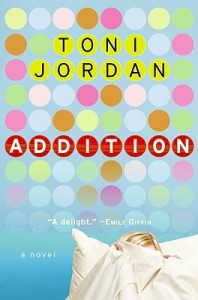
Here’s the American version.  Who the hell is Emily Giffen? Thank you Wikipedia-  Emily Giffen is obviously the Queen of Chicklit. Her insightful blurb  calls it “A delight”. I hope that no-one offered their first-born child in exchange for such a glowing endorsement.  I wonder if her books are so nuanced?  And in case you think it’s a primary school textbook- a not unreasonable assumption really-  the cover helpfully labels it as ‘A novel’.

jordanaddition2

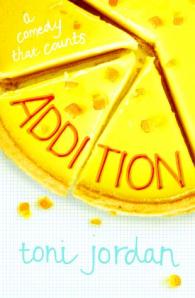
The English version has a little pun – “A comedy that counts”.  The lemon tart is nice and cheerful- but surely it should be a flourless orange cake sprinkled with poppy seeds- if you’ve read the book, you’ll know why.

jordanaddition3

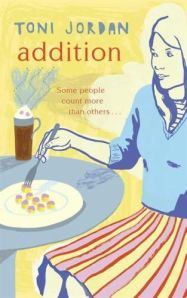
There’s a second UK cover that sticks with the pun on counting: this time “Some people count more than others”.

jordanaddition4uk

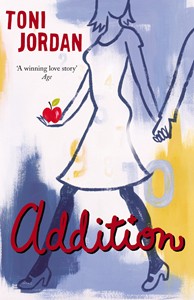
One of the covers available in Australia resembles this British one, but with a sassier girl who looks more like a model and less like a schoolgirl.  The blurb cites The Age’s recommendation:  “A winning love story”.

jordan5aust

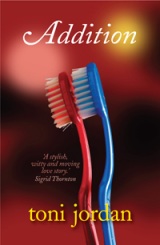
Then finally, there’s one that perhaps gets closer to the tone of the book.  Sigrid Thornton (much loved of Sea Change) endorses it as “A stylish, witty and moving love story”.   But as the Resident Husband commented “Since when has Sigrid Thornton been a book reviewer?”  Maybe I should keep an eye on my toothbrush, lest it also get up to shenanigans.

JordanAddition

There is a happy ending in this feel-good, romantic fiction book, and it’s good fun, engaging and heartwarming.  I gobbled it up, and shut the book with a smile.  I think we can all do with a bit of this, in small doses.  And, of course, only as part of a well-rounded reading diet.