Category Archives: Australian literature

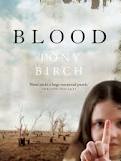
‘Blood’ by Tony Birch

2011, 264 p.

Every Friday night we settle down in front of the TV for the ABC Friday night splatter-fest.  I’m usually quite nonchalant about the gore except when it depicts eyeballs (a long standing phobia), torture and violence to or about children.  These things are likely to propel me out of my chair to quickly escape to the kitchen to make a ‘hot drink’, calling out “Is it over yet?” before I return.

Reading about (as distinct from watching) torture and violence about children upsets me too.  I found Rocks in the Belly a difficult read, and while it’s not so much about violence to a child (mmm…maybe?), it seems that most people who have confronted the book  We Need to Talk About Kevin shudder at the thought of watching the movie as well.

Blood by Tony Birch fits into this category as well.  It is told from the perspective of  a thirteen year old boy, who along with his younger half-sister, is falling through the welfare and schooling gaps largely through the weakness of his drunken, dissolute mother Gwen.  They move between caravan parks, motels and sleeping in the car, ricocheting between country towns, cities and states as Gwen takes up with one dropkick after another.  There is a brief hiatus of normality when she dumps the kids with her  own father, himself a recovering alcoholic with the rigidities and stripped-down asceticism of a life dominated by poverty and AA meetings.    “Is it realistic that two kids could be so invisible to the authorities like this?” I asked Mr Resident Judge who knows about such things.  Ah yes, he replied.  The  transience opens up too many questions that are too hard to address. Should these children be taken into care? Are they being abused? (I think I’d answer ‘yes’ to both questions)

Birch sustained the voice of thirteen year old Jesse well, with short sentences and a mixture of naivete and knowing too much.  You sense that Jesse is turning, no longer pretending that he doesn’t know how his mother earns her money, and becoming hardened to the wrecks of masculinity that she is drawn to. It is only his sister Rachel who anchors him.  There’s a lot of dialogue in the book, and it would transfer well onto the screen.  The descriptions of  blasted, tawdry broken-down landscape are  evocative- rather too evocative.  It’s a little bit like the world of Tim Winton’s ‘The Turning’, viewed from a child’s perspective.

Jesse and Rachel see ‘To Kill a Mockingbird’ at a theatre (a rather implausible scenario- surely a late night cable movie in one of the tatty motel rooms that they’d been left in would have been more likely?)  Birch uses the film as a motif, and the two children draw comfort from the characters of Jem and Scout.  But Gwen is certainly no Atticus, and this book has little of the redemption or sense of community in TKAM.   I’m not sure whether the allusion to the movie adds much to Birch’s narrative: while it throws up a strong contrast, there is an element of riding on the coat-tails of a much more nuanced book as well. There is the theme of blood, too, from which the book draws its title: the shared blood of commitment, the blood of  family ties, and the blood of violence.  And yet another motif is the tarot cards that the feckless Gwen plays with, that provide as much (or little) direction as anything else in her life.

Despite the plaiting together of these motifs, there’s nothing tricksy about this book.  It is straightforward and simple, with few flashbacks and a single narrative voice.  I found myself wanting to know what happened, but I knew within one or two pages that it wasn’t going to end well.  I found it easy to put down after each of the five sections, and was almost reluctant to pick it up again because it was painful and raw.

It is short-listed for the Miles Franklin. While I reacted at an emotional level to the book- grief for these children, anger and an element of self-righteous disgust at their mother- I’m not really sure whether the book carries the complexity sufficient for the Miles Franklin.  And I cringe at the thought that it might represent ‘Australian Life in all its stages.’

My rating: 8/10

Sourced from: Yarra Plenty Regional Library

Read because: It is short-listed for the Miles Franklin
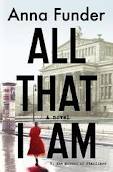
‘All That I Am’ by Anna Funder

2011, 363 p.

No wonder this book is garnering award after award.  So far it has won the Indie Award Best Debut Fiction and Book of the Year Award, the Australian Book Industry Award for best literary novel and Book of the Year, the Barbara Jefferis Prize for “the best novel written by an Australian author that depicts women and girls in a positive way or otherwise empowers the status of women and girls in society”  and it has been shortlisted for the Miles Franklin and the Prime Ministers Prize .

This is Anna Funder’s first foray into fiction, but she does so with one foot still in the non-fiction camp.  Her earlier, much acclaimed non-fiction book Stasiland explored individual lives within the pervasive and intrusive panopticon of  East German communism.  This book traverses similar territory in a fictional mode by imagining the lives of real-life socialist dissidents who sought refuge outside Germany during  Hitler’s rise.  Ernst Toller, Dora Fabian, Hans Weserman, Berthold Jacob and Ruth Becker are all real-life historical characters, and indeed Funder herself knew, and was friends with, Ruth Becker (by then Ruth Blatt) in Sydney before her death in 2001.

But the book is most certainly fictional in terms of its structure and in its exploration of the emotional space of love, fear and betrayal.  It uses the device of two alternating narrators.  The first is the elderly Ruth in Sydney, whose memories of the 1930s are bleeding into her present-day life as an increasingly frail post-war immigrant who has had a successful career in teaching, but is sliding towards a lonely and regretful death.  A week earlier she had received a manuscript from an American university that had acquired a box of documents written by Ernst Toller, the poet, in 1939  that had been addressed to her.  The narrative swings between the present-tense description of an old woman in the drug-induced half world of pain and confusion, and the past-tense reminiscence evoked by this manuscript, received from a time fifty years earlier.

The second narrator is Toller himself, in 1939, in the act of writing that very same manuscript in a hotel room in New York.  His narrative, too, swings between the present-tense in describing the act of rewriting an earlier autobiographical manuscript to acknowledge the impact of Dora Fabian and other dissidents in his life, and the past-tense narrative that was to become the document delivered in Sydney  sixty years later.  He dictates to a young female notetaker, herself wracked with fear for her brother, marooned on the refugee ship the St Louis which was denied entry to Cuba, America and Canada.

This narrative quadruple act is complex, and throughout the book I found myself marvelling at how deftly she managed it.  I found her characters thoroughly convincing at the emotional level: in fact, it was only an epigraph by W. H. Auden that marked Part II that stopped me in my tracks with the realization that it was very much based on real-life people.  I resisted the temptation to rush off to Google the characters; indeed I have not yet done so (and probably will not do so) because I’m happy for them to exist in the rounded, fleshed out fictional form in my mind.  Somehow, to see them rendered into black-and-white again will flatten them somehow.  I note, however, that Simon Schama the historian in his review of the book in the Financial Times  felt that the “knottily knitted time line snags the narrative at every turn” and that there were “points where the research somehow clots the blood flow of the plot rather than transfusing it with vitality.”  Yet he suggested that the real-life Ruth’s later life story, which is sketched only briefly in Funder’s book, is even richer with fictional possibilities, thus wanting to draw her back to real-life again.  I don’t agree with him.  Schama warns that “the ball and chain of history can hobble the gait of the imagination if the novelist isn’t ruthless about knowing when to cut it loose” and yet I feel that Funder has been completely disciplined (in both senses of the word) by restricting her focus to the political and emotional claustrophobia of the time, instead of paying homage to the historical ‘afterwards’ of her real-life characters.

Yet her book is very much about the historical issue of memory and forgetting.  “I am a vessel of memory in a world of forgetting” says Ruth the narrator. “Most people have no imagination. If they could imagine the sufferings of others, they would not make them suffer so” wrote Ernst Toller. But as Ruth the narrator (and I suspect, Funder the author) says:

   Imagining the life of another is an act of compassion as holy as any….But Toller, great as he was, is not right.  It is not that people lack an imagination.  It is that they stop themselves using it.  Because once you have imagined such suffering, how can you still do nothing? (p. 358)

It is also a book about the weight of an individual against the wider scale of history.  At a personal level,  we grapple with our measure of those we love-

When you are in love with someone, you cannot see around them, you cannot get their human measure. You cannot see how someone so huge to you, so miraculous and unfathomable, can fit, complete, into that small skin. (p 150)

And yet we ourselves have to think about our own value in the world:

Though it is the hardest thing, to work out one’s weight and heft in the world, to whittle down all that I am and give it a value. (p. 299)

This is a beautifully written book, although there are the odd jarring notes.  The awkwardly introduced date of Toller’s narrative was clumsy and heavy-handed, and  I don’t think that she handled the authorial problem of bringing her two first-person narratives to a close very well because she had painted herself into a narrative corner.

But in other places, her descriptions are crystal sharp, as for example, in this description of a Weimar nightclub-

The doors of the TicTacToe opened into a floor-length leather curtain drawn against the cold.  We parted it.  The entry level was on a mezzanine; below us lay a vast, ornate room hollowed out into the earth.  I moved to the balcony rail.  Pools of light shone on a hundred tables, bright circles into which hands moved, gloved or ungloved, for a drink, to ash a cigarette, touch an arm.  The air was filled with trumpet notes and smoke, the chinking sounds of cutlery, laughter, something smashing at the upper bar.  At my shoulder a vase of lilies breathed, open-tongued.  P. 105

I’m not sure whether this book will win the Miles Franklin, even with the slightly widened criteria that allow an ‘Australian’ sensibility without necessarily being set in Australia.  I’m not sure that the Sydney section of the book is a sufficiently sturdy anchor to describe it as ‘Australian’, but I am not cynical enough to  think that the Australian section was included only with the Miles Franklin in mind.   It’s a beautifully written opening up of the imaginative space around real-life people, and it should be celebrated as such.

Read because: It is short-listed for the Miles Franklin Prize.  Also posted on the 2012 Australian Womens Writing Challenge
Sourced from: La Trobe University Library

My rating: 9/10

National Biography (?) Awards

I notice that the longlist for the National Biography Awards has been announced.

  • Robyn Arianrhod Seduced by Logic, University of QLD Press
  • Tim Bonyhady Good Living Street: The Fortunes of My Viennese Family, Allen & Unwin
  • Alexander Brown Michael Kirby: Paradoxes & Principles, The Federation Press
  • Pamela Burton From Moree to Mabo: The Mary Gaudron Story, UWA Publishing
  • Sophie Cunningham Melbourne, NewSouth Publishing
  • Delia Falconer Sydney, NewSouth Publishing
  • John Howard Lazarus Rising, Harper Collins
  • Paul Kelly How to Make Gravy, Penguin
  • Mark McKenna An Eye for Eternity: The Life of Manning Clark, Melbourne University Publishing
  • Martin Thomas The Many Worlds of R.H. Mathews: In Search of an Australian Anthropologist, Allen & Unwin
  • David Walker Not Dark Yet, Giramondo Publishing
  • Patrick Wilcken, Claude Levi-Strauss, Bloomsbury

I’m interested by the inclusion of the Sydney and Melbourne books.  There has been a trend over recent years of writing ‘biographies’ of inanimate objects (think Mark Kurlanky’s Cod and Salt) and locations (think Ackroyd’s London: A Biography).

I see that the guidelines for the award specify that the work be “classified as either biography, autobiography or memoir; be written in book form and consist of a minimum length of 50,000 words”.  I haven’t read either the Melbourne or the Sydney book, but I do know that both have a heavy emphasis on memoir, as well as a more factual approach to the two cities.

Still- an interesting inclusion for a biography award.

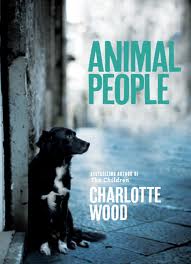
‘Animal People’ by Charlotte Wood

2011,  262 p.

There must be something about the challenge of writing a book set completely within one day, because many writers seem to have done it: James Joyce, Virginia Woolf (and in homage, Michael Cunningham), Gail Bell and, although I haven’t read it yet, my latest craze, Mollie Panter-Downes.  Limiting one’s focus onto a single day gives scope for close scrutiny of the quotidian and the elapse of hour after hour runs underneath the narrative like a bass-line.  But there’s a risk too – we all have our own mundane lives that are ticking over hour by hour too, and somehow or other the author needs to make you care enough about an ‘ordinary’ person to devote some hours of your life to watch someone else’s day unfolding as well as your own.

Characterization is fundamental to this contract between writer and reader.  You don’t need to like the character as such, but you have to at least care.  In this case, Stephen is a bit of a drifter, with a dead-end job as a kitchen-hand at the zoo, living a rather spare and bitten-down existence, aware of his family’s disappointment in him, likeable enough but wary of being tied down by commitment.  As he wakes on this hot Sydney morning, he knows that he is going to break off his relationship with Fiona, a good, passionate, separated woman, that day.  In this, he is quite steely, even though he knows that she is beautiful, that she loves him and her young daughters tolerate him, and that his mother has already absorbed them as ‘family’.  He combines inflexibility with irresoluteness; he is hard as steel and yet soft, he is selfish without asking for anything.  We probably all know someone like him.

Charlotte Wood is a good observer and it’s as if she has inserted herself behind our own eyes.  Her descriptions of the various people who orbit around Stephen have a verisimilitude similar to those in Tsiolkas’ The Slap– in fact, in many ways this book reminded me of The Slap in reverse.  The mounting heat of the day, and the brittle mania of a child’s birthday party add to the sense of unreality and the rising shriek of the day, as Stephen drifts closer and closer to making his break with Fiona.

There’s a second theme in the book- that of animals and the human relationship with them- that I felt was rather heavy-handed.  The parallels were rather too obvious, and it just seemed rather laboured.

I have read several very positive reviews of the book- in fact, people seem to be struck emotionally speechless by the book (for example, John Purcell on Booktopia and Michelle on Book To the Future).  I wouldn’t go that far.  Certainly, it was very easy to read, and I was quickly drawn in enough to want to keep reading, and it captured urban, middle class Sydney very well.  It had just a touch of the ‘book club’ about it, something that Lisa at ANZ LitLovers noted as well.  I don’t think that I mean this as a put-down (after all, I belong to online and face-to-face bookgroups myself) but there’s something about the straining for theme and topicality that made me wonder if it was written with this demographic in mind.

My rating: 8/10

Sourced from: Yarra Plenty Regional Library

Read because: I enjoyed The Submerged Cathedral and because I wanted to review it as part of the 2012 Australian Women Writers Challenge.

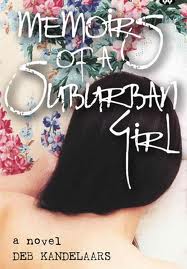
‘Memoirs of a Suburban Girl’ by Deb Kandelaars

158 p. 2011

I’m glad that this book only had 158 pages.  I really don’t think that I could have read any more.  As it was, I started reading it and turned off the light about 50 pages in.  I found that I was too anxious and troubled by it to sleep, so I turned the light back on and kept on reading until about 1.00 a.m. in the morning.

The book is set in 1979, and a teenage girl moves in with a violent older man, whom she calls S. B. (short for Spunky Boy) throughout, even though he turns out to be anything but.  She is only seventeen when she meets him, and she seems to encased in a nightmare world with this abusive, manipulative man, frightened and unwilling to take the first steps towards leaving him.

The book is written in the second person present tense, which I always find a rather claustrophobic, controlling narrative voice.  In this case, it is a risk.  There was a decision point at the very first episode of abuse at which many readers may have acted differently, and to continue to be addressed as “you” makes you feel somehow complicit and responsible for a decision that you might not have made.   I understand that she is making the point that it could be you, but maybe not.  There are choices here, even in the inability to make a choice.  The narrative is highpitched and breathless, and somehow garbled- as if it is falling out of her.

One of the most unsettling aspects of the book is its low-key suburban setting. There are neighbours, workmates, onlookers surely, who witness the violence in the car, in carparks, and who see the bruises and hear the excuses.  Yet somehow she seems to be isolated in her own parallel existence, with assistance from the few friends she manages to have, or her own parents,  visible, but just out of her reach.  She captures the late 70s and early 80s well in all their garishness.

It is a work of fiction, based on the author’s own experience.  It is presented as a memoir, and there are other memories coiled up in the telling.  In the middle of a beating, almost as a form of dissociation, her older and happier memories unspool, until she and you are jerked back into the grubby reality of her situation.

Should you read it? Yes, you should.  Will you like it? I don’t know. Did I like it? I don’t know. I couldn’t put it down- does that make it a good book?

Sourced from:Yarra Plenty Regional Library (who kindly bought it on on my suggestion!)

Read because:  It was highly recommended by Lisa at ANZLitLovers LitBlog

I’m reviewing this for the Australian Womens Writing Challenge 2012. It’s not too late to join, you know.

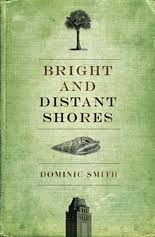
‘Bright and Distant Shores’ by Dominic Smith

502 P. 2011

The Voyage and the Return is, as Christopher Booker tells us in his book of the same name, one of The Seven Basic Plots.  On one level you could summarize the plot of this story quite simply- a young man travels to the South Pacific to collect artefacts and exhibits for an industrialist’s exhibition, then he returns.  But this summary would sorely undersell the complexity, exuberance and intelligence of this book.

I’ve been dabbling around with the 1840s colonial travellers and gentleman naturalists for too long, because the setting of this book jolted me into a different timeframe and mindset.  By the 1890s, wealthy, and especially American, magnates had moved into the field, buoyed by the increasingly large commercial success of the World Fair  phenomenon, and keen to pour their wealth into their private collections which could be levered for commercial and philanthropic gain.  They were anxious that the best artefacts had already been picked over, and were competing against each other  as well as private and public museums to scoop up what was left.  But a century of missionary endeavour and ethnographic plunder had changed the indigenous tribes as well, who were no longer content with mirrors and beads, and demanded guns as the price of exchange now.

Into this scenario steps Owen Graves, the poor but ambitious son of a demolitions expert, who is contracted by the wealthy owner of the Chicago First Equitable Insurance company to travel to the Pacific to collect artefacts, and especially human exhibits, for a display in his new building- the world’s largest. The company president, Hale Grey, insists that his dilettante son Jethro accompany the voyage where he could indulge his passion for collecting and taxidermy.

It was the “human exhibits” that were the sticking point.  Owen’s fiance, Adelaide, was a strong-willed and forthright humanitarian who would have been appalled by this trafficking, and so he did not tell her this part of  contract.  It transpired that he collected only two Melanesian islanders – a brother Argus Nui and his sister Malini- to take back to Chicago.  Argus had been thoroughly enculturated into British life by a missionary with whom he lived as house-boy, and both he and Malini were forced to enact a parody of primitive village life on the rooftop of the increasingly dangerous First Equitable Insurance building as it subsided into the lakeside shore.

It is ambiguous which setting is, in fact, the ‘bright and distant shore’. The Pacific Islands shimmer in the crystal waters, disguising the trade in people and artefacts not only on the part of American collectors and industrialist-philanthropists, but also the more sinister blackbirding system that supplied the Queensland canefields with labour. Or is the ‘bright and distant shore’ the tawdry  lure of America, that promises wealth and, for Argus, an opportunity to become a missionary perhaps in his own right?

This book is large and almost nineteenth-century in its scope and language.  It tackles big questions of exploitation, class, culture, avarice and tradition, and its characters- all of them- are complex and nuanced.  The writing is beautiful in many places with words that are unconventionally but deftly used and the narrative swoops across oceans and wreathes around one character after another.   It’s a very confident, assured book.

The author is Australian-born, resident in America since 1989, but that doesn’t stop us claiming our literary expatriates like Peter Carey and Geraldine Brooks. He’s right up there with them, but I hadn’t heard of him until this book.  It was shortlisted for both the Age Book of the Year and the Vance Palmer Prize Fiction Prize.

A thoughtful review by James Bradley is here.

My rating: 9/10 (again).

Read because: it was the February reading for the Yahoo  Australian Literature online reading group.

Sourced from: Yarra Plenty Regional Library

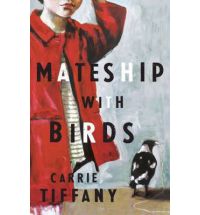
‘Mateship with Birds’ by Carrie Tiffany

2012, 208 p.

This is a quirky, sly book that had me closing it with regret, with a smile on my lips.  It is set in Cohuna in the 1950s and is redolent of long grass, cow-pats, and dusty roads, set to a soundtrack of magpies and kookaburras, country dances and a slow, masculine drawl.

Harry is a shy, lonely dairy farmer who lives next door to Betty, a single mother, who works in the local aged-care home and lives with her adolescent son, Michael and young  daughter Little Hazel.  They are neighbours: they turn to each other in need; they keep an eye out for each other, and as Michael grows older, Harry decides, in the absence of a father,  to teach him about the opposite sex.

But the boundaries between sex, breeding, fertility, physicality and nature are fluid in this strangely sensual context.  The book, too, is a scrapbook of conversations and episodes, birdwatching observations about a kookaburra family, reflections on the physicality of milking cows and washing withered old men, and a chronicle of illness and injuries.  It is a book of the rhythms of country life, and it is both hard and pragmatic and yet watchful and sensitive.

The author is not, as you might suspect, a dinky-die, true-blue Aussie country girl. Instead, she migrated from Yorkshire with her family as a child, grew up in Perth, and works as an agricultural journalist.  The amount of research that must have gone into this book- set in the decade before she was born in another hemisphere- is prodigious, and yet so lightly worn.  As with her debut book Everyman’s Rules for Scientific Living, it is a deceptively simple work with good people and big themes.  I hope that it gets the recognition it deserves.

My rating: 9/10

Sourced from: Yarra Plenty Regional Library

Read because: it’s my fourth book in the Australian Women Writers Challenge

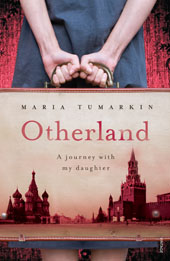
‘Otherland’ by Maria Tumarkin

2010, 301 p & notes

“What IS this book?” I wondered half-way through. Travelogue; a reflection on literature and historical methodology;  a history of nations and a history of family; a reflection on the mother/daughter relationship- how would all that be summed up in the one-word descriptor that you often find on the back cover of a book?

“Memoir” .  It seems a little incongruous to me that anyone born in 1974 could write a memoir yet, but if a memoir is a literary construct through which the writer represents a lived experience, then yes, this is a memoir- but I’d qualify it by adding “and much more”.

The author is a Melbourne-based historian, who emigrated from the Ukraine with her parents and sister in 1989, a month after the fall of the Berlin Wall,  at the age of fifteen.  She had returned to Russia  previously, but had not made it to the Ukraine.  On this trip she takes her twelve- year old daughter, Billie, largely because she feels that it is the last chance she will have to do so:

Right now is my last chance to go back with her and still be the centrifugal force of our journey, exercising the course-setting and veto powers.  It is, in other words, my last chance to have Billie follow me around, however begrudgingly, as her mother’s tail.  In a year, maybe a few months, the tail will drop off, or the tail will be wagging the dog, and such a trip, if even possible, will be a different proposition altogether. (p. 28)

It is the journey that ties this memoir together, but it is a layered journey. Mother and daughter are travelling, but Tumarkin is making her own journey back to the relationships that were ruptured when she and her family left so abruptly, and she is making a journey into her own parents’ and grandparents’ experiences as well.  But it is not her story alone: she interweaves the journey with the stories and observations of writers, historians, poets and political dissidents.  In this way, it is an intellectualized endeavour- indeed, I had not heard of many of the writers she cited- but it is also highly personalized.

It is much more than the story of a mother and daughter, and yet this is important too. We read excerpts from Billie’s diary- am I the only one who felt slightly grubbied and complicit in this?  The mother/daughter relationship generally is often fraught, and here I found myself judging the author rather harshly for her own intrusion into her daughter’s perceptions of her experience, where she so much wanted her daughter to see and feel certain things. Ah, but in terms of judgement and criticism Tumarkin was often there before me, aware of her own shortcomings.  There is a stringent honesty in her writing, as when she describes her daughter opening up the piano to play in the apartment of an elderly woman herself the cultured, brilliant daughter of a revered dissident:

In this apartment at the very heart of Moscow, metres away from the Mossovet and Statira Theatres and the Tchaikovsky Concert Hall,  Billie sits down at the old piano.  She plays what she usually plays- Tori Amos and Coldplay.  How alien they sound inside these walls.  Not in Adorno’s ‘no poetry after Auschwitz’ kind of way, no.  And not in a vulgar popular-culture way.  It is just that here these songs, which evoke places and times that make no sense in the world of this apartment, sound thin, flat and inconsequential in the extreme, like a mobile ringtone underneath a cathedral dome. Momentarily I feel ashamed. Ashamed for both of us. (p. 76)

There are several mothers and daughters here.  It is also a history of a Jewish family, who were part of a much bigger history, and here I found myself hampered by my lack of late twentieth-century history: who came first again? Gorbachev? Yeltsin?  I craved a factual chronology, to juxtapose against this very personalized history.

This is a very carefully constructed memoir.  It opens with a cliff-hanger that is not resolved until after half-way through the book.  The writing is reflective and scholarly in places, and confessional and all too human in other places.  Like all journey narratives, it moves forward and there is a homecoming, in more than one sense.  It is quite a journey.

My rating: 9/10

Sourced from: Yarra Plenty Regional Library

Read because: I read it as my third book in the Australian Women Writers Challenge

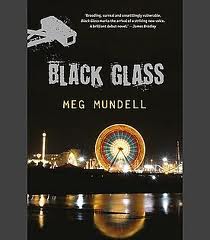
‘Black Glass’ by Meg Mundell

2011, 281p

This book is set in Melbourne, but it’s a dissonant Melbourne- recognizable, yet there’s something wrong.  Locations were familiar to me, and yet I think that inhabitants of any affluent city could recognize their own here: every city seems to have a Docklands with high-rise buildings, a ‘Westgate’ bridge or some variation on a similarly anodyne name, malls, a waterfront, a Casino, tourist Ferris wheels [although, unlike Melbourne, most cities seem to have one that actually works.]

In this future Melbourne, the tourist, civic, retail and commercial centres have been made safer by close electronic surveillance and the requirement for official entry documentation. The inner suburbs have been declared an  ‘interzone’, providing residential housing for those permitted to work in the city centre.  Those without the required documents, or the ‘undocs’ are prohibited from working legally and are thus forced into a marginal existence, scrounging for food, working illegally and squatting in disused buildings and under viaducts, bridges and in tunnels.  The proper place for ‘undocs’ is outside the city, in the Regions, where services are non-existent and civic governance seems to have collapsed.

Tally and Grace are teenaged sisters living in the regions, dragged from town to town throughout the Regions by their drug-dealing father.  They had long been planning an escape to the city, even though they would be ‘undocs’, but when their father is killed in a drug-kitchen explosion, they are separated and unsure how to find each other again.  The book traces their two paths as they search, each struggling to find a toe-hold in this dystopian society.

The structure of the book is interesting.  It is divided into 12 chapters, each announced with a rather excessive unnecessary title page, such as you might see when a book has Part I, Part II etc.  Within the chapters, each scene is headed by an annotation of place and people present, as if part of a dossier. Multiple scenes make up each chapter, and this device  quickly contextualized the episode that followed, but also endowed a filmic quality on the narrative.  The scenes were quite distinct from each other, and the writing was so fresh and careful in each one that you almost felt as if they were written, and should be read, each time as a polished episode in its own right.  I don’t normally like such disjointed writing as it sometimes seems a bit of a cop-out from the hard work of maintaining the narrative and moving it forward.  But in this case, each one was so beautifully written and worked well in inching the story forward that it felt like a considered and well-chosen narrative structure.

Tally and Grace and their search for each other lie at the heart of this novel, but there are other themes woven in as well: exploitation, surveillance, dissent and authoritarianism.  Unlike some science fiction (or is it ‘speculative fiction’ these days?) she does not spend a great deal of time on the logistics and details of this chilling world but instead uses it as a backdrop to the story of these two lost sisters.

My rating: 8.5/10

Sourced from: Yarra Plenty Regional Library

Read because: it is the second book that I am reading for the Australian Women’s Writers Challenge 2012

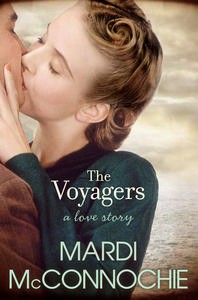
‘The Voyagers: a love story’ by Mardi McConnochie

2011, 268 p.  Extract here .

I was drawn to read this book, the first as part of my Australian Women Writers Reading Challenge 2012, through encountering the author previously in her earlier book Coldwater, and by the promise of a book that traversed different settings during World War II-  Sydney, London, Shanghai and Singapore. It was ironic then, that the treatment of the breadth of its canvas was what I found to be its weakest feature, even though it was what attracted me in the first place.

In the opening pages Stead, an American sailor, returns to Sydney in 1943 hoping to spend his leave with Marina, a musician  he had taken up with for three days before the war.  When he retraces his steps to her home, he finds that she has been missing for almost five years.  The book then zig-zags back and forth in time, jumping forward and back, tracing between Marina, then Stead as they traverse their own journeys in a ruptured world, oblivious to each other’s experiences, and gradually honing in on their search for each other.

The complexity of this plot was handled well, and I found myself drawn through the book, wanting to know what would happen next and whether they would, eventually, find each other.  The strong emphasis on plot means that I am reluctant to say much more, lest I spoil your enjoyment of the book.

Yet in making these large leaps from location to location, and event to event, the book at time lapsed into an almost documentary flatness.  It was almost as if each new section was introduced by a film-reel summary (think Movietone News) that skated across events, evoking familiarity with images of historical events without actually tying them into the consciousness of her characters.  Big things happened,  in particular in the final part of the book, and yet they were compressed into a rather disengaged, almost saga-like retelling, tumbling quickly one after the other into an “and then…and then….” string of events.  Things happened to Marina especially, but it seemed that it was in the smaller, more intimate events that she seemed more present as a character.

It’s interesting that the author has marked out so clearly in the title that this is “a love story”. In an interview about the book with Angela Meyer on the Literary Minded website, the author explains that the book sprang from a discussion with her book group ladies about the paucity of contemporary literary love stories.  When I saw this, it explained some of the unease that I felt about it- that it seemed almost written-to-order for a female-dominated bookgroup, raising as it does issues of motherhood, careers, loosening boundaries and the artistic life. It was as if it was writing to a genre or niche.

Like the author, I am resistant to the big all-lived-happily-ever-after ending.  In this regard, I think that the heightened  pace and the emotional distancing in the last third of the book worked against the ending.  I did not cry for the Marina we have at the end of the book, but I may have for the Marina we found half-way through.

On the other hand, I think that the title and the cover of the book work well as a marketing strategy in that they mark it out as a love story, if that’s the sort of book you’re looking for.  But I think of other love stories that I have enjoyed- the same love stories that McConnochie herself identifies in her interview (Cold Mountain, The Shipping News, Possession, Captain Corelli’s Mandolin) and with all of them the love story crept up on me unawares, and I think that I appreciated them all the more for that unexpected delight.

My rating: 7.5/10

Sourced from: Yarra Plenty Regional Library

Read because: I wanted to read an Australian woman author as part of the Australian Women’s Writing Reading Challenge