Category Archives: Australian history

‘Truganini: Journey through the apocalypse’ by Cassandra Pybus

pybus_truganini

2020, 336 p.

The front cover of Cassandra Pybus’ biography of Truganini shows Peter Dombrovski’s photograph of the sinuous, black ribbons of kelp at Macquarie Harbour in Tasmania. It’s a beautiful and yet unnerving photograph that is just right for this story of a black, evil period of Australia’s history that still congeals and clogs our sense of ourselves as Australians.

Truganini is a story based on historical sources, but Pybus has chosen not to write history here, with footnotes and forays into the historiography and secondary source material about Tasmanian indigenous history. As a historian, I regret that.

The approximately 250 km of Bass Strait that separates Victoria and Tasmania is not a wide expanse of water, but Victorian and Tasmanian histories have tended, until recent years (e.g. James Boyce’s 1835; Lynette Russell’s Roving Mariners ) to have been told as two separate histories of development. This is particularly true in the consideration of Truganini,  for a long time wrongly described as the “last Tasmanian Aborigine” as one story, and the story of the “Van Diemen’s Land Blacks” (as they were described at the time) who accompanied the Aboriginal Protector George Augustus Robinson to the Port Phillip settlement in 1839 as a separate story. I have read of Robinson’s activities in Tasmania through Plomley’s work (most recently revisited in Johnston and Rolls’ collection of essays in Reading Robinson, and in Leonie Steven’s beautifully written Me Write Myself) and I have also read in more details of his activities in Victoria ( most particularly in Auty and Russell’s Hunt Them, Hang Them). But until now, I haven’t read another work that sees the Tasmanian and Victorian experiences as a unified event, part of this unfolding ‘apocalypse’ that swept away all the certainties of a long-established lifestyle in an environment that could be bounteous, but also unrelenting.

Cassandra Pybus’ own life story is tied up with that of Truganini. Her family history in Tasmania starts with the grant of Neunonne land  on North Bruny Island  to her great-great grandfather Richard Pybus, thus implicating her own family directly in the dispossession of Truganini’s own land. She had heard family tales of an old woman picking her way across the land – her traditional Neunonne land, (although the Pybus family wouldn’t have seen it that way) and Pybus herself  purchases and lives in her uncle’s house built directly adjacent the old convict station at Oyster Cove where Truganini spent the last thirty years of her life.

Perhaps because it is a story personal to herself that Pybus has decided to write this as a narrative biography, rather than an academic history. As with any other writer working in this area, she relies heavily on the journals of George August Robinson, the self-appointed ‘Protector’ of Aborigines. Written in an almost illegible scrawl, these journals are a mixture of bombast, ego, information, sketches, occasional introspection and frequent obliviousness.  In her introduction, she writes:

In writing this book, I have deliberately confined myself to first-person accounts from people who saw her and heard her with their own eyes and ears, then – ideally- made a contemporaneous record of it. Such sources are very few and they are all culturally loaded. Robinson’s journals, however narcissistic and ideologically driven, are the best sources available , which bestows on this highly problematic man an outsized role in her story that he doesn’t really merit. (p. xix)

She doesn’t hold back on her own opinion of Robinson- an opinion much more critical than many other historians who are alternately repelled but puzzled by him:

Truganini and her companions are only available to us through the gaze of pompous, partisan, acquisitive, self-aggrandising men who controlled and directed the context of what they described. The challenge I have set myself is to somehow release these people from entrapment in a paternalising and self-serving account of the colonial past.  I want to redirect the lens to find the woman behind the myth (p. xix)

And this is where my regret that she has chosen not to write a history comes in: that without footnotes, and without acknowledging the work of historians with whom she has clearly talked – her friend Lyndall Ryan for just one- as a reader, I cannot tell where Robinson and the other observers end, and Pybus takes up, especially in ascribing Truganini’s motives and responses.

But I am in danger of letting my desire for a different book obscure my pleasure in the book that we do have. In Pybus’ Truganini – as distinct from the ‘last Tasmanian aborigine’ Truganini- we have a flesh-and-blood woman who swims and dives, who struggles through harsh landscapes and complains of having to walk instead of taking the boat, has friendships, loves children, uses her body and her sexuality to get what she wants, and resists being corralled into Robinson’s vision of a compliant, dying race.

I hadn’t realized just how far Robinson and his ‘guides’ walked on the different ‘missions’ between 1830 and 1834. They literally circumnavigated Tasmania, across varied terrains in often appalling weather. Pybus’ writing glows in describing landscape: you can just see them sinking into wetlands, scrabbling up and down rocky slopes.  Then there were the ‘missions’ back and forth, trying to ‘conciliate’ particular tribes – or what was left of them- all part of Robinson’s plan and purpose,  none of which he could have undertaken without them.

By “reading against the archival grain” in Robinson’s journals, you can see how resistant Truganini and his other ‘guides’ were to his mission. There was a whole tribal political and economic network in operation to which Robinson was oblivious and excluded. In a ‘search’, it was dubious who was seeking and who was sought.  Women were ‘rescued’ from the Bass Strait sealers, but refused to go with Robinson, preferring to stay with the sealers. There was a sexual trade in operation – and Truganini was a participant – and Robinson was powerless to stop it.

The two-facedness and betrayal in Robinson’s behaviour is breath-taking. He ‘brought in’ people of the varying nations with promises that he did not keep, often pleading that he had sought permission but been denied.  He promised to rescue daughters from the sealers, but did not (and could not) do so. He held out the promise of fertile land on the north-east tip of Tasmania, near the Bay of Fires, knowing that the eventual outcome was not this rich territory, but instead a windswept Bass Strait island.

His abandonment of his ‘Van Diemen’s Land’ family in Port Phillip, after bringing them over by various ruses, is reprehensible. Robinson had  arrived in Port Phillip well before Superintendent La Trobe arrived, and by then he had virtually washed his hands of their charge, more intent on bolstering his career by building the bureaucracy of the Protectorate in Port Phillip. His ‘Van Diemen’s Land family’ simply just falls out of his journals, and his conscience.

It was Truganini’s longevity that leaves her at the end of a dismal story of betrayal and illness, as gradually the people around her sicken and children are never born. It is difficult to find ‘agency’ in this slow denouement, but there is instead a steady resistance as Truganini refuses to fit into the fairy tale ending of an arranged marriage and a cottage in a simulacrum of “civilization”.

The book closes with a series of short biographies of the various indigenous people who Truganini encountered, either as part of her pre-Robinson days, during the so-called ‘Friendly Missions’ or through their enforced proximity on Wyballenna and Oyster Cove. These are arranged by nation, reflecting the importance of country as identity. They highlight that Truganini, like all of us, played various roles amongst the people she knew: friend, sexual partner, fellow expeditioner on the so called ‘Friendly Missions’. They make daunting and depressing reading.

The book has excellent maps at the start, which I found myself consulting often. The text rarely mentioned places not shown on the map, and it was easy to locate where the action was taking place. There are two sets of colour plates, but unfortunately no index, which made the biographies at the end of the book awkward to negotiate if you were unaware of the tribal origins of each individual. Her primary sources are cited, but no secondary literature at all.

I come to this book as a historian, and so I regret the lack of footnotes and engagement with the huge body of scholarship and the historical debates. The research has been done and her passion is clearly apparent.  Her work is, as historian Henry Reynolds blurbs on the back cover “of unquestionable national importance” but by her choices she has moved it out of the historiographical realm.

But there is no gainsaying the beauty of Pybus’ prose in describing landscape, and her sensitivity to Truganini’s agency and cohesiveness as an intelligent, resilient woman in a maelstrom of disruption and under a burden of grief. Perhaps eschewing the footnotes attracts readers other than historians, and that is important.

As a reader -whether a historian or a general reader-  you leave the book agreeing with Pybus that after all this dispossession, resistance and sorrow, that the “very least we can do is pay attention and give respectful consideration when the original people of this country tell us what is needed” (p 270).  It is, as she says “not too much to ask”. Indeed.

Sourced from: Yarra Plenty Regional Library

My rating: Difficult to say-  commenting as a general reader, 9/10

aww2020

I have included this in the Australian Women Writers Challenge 2020
 

‘Beyond the Ladies Lounge’ by Clare Wright

wright_ladies_lounge

2014, 256 p.

My parents were teetotalers, and even though I’m not  a teetotaler by any stretch of the imagination (cue laughter from my husband), I was certainly influenced by my parents’ distaste for the dull roar and acrid smell of beer that emanated from the corner pubs of my childhood. Growing up in the time of the ‘six o’clock swill’, and with the quaintly lettered ‘Ladies Lounge’ etched into the stained glass of pub windows, the pub seemed a threateningly male place. But as Clare Wright reminds us in this book, this was not always the case. Female publicans have a long history, right back to the earliest days of white settlement, and at the end of the nineteenth century and early decades of the twentieth century, over half of Melbourne’s hotels had a female licensee.

This book, republished by Text Publishing in 2014 has had a longer life than you might think. The original 2003 book was originally drawn from Clare Wright’s PhD thesis from 2002, which itself grew out of her honours thesis which utilized oral histories with female publicans and their descendants. These academic antecedents are still here in this 2014 version of the book, but Wright’s lively writing style, even more pronounced in her later books The Forgotten Rebels of Eureka  and You Daughters of Freedom, ensures that the academic analysis enhances, rather than suffocates, the text.

She starts her book with an evocative pub crawl around Melbourne in 1889, from one hotel to another, where the publican is a woman. Right from the earliest days of convict settlement, the authorities were prepared to condone hotel-keeping by young single women.  During the gold rush, when liquor was ostensibly banned from the diggings, the sly-grog tents that flourished were often owned by women. Some women made sufficient money from sly-grogging to build hotels on the roads to the diggings where they became legitimate, respectable traders.

The legal framework regulating the liquor trade in Victoria was distinctly favourable to women because they were seen to ‘keep orderly houses’, reflected in the language that spoke of the licensee as ‘he or she’.  Most importantly, the requirement for pubs to offer accommodation (something that was not the case in Britain) meant that women were involved in creating a domestic, as well as drinking establishment. Nonetheless, with time, this came under threat.  The 1876 legislation, which aimed at cleaning up the trade after the gold rush, changed the language to ‘he’ and favoured male licensees, and in 1884 there was a courtcase that ruled that married women were prohibited from holding a publican’s licence.  This verdict threw the hotel industry into turmoil, but an Amending Act the next year preserved married women’s rights to renew their licences. Support for married women as licencees came from two unexpected quarters: the Licensed Victuallers Association who were ambivalent at first,  but were swayed by wanting to demonstrate the ‘respectability’ of their profession; and more importantly, the brewing companies who owned a number of hotels outright under the ‘tied house’ system, often using female licensees. In the midst of the temperance campaign around WWI, even the Women’s Christian Temperance Union, which campaigned vociferously against barmaids, was largely silent about female publicans with whom they probably had more in common than they wanted to admit.

‘Respectability’ was used by women publicans as both an attribute to make themselves valuable as licensees, and as a way of embedding themselves and their hotel as integral parts of the community. It was used as a way of controlling behaviour, too, by insisting that men not swear in front of them, and by not drinking with the men (as male publicans were wont to do) in order to maintain a respectable distance.

Because of the requirement for the publican to live on the premises, the pub was a home as well as a business. In the chapter ‘Mapping Elizabeth Wright’, she looks to the inquest records of the aforenamed Elizabeth Wright, who was murdered in her own hotel’s dining room by her business partner. Through these records, Wright (the author, not the victim!) is able to map out the Frankston Hotel spatially, and the dual and ambiguous family/business uses of many of the spaces. Female publicans, bringing up their families within this shared zone, did not have a separate work life but instead their children saw how they operated with authority and efficiency, as oral history testimonies demonstrate. In the final chapters of the book, she brings the female publican into the 21st century, with examples of female publicans in inner-city hotels (e.g. the Curry Family Inn in Collingwood) and  gastropubs (e.g. the Grace Darling, also in Collingwood).

I enjoyed this book. It is written with the same warmth and wit of Wright’s later work on Eureka and suffrage, which tie far more into the bigger historical themes of Australian history. It is not just a paean of praise to female publicans, because it has academic ‘grunt’ as well, although some readers may find this off-putting. There are enough personal vignettes for you to remember that you are reading about real people as well, and the sheer number of examples of female publicans drawn from right across Victoria reinforces that she is writing about a widespread, if overlooked, phenomenon.

My rating: 8.5/10

Sourced from: Yarra Plenty Regional Library e-book


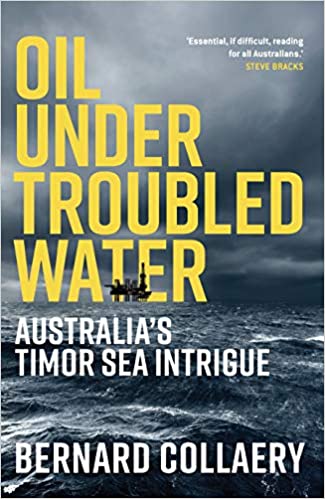
‘Oil Under Troubled Water’ by Bernard Collaery

collaery_oil

466 p. 2020

This blog post is actually an amalgam of two blog posts. The first one explained why I didn’t finish reading this book. This second post is written after I gritted my teeth and did finish it after all.

I’ve become more interested in international politics over the last twenty years. This interest was spurred by my outrage at the oleaginous Alexander Downer’s airy dismissal of concerns about Australia’s behaviour over East Timorese oil resources, waving off the whole question as a merely a matter for foreign aid, rather than principled policy. I decided then that I needed to know more about the world around me.

I still feel that way, particularly about East Timor and West Papua. I watched a Readings ZOOM session where former Victorian Premier Steve Bracks launched this book and decided that I should read it. Bracks describes it in a blurb on the front cover as “Essential, if difficult, reading for all Australians”. I assumed that it was difficult from a moral/political point of view (which it is), but for me it is difficult because of the way it is written. It is very detailed : nearly 400 pages of very dense foreign policy with different departments and diplomats and acronyms. It’s a lawyer writing, not a historian, and fact after fact is rammed through, lest nothing be left out. This is a real insider’s book, for someone who already knows the lie of the land and the big picture. That reader is not me.

Bernard Collaery is a former Attorney-General of the Australian Capital Territory and worked for many years as legal counsel to the government of East Timor. He makes no secret of his admiration for and allegiance to Xanana Gusmao, the first President and fourth Prime Minister of the newly-independent East Timor. The black and white photographs sprinkled through the book, often including the author, show that he is not just a commentator but a participant in the events. In May 2018 he was charged by the Australian Commonwealth Director of Public Prosecutions with conspiracy to breach the Intelligence Services Act of 2001, introduced in the wake of September 11. He, and Witness K, a former senior ASIS agent, have been effectively gagged over a claim that ASIS had bugged the offices of the East Timorese team during negotiations over Timor Sea oil.

This, then, is a history of Australia’s dealings with East Timor and Indonesia over the oil resources- and more importantly, the helium reserves- in the Timor Sea. It moves chronologically, but it is a lawyer’s argument rather than a historian’s. However, as a historian, I learned much: about the way that England’s treaty with Portugal affected how England wanted to hide behind Australia in taking action in Timor during WW2; the strategic importance of the Azores in the middle of the Atlantic for British defence and hence its concerns about getting Portugal offside over Timor; about the Whitlam and later Fraser government assumptions that Indonesia would take over East Timor, in preference to independence. In Collaery’s telling, Australia’s foreign policy reached its high point with H.V. Evatt, and from then on has been underhand and coercive, and largely and inexplicably beholden to the petroleum industry (although, as he points out, Alexander Downer’s almost immediate employment by Woodside Petroleum is telling).

Australia does not come well out of this. The Australian government was quick to act when the new nation of Timor Leste was just finding its feet; it has played hard ball with questionable geological and cartographic ‘facts’ , and yet ineptly managed to lose the benefits of the ‘inert’ helium commodity not only for Timor Leste but for Australia itself.

I did manage to finish this book, but I found it very hard to read. Inexplicably, there is no map until page 362 and in a book that bristles with acronyms, there is no glossary.  It is meticulous, with every fact noted, but it groans under the weight of so much detail. My gut feeling all those years ago was that Australia was acting like a bully, and this book only confirmed it further.

My rating: 6/10

Sourced from: Yarra Plenty Regional Library


‘Friends and Rivals’ by Brenda Niall

Niall_friends_rivals

2020, 288 p.

In her most recent book Friends and Rivals, Brenda Niall has gone almost full circle. One of her early books was Seven Little Billabongs: The World of Ethel Turner and Mary Grant Bruce, published in 1979 and here she is, some forty years later with another group biography, this time linking “four great Australian writers”: Ethel Turner, Barbara Baynton, Henry Handel Richardson and Nettie Palmer. This book is more a quartet of essays rather than one integrated study. Indeed, it might be more appropriate to speak of two twinned biographies, as she was able to pinpoint a documented link between Turner and Baynton,  and likewise between Richardson and Palmer in a literary quest of degrees-of-separation.

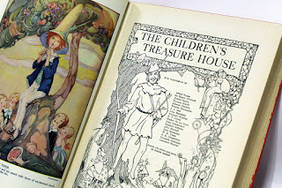
I have come across three of these writers over my lifetime. We did not have a lot of books in our house, but my mother did give me three books from her childhood. One of them was the 1935 Children’s Treasure House, a book of 768 pages on very thin paper, full of English stories and full-length fairy stories, with beautiful Art Deco black-and-white illustrations and colour plates.  In Australia, the rights were reserved by the Australian Women’s Weekly and it cost 5/- plus 1/- postage to buy a copy. I still have the one my mother owned.

The other books she gave me were her copies of  Family at Misrule and Flower O’ the Pine– long since gone (unfortunately, because they were first editions I see, although of no great value).  These were both written by Ethel Turner, and I loved them. I borrowed Seven Little Australians from the library as well, and I can remember being heartbroken when Judy died.  I was never a Billabong girl- only ever Ethel Turner.

In contrast, I only encountered Barbara Baynton’s Bush Studies three years ago (my review here) and the stories are still etched in my mind, so different were they from the Bulletin/Lawson/Paterson nationalist bush stories of the turn of the twentieth century.  Elizabeth Webby’s introduction to the 1999 edition  really piqued my interest in this shape-shifting woman, whose final presentation of self was more fictional than her work was.

I read The Getting of Wisdom as a teenager, but was deterred from ever embarking on The Fortunes of Richard Mahony by a friend at the time who was made to read it at school (interestingly, she went to PLC – perhaps the school had forgiven HHR by then). She warned me that it was the most boring book ever written and to be avoided like the plague. I took her at her word, and did not read it until the summer of 2008, down at the beach. I just loved it, and it’s right up there on my list of favourite Australian novels.

Nettie Palmer I have only ever encountered as part of the two-for-one partnership of “Vance-and-Nettie-Palmer”, public intellectuals and champions of Australian literature. But I have encountered her often, through my interest in her uncle Henry Bourne Higgins, whose biography she was commissioned to write, and I’ve wanted to know more about her. In fact, it was Niall’s study of her that led me to read this book.

The book starts with an introduction ‘Women’s Work’, which I found a little lacklustre. The introduction didn’t explain why she chose these four women in particular (rather than others), because, as she points out, they did not make up a group, as such.

The lives of Turner and Baynton, Richardson and Palmer criss-crossed one another from the 1890s through the Federation period to the late 1920s. Their writing careers differ widely, as does the quality of their work. The writer of children’s books, the short story writer and the novelist, all were doing something new, as was Nettie Palmer, literary journalist and public intellectual. Their achievements, against the odds, were substantial and surprising. They didn’t make up a group; there were no groups for them to join. How did they do it?Each life story illuminates the others. (p. 10)

However, there were themes that arose her analysis of all four women. One such theme was that of reinvention. Ethel Turner was evasive about her childhood and parentage. There has never been documentary evidence of the man who was named as her father on her birth certificate, and she took the name of her stepfather, Henry Turner, a 39 year old widower with four sons and two daughters. Her mother had falsified both her own age, and the ages of her children. When Turner died her mother remarried quickly to Charles Cope, a bachelor ten years younger than her mother, and he was to take an unhealthy interest in his step-daughters. Niall observed that “Turner was strangely tolerant; it is as if she was blinkered to the sexual desire that he so plainly felt for her” (p. 35)

Barbara Baynton was even more evasive about her own history, giving her own family a completely fictional account of a Captain Robert Kilpatrick, who seduced Penelope Ewart away from her husband, and finally married her just before Barbara’s birth, thus rescuing her from illegitimacy.  No trace of this Captain Kilpatrick has been found. Instead, her father was a bush carpenter, and Barbara and her six siblings were all illegitimate, although her parents married later. She became a governess to the Frater family, close to Scone in NSW, and married her employer’s eldest son – shades here of My Brilliant Career. Her husband, however was a “shiftless, neglectful and unfaithful husband” (p.86) and she initiated divorce proceedings against her husband. She found security with her second marriage, to the elderly, wealthy Dr Thomas Baynton. Educated by her husband into the appreciation of furniture and porcelain, she took her place within Sydney social circles. When he died  in 1904, just after the publication of Bush Studies, he left her a substantial estate which she had a free hand in administering. She moved to London, and after WWI married Baron Headley, an eccentric peer but this was an unhappy marriage. When they divorced, she retained her title, and still had her money, and returned to Australia.

Henry Handel Richardson did not try to hide her background- indeed, she mined it heavily for The Fortunes of Richard Mahony, but she did manipulate her name. Ethel Richardson adopted the name ‘Henry Handel Richardson’ with the publication of her first novel, Maurice Guest as a sort of game – would anyone detect it as a woman’s work? Although married to the scholar J. G. Robertson, no one was allowed to call her Mrs Robertson, going by ‘HHR’ and ‘Henry’ amongst family and friends.

Nettie Palmer was probably the most straight-forward of them all, with an open and uncomplicated liberal Melbourne upbringing. She happily took her husband’s name, and was happy to be known in tandem with him.

When it came to publication, the three writers turned their eyes to British publishing houses, as was common at that time. Ethel Turner was probably the most put-upon amongst the three, with her publishers demanding a Christmas book each year, setting her up in competition with Mary Grant Bruce, and changing the endings and pruning the plots so as not to alienate a Sunday School prize market.

Baynton was already in England when she started looking to publish the short stories she had written back in Sydney, but even with her husband’s position in society, she could not find a publisher. Then, in keeping with her already fantastical life, she had the fairy-tale luck to be rescued from the slush pile at Duckworth’s publishing company through Edward Garnett (husband of the famous translator Constant Garnett), who had also discovered Joseph Conrad, John Galsworthy and D. H. Lawrence.  However, after this start, she struggled with her novel Human Toll, which received a few respectful reviews among mainly lukewarm ones.

Henry Handel Richardson began her first novel Maurice Guest while living in Strasbourg, and The Getting of Wisdom was also written and published overseas. Her husband took charge of most of the business side of publication, and was willing to pay for the publication of the third part of the Richard Mahony trilogy himself, when Heinemann rejected it. That volume,  ended up Ultima Thume being received with acclaim.

Most of Nettie’s work in reviewing books appeared in Australian newspapers and her survey of Australian writing in Modern Australian Literature 1900-1923  was published in Melbourne. She did, however, have a London publisher for her first book of poems The South Wind, followed by a second book of poetry in Shadowy Paths also published in London.

Another theme that comes through the essays is that of patronage and support. Both Barbara Baynton and Henry Handel Richardson had husbands whose interest and connections (and in Baynton’s case, money) supported their writing. Niall suggests that J.G. Robertson sacrificed his academic career for HHR’s writing success, and the incorporation of a young woman Olga Roncoronis into their household further left space for HHR’s own writing – (Niall leaves open the question of a sexual attraction between the two women). With Nettie Palmer, the tables were turned, with her assiduous promotion of her husband Vance’s work within literacy circles – a devotion which Niall feels to have detracted from her own career as critic.

A biography, if it is to be more than a chronology of facts and actions, is an argument or judgment, based on a reading of documents, conversations and actions. These are not necessarily accepted on their face value: sometimes they are ‘read against’ or set up in opposition to one another.  Especially when dealing with writers, there are not only the writer’s own works, and sometimes an autobiography written with varying degrees of deprecation or self-regard, but often there is also a body of correspondence with other writers, who in turn write to other writers. The retention of such correspondence is sometimes a matter of chance, at other times the target of ruthless culling or assiduous gate-keeping either by the author herself or her literary executors. For good or ill, these remaining letters are mined by biographers, giving them a life and significance far beyond the original intent.

The crafting of a biography as an argument is particularly apparent in a multi-essay volume like this one, where the same author deals with multiple and interlinked characters. Niall’s reading of Henry Handel Richardson is censorious, while she clearly admires Nettie Palmer and feels that she has not been sufficiently recognized as part of the Vance-and-Nettie-Palmer partnership. In dealing with Ethel Turner, she also examines the British-dominated publication culture of the day, and with Barbara Baynton she finds a paradox, interlaced with reinvention.  New material is always being uncovered, additional links discovered, and historical ‘turns’ invite historians and biographers to stand in a different place to re-evaluate their subjects. That is why there are no definitive biographies.

I admire Brenda Niall as a biographer. She is deft and efficient, and attuned to the nuances of relationships.  She paints a broad canvas for her subjects, but also hones in on details that give definition to her subjects, helping you understand why this particular person was distinctive.  That said, I was somewhat startled by the abrupt ending of this volume. In fact,  I felt a little short-changed by both the introduction and the absence of a conclusion. While I know that her focus is on her four subjects, I found myself wishing that Brenda Niall herself had come back on stage to draw out further the contrasts and commonalities in these four lives.

Sourced from: Yarra Plenty Regional Library

My rating: 8/10

aww2020

I have included this as part of the Australian Womens Writers Challenge 2020

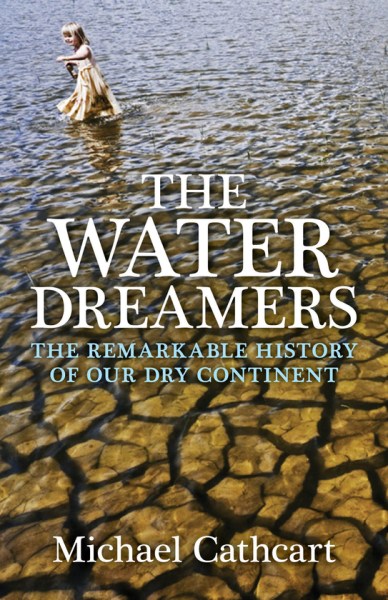
‘The Water Dreamers’ by Michael Cathcart

cathcart_waterdreamers

2009, 259p.

After seeing historians negotiating the publication marathon, I know that authors don’t always get to choose the name of their book.  Instead, it is often a decision of the marketing department of the publication company. However, if I were Michael Cathcart, I’d feel rather short-changed by the title of this book, which, even with its subtitle ‘The Remarkable History of our Dry Continent’ still doesn’t capture the nature of Cathcart’s question or approach.

The title ‘The Water Dreamers’ evokes for me poor old mad Sturt bashing around in the outback, Burke and Wills and the Dig Tree and C. Y. O’Connor suiciding before his Goldfields pipeline was pronounced a success.  All of these men- and it’s significant that they are all men- appear in this book, but it’s far more than that. Instead, Cathcart examines the way that Australia was imagined and written about in our  national consciousness and there is just as much about the ‘silence’ of the landscape as there is about ‘water’. I don’t know how you find a title that combines both these elements, but ‘water dreamers’ doesn’t do it. This is as much a book about cultural interpretation and literature as it is about engineering.

The book runs pretty much chronologically, starting off with the arrival of the First Fleet and those earliest transactions about water, a crucial concern for a ship’s crew that has arrived after months at sea and intent on forming a settlement. He features the now-invisible Tank Stream, so named because early engineering attempts imposed tanks onto its increasingly straitened flow, and the search for a better water supply which drove the the settlement towards the Parramatta and Hawkesbury Rivers. In the interests of Sydney-Melbourne balance, there is a similar chapter on the Port Phillip settlement, and the importance of the Yarra Falls as a barrier between the salt and fresh water needed by an infant settlement. He traces through the various expeditions that embarked from Sydney, Adelaide and the north western coast of W.A. in search of an inland sea or a large navigable river, and the various schemes proposed to turn the rivers inland (zombie plans that keep returning again and again). Drilling the Artesian Basin, and the construction of the Snowy River Scheme were both seen as ways of ‘solving’ the water problem. Engineering solutions have given way to market solutions, with water trading schemes abandoning Alfred Deakin’s long-standing philosophy that the water belonged to the river.

That’s one thread running through the book, and a fairly straightforward one at that. What gives nuance to Cathcart’s book is his parallel analysis of how the landscape was conceptualized. He points out that writers, from the very start, have commented on the “silence” of the Australian continent – whether it be the gibber plains or huge eucalypt forest- even though at the same time, they commented on bird calls, the crashing of timber, the howling of wild dogs, and the talk and shouts of nearby indigenous groups. Many early writers used the term “the howling wilderness”, a term from a 1662 North American poem ‘God’s Controversy in New England’, and one rather at odds with the supposed-silence that these Australian explorers deplored.

Cathcart is a pugnacious writer, and he takes on the popular view that explorers were obsessed with the idea of an ‘inland sea’.  While that is true of Sturt, Cathcart argues that explorers were instead seeking inland rivers, like the Mississippi, or the Amazon. Settlement occurred on the coast, not inland, and the first priority was to secure the coast, rather than penetrate the centre. Mitchell, Cunningham and Sturt heading off from New South Wales were looking for rivers, not seas, and they were often defeated by swampland rather than desert.

Cathcart also challenges the idea that exploring men conceptualized the land as a young virgin to be ravished and possessed. Instead, he argues, when Sturt, in particular, spoke of “lifting the veil” on Central Australia, it was the veil of mystery, not a wedding veil.

He identifies a stream of literature and reportage that he describes as ‘necronationalism’, exemplified by the disappeared Ludwig Leichhart, or Patrick White’s Voss, reaching its apogee in the public mourning and commemoration of Burke and Willis, who died beside a fresh water flow in a wet season.  ‘Hanging Rock’ and Lost Children are similar expressions of this necronationalism –  a nationalism based on death, which Cathcart argues would later be evoked in describing the ANZAC spirit.

Silence began to be conceptualized not as a sensory phenomenon, but a geographical zone that you entered and could leave, as you retreated back towards the coastline. It had a pictorial, representative aspect.  The ‘silence’ line largely followed the Goyder rainfall line in the 1860s.  Hubris in pushing beyond the Goyder line of the 1806s led to economic defeat when the seasons changed. This mapping of lines onto Australia was replicated sixty years later when the professor of geography at Sydney University, Griffith Taylor, published his own map that zoned Australia into ‘Useless’ ‘Sparse stock’ ‘Good Pastoral and ‘Fair Agricultural’ zones. This directly conflicted with the optimistic boosters of technology and engineering ‘solutions’ who looked to the construction of  dams, the reclamation of Lake Eyre and the development of irrigation schemes.

Cathcart spends quite a bit of time describing the Lemurian novels of the turn of the century, drawing on Theosophist ideas, that posited the hero Dick Hardwick as the explorer of a lost, fantastic Australia, before the time of the Aborigines. Such novels appeared across the Empire, but they were also distinctively Australian.

By now, it as clear that much of central Australia was occupied by a depressed desert, a void, an absence of nature. But the Lemurian novels held out the possibility that things had not always been thus. They invented a past based on one tantalising fact. At some unimaginably distant time, there really was an inland sea in Central Australia. Now, in the era of Victorian engineering, that sea was a blessing that the civil engineer could create. With this hope in mind, visions of this ancient inland sea swirled through the pages of the Lemurian novels. (p. 185)

And so, through literature and language, we can see the adoption of North American tropes of a ‘howling wilderness’, a ‘virgin’ land, and an empire- wide ‘lost civilization’ adventure genre all imposed onto the Australian landscape. We see the practice of drawing lines on maps to delineate arid zones disputed by the boosters of industrial and technological ‘solutions’.  Cathcart’s book is not just about explorers and schemes; it is also about literature and national consciousness, and concepts of geographical defeat and technological victory.  Does he succeed in melding the two? I’m not sure that he does, and he has the two threads running alongside each other, rather than interweaving them as a concise, integrated argument.

Nonetheless, this is a beautifully written cultural history that ranges across poetry, diaries and novels as well as nationalist stories of explorers and engineers. It tells a much more complex story about more than just water.

You can hear Michael Cathcart giving a lecture on this book (and you can read the transcript) from 2008 at https://www.abc.net.au/radionational/programs/archived/hindsight/the-water-dreamers/3255244

My rating: 8/10

Sourced from: My own copy.


‘After the War: Returned soldiers and the mental and physical scars of World War I’ by Leigh Straw

Straw_After_the_War

2017, 205 p.

It’s a strong, handsome face that appraises us from the front cover of Leigh Straw’s After the War. When the author saw it from the front page of the muck-racking Truth newspaper, she was struck by its resemblance to her own husband. It accompanied a report of a murder-suicide in Collie in 1929 where an Andrew Straw had murdered Muriel Pope in the street by shooting her, before turning the gun on himself. Leigh Straw, a historian who is better known for work on the Sydney and Melbourne underworld from the 1920s (see one of my reviews here) had stumbled on her own real-life family crime, one that had been suppressed and altered in family lore.

Andrew Straw, returned WWI veteran, is just one of the West Australian men that Straw deals with in this book. There are fifteen main protagonists, with the brief appearances of another fourteen veterans, all of whom volunteered as members of the 1st AIF. Her book takes us through enlistment, fighting, and their return to Western Australia, with a particular focus on the difficulties they faced when returning to their families in a society limping through indifferent economic conditions towards the Depression.

Chapter 1 ‘When the Call was Given: A Nation at War’  summarizes the war experience from enlistment, Gallipoli, the Western Front and the Armistice. Here we meet many of the men who will reappear in later chapters. These are personalized further in Chapter 2 ‘Dad did his turn at the war’: War Experiences’.

Chapter 3 ‘Civilian Life’ brings them back to Western Australia. Arrangements for repatriation had been set in train right from the earliest years of the war, and injured men were being sent home long before the final demobilization at the end of the war. Of the 32000 Western Australian men who had volunteered for the war, 24,000 returned with 16,000 of them injured, invalided or incapacitated by mental or physical wounds.

Soldiers with tuberculosis faced years in and out of sanatoriums as shown in Chapter 4 ‘Isolated: Tubercular Soldiers’. Western Australian soldiers had the added complication that many of them had been miners, or lived in mining towns. At first the Repatriation Department (always keen to reduce ‘shirking’) raised questions about prior mining work and war service. However, most medical reports highlighted the war experience as a causal factor even where there was a work history in the mines.  Tuberculosis can sometimes take years to manifest itself, and gradually the policy of restricting payouts for tuberculosis to a two-year period after the war was eased to allow for later illness. The Woolooroo Sanatorium for tuberculosis patients in the general population was established 50 km outside Perth in 1915, just after Gallipoli, and it was expanded after the war with a military section.

Ch 5 ‘Unbalanced’: The ‘Mental Soldiers’ of War’ examines ‘shell-shock’, ‘war neurosis’ and what we would now call PTSD. As Marina Larsson points out in her book Shattered Anzacs (my review here),  families fought hard to have shell shock distinguished from ‘mental illness’ more generally. They advocated for separate facilities at Stromness Hospital and Kalamunda Convalescent Home to distinguish returned soldiers from the patients at Claremont Hospital for the Insane, but there was always cross-over between the two.

In Chapter 6 ”A Ruined Man’:Postwar suicide’, Straw turns to the newspapers to find details of this outcome of war that was so difficult to talk about by immediate families. West Australian government policy shamefully decreed the destruction of inquest reports after ten years, and so she needed to turn to newspaper reports when the inquest notes did not appear in the repatriation files. Using Trove, she sampled between 1915 and 1940,  after which point World War II reports made searching by keyword more difficult. She found that veteran suicides accounted for more than 10 percent of all registered male suicide deaths in the state- a number which was lower than I expected. However, as she points out, deaths reported as ‘accidental’ or through drowning allowed widows or family members to claim a war pension, when a finding of suicide did not.  Those that were reported as suicide generally (60%) involved fatal gunshot wounds, most to the head or chest. Almost one third involved poisoning. One distinguishing feature from the current-day veteran suicide statistics was the number of self-inflicted razor wounds. Nearly 40% of the suicides took place in the five years between 1925-1929, before the Great Depression, but when a large number of men reached middle age and struggled to find work. War pensions were increasingly questioned and lowered from 1925. Alcoholism featured heavily, and there were marital and family problems.

Chapter 7 ‘War’s Aftermath: Family stories’ turns to the oral histories given by family members, both to Leigh Straw herself and to earlier oral historians. For a number of these families, including Straw’s own, these stories went untold for years . ‘Conclusion: the men who came home’ summarizes the findings of the book, and a final epilogue ‘A Disordered Brain’ returns to Andrew Straw’s story – the man whose face is on the front cover, and who was the impetus for this book.

This book, written in 2017, locates itself and pays tribute to much of the work on war injury, repatriation and the effects on family which has been undertaken over recent years. There is much of it, and I found myself wondering why Straw chose to move out of her academic field of crime/social history of the early-mid 20th century when so many other historians have worked in the area of WWI repatriation before her. I’m thinking, for example,  of Marina Larsson, Joy Damousi, Stephen Garton and Alistair Thomson – all of whom have written about loss and return over the past twenty-five years.

I think that part of the answer lies in the event that prompted to her to write: the discovery of a close family relationship, that even travelled generations to manifest itself in the face of her own husband. Other books on the same topic tell individuals’ stories and use oral histories, as she has done. But in this book, she focusses on fifteen men whose stories re-appear across the various chapters of analysis, supplemented by other examples. It is an academic history, complete with footnotes and literature review, written with a family history focus.

A second aspect is its emphasis on Western Australia, rather than the more populous eastern seaboard. In this regard, it is no surprise that the book was published by  University of Western Australia Publishing. Western Australia’s commitment to the war effort was the highest in the country by proportion of population, with close to 10% of the state’s population enlisted in the war.  The state more strongly supported conscription than the other states, right throughout the war. Many of the enlistees from WA were relatively recent arrivals from Britain or Victoria attracted perhaps by the 1890s gold discoveries, with possibly shallower family connections. Schemes and plans for repatriation were implemented across the nation, but being so far distant from the other states, the Western Australian government worked largely in isolation.

This is an easy book to read, despite its difficult themes. It is an academic text, but with its grounding in the lived experience of men and their families, it wears theory and argument lightly. Beyond the photo of Andrew Straw on the front cover, it does not have any pictures, which is surprising given the co-operation the author received from many family members. But perhaps that is not the drawback it might appear.  Photographs, with their staging and smiles, do not capture the pain and struggle that is perhaps more apparent taken across the whole life span, and into further generations. That comes from stories, and this book is replete with them.

My rating: 7/10

Sourced from: Yarra Plenty Regional Library

After the War was joint winner of the 2018 Margaret Medcalf Award from the State Records Office of Western Australia.

aww2020I have included this on the database of the Australian Women Writers Challenge 2020
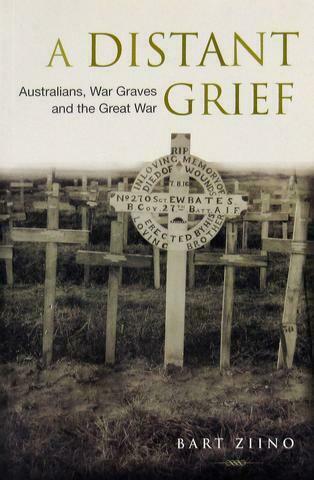
‘A Distant Grief’ by Bart Ziino

ziino_distant

2007, 191p & notes

In the time of coronavirus, we have seen funeral services stripped back to just ten people. It’s a cruel thing. Just those few people, sitting far from each other, unable to hug or comfort- those most human of responses to pain and grief.

A cruelty of a different sort was exerted on the families and loved ones of soldiers who died over in Europe during WWI (and the following war).  After some hesitation in the early months of the war, it was decided that none of the soldiers who died in British Empire troops would be repatriated to their home countries: not English, not Canadian, not South African and not Australian soldiers.  Apart from the practical difficulties of locating and shifting the remains (if any) of individual soldiers, this was seen as an expression of equality and solidarity amongst the countries of the Empire, with no soldiers seen as any more important than the others.  It was a big call. There was serious dissent against the policy in Britain by the 1920s.  I would imagine that for British families, it would have seemed to be merely bureaucratic inflexibility that prevented bodies being transported a relatively short distance. Canada was unhappy with the policy, especially when America managed to ship back 70% of their dead. (p.83)  But Australian families had few expectations that the bodies of their soldiers would be sent home. It hadn’t happened during the Boer War, and a recognition of the logistics involved meant that there was little public agitation for it to occur in WWI either.

Instead, the role of interring and marking the graves of Australian soldiers fell to the Imperial War Graves Commission. With the exception of the soldiers who fell at Gallipoli,  it was decided that each soldier should have an identical headstone marker, 81cm high, 38 cm wide and 8 cm thick. They were generally of white Portland stone and engraved with name, rank, unit, date of death and age. A religious emblem could be included if desired, and next of kin were permitted a personal inscription at their own cost. Where the identity was unknown, the headstone reads ‘A Soldier of the Great War. Known to God’. (p.3)

The Imperial War Graves Commission asked for 10 years to finalize the burial of WWI soldiers, and this book, which draws on the archives of the Commonwealth War Graves Commission, tells the story of the Commission, and the way that Australian reactions to death were defined by distance. Certainly, these deaths were of individuals – loved, mourned individuals- but without individual bodies, mourners had to take on more communal responses to their loss.

Chapter 1 ‘Imagined Graves’ examines the imaginative way that bereaved loved ones tried to understand soldiers’ deaths and make some connection between their lives on this side of the globe and the grave on the other. As Ziino writes:

Imagination, of course, could not function in a vacuum. From the first news of death, grieving Australians sought knowledge of what exactly had become of loved ones. They needed that knowledge to give substance to the mental images they were already developing. Relatives wanted to know that the last moments of life had been painless or that the dead had received the particular blessings of their faith. Ultimately, they wanted confirmation that the body had been buried and identifiably marked- an essential part of their imagining. Mourners wished that they had been there to palliate soldiers’ dying, to make the break between life and death personally- this was an important part of coming to terms with death. At home these people were removed from all but the fact of death, and detail was required to give structure to that event. (p. 15)

In the absence of a grave, ceremonies of farewell and release were carried out through the ‘In Memoriam’ columns of newspapers – sometimes for decades afterwards. Other families treasured photographs and relics of the dead that made their way home, while soldiers still serving at the front often served as a conduit between the front and the family by writing to and visiting bereaved families after the war.

Chapter 2 ‘The Sacred Obligation’  shows the way that Australian families, realizing that it was unlikely that they would visit the European cemeteries, turned to others to care for the war graves. The state stepped into this space. Public memorial services were held in Australia, while over on the front administrative responsibility was initially vested in the Directorate  of Graves Registration and Enquiries, and turned over to the Imperial War Graves Commission which came into being on 21 May 1917.

Chapter 3 looks at ‘Gallipoli and Australian Anxiety’. As the first large scale ‘Australian’ battle of WWI, there was particular concern that the bodies of fallen soldiers lay for three years in ‘alien’, non-Christian soil where there were no brother soldiers or officials to act for relatives. While the war was still underway, there were attempts by the British government to gain access to the cemeteries on the peninsula that the Turks had created. Not surprisingly, the attempt was rebuffed, but an Australian presence was quickly established at Gallipoli after the Armistice.  There was not, as they had feared, widescale desecration of the graves, although wooden crosses had been removed by Turkish soldiers for firewood. Almost immediately there were attempts to make a claim on the cemeteries, a difficult legal point of  sovereignty. It was decided that the cemeteries on Gallipoli would not have cruciform shapes visible from beyond their walls, and that the headstones would take the form of a low sloped stone, rather than upright headstones as in other Commonwealth War Cemeteries. Australians had to accept that Australian graves would rest on Turkish soil, which gives some context for the words purported to have been said by Mustafa Kamal (Ataturk) – an issue of recent controversy.

Chapter 4 ‘Agents for the Bereaved’ turns its attention to the Western Front and the way that families wanted an ‘Australian’ presence and identity on the former battlefields. The Australian Graves Service was established, with its headquarters at Australia House in London. It oversaw (rather than conducted) exhumations and concentrated on identifying Australian remains and maintaining records for the bereaved at home. They provided photographs of the grave for the families at home, and were seen as an ‘Australian’ presence even though there were serious questions asked about their behaviour. When it was disbanded in 1921, with its work subsumed into the Imperial War Graves Commission, there was dissatisfaction back in Australia not only amongst families, but also the RSSILA (forerunner to the RSL) and different public bodies.

Chapter 5 focuses on the Imperial War Graves Commission itself, and the way that its role changed over time. At first, it held itself aloof both physically and emotionally, from the bereaved of the Empire. It was essentially a political body, and as time passed the  Commonwealth War Grave cemetery, with its row upon row of identical headstones, came to have a different meaning for generations who had not known or loved the individual who was buried there.

In Chapters 6 and 7 focus returns to Australia, and the ways that Australians expressed their grief. Chapter 6 looks at the memorials erected, the photographs cherished and the nature of the 66-letter inscriptions that families were allowed to place on the gravestones. As returned soldiers began dying in Australia, the question of ‘official’ headstones in local cemeteries arose.  Lost sons began to be commemorated on their parents’ gravestones and horticulture began to be linked with commemorative spaces. The 1991 repatriation of an unknown Australian soldier in 1991 reminds us that grief carried across generations, although now it was imbued with other political and nationalistic themes.  Chapter 7 ‘Pilgrimage’ looks at the personal journeys that some families were able to make to the grave of their loved one. Most Australians at first accepted that would never make the trip to see it, and especially immediately after the war, the Government actively discouraged trips to the politically unstable Gallipoli. Those who travelled often had a keen awareness that they were doing something unavailable to most Australians, and many felt a personal obligation to share their experiences with other families through photographs and letters. A formal pilgrimage was organized in June 1929. And as we all know, a pilgrimage to ANZAC Cove has become a rite of passage for young Australian travellers- one that I find rather problematic, especially with recent Australian governments’ obsessions with creating memorials on other people’s land.

This book is an academic monograph, but a very human one.  The argument of the book is the juxtaposition between administrative efficiency and personal grief, and this is reflected in Ziino’s use of his sources. As well as the bureaucratic archives of the Commonwealth War Graves Commission and other bodies, Ziino draws on personal letters and communications in family archives, and the human stories found in newspaper articles.

As he points out in the conclusion, if physical distance marked the Australian experience of battlefield death, it is now a chronological distance that shapes our response.

Australians are no longer so distant from the graves of their dead. Modern transport has telescoped distance and made travel to the battlefields possible for thousands of Australians who now undertake such pilgrimages. Yet distance remains important to Australians’ relationships to the Great War. While it has contracted physically, distance has lengthened chronologically. Today’s generation is reconceptualising the legacy of that war…These modern pilgrims are expressing grief, but the nature and meaning of that grief is not the same as for those who endured it first hand. Time and further conflicts have intervened in their memory of war. (p. 190-1)

Source: My own copy

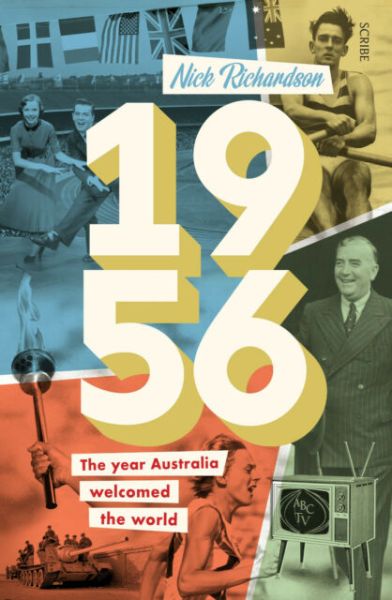
‘1956: The year Australia welcomed the world’ by Nick Richardson

richardson_1956

2019, 303 p.

When you live in Heidelberg, not far from the former West Heidelberg Olympic Village, you’re very aware of 1956 and its importance to Melbourne. Every four years, fifty years, sixty five years…the anniversary opportunities keep rolling on.  In popular Melbourne memory, the Olympics and the arrival of television were the quintessential events of 1956, but as Nick Richardson points out in his book 1956: The year Australia welcomed the world, there were other currents running through the year as well.  In his preface, Richardson writes:

One of the hardest clichés in Australian history is that the 1950s was a dull decade, when conformity settled on the nation’s shoulders, not to leave until the dynamic 1960s. Yet even the slightest scratching of the historical record reveals that there was significantly more going on that this cliché would have us believe. The decade was distinguished by drama, innovation, social change, a loosening of British ties, a big boost in migration, and the rise of consumerism. Australia was already on the path to being a different country by the time 1960 arrived. And the pivotal year in the preceding decade was 1956, when a series of important events – some accidental, others years in the planning – were critical in shaping the nation. (p. xi)

At times this book felt a bit like a television retrospective on 1956, particularly when dealing with events that have a strong visual or auditory presence. There are the images  we have of ‘golden moments’ in the Olympics; a nuclear mushroom cloud that we associate with Maralinga or the looming presence and voice of Sir Robert Menzies. But Richardson does move beyond these easy images to explore the political and cultural aspects of 1956 as well.

The prologue starts with April 1949 when Melbourne was actually awarded the Olympic Games. The selection of Melbourne was not at all a foregone conclusion, and Australia relied on ’empire men’ to support them. Not only was there the problem of distance, but other countries were well aware of Australia’s White Australia policy. The RSL, Australian nurse Sister Vivian Bullwinkel,  and the then- Immigration Minister Arthur Calwell didn’t want any Japanese entering Australia (in 1949 it was the Chifley Labor government, which lost power that year). Ironically, it was the Japanese delegate’s vote that clinched it for Melbourne.

Moving then to 1955-56, the book is divided into the seasons from Summer 1955-56 through to Summer 1956-57. Within this chronological structure, Richardson interweaves other themes including the Cold War, the Suez Crisis, the British nuclear tests, the debate over poker machines in NSW pubs.  I was aware of these things, but hadn’t actually connected them. Most particularly, it hadn’t registered with me that the work for the games commenced under John Cain Snr’s Labor government, and that by the time the games were actually held, there was a new government.  I didn’t really know that Menzies stuck his neck out so far over the Suez Crisis, just to keep in with ‘home’. Menzies still had another 10 years to go as Prime Minister, but he seemed an anachronism here.  I hadn’t realized that there was a parallel Arts program conducted alongside the Olympics, and I don’t think that many people at the time did either. It seemed to be very much a sideline activity.

As a local, I was interested in reading about the Olympic Village in West Heidelberg.  The village was opened up for journalists on the first week of September and Sun reporter Harry Gordon was horrified to see that the street names were named after famous WWII battles – rather insensitive given that some of the athletes came from these countries.  The names had been chosen for a housing commission development before the land was offered as the Olympic Games village, and they had not been changed.  There was a last minute panic to change the names, which have reverted today to the original battle-based names. There was a scheme to involve local women in the “Housewives Brigade” to make beds and tidy the athletes’ rooms in the mornings, after dropping the kids off at school. They received payment for making the 6,000 beds a day.

There was an almost bashful fear that there would be a stuff-up for the opening ceremony, which was held on 22 November,  a 27 degree day, after cool and wet days leading up to the Games. There were snafus and near-misses, the sort of anecdotes and tales that are greeting with gales of laughter afterwards, but it went better than anyone even hoped.  I can remember a similar feeling with the 1988 Sydney Olympics – that fear that we would come over as hokey.

This book interweaves political, social, cultural diplomatic and sporting history, while following the chronological confines that Richardson has chosen for himself. There were big egos at play amongst the Olympic impresarios, as there still are today.  But moving beyond the  IOC movers and shakers (Sir Frank Beaurepaire, Avery Brundage etc) Richardson has chosen lesser-known individuals – the medal maker, a Ukrainian asylum seeker who escaped during the games, athlete Marlene Mathews (never heard of her), media producers in the infant television industry.  He traces through their stories as well – quite a narrative balancing act.

The book has footnotes and a reference list, but I think that it sorely lacks an index.

I felt as if he was tracing over familiar territory, and the breezy journalistic tone did make the book feel like a documentary. Nonetheless, Richardson certainly broadened my perspective on 1956 and helped me to tie together disparate themes that gave the year more gravitas than just Olympics and television.

There are a couple of Radio National interviews with Phillip Adams on Late Night Live, and with the excellent Richard Fidler on Conversations, and it was the latter that prompted me to read the book.

My rating: 7.5

Sourced from: Yarra Plenty Regional Library


‘Communism: A Love Story’ by Jeff Sparrow

sparrow_communism

2007, 294 p.

‘Communism’ and ‘Love Story’- now they are two words that you don’t very often hear in the same sentence. Jeff Sparrow’s book centres on Guido Baracchi, a wealthy Melbourne political activist and Communist, described by historian Stuart Macintyre  as “the knight errant of Australian radicalism…a man of considerable wealth and emotional spontaneity, utterly without guile  or worldly ambition, of luminous innocence and limitless self-centredness” (cited on p. 5).

It’s hard to believe now, with liberalism under threat in many places, with Putin becoming such an unnerving presence and after Kruschev’s denunciation of Stalin in 1956, that Communism in the first half of the 20th century could have elicited passion -and yes, love-  amongst its followers. But as Sparrow explains:

Communism provided an alternative. It was, in many way, the alternative, the most important indicator that society could be remade. Between 1917 and 1989, its star shone bright and its star shone dim, but its continuing sparkle in the political firmament allowed millions to believe in a world beyond the free market. Even those who despised communism felt that while it existed, change- whether they wanted it or not- was a possibility.

Today that feeling is gone….With communism gone, few of us can articulate a different kind of society, another economic model or even a philosophical challenge to the buy-low, sell-high ethics of the market. (p. 3)

Guido Baracchi was born in Melbourne in 1887, the son of the Italian-born astronomer at the Melbourne Observatory who had responsibility for the Great Melbourne Telescope.  He provided his son Guido an education that would seem to almost guarantee ‘respectability’.  He went to kindergarten with later Governor-General Richard Casey, attended Melbourne Grammar School where later Prime Minister Stanley Melbourne Bruce was an older fellow-student, and studied at Melbourne University with later Prime Minister Robert Menzies. He was diametrically opposed to them politically.  He threw himself into student politics at Melbourne University, – through the Melbourne University Historical Society no less- was arrested for an anti-conscription speech he gave on the Yarra Bank in 1918, started the Victorian Labor College and edited ‘Industrial Solidarity, the journal of the International Industrial Workers, the successor to the banned Industrial Workers of the World. He was a foundation member of the Communist Party of Australia in 1920, and edited their journal Proletarian.

But if there was romance and idealism, there was also disillusionment, especially in the 1920s. Travelling to Europe in 1922 after the failure of his marriage, Baracchi worked as a professional revolutionary in Weimar Berlin, and was part of the disastrously failed uprising of the KPD (Communist Party of Germany) in 1923. Returning to Australia, he found the Australian communists in disarray.  The Melbourne branch had collapsed completely, many branches were dysfunctional, the Sydney branch was hollowed out. Those members still active were exhausted, others quarrelled over doctrine and Baracchi despaired of the leadership. In 1925, he suggested the dissolution of the CPA as a separate entity, urging the formation of a ginger group within the ALP instead. The leadership of the party expelled him, and he was to pay for this ‘disloyalty’ for years afterwards.

Although not part of the CPA, he travelled to Russia, where he stayed for a year, working as a translator in the Co-Operative Publishing Society for Foreign Workers.  Returning to Australia with his communist credentials burnished, he was eventually readmitted into the CPA. But he wasn’t to be there for long, because he was expelled in 1940 for Trotskyite tendencies. He turned his attention to the ALP instead, hoping to promote socialism within the party and died in 1975 after a day handing out how-to-vote cards for the Labor Party.

I’m not particularly familiar or interested in the intricacies of Marxist theory or the schisms and alliances between different branches of Marxism. However, Sparrow did not dwell on this, although I’m sure that a reader more versed in such things would pick up on observations and comments that just passed me by.

But this book is more than a book about Communism politics in 20th century Australia. Sparrow combines the political and the personal, and certainly Guido had a tumultuous love life, marrying and partnering several times.  There must have been something about him, though, because often his wives/partners got on well with their predecessors and successors. He shifted between Melbourne, Europe,  and back to Melbourne in 1924 to claim his considerable inheritance in nearby (to me) and highly respectable Ivanhoe – the thing that prompted me to read this book in the first place. He travelled through Russia, and later shifted to Sydney where he lived at Castlecrag, the estate designed by Walter Burley Griffin and his wife Marion Mahony Griffin.

He was thoroughly imbricated in the progressive intellectual network of the time. He had an affair with Katharine Susannah Pritchard, he was a close friend of Esmonde Higgins, the nephew of H.B. Higgins and sister to Nettie Palmer.  He had an affair with the poet Lesbia Harford; he lived with the playwright Betty Roland in Russia, and circulated with her amongst the artists at Montsalvat and Castlecrag. This is a story not just of one man, but of an intellectual milieu, over several decades.

This book brought me everything that I like most about biography: a clear and chronological narrative of events; rich context to make sense of them; depiction of a complex social network around the subject; an appraisal of emotional entanglements, and most importantly, a curiosity about the subject that acknowledges foibles, complexities and inexplicabilities. All this, written with sensitivity and insight- an excellent biography!

My rating: 9.5 / 10

Sourced from: La Trobe University Library

‘The Shelf Life of Zora Cross’ by Cathy Perkins

perkins_zora_cross

2019, 243 p & notes.

“Twenty pounds and you shall have her” and thus were the publishing rights for Songs of Love and Life transferred from a small self-publishing bookshop to that of the publishing behemoth, Angus and Robertson in 1917.  This book of sixty erotic love-sonnets was to become a literary sensation, going through three reprints and selling a respectable 4000 copies. Its author,  27 year old Zora Cross, wrote about love and sensuality from a woman’s perspective – something shocking in 1917.  Norman Lindsay, the artist whose own work abounds with nudes,  refused to illustrate the book, saying that women couldn’t write erotic poetry because their ‘spinal column’ was not connected to their ‘productive apparatus’. He did, however, condescend to provide a mythologized front cover which, to my eye, has nothing like the impact of an alternative cover design of  a bedroom scene with a present-day man talking off his coat, with his lover covering him with kisses.

But the sale of the publishing rights, and the choice of front cover and illustrator were not in the hands of this young, barely-published author. This book, which is a biography of the now-forgotten Zora Cross, is also an exploration of the Australian writing and publishing scene of the first half of the twentieth century, particularly in Sydney and Melbourne. I had flutters of half-formed recognition of many of the names in this book, and the author has used them as anchors in each of the chapters that move roughly chronologically through Zora Cross’ life.  As Cathy Perkins writes:

I set out to write a conventional biography, but I was drawn to an idea of a life that was made of up relationships. Each of Zora’s relationships shows a different side of her personality and each has its own tensions. (p. xii)

The opening chapter, then, is subtitled Ethel Turner, who as well as the author of the much-loved (by me!) Seven Little Australians, also wrote the children’s page in The Australian Town and Country Journal. Children would send in their contributions and letters (I remember doing the same to ‘Corinella’ in the Sun during the 1960s) and ‘Zora Cross of Pie Creek Road Gympie’ was a frequent contributor. When she grew too old for the children’s page, she finally met her mentor in person.

Ethel Turner suggested that she try her luck with the Lone Hand, the sister publication to the Bulletin, and thus Cross started up a rather fervent correspondence with the editor, Bertram Stevens, who features in Chapter 2. In this chapter we learn of Cross’s employment as a school teacher and her strange, short marriage to fellow-student Stuart Smith, with whom she had a child who died soon after birth.  Pregnant again to an unnamed father in 1913, Cross travelled northern Queensland with a theatre company, and became editor to the small Bohemian newspaper of arts and social news.

She also wrote poetry for the Bulletin, and it was through this connection that Norman Lindsay, for whom Chapter 3 is titled, was asked to provide the artwork for Songs of Love and Life.  It was published by George Robertson, who features in Chapter 4, who carefully oversaw the sales and  reviews of the books under his imprint.  She wrote copious letters to him, too, and on the walls of his office he had a copy of the beautiful portrait that graces the front cover of this book. However, despite his success with Songs of Love and Life, he declined to publish other manuscripts of Cross’, along with the manuscripts of many other women writers who were to go to fame including Katherine Susannah Prichard, M. Barnard Eldershaw and Christina Stead.

She achieved success writing about the losses incurred in WWI, in Elegy on an Australian Schoolboy written in tribute to her brother John Skyring Cross (Jack), who is explored in Chapter 5. He died of illness after being injured on the Western Front.  In 1919, George Robertson asked his assistant, Rebecca Wiley, to go on a month’s holiday with Zora, who was feeling run-down. Chapter 6, named for Rebecca Wiley, explores the often tense relationship between these two women, especially once Zora had shifted to Glenbrook in the Blue Mountains with her partner, Bulletin editor David McKee Wright, who features in Chapter 7. They never married because David was still married to his previous wife, and she was pregnant to another man when they partnered. They had two daughters together, and David legally adopted her son. He died suddenly in 1928.

Now widowed, Cross continued to write, especially for the Australian Woman’s Mirror, an offshoot of the Bulletin which predated the still-extant Australian Women’s Weekly. Chapter 8, subtitled ‘Bernice May’ refers to her pen-name in much of the writing she did for ‘women’s pages’ . After falling out with George Robertson, she embarked on a series of interviews with fellow women poets and novelists for the Mirror, including Jean Devanny, Eleanor Dark, Dulcie Deamer, and Mary Gilmore.  A long-standing presence in Cross’s life was John Le Gay Brereton, Chapter 9, a friend of Henry Lawson, chief librarian and later professor of literature at the University of Sydney. His access to resources assisted her to write a series of books about Classical Rome, which were not well received (and sound pretty dire). As president of the Fellowship of Australian Writers, Brereton was a constant source of support when Cross made frequent, and generally successful applications, for Commonwealth Literary Fund pensions and grants.   Another longstanding friend was Mary Gilmore (Chapter 10) who was punctilious in overseeing her bequest of papers to the Mitchell Library. She died in 1963 and a year later, Zora Cross died of a heart attack.

This is a very skillfully written biography, maintaining its chronological trajectory while using various friends and colleagues as a prism through which to explore Zora Cross’s personality and writing.  Cathy Perkins, the author,  who is the editor of SL magazine and other publications at the State Library of NSW inserts herself several times into the narrative, in her research and  advocacy for Zora Cross.  As well as a biography, the book explores the literary industry and the whole issue of literary presence after death. Perkins’ decision to use relationships as an organizing device emphasizes the interconnections between writers and publishers, something that is often invisible to the reader.

She captures well the breadth of Cross’ writing, and quotes generously from her unpublished works, without necessarily championing its sometimes rather dubious quality, leaving it instead up to the reader to decide.  She portrays Cross as a fully rounded character: unconventional mother and partner, hard-working, flirtatious, sometimes needy, mother, grandmother and community member. But most importantly, as a prolific and life-long writer, even if she has been -until this biography- completely unknown today.

My rating: 9/10 A really accomplished biography

Sourced from: Yarra Plenty Regional Library.

aww2020

This is my first read for the Australian Women Writers Challenge 2020