Category Archives: Australian history

Census

2016 Update: I have rather cheekily linked to this post as part of the National Family History Month Blogging Challenge which, during Week 1, asked for a post about things people had learned about their ancestors through the Census.  Well, as you’ll see, this posting isn’t really about a family at all, but rather it looks at the controversy over one of the questions in the 1841 census. So, here’s my posting from 2011:

15 August 2011.

My census paper is all filled in, waiting to be collected.  I quite enjoy filling in surveys and doing interviews.  I note that several of my Facebook friends with young babies were amused at the inappropriateness of many of the questions to their babies (“How well does the person speak English?” “Does the person ever need someone to help with self care activities?”).  At the other end of the parenting spectrum, I found myself feeling rather furtively curious at the replies given by adult children (Hmmm- so that’s how much they earn?! How did they answer the unpaid domestic work for the household question?)

My son was rather keen that I answer ‘No religion’ in the optional religious question.  It’s obviously a touchy subject because it, alone among the questions, is optional.  Thinking back to the rigid, unyielding sectarian prejudices of my 1950s-60s childhood, this would have always been a hot question but for different reasons.  What’s a Good Unitarian Girl to do?  Yes- I know that identifying as Unitarian will be collapsed into a bald statistic showing the increasing religiosity/atheism of modern society.  Do I want my creedless religion collapsed into a category along with fundamentalists of all shades? How religious is a creed-less religion?  Such deep questions, all for a census.

Then there’s the marriage question.  It’s when there’s such a stark choice- married/divorced/widowed/never married – that I feel uncomfortable about the many shades of grey that are blurred by such harsh distinctions.  The long term same-sex relationship that would dearly love to be a marriage but is forbidden?

And the either/or nature of language spoken at home.

Radio National’s Rear Vision program had an excellent feature recently called Who Counts? A History of the Census (podcast and transcript available).  The program highlighted that censuses (censi?) differ in their questions, format and intent in different countries at different times.  The British census of the mid-19th century, for instance,  reflected the public health concerns over ‘the household’ as an economic unit, particularly in the wake of the widespread mobility of the Industrial Revolution.  The American census was framed by a mindset of growth, particularly on the frontier.

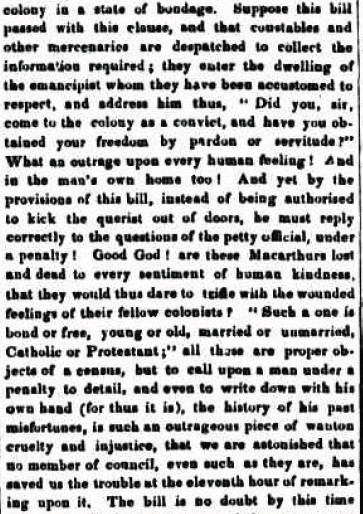
The Australian census, first conducted in 1828, emerged out of an earlier tradition of the convict muster.   As shown on the Historical Census and Colonial Data Archive site, there were censuses in New South Wales in 1833, 1836 and 1841.  The Census Act of 1840 spelled out the process for collecting the information, and the magistrates were at the heart of it:
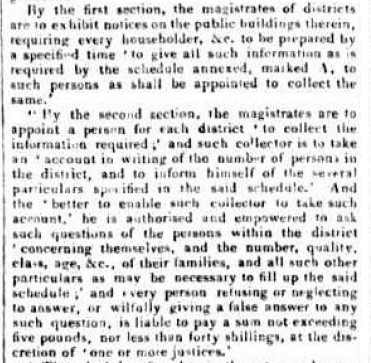
[Australasian Chronicle 5 December 1840]

During the 1840 debate over the Census Bill, the process was not controversial, but one of the questions in particular was:

whether he was born in the colony, arrived free, or obtained freedom by pardon or servitude?

The original census of 1828 provided several “class” categories: CF meant ‘came free’; BC meant ‘born in colony’; CP denoted ‘conditional pardon’;  FS meant’ free by servitude’ and TL stood for ‘ticket of leave’.  But by 1840 New South Wales was distancing itself ever further from its convict origins – a process which John Hirst in Convict Society and its Enemies argues began right from the start of settlement.  This question was now highly sensitive.  As the Australian Chronicle argued:

[Australian Chronicle 20 October 1840]

And into the fray steps- yes, you guessed it!- Judge Willis.  Justices Dowling and Stephen, the two other judges of the Supreme Court of NSW declared the bill to be repugnant to British Justice on the grounds that, as a witness under oath in court did not have to degrade his character by identifying himself as an ex-convict, he should not be required to do so before a census collector.  Justice Willis, as was his right, issued a dissenting opinion, arguing that the benefit of the question for the government outweighed this consideration (although he did not specify what these benefits were to be).   As was often the case with Willis’ interventions into political questions, at issue was not his dissent per se but the way in which he expressed it (although in this case, it highlighted tensions between the ‘exclusives’ and the ’emancipists’). In court he observed:
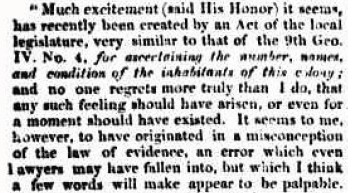
With this subtle, but nonetheless public put-down of his fellow judges, he then went on to discuss the laws of evidence in the courts and concluded:

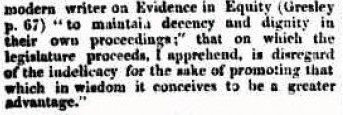
This public jousting on a question of law was one of several issues between Willis and his brother judges, most especially Chief Justice Dowling, at the time. Along with other similar considerations,  it led to Gipps’ decision to place Willis as the resident judge of the Supreme Court of New South Wales in the district of Port Phillip, well away from his colleagues.

So, I can hand over my completed census form- minus any questions about my convict status or lack thereof- safe in the knowledge that yet again, I have operated on the principle of six degrees of separation between Judge Willis and any topic you may choose to name, and managed to bring Judge Willis into 2011, no matter how tenuous the link.
How many historians does it take to write a history book?

I see here that fifty historians  assembled at the recent AHA conference in Launceston to commence work on the new Cambridge History of Australia, scheduled for publication in 2013.  Fifty historians??!!!  Ye Gods!

Who are they, I wonder?  Will they divide into teams for specific chapters or sections? Are there lead writers with the rest as advisors?  Will they write collaboratively? Fifty!

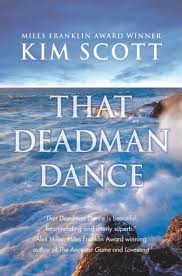
‘That Deadman Dance’ by Kim Scott

2010, 406 p

(5/5)

Is it too soon to say three little words: “Miles Franklin Prize”?  I don’t think so: I see that this book has been nominated as the Pacific region contender for the  Commonwealth Writers Prize for 2011, and it’s surely destined for the Miles Franklin shortlist at least.  And this is just as it should be.

I found myself reminded of many other works, both historical and fictional, while reading this book: Inga Clendinnen’s Dancing with Strangers which echoes more than the title alone, Kate Grenville’s The Secret River, and most recently Lisa Ford’s Settler Sovereignty. But this book, taking as it does an Aboriginal – specifically Noongah- sensibility and voice could be written by an Aboriginal person alone, and this, too, is just as it should be.

That Deadman Dance is roughly chronological, although we learn early in the book that Bobby Wabalanginy , the main character, will end up a dishevelled busker-type, entertaining  tourists with a patter that combines history, pathos and showmanship.  The book opens in 1833-5 with Bobby already ensconced in among the whalers and early settlers on the Western Australian coast.  It then backtracks to 1826-30 with first contact, a spearing, accommodation and wariness, and the actions of  Dr Cross – a good man who trod carefully in this strange and old land, remembered kindly by the Noongah people who knew him, and claimed and acclaimed as a venerable ‘old pioneer’ by subsequent white settlers who did not.  Then forward again to 1836-8 in Part III, followed by 1841-44 in Part IV.  There’s an increasing sense of foreboding as the book unfolds.  The abundant whales stop coming, the ‘depredations’ intensify, and the Governor and his son Hugh impose an imperial imperative onto the narrative.

Kim Scott makes you work hard as a non-Indigenous reader.  There’s Noongah language here, untranslated, and the narrative voice is a lyrical but overwhelmingly oral one.  I found myself slowing down while reading, apprehensive of what was to come in the steadily decreasing pages, but also just to subvocalize as I read and to let the language wash over me.

I cannot help it: I am a historian, and even in my fiction reading I cannot turn this part of my brain off.  But here I found no false notes, no clashing consciousness. Indeed, I felt as if I were reading Lisa Ford’s Settler Sovereignty being acted out in front of me:

Laws were being enforced now, thankfully.  Natives must be clothed and without spears if they were to enter town.  It was only decent, and if we are to civilise them, as Papa said is the only way, then clothing is an important precursor…to what use do they put this ownership as against what we have achieved in so short a time? Papa could sometimes explain things so well. It may have been expedient at one time, but was no longer necessary (p367)

Scott does not set out to write history, but there is an authenticity to his work, and I sense that he has not hard to work as hard at finding it as, for example, Kate Grenville admits to have done in her Searching for the Secret River.  It is a book that uses fictional names but is solidly grounded in Noongah country and landscape. But the story it tells is bigger than this and it has its echoes in Bennelong and  Charles Never.  There’s an element of magic realism as well, and a sense of ‘if only’ as well as tragedy.  Well, well worth reading.

‘Settler Sovereignty’ by Lisa Ford

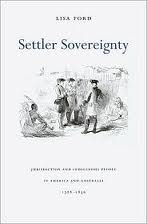
Lisa Ford ‘Settler Sovereignty: Jurisdiction and Indigenous People in America and Australia 1788-1836’

2010 , 210 p & notes (86p)

I’m starting to think that a good gauge for my response to a book is the resounding slap of the book as I close it, and the whispered “Well done!” or “You beauty!”  that accompanies it.  That’s how I finished Tom Griffiths’ Hunters and Collectors, and it was my response as I finished Lisa Ford’s Settler Sovereignty as well.  I’m not alone: obviously the judges of the 2010 NSW Premier’s History Award felt the same way.

I was lent this book an embarrassingly long time ago, and I have been eyeballing it rather guiltily for some time.  Any of you who follow this blog chronologically may have noticed a  preponderance of reviews of books related to Aborigines in Port Phillip over recent months.  I have been writing a paper that looks at Judge Willis and the Aboriginal cases that came before his court, and I kept deferring reading Ford’s book until I’d finished because the 1836 cut-off in the book’s title was too early for the case I was examining.  How wrong I was: I would have gained so much from this book had I read it earlier.  Ah well.

In this book Ford takes Georgia (in America) and New South Wales as two exemplars of the development of what she calls “perfect settler sovereignty”. By this she means that,  in claiming the territory of the indigenous people who were there before them, white settler governments claimed sovereignty and legal jurisdiction over them as well.  There’s shades here of  Fran in the ABC series The Librarians voicing the same assertion-  “Our Country: Our Rules.”  This had not always been the case.  Both colonies, up until the 1830s, had tolerated plurality through a combination of dependence on native expertise,  uncertainty, impotence, silence  and ‘leaving them to their own business’. But in both colonies this was to change, at much the same time and based on much the same rationales.

We might raise a quizzical eyebrow at this combination of Georgia and New South Wales.  Traditionally Canada, Australia and New Zealand have been linked together as imperial triplets on the basis of their shared relationship with the Colonial Office, especially after the American Revolution sent America off onto a different trajectory.   Certainly during Willis’ time,  Australian judges were viewed as rather suspect if they referred to American law, and they took every occasion to declare their fidelity to British justice.  However, recent work has begun considering American legal conditions alongside those of Canada/Australia/New Zealand e.g. John Weaver’s The Great Land Rush, Peter Karsten’s Between Law and Custom: ‘High’ and ‘Low’ Legal Cultures in the Lands of the British Diaspora and James Belich’s Replenishing the Earth.

In both Georgia and New South Wales, settlers did not seek to govern through indigenous hierarchies (as they did in India), and in both places indigenous people occupied arable or pasture land.  Farming did not proceed through the forcible co-option of indigenous labour, although it did run on imported free, indentured or slave labour.  But there were differences too: Georgia was surrounded by other powers (Spain, France, the Creek and Cherokee Indians), and Georgia used slavery.  There was a multiplicity of treaties in Georgia, and none in New South Wales beyond Batman’s quickly disowned ‘treaty’.  And yet, both Georgia and NSW passed similar declarations in 1830 and 1836 that abandoned the legal pluralism that both had exhibited previously, ruling that indigenous violence fell within the jurisdiction of settler courts.  They used the same legal arguments at the same time, and it is this historical congruence that Lisa Ford sets out to explore.  Her approach is strongly based in legal history and court cases, and this is the lens through which she views the world.

By linking two apparently dissimilar colonies like this, she runs the risk of leaving scholars of one or the other societies bemused.  It’s a testament to her writing that, even though the New South Wales cases were far more familiar to me, I feel that I understood the Georgian cases as well and the parallels she was drawing.  But was there something particularly special about Georgia and New South Wales, or could she have chosen any other American state  and drawn the same connections? I’m not in a position to say. Or, indeed was New South Wales the best Australian example? Henry Reynolds in his review of this book in the Australian Book Review in April 2010 thought that Georgia and Tasmania would have been a better pair for comparison because both societies took up expulsion as a way of solving the ‘problem’ of their indigenous populations.  But I think that Ford is looking not so much at the outcomes of legal actions, as the philosophy behind the legal interventions.

For the most part, her chapters are organised thematically- e.g. pluralism as policy (Ch.2); indigenous jurisdiction and spatial order (Ch. 3); legality and lawlessness (Ch. 4) etc.  She starts each with a general introduction,  examines Georgia, then New South Wales, then draws parallels and distinctions between the two.  This pattern is broken at Chapter 6 where the narrative splits into two separate streams, with what she has identified as a seminal case in each colony.  Chapter 6 focuses on a case in Georgia  while  Chapter 7 looks at the case of Lego’me in New South Wales, tried and found guilty for a particularly petty robbery (of a pipe, no less!)  as part of a more general clampdown on Aboriginal ‘lawbreaking’.  In chapter 8 she then returns to the pattern of  intertwined chapters to discuss the way that 1830 in Georgia and 1835 in New South Wales marked a turning point in settler sovereignty. In both colonies, the claim of settler ‘ownership’ of territory was now offered without question as the rationale for the extension of settler law over indigenous people .   In relation to New South Wales, she goes on to explore the way that this rationale fed into R v Murrell, which has long been viewed as the touchstone case on which all subsequent legal policy in Australia has been based.

She points out that this shift was not restricted to Georgia and New South Wales alone.  Instead it was part of the post-Napoleonic era trend of formalizing or eroding legal pluralism world-wide, including in Europe itself.   She recognizes that by ending with the great cases of the 1830s, she is creating “historical closure where there was none historically” (p.204)- and this is exactly the point at which my own work with Judge Willis fits in.

This is a beautifully written book.  It has a very disciplined chapter structure- an introduction, an argument (clearly bifurcated into the parallel Georgian and New South Wales scenarios) and succinct and thought provoking conclusions.  Fairly conventionally academic, perhaps, but certainly clear. She obviously enjoys language, images and words- she rolls words around, rejoicing in alliteration, repetition and nuance.  We see it where  she describes the imperial network of bureaucrats as they “moved about the Atlantic, Pacific and Indian Oceans with Vattel and Blackstone under their arms” (p.4), and the settlers as “savvy masters of the discourses and politics of settler jurisdiction…eager for its bounties and wary of its gaze” (p. 84).

I’ll leave the last part to her.  She is describing how the flexible pre-1820s plurality that had governed settler/indigenous relations began to chafe against hardening notions of sovereignty:

Again and again, troubled executives and their law officers tried to perfect settler sovereignty by bringing indigenous-settler conflict within the bounds of settler law.  Again and again, they tried at the very least to preserve order in their towns and on the roads that connected them.  Again and again, they were thwarted by indigenous people, by frontier settlers or by local magistrates…The period described here, then, is one of plurality in transition, when a new vision of perfect sovereignty emerged from long-practiced and institutionally entrenched pluralism. (p. 120)

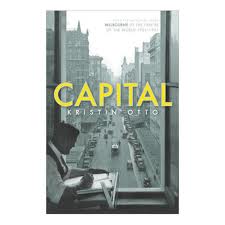
‘Capital’ by Kristin Otto

364 p.  2009

I’m not really sure how to review this- as a reader or as an historian- and I’m not even certain that it’s possible to have a clearcut distinction between the two.  This is Kristin Otto’s second book after releasing Yarra: A Diverting History of Melbourne’s Murky River (and how odd- the small biographical sentence in Capital calls the first book Yarra: A Meandering History of Melbourne’s Murky River. I wonder if the name has changed? I suspect that this is an error.  If so, not a good start given that the same publisher released both books!)

The two books have much in common: both published by Text Publishing,  generous use of black and white photographs, no footnotes, a diverse bibliography and a rather chatty tone that ties together many small details into a clearly identified theme.  It is popular history, aimed largely at a local audience.  The research for this book was funded through a Redmond Barry Fellowship that encourages its recipients to use the collections of the State Library of Victoria and the University of Melbourne (institutions that both have links to Redmond Barry).  She has certainly mined these collections well, and the book is a mass of small details stitched together into a broader fabric.

The book opens with a dictionary definition of ‘capital’ which includes its political, economic and evaluative dimensions- capital city; capital wealth, and excellence.  We could also include human capital here and this, in effect, sums up the spirit of the book.

Otto takes as her focus the years 1901-1927, when the new Federal Parliament sat in Melbourne prior to shifting to the newly-constructed Canberra as national capital.  It takes a basically chronological approach, starting from the Federation Celebrations in 1901 and moving in two or three year steps through to 1927.  Superimposed onto this chronological skeleton is a theme for each time slice: celebrations 1901-3; amusements 1904- 1907, social laboratory 1908-10  etc.  It’s worth looking at the table of contents here.   This double-themed approach groans a bit under its own weight here because concepts like “amusements” or “social laboratory” or “style” were not restricted solely to the three-year period she has pegged them to alone.

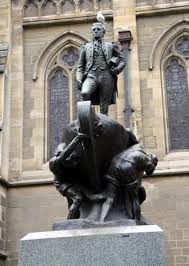
Then she explores these themes through a number of pivotal and fairly well known Melbourne characters including Alfred Deakin, Nellie Melba, John Monash, Tom Roberts, Macpherson Robertson,  Helena Rubenstein, Vance and Netty Palmer,   Janet Lady Clarke and Charles Web Gilbert.  This last name may not be immediately familiar, but it is to me as he is my husband’s grandfather. You may know him by this statue

One of the emphases in this book is on the interconnectedness of people within Melbourne at this time and the author can barely suppress her glee at finding connections and coincidences which she notes in quirky little footnotes.  Although it was obviously a pleasurable hunt for her,  it is no real surprise to me that if you choose to focus on an elite in a community then almost by definition there will be connections between them.  Her linchpin characters are fairly well-mined biographical subjects, although Web Gilbert and Annie Bon, a patron of the Coranderrk Aboriginal settlement in Healesville, less so.   She did attempt to draw in some less noted personalities- Albert Mullett, an Aboriginal man living on Coranderrk, Harold Clapp the Commissioner of Railways- but largely the narrative draws on a strong “aha!” factor amongst a largely Melbourne readership which would recognize familiar names and buildings even today.

The book is generously sprinkled with black and white photographs and was shortlisted by the Galley Club of Australia under the ‘Webfed- Mono/duotonebook/4c, limp bound, no price limit’ category (who would have known that there are so many categories of books?).   Among the images in the book there is a double-page reproduction of both the Tom Roberts and the Charles Nuttall depictions of the opening of Parliament which she discusses exhaustively in the first chapter, but I found myself craving an identification key to the people she describes.  Otherwise the photographs are well chosen, well placed and fascinating.

The book, both in narrative voice and conceptualization,  is similar to that adopted by Robyn Annear in her books Bearbrass and A City Lost and Found and I am sure that it would attract a similar readership.  Otto provides her sources at the end of the book, and they are exhaustive and largely of a biographical or local history bent.  I mourned the absence of footnotes- there were several times when I wondered where she’d gleaned her information- but footnotes are an acquired taste I suspect and I’m sure that many other readers would not notice their absence at all.

I enjoyed the book and the strong recognition factor that it evoked in me, but I do wonder if the complexity of its structure,  with its chronological slices, themes, then biographical linchpins was rather too heavy for it.  And at the risk of being labelled a grumpy old woman, I do find myself wondering if “young people these days” would have the same recognition response to, say, C.J. Dennis or AM band radio stations and the many small details that make up this book.  Who knows- perhaps a book like this is a way of alerting them, but I suspect instead that its readership will be drawn more from people already familiar with them.  The blurb at the front suggests that

For anyone who knows Melbourne, ‘Capital’ will be a fascinating conversation with an old friend.  For others it will be a compelling introduction to a new one.

I suspect that the former will outnumber the latter.


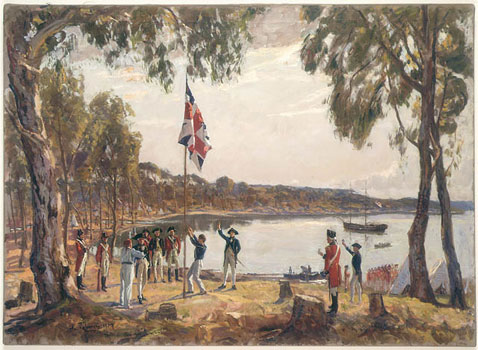
The Day That Came To Be Known As Australia Day, 1788

The Founding of Australia (1937) by Algernon Talmage

Just to keep all this flag-waving in perspective, here is Governor Phillip’s own account of what we now know as Australia Day.  From his telling, the presence of the French ships was of more significance than the flag-raising ceremony, especially during this time of uneasiness in British-French relations.  It all seems rather understated, really.

From The Voyage of Governor Phillip to Botany Bay by Arthur Phillip

25 January 1788

On the 25th of January therefore, seven days after the arrival of the Supply, Governor Phillip quitted Botany Bay in the same ship, and sailed to Port Jackson. The rest of the fleet, under convoy of the Sirius, was ordered to follow, as soon as the abatement of the wind, which then blew a strong gale, should facilitate its working out of the Bay. The Supply was scarcely out of sight when the French ships again appeared off the mouth of the harbour, and a boat was immediately sent to them, with offers of every kind of information and assistance their situation could require. It was now learnt that these were, as the Governor had supposed, the Boussole and the Astrolabe, on a voyage of discovery, under the conduct of Monsieur La Perouse.

26 January 1788

On the 26th, the transports and store ships, attended by the Sirius,finally evacuated Botany Bay; and in a very short time they were all assembled in Sydney Cove, the place now destined for their port, and for the reception of the new settlement. The French ships had come to anchor in Botany Bay just before the departure of the Sirius; and during the intercourse which then took place, M. la Perouse had expressed a strong desire of having some letters conveyed to Europe. Governor Phillip was no sooner informed of this, than he dispatched an officer to him with full information of the time when it was probable our ships would sail, and with assurances that his letters should be punctually transmitted. By this officer the following intelligence was brought back concerning the voyage of the Astrolabe and Boussole.

… (omitted- long description of the French ships)…

The debarkation was now made at Sydney Cove, and the work of clearing the ground for the encampment, as well as for the storehouses and other buildings, was begun without loss of time. But the labour which attended this necessary operation was greater than can easily be imagined by those who were not spectators of it. The coast, as well as the neighbouring country in general, is covered with wood; and though in this spot the trees stood more apart, and were less incumbered with underwood than in many other places, yet their magnitude was such as to render not only the felling, but the removal of them afterwards, a task of no small difficulty. By the habitual indolence of the convicts, and the want of proper overseers to keep them to their duty, their labour was rendered less efficient than it might have been.

26 January 1788

In the evening of the 26th the colours were displayed on shore, and the Governor, with several of his principal officers and others, assembled round the flag-staff, drank the king’s health, and success to the settlement, with all that display of form which on such occasions is esteemed propitious, because it enlivens the spirits, and fills the imagination with pleasing presages. From this time to the end of the first week in February all was  hurry and exertion. They who gave orders and they who received them were equally occupied; nor is it easy to conceive a busier scene than this part of the coast exhibited during the continuance of these first efforts towards establishment.

Now that you mention it…

I was reading a fairly old book of collected essays on Upper Canada the other night.  It was the 1975 edition of Historical Essays on Upper Canada edited by J. K. Johnson.  There has been a second collection of essays  released in 1989, again edited by J. K. Johnson but  joined by Bruce Wilson this time.

It interested me that in the introduction to the 1975 book, Johnson noted that one of the themes of the essays was a preoccupation with economic affairs.  He wrote:

It is probably no accident that the preoccupation of historians of Upper Canada has often been with economic affairs- with the study of growth, of the metropolitan dominance of Toronto, of agriculture, of business firms, of lumbering or public works. It is true that Upper Canadian society showed a propensity to produce or adopt contentious public figures who have attracted the attention of historians, but the great majority of Upper Canadians were from the very beginning engaged in the more mundane business of developing the resources which the province had to offer- engaged in other words in the business of making a living, and wherever possible, in making a profit, a fact of Upper Canadian life which has been rightly stressed in historical writing.  If historians of Upper Canada can be said to have created an overall view of any kind it is of a society generally concerned with its own (mainly economic) betterment but in some dispute about the best ways of achieving that goal  (p. ix)

Now actually that he mentions it, I had noticed that much of the history I’ve read of Upper Canada has a strong economic history focus.   I don’t really think that Australian history has the same emphasis.  There’s Shann’s old Economic History of Australia written in 1948, and the Butlins whom I’ve written about here who also write economic histories.  Blainey’s work, especially The Tyranny of Distance makes an argument with strong economic strands, but it doesn’t have the tables and figures that mark so much of the Upper Canadian material I have read (which is, to be fair, often chapters and articles).  Nonetheless  I’d be hard pressed to think of a recent general book about Australian history that has a really strong economic focus.

Johnson’s justification for the emphasis on economic history among Ontarian historians would hold just as true for Port Phillip which was likewise established by people wanting to make money.  But again, I don’t think that this is the case. A.G.L. Shaw’s  A History of the Port Phillip District is a narrative history that includes a strong economic analysis, but it is just one strand among several.  Likewise the three volume Priestley/Broome/Dingle series published for Victoria’s 150th anniversary- the economic story is there, running steadily underneath, but not the main focus.

I can really only think of one academic on staff whom I would characterize as an “economic historian” and only one of my fellow postgraduates has written an overtly economic thesis.  Several of my colleagues are writing environmental histories, but they are of a different hue.

I’m aware that historical specialisations wax and wane, and that some institutions attract particular schools of historians.  But I’m wondering if there’s some cultural influence at play here too- a variation of the ‘tall poppy syndrome’ perhaps?

On islands

As an Australian, I live on an island continent.  But in a land where the horizon stretches as far as the eye can see across plains and mountains, it’s hard to remember that it is actually an island.  It’s only when you see our continent suspended in all that ocean on a map that you have a sense of its ‘girtness’ by the surrounding sea.  In fact, at the risk of sounding mawkish, I often feel a throb of love when I see Australia on a world map, so complete and self-contained.

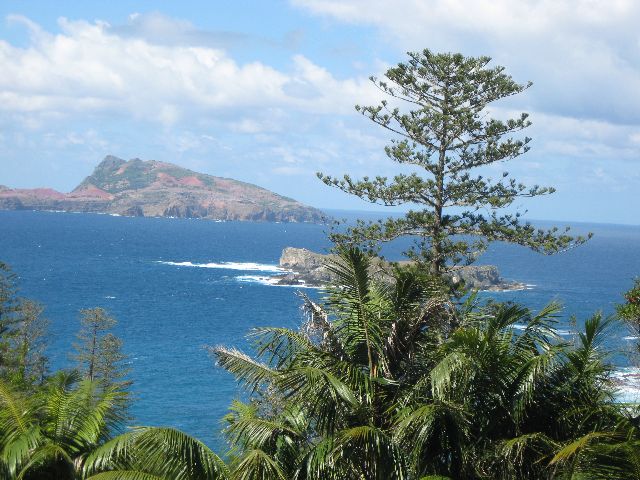
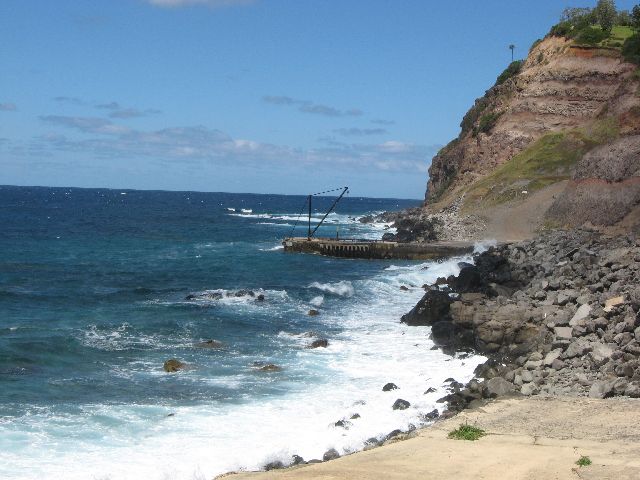
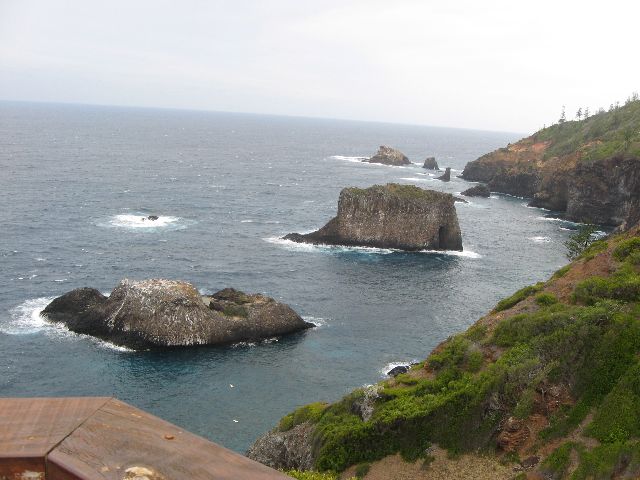
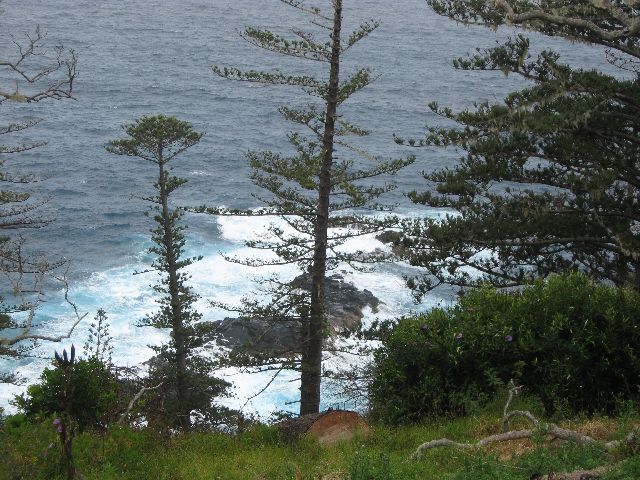
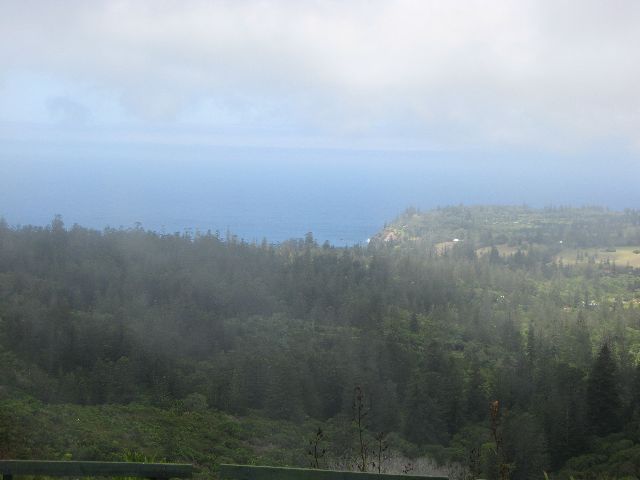
I’ve been thinking about islands a lot while up at Norfolk Island last week.  It’s only small- 36 square kilometres- and has no safe harbour.  You can easily drive from one side of the island to the other and all around you is water, stretching on forever.   I found it to be breathtakingly beautiful and I wondered if even convicts sometimes looked up to the sky, or out to the ocean on a calm day and found any beauty in it at all.

Islands have long been used as places of exile, both in the past and today: St Helena, Robben Island, Christmas Island and Norfolk Island itself.  Of course the coastline and expanse of water provides its own form of imprisonment, but I think that there’s another aspect of exile at play.  For our own Christmas Island , there has been the ugly term “excision” to describe the deliberate, surgical cutting out of the island and beaches from the nation as a body, to ensure that anyone who lands there can have no access to the courts.

I think about Norfolk Island in the Second settlement phase  and the absolute power of the Commandants who could choose to use or abuse it, and the tenuousness of the links to British Justice.  Justices Dowling and Burton visited the island as Supreme Court judges, but only for brief stints, then returned to Sydney.  That, I think, is the ultimate exile: that you can suffer and die by the whim of others; that no-one need know, and there is no brake on the cruelty of the authorities should they exert themselves in that way.

It is a paradox to be exposed to the vast, limitless expanse of sky and ocean, and yet feel claustrophobic.


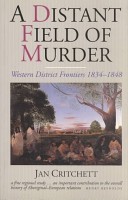
‘A distant field of murder’ by Jan Critchett

Critchett, Jan ‘A distant field of murder’: Western District Frontiers 1834-1848, Carlton Vic. Melbourne University Press, 1990, 219 p.

As you can tell from the title, Critchett’s book focuses on a specific district of Victoria over the short period of 14 years between 1834-1848.   For the aboriginal tribes of the Western district, it was  14 years of tumultuous and catastrophic change.  But even this 14 year period was just a small part of the life of Hissing Swan or Kaawirn Kuunawarn, the tribal man with whom this book starts and finishes.  Hissing Swan was born around 1822 and died in 1890 of a broken heart when he was moved from Framlingham mission when it was selected for closure. It was the second dispossession he had faced.  As the mission record shows:

“Old David (Hissing Swan) dead.  Idea of leaving home killed him; buried Thursday.” (p.192)

This book focusses on the Western District of Victoria, which under the Squatting Act was known as Portland Bay.  It was a huge territory that stretched from west of the Werribee River across to the South Australia border, with a line up to the Murray River. Of course, this was a white-man’s division for the purposes of administrative convenience.  The area of Portland Bay took in many clans and tribal groups, and a large part of this book is devoted to her appendices listing the different groups and individuals that Robinson and other missionaries and observers had counted in the district during the early days- a difficult task given the vagaries of pronunciation and orthography.   This might be seen as another attempt at head-counting, but I think that it’s more than this.  In the same way that she starts and finishes her book with an individual, named, person, this enumeration of  small, family groups is a way of giving a human identity and empirical presence to what was more often portrayed by white settlers as a brooding, shifting, often invisible presence. Settlement, as she notes, can take one of three forms-  slow expansion; a leapfrogging rush; then infilling of the vacant spaces between settlements.  In the second phase, white settlers moved into the district, often bringing with them their Aboriginal ‘boys’ from other areas.  The whites were largely oblivious to the clan boundaries they were crossing, but the aborigines who accompanied them were well aware of the boundary infringements they were committing.

By choosing to focus on the period 1834-1848 she takes in the period prior to the quasi-official ‘settlement’ of Victoria.  The aboriginal people of the Portland District had had long contact with white whalers and sealers, and Henty’s settlement in Portland predated the settlement of Melbourne.  She estimates that the chillingly-named Convincing Ground massacre probably took place around 1833 or 1834, but it was the influx of pastoralists after 1835 that heralded the greatest change.

There was a war in the Western District, she claims, but there were no great battles.  Instead, as she points out, the frontier was a personalized space:

The frontier was in fact a very local phenomenon, the disputed area being the very land each settler lived upon.  The enemy was not on the other side of neutral ground.  The frontier was represented by the woman who lived near by and was shared by her Aboriginal partner with a European or Europeans.  It was the group living down beside the creek or river, it was the ‘boy’ used as guide for exploring parties or for doing jobs now and then.  The ‘other side of the frontier’ was just down the yard or as close as the bed shared with an Aboriginal woman. (p. 23)

Although the white settler characterized clashes with Aboriginal people as “aggression”, “depredation” and “outrage”, most of the killings of whites involved prior violence or disputes over women, and often involved Aborigines known to them.  They were most often killed by blows to the head, rather than guns, suggesting that their Aboriginal attackers had been able to get close to them.   The nature of Aboriginal behaviour changed over time- groups combined forces, they used guerilla tactics, they took sheep and drove them long distances. The killings of aborigines most often involved Europeans seeking to recover their property, generally forming a small hunting party themselves, sometimes accompanied by a JP or the native police.

She sees 1842 as the turning point.  It was the worst year for inter-racial conflict and it was the year that white state power was most effectively demonstrated to the aborigines, partially through the hangings that took place then, but even more significantly through the deployment of the Border Police and especially the Native Police during that year.  As she notes:

In the end the Aborigines were dealt with on their own terms.  It was not necessary to have a large military force.  The enemy was really a series of enemies, each being a relatively small group of people.  They could be dealt with one by one or even simultaneously by a small number of individuals, providing they could follow the Aborigines to their camping places, normally inaccessible to Europeans.  Once a Native Police force was established the end of Aboriginal resistance was a possibility. (p 158)

Although 1842 was the turning point, the winter of 1843 was the worst period for ‘collisions’ between the Native Police and local aborigines, and even white authorities were uneasy about the lurid tales that the Native Police themselves told of their exploits.

There is much to be gained from a close-grained analysis of Aboriginal/White interaction based on a particular geographic region-  I know that Jim Belshaw has adopted this approach.  I think that her emphasis on the degree of contact, indeed sometimes intimacy, on the frontier is important.  This is a beautifully written history.  Its rather oblique chapter headings use quotations from the archive, and it is clearly structured without feeling contrived and constrained.  There are people here behind the numbers.

There is the hint in her work of an alternative ‘what-if’ history that shimmers just out of sight- the runs that were abandoned and remained empty because no settlers could withstand the violence; Gipps’ angry but unfulfilled threat to turn the whole district into an Aboriginal reserve and cancel all squatting licences-  but as Critchett points out, change was inevitable.  The murnong grass was no longer available because the sheep had eaten it; Aboriginal groups could no longer fire the grass to encourage its growth;  they were excluded from their waterholes, and had abandoned their permanent winter housing there.  Tribal and clan boundaries were weakened.  The district, as she says, was an extended convincing ground, and by 1848 when she draws her story to a close, the Aborigines had been convinced.

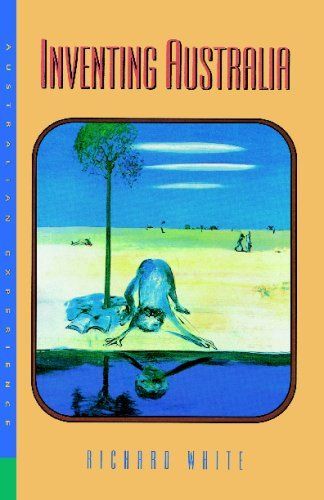
‘Inventing Australia’ by Richard White

1981, 171 p & notes

Inventing Australia is one of those books that appears in many, many bibliographies but I hadn’t read it until now.  The grammar of the title is important- Inventing Australia- because his argument is that the search for a distinctively Australian identity is an ongoing and never-ending one. It’s not like Benedict Anderson’s Imagined Communities where the tense of the title suggests that the concept of community identity has been developed and reified. 

In the introduction, White argues that

When we look at ideas about national identity, we need to ask, not whether they are true or false, but what their function is, whose creation they are, and whose interests they serve (p viii)

This seems unremarkable enough, as does much of his argument in the book because it has infiltrated our understanding of the creation of national identity so thoroughly that it is no longer particularly discernable as White’s argument alone.  I had to remind myself that the book was written in 1981 and although there have been several reprints and White has written other works, this particular book itself remains in the original edition and has not been updated.

The language that runs through the book speaks of classes, intelligentsia and bourgeoisie, which places it firmly within a 1970s/80s historiography.  It traces through the different images of  “Australia” that have been projected by different groups over time- early explorers like Dampier and Cook; Enlightenment philosophers, Social Darwinists, the critics and promoters of transporation, and the critics and promoters of immigration.  Sometimes the image of Australia was consciously crafted by a small group of the intelligentsia, as with the bohemians from the 1890s onwards,  who used their “brand” as a form of artistic protectionism for the local cultural industry. At other times images have been co-opted by conservative forces, as with the returning soldiers after WWI.  Much of this argument builds on, and has been taken further by other historians writing on these topics at much the same time.  I think that John Hirst’s Convict Society and its Enemies, written in 1983, is a more nuanced argument than the one that is presented here;  Graeme Davison had already noted the urban origins of what we think of as “bush” poets and artists in 1978 and Ken Inglis and Geoffrey Serle had already discussed the creation and co-option of the Anzac legend. It’s impossible to tease out, after thirty years, the genealogy of many of these arguments, and to work out what was completely new in White’s book and what has been built on further and incorporated into the work of other historians who followed him. 

However, what does emerge clearly is his insistence that many of the influences that fed into different depictions of Australian identity were Empire-wide and not Australian at all.  For example, he speaks of the approval given to the “bushman soldiers” in the colonial troops as a whole during WWI-  not just the ANZACS.  There  was an Empire-wide expectation of the Coming Man, exemplified by empire-wide  publications  called”Young Australia” and “Young Canada” that were part of a series that was customized for each country. He underscores the importance of “whiteness” in the conceptualisation of the Coming Man, again part of a wider movement.

He notes the shift from the search for a “national type” with its uneasy fascist over-tones to a promotion of “The Australian Way of Life”, just as vague and useful as an exclusionary device in post-war Australia as it is today.   Again, he emphasizes that this part of a more general Western trend, and one that was literally more conservative (in terms of keeping what we already have) and less likely to be co-opted by radicals.

The book finishes with the 1970s youth culture, dissatisfaction over Vietnam, New Left intellectuals, the women’s movement and multiculturalism.  Reading the book thirty years on, the ending seemed rather abrupt and many other later developments flood to mind – tourism,  changes in multiculturalism and immigration patterns, new media, the History Wars- the list goes on and on.  How would these events challenge or alter his hypothesis? I wonder.

Nonetheless, I’m pleased that he has resisted the temptation to keep adding new chapters to the book.  The full title of the book is Inventing Australia: Images and Identity 1688-1980.  Its chosen time frame  takes it right up to what were then current events for a book published in 1981. The argument is made for the time span he chose, and to keep updating it would lessen its force as a historical argument which makes sense within its own chronological parameters.