Australia vs. the Climate. (The Guardian) Episode 2:Copenhagen takes us back to the election of Kevin Rudd in 2007. How excited I was! How disappointed I ended up being! This episode gives us a behind-the-scenes view of the maneuvering around the very disappointing Copenhagen COP. Kevin Rudd has much to say (in his typical Ruddesque way, highlighting his own importance) but other speak too, like Penny Wong, the Australian bureaucrat who attended, and the representative from Tuvalu. All crammed into a tiny room, not enough tickets, backroom meetings…and this is how our future is decided. Meanwhile, we have Abbott taking leadership of the Liberal Party, and the whole thing turned to custard.
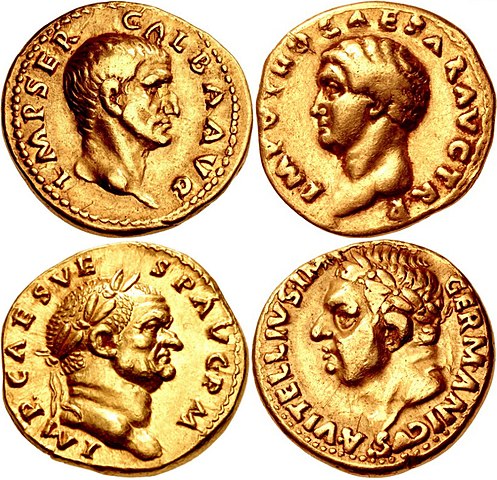
History of Rome PodcastEpisode 70 Galba and Otho sees the Generals competing against each other for power in what was known as the Year of Four Emperors. Galba was the governor of Spain, and a very harsh general who, unlike other generals, did not believe in bribing his troops. His off-sider promised the troops that they would receive a bonus, but Galba withheld it, both on principle and also because he was miserly. He was already an old man when he was made Emperor, and Otho, the governor of Lusitania, assumed that he would be chosen as his successor. But when Galba chose Piso instead, Otho led an uprising. Galba and Piso were both beheaded, and their heads put on pikes and kicked around. Episode 71 Otho and Vitellius sees Otho having to face the ongoing unrest up on the Rhine, led by Vitellius. Vitellius was thinking of overthrowing Galba, but when he heard that Otho had already done so, he decided to turn against Otho instead. Eventually the two Roman armies faced each other. After suffering a defeat at Bedriacum in April, Otho committed suicide having served as Emperor for just three months. Episode 72 Vitellius and Vespasian. Meanwhile, Vespasian had been in Judea, where he took very seriously the prophesy that the King of the World would come from Judea (of course, Christians came to interpret this differently.) So he just bided his time, and more and more troops came over to his side, leaving the unpopular Vitellius too weak to fight him. Vitellius tried to resign, but his forces wouldn’t allow him. The battle for Rome ensued, and Vespasian’s troops triumphed. Vitellius was executed soon after. Episode 73 The Only Man who Improved looks at Vespasian, who was in effect the last man standing. He ended up being a better emperor than people thought. He was a good propagandist, emphasizing that he had brought Peace and Victory after years of civil war, and had a self-deprecating nature (quite different to those neurotic Julian-Claudians). He was happy to circulate the prophesy about the King of the World from Judea, and rumours that he could heal people. He certainly healed the treasury by overhauling the taxes, even taxing the urine that was used in manufacturing processes, until he was advised that it was a bad look to tax toilets. He demolished the incomplete Golden Palace that Nero had commenced and built the Colosseum on the site. He reorganized the upper class ranks, getting rid of the corrupt, whether they were his supporters or not. His son Titus put down the Judean Revolt, leading to the burning of the temple against Titus’ orders and the mass suicide pact at the Siege of Masada. Vespasian actually died of natural causes, which was unusual after the suicides and poisonings of his predecessors as emperor.
Rear Vision (ABC) Did you know that the first ebook was created 50 years ago? EBooks: Winners and Losers looks at the changes that ebooks have brought to the publishing industry, with implications for booksellers and authors alike. I’m trying to stop cluttering my house with books, so I tend to borrow my paper-based books from libraries, knowing that at least the author will get a Lending Rights payment. However, I do buy ebooks when they are on special, or if no libraries hold the book I want to read.
History Workshop Podcast. I remember reading Sheila Rowbotham’s Hidden from History (1973) when I did a Women’s History subject at La Trobe back in 1975. This History Workshop interview with her in Daring to Hope: Sheila Rowbotham and 1970s Womens Liberation is almost an “in the family” interview, as Rowbotham was herself one of the founders of History Workshop. Rowbotham has recently released the second volume of her autobiography, where she talks about feminist activism and the 1970s. It seems to me that leftist historians have written more about the 1960s and 1970s and been embraced as part of the leftist historiographical movement than historians of the right (I’m thinking here of E.P. Thompson, and Eric Hobsbawm) and Australian feminists now writing the history of Australian feminism. Although probably I wouldn’t even be aware of memoirs and retrospectives by historians from the right.
The international conference events industry has really been stripped bare by the COVID pandemic. I say ‘industry’ deliberately, because international conferences have very much become commercial events, leveraged and promoted by cities for tourism and reputational benefits far beyond any papers that might emerge from the conference itself. But this is perhaps not such a recent phenomenon as we might have thought.
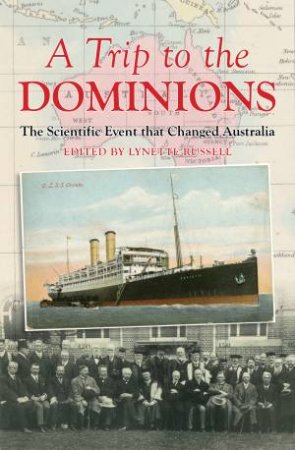
This small collection of essays, edited by Lynette Russell looks at the annual conference of the British Association for the Advancement of Science, which was held in Australia in 1914. The ‘advance party’ for the conference arrived in Perth on 28 July 1914, the day that Austria-Hungary declared war on Serbia. Talk about timing! Right up to the official opening of the conference on 14 August, there was a question mark over whether the conference would go ahead, but it was decided that it would, as long as it didn’t interfere with the war preparations of the Commonwealth.
The British Association for the Advancement of Science was founded in 1831. It had always included the human sciences alongside geology, chemistry and the hard sciences, often included under headings of ‘Geology and Geography’ and ‘Biology’. By 1884, spurred by interest in archaeology and with links to humanitarian groups active on behalf of indigenous peoples in Australia and North America, a separate ‘Section H- Anthropology’ had been formed. When the BAAS organized its conference in Australia, it was concerned that it would have too much of an Australian focus, so it was decided to limit the number of Australian-themed topics to just 1/3 of all offerings – except for the Anthropology section. For anthropologists, the opportunity to travel to Australia and actually see ‘natives’, as distinct from reading about them from their armchair, or reading the untutored scribblings of local informants, was a real drawcard. Many took the opportunity – as you would – to extend their trip to the Antipodes for a bit longer to do some field research and catch up with old contacts.
The fairly new Australian Commonwealth Government made a hefty contribution to having this prestigious conference held in Australia. Over 155 scientists were fully funded by the Australian government, and they travelled on three ships especially contracted for this purpose (two of them were commandeered for war purposes after war was declared, making the return trip rather difficult). Another 200 scientists received subsidies and supported travel to the tune of 15,000 pounds (several million dollars in today’s terms). The conference participants visited Western Australia (where it started), South Australia, Victoria, New South Wales and Queensland. It had a prominent public focus. Five thousand people in total attended sessions, with two thousand of these in Melbourne alone. Melbourne, as the then-capital, played a particularly significant role with a number of scientific organizations, and many interested citizens, mostly -although not all- drawn from the wealthier suburbs, attended the lectures out of genuine interest.
I have gleaned most of this information from Lynette Russell’s opening chapter, ” A ‘Young and Vigorous Outpost of Empire'” where she emphasizes the unfortunate coincidence of timing with World War I and the significance of the conference for the newly federated nation. As an ‘anthropological historian’ she was the recipient of a fellowship undertaken with Oxford University, where the archives of the BAAS are housed at the Bodleian Libraries, with 200 linear metres of shelved material. A small seminar was held at the Royal Anthropological Institution, where these papers were workshopped.
As several of the papers in this volume emphasize, anthropologists at the time were operating under the stance of ‘salvage ethnography’ – the idea that ‘real Aborigines’ were about to die out, and that cultural change as a result of colonialism was invariably equated with cultural loss, culminating in an impoverished, corrupted and inauthentic culture. In Chapter 2 Ian J. McNiven explores the idea of ‘salvage ethnography’ more fully, where he describes the visit of Alfred Haddon and his daughter Kathleen to the Torres Strait immediately after attending the BAAS conference in Australia. Alfred was a Reader in Ethnology at Cambridge, a position he took up in 1909, and Kathleen, aged 26, was a Demonstrator in Zoology at the same university. Kathleen was a keen photographer. It was a six-week Papuan expedition, where Alfred returned to meet Maino, whom he had described as an ‘old friend’, who had been senior cultural consultant during previous expeditions in 1888 and 1898. When Maino was not able to explain the use of old shrines, Haddon attributed it to the ‘vanishing past’ trope that he had warned his professional and academic colleagues against. Although his approach to anthropology was seen to be rigid and outdated, ironically it was the observations and writings of anthropologists working in the ‘salvage ethnography’ tradition that formed the foundations of land and sea native title determinations in recent decades. The chapter closes with a lengthy extract from Haddon’s paper ‘The Decorative Art of Papua’.
The title of Chapter 3 “A Diary in the Loose Sense of the Term” is a play on the title of ethnographer Bronislaw Malinowski’s diary called A Diary in the Strict Sense of the Term, published in 1967 by his second wife. In fact, Austrian-born Malinowski was one of the participants in this conference and was detained when war was declared, but he was released with the assistance of a fellow anthropologist and allowed to carry out the research in the Trobriand Islands that established his career. But the diary in this chapter was written by Henry Balfour, the first curator of the University of Oxford’s Pitt Rivers Museum. And he had none of the self-reflection or emotional angst of Malinowski’s diary. Instead, it was always intended to be a souvenir, filled with inserts, drawings and cuttings – a bit like a scrapbook. In fact, it’s not very interesting at all. There is a page of ‘cartoonlets’ from the Western Mail commenting on the war, but it was only kept because there were portraits of some prominent BAAS delegates on the back. His encounters with the Noongar people of Western Australia involved them hauling their car out of a ditch when it got bogged; in Lake Alexandrina (South Australia) he enjoyed a show of boomerang-throwing, lunch at the hotel, and a corrobborrie [sic]. He went for a trip with local Melbourne collectors, including Alfred Stephen Kenyon (who lived in my own suburb of Heidelberg), and his diary occasionally mentioned objects that he collected or bought, although it’s not clear whether they were private purchases, or acquisitions for the Pitt Rivers Museum.
Jane Lydon contributed Chapter 4 “Taming the Territory: William Baldwin Spencer and Elsie Masson”. Baldwin Spencer is best known today as a building at Melbourne University, but he was actually the foundation chair of biology. He was one of the main architects for the conference itself, but in the years preceding the conference he had been appointed Special Commissioner and Chief Protector of Aborigines in the Northern Territory. During his year of service in 1912 he travelled throughout the Territory and submitted a report in 1913 which emphasized the ‘child like’ and primitive nature of the indigenous people there. A couple of years later, Elsie Masson (who went on to marry Bronislaw Malinowski) published An Untamed Territory, an account of a year spent as an au pair companion and nanny with the inaugural Northern Territory Administrator John Gilruth and his family in Darwin. The Masson and Spencer families were friends and neighbours on campus. She visited many of the places that Spencer had visited before her. Her book shared many of the racial views expressed by Spencer and his circle, but she gave it “a distinctively romantic, humorous, stereotypical inflection to her circle’s views, facilitating their reception by a popular audience” (p. 101) Her book concludes with the trial of nine Aboriginal men for the murder of a white trepanger, Jim Campbell. Although she satirizes the cultural misunderstandings during the trial, she also expressed sympathy for the Indigenous prisoners and the unfairness of the ‘justice’ system in which they found themselves enmeshed. She took photographs of the accused men’s wives and children, and the trepanning enterprise in which the murder took place.
The final chapter ‘The Notes and Queries, Gestures toward a Settler History’ is written by Leigh Boucher. In her introduction, Lynette Russell warned that “At first blush Boucher’s essay may not seem to obviously sit in its collection…” (p. 23). She’s right. However, ‘Notes and Queries’ was a questionnaire published in 1841 which was distributed to colonial informants to fill in and return to the BAAS in London. There were 89 questions dealing with
physical characteristics, language, individual and family life, buildings and monuments, works of art, government and laws, geography and statistics, social relations and religion (Queries Respecting the Human Race Address to Travellers and Others, 1841)
p. 125
The Queries were distributed to the British Museum, the Royal Geographical Society, Scientific Bodies, missionaries and travellers, and were reprinted in colonial newspapers across the empire. However, it seems that not many completed questionnaires found their way back to the learned gentlemen in London, because travellers and commentators preferred to write their own volumes about their travels and observations. Other colonial observers, like Daniel Bunce, used the thinking in Notes and Queries to inform their own investigations.
So why is a discussion of an 1841 questionnaire included in this collection of essays? Well, the questionnaire was periodically reviewed until 1951, and indeed practising anthropologists in the 1970s could still remember the questionnaire being used in classrooms to introduce them to taxonomies of anthropological thought. Each of those anthropologists in Section H at the BAAS conference in 1914 would have been steeped in the thinking of Notes and Queries.
Nonetheless, the tenuous connection between this essay and the others in the volume has prompted me to think about the construction of a book of papers on a theme like this. I really don’t know where I would have put this essay. Chronologically, it occurs well before the conference, but putting it at the start would deflect the reader’s attention from the conference itself which is, after all, the theme of the book. Yet putting it at the end leaves it dangling, not so much as an afterthought as an aside.
I’m a little sorry, too, that Russell herself didn’t come back with an afterword to pick up on the subtitle of the book: ‘The Scientific Event that Changed Australia’. She does address this in her introductory chapter, pointing out that a chair of anthropology was established at the University of Sydney. An Advisory Council of Science and Industry was established in 1916, and Kangaroo Island was proclaimed a government reserve to protect the fast disappearing native fauna. However, these observations about the changes that occurred in Australia as a result of the conference probably would have made more sense after reading the papers, rather than before.
Nonetheless, I found this an interesting little volume, although it is probably aimed at a niche audience. I had not heard of this conference before, and it casts a light on the scholarly mindset that underpinned the early writing about indigenous society, very much from a London-based perspective.
Sourced from: Yarra Plenty Regional Library
Because Lynette Russell is the editor, and because she has really taken the running in publicizing this book, I am including it on the Australian Women Writers Challenge database.
It’s always a bit of a problem when you’re watching a movie that is referencing a movie you haven’t seen. This recent Spanish film is a remake of ‘Hannah Takes the Stairs’ a mumblecore film that starred Greta Gerwig. Actually, looking at the English trailer for ‘Hannah Takes the Stairs’, the two are very similar.
Nothing much happens in this film, set during summer in Spain, when a young girl is an intern at a publishing house. She shares an office with two men, both of whom are in love with her. Which is she going to choose?
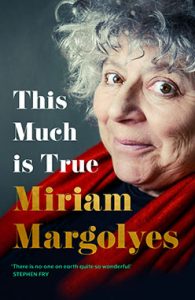
As our most recent lockdown dragged on, each day I looked more like Miriam Margolyes. When I caught sight of my bird’s nest hair, or ample bosom in a mirror, I would think “Oh Jesus, I’m Miriam…” Now, I enjoy watching Miriam Margolyes, but I don’t necessarily want to look like her. But physical similarity and a fondness aside, I really wish that I had not read this book.
“I’m quite sure you picked up this book hoping I’d make you laugh” she says in her opening pages, but I must say that I was largely disappointed in this regard. A wry smile occasionally, but no laughter. The book sounds like her, and you can almost hear her well-enunciated, fruity tones pontificating from on high, but on the page the words are just flat and self-conscious.
It’s pretty much a straight celebrity biography, starting off with childhood, moving through the phases of a career, riddled through with name-dropping. As she explains, it was written during lockdown, and it does have the feel of revisiting the past. I know that as one gets older, more and more of the people of your past drop away, but this had the feel of a long tribute to this dear friend, and that dear friend, and the other dear friend too. I found it more interesting once she reached her present day, where she explained her current politics, her attitude towards her Jewishness and Zionism, and her response to aging and bodily changes.
She was the only child of doting Jewish parents, who made sacrifices for her and encouraged her. Her mother, in particular, born in the lower middle class, was acutely conscious of class, pushing her daughter to meet the ‘best people’. She started her career on radio, doing voiceovers for advertisements and acting in that rather British institution, the radio play. I must admit that I was unaware of just how many stage, radio film and television programs she has acted in – just check out her Wikipedia entry.
There’s lots of saccharine praise, but she also dishes the dirt as well. She is scathing of the male members of the Footlights Club in Cambridge, especially those who went on to form Monty Python. When she doesn’t like someone, she says so. In the interests of telling all that she knows, she famously ‘outed’ her therapist over her role in Jacqueline du Pre’s death.
When I was contemplating reading this book, I checked out GoodReads. Many of the comments expressed thin-lipped disapproval of her obsession with ‘sucking-off’ men, even though she has openly acknowledged her lesbianism. Her relationship with her partner Heather is written with sensitivity and respect, and one of her lasting regrets is that she ‘came out’ to her mother. This revelation, she fears,led to her mother’s sudden death. I had vowed that I wouldn’t be so censorious and judgmental about the ‘sucking-off’ but there’s just too much for me. A wicked glee in being ‘naughty’ has its use-by date, and eighty years of age is well past it. It just felt a bit pathetic, and left with me with disturbing visual images of her. Especially when I looked in the mirror at myself. Thank heavens the lockdown is over, I have had my hair cut, and I look like me again.
My rating: 6/10
Sourced from: I actually bought it, full price, as an e-book.
The History of Rome Podcast. Episode 64- Smite my Womb sees Claudius dead and Nero moving smoothly into his position, aided mightily by the hand of his mother Agrippina. He was only 16 years old, had no experience whatsoever, and was really into the ‘entertainment industry’- something very much frowned upon by the patricians who had the time to sit around writing histories of the Roman Empire. He had his mother on one side, and his advisor Seneca (the Stoic philosopher) on the other. He decided to sideline his mother by sending her away, and when she seemed to be supporting his younger brother Brittanicus (son of Claudius and the adulteress Messalina) and later another cousin, she over-played her hand. Nero organized several unsuccessful attempts at matricide, and in the end sent an assassin to kill her, later claiming that it was a suicide. Her dying words were said to be ‘Smite my womb”. Thanks and goodbye, Mother. Episode 65- Burn it to the Ground turns to foreign policy between 58 and 63 AD, when both the Parthians and the tribes in Britain decided to take advantage of this newly-minted emperor and test him out. The Parthian conflict started over Armenia, while in Britain Boudica was fired up by the denial of her inheritance of the Icini tribal throne that had been left to her by her husband. She was flogged and her daughters raped by the Romans. She gathered huge numbers, and they engaged in a scorched-earth policy, burning down Londinium. Her troops massively outnumbered the Romans, but the Romans were always good at battle on an open field. The defeated Boudica drank poison and died. Episode 66 -666 I wonder if he planned for this episode to deal with the question: Was Nero the Anti-Christ? Nero was married to Claudia Octavia, but he started an affair with Poppaea, which didn’t go down well with the people. He divorced Octavia on grounds of infertility, and the populace started demanding that he bring Octavia back, instead of going off with Poppaea. So he had Octavia killed, and staged it as a suicide. Nero was extravagant, and surrounded himself with yes-men who encouraged his indulgence. His reputation was so poor that when the Great Fire broke out, there were rumours that he set it himself as a land-clearing exercise to build a new temple. However, Tacitus says that Nero wasn’t even in Rome when the fire began. He blamed the Christians, who were Capital O ‘others’, and they hated him too – and maybe this leads to the reference to the Anti-Christ 666 (which makes the name Nero if you sprinkle some numerology jiggery-pockery over it). A conspiracy led by Piso was mounted against him, but he was betrayed and Nero embarked on a series of treason trials, which eventually led to him being declared an enemy of the state. In Episode 67- What an Artist the World is Losing we finally bid farewell to Nero, who became increasingly unhinged. His wife Poppaea died, either in childbirth, or because he kicked her to death. Nice. Plunged into sorrow, he had her embalmed and kept her beside him. In 66 AD the Zealot-led Great Revolt broke out in Judaea, leading Nero to appoint Vespasian to crush the uprising. Governors started rebelling against him, largely on the basis of his tax policies. The Senate eventually declared him a public enemy and warned that he would be beaten to death if he was found. So he suicided instead, or maybe he got his private secretary to do it. Either way, he was dead, at the age of 30, having ruled for 14 years. This brings us to the end of the Julio-Claudian dynasty. In Episode 68- Three Emperors, Mike Duncan explores the question of where legitimacy was to come from, if there were no more Julio-Claudians left. Mostly it came from the Governors, who were powerful in their own right, but had all been equally subject to the Emperor. In this episode he introduces three of the four emperors who ruled in 69AD (the fourth one was Vespasian, introduced in the last episode). First there was Galba (June 68- January 69AD), who became emperor with the support of the Praetorian Guard. He had been governor of Aquitania, Upper Germany and Africa, and most recently Hispania. He was old, frugal, hated bribery and was a disciplinarian. The second was Otho, only 5 years older than Nero, who was convinced that Galba would adopt him, and that when Galba died (he was old, after all), he would take his place. then there was Vitellius, a lazy and gluttonous governor, who was popular with the troops.
History Lab. History Lab is a collaboration between the Australian Centre for Public History linked with UTS, and radio producers so, as you might expect, there’s no dodgy sound here (which is a relief, I must admit. COVID has not been kind to history podcast production values because recordings of Zoom talks sound pretty woeful). They are not prolific, but their podcasts are really well produced. Season 4 The Last Outlaws looks at the story of Jimmy and Joe Governor, who were fictionalized (to his later regret) in Tom Keneally’s The Chant of Jimmy Blacksmith. In Episode 1, the lead researcher and law professor Katherine Biber connects with Aunty Loretta Parsley, the great-granddaughter of Jimmy Governor to get a fuller, family-based perspective on the events that led to Jimmy and Joe’s crimes. In Episode 2, Jimmy and Joe are proclaimed outlaws but -rather surprisingly really- Jimmy is not killed (despite being proclaimed an outlaw), faces trial and is sentenced to death. His case becomes a lightning rod for how justice is to be dispensed in newly federated Australia. While awaiting sentence, Jimmy’s demeanour and behaviour is documented in the prison keepers’ diary (a log, really). Episode 3 follows up on Joe Governor, who was shot and killed near Singleton. He had been declared an outlaw, and the Wilkinson brothers, who shot him, were not charged. Photos were taken of Joe’s body at the inquest held at the Caledonian Hotel (a common place to hold inquests), and the photos were not removed until 2019. As for the ancestral remains that were removed for study, it’s not really clear whether they are still held somewhere or whether they are lost. They were sent to the University of Sydney and who knows where from there.
Australia vs. the Climate Leading up to Glasgow, I’m listening to this Guardian series on Australia’s policy on climate change. Episode 1: Kyoto looks at the Kyoto COP and the backroom negotiations that led to Australia committing to increasing our emissions, and the ‘Australia clause’ that allowed us to count land-clearing that had already occurred. Then, after all that, Howard didn’t ratify it anyway. We are assholes, and shamefully, the Morrison/Joyce government is still claiming the free kick when boasting that we are “meeting and beating” our Kyoto targets.
Because of Anita Finishing off this podcast series, Episode 3: The Conversation features a conversation over Skype between Professor Anita Hill and Dr Christine Blasey Ford, who testified against Brett Kavanaugh when he was nominated for the US Supreme Court. There’s a lot of mutual admiration going on here, but you can hear how vulnerable Ford still is. Hill (I think) raises the point that there are few other occasions when people say “I believe you” when you tell them something, and what the unspoken part of that sentence is. Episode 4: The Movement looks at where we have come since Anita Hill’s testimony. Now there are 143 women in the Senate; Joe Biden called Anita Hill to apologize to her (as he should). But men’s reputations are still being protected, over women who were harmed (they don’t call them ‘victims’, but rather ‘women who were harmed’).
Stuff the British Stole (ABC) This is now in its second series but I’m going back to catch up on Series 1, of which I had only listened to the Gweagal shield episode. So, back to the beginning, the very first episode A Tiger and a Scream looks at Tipu’s Tiger (sometimes spelled Tippoo) a life-size wooden figure of a tiger eating an East India Company soldier, with a handle you can turn to play music. As the producer, Marc Funnell discovers, the figure is a big ‘F**k You’ to the British, created for Tipu Sultan, the Tiger of Mysore who was at that time fighting the British. The Tiger was looted and taken back to various British museums before ending up at the V&A where it has been restored, complete with the organ. Shashi Tharoor, author and Indian MP, who wrote Inglorious Empire: What the British Did to India is one of those who feel that the Tiger should be repatriated to India.
Here’s a video of the rather weird organ inside the Tiger
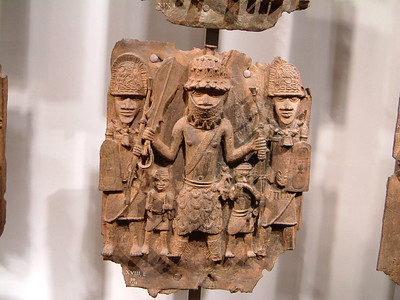
Episode 2: Blood Art tells the story of the Benin Bronzes, plundered from the Nigerian kingdom of Benin (as distinct from the country of Benin today). In 1898 the Oba of Benin warned the British vice consul general James Robert Phillips and a large entourage of over 200 not to enter the city because rituals were being conducted, but they entered anyway. Only two Europeans survived the resulting massacre. In retaliation, a punitive expedition was mounted that sacked and destroyed Benin City. The artwork was looted, with an eye to selling them to fund the expedition. The British Library contains a large quantity of the bronzes, and has resisted returning them. This episode also tells the story of two policemen, formerly stationed at Kensington Palace, who felt that the Bronzes should be returned and set up a website to highlight the issue. They were approached by a man from Oxford, who had two of them brought home by his father. Together they sought to return them to the Oba of Benin, without the then-President of Nigeria, Goodluck Jonathan, claiming the glory.
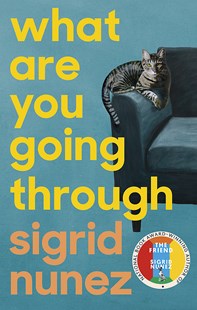
First Saturday. Six Degrees of Separation Day. This meme, hosted by Kate at Booksaremyfavouriteandbest involves Kate choosing a book title, then you linking the details and your reviews of six books which spring to mind. It is a rare month when I have read her starting book and this month is no exception. She chose What are you going through by Sigrid Nunez, which apparently deals with two friends and an assisted death.
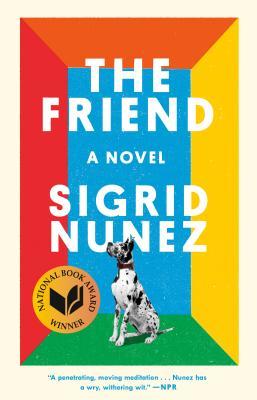
Well, I haven’t read this book by Sigrid Nunez but I have read another of hers, which sounds remarkably similar in theme to Kate’s starting book. I then embark on a succession of books about suicide and death, so it’s a gloomy string of titles this time. You may not be in the mood for such unrelieved sadness.
Sigrid Nunez’s earlier book The Friend (2018) is constructed as a series of short paragraphs, addressed to an unnamed male friend who had recently committed suicide. These paragraphs have been written by a similarly unnamed female narrator who teaches creative writing at a university. The paragraphs to her friend are spoken in the second person “you”.
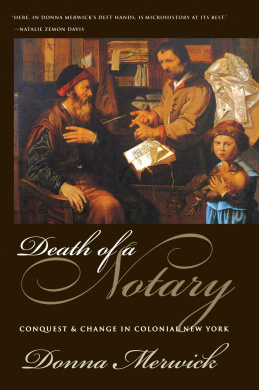
Another suicide is announced in the opening pages of historian Donna Merwick’s Death of a Notary (1999), the story of Janse, the Dutch-speaking notary in Albany, who commits suicide in the late 17th century, a number of years after the English have taken possession of New Amsterdam. The book is written in two halves, the first a conversational present-tense narrative of Janse’s life and death, and the second an extended form of footnotes which I described as “the historian with her hard-hat on”.
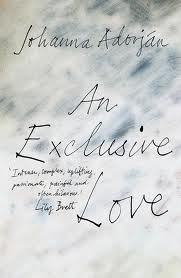
Johanna Adorjan’s An Exclusive Love (2010) tells us from the first pages that the author’s grandparents committed suicide together in 1991. The book examines their last day in detail, interspersed with a family history drawn together from the accounts of relatives and her grandparents’ surviving friends.
A Good Day to Die (1998) by Lisa Birnie is about death too, but involves a series of cases and interviews from McCulloch House, a palliative care centre attached to Monash Medical Centre, where Birnie was writer-in-residence. In a way, this does sound a little like Nunez’s What are you going through, but as I haven’t read it, I’m not sure. Written some 20 years before assisted dying legislation was passed in different states in Australia, I wonder how she would feel now.
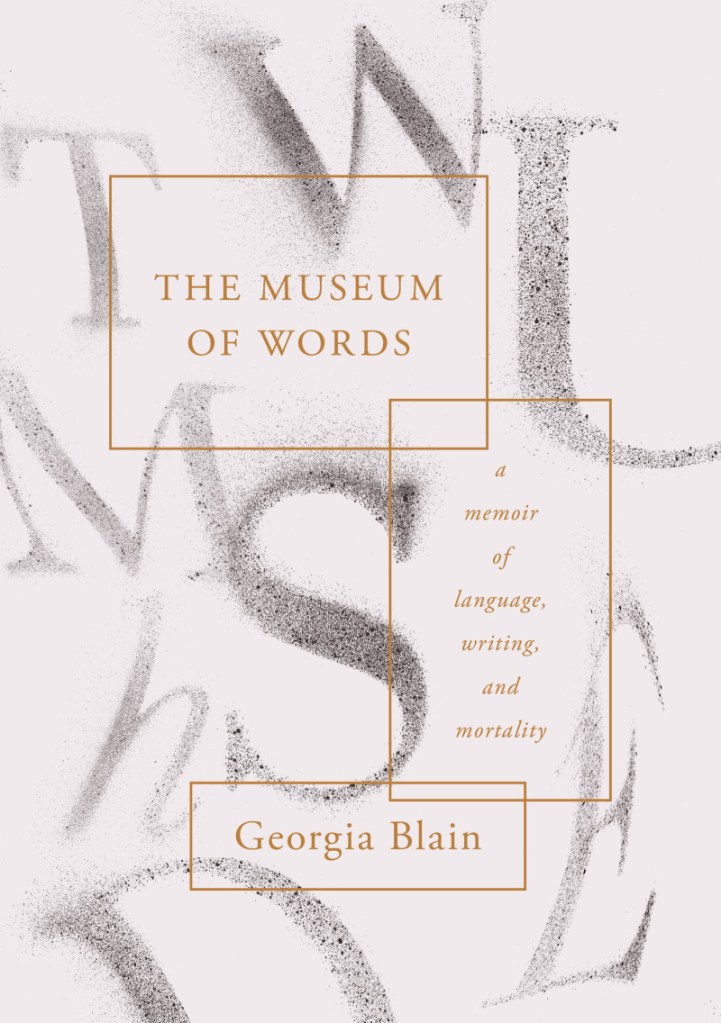
A young writer, who died too soon is Georgia Blain and her amazing book The Museum of Words (2017). Dying with brain cancer, with a glioblastoma the size of a golf ball, she writes of the experience of her illness, threaded by perverse coincidence with the illnesses of her mentor, friend and human rights activist Rosie Scott, who was dying with exactly the same condition, and her mother who was dying with Alzheimers. This book is in many ways a love letter to all three of these women, to the act of writing, and in her final paragraph, an assertion of gratitude for life itself.
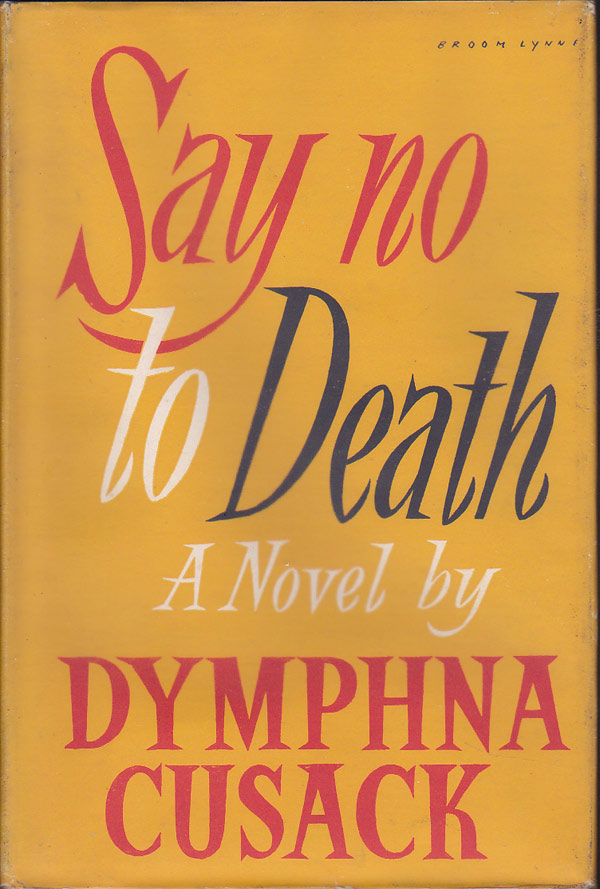
Finally, I feel I need a book with a more uplifting title at least. Dymphna Cusack’s Say No to Death (1951) is set in post-WWII Australia where a young woman, Jan, is diagnosed with tuberculosis, then an incurable disease. This is in the time before Medibank/Medicare, when much of the health spending was being directed towards returned soldiers, and when the discrepancy between private and public health treatment was stark. The book is dated, and is best read as social history, but I must say that it has stayed with me long after I read it.
What a depressing chain. What’s next month’s starting book? Ethan Frome by Edith Wharton. I just read the Wikipedia summary: it sounds similarly gloomy. I’ll have to work hard to think of more uplifting links.
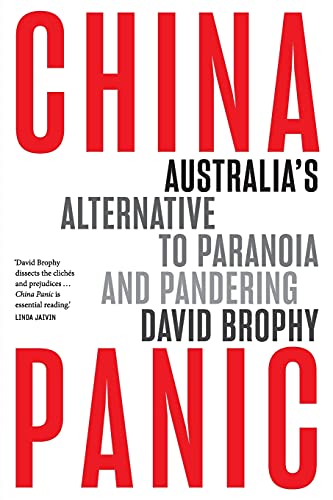
I don’t know what to think about China. I read Peter Hartcher and I see all those meticulously drilled soldiers parading in Tienanmen Square, and I feel very, very apprehensive. Then I read Hugh White or listen to Bob Carr or Paul Keating (albeit with increasing scepticism) and I think that we’re over-reacting. It seems that commentators on China have backed themselves into a particular position, and you almost know what they’re going to say before they start. And yet these commentators do not always come from the traditional left/right field. Clive Hamilton, for example, who is such a strong advocate for the environment and sustainability, is one of the most trenchant critics of China.
So who is David Brophy, and why should I listen to him over anyone else? He is a historian of modern Chinese history at the University of Sydney, and he wrote his PhD on Uyghur nationalism, and wrote UyghurNation. Increasingly he has found himself called upon to comment on current events in China, and was himself involved in demonstrations in support of Hong Kong at the University of Sydney in August 2019. Although I would by no means instantly give credibility to a historian over any other commentator, a historian is probably a little more likely to take a view longer than the last election, and has no party policy to conform with.
In China Panic, Brophy starts by identifing the different players in the China Commentary field. He points out that security agencies have led the way in Australia proclaiming itself ‘the canary in the coal mine’ regarding China’s rise. ASIO has taken on an increasingly public role, and the Australian Strategic Policy Institute has also talked up the risks. He notes that ASPI receives sponsorship from arms companies, and has received grants from Canberra and the US State Department. (p. 13). Then there are the parliamentary self-styled bipartisan Wolverines- Andrew Hastie, Eric Abetz, Kimberley Kitching (ALP), Raff Ciccone (ALP), James Patterson among others. Commentators more often found on the ‘left’ like Richard Denniss and Clive Hamilton,urge Australia to take a stronger role. Brophy points out that Fairfax Media and the ABC, in particular through ‘Four Corners’, have been major conduits for security warnings in relation to China.
But then there is Hugh White, who argues that as America’s pre-eminence wanes, Australia should accommodate China’s rise. The former secretary of the Department of Defence, Dennis Richardson warns that ‘national-security cowboys’ are endangering Australia’s interests. Angus Houston, chief of the ADF 2005-2011 maintains that China is a partner, not an enemy. (p. 15). The Australia-China Relations Institute at UTS continues to champion continued trade growth. Twiggy Forrest and the Minerals Council represent business that is keen to maintain trade links.
The book has eight chapters, which are topped-and-tailed with an introduction and conclusion. The chapters are: 1. China and the World 2. The US-China Rivalry Today 3. Influencing the Region 4. Interfering with Democracy 5. Cold-War Campus 6. Human Rights and Xinjian 7.The Battle for Hong Kong 8. Sovereignty, Values and Racism.
As you can see, this is a very current list. One of the dangers of writing a book so close to current situations is that events that have occurred subsequent to publication can change the trajectory of the argument. For example, the AUKUS agreement sees Australia very much throwing its hat into America’s ring, with all of the implications for our own sovereignty, all the while proclaiming that “it’s not about any one country!!” (as if).
So where does Brophy locate himself? As a historian of Uyghur nationalism he is, as you might expect, critical of Chinese policies in Xinjiang. As one of the convenors of the ‘Let’s Talk about Hong Kong’ Chinese-language forum at the University of Sydney, he is committed to providing a platform for debate and exchange amongst Chinese citizens in Australia themselves. However, he points out that Australia and America (in particular) hold China to international standards that they themselves hypocritically sidestep when it suits their purposes. In matters of undue political influence or academic freedom in Australia, he notes that curbs and oversight of these matters for all countries, not just China, would be of benefit to Australia’s democracy. He argues that the move to the Right in contemporary responses to China in Australia’s politics will only provoke a similarly nationalistic response from China. He suggests that instead, we need to live up to our profession of universal values (p. 20) and to strengthen our own democracy.
He concludes:
We need something very different. Not a politics that shies away from necessary criticism of China: that has no future in Australia. But we do need to remove today’s national-security lens and replace it with a more genuinely critical one. On that basis, Australia’s new consciousness of China as a global actor can still point to important truths about China itself, the global system of which it is a part and the deficiencies of Australian democracy…. We need an alternative that combines a vision of a better China with a vision of a better Australia.
p.230
I usually give a book a ‘rating’ but I feel at a loss here. I read the book precisely because I don’t know what to think, and I have no way of evaluating his material or mounting counter-arguments. But he says that the question is too important to leave to specialists. Instead,
…to get out of the rut into which Australia’s China debate has settled, we need to recentre it on the interests that ordinary people in Australia and across Asia share in both combating oppression and resisting warmongering.
p. 21
One of the more reassuring programs on China that I have seen recently was on Foreign Correspondent (yes, it’s on the ABC). Called China’s Future, it focussed on three young people who had rejected the expectations of their society, and the hopes of their parents, to choose a different future. One was a transgender young person involved in ‘Voguing’, a dance culture that started in New York in the 1980s queer scene. Another was a woman who had given up her career to return to organic farming in her home village, much to the disappointment of her mother. The third had been an editor with a renowned publishing house, but threw it in to become a shopkeeper with a small corner shop in the hutongs. While I wonder how they will fare in Xi Jinping’s increasingly interventionist society, there was something very human and relatable in their parents’ bewilderment at their children’s choices, set against their determination not to lose their relationship by rejecting them. Love, a future, safety, peace – things that ‘ordinary people’ crave. Perhaps this isn’t a bad place to start.
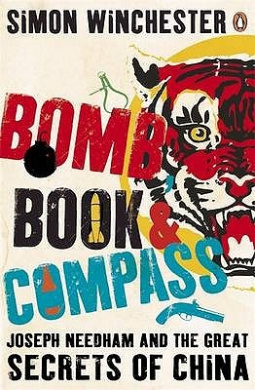
I must confess that I had never heard of ‘Science and Civilisation in China’, a 24-volume (and counting) series described by its publisher, Cambridge University Press, as “one of the most remarkable works of scholarship in the twentieth century”. Nor had I heard of Joseph Needham, its original author. When I saw the title of this book Bomb, Book and Compass, I immediately thought of Jared Diamond’s Guns, Germs and Steel and expected that I would be reading a history of Chinese invention and technology. Joseph Needham, I assumed, would be a missionary/explorer type, perhaps from the 1840s after the Opium Wars, when China was opened up to British trade. But I was wrong on many counts. This is a biography of Joseph Needham, the Cambridge biochemist, who arrived in China in 1943 (100 years after I expected!) and began the research that led to this huge multi-volume work on China which is still continuing, even after his death.
Born in 1900, Joseph Needham was already established as a biochemist and academic at Gonville and Caius College Cambridge when three Chinese postgraduate students arrived at the university in 1936. One of them, Lu Gwei-djen, became his lover and through his fascination with the Chinese language and writing, he was chosen to be a director of the Sino-British Scientific Cooperation Office in Chongquing. This organisation, with its aim to provide practical academic support to Chinese universities during the Sino-Japanese War, gave him the opportunity to travel around central China to remote areas, collecting books and materials and exposing him to the history of invention and technological development in China which had been largely ignored by the Western World. On returning to Cambridge, he embarked on writing a book which expanded into a ten-year seven volume project, that ended up occupying him for the next six decades.
Tall, handsome, driven and charismatic, Needham also enjoyed nudism, morris-dancing and a radical form of Anglicanism at Thaxted parish church. That was not all that was radical about him. His wife, Dorothy, a fellow bio-chemist and his mistress Lu Gwei-Djen lived just a few doors from each other in a congenial relationship. Winchester seems rather sceptical that this relationship was warmly embraced by all three protagonists, but I suspect that this is his own morality at work here, and not necessarily that of Joseph, Dorothy and Lu Gwei-Djen. The arrangement seemed to be open knowledge.
Not only was Needham imbued with a very healthy ego (flattered no doubt by the women with whom he flirted throughout his life) but he also was observant and curious. He plunged headlong into learning Chinese, devising his own rigorous and methodical way of learning a difficult language. On watching a Chinese gardener grafting a plum tree on his first day in China, he recalled that an American missionary had confidently claimed that botany was wholly unknown to the Chinese. This, he realized was one of hundreds of techniques that the Western world discounted:
Needham felt he needed to write his new book largely to overcome ignorance like this and to purge the western world of prejudices against the Chinese that were based on such a wholesale lack of knowledge and understanding. Should a book ever be published, then observations like this, and the scores of others he now knew he would make…would be sure to be included….Everything he was about to see- how a Chinese farmer plowed, how a Chinese bridge was built, how iron was smelted in China, what pills a Chinese doctor handed out, which kinds of kites were to be found in a Chinese playground, what a Chinese siege cannon looked like, how a dam, a haystack, or a harness was built in China- was useful to him….The Chinese, he kept discovering again and again, had the longest imaginable history of invention, creation and the generation of new ideas.
p. 66-67
Certainly China gave Needham the experiences and practical examples to develop his project, but this was not a one-way street. He perused markets and purchased books and documents, and sent home a steady stream of documentation -some rare, some freely available- in diplomatic bags. Once he had returned home, he was the recipient of other material, sent to him from a supporter in China. He was aware that some of this material was sold out of desperation, and there is an element of safe-keeping, particularly during the Cultural Revolution. But part of me wonders whether this is not another form of Western culture-stripping, and whether any of it has been the subject of repatriation demands.
So what was his plan for all this material? The original proposal, reprinted in Bomb, Book and Compass, was for a book addressed to
all educated people whether themselves scientists or not, who are interested in the history of science, scientific thought and technology, in relation to the general history of civilisation, and especially the comparative development of Asia and Europe
p. 171
He identified his question early:
STATEMENT OF THE PROBLEM. What exactly did the Chinese contribute in the various historical periods to the development of Science, Scientific Thought and Technology? Why did their science always remain empirical and restricted to theories of primitive or mediaeval type? What were the inhibiting factors in their civilisation which prevented the rise of modern science in Asia? It is suggested that, apart from numerous theoretical and psychological factors which demand attention, the concrete factors which moulded asiatic civilisation differently from that of Europe are: a) geographical b) hydrological c) social d) economic
p. 171
I think that it’s important to remember that Needham was a biochemist, not a historian. The way that he went about answering his question, I believe, reflects this. He decided initially to make a historical list of every mechanical invention and abstract idea that had been first conceived and made in China. It took him five years. They were, as Winchester notes, “all about detail. They were assembled with a painstaking concern for even the smallest facts of Chinese life.”
The larger question, since dubbed “The Needham Question” was not answered in his own work. As Winchester notes:
Joseph Needham never fully worked out the answers. Perhaps it was because he was too close to the topic, seeing many trees but not enough forest. And though he makes an attempt at offering some answers in his final volume, he never seems fully convinced of his own arguments and never fully explains his reasons. It has been left to others to take up the challenge in his place.
p. 260
The initial volumes received acclaim even though there were many who, resentful of his discipline-hopping, willed them to fail. His work was seen by many as an eccentric folly, but this view was tempered once they became the jewel in the Cambridge University Press catalogue.
In many ways, the initial volumes salvaged his reputation, which had plummetted in the early 1950s. His interest and language skills may have snagged him the position with the Sino-British Scientific Cooperation Office in the first place, but he was now widely acknowledged as a China Expert. In 1952 he led an International Commission delegated by the World Peace Council to investigate the alleged use of chemical warfare by the US during the Korean War. A committed Socialist throughout his life, and a supporter of the Communist Party, he confirmed the Chinese claim that they had been the targets of American bacteriological weapons. The response of the Establishment was swift. He was declared persona non grata in the United States, his academic position became more tenuous, and the senior members of his college at Cambridge froze him out. He was excoriated in the press, denounced in Parliament and shunned by many.
His reputation was rehabilitated largely on the strength of Science and Civilisation in China, and he continued to champion left-wing causes. Even though he was dismayed by the drabness and conformity in Mao’s China when he visited in 1952, he does not seem to have gone through the same crisis of the soul that many left-wing supporters of the Russian Communist Party suffered when news of Stalin’s activities reached the West.
Simon Winchester is a master story-teller, and it comes through in this book. It is as if Winchester has walked around Joseph Needham, describing him from different perspectives: as an academic, as a sexual being, as a political activist, as a researcher. The maps are right where you need them, and they show you just want you want to know. The text is interspersed with photographs of Joseph Needham, which help you to fix him in your mind’s eye. However, I was a little alarmed at Winchester’s blithe acceptance that the Chinese ‘discovered’ Australia, mentioned in passing and without reference to Gavin Menzies, whom I am assuming Winchester is citing. Without footnotes – beyond his quirky asides at the bottom of some pages – the reader needs to put her trust in Winchester alone, something which never sits well with me.
However, both Needham and Winchester were prescient in asking about China’s historical role, and Winchester’s contribution to a better knowledge of it- especially since China is now so prominent in Australians’ sense of security. I found this book fascinating, exposing me to a person and his research that were completely unknown to me. A prolific popular historian/journalist Winchester, is obviously drawn to men who devote their lives to a passion – e.g. James Murray and the Oxford English Dictionary in The Surgeon of Crowthorne and William Smith in The Map that Changed the World. Joseph Needham was one such man, and I’m glad that Winchester introduced him to me.
My rating: 8/10
Sourced from: CAE Bookgroups. I read this with my face-to-face bookgroup.
The History of Rome Podcast. Episode 60 No Better Slave, No Worse Master The six months between Caligula’s taking power and getting sick was just a breather before Caligula embarked on his four-year reign of terror and madness. He was only 28 when the Senate and the Praetorian Guard and courtiers arranged to have him killed. Even allowing for the prejudices of the sources, he was Rome’s first really terrible emperor. We meet Claudius in Episode 61 What, me Claudius where the rather embarrassing and scholarly uncle of Caligula is chosen as the next Emperor. Expectations were at rock bottom after Tiberius and Caligula, but he turned out to be what Mike Duncan considers to be amongst the Top Ten of Emperors. He introduced bureaucratic reforms and oversaw the invasion of Britain, something that Julius Caesar had not managed. However, despite his victory of Caratacus in Britain, he made several unsuccessful marriages, as seen in Episode 62 Take my wife…please. He divorced his first wife Plautia Urgulanilla for adultery; he divorced the second Aelia Paetina because, as Sejanus’ relative she was a political liability. He then married Valeria Messalina who married her lover Silius while Claudius was at Ostia, so she and Silius were executed. Finally, he married Agrippina the Younger, his niece and Germanicus’ daughter. Episode 63 A Farewell to Claudius sees Claudius off the stage, helped it is said by Agrippina who had been raised by Livia and imbibed plenty of her strategies. Like Livia, Agrippina had her son Nero adopted by the emperor, and like Livia she was very ambitious for her son. Mike Duncan notes that there is no hard evidence that Agrippina poisoned Claudius, but he leans towards it. As for Claudius’ long-term legacy, he increased the size of the empire, and reinvigorated the role of censor to control his enemies in the Senate. He also made the Senate more multicultural, reflecting the increased size and diversity of the empire- something that probably contributed to its longevity.
Because of Anita In this second episode The Aftermath, three African-American women speak about the effect that the Anita Hill trial had on them. Professor Barbara Ransby rallied Black women in a historic show of visible support that still reverberates today by organizing for the publication a full-page advertisement with the signatures of (black?) women. Carol Moseley Braun ran for office—and won, becoming the first Black woman in the Senate (which until 1991 had only 2 white women). Drew Dixon, a young record producer grappling with sexual abuse in her own profession, had to make difficult decisions with the long shadow of the hearings looming over her. Through Anita Hill’s experience, she learned that Black people (both men and women) were critical of Black women who ‘dobbed’, thus giving succour to the ‘black rapist’ trope that could be used against all Black people. But she also learned that it takes courage to actually stand up and speak.
The History Listen (ABC)The Illusory Life of Esme Levante. Born in 1920 into a show-biz family, Esme performed from the age with her father The Great Levante. An escapologist, magician and cabaret artist, she travelled the world, first with her family, and then with her own show.
Background Briefing (ABC) Reconciliation gets pointy when it is your own family who was involved in massacres. The narrator of The Ghosts Are Not Silent Sam Carmody, is part of the Bussell family after which Busselton in Western Australia is named. The family had taken great pride in their ancestor John Garret Bussell, but they gradually became aware of stories that a member of the Bussell family had murdered a 7 year old girl, and that the surrounding area was known as a massacre site. Sam decided to speak to traditional owners, many of whom were reluctant to be
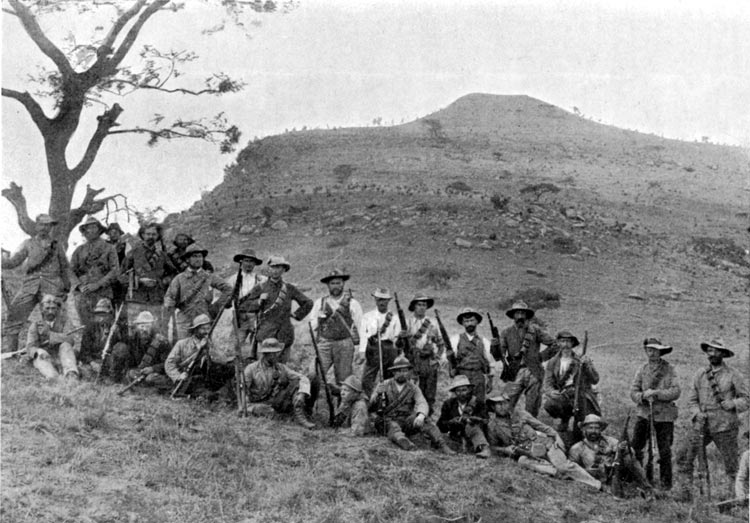
Second Boer War Source: Wikipedia
History Extra podcast. Apparently historians now prefer to talk about the ‘South African War’ rather than the Boer War (which is certainly the way it is remembered in Australian popular memory). The Boer War: Everything You Wanted to Know is an episode based around listeners’ questions through social media, so its structure and organisation is a bit haphazard. Saul Dubow is the Smuts Professor of Commonwealth History at the University of Cambridge and a Professorial Fellow of Magdalene College, Cambridge. I hadn’t realized that the trigger for the war was the British government’s desire to federate the separate colonies, charged by the discovery of gold and diamonds. He points out that the impetus for the concentration camps was to deprive the farmers of the ability to draw resources (physical and emotion) from ‘home’
I read Kristen Lavransdatter about twenty years ago, and I have never forgotten it. My enthusiasm for it built up over the three volumes in the trilogy, and I ended up viewing it as one of my favourite books of all time (FBOAT). I even ended up with two copies of the trilogy at one stage, because my face-to-face group decided that as a Christmas Kris Kringle we would each buy a second-hand copy of a book that we had loved during the year to put in the Kringle. My recipient returned it to me unread, because she said that it was just too long to be bothered reading. Ah- her loss!I can’t find the second copy now, so perhaps I have inflicted it on someone else.
To be honest, I don’t think I know anyone else who has read it – perhaps this posting will bring them forward?- and so I was very excited when I saw that the hosts of Lit Century, a podcast that chooses one emblematic book for each year of the 20th century, had chosen it for 1922. Their podcast on the book, hosted by Sandra Newman and Catherine Nichols, extended over two sessions. In the first, On Desire (and its Absence), they talk about Kristen Lavransdatter and whether it fits within the ‘romantic novel’ genre, given that it deals with 14th century Norway, with its medieval mentality. In the second episode On Catholicism and Doomscrolling they are joined by Timothy Paulson, whose great-grandfather won a Nobel Prize for Literature (as did Sigrid Undset, largely on the strength of Kristen Lavransdatter.) He is of Norwegian heritage, and first read the book as a Lutheran 13-year old. He spoke about the sense of betrayal that Lutheran readers felt when Kristen converted to Catholicism. They also discussed whether it was a feminist book back in the 1920s when it was released, given the emphasis on the whole life of a female character, and decided that it wasn’t.
So what I did I write about it back in 2001? I wasn’t blogging then, and my reviews tended to focus on the plot of the book, largely as a reminder to myself.
In relation to Part 1 ‘The Garland’, I wrote:
Set in medieval Norway Kristen is betrothed to Simon, but falls in love with Erland. Her father opposes the marriage because Erland has been living with a married woman by whom he had had two children. Kristen eventually marries him, pregnant and scared of her father finding out, and wracked with guilt over the murder/suicide of Erland’s paramour Eline.The story finishes at her wedding, where her father realizes that she is no virgin, but then he learns that his own wife, Ragnfrid, had not been faithful either. Sort of like Heidi meets Anna Karenina.
What an odd coupling- Heidi and Anna Karenina?- what on earth did I mean? Anyway, by January 2002 I was back for more with Part II ‘The Mistress of Husaby’. I wrote:
Second in the Kristen Lavransdatter trilogy. Kristen has not forgiven herself, or Erland, for betraying her father’s trust, and despite fifteen years of marriage and the birth of seven sons. Their marriage is tortured- she can see Erland’s shortcomings and lack of discipline. She holds grudges for literally years, and is quite a shrew. Both her parents die and her younger sister marries Kristen’s former fiance Simon. Erland is arrested for treason for plotting against the King, but Simon intercedes for him and gains a pardon for him at the cost of forfeiture of Erland’s goods.
In July 2002 I finished the final book in the trilogy ‘The Cross’. This time I wrote:
A long break between Volumes 2 and 3, and I found it hard at first to pick the story up again. Kristen is still a hard woman, ready to throw at the slightest provocation the criticism that Erland is not the man her father was; that he had cheated on her, and that he had lost their lands as part of his punishment for treason. Erland and Simon argue when Simon declares his lifelong love for Kristen, and the two families are estranged. Simon dies, with Kristen nursing him. Erland and Kristen also separate, with Erland going to a farmhouse in the mountains. As part of her promise to the dying Simon, Kristen goes to the mountain and reconciles with her husband and falls pregnant again. But neither will budge- Erland will not come down and she will not leave her children to go to him. When the child dies, she is devastated. She takes one of her sons to be confirmed and is confronted by the gossip that Ulv Haldersson (a long time servant) is said to be the father, and when set upon by the villagers who resent her return, Erland comes to the rescue. But he is injured in a fight for her honour and dies.
Kristen is left with fewer sons as they die, travel abroad and marry. When she feels usurped by her daughter-in-law, she decides to become a nun in Trondheim. She catches the Black Death and dies.
What I really liked about this trilogy is the unity of the medieval world view- family, Church and King. The language is archaic, and constantly maintained throughout the whole trilogy. Her characters are all flawed, and yet good- as in life- and act with an authentic mixture of wisdom and stupidity.
I admit that it all sounds a bit melodramatic, when you see it all laid out. Now that I’m older than when I read it the first time, I appreciate even more taking a woman’s life from childhood right through to old age. These are all complex characters, often governed by unworthy motives. I’m pleased to learn from the podcasts that Undset’s treatment of the historical background has held up well, informed by extensive research into Norse medieval culture and literature. I might even read it again if there is another lockdown (perish the thought!)


 The Resident Judge of Port Phillip