Author Archives: residentjudge

Six degrees of separation: from Ethan Frome to…

It’s the first Saturday of the month again, and so it’s time for Six Degrees of Separation, a meme hosted by Kate at Booksaremyfavouriteandbest. She chooses the starting book- in this case, Edith Wharton’s Etham Frome – and you think of six books linked in some way in your own mind: by the title, by the content, by theme, place of publication – whatever you want. It is a rare month when I have read the starting book and this month is no different: I have heard of it, but have not read it. But I do gather that it’s about a man called Ethan Frome, and so I’ll search through my reviews for fiction books with a man’s name as the title. I’ll stick to fiction, because biographies would be too easy.
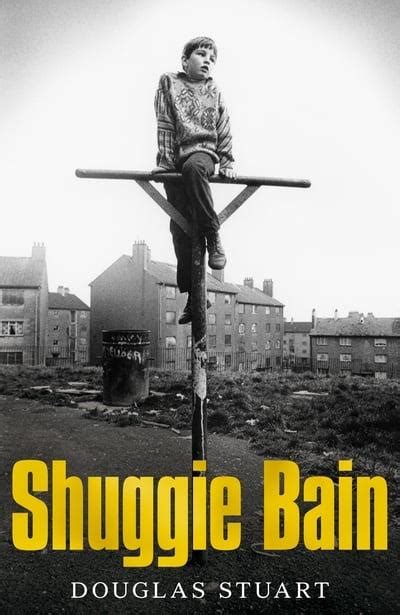
Shuggie Bain by Douglas Stuart won the Booker Prize in 2020. The book is a thinly disguised autobiography. Shuggie Bain is the youngest of three children, always fastidious and conscious of appearance. The woman whose appearance meant most to him was his mother, Agnes, whose attention to her dress, hair and makeup masked increasingly futile attempts to disguise her alcoholism. The book is set in a Glasgow ravaged by Thatcher’s economic policies. It tells a narrative well, its use of dialogue is good, the emotional tenor of Shuggie’s bond with his mother is nuanced, and Stuart imagines himself sensitively into Agnes’ befuddled mind. It is all of these things, but for me it didn’t have the literary heft that I would want a Booker Prize winner to have. (My review here).

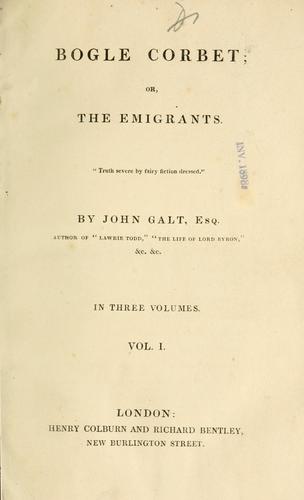
It’s not really likely that you have heard of Bogle Corbet, written by land and emigration entrepreneur John Galt in 1833. It is a product of its time and taste, and rather forgettable. It comes as a three-volume edition, available through the Internet Archive and, dear me, if ever a format encouraged verbosity it must have been the three-volume novel. It is a thinly-disguised immigrant tract, aimed at the gentleman settler market encouraging them to emigrate to Canada, and although the fictional young Bogle travelled far from his Scottish origins- London, West Indies, back to Scotland, then Canada- not much seems to happen in this book. I had a particular academic reason for reading it, but unless you do too, it is probably best left languishing on the Internet Archive. (My review is here)

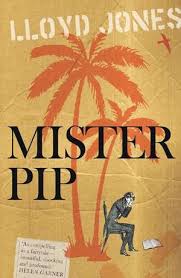
Mister Pip is actually the Pip of Charles Dickens’ ‘Great Expectations’ in Lloyd Jones’ book. (Come to think of it, Charles Dickens was rather fond of the male-name title- David Copperfield, Martin Chuzzlewit etc) The character of Pip was rather incongruously brought to a village in Bougainville by Mr Watts, (nicknamed Pop-eye), the last remaining white man on Bougainville after the implementation of the blockade by Papua New Guinea in 1990 and the descent into civil war between the ‘rambos’ (village boys who joined the rebel insurgency) and the ‘redskins’ (PNG soldiers). Mr Watts was always an outsider. He was quite frankly eccentric, pushing his demented village wife around the village in a shopping trolley. But somehow he managed to interweave the experience of Pip and his great expectations into the shared knowledge of this small Pacific village. (My review is here)

Jasper Jones by Craig Silvey is set in 1965 Charlie Bucktin, the bookish, nerdy, teacher’s son is startled by a knock at the louvres of his sleep-out when Jasper Jones, the town ‘bad boy’, calls him out into the backyard. Somehow or other Jasper Jones cajoles him into assisting with the disposal of the body of a young school acquaintance that Jasper found hanging from a tree in his special place in the bush. This young girl was Jasper’s secret girlfriend and Jasper is terrified that he will be blamed for her murder. Even though this book has garnered much praise, and found its way onto myriad secondary school reading lists, I wasn’t that impressed. There is a self-indulgence in lengthy digressions and internal dialogues, and an indulgence too in the number of themes the author crams into the book: first love, friendship, bullying, police brutality, racial prejudice, marriage breakup, incest, youth suicide, social exclusion. But perhaps you love it? Many people do… (My snarky review here)

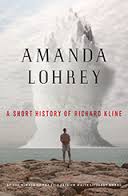
The title of Amanda Lohrey’s A Short History of Richard Kline is a bit longer than just the name, but I’ll count it anyway. The blurb on the back of this book describes it as “a pilgrim’s progress for the here and now”. I can see the likenesses: Pilgrim’s Progress has Christian, its everyman character not unlike the eponymous Richard Kline in this book; Christian and Richard are both on a spiritual journey and quite frankly, just as with Bunyan’s book, not everyone is going to want to go along the path with Richard Kline either. I wasn’t enthusiastic about this book either and you can find yet another of my snarky reviews here.

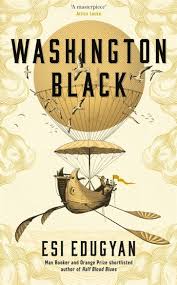
Oh dear, there’s a lot of books here that I didn’t care much for, and I’m coming over as a bit of a moaner. I’d better close with a book that I did enjoy whole-heartedly. I really enjoyed Washington Black by Esi Edugyan where a young enslaved boy from the canefields of Barbados end up in places as diverse as the Arctic, Nova Scotia, England and Morocco. This book works on a big canvas, reminding me oddly of a Dickens novel in its scope. It crosses the globe, and it has big characters. It is at heart a quest novel, although shot through with yearning, injustice and beautiful description. (My very positive review is here).
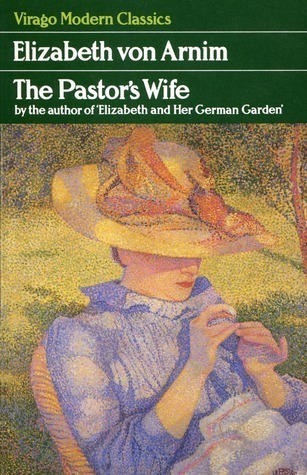
‘The Pastor’s Wife’ by Elizabeth von Arnim

Originally published 1914, 492 p.

Where has Elizabeth von Arnim been all this time? Or rather, where have I been? – because she was here all along, even though I had never heard of her until I read Joyce Morgan’s The Countess from Kirrabilli (review here) and Gabrielle Carey’s Only Happiness Here (review here) It was Carey’s book that finally nudged me to actually read one of her books, instead of just reading about them, and I’m so glad that I did!

Ingebord was the daughter of a bishop, and had been brought up to be his clerical assistant, as her mother had taken to the couch “ill” and her sister was busy on the marriage market. No-one in the family expected that Ingebord would be anything other than a clerical assistant until one day, sent into the city to visit the dentist for what was assumed would be a week-long procedure, she found herself free after just one day and standing outside a travel agent with money in her purse. On the spur of the moment, she bought a ticket to Lucerne. On her trip she met Robert Dremmel, a Lutheran pastor, and very shortly married him. But after traumatic childbirth experiences and the deaths of several children, she resisted Robert’s pressure to have more children. Angry at her intransigence, he plunged himself even further into his agricultural hobbies, and deliberately withdrew both emotionally and physically from her. When an English artist, Ingram, came to stay in their small village, she was swept up into an unwitting courtship that led to her accompanying Ingram to Italy. There she had to decide whether to follow her besotted but feckless lover, or to return to a stable but loveless marriage.

Ingebord is a frustratingly fey, innocent character. She is largely moulded by the people around her, and passively drifts into other people’s plans for her- until all of a sudden she breaks out for one of her abrupt, life-changing decisions. But she also hungers for beauty and happiness, and opens herself up to new people and experiences where-ever she can find them – quite difficult in a small German village, where she does not speak the language and is largely ignored.

This book was written in 1914, and it certainly has that slight archness of ‘old-fashioned’ writing. It is very wordy: rather ironically, it reminded me quite a bit of the more recent writing of Jonathan Franzen and Philip Roth in its panopticon vision of the thoughts and motivations of different characters, which are explained at some length. But it also has a Jane-Austen-esque wit, as if the author is winking at you. It’s a pleasure to read complex sentences that are so well-constructed, and which flow so smoothly. I often found myself chuckling away (more, in fact, than I did with Miriam Margolyes’ book).

Yet, although it might be styled as a ‘comedy’, there is a great deal of truth about human nature in this book. Von Armin captures so well the draining nausea and fatigue of early pregnancy; she writes sensitively about the sharp pain caused by another’s indifference, and as Gabrielle Carey notes, von Armin luxuriates in the glow that happiness brings. The Pastor’s Wife was far more perspicacious and witty than I expected it to be – thank you Gabrielle Carey for sharing your pleasure in her work with me!

Rating: 9/10

Sourced from: an omnibus e-book that still has lots of other Elizabeth von Armin stories to enjoy

AHA Conference Day 3: 2 December 2021

A bit of a disrupted day today, because I had a Spanish conversation class at 9.30, then a book group lunch. So I just caught what I could.

I started with the ‘Lets Talk about things: Sydney region Aboriginal objects in overseas museums, for instance’ session. This seemed to be in a panel format, with the presentations referencing each other, and delivered one after the other with questions (I assume) at the end. Maria Nugent started off by talking about the Gweagal shield, which came to Australians’ awareness with the NMA ‘Encounters’ exhibition in 2016. Maria explained, in keeping with her argument in her Australian Historical Studies article of 2018 ‘A Shield Loaded with History: Encounters, Objects and Exhibitions’, there is doubt about whether the shield really was associated with Cook at all. But it has given rise to a project to find and return cultural material from museums across the world. Eleanor Foster then took over, talking about her project to locate and contextualize objects found in the Hunter Valley between 1826-1839. Regionally-focused object-directed research places importance on the context and relationships behind objects, rather than the qualities of the object or the collector. She spoke about metal fish-hooks which had previously been thought to come from Tahiti, but which documentary evidence suggested had been part of the exchange on Threlkeld’s mission (where they were swapped in exchange for information) or Dawson’s mission at Port Stephens (where they were swapped in exchange for other types of fish hooks). Then there were the fishing spears that Lady Perry wrote about in letters – she had real trouble in tracking any down to send ‘home’, perhaps because there were fewer produced, or were more tightly held by their indigenous makers. Then Paul Irish, who coined the term ‘affiliated coastal zone’ to describe the Hunter Valley region, spoke about the importance of the work being done by Gaye Sculthorpe and Danny Simpson in tracking down objects in different museums internationally. Objects often have no documentary links at all, and often the museum itself wants to know about the object as well. Finding similar objects in different repositories (often on different continents) means that they can be compared.

Entonces era la hora de mi clase de español

Spanish class over, I returned to catch the 11.00- 12.15 session ‘Defending White Australia’. I knew that I would have to leave this early too, as I was due to leave for lunch at 11.45. But the two papers I heard were excellent. Deirdre O’Connell (who has recently published Harlem Nights) spoke about Billy Hughes’ years on the backbench, after resigning as Prime Minister in February 1923 in her paper ‘This Bit of the World Belongs to Us: Billy Hughes, vigilante enforcement and the White Australia Policy’. In 1924 he embarked on an American tour, at the invitation of the English Speaking Union, arriving just as the U.S. government hammered out the Johnson Reed Act (also known as the Immigration Act) of 1924 which banned non-Nordic immigration. In March he was in Dallas, where the Ku Klux Klan hosted its Kolossal Karnival. While it is impossible that he would have been oblivious to the KKK’s presence, there is no evidence that he met with them. On his return, after a period of quietude, he hooked on to the arrival of Italians, and the deportation of Sonny Clay’s Negro Minstrels (hence Deirdre’s interest) and made a fiery speech at the National Party’s conference, advocating vigilantism. Joseph Parro‘s paper ‘Unfinished revolutions: unfinished examination: Australian fascism after the Second World War’ saw 1945 as a turning point, with the execution of Mussolini and with the Third Reich in its death throes. He focused on Tom Graham, who had arrived in Australia from Britain in 1936. He was jailed for pamphlets he had written, then interned. For him, the revolution was unfinished and called for nuclear weapons to wipe out ‘the Rabble’. Although he has been dismissed as a ‘crank’, we need to look at the heterogenous, adaptable, network-focussed, international nature of fascism, especially in view of the contemporary extreme right.

Lunchtime at the pub!

Finally, I caught the roundtable on ‘Unsettled Domesticities’. The chair, Victoria Haskins, reminded us that we were zooming in from our homes, but we were all living on unceded aboriginal lands, and the implications of that for an indigenous sense of ‘home’. Penny Russell gave a personal reflection on the exhumation in 2019 and recent reburial of the bones of her great-great-great (I lost count of the greats) grandfather, whose remains were exposed by rail works. The large plate on his coffin indicated who he was, but the family history that Penny has uncovered reveals him as an insular, authoritative man who emigrated to Australia in his 50’s, bringing with him his middle class, evangelical, entrepreneurial domesticity which he planted on the other side of the world. Katrina Dernelly‘s paper ‘Mrs Morland and Isabella Murrell: a husband’s cruelty on the Victorian goldfields’ told of the murder of Isabella Murrell by her husband William who literally beat her to death. He argued that he was trying to ‘reform’ her and that it was a crime of ‘passion’ (still a defence in UK) so that the charges could be reduced to manslaughter. Here, home was no refuge. Andrew Gorman-Murray who is a cultural geographer spoke of domesticity as a spatial concept. The ‘home’ is imagined as a heteronormative space, which has implications for queer home-making. He pointed out that for many homosexual men, privacy could only be found in public, and suggested that domesticity was a privilege. Perhaps ‘anti-domesticity’ is when an imagined home cannot be put into practice. Finally, Karen Agutter looked at displaced persons arriving in Australia post WWII and their accommodation in reception centres. Men were expected to work as labourers and women as domestics, no matter what their career had been previously. Families were often separated, and meals were held communally (although the ‘family meal’ was rather an English concept). It was difficult for families to get out of the reception centres because of high rents both for the hostel accommodation itself and ‘outside’ in the open rental market.

And so that was the end of the AHA Conference 2021. I’m looking forward to catching up on some of the sessions that I missed, because they will be available for a short time afterwards for attendees. That’s always one of the bugbears of a conference- wanting to be in two places at once. So, perhaps Zoom is not all bad. In fact, it’s not even half bad – think how hard things would have been over the last two years without it. But I still crave the morning tea muffin, and a club sandwich and a nametag. I’ll just have to make sure I get them in 2022 at some conference somewhere.

AHA Conference Day 2: 1 December 2021

For the 9.00 -10. 15 session, I attended the ‘Language, Identity and Class’ stream. Amanda Laugeson started the session with her presentation ‘Finding an ‘Australian Voice’? Constructing Australian English 1940-1960′. It always strikes me when I listen to a newsreel from the 1950s and 1960s how different the narrator sounds from today. The shift to an Australian rather than British accent has generally been seen as a mark of burgeoning nationalism. Amanda’s paper looks at the role of A. G. Mitchell whose 1941 book The Pronunciation of English in Australia distinguished between ‘educated’ and ‘broad’ Australian English (and during the 1960s he added ‘general’ Australian English’). He saw accent as a unifying feature. Unlike those who deplored the ‘lazy’ and ‘nasal’ Australian accent, Mitchell claimed that there was nothing to be ashamed of, and that it reflected education rather than class (a rather circular argument). Mitchell was a member of the ABC board during the 1950s and held up Robert Menzies (!!) as the ideal. Caitlyn Adams’ paper ‘What happened to class? The language of social hierarchy’ went back nearly 200 years to look at the language that was used in petitions for clemency generated by prisoners in both England and New South Wales in 1810 and 1825. She distinguished between ‘Elite and middling’ and ‘plebian’ petitioners in both settings. Both groups used the language of status (‘respectability’, ‘poor’, ‘humble’,) but colonial society was more likely to see the colony as a place to regain their respectability where petitioners from the metropole referred more to referees who could attest to their respectability (probably because prisoners sent to NSW had lost all of the contacts who could have spoken for them ‘back home’.) She is using NVivo to create both a qualitative and quantitative analysis. Finally in ‘The Unfinished Nation: Contesting Symbols of Australia’ Richard White (who struggled with low bandwidth) spoke about his 2010 book Symbols of Australia which is currently undergoing revision for a new edition. In a largely visual presentation, he pointed out that both the first and last Holdens are now museum items; that the Southern Cross used to be the most popular tattoo and now it is the most commonly lasered-off tattoo; that the wattle and the waratah vie as floral symbols (and the meaning changed after the Bali bombings); that the place of Uluru has changed with the ban on climbing the rock and the Uluru Statement, and that our Prime Minister wears baseball caps instead of Akubras. Even things that we view as being fixed symbols are subject to change: the flag and the coat of arms have changed subtly over the years, and the red ensign has been taken up as ‘the people’s flag’ in the anti-vax protests.

And then I stopped for a Pilates class. Life does go on.

Between 11.00 and 12.15, I attended the ‘Colonial Violence’ stream. In Naomi Parry’s paper ‘Looking into Shadows: Musquito and Black Jack and a Death Mask made of country’, she talked about the way that her biographical project of writing about the life of Musquito, the indigenous bushranger, has changed over time. Musquito was born in Port Jackson, was exiled to Norfolk Island and then moved to Van Diemen’s Land in 1814 as a tracker. In 1823 he was arrested for killing stock-keepers on the east coast, and hanged in 1825. Six white bushrangers, and another indigenous young man Black Jack, were executed together. Her attention had been totally on Musquito, and the different ways that he has been conceptualized – murderer or warrior – but on seeing the death mask of Black Jack, she realized that there was another, broader story to be told too. Ryan Stewart‘s paper ‘Henry Kendall- An Outsider Reporting Violence and Massacre on the Australian Frontier’ picks up on Lyndall Ryan’s observation that it took about 40-50 years before local people would start talking about a massacre. The poet Henry Kendall came to Darkinjung country (near Wyong and Terrigal) in 1873 in a state of despair. He heard talk of massacres that occurred in the 1830s, (thus fitting into Lyndall Ryans 40-50 year timeline) and wrote about them in 1875 and 1879 drawing on the stories of settlers and their descendants. As an ‘outsider’, Kendall was able to write about things that locals could not. Finally, in ‘Revisiting the Bathurst War 1822-24’ Stephen Gapps highlights the war around Bathurst (Gudyarra) that has generally been overshadowed by the Sydney War. Martial law was declared because cattle-killing and the abandonment of convict stations, but unlike the Sydney War, it was not the military who “quelled” the resistance, but settlers themselves who later reassured themselves that the Aboriginal people had “disappeared”. Once again, there was a long gap between events (in this case in 1822-4) and ‘old timers’ talking and writing in the 1880s – and Stephen is still hoping to find more information amongst family letters and through historical societies.

After lunch, I attended another Australian Womens History Network stream, this time on ‘The Business of Women’s Bodies II’. Jane Carey‘s ‘Population, Reproduction and British Settler Colonialism in the Early Twentieth Century’ started off with an image from a 1915 textbook that represented UK, Canada, Australia, South Africa, and New Zealand on a scale according to their white population (i.e. UK with its white population of 45 millions was much bigger than Australia with 4.5 million). There was alarm across the empire that the white population in the settler colonies was not increasing quickly enough, and reflecting Foucault’s conceptualization of population as an economic and political problem, there was an emphasis on birthrate, age at marriage, precocity and frequency of sexual relations- things that could be counted. Alison Downham Moore spoke of her work as part of an interdisciplinary project on the history of medicine with her paper ‘The Unfinished Business of the Dark Side of Gynaecology’. In particular she looked at non-consenting experimental surgery with the targetting of disadvantaged, rural, older (i.e. late 40s and 50s) women for hysterectomies between 1830 and 1898. In particular, she looked at Jule Peán from St Louis Hospital in Paris, who conducted surgeries for public viewing. Reproductive surgery was very popular because the organs could be removed without compromising the health of the individual (if they survived the surgery, which was certainly not guaranteed). It was a surgery that was rarely carried out on wealthier women, or the wives of colleagues. And for something completely different, Kirra Minton presented on Dolly Doctor, in her paper ‘With frankness, with knowledge, but most of all, with sincerity’. Dolly magazine, Australia’s first Australian exclusively teen girl magazine, had a ‘Dolly Doctor’ segment, right from its first edition in November 1970. Initially it was written by a male doctor, but later doctors were all women, with Melissa Kang fulfilling the role for 23 years . Dolly took sex education seriously, engaged its readers and outsourced the provision of information to professionals, leading to a 100% accuracy rating when studied in 2016, compared with 26% accuracy in Women’s Health magazine. Yet, for it’s first decade, the messages that were being conveyed in Dolly Doctor were completely at odds with the emphasis on whiteness, thinness and heteronormative sexuality being promoted in the rest of the magazine.

It’s December. I’m allowed to have a mince pie for afternoon tea.

My final session for the day was the ‘Trajectories of the Right in Australia after 1968: When the personal became reactionary’. Just an observation, but this session had more male participants in it than any other session I had attended. Tim Jones spoke about his work on the new Christian Right and its expression through Creation Science and the Anti-Gay Movement. These movements were interdenominational, and even interfaith. Creation Science has its origins in Joh Bjelke-Peterson’s Queensland, but it is now an international movement, based in U.S. The Anti-Gay religious movement started in the 1970s when psychiatry stopped treating homosexuality as pathological, and local Australian groups became subsumed under Exodus Asia Pacific. It has now formally disappeared because there is Australian legislation against it. This was followed by Clare Monagle‘s paper ‘B. A. Santamaria as Culture Warrior’. B.A. Santamaria was for many years synonymous with Catholicism, but when the sectarian division was abandoned (largely over the shared concern for government funding of independent schools), different denominations came together to lobby against the cultural revolution of the late 1960s. Santamaria’s National Civic Council changed its emphasis on placing conservatives inside the unions and Labor Party to look instead to the ‘alienated avant guard’ in universities and other institutions. Santamaria, a political operator, explicitly moved to culture – and we can see the fruits of his labour today.

And thus Day 2 ends. Other commitments call me tomorrow, so I don’t know how much of Day 3 I will be able to attend.

AHA conference Day 1: 30 November 2021

In the midst of the COVID lockdown, what I really craved was a conference. With a plenary. With a keynote. With panels. With papers and questions afterwards. With muffins for morning tea. With club sandwiches for lunch. With stewed coffee that smells better than it tastes. With a name tag or lanyard. I was even toying with the idea of attending the Australian Historical Association conference in New South Wales until the last outbreak, at which point it just seemed too hard to plan a month ahead to cross a state border. But when the AHA announced that it was moving the whole thing online, I thought ‘why not?’

The conference actually started on Monday night with Shino Konishi from the University of Western Australia who is leading an ARC project on Indigenous biography, in collaboration with the Australian Dictionary of Biography. Her Keynote address, which was referenced several times in the session this morning, reflected the ‘Unfinished Business’ theme of the conference with her paper ‘The Unfinished Business of Aboriginal History’. But I missed it.

The Plenary Panel ‘Unfinished Business: First Nations Provocation’ featured Megan Davis (who has been heavily involved in the Uluru Statement and has recently published an article in The Monthly) and Crystal McKinnon. Megan’s presentation looked at the flaws in the reconciliation process and the progress of ‘Voice Treaty Truth’, with various states (e.g. Victoria) moving ahead of the Federal Government. Crystal’s paper took a recent case of two young Indigenous boys who drowned while being pursued by police. She picked up the historical overtones of ‘pursuit’ and its purpose in not just arrest, but in instilling terror. The session finished by talking about the historian as activist, and whether there should be an accountability structure for historians too, given the real harm they can cause.

Then there was a break for a funeral service, which speaks much of Stuart Macintyre’s importance to Australian history generally. There were really good tributes from Frank Bongiorno as a Labour historian and Anna Clark, speaking as a former PhD candidate; his running partner; a number of overseas colleagues via video and his daughter speaking for the family. It might seem strange to suspend a conference for a funeral, but in this case it really underlined his stature in the field, his fearlessness in being ‘political’ and his love of words, books and history, shared by all participants at the conference.

Back to the 11.15- 12.30 session. I attended the War stream, where Bart Ziino spoke on soldiers’ attitudes during the conscription debates in ‘Recasting the soldiers’ vote on conscription: new perspectives on an old issue’. Until recently historians have relied on the observations of Keith Murdoch, who was unnerved by the strong feeling against conscription amongst soldiers on the Western Front, and the Australian government did not give a detailed breakdown of the voting patterns. However, using Trove, it is possible to read soldiers’ letters home to their families, which were often passed on to the newspapers and reprinted, and sources from the Mitchell Library that have been transcribed. These sources suggest that there was reluctance to compel other men to fight, but at the same time, disdain for those who did not – a reflection of the complexity that was to mark veteran politics after the war. The second speaker was Alanna Dargan in ‘Anzac as a Political Pawn: The Commemoration of the Centenary of WWI in the Australian Parliament’. She used the techniques of corpus linguistics to analyze the 131 parliamentary motion speeches that were delivered in the Australian Parliament to mark the centenary of Gallipoli. Speeches by Abbott and Shorten in particular reinforced the ongoing political value of Anzac as a key facet of Australian national identity. Abbott referenced memory and the importance of not forgetting; Shorten emphasized family connections. Abbott’s speech saw commemoration as part of being Australian, now and in the future, and highlighted the role of Sir John Monash, who was being commemorated through the Sir John Monash centre at Villers-Bretonneux, an expensive museum and interpretation centre that is not without controversy,

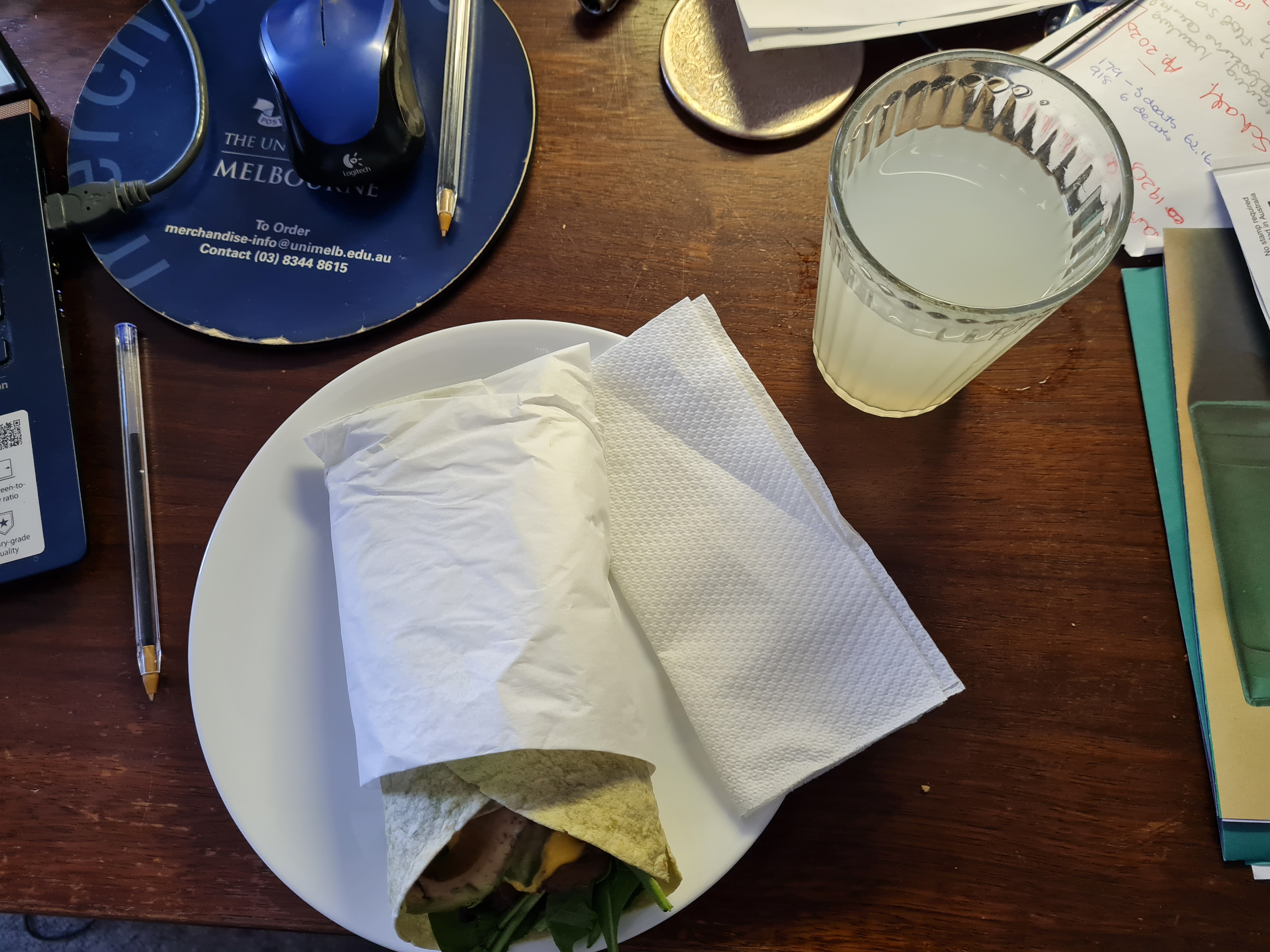
Lunch time! I even bought a vegetarian wrap down at the coffee shop! I am clearly not a food photographer.

From 1.00 to 2.15 I sat in on the Australian Womens History Network stream, ‘Remembering 20th century women’s activism’. Natasha Walker‘s paper ‘Agency and Activism: the Transnational Network of the Feminist Press’ examined women’s agency and activism within a selection of feminist newspapers, from the United States of America (The Woman’s Journal), the United Kingdom (Common Cause),New Zealand (White Ribbon, temperance), and Australia (Woman Voter) between 1910 and 1914. Of course, in some of these countries, women already had the vote, but they all emphasized that citizenship was more than just suffrage. There was an interest in naturalization and its disadvantages for women who lost their own citizenship after marriage, as they took on the citizenship of their husband, even if he died. The newspapers were sympathetic to differing degrees to the suffragettes, but in their Letters to the Editor columns can be detected different attitudes towards the ethics of political violence. Sharon Crozier-De Rosa (‘Memory-Keepers: Women Activists’ Strategies to Preserve their History’) examined NSW activist Ruby Rich, active from the 1920s onwards, who was encouraged by Harold White from the National Library of Australia in 1961 to contribute to an archive of women’s activism, and to encourage other women to do the same. By International Women’s Year, the archive still had not eventuated, and the National Library was no longer interested. And in the 1980s, Jean Arnot wrote to the NLA, attaching Harold White’s letter to Ruby Rich, but still her attempt to imagine an archival future was unfulfilled. Catherine Dewhirst examined six Italian-Australia women who were interned or otherwise came to the notice of the authorities in ‘Subversive, Radical and Deviant: Italian-Australian Women during World War II’. Denounced by anonymous informants, they were accused of having fascist sympathies, or ‘utter disregard for National Security Regulations’ by not registering as an alien, or by disobeying blackout instructions. However, there was unease generally about interning women for fear of retaliation against Australian women overseas.

I attended the rather-sparsely attended Religious stream between 3.00 and 4.15 p.m (although attendance – or the lack thereof- is less obvious on Zoom). Katharine Massam looked at the involvement of women in Catholic social action and religious teaching in the mid 1960s in ‘Good, that will be all of them: the unfinished business of women and religion’. Many women were involved in the National Catholic Girls Movement (or Young Christian Workers), and when they moved into teaching, they introduced new forms of religious education based on experience and the ‘everyday Jesus’. Brenton Griffin spoke about Mormons in Australia in ‘Permanent Outsiders? Two Controversies Involving Mormons in Australia, a century apart’. The first Mormon missionary arrived in Victor Harbour SA in 1840, and the first congregation began in 1844 in Wellington NSW but the Mormons generally did not find Australia a fertile conversion ground. He compared two riots- the first in Adelaide 1913 where Mormons were accused of seducing Australian women to emigrate to Utah, and the second a recent riot in Mt Druitt involving the One Four rap group, where the members had met each other at a Mormon church. It is hard to tease out class, racial, and religious overtones. In ‘Reassessing Russell and Beamish’ Matthew Grubits revisited a dispute in 1847 between the Tractarian bishop of Sydney Bishop Broughton, and two Irish deacons Francis Cusack Russell and Peter Teulon Beamish. This has been seen as a theological dispute, played out through the newspapers, but Grubits argued that it was more about employment conditions and leadership, and that Russell and Beamish went on to have successful theological careers once they left Sydney for Melbourne.

The final session for the day was the Keynote: ‘The unfinished business of reproductive justice: histories & futures of abortion in the age of decriminalization’ by Catherine Kevin. When I was young, Adelaide was the place where young pregnant girls went for abortions, with more liberal abortion laws than elsewhere in Australia. However, over time, South Australia became one of the last to decriminalize abortion and to remove it from the Crimes Consolidation Act. Activism to decriminalize was sparked off in 2013 with an abortion flash mob #EndTheStigma, and the South Australian Abortion Action Coalition lobbied to remove many of the features of the earlier ground-breaking legislation that stipulated gestational limits, geographical requirements, a two-doctor law and provision only through a hospital. The legislation was passed on 3 March 2021, however only with amendments that reflect some of the old arguments against abortion- the trope of the incompetent backyard abortionist, the ‘silent scream’ of the Right to Life, the perception that women are ‘coerced’ into having an abortion, and that selfish untrustworthy women use abortion as contraception. They are still waiting for the regulations to bring the changes into effect – and it seems to be taking quite a while.

Zooming history: “I don’t hold a hose, mate”: Power and sentiment in the Australian Federation

I bet more Australians today know the names of the Premiers of the different states of Australia than at any other time in our history. COVID has brought Federation into clear view- even if its in terms of failure of unity and co-operation. Western Australia’s Mark McGowan might be seen as the “State Daddy”, but Western Australia has always had an uneasy relationship with the Eastern states. In this lecture, Carolyn Holbrook goes through the history of calls for WA succession, co-operation (or the lack thereof) during the Spanish Flu pandemic in 1919, and Menzies’ seizing of the 50th anniversary of Federation for a good bout of nation building with “Jubilee Week”. She comes to the conclusion that Federalism is a pretty good way of deciding who should hold the hose, and that squabbles aside, it’s functioning as it was designed. And really- who could go past a title like this?

I hear with my little ear: Podcasts 9-16 November 2021

The History of Rome Podcast Episode 74: Friends I Have Wasted a Day looks at the two-year reign of Titus. He had been groomed for the role by his father and so there was a smooth transition between emperors. Initially there were fears that he would be like Nero, but instead he came to the role as a mature soldier and experienced administrator. The destruction of Pompeii and another fire in Rome occurred during his reign in A.D.80, but he proved himself to be a good and generous leader. He officially opened the Flavian Ampitheatre (which we now know as the Colosseum) with 100 days of games. During his reign, governor Agricola tried his best to Romanize Britain. But Titus was carried off by an infection (at least it wasn’t murder this time). Episode 75 The Forgotten Son introduces Domitian, whom I had never heard of, who was Titus’ brother, who took over after Titus’ untimely death. Definitely suffering from Second-Son Syndrome, there was no expectation that he would ever be emperor, and he was consciously discouraged from gathering administrative and military experience by his father, who blithely assumed that Titus would reign for decades. Once emperor, he decided that he would model himself on Augustus, but he did not share Augustus’ strategy of making the Senate feel that they were in charge (even if it was not true). Episode 76: Mock Triumphs. Domitian set about revaluing the currency (because he said it reflected badly on the Empire having a devalued currency) and tried to revitalize Augustus’ legislation about morals, bringing about the return of the Lex Julia forbidding adultery etc. The elites hated him, but he had the support of the common soldier, whose wages he increased by 1/3. He threw a fairly questionable triumph for himself after a campaign against the Chatti, but oversaw the worst defeat since the Teutoburg Forest against the Dacians. He brought Agricola (whose name Mike Duncan has learned to pronounce) back from Britain, and followed Augustus’ policy of not expanding the frontier. His focus on frontier defense brought charges of cowardice and his treaty with the Dacians was seen as a humiliation. This isn’t going to end well.

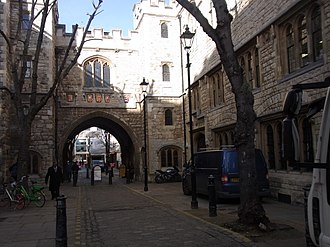
Wikimedia. St John’s Gate, Clerkenwell priory

Travels Through Time takes us back to the year 1540 with The Dissolution of the Monasteries, with historian James Clark spruiking his recent book The Dissolution of the Monasteries: A New History. 1540 is at the end of the four-year process, but he chose 1540 because it was also the year that Henry married both Anne of Cleves and Catherine Howard, and Thomas Cromwell the Untouchable finally fell. He points out that monasteries were not the remote, forbidding places that we imagine today: instead, they were everywhere like Tesco supermarkets, and often were the town. He starts in Easter 1540 with the monks at Canterbury Cathedral waiting around, uncertain what was to happen to them. Episode 2 is in May 1540 at Clerkenwell Priory, the headquarters of the medieval order of the Knights of St John, also known as the Knights Hospitaller. The shock of the closure caused the collapse and death of the Grand Prior of the Order, William Weston, the last man to be buried as a monk in England. Episode 3 is Newgate gaol in August 1540 where Thomas Epsam, a monk of Westminster Abbey, was taken from his cell and publicly stripped of his monk’s habit.

Australia vs the Climate (The Guardian) It seemed hopeful there for a minute. Part 3: Paris and the fall sees Australia signing up for 1.5 degrees. At last. And then we have ScoMo and his lump of coal….and we all know how this is going to end. When you listen to these podcasts one after the other, you realize just how intransigent Australia has been.

The History Listen (ABC) It’s the 150th anniversary of the Art Gallery of New South Wales this year. Although it’s getting a new expansion, for many years it was dark and dingy, with the Board very much looking after the interests of themselves and their friends. The building that we think of as the Art Gallery was built in the 1890s. 150 years at the Art Gallery of NSW looks at the building, the Board, and the directors but it touches only lightly on the controversy over the construction of the new gallery.

Boyer Lectures (ABC) John Bell from the Bell Shakespeare Company is giving the Boyer Lectures this year. The first lecture Soul of the Age – Life lessons from Shakespeare with John Bell is mainly an introductory lecture and a bit disappointing. He draws links between the characters depicted in Shakespeare’s plays and current political players (to the detriment of the current politicians)

The Documentary (BBC) I had forgotten about ‘Climategate’ in 2009 where the University of East Anglia was hacked and emails talking about “the trick” were publicized world wide. I’d forgotten, too, that 2009 was when the Copenhagen COP was held, generally viewed as being a backwards step in terms of response to climate change. This episode The Hack That Changed the World goes back to investigate whether the Russians were behind it, or whether it was a sole actor associated with various climate-change-sceptical blogs.

Vale Stuart Macintyre

Many tributes are flowing for the historian Stuart Macintyre. He was a prolific historian, both as author of his own volumes and as a collaborator with other historians. His best known works are probably The Oxford History of Australia, Volume 4, 1901–1942: The Succeeding Age (1986), A Concise History of Australia (2016, 4th edition) and Australia’s Boldest Experiment: War and Reconstruction in the 1940s (2015). The second volume of his history of the Communist Party The Party: The Communist Party of Australia from heyday to reckoning is scheduled to be published early next year, coming 23 years after the first volume The Reds: The Communist Party of Australia From Origins to Illegality (1999). As a co-writer and editor, he was a historian of historians, as in A History for a Nation: Ernest Scott and the Making of Australian History (1994) and The Discovery of Australian History 1890-1939 (1995) which I reviewed here. He was keenly aware of the discipline of history and the uses to which it has been put, as in The Historian’s Conscience (2004) and The History Wars (2003) which he wrote with Anna Clark.

Three fitting obituaries by Janet McCalman, Brian Aarons and Tim Rowse are reproduced on Open Labour’s page: https://www.openlabor.net.au/2021/11/24/stuart-macintyre-a-history-warrior/

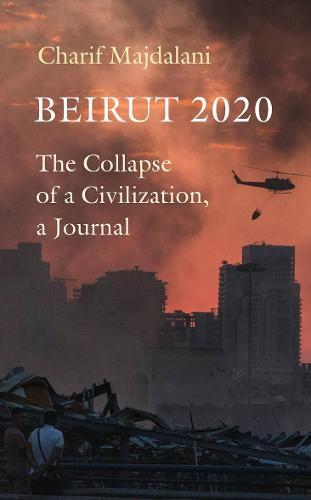
‘Beirut 2020: The Collapse of a Civilization, a Journal’ by Charif Majdalani

2021, 173 p

Translated by Ruth Diver

Thanks to social media and CCT cameras, some visions are seared in our minds. Two boys in a shopping centre leading a little two year old away. A young woman tottering on high heels along the shop fronts in an inner-city suburb, unaware that on turning the corner she will be killed. A plane smacking into a building and that slow collapse of a skyscaper that even now you can’t quite believe. And the smudge of smoke from a port-side fire that explodes into a huge, thumping jolt that pulses out so violently that, even just watching it, you feel a punch in your chest. That last one was the explosion of 2,750 tons of ammonium nitrate on the dock at Beirut on 4 August 2020. As you open this small volume, you know that this is where the book is going to end up but its author, academic Charif Majdalani does not.

The English language version starts with a very useful preface ‘Lebanon: the lessons of complexity’ which provides a potted history of Lebanon over 9 pages. The nation of Lebanon, as distinct from the mountainous regions in the eastern Mediterranean, was created in the territorial carve-up that followed WWI. France secured the mandate over Lebanon, to the relief of the Christians who preferred France to Britain, and its borders were drawn to encompass as many Christians as possible, even though part of its population was Muslim or Druze. In obtaining independence in 1945, the Christian and Muslim communities defined themselves as a negative: not Western but not Arab either. Between 1945 and 1975 it was a democracy and liberal economy based on ‘confessionalism’, whereby all government posts were allocated approximately equally between religious communities. Fear of militarization of Palestinian refugees in Lebanon led to civil war from 1975 to 1990. The period following the war, known as the second Lebanese republic, is divided into two eras. The first, from 1990 to 2005 was dominated by Syria and its ruling class. The war chiefs-turned-political leaders seized control of the government and public sector and developed a system of governance based entirely on clientelistic mafia principles. In 2005 the Sunni Prime Minister Rafic Hariri was assassinated by the Syrians with the help of Hezbollah. The Syrians were forced to withdraw, but former allies stayed in power and formed new alliances, perpetuating the same clientelism and corruption as under the occupation. This led to the collapse of the economy in 2020- and that leads us to this book.

The diary entries start on 1 July 2020, with the author running from one bank to the other. Both he and his wife are employed, they have two children, and he has plans to buy a block of land -a hobby farm almost- out in the countryside, where he grew up. Their friends are professionals, and they continue to have dinner parties with long after-dinner conversations. They visit the nearby suburb of Gemmayze, in the old district, which has been gentrified with artists, hotels and restaurants. But it’s all falling apart.

Gemmayze in March 2019. You can select for English subtitles

Things break down all the time – the washing machine, the air conditioning units, the drinking water dispenser – echoing the dysfunction outside the walls of his home. Inflation makes a mockery of income and expenditure, there are power blackouts. He notes the return of the mosquito coil, and its distinctive smell, because the insect repellents plugged into power points are useless when there is no electricity. Businesses close, familiar shopkeepers and bank employees are laid off, never to return.

It feels like a bereavement, a muffled, almost muted bereavement, repetitive, exhausting.

p.45

His diary entries are interspersed with short explanatory chapters, which expand on the information given in the preface about corruption, protest, the piles of rubbish. The presence of COVID and the refugee influx are mere background details. Still the book inches closer to the explosion that we know is going to happen. When it comes, as Chapter 51, it has just five words

This afternoon, the rag-and-bone trader

p. 125

He cannot pick up his writing again until 10 August, and when he re-reads those words, it seems like a different time. It’s then that he goes back and fills in the details: his initial thought that the blast was an earthquake, the chaos in the hospitals, the blood. He can only write in lists, without a full stop:

Reina is in intensive care, criticially injured, Jad has a few superficial wounds, but no longer a house, Omar is injured, Karim had left the office before the explosion happened, and so had his employees, which is just as well because she went into the party headquarters’ kitchen at the moment of the explosion….

p.136

And the stories, just snippets:

And also this: he was lifted up and thrown against the TV, the couch flew up into the air and fell on top of her, I walked through the streets like a sleepwalker before I realized that everyone around me was injured, she was sitting on the stairs covered in blood, but I had no idea what to do to help her…

p. 138

And the figures:

In five seconds: two hundred dead, one hundred and fifty missing, six thousand injured, nine thousand buildings damaged, two hundred thousand homes destroyed, as well as hundreds of historic or heritage buildings and four hospitals, ten thousand retail stores, workshops, stalls, boutiques, restaurants, cafes, pubs, all reduced to rubble, scores of art galleries and studios belonging to painters, sculptors, stylists, designers, architects all swept away. In five seconds.

p.141

The cause? A ship stopped over in Beirut in September 2013 with its 2750 tons of ammonium nitrate bound for Mozambique. On being found unseaworthy, the owner refused to pay port fees, repairs or the crew’s wages; the cargo was offloaded and stored in Hangar number 12. Right from the start, people know it is there; it is ‘memoed’ up and down the hierarchies of the bureaucracy and no-one does anything. But, he suggests, the cargo was not forgotten as the amount that exploded was less than appeared on the manifest. It was being used, probably from the first day, and probably for military purposes. He points the finger at Hezbollah, which controlled the port.

Which would explain the silence of the port authorities, who would have turned a blind eye out of fear, collusion or corruption.

p.143

The blast has affected everyone. His wife Nayla, a psychologist, tells him that she had woken up in the middle of the night, with a heavy weight on her chest, wondering if something had changed that she could no longer remember. In the morning she was relieved to hear that there was nothing more, nothing new. The government falls, but nothing changes.

I was listening to a radio program about Beirut last week, and the commentator mentioned that after the civil war, the corruption, the protests, power shortages, inflation, COVID, – the blast in August was just the last straw and that people had just given up. This book tries to end on an optimistic note, but it rings rather hollow.

My rating: 8/10

Sourced from: Yarra Plenty Regional Library

Con subtítulos en español: This film is about me

Well, it had subtitles in Spanish because I put them there. The soundtrack was actually in German and English, even though it was directed by a Spanish director. I almost gave up after 10 minutes of looking close up – VERY close up!- at a woman with heavily mascaraed eyes and a slash of red lipstick, with a halo of blonde curls in what looked like a shawl. It’s strange that after all this time on Zoom, we are accustomed to staring at faces in a way that we probably would not do in real life, but nonetheless, staring at this woman felt very intrusive. She is in jail for murder, but she is also in her own rather ethereal performance of her own life. I’m glad that I stayed with it, but I’m also glad that it only went for an hour. Being in the presence of such a strong ego, so intimately, is confronting.

It was available through Instituto Cervantes for 48 hours.