History of Rome podcasts.Episode 104 Here Comes the Sun was music to my ears, when Mike Duncan started off by praising the role of grandmothers and mothers amongst the Roman emperors (although I must admit it was not always to the good). The Julias had been part of the now-dead Caracella’s court and they had networks to call on to bring Caracella’s cousin Antoninus out into open opposition with Macrinus. Antoninus was part of the Severan family, and since childhood he had acted as a priest to the sun God El-Gabal – hence his nickname Elagabalus, although during his reign he was known as Marcus Aurelius Antoninus. But it’s easier to call him Elagabalus, given how many Antoninus’s and Aurelius’s there were. Rumours abounded that he was actually Caracella’s illegitimate son instead of cousin, and thus he had the support of the troops. Macrinus tried to win the troops over, but his envoys kept getting converted to Elagabalus’ side. There are differing accounts among the sources, but either way Macrinus ended up dead. Elagabalus’ mother Julia Maesa, who had been plotting away in exile, was very influential because Elagabalus was only 14. She insisted that she be allowed to attend the Senate (first woman to do so). However, he was pretty scandalous, married four times including to a Vestal Virgin, was probably transgender and even his Nanna turned against him, and decided to promote her other grandson, Severus Alexander instead. The two cousins were made co-Consuls but in the end the Praetorian Guard turned against Elagabalus and assassinated him. The lesson? Don’t mess with Nanna.
Emperors of Rome Really, with Elagabalus championing the role of the Sun God in Rome, no podcaster could resist calling the episode ‘Here Comes the Sun’ and the Emperors of Rome podcast couldn’t either, with Episode CXXIII – Here Comes the Sun (Elagabalus I) Most of this episode is involved with the death of Macrinis, who fled when he realized that the tide was turning against him. He got quite some distance, but was killed nonetheless. Historians have generally been fairly hostile towards Macrinis. Cassius Dio admits that he had his strengths, but says that he deserved his fate because he was ‘only’ an equestrian. Episode CXXIV – The Lowest Depths of Foulness (Elagabalus II) Elagabalus took the scenic route back to Rome, taking more than a year. He sent the people of Rome his portrait though, so they would recognize him when he arrived. He was only 14 and wanted to consolidate his position in the East, and needed to appoint his own people to important positions. Once he arrived in Rome, he started executing senators. Of course, Nero and Caracella had done the same thing but he took it to a whole new level. Worse still, he insisted on keeping his role as a priest of the Sun God Ela-Gabel, and built a big temple to Ela Gabel called the Elagabalium and elevated Ela-Gabel over Jupiter. Episode CXXV – Call Me Not a Lord, for I Am a Lady (Elagabalus III). Good heavens, this was rather explicit in a giggly sort of way. Cassius Dio had provided a lot of detail about Elagabalus’ sexual perversions. He justified marrying a Vestal Virgin (actually, he married her twice) by saying that he was bringing together Ela-Gabel and the Roman goddess Vesta to make little god children. In the end, he had no children at all despite four or five marriages. He wanted to castrate himself, and had a desire for a ‘hole’ to be put into his body (a vagina?) Dr Caillan Davenport says that in teaching about Elagabalus to students of much the same age, he sees him as a troubled young man, rather than good or bad. No wonder his grandmother was worried about him.
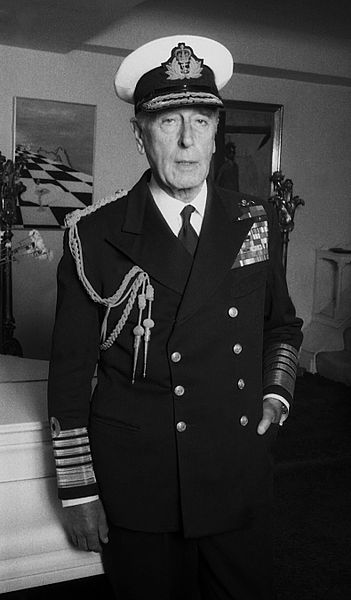
Lord Louis Mountbatten. Source: Wikimedia
History Extra: I’m just about the last person on earth to watch The Crown. I’m up to the third series, with the Mountbatten plot. Did this really happen?? I went in search of a podcast to find out, but the closest that I could come up with was The Mountbattens: Success and Scandal. In this podcast, author Andrew Lownie discusses his book The Mountbattens: Their Lives & Loves, which looks at the relationship between Louis and Edwina Mountbatten. He gives Mountbatten a bare pass on India, saying that it was an impossible situation. The podcast didn’t really mention the Mountbatten plot, being more concerned with who was bonking whom. Although, he does mention that when some recent files concerned with Mountbatten and young boys became accessible, they mysteriously ‘disappeared’. As we have seen with the Palace Letters here in Australia, the Crown is quite active in protecting its archives.
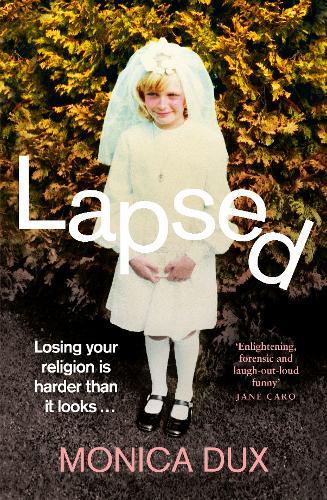
It seems rather strange to think back on it now, but there was a time when I wanted to be a nun. Inspired by The Sound of Music and with absolutely no experience of nuns at all, I wasn’t even Catholic, and indeed the only Catholics I knew were a family who lived down the street from us. It’s strange to think back now about how the world was so firmly divided into Catholic and Protestant. That division just seems to have dissolved, and Monica Dux’s memoir Lapsed goes some way to explaining why.
Dux was brought up in a Catholic household, with a Protestant father who had promised as a condition of marriage, to bring up his children as Catholics. She went to church each Sunday with her mother and brother; she played Jesus in an Easter play; she made her first communion; she attended Catholic schools. She thought that she had emerged intact from her Catholicism after long years of disengagement until her daughter, (rather like me all those years back) declared that she wanted to be Catholic. Dux herself didn’t want to go back to Catholicism, but did she have the right to deny her daughter the free selection of a faith? This forced her to revisit her childhood Catholicism, to observe as an adult the pressures and influences of Catholicism, and to belatedly question the effect that the sectarian divide had had on her extended family and thus, indirectly, a whole other life that she could have lived.
Some of the chapters are personal, revolving around her own suburban experience of 1960s Catholicism; others are more exploratory – unpacking, for example Jesus’ relationship with women in the bible and the role of Mary in Catholicism. Other chapters are angry, especially when revisiting the sexual abuse of children, something that causes Catholic families- including hers- to rethink some of the tragic trajectories of lives of siblings, cousins, and grandchildren, cruelled by such corrupt abuse of power. Her rejection of her Catholicism drifted from nonchalance and inertia to an active rejection, both personally and politically, fuelled by the Catholic churches’ own intervention into Capital P Politics, with the temperature turned up even higher by the Catholic Church’s own moral and legal failings. In many ways her uneasiness about her daughter’s sudden profession of faith caused her to peel back the layers of her own identity, highlighting that her Catholicism was (and to a certain extent, is) cultural rather than confessional. In rejecting her Catholicism, how could she disentangle it from memories, emotions, urges?
I enjoyed this book. As one might expect from a journalist who has a regular column in the Saturday Age, it is engagingly written with humour and insight. Despite its light touch, it has useful footnotes for specifically Catholic terminology and doctrine, and the endnotes reveal the research that lies behind the book, including journal articles interviews, newspaper articles and Vatican documents and Bible references. It is at its core a memoir of suburban Catholicism in an Australian 1960s society separated by the ravine of sectarianism. Even if it was not part of your own upbringing, there is much to recognize here.
I am drawn to books about searching for spiritual meaning but rather perversely, when an author proclaims that they have found it, I tend to reject them and their ‘solution’. I think that I am more attracted to the search than the destination, and I acknowledge that much of my spirituality (such as it is) revolves around capturing the cultural aspects of my former Anglicanism-but not my childhood flirtation with taking the veil!) , while standing on the firm ground of humanism, science, fact, beauty and optimism.
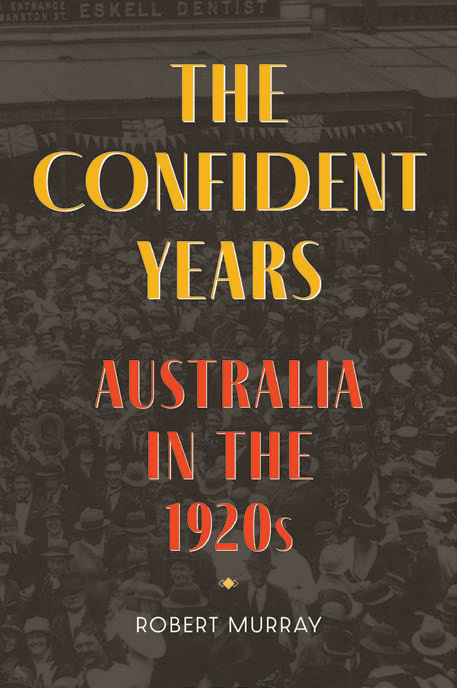
One of the things that I do when I’m not reading, practising my Spanish or listening to podcasts about Rome, is work at my local Heidelberg Historical Society. Our newsletter, which is published every two months, has a feature called ‘A Hundred Years Ago’ which draws together items of local interest from the ‘Heidelberg News’ and, to a lesser extent, the major Melbourne newspapers through Trove. I’ve been writing this feature since 2015 so I’ve gone through the war, through the ‘Spanish’ flu, the commemoration of fallen soldiers and now I’m up to the 1920s. I’d like to know more. A local paper, by its nature, is full of quotidian events with a heavy emphasis on the civic and the worthy. Leaving aside the Bowling Club results and church socials, I’m finding myself interested in the emotional tenor of the times. With a title like ‘The Confident Years’, I was hoping that Robert Murray might unpack the mindset of the 1920s, but I found myself disappointed.
The book, reissued by Australian Scholarly Publishing in 2020 (no doubt with this centenary in mind), was originally published in 1978. This new edition is, as the author admits in his preface
varies little from the original, published in 1978, but has been slightly abridged or amended
p. vii
There are the occasional mentions of Gough Whitlam or Donald Trump as points of comparison, but I suspect that much of the text and certainly the bibliography is unchanged, with not a single book or article published after 1978.
It started well. In the opening chapter, Murray writes:
The 1920s, the decade that followed the war, have gone down in legend as gay and glittering. Relative to the years that preceded and followed them, this was certainly so. From the perspective of the 1970s, Australia’s 1920s were straitlaced, drab, and crushed in a narrowness of vision and stridency of statement. Yet for all the smothering smugness, it was also a time when the spaciousness and order of the nineteenth century merged almost felicitously into the freedom and affluence of the twentieth.
They were above all confident years, when reasonable people could believe- with from the late-century perspective, a quaint dogmatism of certainty- in nation and leaders, in socialism or free enterprise capitalism, religion or atheism. A world war had been won; during it the socialist revolution had won Russia, but had later been overthrown by counter-revolution elsewhere in Europe. This was just enough experience of what the young century had to offer to drive the imagination. The long years had yet to come when the world would live for more than two decades with the shadow or reality of depression and more world war, when not only capitalism and socialism but the very millenia-tried bastion of the Christian belief itself would eventually crumble almost discredited before new generations to whom disillusion seemed merely the way of things.
p.5
This is what I was looking for in this book, but I found that most of the book involved politics with a capital P and the machinations of political operatives on all sides. After an introductory chapter ‘Fit for Heroes’, there follow four chapters dealing with the Nationalist, Labor and Country parties (Ch. 2 The Political World of Billy Hughes; Ch.3 Post-War Labor; Ch. 4 The Big Fella and Chapter 6 Bruce-Page Australia). Chapter 5 inserts an analysis of the Big Boys of the press (Ch. 5 Packer, Murdoch, Fairfax and Co – how depressing that they are still household names a hundred years later) and Ch. 8 After the Bulletin looks at literature and theatre both on stage and screen. Chapter 9 Workers and Bosses looks at the strike activity particularly in the last years of the decade, and Chapter 10 Countdown to Catastrophe ushers in the Depression of the 1930s.
In these chapters, Murray is careful to pay attention to State politics as well as Federal politics, and he introduces male politicians of all stripes with potted biographies. There is a lot of politics squashed in here, as events and crises unfold and pass by.
My favourite chapter was Chapter 7 The Golden Years, which came closest to what I was looking for in the book. There are more women in this chapter although it, too, reads a little like an almanac even to the point of finishing with ‘A Miscellany of Australia’s Twenties’ containing observations that didn’t fit anywhere else. In his preface, Murray mentioned that he interviewed people who were alive during the 1920s, and this chapter- although I enjoyed it most of the whole book- had a bit of the ‘oral-histories’ about it.
This is the only book that I have found that focusses on the 1920s in Australia beyond those ‘So You Were Born in 1925’ type books in newsagents. In terms of capturing a mindset, I gained much more from Deirdre O’Connor’s Harlem Nights, and perhaps I am going to have to look at individual chapters in books about other themes that are less tied to a chronological period (e.g. Janet McCalman’s Journeyings; or Kirsten Otto’s Capital, both of which I have read previously) or fiction -especially newspaper fiction- of the time. I found myself wondering about my own time, a hundred years later, and whether a book about our 21st century ‘Twenties’ that focussed on Australian politics, technology and culture would capture what it is to live now. It would have to include those things of course, but they would not be sufficient. Perhaps I need to send Hugh Mackay back in a time machine to 1920 to measure the emotional climate for me.
Sourced from: State Library of Victoria as an e-book.
The Forum (BBC) In some of my Roman history podcast listening, there was mention of someone called Boo-dicker. I’d never heard Boadicea’s name pronounced Boudica (Boo-dicker) and it took me a while to work out who they were talking about. Boudica, warrior queen features Professors Richard Hingley and Miranda Aldhouse-Green and Dr. Jane Webster. Boudica was the wife of the leader of the Iceni people. When he was killed in around 60AD and her daughters (and probably she, too) were raped, Boudica, driven by Roman brutality, led a rebellion against the Roman army and marched on London. The Romans were completely unprepared for the uprising, and even though she was defeated, she has gone down in history. She was ‘recovered’ in Elizabethan England, where parallels were drawn between these two female red-headed leaders, and again in Victorian imperial times (although if they thought about it, she was a guerilla insurgent, not the Victorian imperialists’ favourite person). The Suffragettes adopted her too.
How It Happened (Axios) In the midst of COVID and Black Lives Matter, the Abraham Accords seem to have fallen from view. In this two-part series Trump’s Big Deal, Jonathan Swan talks with Axios Middle East correspondent Barak Ravid about how seemingly out of thin air, all of a sudden Arab countries decided that they wanted to have treaties with Israel. I didn’t trust it then, and I don’t trust it now. In Trump’s Big Deal Part I: May Your House Be Destroyed, we learn how Donald Trump, through his son-in-law Jarrod Kushner, wanted to “deal” to make the West Bank an international meeting place. After moving the American Embassy to Jerusalem, and siding with the extreme right-wingers of both the Republicans and Israeli politics, Trump was blindsided by Netanyahu’s annexation of the West Bank announced at a public meeting. In Trump’s Big Deal Part II: From Secret Alliance to the Abraham Accords sees how these accords were leveraged to stop Netanyahu from annexing the West Bank, thus scuppering forever a two-state solution. Apparently there were always links between Arab states and Israel, and this has just formalized them. I can’t see this ending well.
Rough Translation (NPR) It was appropriate that I listen to May We Have This Dance, given that I had just finished reading Deirdre O’Connor’s Harlem Nights, about the introduction of Jazz into Australia through Black American bands during the 1930s. This program is about Lindy Hop, which originated in Harlem in the 1920s and 1930s and has since gained a following across the world, with large communities in Sweden and South Korea. It’s now being reclaimed by Black communities in the United States.
History of Rome podcast. I’m getting there- this is episode 103 out of 189. Maybe I’ll finish this in 2022! Episode 103 The Equestrian looks at Caracella (formally known as Marcus Aurelius Antoninus), who Mike Duncan sees as being as bad as they come, but only an extension of his father’s behaviour. Caracella was a nick-name, just as Caligula was a nick-name, and it actually means ‘Cloak’. No one called him Caracella in front of him. In order to increase the tax base, he extended citizenship to every free man in the empire (except women and slaves of course). An oracle in North Africa prophesied that the praetorian prefect Macrinus would wear the purple, so in Caracella’s mind it was a matter of ‘kill or be killed’. It’s not really certain how the assassination of Macrinus occurred (except that he had stopped for a piss on the side of the road) and was stabbed. Macrinus, who took over never actually set foot in Rome. He heard that the Severins were plotting to overthrow him, and so he really should have killed the whole family (if he was a proper Roman) but he just exiled them instead. Big mistake. Caracella’s aunt Julia Maesa started championing her grandsons Elagabalus and Severus Alexander.
Emperors of RomeEpisode CXIII – Fratricidal Discord (Caracalla I) sees Severus dead in York and not one but two sons primed to take over. Well, Caracella was much better primed than Geta because he was the elder son. Caracella was ruthless in killing off his opposition by killing him personally with his own two hands in front of their mother. He claimed that Geta was a traitor and had his image expunged from images, coins and the public record. Episode CXIV – Mutilating Rome (Caracalla II) Now that Caracella was the sole emperor of the Roman empire he was able to act as he wished. The army liked him, but that’s about all. He embarked on lots of killing of family, although he didn’t get rid of all of his father’s advisors. The extension of citizenship throughout the empire increased the tax take and meant that Roman law became even more widespread. Instead of the citizen/non-citizen distinction, there was now ‘more honourable’ citizen and ‘more humble’ citizen, which played out in the types of punishments meted to them. The granting of widespread citizenship really rankled with many people. Episode CXV – Ausonian Beast (Caracalla III) sees Caracella travelling the provinces, wanting to be seen as a military leader in his own right. His mother, Julia Domna travelled with him, leading to rumours of incest. He forestalled conflict by paying off potential uprisings. He styled himself as a latter-day Alexander the Great, but he was very thin-skinned when the Alexandrians cracked jokes about him. Episode CXVI – Red Wedding (Caracalla IV)The Roman Empire had engaged in Parthian wars for generations, stretching back, off and on, to the days of Pompey the Great. It was a bit like Russia and the US Cold War- and now Caracella was going to have his shot at Parthia. There was a proposal that Caracella would marry a Parthian princess, but it was a trick- he actually had amassed 80-90,000 troops – and during the ceremony he ordered that the troops invade and kill everyone. Nice. Episode CXVII – Disgraced Human Nature (Caracalla V)The historian Edward Gibbon perhaps summed up Caracalla quite succinctly, when he used this phrase to describe his demise while answering a call of nature on the side of the road: “Such was the end of a monster whose life disgraced human nature, and whose reign accused the patience of the Romans.” Dr Caillan Davenport doesn’t think much of him either, designating him as one of the worst emperors, although he did leave buildings e.g. the Caracella Baths. But get this- you can actually get married at Caracella Hall at the Caracella Baths. Lots of nice red carpet. Ugh. Episode CXXII – Purple by Merit in steps Macrinus- the wrong position, the wrong class, the wrong man. Well, Caracella was killed having a slash (to put it colloquially)- but now what? The soldiers had murdered the emperor and they needed to replace him quick, so they looked to a man on the spot. Macrinus was proclaimed emperor on Severus’ birthday, hoping to portray continuity and he took the names of Severus. He needed to consolidate his empire, so he was happy to bring wars to a close and make peace payments. Macrinus embodied the tension between a hereditary system and the ‘best man’ argument. Heredity was to win out.
History Extra Podcast America’s Roaring Twenties: Everything you wanted to know. I’m on a bit of a 1920s kick at the moment. My grandmothers (who I never met) were young women during the 1920s and I’d like to understand the era better. This podcast, featuring American historian Sarah Churchwell, was a little too American for my liking- although she is careful to distinguish when she is talking about American, as distinct from British or European, experience. She points out that America only really experienced one year of war, which boosted its feelings of invincibility, and that the experience of the ‘roaring twenties’ depended on class and place. Nonetheless, the emphasis on youth, the presence of party generations (think Gatsby, or the Bright Young Things), invention and theatre did mark a real change from Victorian and Edwardian life.
As usual, I haven’t read the starting book for Six Degrees of Separation for February. This is a meme hosted by Kate at Books Are My Favourite and Best where she chooses the starting book, and then you link six other books that trigger an association in some way and see where you end up. The starting book is Patricia Lockwood’s No One is Talking About This.
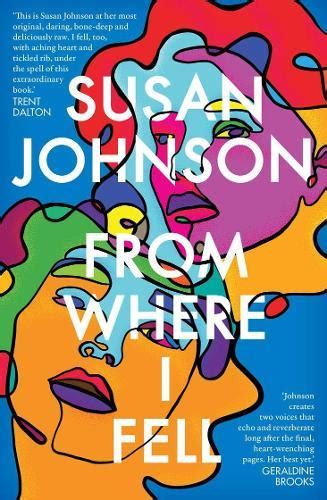
I haven’t read it, but I do know that it’s about communication over the internet, which made me think of Susan Johnston’s recent epistolary novel From Where I Fell (my review here). Two women, one in America and the other in Australia, begin communicating via email when an email is mis-addressed. The book is written entirely in email exchanges. The younger Australian correspondent is voluble and often heedless, whereas the older American is abrupt, snippy and just as heedless in her own way.
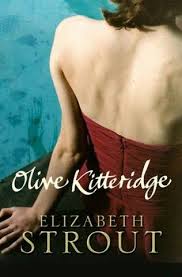
In fact, the older woman reminded me of Elizabeth Strout’s wonderful Olive Kitteridge. Set in Maine, this is a series of linked short stories and Olive appears in each one of them- sometimes as the main character, sometimes just as a walk-on figure in the background. Olive is a large, acerbic, retired teacher who has lived in her small town for many years and taught mathematics to every young person in town. She’s brusque and clumsy, and you can see why her son has distanced himself from her and why people don’t really like her very much. (My review here). Really- the book cover is so inappropriate for this book.
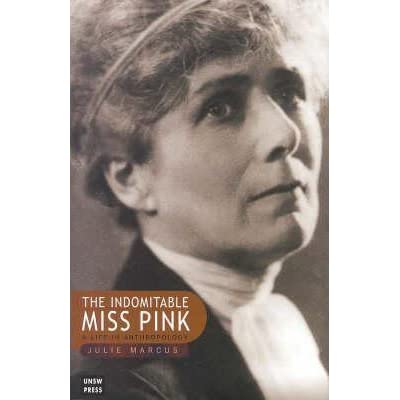
Olive is an unusual name, and it’s even more unusual teamed with ‘Pink’. Olive Pink, as Julie Marcus shows us through in her biography The Indomitable Miss Pink, was both an anthropologist and a Northern Territory-based eccentric, although the latter has tended to overshadow the former in popular memory. She died in 1975. She is spoken of as a tall, erect woman, dressed in white, with a long skirt and parasol. Neighbours and little children remembered her derelict hut with its idiosyncratic ‘museum’ and a straggly garden where she grew flowers for sale. Pastoralists saw her, and her activities, as a threat to their leases. Arrernte and Warlpiri had their own stories of Olive Pink from the time that she lived amongst them in the 1930s and 1940s, learning their language and customs. This is a terrific biography, although it’s probably hard to track down. (My review here)
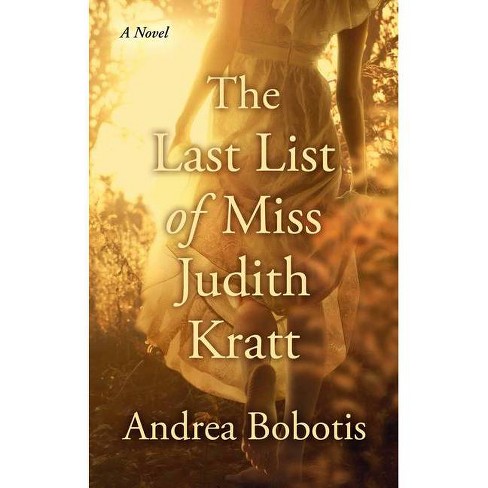
Another elderly ‘Miss’ is Judith Kratz, the main character in Andrea Bobotis’ The Last List of Miss Judith Kratz. Miss Kratz an elderly spinster, has been living in her family home all her life. It is 1989 and the quiet, if cluttered, domesticity of Judith and her African-American companion Olva is disturbed when Judith’s younger sister Rosemarie suddenly turns up. She had run away sixty years ago at the age of thirteen in 1929, just after her older brother Quincy, had been murdered. As the remaining matriarch of the Kratt family, Judith decides to compile an inventory of the objects within the family home, and these items trigger off memories from the past. Each chapter closes with an ever-growing list of objects, which have enhanced resonance for the reader after travelling with Judith back to the 1920s. (See my review here)
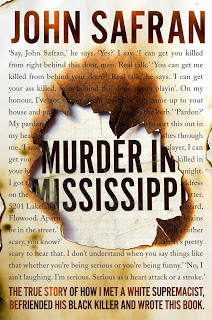
Miss Judith Kratz lived in South Carolina and the book is steeped in the culture and history of the American South. For me, the South is synonymous with Mississippi and so I follow comedian John Safran over there in Murder in Mississippi. As part of his documentary program Race Relations he cultivated a friendship with white supremacist, Richard Barrett, and found himself surprised that he actually liked him more than he thought he would. Safran’s nose for a good story twitched when he learned that Richard Barrett had been murdered by a young Afro-American teenager. And,so he took himself off to Mississippi to chase the story. The book reads rather like a podcast, and it was awarded the Ned Kelly Award for Best True Crime in 2014. (My review here).
Another murder, but this time in Georgia, is found in Nathan Harris’The Sweetness of Water. Set immediately after the Civil War, Old Ox is a small town in Georgia, staunchly Confederate during the war, and resentful and broken afterwards. Emancipation has seen formerly enslaved people suddenly free, but without resources, money or plans. Many of them stay in Old Ox, some still living and working for their former owners, others building shanties under the eaves and in the alley-ways of the buildings in the town. Formerly enslaved, but now emancipated, Landry and Prentiss are hiding out in the woods where they are discovered by George Walker, a small-scale white farmer. They agree to work on George’s farm, planting peanuts, in return for shelter in the barn, food and a wage. They had been enslaved on a nearby plantation, and the cruelty of the owner, Ted Morton, had stripped Landry of speech. The brothers dream of finding their mother, who had been sold, and now that they can earn some money, they have a chance of doing so. This is a beautifully told book. It has a slightly formal, 19th century lilt to the language and it captures well this liminal time, when the gaping newness of Emancipation had not yet solidified into inevitability of Reconstruction. (My review here)
I started off with an American book and I ended up with an American book. And how fitting that I should start and finish with two books that were nominated for the Booker Prize in 2021.
Had this book won the Booker Prize, all my fears about the dumbing down of the Booker would have been realized. As it is, it did not progress from the longlist, and that’s a good thing.
Not that there’s anything wrong with the book. Set in a small town Solace in 1970s Ontario, the narrative switches between three characters: Clara, Elizabeth and Liam. Eight year old Clara’s family is in crisis after Clara’s older sister Rose has left home and disappeared without trace. She stands vigil by the window, willing Rose to re-appear. Rose doesn’t, but instead she sees a car draw up at the house next door and a young man get out and let himself into the house. The owner of the house, Elizabeth Orchard, is in hospital and Clare has promised to feed the cat in her absence. Unknown to her, Elizabeth has died and left the house to Liam, the young man, who had been a neighbour of Elizabeth’s many years earlier. Many years earlier Elizabeth, unable to have children, had welcomed Liam into her house and come to love him as her own son. Liam had only re-established contact with Elizabeth in recent years, and was surprised that Elizabeth had left the home to him. His own marriage had just broken down, and so he moved up to Solace with the intention of selling the house and working out what to do next.
It’s a pleasant enough, holiday read: I read it in an afternoon, sitting on the back deck. All the ends are neatly tied up and it’s a slightly unsettling feel-good story, but it’s certainly not Booker material. A Women’s Weekly Good Read maybe. But surely not the Booker
My rating: 6/10
Sourced from: Yarra Plenty Regional Library
Read because: it was short-listed for the Booker Prize in 2021
I have a rather ambivalent attitude towards short stories, and I find them very hard to review beyond merely summarizing them. Finally, after many decades, I have worked out that I enjoy them most when I read just one story at a sitting, no matter how brief, and leave it to percolate overnight until moving on to the next one. They are also very good for late-night reading when you’re too tired to read anything that involves memorizing actions or characters beyond that one act of reading.
However, I do like Debra Adelaide’s short stories. Flipping through the book beside me now, I can recognize and remember nearly each story on reading a paragraph or two (my test of whether a story has ‘stuck’ or not). The stories are arranged into three parts on the basis of whether they are narrated in first, second or third person, and the final story ‘Zebra’ is more novella than short-story at 121 pages.
First Part starts with ‘Dismembering’ where we see a woman who has a vivid dream that she and her ex-husband dismembered a corpse which they buried in her back garden. She is so un-nerved by the dream that she begins divesting herself of all the possessions that she had brought to her second marriage in what seems to be a steady mental unravelling. ‘Welcome to Country’ sees another form of cleaning-out as a woman, in a near-future Australia, begins gathering together her now-absent son’s belongings from the 1990s to take to ‘Country’, a fenced off, separate outback community where a mean-spirited government holds those claiming ‘sovereignty’ or refusing to conform, in perpetual detention. ‘A Fine Day’ a woman visits her friend Alex, who is trying to get his ex-wife to return to him. His ex-wife Helen, doesn’t want to be found despite her own loneliness. The story has a very Chekhovian ending.
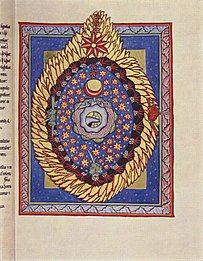
The Second Part starts with ‘Festive Food for the Whole Family’ which I very much enjoyed, given that I was reading it just before Christmas. Given in the form of advice, like a magazine article, it talks about how the successful Christmas host will prepare food to meet all the dietary requirements of demanding guests. Meanwhile, her husband is becoming increasingly familiar with his sister-in-law and so the carving knife comes in handy. ‘How to Mend a Broken Heart’ is a description of the “leaden numbing pain” that sets your body in turmoil and makes even the slightest job, like shopping, an ordeal. ‘Migraine for Beginners’ is obviously written by someone who has experienced migraines (although, for me, my migraines are more of the Hildegarde von Bingen variety- see below). ‘The Master Shavers’ Association of Paradise’ is set in an offshore refugee ‘facility’ which is certainly notParadise, where a young boy establishes a barber shop as a way of filling in time until he can move to the mainland.
Wikipedia
The Third section starts with a lovely story ‘Carry Your Heart’ where a woman meets a man in a bookshop- what book lover could not respond to a romance in a bookshop? In ‘I am at Home Now’ Debra Adelaide writes from the perspective of Mrs Phillips, who cared for Bennelong, when he travelled to England with another indigenous man Yemmerrawanne in 1792 with Governor Phillip. ‘No Hot Drinks in the Ward’ takes us to the children’s cancer ward of a hospital, where a mother with a sick child has been tossed into a world she never wanted to be part of. ‘Nourishment’ carries on this theme, where a wife is visiting her husband in hospital, where he is fasting before surgery. In ‘The Recovery Position’ Cate is an ex-soldier, now conducting workplace training in First Aid classes. Teaching CPR triggers her memory of returning to Tarin Kowt with Trooper Brad Innes in a helicopter. ‘Wipe Away Your Tears’ starts in a plane over Istanbul as a couple visit Gallipoli. Her husband, Harry, is searching for the grave of his great-grandfather but he has not properly mourned his brother Johnny, who had died in a car accident.
‘Zebra’ is by far the longest story in the book. Set in the Lodge in Canberra, there is a female P.M. who reminds us just a little of Julia Gillard. She is unmarried, calm, unhurried and she finds herself drawn to the beauty of the gardens around the lodge where she discovers that her neighbour, Kerr, has been surreptitiously shifting the fence. Somehow she manages to float above all the political turmoil, and she finds a still point in the gift of a zebra which arrives unsolicited at the Lodge. She is lonely, and attracted to her staffer, but is fearful of being spurned. It is all a bit fey and implausible, and but then again…look at Gladys. Who would have thought that romance could haunt the corridors of power?
So, all in all, a strong selection of stories that I felt perfectly happy to pick up each night. I think that ‘Zebra’ will remain in my mind because it was so strange, and I may think of ‘Festive Food for the Whole Family’ next Christmas (and send up a silent prayer of thanks that my own Christmases are much more pleasant occasions.)
Rating: who knows. I can never rate collections of short stories.
I’ve been catching public transport to travel down onto the Mornington Peninsula and so I have had hours and hours to listen to podcasts! Many, many hours. Add to that long walks along the beach, and I’ve listened my ears off!
Emperors of Rome My, there’s a lot of episodes about Septimius Severus. Obviously Dr Caillan Davenport (Roman History, Macquarie University) is a bit of a fan. He calls him ‘Septimius’ so I’ll go with that in this summary. Anyway, in Episode LXXXVI – Ascent to Greatness, However Steep and Dangerous Septimius goes off to fight the second Parthian war, which he wins, enabling him to add that to his very long name. In 10 years, he only spends 6 months in Rome. As part of his rewriting history to make him part of the Nerva-Antonine dynasty, Septimius renames his son Marcus Aurelius Antoninus and at the age of nine gives him the title of Augustus and makes him co-emperor. He also marries Marcus Aurelius Antoninus off to his right hand man Plautianus’ daughter Plautilla but they hated each other.
Episode LXXXVII – Severan Stories I takes an ‘episodes’ approach. Act I – A hair of the beard looks at Plautianus and his rise to prominence as Septimius’ close advisor. But the family hated him, and when his downfall came at the hands (though not the sword) of Antoninus, they cut off a hair from his beard. Act II – Princes who adore you looks at Septimius’ sons Antoninus and Geta. Antoninus was definitely the favourite, and being only 9 months older than Geta, that must have really rankled. Act III – Cordially detested. Septimius had a close relationship with his wife Julia Domna, and the empire respected her as the mother of the dynasty. She is remembered as having a keen political mind and being a patron of thinkers, but there were always rumours about her (as was the case with most Roman empresses).
Episode LXXXVIII – Severan Stories II continues the ‘episodes’ approach. Act I – If you build it they will come talks about Septimius Severus’ building programs. There had been a fire at the end of Commodus’ reign, so rebuilding was in order. He rebuilt the Pantheon, and also took advantage of the opportunity to put his names (many names) and accomplishments onto buildings everywhere. Act II – The superfluous senators of Septimius Severus looks at how he thinned out the ranks of senators and got rid of perceived threats throughout his reign. Act III – I beg of no man looks at dissatisfaction amongst the people of Rome and the rise of Bulla the Brigand, who seemed to be a bit of a Robin Hood character.
Episode LXXXIX – A Man the World Could Not Hold sees Septimius head 25000 trooops over to Brittania, an island that had never completely been under Roman control. Perhaps he wanted a last victory, or maybe he wanted to toughen up his sons, or perhaps he wanted to prove that he still had ‘it’ even though Bulla the Brigand had been so hard to control. He won (a rather diffident victory) so he could add that name too. He told his feuding sons to live in harmony, look after the army, and pay no attention to anyone else. They did two out of three. Summing up his reign, Dr Caillan Davenport thinks that it’s unfortunate for Severus that he wasn’t included under the ‘Five Good Emperors’ label because he thinks that he was a good emperor, even though he gained power under messy circumstances.
Episode LXXXI – Livy I was driving, and this was the next podcast to come up so I listened, even though it has nothing to do with emperors. It features Professor Ronald Ridley (Honorary,Historical and Philosophical studies, University of Melbourne) who is a big fan of the historian Livy, who wrote an extensive and exhaustive history, spanning 142 books. The books were published in groups of 5, 10 or 15 and so ending at 142 is strange, unless he was making a statement that the death of Augustus was an end point. Any collection of 142 books is too big for a private library, so they were summarized. They have located only the first quarter. Ridley admires him for being the first historian, from which all other historians have drawn.
History Hit In the UK they have a 100 year privacy provision on their census (I’m not sure what the situation is here in Australia). The digitized census records were released late last year and are available through Findmypast. (Hmm. A private company). 1921 Census: Revealed features Audrey Collins, from The National Archives, and Myko Clelland, from Findmypast. It was the first census after WWI and there won’t be another release for 30 years because the 1931 Census was lost in a fire and the 1941 Census was never taken.
Travels Through Time As well as listening to podcasts about Rome, I write a feature for the Heidelberg Historical Society’s newsletter that looks at what was happening in Heidelberg one hundred years earlier. So I’m interested in the 1920s and looking for books about the decade. 1922: Scenes from a Turbulent Year features Nick Rennison who has recently released 1922: Scenes from a Turbulent Year where he goes through the year of 1922 month by month, taking a world history approach. His three scenes from 1922 were the discovery of Tutankhamun’s tomb, the assassination of the Weimar Republic politician Walter Rathernau and the trial of Hollywood comedian ‘Fatty’ Arbuckle for the murder of young starlet Virginia Rappe.
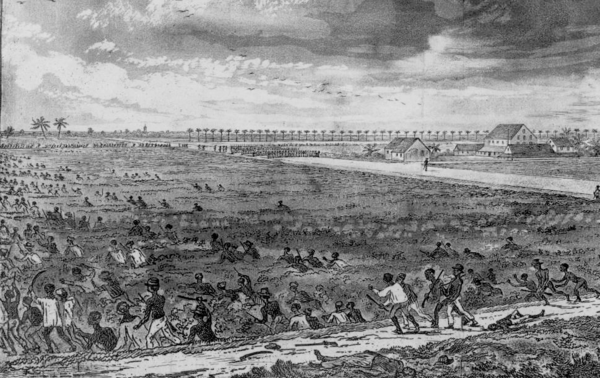
Demerara Rebellion 1823. Wikimedia
History Extra PodcastThe Demerara Slave Uprising is advertised as being about a ‘little known’ uprising, but I actually am familiar with it because ‘my’ Judge Willis was one of the judges of the Court of Civil and Criminal Justice in British Guiana (i.e. Demerara) in 1831, eight years after the 1823 uprising. It had been strongly put down, but the tiny white minority had been unnerved by this uprising of enslaved people who vastly outnumbered them. The interview featured Thomas Harding, the author of White Debt: The Demerara Uprising and Britain’s Legacy of Slavery. He writes ‘narrative non-fiction’ but he acknowledges the assistance of Caribbean historians and seems to have stayed fairly close to the court records, diaries and correspondence.
This Union: A Sea Between Us (BBC) I enjoyed the series on Scotland, and so here I launched into Northern Ireland. This series had less of a historical emphasis, focussing mainly on current events since the Good Friday Agreement, from a Loyalist perspective. In Episode 1 Andrea Catherwood returns to her homeland in Northern Ireland, and interviews 19 year old Joel Keys who wasn’t even born when the Good Friday Agreement was signed in 1998. He spoke of the Loyalists sense of grievance since Brexit in particular, and the links between the paramilitaries and the drug trade. He explains his ambitions for a career in politics and determination to help his community tackle its social problems while retaining its British identity. Episode 2 starts at a Unionist march, where the men are wearing balaclavas again, evoking the sectarian Troubles of the 20th century. Many felt betrayed when Boris shifted the goalposts on Brexit, leading to the re-emergence of Loyalist violence. Episode 3 looks at the political instability in recent times, with a succession of leaders in both the DUP and the UUP. Unionists are no longer the majority in Northern Ireland, and many feel betrayed by Boris Johnson and the Sea Border. Young people are more concerned about rights (e.g. gay marriage) and many former Unionist are now agnostic about Northern Ireland’s place in the UK. They are the ‘middle’ who can only be swayed by moderates, not hardliners.
This Union: The Ghost Kingdoms of England. This four part series features Ian Hislop. I was a bit out of my depth because I didn’t have a very clear understanding of exactly where they were talking about. Episode 1: East Anglia- Sutton Who starts in Colchester, a Roman stronghold which the arriving Angles and Saxons chose to leave alone. He points out that the lights didn’t just go out when the Romans left in 409-410 A.D.- that the Romans are “us”. He then goes on to talk about Sutton Hoo, uncovered just before WW2. We still don’t really know what it is: is it the burial of one of the earliest of the great Kings of the Anglo-Saxon period in East Anglia’s golden age? Episode 2: Northumbria- The Great Divide focuses on the Venerable Bede who wrote about Northumbria in the early 8th century. The Humber was the dividing line. He also interviews the writer Bernard Cornwall, who wrote The Last Kingdom. Episode 3: Mercia- Where is Mercia? Good question- apparently it’s what’s known as the Midlands. The great Mercian Kings had European ambitions but were subsumed and written out by the story of Alfred the Great. Episode 4: Wessex: The Only Way is Wessex ends up with Alfred the Great. They started off after the other kingdoms, but in the end they dominated not only by the legend of Alfred, but also Thomas Hardy’s novels. This whole series was a bit beyond my limited geography and Anglo-Saxon history.
Heather Cox Richardson I haven’t listened to Heather Cox Richardson in ages, and now that the anniversary of 6 January has passed, I thought I might look to see what she had to say about the anniversary. What she gave was a really good lecture about Why does Democracy Matter? Nothing new, but really worth listening to. If you haven’t listened to her before, this is a good potted version.
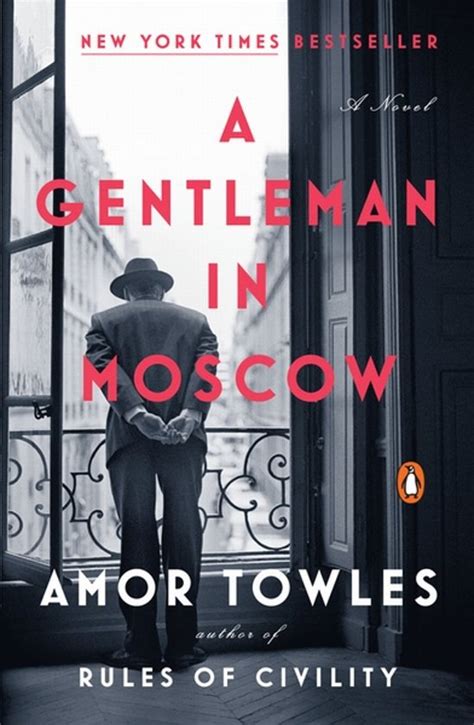
Almost as satisfying as a ‘big house’ novel is a ‘big hotel’ novel, and we find one here in Amor Towles’ A Gentleman in Moscow. In the wake of the Bolshevik revolution, Count Alexander Ilyich Rostov was arrested on account of his noble background, complete with country estates, duels, troikas and sleighs. Normally such a man would be executed, but because of a revolutionary poem attributed to him, he was instead sentenced to house arrest at his residence at the Hotel Metropole, in the centre of Moscow.
He was rather unceremoniously bumped from his luxurious third-floor suite to a small room on the sixth floor in a scene reminiscent of Sara Crewe’s sudden change of circumstances in A Little Princess (a childhood favourite of mine). In what had become a series of scaling-downs, he chose his favourite pieces of furniture, personal luggage and books to shift upstairs with him, only to find himself suffocating in his own belongings until he discovered a hidden disused room which he could turn into a study. That was not all he discovered. Through his acquaintance with Nina, a young girl who often stayed at the Metropole, he became familiar with the hallways and basement rooms of the hotel, accessed through a small master key that Nina had somehow procured. Nina grew up, while Alexander stayed confined within the hotel, passing the days through a routine of frequenting, eating and drinking at the various restaurants and services provided through the hotel – the seamstress, the barber, the bar, the concierge’s desk. When Nina returned as an adult, with her small daughter Sofia in tow, she begged Alexander to look after the child while she followed her husband to Siberia, where he had been exiled. Of course, she did not return and Alexander, as a middle aged single man, became Sofia’s surrogate father as she joined him in his exile in the centre of Moscow.
The narrative unfolds chronologically, and the history of twentieth-century Russia is a background hum as Stalin accrues more power, famine ravages the country, World War ensues and then Russia and America settle into Cold War hostility. These events of course have an effect on the hotel, as informants are planted within the staff and individual fortunes rise and fall, but it is a muted effect. The hotel had been a luxury destination prior to the Revolution, and as new men find themselves moving into positions of power and influence, they are happy to avail themselves of the faded splendour of the hotel, just as the powerful, but now fallen, men had done before them.
Alexander remained remarkably tranquil in the face of these very reduced circumstances. He still had access to money, and the breadth of mind that a wealthy and cultured background had brought him, and so his life continued on much as it had before, except within the walls of the hotel. The staff of the hotel remained much the same as well. Alexander himself became one of the staff although the deference remained. Montaigne’s essays were a bulky nuisance in his small rooms, but he seems to imbibe a sense of equanimity from them that allows him to float above the changes occurring outside.
The book is told in the voice of an observant, dry omniscient third-person narrator. I found myself laughing out loud in places, and the book is suffused with a 19th-century sepia, redolent of wax and cigar smoke. I enjoyed it very much, and when the pace picked up considerably at the end, I felt satisfied that the author had created a self-contained, almost fairy-tale world of basically good people where good is rewarded in the end.
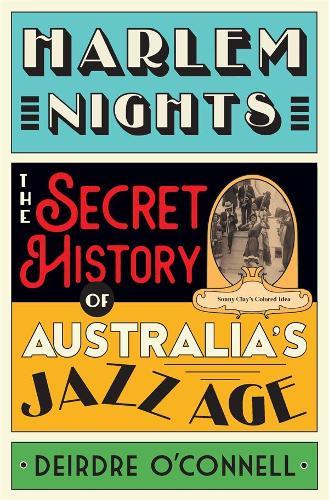
On the 19th January 1928, the SS Sierra drew into Circular Quay. On board were seventeen members of the Colored Idea, an all-black Jazz revue comprising dancers, comedians, vocalists and musicians. On the dock, there was a placard advertising them erected by the Tivoli Theatre and, on deck, technicians from Radio 2FC strung microphones to broadcast the Sonny Clay Orchestra as they played ‘Australian Stomp’. As the members of the Sonny Clay Orchestra made their way onto the street, they were photographed by the waiting press, the editor of a popular film magazine, and a group of young female jazz fans. But on 31 March 1928, the Colored Idea were back at Circular Quay on the SS Sierra. There were press photographers this time too, and two dozen or so ‘smartly dressed’ young women, some ‘coloured’ and some White. This time the Colored Idea were deported, overseen by a number of customs officers who were under instructions to intervene should ‘difficulty’ arise. It didn’t. Several of the jazzmen lined up on the ship’s deck rail, tossed streamers and called to the well-wishes on the dock. Then they were gone.
Harlem Nights is the story of the Sydney and Melbourne legs of the Colored Idea’s Australian tour, but it is much more than that. It is the story of the international rise of African-American jazz; White Australia and what Marilyn Lake and Henry Reynolds have called ‘The Global Colour Line’; anxieties over the rise of the ‘girl’; media and celebrity; right-wing politics, and police corruption.
SPOILER ALERT
The book is divided into 12 parts, each comprising 3-5 short chapters. This would ordinarily make a rather choppy history, but in this case a peppy first paragraph of each chapter breathes interest back into the narrative, making it a very approachable and accessible read. There are black-and-white images throughout the text, many of which are drawn from newspaper accounts, emphasizing that much of the action took place in the public realm, although the real power was obscured.
Part 1 ‘Tijuana Nights in Phoenix and Los Angeles’ takes place in America and focuses on Sonny Clay, the leader and business manager of the Colored Idea. His family was originally from Texas, but he grew up in Arizona. As racial tensions mounted there, he shuttled to and fro across the Mexican border, playing with his jazz band in Tijuana where the dancers acclaimed their hot jazz and raw rhythms (p.18). He joined ‘Jelly Roll’ Morton’s band, then arrived in Los Angeles in early 1922. He poached players from The Black and Tan orchestra to join his Eccentric Harmony Six. He played the ‘colored jazz bandleader’ in dozens of films as part of what Black observers at the time called ‘Negro vogue’, an affection for what ‘chic’ White people imagined was ‘Negro’. (p. 30) By 1925, in yet another iteration, his band was now Sonny Clay’s Rhythm Demons, with a regular 7.00 p.m slot at Radio KFl, playing at the Plantation Cafe.
Sonny Clay’s life embodied the liminal slippages of Jazz Age America. By the mid 1920s, he had more money and influence than respectable Black citizens felt he deserved; wore sharper suits and mixed with more powerful people than White unions could stomach and played much with more rhythm than melody, enticing a public to dance with more freedom than grace. This was not racial advancement in the steady, diligent, God-fearing sense of the word, but it was impressive, extravagant and spectacular.
p.40
Part II ‘In California with Harry Muller’ introduces us to Harry Muller, the West Coast theatre agent for JC Williamson company, scouring California’s vaudeville theatres for acts to bring across to Tivoli Theatre venues in Australia. The Australian moving picture industry in 1925 was a small but highly lucrative market, but live vaudeville acts and dance contests could supplement the short-comings of celluloid jazz. The ‘idea’ format involved a short, sharp burst of live entertainment, usually before the celluloid feature. There had been Black American performers in Australia before: the Georgia Minstrels had come to Sydney in 1877, the Fisk Jubilee Singers travelled throughout Australia in the 1880s, Jack Johnson had fought in the boxing ring. Comedians, jubilee singers and dance troupes toured Australia, but not dance band musicians. This was largely because of opposition from the Musicians’ Union of Australia, but a variety theatre act fell outside the jurisdiction of the musician’s union. In organizing the tour, Harry Muller was careful to fudge the difference between ‘coloured theatrical artists’ and ‘musicians’, but as he sailed into Sydney Cove with Sonny Clay’s Colored Idea, he did not explain these nuances, or the increasingly rigid White Australia policy to Sonny Clay or his band members.
Part III ‘Rattlin’ Fine Sydney’ introduces Gayne Dexter, who was there on the dock at Sydney waiting for them. The editor of the film industry magazine Everyones, he publicized the arrival of the Colored Idea on the “Jazz Ship”. Twice daily, he travelled to the Tivoli’s flagship theatre in Haymarket to hear Sonny Clay’s Plantation Orchestra as part of the ‘idea’ format. Through his magazine he promoted a modernity that was anaethema to ‘highbrow’ cultural bodies or those who only accepted ‘Negro’ jazz if it drew on ‘minstrel’ tropes. The musicians performed 2 shows daily, six days a week which was a comparative vacation compared to their schedules in American entertainment houses. They had apartments in Kings Cross, close to Woolloomooloo, where a cluster of Aboriginal families and ‘coloured Britishers’ lived. The tabloid newspapers reported ‘warmth’ and ‘affection’ between the dance band musicians and a few ‘coloured women’. In her chapter ‘American Boomerang’ O’Connell tries to identify these ‘coloured women’ but has not been able to do so. Besides, the attention of the Commonwealth Investigation Branch was not on the ‘coloured women’ but more concerned about the visiting jazzmen consorting with White women.
This plays out in Part IV ‘Views of Commonwealth Policy’. Major Longfield Lloyd was head of the NSW division of the Commonwealth Investigation Branch, military hero from Gallipoli, a friend of former prime minister William Morris (Billy) Hughes and prosecutor of the war against the ‘Communists’ on the waterfront. In February 1928 he penned a confidential report into the ‘Negro Orchestra’ after monitoring their Darlinghurst Road flat. It was written in the atmosphere of a crusade against the ‘Black Menace’, headed by Ezra Norton, the owner of Truth newspaper, a national network of scandal-mongering tabloids. When the Colored Idea opened on 20th February at Melbourne’s Tivoli Theatre, Major Lloyd encouraged his Victorian counterpart to continue investigation into the band. Lloyd’s report was handed on to General Thomas Blamey, another former military commander and now Victoria’s commissioner of police.
Part V ‘The Making of Modern Melbourne’ shifts its attention to Melbourne. The Green Mill Dance Hall, managed by Tom Carlyon, was on the banks of the Yarra River at the southern end of Princes Bridge. By day it was a roller-skating rink and velodrome but by night it featured dance marathons and the Film Star Quest, a beauty pageant and nationwide search for a ‘girl’ with motion picture possibilities. Carlyon engaged the Colored Idea for a week at the end of the Tivoli Run, arousing the hostility of the Musician Union’s federal secretary Cecil Trevelyan.
Trevalyan’s involvement is explored further in Part VI ‘Keeping Orchestras British’. A man of shady background, he was strongly patriotic, seeing the Australian nation and the British Empire as indivisible, and White Australia as a blueprint for maintaining a culture of ‘Britishness’. He was hostile to all American players, both White and Black, possibly as a response to what he perceived as the shoddy treatment of the Australian Commonwealth Band by the American Musician Union. He had the support of former PM and now disgrunted backbencher Billy Hughes, with whom he met on 15 March.
Part VII Petty Sessions takes us to Rowena Mansions in Nicholson Street East Melbourne. Ready to pounce was Constable Les Saker, part of the plainclothes squad handpicked by Police Commissioner General Thomas Blamey. He was a familiar face in Truth newspaper, and a reliable police source for its stories. The media needed its police sources, but they would dry up if the media turned its attention to police corruption which was rife in the ‘vice’ economy. For several nights, Constable Saker and a journalist from the Truth monitored movements in and out of the Rowena Mansions apartment. On a rainy Saturday night, they finally made their move on the upper floor apartment, arresting Edna Langdon ( a finalist in the Film Star Quest at the Green Mill), Nola Mackay, Ivy Day, Dorothy Davis and Dorothy McGowan. Another girl, Irene McCulloch escaped the raid on the downstairs flat by fleeing through the window. Both she and Ivy Davy (real name Dorothy Anderson) were likely to have been stool pigeons. The Rowena Mansions Five were bailed, and Sonny Clay (who was not present) was woken with the news that his bandsmen had openly associated with White female fans- thus dragging his name into the press pile-on.
Part VIII ‘Idle and Disorderly’ starts with the Eight Hour Day parade, with the Musicians’ Union Gift Band leading the procession. By the time the procession had crossed Princes Bridge, Tom Carlyon had cancelled the upcoming season of the Sonny Clay Orchestra at the Green Mill. On Tuesday 27 March, the Rowena Mansions girls appeared at Melbourne City Court, charged with vagrancy. They were defended by Nathaniel Sonenburg who was familiar with and suspicious of Constable Staker and Dunn’s police methods. Despite his distaste for the girls’ lifestyle, he proved that the evidence lacked substance, and that no cases of ‘indecency’ were committed. Nonetheless a wave of moral indignation arose in White Australia, which was obsessed by interracial sex involving White women and non-White men (a blind eye was turned to White men’s violence against Indigenous women).
Part IX ‘Unwritten Law’ sees Sonny Clay on the platform at Sydney Central Station defending his band against the aspersions levelled against them. It was a ‘frame up from start to finish’ he asserted; they had not broken any laws. Their only public support came from the two or three unidentified ‘coloured women’ from Sydney that they had met a few weeks earlier. He finished his impromptu press conference accusing the Musician’s Union of orchestrating the raid. As he moved up to the concourse of Central Station, he was greeted by several hundred White men. Cameras clicked, but only one protestor was photographed, a disheveled, toothless demonstrator. Otherwise they were faceless vigilantes. Who were these men? Who arranged for them to be there? Two senior figures had the resources to assemble a formidable force on call: Police Commissioner Thomas Blamey and Investigation Branch chief Major Longfield Lloyd. Irregular militia activity was becoming increasingly active against ‘coloured immigration’. But vigilantism was not necessary once the bureaucracy moved in. The following week, entertainment and sporting promoters received new procedures concerning the entry of ‘coloured theatrical performers or vaudeville artists’. Applications needed to be made in advance, with credentials testifying to the musician’s general good character: a character test that no ‘coloured musician’ would be able to pass.
How high up did this go? Part X ‘Purification Rites’ turns its attention to the Right Honourable William Morris Hughes. On 28 March, the day after the court case and on the same day that 200 faceless White men stood on the Central Station Concourse, he made an unscheduled appearance at the Nationalist Party’s annual conference. In words echoed in 2001 by John Howard, Hughes announced “This bit of earth belongs to us! It is for us to say who shall come in and who shall not come in!”. It was a stance that Hughes had been championing over in America during the preceding February on a speaking tour organized by the English Speaking Union (I heard O’Connell describing this segment in more detail at the recent AHA conference). This stance was not just at the level of Federal and international politics. Angela Booth, a moral purity crusader, had been on the magistrates bench at the trial of the Rowena Mansions Five. Some saw her as a wowser: others saw her as a modern woman versed in the latest scientific research into miscegenation and vice. The Argus deplored the actions of ‘white girls’ who ‘forget what is due to their racial origin’ (p. 269). The Bulletin called for more censorship; the YWCA launched a ‘Building up our Girls’ campaign, the National Council of Women renewed calls for more policewomen to patrol the streets, railway stations and dance halls. Meanwhile, the Rowena Mansions Five were subjected to further surveillance and oversight.
Part XI ‘On Their Way’ follows up on one of the five women, Edna Langdon, at a Broken Hill dance endurance competition, the 1930’s world wide craze featured in ‘They Shoot Horses Don’t They’. By this time the Sonny Clay orchestra was long gone.
Part XII ‘The Quarantine Blues ‘ traces through Sonny Clay’s career back in America, and the stifling of jazz music in Australia. The Australian government only welcomed Black acts that evoked the cotton fields and days of slavery (p. 301). White vigilantism increased, with the bombing of a West Melbourne boarding house where Italian migrants lived, bombing of the Greek Club and other attacks against Southern Europeans in Melbourne, Sydney and North Queensland. Music and dancing retreated into ‘old fogey’ dances. Meanwhile, overseas, Swing was recognized as the ‘musical fashion of the hour’ and Duke Ellington lionized over his 1933 tour of England. Not in Australia. Bookshops were closed; the Weinstraubs Syncopators, a dance and cabaret act from Weimar Germany were interned; Eugene Goosens was hounded from the country. Despite the Booker T club established in Sydney during WWII for Black GIs, the Musician’s Union prohibition on ‘coloured’ members and the government’s ‘character’ test remained. The Union did not revoke the ‘no coloured’ rule until 1954 and a wave of tours of Black performers followed. What had Australia missed out on in all that time?
As you can tell from this rather lengthy summary, this book ranges much further than just a group of musicians on a quay. It is a densely knitted weave of event and context, but written with a lightness of touch that belies the weight of its analysis and research. In her acknowledgements, she mentions John O’Brien’s expertise in screenwriting which “helped draw out the narrative”, and indeed it is her light tap on the accelerator at the start of each chapter that propels the narrative forward – so much so that I felt compelled to put a ‘spoiler’ warning on this post- something that I rarely do for a history text. At times she would start with an anecdote that seemed to be only oblique to the main story, but she would double back to stitch it into the main narrative. The text switches effortlessly between description and analysis, and the lengthy biography and detailed footnotes testify to the academic rigour underlying the narrative. It is excellent.
I had heard of the deportation of Sonny Clay’s orchestra previously: during my postgraduate sessions at La Trobe University, a fellow doctoral student – Kyla Cassells gave a paper on it. I’m aware of increasing interest in the New Guard and the White Army movements of the 1930s at the moment (probably reflecting current fears 100 years later). I’m no fan of Billy Hughes, and all I know of Thomas Blamey is his statue near Government House in Melbourne but I didn’t realize how ruthless and entrenched their conservatism was. It has certainly woken my interest in 1920s Australia, when so many political, spiritual, cultural, military and sexual movements contested against each other. This book tells us so much about those years. There is a strong throb of anger at the racism implicit in the White Australia Policy, but also a yearning regret for a modern, progressive Australia that was suffocated at birth with events like the deportation of Sonny Clay’s Colored Orchestra and the persecution of the ‘girls’ who dared to embrace the modernity offered by a new century.




 The Resident Judge of Port Phillip