The Daily (New York Times). The episode ‘A Knife to the Throat: Putin’s Logic for Invading Ukraine’ is really excellent. A specialist who speaks Russian goes through Putin’s speech on 23 February where he explained his rationale for ‘de-communizing’ Ukraine as a way of assuring Russia’s security. There’s a transcript if you don’t have time to listen to the whole thing. Really good. Check it out.
History of Rome podcastEpisode 111- Phase One Complete. After the Battle of Abrittus, with two dead emperors (Decius and his son) killed in battle, Trebonianus Gallus knew that the last thing Rome needed was another civil war, so he agreed to share power with Decius’s youngest son Hostilianus. It was a rotten time to become Emperor, with the Persians fomenting war in the East again, and with about twenty years of plague (what a discouraging thought). The plague probably carried off Hostilianus because he disappears from the historical record, and the plague and its effect on agriculture destroyed the economy. The Moesian troops became dissatisfied with Gallus, and proclaimed Aemilianus emperor instead, who lasted less than a month on the throne before being ousted by Valerian. Episode 112 Captured Alive continues this messy 3rd century. In the 18 years since Antonius Severus was killed, there had been 11 emperors. Valerian brought 15 years of relative stability, but only in the central areas of Rome, Greece and the Balkan – not out in the provinces. Valerian went to Syria, while his son Gallienus (who he had promptly made caesar) went north. In this way, the defence of the empire was divided again – although this was probably the only way it survived. There was peace while the emperor was present, but as soon as he left, skirmishes would commence again. Valerian left Syria to go to the Rhine where the Franks, a Germanic tribe, were uprising and on the way back he was captured by Shapur the king of Persia. There are lots of stories about his captivity: some that he lived quite peacefully, others that the king used him as a footstool or flayed him alive. We don’t know. Either way, the Emperor was captured and everything was in turmoil.
The Real Story(BBC) The title of this podcast Why is China Supporting Russia on NATO? may have been overtaken somewhat by events, because I’m not completely sure that China is supporting recent events in Ukraine. Nonetheless, this interesting podcast goes through the history of Russia/China relations since the 1950s, when the two Communist countries saw each other as brothers. However, it was a very personal relationship between leaders, and Mao Tse-tung was only prepared to defer to Stalin, and not his successors. In 1970 Richard Nixon executed a triangulation move of the US and China against the Soviet Union, which changed the balance. In 2001 a new Sino-Russia pact was signed, and then in February of this year we saw a new Putin/Xi statement issued during the 2022 Winter Olympics. It was suggested that the pact was not person-to-person, but an agreement to strategic military co-operation as pushback against the United States, and as a way of freeing up troops on their shared borders so that they could be deployed elsewhere. It was pointed out that Russia sees itself as European. China has extensive economic ties with Europe, but Russia would be able to fall back on China for exports. However, it was an agreement, not a pact, and they would be able to stand aside militarily from each other’s conflict, with no commitment to become involved (which perhaps we might be seeing in the Ukraine) The panel comprised Sergey Radchenko – (Professor at the School of Advanced International Studies at Johns Hopkins University and author of Two Suns in the Heavens: The Sino-Soviet Struggle for Supremacy, 1962-1967) Bonny Lin –( A senior fellow for Asian security and director of The China Power Project at the Center for Strategic and International Studies (CSIS) and Robert Daly – A former US diplomat in Beijing, now director of the Kissinger Institute on China and the United States at the Wilson Center in Washington DC.
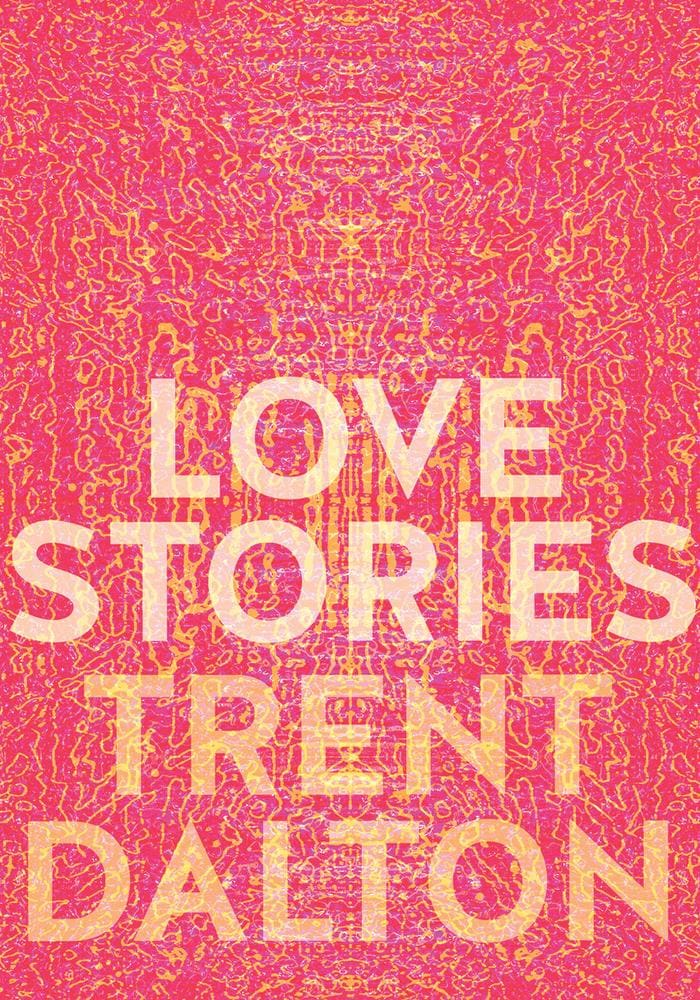
So there’s a thought. A published author sets himself up on a Brisbane city street with a folding table and a blue Olivetti typewriter, with a sign reading ‘Sentimental Writer Collecting Love Stories’ and waits for people to come and talk to him. And talk to him they do – 42 of them – and he writes their love stories up for them, and for us. Most of them are only about three pages in length, although some are longer, and one extends over two parts widely separated in the book.
I must confess that I can barely remember any of them afterwards. These are not great epics: they are often everyday and quotidian, and there are as many love stories that break up as there are love stories that last a lifetime. You get the sense- and perhaps this is Dalton’s intention- that nearly everyone has a love story of some description in them, no matter how tarnished it may seem from the outside.
I must be about the only person in the world who has not read Boy Swallows Universe and so I didn’t come to this book with a reservoir of affection and goodwill towards the author earned through enjoying an earlier novel. The book could have been cut in half: it could just as easily have been extended to double its length. There is no rhythm or build up in the argument, instead it is just the addition of one story after another after another, as if rolling the paper out of the typewriter and adding it to the pile. For me, it felt a bit like a newspaper column, and I found myself wondering if it were, whether I would seek out the column each day. I suspect not. I think that the earnestness and wide-eyed wonder would pall after a while.
One fact (as distinct from a story) did stay with me, though : that the average hug is less than 3 seconds. Coming from a family of huggers, I would like to think that our hugs last longer than that.
History of RomePodcast109- The New Millennium tells us that we really don’t know how much Phil the Arab (is that too familiar? Probably) had to do with Gordian III’s death. The Senate wanted Gordian deified and they did so over Philip’s objections – sign of a guilty conscience? Philip and his brother Gaius divided the Empire into East and West in order to govern it. Mike Duncan pauses at this stage to discuss the Goths. It is unclear whether they came from Sweden and pushed into Ukraine, or whether they were native to Ukraine. Either way, by 238 AD they were on Rome’s doorstep with persistent border raids, especially in Dacia. Philip oversaw the ‘secular’ games in 248 CE to celebrate Rome’s 1000th birthday which, despite the name, were highly religious. Meanwhile there was a rebellion in Moesia (near Kosovo) but the wise old senator Decius predicted that it wouldn’t last. Nonetheless, Philip sent Decius north to take charge of the troops. Another big mistake. There is a view, contested between historians, that Philip was the first Christian emperor, but this was probably only in comparison to Decius who outright persecuted them. He probably wasn’t. Ep.110 A Gothic Horror sees Decius (invited/compelled) by the troops to lead them back to Rome to confront Philip, whom the troops felt had been too reluctant to confront the Goths. Once Decius became emperor, he decided that Rome had lost its way because the gods had abandoned it on account of lax morality. He decreed that everyone had to sacrifice to the gods within 30 days- something that the Christians had a real problem with. After Decius was gone (it didn’t take long), the Christians had a real problem: what should they do with those Christians who complied? The second thing he decreed was that the role of Censor should be revitalized to improve the virtue of Rome. He offered it to Valerian, but he declined it – a wise move because it was too dangerous and impossible anyway. Then the Goths invaded, and both Phil and his son were killed.
The Coming Storm (BBC) I’m really enjoying this podcast. Episode 3 The Basement looks at the development of 4-chan and 8-chan, which stemmed from a site for video game fans. A severely disabled boy, Frederick Brennan, gets drawn into a toxic world of mainly young men and launches 8chan. It is on 4chan that ‘Pizzagate’ was spawned: a story about Hillary Clinton’s campaign manager, paedophilia and a pizza restaurant. Episode 4 Q Drops looks at ‘Q’, a supposed insider, who tells a story in which Trump is engaged in an epic battle against a cabal of satanic paedophiles who have hijacked the American Republic. Frederick Brennan moved to the Phillipines where 8chan was taken over by Jim Watkins because it was getting too big and expensive for him. There’s a suggestion that Jim Watkins might be Q, or might know who he is. This is all crazy stuff.
Emperors of RomeEpisode CLXV – Phillip asks ‘who would want to rule Rome?’ Why did the younger brother become emperor and not his older brother Gauis? Perhaps it was because Philip had a son, and could start a dynasty, which he commenced by appointing his 9 or 10 year old son Caesar. But really, to be emperor was on a hiding to nothing. He contracted a peace treaty with Armenia by paying money comprising 3% of the income of the empire paid as a tribute to Persia, not that the Romans called it a ‘tribute’. Then he contracted a peace treaty on the Danube. I can imagine that the troops didn’t think much of all these peace treaties. Dr Caillan Davenport calls the 1000 year celebrations the ‘cyculum’ games, based on the idea that they would only be seen once in a man’s life time (assuming that he lived to about 110). Dr Davenport discusses the claims that Philip was the first Christian emperor, pointing out that the claims are not found in the usual sources. Instead the stories seem to be ‘floating anecdotes’ which appear in a variety of sources, decontextualized from time and location- and thus, pretty suspect. Episode CLXVI – The Edict of Sacrifice (Decius I) goes into more detail about Decius’ instructions that all Romans (women, slaves, babies included- everyone except Jews) should make a sacrifice. Decius, an older man, had been claimed as emperor by the troops he was sent to command, and his troops fought with Philip’s troops at Verona and Philip and his son were killed. Decius himself came from current-day Serbia, and he carefully crafted his image for what he hoped would be a new Decian dynasty. For example, he added ‘Trajan’ to his name, trying to evoke “the good old days” and made much of his Danubian roots. Within the first two or three months of his reign, he issued the Edict of Sacrifice, a very public act of compulsory sacrifice, and a huge bureaucratic undertaking, with cards attesting that the sacrifice had been made. Those who refused could be imprisoned, beheaded or burnt. The Bishop of Rome was the first to be executed. In Episode CLXVII – The Gothic Invasion (Decius II) Dr Caillan Davenport suggests that the Goths may have originally come to Ukraine from Poland (or there are some suggestions of Scandinavia).’Goth’ means simply “The People” and in the mid 3rd century, they were still one people, not yet divided into Visigoths and Ostrogoths. They were led by King Kniva, who although initially defeated by Decius who was leading his troops, then pushed forward to take Phillippolis (in current Bulgaria). Dr Davenport then goes on at some length about a letter under Decius’ name but probably not his pen, to the governor of Phillippolis, telling him to wait until Decius himself arrived before embarking on battle with the Goths – Davenport has written an article about it, so he does go on a bit. Episode CLXVIII – The Battle of Abritus (Decius III) sees Decius and his son being killed at the Battle of Abritus. The Christian sources exulted in his death, seeing Decius only as a persecutor. The Battle of Abritus was a bad defeat, on a par with the Battle of Teuteoburg Forest, and it sent shockwaves through Rome. Decius had had a vision for the empire, but he had only a short reign, perhaps best seen as unfulfilled potential.
London Review of Books Podcast. I’ve just finished reading Anne Sebba’s book Ethel Rosenberg: A Cold War Tragedy. In this podcast, Ethel and Julius, Deborah Friedell discusses the book, giving a good summary of its contents (so much so that you barely need to read the book). The article on the LRB website is good too.
It’s the first Saturday of March, so it’s Six Degrees of Separation day. This meme, hosted by Kate at Booksaremyfavouriteandbest involves mental association of six book titles from the starting book that Kate provides each month. It might be on the basis of the title alone, or the themes that it deals with, or author, or location or…. anything that springs to mind. This month’s starting book is Graham Greene’s The End of the Affair. Yet another book I haven’t read. So, I’ve gone by title, focussing on the word ‘End’, with no mental gymnastics or creative insight. What a gloomy road I have been taken down!
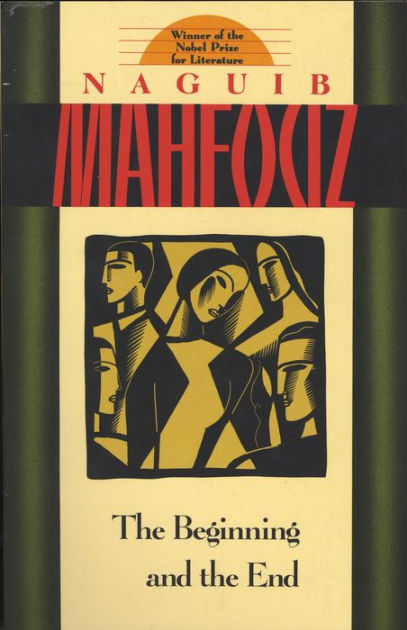
I started with fiction first. Naguib Mafouz’s The Beginning and the Endis a stand alone novel from 1949, and precedes his better-known Cairo Trilogy. I read it before I started blogging but here is what I wrote about it in my reading journal at the time. I gave it a score of 7/10.
Set in Egypt, a family is plunged into penury when the father dies. The eldest brother continues his life of idleness and becomes involved with criminals. Hussein sacrifices his own hopes to study to put his younger brother through army college. The youngest brother, selfish to the last, encourages his sister, disgraced when caught in a brothel, to suicide, then follows her. Reminiscent of Zola or Hardy in its lurching from one disaster to the next, but in its values quite Arabic.
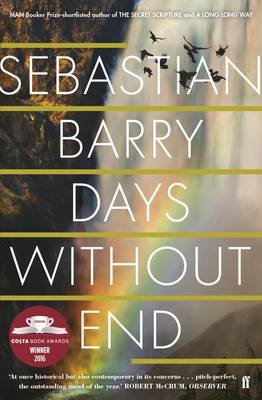
From 1930s Cairo to the American Civil War, the next book I thought of was Irish writer Sebastian Barry’s Days Without End(2017) In my review, I wrote:
In reading this book, there were flashes of Cold Mountain and unexpected echoes of Blood Meridian. There is certainly violence, but somehow it is dream-like and disconnected. The narrative voice in this book, speaking in the present tense throughout, in my head sounded to be a completely American accent, without even a trace of Irishness. It is, essentially, a love story, with beautiful descriptions of landscape and climate. I don’t often read a book with a film in mind, but I expect to see this on the screen one day, as it has a very filmic, epic quality. (See my review here)
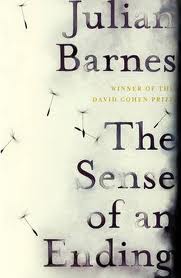
Julian Barnes’s The Sense of an Ending(2011)gives us just what the title suggests -a vague uneasiness about the ending. The main character, Tony, who writes in the first person in the first section of the book, receives a letter which causes him to go back to revisit his memories from the past, challenging his sense of life-narrative. Here’s what I wrote in my review
The title of the book is The Sense of an Ending, and it’s truly only a ‘sense’ that you are left with. Tony, too, thinks that he has found an ending to his story, but “there is unrest. There is great unrest.”
I thought that I had reached the end of the book, and had my own certainty that I’d finished with the story. In planning to write this post, I looked at a few other reviews in newspapers and blogs- only to find that perhaps I hadn’t finished it at all. Read this review that explains the ending, then keep on going through the comments -ye Gods, 423 of them!- and the real cleverness of the book reveals itself. It has sent me back to the start again! (See my review here)
My fiction titles exhausted, I turned to non-fiction . My word, historians and political commentators are very fond of the word “end”, finding “ends” to everything. Most of these I read before starting blogging, so either there are fewer books with “end” in the title now (it does seem rather presumptuous to declare the end of anything, really, given that we don’t know what is ahead of us) or I tired of reading them.
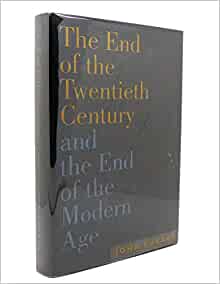
A book from 1992 (and hence pre 9/11) is The End of the Twentieth Century and the end of the Modern Age written by one of my favourite historians John Lukacs. Given the current events in Europe right now, it’s interesting to look at his interpretation written from the 1990s. Again, I read this pre-blog, but this is what I wrote about it at the time.
Lukacs argues that the twentieth century was a short one, starting with the guns of 1914 and ending with the collapse of the Soviet Union in 1989. He argues that the defining nature of the twentieth century was not the Cold War, but instead nationalism, which led to Nazism and explains why the USSR fractured. He clearly distinguishes between nationalism (i.e. ‘the people) and patriotism (‘i.e. ‘the country’). He predicts the re-emergence of Germany as a world power after a period of contrition, and expresses scepticism over the idea of a pan-stage, pan-national Europe. This is a mixture of history and the personal as he writes in the first person about his return to his native Hungary after the fall of the Soviet Union. Quite difficult to read, perhaps because he is a historian’s historian.
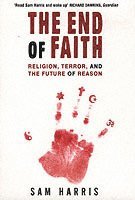
It seems that I wasn’t too impressed with Sam Harris’ The End of Faith: Religion, Terror and the Future of Reason(2004). How interesting- I now actually pay to subscribe to his meditation and philosophy podcast ‘Waking Up’. However, I wrote in my reading journal back in September 2005:
A book full of the piss and vinegar of self-conviction, Harris characterizes all religions as lacking reason, and moderates as culpable as fundamentalists in their acceptance of the inconsistency of ‘sacred’ texts. All religions are criticized, but especially Islam, which he sees as particularly provocative of violence. He does not deny that there is a ‘spiritual’, as distinct from‘religious’ impulse, but argues that this comes from meditation rather than text. While I agreed with much of his argument, I found his know-it-allness and intolerance of nuance to be off-putting, and his trenchant criticism of Islam in particular to be too strident.
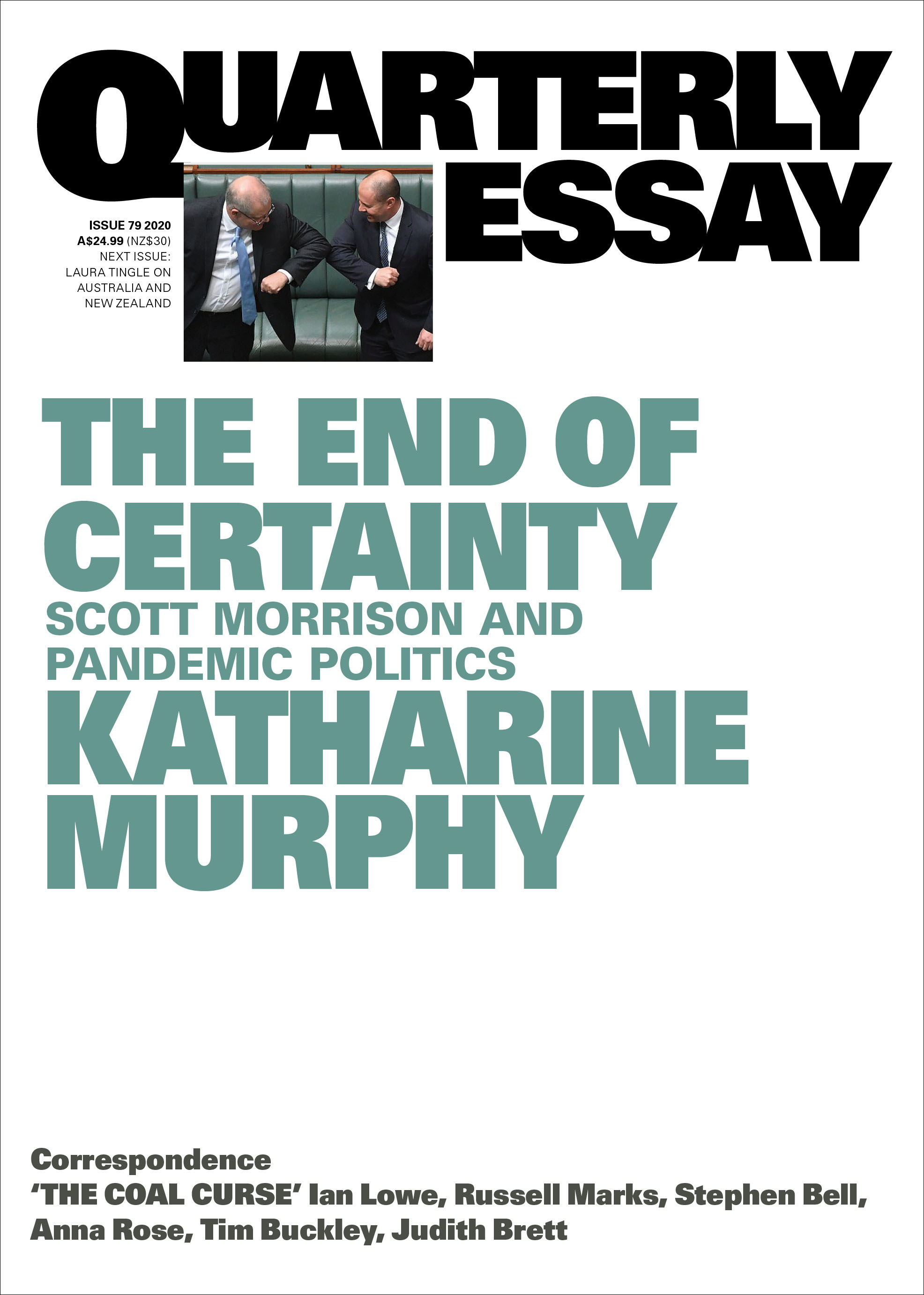
Finally I end up back in my own country and current politics with Katharine Murphy’s The End of Certainty: Scott Morrison and Pandemic Politics(2020). This is part of the Quarterly Essay publishing stable, and as Politics Editor for The Guardian, she writes from a current events political perspective. This meant that she had to jettison her original plans for this issue:
Journalism has long been described as the first draft of history and that’s certainly the case with Katharine Murphy’s latest Quarterly Essay The End of Certainty: Scott Morrison and Pandemic Politics. The arrangements for the Quarterly Essays are usually locked in a year ahead of time, and Katharine Murphy thought at first that she would be writing a profile of Australia’s unexpected Prime Minister, Scott Morrison. But in this Year of Madness, events overtook her and instead of writing an essay based solely on his personality, she interweaves it with a chronology of the unfolding of the COVID pandemic and the politics it has engendered. (See my review here)
Economic dislocation, war, terrorism, plague…. what a list!
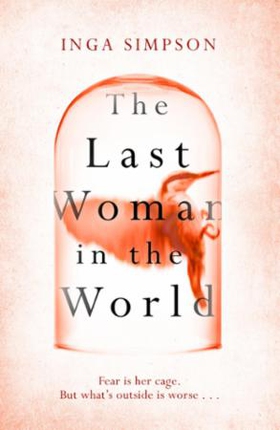
It seemed particularly fitting that I should finish reading this book on a weekend when anti-vaxxers, anti-mandate anti-government protesters and so-called ‘sovereign citizens’ should be gathering in Canberra, with a thicket of red Australian flags and placards reflecting their multiple priorities. The Last Woman in the World ends up in a Canberra, ringed by fire, threatened by both right-wing militias and shadow-like creatures that feed on fear, wiping out most of the population and civic society.
Rachel has been living off-grid in the New South Wales bush, working as a glass-blower and in contact with only her sister, Monique, and a local woman, Mia, who brings her food and supplies and ferries Rachel’s glass creations to various markets. Her solitude is shattered by a woman hammering on her door, imploring to be let in with her sick baby. Wary and resentful, Rachel opens the door to Hannah. Hannah tells of screaming people dying suddenly, engulfed by dark shadows that both women refer to as ‘them’, their faces contorted with terror. Death is everywhere, but as Hannah’s baby Isaiah becomes sicker and sicker, both women decide to seek out Rachel’s sister Monique, a G.P. in Canberra. They drive into the smoke-wreathed bush, as bushfires encircle Canberra, only to find corpses everywhere and the lurking presence of ‘them’.
There’s a lot going on in this book. Rachel has suffered from mental illness after a traumatized childhood and a past assault, and it’s not really clear whether ‘they’ are real or hallucinations. The descriptions of driving through fire are evocative and terrifying, but I had the feeling as if they belonged in a book other than this one – perhaps another book that Simpson wants to write one day- particularly when I learned that the writer herself had had to evacuate twice because of fire while writing the book. It marks the advent of novels, sure to continue over the next decades, when the years of pandemic of the early 2020s are background facts. The tension is ratcheted up by not really knowing who is friend or foe, although this is clearer by the end. Those shadowy figures – them– remain ambiguous and other, not ever fully realised or explained. The explanation for why some people seem to be immune to the influence of them strains credulity a bit and the ending was perhaps a bit too neat for my liking.
However, it was good to read a pursuit story like this where the protagonists were women. While disturbing, it is not as nihilistic as Cormac McCarthy’s The Road (and I’m glad that it’s not), and I enjoyed reading Canberra as a familiar, if eerily quiet, setting. But I’m still bemused by the title, which is not even accurate. Or did I miss something?
The History of Rome Podcast Good grief. Things are going from bad to worse. Now we have six emperors in one year 238 CE! Episode 107: The Year of Six Emperors sees the start of 50 years where the loyalty of the army turned on a dime, and the empire was buffetted by war, disease, famine. They had dominated for 400 years- perhaps this is going to be the end? But no. One of the first things that Maximus Thrax (Emperor 1) did was double the pay of the army to keep them onside, but that then meant that they had to fill the coffers. So Maximus led the army into Germany for plunder, and killed all the Severan supporters. Except the regional and elderly governor of Africa, Gordian, who for some reason was not touched. He went on to lead an uprising and had his much younger son declared co-emperor with him (Emperors 2 and 3). The Senate recognized the Gordians, but then they were defeated at a battle in Carthage. Gordian I committed suicide when his son Gordian II died in battle. So the Senate, realizing that Maximus would kill all of them if he got back to Rome, chose Emperors 4 and 5, two elderly senators Pupienus (an army guy) and Balbinus (a poet and administrator). The people were not happy and demanded that Gordian III, the grandson of Gordian I, be appointed Emperor as well, making 6 emperors. Episode 108 Gordian’s Knot saw Maximus marching into northern Italy, on the way back to Rome. The countryside was deserted, but the city of Aquileia defied him. There was a siege, but in this case it was the besiegers who were hungry. Maximus became even more tyrannical, and the ranks turned against him and the officers killed him and his son. This started off a cycle where the army would become arrogant and murderous, then would become contrite, then start sacking and murdering again. Meanwhile, back in Rome there was conflict between Pupienus and Balbinus, so they divided up the Imperial Residence between them (like Antonius and Getta had done). Then there was a disastrous fire (a familiar trope). The Praetorian Guard, judging them both useless, assassinated them after 4 months, and acclaimed Gordian III as their emperor. In 241, at his mother’s urging, Gordian married Tranquilina which brought her father Timesitheus to the position of Prefect of Rome and de-facto leader. He was acclaimed by all. But the Sasanians began stirring again, and Timesitheus died of illness while on campaign in Syria. Gordian filled the Prefecture with Phillip the Arab, who with his brother Gaius, filled the power vacuum. Big mistake.
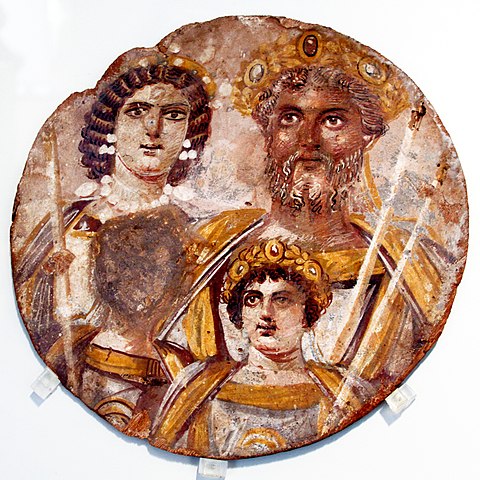
Emperors of Rome Just before I leave the Severans completely, I thought that I would backtrack and finish off the series of podcasts about Roman women. Episode CLXI – Syrian Matriarchy finishes off by looking at “The Julias”. The Severan dynasty was founded in 193CE by Septimius Severus, but in many ways it was his wife Julia Domna and her sister Julia Maesa who would guide the family. The family came from Syria, probably from the Roman/Arabic royal family. When Septimius Severus took the purple, he elevated Syrians and Libyans into Roman politics. Julia Domna was the mother of Caracella and Getta (who died in his mother’s arms when his brother killed him). The image on the left shows Julia Domna and her husband Septimus Severus and their two sons Caracella and Getta (and it’s Getta whose face is erased, no doubt at Caracella’s order ). Julia Maesa was Julia Domna’s sister, and she had two daughters Julia Soaemias and Julia Mamaea. Julia Maesa called claimed the title of ‘Grandmother of the Emperor’, on account of her grandsons Elagabalus and Severus Alexander. She was clearly running the family, and she was able to insist that Elagabalus ‘adopt’ his cousin Severus Alexander, and she was ruthless in killing off her own son Elagabalus when he went rogue. Julia Mamaea was the mother of Severus Alexander, and once he became emperor, Julia Maesa went into the background, leaving Julia Mamaea to be designated “mother of the whole human race”. The Julian women are important in that the Severan empire generally saw ‘foreigners’ becoming part of the Empire, forcing the Italian Romans to look at the East differently. Their influence was as mothers (and grandmothers) rather than as wives – a much more powerful position because although you can divorce a wife, it’s harder to get rid of a mother.
And so, back to the chronology of the Emperors, catching up with Maximus. Episode CXLVI – The Sun is Getting Real Low (Maximinus). Wow – the next 50 years were really unstable, with 26 emperors in the next 50 years. Some were just fleeting, others had more substantial (but still short) reigns. The empire was split into two with the Gallic empire acting independently. Maximus has had a rough time from historians, who characterize him as a barbarian. He doubled the army’s pay again, meaning that army pay had increased sixfold in about 40 years. He had to squeeze the people for money, which is what the enemy would have done to them, and which led to unrest. Episode CXLVII – The Vagaries of Chance goes with the ultimate short-term emperors, Gordian I and Gordian II. The impetus for the uprising that appointed them was over-harsh tax collection to pay for Maximus’ wages bill. The Senate, who didn’t like Maximus, were waiting for a catalyst to act and so when the Gordians came along, they endorsed them. But by the time that Maximum marched on Rome, Gordians I and II were already dead, having ruled for between 20 and 22 days- the short imperial reign ever. Episode CXLVIII – The Always Unpredictable Outcome of War looks at Gordian III. He was very young and was appointed a Caesar, a lower position than Pupienus and Balbinus. When the Praetorians killed Pupienus and Balbinus they didn’t just kill them: they tortured them. We need to remember that the Year of Five Emperors was still in living memory, and Rome survived that, and it expected to get through this too. But why and how? Dr Caillan Davenport suggests that it was because there was still a provinical attachment to the idea of Rome, beyond any individual emperor. Episode CLXIV – Gordian III sees Gordian III reign for six years, despite his youth, although he was brought down more by external forces than internal ones. Dr Caillan Davenport sees him as a pawn of his father-in-law Timesitheus, who more or less forced Gordian to marry his daughter to cement his position. We don’t know whether Gordian III died in battle, or as part of the mutiny led by Phillip. Gordian III was left with a fairly good reputation, even though the army he led was defeated in battle. But it was his successor Phillip to had to sign a humiliating peace treaty, not him.
The Coming Storm (BBC) I started listening to this in the middle of the night, and have caught up with it during the day. I’ve heard plenty about the rise of QAnon and the right wing in America, but this is different in that it is a British journalist, Gabriel Gatehouse, who finds links back to Britain in what is increasingly becoming an international movement. Episode 1 The Dead Body starts off with the QAnon shaman, whom Gatehouse interviewed when he was in America for the election. He dismissed him as a nutter, and was horrified to see him in the White House on 6 January. Gatehouse then goes back to the suicide of the Clinton aide, Vince Foster, which is a foundation myth of the QAnon movement. Episode 2 Sex, Lies and a videotape looks at the Arkansas Project, an Arkansas- led attempt to inject lurid stories about the Clinton into the mainstream media (aided by the Daily Telegraph in Britain). This conspiracy theory has Hilary Clinton as the main target, and was weaponized by Jerry Falwell who injected Satan into the whole story.
Rear Vision (ABC) Well, if we weren’t aware of passports and borders, we sure are now after two years of border closure because of COVID. Passports, borders and identity examines the history of the Australian passport. Wealthy people had travelled with ‘papers’ , but these became more important during WWI when ordinary soldiers were travelling overseas. Australian passports weren’t issued until 1948, and since the 1970s, they have been used as a form of identity check. Australian governments used the Immigration Restriction Act of 1901 to keep out people of non-European ethnic background, and they could refuse to issue a passport, as they did with Wilfred Burchett. Visas and ‘permission to enter’ have become increasingly complex, as we saw with Novak Djokovic.
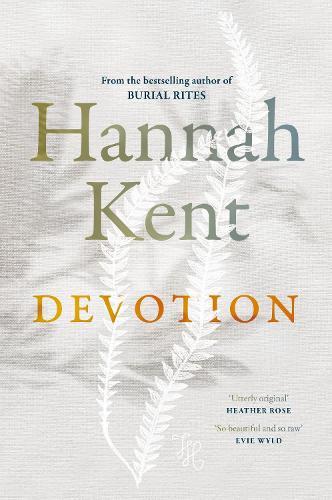
There’s often quite a wait between Hannah Kent books, but when they arrive, patience is rewarded. Both her earlier, well-acclaimed books Burial Rites and The Good People are historical fiction, both are exquisitely researched and both tease out the sense of being ‘different’ and alienated from other people. Her most recent book Devotion has these same qualities, although this time part of the book is set in 1830s South Australia, with a settler story that is more familiar to Australian readers than the settings of her earlier books.
The first part of the book is set in Kay, in Prussia amongst an Old Lutheran community. The creation of the Union Church by King William Frederick III, to which the community objected, had transformed this community of bible-led, devout people to become a community of Dissenters. Hanne’s father is an Elder in the church, and within the bounds of a strict, religious upbringing, Hanne feels awkward, ungainly and at odds with the other young girls who look forward to marriage and children within the church community. When a new family moves into the community, she is immediately drawn to Thea, a girl of her own age. Thea’s family had sold everything in the hope of being able to emigrate to avoid persecution, only to have the offer of emigration withdrawn, leaving them to start over again. When the offer of emigration to South Australia comes to the village of Kay, the congregation needs to decide if they will take the risk to sell everything too, unsure whether their passports will be denied at the last moment too.
The book, then, is set in three parts: Prussia in 1836, the ocean journey to South Australia in 1836 and South Australia in 1838 in a Hahndorf-like Lutheran agricultural village. The reviews that I have read of this book have been careful to avoid spoilers, and I shall too.
There have been criticisms that the book and its language is over-blown, but I just let myself be swept along with that. Others have chided the author for an overly-benign settler narrative but I have read several fictional and non-fiction tellings of early white settlements that are likewise marked with an early wariness and accommodation that was obliterated by later betrayal atrocities and massacres. (I’m thinking of That Deadman Dance;Dancing with Strangers). Others have criticized that the ‘goodies’ are too good and the ‘baddies’ are too bad. I didn’t care: there is something fable-like about the story, and archetypes go with the territory.
I just loved this book. It reminded me a 20th century film that you will no doubt recognize as soon as you reach half-way through the book, but infused with innocence and longing and a love for country. It has a striking cover too – no corsetted back-view of a woman here- that reflects the story beautifully. To be honest, I didn’t want the story to stop. I bet they’ll make a film of this one, too.
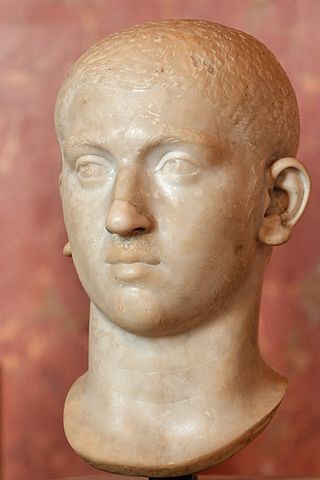
History of Rome Podcast Episode 105 The Last Princeps sees an even younger Emperor – only 13- but Severus Alexander was the exception that proved the rule that a very young Emperor was usually a disaster. But it was the calm before the storm. His mother appointed a council of senators to advise him. He reigned for 13 years, the longest reign since Antoninus Pius. He re-established the Roman gods (although continued loyalty to El-Gabal probably influenced the Christian’s choice of December 25 as Christmas). But the Praetorians and his mother Julia Mamaea vied to influence him, and he could never stand up to his mother and grandmother. Episode 106 Barbarian at the Gate sees Severus Alexander having to cope with the rise of the Sassanids in the East under Ardashir I who played hard-ball. Severus Alexander had had to withdraw troops from the Danube regions to go over to Syria, and the Danubian legions were furious when Germanic tribes invaded, slaughtering their wives and children. From amongst the trooops came Maximinus Thrax, from Thrace, known as the first ‘Barbarian’ Emperor. He was declared emperor by his troops and he ordered the troops to kill all the Severans, including Severus Alexander and his family. He was only 26 years old, and for the next 50 years there would be a new emperor every two years, leaving the Empire almost at the point of extinction.
Emperors of Rome Episode CXXXVII – Mother Knows Best (Severus Alexander I) sees the army, the people and his own grandmother swing their support behind his cousin, Severus Alexander. They brought Severus Alexander up very carefully, keeping him on a short leash so that he didn’t go rogue like Elagabalus did. He was about 14 when he became emperor, and he was advised by a group of senators (including the historian Cassius Dio himself). Episode CXXXVIII – Rise of the Sasanian Empire (Severus Alexander II) The Historia Augusta claims that Severus Alexander wanted to add Christ to his oratory of gods, and to build a temple to Christ but this is not historical. The Sasanians were an empire that rose out of the ashes of the Parthians in Iran, and they would be a leading regional power for the next 400 years. They called themselves The King of Kings, but we don’t really know a lot about them except that they caught the Roman army unawares. The troops demanded that Severus Alexander be there in person – no more shunting off the task of leading the troops to a general- now the emperor was expected to be there in person. Episode CXXXIX – A Fish in a Net (Severus Alexander III) Poor old Severus really is at the mercy of his historians. Herodian sees him as a namby-pamby, who cried as he left Rome as he went off to fight with 80-90,000 troops, and his mother. The army was itching for a fight, but Severus Alexander wasn’t. He divided his army into three: one segment in Armenia, another on the Tigris/Euphrates, and the third in Palmyria in Mesopotamia. He led this last group, and the Romans had to retreat after a humiliating retreat in winter, with many deaths on the march home. The Sasanians then went home, because they were a surge-force rather than a standing army. Rather dubiously, Severus Alexander held a triumph when he went home (it was certainly no victory). Episode CXL – A Ridiculous Waste of Time (Severus Alexander IV) No sooner had the eastern threat abated than the German tribes invaded to the north. It’s hard to know whether this invasion was a result of population pressure, or whether it was opportunistic. Severus Alexander didn’t want to fight here either, and offered to buy off the German troops- something that the troops couldn’t stomach. So they revolted and chose one of their own – a military man with the support of the troops. Severus Alexander and his mother were killed in his tent. Dr Caillan Davenport says that it’s hard to evaluate him, because he seems completed controlled by others. He was not bloodthirsty, he was deferential to the Senate and he built things. But he was not a successful leader in wartime, and he marked the end of the Severan dynasty which had lasted from 193-235 C.E.
History Extra Podcast It’s funny how you can read or learn about something at one stage in your life and it evinces lukewarm interest, then decades later you are fascinated by it. Perhaps the rise of the extreme-right across the world today that made Vichy France: Everything You Wanted to Know so fascinating. This is a question and answer session with Professor Shannon Fogg who wrote The Politics of Everyday Life in Vichy France: Foreigners , Undesirables , and Strangers in 2009. Good basic questions like Where was Vichy? Why Vichy? Did the arrangements with the Nazis also apply to the colonies? What was everyday life like? At the end, she talks about the way that Marshall Petain has been embraced by the right.
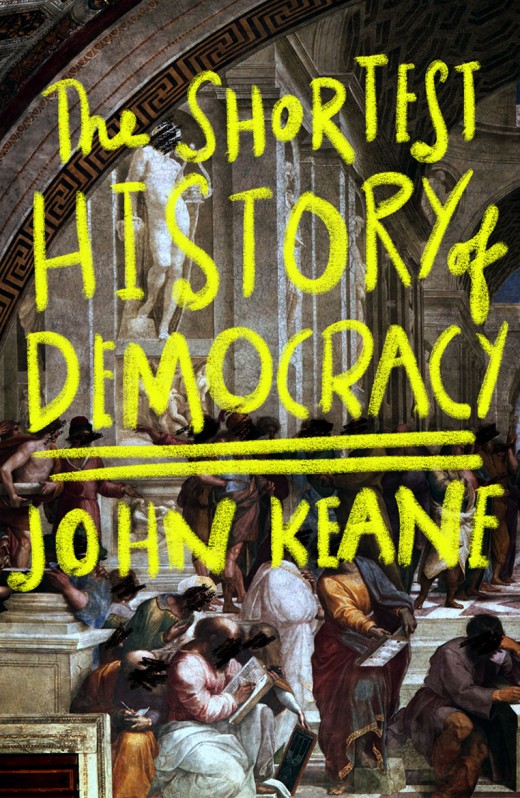
I must confess that this book would not have held much interest for me twenty years ago. But, although at the time I scoffed at Francis Fukuyama’s hubristic claim for ‘the end of history’, I would never have predicted that within thirty years we would see UK and US clutching at clowns, the rise of strong men across the globe and the bald-faced subversion and rejection of what had appeared to be stable democracies. I’m now more conscious of the contingency of democracy, and quite frankly, more fearful for its future. Suddenly, for me, this book is urgent reading.
Part of Black Inc’s ‘Shortest History’ series, this book is just what is claims to be- both short and a history- and although the last section took me from scepticism to despair, it does end with a claim for a radical democracy that can, perhaps, be “wisdom of global value”. This is a history that emphasizes change and contingency, upheavals and setbacks. As Keane notes in his introduction, “Democracy has no built-in guarantees of survival” (p. 6).
The structure of the book is foreshadowed by a very useful ‘Democracy’s Timeline’, where events drawn from across the globe flesh out the book’s three parts: The Age of Assembly Democracy; The Age of Electoral Democracy and The Age of Monitory Democracy. He starts off the book by debunking the misconception that democracy started in Ancient Greece. This idea, he says, was a 19th-century conceit, promulgated by people like George Grote, the English banker-scholar-politician who co-founded University College in London. Instead he looks back 2000 years earlier to early assemblies in Syria-Mesopotamia in 2500BCE, which were seen as an earthly imitation of the assemblies of the gods in a conflict-riven universe. The caravan routes spread the idea of assemblies to India by 1500 BCE, then on to the Myceneans and Phoenicians, taking root among the 200 Greek-speaking citizen states throughout the Mediterranean quite separately from its development in Athens by 507BCE. Not all these assemblies survived, falling victim to conquest, conspiracy or tyranny: threats that have always faced democracy. Although current day fans of direct democracy hark back to Athenian Greece, it too had a degree of deputation. There was a council of 500, for which every (male, free) citizen was eligible for a year’s service, and it in turn had a smaller group of 50 senators for day-to-day administration. As is often the way, those who were satisfied by assembly democracy rarely wrote about it, while the sources are replete with the criticisms of aristocrats with the leisure to write, who saw it as a form of mob rule. The depiction of ‘democracy’ as female that we see to this day in statues and demonstrations could have been a dig at the ‘female trickery’ of democracy. The dalliance of democracy and armed force proved fatal for Athens as a form of ‘democide’ – the self-destruction of democracy- that remains possible and indeed, is playing out, across the world today.
The narrative then jumps ahead 800 years to Electoral Democracy, landing in the 6th century CE with the birth of Islam where the practice of appointing wakil to handle distant legal, religious and commercial matters was customary. After Faroe Island and Icelandic assemblies in 930CE, there is a shift in the 12th century CE to the Atlantic region, starting with the birth of parliamentary assemblies in Northern Spain as a way for King Alfonso IX to gain the support of the nobles, bishops and money citizens to evict the Muslims. The timeline moves on to the Swiss cantons, the Magna Carta, and the British colonies in Virginia, the French Revolution, the Declaration of Independence, secret ballots and female suffrage. While this progression is noted, Keane does not dwell on any of them at length. Instead, he notes that representative democracy was seen as a territorial imperative in a large empire, and it was a way of keeping leadership on a leash. Most importantly, unlike assembly democracy, representative democracy recognized that social disagreements and conflicts were legitimate. “The people” was not a homogeneous body, and there was no longer an attempt to reach the ‘consensus’ of Athenian assembly democracy. There was always anxiety about ‘mob rule’ and universal suffrage, but this had abated by the early decades of the 20th century. Between World War I and II there was talk of ‘international democracy’ but this collapsed under the weight of war, influenza and the collapse of all continental empires. After 1918, hardly any European countries were blessed with governments that lasted longer than twelve months. Electoral democracy was destroyed by ‘purple tyranny’ (i.e. monarchs rolling back universal suffrage), military dictatorship and totalitarianism.
His third phase, Monitory Democracy dates from about 1945. In the wake of political catastrophe, war, dictatorship and totalitarianism, there was a realization that the fetish of elections and majority rule had to be broken, and a new commitment to democracy was understood as the protection of citizens from coercion, a celebration of diversity, a decrease in social inequality as well as free and fair elections. The crowning glory of the 1940s was the Universal Declaration of Human Rights.
By ‘monitory democracy’, he means
a form of democracy defined by the rapid growth of many new kinds of extra-parliamentary, power-scrutinizing mechanism: ‘guide dog’, ‘watchdog’ and ‘barking dog’ institutions…Within and outside states, independent and toothy watchdog bodies have begun to reshape the landscapes of power. By keeping corporations and elected governments, parties and politicians permanently on their toes, the new watchtowers question abuses of power, force governments and businesses to modify their agendas- and sometimes smother them in public disgrace.
p. 161, 162
The growth of monitory democracy was not inevitable. Despite Nelson Mandela, Nehru’s ‘Tryst with Destiny Speech,’ JFK’s Ich bin ein Berliner declaration, there were often setbacks. By the 1970s 1/3 of the worlds 32 functioning multiparty democracies that had existed in 1958 had become some kind of dictatorship (p.147).
Communication has always been fundamental to democracies. Assembly-based democracies relied on oral communication and messages by foot or by donkey. Electoral democracy required print, and indeed fell into crisis during the advent of early mass broadcasting media like radio. Fundamental to monitory democracy is the role of the multi-media as a way for citizens to track and resist the structures of power. Indeed, he asks, if the digital media ecosystem somehow collapsed, would monitory democracy survive? (personally, I doubt it).
At this point, drawing to the end of the book, he looks around at the health of democracy today. At first he strikes a rather optimistic pose. Even though we know about the manipulation of data, the distortions of algorithms, state surveillance and “other decadent trends”, he says, equally striking is the way that decadence, and the use of armed force breeds stiff public resistance. Environmental action has given the earth a voice again.
Democracy is redefined to mean a way of life that renders power publicly accountable through elected and unelected representative institutions in which humans and their biosphere are given equal footing
p. 181
At this point I found myself raising a skeptical eyebrow. Had the author not seen the kneecapping of climate action at COPs, most recently last year? What about January 6 in America? What about the blatant gerrymandering and attack on voter rights in US? What about the shadowy power of lobbyists? What about the rise of ‘sovereign citizen’ marches throughout the world? Had he not seen these things?
Ah yes- he had, as he goes on to talk about the fears for the fate of global democracy, the shift to executive rule and the use of gag orders and leak investigations, the appointment of heads of US government departments without legislative approval by Trump and the extended lockdowns enforced by governments during COVID. He notes the decline in commitment to democracy amongst younger generations. In India, the majority of citizens (53%) say that they would support military rule; in Latin America only 24% of people are happy with how democracy is working in their countries. New despotic regimes are arising in Turkey, Russia, Hungary, United Arab Emirates, Iran and China:
A new type of strong-armed state led by tough-minded rulers skilled in the arts of manipulating and meddling with people’s lives, marshalling their support and winning their conformity…They are masters of ‘phantom democracy’. They do all they can to camouflage the violence they use on those who refuse to conform. Using a combination of slick means, including calibrated coercion masked by balaclavas, disappearances and back-room torture, they manage to win the loyalty of sections of the middle classes, workers and the poor. They labour to nurture their willing subjects’ docility. Voluntary servitude is their thing. And they travel in packs. The new despotisms, led by a newly confident China, are skilled at navigating multilateral institutions to win business partners and do military deals well beyond the borders of the states they rule.
p. 189,190
So, he asks, what then are we to do? Should we just give in? He notes that it is not possible to retrieve and breath life into past justifications of democracy like Christianity, nationality, protection of private property and utilitarianism. Democracy doesn’t always bring peace (look at Israel) or “economic growth”.
Instead, he says, we need to reimagine democracy as the guardian of plurality, freed from the dictates of arrogant, predatory power (p. 195). We need to keep the problem of “abusive power” central to how we think about democracy. (Although at this point, I start thinking about vaccine mandates and those upside-down red Australian flags. Are there circumstances where coercion is justified? Where does the ‘sovereign citizen’ leave society?) But an emphasis on “abusive power”, he argues, is the shape-shifting power of democracy:
Thinking of democracy as a shape-shifting way of protecting humans and their biosphere against the corrupting effects of unaccountable power reveals its radical potential: the defiant insistence that people’s lives are never fixed, that all things, human and non-human are built on the shifting sands of space-time, and that no person or group, no matter how much power they hold, can be trusted permanently, in any context, to govern the lives of others…democracy shows us that no man or woman is perfect enough to rule unaccountably over their fellows, or the fragile lands and seas in which they dwell. Is that not wisdom of global value?
p. 197, p. 201
I must confess that, despite wanting to hold on to the optimism of his closing paragraph, I am still fearful, and am becoming increasingly so as I see COVID-related protests spreading around the world, drawing to themselves both conspiracy theorists and people who are deeply concerned about the over-reach of abusive power. I am grateful for another way of thinking about democracy, albeit an idealistic one, because I find myself backed up against a wall. In this book Keane takes a very long view, going back much further than Athenian democracy, and his three-part frame of analysis is useful for discussing democracy without getting bogged down in detail. The book is engagingly written, it even has illustrations, and it scoots along at pace. If one of the advantages of reading “the shortest history” of a concept is a brisk, informed analysis (as distinct from re-telling) and introducing a new way of scaffolding one’s thinking, then this one is well worth reading.
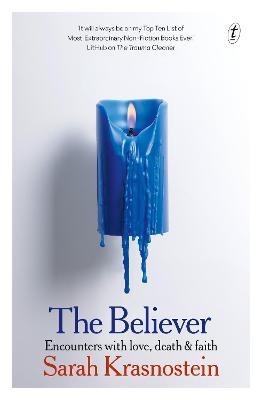
Sarah Krasnostein’s breakthrough book The Trauma Cleaner, the biography of the late Sandra Pankhurst was such a compelling telling of such a complex personality that it is Sandra, and not Sarah, who remains in my memory. But looking back on my own review, Krasnostein was obviously present in the narrative, something that I bridled against when I read it. In this most recent book of six different explorations on the nature of belief, I was very much aware of Krasnostein as journalist in what could, in a different configuration, be a series of six in-depth, long-form essays. Each one of them on its own merits is interesting, but I did find myself wishing that there was more integration and more of an overarching argument in the book. In the preface, Krasnostein writes:
You’re about to read six different stories, six different notes in the human song of longing for the unattainable. Their combination is the seventh note.
p.2
I’m not convinced that ‘combination’ in itself is a story, as such. Certainly the structuring of the text is very deliberate. The book is divided into two parts. Part I ‘Below’ is fronted with a quote W.H.Auden’s ‘The Hard Question’: And ghosts must do again what gives them pain. Part II ‘Above’ has an etymological description of the word ‘chord’, as both noun and verb.
Each of these two parts has three stories, but they do not appear one after the other but the narrative cycles from one episode to the next between them in turn. Extracting them from the intertwined narrative, the first story, ‘The Death Doula’ traces the involvement of a buddhist death doula Annie Whitlocke who is caring for Katrina, a bayside 59-year old woman who is dying of cancer. The second story, ‘Paranormal’, is where Krasnostein interviews and accompanies people who are looking for paranormal activity, some by sensation, others like Dr Vladimir Dubaj by looking for empirical evidence of the paranormal. The third story in Part I is ‘In the Beginning’, where Krasnostein visits the Creation Museum in Kentucky , the brainchild of Ken Ham, a former high school teacher from Queensland. He is the founder and CEO of Answers In Genesis, a fundamentalist evangelical ministry which reads the bible literally (including the ‘young earth’ creation theory that the universe was created 6000 years ago). These three stories appear in a regularly alternating structure throughout the 165 pages of Part I.
Part II (‘Above’) has three intertwined stories too. ‘Halfway Home’ tells the story of Lynn in America, imprisoned for thirty-four and a half years – half of her life- for arranging for the murder of her ex-husband who sought custody of his child. ‘Theories of Flight’ tells of Victorian pilot Fred Valentich who reported a mysterious craft and lights above his plane before it disappeared somewhere close to Cape Otway in October 1978. His disappearance, along with the sighting by many people of another unidentified craft in Westall in 1966 and the Roswell incident in 1947 (US), is still discussed and trawled through by ufologists whose meetings and lectures Krasnostein attends. In ‘The Kingdom of Heaven’, Krasnostein meets a community of Conservative Mennonites at the Light of Truth fellowship in New York, speaking mainly with the women whose conservative fundamentalist Christianity is more family-based than that of the Creation Museum in Part I. The structuring of these chapters is not as regular as in Part I, possibly because there is an imbalance in the length of the stories.
The book finishes with a Coda, which gives an update on ‘The Death Doula’, ‘Half Way Home’ and ‘The Kingdom of Heaven’. Interestingly, these stories were more centred on women, where her relationship with the ‘subjects’- is that the right word for her informants?- is closer.
Given that such care has been taken with the arrangement of this narrative, it behoves the reader to ask “does it work?” I don’t really know if much has been gained by this cutting and dicing, beyond what would have been achieved by a straight one-after-the-other narrative. At least in this book, the reader is provided with a table of contents, something sorely lacking in Michelle Tom’s even more disjointed Ten Thousand Aftershocks (my rather bad-tempered review here). It is possible to backtrack and find the earlier episodes if memory falters. I am nonplussed by the inclusion of ‘Half Way Home’, which is more a matter of putting one foot in front of the other, rather than a broader search for meaning. I found myself wondering if this story really belonged in a different book.
In her foreword, Krasnostein says that her book is about
certainty in the absence of knowledge; how the stories we tell ourselves to deal with the distance between the world as it is and as we’d like it to be can stunt or save us.
p.1
Of Jewish heritage herself, her impatience is most palpable in the two manifestations of Christian belief – the Creation Museum and the Mennonites – while she seems to be able to maintain a detached and still contingent scepticism for UFOs and the paranormal. She talks of ‘distance’, both psychological and objective, and it was this distance that attracted her to these stories in particular.
I didn’t set out to find these stories….In each case, I needed to understand them, these people I found unfathomable, holding fast to faith in ideas that went against the grain of more accepted realities. It may be accurate to say that I needed to get close to something, someone, that felt very far away. That I believed maybe I could.
One of the lies writers tell themselves is that all things should be understood.
p.2
I suspect that Krasnostein herself would admit that she has not been able to bridge this distance in each of these cases. Despite her involvement in the last days of Katrina’s life, the process and experience of death is still beyond her grasp, although she learns more about life from attending Katrina’s living-wake (i.e. Katrina herself attended, before she died) and the ceremony after her death. The religious believers remain beyond her understanding and sympathy; she is not sure about the UFOs or ghosts. She admits that she used to think of the world as a type of text, indexed and logically related, and “a faith that, if I could only ask the right questions, I could finally understand.”
To believe in the world as this type of text is to believe that all lives- regardless of whether they resolve happily- make sense. To have faith in context and causation. To insist that people for the most part are intelligibly coherent in the sense of being predictably inconsistent and that they are capable, within reasonable bounds of incredible insight and meaningful growth as they learn, painfully, to bend themselves around reality instead of expecting reality to miraculously bend itself around them.
To repeatedly believe this about people is, to borrow from Philip Roth, to be wrong. But at least it is also to be wrong about oneself. And what other choice do we have?
p.308
This is probably getting closer to my own belief about myself and the way the world works, and I’m not sure that it is as “wrong” as Roth proclaims. The title ‘The Believer’ could be applied to five of the six people she has interviewed and encountered here, but she and I alike question how much insight and growth some of them display, when the certainties are imposed from without rather than emerging from within. But the title could just as easily be applied to Krasnostein herself, as she tests out a ‘faith’ in human nature that Philip Roth (in all his typical bombast) declares to be wrong. And, as she says of this faith and the attempt to reach across distance, perhaps we have no other choice.

 The Resident Judge of Port Phillip