Author Archives: residentjudge

I hear with my little ear: Podcasts 1-8 May 2022

The History Listen (ABC). The Benalla Experiment looks at the post-war migrant camp at Benalla in Victoria for single mothers (for whatever reason) and their children from countries affected by war. It was not a transit camp: people stayed there for years. It had a factory next door, and the women worked in the factory to pay back the costs of their voyage, and 24 hour child care was provided. Just as much, this story is about the struggle with Heritage Victoria to get the site recognized for its social and cultural importance, even though many of the buildings are now used by community organizations.

History of Rome Episode 132 In This Sign sees the end of Diocletian who just died after a reign that was important in restructuring the empire but marred by the persecutions and his failure to be able to establish the tetrarchy on a long-term basis. Perhaps that was because a four-headed structure in itself was unstable, or perhaps because none of the others were as good as he was. Meanwhile, Constantine -recognized as the first Christian emperor- was playing a long game. It’s not really clear whether he really was a Christian, or whether he was after the absolute power that it conferred. Christianity didn’t become the state religion for 50 years after Constantine’s death. The story of him painting a cross on his soldiers’ shields is probably apocryphal- he had 40,000 soldiers after all- and it wasn’t a cross, it was a Chi-Ro which certainly indicated Christ but also was a symbol for ‘good’. Moreover, there is no sign of a cross or Chi-Ro on his Triumphal Arch, which is strange.

The Battle of the Milvian Bridge. Wikimedia

Episode 133 The Milvian Bridge goes slow-motion into the battle that pitted Constantine against Maxentius. Maxentius wasn’t particularly popular because he had levied heavy taxes for his building projects, which he hoped would shore up his position. Constantine had 40,000 well trained loyal soldiers: Maxentius had 100,000 lukewarm ones. They first met in battle outside Verona, where Constantine triumphed. He then turned to Rome and the two sides met in battle on the Milvean Bridge over the Tiber. Maxentius consulted his soothsayers over whether he should mount a battle and they said ‘the enemies of Rome will be defeated’. (They didn’t specify which side was the enemy though). When Maxentius’ troops realized that they were being defeated, they tried to cross back over a small pontoon bridge and many (including Maxentius) ended up in the water. Constantine marched into Rome, although he did not sacrifice to Jupiter, which suggests that he had found a new god. This wasn’t the real victory of Christianity over paganism that is often depicted. If Constantine had made a genuine conversion, he certainly underplayed its significance amongst the Romans who weren’t ready to have it imposed on them.

Episode 134 And Then There Were Only Two returns to the East which was divided up between Maximinus Daia and Licinus. Maximinius Daia recommenced the persecution of the Christians that Galerius had put an end to. He genuinely hated Christians, and saw Christianity as a real threat to the Empire. Licinus was an ally of Constantine, with whom he signed the Edict of Milan which legalized Christianity, and more importantly, returned confiscated property to Christians. Quite apart from any genuine belief in Christianity, this was a way of wedging Maximinius. The Battle of Tzirallum on 30 April 313 saw Licinus triumph, and now there were just two emperors instead of four.

Australia If You’re Listening (ABC) Episode 5: What We Missed While We Were Knifing PMs goes through the political circus where we saw four powerful people lose their jobs six times. I had heard about the failure of the Labor Party to negotiate with the Greens, but I was unaware of the negotiations between Turnbull, Combet/Wong and Ian McFarlane which could have actually eventuated, but everything was upended by Abbott’s ascension. Ross Garnaut had high praise for Gillard’s system, derided by Abbott as being a ‘tax’, and the Australian Renewable Energy Agency (ARENA) and Clean Energy Finance Corporation (CEFC) only survived because Clive Palmer wanted a photo opportunity with Clive Palmer.

Start the Week (BBC) I haven’t watched Bridgerton, but I know that Regency is having a bit of a moment. The Georgians features Penelope Corfield (author of The Georgians: The Deeds and Misdeeds of 18th Century Britain), Tristram Hunt (author of The Radical Potter: Josiah Wedgwood and the Transformation of Britain) and Professor Philip McCann , the Chair in Urban and Regional Economics at the University of Sheffield. They discuss the change in consciousness during the Georgian era (which actually is the long 18th century) in relation to commercialisation and expertimentalism and ‘can-do’ism (my word, not theirs). Interesting to consider that Australia was colonized within this Georgian/Victorian timespan.

Things Fell Apart (BBC) Episode 4: Believe the Children looks at the spate of satanic child abuse cases in the United States in the 1980s and 1990s, spurred largely by Christian evangelists and the media, and drawing on guilt felt by parents for placing their children in child care. It features an interview with Kelly Michaels, who was sentenced to 47 years imprisonment for sexually abusing children, until her conviction was completely overturned. I found this interesting article about the interviewing techniques used in the McMartin Preschool and Martin cases, compared with a Child Protection Services unit. The satanic child abuse conspiracy of the late 20th century has resurfaced with QAnon today.

How It Happened: Putin’s Invasion Episode 4: The View From Russia challenges the idea that Western sanctions are going to pressure the Russian people into turning against Putin. A Russian commentator points out that 50% of Russians are hard-core Putin supporters. Another 1/3 would be conditional supporters. Only about 20-25% oppose Putin, but they are not necessarily prepared to come out and protest against him. This is largely generational: older people remember much harsher sanctions than the current ones, and younger people have largely fled. Alexei Navalny is Putin’s most prominent opponent, but currently facing charges and imprisonment. His supporters are taking a long view, hoping that in about five years time, when Russia faces an inevitable crisis, they will be ready.

Rear Vision (ABC) The Marcos Revival- from pariahs to the presidency in the Phillipines. Despite his parents embezzling $5-10 billion dollars from the Phillipines, Ferdinand ‘Bong Bong’ Marcos is in a winning position in the Presidential elections this coming week. The outgoing president Rodrigo Duterte is still very popular, despite killing 30,000 Phillipinos, most of whom come from the lower classes. However, his government has spent generously in social welfare programs directly aimed at these same lower classes. Presidents can only serve one six year term, and Duterte had hoped that his daughter Sara would contest the election. However, she decided to run for vice-president in an arrangement with Ferdinand Marcos Jnr, instead, incurring her father’s ire. President Duterte is making lots of insinuations that Marcos is a drug addict. The Marcos family, meanwhile, has had a long-term strategy for decades to rehabilitate the family reputation and entrench its power.
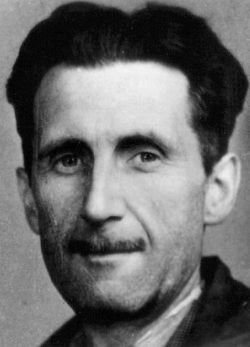
‘Politics and the English Language’ by George Orwell

Source: Wikipedia

I’ve only just started attending the Ivanhoe Reading Circle after 122 years – of the Circle, not of me – and George Orwell’s essay ‘Politics and the English Language’ seemed a rather brave choice for a reading group. It was published in 1946 and it is only about 24 pages long. Many of its ideas have been rehashed (in, for example, Don Watson’s Death Sentence) and it’s hard now to come to it with fresh eyes. I must admit that I was rather disappointed in it.

It starts very abruptly, and I felt as if I had walked in on a conversation that had already started. He then goes on to lampoon five examples of writing, and identified four problems: (i)stale metaphors, (ii) ‘verbal false limbs’ (i.e. adding phrases like ‘serve the purposes of’ or adding syllables to a word like ‘deregionalize’). Then there is (iii) ‘pretentious diction’ or the use of foreign words and jargon; and (iv) meaningless words to hide the vacuity of ideas behind them. I don’t share his dislike of metaphors. Certainly they can become stale, but they act as a form of short-hand, and not every one has the clarity and imagination to mint their own. He uses the example of the ‘ancien regime‘ as an example of pretentious diction, but among historians ‘ancien regime‘ has a specific and accepted meaning. He then complains about the gumming together of long strips of words , much as Don Watson did sixty years later but with more elan. (Am I allowed to use that foreign word?).

He then goes on to talk about political language. It is, he claimed “broadly true that political writing is bad writing”. We’re about to be deluged with political writing now that we’re in election mode. I don’t know if it’s the writing about politics that is bad, or just the ‘talking point’ repetition and evasiveness of what comes out of politicians’ mouths that is the problem. “Political language is designed to make lies sound truthful and murder respectable and to give an appearance of solidity to pure wind”. All true, but is this a problem of language or intent? To me, it seems that it’s the behaviour around the language, rather than the language, that makes it all so sordid. The failure to call politicians out when they refuse to answer a question; the failure to challenge dubious facts; demonisation (e.g. ‘illegals’ for ‘refugees’); the numbing repetition of phrases (‘going forward’, anyone?) and the dogged labouring of the issue of the day. “All issues are political issues” he says “and politics itself is a mass of lies, evasions, follies, hatred and schizophrenia”. For me, this is the nature of politics, rather than the language used to express it.

He makes some big claims about the connection between language and politics (hence the title of the essay), but he doesn’t back them up. “If thought corrupts language, language can also corrupt thought” he asserts, but then returns to his criticisms about woolly language and circumlocution. He claims that his prescriptions are not just about simplicity, or ‘good prose style’, and yet these are the solutions he offers without really tearing into the question of language and political imagination. He seems to see politics as only ‘retail’ (another buzz-word that I assume means ‘selling’ a policy) in terms of the hearers receiving politics, but not of creating politics or imagining alternatives.

The discussion at the group provided an opportunity to vent our annoyance at politicians and politics, but I don’t know if we generated anything new. I felt as if it had all been said before – albeit, possibly by Orwell before other people- and it just felt a bit stale.

My rating: No idea. How do you rate this?

Sourced from: purchased e-book, but you can find it online quite easily.

I hear with my little ear: Podcasts 25-30 April 2022

History of Rome Podcast. Episode 129 Abdication. Well, Diocletian had done all that he wanted to do and now all he had to do was work out a transition plan, so that there would be a stable tetrarchy in place to cover the whole of the Roman Empire. Really, although it was called a tetrarchy, it was really two Caesars (junior emperors) and two Augusti, one of whom took the lead- in this case, Diocletian. In Diocletian’s plan, each Augustus would rule for twenty years, then abdicate, the two junior emperors would move up to be Augusti and two new junior emperors would take their place. Simple, eh? Problem was, if he was going to keep the 2X2 structure, he would have to persuade Maximian to retire at the same time, which he managed to do. Galerius and Constantius stepped up, but who was to take their place as junior emperors? Episode 130 Lost in Transition Everyone expected that Constantine and Maxentius, as sons of reigning emperors would be placed in the vacancies, but Diocletian wanted to break the idea of hereditary emperors. So he looked elsewhere. Instead of the hereditary sons, Severus and Maximinus Daza were declared junior emperors. Then Maxentius (the son of Maximian) revolted; Maximian arranged for Severus to be killed; Galerius had to slink out of Italy, and Constantine was lurking up in the north. This is all very confusing- all these Maxes – the names are too similar. Anyway, it’s a stuff-up. Episode 131 The New Game in Town. When Severus was killed, Galerius arranged for his friend Licinius to be appointed and catapulted him up to be Augustus without serving the requisite time as Caesar. Old Man Maximian argued with his son Maxentius, and ended up seeking refuge with his son-in-law Constantine. It was such a mess that they even asked Diocletian to come back, but he said that he was happy tending his cabbages. But then Maximian mounted a come-back against Constantine, who defeated him and was very angry, exhorting him to ‘do the right thing’ and kill himself- which he did. Even though Maxentius and his father weren’t talking, Maxentius vowed to avenge his father’s honour. Then Galerius got sick and smelly and died. This is just getting silly now.

Rear Vision (ABC) The Greens- politics and the environment. I was really impressed by Adam Bandt’s address to the Press Club, and I’m uneasy about the talking-out-of-both-sides-of-your-mouth about the fossil-fuel industry from the ALP. This is the history of the Greens, starting from its roots in the Nuclear Disarmament Party. It put up two candidates for the Senate: Peter Garrett (who was expected to win) and Jo Valentine (who wasn’t). But it didn’t turn out that way, and when Valentine won she distanced herself from the NDP who wanted to tell her how to vote. In the 1970s, Greens parties arose across the world, especially in Europe, and there was an international network of Greens parties. Up until now, the Greens were state-based parties but in 1992 the Federal Green party was formed, after it had sorted out some thorny constitutional problems. It adopted consensus decision making (which was found to be very unwieldy) , the right of a conscience vote for MPs and proscription (i.e. members couldn’t belong to another party). The state parties continued, each with a different flavour. In NSW there were links with the BLF and the socialist parties and an emphasis on environmentalism and conservation; in Tasmania it was about wilderness, damming the Franklin and opposing the Wesley Vale pulp mill, and WA kept its anti-nuclear movement links. Milne rejected Rudd’s climate policy because it locked-in failure: a big judgment call that has embittered many ever since. When the Greens supported Gillard’s minority government, they provided stable support in Senate which contributed to the heavy slate of legislation that the government actually passed.

Australia If You’re Listening (ABC) Episode 4: the decade when climate change became a culture war. This episode picks up on Judith Brett’s contention in The Coal Curse that the mining industry and its lobbyists cut their teeth on the indigenous land rights issue. Hugh Morgan, former CEO of Western Mining Corporation seeded right-wing think tanks like the IPA which, after de-fanging land rights legislation then turned their attention to casting doubt on climate change. When Al Gore came out so strongly for climate change in An Inconvenient Truth, the link was made between Democratic/Labor/Progressive politics and calls for action- and the converse Liberal/Republican/Conservative calls for skepticism.

Things Fell Apart. A Miracle. Tammy Faye Bakker was a wildly successful tele-evangelist, who along with her husband Jim ran the Praise the Lord Ministry. In 1985 she conducted an interview on her ‘Tammy’s House Party’ program with Steve Peters, a man gravely ill with AIDS. Although Tammy Faye’s questions were clumsy and bordering on offensive, for many evangelical Christians it was the first time that they had been exposed to the human face of AIDS. In a twist of fate, after the fall of the PTL empire, Tammy Faye became a gay icon.

War on Truth (BBC). My Son is the Snake Island Hero has an interview with Tetyana, the mother of the Russian soldier who told the Russian warship Moskva to go fuck itself (an interesting visual image). At first she was told that all the Ukrainian soldiers had died, but the Russians accused Ukraine of misinformation as they were, indeed, alive and part of a prisoner swap. Then the Moskva itself sank – Russian say because of fire; Ukrainians say because of attack. The Snake Island soldiers are now depicted on a stamp.

The Explanation (BBC) Understanding the rise of Boko Haram. The journalist Mayeni Jones explains that Nigeria is geographically and politically divided into two parts. The South is wealthy, Christian and humid: the North is poor, arid and Muslim. From 1960s with the granting of independence through to 1999 Nigeria was led by a military dictatorship, but the corruption continued under democratic government. In July 2009 Boko Haram burst onto the scene. Led by Muhummed Yusuf, ‘Boko Haram’, literally means ‘Western Education is forbidden. He was arrested and killed by the police, which just made him a martyr. He was replaced by Abubakr Shekau in 2010, and Boko Haram executed a car bombing inside the UN compound. The first school kidnapping was almost by chance. They were actually looking for a brick making machine, and the girls were there and they took them. In 2021 Abubakr Shekau blew himself up when surrounded by West African Islamic State fighters. Whether it is Al-Qaeda IS or any other terrorist group, there is a huge disaffected young population in Nigeria to draw upon, and the structural problems remain.

Revolutions Podcast Having listened to Mike Duncan talking about the History of Rome (see above), it felt strange to tune back into his Revolutions Podcast, where he’s up to episode 95 of the Russian Revolution. I have no intention of listening to the rest of them (although I did start, years ago), but Episode 95: Russian Empire, Soviet Empire is interesting in light of the Ukraine situation today. He looks at the year 1921, when Russia saw its western regions peeling off into independent (although still heavily influenced) countries like Lithuania, Finland, Ukraine etc. The trade treaty that Russia signed with Great Britain in 1921 conferred de-facto recognition, although US held out until 1933 before recognizing the Soviet Union. Meanwhile Trotsky suggested that because it was clear that the revolution wasn’t going to spread throughout Europe, the Soviet Union turn to Eur-Asia and foment revolution as an attack on colonialism. He goes through the -stans, and Russian involvement, and interestingly spends quite some time on Georgia, where the Mensheviks had been very strong. (I watched a Foreign Correspondent program last night about how, since the Ukrainian invasion, many Russian dissidents have gone to Georgia where the people have no great love for Russia, although their government in ambivalent). As Duncan says, 1921 is almost a potted summary of the whole revolution (and it saves you listening to the 94 preceding episodes)

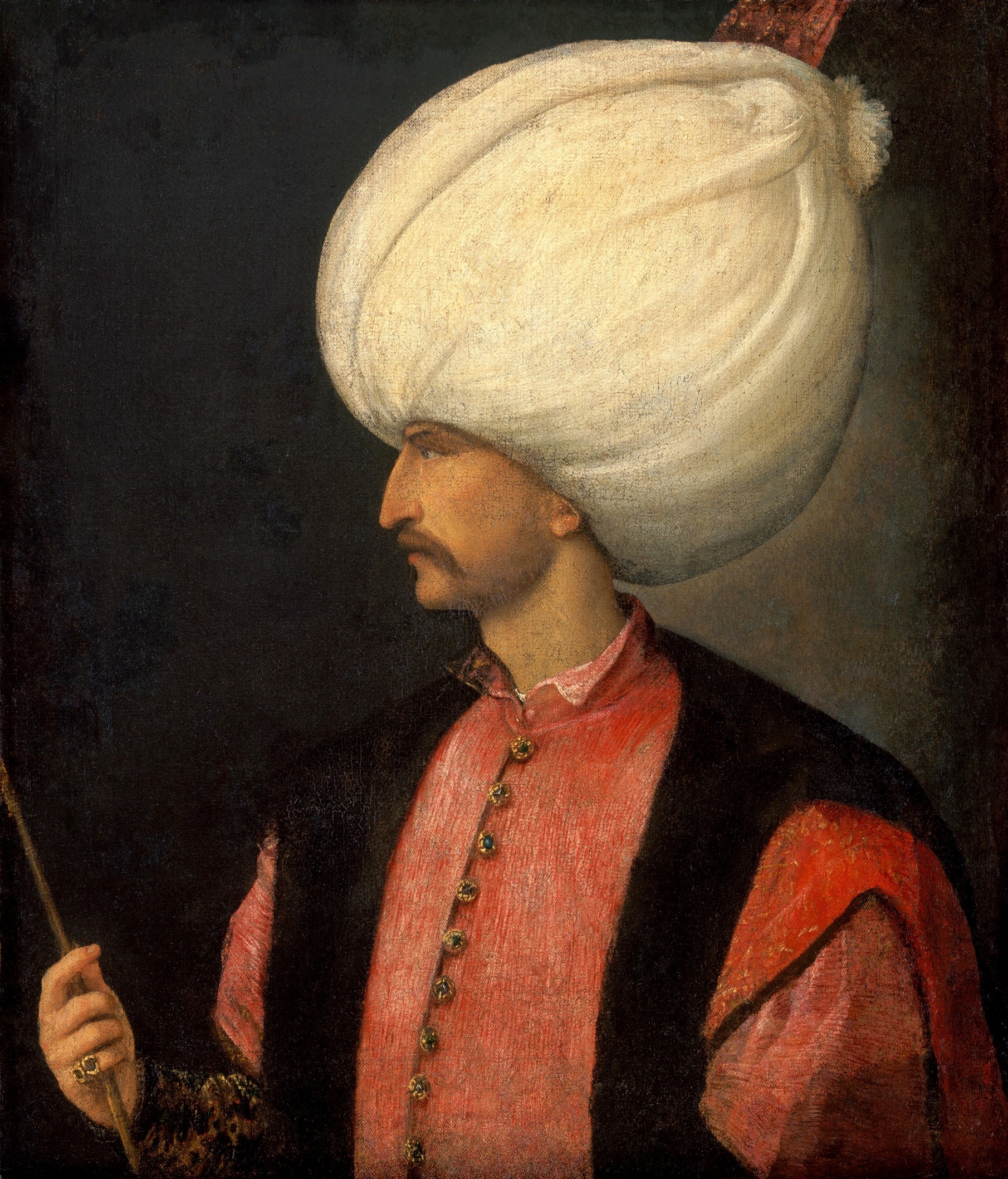
Emperor Suleiman the Magnificent

Start the Week (BBC) An interesting episode in The Age of the Strongman Leader, featuring Gideon Rachman, author of The Age of the Strongman: How the Cult of the Leader Threatens Democracy Around the World, Judy Dempsey who has written a lot on Angela Merkel, and Christopher de Bellaigue, author of The Lion House: The Coming of a King about Suleiman the Magnificent. This last title might seem a bit out of place, but this discussion talks about the phenomenon of the ‘strongman’ across history. One of them (Rachman?- the two male voices were similar) identified four qualities of the strongman 1. Cult of personality 2. Nostalgic nationalism, looking backwards 3. Contempt for the rule of law (although at first, they might have championed the rule of law to obtain power, but then subverted it) 4. Gender- mainly men. Merkel doesn’t fit this pattern, but other powerful women in politics are often the wives or daughters of strongmen. The modern strongmen they discuss use the democratic system, but then subvert it by encouraging polarization. The use of history by these strongmen is selective- for example, in December 2021 Putin’s courts put an end to the Memorial Project which documented the atrocities of the Stalin era. They also spoke about the strongmens’ need for large rallies – and no doubt May 9 will be such an occasion for Putin this year.

Exploring someone else’s city: Bunbury

“What’s she doing in Bunbury??” you may ask. Well, you know those COVID figures of cases and hospitalizations?…they’re real and some of those patients are aged 38 instead of 98- and one of them is my son. So, there was a quick scramble onto a plane and over to Western Australia. He’s much, much better now, and I’ll be heading home on Monday. But in the meantime, there’s walking to do and places to see, other than a hospital ward.

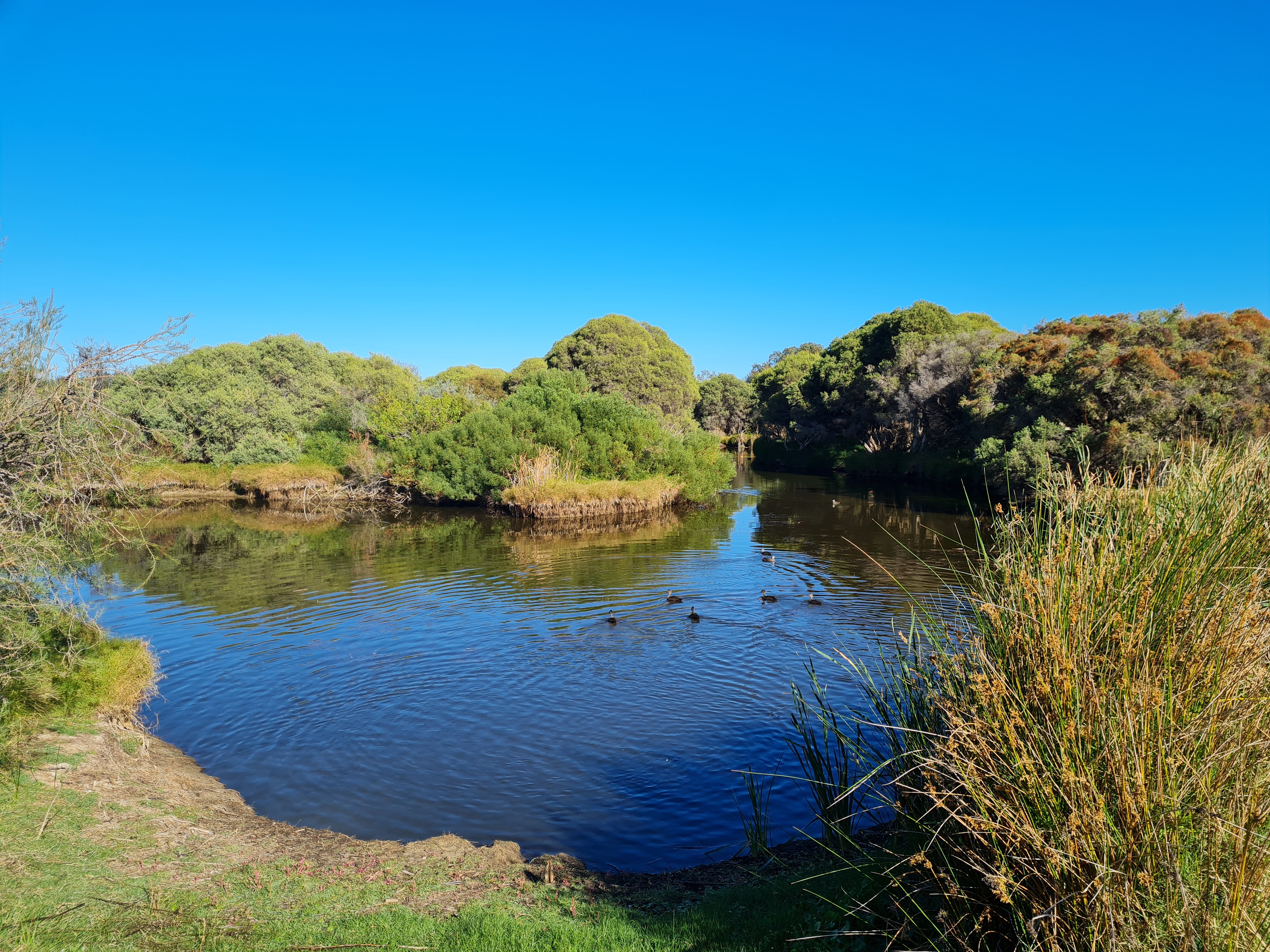
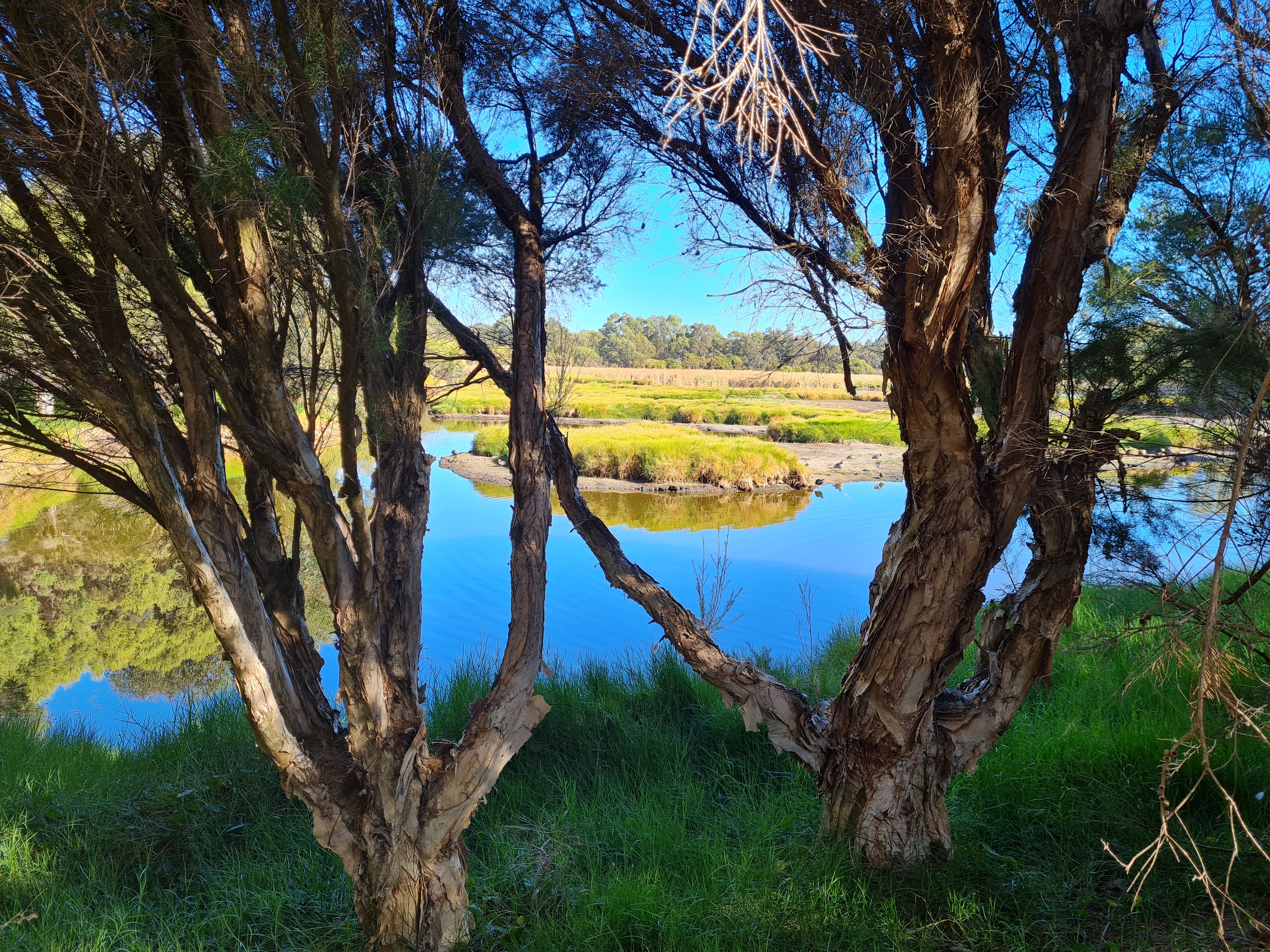
I decided that I’d walk to the hospital and went via the Big Swamp, which was absolutely teeming with wild life and birds. There has been lots of building development on what must have been swampland in the past. There are South Western Long Necked Turtles in the swamp, which cross the road to nest in a dry watercourse on the other side of the road. In a bit of an evolutionary blip, they can’t withdraw their necks into their shells, so they are pretty defenceless against predators.

I wonder if this is the last Civic Video store (now closed) still standing? Someone had a sense of humour with the parking bays.

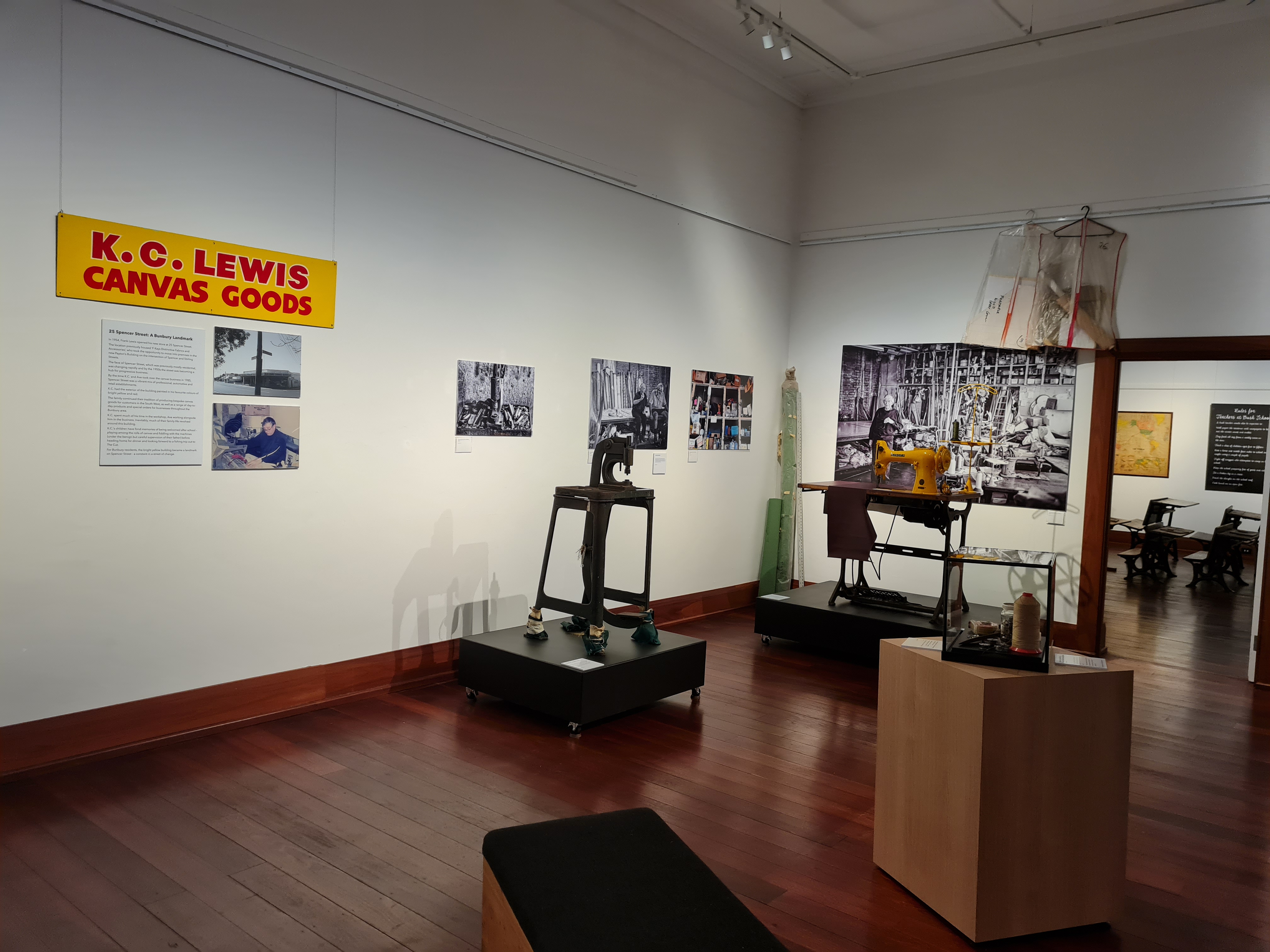
I visited the Bunbury Museum and Heritage Centre in what had once been the Boys School, built in 1886 to replace an older convict-built structure. They had a nice little exhibition about ‘The Blind Man of Bunbury’- K. C. Lewis who ran a canvas goods store in Bunbury between 1955 and 2021.

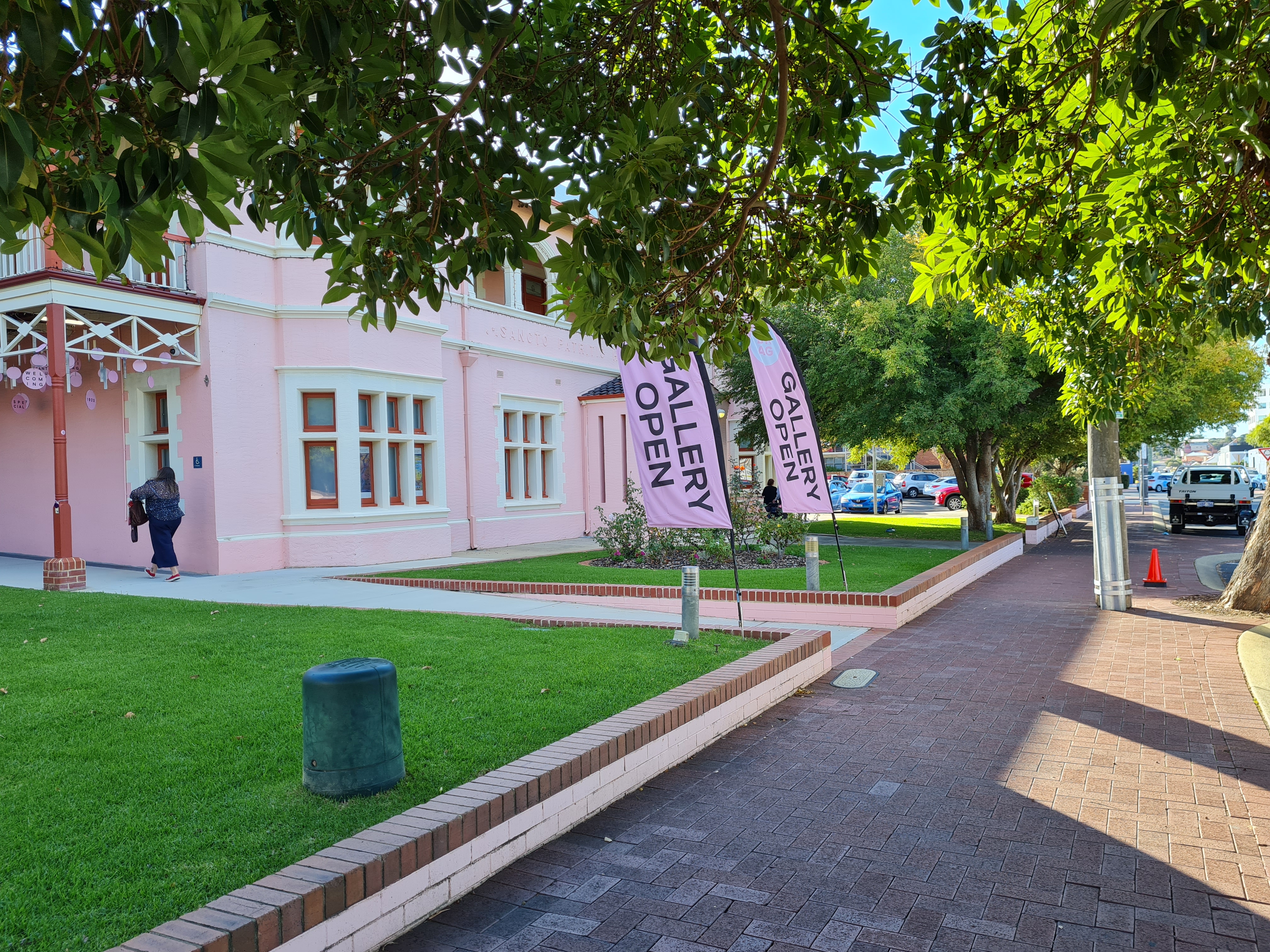
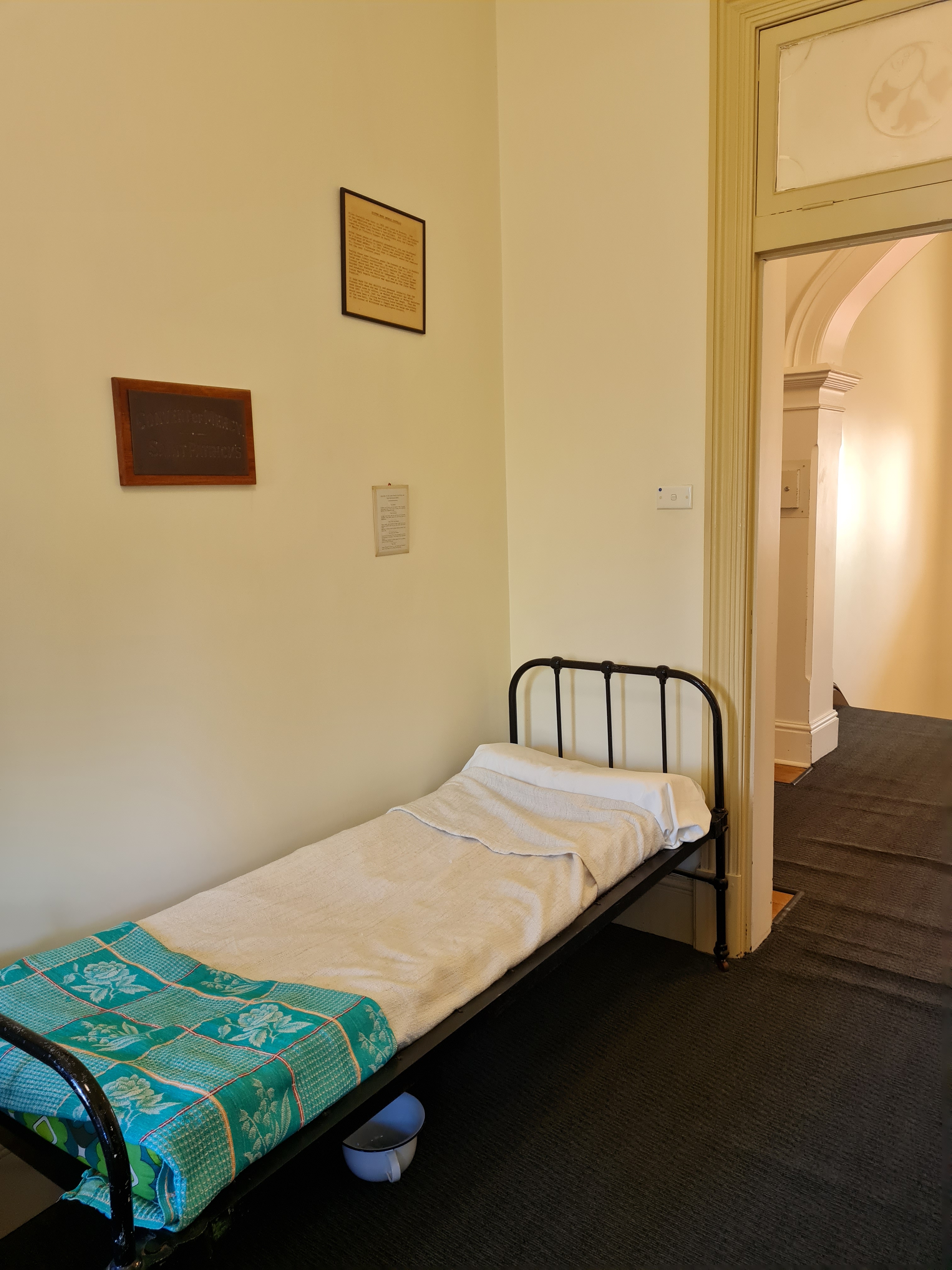
Then up to the Art Gallery in the former Sisters of Mercy Convent School. There was a little exhibition called ‘Museum of Loss’ which attracted my attention. They had left one of the nun’s rooms intact. A pretty sparse life.

Then a walk up to the Pioneer Park, which had been the site of the first cemetery. Most of the paperwork over who had been buried there had been lost, so they don’t really know who is buried there. I had hoped that there might be gravestones, but there were only interpretation panels telling of the history of the graveyard itself.

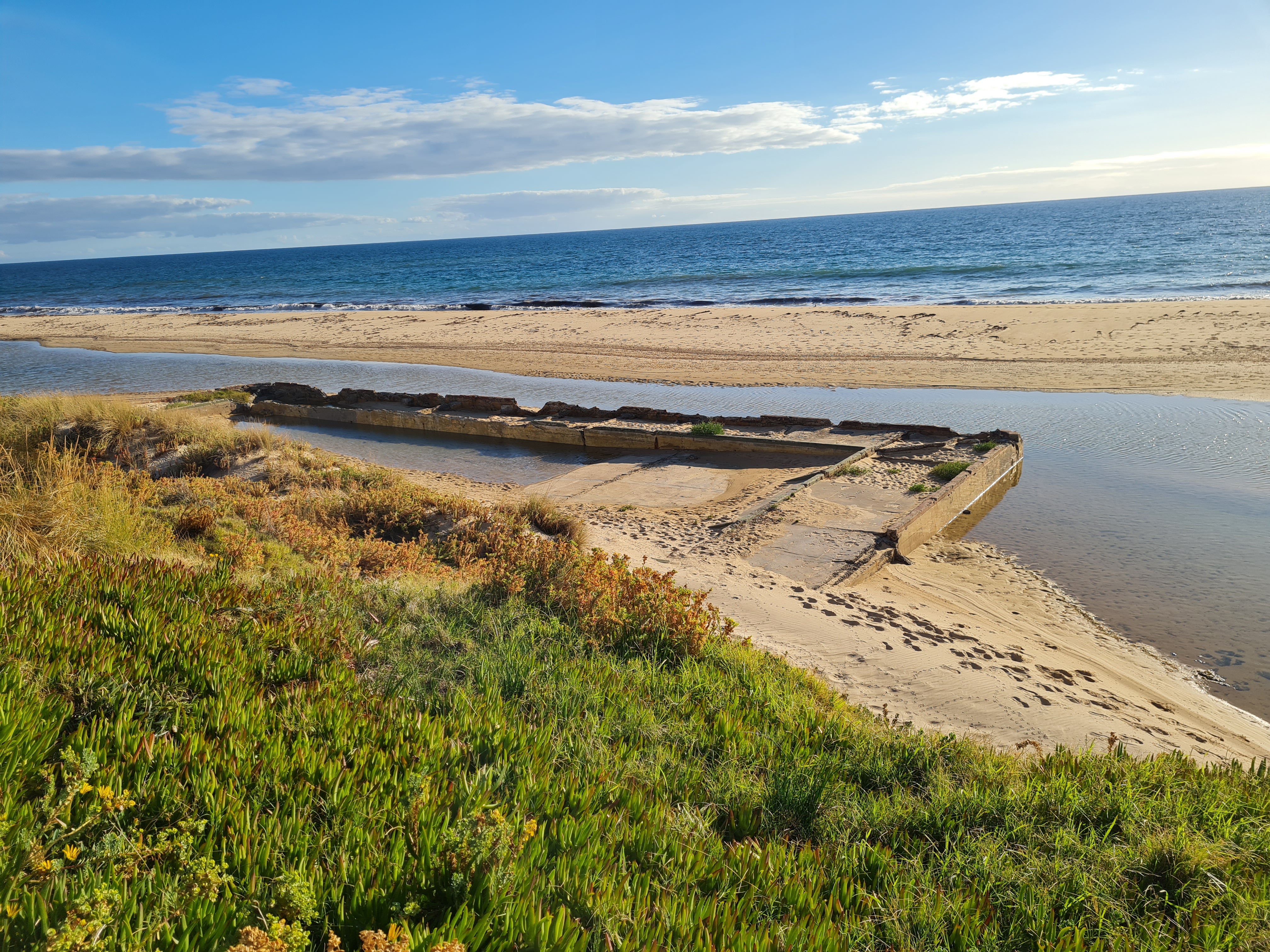
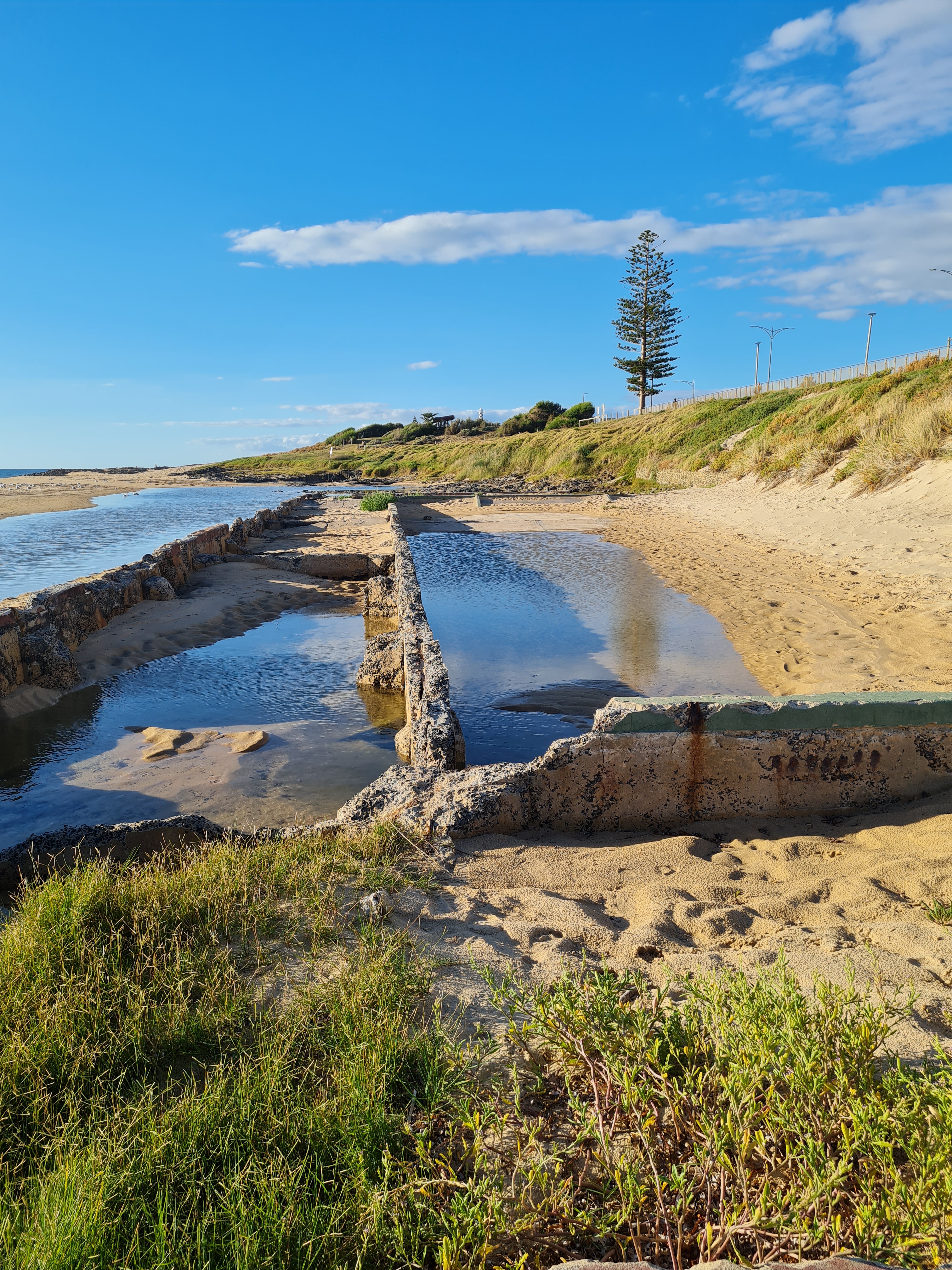
Then across the road to the beach- absolutely beautiful. I was fascinated by the Back Beach Sea Baths which were built in the 1930s, but only lasted a few years before being destroyed by the waves. Still, those foundations have held on for nearly 90 years.

My phone tells me today I walked 8 kms but it feels much more than that!

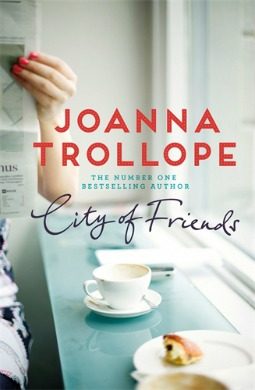
‘City of Friends’ by Joanna Trollope

2017, 327 p.

One of the delights of being in a bookgroup is when you find yourself loving a book that you would never have chosen otherwise. One of the burdens of being in a bookgroup is when you find yourself gritting your teeth to get through a book that you would never have chosen otherwise. City of Friends falls into the latter category.

The narrative revolves between four middle-aged, successful, middle-class London-based women, who met years earlier in an economics course at university, where they were vastly outnumbered by the other male students. Gaby is an investment banker, married with three children. Melissa is a management consultant and single mother of a teenaged son. Beth is an author and academic, expert in business psychology and in a relationship with a younger woman, while Stacey is a senior partner at a private equity firm, married but without children, and suddenly called upon to care for her mother with dementia. Does that entice you to follow them over 327 pages? I didn’t think so.

I’m not a reader who has to like the characters, but I do need to have a frisson of interest in them. I’m aware that Trollope is trying to illustrate modern life and dilemmas – the role of daughters in caring for aging parents, step-children, flexible working, ‘having it all’- but really, I found that I just didn’t care.

If I dislike a book, I don’t usually review it, especially if it is a new writer. But Joanna Trollope OBE has sold more than 7 million copies of her books, so I think that she can do without this reader.

My rating: 4/10

Sourced from: CAE Bookgroups.

Exploring my own city: Westgate Park

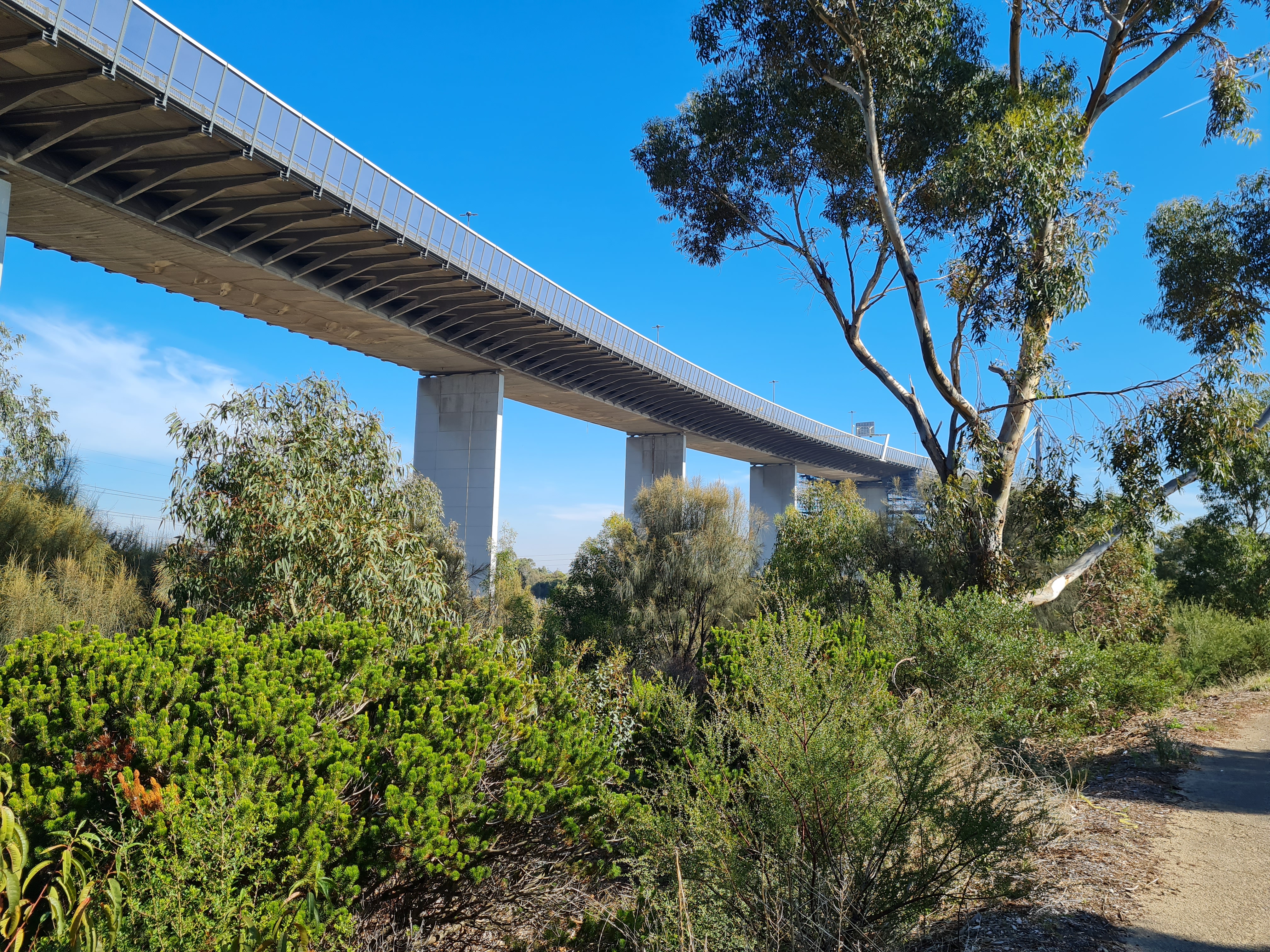
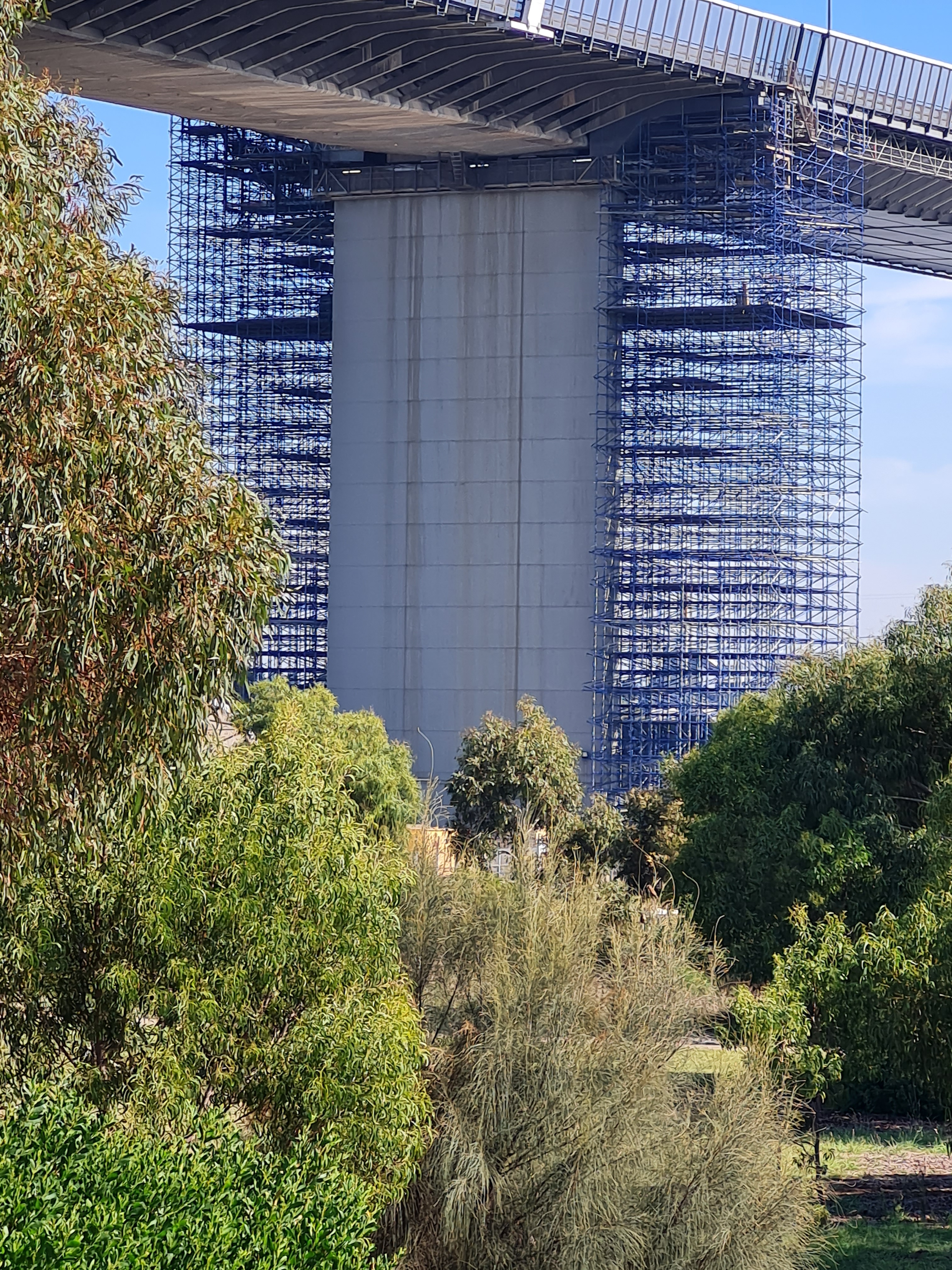
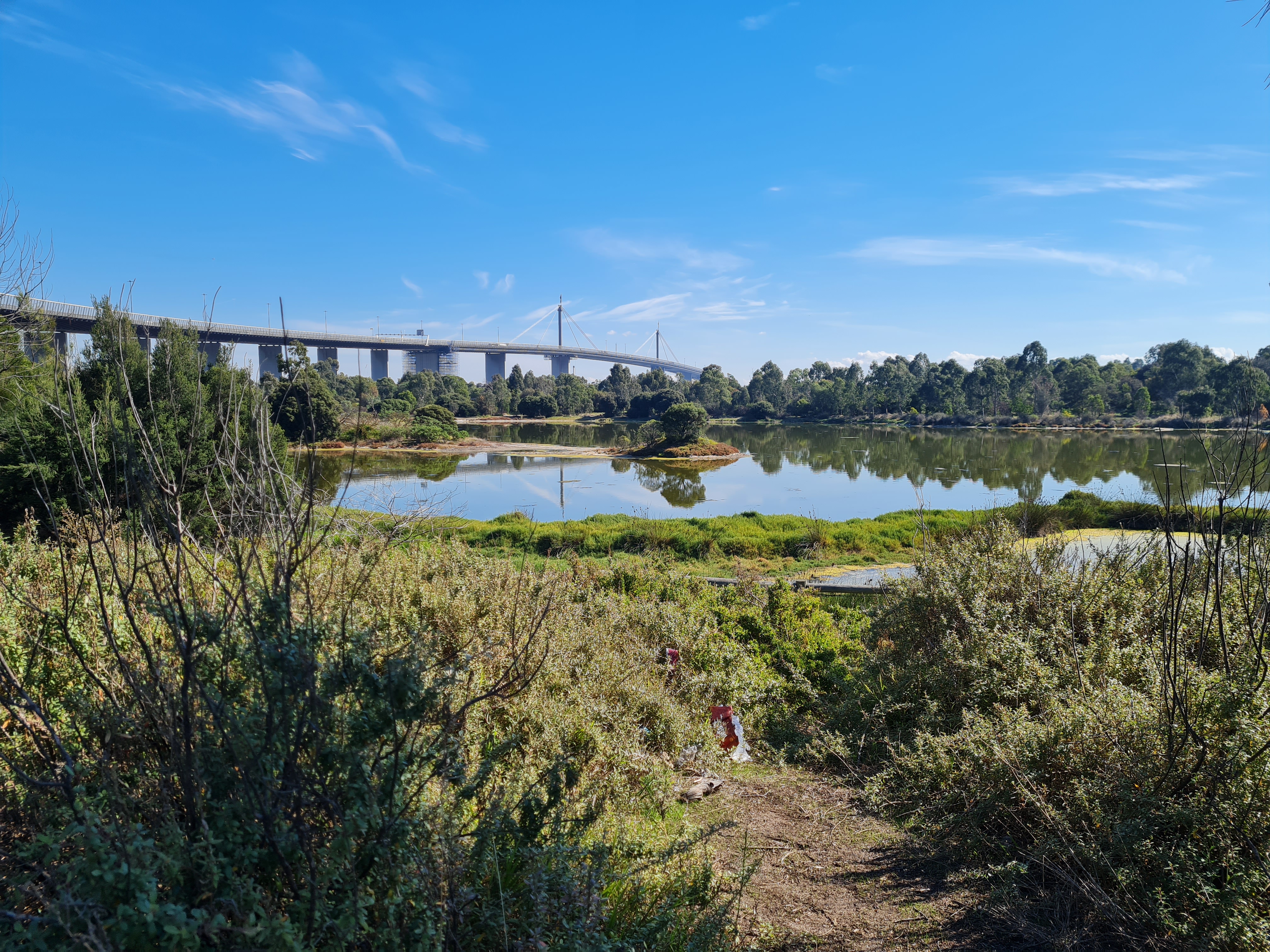
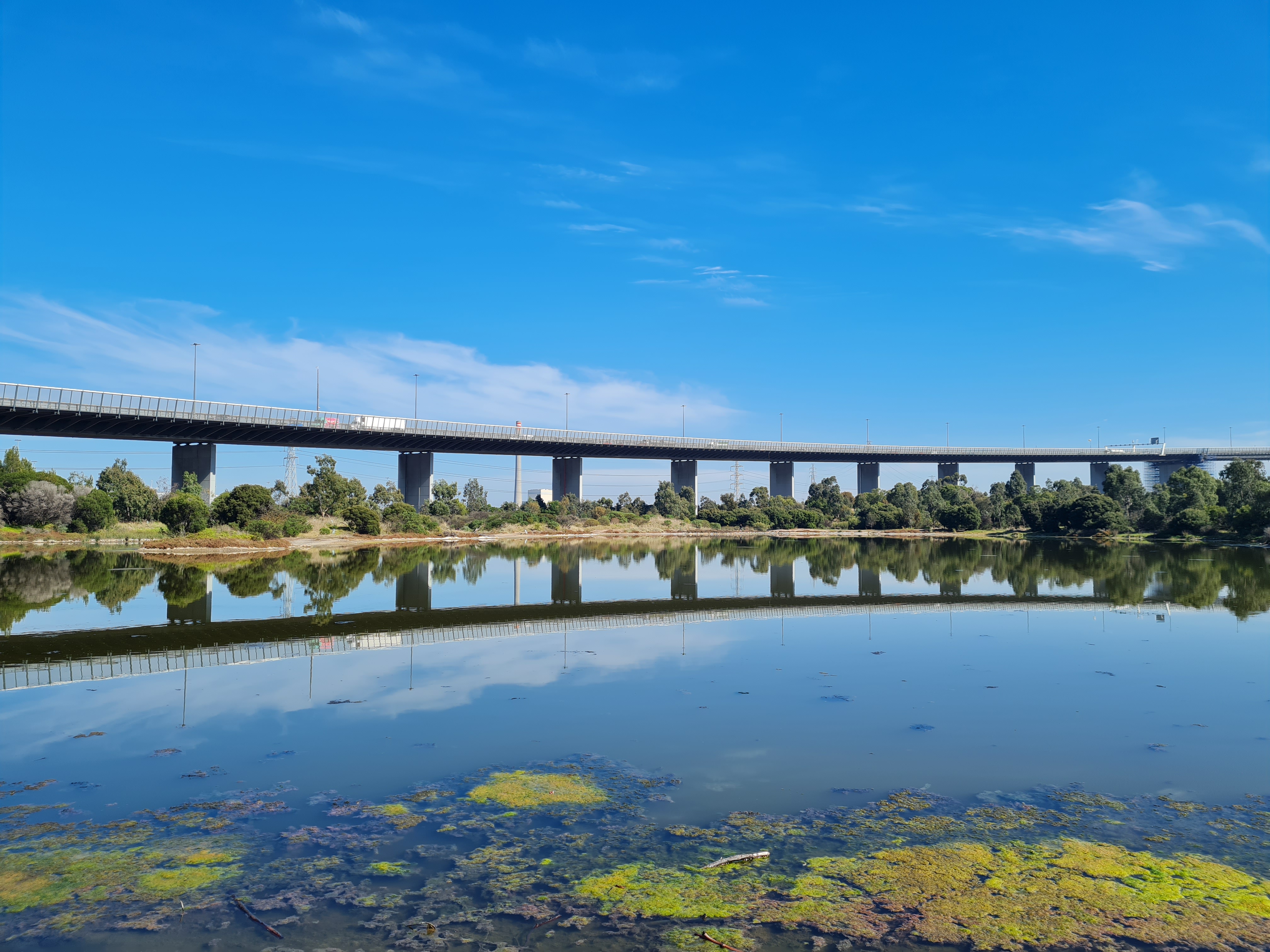
I hate driving over the Westgate Bridge. It’s a real white-knuckle drive, what with the steep drop over the sides and all the B-doubles thundering past. But if I’m a passenger, that’s a different matter. I always look down at the park below and think that I must visit it one day- and today, on a warm, still Anzac Day- I did. Click on the images to enlarge them.

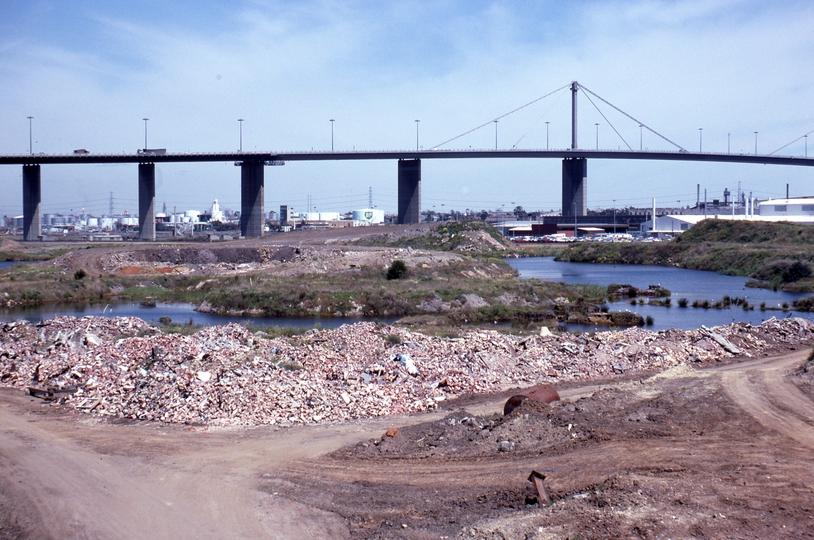
The lake, a former sand mine, turns a brilliant pink at the end of summer, but there was no colour in it today. There were no noisy miners, and so there was lots of bird life: wrens, honeyeaters, wattlebirds, mudlarks, magpies. It’s hard to believe that it was ever the blighted place it was forty years ago. The Age described it in 1979 as ‘scrofulous scenery indeed … dead water, swamp, sick factories, dead wood, haze, gasping barges, wretched refineries, wheezing chimneys, dead grass, institutional putrefaction’. It’s not like that now. There’s been lots of hard work done here by the Friends of Westgate Park since 1999 – a real gift to the people of Melbourne.

Site of Westgate Park 1984 Weston Langford https://www.westonlangford.com/images/photo/400480/

You can read more about Westgate Park here.

I hear with my little ear: Podcasts 17-24 April 2022

History of Rome Podcast Episode 126 All the Kings Men deals with Diocletian’s reorganization of the government, something which had not occurred for a long time because of the increasing militarization of society. With the Tetrarchy, it meant that there could be four times more oversight of government activity. The empire now comprised over 100 provinces, and Diocletian was insistent that the governors do more in their own patch, especially in relation to the administration of justice. He introduced the idea of twelve dioceses, each headed by a vicar, in order to implement empire-wide change. He made Italy and Egypt equal to the other provinces in terms of taxation and expenditure, although he did carve out a special place for the city of Rome. Administrators were drawn exclusively from the equestrian class. The Praetorian Prefect was top of the bureaucratic structure, and acted as a type of vice-governor. There was a corresponding change in the status of emperor. He was no longer the First Citizen: there was now The Ruler and The Ruled.

Episode 127 Commanding the Empire. Rome’s economy was in disarray when Diocletian came to power and he initiated major overhauls to get the system running again. He had four main reforms. First, he attempted to stabilize the economy by issuing new standardized coins of copper, silver and gold, but he didn’t recall enough of the old, debased coinage so this didn’t work. Second, he re-organized the tax structure based on the old army method of requisition. He drew up Tables of Equivalency for a ‘unit of tax’, so tax payments could be made in kind, based on what the tax payer had access to. Third, he calcified the professions by insisting on compulsory, hereditary guilds, so that from generation to generation, people had to stay in the same trade. He also stopped migration- and yes, we’re getting into pre-feudal ideas here. Finally, he issued an Edict on Prices where he catalogued everything that could possibly be sold, and set a maximum price for it. Punishment by death awaited those who overcharged, but it ended up being unenforcable. So old Diocletian really is moving the empire onto a more rational, pre-feudal basis and he was one of the most transformative of the emperors. But- there’s always a ‘but….

And here it comes in Episode 128 The Great Persecution.For the first 15 years of Diocletian’s rule, he had instituted great changes across the empire- some resisted, others accepted. But when he wanted an oracle to read his future, he was told that the gods couldn’t get through. Some said that it was because Christians had made the sign of the cross in the imperial palace. So he decided to deal with the increasing Christian movement by insisting that everyone make a sacrifice to Jupiter, and did the same in the army. This was just the start. At this point, Mike Duncan stops and backtracks to give a potted history of Christianity- and he does a pretty good job of doing so, given the eagle eyes of his Christian commenters on his webpage. The early church in the 1st Century CE had to sort out what to do about the Gentiles who wanted to join- whether to go ‘big tent’ or ‘little tent’. ‘Big tent’ won. In 2C CE the original disciples and apostles had all passed away, and the church had become decentralized with bishops who often disagreed with each other. After the fall of Jerusalem in 70 CE, the Christians did not join in the Jewish Wars of 130 CE and although the Romans had deferred to the antiquity of Judaism, this did not extend to the newly-formed Christians. The Christian Church endured the same chaos as everyone else in the tumultuous 3rd Century CE. Emperor Trajan had persecuted Christians in the 2nd Century and Decius did so in too in the 3rd Century. Within the Christian church itself, there was a split between those who acquiesced to Roman pressure and those who resisted. Between the years 260 and 300, the stigma of being Christian became muted, and Christianity began to spread across social groups to about 10% of the population (usually in urban centres, which made it seem even more prominent). By this time it was the largest monotheistic religion in the Empire, and it was accumulating wealth and building dedicated churches. It was becoming a threat to the status quo. In 302-3 the persecution began again. Galerius may have been the driving force (or that might just be anti-Galerius propaganda). In 303 Diocletian let the hardliners off the leash and they razed churches, burned scriptures and tortured and killed Christians who refused to recant. In the summer of 303, bishops and deacons were arrested, and the jails were emptied of regular prisoners to make room for them. However, Roman soldiers themselves often turned a blind eye, and Constantinus wanted nothing to do with it. Citizens were resisting too, because they saw Christians as harmless, taxpaying citizens. The persecution was dropped by 311 when Galerius realized the advantages in doing so, especially with the rise of Constantine the Great. All in all, a bad and bloody policy.

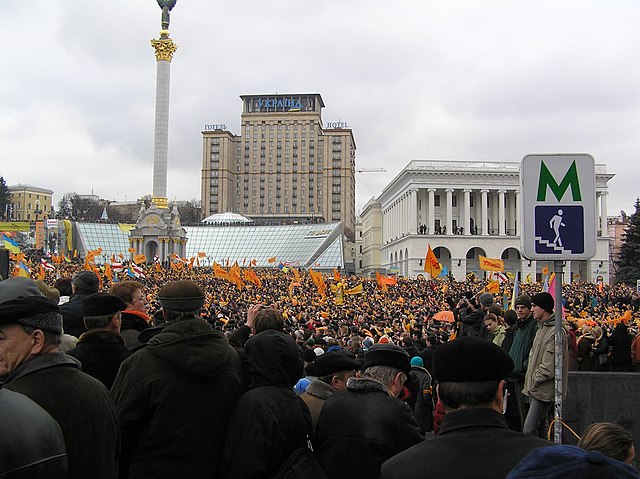
The Documentary (BBC) Understanding the long history between Russia and Ukraine is actually part of the BBC’s ‘The Explanation’ series. Here Claire Graham talks to former BBC foreign correspondent Kevin Connolly about what has historically bound Russia and Ukraine together, and what has pulled them apart. He points out that the Russ empire stretched from the Baltic to the Black Sea, and this is more or less the sphere of interest that Putin is exerting pressure over. He goes back to the Orange Revolution in 2004 with the rather confusing election between Viktor Yushchenko and Viktor Yanukovych (it’s sounding like a Fast Forward ‘In Moscow Tonight’ episode) – and, I’d forgotten about this- the opposition leader Yushchenko suffering dioxin poisoning. He reminds us of the mistaken shooting down of the Malaysian Airlines flight over Ukraine, and the conflict in the Donbass region where the Ukrainian forces took the offensive, both of which highlighted Putin’s impunit,. Putin denied military involvement in Ukraine until Feb 2022… and then we all know what happened next.

The Real Story (BBC) France’s Place in the World was recorded on 12 February, before Putin invaded Ukraine. It features Jacques Rupnik( Research Professor at CERI, Science Po, in Paris); Dominique Moïsi (French political scientist and a special advisor at l’Institut Montaigne, a think tank in Paris) and Catherine Nicholson – (European Affairs Editor for France 24). At this stage, Macron was in Russia, engaged in shuttle diplomacy between Russia and Ukraine. The commentators discussed this diplomatic move (which they all agreed was ‘bold’) by Macron , the youngest French president, who memorably declared that ‘Europe is brain dead’. They pointed out that Macron is operating in a vacuum after the resignation of Merkel and Brexit. They suggest that perhaps Macron is thinking of the Finlandization of Ukraine (although even Finland is rethinking its position at the moment). They discuss France’s anger over AUKUS- disappointment with U.S. but real anger at UK and Australia (we get a mention!)

Then, just before the French elections this weekend, I listed to The Appeal of the French far-right, featuring Nonna Mayer – (A CNRS Research Director Emerita at the Centre for European Studies and Comparative Politics, Sciences Po), Jean-Yves Camus – (Senior Fellow at the Centre for Analysis of the Radical Right (CARR) and Christine Ockrent – (Journalist and broadcaster). When asked when they first became aware of the French far-right, two answered that became interested in 2002 when Marine Le Pen’s father Jean-Marie Le Pen reached the second round of voting; the other identified 1984 when Jean-Marie Le Pen became one of the first MPs to the European Parliament. Marine Le Pen started off as a moderate, and expelled many of the old fascists attached to her father’s National Front. They suggest that the core of her program hasn’t changed, but she has turned arguments about laicite (i.e. secularity), women’s rights, gay rights, Jewish rights, against the left by arguing that by restricting Muslim immigration will defend these rights. She wants to change the constitution by referendum (which is illegal). The yellow vests, they suggest, emerged from a real anger about purchase power and the need to be heard. Le Pen is not necessarily pro-Russian, but does believe that ‘traditional values’ apply there, although her beliefs are more closely aligned with Hungary and Poland. (Not a reassuring thought). One of the commentators commented on the gender aspect of this presidential run-off-something I hadn’t thought much about.

Archive on 4 (BBC) I’ve been very much aware of the strong visuals coming from the war in Ukraine. Not only is President Zelensky very much aware of packaging himself and his message individually for each country that he is addressing, but we have so much video footage as well. But wariness over disinformation is now so deep-seated that I find myself wondering whether I am looking at fakes or not, and the steady stream of Russian denials of things that are patently obvious makes things even more unsettling. War on Truth looks at the disinformation being purveyed through Russian television, and speaks to bloggers and influencers, mainly from the Ukrainian side, and the pile-on that has followed videos and postings showing life in Ukraine today. It unpacks the story of the pregnant woman filmed after the bombing of the maternity hospital, and the way that both sides are packaging ‘content’ to be picked up and broadcast further.

Nothing on TV Truth be told, there hasn’t been much action on the ‘Nothing on TV’ podcast either, with the episode Tin-kettling recorded in June 2019 (although at least history podcasts don’t date). Once she started looking into it, Robyn Annear found many, many references to tin-kettling. Tin-kettling in Europe sprang from the tradition of charivari, which was a way of expressing moral disapproval of things like wife-beating or marrying too soon after the death of a spouse. In Australia, it seems to have been a more raucous, alcohol-fuelled event, often linked with weddings although the protagonists often ended up in court. It seemed to have been particularly prevalent in areas where Cornish miners had settled, and the ‘tin kettle’ and saucepan were soon replaced with kerosene tins filled with rocks. By the twentieth century, it seems to have been tamed somewhat into some good natured fun.

Australia If You’re Listening. (ABC) In Episode 3 How Long Will the World Want our Coal? Matt Bevan turns to look at India, and its demand for coal and the involvement of the big mining companies here in meeting that demand. In particular it looks at the Galilee Basin, and Adani and the arguments that the fossil-fuel lobby mounts in trying to protect its product and extort more assistance from state and commonwealth governments.

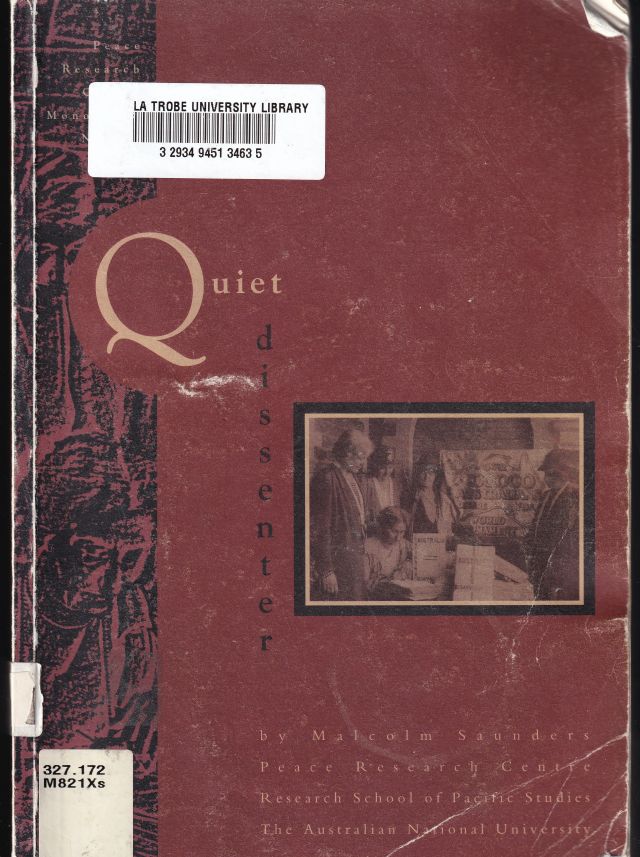
‘Quiet Dissenter: The life and thought of an Australian pacifist Eleanor May Moore 1875-1949’ by Malcolm Saunders

1993, 361 p & notes

Actually, I don’t know if I would have called Eleanor May Moore a quiet dissenter. She had plenty to say over her long secretary-ship of the Victorian branch of the Women’s International League for Peace and Freedom, and she became so publicly identifiable with WILPF in Victoria that she was almost indistinguishable from it.

“So who was Eleanor May Moore?”, you may ask. Of solidly middle-class background, she was born in 1875 and educated at Presbyterian Ladies College. Rather unusually for her background, she attended Stott’s business college and trained as a stenographer. She attended Rev. Charles Strong’s Australian Church (of which, more anon) and when he suggested that the women of the church form a women-only and women-led peace group, she was there from the start. This became the Sisterhood of International Peace, which, along with Vida Goldstein’s Women’s Peace Army were represented at the international congress in Europe in 1919 which led to the formation of the Women’s International League for Peace and Freedom. Eleanor Moore had attended the congress as the Sisterhood of International Peace’s delegate, along with Vida Goldstein and Cecilia John from Women’s Peace Army. The two Australian contingents had sprung from different impetuses: the Sisterhood from a progressive Christianity, and the Women Peace Army from the suffrage movement. After the war, Vida Goldstein distanced herself from the W.P.A which soon disbanded, leaving the Sisterhood as the Victorian branch of WILPF.

It was difficult to find a shipping passage back to Australia after the war, and Eleanor stayed for some time in Geneva, where she established a friendship with WILPF international secretary Emily Greene Balch and worked with her at WILPF headquarters. This placed her in good stead to be the linchpin of the Victorian branch, and she retained this position until a few years before her death in 1949.

She was obviously a strong presence and dominated the local WILPF’s stance on a range of matters- not just peace, but also White Australia, the Pacific, economic sanctions, military service, atomic warfare and eventually, absolute pacificism. With the rise of fascism, she became particularly fixed in her views that all war was wrong – a stance that put her at odds with her old friend Rev. Strong and the European branch of WILPF. It took its toll on the local branch of WILPF too, with its numbers dropping lower and lower as women left because of this adamant stance, and through the attritions of old age.

While there is much to admire in a life-long commitment to an organization, her long career with WILPF serves as a salutary warning for all volunteer organizations, really. There is a danger in one person becoming synonymous with an organization, and that while that person remains, other people will not step forward.

In assessing her life, Saunders notes that her politics were rooted in British liberalism, and at times she sounds almost Thatcher-esque in her emphasis on the individual, rather than collective groups like ‘society’, the ‘community’ or ‘the nation’. Prior to the First World War, she had been a strong supporter of the Federal Government, which had brought about many of the progressive, independent policies that “young” Australia became famous for. But this changed with the war and the heavy-handed War Precautions Act, and by the 1930s she believed that acquiescent obedience to government was the greatest threat to Australian democracy. She had doubts about Christianity, but considered religion extremely important, hence her attraction to the Australian Church and the Society of Friends (Quakers). She supported the White Australia policy and continued to do so when many other people in the peace movement and in WILPF itself believed that it should be abandoned.

This biography was produced by the Peace Research Centre, and would probably be almost impossible to procure today. Its production values are rather rudimentary, but the research is sound and well-supported by references, and Saunders has a clear-eyed view of both Moore’s strengths but also her short-comings. He has captured well the nature of commitment to an ideal, and the narrow line between inflexibility and fidelity to a principle. The WILPF that outlived her was a dwindling, increasingly antiquated body until other, more forward-looking women stepped into her place. But for sheer persistence, intelligence and unswerving steadfastness, Eleanor May Moore was an admirable woman who should probably be better known today.

My rating: 8/10

Sourced from: La Trobe University Library

I hear with my little ear: Podcasts 9-16 April 2022

History of Rome Podcast Episode 123 The Tetrarachy We had two emperors before (Diocletian and Maximian) and now it was about to become four with the addition of Constantius and Galerius in 293AD. Mike Duncan makes the rather large claim that the years of the Tetrarachy were amongst the most important in Rome’s history, laying down the ground rules for late antiquity. It does, however, cause a narrative problem for Duncan as a podcaster, because now there are 4 centres of power. The self-elected ’emperor’ Carausius was still sitting over in Britain, but before Diocletian and Maximian could confront him, they needed to make sure that the Germanic tribes had been pacified first. However, Maximian failed to retake Britain in 289 AD. So who were these other new emperors: Constantius and Galerius? Constantius had married Maximian’s daughter, and we really don’t know much about Galerius. However, in 293 AD they were named as part of the Tetrarachy (although they didn’t call it that then) as junior partners. Constantius was given oversight of Gaul and Britain; Maximian had Spain, Africa and Italy; Galerius had responsibility for the Danube, and Diocletian concentrated on the Far East. However, these were not demarcated political units: Diocletian always emphasized unity.

Episode 124 The Tetrarachs at War sees Constantius embarking on the job of retaking Britain. It was a hard task, because Carausius was a very able ruler, and well supported. But not supported well enough, because he was assassinated by Allectus. During Maximian’s earlier attempt to take Britain, they landed in one place but this time Constantius landed his fleets in two places. Allectus didn’t have the popular support that Carausius had enjoyed, and the people were more frightened of the Franks than the Romans, so they were willingly reabsorbed back into the empire. Meanwhile, over on the Danube, Galerius was battling with the Sassanids, who were restive again and invaded Armenia and threatened Syria. The Romans were defeated at first. Diocletian had to leave the east to go to Egypt to quash a rebellion there, and Galerius had another go at the Sassanids in Armenia, and this time he had the last word.

Diocletian wrought many changes, but always with the aim of saving the old order, not introducing a new one. Episode 125 The Best Defence is a Good Defence starts off with a summary of the changes in the Roman military over time. From the citizen army, they had gone to the Maniple structure of fighting. Professional standing armies were introduced, but they mainly ended up fighting other Romans. Augustus introduced garrisons to protected what they had captured and Hadrian and Antoninus Pius built walls. From the 3rd century AD onwards, the numerical strength of invading forces outnumbered that of the Roman legions. So Diocletian introduced 4 changes: 1. He devised a ring of small militarized provinces around the empire 2. He separated the civilian and military career paths. No longer could you have a soldier emperor. Instead, there was a general and there was a governor- two men. 3. He divided the army into legions and static frontier militia. 4. instituted webs of defence across the empire (i.e. ‘defence in depth’) which would slow an opponent’s army down, causing it to lose memomentum although this argument, exemplified by Edward Luttwak’s work, is somewhat disputed and not well supported by archaeological evidence.

Rules Based Audio. This podcast is put out from the Lowy Institute. In Ukraine and the Future of the Rules Based Order, the presenter Ben Scott discusses the war in Ukraine and international law with Professor Fleur Johns and Dr Eve Massingham. They talk about the laws of war, economic sanctions, cyber operations, neutrality, international humanitarian law, and war crimes. Certainly it’s all more complex than it might appear at first. International law is just one tool that can be deployed in this situation, and even though it may not be particularly useful at the moment, it will bring accountability once hostilities have stopped, and will (hopefully) be useful in controlling behaviour in the future (e.g. Ukraine asking for guarantees of security). Cyber war is a new complication (i.e. it is not legal to give information to direct an attack), and sanctions using electronic banking is another new horizon. It was surprising to learn what is legal under international war, and what is not.

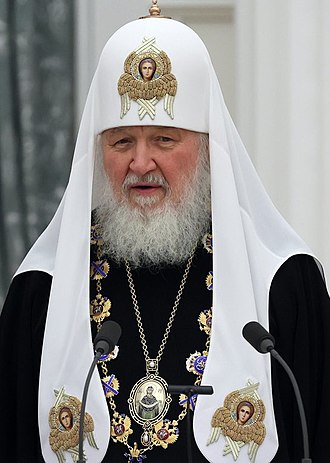
Patriarch Kirill (Wikimedia)

God Forbid (ABC) The March 20 episode Ukraine and Russia: religion and the politics of war is well worth listening to (and I did- three times, because I was listening to it in bed and I kept falling asleep!) With its own panel of speakers and drawing on interviews on other ABC radio programs, it looks at the Orthodox Church, Putin’s war against Ukraine, Patriarch Kirill of Moscow’s support of Putin and the resultant dissent amongst Orthodox clerics. Christianity came to the East in 988 and after the 2014 ‘Revolution of Dignity’ which expelled the pro-Russian president, in 2018 the Archbishop of Constantinople (the Orthodox church still calls it that), Bartholemew I, recognized a distinct, self-governing Orthodox Church in Ukraine. A study of people who identify as Orthodox in Ukraine in 2020 found that 34% identified with the Orthodox Church in Ukraine; 14% with the Moscow Patriarch and 28% as neither. Recently 300 Orthodox Clerics in Belurus, Spain and inside Russia signed a letter condemning Kirill’s tacit support for the invasion, and refusing to mention his name or commemorate the Moscow Patriarchy in their services. The speakers point out that both Russia and Ukraine are multi-cultural countries- Russia, for example has 35 official languages- with sizeable Muslim populations. Ukraine also has a large Jewish minority (and indeed Kyev and Odessa were important Jewish centres historically) and the Ukraine Greek Catholic Church is also prominent. While there are anti-Semitic groups in Ukraine, they also operate throughout Europe and perhaps to a lesser extent in Ukraine than elsewhere. Well worth listening to- even three times!

Things Fell Apart (BBC) Episode 2: Dirty Books goes back to 1974 when a church minister’s wife in West Virginia challenged the board of education when they sent textbooks to support a new curriculum to her school. She read through all the books, and was offended by many things in them and encouraged other parents to join her in refusing them. But she may well have misinterpreted some of the things that offended her so much. Fast forward thirty years, and textbooks are still being challenged- this time for Critical Race Theory (in maths books, no less).

Emperors of Rome It’s Good Friday, so I thought that I would listen to the episode on Crucifixion. Episode CLXXXI Crucifixion, as you might expect, came with a content warning. Crucifixion was a much wider term than we might imagine, because people could be nailed to a stake, tree, plank etc and the ultimate cause of death was asphyxiation when it became too difficult to heave yourself up to breathe. It was a form of death only for slaves and enemies of Rome, not Roman citizens. Owners could crucify their slaves privately, or it could be a state punishment. As well as the gospels, which give a lot of detail, there are other sources as well: Seneca, Cicero, Josephus in written form, archaelogical evidence (e.g. an ankle bone in a Judea that had a nail through it), and graffiti. Crucifixion was formally abolished in 337 CE by Constantine, who felt that no ordinary mortal should die the same way as Jesus had done (not because it was a painful, cruel and slow death).

Australia If You’re Listening (ABC). Episode 2: How we became addicted to coal. I don’t know why I have been so slow to listen to each episode of this podcasts – perhaps because I thought I already knew all about it- but it really is excellent. The historian in me really liked this episode, which focusses on Newcastle, which was Australia’s first coal region. It deals with the coming and going of ‘the’ BHP (how quaint) (1915-1997) and Newcastle’s development into a coal port, even though the local coal was eventually exhausted. The program gives a really good description of the stagnation of the Australian economy as Australia, ‘the lucky country’, drifted into a heavily protected domestic economy that was only saved by the export of raw products like coal, especially to China. Historians featured include John Maynard from the University of Newcastle, and Judith Brett, author of the Quarterly Essay The Coal Curse (which I’m sure I have unopened on my bookshelf somewhere- might be time to open it.)

Travels Through Time In this episode The Last Emperor of Mexico, historian William Shawcross discusses Maximilian I of Mexico, who was appointed as Emperor of Mexico by Napoleon III as part of a French invasion of Mexico. After the Mexican War of Independence between 1810 and 1821 and Spain’s final relinquishment in 1836, there were still a lot of royalists in Mexico. After being wupped by the United States in the Mexican-American war in 1848, these royalists approached Archduke Maximilian of Austria, a stereotypical second son to become emperor of Mexico. In 1863, he consented to do so at the request of Napoleon III. William Shawcross chooses 1867 as his year of interest, starting on 13 February 1867 as Maximilian rides out with his Mexican troops (and not his far more experienced, European troops) to confront the guerrilla fighters led by General Benito Juarez. On May 15 1867, Querétaro. Maximilian is cornered in a shell-shattered former convent, beseiged by the Mexican guerillas, getting ready to break out. By 19 June 1867, it was all over, with Maximilian under arrest in another convent in Querétaro another convent, and -spoiler alert- executed by firing squad.

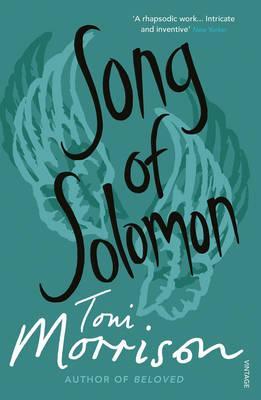
‘Song of Solomon’ by Toni Morrison

1977, (reprinted 2016)
416 p.

I have read this book twice and both times, to my regret, I have failed to write about it in any detail immediately after reading it. Perhaps it’s because the book itself is so complex and masterful that I have barely known where to start. I still don’t. There were more than twenty years between my two readings, so on my re-reading, it was as if I were coming to the book for the first time. I was just as impressed the second time as I had been the first. After reading some pretty mediocre writing recently, it was like handing myself over to someone who can really write. I love books that have a circular structure, where the actions in the opening pages are mirrored in the last. The book opens with Robert Smith, the insurance agent, jumping from the roof of Mercy Hospital in 1931, and it ends with Macon Dead Jr. making his own leap. In between these two flights, Morrison takes us on a Quest novel from the northern states of America to the south in Virginia – the opposite direction to the flight from slavery- and across American history from Reconstruction through to the Civil Rights movement.

The book is too complex, and too much time has elapsed for me to write about it. Suffice to say that it is a book that merits reading and re-reading and reading once again. It combines magic realism with real-life historical events; it is a meditation on naming and the loss of names; it reflects folk-knowledge and music- there is just so much here, layer upon layer. It is magnificent.

My rating: 10/10

Sourced from: Readings. My own print copy

Read because: Ivanhoe Reading Circle March 2022 book.