Author Archives: residentjudge

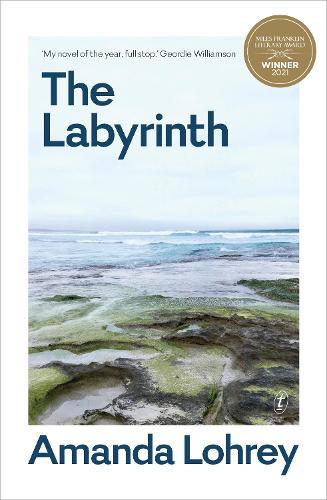
‘The Labyrinth’ by Amanda Lohrey

2020, 246 p.

SPOILER ALERT

I must confess that, had it not been the September selection for the Ivanhoe Reading Circle, I would not have read this book. Not even winning the Miles Franklin Literary Award in 2021 would have tempted me. I’ve read a few of Amanda Lohrey’s books before, but after at first being beguiled into their Garnersque Melbourne settings, I have become increasingly wearied by the philosophical and spiritual baggage that she burdens her books with – most particularly in The Philosopher’s Doll (my review here) and even more so in A Short History of Richard Kline (my review here). So, eyeing off the title The Labyrinth with its sacred and meditative connotations, I was not inclined to read the book.

In its classical (as distinct from religious) origins the labyrinth was an elaborate structure built by the craftsman Daedalus for King Minos of Crete, in order to contain the monster Minotaur. The young Theseus, later to be the mythical King of Athens, had joined a group of youths and maidens slated to be sacrificed to the Minotaur. He entered the labyrinth with a ball of string which he used to keep track of his progress through the maze, killed the Minotaur, then followed the string to get out of the labyrinth again.

All this seems a long way from Garra Nalla, a small farming community on the New South Wales coast, which is close enough to the prison in Brockwood, where Erica’s only child is serving a sentence for murder. On the way up the coast she revisits her childhood home, Melton Park, a former asylum which has been converted into a tourist venue. Her father had been the chief medical officer, and she and her brother grew up ranging freely over the gardens and wards of the asylum. Her father, who had stayed on at the asylum with his two children Erica and Axel after their mother had left them, engaged the children on building a labyrinth in the gardens of the asylum, complete with the measuring and designing that such a project entailed.

The labyrinth at her childhood home had long disappeared by the time that Erica visited it, but when she moves into a ramshackle house near the ocean, after a particularly vivid dream she decides to build a labyrinth on the flat space beside her own home. She researches various designs of labyrinths (leading to more exposition than I cared for) and obsesses over the form, shape and construction of her labyrinth. She needs the expertise and muscle of others, and this leads her to befriend Jurko, former stoneworker and an undocumented migrant from the Balkans, who is sleeping rough in the national parks nearby.

If there is a monster in her labyrinth, it is her son Daniel. Always an intense child, he was an artist and art becomes the one connection she has with her son as she visits him in the stark, soul-destroying visitors’ room at the jail. He is spiky and unlikeable (although I think that, from a plot point of view, Lohrey lost courage in choosing the rather ambiguous crime that led to Daniel’s imprisonment). He is probably mentally ill, although this is not reflected in the sentence that he received. But Daniel is Erica’s punishment: she feels the guilt for his crime (even if Daniel does not); she is compelled to keep visiting him because she is the only one who does; and she is reluctant to tell other people about her son in the small seaside hamlet where she is carving out her new life.

Mental illness and loss runs through this book. Growing up in an asylum, she had much childhood exposure to mental illness, although her father taught her not to fear it, assuring her that we are all lunatics at some stage. Her mother feared it, though, and she left her husband, 10 year old Erica and her younger brother Alex after a dispute with her husband over a particularly violent inmate who had been admitted to the asylum and who, she felt, was under insufficient supervision. Although her mother died two years later, their father never told them: a rather inexplicable act by a doctor, and a source of grievance between father and children when they discovered the truth. Her mother was right: her father was killed by a patient.

Moving into adulthood Erica embarked on a series of violent, unsuitable and unsuccessful relationships, becoming homeless and camping up and down the coast at one stage with her son Daniel who, like her, mourned and kept searching for his lost parent. She feels guilt over her parenting, and when Daniel commits the crime that led to his imprisonment, she takes on herself the guilt for the innocent victims- a guilt that Daniel does not feel. Erica herself is emotionally untethered, but she is not alone. Ray, her next door neighbour, is a morose and belligerent misogynist; young Lexie who she employs rather unnecessarily to help around the house is withdrawn and ‘strange’; and self-assured neighbours turn out to have their own family crises. But, as her father said, we’re all affected by the moon.

Her father had believed in the power of making things as a form of healing. The epigraph to the book “The cure for many ills, noted Jung, is to build something”, and after her mother Irene left, her father built Erica a doll’s house in his own workshop at the back of the house

…after Irene disappeared, he made me a doll’s house with a circular staircase that I could never gaze on without a sense of the mystery of my own being. I would imagine that somewhere in the attic of the doll’s house, my mother had left behind a part of herself and that one day she would return for it.

p. 8

It’s no surprise, then, that Erica embarks upon building her labyrinth as a cure for her own sickness at heart. The project draws in other people, particularly Jurko and even the pugnacious Ray, and although it is not completed, the labyrinth acts as a healing force for Erica, and a metaphor for working one’s way through challenge. In the closing pages of the book, Erica feels that the labyrinth is her mother’s.

Much of the book is fairly quotidian: her gradual acceptance of and by her neighbours, unpacking her possessions and destroying those of her son (under his instructions) in her new home, and choosing designs and rocks for the labyrinth. But it is heavily laden with descriptions of dreams (something that Lohrey does in her other books as well) and fairly didactic information about labyrinths. She writes landscape well, and you can almost see her weather-beaten shack against the sand dunes. She captures the small scale of Garra Nulla, and explores the flawed characters of her neighbours, more visible in a small town. Lohrey’s exploration of the emotional situation of the parent of an imprisoned (adult) child is well done, without the shrillness of Lionel Shriver’s We Have to Talk about Kevin. But in spite of the things that Lohrey did well in this book, I just found the philosophizing and dream sequences stultifying and offputting. Even though obviously many other readers feel differently (including those at the Ivanhoe Reading Circle meeting) the ‘Miles Franklin Winner’ didn’t rescue this book for me.

My rating: 7/10 (It would have been lower, but the discussion nudged me higher)

Sourced from: Yarra Plenty Regional Library. Read for the September meeting of the Ivanhoe Reading Circle.

I hear with my little ear: Podcasts 25-30 September 2022

Now and Then During the first lockdown, Heather Cox Richardson was one of my mainstays. I really enjoyed her American history podcast series, but they became increasingly specialized for her American audience, and more directed towards current events. She started a new series Now and Then with fellow historian Joanne Freeman, where they talk about current events and popular culture, and link them with historical events. In the episode Nostalgia and Political Power they discuss the role of nostalgia in American political history, from Puritan Jeremiads, to the 1913 Gettysburg and Fort Wagner reunions, to the emergence in the 1970s of a cultural obsession with the 1950s. All of these ostensibly ‘nostalgic’ events were very much framed in the politics of the moment.

Flightless Bird. After the first episode on Religion, I wasn’t sure if I was going to persist with this series, but I decided to lighten up and listen to the episode on Toilets. I must admit that I can’t remember this, but the water in American toilets is much higher than in other places in the world, largely because the system works by suction, and because of delicacy over ‘skid marks’. Germans prefer to be able to inspect their productions, so they use a little shelf in the toilet. America is remarkable for its lack of public toilets, running level with Botswana. The presenters then wade (verbally, thankfully) into the issue of male and female toilets. Not surprisingly, the (male) toilet architect they spoke to wants gender-free toilets, something that I ever hear few women agitating for.

Sydney Writers Festival. Having sat through the Queen’s funeral, and its unapologetic linking of Church and State in a highly ritualized and very polished performance of state power, it seemed an appropriate time to listen to the 2022 Sydney Writers Festival presentation on Church & State. Hosted by Tom Tilley, whose recent book looked at his escape from Pentecostalism, he was joined by interfaith minister Stephanie Dowrick and Elle Hardy, the author of Beyond Belief:How Pentecostalism is Taking Over the World. Dowrick was rather uncontrollable as a participant, and rather amusingly was intent on packing up and finishing up, after rambling on for the first part of the panel. She is in no doubt of the dangers of the pointy end of any religion.

The History Listen (ABC) One of the pleasures of my lockdown years has been playing the ukulele: such a happy, silly little instrument that cannot take itself seriously. In Play Your Way to Happiness, my favourite podcast historian Robyn Annear looks at the Hawaiian Steel Guitar which, like the ukulele, promised quick results and instant popularity! The Hawaiian Steel Guitar has a darker history. Invented in the 1880s in Hawaii, after American annexation music was the only way in which the indigenous Hawaiian language could be spoken and passed on. It spread across the world, coming to Australia in 1911, spurred by the highly entrepreneurial advertising and activity of Hawaiian Clubs, established throughout Australia (and the world).

History Extra. The Napoleon of Fleet Street is about Lord Northcliffe, the press baron who came from an impoverished background to dominate the British media of the early 20th century. Capitalizing on the literacy engendered by the 1870s education acts, he introduced snappy headlines and short paragraphs that revolutionized newspapers. He had very definite views on the way that England waged its First World War and meddled in politics. Sound familiar? Yes, because Keith Murdoch (Rupert’s father) was one of Northcliffe’s proteges. Features Andrew Roberts, who recently released The Chief: The Life of Lord Northcliffe, Britain’s Greatest Press Baron

Emperors of Rome. I’m missing my dose of Rome, so I’ve turned back to the very first episode of Emperors of Rome, produced by my alma mater La Trobe University. The series starts off with Julius Caesar. Episode 1 The Early Years of Caesar goes through the little that we know about his childhood. Unfortunately the first chapters of the two biographies of Caesar are missing, so it’s not much. But he was born into an elite family and given an elite education. Episode 2 Caesar the Politician sees him move into a political role, forming the First Triumvirate with Crassus (who was bankrolling him) and Pompey (to whom JC married his daughter, making Caesar Pompey’s father-in-law). Then he became Consul for his statutory year, then moved to Gaul as Pro-Consul. Gaul at that time consisted of Provence, a little bit of northern Italy and a small bit of Croatia. Episode 3 Caesar and Gaul looks at Caesar’s more expansive view of Gaul, which encompassed all of France, the Netherlands and Belgium, and eventually people took on this view as well. Vercingetorix tried, but failed, to unite the Gauls against Caesar, so he just marched on through and then turned to Britain as well. As far as Britain was concerned, the conquest of the sea in getting there was more important than the actual conquest itself. Episode 4 Caesar’s Triumph was really interesting, pointing out that a Triumph was actually a religious ritual to thank Jupiter for the victory, and difficult to achieve because it was the one moment when an emperor displayed both civil and religious power at the same time. Caesar extended his triumphs out over time, as a form of propaganda over his tussle with Pompey.

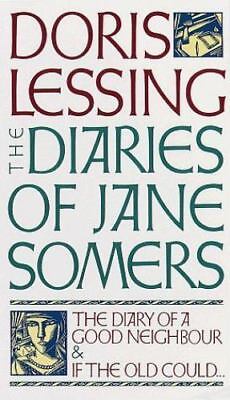
‘The Diaries of Jane Somers’ by Doris Lessing

501 p. 1984

I was going to say that I hadn’t read any of Lessing’s work because I saw her as an outdated writer from the 1960s in a tweed skirt and pudding-basin haircut. I now realize that I had her mixed up with Iris Murdoch, and that she actually lived until 2013, writing until the early 21st century. And consulting my reading journals from before starting this blog, I found that I had read a Lessing before – The Good Terrorist, a book I loathed. So it’s just as well that I was pushed into reading this book by my CAE bookgroup, because I would never have read it by myself (if I could even find it because it’s not widely available any more).

It has an interesting publishing history. It was published as two separate novels ‘The Diary of a Good Neighbour’ (1983) and ‘If the Old Could…’ (1984) under the pseudonym of ‘Jane Somers’. Lessing explains in the preface to this 1984 volume that she sought to publish the books under another name to test out the publishing industry’s willingness to take on an unknown author, and the effect of a known ‘name’ in achieving publication. She was right to be sceptical about the industry: her main publishers of her many previous works both rejected it. When it was picked up by Michael Joseph (later Penguin), they said that The Diary of a Good Neighbour reminded them of Doris Lessing. Her French publisher made a similar observation. Unlike her other books, it was mainly reviewed by women journalists in women’s magazines, highlighting for her the difficulty in bringing books to the attention of readers (I’m not sure that this is such a problem now, is it? Although you only have to look at the piles of remaindered books to realize just how much writing becomes literally junked because it has missed its wave).

Spoiler alert

Set contemporaneously in the early 1980s (which is when they were published) the books are written in the form of undated diary entries, a format which becomes increasingly implausible with the increasing use of direct speech and which leads to one continuous screed of writing. Jane, or as she calls herself, ‘Janna’ is an editor at Lilith, an upmarket glossy women’s magazine that includes several ‘serious’ sociological pieces on birth control, sex, health, social problems generally, often gleaned and barely disguised from New Scientist and other publications, as well as a heavy photographic emphasis on clothes, food, wine and decor. Janna was smart, fastidious about her own grooming and presentation, with a stylish home but a circumscribed social life beyond work. She had started working at Lilith in 1947, straight from school, and she was still there some 35 years later, although the magazine itself had changed its focus and structure over time. She had married in 1963, but her husband Freddie died with cancer. Several years later her mother died, after living with her briefly when her married sister Georgie said that she could no longer cope with her, as she had four children of her own. By her own admission, and increasingly, Janna realizes that she had been repulsed by, and emotionally absent for, both these deaths.

It is strange, then, that in The Diary of a Good Neighbour this chic and self-contained woman should befriend Maudie Fowler, whom she met in the chemist’s shop and accompanied back to her home. More than ‘befriend’ in a bureaucratic sense: she became a mainstay, a ‘carer’ (before than was a thing) and intimately involved with Maudie’s increasingly frail body in a way that she never could would have done with her husband and mother. This is part of Janna’s own growth as she reaches middle-age and looks back on her earlier life with an appalled guilt and regret that she had not really engaged with mortality, even when it affected those closest to her. Lessing captures well the despair felt at the betrayal by the body in old age, the mutual love/hate relationship between the aging person and their carers, and the bureaucratization of ‘care’ contracted out as part of a financial arrangement. Although set in the 1980s, the old women that Lessing describes live in squalor, with no internal bathrooms and inadequate heating. It’s pretty bleak.

If the Old Could’ picks up after Maudie’s death as Janna falls unexpectedly in love with Richard, a married man. It seemed light and airy after the oppressive sadness of the first book, although as time goes on the one-sidedness of the relationship becomes increasingly apparent. It is clear that Richard is not going to leave his wife; neither Richard nor Janna can bring themselves to actually make love with each other; Richard has Janna’s phone number but she has no way of contacting him; they spend a lot of time moving from pub to coffee shop and walking the suburbs of London. Janna’s caring responsibilities have, if anything increased, as her moody and indolent niece Kate moves in with her and Janna becomes a frequent visitor to Annie, an old, complaining woman who stays immured in her stuffy rooms. Kate is clearly mentally ill – her other niece Jill and Janna’s co-workers at Lilith can see it- but Janna is largely passive in the face of Kate’s slovenliness and her half-hearted involvement with a group of squatters who trash Janna’s immaculate apartment and take advantage of her generosity (shades of The Good Terrorist here). Janna herself is likewise passive in the face of the theft and cheating of the carers employed to look after Annie, perhaps through a misplaced sense of solidarity at the poor treatment of women working for the elderly. If Janna didn’t give enough to her mother or her first husband Freddie, she is surely compensating here, from a sense of guilt and lost opportunities. But the last part of her relationship with Richard and his family, particularly his son, is puzzling and strains credulity.

Moreover, I was never really convinced by Lessing’s selection of career for Janna. We are told repeatedly that she is very busy, but I couldn’t really work out what Janna did at Lilith. She seems to spend a lot of time worrying about her former co-worker and friend Joyce, who leaves for America to save her marriage, and she can drop everything for lunches and walks with Richard when he deigns to call. Janna’s focus on clothes and presentation (both for herself and in judging others) is an important part of her personality, but these could be woven into any professional job. I suspect that Lessing knew little about the high-end magazine industry.

Taken together, this is a lengthy two-part book. Particularly at the start, I seemed to read and read without making progress, and I despaired at ever reaching beyond the first quarter of the book. The writing is dense and wordy. The lack of chapters gives the book a feeling of relentlessness, especially in the dark sections with the increasing oppressiveness of Maudie’s frailty.

However, Lessing is very good at depicting the contradictions and compromises of women’s lives. Although written in Janna’s voice, she leaves space for the reader to make their own judgments of Janna’s actions and priorities. Despite my qualms about Lessing’s choice of high-end journalism for Janna’s work, the book itself has an emotional authenticity that is best appreciated, I suspect, by older readers. Readers who have watched their elderly parents die, have made mistakes and feel regrets, and have lived more than one life. In fact, I can’t imagine younger readers persisting with this book at all but, as an older reader myself, I appreciated watching a woman re-evaluating her life, finding her younger self a puzzling creature, and facing her own mortality head on.

My rating: Hard to judge. 8??

Sourced from: CAE Booksgroups (The Ladies Who Say Oooh)

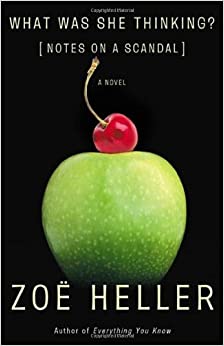
Six degrees of separation: from ‘Notes on a Scandal’ to…

For the first time in ages, I have actually read the starting book in the Six Degrees of Separation meme. To see more about this meme, check out Kate’s Books Are My Favourite and Best but, in summary, she thinks of the starting book and then you think of six other titles related in some way- no matter how tangential- to the starting book.

The starting book this month is Zoe Heller’s Notes on a Scandal. Actually, I think that the version I read was under its alternative title What Was She Thinking, but I’ll go with Notes on a Scandal because that was the name for the film based on the book. Besides, ‘scandal’ takes you to more places…

First stop is Kirsten McKenzie’s A Swindler’s Progress. This book looks at the putative Viscount Lascelles – in reality, the implausibly but actually named John Dow- a convict who served out his time in Van Diemen’s land after being transported for swindling using yet another false identity. On the expiry of his sentence, he traversed the NSW interior, claiming that he had been commissioned by the Secretary of State to inquire into the proper treatment of assigned convicts. He claimed that he was the eldest son of the second Earl of Harewood- a claim haughtily denied by the Earl back in England whose eldest son, in fact had been disinherited after making a series of disastrous liaisons. The book emphasizes the ease by which people could slip into new identities by travelling to various parts of the empire. She is a master storyteller who uses the human to enliven the theoretical, and the insights of the scholar enrich her narrative of lives lived with contingency, imperfection and incomplete endings. (see my review here)

In their anxiety about ‘respectability’, colonies could be even more stifling than Mother England. A Life of Propriety by Katherine M.J. McKenna is an academic history of Anna Murray Powell, one of the matriarchs of Upper Canada society in the late 18th century. I very much doubt that you’ll be able to find this book anywhere. She was the wife of Chief Justice William Dummer Powell, of the Kings Bench Upper Canada. It has stuck in my memory because her daughter became very publicly infatuated with John Beverley Robinson, the future attorney-general, much to the mortification of her family. It showed that parent/child (and particularly mother/daughter) relationships could be just as fraught two hundred years ago. Although the expectations and language of her parents in their treatment of their daughter might not sit well with us today, the experience of parenting, loving, and losing transcends these differences. (My review here)

Another real-life story that reads like fiction is Wendy Moore’s Wedlock. If you’ve seen the movie ‘Barry Lyndon’ or read the book, you will have come across this story which Thackeray based on the real life kidnapping of Mary Eleanor Bowes-Lyon, the wealthiest heiress in England. If that name sounds familiar, there is a family link with the Queen Mother. This is rattling good narrative history, all the better for being a true story. (My review here)

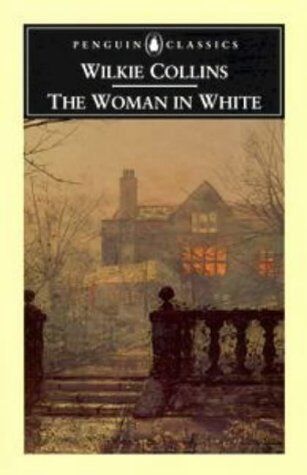
The heiress kidnapping has become a bit of a narrative trope, but I don’t think that anyone could trump Wilkie Collins’ The Woman in White. It’s very long but absolutely gripping. It is a type of epistolary novel, with various characters handing the narrative on to the next character- a very modern technique for a book written in 1859-60. It has been described as a melodrama, but I prefer to think of it as a thriller, with mounting suspense and a sense of dread, ratcheted-up as the story proceeds. There’s nothing hard-boiled about it at all: instead, it is intricate, verbose, lush, formal – and a damned good read. Even at over 600 pages. (See my review here)

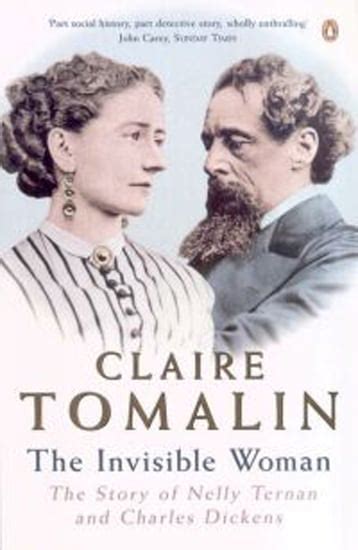
Wilkie Collins was a good friend of Charles Dickens, who had scandals of his own. The Invisible Woman: The Story of Nelly Tiernan and Charles Dickens is written by one of my favourite literary biographers, Claire Tomalin. Operating with rather sparse sources, she divides her book into three sections: first, Nelly Tiernan’s childhood and upbringing as part of a theatrical family; second, her hidden affair with Charles Dickens; and finally, her re-creation and rehabilitation of herself as a respectable school-teacher’s wife. Tomalin has written this biography with the bones showing – as she does with all her biographies- but in this case, the paucity of sources makes it hard to breathe life into this shadowy figure.

Writers seem to have made rather a habit of treating their wives badly, and biographers often struggle to bring their subjects out from the notoriety of their husbands. With Franny Moyle’s Constance: The Tragic and Scandalous Life of Mrs Oscar Wilde, she deals with the most notorious of husbands- Oscar Wilde- and his relationship with his wife Constance. When she married Oscar, they formed what we would now call a celebrity couple, noted for their radical aesthetic tastes and pre-Raphaelite sensibilities. Constance was a striking beauty. She too wrote stories, and she was well-known for her adherence to the principles of the bohemian Rational Dress Society. Moyle’s sympathies are very much with Constance, who despite changing her own and her children’s surname to “Holland” continued to love Oscar after his conviction, visited him in jail, and was equivocal about divorcing him although she gained a judicial separation from him eventually. (My review here)

So, here we are at the end. Even though Zoe Heller’s Notes on a Scandal is set in the present day, I see to have been wading around in the 18th and 19th centuries (my favourite stamping ground, I must confess). And I’m always attracted to a scandal….

I hear with my little ear: Podcasts 17-24 September

London Review of Books. Are you over the wall-to-wall Queen’s funeral? I am. It was a good corrective to listen to Grief Totalitarianism, where James Butler and Florence Sutcliffe-Braithwaite pick up on Glen Newey’s phrase “Grief Totalitarianism” which describes the way that everything is put on hold during a period of mourning. The machinery of state that we have seen in brilliant colour over the last two weeks is asserting that “this is the way things have been and the way they are going to stay”. These two commentators (one of historian) discuss the state of Britain in a week when Britain lost both its Prime Minister and monarch, looking back to Thatcher’s Britain and forward to the prospect of Truss replicating it (or not). Interesting.

History This Week Saladin takes back the Holy City goes back to 1187CE when Saladin, the Sultan of Egypt has a decision to make. Will he invade Jerusalem, where the Crusader’s lader Balian of Ibelin, is threatening to blow up the joint (and thus go down in history as the Muslim leader who caused the destruction of the Dome of the Rock, one of Islam’s holiest sites) or will he let the Crusaders surrender and leave (even though the Crusaders didn’t show Muslims such mercy when they took possession of Jerusalem in 1099CE. What do you reckon happened? A good podcast that doesn’t presuppose any great knowledge of these events (which is good, because I don’t have much)

History Extra Dangerous Ideas and Scandalous Lives: Germany’s first Romantics focuses on the university town of Jena in the late 18th/early 19th century which attracted philosophers, scientists and writers. I must admit that I hadn’t heard of many of them except Novalis (and that was only because of Penelope Fitzgerald’s The Blue Flower) but they are very famous in German intellectual life, Andrea Wulf, author of Magnificent Rebels: The First Romantics and the Invention of the Self, assures us. Lots of tangled relationships and intellectual jealous ending up in tears, as you might expect. I would have enjoyed this more if I’d heard of any of them before.

A witch window. Source Wikimedia

99% Invisible continues on with its 500th episode (over episodes 501 and 502) with Vernacular Volume 2. This time they look at Witch Windows in Vermont, a window placed on the diagonal in an upper floor room (supposedly because witches can’t fly on the diagonal); concrete wheat silos in Minneapolis and ‘lanais’ (pronounced la-naze) in Florida, which actually originated in Hawaii. They just look like a big porch to me’

Democracy Sausage. I’ve just finished reading Joelle Gergis’ Humanity’s Moment. Here she talks about the book, and why she wrote it. The podcast is okay, but you’d be better off reading the book.

Flightless Bird (Armchair Expert). This podcast got a mention in last Saturday’s Age. Flightless Bird is a series presented by a New Zealand journalist who got stuck in America during the COVID lockdown and decided that he wanted to explore America through an outsider’s eyes. He is accompanied in his quest by Dax Shepard and Monica Padman (two Americans). They are young, foul-mouthed, chatty and not particularly well-educated. He starts off by launching into Religion– what is it with Americans and religion? He talks with Mike McHargue – a Baptist who became an atheist who then became a Christian again, drawing on studies of neurology and left and right brain thinking (interestingly, Karen Armstrong, who is much more well-educated, draws on similar studies). They talk about the concept of a State Church in UK and other European countries (and obviously non-conformism doesn’t come onto their radar, and they don’t seem particularly aware of the lack of an established church in Australian and NZ history). Don’t know if I’ll persist with this one.

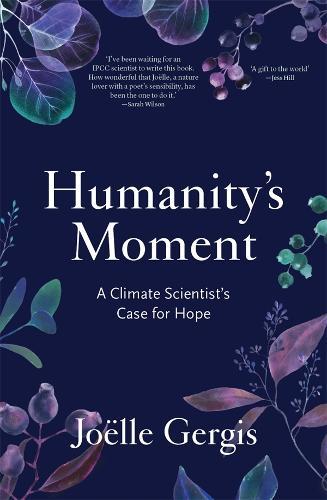
‘Humanity’s Moment’ by Joëlle Gergis

2022, 320 p.

The full title of this book is Humanity’s Moment: A Climate Scientist’s Case for Hope. I find it hard to imagine that a climate scientist could have any hope. Report after report comes out, each hammering the same point – that we have to act NOW- only for it to be engulfed in the news cycle by some new event with better video footage to attract eyeballs. Australians concerned about climate change congratulated themselves for shaking off the climate inertia of the last ten years, only to see our newly minted government open up exploration licences for more fossil fuel extraction and parrot the mining companies’ “well-if-we-don’t-dig-it-up-someone-else-nasty-will” mantra. Even I with my admittedly limited scientific education was shouting at the television: so I wonder what climate scientists were thinking as they heard this?

Joëlle Gergis IS a climate scientist. She was one of about a dozen Australian lead authors working on the United Nations’ Intergovernmental Panel on Climate Change (IPCC) Sixth Assessment Report that was released mid-2021. As part of Working Group 1, her task was to provide the scientific foundation for understanding the risk of human-induced climate change, its potential impacts and options for adaptation and avoidance of dangerous levels (p10). It was her job to review thousands of peer-reviewed scientific studies, and distill their key findings. Their draft underwent government and expert review, and they returned to their chapter to address the 51,387 technical comments they received before its release in August 2021, in the midst of the pandemic. By the time the Seventh report comes out in 2030, it may well be too late to achieve the Paris Target.

What a thought. Too late by 2030. Eight years. My eldest grandchild will be a teenager. My youngest grandchild will be in lower primary school. Ah, you say, you’re thinking with your heart and not your head. But this is exactly what Gergis does in this book: she thinks with her heart AND her head. This is not without risk. She is open about her own depression, much of which springs from being heart-sick about the implications of her work. This is still a ‘brave’ thing for a scientist to do, particularly a female scientist who would face old stereotypes of being ‘hysterical’ and ‘shrill’. But she insists that we cannot think about climate change with our head alone: we need to bring our hearts to it as well.

The book is divided into three sections on this basis: The Head, The Heart and The Whole. The first section, The Head, is facts and statistics. There was so much I didn’t know. As part of the the IPCC Sixth Assessment, five ‘shared socioeconomic pathways’ were developed, showing temperature rises under very low, low, intermediate, high and very high greenhouse gas emissions. It is discouraging that the ‘intermediate’ scenario is now seen as the most likely, with a rise in temperature of 2.0 degrees in 2040-2060 and 2.1 – 3.5 degrees between 2081 and 2100 (when my grandchildren will probably still be alive). A whole cascade of consequences will ensue: changes in weather patterns and ocean currents, sea level rise, loss of biodiversity, food insecurity, water insecurity, refugee flows… It is just overwhelming and terrifying.

Part II, The Heart, acknowledges this:

I’m sure, by now, many of you want to put this book down and stop reading. Trust me, I understand how you feel. These last few chapters have been really, really difficult for me to write….I’ve found myself overcome by tears many times and I’ve come to terms with the reality of what I’m writing, especially material that I don’t deal with directly as a climate scientist. Usually I’m working with physical variables like temperature and rainfall that can be neatly analysed and understood. But when you start to understand the reality of what the numbers actually mean for the people and places we love, you find yourself face to face with something so profoundly sad…This process has put me in touch with a sense of grief that sometimes leaves me feeling like a broken mess.

p.137

This section is written in “us” language: she, the writer, is talking to us, the reader. She speaks of fear, despair, frustration – deeply human responses- and I feel as if here I am reading the answer to my own question “what were climate scientists thinking when they heard this?”. They were crying. They were frightened. And when I hear this, I am frightened too.

Who is going to lead us out from all this? she asks in Part III. Her answer is that we are going to have to do it ourselves. This is an ‘active hope’ for her but I wish I felt as sanguine as she does. She sees hope in COP26’s agreement to phase out coal-fired electricity in the 2030s for major economies and 2040s for developing countries. She despairs at the failure of leadership that led to the watering-down of pledges, but holds onto the awareness that the 100,000 people protesting in the streets of Glasgow were part of a world-wide Global Day of Action for Climate Justice taking place in over 100 countries. It is, she says “the biggest social movement of our time. A time of true global citizenry, driven by our passion to save the one thing that sustains us all: our Earth”(p.162). She celebrates the arrival of the Teal Independents and the success of the Greens in recent Australian politics, and the election of Joe Biden with his strong emphasis on climate action, especially in comparison to Trump. She looks to books, music, films and poetry as fuel for the social movement that will bring change. She acknowledges that

no matter how many facts and figures I give people, in the end it is probably going to be a book, an artwork, a song, a photograph, a play, a performance or a film that eventually helps awaken their sense of care for other people and the natural world…. We need artists to help scientists translate the cold, hard facts into raw human emotions.

p 188,190

She talks about how change happens, looking at the domino effect when a critical threshold of society changes its minds. She cites a study by Damon Centola from the University of Pennsylvania who argues that the threshold for a social tipping point was passed when the size of a committed minority reached approximately 25 per cent of the population. Once this social tipping point was reached, between 72 and 100 per cent of people eventually adopted the new convention (p.194, 195).

I must say that I find some of these tendrils of hope rather insubstantial. Teals and Greens notwithstanding, those exploration licences were still issued by the Federal Government. The fossil fuel lobby is just as powerful as ever, now cloaking itself in support for “blue” hydrogen. That number of 25% support to bring about social change, however it was reached, can go just as easily the other way. I note that 25% was pretty much the proportion of votes attained by right wing parties in Sweden, and projected for the Brothers of Italy in the upcoming Italian elections. For myself, I bristle against the ‘preachiness’ of the arts dressing themselves in the most recent issue of the month, and climate change is too important to have us rolling our eyes at being ‘told’. Let music, art, writing celebrate being human and our environment on its own terms: it is enough.

For it is her final claim on the goodness of people and the need to keep “showing up” that probably chimes closest to my own ideas.

While we all behave badly sometimes, most people are honestly doing the best that they can from day to day. Most ordinary people, deep down, really do care about the planetary crisis we are facing, but they often feel powerless and disillusioned about their ability to influence change…Instead of being someone who confirms someone’s distrust of the basic goodness in humanity, you can choose to be a light in dark places for those around us…We can choose which side of history we want to be on and make the personal choices that help make the world a better place. So many of us have lost faith in the goodness in humanity, we’ve lost touch with our inner knowing of what is true and whole in ourselves and each other. When we contact this universal place of compassion and the interconnectedness of our hearts, we experience a sense of homecoming, a deeply felt sense of our belonging to our shared humanity.

p. 226, 227

This is an important book because it connects the head and the heart. It is deeply rooted in the science- you only have to look at the bibliography to see that- but it is realistic about the political challenge. At times the writing, especially when describing nature, is a bit overwrought and self-conscious, but the passages where she talks about her response at an emotional level are raw and honest, and above all human. Because in the end, it is the recognition of being human, together, that is our best hope.

My rating: 8.5/10

Sourced from: Review copy Black Inc.

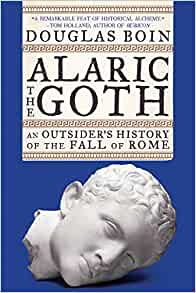
‘Alaric the Goth: An Outsider’s History of the Fall of Rome’ by Douglas Boin

2021, 272 p.

Just a little shift of perspective can bring a whole new way of seeing. When we think of “The Goths”, we tend to think of something dark, gloomy and menacing. “The Goths” are often linked with the category of “Barbarian” and they are seen as one of the main causes of the downfall of that marbled, marvellous empire of Rome. But if we shift our focus slightly, we can see the Goths as a tribal group with their own territorial, cultural and political aspirations within and alongside an arrogant culture which was happy to use their labour and bodies but with-hold any power. “The torture of our powerlessness” was how the Uluru Statement described it in Australian history, and in Douglas Boin’s biography of Alaric the Goth, we see how this powerlessness was turned against a society eaten hollow from within by compromises made to protect the wealth and interest of the powerful.

Alaric was born in around 370CE in what is now Romania. He lived close to the banks of the Danube River, a physical border which at some times was outside the Roman Empire or, at other times, was seen as a provincial part of the Empire. The designation of the border determined whether an inhabitant might be eligible to be a Roman citizen or not. In 212 Emperor Caracalla published the Antonine Declaration, which immediately gave citizenship to every free-born resident of a Roman province. However, by 275CE Rome had abandoned Dacia, along the Danube, as a Roman province, and had withdrawn its legal system and financial investment, along with its military. Had Alaric been born 150 years earlier, he would have been a Roman citizen.

As it was, by 370CE the only way he could achieve citizenship was to serve in the army for decades, and that is what he did. Goths could serve in the Roman army, but instead of marking inclusion, the presence of non-Roman soldiers was a sign of Rome’s entropy. Italian landowners did not want to pay taxes, so Rome had to keep expanding outwards to take in more tax-paying inhabitants, without actually making them citizens. Wealthy Roman families kept their best workers hidden, so that they would not be drafted into the army and so the Roman army became dependent on mercenaries from the surrounding peoples. Alaric, who had the trust of the Goth troops he led, moved up the military ranks, but the imperial government always maintained a ceiling on the aspirations of its ‘alien’ generals. After having his troops used as cannon fodder in battles, and being sidelined and retrenched once too often, Alaric rallied the Goths against Rome. His knowledge of Roman tactics and logistics empowered him to take the battle right to Rome itself, which his troops ‘sacked’ in 410CE , although even this ‘sacking’ did respect the sanctuary provided by churches, as Alaric shared the Christian faith of the Roman Empire by this time.

Any historian working on this era is frustrated by the partisanship and paucity of sources. There is no written record of Alaric until he emerges as an adult, and Boin has to rely heavily on Jordanes’ The Origins and Deeds of the Goths, the only Gothic history book which survives from antiquity. In this absence, Boin extrapolates and turns around the sources we do have from other perspectives to locate Alaric within the broader historical movements of the time. He is aware of the dangers and limitations of this approach, but I think that he succeeds in providing a context and a rationale for Alaric’s actions. His argument that the bombastic attitude of Roman society towards ‘outsiders’ is a strong one, which has resonances for today’s politics of the West as well. As well as fleshing out a biography for Alaric this book is, as the title suggests ‘An Outsider’s History of the Fall of Rome’ and although Boin suggests most of the same factors as other historians, by shifting the focus to the success of the Goths rather than the failure of the Romans, these factors become personalized.

Although Boin does not mention it at all, this book fits well into the recent turn to the History of Emotions. Any Roman history is incomplete without battles (particularly if it’s a biography of a general and warrior) but Boin focuses more on the individual’s experience of warfare rather than military strategies. Insult, frustration and pride – the emotions of oppression and injustice- are given full weight, and make this a very human biography. I have only come to Roman History recently, and I prefer big history on a human scale.

The book is beautifully written. Boin has a light touch, a good eye for description, and takes the reader – including readers (like me) with little knowledge of Rome, or the Goths – along with him. There are little digressions which detract him (and the reader) at times, perhaps because as a historian he could not resist the more definitive sources that did come his way. Judging by Goodreads comments, readers either tend to love it or hate the book. For me, it was a really engaging read in its own right for its exploration of an individual and the broader forces of history.

My rating: 8.5/10

Sourced from: own copy.

I hear with my little ear: Podcasts 9-16 September 2022

Witness History (BBC) Leading up to the bicentenary of independence in Brasil, Witness History has a series of three short episodes about Brazilian history. The murder that shocked Brazil looks at the 2002 murder and torture of investigative journalist Tim Lopes by a drug gang in Rio de Janeiro. The episode features an interview with Lopes’ son in 2014. A second episode looks at the capital of Brasil, Brasilia. It was designed by modernist architect Oscar Niemeyer and opened in 1960 (even newer than Canberra and a lot weirder). Building of Brasilia features an interview with Osorio Machado, an engineer who worked on the city’s construction.

The History Listen (ABC) Fanny Smith: The ‘genocide survivor’ whose voice will echo through the ages If you asked most people who the last Tasmanian aboriginal was, the answer would be Trugannini. But Fanny Cochrane Smith, who died in 1905 proudly proclaimed that she was the last Tasmanian Aborigine. In 1899, twenty-three years after Trugannini’s death, she recorded songs and language for the Royal Society of Tasmania, the oldest voice recordings made by an Aboriginal person and added to the UNESCO Australian Memory of the World Register in 2017. In this episode, you can hear the recordings and interviews with her great, great grand-daughter, who along with other Palawa people, was encouraged by Michael Mansell to see themselves as a ‘people’ rather than ‘descendants’. Well worth listening to.

99% Invisible Who-ever thought that a dingbat was a THING? For the 500th episode of 99% invisible, they embark on a three part series on Vernacular architecture. So what’s a dingbat?- it’s one of those two or three storey apartment buildings with parking underneath, apparently very popular in Los Angeles in the 1950s and 1960s. They also look at A-frame houses in Vermont, and the phenomenon of the front porch in houses in the South, which can be used as the site for story-telling but also a barrier to stoop people (especially black people) entering your (white) house.

The Documentary (BBC) Samburu: The fight against child marriage looks at the Samburu county, in northern Kenya, where it is normal for girls as young as 11 to be married, often to men more than three times their age. To add to the trauma, the day before the wedding the girl undergoes genital mutilation. Josephine Kulea, is a remarkable Samburu woman on a quest to stop these practices deeply embedded in her culture. Interestingly, they take the girls away for a few years, give them an education, then return them to their villages once the impetus for a child marriage (and the early delivery of cattle in exchange) has passed

Conversations (ABC) Richard Fidler really is a very good interviewer. The Fall of Kabul through Andrew Quilty’s Lens is an interview with photographer Andrew Quilty, who returned to Afghanistan as the US, UK and Australian troops withdrew. It’s a really thoughtful, articulate, raw interview- and it makes me want to read his book August in Kabul.

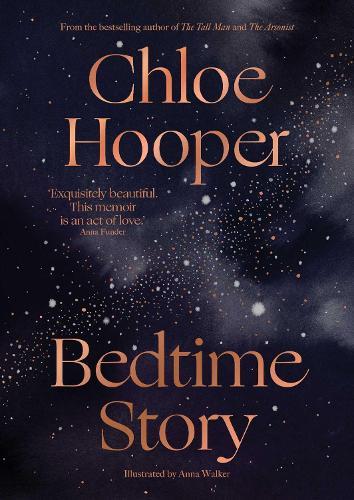
‘Bedtime Story’ by Chloe Hooper

2022, 288 pages

Illustrated by Anna Walker.

How do you tell a six year old that his father is gravely ill with cancer? Or his four year old brother? What does a child do with that information? When Chloe Hooper’s husband, historian Don Watson, received the diagnosis of a rare and aggressive form of leukemia, she turned to what she and her husband knew best: words and stories. Humans have drawn upon stories for time immemorial- indeed, it may be stories themselves that make us human- as a way of explaining the world around us and containing fears. Cancer, that very adult fear, is often described as a “journey”, drawing on ideas of the hero who inhabits both children’s and adult literature. As adults, we may think of fear of the dark as a childish fear, but it seeps through the pages of this book in Anna Walker’s illustrations that capture the inkblot of fear and death, the brush with spiders’ legs and the oppression of the deep, dark wood.

Hooper pores over the children’s literature shelves of bookshops and libraries, buying but ultimately rejecting the books written especially for children whose lives or families are touched by cancer. Instead, this book is presented as her story for her unnamed elder son, who is addressed as ‘you’ throughout. At one level it is an almost abstract, dispassionate survey of children’s literature from its “golden days” of the nineteenth century but, underneath her summary of the themes and biographies of authors like Tolkein, C. S. Lewis, L. Maud Montgomery is a more plangent question for her: what pain or trauma drove these authors to write for children?

These digressions into children’s literature are a way of avoiding the more immediate threat. Hooper traces through the early diagnosis and initial chemotherapy treatment, then the long, leaching period of ongoing chemotherapy and its side effects. The eye of the writer is always looking. As they drive in silence towards St Vincent’s Private Hospital for the initial chemo, the hospital where her young children were born (as, indeed were my own, more than 20 years earlier), the traffic is stopped on account of a young psychotic man up on the roof of the adjacent public hospital, threatening to commit suicide. The irony of suicide juxtaposed against people like them, desperate to hold onto life, is not lost on her. They sit in their room on an upper floor of the hospital, decorated in an intense purple, waiting, waiting, waiting – as much of the next year will be spent waiting. She reflects:

Is this what everything has been leading to? All the business that fills a life- two marriages, two divorces, a daughter, three stepchildren, a year later two young sons- was the fucking and the fighting and reading and the writing all leading to this high, purple room?

p.105

“Don” as his children call him, was very much an older father – he was aged 62 when the son referred to as ‘you’ in this book was born- and nurses sometimes mistake him as the children’s grandfather. I can only think that it was the presence of this young life around him that gives him the strength to face the chemotherapy regime which extracts its own toll in the time he has left to him (the oncologist Ranjana Srivastava addressed the issue of ‘time toxicity’ in an excellent recent article in the Guardian). The book is, too, a tribute to “Don’s” own achievements with his degree in history from (my own) La Trobe University (pointedly but accurately described on p.105 as “a newly built institution set in a dust bowl between two mental asylums, a cemetery and a drive-in movie theatre”) through to his work as speech writer for Paul Keating, leading to his wonderful biography/reflection Recollections of a Bleeding Heart and later books on the use of language in politics. But it is almost as if she is watching Don from behind glass: it is his struggle, on his own. The world closes in on them, as the family becomes transfixed by the nesting of a pair of white-plumed honeyeaters in their garden, and as the house becomes the centre of Don’s fight. She continues her work on completing The Arsonist, published in 2019 but it is as if all this is happening in another universe. Meanwhile, what they fear most is played out in front of them as the father of her eldest son’s friend dies of cancer too. Books may not be able to tell how to get through this: seeing another family doing so, does. The pages become drenched in black, and the upper-case text shouts “TEAR IT ALL UP” “STORIES AREN’T HELPING” “THEY ARE ONLY MAKING THINGS WORSE” “NO STORIES, NO MORE”

As she notes, readers often jump to the end of a book to find out how it finishes. I won’t tell you.

I finished this book feeling quite wrung out by it, and almost as if I had invaded their family territory. Hooper herself, of course, has invited us to draw close, but I still couldn’t help feeling as if I had somehow trespassed into someone else’s pain. I did find myself wondering about the logistics of writing this book – it followed a chronological thread but it was not a diary. At what point was it decided that it become a publishable piece? Do the commercial decisions of cover, illustrations and editorial shaping undercut its authenticity? What do you do with such an intimate piece of writing? Does the author climb onto the publicity treadmill, numbing herself to rehash the same conversations over and again for an audience?

This is beautiful, honest, human writing, but I really don’t know how to honour it without cheapening it. Do I give it a ‘score’? Stars on Goodreads? Do I listen to the interviews that she is giving (e.g. with Richard Fidler on ‘Conversations’) while I’m driving along in the car? Will it win literary prizes, with all the accompanying hoop-la? I feel as if she was compelled to write this book, as the only thing that she knew how to do. I felt that I wanted to keep reading it, to acknowledge her humanity and generosity in sharing it. But I still feel as if I am intruding.

Sourced from: Yarra Plenty Regional Library

I hear with my little ear: Podcasts 1-8 September 2022

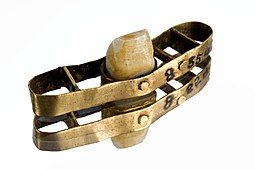
The Ancients (History Hit) So you thought that after finishing the History of Rome podcast, that would be it for the Romans? NO WAY as my little two-and-a-half-year-old grandson would say: I didn’t listen to over 70 hours of podcasts just for it to go in one ear and out the other! So, when I saw Prosthetics in Antiquity, that sounded interesting. Dr Jane Draycott from University of Glasgow explains that there was no actual word for ‘prosthesis’ in antiquity, although they did have wigs, artificial legs and feet, false teeth etc. Unlike today, when prostheses are made to look as natural as possible, in Ancient Greece and Rome it was felt that for a prosthesis to be lifelike was a form of deception and disguise. Instead, prostheses were personalized and, in the case of wealthy wearers, were a form of display. Many examples have been found in tombs, although wooden prostheses were less likely to survive than metal ones. There are also many references in literature to prostheses, although they were mentioned in passing, rather than described fully. Fascinating.

Emperors of Rome. I haven’t listened to this in a while- and Dr. Rhiannon Evans is back! Episode CXCVI – Fulvia looks at this aristocratic woman who lived in the late Roman Republic. Born into an important Plebian political dynasty, she was politically active in her own right too and married three times, most importantly to Marc Antony. She was directly involved in raising troops to fight for Antony in the Perusine War against Octavian (the future Emperor Augustus) in 41-40 BCE. Anthony didn’t appreciate her involvement, though, and he had her exiled. Cicero didn’t have a good word to say about her, and this has influenced the way historians have viewed her.

New Books NetworkNew Books in Latin American Studies. In this interview, Kate Phillips, the author of Bought and Sold: Scotland, Jamaica and Slavery claims that the Scots role in West Indian slavery is little known. This might be true of the man-in-the-street in Scotland, but it is not true of historians (and I note that Phillips is a retired social development specialist from Glasgow University, rather than a historian). Even here in Melbourne we have the city of Moreland changing its name because of its association with ‘Moreland’, a plantation owned by the family of Farquahar McCrae, who made no secret of their Scottishness. Apart from this questionable claim, however, Phillips has delved into the archives to draw a rich picture of plantation life for both Scots owners and overseers, and their enslaved workers. She points out that the field slave was more likely to be a young woman than a man, because men were generally trained to work as carpenters, bricklayers, mill workers etc. Ironically, after the Apprenticeship system broke down in the 1840s (and Scots slave-owners had applied for compensation for the loss of their ‘property’) formerly enslaved workers squatted on their old plantation lands, when their Scots ‘owners’ just went ‘home’ without selling the plantation. Now that Jamaica is becoming a tourist population, the descendants in Scotland are reaping the profits from these ‘abandoned’ properties.

History Workshop Podcast. Transnational Suffragettes starts off disastrously with about 2 minutes of the presenters all talking simultaneously over each other. However, the problem is soon resolved and a discussion follows, chaired by Australian historian now at Cambridge, Rosa Campbell, with James Keating a historian of nineteenth- and twentieth-century Australia and New Zealand and author of  Distant Sisters: Australasian Women and the International Struggle for the Vote, 1880–1914 and Sumita Mukherjee a historian of nineteenth and twentieth century transnationalism, mobility and migration in South Asia, Britain and the British Empire, with a particular focus on gender, and author of Indian Suffragettes: Female Identities and Transnational Networks. They discuss the transnational women’s movement at the start of the 20th century, where the hierarchy was: 1. White Women, 2. Indian and Japanese Women, 3. Black Women and 4. First Nations Women. Although included in international conferences, women from ‘The South’ were not able to get their concerns reflected in the agendas of these larger meetings, although they were able to develop networks. In Australia in particular, the women’s suffrage movement was still very much a state-based (as distinct from national) concern, which did not lend itself easily to international events. Nonetheless, in Aust and NZ, representatives disseminated international news through scrapbooks, newspaper articles, magic lantern shows and circulation of letters. He particularly mentions the Womens Christian Temperance Union, an international body which took an increased interest in Maori women when they achieved the vote alongside white women in NZ. Meanwhile, Indian suffragettes looked back past British colonialism to the Vedic tradition.

The History Listen (ABC) is running a 3-part series called ‘The Loveday Trilogy’ which looks at individuals who ended up in Loveday internment camp in South Australia during WW2. This episode, Francesco Fantin, is actually the second episode, but you don’t need to have listened to the first one. Fantin was born in Italy in 1901 to a working class family. Largely self-educated, he became an anarchist and socialist. When Mussolini came to power in 1922, Australia became a favoured destination for anti-fascists, and he emigrated to Australia and headed for the Queensland cane fields. There he became labour organizer, and he led a strike action to demand the burning of canefields to kill off rats and snakes, a health-and-safety act opposed by the sugar planters. But when he was arrested and interned in 1942, he found himself in a camp where the fascists outnumbered the anti-fascists, and his life was in just as much peril as it might have been in Italy.

The Documentary (BBC) Now that Boris has gone, The Documentary looks at Global Britain after Boris Johnson, in a rather too flattering episode, I feel. Given Johnson’s penchant for Shakespeare, it is presented as a play with 5 acts: 1. Brexit 2. Johnson meets Biden 3. Exit from Afghanistan 4. COP 26 and 5. Ukraine. Almost makes you forget what a twat he is.

History Hit. In A Short History of Humans, Dan Snow interviews economist Oded Galor, the founder of Unified Growth Theory and author of the recently released The Journey of Humanity: The Origins of Wealth and Inequality. He argues that for 99.9% of man’s history, there was no substantial change in the rate of man’s progress, as any technological advance led to an increase in population, which largely cancelled out an advances. However, during the last two hundred years, rapid technological change has led to increased complexity requiring more universal education, for which parents needed to reduce their family size. He sees the Industrial Revolution itself as a red herring, emphasizing acceleration of change, rather than innovation, and he largely discounts cultural and biographical factors in world history. However, he softens this later on in the interview when discussing why Western Europe became the centre of accelerating change. In counter-point to the example of China, he points to Western Europe’s cultural fluidity which led to competitive nationalism, and factors like geography, culture and institutions which affected the “take off” point from stagnation to growth. He suggests that these factors can be “designed into” development programs, leading generally to progressive policy in terms of education, human rights etc. He is very ‘economic’-y, seeing growth as an unqualified good, and in this interview, silent on the effect of climate change.