Author Archives: residentjudge

I hear with my little ear: Podcasts 1-8 November 2022

Emperors of Rome. I wish I had known that this live session was on- it was in Melbourne on 4th October at ACMI. It’s a bit of a re-hash of their much earlier episode years ago when the podcast first started. Cleopatra and Antony (Live in Melbourne) starts off in 41 BCE as Cleopatra joins Mark Antony in Tarsus (Turkey) after a delay to emphasize that she was not at his beck and call. Dr Rhiannon Smith emphasizes the political advantages of their relationship, playing down the romantic element. She points out that Cleopatra was obviously in control of her fertility, as she was not constantly pregnant as many female rulers were, in order to ensure a line of succession.

My Marvellous Melbourne. I haven’t listened to this for a while, and unfortunately there hasn’t been a new episode since March 2021. Episode 8: Sixpenny Restaurants, the Buxtons and Isaac Selby has plenty of variety. It starts off with the murder of Sisto Malaspina, the owner of Pellegrini’s Restaurant in Bourke Street in 2018, then goes on to talk about the Sixpenny restaurants that were established in Melbourne from about 1874 to WWI. They were a fixed price menu, often of three courses, with quite a bit of choice between courses. At first they attracted ‘foreigners’ but from the 1880s onward they began catering for working men, and even working women with the ladies’ restaurant upstairs. Then Peter Yule talks about his book The Buxtons: 150 Years of Developing Melbourne. I hadn’t realized that the Buxtons had spawned so many different businesses over their six-generation history- Becton, MAB as well as the Buxton Real Estate company. They contracted and expanded according to the financial cycle, and managed to shift their huge loss on 333 Collins Street onto the South Australian government. MAB developed Docklands. Yule drew on the company archives, now at Melbourne University, but also historian Kathleen Fitzpatrick’s memoir as a Buxton granddaughter. Finally Isaac Selby was a lecturer in Melbourne and Melbourne historian with a colourful episode where he tried to shoot the judge in an American courtroom after his wife sued for divorce after becoming a Unitarian! The RHSV had an exhibition on Isaac Selby in 2019, when this podcast was recorded. There are sound clips of Geoffrey Blainey talking about his contact with Isaac Selby, who died in 1956.
By Roland Unger – Own work, CC BY-SA 3.0, https://commons.wikimedia.org/w/index.php?curid=48168958

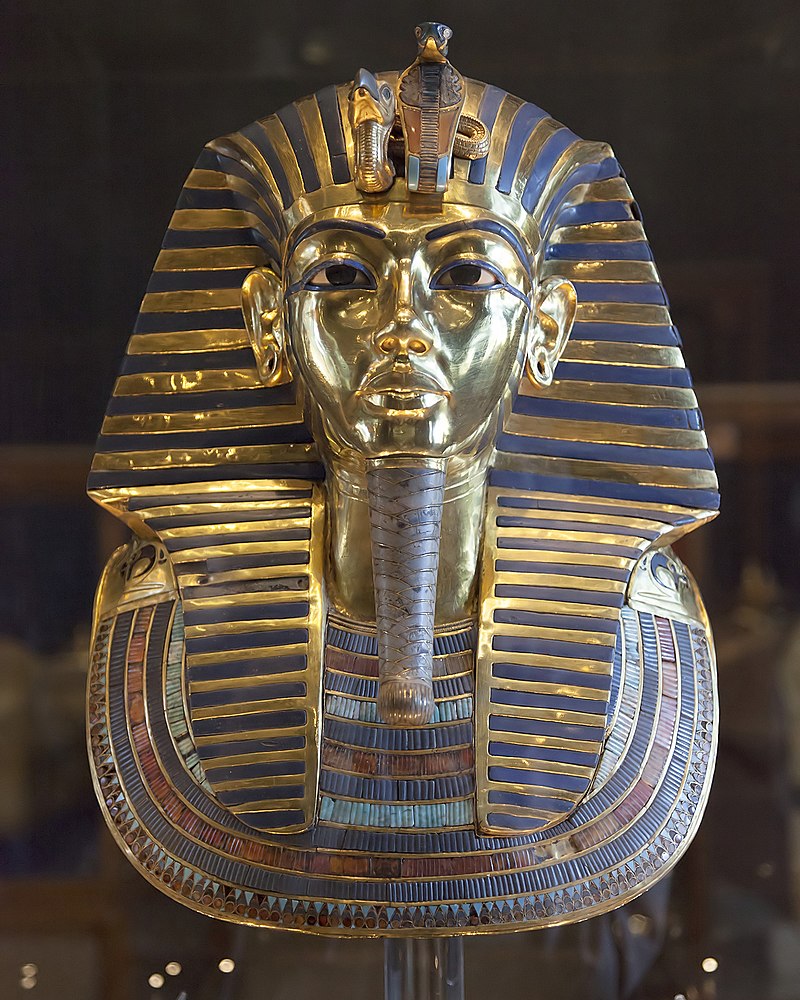
History Hit. It’s the centenary of the discovery of Tutankhamun’s tomb in November 1922. Did you know that Tutankhamun- or, at least, his death mask – is one of the reasons why I’m a historian? There was a colour picture of his death mask, with all that glorious gold and blue, in my Form I history textbook and I just fell in love with history classes just to look at the picture. History Hit have a four part series on Carter’s discovery of the tomb. Episode 1 Tutankhamun: The Valley of the Kings starts off by describing the valley, which was carved out of the desert by infrequent flooding, leading to deep ravines. Tutankhamun’s tomb was actually in the valley floor, which became covered with small rocks. He was one of the “new” kings around 3000 BCE, as distinct from the “old” Kings of 4500BCE who constructed the Sphinx and the pyramids. There were over sixty tombs in the Valley of the Kings, which was never “lost” as such because it was a tourist attraction even in Roman times. There was an increased interest in all things Egyptian after Napoleon’s invasion. There were other explorers before Carter- including Giovanni Belzoni, the 6ft 7 inch strongman who was responsible for sending the head of Ramsesses II back to the British Museum, and John Gardner Wilkinson, the so-called ‘Father of British Egyptology’ who numbered all the existing tombs at the time. And of course, Howard Carter, who arrived in Egypt at the age of 17.

Episode 2 Tutankhamun: The Discovery of a Lifetime focuses on Howard Carter, starting off in the house that he built in Egypt, in order to be close to the diggings. He became the Inspector of Antiquities, but was dismissed when he sided with his Egyptian workers in a dispute. In 1907 he met Lord Canarvon (of Highclere, the site for Downton Abbey), who went on to sponsor him for many years. Canarvon received the concession to work the Valley of the Kings in 1914, but after finding nothing for eight years, he finally threatened to pull the plug on Carter’s work. But Carter encouraged him to allow one year more. One day a water boy was moving some rocks to set up a water stand, when he noticed a square rock, different from the rest.

Episode 3 The Life of a Boy Pharaoh turns to Tutankhamun himself. On 4 November 1922 Carter wrote to Canarvon, telling him to come over. Tutankhamun died at 19. His reign followed that of his father Akhenaten, who had converted Egyptian polytheism into monotheism worshipping the God Amun. Tutankhamun reversed this, as well as his father’s centralization of power. He died of malaria and a broken leg.

Episode 4 Inside the Tomb is recorded inside the tomb, which was a poor choice because the acoustics are bad. It looks at the politics surrounding the announcement of the discovery, with it being framed as a ‘British’ discovery despite the 1922 Egyptian independence movements at the time. The presence of a photographer meant that people could actually see this intact tomb (although the photographs were staged afterwards). Egyptian regulations meant that an intact tomb had to stay in Egypt, which is why it is still there today) although poor old Tutankhamun himself was pulled apart to register the various artefacts, which numbered over 5,500. It took 10 years to register and clear the tomb. Tutankhamun captured the public imagination instantly, with his androgynous, if highly stylized, features on the death mask and in the wake of WWI, his image captured young, dead boys across time. Canarvon died soon after, as the result of an insect bite, feeding rumours of a ‘curse’. Carter ended up rather embittered by his lack of academic acclaim, and the British focus of the publicity despite the presence and contribution of his Egyptian co-workers.
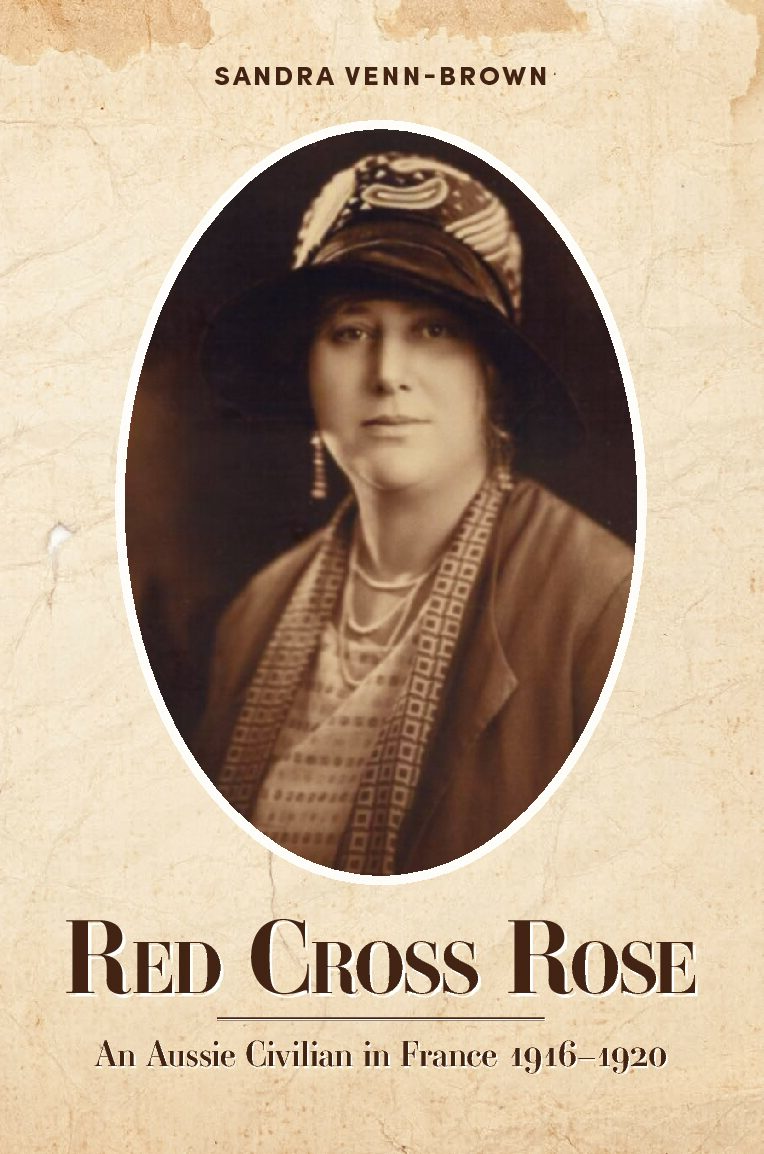

‘Red Cross Rose’ by Sandra Venn-Brown

2021, 297 p.

When we think of Australian women during World War I, we tend to think of them as either nurses (and less often, doctors), or as sock-knitters. But there was a small group of Australian women, generally from middle to upper-class origins who did make their way overseas as volunteers with the Red Cross, or in the case of Rose Venn-Brown, as an administrator with the YMCA. The Armytage sisters from Como, for example, also made their way over there; so too did Vera Deakin. This book, written by Rose Venn-Brown’s grand-niece tells the story of one of these ‘Aussie girls’ in France between 1916 and 1920. Although the Red Cross also drew on her services, her main interest was the YMCA, and after the war ended she was attached to the Australian Graves Detachment based at Villers-Brettoneux in France.

When WWI broke out in August 1914, Rose was working as Assistant Registrar at the Royal Hospital for Women at Paddington. Coming from an affluent family, there was no economic necessity for her to work, but the family of thirteen (!) siblings seemed to gravitate towards white-collar professions after their father died quite early. She would have been expected to resign on marriage, but the war intervened, and marriage never beckoned. She felt that her administrative skills might have been of use “over there”, but she was generally discouraged by the military authorities, who would only send trained nurses. Eventually she circumvented them by travelling to New Zealand and embarking from there as a civilian. Through contacts, she found herself commissioned with the task of organising the medical records of the Australian War Office in Horseferry Road, London. She was asked by the wife of the NSW Agent-General in London to help organize the War Comforts Fund Association for Australian soldiers (which so many women were involved with back home in Australia), and was offered canteen work for the Young Mens Christian Association (YMCA). As far as she was concerned, she didn’t travel all that way to do canteen work, but she pulled some strings to be appointed to look after the finances of the canteens, which had been in a poor state until then. By 11 April 1916, her permits were cleared to cross to France to work for the YMCA, something that men employed by the YMCA were not impressed by. The men called a protest meeting, and it was agreed that Rose would spend a certain amount of time working in the camps – which was, of course, exactly what she wanted in the first place.

Rose later published her letters back home, and her diaries from her time at the front. The author has drawn heavily on both of these sources, and Rose certainly wrote well. As a descendant rather than a historian, Sandra Venn-Brown does not interrogate these sources or their production in the same way that Janet Butler has done in Kitty’s War (my review here).

If Rose Venn-Brown were working today, we would call her an Events Organizer, as much of her work revolved around organizing lectures and concerts for the men in the YMCA ‘huts’ located behind the front. It was acknowledged that the men needed leisure activities as they cycled between periods on the frontline and then back at base, and she liaised with performers and lectures to schedule and stage these events and organized dances and concerts among the men themselves. By this stage, three of her brothers had enlisted and she enjoyed being able to catch up with them when she could. Much of her identity revolved being an “Aussie girl” and the comfort that the Australian troops drew from hearing a familiar accent from a “girl” who could just as easily come from their home towns. Travelling from one part of the Western Front to the other was not easy, and in a letter home Rose gave a graphic description of visiting Gamaches, 62 kilometres north of Amiens, in early 1919 when hostilities had ceased. The journey was about 190 kilometres but took a full day, with the car bursting into flames several times and requiring multiple repairs along the way.

She finally returned home, but lost money in organizing a tour for her friend Flora Sandes, an entertainer from Serbia, whom she met as part of her work for the YMCA in Europe. Rose seemed to have been afflicted by the restlessness that many soldiers felt on returning home, and after three years she left for Shanghai, then travelled back to England and France, where she revisited the old battlefields with a friend Daisy Daking, a leading folk dancer who was sent out from England to entertain the troops and teach folk dancing (a rather surreal image, I must admit, all those soldiers folk-dancing). In the 1930s she returned to be with her family, moving from one family member’s home to another. She never married and never had a family of her own. She died in Chatswood, aged 69, seen by some in her family as “a bit full of herself” and “strange”.

This book presented the “Aussie Girl” in a WWI context that was uncommon at the time, and now too, when the focus is more on soldiers and nurses. The book is interlaced with the author’s own commentary and recollections from various tours overseas, which gives it a more homely feel. The author has been badly let down in the proof-reading, because there are multiple errors that mar the text- a rather surprising oversight in a book published by Australian Scholarly Publishing. Nonetheless, as the blurb on the back says, it does give new insight into battlefield life during the Great War, and it has presented Rose’s own lively recollections and anecdotes to a wider audience.

My rating: 7/10

Sourced from: Yarra Plenty Regional Library in preparation for a presentation I gave to Heidelberg Historical Society about George Lort Phillips, a local man who ended up commanding the Australian Graves Services unit until 1921.

Latin American Film Festival: El Empleado y el patron

The Latin-American Film Festival is being hosted at the University of Melbourne over the next two weeks- and it’s free!

I went to the opening film last night. The woman who presented the film emphasized the contemplative, reflective nature of Uruguayan films, and mentioned that the ending left open many questions. “Oh no!” I thought “Another film where nothing happens” but El Empleado y El Patron was not like that at all. There are two young men, each with a young baby. The first is the son of the wealthy plantation owner, who is given responsibility for bringing in the harvest of soybeans; the second is a farm worker who puts aside his dream of riding his horse in a long cross-country horse race to help bring in the harvest before the rains come. The young overseer is not your typical overseer: he is vegetarian, modern and desperately worried about his young baby son who is ill. Despite the apparent power imbalance, there is a shift after a tragedy occurs- although, as we were warned, there is no clear-cut resolution. I enjoyed it.

I hear with my little ear: 25-31 October 2022

You’re Dead to Me (BBC) This program has a ‘serious’ historian paired with a comedian, and they discuss a historical topic. Julius Caesar’s Rise to Power features Dr Shushma Malik from Cambridge who published on Nero, was a lecturer in Australia at the University of Queensland and has worked with Dr. Caillan Davenport from ANU (who features on the Emperors of Rome podcast) to write ‘Mythbusting the Roman Empire‘ for The Conversation. The comedian is Ahir Shah, and I know nothing about him. Things I learned: first, how Roman names worked: Given name first (e.g. Gaius) , Family name second (e.g. Julius), Branch of the family third (Caesar). Caesar was pronounced Kaiser. Second, there were rumours that JC was in a homosexual relationship with the King of Turkey, but the rumours weren’t so much about the homosexuality itself, as the power relationship within it. The program finished with ‘Nuance Corner’ where Dr Malik talked about the sources, pointing out that both Suetonius and Plutarch were writing biographies rather than histories, reflecting the perspective that personality influences history.

History Extra Chaos, ruin and renewal: Germany in 1945 looks at Germany in the aftermath of WWII. As Harald Jähner (author of Aftermath: Life in the Fallout of the Third Reich) points out, the war didn’t finish on one specific day but instead was a series of surrenders. By researching life in Germany in the years immediately afterwards, he found that despair and joy co-existed. It took a generation for Germany people to face the enormity of their acquiescence and guilt, and that to give their children some sort of moral compass, they could not admit to what had happened. He points out that one’s politics are often swayed by emotion, and that after the war, the development of the Cold War meant that former enemies became allies.

The Daily Running an election in the heart of election denialism features an interview with Stephen Richter, a conservative, lifelong Movement Republican who was elected as recorder at Maricopa County in Arizona in 2020. When Arizona went for Joe Biden, Arizona became a nerve centre for election deniers, with a company called Cyber Ninjas brought in to investigate Arizona as part of the Stop the Steal Movement. They found (incorrectly) that files had been deleted, something that was palpably false, and the threats and intimidation have continued. Although a Republican himself, he is now in the position of hoping that election deniers do not win in the mid-terms, for the sake of democracy in the future.

History Listen – This is the final episode in the 3-part series on Loveday Internment camp in South Australia. Miyakatsu Koike was a mild-mannered Japanese bank official who was arrested by the Dutch East Indies authorities in Indonesia after the bombing of Pearl Harbour. He was sent to Australia under terrible conditions overseen by the Dutch and was initially treated with compassion by the Australians, who were not yet aware of the Japanese treatment of Australian POWs. Never a soldier, only a citizen, he was interned for more than four years.

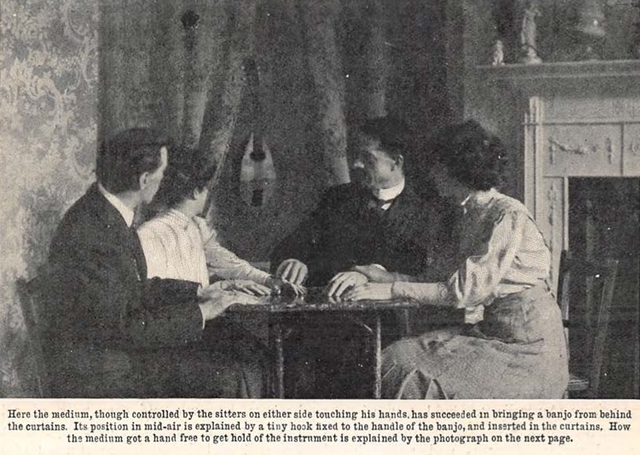
History Hit It’s Halloween as I write this, so how about A Short History of Seances. This features Lisa Morton, an expert on Spiritualism and author of Calling the Spirits: A History of Seances. Necromancy and talking to the dead existed from ancient times and in many different cultures, but seances as a public, group and usually money-making performance are a different thing. The first seance in America was conducted by Kate and Maggie Fox in 1848, who later confessed to cracking their toe knuckles to get the rapping sound. They ended up poverty-stricken alcoholics and admitted their fraudulence in 1885. They were just the start of a string of other fraudsters conducting seances. Houdini and Arthur Conan Doyle sparred over the authenticity of seances, with Houdini outraged by Doyle’s wife claiming to have spoken to his mother.

Witness History (BBC) “Our” Julia Gillard makes it onto Witness History in a 10 minute segment on Julia Gillard’s Misogyny Speech, commemorating the 10th anniversary. It features an interview with Julia herself and some context. I’d forgotten that Abbott actually attacked her about hypocrisy in appointing Peter Slipper, rather than making a sexist comment as such. No matter- off she went, with good reason.

Six degrees of separation: from The Naked Chef to….

Good grief- what am I going to do with Jamie Oliver’s The Naked Chef as the starting book? I don’t even really like cook books much. The Six Degrees of Separation meme on the first Saturday of each month is hosted by Kate at Books Are My Favourite and Best, starting with the book that Kate has selected – in this case, The Naked Chef . You then associate it with six other books you have read, making the links between titles in any way you like.

But The Naked Chef? Perhaps all those years of Sunday School paid off because the only thing that I could think of was from the Bible. (Not a book that I’m in the habit of quoting).

For I was hungry and you gave Me something to eat, I was thirsty and you gave Me something to drink, I was a stranger and you took Me in, I was naked and you clothed Me, I was sick and you looked after Me, I was in prison and you visited Me.

Matthew 25: 35-36

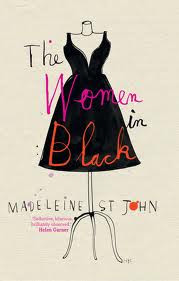
Okay- “naked and you clothed Me”. The Women in Black by Madeleine St John is set in the Ladies Cocktail Dress department of F.G. Goode in Sydney- a thinly disguised David Jones.  The main character is Leslie, who has adopted the more sophisticated name ‘Lisa’, and she works as a young casual alongside the older permanent women as one of the “women in black”, changing from their street clothes into the black uniform of F. G. Goode before starting work. She just works the one Christmas/New Year period, then she moves on. I think that St John has captured the early 1960s well here: the wariness and yet curiosity about ‘New Australians’ who seem cultured and exotic with their strange food, coffee and wine; the stifling embarrassment about sexuality even among married couples, and the world of promise opening up with universities that is stretching the expectations of women for their lives. It is an intellectual coming-of-age book too, in a way, as Lisa finds herself feeling embarrassed about her home-made clothes and dipping her toes into adult social life. (My review here).

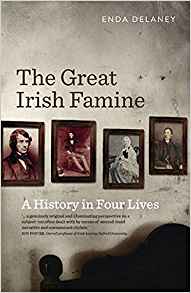
“I was hungry and you gave Me something to eat”. I’ve read several books about famine, but one that stays with me is Hungry: The Great Irish Famine. A History in Four Lives by Enda Delaney. The four lives that Enda Delaney has chosen, because of the limitation of the sources, are not the victims. Instead, they were at the other end of the famine. There is John MacHale, the Catholic Archbishop of Tuam, who at first saw the famine as God’s punishment on his flock for their sins. Over time, he became increasingly critical of the British Government response. There is the radical nationalist John Mitchel, a leading member of the Young Ireland and Irish Confederation “movements, who ended up in Van Diemen’s Land for his seditious activities. There is Charles Trevelyn, the assistant secretary to the Treasury, who has often been depicted as the Main Villain because of the policies implemented by the British Government. Finally, there is Elisabeth Smith, the Scottish-born wife of a Wicklow landlord, whose sympathies for the Irish peasantry became increasingly rigid. The power of this book is seeing these politics of ideology, and the politics of resistance being expressed in the words of individuals, and watching their positions harden as the crisis continued. If you’re looking for ‘getting to know’ these individuals at an emotional or moral level, this is not the book for you. The book does work, however, at the level of personalizing the political. (My review here)

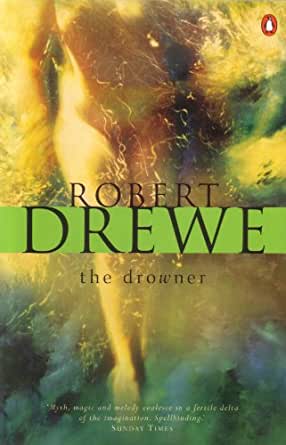
“I was thirsty and you gave Me something to drink.” They were thirsty on the Western Australian goldfields, and C.Y. O’Connor’s ill-fated project was to bring water from Mundarring Dam to Kalgoorlie. Robert Drewe’s book, The Drowner fictionalizes this endeavour, with his main character William Dance employed as a water engineer on O’Connor’s scheme. I enjoyed the book, but found it very disjointed, and I wondered how someone who did not know about O’Connor would make sense of it. No review- it was before I started blogging.

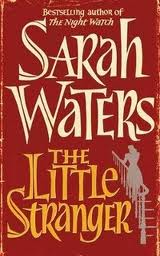
“I was a stranger and you took Me in”. Well, there’s a stranger in Sarah Waters’ The Little Stranger, but I don’t think it’s the sort of stranger Jesus might have been thinking about. Instead, it’s a ghost. It is a gentle, slow tale told by the local doctor, Dr Faraday, who becomes enmeshed in the distress of the local gentry Ayres family, whose house harbours a ghost. Their home, Hundreds Hall is falling into disrepair with tangled gardens, vermin, leaking roofs and windows and the family- the vague, aristocratic Mrs Ayres, her son Roderick who has returned from the war with a leg injury and ‘nerves’, and the practical, plain daughter Caroline- cling futilely to a vanishing world of servants, farm labourers and estates. (My review here).

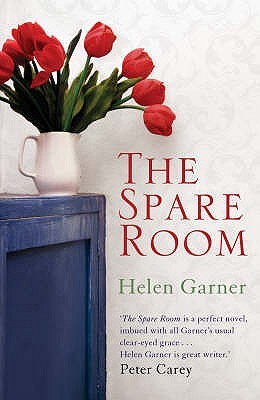
“I was sick and you looked after Me”. In Helen Garner’s brutally honest The Spare Room Helen offers to look after her friend Nicola who is coming to Melbourne to seek an alternative therapy for advanced cancer. Nicola’s death is not really the core of this story: instead the drama of the book is Helen’s rage and inadequacy in the face the demands of friendship, and her frustration at her friend’s relentless faith in a “cure” that Helen feels is quackery. (My review here).

“I was in prison and you visited Me”. Well, not visited but certainly wrote letters. The full title of this book is Just Send Me Word: A True Story of Love and Survival in the Gulag. In this book historian Orlando Figes brings his deep knowledge of Russian history and society to contextualize the archive of almost 1300 letters that were written between Lev Mischenko and his partner Svetlana Ivanova while he was imprisoned in the gulag, working in the wood-combine generator that powered the timber works in the frozen forests at Pechora Labour camp. But the real, real strength of this book is Lev and Sveta’s story, and the beautiful, nuanced, tender letters that they shared over this time. They met at university and went out together for three years. When war was declared, Lev rushed to enlist but was soon taken captive by the Germans. He was able to speak German, and as a prisoner-of-war, used his linguistic skills to translate camp orders. When the prisoner-of-war camp was liberated, he was arrested almost immediately and falsely accused as a ‘fascist collaborator’. The trial was a farce, he was tricked into a confession, and sentenced to ten years at Pechora. For the first few years, he struggled silently to survive in the cold and deprivation. It was only then that he dared to write to an aunt and asked, almost in passing, whether Svetlana and her family had survived the war. Svetlana, who had thought that he was missing in action, wrote immediately on learning that he was still alive. And so the correspondence began. My review here.

Well- I’ve travelled quite a distance from Jamie Oliver. Who would have thought?

Movie: Emily

In the British Film Festival advertisement, they spruiked this as an “atmospheric tale of infinite creativity”. That’s for sure, except that all the creativity was on the screen writer’s side. All films play with the truth, but this was a complete conflation of author and work. Humph!

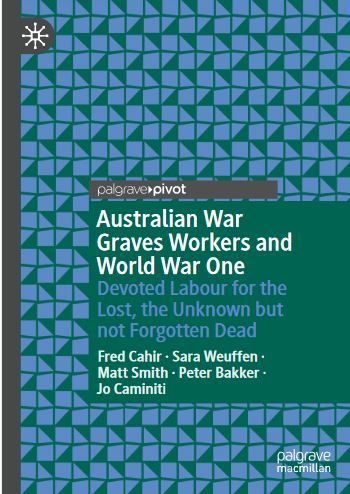
‘Australian War Graves Workers and World War One’ by Fred Cahir, Sara Weuffen, Matt Smith, Peter Bakker, Jo Caminiti

2019, 143 p.

The subtitle of this book is ” Devoted Labour for the Lost, the Unknown but Not Forgotten Dead”, which gives an indication of the stance towards war graves workers adopted in this book, several chapters of which were contributed by descendants. Published in 2019, it moves into the commemorative space left open after all the WWI centenary celebrations by looking at the physical and emotional work that followed the suspension of fighting, most particularly through the men who were attached to the Australian Graves Detachment.

The book opens with two very good context-setting chapters that explained the bureaucratic structure of the grave-worker organizations, both in relation to the British Army and to the AIF. It describes what was involved in grave work: opening the grave, checking for ID disks, paybooks and other identifying objects, wrapping the body in a blanket, sewing it up and marking it with an identifying tag. Bodies were collected and buried in designated cemeteries, some of which were later consolidated into larger cemeteries. Photographs of the relocated graves were sent to next-of-kin in Australia. The Australian Graves Detachment, comprising over 1000 men, was created in March 1919 when there was still a large number of soldiers waiting repatriation back home. It ceased to exist on 20 August 1919, when demobilization was largely complete, at which time its functions devolved to the much smaller Australian Graves Service.

The book then moves to biographical sketches of different men involved in the Australian Graves Detachment. These chapters start off with descriptions of the men’s military experiences (with the exception of Private William McBeath, who arrived too late to see military action, although he did undertake training in England in case the Armistice did not hold). Their military involvement explains the reality of war experience that they brought to their war graves tasks, both in terms of personal bravery but also in terms of the camaraderie of being ‘one of the men’. This camaraderie influenced -for good or bad- their leadership style with the AGD. This is seen in the case of Major John Eldred Mott, featured in Chapter 3, who as an ex-German POW, had displayed great ingenuity in escaping prison camp, and was seen as a largely sympathetic man-of-the-men. His leadership style was more consistent with management of civilian workers than a hard-and-fast military approach, but this was of course one of the ambiguities of the AGD. Drawn from a volunteer army, they were no longer operating under the rules of war.

Frank Cahill (also known as ‘Carr’), in Chapter 4, was one of the 1914 men who were promised an early return to Australia under the ‘first in, first out’ demobilization strategy, but he decided to stay on and volunteer with the photographic section, a division of the AGD that came in for criticism for the number and quality of their images. He returned to Australian in 1921 but could receive only a 25% pension for an injury to his wrist. He committed suicide in 1928, and his widow had to struggle to have her husband’s death acknowledged as “materially hastened by war service”.

In Chapter 5 Peter Bakker and Fred Cahir identify four indigenous soldiers who worked with the ADG: Edward “Darkie” Smith from Queensland, William Charles Miller from Tasmania, George William Mitchell from Queensland and John Ogilvie from Western Australia. Smith continued to work with the Australian Graves Services and was Australia’s longest serving indigenous WWI soldier, clocking up six years, two months and five days of continuous service. However, it is notable that the only court-martial within the AGD was the stabbing of Private Ogilvie- a manifestation of racism within the group?

Chapter 6 looks at Captain Allen Charles Waters Kingston, who was caught up in the Court of Inquiry in March and April 1920 which was critical of Kingston’s command of the AGD in Villers-Brettoneux. He was suspended as a result of the Court of Inquiry, and returned home on the same ship as two of his most trenchant critics.

Chapter 7 is probably the most personal of the biographical chapters, as it incorporates diaries and letters from the author’s grandfather. Private William Frampton McBeath enlisted in June 1918 after completing his carriage-making apprenticeship, and the war was over by the time he arrived. He was drafted into the Graves Detachment, where he kept a brief diary- one of the few kept by graves workers. He arrived back in Australia on 13 November 1919, along with 1300 other troops.

The biographical approach taken by this book, particularly when the chapters were written by descendants, leads to a fairly terse dismissal of van Velzen’s “tabloid” book Missing in Action which is more critical of the AGD and its successor, the Australian Graves Services. However, there is no getting around the fact that two inquiries were held into the graves services division, which highlights not only the troubles and conflicts within the units themselves, but the political sensitivities over graves work back here in Australia, something that Bart Ziino’s A Distant Grief captures well. The individual stories told in this book underline the physical and psychological difficulty that soldiers- not just graves workers- had when re-adjusting to life in Australia, as highlighted in Marina Larsson’s Shattered Anzacs.

The book closes by enumerating the enormity of the task undertaken by the graves workers. Between February and August 1919 nearly 70,000 Allied (not just Australian) soldiers were located, exhumed and reburied by the AGD. One hundred years on, the stark beauty of Commonwealth War Graves Cemeteries have washed clean the sheer drudgery and horror of their creation.

My rating: 7/10

Sourced from: SLV as an e-book. Read in preparation for a talk on George Lort Phillips at the Heidelberg Historical Society.

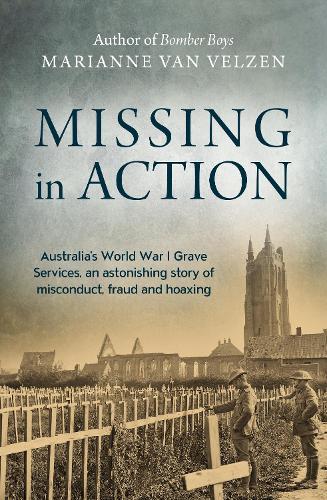
‘Missing in Action’ by Marianne Van Velzen

2018, 240 p. plus notes

Australians are familiar with the War Memorials that stand in nearly every suburb and country town. They are so much just a part of the built environment now that we barely see them, except on Anzac and Remembrance Day when you walk past and see wreaths of flowers placed on them. At times I stop and look at the names, and shudder at the groups of names from one family, but more than 100 years on from World War I, they do not have a particular emotional resonance. That was not true at the time they were constructed. As Ken Inglis explores in Sacred Places, war memorials in every small town were a surrogate – however inadequate- for an individualized grave.

Quite apart from the practicalities and logistics of repatriating so many dead bodies from World War I, the decision was made at a Commonwealth level that all soldiers from Commonwealth countries would be buried in the Commonwealth War Cemetery closest to where they fell. But they had to be located first. In battlefields that were bombed repeatedly, with weapons that could blow a man to pieces and without time for careful record keeping, this was no easy task. At first it fell to the Australian Graves Detachment, which worked alongside the English Graves Registration Unit in identifying and burying Australian bodies. At the end of 1919, the remaining soldiers working for the Australian Graves Detachment merged into the smaller, newly founded Australian Graves Services. The tasks of digging up bodies remained with the English Graves Registration Unit- after all, who knew what nationalities were going to be uncovered?- but once located, the Australian Graves Services (AGS) would inspect the body and its remaining clothing, looking for identification to ascertain if it was an Australian soldier, and if so, who it was. It was hard work, physically and emotionally, and soldiers who worked in these deployments were cut some slack, especially in terms of their leisure time activities. But the families at home did not know that, and the government wanted to keep it that way. And when questions began being asked at home, often prompted by disgruntled ex-employees, there was a concerted effort to keep any inquiries out of the news.

This book is the story of the two inquiries that were held into the Australian Graves Services unit in the first two years following the war. Quite apart from the difficulties of the job, this was a unit riven by jealousy, ego, incompetence and deviousness. It was overseen from Australia House in London, with three main bases over in Europe: Somme/Amiens; Villers-Bretonneux and then Poperinghe up on the Belgian border. Each of the officers who headed these bases loathed the others, for various reasons. Van Velzen approaches the story from multiple viewpoints, moving from one officer to the other, retelling events from their perspective. This leads to a certain degree of repetition, but it does also allow for actions and people to be viewed in different lights. Nobody comes out of this well. Jealousy, obstruction and rorting look bad no matter how you describe it.

After an initial inquiry cleared out the initial ‘troublemakers’ (who returned to Australia to make even more trouble there), there was a reshuffle of authority and a forging of an alliance between George Lort Phillips at Australia House, and Alfred Allen, a Quaker who had come to the AGS through the Red Cross, who was in charge at Poperinghe . Exonerated and perhaps emboldened by the first inquiry, Allen had become increasing sure of his ability to find bodies through ‘divining’, and it was this confidence that brought him into collision with Cecil Smith who had been charged by his wife’s uncle Col. James Burns with locating his son, Robert Burns. James Burns was wealthy and influential (he was the Burns in the Burns-Philp shipping company) and he had the money and contacts to persist when Phillips and Allen began stonewalling Cecil Smith in the search for Robert Burn’s remains. Smith alerted the politicians back in Australia, who wanted to keep all this out of the newspapers, leading to a second inquiry which was quietly shelved, just as the first one was. And as for Robert Burns’ body? Well, you’ll need to read the book.

Van Velzen has relied heavily on the 790 page report ‘Court of Inquiry: To inquire into and report upon certain matters in connection with the Australian Graves Services’. Bart Ziino’s also drew on this source in his more academic text A Distant Grief (my review here), as did a recent article “Suppressing an ‘undesirable public controversy’: Corpses, the Department of Defence, and the Australian Graves Services, 1919–1921” by Romain Fathi in the most recent edition of History Australia (Vol 19, Issue 3). However, in this longer, and less academic book, Van Velzen draws more heavily on the evidence given to the inquiry in a more conversational style, using it to bolster the varying viewpoints as she moves from character to character. The tone is rather sensationalist, tending to look for good guys and bad guys. However, by locating the inquiry within the very human story of Robert Burns and his grieving father, you as a reader do not lose sight of the fact that it is a young man who has died here, even though the other players in this grubby affair may have.

You are left with a sense that everyone comes out badly here. Perhaps it is just as well that people ‘back home’ did not know, and perhaps there was a justification at the time for keeping it quiet. As is often the way of things, it is deputy heads that roll.

Marianne Van Velzen has written a very readable if populist book, with neat narrative framing around Robert Burns. Your attention is captured anew with each new character, with a satisfying ending, which is not something that you can often say about military books. Its marketing might be a bit sensationalist, but it’s a well-constructed story that uses its sources well in an engaging, but thought-provoking way that emphasizes the human and the political over the military

My rating: 8/10

Sourced from: Yarra Plenty Regional Library

I hear with my little ear: Podcasts 17-24 October 2022

Emperors of Rome Going back and continuing on with Julius Caesar with Dr Rhiannon Evans (Lecture in Mediterranean Studies, La Trobe University and host Matt Smith. Episode V Caesar and Civil War has lots of parallels with current day (not that they make them- I do). Julius Caesar (hereafter JC) had enemies in the Senate but they couldn’t charge him if he was still Consul or Pro Consul (shades of Trump?). The crossing of the Rubicon with his troops (it was not allowed to bring your army with you) shows the transference of loyalty from the Roman Empire to the individual instead. The triumvirate was no longer operational: Crassus had died, and Pompey (by now JC’s rival and enemy) was killed by the Ptolomys in Egypt. Cleopatra was installed. Dr Evans questions the romance of Cleopatra’s relationship with Caesar, given the view of marriage as a form of alliance at the time. JC had made himself dictator for 10 years and then for life- so many rules and norms were being broken by that time (shades of Xi Jinping?) Episode VI The Death of Caesar JC remained popular with the people but he had enemies in the Senate- not the majority of the Senate but enough- who resented him taking on the trappings of monarchy lie a throne, a diadem, wearing purple etc. He had been merciful to his enemies, which was a mistake. The assassination happened on the Ides of March because he was going to leave with his armies the next day. His assassins had to flee, and his bloodied toga was displayed on a statue outside the Senate. Episode VII The Legacy of Caesar. For someone who didn’t rule for long, he had a big impact. Augustus claimed lineage from him (he was actually JC’s great-nephew); JC had embarked on a big building program; and he went on to be embraced by many dictators, including Mussolini. Jumping ahead a bit then to Episode LX Cleopatra, recorded live at the Wheeler Centre on 22 November 2016. Cleopatra was from the Ptolomy family from Greece, which kept itself apart from the Egyptians and intermarried within itself. However, unlike the rest of her family, Cleopatra actually learned the Egyptian language and championed herself as the Queen of Egyptians the people, as well as the territory. She was intelligent, and not necessarily beautiful. I’m rather ashamed to admit that I knew so little about this that I thought she was having it off with Caesar and Anthony at the same time, but Caesar was long dead by now.

New Books Network. You should thank me because I listened to this podcast so that you don’t have to. The Small Matter of Suing Chevron was of course not a small matter at all and in this podcast the author of the book of the same name, Suzana Sawyer talks about the case, which ended up taking up 200,000 pages and running for decades. Texaco, later taken over by Chevron, had been drilling for oil between 1964 and 1992 close to the Amazon. It was a very contaminating activity, and they left behind more than 300 wells and pits to bury the waste products from the extraction process. An Ecuadorian court ruled in 2011 that Chevron was liable for $9 billion, mainly for remediation but 2 weeks before the ruling was handed down, Chevron commenced a case in a New York court. Armed with 2000 lawyers, Chevron had the case overturned, arguing that the Republic of Ecuador had already signed off on the remediation process with Texaco and therefore the findings were overturned. It ended up in a court at The Hague determined that the Ecuadorian judgment had been procured through fraud and was unenforceable. Sawyer is an anthropologist, not a lawyer and not a historian, and she had worked with indigenous groups in the Amazon prior to the launching of the case. She talks in rather convoluted ways about finding a grammar based on chemistry to talk about the legal process, which is in itself very complicated. But chemical/scientific concepts like “valences” and “exposure orbitals” are not particularly useful in talking about legal argument and this was a very hesitant, disjointed and abstruse podcast. I would have given up but I was already too far in.

99% Invisible Vuvuzela Remember the South African world cup and that dreadful vuvuzela? Tuned at Bflat, it can play only one note, and has since been banned by FIFA (thank God). The origins of the vuvuzela are murky, but it seems that it was invented by a man called Saddam Maake, who used a bicycle horn at first, and then modified it. But somehow or other the ownership got tied up with a plastics manufacturer, who also claims to be the inventor. Soccer is very popular in South Africa, and during the apartheid years, it was the only way that activists could meet together without being arrested because – hey, they were just watching the football. Although 99% is an American podcast, this episode is presented by James Parkinson, with a lovely familiar Australian accent

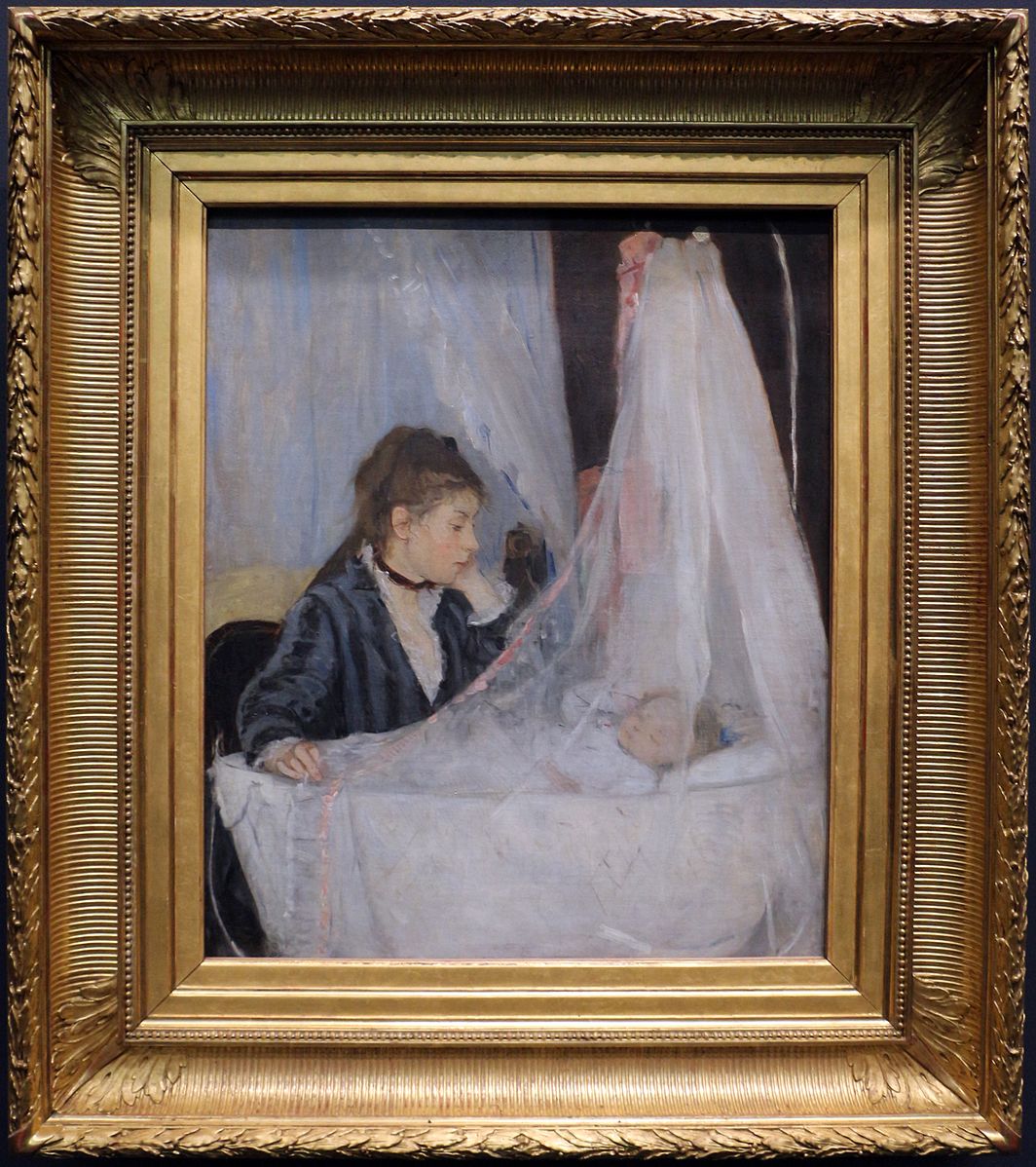
In Our Time (BBC) I hadn’t heard of Berthe Morisot, but she was one of the French Impressionist painters who has been overlooked in the 20th century. She was born into a wealthy family, had the support of her mother to become an artist at a time when women required chaperones to sketch at the Louvre and were not encouraged to undertake formal training. She married Eugene Manet (Edouard Manet’s brother) and she had extensive networks within the artistic world. She exhibited six times at the Salon de Paris, and in eight Impressionist exhibitions alongside Cezanne, Degas, Monet, Pissarro and Renoir. She painted in plein-air, but she also painted family interiors, often featuring her sister Edma (who was also a gifted artist until she married) and her daughter Julie. I was fascinated by her painting of Edma who was heavily pregnant (and looking rather fed up with the whole thing). I’d never heard of her- check out her paintings. This episode Berthe Morisot features Tamar Garb (Professor of History of Art at University College London) Lois Oliver (Curator at the Royal Academy and Adjunct Professor of Art History at the American University of Notre Dame London) and Claire Moran (Reader in French at Queen’s University Belfast) and an increasingly-decrepit-sounding Melvyn Bragg. I just looked him up- he is 83 and sounds every bit of it.

All in the Mind (ABC) I seem to be listening to a few podcasts about the ethics of experiments recently, and here’s another one, part of All in the Mind’s series on Unethical Experiments. Childhood attachment, animal rights and the ‘pit of despair’ looks at the experiments conducted by eminent psychologist Harry Harlow at a time when animals were not considered to have feelings or emotions at all. I remember pictures of ‘cloth mother’ and ‘metal mother’ and baby chimps from first year Psych. Ironically, it was the resistance to the type of experiments that Harlow conducted that spurred the animal rights movement.

‘Hateship, friendship, courtship, loveship, marriage’ by Alice Munro

2002, 323p

That’s quite a mouthful for the title of a book, and unfortunately instantly forgettable if someone asked you “What was that Alice Munro book of short stories that you read?” I read this book as part of a book club read and although we all enjoyed the stories enough while we were reading them, we found it very hard to remember enough details to discuss the stories in any depth. I often find this with short stories, although I enjoyed the longer length of these nine stories (most of about 30 to 40 pages in length). They were was long enough to become engrossed in the characters and too long to just turn to the next story once you had finished.

As you can see, Munro writes of a particular milieu- Canadian, middle-class, middle-aged- with a particular sympathy towards women. The stories are a bit like a short-form Anne Tyler, and I was not particularly aware of a distinctive narrative voice to distinguish one story from another. Perhaps this is why I, and my fellow book-clubbers, could not really remember the stories as discrete entities when we came to discuss them. We could remember particular events or people- but which story were they from?

So, indulge me while I summarize the stories so that I can remember them in the future- and beware of spoilers!

The title story ‘Hateship, Friendship, Courtship, Loveship and Marriage’ is set “years ago, before the trains stopped running on so many of the branch lines”. Johanna is a middle-aged, rather plain woman who is working as domestic help for Mr McCauley, who is caring for his teenaged grand-daughter Sabitha. Sabitha’s mother has died, and her father Ken Boudreau lives at some distance, writing occasionally to his former father-in-law for money. Sabitha and her friend Edith, intercept Ken’s letters and devise a hoax whereby Ken declares his love for the rather drab Johanna. Johanna takes her meagre savings and goes to Ken, who is oblivious to the letters that Johanna has received that have been written under his name. But Johanna has the last laugh: on meeting the rather pathetic Ken, she turns to caring for him instead, marries and has a child.

In ‘Floating Bridge’ middle-aged Jinny is returning home from an appointment with her oncologist. Her husband Neal, is brazenly flirting with Helen, a young woman whom they have hired to help around the house during Jinny’s chemotherapy regime. Neal insists on driving the sullen Helen to her home, and staying there for dinner, leaving his frail and washed- out wife to wait in the car. But Jinny has not received bad news from her doctor: instead her cancer is in remission, and she is no longer facing death. When a young man, Ricky, approaches her while she is waiting in the car, she acquiesces in going with him into the fields, where he kisses her on a floating pontoon bridge over a lagoon. She laughs.

‘Family Furnishings’ is about Alfrida, who is a journalist who writes several columns under different pen names in the local paper – Round and About the Town, and Flora Simpson Housewives’ Page. Her cousin and his wife and their young daughter, the narrator, were rather in awe of her, and referred to Alfrida as a career girl. As the narrator grows older, she goes to university in the same town where Alfrida is living, but she resists going to visit her. When she finally does, she is struck by Alfrida’s poverty and lack of sophistication. The narrator takes a story from Alfrida’s childhood and becomes a successful writer, a form of theft that Alfrida grudgingly admired.

In ‘Comfort’, a woman returns from her tennis match to find that her husband, who had been suffering from a neurological illness, has committed suicide. A teacher at the local high school, he had been increasingly targetted by fundamentalist Christian students and their teachers and forced to resign. She searches for a suicide note and removes all signs of suicide before calling the local undertaker, with whom she had gone to school. It is the undertaker who finds a note in Lewis’ pyjama pocket- a bitter and sarcastic note in riposte to his critics.

In ‘Nettles’ a woman recalls a boy she was friends with when they were both children. He was the son of a well-digger, who came round each year to work on the wells in their town. She meets him again, years later, at the house of a mutual friend. Even though he is married, the attraction she felt for him years ago is still there. They go for a walk along the golf course, and get caught in a sudden storm. He divulges a tragedy that he and his wife have faced, and she knows that their relationship will go no further. When they return home, their legs are itchy with welts from the nettles and weeds in which they took shelter.

In ‘Post and Beam’ Lorna recalls many years ago, when she, her husband Brendan and two children were living in an architecturally distinctive Post and Beam house. Brendan is a university lecturer and one of his most brilliant students was Lionel, who had a nervous breakdown. Lionel now works for the church, and is poorly paid and still troubled and he starts writing poetry to Lorna. Lorna’s cousin Polly, five years her elder, comes to stay with them and is needily judgmental of Lorna’s life. When Lorna and Brendan have a weekend away for a wedding, Lorna is terrified that Polly will have committed suicide in their absence, and she makes a deal with God- or whoever. The deal is not honoured, and life goes on.

‘What is Remembered’ is set in Vancouver and Meriel and her husband Pierre are travelling to a funeral for Pierre’s best friend Jonah. Meriel decides to visit her elderly Aunt Muriel at a nearby nursing home, then return home later that night. Dr Asher offers to drive her there, and he accompanies her into the nursing home. They have a brief dalliance that he puts a firm end to, and they go their separate ways. She remains married to Pierre, but is always aware of that other life that she could have had.

‘Queenie’ and Chrissy are step-sisters, but Queenie suddenly leaves home and runs away with the widowed older man next door, Mr. Vorguilla. After eighteen months, Chrissy finds out where Queenie is living, and comes to stay with her before starting Teachers College the next year. Mr Vorguilla is emotionally coercive and mean, gaslighting Queenie over a Christmas cake that she had saved money to buy. As Chrissy goes on to her life as a teacher, marries, has children, and travels in retirement, she learns that Queenie has left her husband. She thinks that she glimpses her in different places, but is never quite sure.

The first and last stories in this book were both made into films, and they are the strongest stories in the collection. They were, too, the only ones that we were able to remember well enough to discuss. ‘The Bear Came Over the Mountain’ was adapted into the film ‘Away from Her’. Fiona and Grant had a long, happy marriage, but when her Alzheimers forces him to place her in care, she transfers her affections to another patient, Aubrey. When Aubrey’s wife Marian can no longer afford to keep him in care, she takes him home and Fiona is heartbroken. Grant meets with Marian, and starts up a relationship with her in the hope that this is a way that Fiona and Aubrey can meet again. The ending was ambiguously written.

As you can see, there is a sameness about these stories. Munro was awarded a Booker International, which is for a body of work, and I can see that she is insightful and masterful in weaving real complexity and emotional truth into a short work. I think that her writing would appeal much more to older than younger readers, and she has a compassion and indulgent tolerance for the mis-steps and compromises that we all make to keep living. Perhaps compiling such similar stories into one volume does them a disservice. Perhaps they are better left as they were originally published- many of them in the New Yorker and other magazines- where their similarities are less obvious and where they can stand alone and their strengths shine.

My rating: 7/10

Sourced from: CAE bookgroups (aka The Ladies Who Say Oooh)