Author Archives: residentjudge

‘Little Fires Everywhere’ by Celeste Ng

2017, 352p.

This book was received to great acclaim. It was a New York Times bestseller, Amazon’s best fiction book of 2017 and according to the author’s webpage, it was named a best book of the year by over 25 publications. For me, it didn’t live up to the hype. It was an enjoyable enough read – in fact, I stayed up past midnight to finish it – but to me it felt like a spiky Jodi Picoult, crammed full of moral dilemmas and bookgroup discussions and rather heavy-handed and judgmental.

The book is set in Shaker Heights, a liberal, planned neighbourhood with strict controls over house colours, gardens etc. In fact, the author lived in this real-life neighbourhood, and her cynicism about the hypocrisy underlying this seemingly-idyllic middle-class enclave permeates the book. Even though there is this rather snide, unsubtle critique of liberalism and its intersection with class and race, the real theme is motherhood, explored through issues of abortion, adoption, surrogacy and teenage pregnancy. The story focuses on three families: Bill and Elena Richardson and their four children Lexie, Trip, Moody and Izzy; their tenants in a nearby duplex Mia Warren and her daughter Pearl; and Mark and Linda McCulloch who, after many years spent trying to have a baby, have finally adopted an abandoned Chinese-American baby.

The book opens with the Richardson’s house catching fire, a clear-cut case of arson with “little fires” lit everywhere. The family is quite sure that the fires were lit by the youngest daughter Izzy, who is missing after a family argument. It’s certainly not a who-dun-it, because the perpetrator has been identified by the end of the first page, but more a why-dun-it.

Elena Richardson as a mother is rigid and judgmental, masked by a self-serving public charity that keeps strict account of services rendered and owed. Despite an American “mom” persona, she has never warmed to her youngest daughter Izzy whom she finds difficult. She works part-time as a local journalist, which gives her rather far-fetched access to information which she uses gratuitously and oblivious to the damage she is doing. Although she would dispute it, she is quite unaware of the lives of her children, who are drawn to a very different type of mothering displayed by their tenant, Mia Warren.

Mia is an artist, who has lived in many places with her daughter Pearl. They live simply, with few possessions, and when they shift into the Richardson’s rental property, inherited from Elena’s mother, Mia agrees to work as a housekeeper for the Richardsons, as well as taking shifts in a local Chinese restaurant. She is different, and Izzy and later Lexie, are drawn to her quietly subversive, attentive mothering. The book moves away from the Richardsons in giving Mia’s back-story, which explains her nomadic lifestyle and her relationship with Pearl.

Finally, the whole of Shaker Heights is happy when Mark and Linda McCulloch adopt Mirabelle, their Chinese-American baby, until the baby’s mother emerges, demanding the return of May Ling Chow. The dispute inevitably finds its way to the courts, where the questions of ‘best interests of the child’ and connection with culture are raised. Linda McCulloch does herself no favours with her ethno-centric, blinkered views of “culture”.

There are lots of hot-button topics here, especially for women (fathers are very much side-lined in this book). So many, in fact, that I felt as if they were being stuffed in for discussion value with an eye to the female, liberal, book-group target market which the author courts and yet despises. The book is written well enough, although it felt like three different books as the author moved her attention from one family to the other. Her use of the “little fires” metaphor was rather heavy handed: it starts with a fire, the baby is abandoned at a fire-station, Mia talks about a cleansing burn as a way of clearing the past. Heavy handed, too, was her critique of the hypocrisy of Elena Richardson and Linda McCulloch, which made them almost caricatures of entitlement and heedlessness.

It was certainly a page-turner, and as intended, it sparked a good bookgroup discussion. But ‘book of the year’ it ain’t, for me anyway.

My rating: 6.5/10

Sourced from: CAE bookgroups
I hear with my little ear: Podcasts 8-15 June 2023

The Documentary (BBC) Ukraine: The Men Who Don’t Want to Fight I can remember reading and hearing reports of Russian men who were leaving Russia because they didn’t want to fight, but I wasn’t aware so much of reports of Ukrainian men doing the same. I’ve always had sympathy for men who didn’t want to fight in foreign wars in other people’s countries, but is it different if men are being asked to fight for their own country? I think that it is, although I’d be hard pressed to answer why. This episode looks at the more-than 6,000 Ukrainian men of military age who have been granted protection in Romania since the beginning of the war. Some did not want to fight for a variety of reasons; others had been on the frontline and walked away (‘deserted’?) Some had an easy escape; others died in the attempt. A different perspective on an old problem.

Emperors of Rome Episode LXXIX – Epicureanism Here’s something different. Matt Smith is nowhere in sight, and it’s Dr Rhiannon Evans who interviews Dr Sonya Wurster about Epicurianism, a Greek philosophy based on the idea that the greatest good is to seek modest pleasures- quite different from the high-status, elite idea that Epicurianism suggests today. It had four principles: 1. Don’t fear the gods 2. Don’t fear death 3. What is good is easy to get 4. What is bad is only of short duration. Many writers were hostile to Epicurianism because it was so laid-back that it didn’t fit into the Roman ideal of the politically involved citizen. Interestingly, many of the papyri that were discovered at Herculaneum (buried by Mt Vesuvius in 79CE in the same eruption that destroyed Pompeii) were works by Epicurian philosophers – in fact,in March 2023 a contest was launched to decipher the scrolls using AI. Throughout this series, Dr Rhiannon Evans and others have been referring to Dio Cassius (or Cassius Dio, take your pick) and in Episode LXXX – Dio Cassius he finally get his moment in the sun. He wrote about 80 books, of which we only have about 1/3 in their original form, but there are fragments and epitomes (i.e. summaries) of many of the others. He actually witnessed some of the things that he wrote about, which is always a bit tricky for a historian- at what point does the history become biography or journalism? This isn’t a problem that Livy fell into, as we learn in Episode LXXXI – Livy featuring Professor Emeritus Ron Ridley from Melbourne Uni who sounds like the quintessential classics scholar, enlivened by arcane debates about the past, and deeply embedded in all things ancient. Livy spent his whole life writing an exhaustive history of Rome – all 142 books, of which we have the first quarter. However, Livy was careful to stop before he got too close to the time when he was writing. They have been hugely influential on all the other histories that were written after him.

History Extra Having listened to the podcast about Ukrainian men avoiding fighting, I thought that I’d listen to Fight Like a Man? Masculinity in WW2 There was little relation between the two. This episode features Luke Turner, the author of Men at War: Loving, Lusting, Fighting, Remembering 1939-1945. As you might guess from the title, this book and podcast takes a gender/masculinities lens to look at WW2 and homosexuality, cross-dressing and gender-crossing during a time of such disruption, and when so many men lived in close proximity. It didn’t feel particularly new to me.

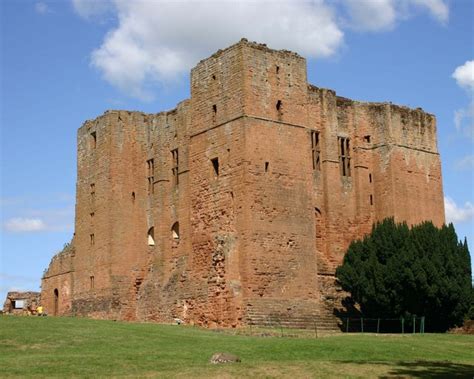
Kenilworth Castle geograph.org.uk

History Hit Part 3. Story of England: Tudor Feuds, Explorers and Fanatics takes us to (nearly) everyone’s favourite English period, the Tudors. Dan Snow starts off at Kenilworth Castle where he speaks Dr Joanne Paul who tells the intricate story of the powerful Queen Elizabeth I and her mutual infatuation with Sir Robert Dudley, to whom she gifted the castle. She points out that although Henry launched the Reformation as a way of getting round the problem of a lack of an heir, he remained Catholic in his practices e.g. he heard a Latin mass, and he had the Catholic last rites. Sir Robert Dudley spent a fortune on a 19-day visit by Elizabeth to his castle -1000 pounds a day on an income of 5000 pounds a year, and sent the family broke in the process. He then goes on to speak with Angus Konstam who explains about the Elizabethan Sea Dog (Drake, Raleigh, Hawkins), privateers who were both traders and explorers, and who laid the basis of England’s maritime power. He ends up at Boscobel House, where Charles II hid in the oak tree. Listening to Charles I’s bullying of the Parliament has a new relevance, now that we can see so many ‘strong men’ in erstwhile democracies, trying to subvert the power of the people.

Now and Then In There’s Something in the Water historians Heather Cox Richardson and Joanne Freeman look at the provision and privatisation of water in the development of American cities, focussing particularly on New York and Los Angeles. Coming in the wake of recent announcements about controls on the extraction of water from the Colorado River, it all seems rather reminiscent of our own struggles over the Murray River, with the conjunction of competing state interests, capitalism, exploitation and denial of the commons.

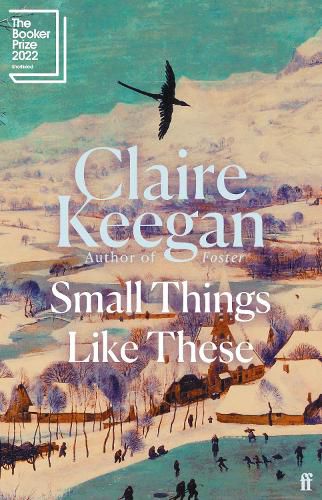
‘Small Things Like These’ by Claire Keegan

2021, 110 p.

I hadn’t heard of Claire Keegan until she was short-listed for the Booker Prize with this book. It struck me at the time as a strange thing that such a short book of just 116 pages- a novella, really- would be on the Booker shortlist. Between ordering it at the library (months ago) and receiving it (with a further 76 reserves on it when I return it!) I saw the beautiful movie ‘The Quiet Girl’ based on her earlier novella Foster. There are certainly parallels between the two books. Both are set in rural Ireland and both deal with being wanted and rejected. Both are quite heartbreaking, in different ways.

SPOILER

It is 1985 and Bill Furlong, a coal and wood merchant, is busy as the winter sets in before Christmas and the inhabitants of his small town buy in fuel. Although he owns the business, he works alongside his men, and the company is just breaking even. He is married, and he and his wife Eileen, have five young daughters who are all looking forward to Christmas. He has lived in the village all his life, born to a single mother who worked as a domestic servant in a big house owned by Mrs Wilson, a Protestant widow. When his mother fell pregnant, Mrs Wilson encouraged her to keep working, and Bill grew up at the big house too, alongside Ned, another domestic worker. When he married, Mrs Wilson gave him a thousand pounds to establish the business.

Despite his job, wife and family, there is an uneasy emptiness in Furlong. He does not know who his father is. He works hard, and does not know what it is for. His wife and girls are in their own constellation, and he feels that he stands outside it. One bitterly cold night he makes a delivery to the convent which stands outside the village, and when he finds a young woman sheltering in a shed, he starts to question the convent and its treatment of the young unmarried mothers there. He is aware that his own life could have been very different: he owes much to Mrs Wilson and her kindness in keeping his mother on in work at a time when she could have ended up in a similar institution to that where he is now delivering the coal. But he finds his own wife, and the other villagers, closing ranks to form a protective shell around the convent: don’t ask questions, don’t interfere. The church is a powerful entity with tentacles reaching throughout the village.

I often find that the book I am reading speaks to the book that preceded it, and this is certainly the case here. Ghosts of the Orphanage is non-fiction, but Keegan’s novel has its truth too, not just in events but in the human responses of fear, pity and responsibility – all of which were present in ‘The Quiet Girl’ (Foster) as well.

This book is just the right length. It is beautifully written, and I can see the action playing out in my mind’s eye. And yet I wonder if it could be made into a film – it would no doubt do well in picking up a northern hemisphere Christmas market- but I think that film would struggle to capture the layers of feeling in this unsettled, rather inarticulate but good man. It is so carefully, deliberately written, and I’ve found myself turning it over in my mind all day.

My rating: 9/10

Sourced from: Yarra Plenty Regional Library

Spanish Film Festival 2023: Let the Dance Begin

A road trip for old people, with a tango couple and their musician joining together after thirty years to complete some unfinished business between them. It’s a gentle comedy, a bit like a Michael Caton movie for Australians. Although does Argentina not have any other male actors other than Dario Grandinetti? He was also in A Singular Crime.

Six Degrees of Separation: From Time Shelter to…

First Saturday means Six Degrees of Separation day, a meme hosted by Kate at Books Are My Favourite and Best. She chooses the starting book and you add six books that spring to mind. As usual, I have not read the starting book Time Shelter by Georgi Gospodinov. Apparently it’s about dementia, but literal soul that I am, my mind sprang to the ideas of ‘time’ and ‘shelter’ in putting together my list.

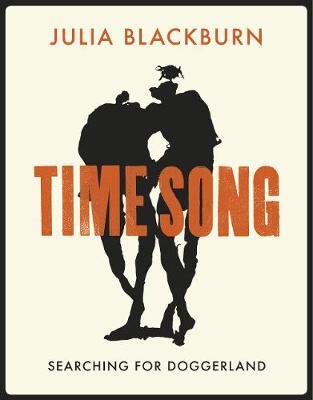
My starting book is Time Song by Julia Blackburn, chosen mainly because the name sounded similar to Time Shelter. It’s about her search for Doggerland , which existed in the North Sea and English Channel 18,000 years ago, making what we now know as the United Kingdom a contiguous part of Europe. Now on the bottom of the ocean, it was once a fertile plain, with its own coastlines and rivers, with humans roaming across it. It was not a route from one place to another, but a territory in its own right. (My review here).

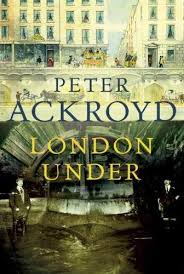
The idea of uncovering layers of a lost place is explored in Peter Ackroyd’s London Under. It draws on the concept of London as a palimpsest, alternately destroyed and rebuilt, the same patterns or practices repeated on the same site, albeit in different manifestations, across the centuries. He advanced this characterization in his big baggy monster London: A Biography, but this is a slimmer volume, concentrating on rivers and underground networks. (My review here).

Nick Cooper’s London Underground at War also digs under the surface of London, but his emphasis is on the underground railway, and particularly its use as a shelter during World War II. It is largely a book of events and incidents, and it reads a bit like a report, without the poetry of Peter Ackroyd’s book. The presence of Londoners affected the Underground during the war, more than how the Underground affected them. (My review here).

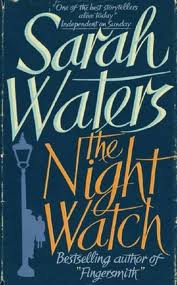
The Blitz lends itself well to a fictional telling, and I loved Sarah Waters’ The Night Watch. Unlike Sarah Waters’ earlier books Tipping the Velvet and Fingersmith, this book is set during the 1940s. Waters’ narrative revolves around four main characters: Kay, Helen, Viv and Duncan. Her master stroke is to tell the narrative backwards, starting in 1947, then 1944 and finally 1941. (My review here).

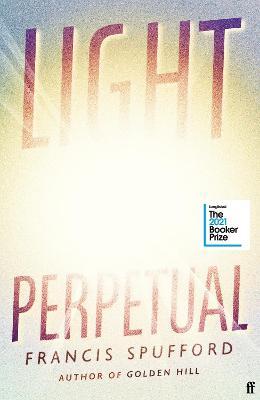
Another book that shifts through time, with a starting point during World War II is Francis Spufford’s Light Perpetual. It starts with the real-life death of 168 people who died in the New Cross Road branch of Woolworths in November 1944 in a V-2 attack on a Saturday lunchtime, with the shop crowded with shoppers. Fifteen of those 168 were aged under 11. Spufford fictionalizes five of these children: sisters Jo and Valerie, Alec, Ben and Vernon and then jumps forward as if the five children were not killed. In fact, they were not even in the store. Instead, they lived lives untouched by that November 1944 attack. He tells their counterfactual lives at ever-increasing chunks of time. It’s like a ‘Seven-up’ series on the page. (My review here)

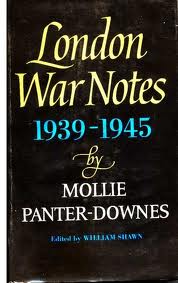
A non-fiction book that deals with World War II is Molly Panter-Downes’ (what an unfortunate name) London War Notes 1939-1945. It is a collection of her “Letter from London” columns that were published in the New Yorker during the War.  The book is divided into seven sections, for each year of the war, each commencing with a brief one-page time line of major events during that year. She fictionalized much of this material in her short story collection Good Evening Mrs Craven which is well worth a read too – does that make six and a half? (See my review here)

So, most of my titles played around with the idea of ‘Time’ and ‘Shelter’, but ended up particularly England-focussed, without really meaning to be. I’ll have to roam further afield next time with August’s book Romantic Comedy.

I hear with my little ear: Podcasts 1-7 June 2023

History Listen (ABC) Those Bloody Vegos- a short history of vegetarianism. Even though I flirted with vegetarianism in my early 20s, I have been known to utter “bloody vegos” once or twice. I suspect that some of the vegetarians of my acquaintance would be disconcerted to learn of the connection of vegetarianism with some rather out-there religious beliefs in the late 19th/early 20th century. This episode is Australian-focused, which was good to hear.

The Ancients. During May, The Ancients are having a series of podcasts on Babylon. This first one is about Nebuchadnezzar -I can barely even say it let alone spell it. He ruled between 605-562 BCE, forty-two years at the height of the Babylonian Empire when it reached from the Mediterranean to the Persian Gulf. He was himself the son of a king, so he had an easy accession to the throne. There was a power vacuum after the decline of the Assyrian empire, and both Babylon and Egypt vied to fill it. The Egyptians were propping up the King of Judea as a way of extending their power, but in 587 BCE Nebuchadnezzar beseiged Jerusalem and installed a client king. Ten years later, he captured Jerusalem and destroyed the first Temple. We get much of our information about him from the Jewish Old Testament, where he was seen as a historical figure, but also as a vehicle of God’s punishment. The Babylonian Empire was as large as the Assyrian empire had been, but in a slightly different place. Babylon was a religious centre and a trade route, with a lot of monumental building. During the 20th century, German archaeologists were very active in excavating sites. It’s not really known exactly where the Hanging Gardens of Babylon were (all large cities had gardens), and they were perhaps more ‘terraced’ than ‘hanging’. After reaching its peak under Nebuchadnezzar, the Babylonian empire didn’t last. After his death, his son was assassinated after 2 years, then his son-in-law met the same fate after four years. The last king of Babylon was unrelated to Nebuchadnezzar and in 539BCE the empire collapsed almost overnight in the face of the expansion of the Persian Empire.

Emperors of Rome Episode LXXVI – It’s Good to be the King. All the sources available to us portray Commodus as a Very Bad Emperor, worse than Caligula, Nero and Domitian. He wanted to rename Rome after himself, as well as ALL the months of the year. He portrayed himself as Hercules, and replaced Nero’s head on Nero’s column with his own, and had it placed beside what is now the Colosseum. Indulging himself as a gladiator was completely inappropriate- a bit like the Queen going on Big Brother. Episode LXXVII – Such was the End of Commodus At the end of his reign, he embarked on a killing spree amongst the Senate and the elites, while on all sides there were uprisings against the Roman Empire in Brittanica, Germania and in Dacia. There were omens of his demise: fires in Rome, and his own smearing himself with blood. He was planning on killing two of the consuls and becoming consul himself dressed up as a gladiator, so it was no surprise that he was assassinated on New Years Eve in 192 CE. His own concubine organized the hit, first with poison (that he vomited up because he was drunk) and then strangling, which was a particularly ignoble way to die. And that was the end of Commodus and the Antonine dynasty. Episode LXXVIII – Borders of the Roman Empire features Dr Paul Burton from ANU who notes that all of the British Imperialists of the 19th century would have imbibed ideals of empire from their shared classical education, bringing it right up to our days. During the republic, wars were mainly conducted against Carthage (North Africa) and the Hellenistic leftovers of Alexander the Great’s empire. The Roman army might be highly interventionist, but it would then withdraw- it wasn’t interested in annexing territory. New territory came as the spoils of victory and in fact, some Kings of neighbouring allies bequeathed their territory to the Romans. At first governors were sent to an area for one year only, but their period of office was gradually extended, which may have contributed to the fall of the Republic as governors (like Julius Caesar) embedded their power in provincial support. When Augustus promised an end to the civil wars, there was a change in mindset about the provinces: no longer were they cash-cows, but instead they were the site of building projects where local big men contributed the funding. This led to an expansion of the provincial elite to inclusion in the Senate, and even as emperors. Citizenship was highly valued (St Paul proclaimed his Roman citizenship to avoid being flogged) and it was used as leverage for loyalty. In 212CE Caracalla extended citizenship to everyone in the empire.

Latin American History Podcast The Conquest of Peru Part 8 Pizarro was able to enter Cusco without resistance, where Manco accepted Pizarro’s authority, and indeed all the power lay with the Spaniards. Manco then joined Almagro and Hernando de Soto in pursuit of Quizquiz. Finally turning to colonization instead of conquest, Pizarro established Lima as a port city. News of Peru’s riches spread, attracting the attention of both immigrants and other conquistadors already present in South America including Pedro de Alvarado, the most bloody of the conquistadors. Eventually de Alvarado was paid off, and he sailed away, leaving the north of Peru in the hands of the Spanish colonialists.

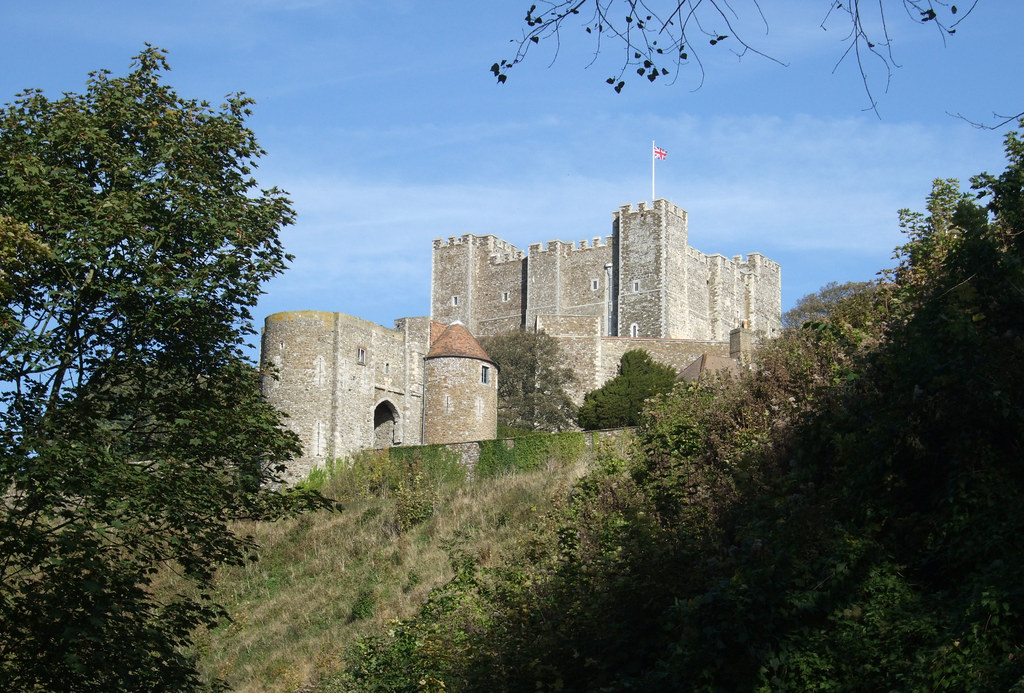
Dover Castle. Image Jim Linwood https://www.flickr.com/photos/brighton/5105158828/

Dan Snow’s History Hit Continuing on his road-trip of British history in Episode 2 of Story of England: Medieval Invaders, Snow takes us to Pevensey where William the Conqueror and his Norman Invaders landed in 1066. The Duke of Normandy was a cousin of Edward the Confessor, who had just died, and he was taking his chances when this vacancy on the throne occurred. There are actually three Medieval periods: 1. Early Medieval (which used to be called the Dark Ages) between 400-1066CE; The Central period between 1066-1300, and Late Medieval from 1300-1500. The Early period was marked by increased regionalization of the Anglo-Saxon period, which settled into a few big kingdoms. Although we don’t know if King Arthur actually existed, it is true that Ambrosius Aurelianus certainly did, and aspects of his reign were probably incorporated into the Arthurian legend. The Vikings, who arrived in the 860s gobbled up the kingdoms, although Alfred the Great made a strong stand. Dan Snow then travels to Dover Castle, which was built after the Norman invasion, on a site previously occupied during the Iron Age, and by the Romans who left a lighthouse which still stands today. All this came to a halt in 1348 when the plague arrived, killing off 25 million Europeans during 1347-1352, and leading to a labour shortage, increased labour mobility, and a change in land use.

Democracy Sausage. I usually listen to this every week, but I don’t note it because it’s usually too topical and dates too quickly. But Mark Kenny’s The Queen is Dead with Stan Grant is excellent, and well worth a listen. It was a meet-the-author type event about Grant’s new book, but they also spoke about his contribution to the panel discussion prior to the coronation that culminated in him quitting as host of Q&A.

The Rest is History. With all the pearl-clutching about the faint embers of republicanism in Australia, it’s interesting to consider that in 1649 England declared a republic! It only lasted about ten years when, unable to get themselves out of what they had done, parliamentarians turned again to Charles II to fill the king-shaped hole. Featuring Anna Keay whose book The Restless Republic I’ve ordered from the library (these podcasts are not good for my already daunting TBR pile), this episode The Republic of Britain: Life Under Cromwell goes beyond the Cromwell/Parliament activities to look at the way that people either went along with it or changed their mind. I did a subject on this -ahem- fifty years ago, and had forgotten much of it, but what a fascinating time, with radical political experiments turbocharged by radical religiosity.

Spanish Film Festival 2023: A Singular Crime

This is set in 1980 (as the film tells us several times because John Lennon has just been shot) in Rosario, Argentina. It’s during the military dictatorship, and the military has infiltrated the police force. Under the judicial system in Argentina, the judge and his clerks investigate crimes directly. In this case, which teeters on the edge of corruption, the clerks, Rivas and Torres- both with PhDs in law – find the police/military too quick to resort to torture in investigating the disappearance of a wealthy Syrian playboy-businessman. I must confess to becoming totally confused between the two law clerks, both of whom had wimpy 1980s style moustaches. The plot was of less interest to me than the political situation of uneasiness. The title in English is ‘A Singular Crime’ but the original Spanish title ‘Un Crimen Argentino’ is more appropriate because although crime is pretty much the same everywhere, the context is not.

I hear with my little ear: Podcasts 24-31 May 2023

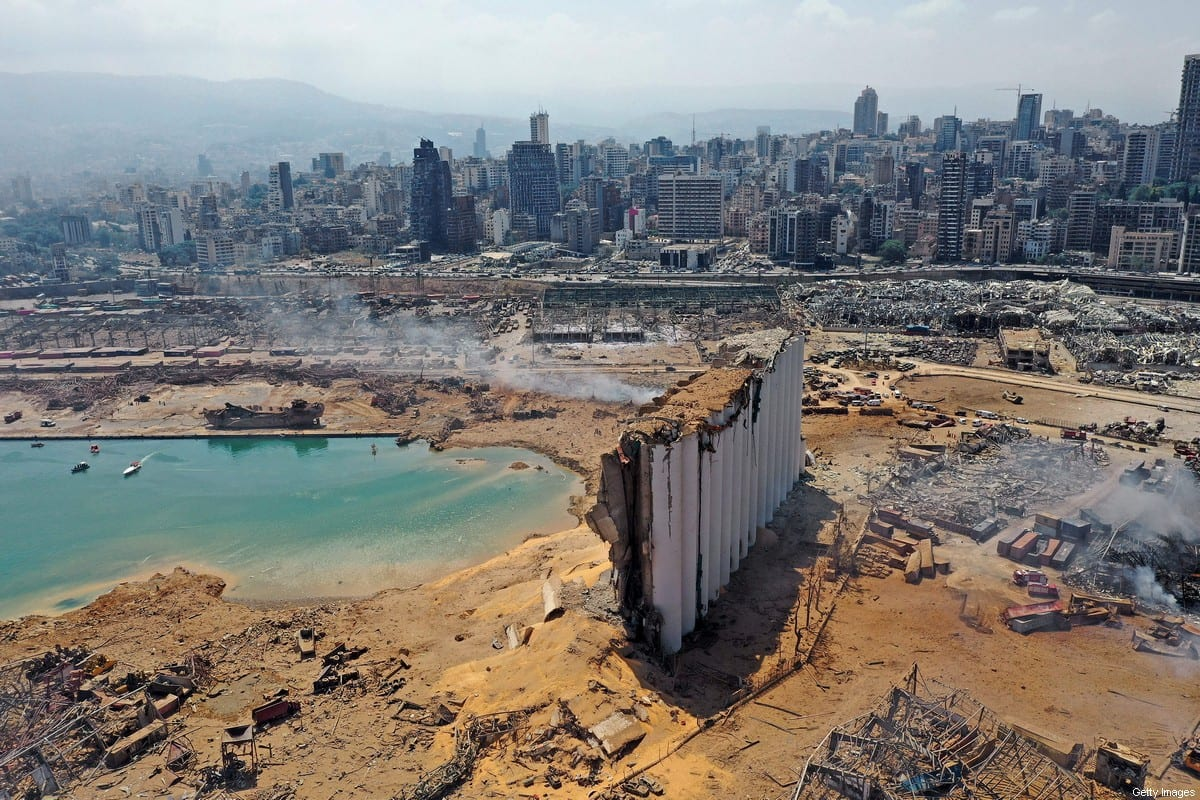
The Documentary (BBC) Beirut: Life in the Unliveable City I love my home city, Melbourne, and I just can’t imagine what it would be like to watch it collapse economically, politically and socially around me. I think of Caracas in Venezuela, Argentina in the grip of inflation, and Beirut in Lebanon. Lina Mounzer is a writer and translator living in Beirut, and here she talks with friends, family and neighbours about what it is like to live there. She lives on the 12th floor of a high-rise, and even though they pay to have a generator, they only receive 12 hours of electricity a day, on an intermittent basis. She overlooks the port and the grain silos that block her view saved her flat when other silos exploded three years ago. In explaining the political situation, she goes back to 1991 and the end of the Civil War when an amnesty froze everything, but also granted immunity to those who had committed atrocities. In 2019 there was a financial collapse, leading to massive 97% devaluation of the currency, followed by the port explosion in 2020. Now 80% of the people live in poverty, with 25% in extreme poverty. Since November 2022 there has been no president. She has seen the rise of ‘generator mafia’, a sector of the economy that owns generators and which now is bigger than the official electricity system in its heyday, so it is unlikely that the electricity situation will improve in the future.

History Hit Dan Snow has started a five-part series on the history of England. In this first episode Story of England: Stone Age to Roman Days, he starts with the footprints on the mudflats at Happisburgh, Norfolk which were made about 900,000 years ago on what was at that time the banks of the Thames. We don’t know what species of humans made the prints, because there have been at least four species of humans in England. There were at least eleven waves of migration to England, and climate plays an integral role. In warm periods there were rhinos; in cold periods there were polar bears. During the Ice Age in 25,000 BCE, human life in England ceased completely, but humans returned again in about 15,000 CE. He then moves on to Stonehenge, which was commenced c. 8000-7000 BCE, with the biggest stones erected in c2500 BCE. The largest stones were collected from about 20 miles away, but the smaller ones, called ‘bluestones’ (though not bluestone as we know it) come from Wales. The stones reflect a solar alignment, and there are acoustic properties to the bluestones. No-one every lived there: it was a ceremonial site. He then moves to Old Sarum. Julius Caesar had brought the Romans over in 54-55 BCE but it wasn’t until 43 CE that Claudius mounted a ‘proper’ conquest. Sarum was already a fort, and the Romans built a temple on it and expanded it further. It became an Anglo-Saxon centre, and when William the Conqueror invaded in 1066, he headed straight for it. This was a really well-produced episode, interesting, and giving enough context that an Antipodean could follow it easily.

Revisionist History. The Mystery of Mastery with Adam Gopnik. This was a taped interview where Gopnik (who I’ve only encountered in the New Yorker) is talking about his new book The Mystery of Mastery. Rather than talk about the book itself, they ramble on about mutual acquaintances and men that Gopnik had encountered who exhibited mastery- magicians, cooks etc. So far the only woman they discuss is one of their mothers rolling out pastry (although Gopnik’s mother is a professor, he says) and I decided I’d had enough of this dickfest.

Emperors of Rome Episode LXXIII – From a Kingdom of Gold Marcus Aurelius died at the age of 59, still with the army fighting yet another phase of the Marcomannic Wars. He probably died of plague, which was still circulating around, although some sources suggest that he received ‘help’ from doctors. He was deified and buried in Hadrian’s mausoleum. His reputation is somewhat tainted by Commodus who followed him, but it is quite clear that Marcus always wanted him as a successor. The ‘five good emperors’ were all adopted, but by pushing his (unsuitable) biological son, he broke the pattern. Marcus Aurelius was really important: he satisfied the senators and he didn’t alienate anyone. He was unfortunate to face two wars and the plague, and he probably would have been an excellent civic emperor, rather than a military one. Episode LXXIV – Iron and Rust In his book, The Decline and Fall of the Roman Empire, Gibbons starts off with Commodus, and anyone who has seen Gladiator will agree. The Roman Empire did begin to lose power at this time, which was perceived as being caused by Commodus’ own immorality. Well, this is what Cassius Dio says, who was an eyewitness and participant- so who knows how objective and reliable he is. Some of his most egregious actions were only picking up on similar actions in the past, but in Commodus’ case, he was actively trashing the Roman Empire. He quickly contracted truces in the Marcomannic Wars which kicked the problem further down the road, and then turned up in Rome for his triumph, along with his boyfriend. He had inherited a good, happy Senate but started executing them, and reverted to treason trials and confiscations as a way of replenishing the coffers. There was an assassination attempt led by his sister Lucilla, so he purged the Senate and the upper classes and put his own men in. Episode LXXV – Flying Too Close to the Sun looks at men who stepped forward to fill the administrative and leadership vacancy while Commodus was off indulging in “orgiastic abandonment” as Cassius Dio puts it. Sextus Tigidius Perenni was the Praetorian Prefect. He lasted a couple of years but was brought undone when 1500 javelin men arrived from Britain, dissatisfied with the Roman government, and Commodus took their side. He was replaced by Cleander, who had facilitated the arrival of the British contingent so that he could get rid of Perenni. He enriched himself (and Commodus) by selling off public office, leading the situation where there were 24 consuls each year- 25 if you count Commodus. But there was a grain shortage and a crowd protest at the races against Cleander and Commodus meant that Commodus had Cleander executed and threw his head to the crowd.

The Rest is History. My grandfather was a Freemason. He died before I was born, but his lodge briefcase was in the garage. Even though my father was not at all interested in Freemasonry, he became very angry when we dressed up in the apron and regalia to parade around the backyard. I’ve visited our local Masonic temple, but I really do not understand it one little bit. So I was interested in this episode The Freemasons: History’s Greatest Conspiracy Theory features John Dickie, whose book The Craft I have reserved at the library. He refutes the lore that Freemasonry started with King Solomon, identifying instead the court of James VI of Scotland (later James I of England) who introduced the stonemasons to the concept of the ‘memory palace’ as a way of remembering the material for entry to the craft. Then in 1717 four lodges formed the Grand Lodge, severing the connection to real-life stonemasonry, and created the 1723 Rule Book. It was associated with Whiggery, and fear of the French Revolution; its ideas influenced the American Revolution, and it did the hard work of the British Empire in providing a web of support for men sent to the colonies, and forming a meeting ground of sorts with the local elite, especially in India. Franco hated them, and they were involved in the Vatican Banker scandal of the 1970s in Italy. I’m looking forward to the book.

Spanish Film Festival 2023- In the Company of Women

Sorry- another trailer video in Spanish (I can’t find a subtitled one)

I really enjoyed this movie. Set in 1976, as Spain is making its transition to democracy after Franco’s death, sixteen year old Bea joins a collective of young feminist women working to secure women’s rights to an abortion. She lives with her mother, who works as a cleaner/housekeeper for a wealthy family, and when she accompanies her mother to assist her, she meets Maider, the granddaughter of the family, who is somewhat older than Bea, and with problems of her own. She falls in love with her and plans to go away with her, but she is torn by her love for her mother, who will be left alone if she leaves. There are so many layers to this film: Bea’s growing realization of her attraction to women; the political situation of the late 1970s in Spain; the struggle for legal abortion and its effects on women who cannot access one; courage; and the mother-daughter relationship.

‘A History of Dreams’ by Jane Rawson

2022,294 p.

A book can have interesting characters, an intriguing setting and a thought-provoking premise, but if you just don’t buy into a major point in the plot, none of these other things matter.

For me, this was the case with Jane Rawson’s A History of Dreams. Set in 1930s Adelaide, the book is based on the counterfactual of Australia aligning with Germany during WWI, rather than throwing itself behind the Commonwealth and the US. It is the story of four young women, sisters Margaret and Esther Beasley, Phyllis O’Donnell and their communist school mate Audrey Macquarie, who decide to resist the closing-in of women’s opportunities as Nazi sympathizers take control of the government and align Adelaide with Germany during World War II. It felt a bit like a Mallory Towers or a jolly-hockey-sticks girls’ school novel, blended with The Handmaid’s Tale, although without its complexity. What brought me undone was the introduction of witchcraft which manipulated people’s dreams while they slept at night, in a way that was never really explained,.

I almost gave up after about fifty pages, and I probably should have. I just couldn’t get past the witchcraft.

My rating: 6/10

Sourced from: Yarra Plenty Regional Library.