Author Archives: residentjudge

I hear with my little ear: Podcasts 24-31 July 2023

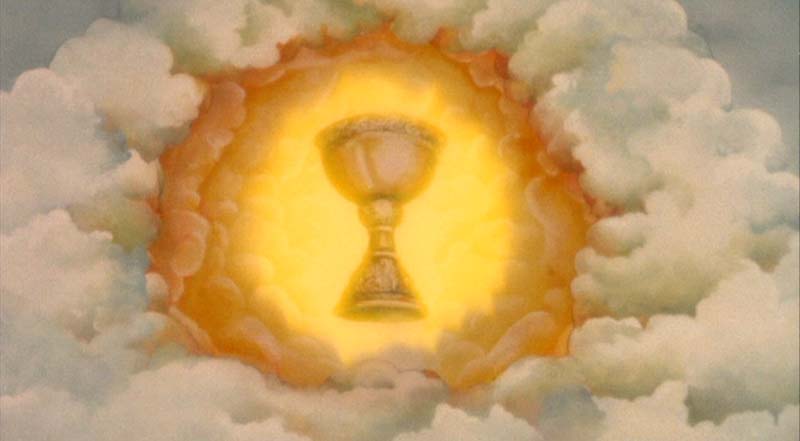
The Rest is History I’m really enjoying this series, featuring historians Tom Holland and Dominic Sandbrook. Until I listened to Episode 346 (really!) The Mystery of the Holy Grail the only thing that I knew about it was the Monty Python version. Holland and Sandbrook are obviously familiar with the Monty Python film too. Tom Holland said that he became angrier at this film than at ‘Life of Brian’, although after several viewings, he realized that the film was actually based on deep knowledge (Terry Jones has written books and presented television documentaries on medieval and ancient history.) They point out the links between the legend of the Holy Grail and T. S. Eliot’s The Wasteland (can I confess that I’ve never read it?), and make several references to Jessie Weston’s 1920 book From Ritual to Romance which argued for its pagan and fertility elements. A ‘grail’ is actually a serving platter, but after 1180 it was transformed into something holy in Chrétien de Troyes’ Perceval where Percival meets the Fisher King and a girl who comes in holding a (a,not the) grail. Robert de Boron introduced a connection with Joseph of Arimathea who owned the grail which had either been the cup used at the Last Supper or alternatively, the cup in which was collected Jesus’ blood when he was hanging on the cross. In other versions, the grail is a stone. In the 19th and 20th centuries, the grail has been seen as a mystery- either through Jung who saw it as the key to all the mythologies, the author Dan Brown and The Da Vinci Code, and through Jessie Westron’s work. Tom Holland thinks that de Troyes dreamed the whole thing up, and that the story of the grail reflects 13th century Latin Christendom at its peak. When the Reformation rejected transubstantiation (i.e that the communion wine actually becomes blood), it’s as if we have the hardware of the holy grail, but not the software to know what it means. I found this all fascinating.

History Extra Big Questions of the Crimean War: into the Valley of Death This is Episode 2 of the History Extra series on the Crimean War, or as it was known at the time in Britain ‘The War with Russia’. The war actually began on the Danube in Romania, and spread to Anatolia, the Caucasus, Georgia, the extreme far-east of Russia and the Baltic. Britain and France had learned from Napoleon, and this was a maritime war, with the British never extending beyond one day’s march from the coastline. It was conducted at a time of technological change e.g. steamships rather than sail; rifles rather than muskets. The British horse-breeding program had led to horses capable of mounting the Charge of the Light Brigade. The advantage the Russians had was the willingness to endure huge loses- it is estimated that there were 800,000 Russian casualties. There is a roll-call of battles (i) across the Danube where the Turks attacked the Russians and won; (ii) the Battle of Sinope, a naval battle that the Russians won, and which brought the British and French into the war, immobilizing the Russian fleet. (iii) Orland Island in the Baltic- not widely reported because there were few British casualties (iv) Alma, in the Crimean peninsula, won by the Allies who should have followed up on their victory, but didn’t (v) Balaclava- and the Charge of the Light Brigade which was a stuff-up but wasn’t the defeat that Tennyson depicted. Rather than only 120 coming back, there were 120 who didn’t come back (vi) Inkerman – the Soldiers Battle (vii) Siege of Sebastopol- not technically a siege as such- but it was like the Western Front that was to follow some 60 years later. (viii) Malakoff- considered to be the last battle, but it wasn’t really. So why did it end? It ended, as wars usually do, by negotiations because Russia was bankrupted by British pressure in stopping exports.

Sydney Writers Festival Barry Cassidy & Friends State of the Nation The usual suspects: Amy Remeikis, Niki Savva and Laura Tingle discussing the Voice, the state of the Liberal Party, Scott Morrison etc. You probably know what they’re going to say anyway.

Reflecting History The Emperors of Rome podcast has taken a backward step to look at the fall of the Roman Republic. I’ve been meaning to read Mike Duncan’s book The Storm Before the Storm for ages, so this seemed a good place to stop and draw breath and look at why the Roman republic, which had been successful for centuries, chose one-man rule through an emperor. I found these podcast series which is less event-driven than both ‘Emperors of Rome’ and ‘The History of Rome’ podcasts and, as the name suggests, more reflective. I have no idea who is presenting it, though. Matt someone. He has a four-part series on the Fall of the Roman Republic, and this seemed a good time to listen to it. Episode 55: The Fall of the Roman Republic Part I-Features of the Republic looks at the strengths of the Roman Republic. First there was the ability of the Roman Republic to channel the ambitions of families into the military, maintaining control of the incentives that made personal honour through service a valuable currency. Then there was the Republic’s ability to compromise and evolve. Because the Romans feared one-man rule, there were 2 consuls, the Assembly (include the Tribunes) and the Senate. It was a balanced system, with specific responsibilities for each component. But this was going to change. Episode 56: The Fall of the Roman Republic Part II-The Long Defeat sees the three Punic Wars establishing Rome as the dominant force in the Mediterranean, but also beginning the process of decay in the Roman Republic. Rome was beaten at first, and especially once Hannibal took the fight to Rome’s home territory, the Italian city-states started backing off. But in 205BCE Scipio triumphed over Carthage, which was burnt to the ground in the Third Punic War. Once the wars ended, Rome now controlled huge amounts of territory in Spain, Greece and Africa, but it could not retreat or stand down. It didn’t want to rule directly, and preferred to work through client kings, but eventually it had to. The expansion of territory brought great wealth, forcing small farmers off the land, and contributing to the growth of a wealthy elite that could buy up slaves (goodbye small farmers!) and leverage their wealth into investments and syndicates. The gap between rich and poor kept expanding, making Rome ripe for a populist leader.

Now and Then With all the hype about Barbie, Heather Cox Richardson and Joanne Freeman look back at the history of dolls in Barbie, GI Joe and the Gang: Dolls Are Us. They start with Laura Ingalls Wilder’s corn cob doll Susan, and move on to Raggedy Ann, a happy servant girl doll produced in the 1930s as part of a book/song/doll marketing production. During the 1940s research was undertaken which demonstrated the link between marketed toys and how children identify themselves, which in turn fed into the intellectual and political climate that produced Brown v the Board of Education and desegregation. Barbie was invented in 1959 based on a European spoof doll – the sort of hyper-sexualized doll you might give a man in a Kris Kringle at an office party- and right from the start there was a tension between her form as a male fantasy and a feminist “girls can do anything” ethos. Barbie’s depiction in a range of professions followed societal trends, rather than drove them: it was decided to have a Doctor Barbie only when there was a certain number of female doctors in the medical system. Ken was released two years later. In 1964 G. I. Joe hit the market as an ‘action figure’ (not a doll), based on Ernie Pyle, the WWII war correspondent. Released during the early years of the Vietnam War, he was already a nostalgic figure. Over the years he morphed into a Special Ops, adventurer, Kung Fu figure- a more individualistic figure of masculinity. Interesting.
I hear with my little ear: Podcasts 16-23 July 2023

Emperors of Rome Episode XCII – The Beginning of the End of the Republic. The Romans themselves claimed to have 400 years of republicanism, up until 133 BCE although this date was nominated after the fact. So what happened in 133 BCE? 1. Attalus of Permagon left his empire to Rome. It was the leftovers of Alexander the Great’s empire, and based on modern day Turkey. At the time, the Romans had Spain, Greece and a bit of Africa, so this bequest gave acdess to Asia and its wealth. This only exacerbated the disparity in wealth which was already appearing in Roman society. 2. Tiberius Gracchus became tribune, and attempted land reform to address the problem of the landless poor flooding into Rome. However, his reforms were vetoed, so Tiberius removed the tribune who opposed it – a very unconstitutional act. The Senate had him murdered, which opened up the possibility of murdering your opponents. The following year the Italian allies (i.e. not Roman citizens as such) were building up to the Social War in the next century. Ten years after Tiberius Gracchus’ assassination his brother Gauis Gracchus tried to introduce the same package of reforms, and attempted to extend Roman citizenship rights to the whole of Italy. Guess what? He got assassinated too, and as with his brother, there were no repercussions. Episode XCIII – Powerful Personalities. As the senate clawed more power from the people, it was inevitable that a few would rise above others, and take over command and influence with an army. Marius, Sulla, and the civil war that followed would just be another log on the funeral pyre of the Roman republic. Marius seemed to come from no-where, a ‘new man’. Some say that he brought on the fall of the empire- he was on the side of the populares, and brought changes to the army. He was married to Julius Caesar’s aunt, and became consul in 104 BCE, elected against the wishes of the Senate, with the support of his troops -i.e. Rome’s first warlord. He opened up the army to men without property, making it possible to have a career within a professional army. He became consul 5 times in a row, which was not consistent with the constitution, and accrued more power than anyone else ever had before. By the end of the 90s BCE, Sulla was on the rise. He was from a very elite family. Sulla was seen as the Senate’s friend but after conflict between Marius and Sulla, Sulla brought his army to Rome, leading to civil war. There was a spate of murders as Sulla became dictator and increased the size of the Senate. Then all of a sudden, in 79 BCE Sulla suddenly resigned.

History Workshop Rethinking Place in British Labour History This program involved projects by three oral historians from the University of Glasgow, looking at ex-industrial workers in ‘traditional working class’ communities- those same ‘red wall’ seats that went from Labor to the Conservatives and have been characterized pro-Leave during Brexit, and who were characterized as being ‘red wall’ . This episode promised to challenge common assumptions about class and region, about schisms and solidarities. But the reality is that I could barely understand a word of these Glaswegian academics, and once they went to telephone interviews, that was even worse. It’s no longer COVID- surely podcasts can do better than interviews over telephone- or at least improve the bloody quality! I gave up.

History Extra Big Questions of the Crimean War: the buildup. So here we are in 2023, back fighting in the Crimea. The Crimean War took place between 1853 to 1856 when an alliance led by Britain and France challenged Russian expansion in the wake of the decline of the Ottoman Empire. Why? Britain wanted to stop Russian expansion towards the Mediterranean, and feared that the collapse of the Ottoman Empire would cause war in Central Europe, while Louis Napoleon, as new Emperor wanted to increase France’s presence. It started in Palestine between Catholic and Russian Orthodox monks of all things, over the symbols in the Church of the Holy Sepulchre and the Russian demands that the Ottomans protect the Orthodox interests. The war took a long time to get going, similar to the Cold War in that it was an ideological rather than a border war. The tipping point was the Russian occupation of Romania. There was a bit of a sliding doors moment, when Britain could have -but didn’t- send its navy to the Baltic, which might have averted the war. The episode features Professor Andrew Lambert.

Travels Through Time. Well, this one is a bit different. This time Peter Moore talks about his new book Life, Liberty and the Pursuit of Happiness in the form of a walking tour. His book is, in effect, a British history of the American Revolution, and his walking tour takes us to

Location One: The Old Cheshire Cheese (William Strahan)

Location Two: 17 Gough Square (Dr Johnson’s House)

Location Three: Near John Wilkes’s Statue on Fetter Lane

Printer William Strahan was Benjamin Franklin’s contact in London, and he sent him 18,000 pounds worth of books and pamphlets over the years, but they fell out over the American Revolution. Dr Johnson was fiercely opposed to the American patriots, but ironically, it was his term the ‘pursuit of happiness’ (particularly in Rasselas) that was taken up by the revolutions – even though Johnson saw happiness as important, but not guaranteed. Englishman John Wilkes was the Donald Trump of his times, followed obsessively by the Americans, and prosecuted for seditions against the Prime Minister Lord Bute in his North Briton journal. In the end, it was Thomas Paine who took Wilkes’ ideas to America.

Democracy Sausage I listen to this nearly every week, but I don’t very often note it because by the time I write this blogpost, the events are long past. But this episode A non-aligned movement features Dr Andrew Leigh, one of the few factionally-unaligned people in the Labor party, talking about the perils of a duopoly among factions. He isn’t so much arguing against factions, noting that they allow broader discussion within a party, but he does deplore the way that non-alignment is punished by withholding of cabinet positions etc.

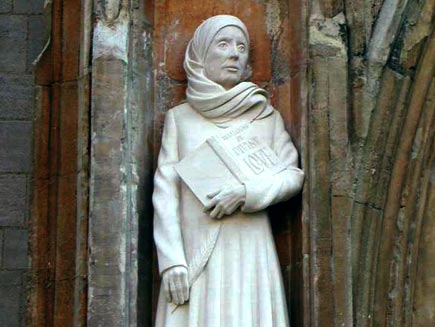
Soul Search (ABC) Julian of Norwich. Ooops. I thought that Julian of Norwich was a man, but not so. In 1373, aged thirty and very ill, she experienced visions which she later wrote down in ‘Revelations of Divine Love’ the first book in English written by a woman. She became an anchoress at St Julian’s church at Norwich, which was at the time the second largest city in England. It was a global city, although the plague killed half of its population of 12,000 people (indeed Julian herself was a plague survivor). It was the time of the Peasant’s Revolt, two Popes, and the Bishop of Norwich was a military bishop. It was a time of anxiety about heresy, and from her cell Julian would have been able to hear people being burned at the stake. Being an anchoress was recognized as a life choice. In an anchoress’ cell, there were three windows: a hatch for food and removal of waste; a squint so that she could see the church, and a third window at street level with a curtain, where people could converse with her. The program features Professor Daniel Anlezark, McCaughey Professor of Early English Literature and Language at the University of Sydney; Dr Janina Ramirez Research Fellow in History of Art at Harris Manchester College, University of Oxford and author of Julia of Norwich, a very brief history, and presenter of the documentary BBC The Search for the Lost Manuscript Julian of Norwich (on You Tube) and The Reverend Dr Sally Douglas, lecturer in biblical studies at Pilgrim Theological college in Melbourne, and author of Jesus Sophia: Returning to Woman Wisdom in the Bible, Practice, and Prayer.

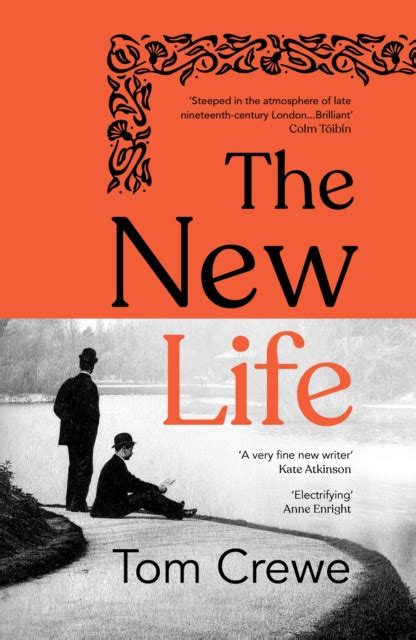
‘The New Life’ by Tom Crewe

2023,386 p

I can’t remember why I ordered this book from the library – perhaps I read a review of it somewhere- but I didn’t expect a sex scene in the first chapter..and the one after that…and the one after that. Although the term ‘sex scene’ isn’t quite right because what we see in this book is secret, often thwarted, desire and shame and fear. It is the fictionalized story of John Addington (in real life, John Addington Symons) and Henry Ellis (in real life, Havelock Ellis) who together wrote a book called Sexual Inversion in the 1890s. Wealthy John Addington had married the very respectable Catherine, largely out of an attempt to escape and give cover for his homosexual desires. Despite three children, these desires were just as strong, and gave way to an affair with Frank, a working-class printer, whom he met by the river where men would strip off to bathe. Meanwhile, the shy and academic Henry Ellis, enmeshed in the free-thinking and radical intellectual circles of the day, married Edith, an intellectual and lecturer in her own right, for companionship and as illustration of the “new life” of relationships that they hoped would open up in the twentieth century. Although friends, they do not share a house, and Edith has her own relationship with Angelica, who is more radical than both of them and who comes to play an in-between role.

These two three-way constellations of relationships exist independently of each other, until Addington and Ellis decide to co-write a book about homosexuality, based on interviews they have conducted themselves, and drawing on German research at the time which argued for ‘inversion’ as an inborn condition, and not a criminal or immoral act. At first their writing arrangements are carried out through correspondence only, but once the book is published, and runs into legal problems, they find their writing partnership ruptured by their different feelings about their own homosexuality and marriages.

The book is divided into four parts, following the seasons of the year. The narrative swaps evenly between Addington and Ellis. Part One June-August 1894 is in summer, as they both embark on their ‘new life’, with all the excitement and potential that holds. Part Two October-November 1894 emphasizes the fog that engulfs London, and the thickening complications of these unconventional relationships. Part Three, from February-September 1895 sees their book being caught up in the Oscar Wilde trials (in fact, the real book was not published until 1897) and the differing responses to Wilde’s recklessness amongst other homosexual men, who were endangered by the publicity the trial engendered, and who felt pity and anger towards Wilde- sometimes both at the same time. Part Four covers December 1895-March 1896 as their own book is drawn into the courts through the arrest of Higgs, who sold copies of their book. The two men take very different approaches to the court-case, and the prospects for their book in a new world which has not yet taken shape.

The descriptions in this book are exquisite: you can almost smell the fog, the bursting of spring, the languor of summer. You can feel the blushing embarrassment of sexual ignorance, and the breathy urgency of repressed desire. London life of the time is carefully drawn with such attention to detail, and where as an ex-historian, he has played with the facts, he owns his alterations and time-shifts. After all, as he says in his afterword “Truths needn’t always depend on facts for their expression”. It is a book truthful to the time, while bringing a 21st century identification to the issues of sexuality, crime, repression and radicalism. It’s very good.

My rating: 9/10

Sourced from: Yarra Plenty Regional Library – and I have no idea why I read it.

I hear with my little ear: Podcasts 8-15 July 2022

The Real Story (BBC) We have been watching the riots in France at the moment, sparked by the point-blank shooting of a teenager at a traffic stop and the initial lying by police, with a mixture of horror and fascination. Fascination that the concept of the ‘mob’ which has been so historically important in French history still has power; and horror at the thought that such destruction of public infrastructure- especially schools- is occurring without apparent deterrence. Understanding the unrest in France features Rim-Sarah Alouane, a French legal scholar and commentator at the University Toulouse-Capitole in France; Professor Philippe Marlière, Professor of French and European Politics at University College London and Laetitia Strauch-Bonart, French writer and Editor at the right-leaning French news magazine L’Express. They are joined by Natalia Pouzyreff, an MP from President Emmanuel Macron’s Renaissance party and Inès Seddiki, founder of GHETT’UP, an organisation which works with young people in France’s suburbs. The right/left split is just as obvious in French politics as it is elsewhere in the world, with Strauch-Bonart repeating the ‘pull yourself up by your bootstraps’ ideology of the right and Seddiki repeating the ‘it’s the system’ ideology of the left. There is a lot of discussion about ‘Frenchness’ and racism, and there are certainly no answers here.

Background Briefing (ABC). As far as I am concerned, if a private hospital or school takes public money, then they cannot insist on their ethos or rights of conscience to refuse public services. Full stop. I am so angry that The little-known religious code ruling many major public hospitals sees women refused legal terminations or reproductive surgery at the public hospital that covers their catchment. This episode includes an interview with Fiona Patten, who tried hard to get this changed. What a loss to politics her failure to get a seat was (I’m showing my political allegiances here).

History Extra How Did Medieval People Tell the Time? We tend to assume that medieval people couldn’t tell the time, but in fact mechanical and natural-based clocks co-existed. There were different concepts of time: linear time; religious time (the Middle Ages everyone thought that the world was about to end) and the ages/stages of man view of time. Features Gillian Adler and Paul Strohm the authors of Alle Thyng Hath Tyme: Time and Medieval Life (Reaktion, 2023).

Emperors of Rome Podcast Dr Rhiannon Evans is back! Here she pedals backwards to the 2nd century CD to present a mini-series on the Fall of the Roman Republic. Episode XCI – The Roman Constitution The Romans themselves dated their history back to 509BCE after throwing out the kings the previous year. The Athenians were doing much the same thing at the same time, but Athenian democracy was more direct and more radical. Before then, the legal system relied on precedent, and the Senate had authority but not power. There were two consuls, with a one year time limit, who could veto each other and could lead armies. Sulla put age limits of consulship, and as a result lost favour with particular families. There was not a lot of Government activity, beyond the corn dole and there wasn’t a great deal of government building. Only very wealthy, elite men were involved in government so it was an oligarchy- not monarchy, and not democracy. Voting was by college, assigned by property holdings, and it was weighted towards the oligarchy. It changed over time, with the rise and then diminution of the importance of the plebs. After the Succession of the Plebs in 495 BC, the Tribune of the Plebs had veto power, but it also skewed to vested interests over time. The role of dictator was temporary only (6 months). However, this system was beginning to face problems which would eventually lead to the fall of the Roman republic : armies became loyal to their own particular general, and land was bought up by the rich, leading to a large population of the landless poor.

The Documentary (BBC) Bangladesh’s Clothing Conundrum Most of us only really became cognizant of the growth of Bangladesh’s clothing industry with the collapse of Rana Plaza in 2013 when 1100 of its 5000 workers died (5000 in one building!) Since then Bangladesh has tried to reinvent its image: it has brought in safer working conditions and is positioning itself as a sustainable green textile producer (e.g. changes in dyeing processes; water conservation). This has led to an increase in costs (estimated at about 15% i.e. 13 cents for a $3.00 t-shirt), but this isn’t really being handed on: instead it is at the expense of the 3.6 million workers directly employed in the clothing industry, 1/4 of whom are on the lowest wages.

Six Degrees of Separation: From ‘Romantic Comedy’ to….

It’s the first Saturday of the month, so it’s time for the Six Degrees of Separation meme, hosted by Kate at Books Are My Favourite and Best. The idea is that she chooses the starting book, and you then link six other titles to it, following your own chain of connections and associations. It is a truth universally acknowledged that I have never read the starting book, and this month is no exception. It’s ‘Romantic Comedy’ by Curtis Sittenfeld.

Never read it; never heard of it. So where to go? I decided to split the difference, and link to three love stories (I don’t know if I read ‘romances’ as such) and three comedies.

Three Romances…. well, Love Stories

1 Love Stories by Trent Dalton. A published author sets himself up on a Brisbane city street with a folding table and a blue Olivetti typewriter, with a sign reading ‘Sentimental Writer Collecting Love Stories’ and waits for people to come and talk to him. And talk to him they do – 42 of them – and he writes their love stories up for them, and for us. Most of them are only about three pages in length, although some are longer, and one extends over two parts widely separated in the book. Actually, I didn’t really like it that much. For me, it felt a bit like a newspaper column, and I found myself wondering if it were, whether I would seek out the column each day. I suspect not. I think that the earnestness and wide-eyed wonder would pall after a while. (My review here)

2. Alzheimers: A Love Story by Vivienne Ulman The book has ‘love story’ in the title, and there is certainly a love story here as a family negotiates the guilty, anger, sorrow and, yes, love that surrounds a family members subsiding into Alzheimers. It is a memoir, written by the daughter of a wealthy Melbourne family – the manufacturers of Glo-Weave shirts- as her father has to relinquish his wife to a nursing home and is wracked with guilt and belligerence, while she grieves her mother and their relationship, but is wary of being drawn into her father’s obsessiveness. (My review here)

3. There was Still Love by Favel Parrett A different perspective on love, set in Melbourne and Prague: love between sisters separated by distance and ideology; love between mother and child, and most of all love between grandparent and grandchild. And now that I’m a grandmother too, I understand this even more. (My review here).

Three Comedies

4. Unreliable Memoirs by Clive James. I remember sitting in the train reading this book, laughing until I cried. One of the funniest books I have ever read. No review- I read it years and years ago.

5. All That Happened at Number 26 by Denise Scott. I wish that ‘Scotty” was my friend. I just love her. Nothing really happens in the book- it’s more a series of anecdotes and yarns about family life, marriage, motherhood and daughterhood. Family is at the heart of this book, but there’s barbs too. She fears that now that her children have grown up that she has lost her well of family anecdotes, but I don’t think she need worry. She has that wonderful ability of sniffing out the ridiculous in life and she makes me feel good about being a 60 plus year old woman living in Melbourne. (My review here)

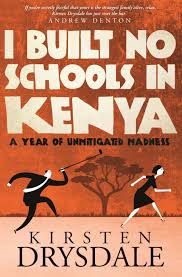
6. I Built No Schools in Kenya by Kirsten Drysdale. This is not high literature, and it is not meant to be. I found myself laughing out loud in places, and the whole thing rang completely true to me – even the dynamics of a family struggling with dementia, which is its own form of madness. She has an acute eye for the absurd, but also is a keen and thoughtful observer of what is going on around her. Of course, part of my delight in this book was that I was familiar with the setting in Nairobi, which I have visited several times. (My review here).

So that’s August’s chain. September is Anna Funder’s Wifedom. At least I’ve heard of this one!

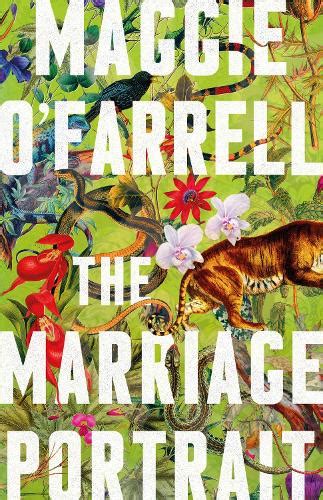
‘The Marriage Portrait’ by Maggie O’Farrell

2022, 448 p.

You know within a few pages of this book that there is a murder about to occur, who the perpetrator is and who the victim will be. It starts with a historical note that fifteen year old Lucrezia di Cosimo de’Medici left Florence in 1560 to begin her married life with her husband Alfonso II d’Este, the Duke of Ferrara. Less than a year later, she would be dead, with her official cause of death noted as ‘putrid fever’, but with rumours that she had been murdered by her husband. This is followed by two lines from Robert Browning’s ‘My Last Duchess’, subtitled ‘Ferrara’ where a widowed Duke is discussing the shortcomings of his deceased first wife with the emissary of his intended second wife. There is a chilling suggestion that he killed her.

Maggie O’Farrell’s book opens in Fortezza, near Bondeno, in a bleak isolated castle, and Lucrezia is convinced that her husband is about to kill her. The narrative in the story veers back and forth between this tense cat-and-mouse game, and earlier flashbacks to Lucrezia’s early life in the Florentine palazzo owned by her father, the wealthy Cosimo de Medici. We travel with her to Delizia, a rural villa, in Voghiera where she spends her early married days in a form of honeymoon; and the Castello Ferrara, the Duke’s ancestral castle where he lives with his family and where she comes to realize the mercurial nature of her husband and the dynastic imperative that she fall pregnant. We return to the forbidding fortezza near Bondeno ten times during the novel, which ensures that the tension is held throughout the novel. The book is written in the present tense, which I tend to find oppressive and straining, but O’Farrell’s choice to use it here adds to the suspense that is sustained throughout.

I liked that O’Farrell imbued Alfonso with such ambiguity that, like Lucrezia, you relaxed into his charm, only to find it whipped away in an instance. Lucrezia, astute and intelligent, only gradually realized the menace that she faced. However, I could have done without the multiple dream sequences in the book, which I always see as a rather clumsy backdoor way of advancing the story.

One of the things that I look for in a historical novel is that the characters act in a manner consistent with the norms of the time. It is not sufficient to pick up a 21st century character and sensibility, like a chess piece, and plonk it onto a historic situation that has its own expectations and coherence. Or, as historian Greg Dening put it, it is a mistake to think that “the past is us in funny clothes”. The actions need to remain consistent with the time, but the thoughts behind them don’t necessarily have to comply. As Hilary Mantel showed us, an author can stay faithful to the facts, while imbuing her characters with textured and nuanced motivations and reflections within those facts. I did think of Hilary Mantel while reading this book (which is, alas, just a shadow of her work), both in terms of the present tense voice, and also in its intent and richness of detail. But Hilary Mantel would never have written the ending of this book, and she certainly wouldn’t have foreshadowed it as clumsily as O’Farrell did. I guessed what the ending would be long before the end, and I felt rather disgruntled that she had set it up so obviously.

Nonetheless, I did find the final section of the book a page-turner, and stayed up much later than I intended to read it. It generated a good discussion, and exposed diametrically opposed attitudes towards the book at the Ivanhoe Reading Circle meeting.

My rating: 8/10

Sourced from: purchased e-book, read for the Ivanhoe Reading Circle.

I hear with my little ear: Podcasts 1-7 July 2023

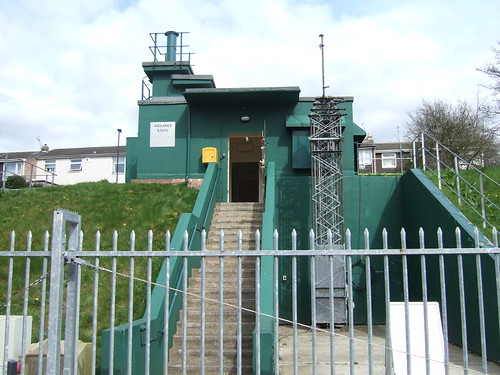
Dan Snow’s History Hit The final episode of his Story of England series 5. Story of England: Modern Warfare opens not in England at all, but with the first day of the Somme, the bloodiest day in British military history. He reminds us of the tunnels under Dover Castle, excavated by Henry II and rebuilt after the Napoleonic Wars. The tunnels were the centre of operations for Dunkirk, which assembled with just 2 days notice, and post-war it was planned that the tunnels become the seat of government in the event of a nuclear attack. Wars are no longer a matter of mass mobilization (although Ukraine and Russia are putting the lie to that statement) but instead an issue of nuclear anxiety. A whole network of 1500 nuclear bunkers was built throughout England to house 3 government members each but it was closed down in 1991 with the end of the Cold War. The York Cold War Bunker was heritage listed by English Heritage, and is now open to the public. A rather depressing way to end what was a really good series.

History This Week The Tupperware Queen Who doesn’t have a piece of Tupperware in their cupboard? This podcast tells the story of Brownie Wise, a single mother from Michigan, who rose from selling Stanley cleaning products to one of the Vice Presidents of Tupperware. She was the woman who devised the idea of a party to sell the Wonderbowl, instead of stocking it on supermarket shelves, but her success fostered jealousy within the organization. When she held a frankly rather tacky Tupperware convention on her private island in Florida, a storm brought her undone and she has been expunged from the Tupperware corporate memory. Features Alison Clarke, design history professor at University of Applied Arts – Vienna and author of Tupperware: The Promise of Plastic in 1950s America; and Bob Kealing, author of Life of the Party: The Remarkable Story of How Brownie Wise Built, and Lost, a Tupperware Party Empire.

Strong Songs. I admit it, I am a sucker for Reaction Videos, and since seeing the documentary on John Farnham ‘Finding the Voice’, I’ve been drawn to Reaction Videos on both ‘The Voice’ and his version of ‘Help’. (You can see some of them here The Vocalyst on ‘Help‘ and That Singer Reactions on ‘You’re the Voice’) This episode of Strong Songs is different from other ones because Kirk Hamilton is actually live with Annabel Crabbe and Leigh Sales in a Chat 10 Looks 3 episode recorded at the Enmore Theatre on 17 June 2023. He starts off giving an analysis of ‘You’re the Voice’ in his usual style, looking at the construction and performance of the song, but then it just becomes a Chat10 etc. love fest.

Emperors of Rome Episode LXXXVIII – Severan Stories II continues with Dr Caillan Davenport presenting three scenes from Septimius Severus’ life. Act I – If you build it they will come looks at Septimius’ building projects. There had been a big fire at the end of Commodus’ reign, which cleared the way for lots of building, but he also restored the Pantheon and put his name on it (something that Hadrian had not done) and he built the first triumphal arch since Augustus. Act II – The superfluous senators of Septimius Severus looks at how he got rid of inconvenient people. Act III – I beg of no man looks at the rise of Bulla Felix, a Robin-Hood like character who terrorized Italy. By this time, Septimius was in his sixties, and he wanted to go out on a high. Episode LXXXIX – A Man the World Could Not Hold sees him heading over to Britain in early 208 CE but why? To toughen up his son? To pacify all of Britain? Envoys were sent from Britain to sue for peace, but he wasn’t interested in peace. Instead he wanted to pacify the Barbarians, who were depicted as marsh dwellers, naked, eating magic beans. He left his younger son Getta behind in Rome, and in 209 Septimius and his older son Antoninus went on campaign and defeated the Caledonians. There was tension between father and son, and when he died at York in 211 CE, there was a suggestion that perhaps Antoninus had hurried his death along. Septimius was known as a hard taskmaster, a strategic military innovator and the most successful of the Severin emperors. Episode XC – Herodes Atticus features Dr Estelle Strazdins, (Research Fellow, Australian Archaeological Institute at Athens). Herodes was an Athenian orator who, at a time of Roman interest in 4th and 5th century BCE Greece, was tutor to Marcus Aurelius and Verus and was famous as an orator in his own right. Matt Smith rather disrespectfully describes oratory as a form of rap battle or improv, but we can’t really know as we don’t have any of his speeches. Quite apart from his oratory, he was a philanthropist who gave a lot of buildings to Athens (most famously, the Odeon) but he lost a lot of support when he stiffed Athenians of a payment of one mina per head that had been part of a bequest. He ended up being brought before Marcus Aurelius, and rather unwisely stormed out of the court hearing. Luckily for him, Marcus asked the people of Athens to forgive him, which they did and they all lived happily ever after.

Rear Vision (ABC) I’m embarrassed to admit that I always get mixed up between the real country of Moldova, and the spoof Molvania by Santo Cilauro, Tom Gleisner, Rob Sitch. But Moldova is for real, and is likely to become more important given the conflict between Ukraine and Russia. Moldova and Transnistria—the uncomfortable bedfellows on Ukraine’s border explains why. Moldova is bordered by Romania to the west, and Ukraine to the north, east, and south. It had aligned itself with Romania, but was taken by USSR in World War II. With the collapse of the Soviet Union, it held its first elections in 1990 and became independent in 1991. Since then, there has been internal tension between Russian-oriented political parties, Nationalists and pro-European parties. Meanwhile, there’s also Transnistria, a self-proclaimed independent region, a part of Moldova that lies along its border with Ukraine. Russian troops are being hosted there. When the war between Russia and Ukraine broke out, there was a fear that Russia would create a land bridge through Ukraine to the pro-Russian Transnistria, but that hasn’t happened (yet).

I hear with my little ear: Podcasts 24-30 June 2023

Now and Then. As The Donald keeps getting into legal trouble, Heather Cox Richardson and Joanne Freeman turn their attention to Presidential Lawyer Problems. I mean, who could forget Rudy Giuliani’s hair dye? They look at the role of the personal lawyer, who looks after the president himself and differentiates him from the lawyer for the Office of the President, the White House Lawyer. They then turn their attention to personal lawyers to Presidents in the past. They explore conservative Unionist lawyer Reverdy Johnson’s effective role in helping President Lincoln to find legal rationale for escalations in the Civil War, as someone politically opposed to him and an honest sounding board. Then they look at Nixon’s lawyer-fundraiser Herb Kalmbach, who funnelled money to the Watergate burglars and was eventually sentenced to 6 months prison, not for Watergate but for earlier dodgy fundraising schemes.

The Full Story (The Guardian) What would a second Trump term mean for Australia? My God, what a terrible thought. Bruce Wolpe, author of Trump’s Australia discusses the potential for a second Trump term to unleash a wave of vengeance for his 2020 loss. Not that Wolpe necessarily thinks that it will come to pass: he suggests a more than 50% chance that Trump will win the nomination but a less than 50% chance that he will win a second term. He predicts that Trump would give over Taiwan quite easily, but that Congress won’t let him. He suggests that Trump might agree with AUKUS, but will dismiss Albanese as a lightweight and rethink the commercial arrangements. So what should Australia do? look for other alliances in the region, e.g. France or even NATO, and make trade and business ties with Congress.

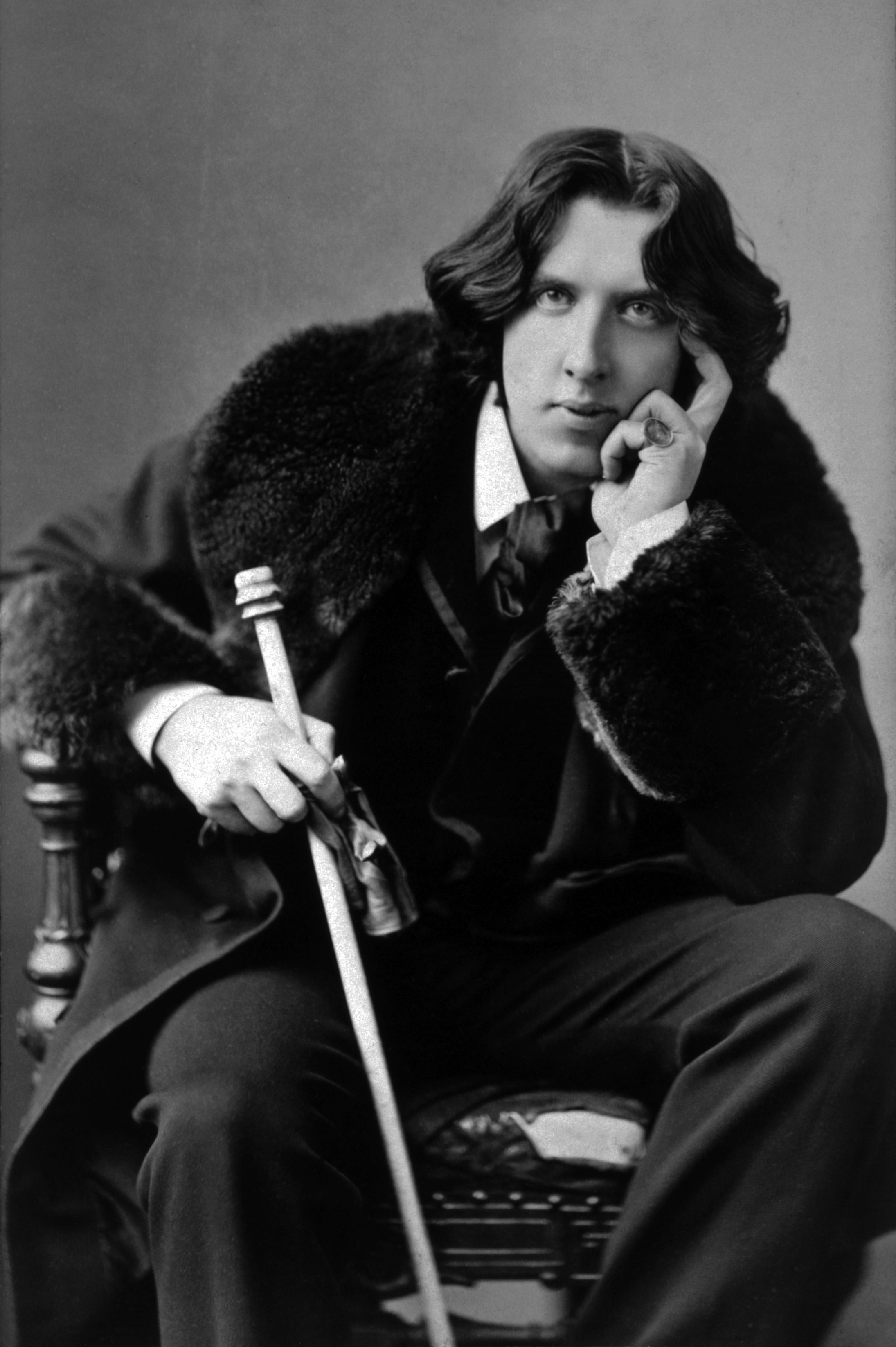
The Rest is History. This is a two-parter. Ep. 341 The Trials of Oscar Wilde: Sex and Scandal initially brought to mind the recent defamation trial of Ben Roberts-Smith. Could two men be more different? Well no, but what they had in common is that they both launched a libel/defamation trial that brought more trouble on them than the original publication had. Wilde was intellectually brilliant, a professional aesthete and an international star. Although he became a by-word for decadence, when he was younger he was actually quite prim, and Robbie Ross (who comes over as the real villain of the story) seduced him in what was a toxic relationship. In 1885 the Buggery Act, proclaimed under Henry VIII, was amended ostensibly to stop the ‘white slave’ trade, making ‘indecency’ a misdemeanour that could be punished by jail. By mounting the libel case, Wilde was hoping to draw on German research that was arguing that homosexuality should be decriminalised and to highlight the concept of uplifting Greek, classical love. Wilde lied to his lawyer, denying that there was any truth to the Marquis of Queensberry’s accusations, and when things started going south, he dropped the case but the Marquis wanted to continue. The British government, which was not unsympathetic were afraid to not prosecute him for indecency lest they be accused of a coverup (especially as there was an accusation that Prime Minister Lord Rosebery was homosexual and had had an affair with the Marquis of Queensberry’s eldest son). The magistrate in the case gave an order 15 minutes after the last train for the French ferry had left, as if he wanted Wilde to escape. Episode 342 The Trials of Oscar Wilde: Downfall and Prison points out that the “love that dare not speak its name” speech was off-the-cuff, in a trial not about Bosie, but in a trial about waiters and delivery boys. There was a strong case against him, and the public mood moved away from him. He was sent to Holloway Prison while Bosie ran away. If anything, the judge was biassed towards Wilde, and his summing-up for the jury was favourable towards Wilde, but he had just been so damned reckless. There was a hung jury, and it went to a third trial where Wilde was found guilty and sentenced to 2 years jail with hard labour (the maximum sentence). He was by now a broken man, even though he still had the support of some MPs and was sent to Reading Gaol, which was a much less onerous sentence. So, although he is now seen as a martyr, he was not particularly persecuted, and his recklessness and ego brought him undone.

Emperors of Rome Episode LXXXV – Black and White Septimius Severus is proclaimed the new Emperor of Rome, but doesn’t have time to rest on his laurels. First he has to go after the two other claimants to be emperor: Pescennius Niger and Clodius Albinus. First he went after Niger in Syria, although it took him a year to finally kill him off. But killing off your rivals wasn’t the way to get a much desired triumph: he needed an international rather than civil war victory. So he started the First Parthian war. Then he went after Albinus, who, although co-Consul must have known that it would eventually come to this, and killed him too. Within Rome itself, he demanded that Commodus (of all people) be deified and proclaimed himself to be the adopted son of Marcus Aurelius (which was bullshit). He purged the Senate of the men who had supported Niger and Albinus and raised the pay of soldiers for the first time in 100 years. So, after all this, he had got rid of all opposing forces and everyone was pretty much on board with him. Episode LXXXVI – Ascent to Greatness, However Steep and Dangerous He won the Second Parthian War then travelled the Empire, especially Egypt, accompanied by Plautianus, his praetorian Prefect, who was not popular. He returned to Rome to celebrate his 10th anniversary, but only spent a few months there. His celebrations were lavish, with 10 pieces of gold per head awarded to each Roman citizen, and many building works embarked upon so that he could put his name on them.. His eldest son married Plautianus’ daughter. In 204 CE he celebrated the Secular Games, an old Roman tradition which had fallen into disuse, with the last one held in 88CE under Domitian). By now, all his rivals were gone, he had two sons and was riding high. What could possibly go wrong? Episode LXXXVII – Severan Stories I is the first of a couple of episodes which pick out specific events and dates in Septimius Severus’ life. Episode I: Plautianus, who had been given more power than any other Prefect, headed for a fall when rumours began circulating that he was conspiring against Septimius, and he was killed in 205CE. They cut off his beard. Episode II: Septimius’ sons Antoninus and Geta were constant rivals (there was only 9 months between them), and the Emperor worried about their behaviour and indulgences during the idle days in Rome. Episode III: Septimius had a close relationship with his wife Julia Domna, and the empire respected her as the mother of the dynasty. She is remembered as having a keen political mind and being a patron of thinkers, but she wasn’t always respected in the palace.

Dan Snow’s History Hit Episode 4: Story of England: Industrial Revolution. Although Dan Snow starts this episode in Ironbridge in Shropshire, he points out that the Industrial Revolution had different manifestations in different locations, depending on natural resources provided by geology and geography. The Industrial Revolution created a change of pace, with the middle class intent on networking, while the older landed class didn’t know how to handle it. The marriage of new and old money created a dream team for industrial entrepreneurialism. It was a time of consumption- food (especially pineapples) and clothing, and the scandals of Georgian society. George I was not popular, being seen as a grumpy German, and while George II was good at PR, he wasn’t as popular once he became king. It was George III who really engaged with the British public and, ironically, the sicker and more deranged he became, the more popular he was.

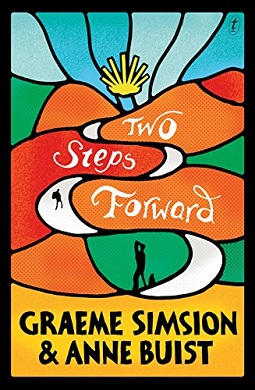
‘Two Steps Forward’ by Graeme Simsion and Anne Buist

2018, 368 p.

Because I’m learning Spanish, I have met several people who have ‘done’ the Camino de Santiago and have taken up Spanish before embarking on the journey. They seem to have undertaken it for various reasons: some because they are already seasoned walkers, others as a bucket list challenge, and only one or two for religious reasons. (I must confess that it holds no appeal for me whatsoever.)

In Two Steps Forward, the two main characters Zoe and Martin had different reasons for undertaking the walk. Zoe was from America and imbued with New Age flakiness, while British-born Martin was an engineer, keen to road-test a walking trailer that he had invented. Zoe’s husband had died only a matter of weeks previously, and faced with unexpected shock that the family company was bankrupt, she abruptly left everything to visit an old school friend in France and undertake the France-Spain leg of the Camino. Martin had undergone a bitter divorce, leaving his daughter Sarah torn between her loyalties with both parents. Martin and Zoe keep running into each other on the Camino, neither particularly liking the other, and as you might expect, romance buds between them. But they each have ‘issues’ which they need to resolve before they can establish a relationship, a fact that becomes clearer as they travel together. Its ending leaves scope for a second volume, which I see appeared as Two Steps Onward in 2021.

The book is written by husband-and-wife team Graeme Simsion (of The Rosie Project fame) and Anne Buist, who writes erotic fiction as well as crime novels, including Medea’s Curse (which I reviewed here). It is told in alternating first- person narrative chapters, Martin’s chapter written by Simsion, Zoe’s by Buist. The clash of American/British, heart/head viewpoints is rather stereotypical, and I’m not sure that the narrative voices between the alternating chapters differed enough to know instantly ‘whose’ chapter you were reading.

I often reflect that my response to a book is largely framed by the book that I read immediately preceding, and in this case Two Steps Forward suffered badly from being compared with Marguerite Yourcenar’s Memoirs of Hadrian. Simsion and Buist’s book is a light-weight little thing, with flat writing and ultimately rather trivial. Frankly, I wouldn’t bother.

My rating: 6/10

Read because: CAE bookgroup choice.

I hear with my little ear: Podcasts 16-23 June 2023

Now and Then. In the episode There’s Something in the Water, Heather Cox Richardson and Joanne Freeman discuss three different scenarios from American history that revolve around water. First they start with the early days of New York, and the attempts by Aaron Burr to privatize the water supply (although his ulterior motive was to start his own bank). Then they move on to Los Angeles where Fred Eaton and William Mulholland cooked up a plan to divert water from the Owens Valley to provide water for the rapidly growing city of Los Angeles in the early 20th century. The episode finishes with the Hoover Dam on the Colorado River, started by Pres Herbert Hoover, but completed under FDR (who changed the name to Boulder Dam, but then it got changed back to Hoover Dam again). Hoover saw it is an exemplar of man taming nature through technology, whereas FDR saw it as a manpower project that would improve the lives of workers. Anyway, it seems that nature is having its revenge through climate change in North America, just as with our own Murray Darling river here in Australia.

Travels Through Time. John Darlington, author of Amongst the Ruins: Why Civilizations Collapse and Communities Disappear takes us back to 1692 and the Port Royal Earthquake. The English captured Port Royal, Jamaica, from the Spanish in 1655 and set it up as a base for trading, piracy and slave trading. The earthquake occurred on 7 June 1692, followed by an tsunami. As we saw in Christchurch, the earthquake caused liquefaction. All this was followed by a cholera outbreak, leading to the shift of population and political power to Kingston instead.

Emperors of Rome Episode LXXXII – Pertinax. No more Dr Rhiannon Evans for a while- instead we have Dr Caillan Davenport (Roman History, Macquarie University). The year 193CE was known as the Year of Five Emperors, but there were really only three, although another two laid claim to be emperor. In the power vacuum after the death of Commodus, army generals from the provinces- Britain, the Danube and Syria- counted on the support of their troops to be declared emperor. Pertinax, who just happened to be hanging around when Commodus was murdered, was probably in on the plot. A bit of a self-made man, his claim to the throne was bolstered by the omen of a dark horse climbing onto the roof, although this might be a bit of after-the-event mythmaking. There is always a tension when a new emperor is on the scene: the tension between maintaining continuity with the last emperor and choosing ‘the best man for the job’. On Commodus’ death, Pertinax immediately stepped up and offered the Praetorian guard three times their wages, but then he squibbed it and only gave them half of what he promised- always a bad move. He tried to be the opposite of Commodus by reigning in the spending and having a big garage sale of all Commodus’ gee-gaws. However, the soldiers disliked him because of his reputation as being a stern disciplinarian, and because of his penny-pinching. So, on 28 March, they killed him, after just 3 months. Episode LXXXIII – Didius Julianus marks a particularly low point for the Roman Empire, not because of how he ruled, but because of how he got there. In effect, the position of Emperor went to the man who gave the highest bid for a bonus for the Praetorian Guards. The winning bidder, Didius Julianus was outside the wall, shouting his bids over the fence, and it cost him 25,000 sesterces per soldier, instead of Pertinax’s measly 3000 denarii per soldier. Naturally, the soldiers liked him , but the people didn’t. They protested and rushed armed to the Circus Maximus demanding that the Syrian governor take over instead. The Senate ordered Didius Julianus killed, and he was, on either the 1st or 2nd of June, after just 66 days. (Still he lasted longer than Liz Truss did- maybe even longer than the Tesco lettuce). Episode LXXXIV – The African Emperor finally sees Septimius Severus come into the picture to give a bit of stability. He, too, was a general, but he was a bit of a workhorse rather than a show-pony. He was born in Libya from a local elite family, and he is known as the first Black emperor (although a portrait painted at the time shows him as being brown, rather than black). He married twice, and his second wife, Julia Domna, was very powerful in reinforcing the Severan dynasty. On taking power, he neutralized the threats against him. There were still two other claimants to be emperor: Pescennius Niger and Clodius Albinus. He defeated Niger and then made Albinus co-emperor with him, although because Septimus already had two sons, this was not going to be a long-term career move for Albinus. And he got rid of those pesky Praetorian guards by dismissing the lot of them, and opening it up to other legions. Finally, he deified Pertinax, marking the end of all this nonsense.

Actually, I have already listened to these episodes, when I was following The History of Rome podcast earlier last year and here is where I summarized Mike Duncan’s take on this section.

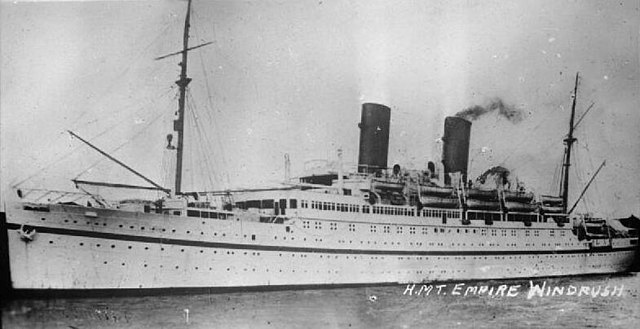
Dan Snow’s History Hit It’s the 75th anniversary of the arrival of the Empire Windrush that docked in Essex on 21st June 1948 with 1,027 passengers, 802 of whom were travelling from the Caribbean to take up reconstruction jobs after WWII and to staff the nascent NHS. I had wondered why they were celebrating the 75th anniversary (rather than the 100th) when I remembered that if they don’t do it now, most of them will be dead by the time the centenary comes around. The Windrush Generation and Scandal describes the sense of Britishness that these intra-empire migrants (as distinct from immigrants) felt, and the betrayal they felt on encountering prejudice and later, deliberate UK government policy in 2018 to force them back to countries they had left decades before.