Author Archives: residentjudge

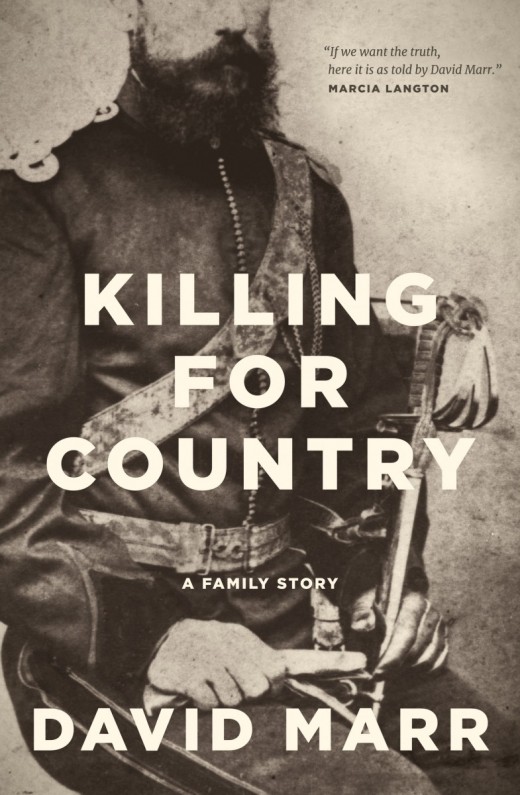
‘Killing for Country’ by David Marr

2023, 432 p.

This is such a clever title. Subtitled “A Family Story”, the title works on several levels. “Killing“- who is killing here? Indigenous people killing families, shepherds and hutkeepers in defence of country as the waves of ‘settlers’ and ‘squatters’ sweep across the continent? Or the white officers of the Native Police who turn the other way and let their ‘boys’ of the Native Police loose killing men women and children of other tribes? Or the Native Police troopers themselves, far from ‘country’ and with no links to their victims? Or white squatters and settlers who ride alongside the Native Police, or who distribute poisoned flour and meat? “Country” as used by indigenous people as their spiritual connection? Or ‘country’ as used by white settlers as land to be used; or a political entity to be defined and defended internationally? And “a family story” – David Marr’s own family through genealogical connections of which he was unaware until relatively recently? Or ‘family’ as the protagonists sought and maintained their positions through the networks of connections which bound together the British Empire? This book is all of these and more.

I’m sometimes wary of biographies written by descendants, whose familial connection has been the impetus for the book, and whose depth of research imbues the topic with a significance that it might not necessarily have, in the big picture. In this case, though, Marr leaves the family connection largely to one side to write narrative history which is broad enough in its scope to draw on larger historiographical arguments, while maintaining its focus on his protagonists Richard Jones and the Uhr family brought into Jones’ family orbit through his wife Mary, without laboring (indeed, not even mentioning) the family link. These are important – if increasingly infamous (largely due to this book)- people in their own right, with entries in the Australian Dictionary of Biography.

Richard Jones was a merchant, who along with Alexander Riley, had a monopoly on importation to the early NSW colony, which made him for a time very wealthy and politically influential. Like other successful businessmen of the time, he invested heavily in sheep, which gave him an interest in squatter politics in the insatiable hunger for new lands, and which led to his bankruptcy during the economic downturn of the 1840s. However, with some canny land sales and disguise of his ownership in the names of his wife, brothers-in-law and children, he maintained sufficient wealth to support his inclusion in the Legislative Council of the day. There, despite his quietly spoken ways, he formed part of the conservative power-block that thwarted governors and exerted pressure on the Colonial Office to maintain the hold of the squatters on huge leased swathes of land.

It also gave him the connections to have his brothers-in-law and their families, and their sons placed in positions of authority as magistrates and, most importantly for this story, as Officers of the Queensland Native Police, as were Reg and D’Arcy Uhr, Jones’ grandsons. Instituted in 1848 on a model first established in Port Phillip, this force never numbered more than 100 at its peak, headed by 10-14 ‘gentlemen’ officers and half a dozen officer cadets. The officers would stay with the force for five years or so, where they were well inculcated into the methods and ethos of the Native Police, and were then appointed as magistrates, who drew on this knowledge in ensuring that the Native Police remained politically protected. Sometimes the Officers themselves were involved in massacres or ‘dispersals’, other times they would simply direct their troopers to chase down indigenous groups and would close their ears to the gunshots that would ring out in the bush. As a matter of policy, these indigenous troopers themselves were always sent far away from their own country, so that they would not see their victims as brothers and sisters, but as strangers.

What made them strange and dangerous to each other was being away from their own country, the country that made them who they were. Here was a deadly conundrum. While officially denying their connection to land, colonial authorities would rely on that profound attachment

p. 174

Marr does not even attempt to explain or explore the motivations of the indigenous men who joined the Native Police. As he says in his acknowledgements, this is “not my story to tell. I leave it in better hands.” (p. 415) He does say that they were often – but not always- trapped, kidnapped, threatened at gunpoint. Their desertion rate was high, and while settlers were happy to draw on their ‘services’, they were often feared and despised by white society. The legal position of the Native Police was left deliberately opaque by the colonial government and its courts: they were never issued with written instructions and euphemisms like ‘collision’ and ‘dispersal’ and ‘dealt with’ pepper the official correspondence. But it had its own inexorable, if legally dubious, logic:

…pioneer settlers are entitled to protection; blacks attack whites without reason; they grow more dangerous when left unpunished; imprisonment holds no fears for them; chastisement must be swift to be effective

p. 376

Bolstered by the political power of the squatter lobby, of which Richard Jones was a member, colonial governors did not enforce the leasehold and sale agreements that proclaimed that the indigenous people of an area retained right of access to pastoral land for hunting and sustenance. Each governor had protection of indigenous people as part of his instructions when he was sent by the Colonial Office: none of them managed to enforce it. The Colonial Office had stared down slaveholders and the slavery shipping interests elsewhere in the empire (largely through financial reparations which charged further colonial land acquisition), but they did not dare to take on the NSW squatters. There were landholders, ministers of religion and philanthropists who protested the actions of the Native Police, but they were largely ignored or silenced. The Uhr brothers, as officers of the Native Police, could draw on their family connections through their father and grandfather, and marriage connections with Premiers and politicians, to escape censure again and again and again.

Meanwhile, the voracious appetite of pastoralism, and later mining, was not to be sated. Land was eaten out by sheep, so the pastoralists kept moving ever outward, coming to further ‘collisions’ with traditional owners, as they moved across the map. Marr’s book is illustrated with pen and ink drawings of individuals, but also with excellent maps that showed the traditional owners of territory, with rivers and stations marked, often with a skull to show massacre sites spreading across New South Wales, Queensland, Northern Territory and even over into Western Australia right into the twentieth century.

This is excellent narrative history, told with Marr’s deft turn of phrase. It is well researched, with references cited according to page number at the back of the book. I regretted the absence of a bibliography: it’s just too hard to comb through pages of references to find the original publication. In her blurb on the front cover, Marcia Langton notes: “If we want the truth, here it is as told by David Marr.” In his afterword, Marr writes:

The maths is indisputable: we each have sixteen great-grandparents. Reg Uhr was one of mine. I don’t believe he’s tainted my blood. I don’t believe I am responsible for his crimes. But when I learned what he had done, my sense of myself and my family shifted… We can be proud of our families for things done generations ago. We can also be ashamed. I feel no guilt for what Reg did. But I can’t argue away the shame that overcame me when I first saw that photograph of Sub-Inspector Uhr in his pompous uniform….It embarrasses me now to have been reporting race and politics in this country for so long without it ever crossing my mind that my family might have played a part in the frontier wars. My blindness was so Australian.

p. 407,408

The failure of the Voice referendum notwithstanding, truth telling continues. This “bloody family saga” is Marr’s own contribution. He suggests that one day there might be a statue in Canberra to commemorate the Native Police, who are already recognized in the Australian War Memorial Act as a military force of the crown. A statue in bronze, perhaps, of a white officer and a black trooper. And on the plinth? ‘The Native Police in the conquest of this country killed untold thousands. We remember them’.

Yes.

My rating: 9.5/10

Sourced from: review copy Blackink Books.
I hear with my little ear: Podcasts 23-31 October

The Rest is History. 352. Amsterdam: Kings, Canals and Coffee Houses is the second part of Tom and Dominic’s Amsterdam podcast, and yes, they’re still dragging around that Wise credit card, spruiking it at every occasion. They start by revising the first episode, pointing out the paradox that Amsterdam citizens were obsessed with privacy and domesticity and inward-looking, but also that they looked outwards to commercial expansion. They start at the elite Herengract canal, one of the three canals constructed during the expansion of the city in the 17th century. They then move to the huge Royal Palace, which was originally built as the City Hall. The Netherlands were a republic, but they brought back descendants of the House of Orange as their Stadtholder, and when William III of Orange took over power in Britain, it was the merging of two huge commercial cities, London and Amsterdam. During the French Revolution, Dutch republicans welcomed the French until 1806 when Napoleon installed his son onto the throne, and the City Hall was transformed into the Royal Palace. The King returned after the fall of Napoleon, but the building remained the Royal Palace.

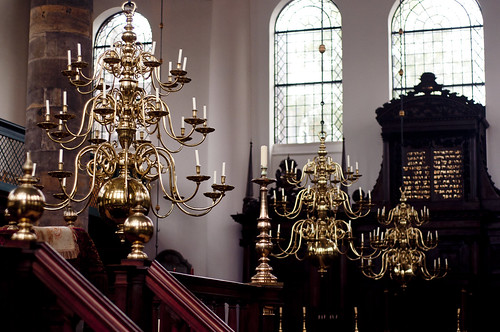
They then stop off at the Portuguese Synagogue, built in 1675. Just as Amsterdam turned a blind eye to the Protestants, so too with Jewish emigrants, many of whom came from the Iberian peninsula when the Inquisition started up. By the 1930s, 50% of the Amsterdam population was Jewish. In February 1941 Amsterdam staged the only public protest against the Nazis, when the unions protested both against forced migration to work in German factories, but also the treatment of the Jews. The Jews in the Netherlands had the lowest survival rate in Europe. Although France and Belgium were liberated, it took until 1944 for Holland to shake off Nazism, and 1944 became the Hungry Winter. Their final stop is the Sex Palace in the Red Light district, and although this might seem incongruous, they argue that this is both a reaction against Nazism as well as another manifestation of the blind-eye liberalism that had accommodated Protestants and Jews in the past. But they suggest that this hyper-liberalism has been pushed to its limits with anxiety about drugs, antisocial Hens Night behaviour and Islamic extremism.

The Guardian Podcast Today in Focus. Although the podcasts I received through the Guardian are usually Australian, this episode from 23 October took up a program from the UK Guardian called How a contested history feeds the Israel-Palestine conflict. Although it could have started anywhere in antiquity, this episode starts with the Balfour Declaration in 1917 which supported a national homeland in Palestine for the Jewish people. During WWII there was an increase of Jewish immigration to Mandate Palestine, and following the war, Britain handed Palestine over to the United Nations. 56% of Palestine was to go to the future Jewish state, while the Palestinian majority, 66%, were to receive 44% of the territory. But the creation of Israel was contested from the start, with the UN vote recording 33 for, 13 against and 10 abstentions. War instantly followed the declaration of Independence, and Israel won increasing their borders even further by declaring nearly 78% of Palestine as Jewish, and expelling 700,000 Arabs out of Jewish areas in the Nakba. With the rise of Arafat and the PLO, the world (and they themselves) came to think of them as Palestinian rather than ‘displaced Arabs’. The Six Day War in 1967 was a huge victory for Israel, although Israel was nearly defeated (at first) during the Yom Kippur War in 1973 after which right wing parties took power. The first Intifada during 1987-1993 was violently suppressed. The Oslo Accords did not mention a separate Palestinian state, and they were rejected by a majority of the Palestinian population, and far-right Israelis. They were followed by a second Intifada during 2000-2005. By now there were three types of Palestinians: those who lived in the West Bank; those who lived in Gaza; and those who lived in Israel but did not have the vote.

The Guardian Audio Long Read Justice for Neanderthals! What the debate about our long-dead cousins reveals about us. I have lost track of how many types of human beings there are now- half a dozen and growing. Out of the various types of hominin, Neanderthals were the dominant type between about 400,000 to 40,000 years ago (which is an incredible thought now that 65,000 years of indigenous habitation in Australia seems to be the accepted number.) The first bones were discovered in 1856 and they were named ‘Neanderthal’ in 1863 (‘neander’ was Greek for ‘new man’ ‘thal’ for ‘valley’) . They were commonly represented as slouching but in 2016 the evolutionary biologist Clive Finlayson commissioned forensic artists Kennis and Kennis to create ‘Flint’ and ‘Nana’ which gave them a far more familiar human appearance. However, this podcast argues that archaeologists are making much of very little, with no new discoveries of bones since the 1970s, although from the archaeological evidence they have deduced that neanderthals walked erect, hunted big game and knew how to control fire. DNA has shown that 600,000 Neanderthals and Homo Sapiens had a common ancestor. There has been an explosion in recent publications emphasizing our common humanity, although is this merely projection? Are they like us or different? Does the question of ‘dignity’ which engages so many current Neanderthal-promoters reveal more about us than Neanderthals?

Expanding Eyes After listening to the podcast about Achilles, I decided that I should read The Iliad. I decided to listen to it. The second chapter nearly finished me off and I was listening to a clunky copy of a CD which required me to keep jumping from track to track. So I have settled for listening to You Tube readings of the Iliad, which although not as mellifluous as the CD, are easier listening. I found this podcast where Michael Dolzani, a retired university professor who studied under Northrop Frye, examines various classical and religious texts. He has a series on Homer’s Iliad. They’re good: it’s just like attending a lecture, complete with the rustling of his notes. Episode 44 (actually, there are two Episode 44s, but that’s a mistake) Ep 44: Introduction to Homer’s Iliad starts by talking about the discovery of Troy in present-day Hisarlik Turkey in 1871 by rich amateur archaeologist Heinrich Schliemann and Frank Calvert, who owned a nearby farm. We don’t know anything about Homer himself (except perhaps a reference to himself as a blind bard?) and we don’t even know if there was a Trojan War, nevertheless Schliemann used Homer’s book to locate where he thought Troy might be. The Iliad was written in Homeric Greek, which is different from the Attic Greek which arose later. It was an oral poem in a society that did not use writing except for business, and it was a performance rather than a text. It was probably written between 750-700 BCE, a time of decline for Greece, which adds to its elegiac tone in looking back to Greece’s better times. Book 1 starts in the middle of the action, with Helen in Troy where she had been taken by Paris ten years earlier.

Episode 46 (there is no episode 45 because episode 44 appears twice) is called The Heroic Code of Honor and the Result of the Quarrel between Achilles and Agamemnon. The Iliad starts off with the word “Rage”, a contagion which spreads all the way to Mount Olympus. We start off with the crisis of a plague sent down by Apollo after nine years of fighting between the Trojans and the coaltion of forces for the Achaeans, led by Agamemnon, the king of Mycenae. Dolzani distinguishes between a ‘shame culture’, where men are driven by the need for status in their peer group, and a ‘guilt culture’, like ours that is driven by individual conscience (although societies combine elements of both). Was Achilles a sook when he lost his war-trophy wife Briseis to Agamemnon, and then got his mother the goddess and sea nymph Thesis involved? Not really. But Thesis getting Zeus to agree to let the Trojans win to sooth Achilles’ hurt feelings but Zeus in a difficult position. Amongst the gods, his wife Hera hated the Trojans because Paris didn’t choose Hera in a beauty triumph and she gave her husband Zeus a hard time when he promised Thesis that he would let the Trojans defeat the Achaeans as payback to King Agamemnon for taking Achilles’ wife. So Zeus couldn’t really let the Trojans win but he could stretch it out and let the Achaeans suffer for a while. And this is why so much of the Iliad is taken up with fighting- something that would have meant much more to Herod’s listeners (many of whom liked hearing about the exploits of their ancestors) than it does to us.

‘The First Astronomers: How Indigenous Elders read the stars’ by Duane Hamacher with elders and knowledge holders

2022, 266 p.

The very first sentence in the preface of the book puts its argument right there, up front. “The First Astronomers challenges commonly held views that Indigenous ways of knowing do not contain science” (p.1). For me, I don’t know if it achieved this aim, although as the most un-science-y person you could ever meet, I’m probably not the right person to discuss the philosophies of science, or philosophies of knowledge. I was not at all surprised that indigenous people have knowledge of the skies – that they ‘read’ (both in past tense and present tense sense of the word)- the stars,moon and climate phenomena. This is knowledge in terms of making sense of the universe and man’s place in it; of finding the rhythms of the universe, and of marking time and making predictions. But is it science? I guess it depends how you define ‘science’, and I probably lean towards the post-Enlightenment and western idea of science being replicable, falsifiable, separate from the individual, and systematic. I’m not sure that the knowledge Hamacher provides, through his indigenous informants, matches these adjectives. I find myself wondering if the question is not so much ‘Is indigenous knowledge scientific?’ but more ‘is our definition of knowledge broad enough?’

He uses ‘indigenous’ broadly supplementing the Torres Strait knowledge which he gathered as part of his own academic career, with indigenous knowledge drawn from cultures across the globe and history. Again, not surprisingly, there are similarities in the stories that pre-modern cultures world wide have developed and read into the star patterns- for example the ‘dark emu’ formed by the dark nebulae clouds of the Milky Way amongst Australian indigenous people is mirrored by the celestial rea (a bird similar to an emu) amongst the Tupi people of the Brazilian Amazon and the Moquit people in Argentina.

The book is simply written, which I appreciated in the more technical parts, although even then my eyes tended to glaze over. However, this simplicity also contributed a flatness to the narrative which, although broken up at times with Hamacher’s own anecdotes (e.g. losing his bearings in the outback despite being quite close to his base camp), felt rather prosaic and far removed from the splendour above that was inspiring his work.

The work is valuable in terms of presenting a breadth of knowledge that has been largely discounted as ‘myth’, and the exploration of the same phenomena explained by different stories across the globe highlighted our common humanity. But I feel as if he was trying too hard on proving its scientific (in the formal, academic sense of the word) credentials, instead of perhaps exploring whether the term ‘scientific’ is broad enough to capture the nature of knowledge more generally.

My rating: 6/10

Read because: Ivanhoe Reading Circle selection for September 2023. Their open meeting featured Duane Hamacher himself, attracting a large audience.

I hear with my little ear: Podcasts 16-23 October

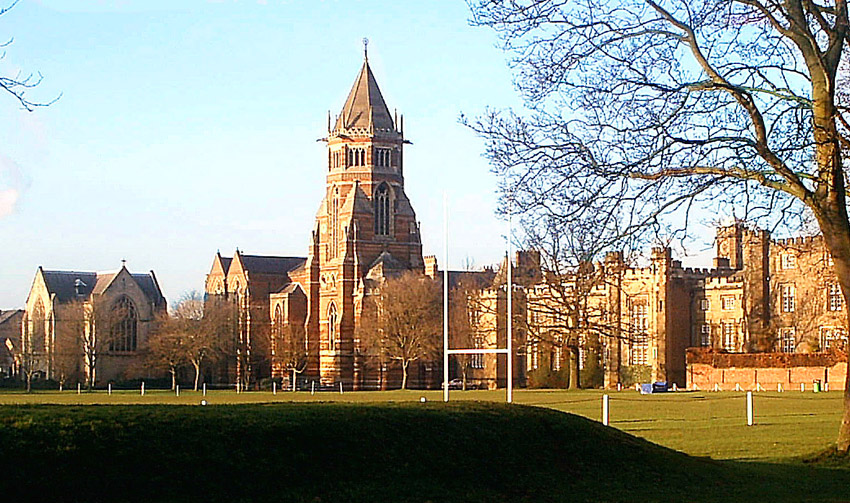
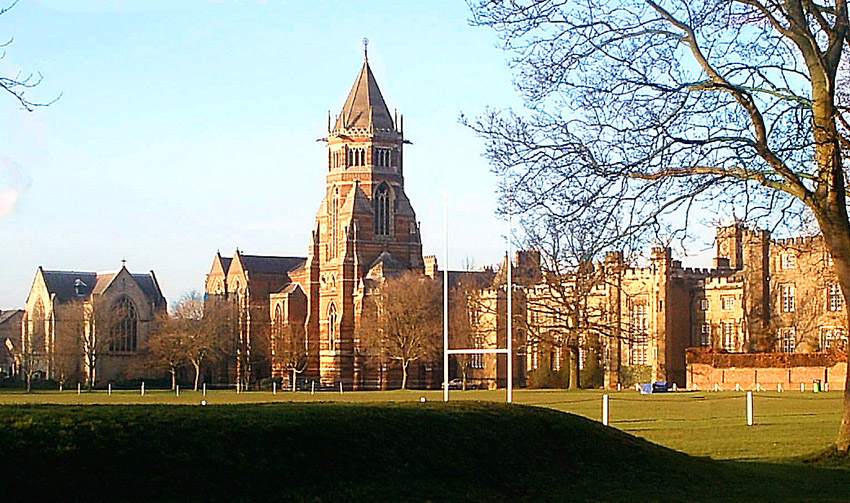
The Rest is History Episode 369 The History Behind Hogwarts: Ancient Schools and Revolting Students looks at the history public (i.e. private) school in England. it’s ‘public’ because they are open to anyone who can pay, and this differentiates them from ‘private’ tuition at home, apparently. It’s a follow up from the earlier episode about Harry Potter. Originally public schools were conducted by charitable trusts. William of Wickham, himself the son of the peasants who ended up in the court of Edward III, started the first one. During 14th century they taught reading, writing and Latin and they were set up as cathedral schools. During the Black Death, when maybe 1/2 of the English population died, William of Wickham was worried that there were not going to be enough priests so he established New College, Oxford, and Winchester. These schools provided an ascetic, monastic environment. They were intended for poor, but clever, students but “special friends” of the school were accommodated as well (i.e. they paid). A century later Royal Patronage was extended to Our Ladye of Eton, and Merchant Taylors School, established in 1561 offered a more rounded education including sports. There were no few girls’ schools, and those that did exist were closed during the Reformation. By 1700s public schools were corrupt, violent and offered a poor quality of education. Drawing on a sense of Tory libertarianism, students rioted, killed animals, hazed newcomers and the system of fagging was a form of abuse. Many of the boys from this environment went on to be ‘Empire Men’ in positions of authority throughout the Empire – who knows what they took with them from their schooling. The episode draws a lot on David Turner’s book The Old Boys: The Decline and Rise of the Public School which sounds interesting (available online SLV).

History Extra: One Day in the British Empire. This new book sounds fantastic- it’s by Matthew Parker and it’s called One Fine Day: Britain’s Empire on the Brink. He takes 29 September 1923, the day when Britain took over the Palestinian mandate, which made it the day on which the British Empire was the largest that it would ever be (things started to fall apart pretty soon afterwards). He takes the British Empire as a whole, and by consulting newspapers, Colonial Office correspondence received and sent on that day, and novels from right across the empire, he illustrates the diversity and complexity of Empire. What a brilliant idea- I hope that he executed it well. (And I might just have to read it to find out if he did).

BBC Global News Podcast. This is my go-to listening when I wake up in the middle of the night. I don’t usually include it here because the podcast is, as you might expect, too topical and by the time I post this summary, things have moved on. But they had an excellent segment called Gaza Special: Your Questions Answered and it is well worth listening to, even if it’s not the middle of the night.

‘Together’ by Julie Cohen

2018, 352 p.

The book starts in Maine in 2016 with a death: that of eighty-year old Robbie, who awakes, untangles his limbs from those of his sleeping wife of decades, Emily, gets dressed, writes her a farewell note, then goes down to the ocean to die. He is a retired boat builder, father and grandfather, and his memory is failing him. He is confusing generations, losing things, feeling as if he is in a fog that descends without warning, obscuring all familiarities and, he fears, loosening secrets that he and Emily have held tight for years.

The book then goes backwards to 1990, when Emily’s mother dies and, despite years of rejection from her family, Emily returns to her native England for the funeral. Nothing has changed: the anger and hurt that has alienated her from her family still remains. While she is away, Robbie’s estranged, alcoholic son William returns, much to the delight of his younger teenaged half-brother Adam, who barely knew of his brother’s existence.

Another jump- this time to 1975-77 where the childless Emily and Robbie adopt Adam as a four-week old baby. Robbie has lost contact with his son William, from an earlier marriage, and as an obstetrician/gynecologist, Emily is heartbroken that they have no children. When an opportunity comes to circumvent the bureaucracy and waiting lists, they jump at it – only to find out that perhaps it is not what it seemed.

Back three years to 1972 when Emily and her first husband Christopher return from a stint of medical work in Bolivia, joining her family on a holiday in Florida. Suddenly she encounters Robbie, after nearly ten years separation and they are instantly drawn to each other, prompting huge changes in everyone’s lives.

And finally, back to 1962 where they meet for the first time and fall in love. It is an instant, overwhelming attraction that is to last for fifty years.

I can’t really say much about this book because of spoilers, but the backward trajectory of the narrative gave you an opportunity to get to know Robbie and Emily, from their old age forward, so that ‘the secret’, when it is revealed, needs to be held up against everything else that we have learned about their life together. I thought that she captured Robbie’s dementia well, and the powerful attraction that they exerted on each other, right from the start, is well described. It is a bit Mills-and-Boonsy – how could it be otherwise?- but I think that Cohen showed real skill in controlling the backward plotting which is such an important part of the book.

My rating: 6.5 / 10

Read because: CAE bookgroup.

‘The Restless Republic: Britain Without a Crown’ by Anna Keay

2022, 362 p & notes

I think that my undergraduate degree was wasted on the 21-year-old that I was then. I know that I did a half-unit about the religious sects that emerged during the English Civil War, but I can remember virtually nothing about it, and I don’t know if even then I knew what happened after the Civil War. I wish that I could go back for a few hours now, and sit in on a lecture to see what it was that I was studying.

With all the ceremony surrounding King Charles’ coronation and its reference to antiquity and continuity, it is easy for forget that for eleven years, Britain chose to be a republic, without a King or Queen. It had a revolution one hundred years before the French Revolution; it had a republican government long before the American government, and it was what Australia struggles to be after two hundred years- a republic without a hereditary head of state.

What an amazing, frightening, disorienting time to have been alive! This book captures well the disruption of certainties, the knife-edge of political allegiance, the dangers of an army, the contingency of events and personality, and the instability of florid evangelicalism channelled into politics (something that is apposite today). It starts with the execution of Charles I in 1649, and ends with the restoration of Charles II in 1660, seen through the eyes of nine individuals – not necessarily in their words, but from their perspectives. The book starts with John Bradshaw, who oversaw the trial that led to Charles I’s execution and later became President of the first Commonwealth Council of State; it moves to religious visionary Anna Trapnel whose ‘gift’ of prophesy spurred the Fifth Monarchists and the radical religious fringes of society, and spends time with Charlotte Stanley, born Charlotte de la Trémoille who, as Lady Derby, headed a Royalist family with ancestral land on the Isle of Man, when her husband Lord Derby was executed by the Commonwealth. Then we have the L’Estrange family in Norfolk, who along with other noble families that prized their land and family property above all else, kept out of the fray as much as possible, anxious not to commit to one side or the other. Even here, though, we see brother against brother as the politics splits a family down the middle. The gadfly journalist, Machamont Nedham, played both sides and managed to pick the losing side every time in his editorial allegiances, while William Petty, famous for having ‘resuscitated’ a young woman who was hanged for infanticide, introduced surveying techniques in Ireland using Army surveyors that facilitated the dispossession of Catholic landholders to the West and the influx of Protestant, English families to Ireland. Cromwell – both Oliver and Henry- feature here, but Oliver is depicted as a man who measured God’s approval of his actions by success on the battlefield both in the United Kingdom and in Hispaniola in the Caribbean as part of the ‘Western design’. Henry, sent as Major General in Ireland, seemed to steer a middle path that neither his father nor brother Richard could find, setting up an intriguing what-if scenario had he succeeded his father instead of Richard. Then there is General Monck, and his low-born and possibly bigamist wife Anne, who as his closest confidante was sought by people who wished to get the ear of General as he charted his own course, betraying both sides in turn, in seeking the way through the politics, as many other people sought to do as well.

It is not a chronological history as such, and yet it moves forward chronologically, weaving together these networks of influence and connection, involving both men and women, in a time when the extremes at both political ends were unpalatable. I actually found it un-put-downable in the closing pages because, although I knew the eventual outcome, it was not clear how it was going to be reached. At a time in our own politics where the certainties of liberal democracy are shakier, when religious Dominionism beats out its own agenda, when the influence of drug gangs, coups and private militias makes states ungovernable, I found many resonances in events of four hundred years ago. This is a very readable history for a reader who knows little about the period, human in its scope, and a damned good read.

My rating: 10/10

Read because: the author was on a The Rest is History episode.

Podcasts 8- 15 October 2023

Back again after a little podcast-less sojourn in Cambodia. With that chaotic traffic, there was no way that I was going to walk around the streets with earbuds in! Now I’m back to walking the safe footpaths of Macleod and the tranquil surroundings of Rosanna Parklands and so I can listen to podcasts again.

History Extra The Huxleys: How one family shaped our view of nature. I wasn’t sure listening to this whether it was “our” (i.e. Australia’s) Alison Bashford being interviewed about her book An Intimate History of Evolution: The Story of the Huxley Family (Penguin, 2023)– but it is. You might straight away think of Aldous Huxley, but this interview focuses on Thomas Huxley, known as ‘Darwin’s Bulldog and his grandson, Julian Huxley who like David Attenborough, was important in bringing natural history into the popular media. She says in this podcast that she essentially came to think of grandfather and grandson as one man, who spanned the nineteenth and twentieth centuries.

The Rest is History Episode 351 Amsterdam: Miracles, Money and Mud. In this episode Tom and Dominic head off to Amsterdam, sponsored (as they tell you a hundred times)by Wise credit card. Talk about selling your soul- their spruiking really detracted from the podcast! However, it was fitting that it should be an episode about Amsterdam, which profoundly shaped capitalist history. They follow Dan Snow’s technique of wandering around Amsterdam, stopping at various places, to explain the connection of the place with their narrative of the city’s development. They started off in Dam Square to talk about the construction of dykes and dams in 1250-1275 to mitigate flooding after disastrous floods one hundred years earlier. Their second site was the rather twee Amsterdam Dungeon which was the site of an earlier chapel commemorate the 1345 Mirakel van Amsterdam, where a dying man received communion but vomitted up the host, and unsure what to do with it, they tried to burn it, but it wouldn’t burn. The chapel was a site of Catholic pilgrimage, at a time when the city fathers turned a blind eye to the Calvinist refugees who flooded in during the Reformation. With “The Alteration Act” in 1578 Amsterdam decided to become Protestant- just like that. The next site was the The Begijnhof, a women’s refuge, run by Catholic nuns, who hid their catholicism in plain sight. The fifth site was the headquarters of the United East India Company, built in 1606. Amsterdam decided to follow Portugal’s example i.e. in ships, shipbuilding and money. But unlike the Portuguese, they sold shares in the company itself, not in the expedition- and the Amsterdam citizens were inveterate gamblers on anything- like tulips!

History Hit Achilles featuring Professor Alastair Blanshard from the University of Queensland (doesn’t sound very Australian!). You know, I’ve never read The Iliad of Homer. It starts with a reading by Lucy Davidson, which tells the story of Achilles’ refusal to fight. This episode looks at Achilles’ relationship with Patroclus and asks whether they were gay, or is just that we lack a term for their relationship. It’s fairly explicit in placesAnd how did it inspire one of the greatest military generals in history: Alexander of Macedon? I’ve been inspired too- and I’ve started listening to The Iliad.

New York Times. There’s no end of podcasts recently about Hamas and the Gaza Strip, but I was interested in Israel’s Plan to Destroy Hamas which features Steven Erlanger, the chief diplomatic correspondent in Europe for The New York Times. He’s not particularly optimistic about the outcome.

New Books Network Latin American The House on G Street. In this episode the interviewer’s voice is very scratchy, but fortunately the interviewee is not- which is just as well. She is interviewing historian Lisandro Pérez, who has recently released his memoir The House on G Street which integrates his family history with a broader history of Cuba, which he left as a child in 1960. He was not able to return until 1979, and he was fascinated by the places that he remembered from a nostalgia-hazed childhood. He says that he didn’t want to write a family history but it certainly sounded that way in this interview, which is full of ‘my great-grandfather’ etc. as he tries to keep all sides of his family tree under narrative control. I usually like it when historians write family history, because they have the span to identity the exceptional from the mundane, but I don’t know if he represented the book very well in this interview.

‘The Sixteen Trees of the Somme’ by Lars Mytting

2018, 403 p.

Translated from the Norwegian by Paul Russell Garrett

“Oh, a WW I book. Mud, blood and trenches,” I thought when I saw that this was on the reading list for the Ivanhoe Reading Circle. But it’s not at all. The events mainly take place in the early 1990s as twenty-something Edvard Hirifjell buries his grandfather Sverre. Grandson and grandfather had been potato farmers in rural Norway, living together since 1971 when at the age of three, Edvard’s parents had been killed. Their deaths were shrouded in mystery: they died of apparent gas poisoning from unexploded ordnance from WWI in a copse of trees on a former battlefield on the Somme. Edvard had been there too, but has no memory of what occurred: all he knows is that he turned up four days later over 120 kilometres away. As he begins to arrange his grandfather’s funeral with the local priest, he gathers snippets of knowledge of his family: that there was an estranged great-uncle Einar who fought with the French Resistance in WW2 while his grandfather Sverre served with the Germans on the Eastern Front; that his mother was born in Ravensbruck concentration camp; and most intruigingly, that his great-uncle Einar, a skilled timber craftsman, might not have been executed during WW2 as he thought, but may have instead having been living in the Shetland Islands until the 1970s. He had sent a beautifully crafted wooden coffin to Sverre in the small village of Saksum back in 1979 and when it is finally delivered to Edvard for his grand-father’s body over ten years later, it triggers in him an urge to make sense of his memories and his family history.

And so, his grand-father dead, and much to the frustration of his ex-girlfriend Hanne, Edvard travels to the Shetland Islands, and later to the village of Authuille in France, where his parents died, in his search for the past. On the peninsula of Unst, in the Shetland Islands, he finds strong traces of its Norwegian heritage and meets an enigmatic woman Gwen, who claims to be the caretaker for the nearby ‘big house’ Quercus Hall. Quercus indeed, the Latin name for the genus which includes oak and beech trees, because wood and trees play an integral role in the plot, both as a form of craftsmanship and as a motivation for deception and greed.

The book ends up in the Somme, but instead of focussing on World War I, it illustrates the legacy of war across succeeding generations. War on a global scale, but also war between erstwhile-business associates, and war between brothers.

In many ways, this book conforms with the conventions of the mystery novel. There are lots of name changes: Therese Maurel/Nicol Daireaux; Einer Hirifjell/Oscar Ribaut; Gwen Leask/Gwen Winterfinch. There is the big house. There are clues dropped, false leads and evasiveness on all sides. True to form, there is a cliff-hanger ending, which was rather too melodramatic for my liking. It’s a very cinematic novel. The only image I have in my mind of the Shetland Islands is that of the television series Shetland where the Scots influence predominates, but this is much more a European novel, despite the bleak, windy bluestone of the islands. It was not at all what I expected it to be, and it was probably the better for that.

My rating: 8.5/10

Read because: Ivanhoe Reading Circle. Purchased from Readings.

Frequencies of Peace

Like the rest of the world, I am horrified by the violence in the Gaza Strip and Israel at the moment. There will be children going to bed terrified tonight. The children of Syria have been going to sleep to the sounds of war for the past ten years. A recent initiative funded by UNHCR, Babyshop,Spiritune, and Anghami has taken neuroscience and music psychology to create a lullaby. It has a tempo which can be speeded up or slowed down, depending on the child’s level of alertness; it has a limited number of notes, and it picks up on Arabic tonal structures. It is played on Syrian radio stations at 8.00 p.m. and cars with speakers mounted on the roof drive slowly through the streets, playing the lullaby.

I hear with my little ear: Podcasts 16-23 September 2023

Reflecting History So after my little sojourn to the early episodes of this podcast to catch up on the Social Wars, here I am back again at Episode 60: The Fall of the Roman Republic Part VI-Death by a Thousand Cuts, the final one in this series. With the conflict between Pompey and Julius Caesar, politics was now a zero-sum game. Both men felt that they were saving the republic, and for both men their claims to legitimacy were a bit dodgy. In 49 BC Julius Caesar crossed the Rubicon while Pompey’s armies were all far away, and declared himself Dictator. However, he offered pardons and leniency, and when Pompey’s head was brought to him, Caesar mourned his death. He then went on a tour of the Mediterranean as a bit of a victory lap and to reinforce his power. He undertook lots of reforms, and provided lots of public works and public games, in effect making himself indispensible to the Republic without actually having a lot of public support. Perhaps he was angling to become King?? This is what was behind his assassination by Brutus. In the wake of his death, the deputies became more important. Mark Antony (milking the occasion for all it was worth) read Caesar’s will publicly, which named Octavian as his heir. Tension emerged between Mark Antony and Octavian, and Brutus and Cassius were off raising money as well, without authority. Octavian went to the Senate to obtain sanction to defeat Mark Antony which he did. Having defeated Mark Antony, they joined together to outlaw Brutus and Cassius, leading to the second triumvirate formed by Octavian, Mark Anhony and Lepidus (one of Caesar’s generals). Out came the proscription lists again, leading to the deaths of prominent people like Cicero, 300 senators and 2000 equestrians. They divided up the empire with Mark Anhony controlling Gaul and the East, Lepidus controlling Africa for a while (until he was demoted) and Octavian controlling the rest. That left Mark Anhony and Octavian circling each other. There was criticism of Mark Anhony’s relationship with Cleopatra, and Octavian issued the Oath of All Italy to everyone in Italy, Gaul, Spain and Sardinia. He presented his scheme for an imperial system to the Senate… and that’s the end of the Republic.

History Extra Chaos and Violence in Country Houses. I’m a bit of a sucker for Country Houses and the whole concept of the Big House surrounded by bucolic countryside. American historian Stephanie Barczewski, who has written previously on the way that Empire affected the Country house, has published a new book called How the Country House Became English (Reaktion Books, 2023) which looks at how the Country House has changed over time, reflecting changes in English/British history. Country houses were destroyed as part of the violence of the Reformation and the Civil War, but when the French Revolution broke out, there was a fashion for ‘peaceful’ Palladian houses as a way of distancing from and expressing disdain for the excesses of the French Revolution. Empire influenced their architecture and objects, and led to the escape of exotic animals from their gardens- there were even wallabies on the Isle of Man! Post-war taxation changes saw many country houses moving from private to public or institutional hands. Interest in them has increased since the 1979s when their displays began emphasizing the servants (a huge labour cohort), capturing the interest of family historians whose forebears were far more likely to be servants than owners. Very interesting- I’m tempted by the book!

The Rest is History I’ve only read one Harry Potter book – and that was in Spanish- but that didn’t stop me enjoying The Real Harry Potter: Magic, Empire and Beastly Bullies. Dominic Sandbrook, one of the presenters of this series, is well placed to talk about Britain’s popular culture and its effect on the rest of the world, as he is the author of The Great British Dream Factory . He and Tom Holland talk about the influence of Tom Brown’s School Days from the 1850s, which in effect constructed the template for public school fiction and its particular form of Britishness (i.e. public school in that anyone can go there if they can pay the fees – so, it’s a ‘private’ school here in Australia). They talk about the influence of sport, fagging, headmasters, trains, ‘houses’ and hierarchy. Of course, the big difference was that Hogwarts had girls. I’m looking forward to the next episode.

Emperors of Rome I’ve forgotten where I was up to, so I just scrolled through until I found something republicanny as I’m still puddling around in the late Republic. There I found Episode CXXVIII (128) Cornelia Mother of the Gracchi (Is ‘Gracchi’ plural of Gracchus?) It was common for Roman women to be known by their father’s name, but Cornelia was known at the Mother of Tiberius and Gaius, the radical Tribunes of the People who tried to introduce land reform into Roman society and were assassinated for their troubles. Mind you, she was the daughter of Scipio Africanus, who defeated Hannibal, so it wasn’t as if she was ashamed of her father. She came from an elite family, and was very highly educated. She had 12 children, only three of whom survived to adulthood and when she was widowed, she never remarried which gave her special status and a degree of autonomy that married women didn’t have. We don’t really know a lot about her, and what we do know is filtered through responses to her sons, but there might have been a statue erected to her, and some of her writings were reported (although they are a bit dodgy because they are critical of her sons, so they might be fakes created by her sons’ enemies).